Trout Valley, IL
Trout Valley, IL is a McHenry County village of about 515 people on the Fox River next to Cary, built on the 1920s Hertz estate, with wooded lots, private roads, spring-fed trout ponds and a riverfront marina.
Living in Trout Valley, IL means about 240 single-family homes on wooded lots, a Zillow typical value near $579,000, property tax around 2.52% of value plus $1,600 a year in association dues, and a Metra station about a mile away in Cary. The trade-offs: private roads, septic systems and strict deed restrictions. Here is how it works.
Written by Eshu Chikoti · 847-691-4282 ·
How Trout Valley, IL Got Here: From Leona Farms to a Village
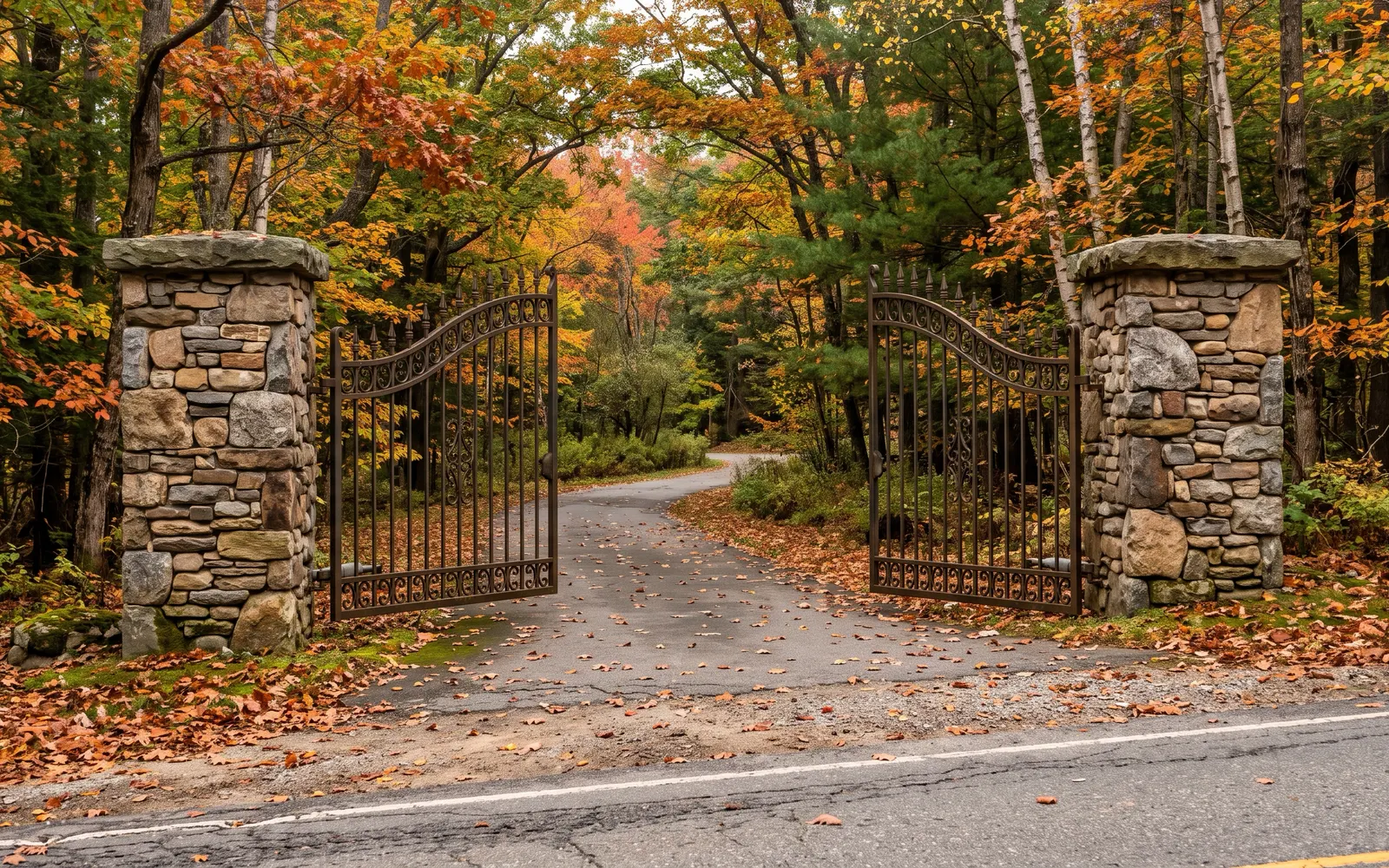
Trout Valley started as a rich man's country estate. According to the association's historical landmarks page, John D. Hertz, who founded the Yellow Cab Company and the Hertz rental car business, built the estate in the 1920s and named it Leona Farms after his eldest daughter. The barn is older than that; the same page estimates it was built around 1890. Hertz added the stone-and-iron gate at the Stonegate Road entrance and, in 1923, a Roman-style swimming pool with stone balustrades that still stands.
The landscape itself was designed. The village's Nature Conservancy page says Hertz hired Jens Jensen, the landscape architect often called the father of natural landscaping, to lay out the ponds, streams and parkland. Those spring-fed trout ponds are the reason for the name.
In the 1940s the estate was sold to the Curtiss Candy Company, the maker of Baby Ruth, and company president Otto Schnering used it for cattle breeding and to raise farm animals and trout. After his death the land went to developers. According to Wikipedia, Maxon Community Developers bought the Curtiss farms in 1952 and renamed the land Trout Valley after Norman Maxon's love of fly fishing. The recorded deed restrictions that still govern every lot were signed on June 10, 1955 and recorded July 7, 1955. The landmarks page says most of the estate became Trout Valley and about a third became part of the Village of Cary.
For its first four decades Trout Valley was unincorporated, run entirely by its homeowners association. It incorporated as a village on March 19, 1996. The census counted 599 people in 2000, 537 in 2010 and 515 in 2020. The McHenry County Historical Society named the barn a historic site in 1999, and in 2006 the McHenry County Historic Preservation Commission designated the Stonegate entrance a local landmark.
Trout Valley at a Glance
Trout Valley is one of the smallest villages in the county. The Census Bureau's boundary file puts its land area at 1,107,262 square meters, about 0.43 square miles, and Wikipedia places it in Algonquin Township. The Fox River runs along the south edge. The association's lot and trail map shows the neighbors: Cary-Algonquin Road and the Greenfields and Fox Trails areas to the west, Main Street and Briargate School to the north, the Brigadoon subdivision to the east, and the Fox Bluff Conservation Area and the Cold Springs subdivision to the southwest.
The 2020-2024 Census ACS counts 238 housing units, and every one of them is a single-family detached house. Of the 233 occupied homes, the survey counts 229 as owner-occupied, about 98%. At this size the margins of error are wide (plus or minus 62 homes), so read those as a shape, not an exact count. The ACS population estimate is 574, plus or minus 152; the 2020 census count of 515 is the firmer number.
The village is lean on purpose. The village page says it has no schools, fire department or police department of its own. It runs with a president, six trustees, a clerk and a comptroller, and its posted appropriations ordinance for September 2023 through August 2024 authorized $336,650 across all funds. Most of the day-to-day work of the community, from plowing to the pool, is done by a separate body, the Trout Valley Association, covered below.
The mailing address is Cary, 60013, which is shared by the Village of Cary and plenty of unincorporated land. So on any listing that says "Trout Valley" the first thing I check is which government the parcel actually sits under.
For $1,600 a year you get a marina, trout ponds, a fen, a 1923 pool, a barn with horses and a riverfront lodge, and the covenants that keep the lots large and the roads quiet.
The roads are owners' to pay for, the deed restrictions reach down to paint colors and yard signs, and the typical house costs well above Cary or Fox River Grove.
Trout Valley Village vs. the Trout Valley Association
The name "Trout Valley" means two different things, and buyers mix them up all the time. The association's FAQ spells it out. The Trout Valley Association (TVA) is the homeowners association, founded in 1965, run by a board of nine directors, and every lot owner is a member. The Village of Trout Valley is the municipal government, with a mayor, six trustees, a clerk and a treasurer. The two are managed independently.
Their boundaries are not the same either. The association's new member page says the village covers all homes south of Country Commons Road. The FAQ says about 10% of association members actually live in the Village of Cary: the homes on Briargate Road, on Stonegate Road from the stone gate to Country Commons, on Little Stonegate Court and Bee Court, and on the north side of Country Commons Road, plus a commercial building at the Country Commons entrance and some undeveloped lots east of the Cary Park District parking lot.
That split changes real things. A house in the Cary part of the association pays Cary's municipal levy, is patrolled by the Cary Police Department and has Cary's trash service, which the FAQ says is Flood Brothers on Tuesdays. A house south of Country Commons pays the Trout Valley village levy, is patrolled by the McHenry County Sheriff and has Groot pickup on Wednesdays. Both pay association dues and live under the same deed restrictions.
On any Trout Valley listing, I pull the tax bill to confirm which village the parcel is in before I talk price with a buyer. It is one line on the bill, and it tells you who plows, who patrols and who taxes.
Trout Valley Neighborhoods, Street by Street
Trout Valley has no named subdivisions inside it, but the association's lot map makes the layout easy to read. The land drops from Cary-Algonquin Road and the north end down through a wooded valley of ponds and streams to the Fox River. Where a house sits on that slope decides what you see from the windows, how far you are from the river and, on some streets, how you get out in a snowstorm.
The streets fall into a handful of areas. The descriptions below come from the association map and the snow route rules, which name the steepest hills. Boundaries are informal, and lot sizes vary a lot inside each one. If you want to know what a specific street has sold for lately, and whether it is in the village or in Cary, that is a conversation I am happy to have here.
My buyers who tour Trout Valley usually come in expecting one neighborhood and leave having picked a street. A river lot on River Drive and a wooded lot up on Big Oaks are different houses, even when the price is the same.
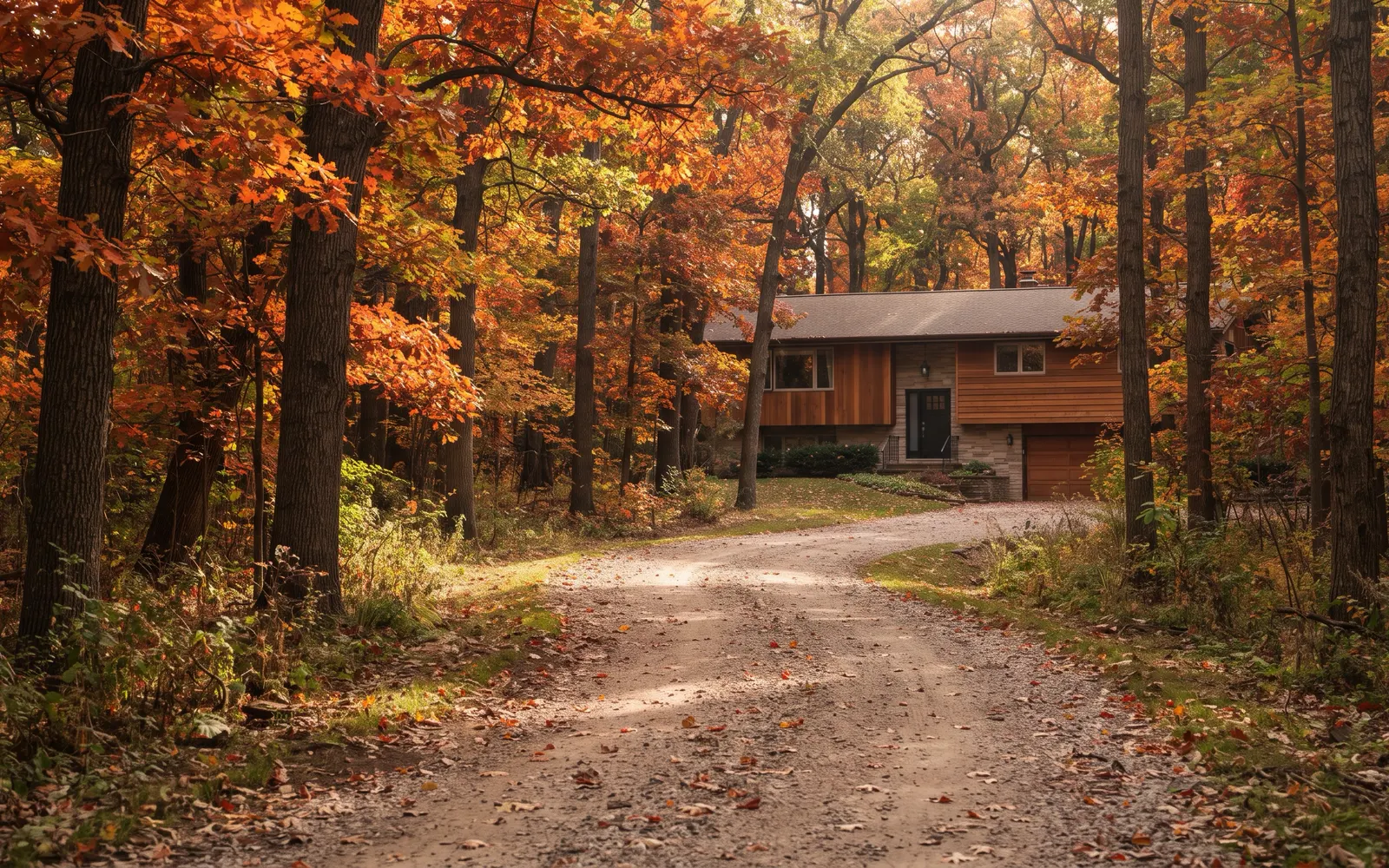
Stonegate Road and Country Commons. The north entrance through the historic stone gate, with the barn, the horse corral and the pastures. The homes north of Country Commons are in the Village of Cary.
Big Oaks, Turkey Run and Hawthorne Way. The west side along Cary-Algonquin Road and Cold Springs Road, wooded lots on curving roads. Big Oaks and Turkey Run are on the association's list of steep hills plowed first.
Trout Valley Road and Rainbow Lane. The valley floor, running past the trout ponds, the nature trail and park, and the fen, down to Brookbridge.
Marryat, Cahill, Willet Way and High Road. The east side between River Drive and Brigadoon, with the pool on River Drive. Recent sales here included homes on Marryat Road and Willet Way.
Bluff Road, Fox Harbor Road and Golf Lane. The south end around the lower park and horse pasture and the community garden plots, just above the river.
River Drive river lots. The lots along the Fox River next to the lodge, riverfront park and marina, and the only lots with frontage on the water.
Valley Road and Brookbridge. The southwest corner next to the Fox Bluff Conservation Area and the Cold Springs subdivision.
What Trout Valley Homes Look Like, by Era
Trout Valley is a 1950s to 1970s neighborhood with very little built since. The Census ACS puts the median year built at 1968. Of the 238 homes it counts, about 41 were built in the 1950s, 90 in the 1960s and 69 in the 1970s, with only 12 in the 1980s, 11 in the 1990s, 5 in the 2000s and 1 since 2010. There are a handful of older structures from the estate years.
The houses are big for the era. The ACS counts 125 four-bedroom homes and 22 with five or more, which is about 62% of the village, against 83 three-bedroom homes and only 8 with two. The median owner-occupied value in the survey is $446,200. The deed restrictions set a floor: no house under 1,200 square feet of ground floor for a one-story home, or 1,000 square feet of ground floor for a story-and-a-half or two-story, and garages have to be attached to the house and hold no more than four cars.
The lots are the point. Two homes that sold this summer show the scale: Redfin's listing records put a 1954 house on Willet Way on 0.93 acres and a 1977 house on Marryat Road on 0.85 acres. The deed restrictions require 30-foot front setbacks and 20-foot side setbacks, which keeps houses well apart. Rentals are close to nonexistent; the ACS counts 4 renter-occupied homes.
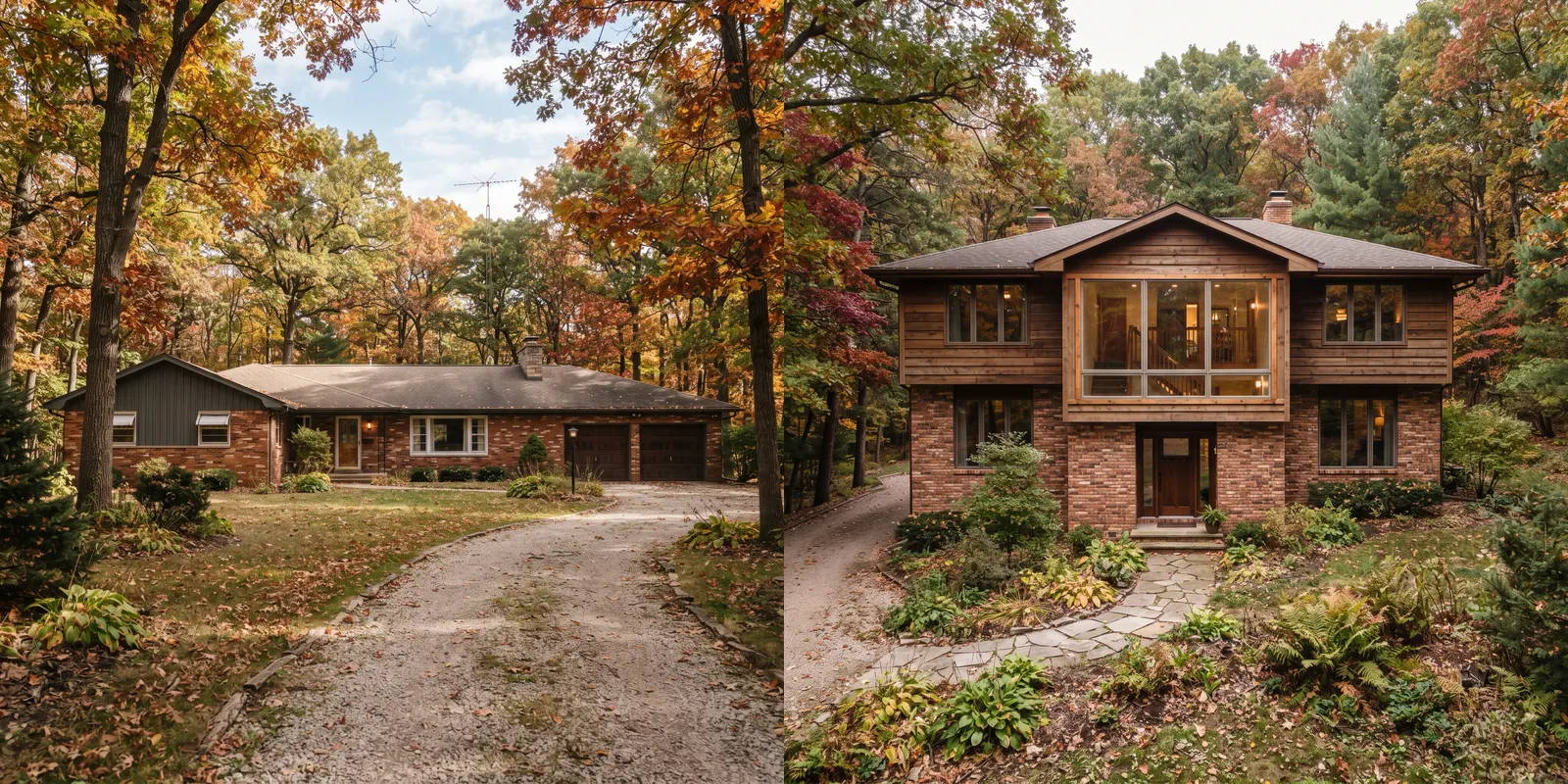
On houses this age, the inspection items I watch for are the ones a 60-year-old wooded lot produces: original or partially updated electrical, older septic systems, roofs and gutters under heavy tree cover, and grading on a sloped lot that sends water toward the foundation. None of those should end a deal. All of them belong in the price, and my home inspection checklist is a good place to start.
Trout Valley Association Dues and What They Pay For
Every lot owner in Trout Valley belongs to the association. The deed restrictions say so directly: all owners must become members, and every buyer agrees to pay the assessments the association levies. Unpaid dues become a lien on the lot that the association can foreclose.
The number is set out on the new member page: single-lot dues are $1,600 a year, billed as $800 on September 1 and $800 on March 1, and dues depend on how many lots you own. Listing records for this summer's sales show the same figure, about $133 a month. For that money the association maintains the roads, the common areas and the amenities, including the barn and the lodge. The new member page says the association has one employee who does most of the maintenance work; the rest is volunteer committees. The barn, lodge, marina, pool and tennis courts carry their own separate fees on top of dues, according to the amenities page.
Dues have been rising. In a May 2021 member update, the association's Stewardship Action Committee put dues at $100 a month and argued they were not enough to keep up the roads, pool, ponds and buildings. The current $1,600 a year is about a third higher. Because the association owns and repaves 5.7 miles of road, I would plan on dues continuing to move.
When you sell or refinance, your attorney or lender requests a paid-up letter from the association treasurer. The sale and refinance page says dues must be current first, and there is a $100 fee billed to the lender or attorney. The association also has to follow the Illinois Common Interest Community Association Act, per its FAQ, so its budget and financial reports are available to members.
Trout Valley Deed Restrictions and the Building Committee
Trout Valley runs on recorded covenants, and they are stricter than most buyers expect. The association publishes an abstract of the deed restrictions through the 23rd amendment in 1995. The ones that come up most on a purchase:
Approvals. No house, addition, garage, fence, deck, patio, pool, gazebo, shed-type structure or satellite antenna goes up without written approval, and exterior paint colors need approval too. The Building Committee, a volunteer committee of seven or more members, reviews plans, and its decisions can be appealed to the association board. The FAQ adds that changing a roof, siding, brick, stone or deck material or color needs approval, while a same-for-same repair does not. Building without approval can bring a $500 fine, and the association can fine up to $100 a day for an uncorrected violation.
Signs. No "For Sale" or "For Rent" signs, and no contractor signs, without the association's written approval. Open house directional signs are allowed only on the day of the open house and must be gone by 10 a.m. the next day. If you are selling here, expect marketing to happen online and by word of mouth, not from a yard sign.
Lots and storage. Only one house per lot, and splitting a lot without the association's written consent carries a $10,000 fine plus legal costs. Boats, trailers, campers and horse trailers can only be kept on a lot during their season of use. Commercial equipment cannot be parked overnight or on weekends. There is no overnight parking on the roads or common land. Every house needs a yard light of an approved design, and lot owners have to keep grass in open areas under six inches.
Trail and utility easements. Each lot carries a 10-foot riding trail easement on its sides and rear, and no fence can block an existing trail. There is also a 10-foot utility easement on every side of each lot.
None of this is unusual for a 1950s planned community, but all of it runs with the land. I ask the listing agent for any open Building Committee approvals or violations on every Trout Valley house, because they transfer with the deed.
Trout Valley's Private Roads: Who Pays and What's Planned
The roads in Trout Valley are private. The association's FAQ says early owners chose to take them on rather than wait on Algonquin Township for plowing and repairs. The upside is control over plowing and paving. The downside is that owners pay for the equipment and every repaving job. The township still lends heavy equipment at times.
The scale of the job is on the association's roads page. Trout Valley has roughly 5.7 miles of road. Before 2016 they were resurfaced with a thin top layer that wore out in 10 to 12 years. Since 2016 the association has been rebuilding them with full depth reclamation, which is expected to last 25 years or more. A 2021 update explained why: when crews tore up the old roads, the base was essentially sand and dirt. About 2 miles have been done, and the association estimates the rest will cost about $1.25 million.
The most recent posted plan is the 2025 roads project, with a $280,000 budget: $25,000 for engineering, $17,000 held back for overruns and $238,000 for paving. It covered Little Cahill (estimated at $113,000) and the barn area, including Country Commons between Turkey Run and Stonegate. The association held Brookbridge for a 2027 project because a damaged drainage pipe runs under it. The village contributed to earlier road jobs but put its money into storm pipes under Trout Valley Road and could not contribute in 2025.
A few road rules matter for daily life. Since 2008 the McHenry County Sheriff has enforced the Illinois Vehicle Code on the private roads, speeding tickets included. Vehicles over 35 feet or 6 tons per axle need a permit, so large moving trucks usually park near the barn and shuttle with smaller trucks, per the moving truck rule. In snow of 2 inches or more, River Road becomes one-way downhill, and the snow route rules send drivers out by Brookbridge and Trout Valley Road. ATVs and off-road motorcycles are banned; golf carts are allowed under association guidelines.
Septic Systems and Wells in Trout Valley
Trout Valley homes are on septic, and the rule dates to 1955. The deed restrictions require every sink and bathroom drain to connect to a septic system approved through the county health department, or to a public sewer "when available," and say the septic tank must be cleaned once a year. They also bar any septic tank or field within 75 feet of a well site. The listing record for this summer's Marryat Road sale lists a septic tank for sewer.
Water is less documented. The deed restrictions assume wells on the lots, and the Environmental Protection Agency's drinking water system records list only a small Trout Valley Association community system, now inactive, that served 7 connections, plus a well serving the pool. Neither the village nor the association lists a public water utility. So on any house here, confirm the water source on the listing and in the disclosures, and expect a private well unless the seller shows otherwise.
On a wooded, sloped lot, that means a few extra steps. The septic field, the well, the house and the 75-foot separation all have to fit on the land, and the slope decides where water goes after a storm. On every Trout Valley purchase I have the buyer order a well water test and a septic inspection and make the offer contingent on both. I also ask the seller for the county health department's records on the system and for proof of the annual pumping the covenants call for.
The Trout Valley Housing Market in 2026
Trout Valley is a very thin market, and the headline numbers need care. In the three months ending August 2026, Redfin reported a median sale price of $894,000, up 57.6% from a year earlier. Its latest monthly snapshot shows just 2 homes sold, at a median of $813,000 and 106.1% of list price, with an average of 41 days on market, and 3 homes on the market.
That 57.6% is not what happened to a typical house. With two or three sales a month, one large house moves the median. Zillow's home value index, which estimates the value of all homes whether they sold or not, was $578,742 for August 2026, up 5.6% from $548,298 a year earlier and up 6.8% from $541,682 in August 2024. I trust Zillow's 5.6% as the better read on what a typical Trout Valley house gained this year.
The recent sales show the real range. On Redfin's sold list, a 3,070-square-foot house on River Drive sold for $700,000 on September 8, 2026, at list. A 4,826-square-foot house on Marryat Road sold for $640,000 on September 1, 5% under its asking price after 48 days. A 3,957-square-foot house on Willet Way sold for $730,000 on August 17, 4% over list. A 4,268-square-foot house on Stonegate Road sold for $761,800 on August 12. And a 5,234-square-foot house on Country Commons Road sold for $1,000,000 on July 6, 23% under its $1,299,000 list price after 271 days. Those prices work out to roughly $130 to $240 a square foot, and the spread is about condition, lot and water more than size.
For context, Zillow put Cary at $383,618, Fox River Grove at $365,349, Algonquin at $418,992 and Oakwood Hills at $351,326 in August 2026, so a typical Trout Valley house is valued well above all of its neighbors. What that means in practice: a well-updated house on a good lot sells quickly, sometimes over asking, and an overpriced one sits for months.
Trout Valley Property Taxes, Dues and the Real Cost of Owning
In Trout Valley the monthly cost of owning has two fixed lines on top of the mortgage: property tax and association dues. Ownwell's data, updated April 13, 2026, puts the median effective tax rate at 2.52% and the median annual bill at $11,905, on a median assessed market value of $479,496. The McHenry County median rate is 2.42%. A quarter of Trout Valley bills are under $10,657, a quarter are over $13,342, and the top tenth are over $15,497.
Here is what that looks like on a real purchase. At 2.52%, a house bought at Zillow's $578,742 typical value would eventually carry about $14,584 a year in tax, roughly $1,215 a month. Add $1,600 a year in association dues and the fixed carrying cost is about $16,184 a year, or about $1,349 a month, before the mortgage and insurance. The seller's current bill may be lower, because assessments trail the market. The expectation I most often have to reset is buyers who budget off the seller's bill and forget the dues.
The village's own share is small. Its 2023-24 appropriations ordinance authorized $336,650 in total spending, including $30,000 for public safety, $30,000 for the nature conservancy, $25,000 for stormwater, and $41,600 in bond debt payments. Most of your bill goes to the schools, the county and the other districts that cover the area. Homes in the Cary part of the association carry Cary's levy instead.
If you already own and think your assessment is high, the appeal starts with the Algonquin Township assessor and then the McHenry County Board of Review. My guide to how much house you can afford shows how the tax and dues lines change the payment. This is general information, not tax advice. Your actual bill depends on your parcel, your exemptions and the assessor.
Trout Valley Schools: Cary District 26 and Cary-Grove High School
Trout Valley has no schools of its own. The village page says residents attend Cary schools, and the Village of Cary's schools page says Cary-Grove High School shares its student body with Fox River Grove, Trout Valley and Oakwood Hills. Kindergarten through eighth grade is Cary Community Consolidated School District 26, and high school is Community High School District 155.
The listing records for this summer's sales on Willet Way and Marryat Road both list Briargate Elementary, Cary Junior High and Cary-Grove. The association's lot map shows Briargate School just east of Briargate Road at the north end of Trout Valley. The federal school directory gives the numbers. For 2024-25, the National Center for Education Statistics lists Briargate Elementary at 100 S. Wulff Street with 400 students in grades 1 through 5, Cary Junior High at 2109 Crystal Lake Road with 761 students in grades 6 through 8, and Cary-Grove at 2208 Three Oaks Road with 1,348 students. District 26 also runs Oak Knoll Early Childhood Center for preschool and kindergarten.
Confirm the district for a specific address with the district office, and read each district's profile on the Illinois Report Card at illinoisreportcard.com.
Assignment is by address, not by town name. Check each house with District 26 and District 155 before you write an offer, and ask me if you want the boundary checked for a specific house.
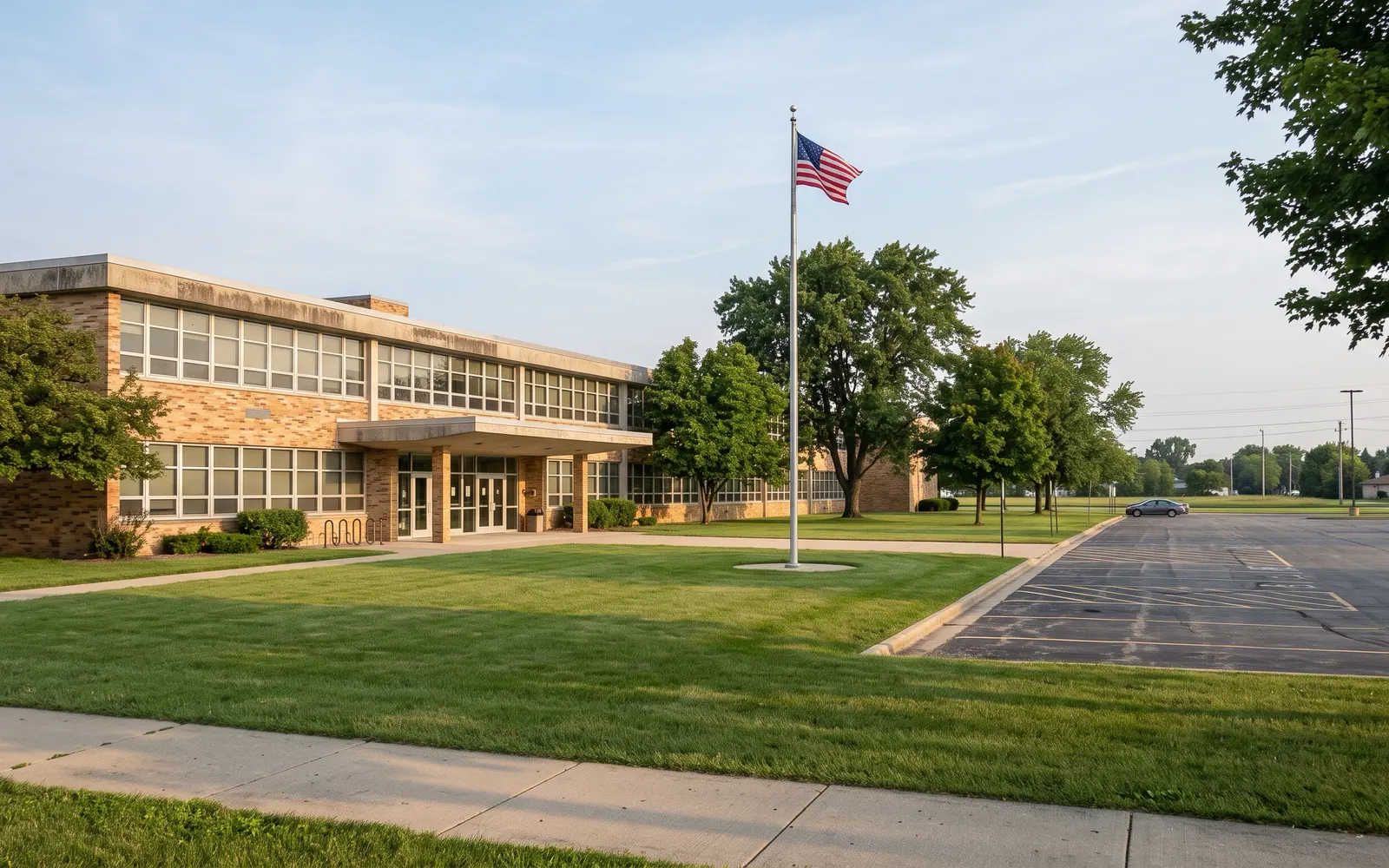
Oak Knoll Early Childhood Center. 409 First Street, Cary. Preschool and kindergarten, District 26, 316 students in 2024-25.
Briargate Elementary School. 100 S. Wulff Street, Cary. Grades 1 to 5, District 26, 400 students in 2024-25.
Cary Junior High School. 2109 Crystal Lake Road, Cary. Grades 6 to 8, District 26, 761 students in 2024-25.
Cary-Grove High School. 2208 Three Oaks Road, Cary. Grades 9 to 12, District 155, 1,348 students in 2024-25.
Commuting from Trout Valley: Metra from Cary or Fox River Grove
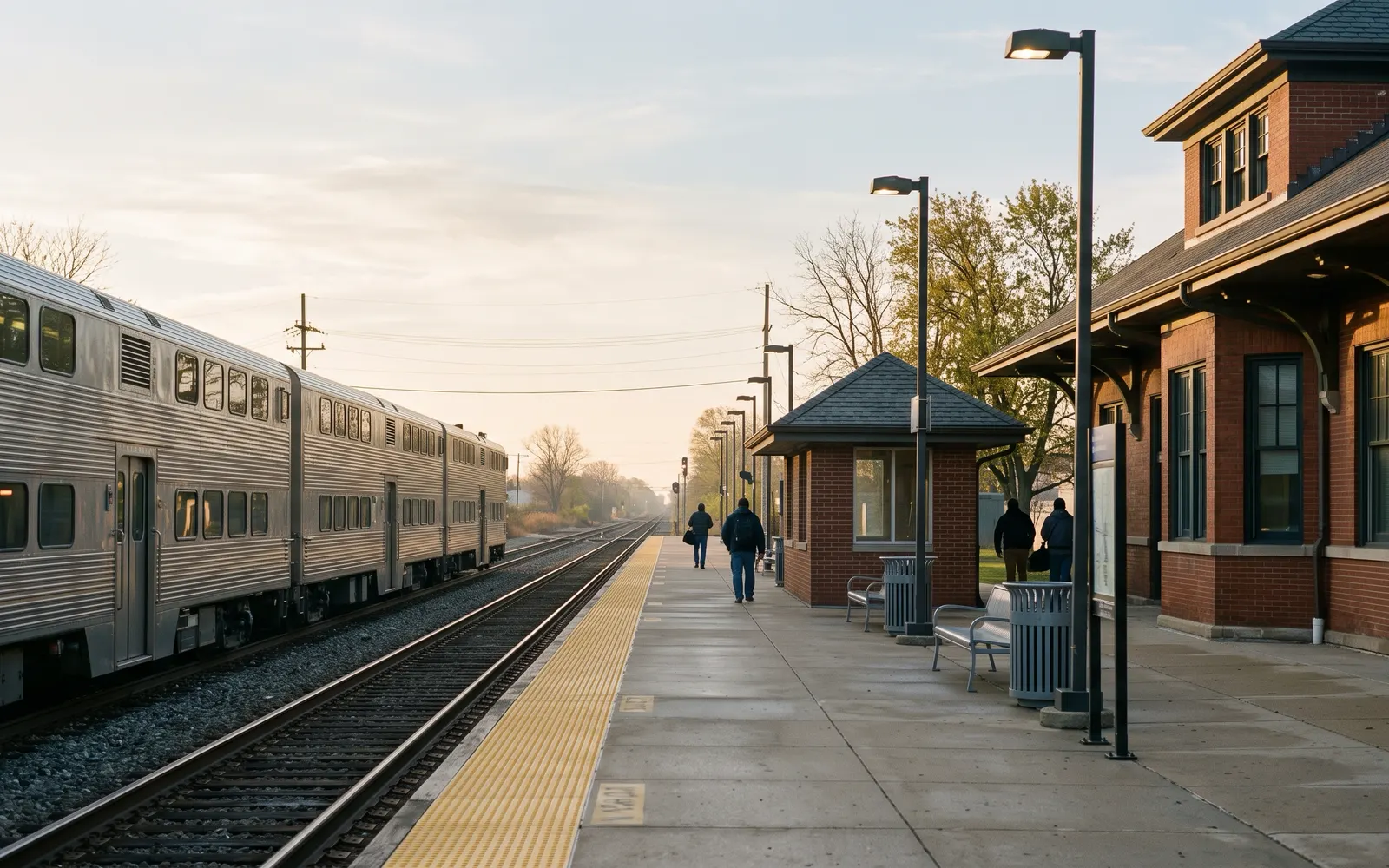
Trout Valley has no station, but two are close. By my measurement from the village's official map point to Metra's station coordinates, the Cary station is about 1.0 mile away as the crow flies and Fox River Grove is about 1.7 miles. Both are on the Union Pacific Northwest line to Ogilvie Transportation Center.
Based on Metra's schedule data for the regular timetable that starts October 26, 2026, Cary has 27 weekday trains to Chicago and 25 back. Four morning expresses, the 6:04, 6:34, 7:04 and 7:34 a.m. departures, reach Ogilvie in 58 minutes. Local trains take 78 to 79 minutes. On weekends, Cary has 15 inbound trains on Saturdays and 9 on Sundays, taking 61 to 75 minutes.
Fox River Grove has the same 27 weekday inbound trains, three minutes closer to the city: the morning expresses take 55 minutes, and locals about 75.
The honest math: add a short drive and parking, and a downtown commute is a little over an hour each way on an express, closer to an hour and a half on a local. For buyers comparing lake and river towns in McHenry County, Trout Valley is one of the closest to a station.
Driving In and Out of Trout Valley
Trout Valley is reached from Cary-Algonquin Road, which runs along its west side. The association's lot map shows the ways in: Stonegate Road through the historic gate, Country Commons Road at the north end, and Trout Valley Road and Brookbridge on the west. Main Street runs along the north edge toward downtown Cary.
The snow rules double as a traffic guide. According to the snow route page, Stonegate Road is one-way heading south into the valley, so it is an entrance and not an exit. The steep stretches plowed first are Country Commons just before Cary Road, River Road by the pool and past Willet Way, Big Oaks, Turkey Run and Little Marryat. If you are looking at a house at the bottom of one of those hills, drive it in winter before you buy.
For longer trips, O'Hare is about 23 miles away and the Loop about 39 as the crow flies, by my measurement. Inside the village, the roads are narrow and shared with horses, bikes and golf carts. The Riding Club page asks drivers to slow down and give riders extra room.
Is Trout Valley Walkable?
For errands, no. Walk Score does not publish a village-wide number for Trout Valley, so I checked the barn at the center of the community: 167 Country Commons Road scores 17 for walking and 39 for biking. Walk Score calls it car-dependent, which fits a village with no stores.
For getting outside, it is a different story. The lot and trail map shows horse trails running behind lots across the village, the fen has nearly three-quarters of a mile of walking trails, and the riverfront park, the ponds and the pastures are all on common land. The walk here is to the river, the ponds or the barn, not to a coffee shop.
The Fox River in Trout Valley: Marina, Boat Launch and Riverfront Park
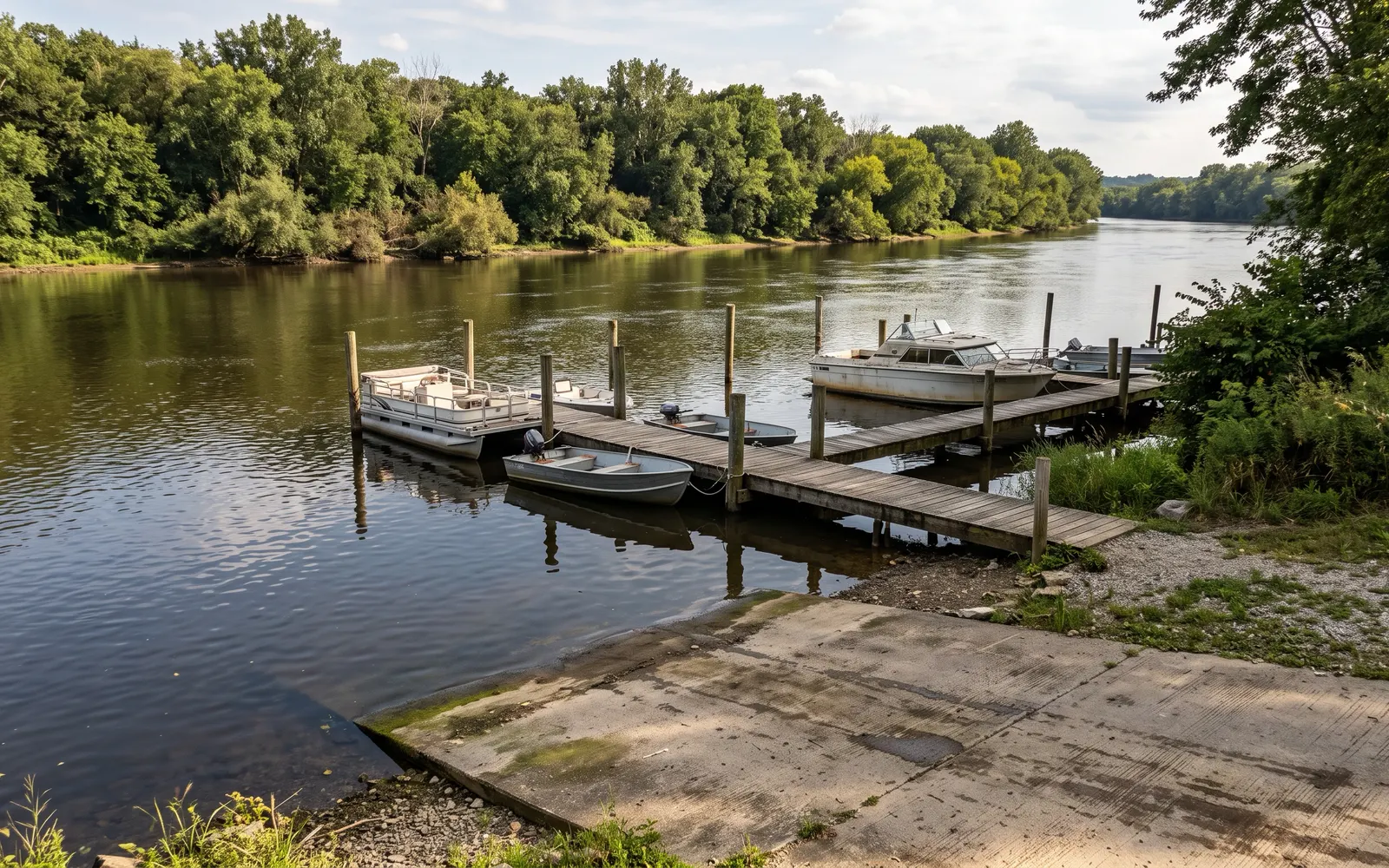
The Fox River is Trout Valley's southern border, and the association owns the riverfront. According to the riverfront page, the riverfront park has the lodge, the marina, a tennis court, a picnic area, a playground, a basketball court and a bonfire ring. The about page notes access from there to the Fox River and the Chain O'Lakes.
The marina page describes a 2019 rebuild paid for jointly by the association, the village and the Boat Club: a new 30-by-12-foot reinforced concrete launch ramp, a 35-foot pier, dredging to more than 5 feet, new steel pier poles, and lighting and electric at each of the 18 slips. Any member in good standing can use the ramp with a $35 key, which also opens the lodge gate and outdoor restroom.
Slips are a different matter. The marina page says river rights on the Fox Waterway are limited, the association holds 18 certificates, and new ones are not being issued. To get a slip you join the Boat Club, which runs as an equity club. Its page, last updated around 2020, put the equity price at $4,000, dues at $300 in 2019, and the waiting list at 16 people in January 2020, turning over two or three slips a year. Those numbers are old, so ask the club for current ones.
If you are buying on River Drive, the lots along the water are private, and the deed restrictions allow river-front owners to store shore stations on the bank above the water line over winter. Ask the seller about the shoreline, any seawall and flood history, covered below.
Trout Valley's Trout Ponds and Fen
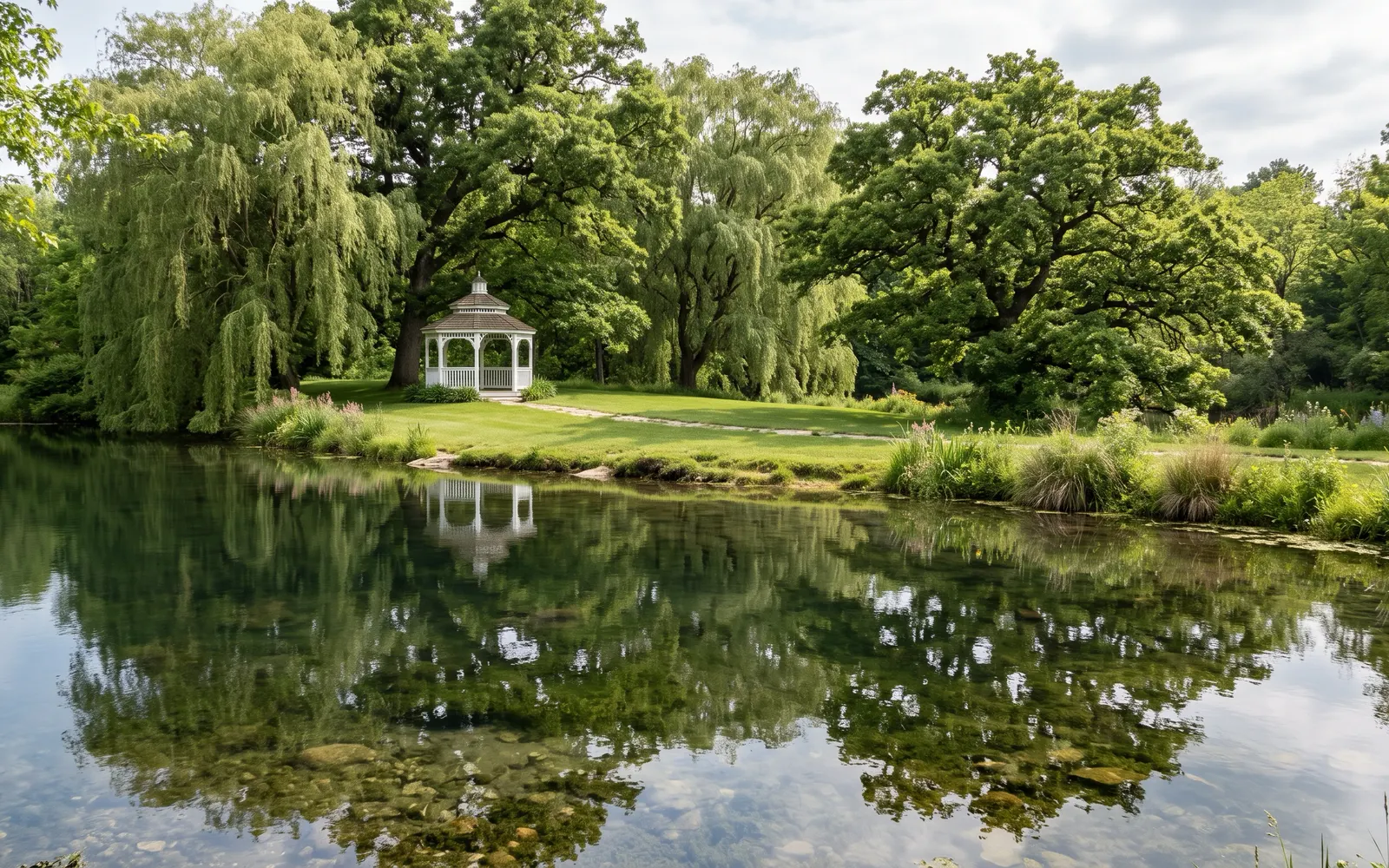
The ponds are what make Trout Valley unusual. According to the trout ponds page, the pond system was created for Hertz by Jens Jensen and is fed by a continuous flow of cold, oxygen-rich water seeping from the fen. The upper ponds are stocked with rainbow, brown and brook trout, and Tom Sawyer Pond has bass. The association manages weeds with grass carp and treatments, and dredging, flow control and stocking are paid for jointly by the association, the village and contributions from residents who fish.
The fishing rules are strict. Only members and their accompanied guests may fish, and the member must wear a fishing badge, which comes in the welcome packet. Every fish caught anywhere in Trout Valley waters must be released. The trout ponds are fly fishing only with barbless hooks, and an Illinois fishing license is required. Swimming and ice skating on the ponds are banned.
The fen is common land of about 8 acres on either side of Trout Valley Road, entered by the bridge. The fen page says volunteers have been clearing buckthorn, honeysuckle and garlic mustard since 2015, protecting what it calls one of the finest stands of skunk cabbage in northeast Illinois, and have built nearly three-quarters of a mile of walking trails. The volunteers usually meet Thursday mornings at 9. A separate charity, the Trout Valley Preservation and Restoration Society, paid for a 2016 pond dredging and fish stocking, and is raising money now to restore the second pond, per its page.
The Pool, Barn, Lodge and Horses in Trout Valley
Beyond the river and the ponds, the association owns a set of amenities that most neighborhoods this size do not have. They are for members in good standing, and several carry separate fees on top of dues.
The pool is the 1923 Hertz pool, a Roman-style structure with stone balustrades that the historical landmarks page calls a focal point for community events. Membership is separate from dues.
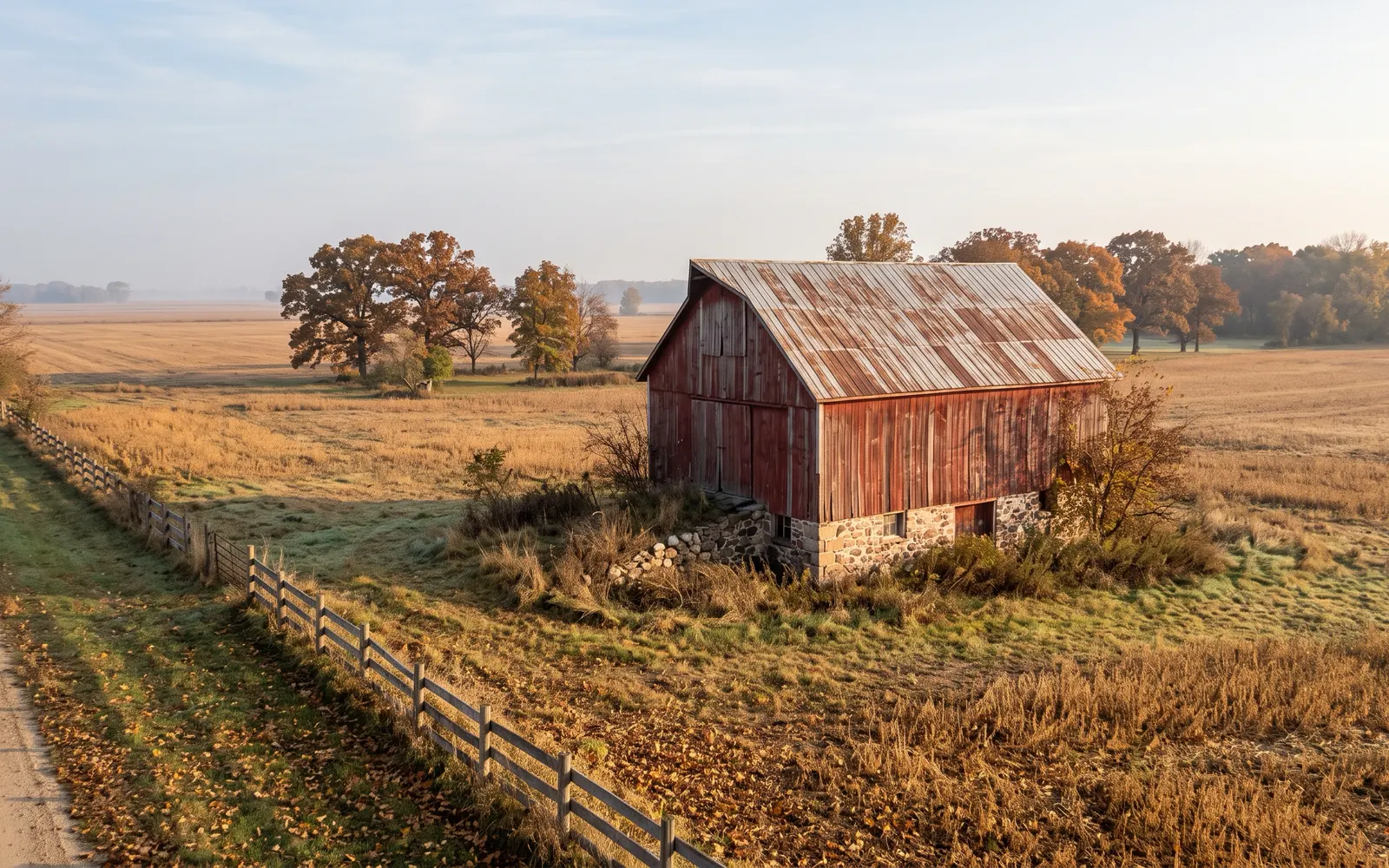
The barn at 167 Country Commons Road has an event space on its second floor. The barn page lists capacity of 130 people, a kitchen and a bar, a $150 rental with a $400 deposit, and $400 for large tented events. The barn is not air conditioned. The lodge at 1 Howard's Way, on the river, holds 75 people indoors with a kitchen, fireplace and patio, at the same $150 rate, per the lodge page. Both are rented only by adult members in good standing and cannot be used for political, religious or business events.
Horses are part of daily life. The lower level of the barn is home to the Trout Valley Riding Club, a co-op of residents who board horses there and use the outdoor arena, three paddocks, the upper and lower pastures and the trails. You have to be a member and a resident to board. Individual lots cannot keep horses; the deed restrictions allow only house pets on residential lots.
The rest of the list: a tennis court by the lodge for Tennis Club members, a baseball field next to the lower pasture that residents can reserve, and 30 free garden plots at the east end of the pasture, assigned each spring, per the garden plots page. Clubs cover bird watching, books, cards, boating, riding, tennis, the fen and local history.
Oak Woods and Open Land Around Trout Valley
The trees are managed, not just admired. The village's Forestry Board, created in 2011, pays for planting, pruning and disease treatment on common land, runs the village's Tree City program, and reviews utility tree removals. In January 2020 the Land Conservancy of McHenry County recognized it for maintaining Trout Valley's oak savanna. The village's Nature Conservancy board, formed in August 2021, looks after the natural areas and runs a tree nursery on village land on River Drive.
For owners, that has a practical side. The deed restrictions bar cutting trees on an unimproved lot without the association's permission and require owners to clear dead or diseased timber. The village also asks residents not to feed deer, following the Illinois Department of Natural Resources ban, because of chronic wasting disease and ticks.
Next door, the Fox Bluff Conservation Area of the McHenry County Conservation District covers 279 acres at Cary-Algonquin and Cold Springs roads, with woodlands, wetlands, fens, 2.5 miles of trail and 3,530 feet of Fox River shoreline. It is open sunrise to sunset. The district says it is working on a master plan for the southern section of the site, the former Camp Algonquin, which Jens Jensen also worked on in 1911.
Shopping and Dining Near Trout Valley
Trout Valley has no stores, restaurants or gas stations. The deed restrictions limit the lots to residential use, and the only commercial building connected to the association, at the Country Commons entrance, is in the Village of Cary.
Every errand is a short drive into Cary, which starts at the village's north edge. My Cary guide covers downtown Cary, its grocery stores and its restaurants in detail, and the Fox River Grove guide and Algonquin guide cover the river towns on either side. For most Trout Valley addresses, a grocery run is measured in minutes, not miles.
For buyers, the lack of retail cuts both ways. There is no commercial traffic and no parking lots, and the covenants make it very unlikely there ever will be. There is also no corner store.
Utilities, Trash and Services in Trout Valley
Most services come through Cary. The association's about page says Trout Valley is within the Cary library and park districts, so residents use the Cary Area Public Library and Cary Park District programs. Fire and ambulance service comes from the Cary Fire Protection District, which lists Trout Valley among the communities it covers with fire suppression, rescue and advanced life support ambulance care from two stations.
Trash is set up by each owner. The FAQ says pickup in the village is on Wednesdays by Groot, while the Cary homes use Flood Brothers on Tuesdays, and the deed restrictions let the association pick a single hauler for the community. Recorded utility easements date to 1955 and name the gas, electric and telephone companies of the day. Water and sewer are your own well and septic, as covered above.
Two association services are worth knowing. Maintenance chips small branches and brush from your yard, with limits, and new owners get a welcome packet with the car sticker and fishing badge. The weekly association newsletter is where road work, rentals and events are announced.
Hospitals Near Trout Valley
There is no hospital in the village. Northwestern Medicine McHenry Hospital, with over 200 beds according to Wikipedia, is about 10 miles north as the crow flies. Ambulance service comes through the Cary Fire Protection District, which provides advanced life support ambulance care.
Trout Valley's Yearly Traditions
Trout Valley's calendar is run by volunteers. The biggest public event is the Turkey Trot on Thanksgiving morning, a 5K at 9 a.m. and a one-mile race at 8:30, starting and finishing near the lodge. Proceeds go to the Cary-Grove Food Pantry, and runners are asked to bring a non-perishable food item.
The social committee runs a Fourth of July party, a Halloween party and holiday gatherings through the year, and the Riding Club hosts a Kentucky Derby party. The fen volunteers meet on Thursday mornings, and Arbor Day is marked each year by planting a tree.
The village board meets every other month at 7 p.m. at the lodge, on the second Monday. The 2026 schedule lists October 12 and December 14 as the remaining regular meetings this year, with a remote option. The association board meets separately. With roads, ponds and dues on the agenda, those meetings are where the decisions that affect your house get made. The village president's seat and three trustee seats are up in April 2027.

What's Changing in Trout Valley
Almost nothing new is being built in Trout Valley, and the reasons are written into the deeds. Lots are limited to one house each, splitting a lot without the association's consent carries a $10,000 fine, and there is no public sewer. The ACS counts one home built since 2010. What changes here is maintenance.
The road program is the largest item. After the 2025 project, the association still estimates about $1.25 million to rebuild the rest of the 5.7 miles, and Brookbridge, with its damaged drainage pipe, is planned for 2027, per the roads page. The village has put its money into storm pipes under Trout Valley Road.
The water and the historic buildings are next. The Restoration Society is raising money to restore the second trout pond, and a newer charity, the Friends of Trout Valley Historical Foundation, formed in 2023, aims to preserve and restore the structures and grounds of the old Hertz and Curtiss estates. Next door, the conservation district's master plan for the southern part of Fox Bluff will decide what public amenities go on that land.
For buyers, the short version is that Trout Valley is not about to change fast. The bigger question is what the roads, ponds and buildings will cost owners over the next decade.
I don't label any town or neighborhood as safe or unsafe.
Flood Risk on the Fox River in Trout Valley
Flooding in Trout Valley is concentrated at the bottom of the valley. Redfin, using First Street's model, rates the village's flood risk as moderate, with 18 properties, about 7%, at risk of severe flooding over the next 30 years. The same page rates wildfire risk moderate for 28% of properties, which reflects the tree cover.
The federal map shows where. I checked the village boundary against FEMA's National Flood Hazard Layer: by my measurement, about 1% of the village's land falls in the mapped Zone AE flood area, including the regulatory floodway, all of it along the Fox River at the south edge. The rest of the village is Zone X, minimal hazard. The two summer 2026 sales on Willet Way and Marryat Road, up the hill, both carried Redfin's lowest flood score.
If you are buying on River Drive or near the ponds and streams, three checks: look the address up on the FEMA map, because a mapped Zone AE can mean required flood insurance on a mortgage; ask the seller about past high water and any flood claims; and have the inspector look at drainage on the slope. On the hills, the question is where storm water goes, and the village's stormwater budget line exists for a reason.
Frequently Asked Questions
How much does a house cost in Trout Valley, IL?+
Zillow's home value index was $578,742 for August 2026, up 5.6% in a year. Redfin reported a three-month median sale price of $894,000 through August 2026, but only a few homes sell each month. Summer 2026 sales ran from $640,000 to $1,000,000.
What are property taxes in Trout Valley, IL?+
The median effective rate is about 2.52%, with a median bill of about $11,905 (Ownwell, April 2026), against a McHenry County median rate of 2.42%. Budget for $1,600 a year in association dues on top.
Does Trout Valley have an HOA?+
Yes. Every lot owner must belong to the Trout Valley Association. Single-lot dues are $1,600 a year, billed $800 on March 1 and September 1, and pay for the private roads, common land and amenities. Unpaid dues become a lien on the lot.
What school district is Trout Valley, IL in?+
Cary Community Consolidated School District 26 for the early grades through eighth grade and District 155 for high school. Recent listing records show Briargate Elementary, Cary Junior High and Cary-Grove High School. Confirm each address with both districts.
Are the roads in Trout Valley private?+
Yes. The Trout Valley Association owns and maintains about 5.7 miles of road, paid for through dues. About 2 miles have been rebuilt since 2016, and the association estimates the rest at about $1.25 million. The McHenry County Sheriff enforces traffic law on them.
Is Trout Valley part of Cary?+
Partly. The Village of Trout Valley is its own municipality covering the homes south of Country Commons Road. About 10% of Trout Valley Association homes, at the north end on Stonegate, Briargate, Little Stonegate, Bee Court and the north side of Country Commons, are in the Village of Cary. All use Cary 60013 addresses.
Can Trout Valley residents use the Fox River?+
Yes. The association's riverfront park has a launch ramp any member can use with a $35 key, a lodge and a playground. The 18 marina slips are held through the equity-based Boat Club, which has had a waiting list.
Do Trout Valley homes have city water and sewer?+
No public sewer serves the homes; the deed restrictions require septic systems approved through the county health department. EPA records show no active public water system for the homes, so expect a private well and test it before you buy.
Eshu Chikoti has extensive access to off-market listings throughout Trout Valley and the rest of McHenry County — homes that never make it to the public listing sites. That matters right now: in a seller's market like this one, well-priced homes routinely go under contract within days, and buyers relying only on public listings are competing for whatever is left over. Working with someone plugged into off-market inventory means seeing homes before the crowd does.
Eshu Chikoti · 847-691-4282 ·
Get new Trout Valley listings by email
When a home comes on the market in Trout Valley, I'll email it to you.
Just your email. Unsubscribe any time by replying.
Thinking About Trout Valley?
Whether you're buying, selling, or just curious what's on the market, I can walk you through Trout Valley street by street.