Cary, IL
Cary, IL is a McHenry County village of about 17,900 people on the Fox River, with a Metra station downtown, 58-minute express trains to the Loop and home prices well below the inner suburbs.
Living in Cary, IL means a median sale price near $390,000 this summer, property tax around 2.55% of value, and express Metra trains that reach Ogilvie in 58 minutes. Most homes are single-family houses from the 1970s to the 2000s, and the village is car-dependent outside downtown. Here is how it breaks down, pocket by pocket.
Written by Eshu Chikoti · 847-691-4282 ·
How Cary, IL Got Here: A Short History
Cary is named for the man who bought the land. According to Wikipedia's history of Cary, William Dennison Cary arrived in 1841 and purchased 82 acres at $1.25 an acre. For its first fifteen years the settlement was a farming area along the Fox River with no particular reason to grow.
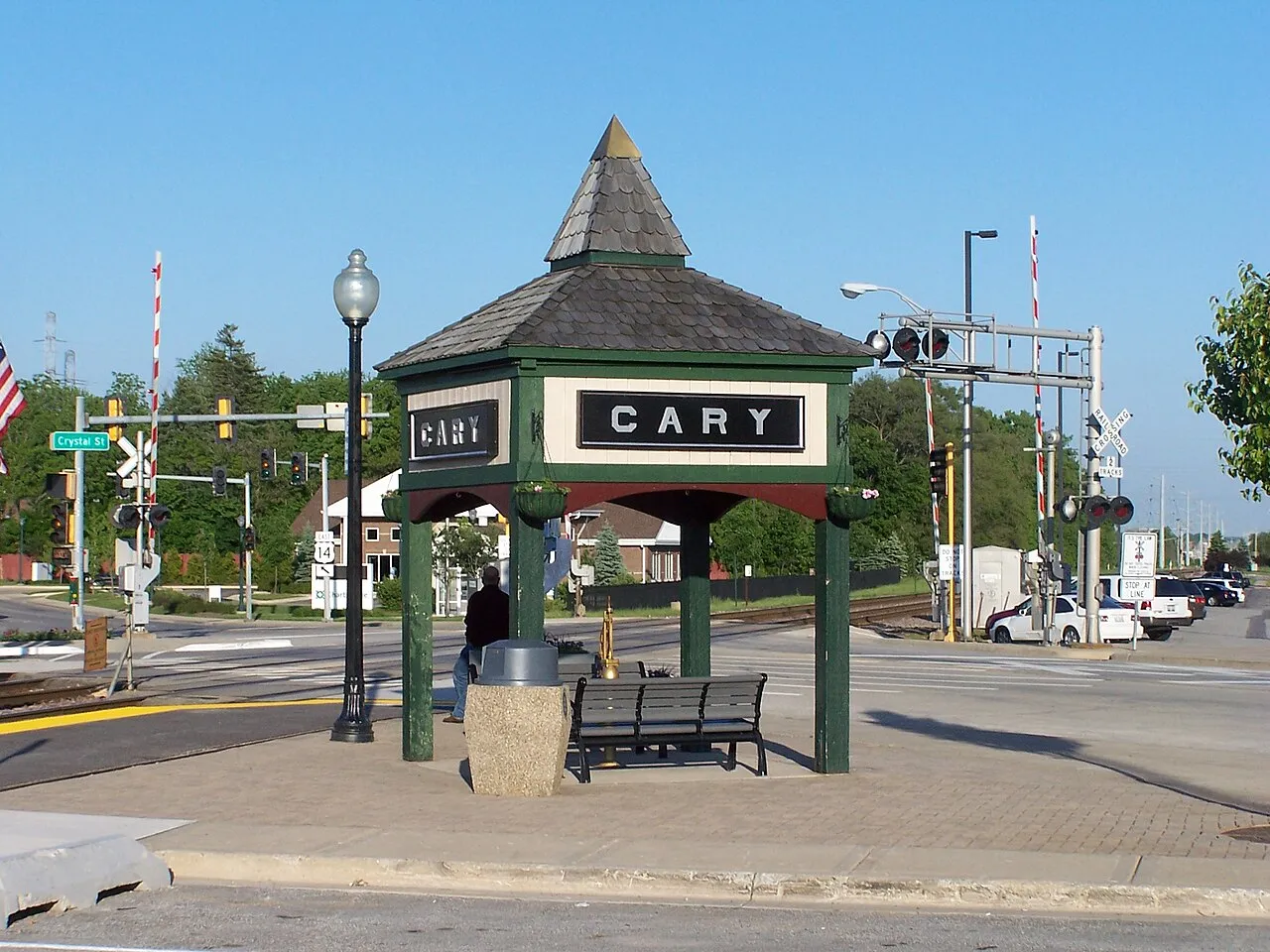
The railroad gave it one. In 1856 the Illinois and Wisconsin Railway added a station here on the line between Chicago and Janesville, and the stop became known as Cary Station. Local farmers used it to ship produce to Chicago and St. Louis, mainly pickles, which is a detail old-timers still like to mention. The community that grew up around the depot incorporated as a village in 1893.
That rail line is the same corridor Metra's Union Pacific Northwest trains run on today, which is why Cary's downtown sits right against the tracks and why the station is still the center of town. In the 1950s highway traffic overtook the railroad for freight, and U.S. Route 14 became the village's main commercial road. The subdivisions that make up most of Cary today came after that, mostly from the 1970s through the early 2000s.
The park system has its own history worth knowing because it explains how much open land the village has. The Cary Park District's history traces its creation to an October 1971 referendum, which grew out of a 1963 community survey asking for a swimming pool. The district bought the 258-acre Hoffman Park in 1999 and the 194.87-acre Foxford Hills Golf Club in 2004, and by 2023 it managed 52 parks and parcels covering about 846 acres.
Cary at a Glance
Cary covers about 6.6 square miles in the southeast corner of McHenry County, northwest of Chicago along the Metra line. Most of the village is in Algonquin Township. A small piece crosses into Cuba Township in Lake County, per Wikipedia. That matters more than people expect, because Lake County runs a different assessor and a different tax calendar. If a listing you like is near the east edge of the village, check which county the parcel is in before you run numbers.
The 2020-2024 Census ACS puts the population at 17,923, and 84.8% of occupied homes are owner-occupied. About 77% of the housing units are single-family detached houses and about 15% are single-family attached, which in Cary mostly means townhomes. Apartment buildings are a small slice today, which is part of why the two rental projects covered further down drew so much attention.
The Fox River forms much of the village's eastern side, and Cary sits between Crystal Lake to the northwest, Algonquin and Lake in the Hills to the southwest, and Fox River Grove to the east. U.S. Route 14, which locals call Northwest Highway, runs diagonally through the middle of town and past the downtown station. Illinois Route 31 runs along part of the western edge. Almost every neighborhood description you will hear uses one of those roads, Three Oaks Road or Rawson Bridge Road as the reference point.
One more thing to know from the start: the "Cary" on a listing is a mailing address, not a village boundary. The 60013 ZIP code reaches well past the village limits into unincorporated McHenry County, and those houses can have different water, sewer, police and tax situations. I cover that in its own section below.
Cary Neighborhoods, Pocket by Pocket
Cary has no official neighborhoods, but it is not one market. The simplest way to split it is by build era and by which side of Route 14 a house is on. The older blocks around downtown and the station are the original village. The subdivisions south and west of downtown, toward Three Oaks Road, Cary-Algonquin Road and Route 31, are mostly 1970s to 2000s single-family homes. The area east toward Rawson Bridge Road and the river mixes golf-course subdivisions with custom homes on larger lots.
The second split, and the one that surprises buyers most, is the school district. Most of the village feeds District 26, but some addresses fall in Crystal Lake District 47 or in District 300 to the south. At least one subdivision, Fox Trails, is split between two districts depending on the street. Two houses on the same subdivision map can feed different elementary and high schools, and that difference shows up in price.
Below are the pockets you will see named in listings. Boundaries are informal and agents draw them slightly differently, so treat them as a starting point. If you want to know which pocket a specific address falls in, which schools it feeds and what that pocket has sold for lately, that is a conversation I am happy to have here.
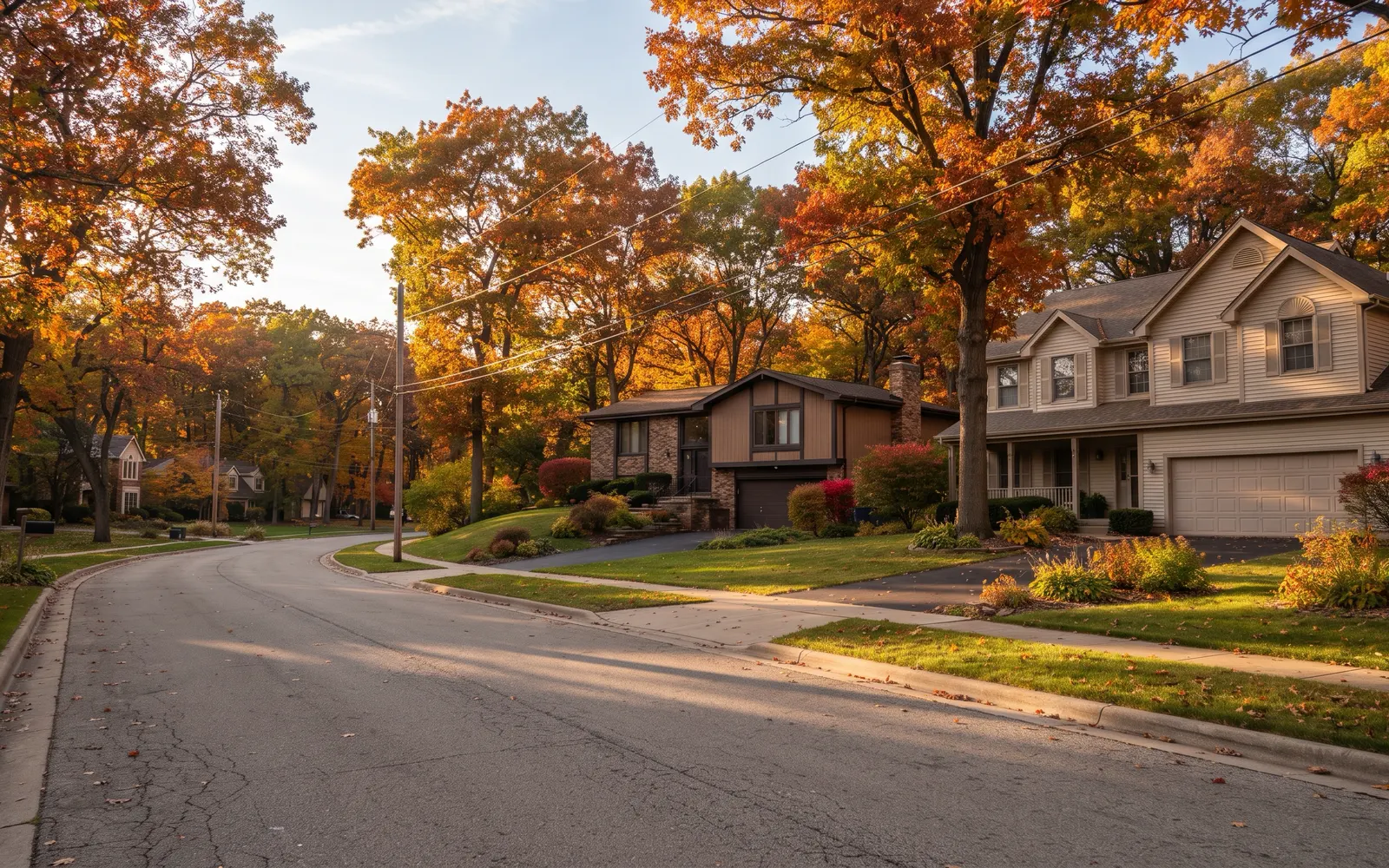
Downtown Cary. The original village around Main Street, Spring Street and the Metra station. Older homes on smaller lots, and the only part of Cary where walking to the train, restaurants and the social district is realistic.
Fox Trails. South and southwest of Cary-Algonquin Road and Route 14. Single-family ranches and two-stories built from 1988 into the 2020s, typically 1,650 to 3,500 square feet on lots around a third of an acre, with no HOA, per a local agent's subdivision page. The north side feeds District 26 and Cary-Grove; the south side feeds District 300.
Enclave at Fox Trails. West of Cary-Algonquin Road and north of Klasen Road. A newer single-family section built in the late 2010s.
Cambria. A single-family subdivision built around 2001, near Route 31. Its New Haven Drive is the street being extended to Route 31 for The Seasons at Cary (see the development section).
Foxford Hills. Built from about 2000 to 2007 around the park district's Foxford Hills Golf Club off Rawson Bridge Road. Larger two-story homes.
Brigadoon. One of the older pockets, with homes built from the late 1950s through the 1990s. Often one of the more affordable ways into a Cary single-family house.
Chalet Hills Estates. On Normandy Drive and Brittney Drive, north of Rawson Bridge Road. A single-family golf club community.
Saddle Oaks, Northwood Acres and Kingsbridge. Single-family subdivisions on either side of Rawson Bridge Road near Three Oaks Road.
Harvest Glen, Lyons Ridge, River Pointe and Rivers Edge. Custom and semi-custom single-family pockets east of Three Oaks Road toward Hickory Nut Grove Road and the river. Harvest Glen started in the early 2000s.
Greenfields, Cimarron, Fountaingate and Windham Hill. Smaller subdivisions you will see named on listings. Ask for the build year and the school assignment on each one; they vary.
What Cary Homes Look Like, by Era
Cary.s housing stock is newer than most river towns. The Census ACS puts the median year a housing unit was built at 1985. In practice that means three main groups.
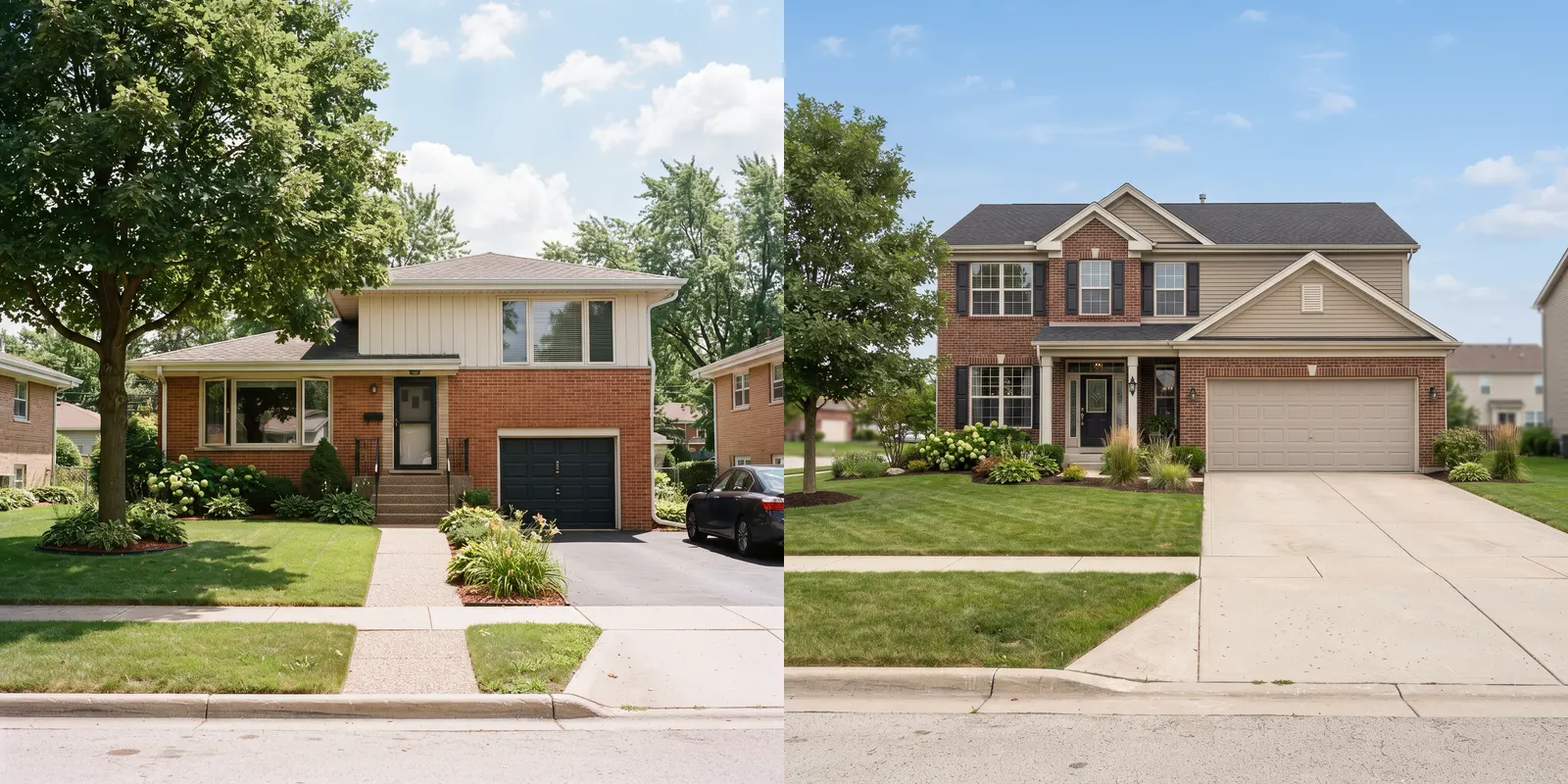
The oldest homes are around downtown and in pockets like Brigadoon: small bungalows, Cape Cods and ranches from the first half of the century through the 1960s, on narrower lots. Then come the 1970s and 1980s subdivisions, which are where the raised ranches, split-levels and bi-levels are. The largest group is the late-1980s to 2000s building boom, when Fox Trails, Cambria, Foxford Hills and the Rawson Bridge Road subdivisions filled in with two-story colonials, many with three-car garages and basements.
Townhomes are the other part of the market, about 15% of housing units. They are usually the lowest price of entry into Cary, and Redfin's August listings showed townhouses asking a median of around $318,000, well under the single-family median.
The ACS puts the median value of an owner-occupied home at $309,800 and median rent at $1,428 a month. Both lag the current market, because the survey averages five years, but the gap between them is a useful reminder of how few rentals the village has had until now.
In a 1980s or 1990s Cary house, the surprises I expect are more about age than era: original windows, a roof or furnace near the end of its life, and sump pumps that have been working harder than the seller realizes. None of those should kill a deal. All of them belong in the price. My home inspection checklist is a good place to start if you are weighing an older house.
Cary Addresses Outside the Village Limits
A listing that says "Cary, IL 60013" may not be in the Village of Cary at all. The mailing address covers unincorporated areas around the village, and names you will see on listings with a Cary address, such as Lake Killarney, Spring Beach, Oak Grove South Ranchettes, Picnic Grove and the Silver Lakes area near Oakwood Hills, are worth checking one by one. Neighboring villages like Trout Valley and Oakwood Hills also use Cary addresses for some homes.
It matters for four practical reasons. The first is water and sewer. Inside the village, most homes are on village water and sewer. Outside it, many homes are on a private well and a septic system, which means a well test and a septic inspection belong in your inspection period, and a failing septic field is an expensive surprise. The second is taxes: an unincorporated parcel does not pay the village levy, but it may have different township road and fire district levies, so the effective rate can go either way. The third is services. Police coverage comes from the county sheriff rather than the village police, and trash and snowplowing may be township or private contracts. The fourth is rules. Zoning and building permits come from McHenry County rather than the village, which can make a detached garage or an addition easier or harder depending on the lot.
None of that is a reason to avoid these areas. Some of the larger lots and most private settings in the 60013 ZIP are outside the village line. It is a reason to confirm exactly what you are buying. I ask for the PIN, the tax code and the water and sewer source on every Cary-address listing before an offer goes in.
The Cary Housing Market in 2026
Cary homes sell at or above asking more often than not. In the three months ending August 2026, Redfin reported a median sale price of $389,742, up 0.2% from a year earlier. The median home sold in 41 days, the same as last year, at 102.1% of list price, and 58.3% of homes sold over asking. Redfin counted 81 sales in August, down from 86 a year earlier, and gives Cary a Compete Score of 77 out of 100, which it calls very competitive. It puts the average number of offers at six.
The flat median hides a stronger picture. Redfin's median price per square foot, $192, was up 12.3% year over year. When price per square foot jumps and the median barely moves, it usually means more of the summer's sales were smaller homes and townhomes. Zillow's home value index, which estimates the value of all homes whether they sold or not, was $383,618 for August 2026, up 5.4% from August 2025 and up from $345,605 in August 2024. My read is that values kept rising at a normal pace and the mix of what sold shifted toward the smaller end.
What that means in practice: a well-priced house in a good pocket still draws multiple offers. An overpriced one sits, and 17.8% of homes had a price drop over the period. Cary rewards getting the list price right on day one.
Village-level numbers only go so far. The spread between a downtown bungalow, a Fox Trails ranch and a Foxford Hills two-story is well over $200,000, so the median tells you about the town and very little about a specific house. If you are trying to decide whether this is the year to buy at all, my 2026 buying timing guide walks through that question.
Cary Property Taxes and the Real Cost of Owning
Property tax is where Cary's lower prices give some of their advantage back. Ownwell's data, updated April 2026, puts the median effective rate at 2.55% and the median annual bill at $8,010, on a median assessed market value of $318,986. That is above both the McHenry County median of 2.42% and the Illinois median of 2.33%.
Here is what that looks like on a real purchase. At 2.55%, a house bought at this summer's $389,742 median would eventually carry about $9,940 a year in tax, roughly $830 a month on top of the mortgage. The current bill on the same house may be lower, because assessments trail the market. The assessor usually catches up after a sale. The expectation I most often have to reset is buyers who budget off the seller's current bill instead of the rate.
Each combination of township, school district, park district, library district and fire district is its own tax code with its own rate. In Cary that means Algonquin Township for most of the village, Cuba Township for the Lake County piece, and a patchwork of District 26, 47 and 300 codes, plus the unincorporated areas around the village. Two houses a mile apart can carry different bills at the same price. McHenry County bills are paid in two installments; check the county treasurer for this year's due dates.
My Lake County property tax appeal guide is written for Lake County, but the logic of an appeal (comparable assessments, deadlines by township) carries over to McHenry County, whose assessment office runs its own calendar. This is general information, not tax advice. Your actual bill depends on your parcel, your exemptions and the assessor.
Cary Schools: District 26 and Cary-Grove High School
Most of Cary is served by two districts. According to the Village of Cary's schools page, Cary Community Consolidated School District 26 is the main elementary and junior high district, with three K-5 elementary schools (Briargate, Deer Path and Three Oaks) and Cary Junior High for grades 6 through 8. High school is Community High School District 155, and Cary-Grove High School also serves Fox River Grove, Trout Valley and Oakwood Hills.
Confirm the district for a specific address with the district office, and read each district's profile on the Illinois Report Card at illinoisreportcard.com.
The detail that trips people up is assignment. The village's own page notes that Crystal Lake District 47 and District 300 each serve a small portion of Cary, and that some residents attend Prairie Ridge rather than Cary-Grove. In Fox Trails, the north side feeds District 26 and the south side feeds District 300, whose high school is Dundee-Crown. Do not assume from the town name. Check the address with the districts directly before you write an offer, and ask me for the boundary on a specific house.
Private options in the village include Saints Peter and Paul (K-8) and Trinity Oaks Christian Academy (PK-8), and McHenry County College is a short drive away in Crystal Lake.
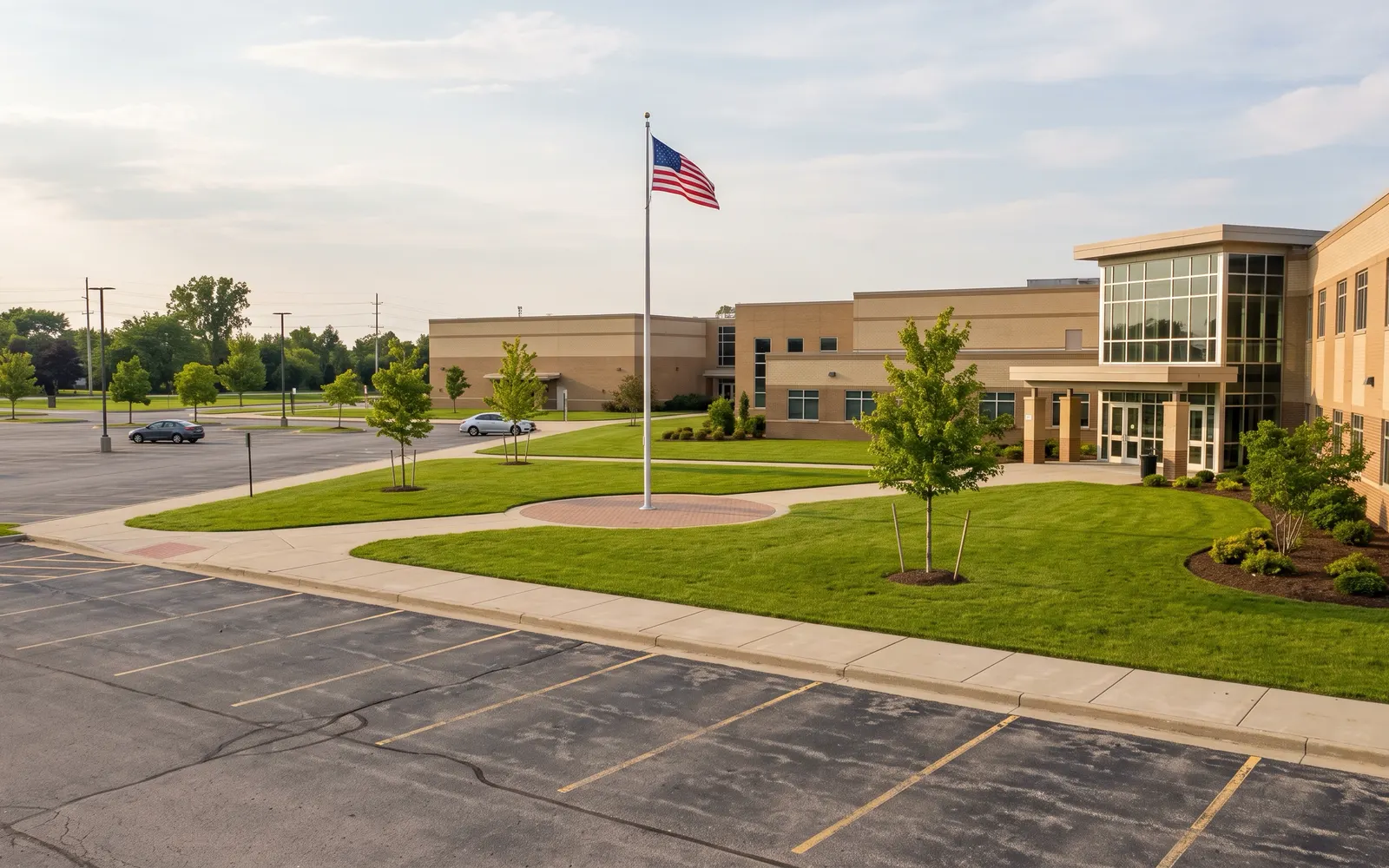
Briargate Elementary. 100 Wulff St. Grades K-5, District 26.
Deer Path Elementary. 2211 Crystal Lake Rd. Grades K-5, District 26.
Three Oaks Elementary. 1514 Three Oaks Rd. Grades K-5, District 26.
Cary Junior High. 2109 Crystal Lake Rd. Grades 6-8, District 26.
Cary-Grove High School. District 155.
Prairie Ridge High School. District 155, in Crystal Lake. Serves some Cary-area addresses.
Commuting from Cary: Metra to Chicago
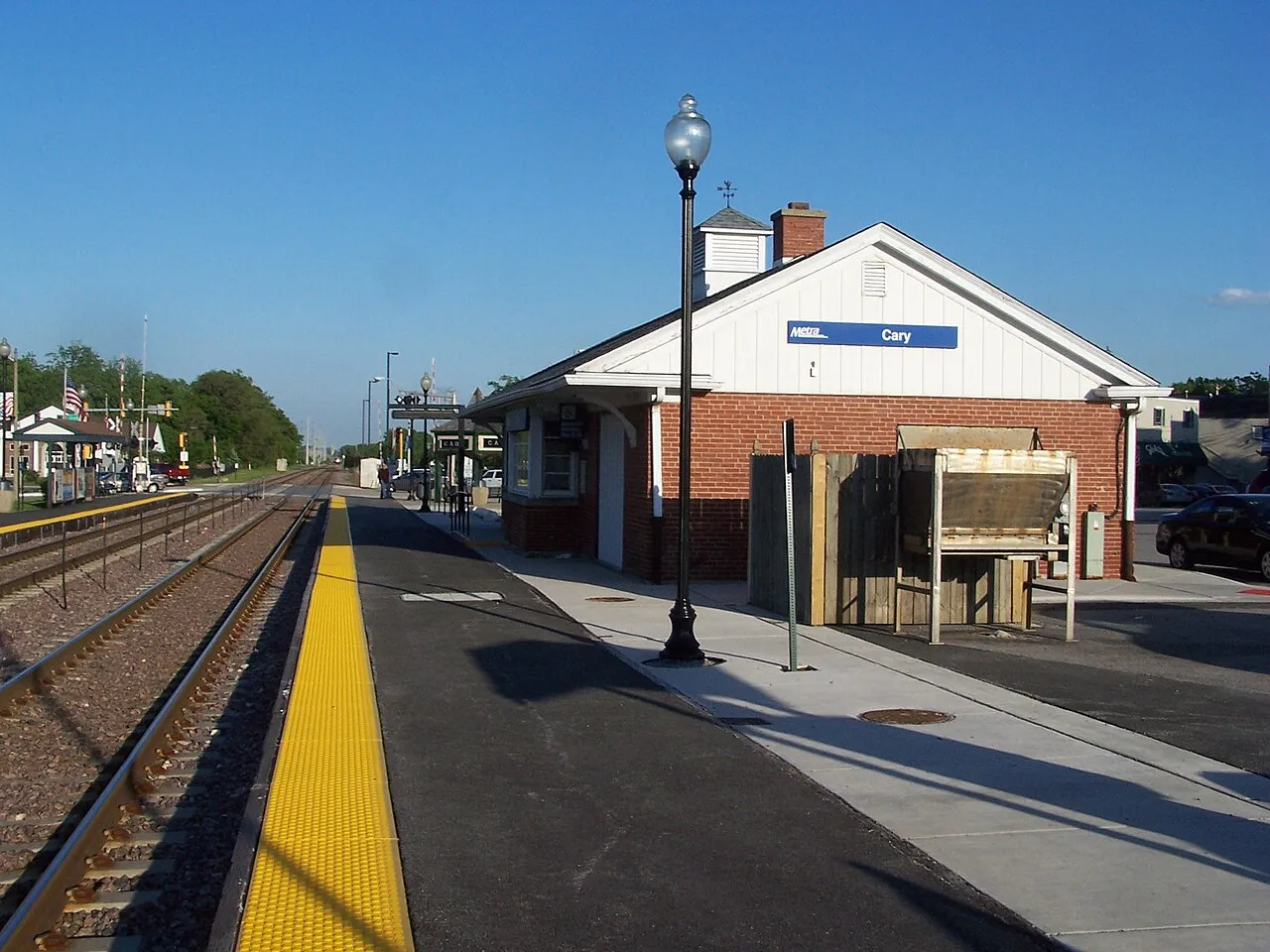
The Cary Metra station sits in the middle of downtown on the Union Pacific Northwest line, a one-seat ride to Ogilvie Transportation Center in the Loop. Based on Metra's published schedule data for the weekday timetable effective September 28, 2026, 27 inbound and 25 outbound weekday trains stop at Cary. On weekends there are 15 trains each way on Saturday and 9 inbound on Sunday.
Train choice matters more here than almost anywhere in the Chicago suburbs. The four morning expresses make the run in 58 minutes: the 6:04, 6:34, 7:04 and 7:34 a.m. trains, with the 6:04 reaching Ogilvie at 7:02. Local and midday trains take about 76 to 79 minutes. That 20-minute gap each way adds up to more than three hours a week if you commute daily, so it is worth building your mornings around the express times.
Cary is also closer to the city than Crystal Lake on the same line. Fox River Grove, the next stop east, has its own station for homes on that side of the river.
The buyers I see happiest with this commute either work a hybrid schedule or treat the train as work time. If you will be in the Loop five days a week, ride it once at your actual hours before you buy.
Driving from Cary: Highways and O'Hare
Cary has no interstate inside the village, and that shapes daily driving. U.S. Route 14 runs southeast through Fox River Grove and Barrington toward the city, and Illinois Route 31 runs along the west side toward Algonquin and I-90. Most drivers heading to O'Hare or the western suburbs take Route 31 or Randall Road south to I-90. Rush hour on Route 14 through Barrington can add a lot to any estimate, so test the drive at the times you would actually make it.
The river crossings are the other thing to know. Cary-Algonquin Road, Rawson Bridge Road and Route 14 are the main ways across or along the Fox River here, and on a busy afternoon they back up. If a house you like backs up to Route 14 or Route 31, listen from the backyard at rush hour before you make an offer.
A road project to watch: the village's Maplewood Road extension, tied to the Cary Station redevelopment downtown, could start construction in 2027, according to Shaw Local's May 2026 report.
Is Cary Walkable?
Mostly not, with one real exception. Walk Score rates the village 24 for walking and 25 for biking, which it calls car-dependent: almost all errands require a car. It counts about 38 restaurants, bars and coffee shops in Cary. In the subdivisions the numbers drop further; Walk Score gives Fox Trails a 3.
The exception is downtown. The blocks around Main Street, Spring Street and the Metra station put the train, the restaurants, the library-to-park walk and the downtown social district within reach. If walking to the train matters to you, it narrows your search to a small part of town, and those houses tend to go quickly when they come up.
For recreation, the picture is much better. Hoffman Park, the conservation areas and the Fox River give you long walks and rides without leaving the village, and the Prairie Trail runs through neighboring Algonquin and Crystal Lake for longer bike trips.
Downtown Cary and Shopping
Downtown Cary is small and built around the train. The village runs a Downtown Social District from March 1 to December 15, 6 a.m. to 11 p.m., which lets you carry a drink from participating businesses around the downtown area. On a summer evening that makes the few blocks around the station feel like more than their size.
Most everyday shopping is on Route 14, which has the strip centers, pharmacies, banks and hardware stores that cover weekly errands. For bigger shopping, Randall Road in Algonquin and Lake in the Hills has the big-box stores and the Algonquin Commons area, a short drive south. Crystal Lake's Route 14 strip and downtown Barrington are both short drives in the other directions.
Groceries and Everyday Errands in Cary
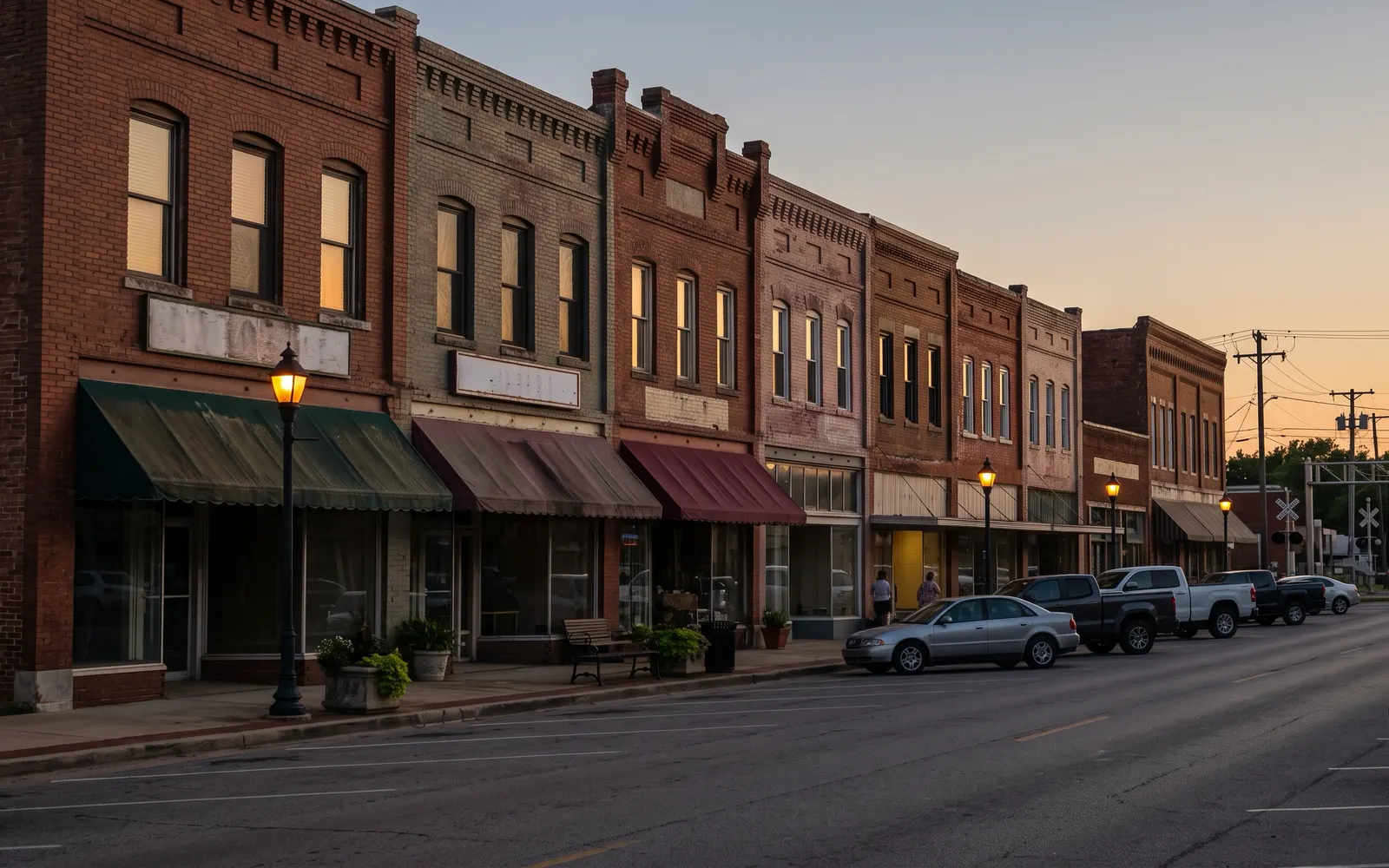
For groceries, most Cary residents shop along Route 14 in the village or head to Randall Road and Crystal Lake, where every major chain has a store. Orchard Prime Meats in downtown Cary is the local butcher people mention by name. Pharmacies, dry cleaners and banks cluster along Route 14, so most weekly errands stay close to home.
Where Cary Eats
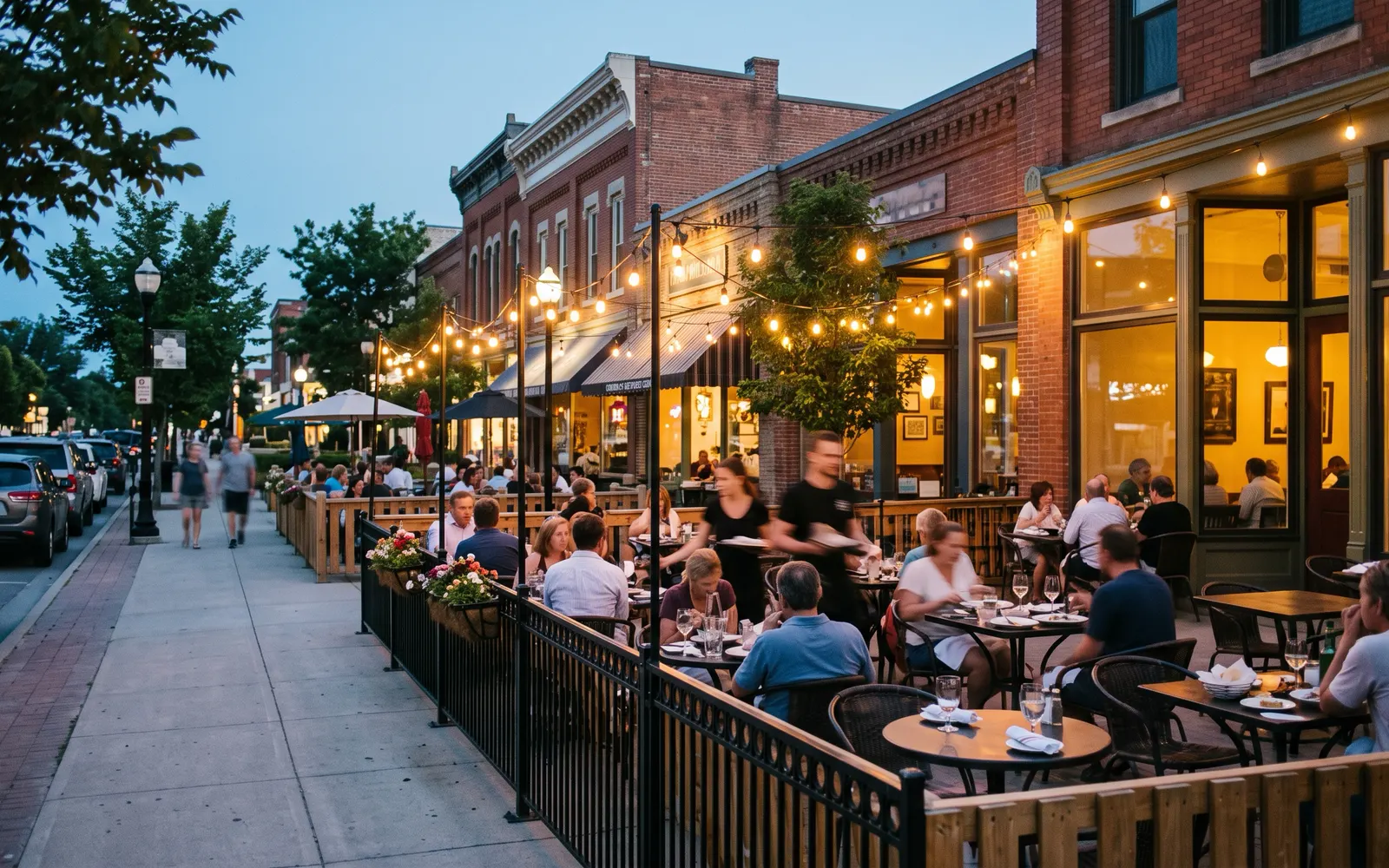
Downtown is where Cary's restaurants concentrate. According to Naturally McHenry County's downtown Cary page, the names that come up are Cary Ale House & Brewing Company, The Tracks Bar & Grill and 750 Cucina Rustica, all within a short walk of the station. Cary Ale House opened in 2015 and added its own brewery in 2018, per its Enjoy Illinois listing. Spring Beach Inn, a long-running tavern known for its homemade pizza, is the other local name you will hear.
Route 14 fills in the chains and quick-service spots, and the restaurants of downtown Crystal Lake and Barrington are each a short drive away when you want more variety.
Parks, Golf and the Fox River in Cary
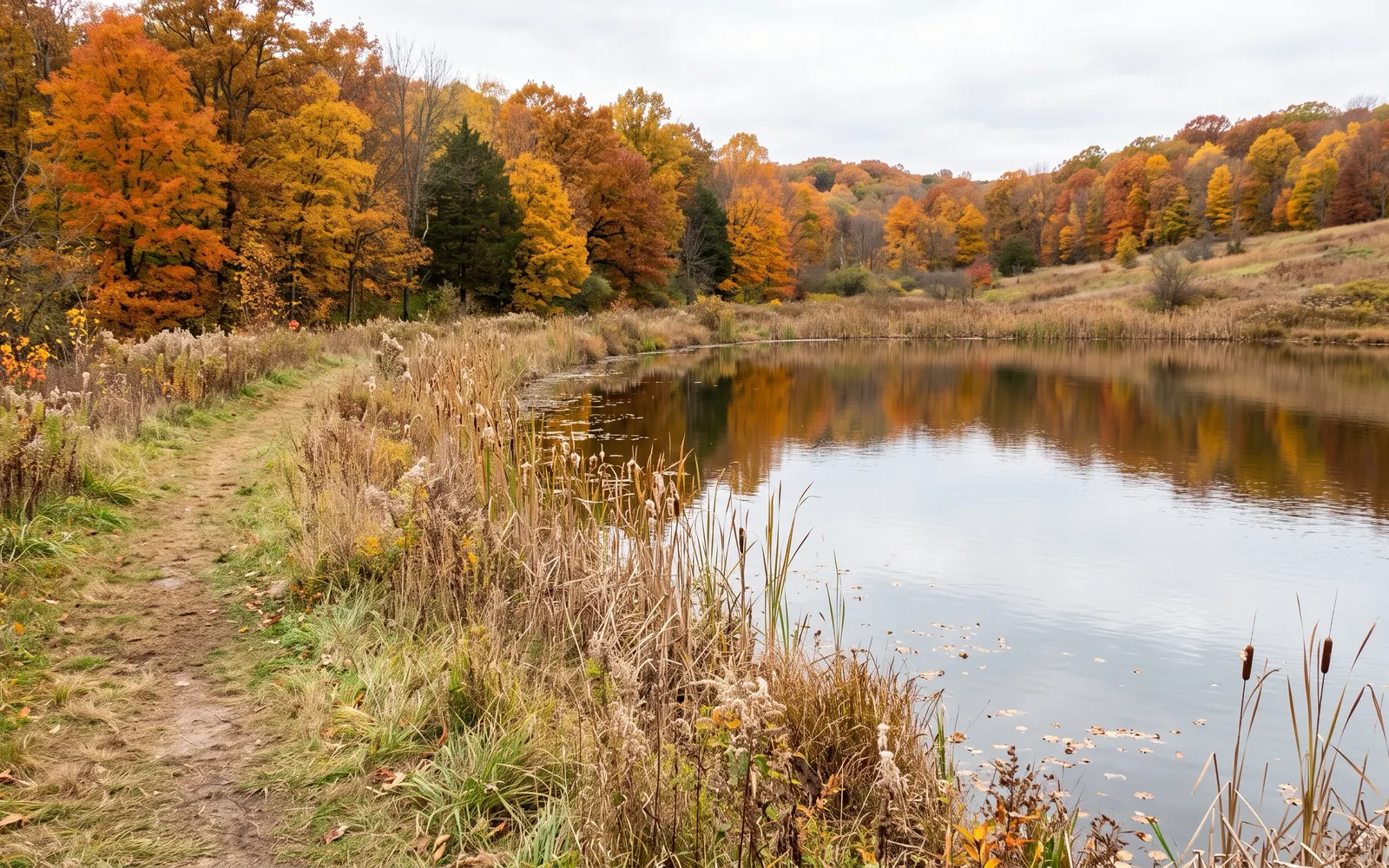
Open space is one of Cary's strongest points. Choose Cary, the village's economic development site, counts more than 2,400 acres of public open space. The Cary Park District runs the Community Center and fitness center at 255 Briargate Road, Sunburst Bay Aquatic Center at Cary-Grove Park on First Street (opened in 2022), a dog park and the Walnut Hollow disc golf course at Hoffman Park, and Foxford Hills Golf Club, a public 18-hole course on Rawson Bridge Road.
Hoffman Park is the big one, 258 acres with walking trails, a fishing pond, the dog park and disc golf. Cary Lake at Rotary Park, 1300 Klasen Road, is the village's own lake and open space; if you searched for "Cary Lake," this is it.
The McHenry County Conservation District adds more. The Hollows on Route 14, Fel-Pro RRR Conservation Area on Crystal Lake Road, Silver Creek on Rawson Bridge Road, Hickory Park Highlands and Lyons Prairie and Marsh on Hickory Nut Grove Road, and Fox Bluff just over the line in Algonquin are all within a few minutes of most Cary homes. Cary Country Club on Grove Lane is the private course in town.
The Fox River is the other draw. It runs along the east side of the village, and boaters use it north toward the Chain O'Lakes. If river access matters to you, ask about it house by house, because frontage, easements and flood zone status all vary along the bank.
The Cary Area Public Library
The Cary Area Public Library is at 1606 Three Oaks Road. It is open Monday through Thursday from 9 a.m. to 9 p.m., Friday and Saturday from 9 a.m. to 5 p.m., and Sunday from 1 to 5 p.m., and it runs programs for all ages through the year. Like the park district, it is a separate taxing district, so it shows up as its own line on the property tax bill.
Utilities in Cary
Inside the village, the Village of Cary provides water and sewer. ComEd delivers electricity and Nicor Gas provides natural gas. Outside the village limits, many homes with Cary addresses are on private wells and septic systems instead, so ask for the water and sewer source on every listing and budget for a well test and septic inspection when it applies. Check with the village on the current trash and recycling contract before you assume a hauler or a rate.
Hospitals Near Cary
Cary does not have its own hospital. The closest full-service options are Advocate Good Shepherd Hospital near Barrington to the southeast and Northwestern Medicine hospitals in Huntley and McHenry to the west and north. Immediate care and outpatient clinics are spread along Route 14 and Randall Road. Drive times depend a lot on which side of the river you live on, so check the route from a specific house.
Cary's Yearly Traditions
The summer kickoff is Stars N' Stripes Fest. In 2026 it ran from 4 to 10 p.m. on Saturday, June 27, at Cary-Grove Park on First Street, with live music, food and fireworks at the end of the night, according to Patch's 2026 fireworks guide.
The rest of the year has a steady rhythm. The village's community events page lists Cruise Nights in the historic downtown, National Night Out and the Merry Cary Holiday Parade in early December. If you are touring houses on a summer evening, drive through downtown on a Cruise Night. It tells you more about the town than any listing will.

What's Being Built in Cary
Two approved projects will add more new housing to Cary than the village has seen in decades, and both drew heavy public comment.
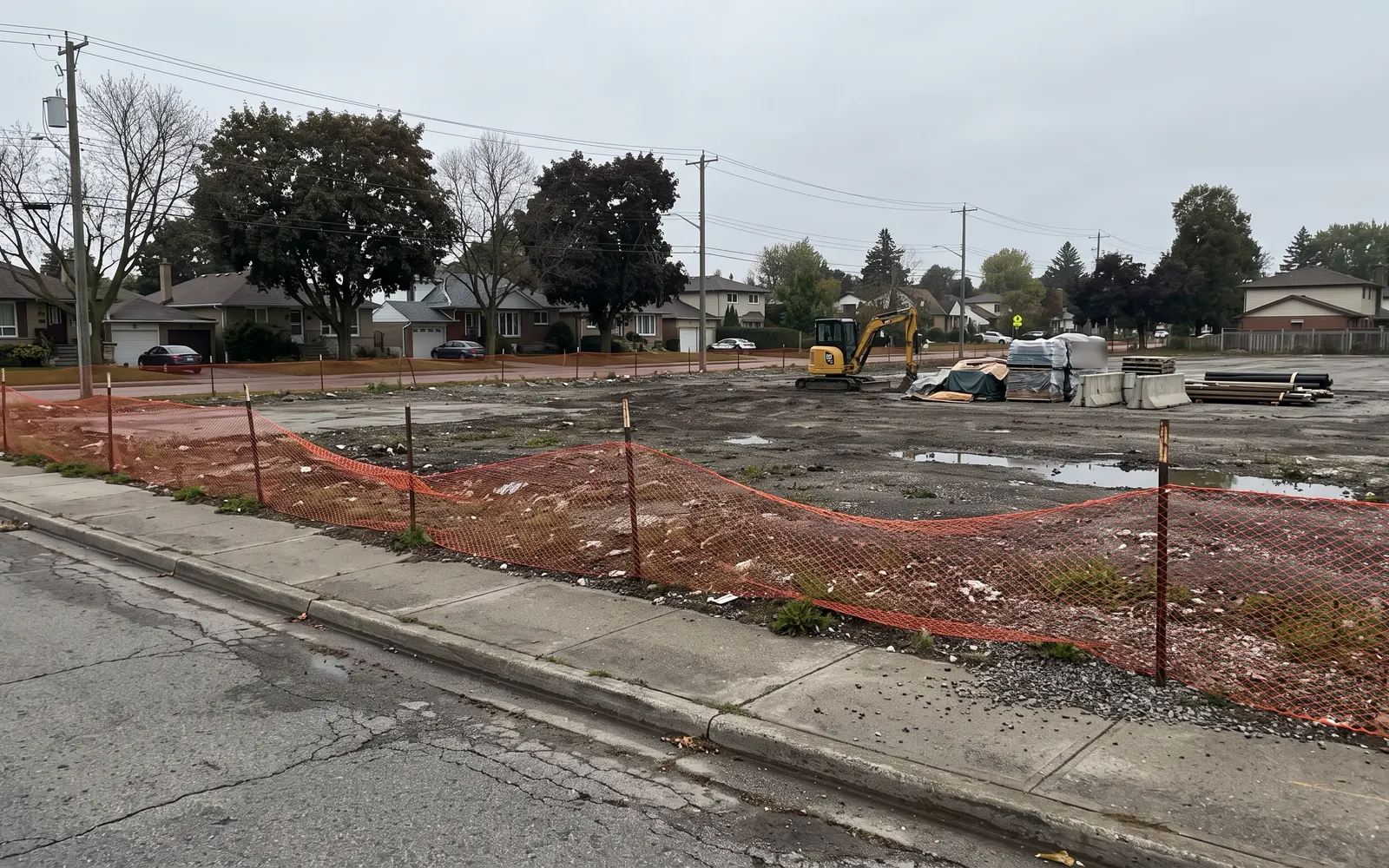
The first is Cary Station, on the former Maplewood School property at 422 Krenz Avenue near downtown. According to Shaw Local's June 2026 report, the Village Board unanimously approved JM Developers' plan on June 2, 2026: 280 units on almost 15 acres, made up of 13 single-family homes, 15 townhouses, eight duplexes (16 units) and 236 apartments in two five-story buildings and one four-story building. Shaw Local's May report put planned apartment rents at $1,600 to $2,500 a month and the for-sale homes at $400,000 to $500,000, with a goal of finishing within two years. The village agreed to up to $12.35 million in tax increment financing on a project estimated at $94 million.
The second is The Seasons at Cary on Route 31. Per Shaw Local's October 2025 report and the village's project page, the Village Board approved it 5-1 on October 28, 2025: about five acres of retail along Route 31 and 360 apartments behind it. New Haven Drive in the Cambria subdivision is being extended to Route 31 as part of the project, which was the main objection from neighbors.
For buyers, roughly 600 new rental units mean more people trying Cary before they buy, and new-build homes near downtown at a price point close to the current median. For sellers of starter homes and townhomes, it means a little more competition for the same first-time buyers. If you are buying near either site, look at the approved plans before you write an offer, and read my Illinois first-time buyer programs guide if you are weighing a first purchase against renting one of the new units.
I don't label any town or neighborhood as safe or unsafe.
Flood Risk in Cary
Flooding is not a village-wide problem in Cary, but it is a house-by-house one. Redfin, using First Street's model, rates Cary's overall flood risk as minor, with 4% of properties, about 160 homes, at risk of severe flooding over the next 30 years. The Fox River bank, the creeks that feed it and the low ground around them are where that risk concentrates.
Two checks before you write an offer. Look the address up on the FEMA flood map, because a mapped flood zone can mean required flood insurance on a mortgage. And ask the seller directly about water in the basement and how often the sump pump runs. On a river-adjacent house, the follow-up question about what they did about it is the one that matters.
Frequently Asked Questions
How much does a house cost in Cary, IL?+
Redfin reported a median sale price of $389,742 for the three months ending August 2026, and Zillow's home value index was $383,618 for August 2026, up 5.4% in a year. Townhomes usually sit below that and 2000s two-stories in pockets like Foxford Hills sit well above it.
What are property taxes in Cary, IL?+
The median effective rate is about 2.55%, with a median bill of about $8,010 (Ownwell, April 2026). Rates vary by tax code, and a home's bill usually rises after a sale once it is reassessed.
What school district is Cary, IL in?+
Mostly Cary District 26 for kindergarten through eighth grade and District 155 for high school, usually Cary-Grove. Small parts of the village feed Crystal Lake District 47 or District 300, and some addresses attend Prairie Ridge, so confirm each address with the districts.
How long is the commute from Cary to downtown Chicago?+
On Metra's Union Pacific Northwest line, the morning expresses reach Ogilvie in 58 minutes and local trains in about 76 to 79. There are 27 inbound weekday trains on the fall 2026 timetable.
Is Cary, IL walkable?+
Not village-wide. The Walk Score is 24, but the blocks around downtown and the Metra station are walkable to the train, restaurants and the downtown social district.
What neighborhoods are in Cary, IL?+
Commonly named pockets include Downtown Cary, Fox Trails, Enclave at Fox Trails, Cambria, Foxford Hills, Brigadoon, Chalet Hills Estates, Saddle Oaks, Northwood Acres, Kingsbridge, Harvest Glen and Greenfields. Some Cary-address areas, such as Lake Killarney and Spring Beach, are outside the village limits.
What is being built at the old Maplewood School in Cary?+
Cary Station, a 280-unit development by JM Developers at 422 Krenz Avenue, approved by the Village Board on June 2, 2026. It includes 236 apartments, 13 single-family homes, 15 townhouses and 16 duplex units.
Is Cary, IL in McHenry County or Lake County?+
Mostly McHenry County, in Algonquin Township. A small part of the village is in Cuba Township, Lake County, so check the county on any parcel near the east edge before you estimate taxes.
Eshu Chikoti has extensive access to off-market listings throughout Cary and the rest of McHenry County — homes that never make it to the public listing sites. That matters right now: in a seller's market like this one, well-priced homes routinely go under contract within days, and buyers relying only on public listings are competing for whatever is left over. Working with someone plugged into off-market inventory means seeing homes before the crowd does.
Eshu Chikoti · 847-691-4282 ·
Get new Cary listings by email
When a home comes on the market in Cary, I'll email it to you.
Just your email. Unsubscribe any time by replying.
Thinking About Cary?
Whether you're buying, selling, or just curious what's on the market, I can walk you through Cary street by street.