Oakwood Hills, IL
Oakwood Hills, IL is a McHenry County village of about 2,400 people built around 47-acre Silver Lake, between Cary and Crystal Lake, with two village beaches, a golf course and no stores at all.
Living in Oakwood Hills, IL means a median sale price near $390,000 this summer, property tax around 2.58% of value, and a spring-fed lake with village beaches a short walk from most homes. The trade-offs: every house runs on a well and septic, and every errand is a drive. Here is how it breaks down, block by block.
Written by Eshu Chikoti · 847-691-4282 ·
How Oakwood Hills, IL Got Here: A Short History
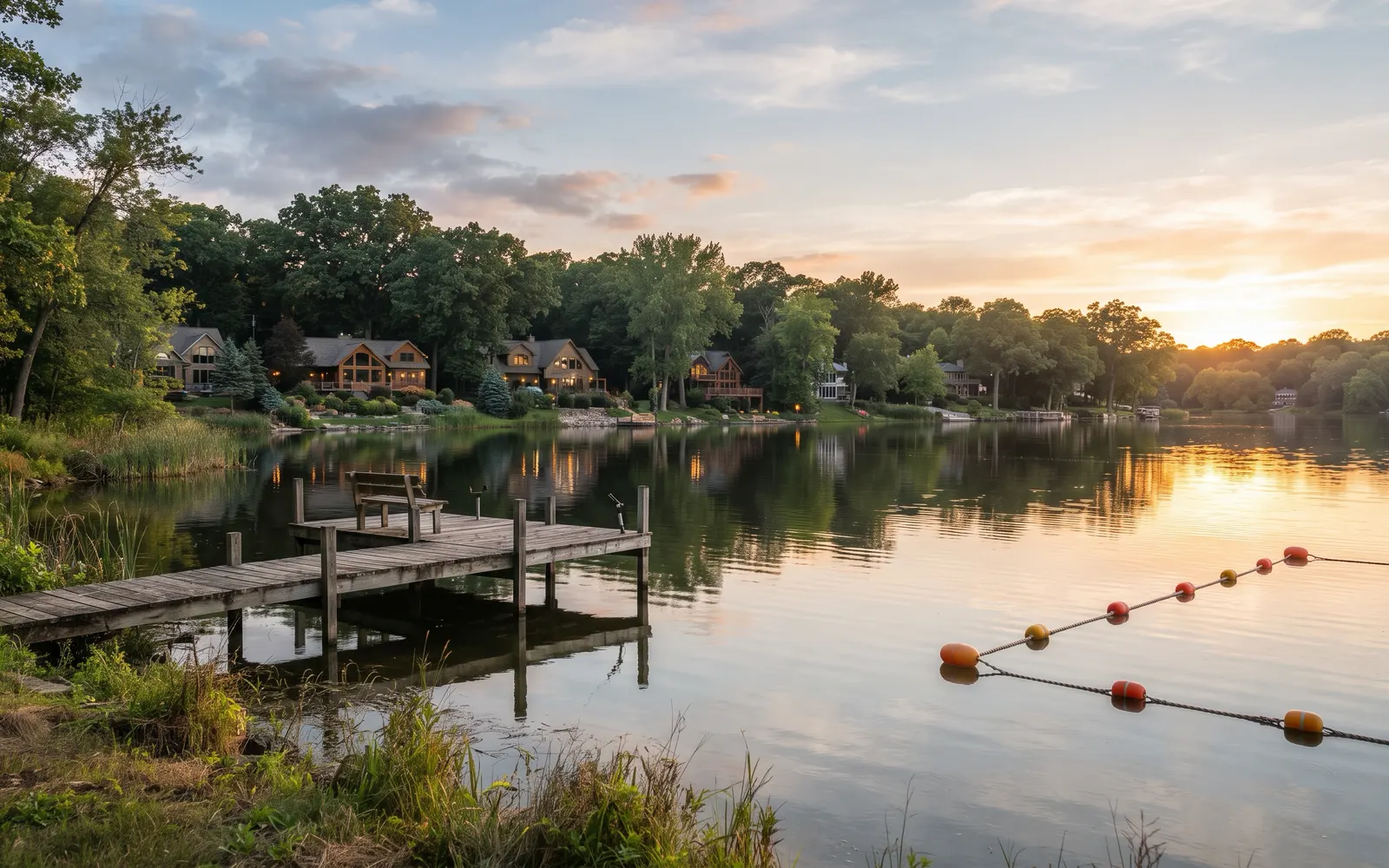
Oakwood Hills started as a dairy farm and a man-made lake. According to the village's history page, written for the village's 40th anniversary in 1999, Chicago accountant Arthur Anderson bought farmland here in the 1920s and ran it as the Lake of the Hills Farm and Dairy. In 1927 his workers dug a trench from the lake then called Silver Lake, today's Lake Killarney, to feed a new lake he called Anderson Lake, held back by an earthen dam. A later lawsuit over the water ended with a court injunction that guaranteed the flow.
In the late 1940s or early 1950s the farm went to a developer, Max Green, who split it in two. The southwest parcel became the Lake Killarney subdivision, and the lake names swapped: Anderson Lake became Silver Lake. The land around it was sold off as small lots for summer cottages. People drove out from Chicago on dusty clay roads to swim and fish, and the history page is clear that those cottages were never meant to be lived in year-round.
That changed in the 1950s, and the roads are why the village exists. School buses and mail carriers would not drive the clay and gravel streets, so a group of residents incorporated to pay for real roads. The village was organized on August 11, 1958 and incorporated in February 1959 with 212 people. A 1961 special assessment paid to grade and seal-coat the streets for the first time. Annexations in 1961 and 1971 brought in the west side of the lake, and the village bought the North and South beaches from Green by quit claim deed in 1961.
The later growth came in pieces. In 1981 the village bought 42 acres from Commonwealth Edison for what is now the main park, with a federal matching grant. Fawn Ridge was annexed in 1988, and the Chalet golf course came in 1991, with more than 100 larger homes built near it after that. The current Village Hall opened in 1999. The census counts tell the rest: 213 people in 1960, 1,255 in 1980 and 2,194 in 2000, per Wikipedia's census table, and 2,076 at the 2020 census.
Oakwood Hills at a Glance
Oakwood Hills is small. Wikipedia, using the Census Bureau's gazetteer, puts it at 1.17 square miles, of which 0.08 square miles is water. The village's comprehensive plan describes the neighbors: the Fox River about a mile to the east, Cary less than a mile to the south, Crystal Lake about a mile to the west and Prairie Grove right next door to the north. The village sits in two townships, Nunda and Algonquin.
The 2020-2024 Census ACS puts the population at 2,416 across 947 housing units, though for a village this size the survey's margin of error is wide (plus or minus 477 people). Two numbers are solid regardless: 91.5% of occupied homes are owner-occupied, and 94.6% of homes are single-family detached houses. There are no apartment buildings.
The mailing address can mislead you. Oakwood Hills homes use Cary's 60013 ZIP code, and so do a lot of homes that are not in the village, including the Lake Killarney subdivision next door and the unincorporated Silver Lake area to the south. Inside the village line you get the village police, village beach rates, the village building code and a village tax line on your bill. Outside it you get the McHenry County Sheriff and county rules. So the first thing I check on any "Oakwood Hills" listing is whether it is actually inside the village.
The layout is easy to learn. Silver Lake sits in the middle. Crystal Lake Avenue runs along the south edge, North Park Drive runs across the north past the Village Hall at 3020 North Park Drive, Valley View Road sits on the west side and Rawson Bridge Road runs along the east past the golf course.
It is almost entirely owner-occupied single-family homes, and there is no commercial traffic at all.
The lake itself needs work, and the village is small enough that dredging, dam and road costs land on a short list of taxpayers.
Oakwood Hills Neighborhoods, Block by Block
Oakwood Hills has four distinct parts, and they were built decades apart. The village's comprehensive plan breaks the incorporated land down: about 160 acres in 22 blocks east of Silver Lake, about 143 acres in 12 blocks west and north of the lake, the 42-acre village park, about 100 acres in Fawn Ridge, 211 acres of golf course, and a small village-owned tract around the Village Hall.
The original lake blocks are the densest part of town. The plan says lots in the older areas average about five per net acre, which is why many of the houses there sit close together on narrow, curving streets. That was cottage-colony platting, and in some spots it still limits what can be built, because the county health department decides how much land a septic system needs. The newer sections are the opposite: larger lots, bigger houses and cul-de-sacs.
Lake frontage is the other dividing line. Some homes back directly onto Silver Lake, many more are a short walk to North or South Beach, and the Fawn Ridge and golf course sections are farther out. If you want to be on the water, say so on day one, because those houses are a small slice of what comes up for sale.
Below are the parts of the village you will hear named. Boundaries are informal. If you want to know which part a specific address sits in, whether it is inside the village and what that block has sold for lately, that is a conversation I am happy to have here.
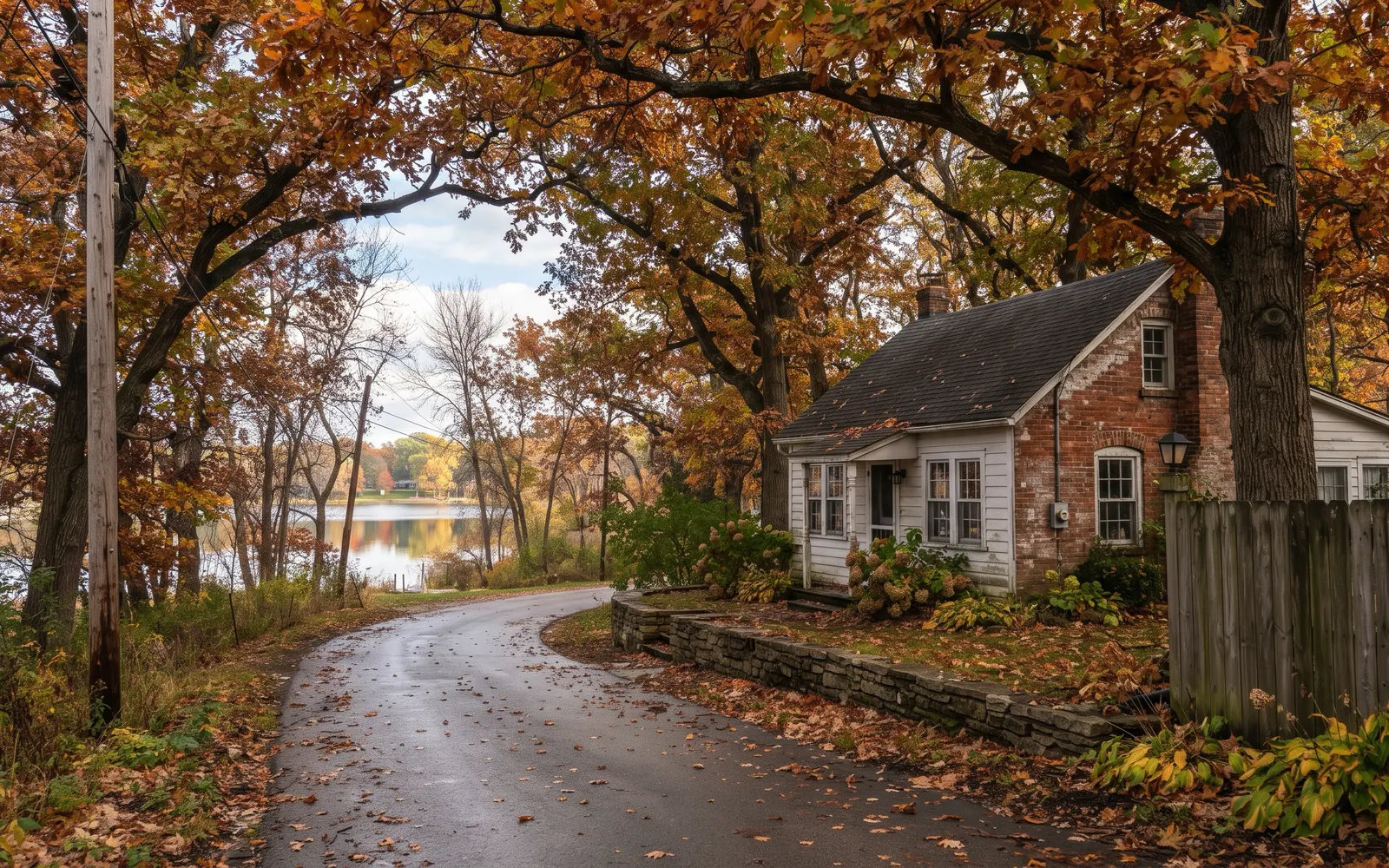
East side of Silver Lake. The original Silver Lake / Oakwood Hills subdivision, 22 blocks and about 160 acres, with South Beach on Crystal Lake Avenue and the oldest, smallest lots in the village.
West side and North Shore. Lake Shore Drive and the blocks out to Greenview Road and North Park Road, annexed in 1961 and 1971. About 143 acres, with North Beach and its fishing pier.
Fawn Ridge. About 100 acres on the north edge next to the park and fen, annexed in 1988 and built with larger homes.
Chalet Hills. Homes on half-acre to one-acre lots around Chalet Hills Golf Club on Rawson Bridge Road, built after the course was annexed in 1991.
Lake Killarney (next door, not in the village). A separate subdivision around a private 80-acre lake, run by its own homeowners association and outside the village line. It shares the 60013 ZIP, so listings sometimes blur the two.
Silver Lake area to the south (not in the village). Unincorporated homes south of the village along Silver Lake Road, also with Cary addresses.
What Oakwood Hills Homes Look Like, by Era
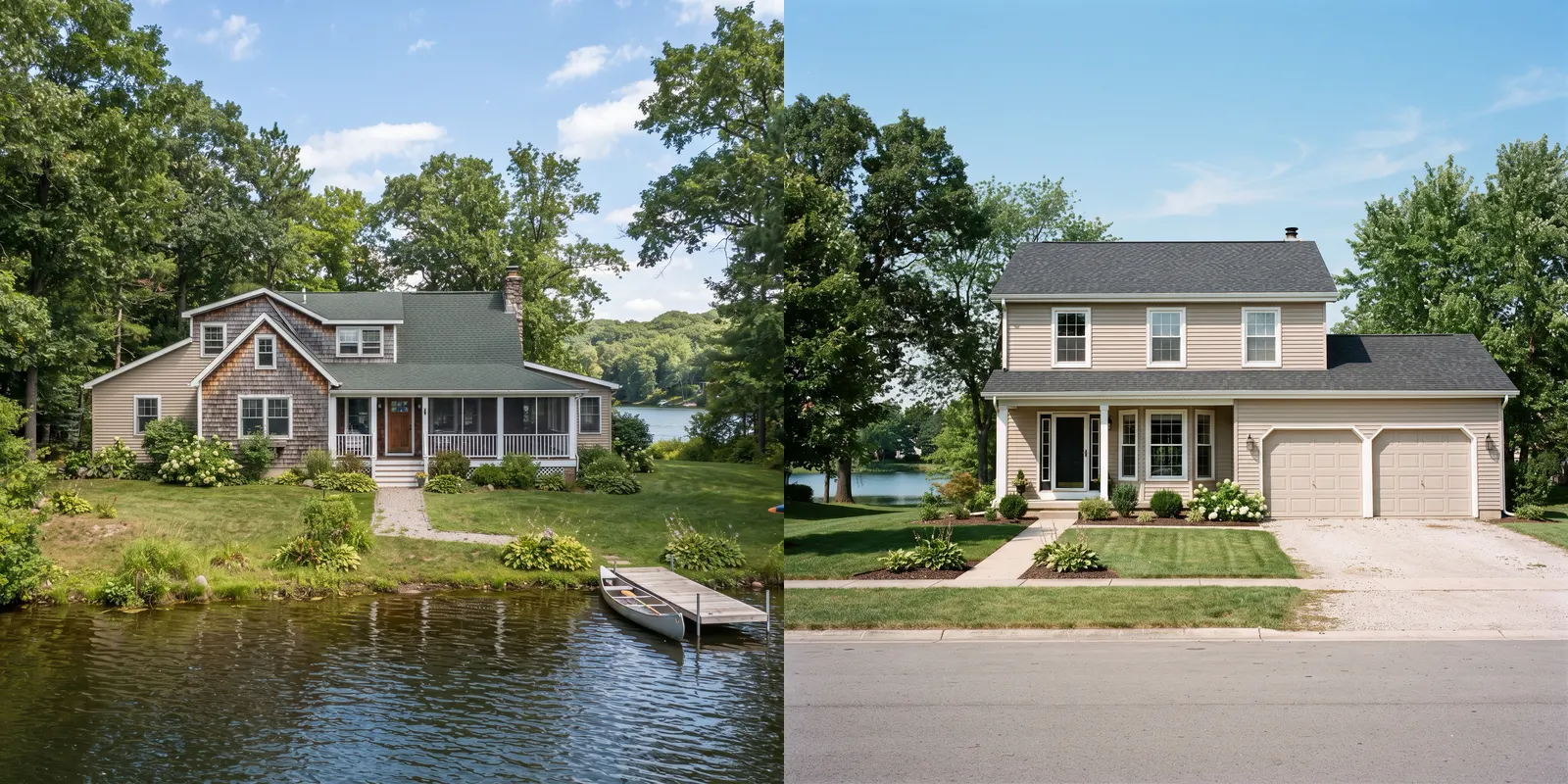
Oakwood Hills housing spans 70 years, and the era of a house usually tells you which part of the village it is in. The Census ACS puts the median year built at 1981. Of the 947 homes it counts, about 222 were built in the 1950s and 1960s, 437 in the 1970s and 1980s, 255 in the 1990s and 2000s, and 31 since 2010. The margins are wide at this size, so treat those as a shape, not an exact count.
Read against the village history, that shape makes sense. The 1950s and 1960s homes are the first year-round houses around the lake, many of them former cottages that have been expanded and rebuilt. The history page says new homes went up at about 30 a year in the 1970s as empty lake lots filled in. The 1990s and 2000s houses are mostly in Fawn Ridge and around the golf course.
The ACS puts the median owner-occupied home value at $282,300, but recent sales on Redfin show how wide the range is. Between June and September 2026, a 1,004-square-foot three-bedroom on Oak Drive sold for $320,000, a 1,020-square-foot three-bedroom on Valley Drive for $255,000, a 2,312-square-foot four-bedroom on Lake Shore Drive for $415,000, a 3,400-square-foot four-bedroom on Fenview Court for $735,000 and a 5,948-square-foot five-bedroom on Bordeaux Court for $900,000. Rentals are uncommon: the ACS counts about 80 renter-occupied homes, with a median gross rent of $1,886.
On the older lake houses, the inspection issues I watch for are the ones you would expect from a cottage that became a house: additions built in stages, low crawlspaces, older wells and septic systems sized for a summer place, and grading that sends water toward the foundation. None of those should end a deal. All of them belong in the price, and my home inspection checklist is a good place to start.
Silver Lake in Oakwood Hills: Beaches, Tags and Rules
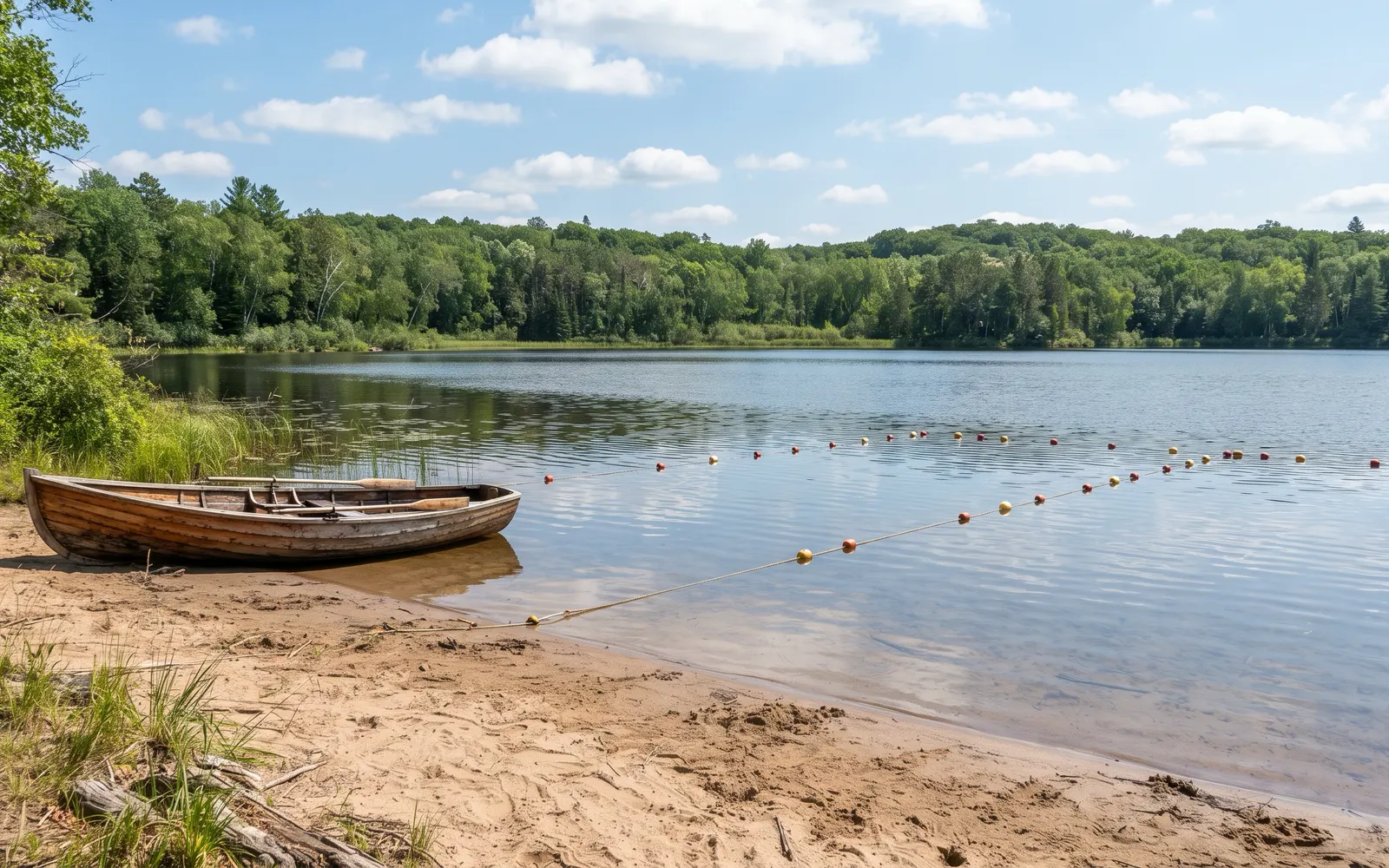
Silver Lake is the center of Oakwood Hills. According to the village's Silver Lake page, it is a 47-acre, spring-fed lake with two village beaches, North Beach and South Beach. The village lists northern pike, walleye, largemouth and smallmouth bass, catfish, panfish and stocked muskies. Rowboats, paddle boats, canoes and small sailboats are allowed. Motors are not, electric or gas. In winter the lake is used for hockey, skating, ice fishing and cross-country skiing.
Access works through beach tags, set in Chapter 5 of the village code, updated April 2025. The season runs Memorial Day to Memorial Day. For village residents and village property owners, a household package covering up to six people at the address costs $33 a year, and a two-tag package with a guest pass costs $28. The same packages cost $120 and $100 for people who neither live nor own in the village. Without a tag, a day pass is $5 a person. Swimming runs from the Saturday of Memorial Day weekend through Labor Day, lifeguards may be on duty from 11 a.m. to 7 p.m., and the beaches close from 10:30 p.m. to 6 a.m., except for people fishing.
A few rules surprise new owners. No glass, no alcohol, no smoking or vaping and no pets on the beaches. No vehicles of any kind on the frozen lake, including snowmobiles and bikes. Muskie and northern pike are catch-and-release only, and bass and walleye have an 18-inch minimum. Boats can be stored at North Beach from April through November 1 with a boat tie-up permit, $35 a year for residents and lot owners and $85 for everyone else.
If you are buying a house that fronts the lake, ask about the shoreline. Most of the shoreline is privately owned, according to the village's lake consultant, so a seawall, a failing bank or a pier is the owner's problem to maintain. I ask the seller for any permits and repair history on every lakefront listing.
Silver Lake's South Bay, the Dam and What It Means for Oakwood Hills Owners
The lake has a maintenance problem, and the village is open about it. The Silver Lake page explains that water enters at the southwest end through a channel that runs under Crystal Lake Avenue and connects to the outlet of Lake Killarney, then leaves through a controlled outlet near North Shore Drive into Silver Creek and on to the Fox River. That inlet channel was last dredged in 1972. It has been filling in ever since, the south bay has turned shallow, and the village says water levels now swing noticeably through the year.
In July 2026 the village posted a sediment study of the south bay by its lake consultant, ILM Environments. ILM surveyed 13.3 acres on June 4, 2026 and found the bay is 24% full of sediment, with an average water depth of 3.8 feet and up to 3.2 feet of sediment near the inflow. Its recommendation: full dredging is not warranted yet, since the usual trigger is 30%, but a partial dredge at the inflow is reasonable, and the eroding shoreline, especially along the inflow stream, should be fixed first. ILM also found invasive curly-leaf pondweed and Eurasian watermilfoil.
The board has been acting on it. According to the June 11, 2026 board minutes, it approved a curly-leaf pondweed treatment of up to $6,000 and a new spillway grate of up to $3,500, and trustees reported that ILM and engineers Baxter & Woodman would assess the spillway. The beach and lake committee's July 2026 agenda added retaining walls at both beaches, and in August trustees flagged erosion at both beaches.
What that means for you: if you are buying on the south bay, expect shallower water near shore than the listing photos suggest in a dry summer, and ask the seller how the water line has moved. If you are buying anywhere in the village, a future dredge or dam project is the kind of cost a small village funds over years, so it is worth following at the board meetings on the second Thursday of each month.
Wells and Septic in Oakwood Hills
There is no village water or sewer in Oakwood Hills. The village's comprehensive plan names the lack of public water and sewer as the thing that limits development here, and the building department page says all well and septic permits come from the McHenry County Department of Health, which reviews the plans, issues the permits and inspects every installation and repair. In practice, every house you tour will have its own well and its own septic system.
That matters more here than in most well-and-septic towns because of the lot sizes. The comprehensive plan says lots in the older parts of the village average about five per net acre, that building can be restricted to larger lots depending on the soil, and that the county health department decides. It also notes deep peat and muck soils in parts of the planning area that are not buildable at all. On a small lake lot, the septic field and the well have to fit with the house, the setbacks and each other. That limits additions, and when a septic system fails on a tight lot, the fix can be expensive.
The owner, not the village, pays for the well pump, the pressure tank, the softener, septic pumping and eventually the field. McHenry County publishes guidance for owners of private wells and septic systems, and both are worth reading before you tour.
On every Oakwood Hills purchase I have the buyer order a well water test and a septic inspection and make the offer contingent on both. On a lake lot, I also ask where the septic field is relative to the shoreline and whether the county has records of past repairs. A failed septic field is one of the most expensive surprises in this part of the county.
The Oakwood Hills Housing Market in 2026
Oakwood Hills is competitive this year, but it is a thin market. In the three months ending August 2026, Redfin reported a median sale price of $389,742, up 16.0% from the same period a year earlier. The median price per square foot was $200, down 8.0%. Homes sold in a median 48 days, against 41 a year earlier, at 101.4% of list price, and 60.1% sold over asking, up 31.5 points.
Redfin gives Oakwood Hills a Compete Score of 71 out of 100, which it calls very competitive. It says the average home sells for about 2% over list and goes pending in about 47 days, and hot homes sell for about 4% over and go pending in about 39 days.
Here is the part to read carefully. Zillow's home value index, which estimates the value of all homes whether they sold or not, was $351,326 for August 2026, up 4.8% from $335,236 a year earlier and up 9.3% from $321,421 in August 2024. The difference from Redfin's 16% is volume. Redfin counted 5 sales in August 2026. In a village this small, one $735,000 house and one $900,000 house closing in the same summer move the median a lot, and the fact that price per square foot fell while the median rose tells you bigger houses sold. I trust Zillow's 4.8% as the better read on what a typical Oakwood Hills house gained this year. Redfin's separate Silver Lakes Oakwood Hills neighborhood page, which draws a slightly different line, shows a median of $324,843, up 0.6%.
What that means in practice: a well-priced lake-area house still draws over-asking offers here, and there are very few of them at any moment. If you are comparing towns, Zillow put Cary at $383,618 and Crystal Lake at $384,661 in August, so Oakwood Hills' typical value runs a little below both of its bigger neighbors.
Oakwood Hills Property Taxes and the Real Cost of Owning
Oakwood Hills' tax rate runs above the county's, but because homes are valued lower, the typical bill is a little below it. Ownwell's data, updated April 13, 2026, puts the median effective rate at 2.58% and the median annual bill at $6,902, on a median home value of $271,626. The McHenry County median is 2.42% with a $7,056 bill. A quarter of Oakwood Hills bills are under $5,763, a quarter are over $8,696, and the top tenth are over $12,959.
Here is what that looks like on a real purchase. At 2.58%, a house bought at this summer's $389,742 median would eventually carry about $10,055 a year in tax, roughly $840 a month on top of the mortgage. At Zillow's $351,326 typical value, it is about $9,064 a year, or $755 a month. The seller's current bill may be lower, because assessments trail the market. The expectation I most often have to reset is buyers who budget off the seller's bill instead of the rate.
Two things make the math here slightly different. First, the village sits in two townships, Nunda and Algonquin, and each has its own assessor. Second, the village's comprehensive plan lists more than a dozen taxing bodies across the area, including the county, McHenry County College, the conservation district, the village, the school districts and the Cary Fire Protection District, so two houses at the same price can carry different bills.
If you already own and think your assessment is high, the appeal goes to your township assessor and then the McHenry County Board of Review. My guide to how much house you can afford shows how the tax line changes the payment. This is general information, not tax advice. Your actual bill depends on your parcel, your exemptions and the assessor.
Oakwood Hills Schools: Prairie Grove District 46 and District 155
According to the village's new resident page, Oakwood Hills is served by Prairie Grove School District 46 for grade school and middle school and Community High School District 155 for high school. That link goes back a long way: the village history says Prairie Grove's school was a two-room building until 1957, when four rooms were added to serve the new subdivision.
The federal school directory gives the current numbers. For the 2024-25 school year, the National Center for Education Statistics lists Prairie Grove Elementary School at 3223 IL Route 176 with 552 students from pre-kindergarten through fourth grade, and Prairie Grove Junior High School next door at 3225 IL Route 176 with 357 students in grades five through eight. Both have Crystal Lake mailing addresses.
The high school is the question to check on each house. District 155 runs four high schools. Wikipedia's pages for both Prairie Ridge High School and Cary-Grove High School list Oakwood Hills in their attendance areas, citing older district material, and the village history says Oakwood Hills moved to Cary-Grove when it opened in 1961. NCES lists Cary-Grove at 2208 Three Oaks Road in Cary with 1,348 students and Prairie Ridge at 6000 Dvorak Drive in Crystal Lake with 1,133. District 155 has an address lookup for exactly this reason.
Do not assume from the town name or the ZIP code. Check each house with District 46 and District 155 before you write an offer, and ask me if you want the boundary checked for a specific address.
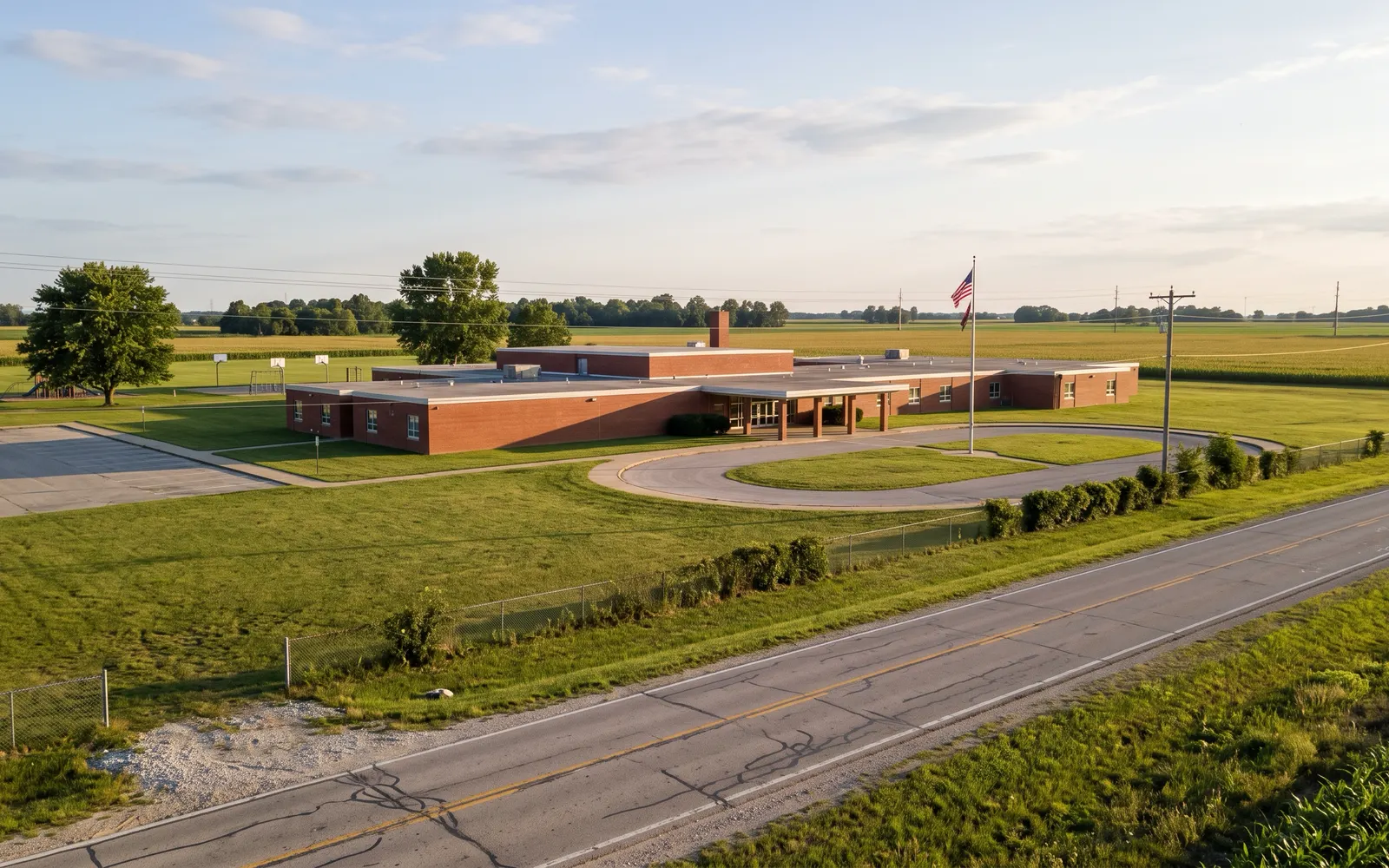
Prairie Grove Elementary School. 3223 IL Route 176, Crystal Lake. Pre-kindergarten to grade 4, District 46, 552 students in 2024-25.
Prairie Grove Junior High School. 3225 IL Route 176, Crystal Lake. Grades 5 to 8, District 46, 357 students in 2024-25.
Cary-Grove High School. 2208 Three Oaks Road, Cary. Grades 9 to 12, District 155, 1,348 students in 2024-25.
Prairie Ridge High School. 6000 Dvorak Drive, Crystal Lake. Grades 9 to 12, District 155, 1,133 students in 2024-25.
McHenry County College. 8900 Route 14, Crystal Lake, the community college district the village lists for residents.
Commuting from Oakwood Hills: Metra from Cary
Oakwood Hills has no train station, but two are close. Cary and Pingree Road, both on the Union Pacific Northwest line to Ogilvie Transportation Center, are each about 2.9 miles from the village as the crow flies, and Crystal Lake is about 3.6 miles.
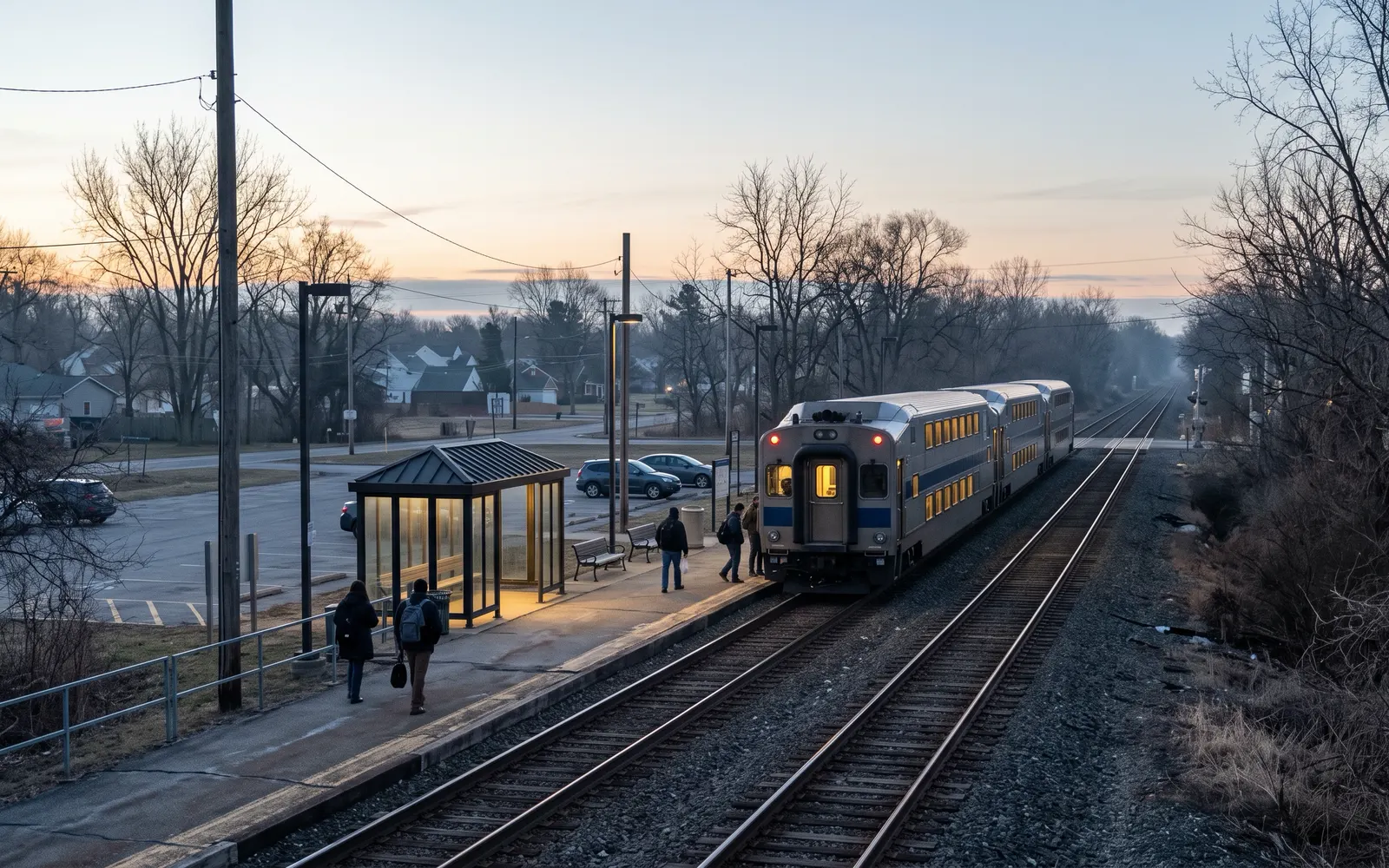
Cary is the usual choice. Metra's fall 2026 schedule data shows 27 weekday trains from Cary to Chicago and 25 back on the regular schedule that starts October 26. The morning express trains, such as the 6:04, 6:34, 7:04 and 7:34 departures, reach Ogilvie in about 58 minutes. Local trains take 75 to 79 minutes. On weekends, Cary has 15 inbound trains on Saturdays and 9 on Sundays, taking 61 to 75 minutes.
Pingree Road, on the Crystal Lake side, has 30 weekday inbound trains, with the fastest at about 64 minutes. Crystal Lake station has the same 27 weekday inbound trains as Cary, about 9 minutes longer to the city.
The honest math: add a 10-minute drive to the station and parking, and a downtown commute is about an hour and 15 minutes each way on an express, closer to an hour and 40 on a local.
Driving from Oakwood Hills: Route 31, Route 14 and the Village Roads
Oakwood Hills has no highway of its own. The village's comprehensive plan lays out the routes: Crystal Lake Avenue and Terra Cotta Avenue west to Route 31 and U.S. 14, Valley View Road north to Route 176, Silver Lake Road south to U.S. 14, and Rawson Bridge Road east toward Route 59. Route 31 south leads to the Northwest Tollway (I-90). O'Hare is about 26 miles away as the crow flies, and Wikipedia puts downtown Chicago about 46 miles out.
The village streets are the village's job, and they are a real line item. In May 2026 the Chicago Metropolitan Agency for Planning presented a pavement survey to the board. It measured 12.1 centerline miles of village road with an average condition score of 72 out of 100, which it rates satisfactory, but about 23% of the pavement area rated very poor or worse. At the village's current $100,000 a year, CMAP projects the average falling to 57 by 2031. Holding it at 72 would take about $311,000 a year.
The board adopted a 2026 road plan based on CMAP's picks in July, and the September 10 agenda carried a 2026 street improvement bid and a three-year snowplow contract. If you are buying on a street in rough shape, ask whether it is on the list.
Is Oakwood Hills Walkable?
For errands, no. Walk Score does not publish a village-wide number for Oakwood Hills, so I checked three addresses. The Village Hall at 3020 North Park Drive scores 9, North Shore Drive by the lake scores 4, and Chalet Hills Golf Club scores 6. Walk Score calls all three car-dependent, which makes sense in a village with no stores.
For getting outside, it is a different story. Most homes in the original lake blocks are a short walk from North Beach or South Beach. The village recreation page describes perimeter walking trails in the main park and trails into the fen and the county conservation land next to it. So the walk here is to the water or into the woods, not to a coffee shop.
One rule to know before you buy a bike for everyone: the village bans motor-driven scooters, e-motos, minibikes, go-carts and similar untitled vehicles on all public streets, paths and parks, with fines and impoundment for repeat violations, according to a village notice.
Shopping and Dining Near Oakwood Hills
Oakwood Hills has no grocery store, no gas station and no strip mall. The village's comprehensive plan says it plainly: without exception, the residential land in the area is single-family homes, commercial uses sit along the major roads outside the village, and public water and sewer are not available to support them. The zoning code has business districts on paper, but the village is homes, parks and a golf course.
Every errand is a short drive. The comprehensive plan names the commercial hubs at Route 31 and Route 176 in Crystal Lake and along U.S. 14 through Crystal Lake and Cary, and most weekly shopping happens there. My guides to Crystal Lake and Cary cover those downtowns and shopping corridors in detail.
The one sit-down restaurant inside the village is at the golf course. The village recreation page says the Chalet Hills clubhouse has a pro shop and a full-service restaurant and bar open for lunch and dinner, with views over the course. For anything else, you are in Cary, Crystal Lake or Fox River Grove within a few minutes.
For buyers, the lack of retail cuts both ways. There is no commercial traffic, no parking lots and no late-night noise, and the village board is not weighing a shopping center. There is also no corner store for milk.
The Oakwood Hills Village Park and Fen
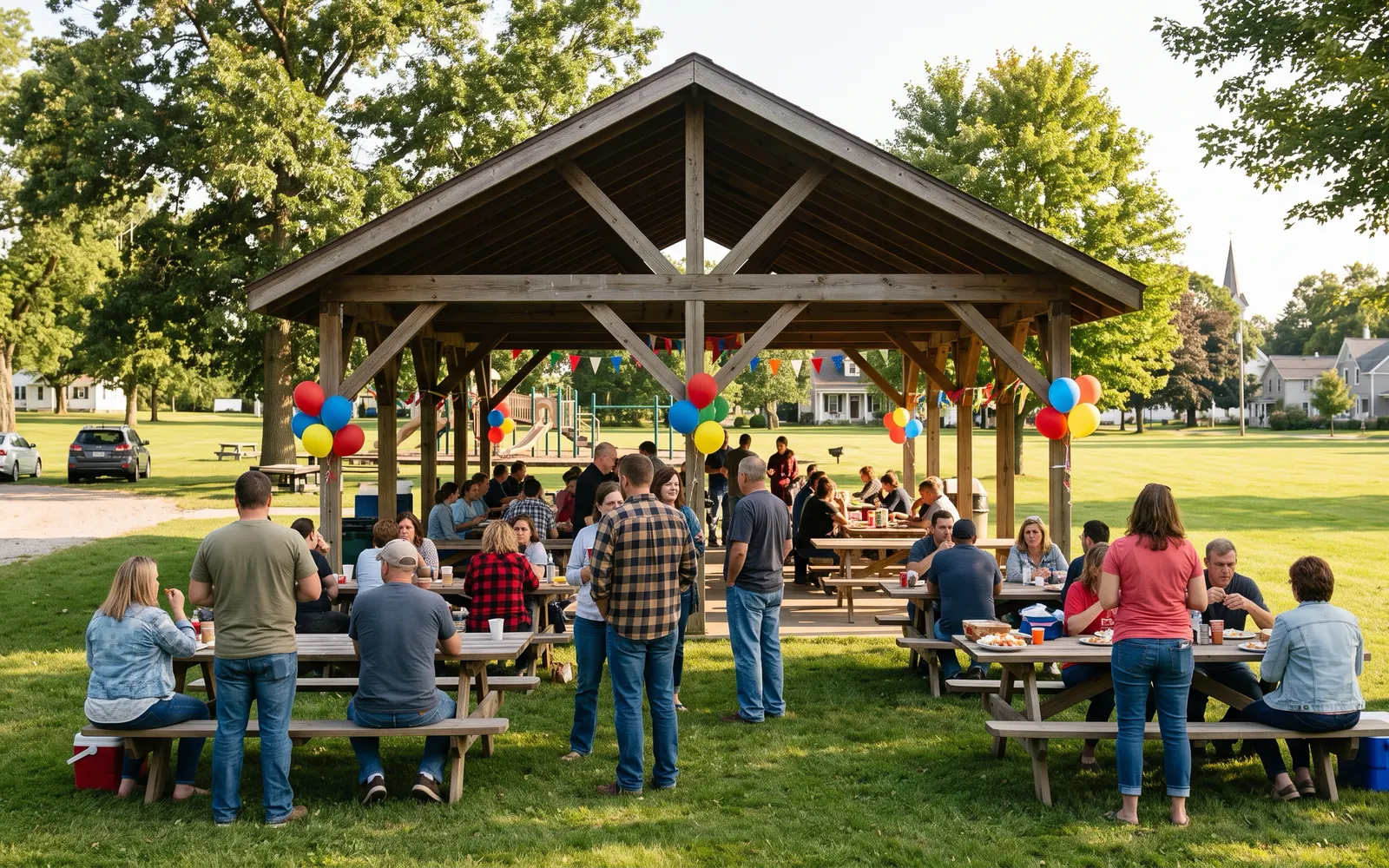
The village has three parks: the main park and the two beach parks, per the recreation page. The main park on North Park Drive has a large picnic shelter with grills and electrical outlets, a gazebo, ball fields, open fields for pickup games and walking trails around the edge. North Beach has a newly built playground and a fishing pier.
The main park's story is unusual. In 1981 the village bought 42 acres from Commonwealth Edison with a federal matching grant, according to the village history. Part of it is a fen, a rare wetland fed by mineral-rich springs at the base of the hills. The comprehensive plan says 12.8 acres are dedicated as an Illinois Nature Preserve with another 4.2 acres of buffer, managed with the McHenry County Conservation District, and the village history calls it one of only four fens owned by a village in the state.
The park and fen committee's page lists the baseball diamond, volleyball and basketball courts, playgrounds, shelters, trails and wooded ravines it looks after. Residents can rent the pavilion with a $50 refundable deposit. In 2026 the committee ran a native plant swap in June, and trustees reported collecting acorns to grow new oaks.
Chalet Hills Golf Club in Oakwood Hills
The golf course came first as a hobby. According to the village history, a Chicago stockbroker named George Bates bought the old McNett farm on Rawson Bridge Road in 1949, built a three-hole course for his own use, opened nine holes to the public in 1969 and later expanded to 18. After the village annexed it in 1991, architect Ken Killian rebuilt the course, and it hosted an LPGA tournament in 1998.
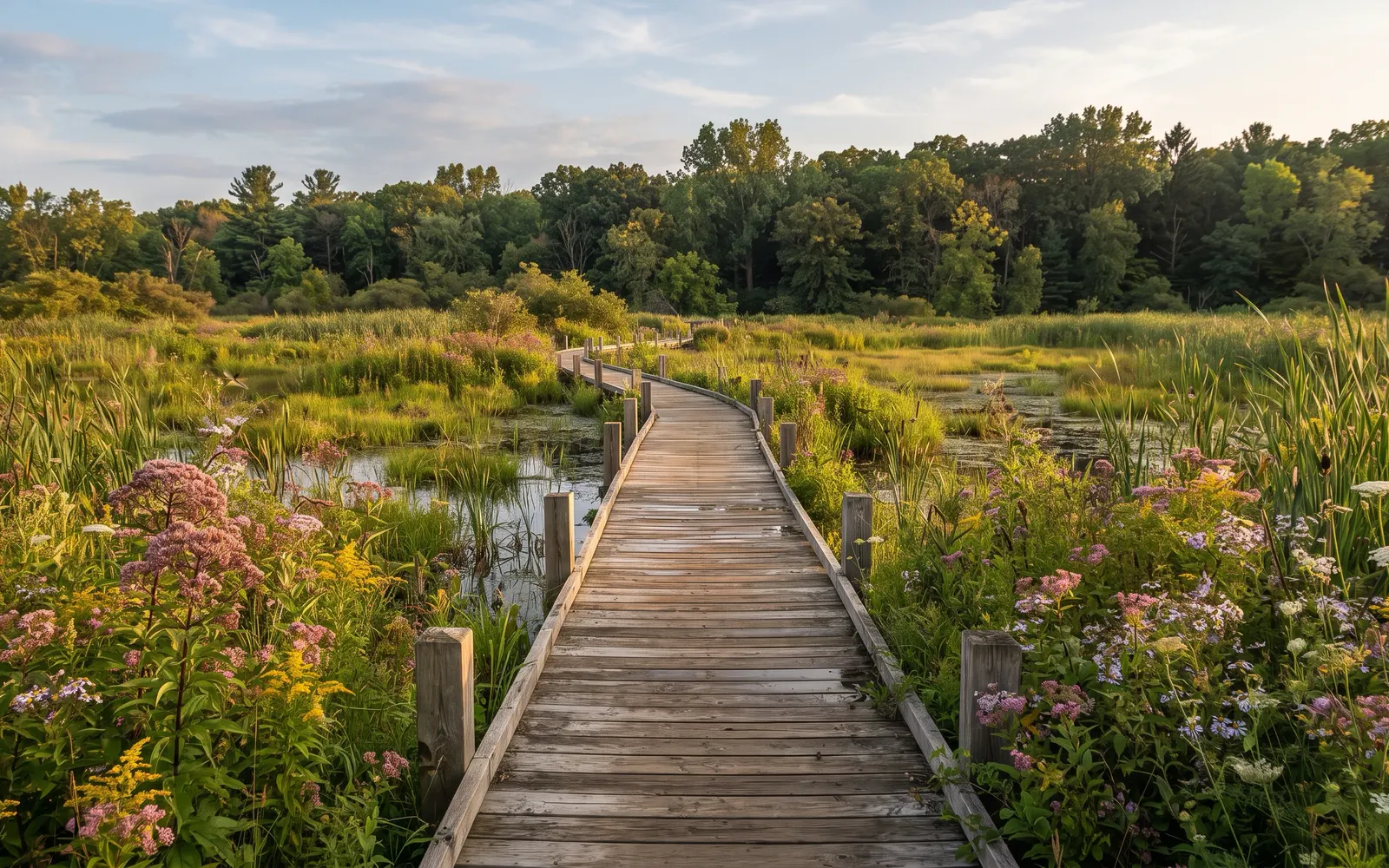
Today it is Chalet Hills Golf Club at 943 Rawson Bridge Road. The village describes a public par-73 course that plays from just under 5,000 to nearly 6,900 yards, designed by Ken Killian and Michael J. Benkusky, opened in its current form in 1995 and upgraded with new bunkers in 2020. There is a driving range, short-game areas, indoor simulators for winter, and the clubhouse restaurant.
Residents get a break. The village posted that Chalet Hills offers up to 10% off rounds for Oakwood Hills residents from April 1 through October 31 with a valid Oakwood Hills ID, daily and after 1 p.m. on weekends and holidays, plus resident passes.
The Fox River and Open Land Around Oakwood Hills
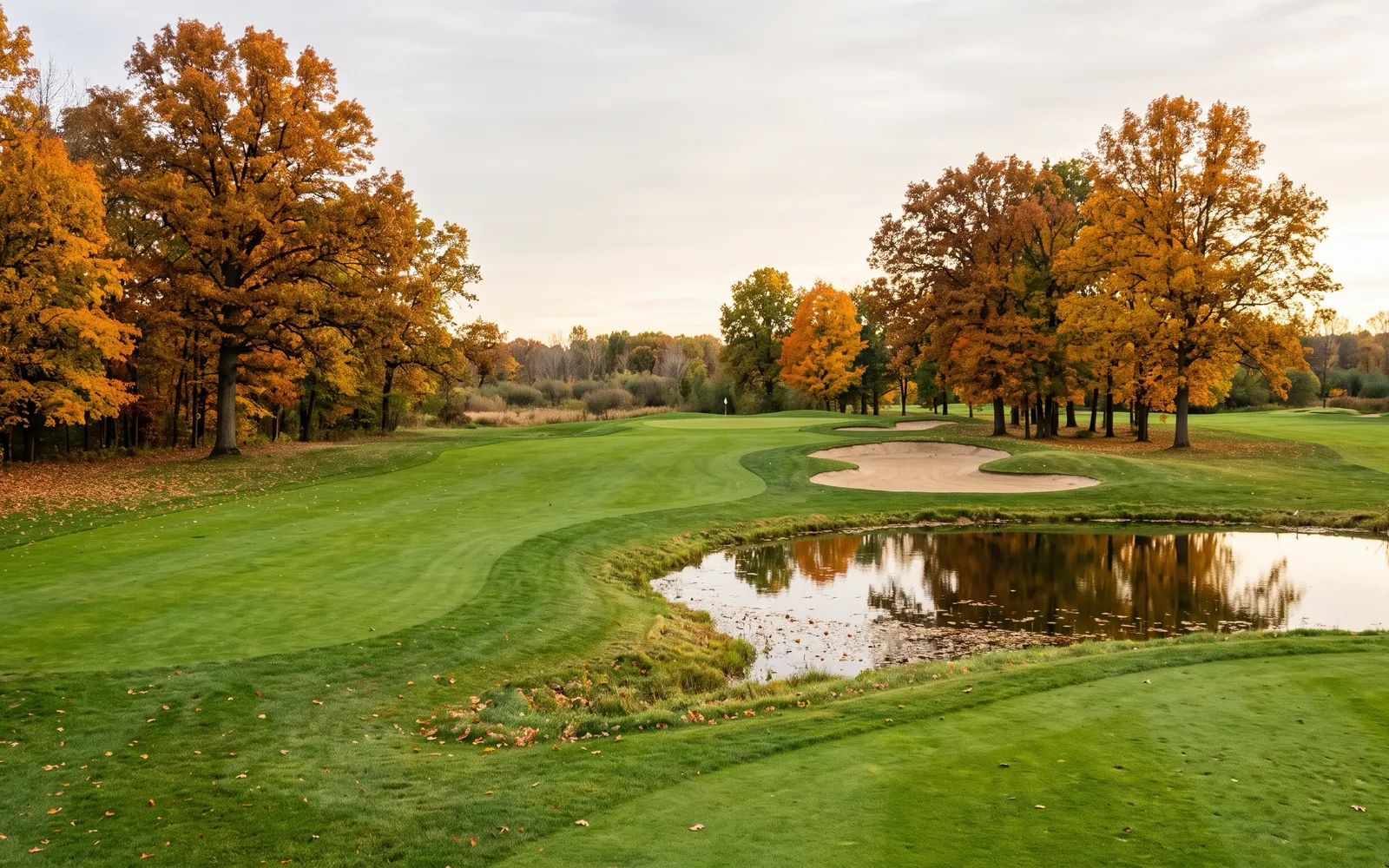
Oakwood Hills is surrounded by protected land. The village's comprehensive plan, updated in 2009, counted more than 1,137 acres owned or managed by the McHenry County Conservation District in and around the planning area, including Hickory Grove south of Rawson Bridge Road, with camping, trails, a bridle trail and canoe access, and a former gravel quarry south of Lake Killarney restored for recreation and glacial geology. Those acreage figures are from 2009, so check the conservation district for today's boundaries.
The Fox River runs about a mile east of the village. A little farther north, Moraine Hills State Park, three miles south of the city of McHenry, covers about 2,200 acres, roughly half of it wetlands and lakes, with more than 10 miles of trails and the 48-acre Lake Defiance. The Illinois DNR says more than 200 bird species have been recorded there, and the McHenry Dam area has Fox River fishing and boat rentals.
The Fox River and the Chain O'Lakes to the north are where people keep powerboats.
The Library and Community Resources for Oakwood Hills
Oakwood Hills does not have its own library. The village's new resident page lists the Cary Area Public Library at 1606 Three Oaks Road in Cary as the library for residents, and the village history notes that Oakwood Hills has long shared Cary's post office, fire protection, library and train station.
The Village Hall at 3020 North Park Drive is the other community building. It holds the clerk's office, the police department and a community room residents can reserve with no deposit, according to the clerk's page. The clerk's office is open weekdays except Friday, with Tuesday evening and Saturday morning hours, which helps if you work during the day.
Utilities and Services in Oakwood Hills
The village's new resident page lists ComEd for electricity, Nicor Gas for natural gas and LakeShore Recycling Systems for trash and recycling, with a Nunda Township recycling center for anything extra. Water and sewer are your own well and septic, as covered above.
Internet is changing. On August 18, 2026, the village board approved a right-of-way agreement with i3 Broadband to install fiber optic cable along village streets, subject to engineer and attorney review, according to the board minutes. I have not seen a build schedule. Until it is in, test the service at a specific address before you write an offer if you work from home.
Emergency services come from the Oakwood Hills Police Department and the Cary Fire Protection District. The comprehensive plan says the Cary fire district's branch station is at Crystal Lake Road and Silver Lake Road and almost all of the built-up village is within about a mile of it.
Hospitals Near Oakwood Hills
There is no hospital in the village. Northwestern Medicine McHenry Hospital, with over 200 beds according to Wikipedia, is about 6.5 miles north as the crow flies. Ambulance service comes through the Cary Fire Protection District, which the village lists as its fire department.
Oakwood Hills' Yearly Traditions
Oakwood Hills' calendar is small and run largely by volunteers and village committees. From the village's 2026 board minutes and event pages: the beaches opened Memorial Day weekend, a native plant swap ran in June, National Night Out was August 4 and a craft fair was held in the park on August 29. The Neighborhood Watch, formed in spring 2025 according to its village page, held its first block party in the park on September 12, 2026.
Next up is the police department's Trunk-or-Treat on October 24, 2026, from 4 to 6 p.m. in the village park, with residents decorating cars and handing out candy. The board also designated July as Parks and Recreation Month this year.
The Village Board meets the second Thursday of each month at 7:30 p.m. at the Village Hall. With a lake study, a road program and two land sales on the agenda this year, those meetings are where the decisions that affect your house get made. Four trustee seats are on the ballot in April 2027.
Village Rules Every Oakwood Hills Owner Should Know
A few village rules catch new owners off guard, and they are worth knowing before you close.
Vehicle stickers and parking. Every resident vehicle needs a village sticker, $25 for a passenger car according to the village fee sheet, and the clerk reported in May 2026 that stickers were due by July 1. Overnight street parking is banned every day from 2 a.m. to 6 a.m. for anyone without a sticker, and for everyone when an inch or more of snow is falling or expected, according to the police page. Guests need a permit through the police department.
Permits. The building department requires a permit for new construction, demolition, remodeling, sheds, electrical, decks, patios, retaining walls, HVAC, driveways and culverts, siding, plumbing, pools and hot tubs, roofing, fireplaces, fences, sprinklers and stairs. Every contractor must post a $10,000 bond with the village. Construction noise is banned from 7 p.m. to 7 a.m. Monday through Saturday and all day on Sundays and holidays. Stormwater permits come from the county. The building director keeps office hours on Tuesdays and Fridays at midday.
Zoning. The zoning ordinance, revised in December 2022, sets minimum lots of one acre in the E-1 estate district and half an acre in R-1, with 30-foot front setbacks, and side yards next to the lake measured 25 feet from the high water line. Short-term rentals of under 30 days, including Airbnb-style rentals, need a conditional use permit with a public hearing in every residential district. If you are buying to rent by the night, that is a hearing, not a formality.
What's Changing in Oakwood Hills
Very little is being built in Oakwood Hills, and the reasons are structural. There is no public water or sewer, the lake lots are small, and the land around the village is either built, protected or in a neighboring town. What is changing is mostly village property and village infrastructure.
Two land sales. In August 2026 the board approved selling a village-owned lot at 5311 Greenview for $13,000 to the one qualifying bidder, according to the August 18 minutes. The village also offered a vacant 1.81-acre parcel about 312 feet east of North Park Drive and Valley View Road, next to the Village Hall, with a $250,000 minimum and restrictions meant to keep it open space, per its notice of sale. No bids came in by the August 11 deadline, and a September 23 special meeting was set to discuss the sale again. Separately, in July the board approved an amendment with the Walnecks, who donated the Village Hall land, under which nearby property will be used for water retention and kept as open land with no development.
Infrastructure. The lake work (sediment, spillway, beach retaining walls), the road plan and the fiber agreement are covered above. The board approved its 2026-27 budget in June, with the finance chair noting at that meeting that the budget was 30% over expenses to revenue; I read that as a statement about planned spending, and the budget document itself is the place to check.
For buyers, the short version is that Oakwood Hills is not about to change fast. The lot pattern is protected by the septic rules as much as by the zoning.
I don't label any town or neighborhood as safe or unsafe.
Flood Risk and Drainage in Oakwood Hills
Flooding is not a village-wide problem in Oakwood Hills. Redfin, using First Street's model, rates the village's flood risk as minimal, with under 1% of properties at risk of severe flooding over the next 30 years.
Drainage is the more common issue, and it is local. The village's Silver Lake page says the blocked inlet channel limits how much heavy rain the system can handle and raises the risk of localized flooding or poor drainage upstream. The public works committee's September 2026 agenda listed drainage at two specific addresses. On a hilly, wooded lot with a septic field, where the water goes after a storm matters.
Three checks before you write an offer: look the address up on the FEMA flood map, because a mapped flood zone can mean required flood insurance on a mortgage; ask the seller whether the basement or crawl space has ever taken water and where the sump discharges; and have the septic inspector comment on drainage around the field.
Frequently Asked Questions
How much does a house cost in Oakwood Hills, IL?+
Redfin reported a median sale price of $389,742 for the three months ending August 2026, up 16%, and Zillow's home value index was $351,326 for August 2026, up 4.8% in a year. Summer 2026 sales ran from $255,000 to $900,000.
What are property taxes in Oakwood Hills, IL?+
The median effective rate is about 2.58%, with a median bill of about $6,902 (Ownwell, April 2026), compared with a McHenry County median rate of 2.42%. Bills usually rise after a sale once the home is reassessed.
What school district is Oakwood Hills, IL in?+
Prairie Grove School District 46 for pre-kindergarten through eighth grade and Community High School District 155 for high school. Sources list both Cary-Grove and Prairie Ridge high schools for Oakwood Hills, so check each address with District 155's lookup.
Can Oakwood Hills residents use Silver Lake?+
Yes. The village runs North Beach and South Beach, and a season package for residents and village property owners covering up to six people at an address is $33. Non-residents pay $120 for the same package, and day passes are $5. Motors are not allowed on the lake.
Do Oakwood Hills homes have city water and sewer?+
No. There is no village water or sewer system. Every home has a private well and septic system, permitted and inspected by the McHenry County Department of Health. Test the well and inspect the septic before you buy.
How far is Oakwood Hills from the Metra?+
The Cary and Pingree Road stations on the Union Pacific Northwest line are each about 2.9 miles away as the crow flies. Cary has 27 weekday trains to Ogilvie, with morning expresses taking about 58 minutes.
Are there stores in Oakwood Hills?+
No. The village is homes, parks and a golf course. Groceries and errands are along Route 31, Route 176 and U.S. 14 in Crystal Lake and Cary, a short drive away. The Chalet Hills clubhouse restaurant is the only restaurant in the village.
Is Lake Killarney part of Oakwood Hills?+
No. Lake Killarney is a separate subdivision around a private 80-acre lake with its own homeowners association, outside the village limits. It shares the Cary 60013 ZIP code, so check which side of the line a listing is on.
Eshu Chikoti has extensive access to off-market listings throughout Oakwood Hills and the rest of McHenry County — homes that never make it to the public listing sites. That matters right now: in a seller's market like this one, well-priced homes routinely go under contract within days, and buyers relying only on public listings are competing for whatever is left over. Working with someone plugged into off-market inventory means seeing homes before the crowd does.
Eshu Chikoti · 847-691-4282 ·
Get new Oakwood Hills listings by email
When a home comes on the market in Oakwood Hills, I'll email it to you.
Just your email. Unsubscribe any time by replying.
Thinking About Oakwood Hills?
Whether you're buying, selling, or just curious what's on the market, I can walk you through Oakwood Hills street by street.