Lake Zurich, IL Real Estate
Lake Zurich, IL homes sold at a median of $554,633 in the three months to August 2026, according to Redfin, up 10.9% from a year earlier. The median effective property tax rate is about 2.26%, below the Lake County median of 2.61% per Ownwell, for a median bill near $8,667. Lake Zurich has no Metra station; Barrington on the Union Pacific Northwest line is closest, about 47 minutes to Ogilvie on an express.
Lake Zurich, IL is a lake village of about 19,800 people at the crossing of Route 12 and Route 22, with a unified school district, a rebuilt Main Street and no train station of its own.
Living in Lake Zurich, IL means a median sale price of about $555,000 this summer and property tax near 2.3% of value. The trade-off is the commute: the closest Metra is in Barrington, a drive away. Here is how it breaks down, pocket by pocket.
| Median sale price | $554,633 (Redfin, 3 months to August 2026, up 10.9%); Zillow index $512,227 |
|---|---|
| Effective tax rate | 2.26%, median bill about $8,667, BELOW the Lake County median of 2.61% (Ownwell, April 2026) |
| School districts | Lake Zurich CUSD 95, preschool through high school. Some east-side addresses in District 96 feeding Stevenson |
| Metra | No station. Barrington on UP-NW is closest: 34 weekday trains, 47 minutes express to Ogilvie, about 65 local |
| County | Lake County |
Written by Eshu Chikoti · 847-691-4282 ·
How Lake Zurich, IL Got Here: A Short History
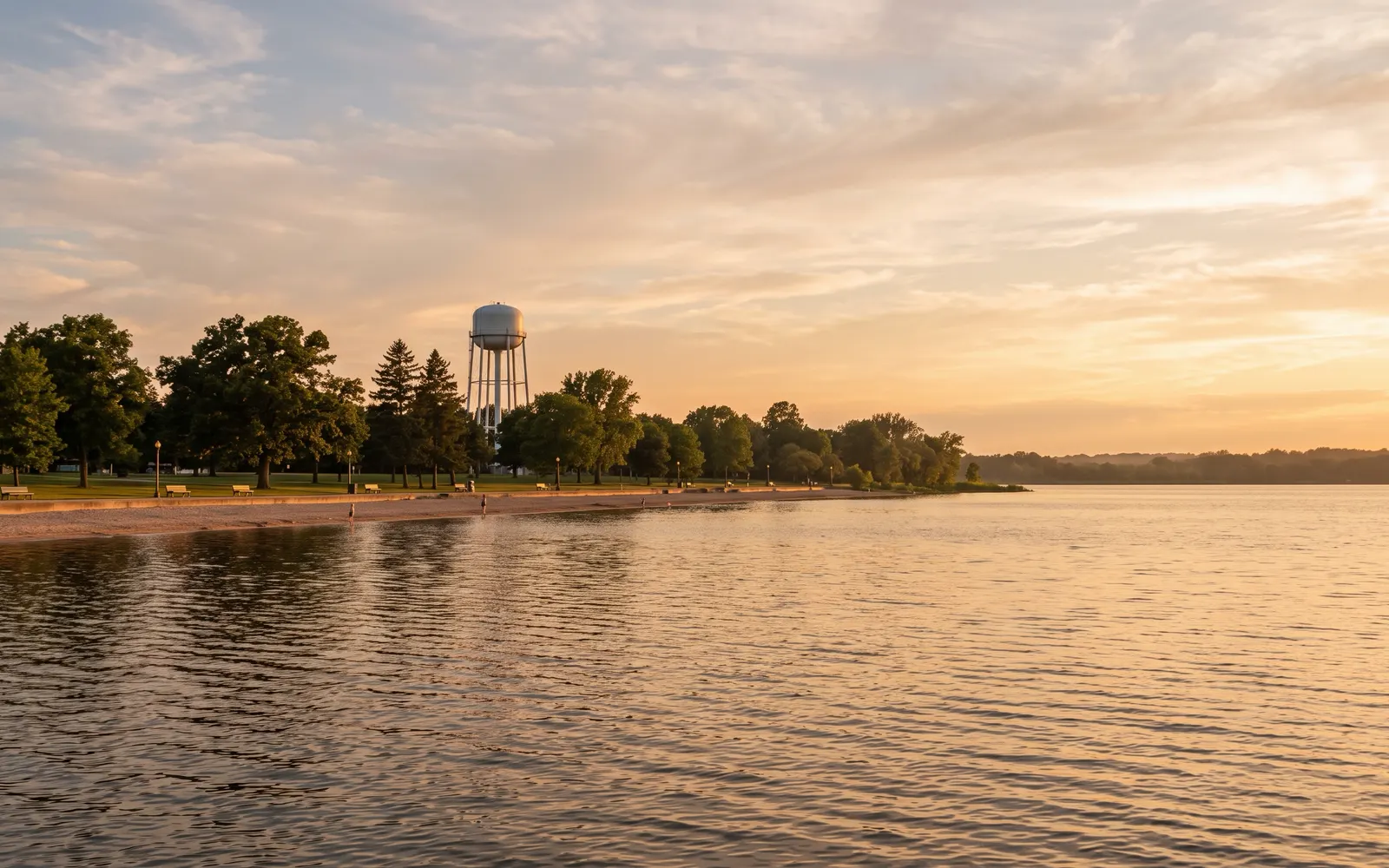
Settlers reached the lake in the 1830s. According to the village's history as summarized on Wikipedia, the early names include George Ela, who gave Ela Township its name, Seth Paine, who started a number of businesses here, and Nathan Kowitt. The lake was first called Cedar Lake. Paine renamed it Lake Zurich after the lake in Switzerland, and the Swiss theme has stuck to the town ever since.
The village incorporated on September 29, 1896. A railroad reached Lake Zurich in 1910 and closed a decade later, and passenger rail never came back. That one fact still shapes the town more than any other. Roads came instead. Rand Road (U.S. Route 12) arrived in 1922 and Half Day Road (Illinois Route 22) in 1927, and the crossroads turned Lake Zurich into a summer resort for people driving up from Chicago.
The resort years explain the small lots and older cottages you still find close to the water, and the crossroads explain why the biggest commercial strip in town runs along Rand Road instead of Main Street. The suburban build-out came later. The Census ACS for 2020-2024 puts the median year a Lake Zurich home was built at 1984, and more homes went up in the 1980s than in any other decade.
One piece of trivia buyers from out of state sometimes know: Lake Zurich is the hometown of Sandra Bullock's character in the 2013 film *Gravity*.
Lake Zurich at a Glance
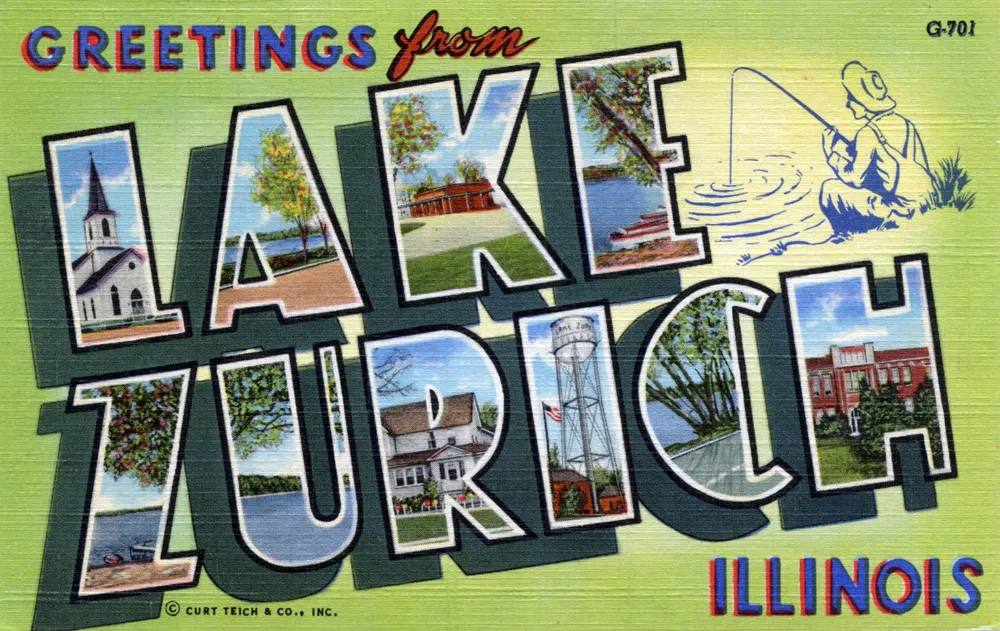
Lake Zurich covers about 7.3 square miles in west-central Lake County, 6.9 of them land and the rest the lake itself. It sits in Ela Township and borders Hawthorn Woods, Kildeer, Deer Park and North Barrington, with Barrington to the southwest and Long Grove to the east.
The 2020-2024 Census ACS puts the population at 19,832 across 7,588 homes. 77.8% of occupied homes are owner-occupied, and about three out of four homes are detached single-family houses. The rest is a real mix: 499 attached townhomes and roughly 1,300 units in larger buildings, which is more choice than most of the towns around it.
The ZIP code is where people get confused. The 60047 mailing address covers far more ground than the village. District 95's own school list puts Spencer Loomis Elementary and Middle School North at Hawthorn Woods addresses with a Lake Zurich ZIP, and I have seen listings in Hawthorn Woods labeled "Lake Zurich" by vendors. A 60047 address tells you the post office. It does not tell you the village, the taxes or the water supplier. Check the municipality on the tax bill before you compare prices.
The layout is easy once you know two roads. Rand Road (Route 12) runs northwest to southeast through town and carries most of the shopping. Main Street runs along the north shore of the lake and is the historic downtown. Route 22 crosses the south side east to west. Almost every neighborhood description a local gives you starts from one of those three.
At a summer median around $555,000 and a tax rate near 2.3%, it costs less to own here than in most towns.
Lake Zurich Neighborhoods, Subdivision by Subdivision
Lake Zurich has no official neighborhoods, but it has dozens of named subdivisions, and in this town the subdivision name tells you a lot. It usually tells you the builder, the decade and the range of floor plans. That is why I start every Lake Zurich search by subdivision instead of by map square.
The broad split is by distance from the lake. The blocks close to Main Street and the water are the oldest and the most varied: lake cottages from the resort era next to rebuilt houses. Moving out, you get the 1970s subdivisions off Cuba Road and Old Rand Road, then the big wave of late-1980s and 1990s neighborhoods along Ela, Quentin and Route 22, then a few 2000s townhome and maintenance-free communities.
Redfin's data shows how much location matters inside the village. In the three months ending August 2026, its Main Street neighborhood had a median sale price of $435,000 and $249 a square foot, well under the village-wide median of about $555,000. Smaller, older homes near downtown pull that number down. Larger 1990s houses farther out push the village median up.
Below are the subdivisions you will see named most often in listings. Build years and sizes come from subdivision records compiled by Homes by Marco, checked against each other. Treat the boundaries as a starting point. If you want to know which subdivision a specific address is in and what it has sold for lately, that is a conversation I am happy to have here.
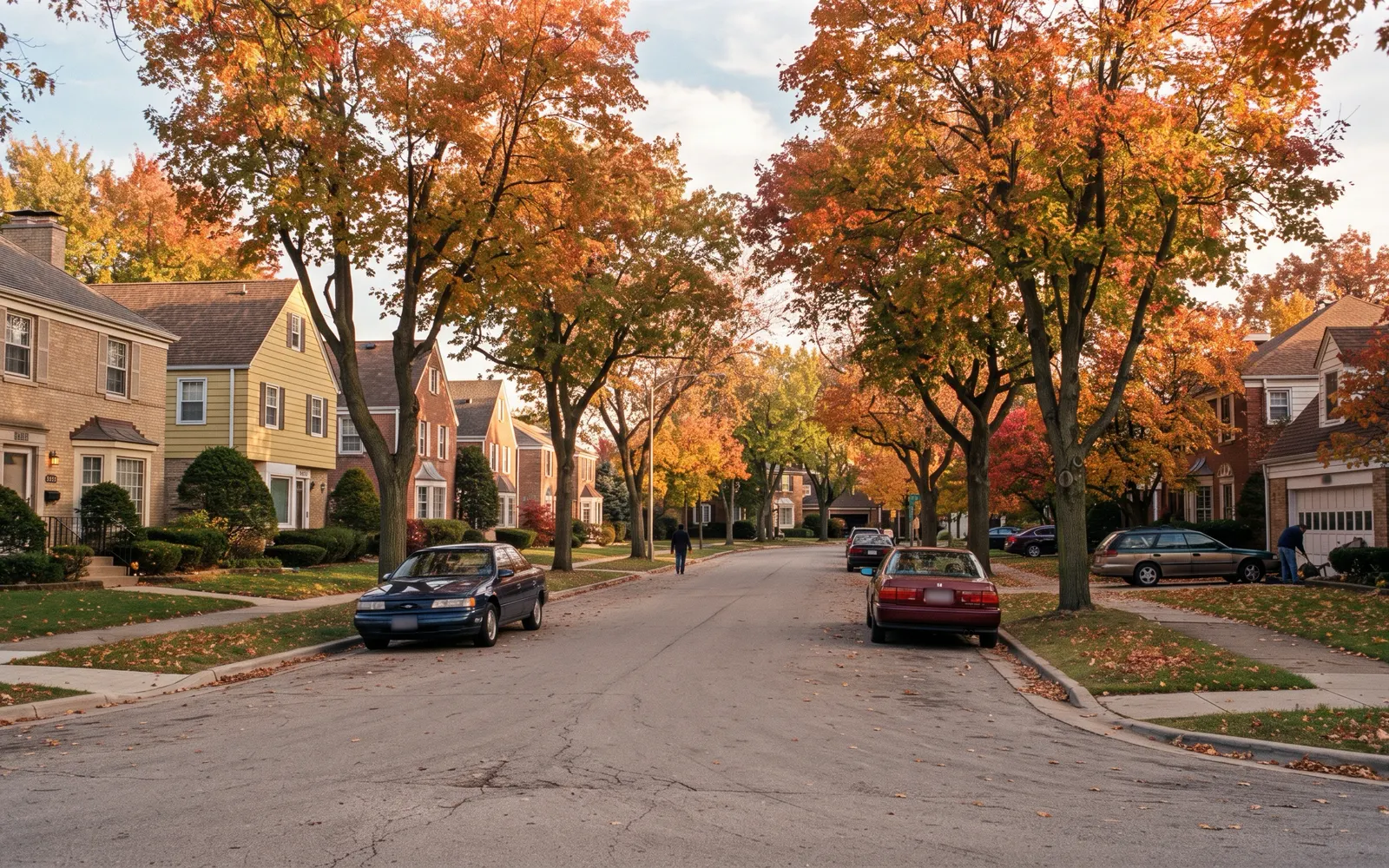
Lake Zurich Heights. West of Rand Road, north of Honey Lake Road. Homes built from 1923 to 2014, from about 1,050 to 3,592 square feet, with a lake park, dock and water rights listed among its amenities. One of the few ways into lake access on a moderate budget.
Old Mill Grove. On Old Mill Road near Route 22, west of Quentin Road. Built in the 1970s by U.S. Homes: split-levels, tri-levels, raised ranches and two-story colonials. Sarah Adams Elementary sits on Old Mill Grove Road.
Countryside East and Countryside West. 1970s single-family neighborhoods. Countryside East is east of Old Rand Road off Pheasant Ridge; Countryside West is south of Cuba Road, west of Rand Road.
Bristol Trails. On Quentin Road north of Rand. Built in the mid-1980s by Lexington, with a village park of the same name.
Cedar Creek. On Route 22 west of Quentin, backing to Knox Park. 143 homes built from 1984 to 1992 by DiMucci, roughly 1,855 to 3,886 square feet, with a community pool.
Braemar. On Ela Road north of Cuba Road. 195 homes built in the late 1980s and early 1990s by Town and Country, 1,700 to 2,800 square feet.
Chestnut Corners. 270 homes built in the early to mid-1990s by Lexington Homes, five floor plans from 2,100 to 3,000 square feet.
Wicklow Village. On Midlothian Road south of Old McHenry Road. Built 1996 to 2003 by Terrestris Development, including 126 single-family homes from 2,214 to 3,715 square feet plus townhomes.
Heatherleigh. West of Old Rand Road, south of Route 22. Built from 2000 by Cambridge Homes, 2,225 to 3,387 square feet, around a 2.5-acre park, two ponds and two conservation areas.
Sonoma. On Route 22 west of Rand Road. Built 2002 to 2005 by Concord Homes: 37 semi-custom single-family homes of 3,335 to 3,865 square feet and townhomes of about 3,000 square feet.
Concord Village. South of Route 22, east of Rand Road. Built 2004 to 2006 by Concord Homes as a maintenance-free community: 43 single-family homes, 96 ranch villas and 108 townhomes with a clubhouse and pool.
Meadow Wood. 76 Pulte townhomes built from 2006 to 2010, floor plans of about 1,716 to 2,146 square feet, with HOA dues listed at $408 to $470 a month.
Coventry Creek. A newer luxury pocket built by Red Seal Homes. Ask for the build year and lot size on each house; they vary more than in the production subdivisions.
What Lake Zurich Homes Look Like, by Era
The Census numbers tell the story well. Of Lake Zurich's 7,588 homes, the 2020-2024 ACS counts 2,393 built in the 1980s, 1,592 in the 1970s and 1,269 in the 1990s. Those three decades are about 69% of the housing. Only 683 homes predate 1960, and only 480 were built after 2010. The median home value in that survey is $435,300 and the median gross rent is $1,909.
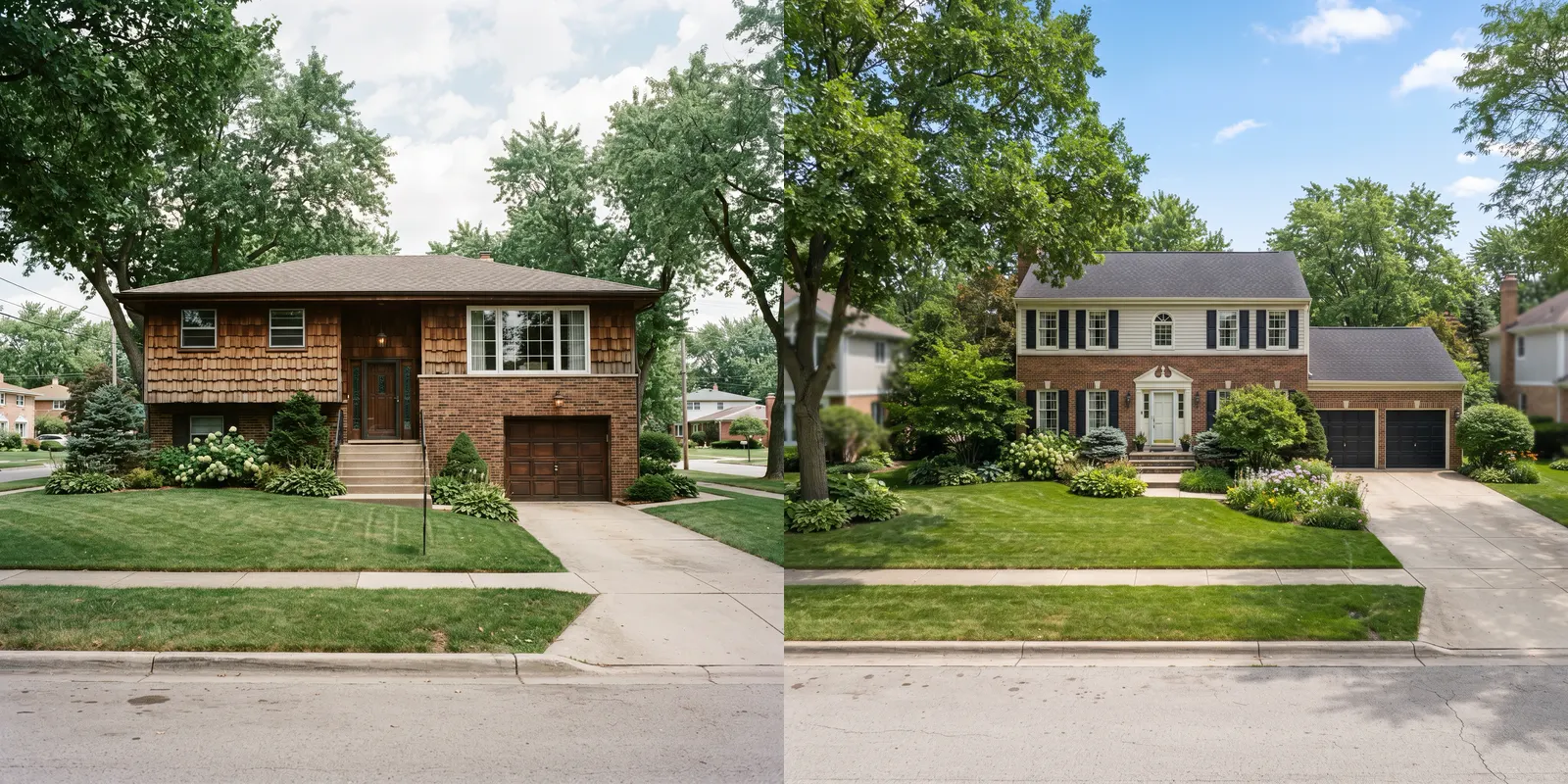
In practice that means four types. Near the lake there are older cottages and small houses, some from the resort years, many expanded or rebuilt. The 1970s subdivisions like Old Mill Grove and the Countrysides are split-levels, tri-levels and raised ranches, usually three or four bedrooms. The 1980s and 1990s neighborhoods are two-story colonials from roughly 1,800 to 3,800 square feet with basements and attached garages. The 2000s added townhomes, ranch villas and larger semi-custom houses.
Townhomes are a real part of this market, not an afterthought. Concord Village, Meadow Wood, Wicklow Village, Willow Ponds and Sonoma all have attached homes, and Concord Village's 96 ranch villas are one of the few places in this part of Lake County to buy first-floor living with exterior maintenance handled by an association. Always read the HOA budget. Dues in these communities run from under $100 to over $500 a month depending on what they cover.
The pattern I see most on inspections here is age-specific. The 1970s houses often need windows, electrical updates and a close look at the roof. The late-1980s houses are now hitting their second round of big-ticket items: furnaces, water heaters and original decks. None of that should scare you off a good house. All of it belongs in the offer price. My home inspection checklist is a good place to start.
The Lake Zurich Housing Market in 2026
Lake Zurich homes are selling fast and above asking. In the three months ending August 2026, Redfin reported a median sale price of $554,633, up 10.9% from a year earlier, across 67 sales. The median home sold in 44 days at 101.4% of list price, and 55.5% of homes sold over asking. Redfin gives Lake Zurich a Compete Score of 81 out of 100, which it calls very competitive, and says homes get four offers on average.
Zillow's home value index agrees on direction. It put the typical Lake Zurich home at $512,227 in August 2026, up 7.4% from $476,714 a year earlier and up 13.1% over two years. The two numbers measure different things. Redfin's median is the middle of whatever happened to sell in a three-month window. Zillow's index estimates the value of every home, sold or not. This summer's sales leaned toward larger homes, so the sold median ran ahead of the index. Redfin's price per square foot, $267, was up 8.7%, which tells me values really did rise and the mix is not the whole story.
The market is not one-directional, though. 21.0% of listings took a price cut this summer, up 6.9 points from a year ago, and the sale-to-list ratio slipped 1.5 points. My read is that buyers are still competing hard for well-priced houses and walking past overpriced ones. A Lake Zurich house priced right on day one gets the offers. One priced for the neighbor's best-case sale sits.
A village median tells you little about a specific house here. A Meadow Wood townhome and a Sonoma single-family home are different markets that happen to share a village. For the county picture, see my Lake County market report for Q3 2026.
Lake Zurich Property Taxes and the Real Cost of Owning
Property tax is the cost that never shows up in the list price. Ownwell's data, last updated in April 2026, puts Lake Zurich's median effective rate at 2.26% and the median annual bill at $8,667. That rate is below the Lake County median of 2.61% on the same page, which surprises people who assume every Lake County town is taxed the same.
Here is what it looks like on a real purchase. At 2.26%, a house bought at this summer's $554,633 median would eventually carry about $12,500 a year in tax, roughly $1,045 a month on top of the mortgage. Current bills on that house may be lower because assessments trail the market, but the assessor catches up, usually in the reassessment after a sale. The expectation I most often have to reset is buyers who budget off the seller's current bill.
Bills vary inside the 60047 ZIP. Ownwell's percentiles for the ZIP run from about $5,130 at the 10th percentile to $13,793 at the 90th. Part of that is house size. Part of it is the tax code: the school district, library district and other taxing bodies differ from one side of the ZIP to the other, and some 60047 addresses are not in the village at all. Two houses a mile apart can carry different bills at the same price. I did this tax-code work in detail for Lake Forest property taxes, and the same logic applies here.
Two local cost items are worth knowing. The village raised its local sales tax by 0.5% to help pay for the switch to Lake Michigan water, and water rates are on a schedule of graduated increases approved in December 2023 (both covered in the development section below). If you already own and think your assessment is high, my Lake County property tax appeal guide walks through the process. This is general information, not tax advice. Your actual bill depends on your parcel, your exemptions and the assessor.
Lake Zurich Schools: District 95 and Lake Zurich High School
Most of Lake Zurich is served by Lake Zurich Community Unit School District 95, one district from preschool through 12th grade. Its school list has five elementary schools (Isaac Fox, May Whitney, Sarah Adams, Seth Paine and Spencer Loomis), two middle schools (North and South) and Lake Zurich High School. A unified district means one board, one set of boundaries and one calendar from kindergarten to graduation.
Confirm the district for a specific address with the district office, and read each district's profile on the Illinois Report Card at illinoisreportcard.com.
District 95 is bigger than the village. According to the Lake Zurich High School entry on Wikipedia, it serves most of Lake Zurich plus Hawthorn Woods and parts of Kildeer, Deer Park and North Barrington. It also works the other way: some Lake Zurich addresses on the east side fall in Kildeer Countryside District 96, which feeds Stevenson High School instead. Don't assume from the town name. Check the address on the district's boundary map and with the district office before you write an offer, and ask me if you want it done for a specific house.
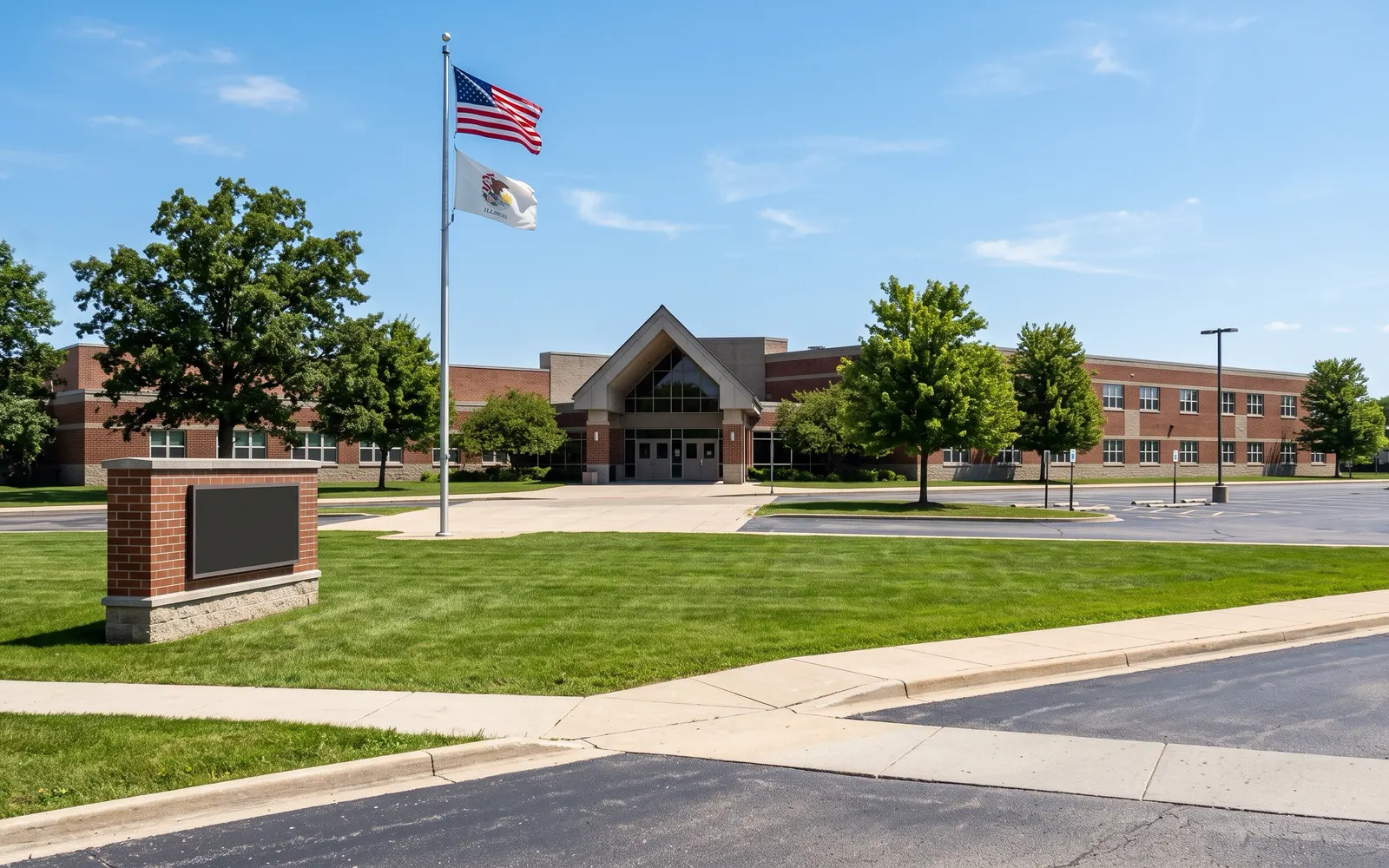
Isaac Fox Elementary. 395 W. Cuba Rd., Lake Zurich. District 95.
May Whitney Elementary. 200 Church St., Lake Zurich. District 95.
Sarah Adams Elementary. 555 Old Mill Grove, Lake Zurich. District 95.
Seth Paine Elementary. 50 Miller Rd., Lake Zurich. District 95.
Spencer Loomis Elementary. 1 Hubbard Ln., Hawthorn Woods. District 95.
Lake Zurich Middle School North. 95 Hubbard Ln., Hawthorn Woods. District 95.
Lake Zurich Middle School South. 435 W. Cuba Rd., Lake Zurich. District 95.
Lake Zurich High School. 300 Church St., Lake Zurich. District 95.
Commuting from Lake Zurich: Metra from Barrington
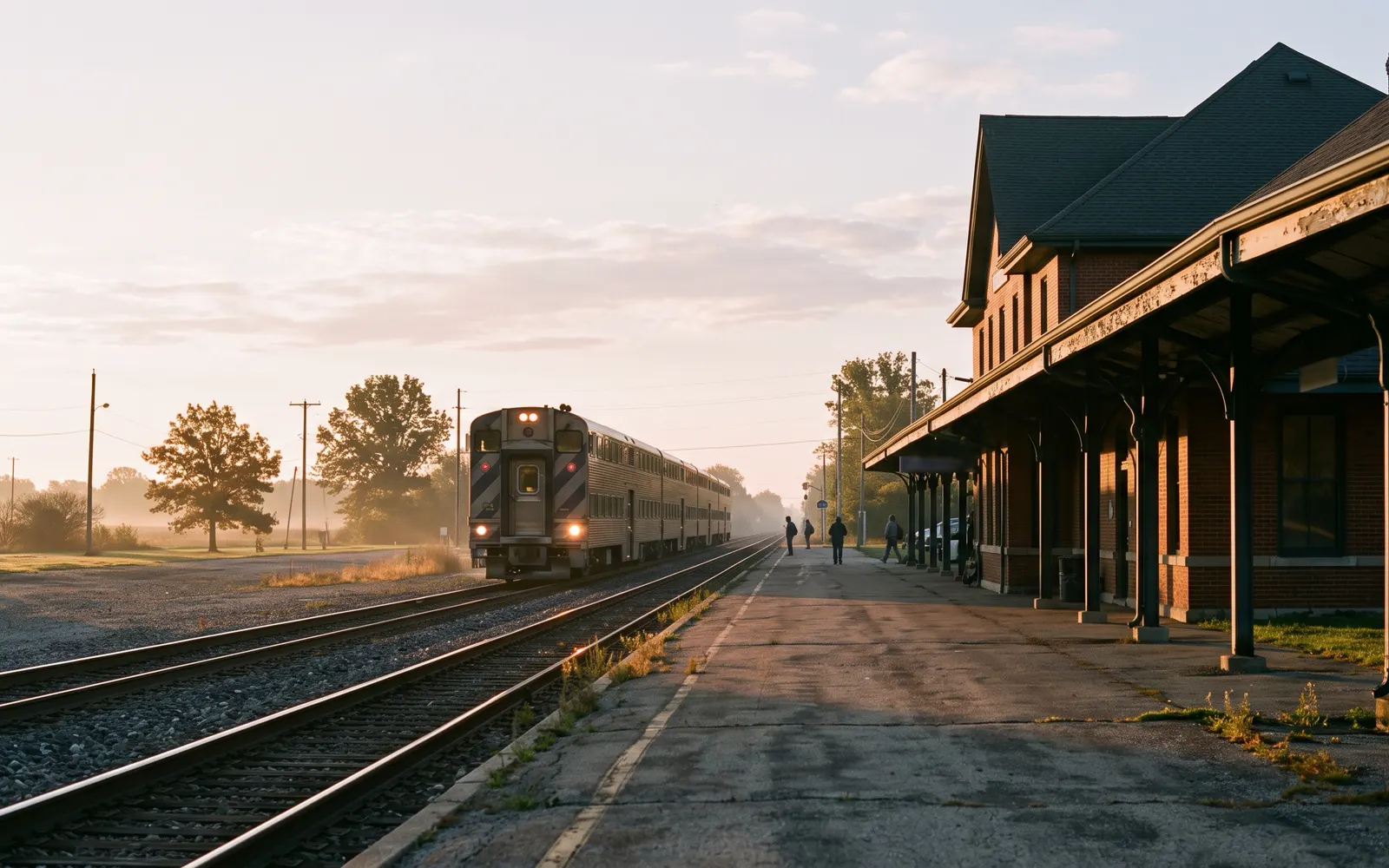
Lake Zurich has no train station. The closest is Barrington, on Metra's Union Pacific Northwest line to Ogilvie Transportation Center. According to Metra's schedule data for fall 2026, 34 weekday trains leave Barrington for Chicago and 31 come back. Saturdays have 16 inbound and 17 outbound; Sundays have 9 and 11.
Which train you take matters more than most buyers expect. The rush-hour expresses make the trip in 47 minutes: the 6:15 a.m. arrives at Ogilvie at 7:02, and there are similar runs at 6:45, 7:15 and 7:45. The midday and evening locals take about 65 minutes. The old "about an hour" rule is right for the locals and 18 minutes too slow for the expresses.
The second option is the North Central Service at Buffalo Grove, east of the village, which runs to Union Station. It is a thinner schedule: 7 weekday trains toward the city, taking 53 to 64 minutes, so it only works for commuters whose hours fit it. Either way, your commute starts with a drive, and parking at the station is part of the plan. If you'll be downtown five days a week, weigh that drive before you fall in love with a house on the far side of town.
Driving from Lake Zurich: Route 12, Route 22 and the Tollways
Most Lake Zurich commutes happen by car. The village sits on U.S. Route 12 (Rand Road), which runs southeast toward Palatine and Arlington Heights and northwest toward Wauconda, and Illinois Route 22, which runs east toward Long Grove and the Tri-State corridor. Neither is an expressway, and there is no tollway interchange in the village.
For the Jane Addams Tollway (I-90) and O'Hare, most people head south through Barrington or down Route 12 toward Route 53. For the north shore and the Tri-State (I-294/I-94), Route 22 east is the usual path. Rush-hour traffic on Route 12 and Route 22 through the center of town is the complaint I hear most from people who live here. The village's comprehensive plan names the Route 12 and Route 22 corridor as a focus area.
One project to know about: the village has scheduled utility replacement and paving on South Old Rand Road, and the Daily Herald reported in September 2026 that the developer of the Reserves of Lake Zurich will connect water mains there ahead of that paving. Expect lane work on that stretch.
Is Lake Zurich Walkable?
Mostly not. Walk Score rates the village 34 for walking and 40 for biking, which it calls car-dependent. Most errands take a car.
The scores near the lake are better. The Paulus Park address on Rand Road scores 55, and Village Hall on Main Street scores 48. The blocks around downtown put the beach, the farmers market, a few restaurants and the Alpine Fest grounds within a walk. That is a small part of town, and houses there go quickly when they are priced right.
The Main Street rebuild was designed to make that core more walkable, with narrower lanes, wider sidewalks and landscaped medians meant to slow traffic. It does not change the fact that most subdivisions are a drive from anything. If walking matters to you, the search narrows to the streets around Main Street and Old Rand Road.
Shopping in Lake Zurich: Rand Road and Main Street
Rand Road is the everyday shopping spine. Through Lake Zurich and into Kildeer it is lined on both sides with big-box stores, national chains, banks and strip centers, and most weekly errands are a short drive from any subdivision in town.
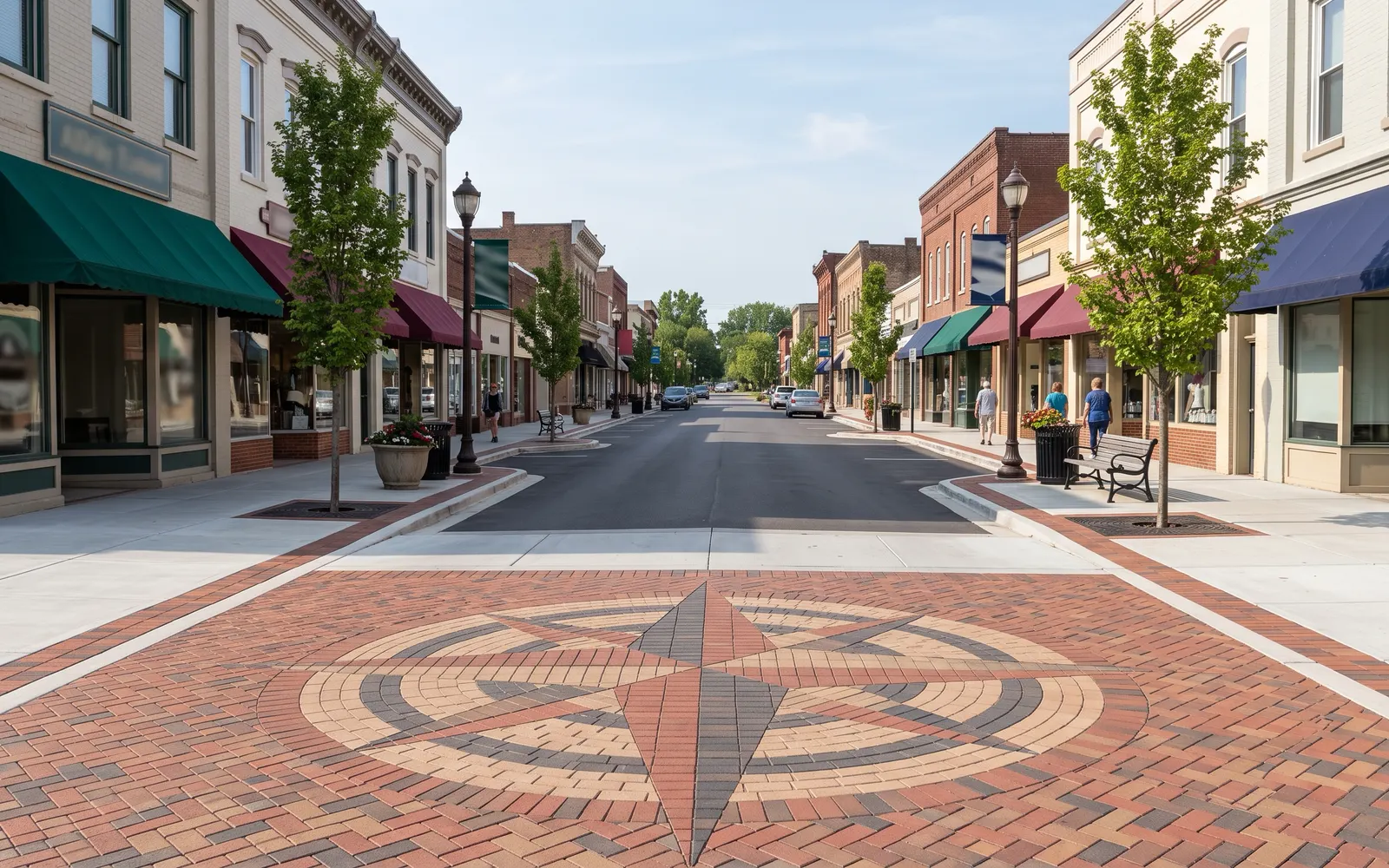
Main Street is the other side of Lake Zurich. It is a short, older downtown along the north shore with independent shops, services and restaurants, and the village has spent heavily to rebuild it. The streetscape project included about 73,000 square feet of brick and sidewalks, 40 new trees and 14,000 perennials, according to the Daily Herald's March 2025 report, with a decorative brick compass at Main Street and Old Rand Road as the centerpiece.
For a bigger shopping trip, Deer Park Town Center, an open-air center just south of the village, is the nearest option with department stores and a larger restaurant row. Woodfield Mall in Schaumburg is the usual destination for a full indoor mall.
Groceries and Everyday Errands in Lake Zurich
Groceries are one of Lake Zurich's quiet strengths. There are two Jewel-Osco stores in the village, at 485 Ela Road and 345 S. Rand Road. Mariano's is at 1350 E. Route 22, and Trader Joe's is at 735 W. Route 22. Aldi and a string of other stores sit along the Rand Road corridor.
That spread means most houses in town have a full grocery store within a few minutes, whichever side of the lake they are on. It is one of the practical differences between Lake Zurich and the lower-density towns around it, where the nearest full grocery can be a longer drive. Pharmacies, dry cleaners and banks cluster along Rand Road and Route 22 as well.
Where Lake Zurich Eats
Downtown has picked up more ambitious restaurants in recent years. LAGO by Fabio Viviani is an Italian steakhouse from the celebrity chef, and Vault 232 on Main Street is built around the vault of the old State Bank of Lake Zurich. They sit alongside the long-running diners, coffee shops and ice cream stops that have always been part of Main Street.
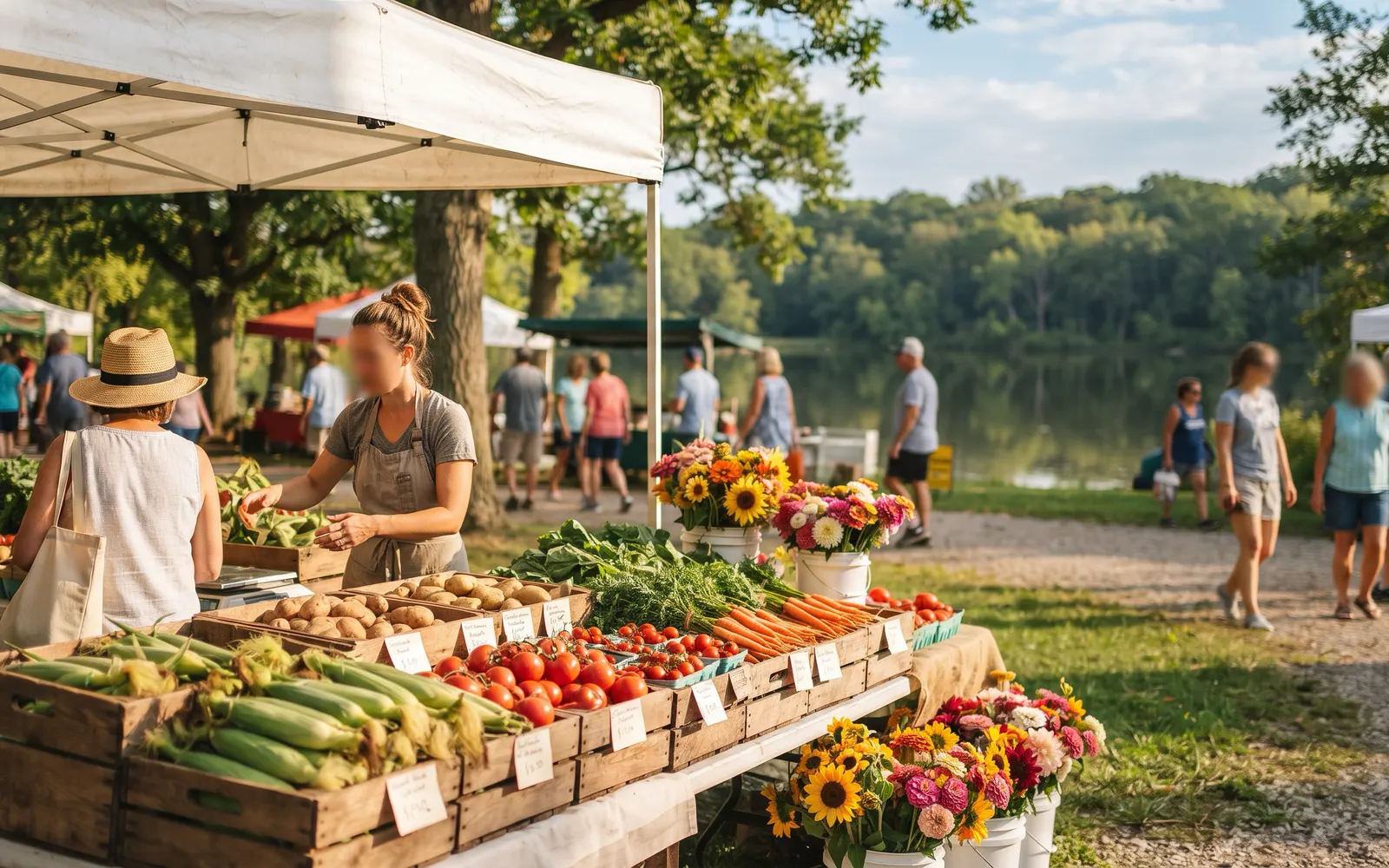
The Rand Road and Route 22 corridors fill in the rest with the usual suburban mix of chains and fast casual. On Fridays in summer, the Lake Zurich Farmers Market runs 3 to 7 p.m. at Paulus Park, 200 S. Rand Road. In 2026 it ran June 5 through September 11, with themed weeks like a makers market and a touch-a-truck day.
The Lake, Beaches and Parks in Lake Zurich
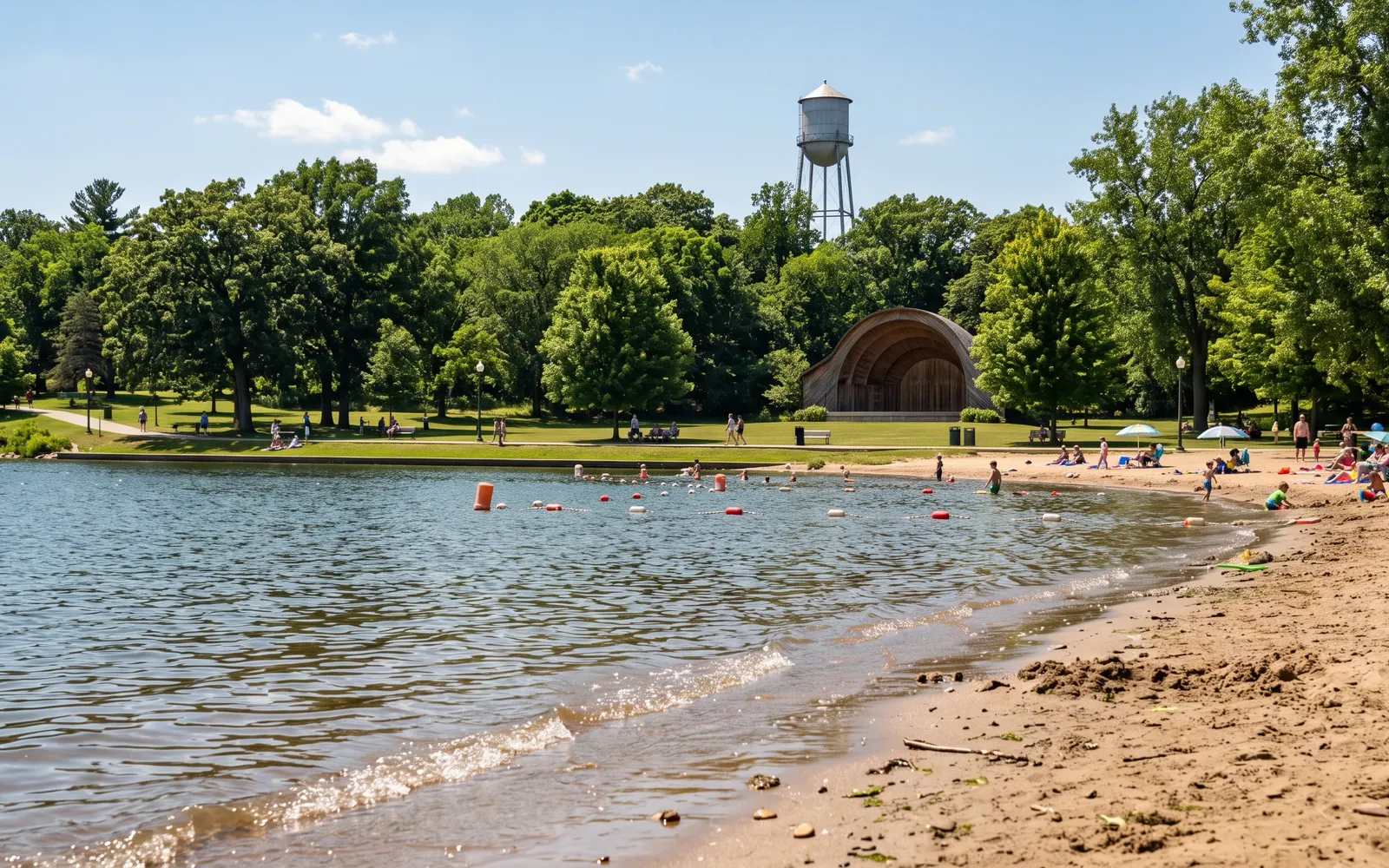
The lake is the reason for the name and the center of summer. The village runs two public beaches. According to its beach page, Paulus Park Beach was scheduled to open May 23, 2026 and close September 6, and Breezewald Beach ran May 26 to August 2. A resident season pass for ages 4 and up was $30 in 2026.
Henry J. Paulus Park, at 200 S. Rand Road on the edge of downtown, is the main park: beach, promenade, playground, a band shell, walking paths and four rentable pavilions. It is also where most of the village's big events happen. Across town, the village says about 245 acres of parks are spread across 32 public parks, including athletic fields at Braemar Park, Bristol Trails Park, Buffalo Creek Park and Staples Park.
Parks in Lake Zurich are run by the village's own Park and Recreation Department, not a separate park district, so park programs and fees run through Village Hall. One thing buyers should understand about the lake: much of the shoreline is private, so living in Lake Zurich does not mean living on the water. If private lake access matters to you, ask about it on every listing, because it varies by subdivision and by lot.
The Ela Area Public Library
Lake Zurich is served by the Ela Area Public Library at 275 Mohawk Trail. It is a library district, which means its service area follows district lines rather than the village boundary, another reason to check exactly which taxing bodies a given address falls into.
The library runs the Forge Makerspace and digital media labs alongside its collections and programs. It is open seven days a week: 9 a.m. to 9 p.m. Monday through Thursday, 9 to 6 on Friday, 9 to 5 on Saturday and noon to 5 on Sunday.
Utilities in Lake Zurich, and the Switch to Lake Michigan Water
The Village of Lake Zurich runs water and sewer through its Public Works Department. ComEd delivers electricity, and Nicor Gas serves most of the area for natural gas. Confirm the providers on the seller's disclosures, especially for a 60047 address outside the village, which may not be on village water and sewer at all.
The big change is the water source. Today Lake Zurich draws from wells, and the water has to be treated for radium and barium. In March 2024 the village board voted to join the Central Lake County Joint Action Water Agency and switch to Lake Michigan water. According to the Daily Herald's January 2026 report, the project costs about $154 million, includes seven miles of 24-inch transmission main from Vernon Hills and a pump station in Mundelein, and targets Lake Michigan water in Lake Zurich taps in late 2028.
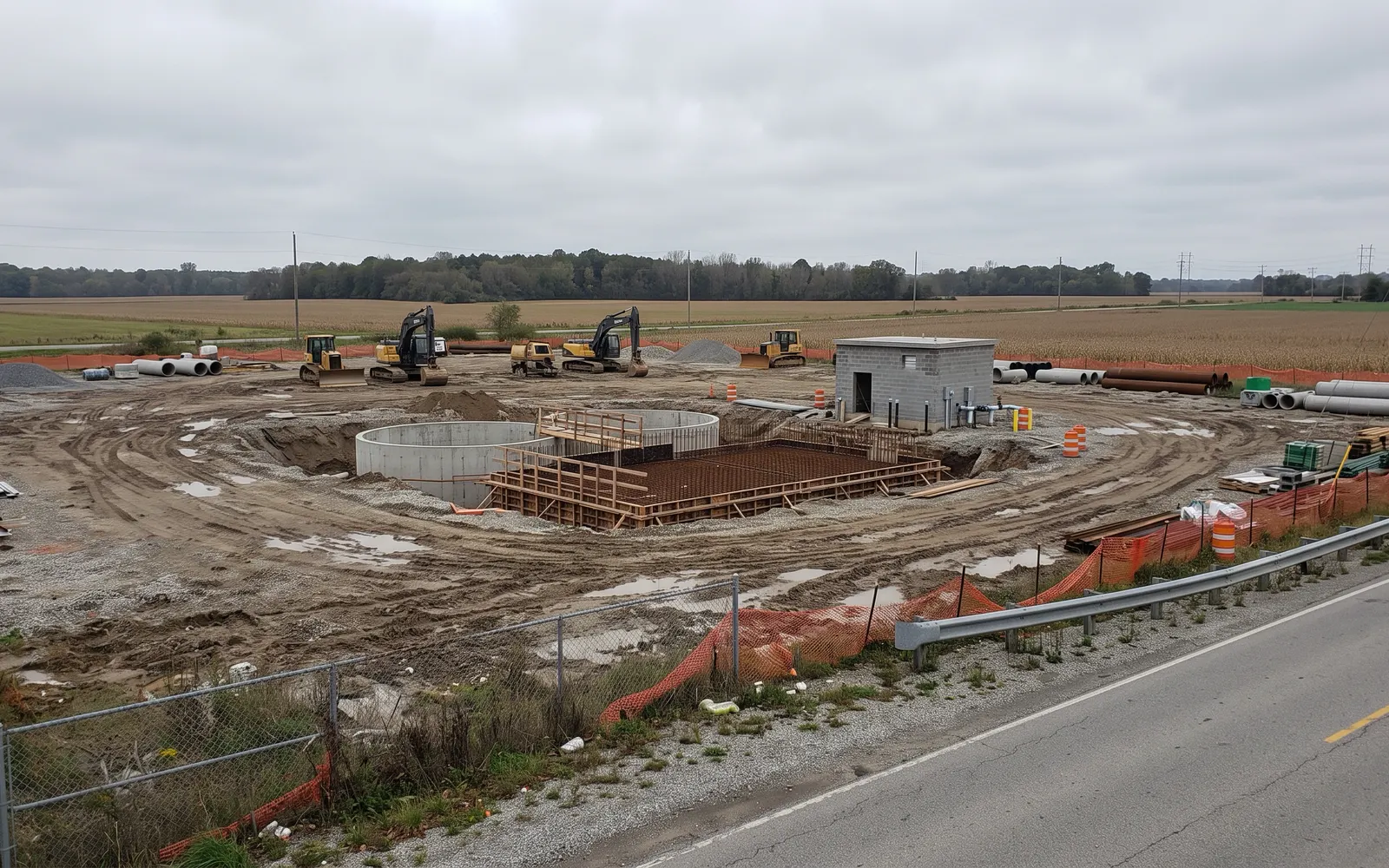
The village's own 2026 construction update shows the in-town piece underway: a water storage reservoir and pump station at Midlothian Road and Oakwood Road, with construction from August 2026 through the end of 2028. It is paid for largely from water and sewer revenue, which is why rates are rising on a graduated schedule. For a buyer, the takeaway is simple. Budget for a higher water bill than the seller's history shows.
Hospitals and Clinics Near Lake Zurich
The closest full-service hospital is Advocate Good Shepherd Hospital in Barrington. In town, Advocate runs the Good Shepherd Outpatient Center on Surryse Road, with imaging, outpatient care and occupational therapy. Northwest Community Hospital in Arlington Heights and Advocate Condell Medical Center in Libertyville are the other hospitals most residents use.
Immediate care is the gap, and it is being filled. The Daily Herald reported in June 2026 that the village approved a 12,500-square-foot Advocate outpatient center on five acres at the northwest corner of Route 12 and Miller Road, with primary care, immediate care, lab and X-ray. Until it opens, the closest Advocate immediate care sites are in Hoffman Estates and Crystal Lake.
Summer Nights and Things to Do in Lake Zurich
Summer in Lake Zurich happens at Paulus Park. The band shell hosts concerts, and the 2026 season opened with Live at the Lake on June 6, a tribute-band show with a fireworks finale over the water. On a warm evening the promenade, the beach and the downtown restaurants are the busiest places in the village.
The park stays in use after the beach closes. The lake freezes for ice fishing and skating in a cold winter, and the hill and paths get used year-round. For a bigger night out, Deer Park Town Center's restaurants are just south, and the Barrington and Arlington Heights downtowns are a short drive.
Alpine Fest and Lake Zurich's Yearly Traditions
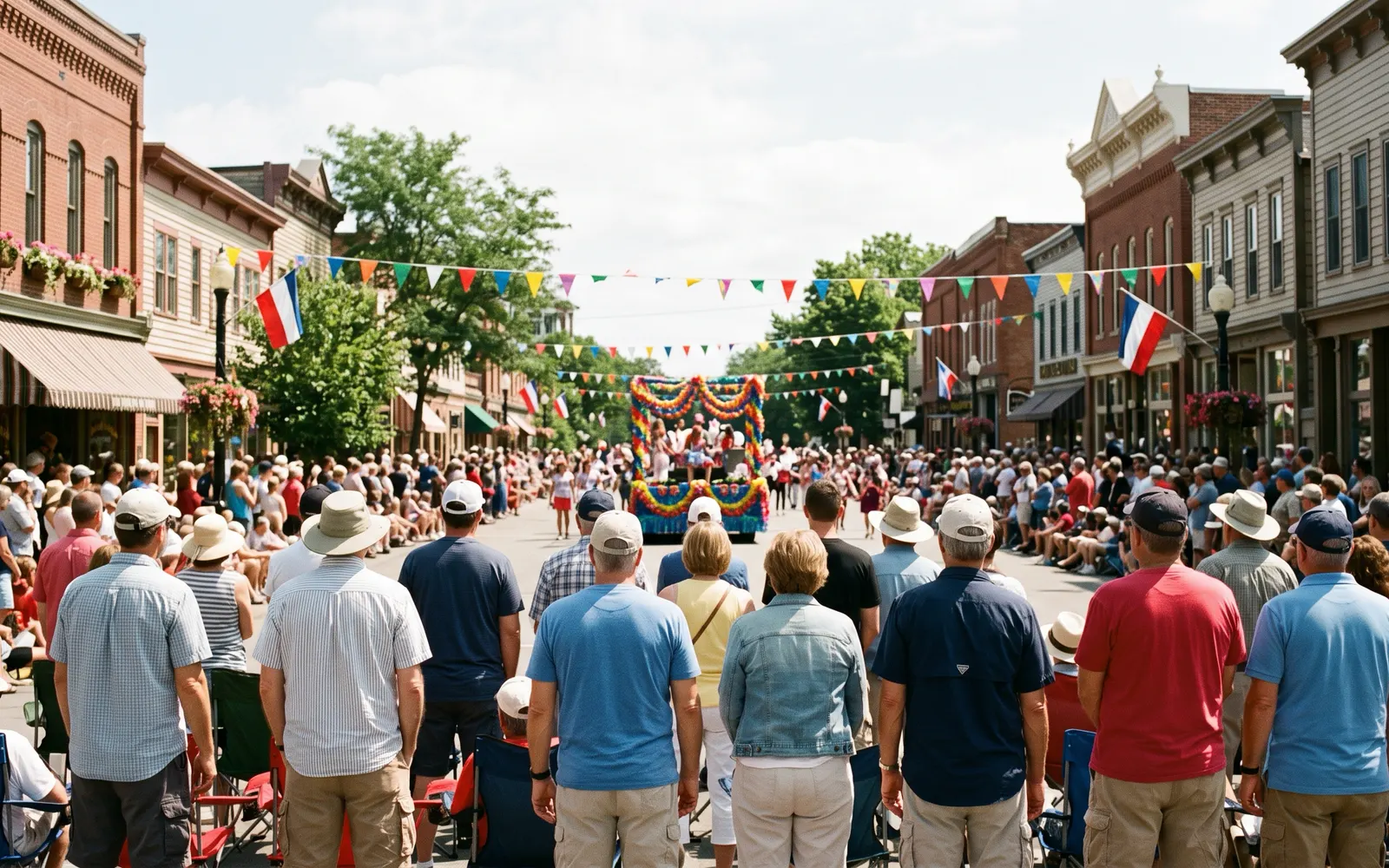
The big one is Alpine Fest, run by the Lions Club of Lake Zurich. In 2026 it ran July 17 to 19 downtown: Friday 6 to 11 p.m., Saturday noon to 11 p.m., and Sunday with the parade stepping off at 11 a.m. and the festival running noon to 6. It has food, rides, games and bands, and the Swiss theme ties back to the lake's name. The Lions Club says it has hosted the festival since 1945. Some older sources date the first one to 1942.
In September, Rock the Block closes Main Street from Church Street to Old Rand Road for an evening of bands and food. The 2026 edition was September 12, 5 to 11 p.m. Add the Friday farmers market, the summer concerts at Paulus Park and the beach season, and the calendar from June to September is full. If you're touring houses in July, come on Alpine Fest weekend. It tells you more about the downtown than any listing will.
What's Being Built in Lake Zurich
The village's direction is set by "Lake Zurich Together," a 154-page comprehensive plan adopted in early 2025, the first detailed update since 2003. According to the Daily Herald, it shifts the focus from outward growth to infill and redevelopment, with a framework for Main Street and for development or annexation along the Route 12 and Route 22 corridor.
Downtown, the village approved a not-to-exceed $13.16 million contract with Copenhaver Construction in March 2025 for the Main Street streetscape, a water transmission line and utility work on Main Street, Whitney Road and Lake Zurich Drive. The village has also sold its buildings at the northeast corner of Main Street and North Old Rand Road to True North Properties, which plans exterior and interior improvements, according to the village's current projects page.
On the housing side, the Reserves of Lake Zurich, 18 single-family homes and 18 townhouses on nine acres at 670 S. Old Rand Road, restarted in September 2026 after a stop-work order in April over unpaid fees. The village now requires the southern half to be finished first. Meadow Wood East, 15 homes on eight acres east of Rand Road, was approved in February 2025 with five models of 2,013 to 3,747 square feet and prices projected from $600,000. Just outside the village, a 24-unit apartment building with below-market rents at Midlothian Road and North Lakewood Lane was headed to the Lake County Board for a final vote as of late August 2026.
The largest project is invisible once it's done: the Lake Michigan water system covered in the utilities section, with in-town construction running through 2028. Add the new Advocate immediate care center at Route 12 and Miller Road, and the next few years will bring more construction traffic than new rooftops.
I don't label any town or neighborhood as safe or unsafe.
Flood Risk in Lake Zurich
Flooding isn't a village-wide problem in Lake Zurich, but it is a lot-by-lot one. Redfin, using First Street's model, rates Lake Zurich's flood risk as minor, with about 3% of properties, or 103, at risk of severe flooding over the next 30 years. That risk concentrates near the lake, the creeks and the wetlands that run through several subdivisions.
Two checks before you write an offer. Look the address up on the FEMA flood map, because a mapped flood zone can mean required flood insurance on a mortgage. And ask the seller directly about water in the basement. Many Lake Zurich homes from the 1970s through the 1990s have basements, and in my experience the answer to "has it ever had water?" is often "once." The follow-up question about what they did about it is the one that matters.
Working With a Lake Zurich Real Estate Agent
Lake Zurich has something unusual for Lake County: a below-median tax rate. At roughly 2.26% effective with a median bill of $8,667, it sits under the county median of 2.61%. On a $554,633 median sale price that gap is worth real money every year, and almost nobody markets it.
The offset is rail. There has been no station here since passenger service ended around 1920. Barrington on the UP-NW is the closest, with 34 weekday trains, 47 minutes express to Ogilvie and about 65 on a local.
Most of the village sits in Lake Zurich CUSD 95, a single district running from preschool through Lake Zurich High School, which simplifies things considerably. Some east-side addresses fall in District 96 instead. Confirm any specific address with the district.
Lake Zurich's below-median tax rate belongs in the listing, and putting it there is part of how I work as a listing agent in Lake County IL.
Lake Zurich, IL home sales, July–September 2026
- Median sale price
- $540,000
- Up 18% from the same months a year earlier
- Median days on market
- 7
- Median sale-to-list
- 100%
Closed sales from MRED, pulled from my own MLS archive and updated November 4, 2026. I use three full months and leave out the newest month, because closings keep arriving for weeks.
Frequently Asked Questions
How much are property taxes in Lake Zurich, IL?+
The median effective rate is about 2.26% with a median bill of roughly $8,667, according to Ownwell's April 2026 data. That sits below the Lake County median of 2.61%, which is unusual and genuinely worth factoring into a purchase decision.
What school district is Lake Zurich, IL in?+
Most of the village is in Lake Zurich Community Unit School District 95, a single district covering preschool through Lake Zurich High School. Some east-side addresses fall in Kildeer Countryside District 96 and feed Stevenson High School instead, so confirm the boundary by address before you buy.
Does Lake Zurich, IL have a Metra station?+
No. Passenger rail served Lake Zurich only from about 1910 to 1920. The closest station is Barrington on the Union Pacific Northwest line, with 34 weekday trains; expresses take 47 minutes to Ogilvie and locals about 65. Plan on driving to the station daily.
Is Lake Zurich walkable?+
Not village-wide. The Walk Score is 34, but the downtown area around Paulus Park and Main Street scores 48 to 55.
What neighborhoods are in Lake Zurich, IL?+
Commonly named subdivisions include Lake Zurich Heights, Old Mill Grove, Countryside East and West, Bristol Trails, Cedar Creek, Braemar, Chestnut Corners, Wicklow Village, Heatherleigh, Sonoma, Concord Village, Meadow Wood and Coventry Creek.
Is a 60047 address always in the village of Lake Zurich?+
No. The 60047 ZIP also covers parts of Hawthorn Woods, Kildeer and unincorporated areas. Check the municipality on the tax bill, because it changes the taxes, the water supplier and sometimes the school district.
Is Lake Zurich switching to Lake Michigan water?+
Yes. The village joined the Central Lake County Joint Action Water Agency in 2024, and the $154 million project targets Lake Michigan water in late 2028. Water rates are rising on a graduated schedule to pay for it.
What is the average home price in Lake Zurich, IL?+
Redfin reported a median sale price of $554,633 for the three months ending August 2026, up 10.9% year over year, with Zillow's index at $512,227. Prices run from townhomes in the $300,000s and $400,000s up to lakefront property well above the median.
How do I choose a real estate agent in Lake Zurich, IL?+
Ask whether they have quantified the tax advantage. Lake Zurich runs below the county median rate, which compounds over years of ownership. An agent who has not put a number on that has missed the strongest argument for buying here.
Eshu Chikoti has extensive access to off-market listings throughout Lake Zurich and the surrounding North Shore — homes that never make it to the public listing sites. That matters right now: in a seller's market like this one, well-priced homes routinely go under contract within days, and buyers relying only on public listings are competing for whatever is left over. Working with someone plugged into off-market inventory means seeing homes before the crowd does.
Eshu Chikoti · 847-691-4282 ·
Towns Neighboring Lake Zurich
Most buyers looking at Lake Zurich end up touring a couple of the towns next door before they decide. Each of these has a full guide of its own — same depth on schools, commute, taxes, and what the housing stock actually looks like.
Get new Lake Zurich listings by email
When a home comes on the market in Lake Zurich, I'll email it to you.
Just your email. Unsubscribe any time by replying.
Thinking About Lake Zurich?
Whether you're buying, selling, or just curious what's on the market, I can walk you through Lake Zurich street by street.