Lake Bluff, IL
Lake Bluff, IL is a lakefront village of about 6,000 people with its own Metra stop, a public swim beach and a small historic downtown, sharing Lake Forest High School with its neighbor to the south.
Living in Lake Bluff, IL means a 59-minute rush-hour train to Ogilvie, a free resident beach on Lake Michigan and Lake Forest High School. Zillow puts the typical home value at about $666,000, and the property tax rate runs near 2.1%. Here is how it breaks down, pocket by pocket.
Written by Eshu Chikoti · 847-691-4282 ·
How Lake Bluff, IL Got Here: A Short History
The first settlers to claim land here were John and Catherine Cloes, who arrived in 1836 and took 100 acres running from the lake west to the Green Bay Trail. A year later William and Mary Dwyer opened a stagecoach stop and tavern on the same trail, and the crossroads was known as Dwyer Settlement and later Oak Hill. According to the Village of Lake Bluff's history page, the name changed again in 1855, when the first railroad through Lake County arrived. Henry Ostrander donated the depot site on one condition: that the stop be called Rockland.
The name Lake Bluff dates to 1875. A group of Methodist ministers bought 100 acres of lakefront from Ben Cloes, the youngest son of the first settlers, and formed the Lake Bluff Camp Meeting Association. They planned a summer resort with religious, cultural and recreational programs. Land was cut into 25-foot lots where a cottage "could be erected within 20 days of purchase for $250." By the mid-1880s there were more than 30 hotels and boarding houses and a tabernacle that seated over 2,000 people.
That resort history is still visible in the street grid. The narrow lots near the lake are the reason some of the oldest houses in East Lake Bluff sit so close together, and why a buyer can find a cottage-scale house two blocks from a much larger one.
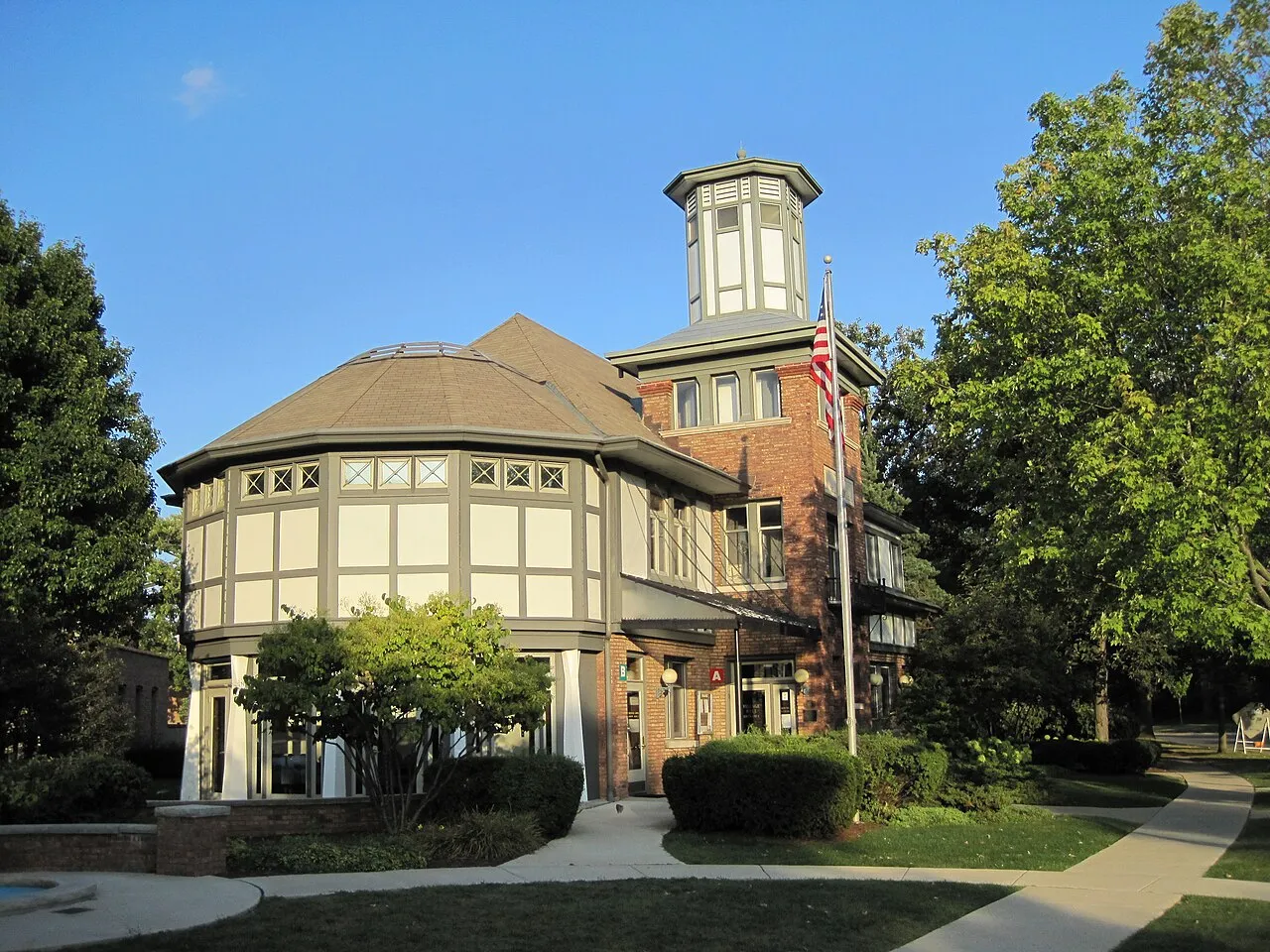
Lake Bluff incorporated as a village on September 21, 1895, with Charles Trusdell as its first village president. The brick train station went up in 1904 and the current Village Hall in 1905. During World War I the village was called the "most patriotic small town in America" after residents raised money for an ambulance sent to France. Plans to grow in the 1920s stalled in the Depression, and most of the growth came after World War II, when new subdivisions opened along Green Bay Road.
Lake Bluff at a Glance
Lake Bluff covers about 4.1 square miles on the Lake Michigan shore, between Lake Forest to the south and Naval Station Great Lakes to the north, with Libertyville to the west. The whole village sits in Shields Township. The Census ACS for 2020-2024 puts the population at 6,041 in 2,386 housing units. The 2020 census count was 5,616.
The village's own numbers show how the land is used: 50% residential, 26% open space, parks and recreation, 10% business and 9% roads and railroad.
The detail that matters most for buyers is that a Lake Bluff mailing address does not always mean the Village of Lake Bluff. The unincorporated community of Knollwood, west of US-41, shares the 60044 ZIP code and is served by the Lake Bluff schools, but it is not in the village. Listings show it, and some of the condo and townhome pockets on the northwest side, as "Lake Bluff." Village services, the park district and the tax bill can all differ. I check the parcel's jurisdiction before I run numbers on any Lake Bluff listing west of the highway.
The layout is simple. The Union Pacific tracks and Sheridan Road run north to south through the east half of the village. Scranton Avenue is the main street, running from the downtown to the lake. Green Bay Road runs north to south west of the tracks, and US-41 cuts through the western part of the village, where it meets Route 176.
The most affordable Lake Bluff addresses are often outside the village, which changes the tax code and sometimes the beach access.
Lake Bluff Neighborhoods, Pocket by Pocket
Lake Bluff has no official neighborhoods, but it is several different markets inside one small village. The simplest split is east versus west. East of the tracks is the original lakefront village: older houses, ravines, the beach and the walk to downtown. Between the tracks and US-41 are the post-war and 1980s subdivisions along Green Bay Road. West of US-41 is Knollwood and a cluster of condo and townhome communities with Lake Bluff addresses.
The price gap between those zones is large. The lakefront and ravine houses east of the tracks and the larger homes on the north-end cul-de-sacs sit at the top of the market. Knollwood's older houses and the attached homes and condos west of US-41 are the most affordable way into a Lake Bluff address. For the village as a whole, the Census ACS puts the median owner-occupied home value at $776,700 for 2020-2024, and Zillow's home value index put the typical home at $666,451 in August 2026. The spread around those numbers, pocket to pocket, is several hundred thousand dollars in either direction.
Below are the pockets you will see named in listings. Boundaries are informal and agents draw them slightly differently, so treat them as a starting point. If you want to know which pocket a specific address falls in and what that pocket has actually sold for lately, that is a conversation I am happy to have here.
The question buyers ask me most in Lake Bluff is not about the house. It is which side of the tracks it is on, whether it is inside the village, and how far it is to the beach. Those three answers move price more than the kitchen does.
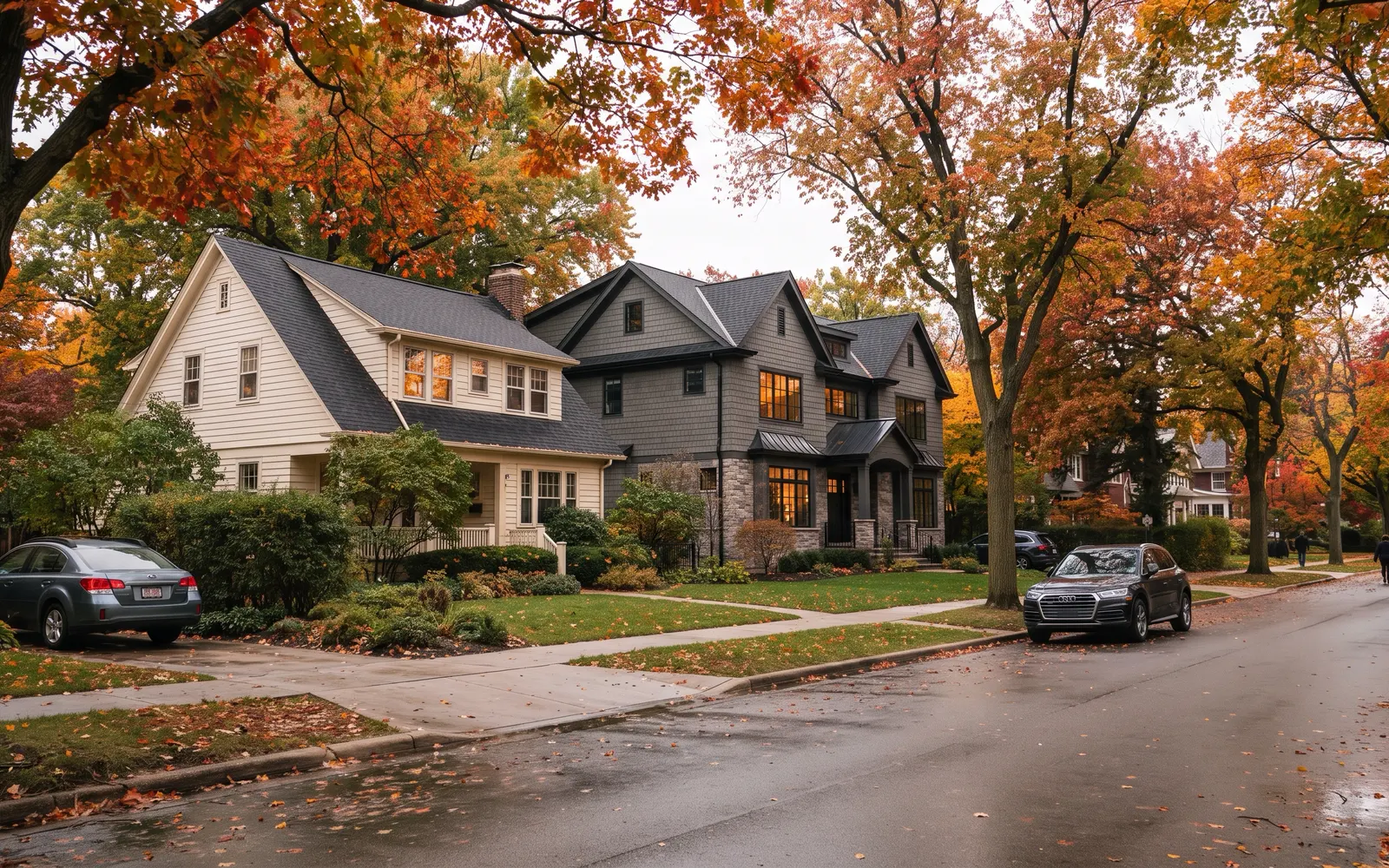
East Lake Bluff. East of the tracks toward the lake, around Ravine Avenue, Center Avenue and East Sheridan Place. The oldest housing in the village, from resort-era cottages to large houses near the bluff and the ravines, with the beach, downtown and the train all within walking distance. Usually the top of the Lake Bluff market.
East Terrace and West Terrace. On either side of Green Bay Road south of Scranton Avenue, around Mawman Avenue, Witchwood Lane and Prospect Avenue. Mostly post-war single-family houses, close to the station, and on the route of the 2026-2027 Green Bay Road reconstruction.
Tangley Oaks. North of downtown near Green Bay Road, on a set of courts with English names (Ascot, Bristol, Winchester). Larger two-story homes on cul-de-sacs, a more tucked-away setting than the east side.
Armour Woods, Arden Shores Estates and Belle Foret. The north end of the village near Green Bay Road and Smith Avenue. Armour Woods and Belle Foret are larger homes on wooded lots; Arden Shores is a mix of older houses and occasional new construction.
Wimbledon Estates. Near the Lake Forest border around Forest Hills Road. Larger single-family homes at the south edge of the village.
Sanctuary. North of Route 176, between US-41 and Waukegan Road. A newer subdivision whose water comes from the City of North Chicago, not the village system.
Knollwood. Unincorporated, west of US-41 around Rockland Road. Mostly modest mid-century houses. Lake Bluff District 65 schools, but outside the village, so taxes, services and the park district differ.
Glenmore Woods. West of US-41 near Knollwood. A small subdivision of newer single-family homes on courts.
The Hamptons, Whispering Lake, Heiden Gardens and Stratford Court. Attached homes and condos on the northwest side. The most affordable way into a Lake Bluff address, and the ones where I would confirm the jurisdiction, association fee and school assignment first.
What Lake Bluff Homes Look Like, by Era
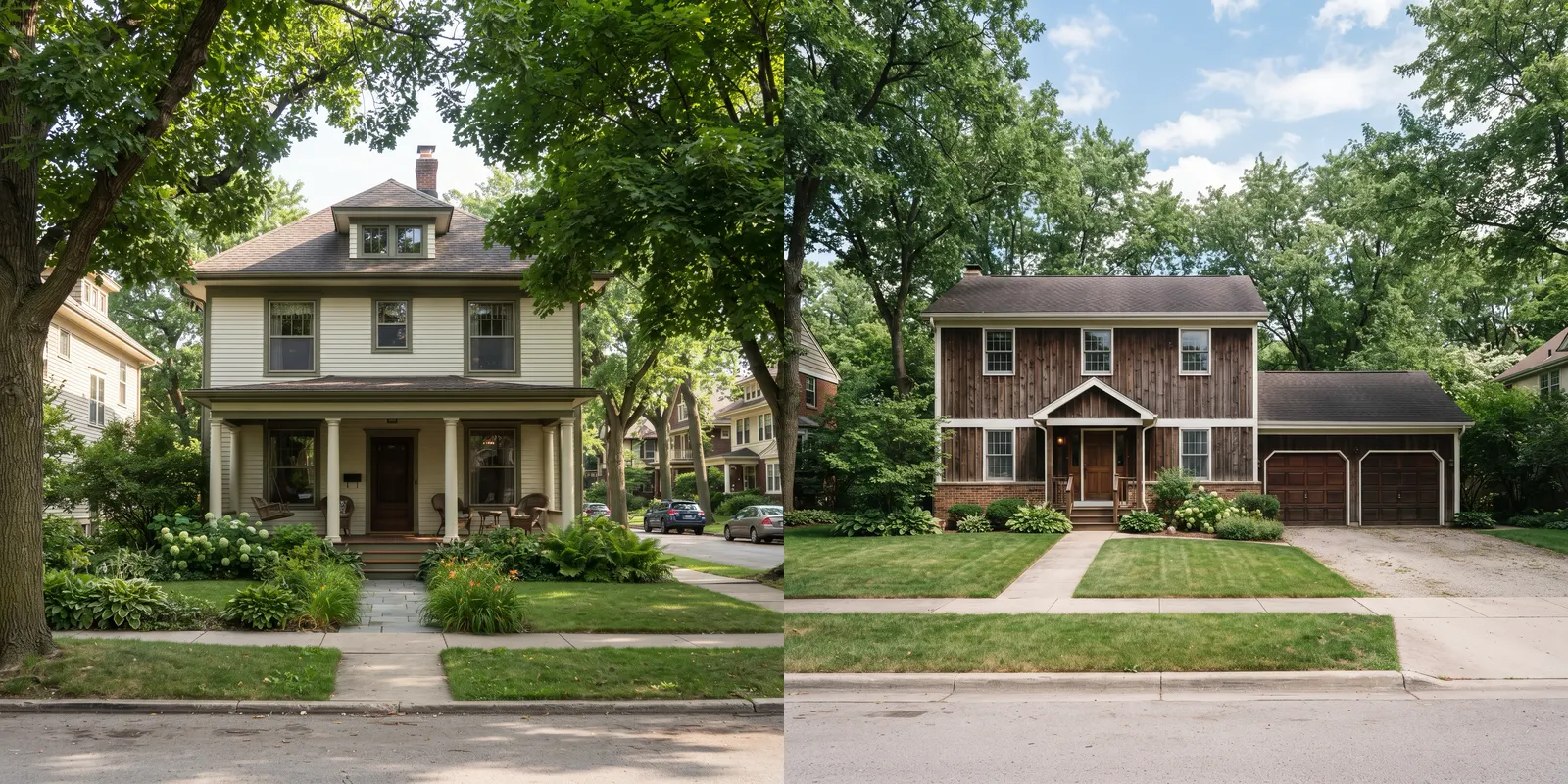
Lake Bluff's housing follows its history closely. The oldest homes are east of the tracks: frame houses and cottages from the resort years, Colonial Revival and Tudor homes from the 1900s to the 1920s, and larger houses near the bluff and the ravines. Houses more than a century old still come up for sale here regularly.
The post-war layer came next. The village history notes that new subdivisions opened along Green Bay Road after World War II, and that is what you see today: East Terrace, West Terrace and Knollwood are mostly mid-century ranches, split-levels and two-stories. Later decades added Tangley Oaks, Armour Woods, Sanctuary and Glenmore Woods, which are larger houses on cul-de-sacs, and the attached-home communities west of US-41.
New construction is limited because the village is built out. What does get built is mostly infill: a teardown replaced with a new house, or a rare vacant lot. Buyers pay a premium for new construction here, but in my experience the new builds that sit are the ones priced well ahead of the older houses around them.
The Census ACS puts the median owner-occupied home value at $776,700 for 2020-2024. Downtown and the east side also sit under the village's historic preservation rules, and the village has an Architectural Board of Review. If you are planning an addition or a teardown, ask about those reviews before you buy, not after. For an older house, my home inspection checklist is a good place to start. Century-old Lake Bluff houses tend to show their age in the same places: electrical, plumbing and basements.
The Lake Bluff Housing Market in 2026
Lake Bluff is a small market, so a single month tells you almost nothing. Most sites still quote a $765,000 median sale price from late 2025, and Redfin built that figure from just two sales in November 2025. A handful of closings can swing a monthly median a long way in either direction, so I would not budget from any one month.
The steadier measure is Zillow's home value index, which tracks the estimated value of all homes whether they sold or not. For Lake Bluff it was $666,451 in August 2026, up 9.5% from $608,487 a year earlier and up about 18% from $563,499 in August 2024. That is a consistent climb across two years.
For a recent snapshot of sales, Movoto reported 27 sales in August 2026 at a median of $639,500, with a median of 36 days on market, the same as a year earlier. It also showed 33 active listings as of September 21, 2026. Inventory is thin for a village this size, and when a well-priced house comes up in East Lake Bluff or Tangley Oaks, buyers who have been waiting tend to move in the first week. The houses that sit are mostly priced ahead of the market.
Village-wide numbers only go so far here, because the gap between a condo west of US-41 and a house near the bluff is enormous. If you want what a specific pocket has actually sold for, ask me. For the broader county picture, see my Lake County market report for Q3 2026.
Lake Bluff Property Taxes and the Real Cost of Owning
Property tax is the cost buyers underestimate most in Lake Bluff. Ownwell's data, updated April 2026, puts the median effective rate at 2.09% and the median annual bill at $11,665. For the 60044 ZIP, the 25th percentile bill is $8,388, the 75th is $16,493 and the 90th is $25,596.
Here is what that means on a real purchase. At 2.09%, a house bought at Zillow's typical Lake Bluff value of $666,451 would eventually carry about $13,900 a year in tax, roughly $1,160 a month on top of the mortgage. A house near the bluff at twice that price carries twice the bill. The seller's current bill is often lower because assessments trail the market. The assessor catches up, usually in the reassessment after a sale. The expectation I most often have to reset is a buyer budgeting from the seller's bill.
The village is in Shields Township, but the tax code still varies with the park district, library, school and fire district on each parcel. Knollwood and the other unincorporated pockets have different taxing bodies than the village, so two houses with the same price can carry different bills. My Lake Forest property tax guide walks through how that plays out next door.
If you already own and your assessment looks high, my Lake County property tax appeal guide covers the process and deadlines. This is general information, not tax advice. Your actual bill depends on your parcel, your exemptions and the assessor.
Lake Bluff Schools: District 65 and Lake Forest High School
Kindergarten through eighth grade is Lake Bluff Elementary School District 65, a two-school district. Lake Bluff Elementary School covers pre-kindergarten through fifth grade and Lake Bluff Middle School covers sixth through eighth. The district has about 881 students, per U.S. News. The current elementary building opened in 2009, and the middle school was renovated in 2016 with new classroom wings, a library and a makerspace.
High school is Lake Forest Community High School District 115, which serves Lake Forest, Lake Bluff and Knollwood from one campus. My guide to Lake Forest schools, Districts 67 and 115 covers the high school in more depth.
Two details trip buyers up. First, District 65 serves Knollwood even though Knollwood is outside the village, so a Knollwood house gets the same schools as an in-village one. Second, some addresses with a Lake Bluff mailing address on the far west and northwest side may fall in a different district. Check the specific address with District 65 and District 115 before you write an offer, and ask me for the boundary if you want it done for a specific house.
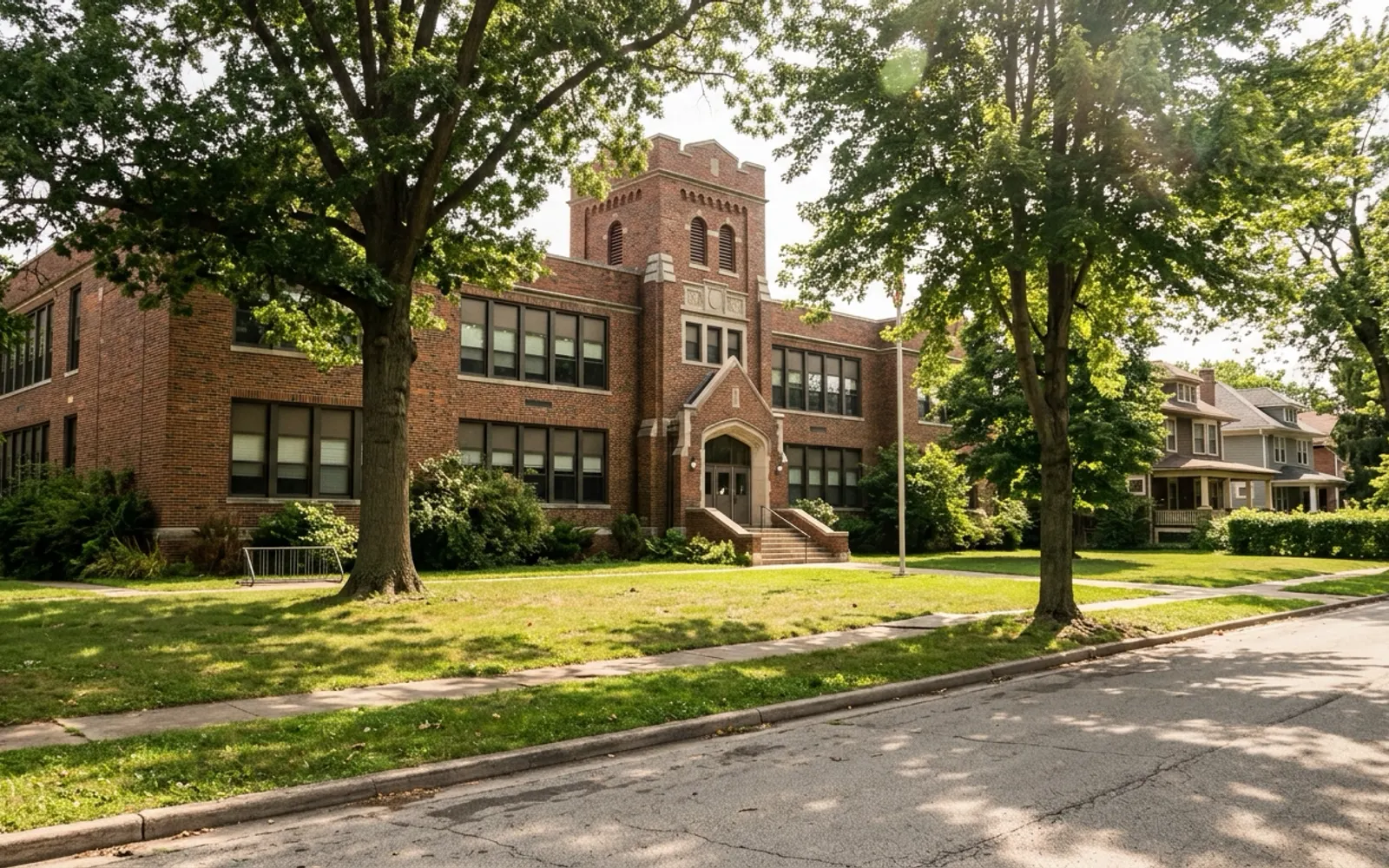
Lake Bluff Elementary School. Pre-kindergarten to 5th grade, District 65. Opened in 2009.
Lake Bluff Middle School. 6th to 8th grade, District 65. 31 E. Sheridan Place. Renovated in 2016.
Lake Forest High School. 9th to 12th grade, District 115, shared with Lake Forest.
Commuting from Lake Bluff: Metra to Chicago
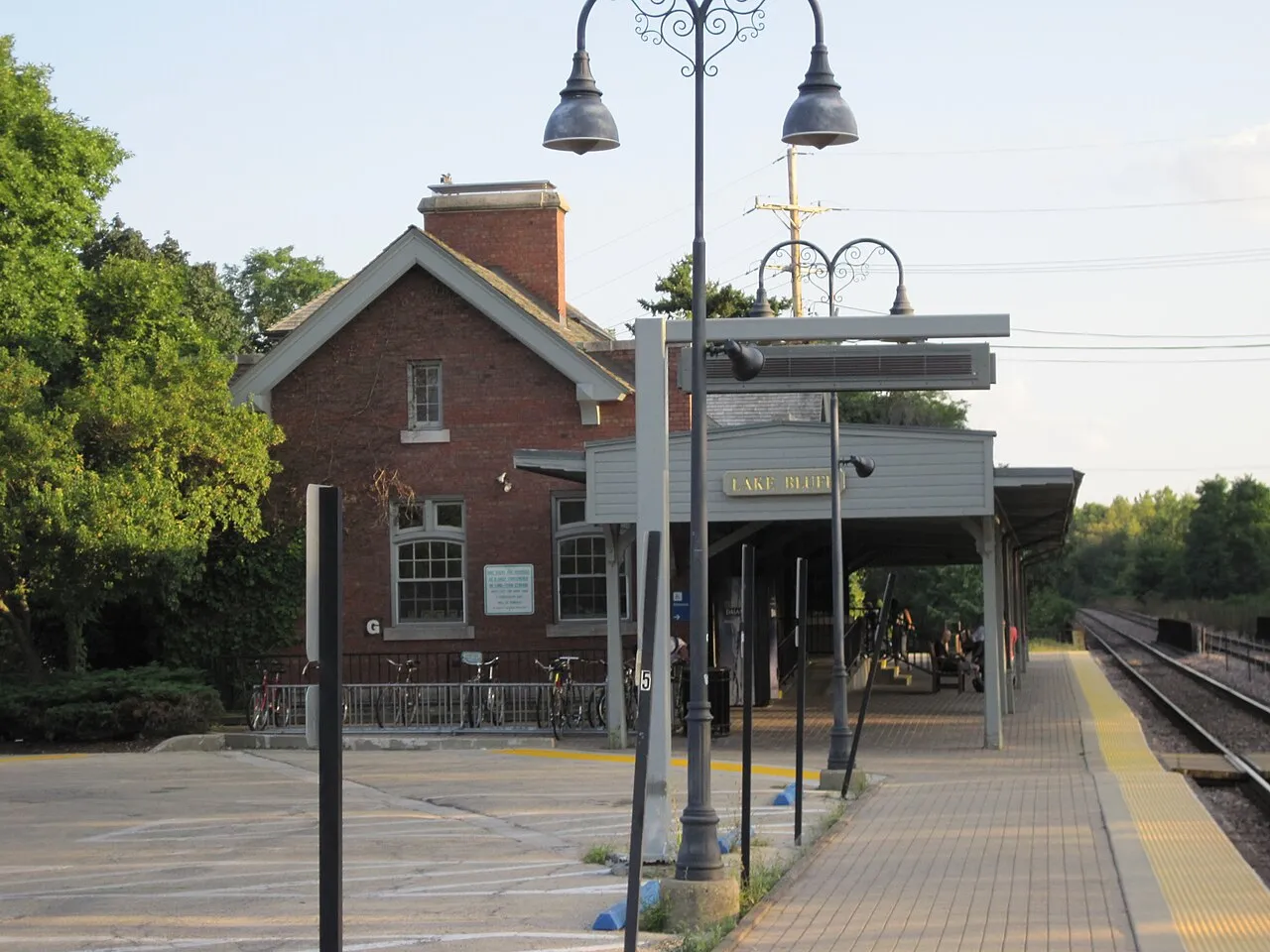
The Lake Bluff Metra station is on the Union Pacific North line, a one-seat ride to Ogilvie Transportation Center, about 30 miles south. According to Metra's current UP-N schedule, 26 inbound and 25 outbound trains stop here on weekdays, and 15 each way on Saturdays and on Sundays.
The ride time depends on the train. The fastest rush-hour trains reach Ogilvie in 59 minutes: the 6:41, 7:11, 7:41 and 8:11 a.m. departures all arrive in just under an hour. Local and off-peak trains take about 69 minutes, and so do weekend trains. That is longer than the Milwaukee District trains out of Deerfield or Libertyville, and it is the trade for living this far up the lakefront.
The station itself is the 1904 brick depot in the middle of downtown, which puts a large share of the village within walking or biking distance of the train. Great Lakes and Lake Forest stations are each one stop away if you need more train options or parking.
Driving from Lake Bluff: US-41, Route 176 and I-94
US-41 (Skokie Highway) runs through the western part of the village and heads south toward the Edens. Route 176 (Rockland Road) crosses east to west and reaches I-94 just west of the village, which is the main route to O'Hare and Milwaukee. Sheridan Road follows the lake south into Lake Forest and north toward North Chicago, and Green Bay Road is the local north-south alternative. O'Hare is roughly 45 minutes outside rush hour.
The US-41 and Route 176 interchange is the one to know about. IDOT is rebuilding Pump Station #37 under US-41 from March 2025 to May 2027, a $15.5 million project that is the first phase of a full interchange rebuild, with periodic lane closures. The village's capital projects page lists the full $88 million reconstruction for 2028 to 2030: new acceleration and deceleration lanes on US-41, a raised roadway for sight lines, more lanes on Route 176, and work on Waukegan Road.
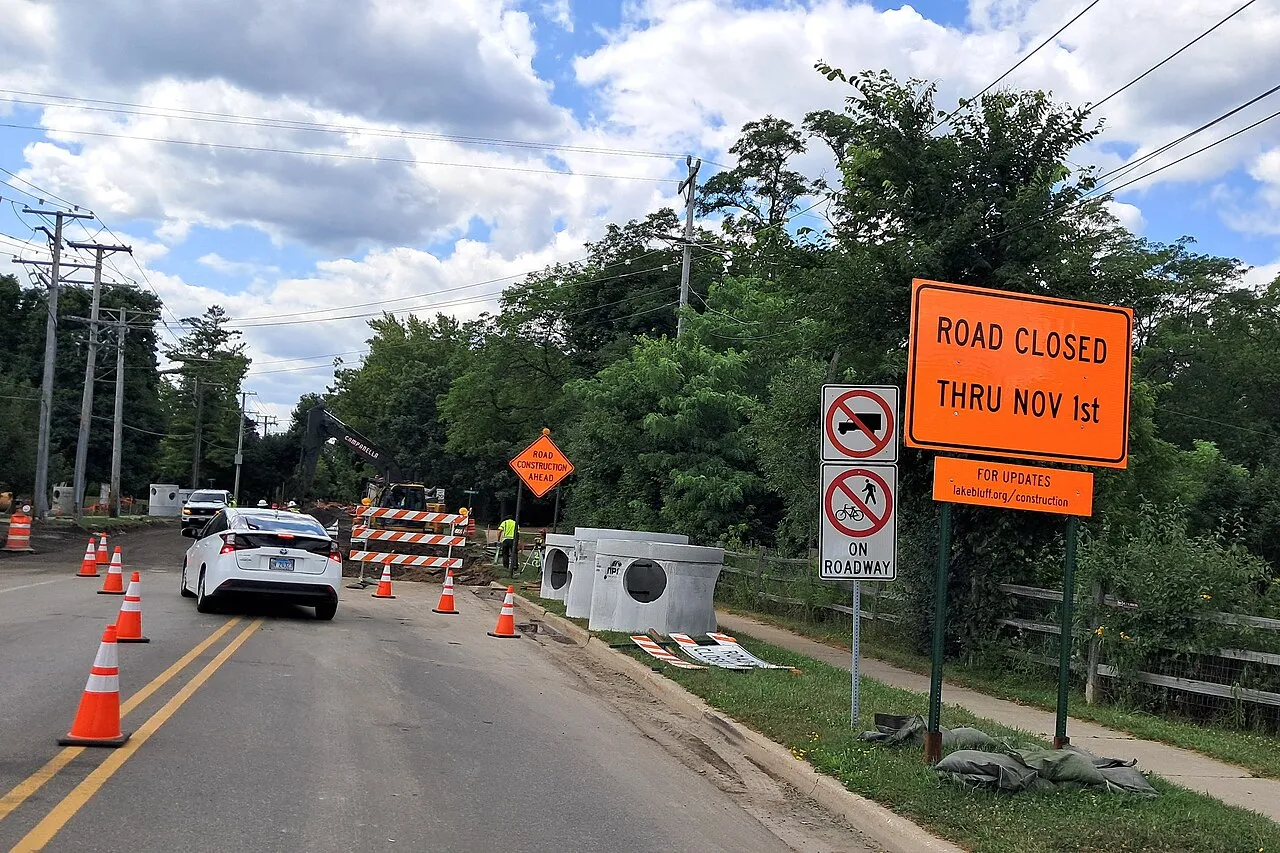
Closer in, Green Bay Road from Scranton Avenue to the Lake Forest border is under full reconstruction from May 2026 to fall 2027, including a new bridge deck over the railroad. Expect detours and block-by-block access limits in East and West Terrace while it is under way.
Is Lake Bluff Walkable?
Downtown is, but the scores are more modest than the reputation. Walk Score rates the Metra station address 52, which it calls somewhat walkable, with a Bike Score of 74. The library on East Scranton scores 53 for walking and 73 for biking, and the middle school on East Sheridan Place scores 44.
What those numbers miss is the scale. From most of the east side you can walk to the train, the library, the Village Green, a couple of restaurants and the beach. You cannot walk to a full grocery store, because there is not one in the village. In practice, living east of the tracks means you drive for errands and walk for everything else. West of US-41, plan on driving for everything.
Biking is the better story. The streets are quiet and flat away from the ravines, and the Bike Scores in the 70s reflect that. The village also has a Green Bay Road pedestrian bridge and trail project, planned for 2028 to 2030, that would link the west-side path north to North Chicago over the Canadian National tracks.
Downtown Lake Bluff and Shopping
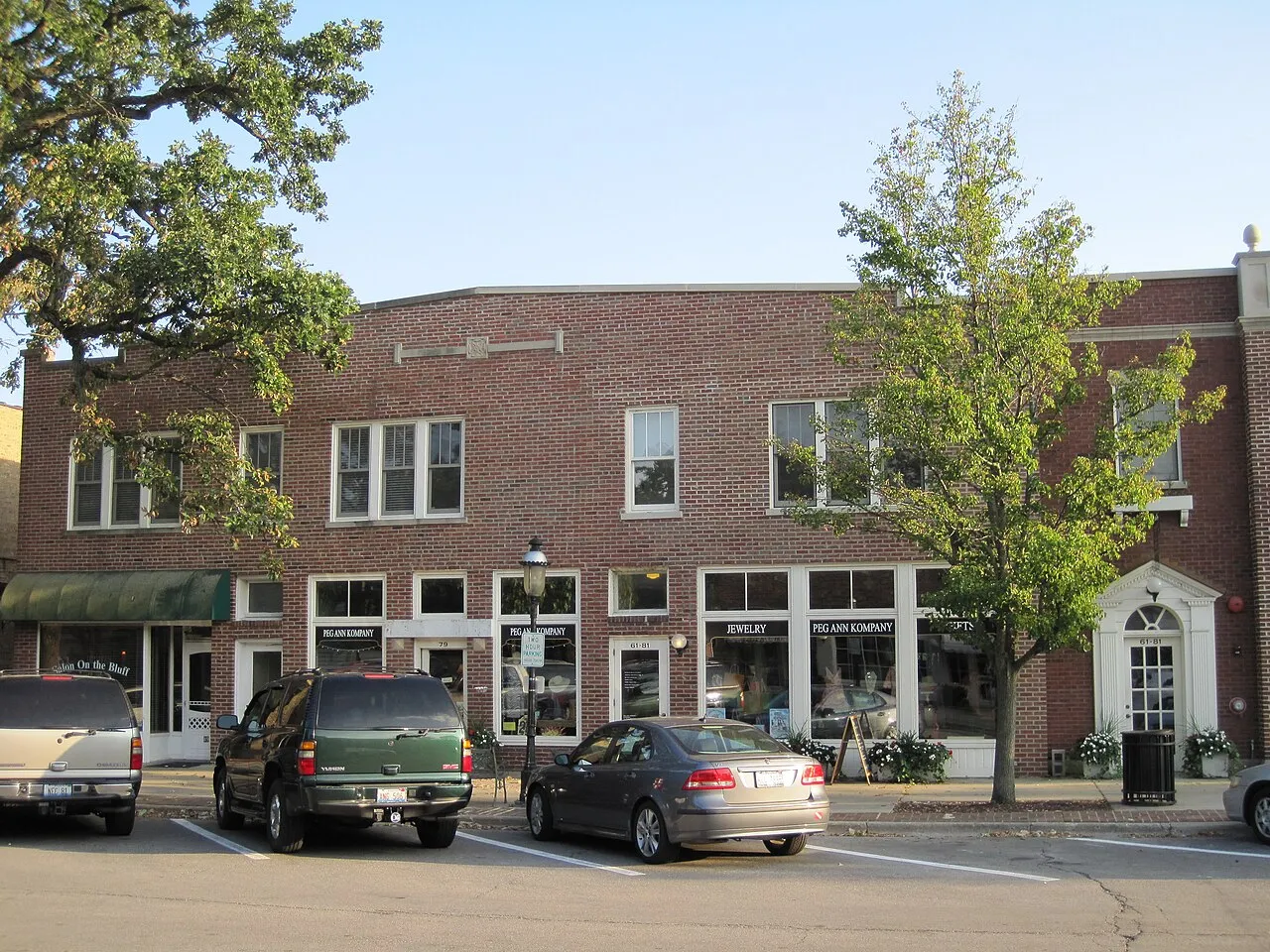
Downtown Lake Bluff is small by design. The Uptown Commercial Historic District, listed on the National Register of Historic Places in 2006, covers about 4.7 acres along East Scranton Avenue, East Center Avenue and Sheridan Road, including the 1904 station and the 1905 Village Hall. The shops are independent: boutiques, a coffee roaster, a few service businesses and Scranton Alley, a small courtyard off the main street.
The village is also spending on its downtown. The Block One streetscape project on East Scranton Avenue, from Sheridan Road to Walnut Avenue, adds pedestrian space and event space while keeping two-way traffic and parking, according to the village's construction updates.
For bigger shopping trips, most residents drive south to Lake Forest's Market Square or to the retail along US-41 and Route 60, or west to Libertyville. Hawthorn Mall in Vernon Hills and Gurnee Mills are each a short drive on the highways.
Groceries and Everyday Errands in Lake Bluff
Lake Bluff does not have a full-service supermarket inside the village. The old Village Market building at the corner of downtown, the oldest building in the historic district from around 1900, housed the village grocery for decades, and its most recent tenant, Be Market, is listed as closed. For weekly shopping, the nearest options are in Lake Forest, including the Jewel-Osco on North Western Avenue a few minutes south, and in Libertyville and Vernon Hills to the west.
The Friday farmers market covers produce, bread and flowers from June to October, and pharmacies, banks and dry cleaners are along Route 176 and in downtown Lake Forest. Most weekly errands are a five- to ten-minute drive.
Where Lake Bluff Eats
The dining scene is a handful of places, all within a couple of blocks of the Village Green. Bluffington's Cafe on East Scranton is the breakfast and lunch spot, and Maevery Public House, also on Scranton, is the dinner and cocktails option. Hansa Coffee Roasters rounds out the block. For a wider range of restaurants, most people head to Lake Forest's Market Square or to Libertyville's Milwaukee Avenue.
In season, the Lake Bluff Farmers Market is the weekly gathering point. It runs Friday mornings from 7 a.m. to noon, and in 2026, its 33rd season, it ran from June 5 to October 9, with live music most weeks.

Sunrise Beach, Parks and Recreation in Lake Bluff
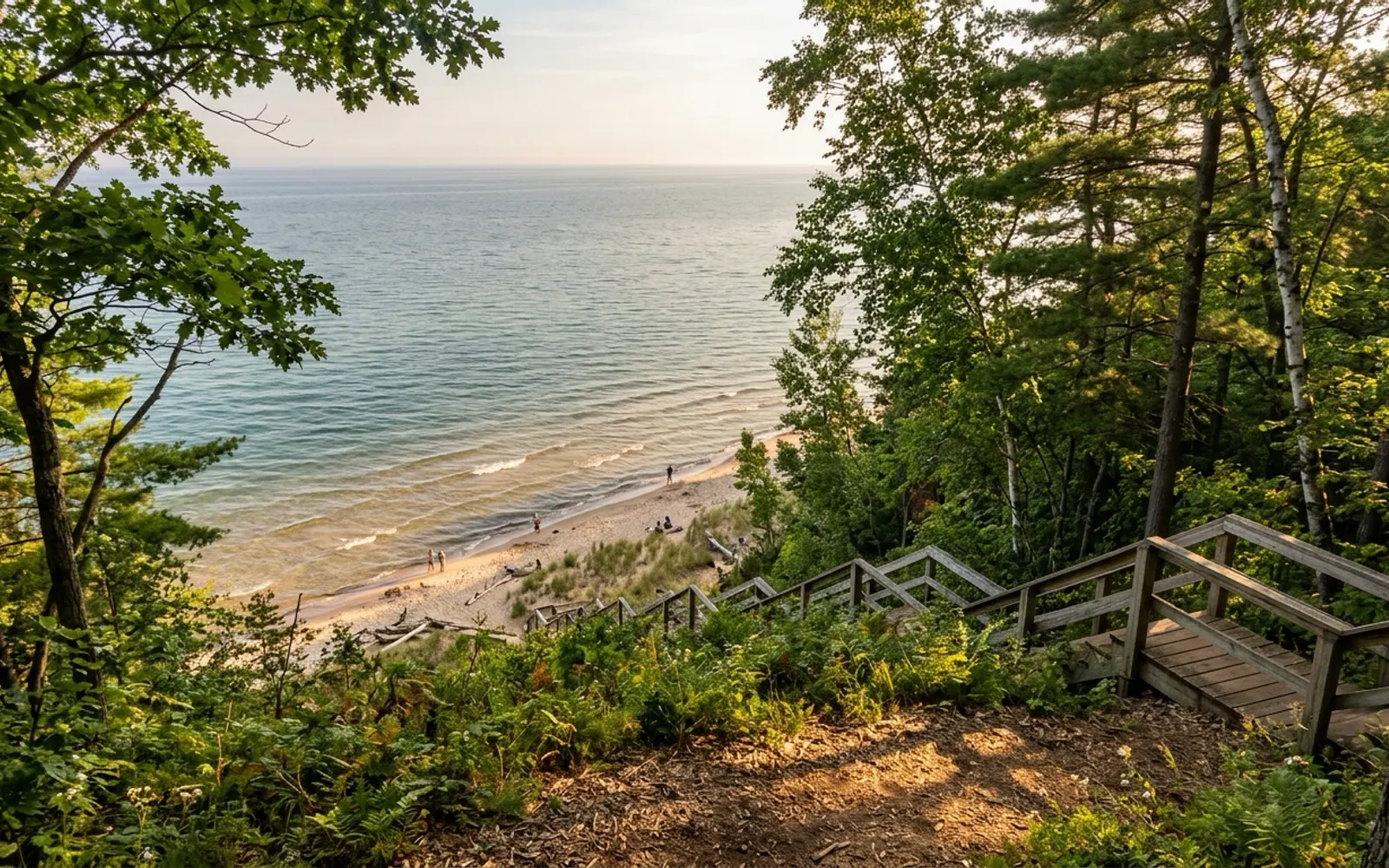
Sunrise Beach is the reason many buyers first look at Lake Bluff. It is a guarded swim beach on Lake Michigan run by the Lake Bluff Park District, and it is free for park district residents, who get a season pass with a photo at the Recreation Center. Non-residents pay a daily fee in 2026 of $25 for adults, $20 for ages 2 to 14 and for seniors, and $15 for active military. There is no non-resident season pass. The 2026 swim season ran through September 7, and there is a separate dog beach that requires a dog tag.
One detail worth knowing: beach access follows the park district boundary. If you are buying outside the village, including in Knollwood or the northwest pockets, ask whether the address is in the Lake Bluff Park District before you count on a free beach pass.
Beyond the beach, the park district runs Blair Park Pool, the Lake Bluff Golf Club, the Artesian ice rink, the Blair Park sled hill, a fitness center and a sailing program, with the Recreation Center at 355 W. Washington Avenue. Ravine Park, Artesian Park and Blair Park are the major green spaces, and the ravines on the east side give much of the village its wooded feel.
The Lake Bluff Public Library
The Lake Bluff Public Library at 123 E. Scranton Avenue has served the village since 1919 and sits in the middle of downtown, a short walk from the Village Green and the station. It runs programs for all ages and offers interlibrary loan through the Reaching Across Illinois Library System. Per the library's hours page, it is open 10 a.m. to 6 p.m. Monday through Wednesday, until 8 p.m. on Thursday, 10 a.m. to 5 p.m. on Friday and Saturday, and closed Sunday.
Utilities and Village Services in Lake Bluff
The village buys its water from the Central Lake County Joint Action Water Agency (JAWA), which draws from Lake Michigan, and distributes it through about 39 miles of water mains. The exception is the Sanctuary subdivision, which gets its water from the City of North Chicago. ComEd delivers electricity and Nicor Gas provides natural gas, and the village runs an electricity aggregation program. Check its current terms before you assume a rate.
One detail most buyers don't expect: according to the village's at-a-glance page, the Lake Bluff Fire Department is a volunteer department, alongside a full-time police department and public works. Unincorporated Knollwood is covered by the Lake Forest and Libertyville fire departments instead, after the Rockland Fire Protection District changed providers in 2018.
Hospitals and Healthcare Near Lake Bluff
The closest full-service hospital is Northwestern Medicine Lake Forest Hospital, about 4 miles south. Northwestern Medicine also runs a family medicine office in Lake Bluff. Just north, next to Naval Station Great Lakes, the Captain James A. Lovell Federal Health Care Center serves veterans and military members, and Rosalind Franklin University of Medicine and Science is in North Chicago.
Culture and Summer Nights Near Lake Bluff
Most of Lake Bluff's entertainment is local: the beach, the Village Green and downtown. The Lake Bluff History Museum keeps the story of the camp meeting years and the early village, and it is the source behind much of the village's own history page. Lake Forest's downtown and the Gorton Community Center are a few minutes south.
For bigger nights out, Ravinia Festival, the summer home of the Chicago Symphony Orchestra, is in Highland Park, a short drive or a few stops down the same UP-N line. My guide to living in Lake Forest covers the town most Lake Bluff residents use for dinner and shopping, and the Highland Park guide covers Ravinia's home town.
The Fourth of July and Lake Bluff's Yearly Traditions
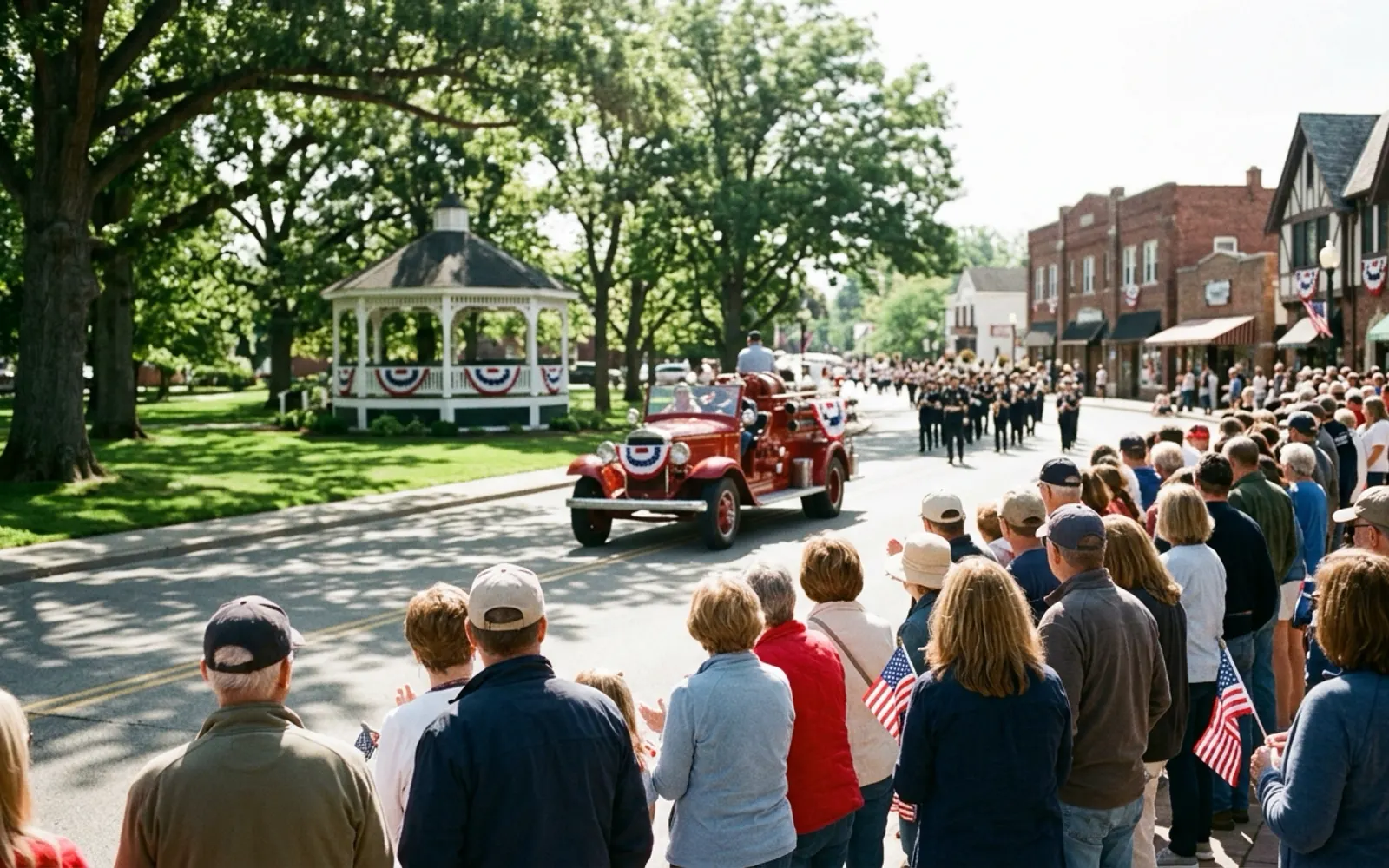
The Lake Bluff Fourth of July Parade is the village's signature event. It is run by a volunteer committee working with the police and fire departments, and it draws crowds from across the North Shore. The village asks visitors to take Metra to the Great Lakes or Lake Forest stations and walk in, and it does not allow saving viewing spots along the route before parade day.
The rest of the calendar follows the same downtown: the Friday farmers market from June to October, events on the Village Green, and the beach season from Memorial Day weekend into September. If you are touring houses in early July, go to the parade. It tells you more about the village than any listing will.
What's Being Built in Lake Bluff
Lake Bluff is built out, so the changes coming are infrastructure, not subdivisions. According to the village's capital projects page, four projects matter most over the next few years.
The Deep Tunnel, formally the West Scranton Avenue Viaduct stormwater project, is a $22 million system to carry stormwater from the Scranton Avenue viaduct area east to Lake Michigan. Phase I, from the lake west to Moffett Road, is substantially complete, and later phases will close Scranton Avenue between Mawman Avenue and Sheridan Road during reconstruction. Green Bay Road is being rebuilt from Scranton Avenue to the Lake Forest border from May 2026 to fall 2027, including a new bridge deck over the Union Pacific tracks.
Further out, the Green Bay Road pedestrian bridge and trail over the Canadian National tracks is planned for 2028 to 2030, and IDOT's $88 million US-41 and Route 176 interchange rebuild follows in the same window. The village also adopted a new comprehensive plan in 2025 to guide how key sites develop.
For buyers, this is mostly good news with a construction cost. Better drainage near the viaduct and a safer interchange help values. The next two years also bring detours on the roads closest to those projects, and I tell buyers on those streets to drive them at rush hour before they commit.
I don't label any town or neighborhood as safe or unsafe.
Flooding and Bluff Risk in Lake Bluff
Lake Bluff has two water issues, and they affect different houses. The first is stormwater. The area around the West Scranton Avenue viaduct has a long flooding history, which is why the village is building the $22 million Deep Tunnel project. Until the later phases are done, houses in the low areas near the viaduct and the railroad carry more risk than the rest of the village.
The second is the lake itself. Homes on the bluff and in the ravines deal with erosion and slope stability, and the survey, any past engineering reports and the condition of the bluff face matter as much as the house.
Two checks before you write an offer. Look the address up on the FEMA flood map, because a mapped flood zone can mean required flood insurance on a mortgage. Then ask the seller directly about water in the basement and what they did about it. With older Lake Bluff houses the honest answer is often "once," and the follow-up question is the one that matters.
Lake Bluff, IL home sales, July–September 2026
- Median sale price
- $842,500
- Median days on market
- 6
- Median sale-to-list
- 99.5%
Closed sales from MRED, pulled from my own MLS archive and updated November 4, 2026. I use three full months and leave out the newest month, because closings keep arriving for weeks.
Frequently Asked Questions
How much does a house cost in Lake Bluff, IL?+
Zillow's home value index for Lake Bluff was $666,451 in August 2026, up 9.5% from a year earlier, and the Census ACS median owner-occupied value is $776,700 (2020-2024). Prices vary widely by pocket, from condos and attached homes west of US-41 to large houses near the bluff.
What are property taxes in Lake Bluff, IL?+
The median effective rate is about 2.09%, with a median bill of $11,665 (Ownwell, April 2026). Bills usually rise after a sale once the home is reassessed, and unincorporated addresses have different taxing bodies.
What school district is Lake Bluff, IL in?+
Lake Bluff Elementary School District 65 for pre-kindergarten through eighth grade and Lake Forest High School District 115 for high school. District 65 also serves unincorporated Knollwood. Confirm each address with both districts.
How long is the commute from Lake Bluff to downtown Chicago?+
On Metra's Union Pacific North line, the fastest rush-hour trains reach Ogilvie in 59 minutes and local trains in about 69. There are 26 inbound and 25 outbound weekday trains.
Is Sunrise Beach free?+
It is free for Lake Bluff Park District residents with a season pass. Non-residents pay a daily fee, $25 for adults in 2026, and there is no non-resident season pass.
What neighborhoods are in Lake Bluff, IL?+
Commonly named pockets include East Lake Bluff, East Terrace, West Terrace, Tangley Oaks, Armour Woods, Arden Shores Estates, Belle Foret, Wimbledon Estates, Sanctuary, Glenmore Woods and unincorporated Knollwood, plus condo and townhome communities such as The Hamptons and Whispering Lake.
Is Knollwood part of Lake Bluff?+
Knollwood shares the 60044 ZIP code and the Lake Bluff District 65 schools, but it is an unincorporated community outside the village. Village services, the park district and the tax bill can differ.
What construction is happening in Lake Bluff?+
Green Bay Road is being rebuilt through fall 2027, the Deep Tunnel stormwater project is moving into later phases, and IDOT plans an $88 million US-41 and Route 176 interchange rebuild for 2028 to 2030.
Eshu Chikoti has extensive access to off-market listings throughout Lake Bluff and the surrounding North Shore — homes that never make it to the public listing sites. That matters right now: in a seller's market like this one, well-priced homes routinely go under contract within days, and buyers relying only on public listings are competing for whatever is left over. Working with someone plugged into off-market inventory means seeing homes before the crowd does.
Eshu Chikoti · 847-691-4282 ·
Towns Neighboring Lake Bluff
Most buyers looking at Lake Bluff end up touring a couple of the towns next door before they decide. Each of these has a full guide of its own — same depth on schools, commute, taxes, and what the housing stock actually looks like.
Get new Lake Bluff listings by email
When a home comes on the market in Lake Bluff, I'll email it to you.
Just your email. Unsubscribe any time by replying.
Thinking About Lake Bluff?
Whether you're buying, selling, or just curious what's on the market, I can walk you through Lake Bluff street by street.