Lily Lake, IL
Lily Lake, IL is a village of about 1,032 people on 2.72 square miles where Route 47 meets Route 64 in western Kane County, with acre-plus lots, private wells and septic, Central District 301 schools and no village property tax.
Living in Lily Lake, IL means a single-family home on a large lot with its own well and septic, a typical value near $580,000 this August, and a tax rate of about 7.19% of assessed value with no village levy on the bill. The trade-off is distance: groceries, dining and the train are all a drive.
Written by Eshu Chikoti · 847-691-4282 ·

How Lily Lake, IL Got Here: A Short History
Lily Lake started a half mile north of where most people think of it today. According to the Village of Lily Lake's history page, the settlement began as "Canada Corners" at the crossroads of what is now Route 47 and Empire Road, in western Campton Township. The first settler, William Kendall, arrived in 1836, and the Read and Outhouse households followed the same year. James Outhouse settled along what is now Wooley Road, and by 1837 the Outhouses was "cultivating the banks of Lily Lake." The village says a descendant still farms that property today.
The railroad moved the town. The village's 2024 Comprehensive Land Use Plan records that in 1843 Eldridge Walker opened a store at Route 47 and Empire Road, and a post office named Campton opened there in 1851. By 1872 Canada Corners was the largest hamlet in Campton Township, with a school, two blacksmith shops, a church, a cemetery and 14 homes along Empire Road. In 1886 the rail line that became the Chicago Great Western passed a half mile south, through the Outhouse farm. On May 9, 1887, Renalwin Outhouse platted 11 lots near the new depot and named the place Lily Lake, after a small lake near Wooley and Welter roads where water lilies grew. The post office moved south to his plat that June and took the new name.
For the next few decades Lily Lake was a milk town. The plan says the depot shipped the region's dairy products to Chicago between 1890 and 1930, with 65 milk shippers at one point, and it quotes an 1895 newspaper putting shipments at 400 to 500 cans a day, more than any other station on the line. Route 47 was built in 1931 and Route 64 in the 1930s. Trucks took over the milk, passenger rail ended in the 1940s, and the old rail bed is now the Great Western Trail.
The village itself is young. It incorporated in 1990, and the reason matters for anyone buying here. According to the plan, Kane County was studying sites for a new 1,000-acre landfill in western Kane County, and several candidate sites were near Virgil and Lily Lake. Residents incorporated so they could write their own land-use rules. One of the first goals, the plan says, was to keep providing the services residents had under the township and county without adding a village property tax. That promise still shapes the village budget and the zoning map.
Lily Lake at a Glance
Lily Lake sits in western Kane County, which the village describes as about 50 miles west of Chicago. Its home page names the neighbors: Burlington to the north, Virgil to the west, Elburn to the south and Campton Hills to the east. The village is mostly in Campton Township, with portions in Virgil Township to the west, according to its plan. The whole village is in Kane County. The 2020 Census counted 1,032 residents and 359 housing units on 2.72 square miles of land, per the Census TIGERweb place record for the village.
The newer 2020-2024 American Community Survey estimates 1,293 residents, plus or minus 277, and 439 housing units, plus or minus 70. The margins are wide because the village is small, so treat those as a range. The same survey puts 431 of 439 occupied homes as owner-occupied, about 98%, and 425 as single-family detached. About 94% of residents lived in the same house a year earlier, which matches what I see out here: homes change hands slowly.
The first practical thing to know is that no home here has a "Lily Lake" mailing address. The village's own directory lists Village Hall at 43W955 Twilight Lane with a St. Charles 60175 address, while Lily Lake Grade School and the fire station on Wooley Road use Maple Park 60151. Kane County's rural grid addresses (the "43W955" part) look alike across Campton Township, so a listing that says "St. Charles" or "Maple Park" may be inside the village, inside another town, or in unincorporated Kane County. On every listing out here, the first thing I check is which municipality the parcel is actually in, because that decides the zoning, the permits and the tax code.
The second thing is that the village runs very lean. According to the plan, Lily Lake employs a clerk and a deputy clerk, contracts out engineering, legal and accounting work, and relies on volunteers for much of the rest. Road maintenance and culverts are handled under an intergovernmental agreement with Campton Township, per the village's Fall 2026 newsletter. The Kane County Sheriff's Office provides police service, the Elburn and Countryside Fire Protection District provides fire and ambulance, and the Town and Country Public Library District covers the village, all per the plan. Village Hall office hours are Monday through Thursday, 9 a.m. to 1 p.m.
Lily Lake Neighborhoods and Subdivisions
Lily Lake is not one neighborhood. The village's comprehensive plan describes it as nine "micro subdivisions" that, for most of the village's history, did not connect to each other except by the main roads: Empire Road, Hanson Road, Route 47 and Route 64. The plan also describes two older hubs from the village's two starting points: the Canada Corners area at Route 47 and Empire Road, where most of the remaining historic buildings are, and Wooley Road, the "old main street" by the former depot.
The useful split is by lot size and build era. In the older core, the plan says, lots are as small as a quarter acre. A short distance out, lots jump to about an acre in subdivisions built in the 1960s and 1970s, when Kane County required an acre per home for a private well and septic. The newest subdivisions, approved in 2004, have lots of at least 1.33 acres. Then there is estate land of five acres or more and working farmland at the edges. Those four kinds of property sell to different buyers and carry different inspection risks, so I treat them as separate searches.
Below are the subdivision names the village's plan and zoning map use. Boundaries are informal, and street names on the zoning map do not always match the recorded subdivision name, so treat this as a starting point. If you want to know which subdivision a specific address is in, what its lot and septic setup looks like and whether it pays into a special service area, that is a conversation I am happy to have here.
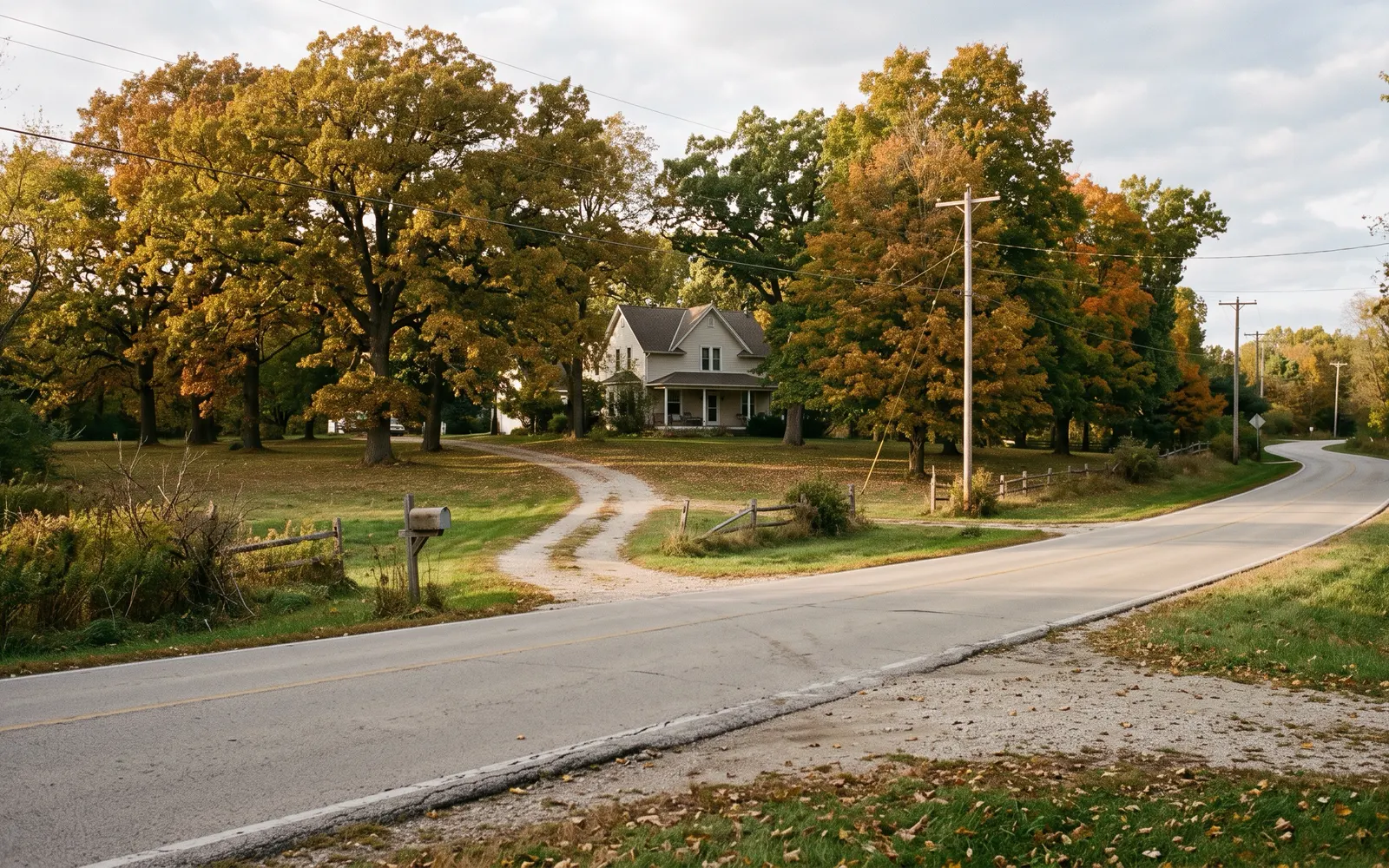
Canada Corners and the Route 47 historic core. The original 1830s crossroads at Route 47 and Empire Road. The plan says most of the village's remaining historic buildings are here, with the Lily Lake Cemetery just north on Route 47. Older homes on smaller lots.
Wooley Road. The former Route 47 and the "old main street" by the old depot site. Historic buildings, the crown-topped silo, a Great Western Trail parking area and the fire station. The plan earmarks this area for a future small-scale town center.
Sunset Views, Sunset Views II and Trail Ridge Estates. Farm tracts the village annexed in 2001 and approved as subdivisions in 2004, with lots of at least 1.33 acres. The plan counts 135 lots across the three approvals (Sunset Views, Trail Ridge Estates and the Reserve at Sunset Views, also called Sunset Views II). Simon Anderson Park sits between them on Twilight Lane.
Prairie Creek, Hazelwood and Meadowview. Named in the plan as the established subdivisions the 2004 subdivisions connect to. The plan says the Reserve connects to Sunset Views and Prairie Creek, and Trail Ridge connects Hazelwood and Meadowview.
Indian Creek. Named in the plan for its easement access to the Great Western Trail.
Estate land. The plan places estate lots of five acres or more mainly north of Empire Road near Route 47 and on I.C. Trail west of Route 47, where parcels of four acres and up sit close to the intersection. Room for horses, barns and outbuildings, subject to zoning.
Other names you will see on listings. Walk Score lists Prairie Highlands and Sunset Views under Lily Lake. Ask for the build year, the lot size and the septic permit on each one; they vary.
What Lily Lake Homes Look Like
Lily Lake is almost entirely single-family homes. The 2020-2024 ACS counts 425 of 439 homes as single-family detached, 12 attached and 2 in a two-unit building. There are essentially no apartments. The same survey estimates the median year built at 1992: about 110 homes from the 1990s, 103 from the 2000s, 87 from the 1970s and a smaller mix from every other decade, including 14 built before 1940. With a village this small, each of those counts carries a margin of error, but the shape is right.
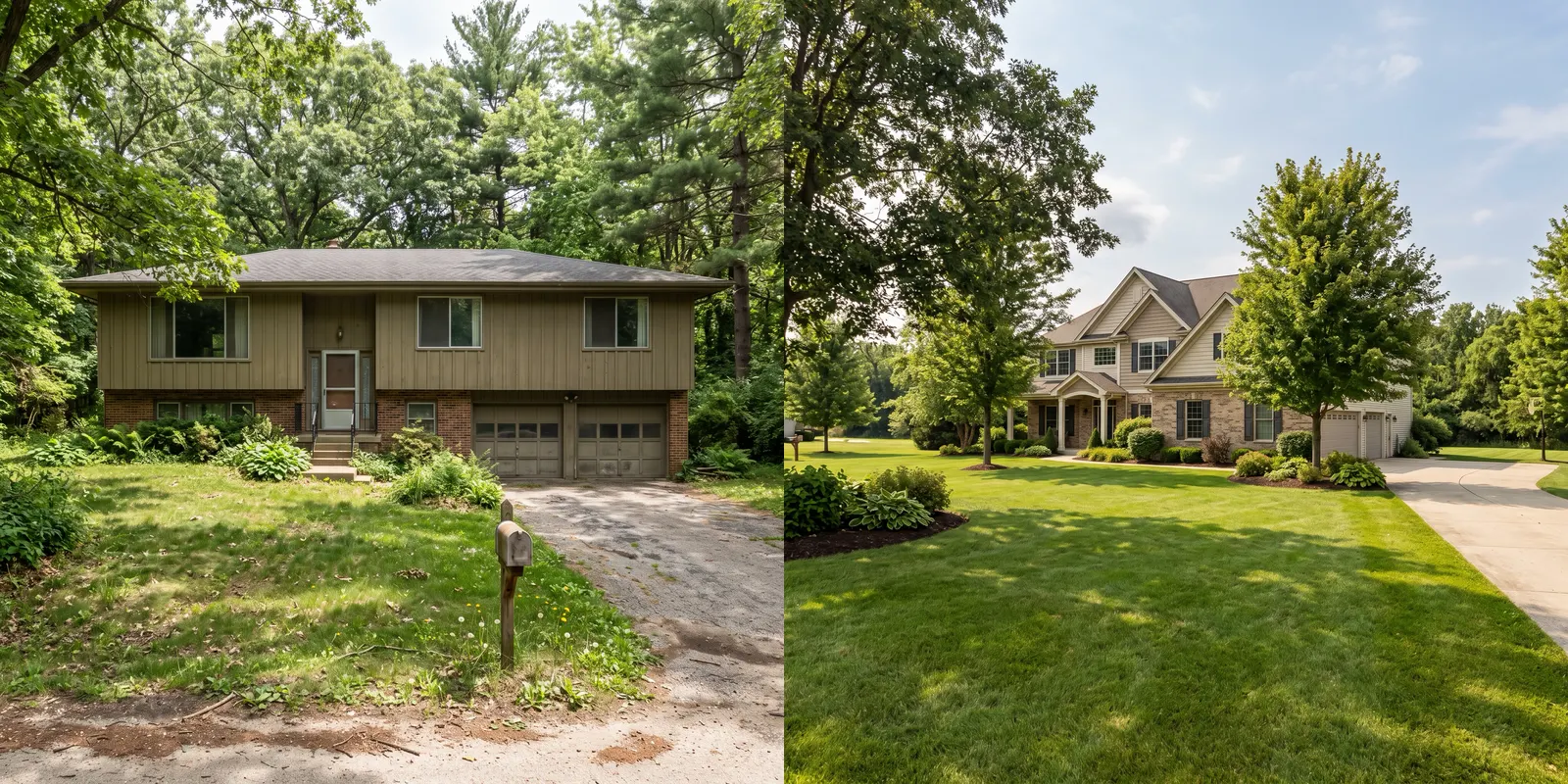
The village's comprehensive plan describes the two main types. The 1970s homes are mostly ranches, raised ranches and bi-levels. The newer homes are mostly two-story, and the plan says average square footage roughly doubled compared with the older stock. On the older side you also find the historic houses the plan lists: Italianate, Gothic Revival, Queen Anne, Colonial Revival, Prairie Square and Tudor Revival high-style homes, plus vernacular cottages and farmhouses, mostly around Canada Corners, Wooley Road and Welter Road.
The ACS puts the median value of owner-occupied homes at $418,800, plus or minus $76,858. That is a multi-year survey of what owners say their homes are worth, so it trails the market. The current figure is in the market section below.
What I walk every buyer through on an older Lily Lake house is the same list: the age of the roof and mechanicals, the well pump and pressure tank, the septic system, and any barns or outbuildings. On a 1970s raised ranch, add the electrical panel and the windows. On an acre of lawn, look hard at grading and drainage too, because stormwater out here runs to ditches and swales, not storm sewers. My home inspection checklist covers the house itself. The well and septic get their own inspection, covered next.
Wells, Septic and Zoning in Lily Lake
There is no village water or sewer system in Lily Lake. The village's comprehensive plan says homes use private wells and septic systems, and that private septic on larger lots will remain the main way the village handles wastewater. The plan says Lily Lake relies on several shallow aquifers and one deep aquifer, with no option to connect to Lake Michigan or Fox River water. It also identifies the old lake site and the Ferson Creek watershed on the south side of the village as a major recharge area for the shallow aquifers that serve much of Campton Township.
That makes the well and the septic the two biggest line items in any inspection out here. The Kane County Health Department's well guide tells private well owners to test their water every year for coliform bacteria and nitrates. The department's septic page says it does not do septic inspections for home sales or mortgages, so you hire a private inspector, and it lets owners request the septic layout for a property. My due diligence list is the same on every well-and-septic house: a water test at a minimum for bacteria and nitrates, a real septic inspection including where the field is and when it was last pumped, and the county's septic layout to confirm the system was sized for the current bedroom count.
Zoning is the other check. The village zoning map shows Agricultural, two estate districts (E1 at five acres or more, E2 at 2.5 to 4.99 acres), two single-family districts (R1 and R2), a Traditional Neighborhood Development district, two business districts, a manufacturing district and special use areas. The plan treats 1.33 acres as the village's minimum lot size along its edges, an acre as the transition density where soils allow a well and septic, and 1.25 acres where soils are weaker. It says estate properties allow private equestrian use.
The village's FAQ page answers the rural questions buyers ask me. Bees, domestic fowl (no roosters) and hobby livestock are allowed on residential-zoned lots. The pet limit is three dogs and three cats. Open burning is allowed with limits: no refuse, grass clippings, building materials or furniture. If you are buying land to split, or buying next to open ground hoping it stays open, read the zoning and the village's land use map first.
The Lily Lake Housing Market in 2026
The best current public number for Lily Lake is Zillow's home value index. For August 2026 it puts the typical Lily Lake home at $579,853, up 4.7% from $553,759 in August 2025 and up about 8.0% from $537,061 in August 2024. For context, the same index for August 2026 has Campton Hills at $695,333, St. Charles at $480,166, Elburn at $465,648 and Maple Park at $414,988. Lily Lake sits between Campton Hills and the Route 38 towns, which tracks with its lot sizes and the age of its homes.
Here is the honest limitation. Lily Lake has only a few hundred homes, so in any given quarter only a handful sell, and a monthly or quarterly median sale price can swing by six figures on the mix of what happened to close. Redfin's Lily Lake market page blocked automated access for this update, so I have not quoted a 2026 sale-price median or days-on-market figure. Zillow's index estimates the value of all homes, sold or not, which is why I lean on it here.
What that means in practice: every Lily Lake valuation is really a comparison with a small set of similar sales, and many of them are unincorporated homes nearby with the same St. Charles or Maple Park address. Lot size, the age and condition of the septic, outbuildings, the finished basement and how private the lot is move value more than finishes do. The expectation I most often have to reset out here is buyers comparing a Lily Lake acre with a subdivision lot in St. Charles or Elburn on price per square foot alone. If you are working out a budget first, my guide to how much house you can afford in 2026 is a good starting point.
Lily Lake Property Taxes and the Real Cost of Owning
Start with the unusual part. The Village of Lily Lake does not levy a property tax. Its line on the Kane County Clerk's 2025 tax code rate booklet is 0.000000, and the village's plan says avoiding a village property tax was one of its founding goals. The village runs on other revenue. Its audit for the fiscal year ending April 30, 2025 shows about $179,366 in state income tax and $107,911 in state sales tax, plus utility and telecommunications taxes and building permit fees.
Your bill still carries every other taxing body. For tax year 2025, payable in 2026, every tax code in that booklet that lists the village totals 7.185860% of equalized assessed value. The pieces: Central CUSD 301 at 4.963773, about 69% of the bill; the Elburn Fire District at 0.642979; Elgin Community College at 0.361699; Campton Township at 0.317399; the Town and Country Library at 0.282283; Kane County at 0.269368; the Campton road district at 0.209823; the forest preserve at 0.136162; and the Campton cemetery district at 0.002374.
For comparison on the same booklet page, a Campton Hills code in St. Charles District 303 with the Fox River and Countryside fire district totals 6.284260, and an Elburn village code in Kaneland District 302 totals 8.216911. The school district and the fire district decide most of the difference between neighbors, so check both on the seller's bill.
Here is what that looks like on a real purchase. Illinois assesses homes at one-third of market value, as the Kane County Supervisor of Assessments shows in its own example. A house at Zillow's August 2026 typical value of $579,853 would carry an assessed value around $193,284, and at 7.185860% that is about $13,889 a year before exemptions. The general homestead exemption takes $8,000 off the assessed value, which brings it to about $13,314, roughly $1,110 a month on top of the mortgage. The seller's current bill may be lower, because assessments trail the market, but the assessor catches up. The expectation I most often have to reset is buyers who budget off the seller's bill instead of the rate.
Two more things to ask about. The village's audit lists special service areas that collect assessments for road repair and resurfacing in specific areas, so ask whether a parcel is in one. And if you already own here and think your assessment is high, the timing is now: the Kane County Supervisor of Assessments reports that Campton Township's 2026 assessment changes were published September 24, 2026, and the Board of Review filing deadline for Campton Township is October 26, 2026. For the rest of what you pay at closing, including the tax proration, see my Illinois closing costs guide. This is general information, not tax advice. Your actual bill depends on your parcel, your exemptions and the assessor.
Lily Lake Schools: Central District 301
Most of Lily Lake is in Central Community Unit School District 301, based in Burlington, not in St. Charles or Kaneland as many buyers assume from the mailing address. The district's site lists seven schools: Central High School, Central Middle School, Prairie Knolls Middle School, Country Trails Elementary, Howard B. Thomas Grade School, Lily Lake Grade School and Prairie View Grade School. Every Lily Lake tax code in the county's 2025 rate booklet lists District 301.
The neighborhood school is Lily Lake Grade School at 5N720 Route 47. I checked the village's center point against the district's 2025 elementary boundary map, and it falls inside the Lily Lake Grade School boundary. The building dates to 1918, when four one-room schools were consolidated. The plan also says the village wants to keep the school on its current site and has sketched an expanded campus of about 15 acres with a safer entrance off Route 47.
Central High School is the district's only high school. The district lists two middle schools, and I could not confirm from its public map which one serves Lily Lake, so ask the district for the middle-school assignment on a specific address. The village's plan also says a small strip along the southern edge of the village lies in Kaneland CUSD 302. The district says plainly that it does not have open enrollment and that the school a student attends is set by the attendance boundaries, so check the address with the district boundary map and look for the school district line on the seller's tax bill before you write an offer.
I have not quoted school rankings here. For test scores, graduation rates and class sizes, the Illinois Report Card is the best place to compare the specific schools a house feeds. Check it at the source, for the actual schools on your address.
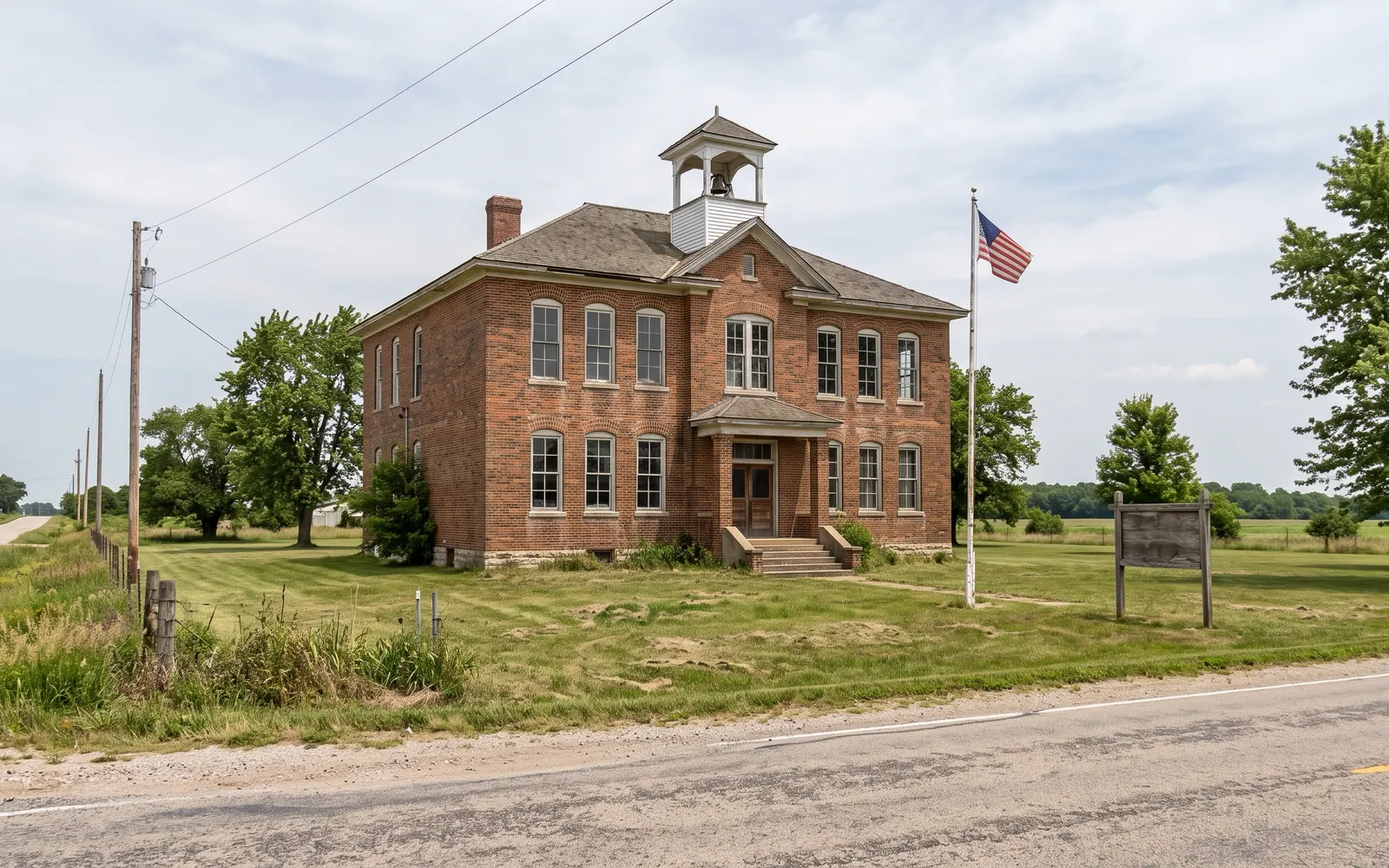
Lily Lake Grade School. 5N720 Route 47, Central CUSD 301. The 1918 building on Route 47; the village center falls inside its 2025 attendance boundary.
Central Middle School and Prairie Knolls Middle School. Central CUSD 301's two middle schools. Confirm which one serves a specific address with the district.
Central High School. Central CUSD 301's high school, in Burlington, roughly four miles north of the village center in a straight line.
Kaneland CUSD 302. Named in the village plan for a small strip along the southern edge. Confirm on the parcel's tax bill.
Commuting from Lily Lake: Metra at Elburn and La Fox
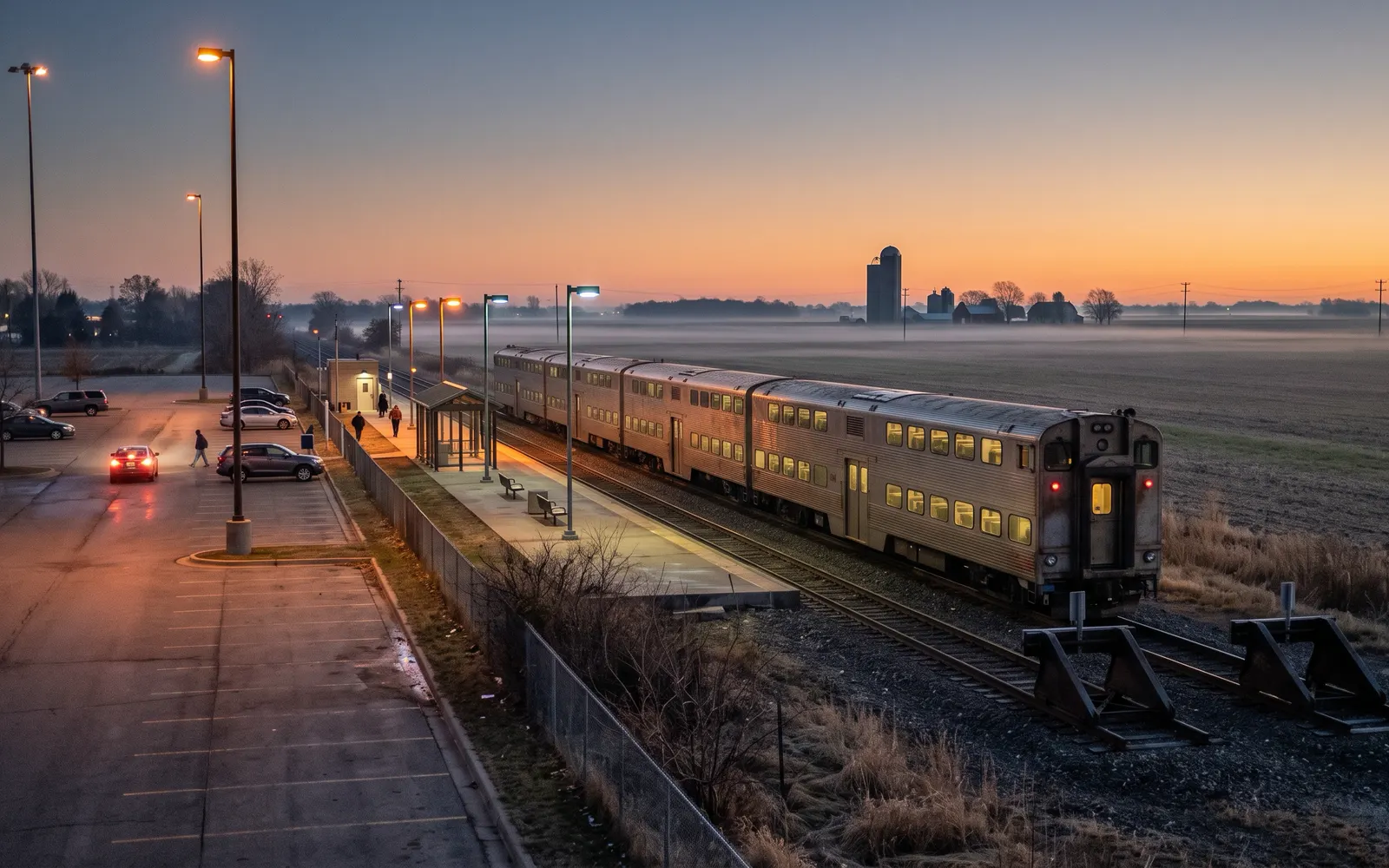
There is no train in Lily Lake. The closest Metra station is Elburn, the end of the Union Pacific West line, about 4.6 miles south of the village center in a straight line. La Fox, one stop east, is about 5.8 miles away. Both run to Ogilvie Transportation Center in the West Loop.
On Metra's published schedule data for a typical weekday, Tuesday, September 29, 2026, 23 trains leave Elburn for Chicago and 24 come back. The 6:48 a.m. is the fastest morning train at 72 minutes to Ogilvie. The 5:15, 5:45, 6:15, 7:25 and 7:55 a.m. trains take 77 minutes, and the all-stop trains take 88. From La Fox the same day there are 25 trains toward Chicago, with the fastest morning trip at 68 minutes and all-stop trains at 84.
Add the drive to the station, parking and the walk at the other end, and a door-to-desk commute to the Loop from Lily Lake runs well over an hour and a half on most days. Most working residents do not do that daily. The 2020-2024 ACS estimates that about 74% of workers drive alone, about 22% work from home, and only a handful take transit. Those who commute have a mean travel time of about 32 minutes, which tells you most jobs are in the suburbs.
Driving from Lily Lake: Routes 47 and 64
Lily Lake is built around two state highways. Route 47 runs north and south through the village and Route 64 runs east and west, and they cross at the village's commercial corner. The village's comprehensive plan cites a 2023 Illinois Department of Transportation count of more than 15,000 cars a day passing through the village, a slight majority of them on Route 47. The village has 6.33 miles of subdivision and minor roads and 4.37 miles of state and county roads, per the plan.
For longer trips, Route 47 runs north to I-90 at Huntley and south to I-88 between Elburn and Sugar Grove, where the interchange was made a full interchange in 2019. Route 64 runs east into St. Charles. Empire Road, a county highway, parallels Route 64 on the north side. The plan notes that Hanson Road, meant as a residential collector, has become a busy cut-through between Route 64 and Route 47, so if you are looking at a house on Hanson, sit in the driveway at rush hour before you buy.
Two local rules matter. Golf carts are allowed on village streets with an annual village registration sticker and proof of insurance, per the Fall 2026 newsletter, and the village amended its golf cart ordinance in April 2026. And the plan says the village has asked for traffic signals at Route 47 and Empire Road and wants safer pedestrian and bike crossings at Route 47 and Route 64. No timetable for either has been published.
Is Lily Lake Walkable?
No, and the village says as much. Walk Score gives the Village Hall address a Walk Score of 1 out of 100 and a Bike Score of 25, which it calls car-dependent: almost every errand needs a car. Walk Score does not publish a village-wide number for Lily Lake.
What Lily Lake has instead is recreational walking and riding. The Great Western Trail runs through the southern third of the village on the old rail bed, and the village's plan names a walking path in the Sunset Views II subdivision and a list of planned connections: from Village Hall to Simon Anderson Park, from Trail Ridge to Heather Lane, and from the trail north along Wooley Road and Route 47 to the grade school.
Shopping Near Lily Lake
Lily Lake has very little retail, by design. The village's comprehensive plan describes existing commercial uses as the businesses at the corner of Route 64 and Route 47, plus some employment uses along Wooley Road and on Route 64 east of Route 47. The village's directory lists one gas station, at 44W322 Route 64.
The plan sets the long-term direction. A 2007 study funded by a county economic development grant found that the area could support up to 53,000 square feet of professional trade services and light retail at Route 47 and Route 64, and the plan caps commercial zoning at about 22 acres. It discourages big-box stores and strip centers and encourages businesses such as equestrian services, veterinarians, feed and seed stores and farm stands, in buildings that keep a rural look.
For everything else, you drive. Randall Road in St. Charles and Geneva has the big-box stores and chain restaurants, and downtown St. Charles, downtown Geneva and Elburn's Main Street cover the rest. Route 64 runs west from Lily Lake to Sycamore and east into St. Charles, where it becomes Main Street.
Groceries and Everyday Errands in Lily Lake
There is no grocery store in Lily Lake. The closest full-size store for most of the village is the Jewel-Osco at 800 N. Main Street in Elburn, a short drive south on Route 47. For more choice, Randall Road in St. Charles and Geneva has several grocery chains, pharmacies and banks. The first question my buyers usually ask out here is where the nearest grocery store is, and the honest answer is that a weekly shopping run is a planned trip. In season, farm stands appear along the country roads, and the village's plan encourages roadside farm sales and a farmers market at the Simon Anderson Park shelter.
Where Lily Lake Eats
Lily Lake has almost no restaurants of its own, so dining out means a short drive. Elburn to the south, the Wasco business district in Campton Hills to the east, and Burlington and Virgil to the north and west all have small local spots. For a bigger choice, downtown St. Charles and downtown Geneva have the riverfront restaurants and patios along the Fox River, and Randall Road has the chain restaurants. My Elburn and Campton Hills guides cover the closest options in more detail.
Simon Anderson Park and the Great Western Trail in Lily Lake
Lily Lake has one village park, and it is a good one. According to the village's comprehensive plan, the 13-acre Simon Anderson Park was donated to the village when it annexed the farm tracts that became Trail Ridge and Sunset Views in 2001, and it was dedicated in 2005. The park shares a roughly 13-acre tract with Village Hall, bounded by Twilight Lane, Sunset Views Drive and Empire Road. The village added two play areas in 2011, built a park shelter with state OSLAD grant funding in 2014 and upgraded the play areas in 2015. There is a sledding hill, an oak and hickory woods, and about six acres of prairie that local farmers cut for hay under annual agreements. The old milk house on the site is being restored for community use.
The park is getting a plan. According to the village's July 30, 2026 board minutes, the village received more than 100 community survey responses on park improvements, which will guide a master plan. The plan lists ideas such as a pickleball court, a higher sledding hill, a bluebird trail and lighting for the play areas.
The bigger amenity is the Great Western Trail, a mostly limestone trail on the old Chicago Great Western rail bed that runs about 4 miles in DeKalb County and 14 in Kane County from the Sycamore trailhead. Its eastern end is at LeRoy Oakes Forest Preserve in St. Charles. The village's plan says it connects there to the Randall Road Trail and on to the Fox River Trail, and that trail users can park at Wooley Road and Hanson Road; the village directory lists the Hanson Road lot at 5N055 Hanson Road. It is used by cyclists, runners and walkers in summer and heavily by snowmobiles in winter.

The Library for Lily Lake: Town and Country in Elburn
Lily Lake does not have its own library, but it is in the Town and Country Public Library District; the district's levy of 0.282283 is on every Lily Lake tax code in the county's 2025 rate booklet. The library is at 320 E. North Street in Elburn, about four and a half miles south of the village center in a straight line, and is open until 9 p.m. Monday through Thursday. The library notes that when the Kaneland school district closes for weather, its programs are cancelled for the day too, which is worth knowing if you are in District 301 and your schools are open.
Utilities in Lily Lake: Wells, Septic and Trash
Utilities in Lily Lake are mostly yours to run. There is no village water or sewer, so there is no water bill, but there is maintenance: pumping the septic every few years, replacing a well pump or pressure tank when it fails, testing the water every year and treating it if the test calls for it. The village contracts with LRS for trash, recycling and compost service. Electric and gas service vary by street, and some rural homes out here run on propane, so ask the seller which providers serve the house and for the last 12 months of bills. The village also added an operational tornado siren, tested the first Tuesday of each month at 10 a.m., per the Fall 2026 newsletter.
Hospitals and Emergency Services Near Lily Lake
The closest full-service hospital for most of the village is Northwestern Medicine Delnor Hospital at 300 Randall Road in Geneva, a little over eight miles southeast of the village center in a straight line. Immediate care clinics and outpatient offices cluster along Randall Road in St. Charles and Geneva. Fire and ambulance service comes from the Elburn and Countryside Fire Protection District, whose Station #3 is inside the village at 5N276 Wooley Road.
Lily Lake Events Through the Year
Lily Lake is small, and so is its calendar. The main event is the Winter Tree Lighting Fest, which the village's Fall 2026 newsletter says will be its third annual, on Friday, December 4, 2026, starting at 5:30 p.m. at Village Hall. The village also lists an Easter egg hunt, with details to come. The newsletter says events are paid for mainly through donations and run by volunteers.
History gives a sense of how long gatherings have centered on the same few places. The village's plan says the Lily Lake Community Fair ran on the school grounds at the end of September from 1920 to 1940, with livestock and produce exhibits, a plowing match and a horse-pulling contest. On July 4, 1902, an all-day celebration dedicated the 30-foot granite monument to Revolutionary War veteran Abner Powers in the Lily Lake Cemetery, which the plan calls one of the oldest cemeteries in Kane County. For bigger events today, the St. Charles, Geneva and Elburn festivals are all a short drive, and Garfield Farm in Campton Hills is covered in my Campton Hills guide.
What's Being Built in Lily Lake
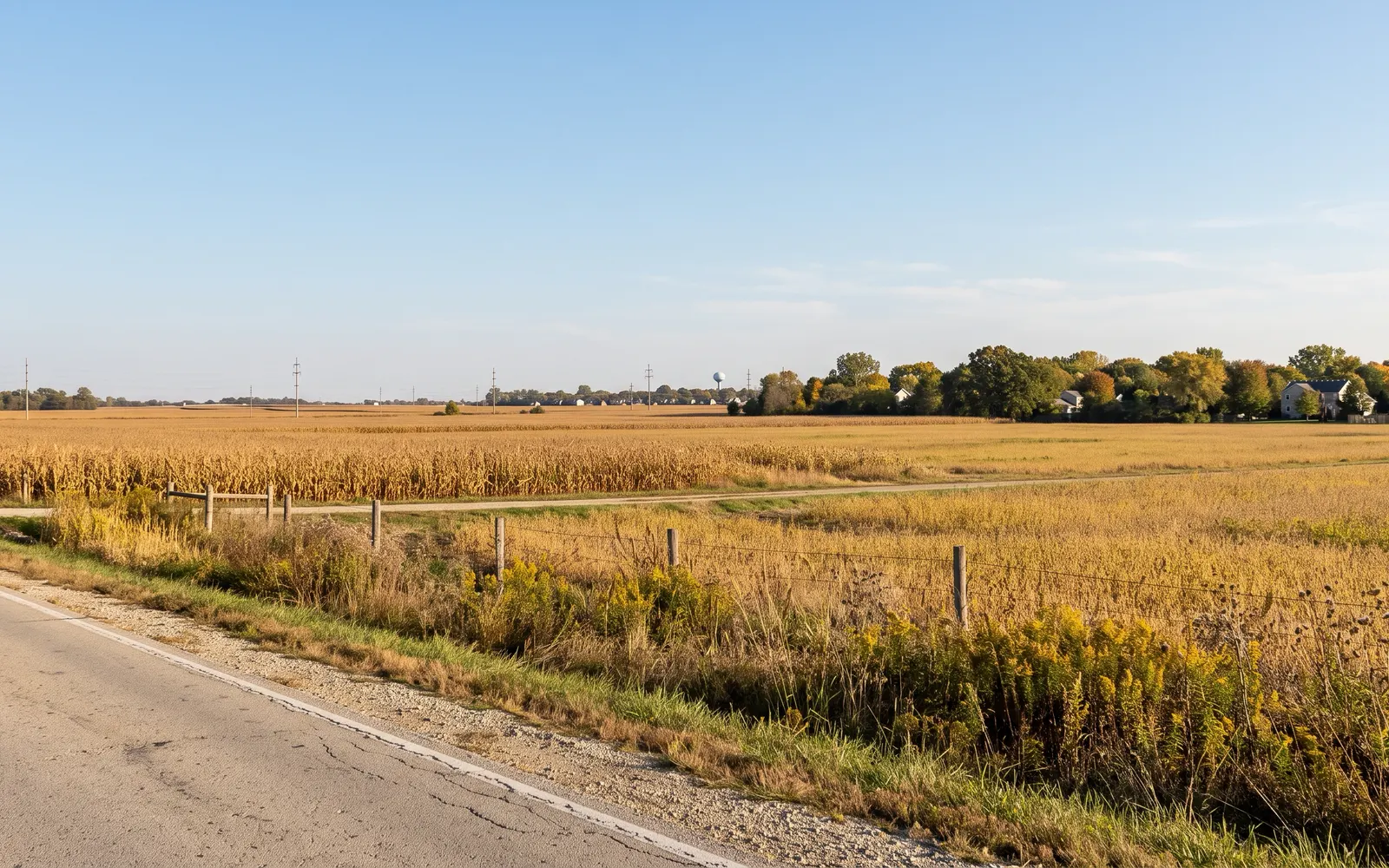
Not much, and that is the point. The village's 2024 Comprehensive Land Use Plan says its goal is to keep large residential lots, protect the farmland around the village and keep an open-space buffer between Lily Lake and its neighbors. It records that the village's first two developments after incorporation were authorized in 2003, and three subdivisions with 135 lots of at least 1.33 acres were approved in 2004. The Chicago Metropolitan Agency for Planning projects about 1,278 residents by 2050, the plan says, and the village intends to set its own pace. The Plan Commission minutes I read from January through August 2026 are about the park plan and open space, not new subdivisions.
The boundaries are largely set. In September 2023, the Kane County Chronicle reported that Elburn's board agreed to Beith Road as the dividing line, with Lily Lake annexing no farther south and Elburn no farther north, pending Lily Lake's sign-off. The village's land use map also shows a boundary agreement with Virgil. The planning area runs about 1.5 miles out from the village and is mostly farmland today.
Where change is planned, it is concentrated at Route 47 and Route 64. The plan calls for a small walkable town center along Wooley Road with specialty shops, restaurants and offices, possibly with some higher-density homes above or beside them, and it says that would need a small community water and wastewater system that does not exist yet. The village has also changed its zoning to allow commercial solar farms only as a special use in the E1 estate district, with setbacks, screening and a decommissioning plan.
For buyers, the 2026 changes are practical ones. The village adopted an updated building code and new permit and plan-review fees in July 2026, with plan review handled by an outside consultant, so budget time for permits on any addition or outbuilding. And the board held a special meeting on September 21, 2026 on state changes to the village's taxing authority, after discussing a possible 1% sales tax increase in July. I have not seen a decision on that yet.
I don't label any town or neighborhood as safe or unsafe.
Flood and Drainage in Lily Lake
Most of Lily Lake is outside the mapped flood zones, but not all of it. I measured the FEMA National Flood Hazard Layer against the Census village boundary in September 2026: about 0.11 square miles, roughly 4% of the village's land, falls in a Special Flood Hazard Area (zones A and AE). Those pieces sit mostly along the southern and western edges of the village, which lines up with the village plan's description of the old lake site, the Ferson Creek watershed, wetlands and the former borrow pits along the rail line on the south side.
Two checks before you write an offer. Look the address up on the FEMA flood map, because a mapped flood zone can mean required flood insurance on a mortgage, and wetlands or floodplain on a lot also limit where you can put a barn, pool or addition. And ask the seller about water in the basement and about how the yard and the culvert handle a heavy spring rain. Stormwater here runs to ditches and culverts, and the village requires a permit for culvert and driveway access work. On an acre with a walkout basement, the grading is often the whole answer.
Frequently Asked Questions
How much does a house cost in Lily Lake, IL?+
Zillow's home value index put the typical Lily Lake home at $579,853 in August 2026, up 4.7% in a year. The 2020-2024 Census estimate of median home value is $418,800. Prices range from 1970s ranches to newer homes on 1.33 acres or more.
What are property taxes in Lily Lake, IL?+
The village levies no property tax. For tax year 2025, every Lily Lake tax code totals 7.185860% of assessed value, about 69% of it Central CUSD 301. A home at $579,853 would pay about $13,314 a year after the general homestead exemption.
What school district is Lily Lake, IL in?+
Mostly Central Community Unit School District 301: Lily Lake Grade School, one of two district middle schools, and Central High School in Burlington. The village plan says a small southern strip is in Kaneland CUSD 302. Confirm every address with the district.
Does Lily Lake have city water and sewer?+
No. Homes use private wells and septic systems. The Kane County Health Department advises testing well water every year for coliform bacteria and nitrates.
What is the mailing address for Lily Lake, IL?+
There is no Lily Lake post office address. Homes use St. Charles 60175 or Maple Park 60151 addresses, so check the parcel's municipality, not the mailing address.
How long is the commute from Lily Lake to downtown Chicago?+
From the Elburn Metra station about 4.6 miles south, weekday trains reach Ogilvie in 72 to 88 minutes, with 23 trains toward Chicago on a typical weekday. La Fox trains take 68 to 84 minutes.
What neighborhoods are in Lily Lake, IL?+
Named subdivisions include Sunset Views, Sunset Views II, Trail Ridge Estates, Prairie Creek, Hazelwood, Meadowview and Indian Creek, plus the historic Canada Corners and Wooley Road areas and estate land of five acres or more.
Can you keep chickens or horses in Lily Lake?+
The village allows bees, domestic fowl (no roosters) and hobby livestock on residential-zoned lots, and its plan says estate lots of five acres or more allow private equestrian use. Check the parcel's zoning.
Eshu Chikoti has extensive access to off-market listings throughout Lily Lake and the rest of Kane County — homes that never make it to the public listing sites. That matters right now: in a seller's market like this one, well-priced homes routinely go under contract within days, and buyers relying only on public listings are competing for whatever is left over. Working with someone plugged into off-market inventory means seeing homes before the crowd does.
Eshu Chikoti · 847-691-4282 ·
Get new Lily Lake listings by email
When a home comes on the market in Lily Lake, I'll email it to you.
Just your email. Unsubscribe any time by replying.
Thinking About Lily Lake?
Whether you're buying, selling, or just curious what's on the market, I can walk you through Lily Lake street by street.