Elburn, IL
Elburn, IL is a Kane County village of about 6,300 people at the far western end of Metra's Union Pacific West line, an old railroad town on Route 47 ringed by subdivisions built mostly since 1990.
Living in Elburn, IL means a one-seat Metra ride to Ogilvie from the end of the UP-W line, a median sale price near $456,000 this summer, and property tax around 2.7% of value. Most homes here were built after 1990. The trade-off is time: the train takes 72 to 88 minutes. Here is how it breaks down.
Written by Eshu Chikoti · 847-691-4282 ·
How Elburn, IL Got Here: A Short History
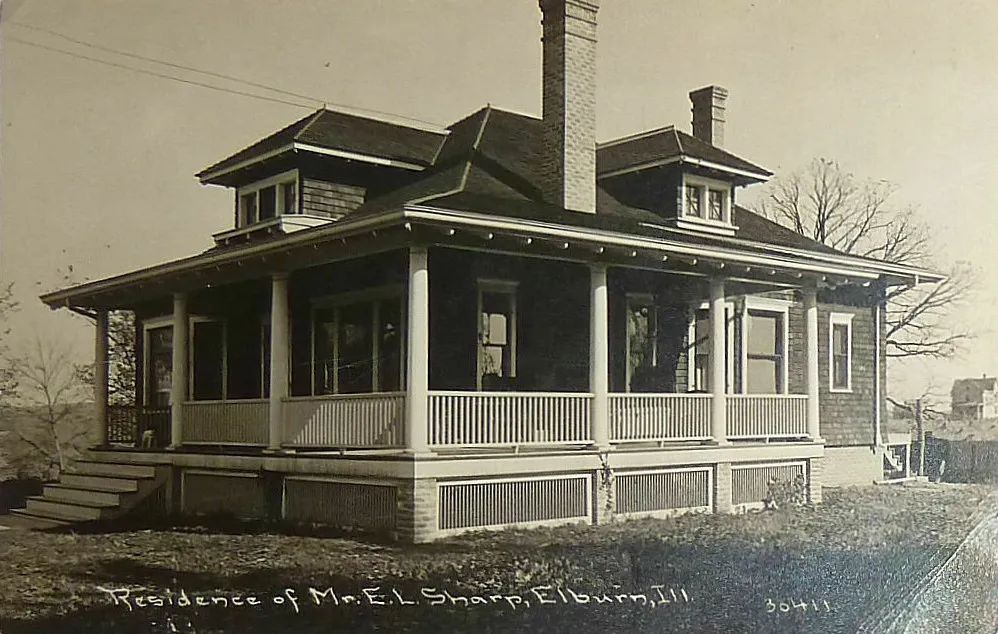
Elburn started as farm country on the prairie west of the Fox River. According to Wikipedia's village history, the first settler, William Lance, arrived in 1834 and soon built a home here. For the next two decades the area was a scattering of farms in what became Blackberry Township, with no real town center.
The railroad made the town. When the line arrived in 1854, the stop was called Blackberry Station, after the township. The name was later changed at the railroad's request, and the story locals tell is that the new name started as Melbourne and was shortened by dropping the "M." The village incorporated as Elburn in 1886. The same rail corridor that created the town runs through the middle of it today, and it is the reason Elburn has a Metra station when most Kane County towns this far west do not.
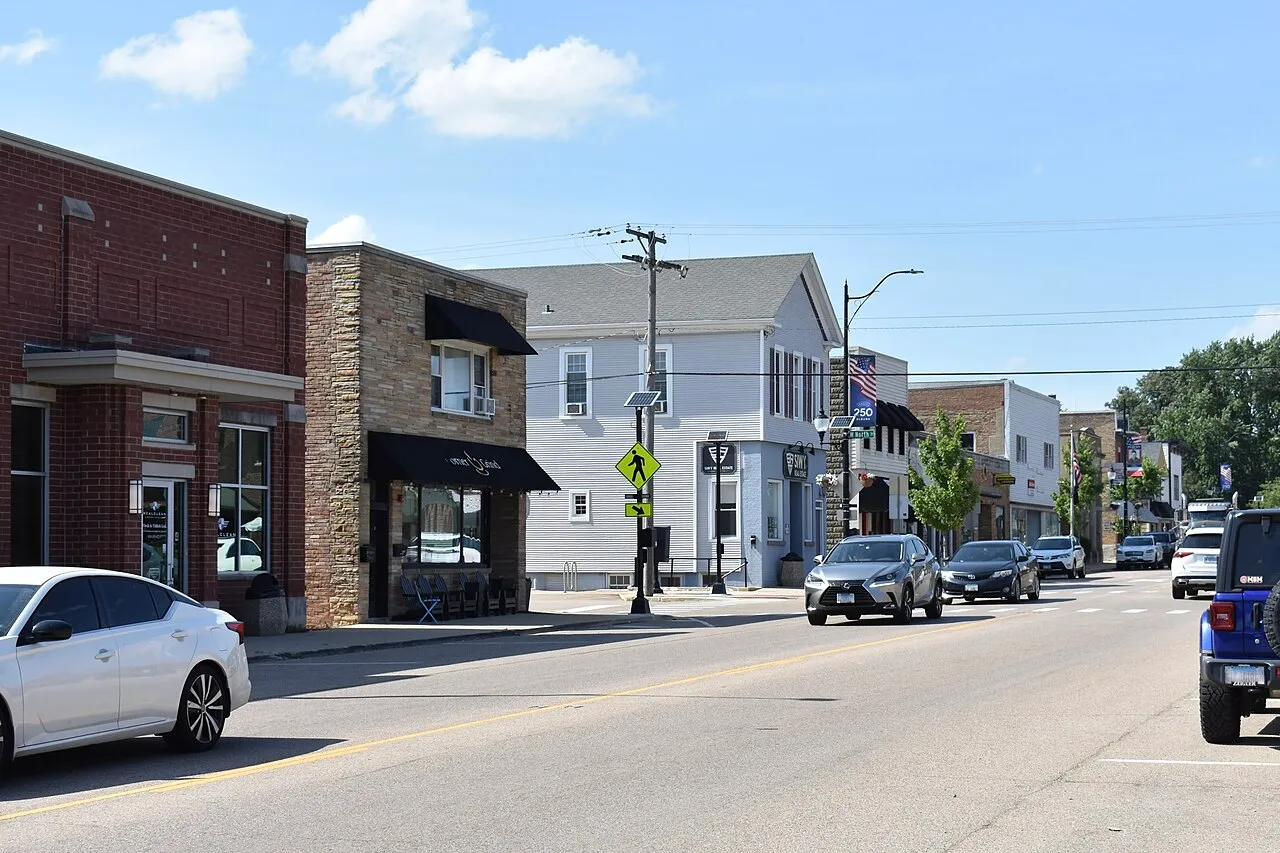
For most of the twentieth century Elburn was a small farm-service town: a grain elevator, a Main Street along what is now Route 47, churches, a newspaper, and the Elburn Lions Club, which started an annual "Day in the Park" in 1930 that became Elburn Days. The Village of Elburn points readers to *The Sidewalks of Elburn* by Marilyn Robinson, a local history sold at Village Hall and the library, for the long version.
The modern village is the story of three decisions. Prairie Valley and Prairie Highlands were annexed in 1992. The Blackberry Creek subdivision was approved in 2001. Elburn Station, a 505-acre master-planned community, was annexed in 2013. Those dates come from the village's own special service area records, and they explain why most of Elburn's houses are newer than the town itself. Metra service began on January 23, 2006, and the growth since has followed the train.
Elburn at a Glance
Elburn sits in western Kane County where Illinois Route 38 crosses Route 47, about 44 miles west of downtown Chicago by rail. The whole village is in Kane County. It does not cross a county line, but it does cross township lines: Wikipedia lists parts of Blackberry, Campton, Kaneville and St. Charles townships inside the village. That matters for taxes, because the township and road district rates on your bill depend on which one a parcel is in.
The 2020 Census counted 6,175 residents, up 10.2% from 5,602 in 2010, on about 3.7 square miles. The newer 2020-2024 American Community Survey estimates 6,354 people and 2,731 housing units. Of the occupied homes, 89.6% are owner-occupied, and 76.8% of all housing units are single-family detached houses, with another 11.6% single-family attached. This is a town of houses. Apartments are a small slice.
The neighbors define daily life. Geneva and St. Charles are east on Route 38 and Route 64, with the Randall Road shopping corridor between Elburn and the Fox River. Sugar Grove and the I-88 interchange are south on Route 47. Maple Park and Kaneland High School are to the west, and Campton Hills wraps around the north and east edges. A lot of what people call "Elburn" is actually unincorporated Kane County with an Elburn mailing address, which I cover in its own section below.
The Zillow index puts a typical Elburn home about $88,000 under Geneva's this August. You also get a small-town Main Street and one of the bigger summer festivals in the county, with forest preserves on every side.
The train is reliable but long, most of the village is car-dependent, and the combined tax rate is high even by Kane County standards.
Elburn Neighborhoods, Subdivision by Subdivision
Elburn is small enough that people describe it by subdivision rather than by side of town. The names you will see on listings map closely to when each area was annexed and built, and each one carries its own special service area line on the tax bill, which I explain in the tax section. So the subdivision name tells you three things at once: the age of the house, the elementary school it probably feeds, and what extra tax line to expect.
The second thing that changes day-to-day life is distance to the old town and the train. Walk Score does not publish a village-wide score for Elburn, but the address scores show the spread. An address on East North Street near Village Hall and Prairie Park scores 60 and is a seven-minute walk to the Metra station. The Blackberry Creek elementary school address on Anderson Road scores 9, a mile from the station. Most of Elburn's newer housing sits much closer to the second number than the first.
Below are the areas you will see named in listings. Boundaries are informal and a few subdivisions have several phases built years apart, so treat these as a starting point. If you want to know which one a specific address falls in, and what that area has sold for lately, that is a conversation I am happy to have here.
Old town. The original grid on both sides of North Main Street (Route 47) and the rail line, around Village Hall on East North Street, Prairie Park and Lions Park. The oldest houses in Elburn, on standard in-town lots, and the only part of the village where walking to the train, the library and Main Street is realistic.
Prairie Valley and Prairie Highlands. Annexed in 1992 under Special Service Area 1. Kaneland John Stewart Elementary sits at 817 Prairie Valley Street. Mostly 1990s and 2000s single-family homes.
Williams Ridge. Along Prairie Valley Street east of Ridge Road, built by Silverthorne Homes in phases. Phase 5 (34 lots) is under construction, and Phases 6 and 7 near Willow and Paul Streets are proposed as 60 villas and single-story homes.
Blackberry Creek. Approved in 2001 under Special Service Area 2, on the south side of the village around Keslinger and Anderson Roads, with Kaneland Blackberry Creek Elementary at 1122 S. Anderson Road. Lennar is building a new 282-home phase south of Keslinger Road.
Elburn Station. Shodeen's 505-acre master-planned community north of the Anderson Road and Keslinger Road intersection, annexed in 2013 under Special Service Area 6. Single-family homes and low-maintenance village homes, named for its proximity to the Metra station.
Fox Pointe. A newer subdivision whose special service area was created by a 2026 ordinance as a stand-by SSA maintained by its homeowners association. Ask for the build year and school assignment on each listing.
Unincorporated Elburn addresses. Houses on acreage and in county subdivisions outside the village limits that still carry an Elburn, IL 60119 address. Different zoning, different utilities and often well and septic. Covered in the next section but one.
What Elburn Homes Look Like, by Era
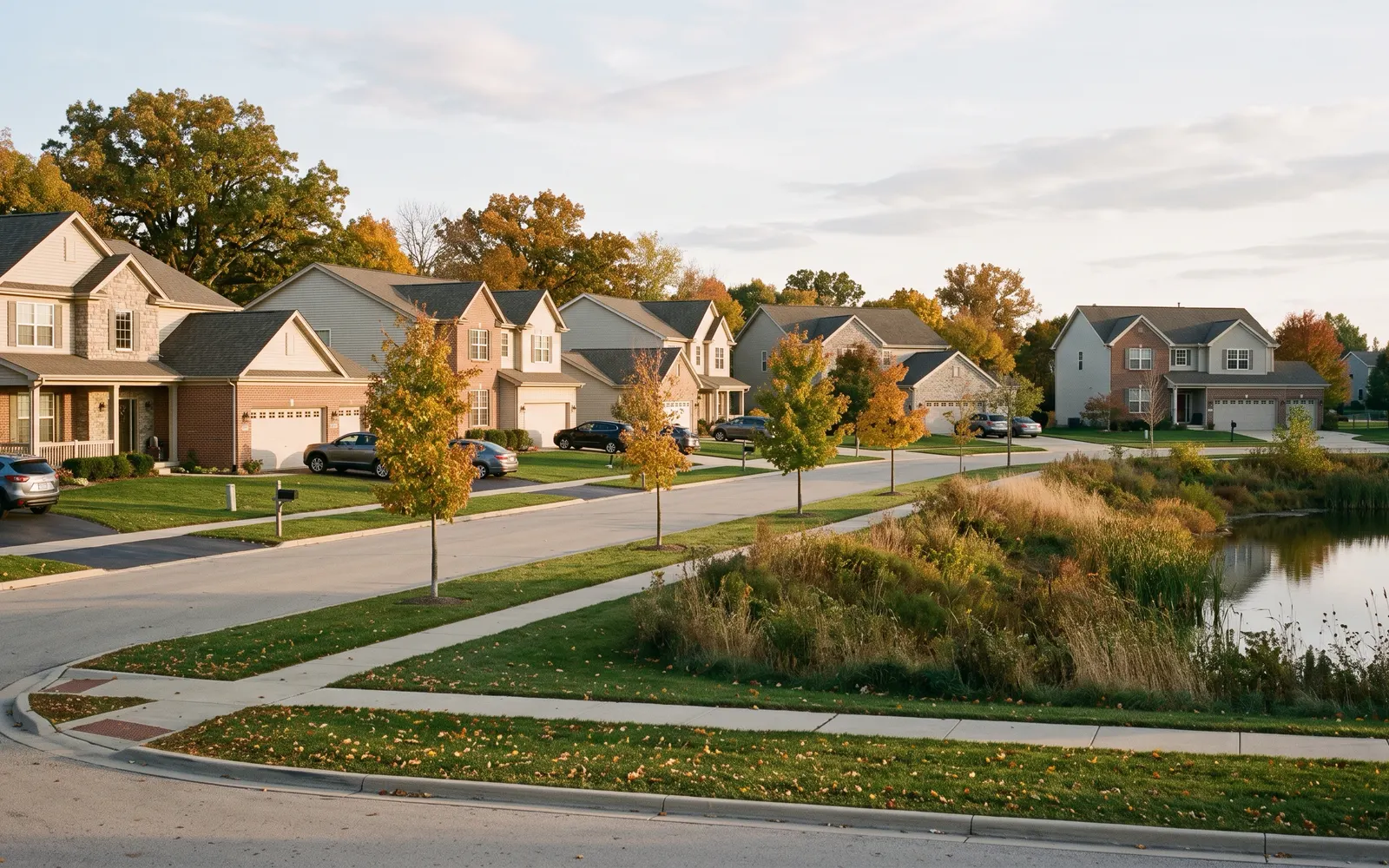
The single most useful number for understanding Elburn housing is the build year. According to the 2020-2024 ACS, the median home in the village was built in 2000. About 75% of housing units date from 1990 or later, and about half from 2000 or later. Only about 9% were built before 1960. In practice that means most of what you tour will be a 1990s or 2000s two-story or ranch in a planned subdivision, with a smaller supply of older homes in the original town and a steady stream of new construction.
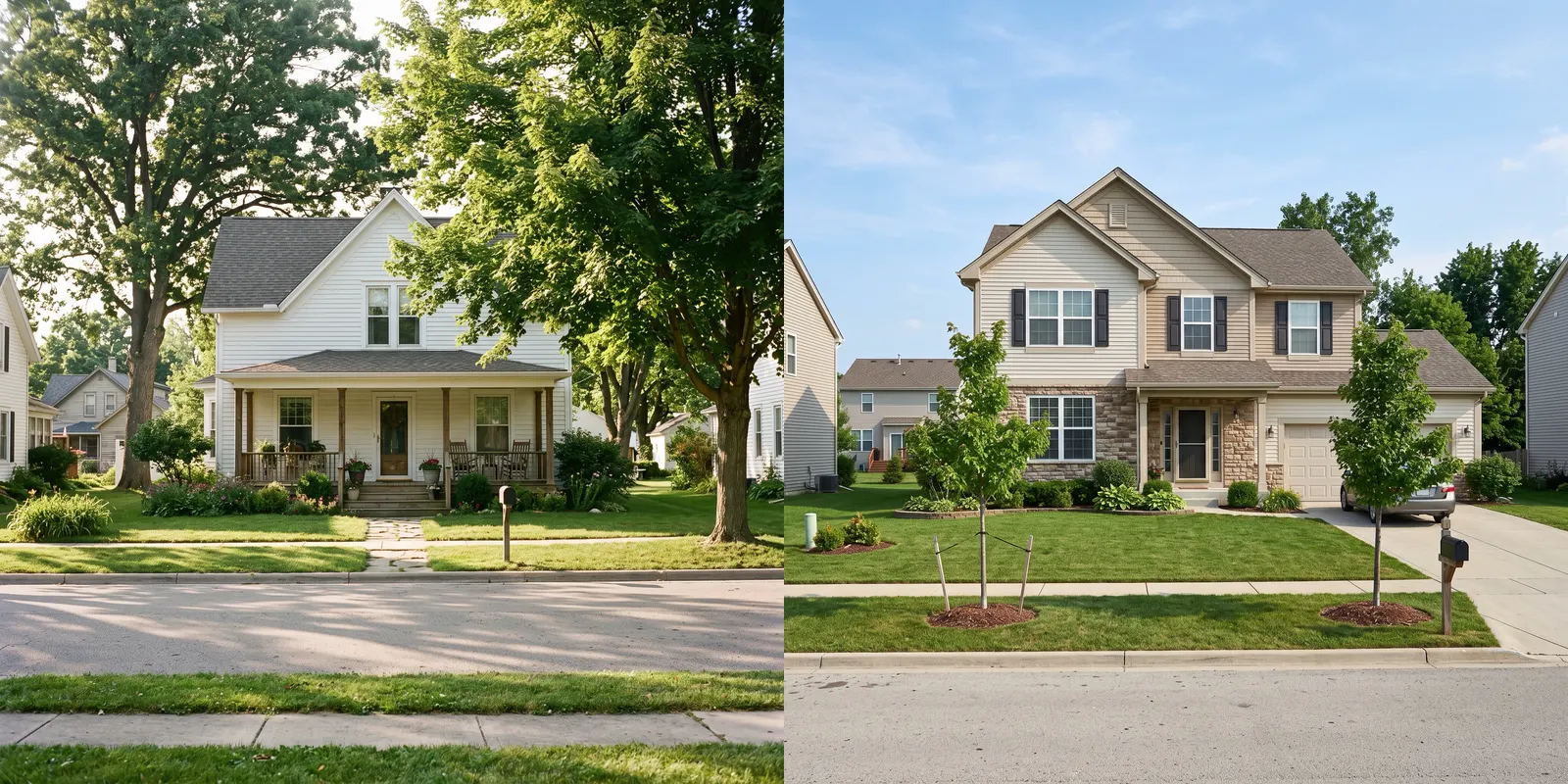
The old town is where the variety is. You will find farmhouse-style homes, bungalows and cottages from the railroad era mixed with mid-century ranches on the streets off Main Street. These are the houses with character and with the usual older-house questions: electrical, plumbing, foundations and how much of the original structure is left under the updates.
The 1990s and 2000s subdivisions are more uniform. Prairie Valley, Prairie Highlands and the earlier phases of Blackberry Creek are mostly two-story colonials and ranches with attached garages and full basements on suburban lots. Here the inspection questions are about systems reaching the end of their first life: roofs, furnaces, air conditioners and water heaters that are 20 to 30 years old. None of those should kill a deal. All of them belong in the price. My home inspection checklist is a good place to start.
The newest homes are in Blackberry Creek's new phase, Williams Ridge and Elburn Station. Townhomes and attached villas make up the single-family attached share, and the ACS counts only a few hundred units in two-flats and apartment buildings across the whole village. The ACS puts the median value of owner-occupied homes at $389,300 and the median gross rent at $1,708. Both are multi-year survey figures, so they trail today's market; the current numbers are in the market section.
Elburn Addresses Outside the Village: Acreage, Wells and Septic
An Elburn, IL 60119 mailing address does not mean a house is in the village of Elburn. The ZIP code covers a large area of farmland and country subdivisions in the surrounding townships, and a lot of the listings with an Elburn address are in unincorporated Kane County. You can often spot them by the grid-style address, a number followed by a direction and another number, like the ones on the country roads around town.
That difference changes the house you are buying. Inside the village, the Village of Elburn provides water and sewer and the village's building and zoning rules apply. Outside it, expect a private well and a septic system, Kane County zoning and permits, and in many cases a different fire, road and township line on the tax bill. The village says so itself: if you live outside the corporate limits, you may have different utility providers.
For those houses, the checklist is its own inspection. Test the well for bacteria and nitrates at minimum. Get a real septic inspection, not a visual check, and ask the seller for pumping records and the location of the field. A failed septic field on a country lot is one of the most expensive surprises in rural real estate. If you are buying bare land to build on, check the county zoning before anything else; my Big Rock guide walks through how Kane County's farm zoning limits where a new house can go.
Country acreage also sells differently from a subdivision house. There are fewer truly comparable sales, lot size and outbuildings move value more than finishes, and financing on larger parcels can take longer. Build that time into your contract dates.
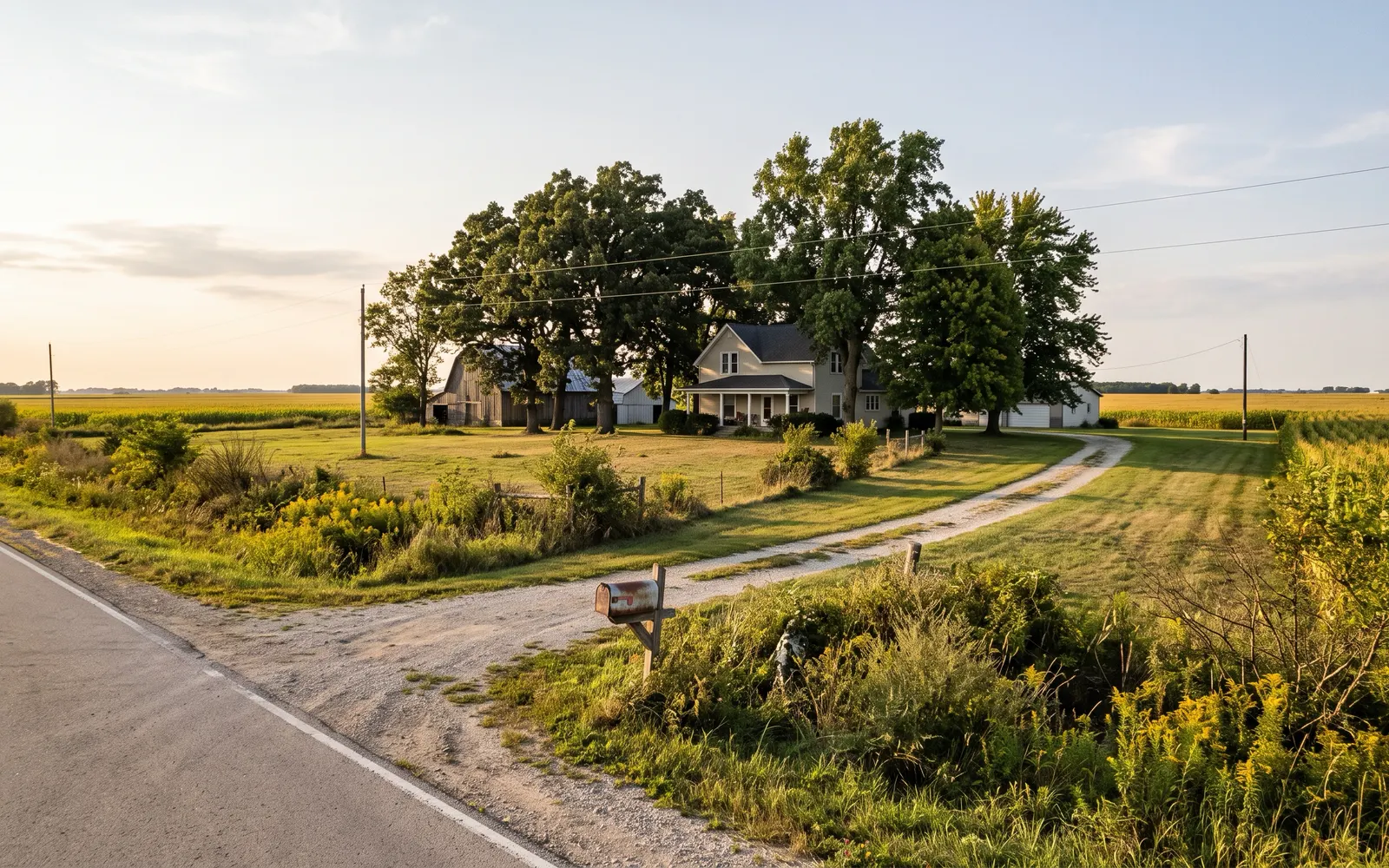
The Elburn Housing Market in 2026
Elburn is a steady market with homes selling near asking. In the three months ending August 2026, Redfin reported a median sale price of $455,698, down 3.7% from the same period a year earlier. Homes sold in 49 days on average, compared with 51 a year before, and the average home sold for 99.7% of its list price. There were 27 sales in August 2026, against 28 in August 2025. Redfin gives Elburn a Compete Score of 75 out of 100, which it calls very competitive, and notes that hot homes can go about 3% over list and pending in around 34 days.
Here is the part that confuses people. Redfin shows the median down. At the same time, Zillow's home value index for August 2026 puts the typical Elburn home at $465,648, up 5.2% from $442,720 in August 2025 and up about 9.3% from $426,155 in August 2024. Both can be right. Redfin's median is the middle of whatever happened to sell in a three-month window, and in a town of about 2,700 homes, a few more townhomes or a few fewer large new builds in that window moves it. Zillow's index estimates the value of every home, sold or not. The tie-breaker is Redfin's own price per square foot, $217, which is up 3.1% from a year ago. My read is that values rose modestly and the mix of what sold shifted toward smaller homes.
What that means in practice: a well-priced Elburn house still sells, usually close to asking. An overpriced one sits past the 49-day average, and the new-construction competition from Lennar and the other builders in town puts a ceiling on what a resale in the same subdivision can ask. For a resale seller, the builder's current base price is the number your buyer is comparing you with.
For context, the same Zillow index for August 2026 has Sugar Grove at $460,176, Maple Park at $414,988, Geneva at $553,230 and Campton Hills at $695,333. Elburn sits in the middle of western Kane County, below the Fox River towns and above the farm villages to the west.
Elburn Property Taxes and the Real Cost of Owning
Property tax changes the monthly payment in Elburn more than any line after the mortgage itself. Ownwell's data puts the median effective rate at 2.74% and the median annual bill at $9,341, with bills in the 60119 ZIP code running from about $5,430 at the 10th percentile to $13,978 at the 90th. The Illinois median in the same data is 2.33%.
The village publishes an unusually clear breakdown. Its property tax page shows a sample 2024 bill, payable in 2025, for a house in Blackberry Creek with a total rate of 8.501522% of equalized assessed value. Kaneland CUSD 302 is 5.887567 of that, 68.3% of the bill. The Elburn Fire District is 7.9%, Waubonsee Community College 4.9% and the Village of Elburn itself only 4.7%. The rest is Kane County, the Town and Country library, Blackberry Township and its road district, the forest preserve and the Blackberry Creek special service area.
Here is what that looks like on a real purchase. Kane County assesses homes at one-third of market value. A house bought at this summer's $455,698 median would carry an assessed value around $151,900, and at the sample rate that is about $12,900 a year before exemptions, roughly $1,075 a month on top of the mortgage. The seller's current bill may be lower, because assessments trail the market. The expectation I most often have to reset is buyers who budget off the seller's bill instead of the rate.
The subdivision matters too. Elburn uses special service areas to pay for maintaining stormwater ponds and open space, and the rate differs by subdivision. For taxes payable in 2026, the village lists about $0.07 per $100 of assessed value in Prairie Valley and Prairie Highlands, $0.19 in Blackberry Creek and $0.48 in Elburn Station. On that same $151,900 assessed value, Elburn Station's SSA adds about $730 a year. The village is explicit that none of its SSAs are the kind that finance a developer's roads and sewers, and it has no real estate transfer tax.
If you already own in Elburn and think your assessment is high, the appeal logic in my Lake County property tax appeal guide carries over, though Kane County runs its own township assessors and deadlines. This is general information, not tax advice. Your actual bill depends on your parcel, your township, your exemptions and the assessor.
Elburn Schools: Kaneland CUSD 302
Elburn is served by Kaneland Community Unit School District 302, a unit district that runs kindergarten through 12th grade across a large stretch of western Kane County, including Elburn, Maple Park, Kaneville, Sugar Grove and part of Montgomery. Because it is a unit district, one school board and one levy cover every grade, which is why Kaneland is such a large share of the tax bill above.
Two of the district's elementary schools are in Elburn: Kaneland Blackberry Creek Elementary on Anderson Road and Kaneland John Stewart Elementary on Prairie Valley Street. Middle school is Kaneland Harter Middle School in Sugar Grove, where the district's sixth through eighth graders come together. High school is Kaneland High School on Keslinger Road, west of the village with a Maple Park address. So an Elburn address means an Elburn elementary school and a drive for middle and high school.
Confirm the assignment for the exact address with the district before you write an offer, because elementary boundaries do not follow subdivision names. I can pull the boundary for a specific house if you want it done.
Waubonsee Community College, which also appears on the Elburn tax bill, has its main campus on Route 47 in Sugar Grove, a short drive south.
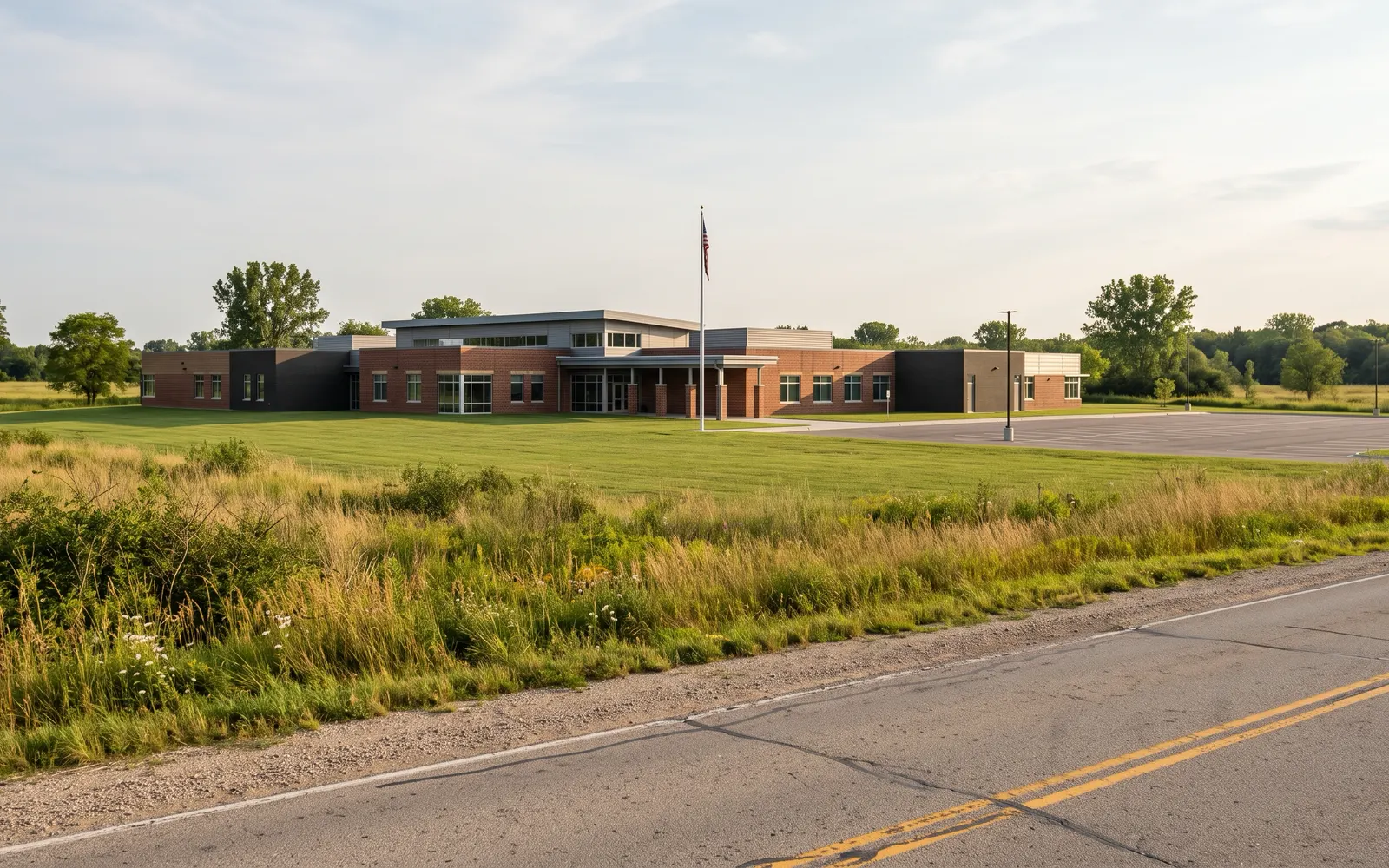
Kaneland Blackberry Creek Elementary. 1122 S. Anderson Rd., Elburn. Early childhood through grade 5, Kaneland 302.
Kaneland John Stewart Elementary. 817 Prairie Valley St., Elburn. Early childhood through grade 5, Kaneland 302.
Kaneland Harter Middle School. 1601 Esker Dr., Sugar Grove. Grades 6–8, Kaneland 302.
Kaneland High School. 47W326 Keslinger Rd., Maple Park. Grades 9–12, Kaneland 302.
Commuting from Elburn: Metra's UP-W Line to Ogilvie
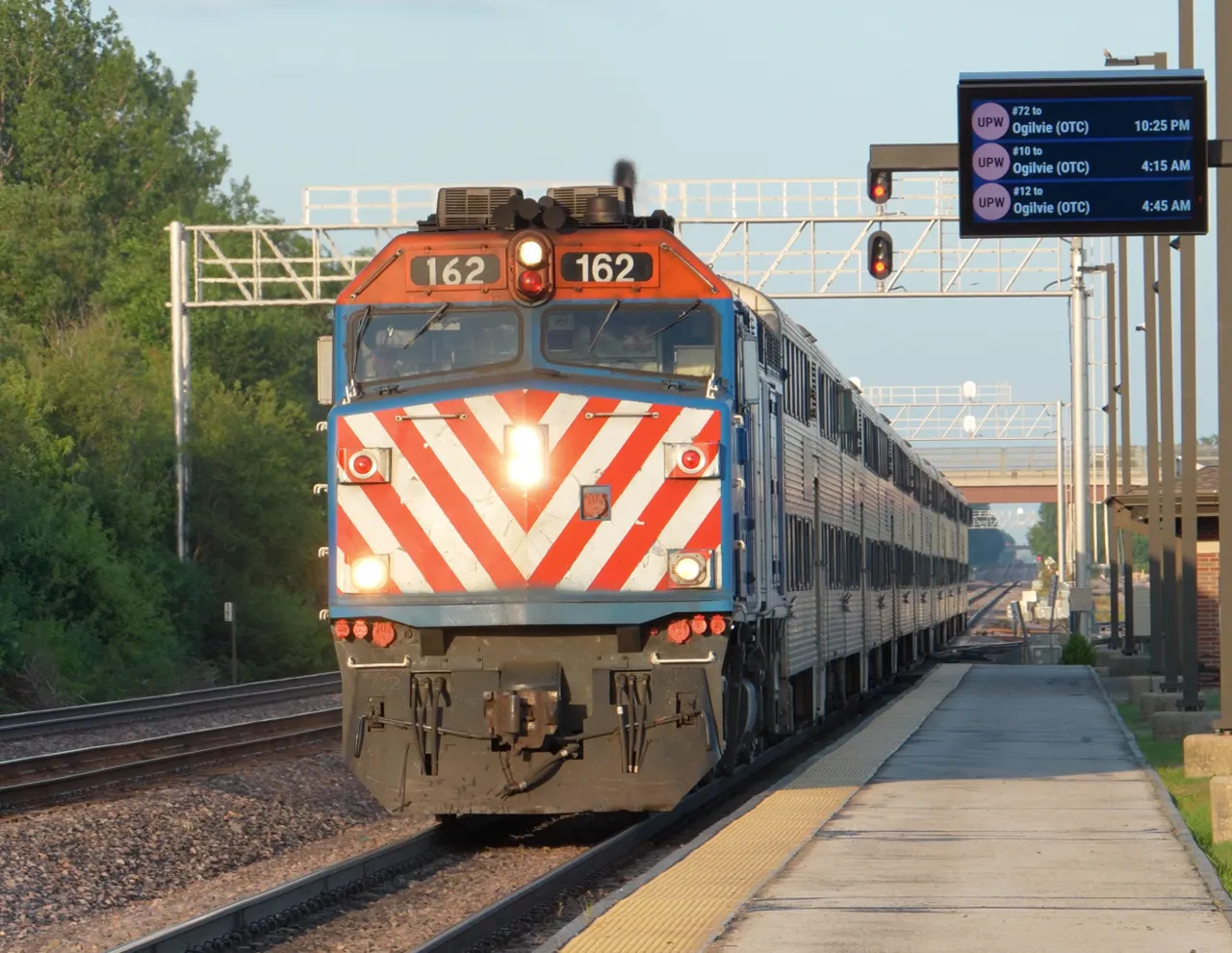
Elburn is the western end of Metra's Union Pacific West line, a one-seat ride to Ogilvie Transportation Center in the West Loop. The station is about 43.8 miles from Ogilvie by rail, and Metra's coach yard sits just east of it. Being the end of the line has one quiet advantage: every inbound train starts here, so you always get a seat.
According to Metra's published schedule data for the week of September 21, 2026, 23 weekday trains run from Elburn to Ogilvie and 24 come back. The fastest morning train, the 6:48 a.m., reaches Ogilvie at 8:00, a 72-minute trip. Most rush-hour trains take 77 minutes, and trains that stop everywhere take 88. Outbound, the trip home runs 80 to 91 minutes. On weekends there are 10 trains each way on Saturdays and 9 each way on Sundays, every one of them the 88-minute all-stops run.
Parking is cheap by Metra standards. The village's parking page lists about 600 spaces at $1.50 a day, payable at the lot machines, up to 15 days in advance, or by the ParkMobile app. From the old town, the station is a walk: the Village Hall address on East North Street is seven minutes on foot.
Add it up honestly. From a subdivision a mile or two out, a door-to-desk commute to the Loop is realistically an hour and a half each way. The Census ACS puts the mean travel time to work for Elburn residents at 27.5 minutes.
Driving from Elburn: Routes 38 and 47 and I-88
For most people here the car is the commute. Two state routes cross in Elburn. Route 38 (Roosevelt Road) runs east to Geneva, the Randall Road corridor and on toward Wheaton and Glen Ellyn. Route 47 runs north toward Huntley and I-90 and south to Sugar Grove, where it meets I-88 at a full interchange. I-88 is a tollway, so budget for tolls if you drive it daily toward Naperville, Oak Brook or the Tri-State.
Keslinger Road and Anderson Road are the local roads that matter most. Keslinger runs east to west along the south side of the village past the newer subdivisions and out to Kaneland High School. Anderson Road connects Route 38 to the south side and crosses the rail line on a bridge, so train traffic does not block that route. O'Hare and Midway are each roughly an hour away or more outside rush hour.
One project to know about: the village lists improvements at Route 38 and Anderson Road, including a new traffic signal, turn-lane changes, resurfacing and new lighting, funded in part by IDOT. If your route uses that intersection, expect work there and a signal where there was none.
Is Elburn Walkable?
The old town is. The subdivisions mostly are not. Walk Score does not publish a single village-wide score for Elburn, so the address scores are the useful guide. The East North Street address near Village Hall, Prairie Park and the library scores 60, somewhat walkable, and it is a seven-minute walk to the train. The Blackberry Creek school address on Anderson Road scores 9, car-dependent.
Walk Score's city page counts about 19 restaurants, bars and coffee shops in Elburn, and says the average resident can walk to 0.8 of them in five minutes. That lines up with what you see: Main Street is walkable, and almost everything else is a short drive.
What the subdivisions do have is sidewalks, paths and open space. Lennar's new Blackberry Creek phase advertises a trail system, and the village's stormwater ponds are part of the landscape in most newer areas. If walking to the train matters to you, it narrows the search to the old town and the nearest blocks around it.
Downtown Elburn and Where People Shop
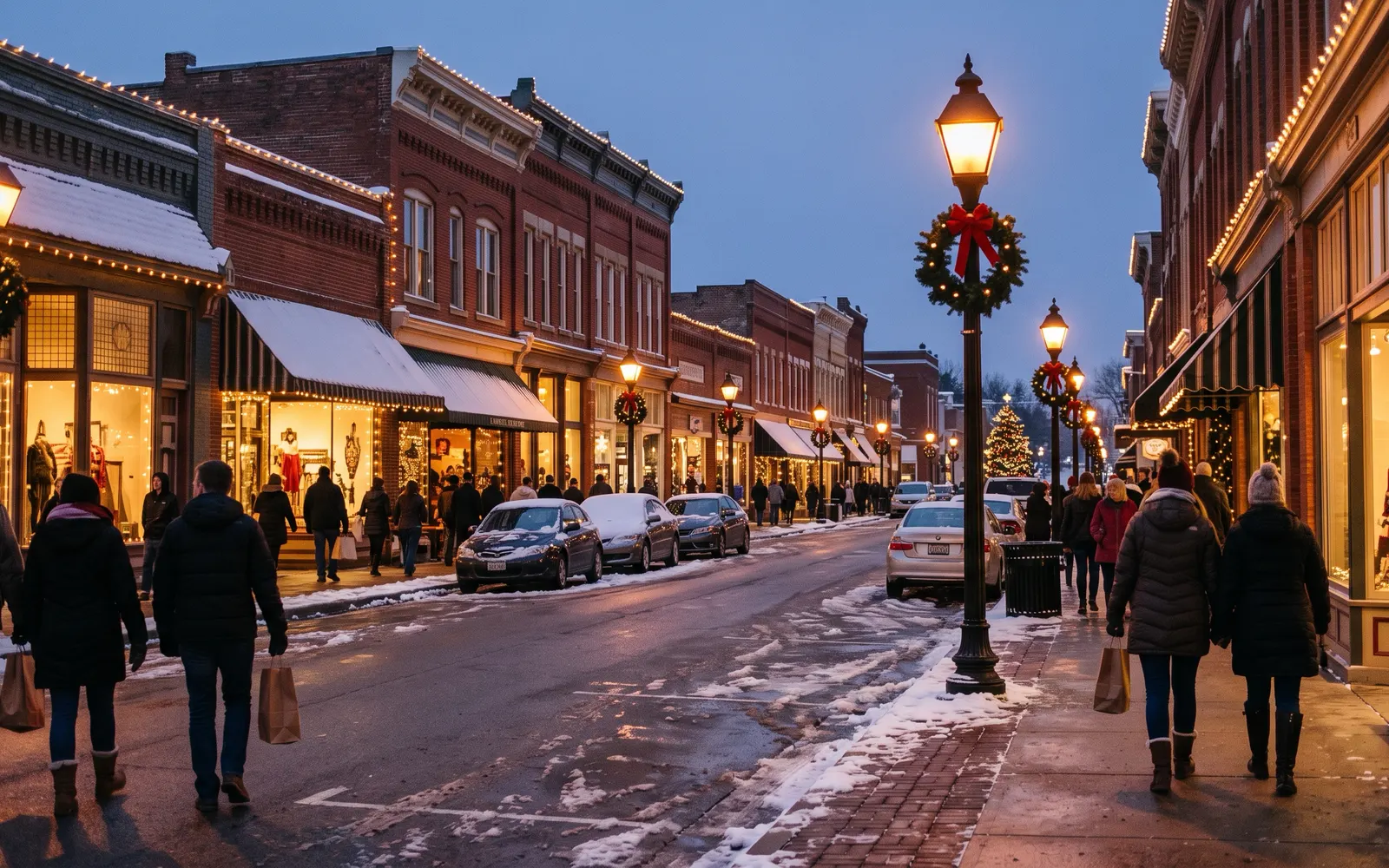
Downtown Elburn is a few blocks of Main Street (Route 47) near the tracks: the older commercial buildings, the American Legion post at 112 North Main, local shops and a handful of places to eat and drink. The village runs a downtown facade grant to help owners fix up the storefronts, and the Elburn Chamber of Commerce hosts the Christmas Stroll there each December.
For bigger errands, Elburn looks east. The Randall Road corridor between Geneva and St. Charles has the big-box stores, home improvement, and the major grocery chains, and it is a 15- to 20-minute drive for most of the village. Downtown Geneva and downtown St. Charles, on the Fox River, are the closest towns for a longer walk-around-and-shop afternoon. Chicago Premium Outlets in Aurora is the nearest outlet mall.
Groceries and Everyday Errands in Elburn
Elburn has a full-size Jewel-Osco, on a site the village annexed in 2002 as its Jewel Food Stores and Edgemark development, near the Route 38 and Route 47 crossing. That covers the weekly shop for most of the village. Pharmacies, banks and quick errands cluster around that corner and along Route 47. For more choice, the Randall Road corridor to the east has several more grocery chains and the warehouse clubs, and Sugar Grove to the south has its own options.
Where Elburn Eats and Drinks
Elburn's food scene is small and local, which is what you would expect in a town of this size. Walk Score counts about 19 restaurants, bars and coffee shops, most of them on or near Main Street and around the Route 38 and Route 47 crossing. Obscurity Brewing is the one the village names most often; it hosts the Kris Kringle Market during the Christmas Stroll. In summer, a lot of eating out happens at Elburn Days, where the Lions Club food stands sell brats, pulled pork and ribeye sandwiches all weekend. For a bigger night out, downtown Geneva and St. Charles are both about a 20-minute drive.
Parks, Forest Preserves and Golf Around Elburn
One detail surprises people: Elburn does not have a park district. The village's Parks Commission runs its parks, and youth sports run through independent leagues: Elburn Youth Baseball, Kaneland Youth Softball, Kaneland United soccer, youth football and more. That is also why there is no park district line on the tax bill above.
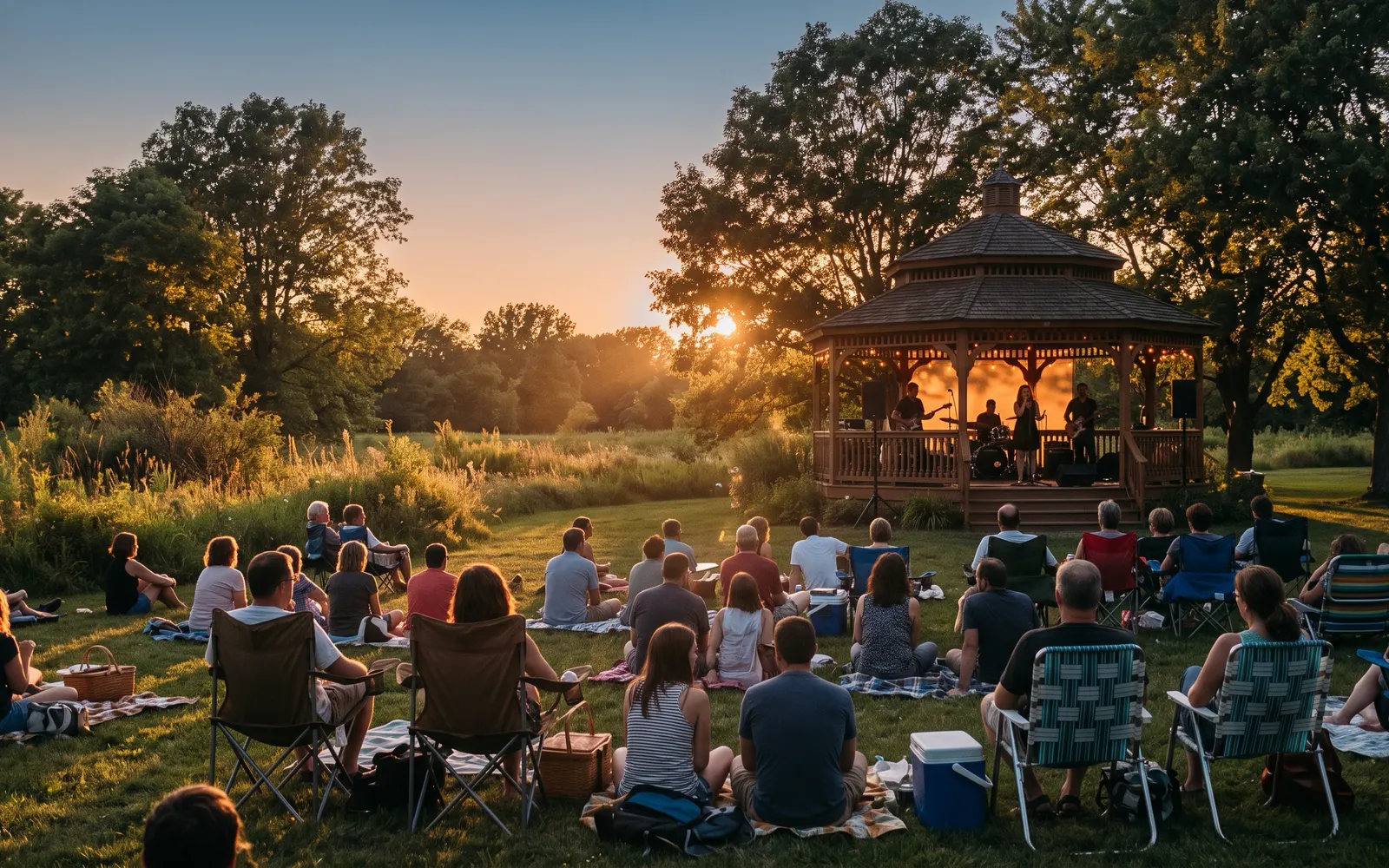
The two parks you will hear about are Lions Park at 500 S. Filmore Street, home of Elburn Days, and Prairie Park at Third and North Streets near the library. Prairie Park has a new permanent games area with chess, ping-pong and cornhole sets you can borrow at the library, and it hosts the Parks Commission's summer series from May through September: a concert on the third Friday of each month (except August, because of Elburn Days) and a movie on the fourth Friday. The village also allows catch-and-release fishing in its stormwater retention ponds.
The bigger open space belongs to the Forest Preserve District of Kane County, and Elburn is surrounded by it. Johnson's Mound Forest Preserve on Hughes Road hosts nature programs and restoration workdays. Elburn Forest Preserve is just outside the village. Mill Creek Greenway on Brundige Road is home to the new Arrowwood Point Archery Complex, which opened with a June 6, 2026 grand opening and has four elevated lanes, twelve traditional lanes and four crossbow lanes, by permit. Hughes Creek Golf Course is in Elburn too, and the Fox Valley Wildlife Center is on the village's own list of places to go.
The Town and Country Public Library
Elburn's library is the Town and Country Public Library, a separate taxing district that shows up on the Elburn bill at about 3.6% of the total in the village's 2024 sample. It sits near Prairie Park in the old town and works closely with the village: the Prairie Park game kits are checked out at the library's front desk with no library card needed, and the Christmas Stroll includes events at the library. It also sells *The Sidewalks of Elburn*, the local history book, alongside Village Hall.
Utilities and Drinking Water in Elburn
Inside the village limits, the Village of Elburn provides water and sewer. ComEd delivers electricity and Nicor provides gas. For internet the village lists Metronet fiber, Mediacom cable and FutureLink wireless. Trash, recycling and yard waste are a village contract with Lakeshore Recycling Systems through September 30, 2028, billed quarterly by LRS. According to the village's waste page, the rate is $22.36 per unit per month through September 30, 2026 and $23.36 from October 1, 2026.
The water deserves a straight explanation because buyers ask about it. Elburn's water comes from deep sandstone aquifer wells. A December 2025 sample taken under the U.S. EPA's national unregulated contaminant monitoring program found PFOA, a PFAS compound, at 7.5 parts per trillion in one village well, above the Illinois groundwater reporting level of 4. On February 11, 2026 the Illinois EPA formally notified the village, and the village mailed the required notice to every water customer.
Since then, the village reports, every test has come back clean. The March 2026 retests of both the treated and the untreated water found no detectable PFAS. The first required compliance samples, taken August 31, 2026 at Wells 3 and 4, also found none. Well 5 is offline while its water tower in Blackberry Creek is being rehabilitated and will be tested when it returns to service, and the next required round is due before April 26, 2027. The village keeps the whole record on its Drinking Water and PFAS page, and it also runs a lead service line replacement program. If water quality matters to your decision, read that page and the annual water quality report yourself before you buy.
Hospitals and Emergency Services Near Elburn
The closest full-service hospital is Northwestern Medicine Delnor Hospital in Geneva, east of Elburn off Randall Road. Hospitals in Aurora and Elgin are within reach for other systems and specialists. Fire and ambulance service come from the Elburn and Countryside Fire Protection District, which is the second-largest line on the village's sample tax bill at about 7.9% of the total, and the Elburn Police Department serves the village itself.
Elburn Days and the Village's Yearly Traditions
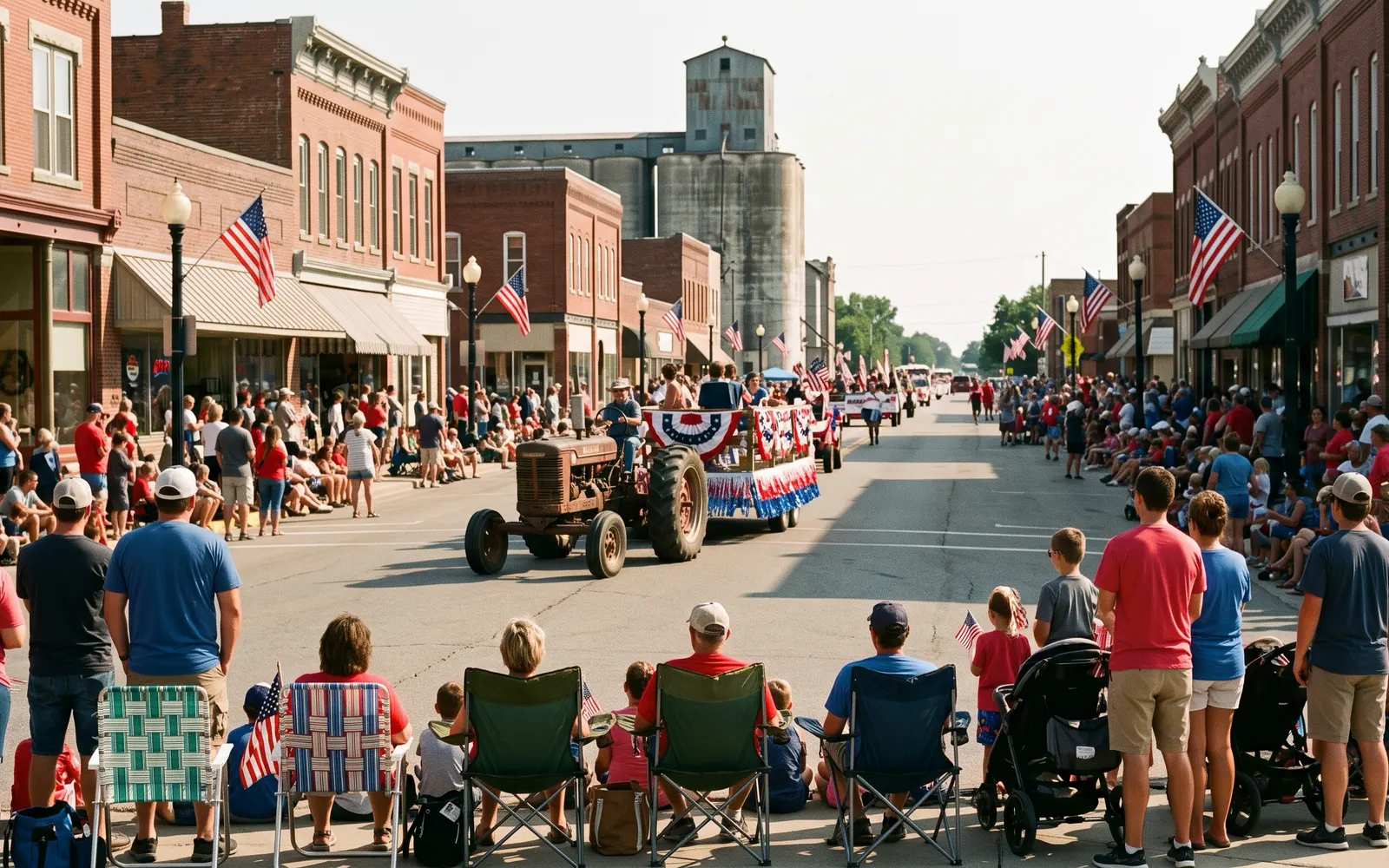
The big one is Elburn Days, held every August at Lions Park since the Elburn Lions Club started its "Day in the Park" in 1930. The 2026 festival ran August 21 to 23 with free admission, a Friday parade at 6 p.m. along Main Street, carnival rides all three days, live music, a beer garden, bingo and the Lions' food stands. Proceeds support Lions Park and the club's vision and hearing programs. On the Saturday, Run the Rails starts and finishes at Prairie Park, with 1-mile, 4-mile and 7-mile courses that cross the UP-W line on the Anderson Road bridge.
The rest of the year has a steady rhythm, per the village's events page: a Memorial Day procession hosted by American Legion Post 630, the Prairie Park concerts and movies from May to September, the Veterans Day observance at the Legion building at 11 a.m. on November 11, and the Christmas Stroll on Main Street, set for December 5, 2026 from 4 to 7 p.m. If you are touring houses in August, go to Elburn Days. It tells you more about the town than any listing will.
What's Being Built in Elburn
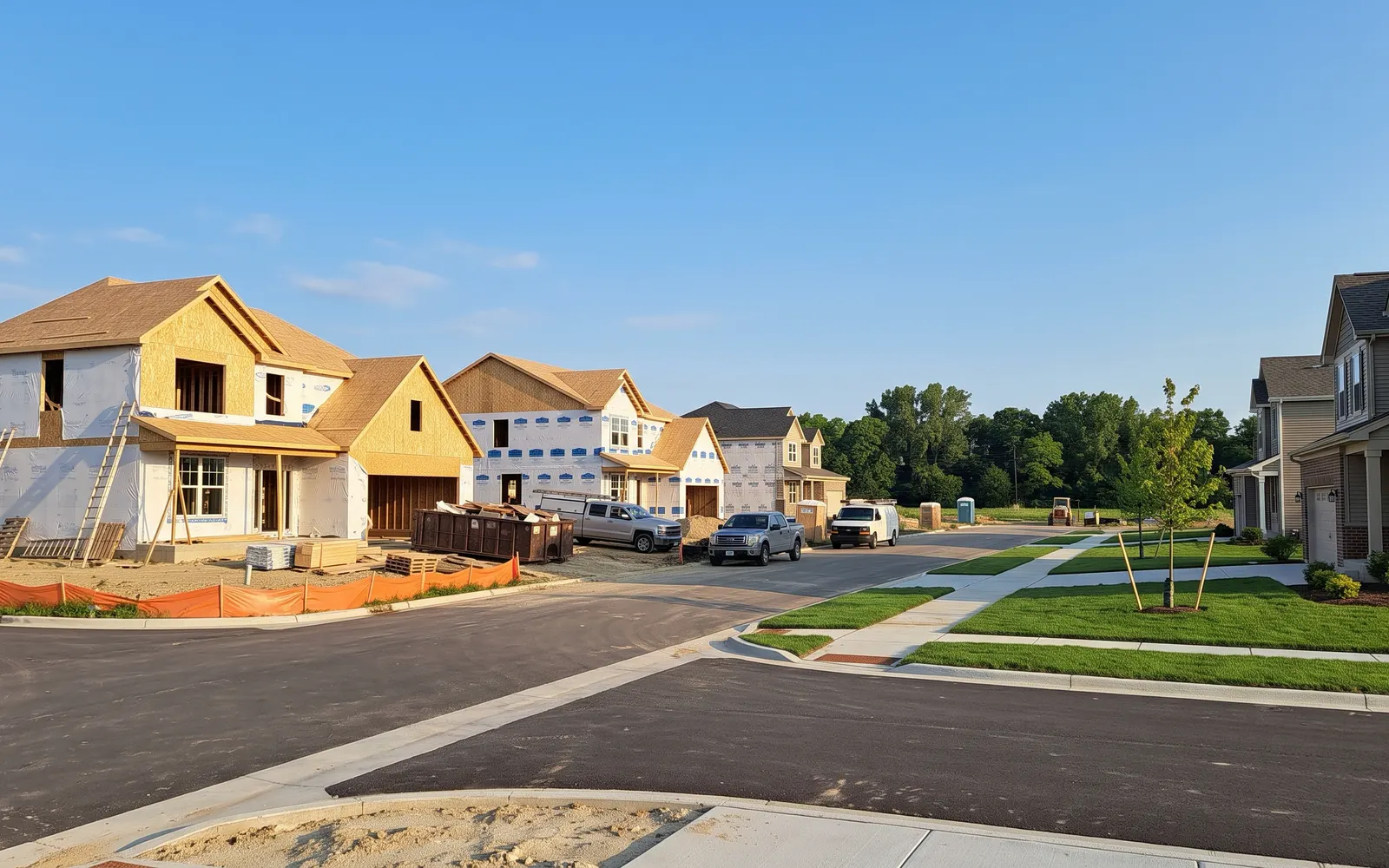
Elburn is one of the busier places in western Kane County for new homes, and the village keeps a current list on its ongoing development projects page. The largest active one is Blackberry Creek Unit 15: 282 single-family homes south of Keslinger Road and east of Pouley Road, built by Lennar as Lennar at Blackberry Creek. The village says construction was to start in summer 2025 with first deliveries in early 2026, in two or more phases. Lennar's community page currently lists homes from $399,990 in its Andare series and $489,990 in its Landmark series, with two to four bedrooms and 1,428 to 2,907 square feet, plus a playground, pickleball court and trails.
Williams Ridge is the second. Silverthorne Homes is building Phase 5, 34 single-family lots south of Prairie Valley Street and east of Ridge Road, and has proposed Phases 6 and 7 near Willow and Paul Streets as 60 multi-family units, a mix of two-story villas and single-story homes. The village lists a special service area for Williams Ridge as proposed.
The third is Elburn Station, the 505-acre Shodeen master plan north of Anderson and Keslinger Roads. Shodeen builds ranch and two-story homes there and says new phases are coming. On the public side, the Route 38 and Anderson Road intersection is getting a signal and turn lanes, both village water towers are being cleaned and repainted in 2026, and the Village Board adopted a 2026-2029 strategic plan on February 17, 2026.
For buyers, all of this means choice: in 2026 you can buy new in Elburn from several builders. For resale sellers in those same subdivisions, it means competition, because the builder's base price and incentives are what your buyer is comparing you with.
I don't label any town or neighborhood as safe or unsafe.
Flood Risk and Drainage in Elburn
Elburn is flat, farm-country ground, and most of its subdivisions were built around stormwater detention ponds. Those ponds are what the special service areas on the tax bill pay to maintain, and they are why flooding here tends to be a house-by-house question rather than a town-wide one. Redfin's climate panel for Elburn, which uses First Street's model, was still showing its flood figures as "in progress" this September, so I don't quote a flood percentage here.
Two checks before you write an offer. Look the address up on the FEMA flood map, because a mapped flood zone can mean required flood insurance on a mortgage, and houses that back onto a pond or a drainage channel deserve a closer look. And ask the seller directly about water in the basement. Most Elburn homes have full basements, so the sump pump, the grading and any past water are the questions that matter. Out in the unincorporated areas, add field drainage tile and the septic field to the list.
Frequently Asked Questions
How much does a house cost in Elburn, IL?+
Redfin reported a median sale price of $455,698 for the three months ending August 2026, and Zillow's home value index was $465,648 for August 2026. New construction in Lennar's Blackberry Creek phase is currently listed from $399,990.
What are property taxes in Elburn, IL?+
The median effective rate is about 2.74%, with a median bill of about $9,341 (Ownwell). The village's sample 2024 rate for a Blackberry Creek home was 8.50% of assessed value, and subdivision special service areas add $0.07 to $0.48 per $100 of assessed value.
What school district is Elburn, IL in?+
Kaneland Community Unit School District 302. Elementary schools in the village are Blackberry Creek and John Stewart; middle school is Harter in Sugar Grove and high school is Kaneland High School on Keslinger Road. Confirm each address with the district.
How long is the commute from Elburn to downtown Chicago?+
On Metra's Union Pacific West line, the fastest morning train reaches Ogilvie in 72 minutes, most rush-hour trains take 77 and all-stops trains 88. There are 23 weekday trains inbound and 24 outbound.
What neighborhoods are in Elburn, IL?+
The old town around Main Street, Prairie Valley and Prairie Highlands, Williams Ridge, Blackberry Creek, Elburn Station and Fox Pointe, plus unincorporated acreage with Elburn addresses.
What happened with PFAS in Elburn's water?+
A December 2025 sample found PFOA at 7.5 parts per trillion in one well. The village reports that retests in March 2026 and compliance samples on August 31, 2026 found no detectable PFAS. Its Drinking Water and PFAS page has every notice and result.
Does Elburn have a park district?+
No. The village's Parks Commission runs Lions Park and Prairie Park, and the Forest Preserve District of Kane County owns the large preserves around town, including Johnson's Mound and Mill Creek Greenway.
Is new construction available in Elburn?+
Yes. Lennar is building 282 homes in Blackberry Creek, Silverthorne is building in Williams Ridge, and Shodeen has more phases coming at Elburn Station. How builder contracts, timelines and allowances work is on my new construction homes in Illinois page.
Eshu Chikoti has extensive access to off-market listings throughout Elburn and the rest of Kane County — homes that never make it to the public listing sites. That matters right now: in a seller's market like this one, well-priced homes routinely go under contract within days, and buyers relying only on public listings are competing for whatever is left over. Working with someone plugged into off-market inventory means seeing homes before the crowd does.
Eshu Chikoti · 847-691-4282 ·
Get new Elburn listings by email
When a home comes on the market in Elburn, I'll email it to you.
Just your email. Unsubscribe any time by replying.
Thinking About Elburn?
Whether you're buying, selling, or just curious what's on the market, I can walk you through Elburn street by street.