Holiday Hills, IL
Holiday Hills, IL is a McHenry County village of about 620 people on the Fox River and Griswold Lake, next to Moraine Hills State Park, with river channels, a new public sewer and no stores.
Living in Holiday Hills, IL means a typical home value near $276,000, property tax around 2.39% of value, and the Fox River and Moraine Hills State Park at the edge of the village. The trade-offs: most streets sit in a mapped flood zone, and many owners still face a sewer hookup. Here is how it breaks down, street by street.
Written by Eshu Chikoti · 847-691-4282 ·
How Holiday Hills, IL Got Here: A Short History
Holiday Hills started as a place to spend the summer. The Encyclopedia of Chicago describes it as a cluster of 1930s summer vacation cabins along the north shore of Griswold Lake, 43 miles northwest of the Loop, that grew after the 1940s as more Chicagoans came out to the country. The same entry says the community incorporated in 1976 to get revenue-sharing dollars to fix its roads, which is a theme you will see again below.
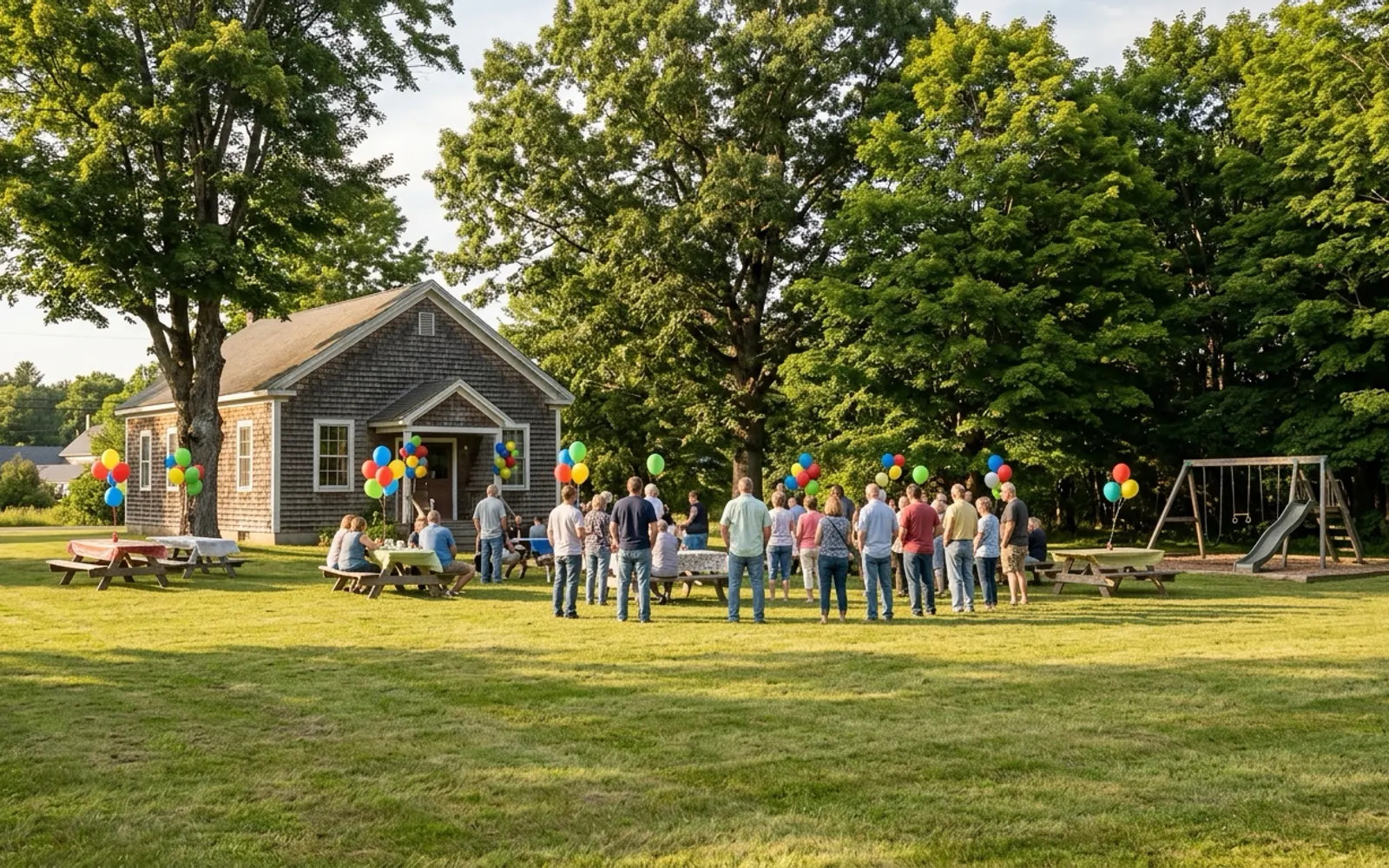
Wikipedia dates the incorporation to March 10, 1976, and the village's home page confirms 1976. That makes 2026 the village's 50th year, and the board marked it with a community celebration on July 18, 2026, according to the May 20, 2026 board minutes.
The census counts tell the rest. Holiday Hills had 802 people in 1980, 807 in 1990 and 831 in 2000, then 610 in 2010 and 618 at the 2020 census, per Wikipedia's census table. The village never grew past its original footprint because there was nowhere to grow: the Fox River is on one side, Griswold Lake on another, Moraine Hills State Park on a third, and a large gravel pit to the north.
The last 60 years were built on the same cottage-era plan. Streets are narrow, lots are small, and until 2023 every house ran on its own septic system. The biggest change in the village's history is happening right now, as Northern Moraine Wastewater Reclamation District extends public sewer down those same streets. That project has its own section below.
Holiday Hills at a Glance
Holiday Hills is one of the smallest villages in McHenry County. The village's home page puts it at about 590 acres, of which about 186 are developed as homes and the remaining 404 are the Reliable Sand and Gravel property. It describes the borders as Moraine Hills State Park, the Fox River and Griswold Lake, about 40 miles northwest of Chicago and 15 miles south of the Wisconsin line. Wikipedia, using the Census Bureau's 2020 gazetteer, puts the total area at 0.97 square miles, 0.04 of it water, all in Nunda Township.
The 2020-2024 Census ACS counts 263 housing units and an estimated 634 people, though at this size the margin of error is wide (plus or minus 145 people). The housing numbers are the useful part: 261 of the 263 homes are single-family detached houses, and 238 of the 261 occupied homes, about 91%, are owner-occupied. There are no apartment buildings and no condos.
Zoning keeps it that way. The village information page says the whole village is zoned R-1 single-family residential, except for the gravel pit property to the north. There is no business district.
The mailing address can mislead you. Holiday Hills homes use McHenry's 60051 ZIP code, and so does Le Villa Vaupell, the unincorporated subdivision right next door. Inside the village line you get the village's rules, the village tax line and village road work. Outside it you get the county. The first thing I check on any "Holiday Hills" listing is which side of the line the house is on.
For roughly $35,000 to $40,000 less than a typical McHenry or Island Lake house, you get the Fox River and its channels, Griswold Lake, Moraine Hills' 2,200 acres, 20 mph streets you can drive in a golf cart, and a village with no commercial traffic at all.
Most of the village is in the mapped floodplain, the April 2026 flood took 15,000 sandbags, and unconnected houses carry an $11,642.87 fee plus contractor costs before 2038. The village is also small enough that roads, restoration and police costs land on a short list of taxpayers.
Holiday Hills Streets, Block by Block
Holiday Hills is too small to have named subdivisions the way a larger town does, but its streets are not all the same. The two things that separate one block from another are elevation and water: how close a house sits to the river or a channel, and whether it falls inside the FEMA flood zone. Both change the price, the insurance bill and what you can build.
To see the split, I checked every village street against FEMA's National Flood Hazard Layer, using the effective flood maps dated November 16, 2006 (panels 17111C0236J and 0237J). About 65% of the length of the village's streets falls inside the mapped 100-year floodplain. The low streets near the river and the channels are almost entirely inside it. A handful of streets on higher ground are entirely outside it.
The lower village is also laced with channels off the Fox River. That is where the waterfront homes are, and it is also where the flooding is worst. The higher streets toward Sunset Drive and the north end sit farther from the water and mostly outside the mapped zone.
Below is how the streets break down. Boundaries are informal and the flood map is parcel-specific, so a single house can differ from its street. If you want to know which zone a specific address falls in, what its sewer status is and what its block has sold for lately, that is a conversation I am happy to have here.
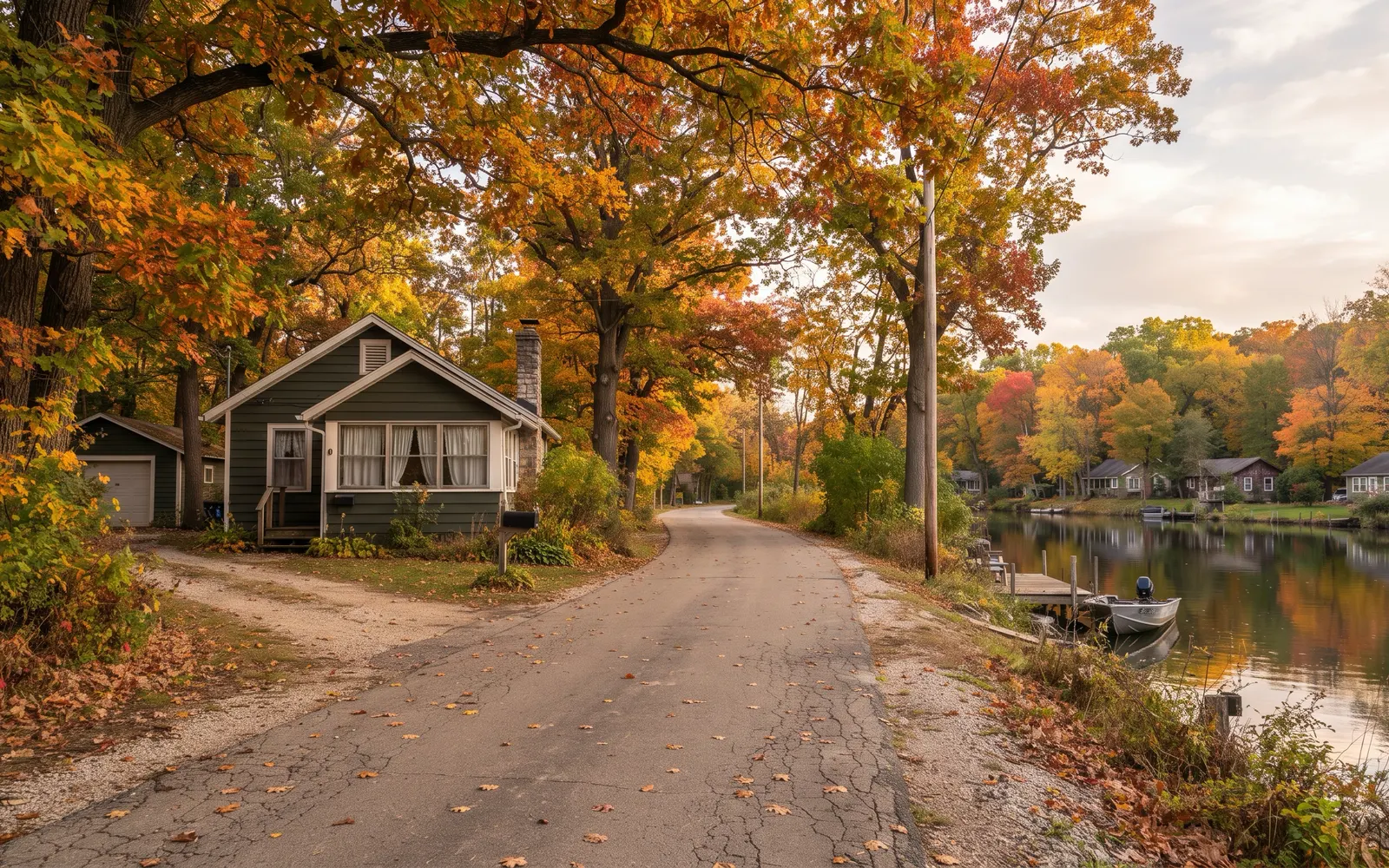
River and channel streets. Riverview Drive, Park Terrace, Beechnut Drive, Catalpa Drive, Lake Drive, Tower Drive and nearly all of Holiday Drive. Waterfront and near-water homes, and all of these streets are fully inside FEMA's mapped floodplain.
The tree streets. Poplar, Birch, Elm, Evergreen, Hickory, Spruce and Cedar Streets and Oak Lane, the small grid between Sunset Drive and the water. Small lots and older houses, also mapped inside the floodplain.
Sunset Drive. The spine of the village and home to the Village Hall and playground at 1304 Sunset. About a quarter of its length is inside the mapped floodplain; the rest is on higher ground.
Northeast Shore, Pine and Hyde Park. Northeast Shore Drive and Hyde Park Avenue sit outside the mapped floodplain, and Pine Street is about half in, half out. These were the Phase 2 sewer streets inside the village.
Le Villa Vaupell (next door, not in the village). An unincorporated subdivision along Vaupell Drive that shares the 60051 ZIP code and the same Northern Moraine sewer project. Listings sometimes blur the two.
The gravel pit (north). About 404 acres owned by Reliable Sand and Gravel, the only non-residential land in the village.
What Holiday Hills Homes Look Like, by Era
Holiday Hills housing is older and smaller than most of McHenry County. The Census ACS puts the median year built at 1969. Of the 263 homes it counts, about 100 were built in the 1950s, 31 in the 1960s, 81 in the 1970s, 24 in the 1980s, 6 in the 1990s and 18 in the 2000s, with none counted since 2010. The margins are wide at this size, so treat that as a shape rather than an exact count.
Read against the history, the shape makes sense. The 1950s houses are the first year-round homes, many of them former summer cabins that were winterized, expanded and rebuilt over the decades. The 1970s wave filled in the remaining lots. Almost nothing new has been built since, because the lots are small, the land is low and until recently every house needed room for a septic field.
The ACS puts the median owner-occupied home value at $220,600, and 250 of the 261 occupied homes heat with natural gas. Recent sales on Redfin show the entry point: a 960-square-foot three-bedroom on Poplar Street sold for $275,000 in September 2026, and a 1,056-square-foot house on Sunset Drive sold for $200,000 in August 2026. A 2,236-square-foot three-bedroom a block from Fox River access was listed at $375,000 when I checked this week.
On older river-area houses, the inspection issues I watch for are the ones you would expect from a cabin that became a house on low ground: additions built in stages, crawlspaces that take water, septic systems that may be near the end of their life, and grading that sends water toward the foundation. None of those should end a deal. All of them belong in the price, and my home inspection checklist is a good place to start.
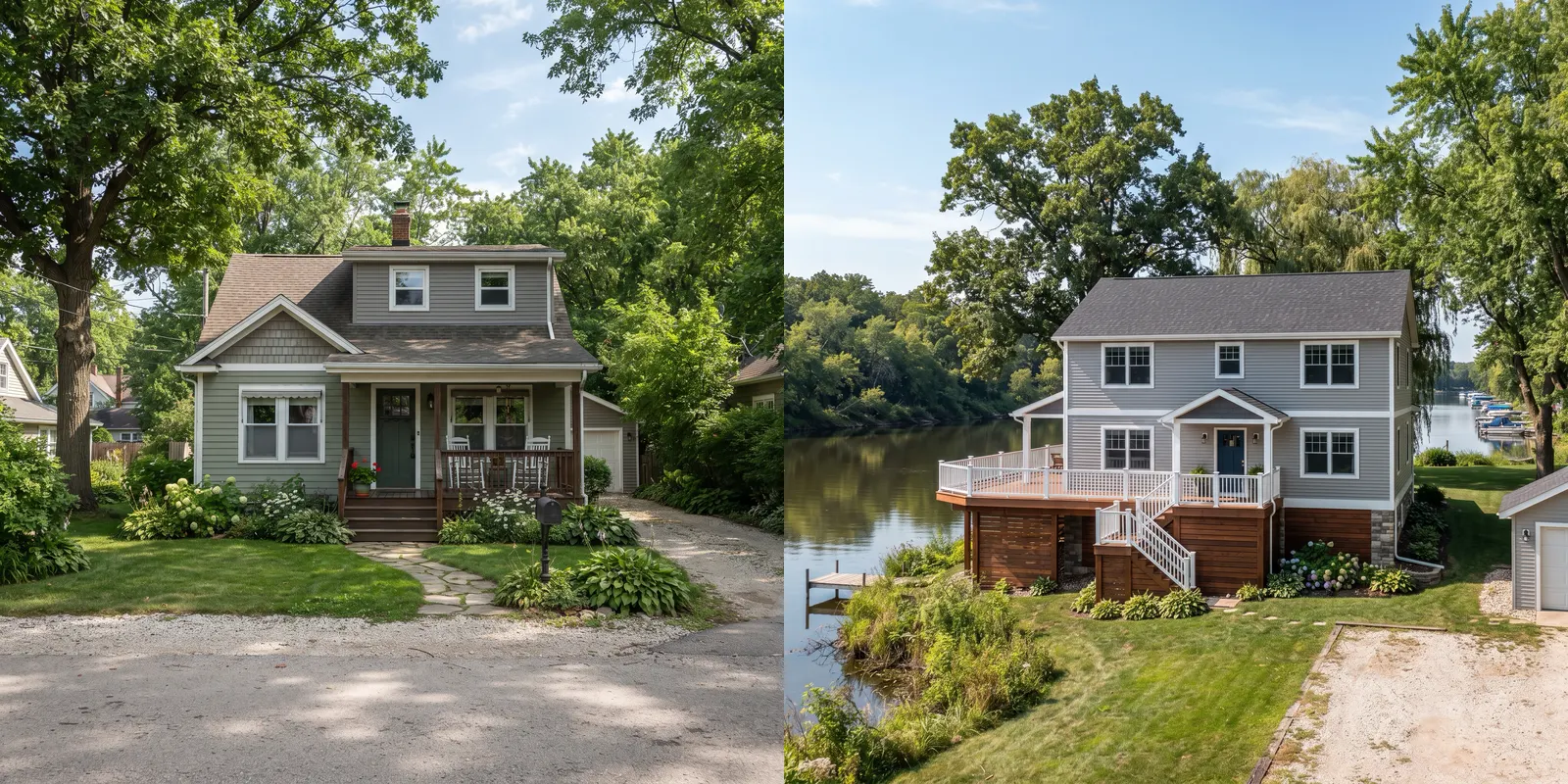
The Holiday Hills Sewer Project: Septic to Public Sewer
This is the single most important thing to understand before you buy in Holiday Hills. For most of its history, every house in the village ran on a private septic system. The village home page still says so. Since late 2023, that has been changing. Northern Moraine Wastewater Reclamation District (NMWRD), the regional sewer district that already serves Island Lake, Lakemoor and Port Barrington, has been building a public sanitary sewer through Holiday Hills and neighboring Le Villa Vaupell under a 2021 sewer extension agreement with the village, according to the NMWRD project page.
The work has come in phases. NMWRD's December 2025 construction letter says Phase 1 was completed for the first 108 homes and Phase 2 for another 100, and that grant funding paid for Phase 2B: 3,700 more feet of sewer to serve 56 more homes. The village's April 15, 2026 minutes report that all Phase 2B underground work was complete, and restoration of lawns and roads began in July 2026.
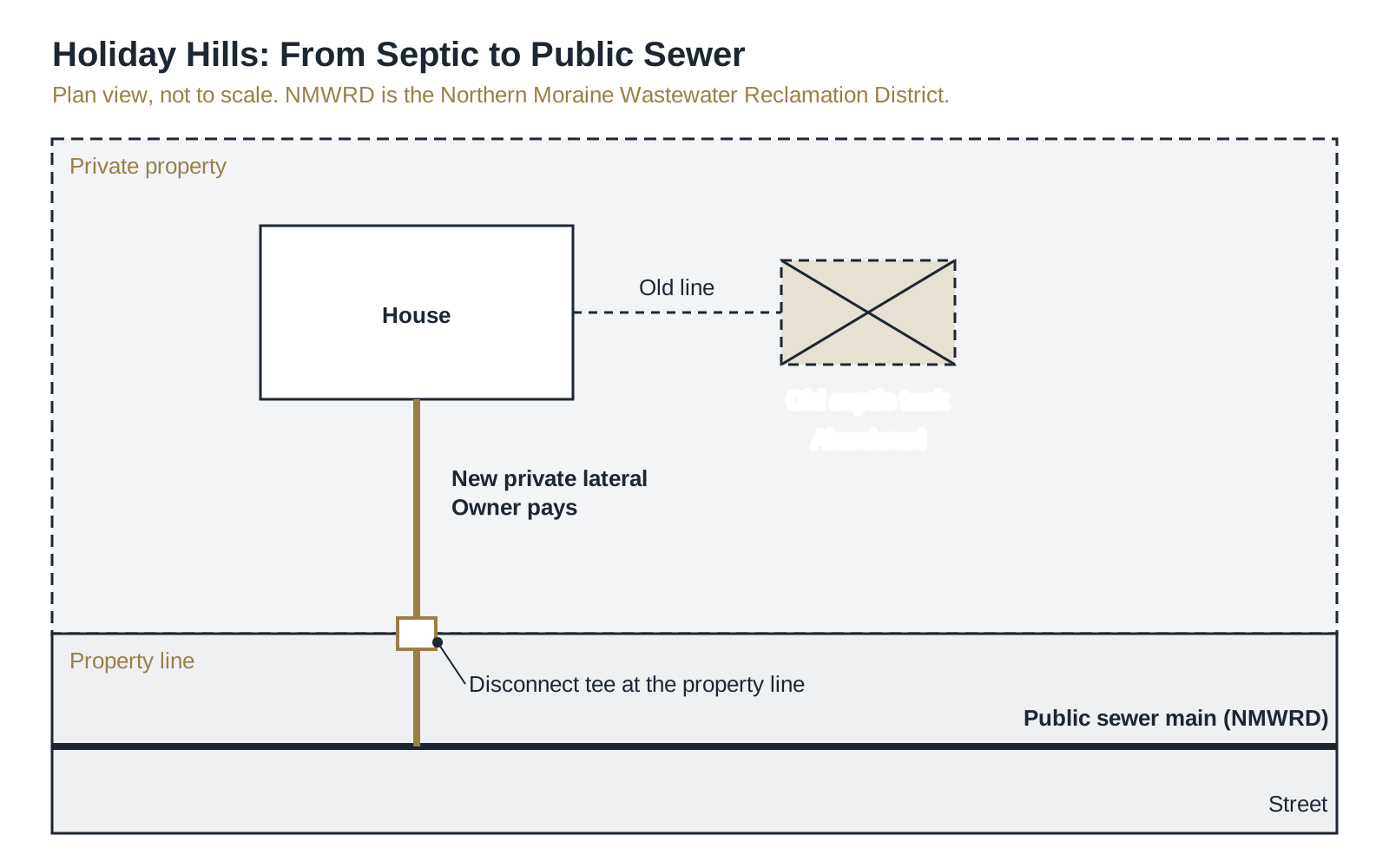
Here is the money. According to NMWRD's May 2026 connection FAQ, the connection fee is $11,642.87 plus a one-time $100 inspection fee, and it rises with inflation every May 1. Once connected, the monthly sewer bill is $53.30 at the 2026 rate. On top of that, the owner hires a licensed, bonded sewer contractor to run the private line from the house to the street and to properly abandon the old septic system with a McHenry County Health Department permit, all at the owner's cost. Sump pumps may not be connected to the sewer.
Owners do not have to connect right away. The FAQ says every home must connect by December 31, 2038, or when its septic system fails, whichever comes first.
What the Sewer Switch Means for a Holiday Hills Purchase
The sewer project changes the math on every Holiday Hills house, and the details are easy to miss.
First, find out which of three situations the house is in: already connected, sewer available but not connected, or no sewer on the street yet. NMWRD's project page posts the phase maps, and NMWRD handles closing requests for sewer charges through its real estate closings form. I ask for the connection permit and the county septic abandonment permit on every house that says it is connected.
Second, watch for the financing. NMWRD lets owners spread the connection fee over 30 years at 4% interest, which adds about $55 a month and brings the total monthly bill to about $108.88, per its May 2026 FAQ. But owners who finance sign a promissory note, a mortgage and a declaration of restrictive covenants, and the FAQ is explicit: the balance must be paid off at closing when the house sells, and the financing cannot be transferred to the buyer. That is a lien your title company will find, and it comes out of the seller's proceeds. The financing window is also closing: the FAQ lists October 31, 2026 for Phase 1 homes and November 14, 2028 for Phase 2 homes.
Third, if the house is not connected yet, price in the cost. The $11,642.87 fee is fixed and public. The contractor's cost to trench the private line and abandon the septic is not, and it depends on the distance to the street, the depth and the groundwater. NMWRD's February 2025 update, as reported in the village minutes, warned that because of the water table and sewer depths some homeowners may need pumps. Get a written quote from a contractor on NMWRD's list before you write the offer, not after.
Fourth, the septic still matters. Until the house connects, the old system is doing the work, and the FAQ requires connection as soon as it fails. During the April 2026 flood, the village brought in portable toilets for residents with flooded septic fields. On any unconnected house, I have the buyer order a septic inspection and make the offer contingent on it.
The Holiday Hills Housing Market in 2026
Holiday Hills is a very thin market, so the usual monthly statistics are not much use here. Redfin's housing market page had not updated its summary past the three months ending February 2026 when I checked on September 25, 2026, because it counted just one sale in that stretch. Its recently sold list showed two village sales over the summer, and three homes were listed for sale.
The better read is Zillow's home value index, which estimates the value of all homes whether they sold or not. It put the typical Holiday Hills home at $275,745 for August 2026, up 5.2% from $261,992 a year earlier and up 8.4% from $254,340 in August 2024.
For comparison, Zillow put McHenry at $315,402 and Island Lake at $309,230 for the same month, so a typical Holiday Hills house runs roughly $35,000 to $40,000 below its two closest neighbors. Some of that gap is the flood zone and the pending sewer cost, and some is simply house size.
What that means in practice: with a few sales a year, you cannot shop Holiday Hills by waiting for the right listing to come along. If you want the river or a channel lot here, set up a search early and be ready to act when one comes up. On the pricing side, the comps that matter most are the ones on the same street with the same flood zone and the same sewer status.
Holiday Hills Property Taxes and the Real Cost of Owning
Holiday Hills' tax rate is close to the county's, and because homes are valued lower, the typical bill is well below the county's. Ownwell's data, updated April 13, 2026, puts the median effective rate at 2.39% and the median annual bill at $4,697, on a median home value of $200,445. The McHenry County median is 2.42% with a $7,056 bill.
Here is what that looks like on a purchase. At 2.39%, a house bought at Zillow's $275,745 typical value would eventually carry about $6,590 a year in tax, roughly $550 a month on top of the mortgage. The seller's current bill may be lower, because assessments trail the market. The expectation I most often have to reset is buyers who budget off the seller's bill instead of the rate.
In Holiday Hills, add two more lines to the monthly budget. The sewer bill is $53.30 a month once connected, or about $108.88 if the connection fee is financed, per NMWRD. And in the mapped flood zone, a mortgage lender will usually require flood insurance, which can be the biggest surprise of all. Get a quote before you are under contract.
The village's own share of the bill is small, but it is rising. The board used the 4.99% allowed increase in its levy approved in November 2025, according to the November 19, 2025 minutes, after taking the 5% increase the two years before. If you think your assessment is high, the appeal goes to the Nunda Township assessor and then the McHenry County Board of Review. My guide to how much house you can afford shows how these lines change the payment. This is general information, not tax advice. Your actual bill depends on your parcel, your exemptions and the assessor.
Flood Risk in Holiday Hills: The FEMA Map and the April 2026 Flood
Flooding is a real, recurring issue in Holiday Hills, and I will not soften it. By my check of FEMA's flood maps, about 65% of the village's street length lies inside the mapped 100-year floodplain (Zone AE), and part of the river edge is designated floodway. Redfin, using First Street's model, rates the village's flood risk as major, with 45 properties, about 12% of the total, at risk of severe flooding over the next 30 years. The two numbers measure different things: FEMA maps where the 1% annual flood reaches, and First Street estimates which buildings would take serious damage.
The spring of 2026 showed what that means. The village's April 15, 2026 minutes record the Fox River at 5 feet 5 inches on April 13 and 7 feet 2 inches two days later, against a 2017 crest of 7 feet 6 inches. At the April 30 special meeting, the board reported that Nunda Township made and deployed 90,000 sandbags, more than 15,000 of them into the village in seven days. Beechnut Drive and Park Terrace were still closed on April 30, and the village rented portable toilets for residents with flooded septic fields. Nunda's bill for hauling the sandbags away afterward was $15,310, per the June 17 minutes.
Building in the floodplain has rules. Under the village's floodplain ordinance, the flood protection elevation is the 100-year flood level plus one foot, and any improvement or repair worth 50% or more of the building's market value, figured cumulatively, means the whole building must be brought up to that standard. Every permit in the village starts with the McHenry County Stormwater Management Bureau, according to the building and zoning page.
Four checks before you write an offer: look the address up on the FEMA map and ask whether the seller has an elevation certificate or a Letter of Map Amendment; get a flood insurance quote; ask what happened to the house in April 2026 and 2017; and ask where the septic field sits relative to the high water. A listing that says "free from flooding" is a claim to verify, not a fact.
Drinking Water in Holiday Hills
Holiday Hills homes do not have private wells. The village home page says water comes from Prairie Path Water Company, which owns and operates the community well system, and the village's How Do I page directs new owners to Prairie Path to start service.
The system is old, and the sewer work has been hard on it. In 2024, a 6-inch water main was replaced along Holiday Drive, finishing in August with paving and restoration, according to the August 21, 2024 minutes. During the sewer construction in the winter of 2025 and 2026, the village president reported several water main breaks, per the January 21, 2026 minutes. NMWRD's FAQ tells Holiday Hills sewer contractors to call Prairie Path before they dig, because of the soil and the age of the water system.
One small cleanup note: the village's utilities page still lists Illinois American Water, while its home page and 2024 to 2026 minutes name Prairie Path. Confirm the current provider and rates on the water bill before closing.
Holiday Hills Schools: McHenry District 15 and District 156
According to the village home page, Holiday Hills is served by McHenry's school districts: McHenry School District 15 for pre-kindergarten through eighth grade and McHenry Community High School District 156 for high school. District 15 says it serves about 4,100 students in five elementary schools and two middle schools, on its About page.
District 15 splits its grades across buildings. I ran the village's residential streets through the boundary data behind District 15's boundary map, and every home street I checked maps to Edgebrook Elementary for kindergarten through third grade, Chauncey H. Duker School for fourth and fifth, and McHenry Middle School for sixth through eighth. A small strip at the north edge of the gravel pit maps to Hilltop Elementary instead, but no homes sit there.
The federal school directory gives the numbers. For the 2024-25 school year, the National Center for Education Statistics lists Edgebrook Elementary at 701 N. Green Street with 494 students in kindergarten through third grade, Duker at 3711 W. Kane Avenue with 433 students in grades four and five, McHenry Middle School at 2120 W. Lincoln Road with 695 students, and McHenry Community High School at 1012 N. Green Street with 2,214 students.
District 15 says its map lines are approximate and asks anyone near a boundary to confirm with its transportation office. Check each house with District 15 and District 156 before you write an offer, and ask me if you want the boundary checked for a specific address.
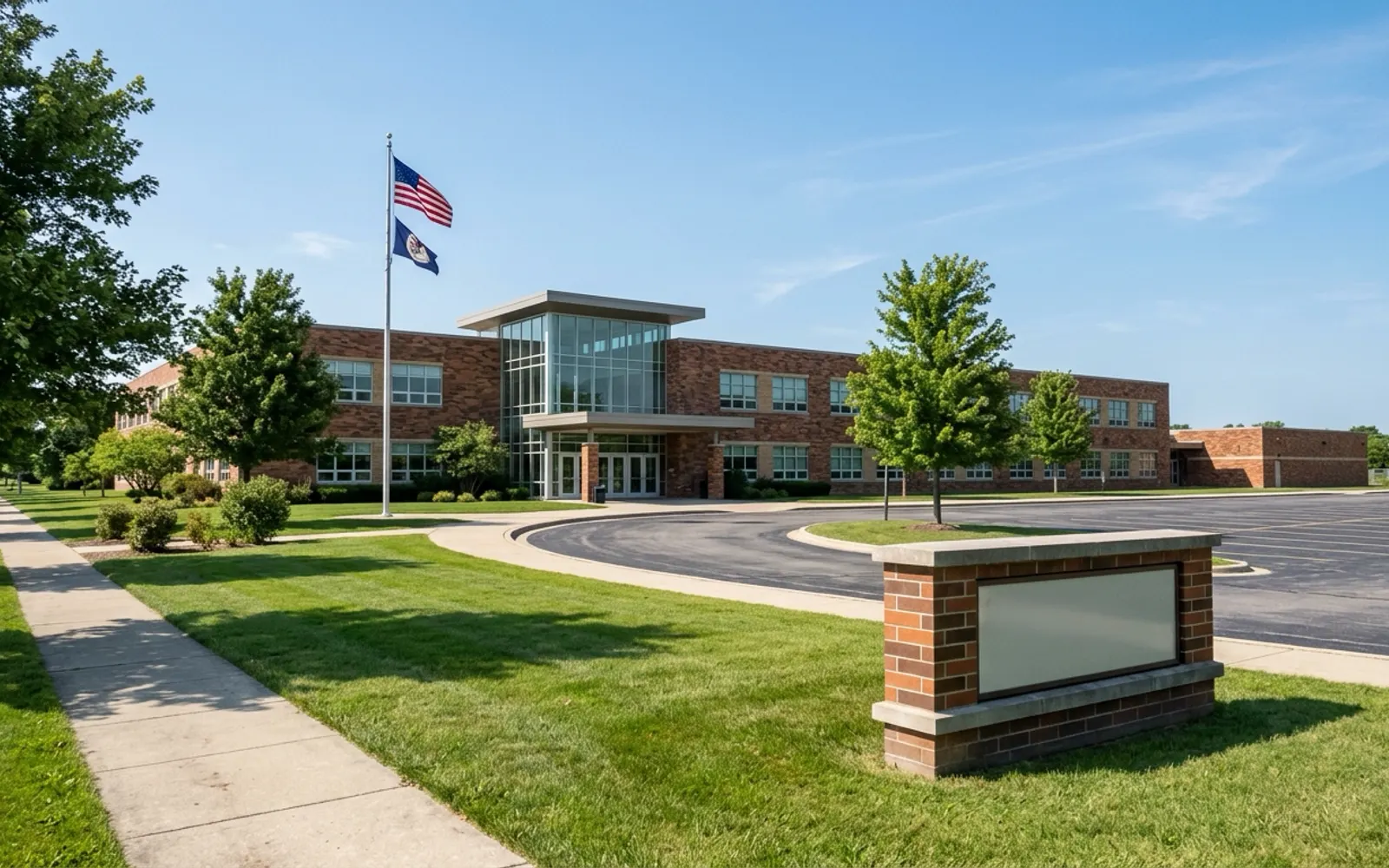
Edgebrook Elementary School. 701 N. Green Street, McHenry. Kindergarten to grade 3, District 15, 494 students in 2024-25.
Chauncey H. Duker School. 3711 W. Kane Avenue, McHenry. Grades 4 and 5, District 15, 433 students in 2024-25.
McHenry Middle School. 2120 W. Lincoln Road, McHenry. Grades 6 to 8, District 15, 695 students in 2024-25.
McHenry Community High School. 1012 N. Green Street, McHenry. Grades 9 to 12, District 156, 2,214 students in 2024-25.
McHenry County College. The community college the village lists for residents on its resources page.
Commuting from Holiday Hills: Metra from McHenry or Crystal Lake
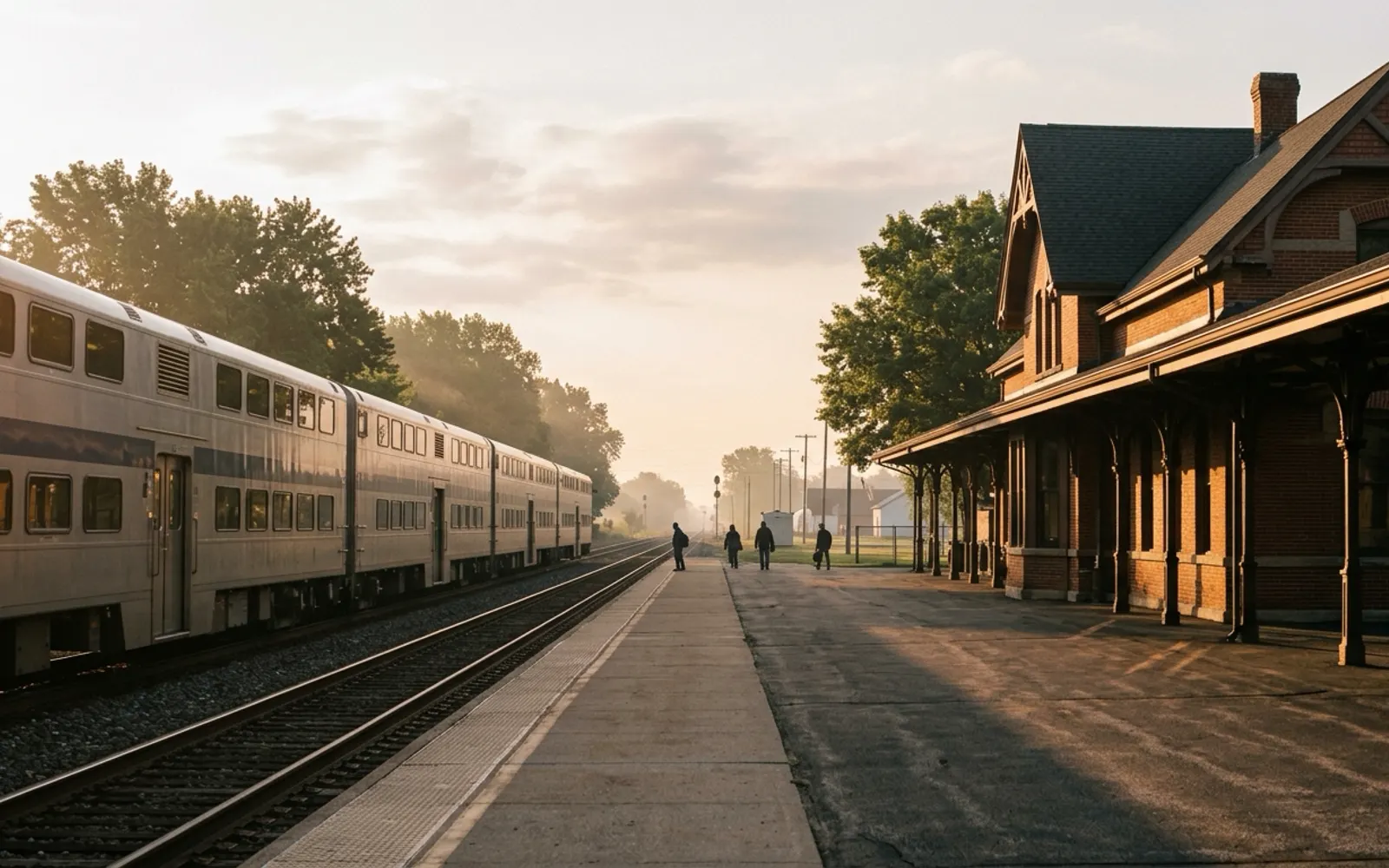
Holiday Hills has no train station, and the closest one has very limited service. The McHenry station, on the Union Pacific Northwest line, is about 4 miles away as the crow flies. Metra's fall 2026 schedule data shows just three weekday trains from McHenry to Chicago, at 5:24, 6:24 and 7:24 a.m., each taking about 82 minutes to Ogilvie Transportation Center, and no weekend service.
Most commuters drive to Crystal Lake instead, about 5.8 miles away as the crow flies. Crystal Lake has 27 weekday trains to Ogilvie on the regular schedule that starts October 26, 2026. The fastest morning trains take about 67 minutes; locals take up to 88. On weekends, Crystal Lake has 15 inbound trains on Saturdays and 9 on Sundays.
The other option is the Milwaukee District North line from Fox Lake or Ingleside, each a little over 7 miles away, with 16 and 13 weekday trains to Union Station taking about 84 to 107 minutes.
The honest math: add a 15- to 20-minute drive and parking, and a downtown commute from Holiday Hills is about an hour and 30 minutes each way on a fast train, closer to an hour and 50 on a local. This is a place people choose for the river, not the train.
Driving and Roads in Holiday Hills
River Road is the main way in and out, and it is the only street in the village without a 20 mph limit, according to the village information page. From there it is a short drive north into McHenry or south toward Route 176 and Island Lake. O'Hare is about 28 miles away as the crow flies. River Road does close at times, and in 2024 a trustee asked for "no outlet" signs to keep detouring drivers off village side streets.
The village streets are the village's job, and they are a real line item. Nunda Township plows and maintains them under yearly agreements: in September 2025 the board approved up to $45,000 for the 2025-26 snow season and up to $35,000 for road maintenance, per the September 17, 2025 minutes. In April 2025 the village president estimated that repaving the entire village would cost about $400,000, per the April 16, 2025 minutes.
The sewer project tore up a lot of pavement, and restoration is still being settled. After Phase 2, NMWRD's contractor ground and put a binder course on Pine Street, Northeast Shore Drive and Hyde Park at no cost to the village, and in April 2026 the board approved up to $37,740 of state motor fuel tax money to finish paving there, per the April 30, 2026 minutes. In July 2026 the board noted that some restored roads, including Kenilworth, came back narrower and not to standard, and in August it agreed to split legal costs with Nunda to push for a 5- or 10-year warranty on the restoration. The Chicago Metropolitan Agency for Planning also presented a village pavement survey in May 2026. If you are buying on a street in rough shape, ask where it stands.
Golf Carts, Stickers and Getting Around Holiday Hills
Holiday Hills calls itself a golf cart community. Under an ordinance that took effect August 27, 2010, registered golf carts may use most village streets, according to the police page. The village information page sets the rules: the cart must pass inspection, carry a village sticker, have lights, brakes and a slow-moving vehicle emblem, and be insured, and the driver needs a valid license and must be at least 18. ATVs are not allowed on village streets.
Every vehicle kept in the village also needs a village sticker. The How Do I page says stickers are sold at the Village Hall from June 1 to August 31 and must be on the windshield by September 1. The board approved a sticker price change in May 2025 (Ordinance 390-2025) after discussing $20 per vehicle and $10 per motorcycle, per the April 16 and May 21, 2025 minutes. In 2026 the board ordered 500 vehicle stickers and 50 numbered golf cart stickers.
E-bikes and motorized scooters are the open question. In June 2026 residents raised both speeding and e-bike concerns, and there was no ordinance on the books at the time; the board discussed forming a small committee to propose rules, per the June 17, 2026 minutes.
Is Holiday Hills Walkable?
For errands, no. Walk Score does not publish a village-wide number for Holiday Hills, so I checked three spots. The block by the Village Hall on Sunset Drive scores 9, a house on Poplar Street scores 7, and South Riverview Drive scores 4. Walk Score calls all three car-dependent, which makes sense in a village with no stores.
For getting outside, it is a different story. The streets are quiet and slow at 20 mph, the village playground is on Sunset Drive, and Moraine Hills State Park is at the edge of the village. The walk here is to the water or the woods, not to a coffee shop.
Shopping and Dining Near Holiday Hills
Holiday Hills has no grocery store, no gas station and no restaurant. The village information page says the whole village is zoned single-family residential except the gravel pit, so there is nowhere for a store to go.
Every errand is a short drive, mostly north into McHenry or south toward Island Lake. My guides to McHenry and Island Lake cover those shopping corridors and downtowns in detail, and Lakemoor and Johnsburg are close too.
For buyers, the lack of retail cuts both ways. There is no commercial traffic, no parking lots and no late-night noise. There is also no corner store for milk, and the closest grocery run means leaving the village every time.
Moraine Hills State Park and the Holiday Hills Playground
The biggest park in Holiday Hills is not the village's. Moraine Hills State Park, which borders the village, covers about 2,200 acres three miles south of the city of McHenry. The Illinois DNR says about half of it is wetlands and lakes, with more than 10 miles of trails for hiking, skiing and cycling, and the 48-acre Lake Defiance near the center, one of the few glacial lakes in Illinois. More than 200 bird species have been recorded there. Fishing is allowed on Lake Defiance and the Fox River, and the concession rents boats for both.
The village's own park is new. A rebuilt playground next to the Village Hall at 1304 Sunset Drive opened on September 27, 2024, according to the October 16, 2024 minutes, paid for with a $40,000 five-year loan approved in April 2024 plus resident donations, and was formally rededicated on May 4, 2025. The village also owns a lot at Tower Drive and Hickory Street, where a local Scout troop planted a pollinator garden in 2024. In 2025 the board looked at a $122,000 sport court drawing for that lot but did not approve it.
The Fox River and Griswold Lake from Holiday Hills
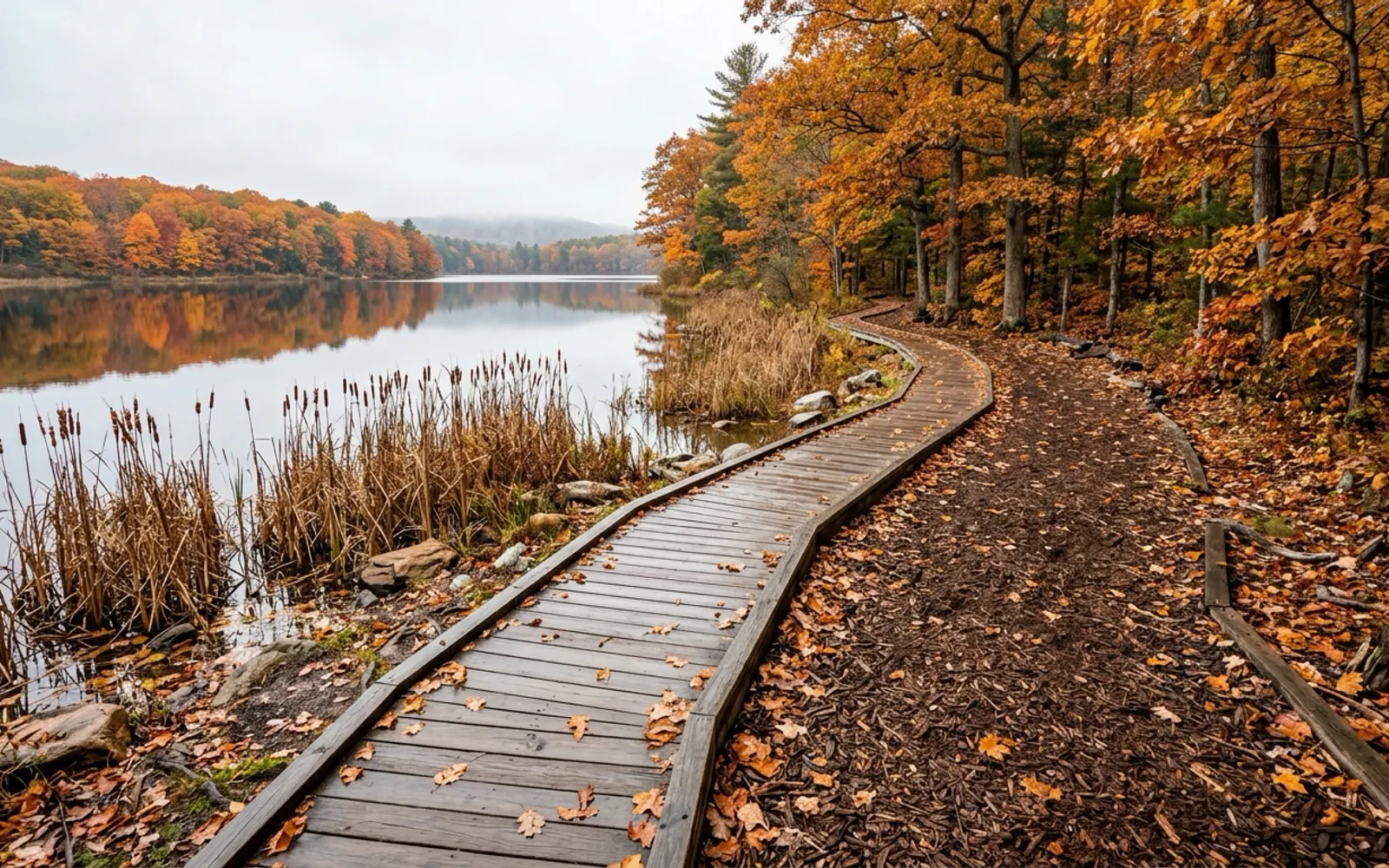
Water is the point of Holiday Hills. The village sits on the Fox River, with Griswold Lake on its other side, and the lower village has channels off the river where many of the waterfront lots are. Census Bureau mapping puts Griswold Lake at about 114 acres of water.
Access works differently than in a lake community with a beach association. The village information page says fishing and boat launching inside the village are allowed only for residents and their invited guests, and only from property they are authorized to use. There is no village beach and no public launch, so your access to the water depends on your lot or a neighbor's permission. A valid Illinois fishing license is required, and hunting is not allowed.
On the river, boats need both a state registration and a Fox Waterway Agency sticker. The Fox Waterway Agency, which manages the Fox River and Chain O'Lakes, sells annual stickers valid January 1 through December 31. North of the village, Moraine Hills' McHenry Dam area has Fox River fishing and boat rentals.
Griswold Lake has its own issues. In October 2024 the board discussed a beaver dam affecting lake levels, with lake residents, not the village, expected to pay the roughly $10,000 cost, per the October 16, 2024 minutes. If you are buying on the lake or a channel, ask the seller about the shoreline, the pier and any seawall permits and repairs.
The Library and Village Hall for Holiday Hills
Holiday Hills does not have its own library. The village home page places the village in the McHenry Public Library District, whose library is at 809 Front Street (Route 31) in McHenry, open Monday through Thursday from 9 a.m. to 9 p.m., Friday and Saturday from 9 a.m. to 5 p.m., and Sunday from noon to 4 p.m.
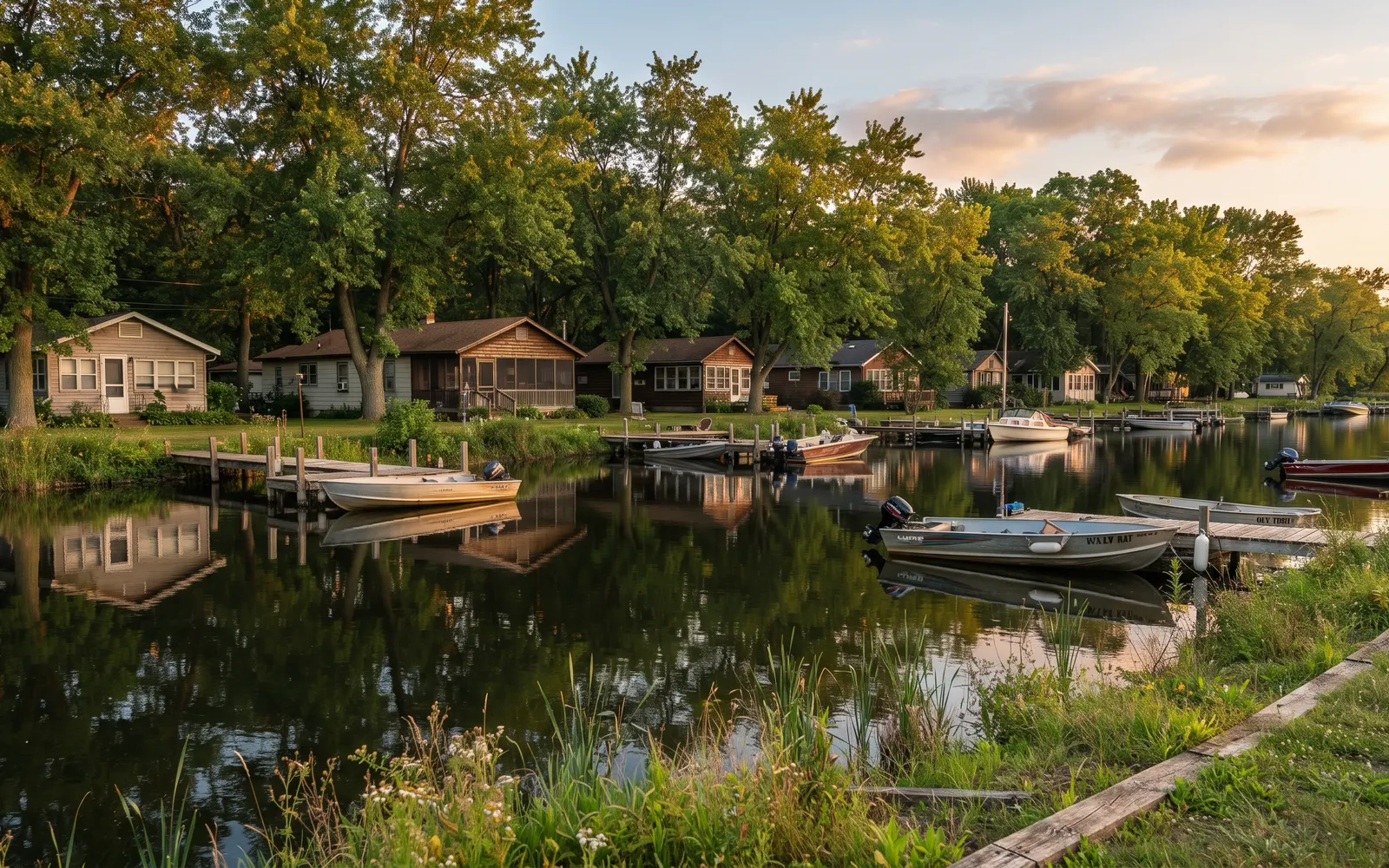
The Village Hall at 1304 Sunset Drive is the one public building in the village. It houses the part-time clerk and collector, the treasurer, the building inspector and the director of village maintenance. The contact page lists Village Hall hours of 5:30 to 7:30 p.m. on Tuesdays and Thursdays and 9 a.m. to 1 p.m. on Saturdays, which helps if you work during the day. The village board meets there at 7 p.m. on the third Wednesday of each month, and during floods the village says it usually puts a pile of sand at the Village Hall for residents.
Utilities and Services in Holiday Hills
The village's utilities page lists ComEd for electricity and Nicor Gas for natural gas, with AT&T and Xfinity among the internet and TV providers. Water comes from Prairie Path Water Company and sewer from Northern Moraine Wastewater Reclamation District, as covered above.
Trash and recycling are mandatory and go through one contractor. The village information page says every home must use LRS, the village's contracted hauler, and no other hauler is allowed. The How Do I page says pickup is Mondays, with carts at the curb by 6 a.m., and LRS also handles yard waste and one bulk item a week under 50 pounds. Open burning of leaves is allowed only on Saturdays from dawn to dusk in April, May, October and November, at least 100 feet from any home.
Fire and ambulance service come from the McHenry Township Fire Protection District. The village also contracts with Clarke for mosquito control, with 7 larvicide treatments and 4 low-volume sprays at dusk, per the February 18, 2026 minutes.
Hospitals Near Holiday Hills
There is no hospital in the village. Northwestern Medicine McHenry Hospital, with over 200 beds according to Wikipedia, is about 3.7 miles northwest as the crow flies. Ambulance service comes through the McHenry Township Fire Protection District, which the village lists as its fire department.
Holiday Hills' Yearly Traditions
Holiday Hills' calendar is small and run largely by trustees and volunteers. The big one this year was the village's 50th anniversary celebration on July 18, 2026, from 1 to 7 p.m., per the June 17, 2026 minutes. The board also keeps a winter holiday party, a Halloween trick-or-treat, and Easter and seasonal events, and in February 2026 the trustees agreed to keep holding them.
Holiday Hills also shows up in its neighbors' events. The village took part in Island Lake's Fourth of July parade in 2025 and was invited back in 2026. And the playground rededication in May 2025 drew what the minutes called a great turnout.
The meetings matter more than the parties. With the sewer restoration, the paving plan and the future of the police department all on the agenda this year, the monthly board meeting at the Village Hall is where the decisions that affect your house get made. The board stopped video recording meetings in May 2026, so attending in person is the way to follow them.
Village Rules Every Holiday Hills Owner Should Know
A few village rules catch new owners off guard, and they are worth knowing before you close.
Permits start with the county. The building and zoning page says every permit application must first be approved by the McHenry County Stormwater Management Bureau, and anything in the floodplain or floodway (new buildings, decks, pools, additions) needs its approval. The village then has 45 days to act, the permit lasts one year, and the application needs a plat of survey, a septic permit or drawing, and building plans, three copies of each. The board has repeated all year that work done without a permit is fined at 100% of the permit fee.
Rentals must be registered. Under the village's rental property ordinance, any owner who rents a home must register it with the village, pay $25 per unit a year and renew by May 31, and re-register within 30 days of a change in ownership. Fines run $100 to $500 a day.
Upkeep and parking. The village requires lots, including the ditches, to be mowed and kept free of junk, and bans street parking after 2 inches of snow. In 2026 the village ran a spring and summer sweep for code violations, sending warning letters first and tickets after.
What's Changing in Holiday Hills
Very little is being built in Holiday Hills, and the reasons are structural: the lots are small and low, most of the land is in the floodplain, and the only undeveloped acreage is the gravel pit. What is changing is village infrastructure and village government.
The police department. In June 2026 the board accepted the resignation of the police chief and suspended the part-time officers' schedules, per the June 24 minutes. A temporary agreement had the McHenry County Sheriff answer calls at $70 each through August 31, 2026, without local ordinance enforcement. At an August 12 special meeting, the board compared a draft 24-hour agreement with Island Lake that would include code enforcement against a sheriff's proposal in four-hour blocks, and several trustees favored Island Lake. The village president said he was leaning toward dissolving the department, and nothing had been decided at that point. Minutes for the August 19 meeting were not posted when I checked. Ask where this landed before you buy.
The sewer and roads. Phase 2B sewer is in the ground, restoration is underway, and paving on Pine, Northeast Shore and Hyde Park is funded. The board adopted its fiscal 2027 budget in May 2026.
The gravel pit. The 404-acre Reliable Sand and Gravel property is the one large piece of land in the village. In September 2025 a trustee asked what business was taking place there, per the September 17, 2025 minutes. I have not seen a plan for it. Any future use would be a village zoning decision worth following.
I don't label any town or neighborhood as safe or unsafe.
Frequently Asked Questions
How much does a house cost in Holiday Hills, IL?+
Zillow's home value index was $275,745 for August 2026, up 5.2% in a year. Recent 2026 sales included a 960-square-foot house on Poplar Street at $275,000 and a 1,056-square-foot house on Sunset Drive at $200,000.
What are property taxes in Holiday Hills, IL?+
The median effective rate is about 2.39%, with a median bill of about $4,697 (Ownwell, April 2026), compared with a McHenry County median rate of 2.42%. Bills usually rise after a sale once the home is reassessed.
Does Holiday Hills have city sewer?+
Yes, increasingly. Northern Moraine Wastewater Reclamation District has built public sewer through most of the village since 2023. The 2026 connection fee is $11,642.87 plus a $100 inspection fee, the monthly bill is $53.30, and every home must connect by December 31, 2038, or when its septic fails.
Is Holiday Hills in a flood zone?+
Much of it is. About 65% of the village's street length lies in FEMA's mapped 100-year floodplain, and in April 2026 the Fox River reached 7 feet 2 inches in the village. Check the FEMA map and get a flood insurance quote for any specific address.
What school district is Holiday Hills, IL in?+
McHenry School District 15 for pre-kindergarten through eighth grade and McHenry Community High School District 156 for high school. By District 15's boundary map, village homes feed Edgebrook Elementary, Duker School and McHenry Middle School.
How far is Holiday Hills from the Metra?+
The McHenry station is about 4 miles away but has only three weekday morning trains to Ogilvie. Most commuters use Crystal Lake, about 5.8 miles away, with 27 weekday trains and the fastest taking about 67 minutes.
Where does Holiday Hills get its water?+
From Prairie Path Water Company's community well system, not private wells. Confirm the current provider and rates on the seller's bill.
Can I use golf carts in Holiday Hills?+
Yes. Inspected, insured golf carts with a village sticker may use most village streets, driven by a licensed driver at least 18 years old. ATVs are not allowed.
Eshu Chikoti has extensive access to off-market listings throughout Holiday Hills and the rest of McHenry County — homes that never make it to the public listing sites. That matters right now: in a seller's market like this one, well-priced homes routinely go under contract within days, and buyers relying only on public listings are competing for whatever is left over. Working with someone plugged into off-market inventory means seeing homes before the crowd does.
Eshu Chikoti · 847-691-4282 ·
Get new Holiday Hills listings by email
When a home comes on the market in Holiday Hills, I'll email it to you.
Just your email. Unsubscribe any time by replying.
Thinking About Holiday Hills?
Whether you're buying, selling, or just curious what's on the market, I can walk you through Holiday Hills street by street.