McHenry, IL
McHenry, IL is a Fox River city of about 28,000 people in northeast McHenry County, with a riverwalk downtown, the Chain O'Lakes next door and home prices well below the inner suburbs.
Living in McHenry, IL means a median sale price near $350,000 this summer, property tax around 2.5% of value, and a city split by the Fox River into older river neighborhoods and newer subdivisions. The trade-off is the commute: only three Metra trains run each way on weekdays. Here is how it breaks down, pocket by pocket.
Written by Eshu Chikoti · 847-691-4282 ·
How McHenry, IL Got Here: A Short History
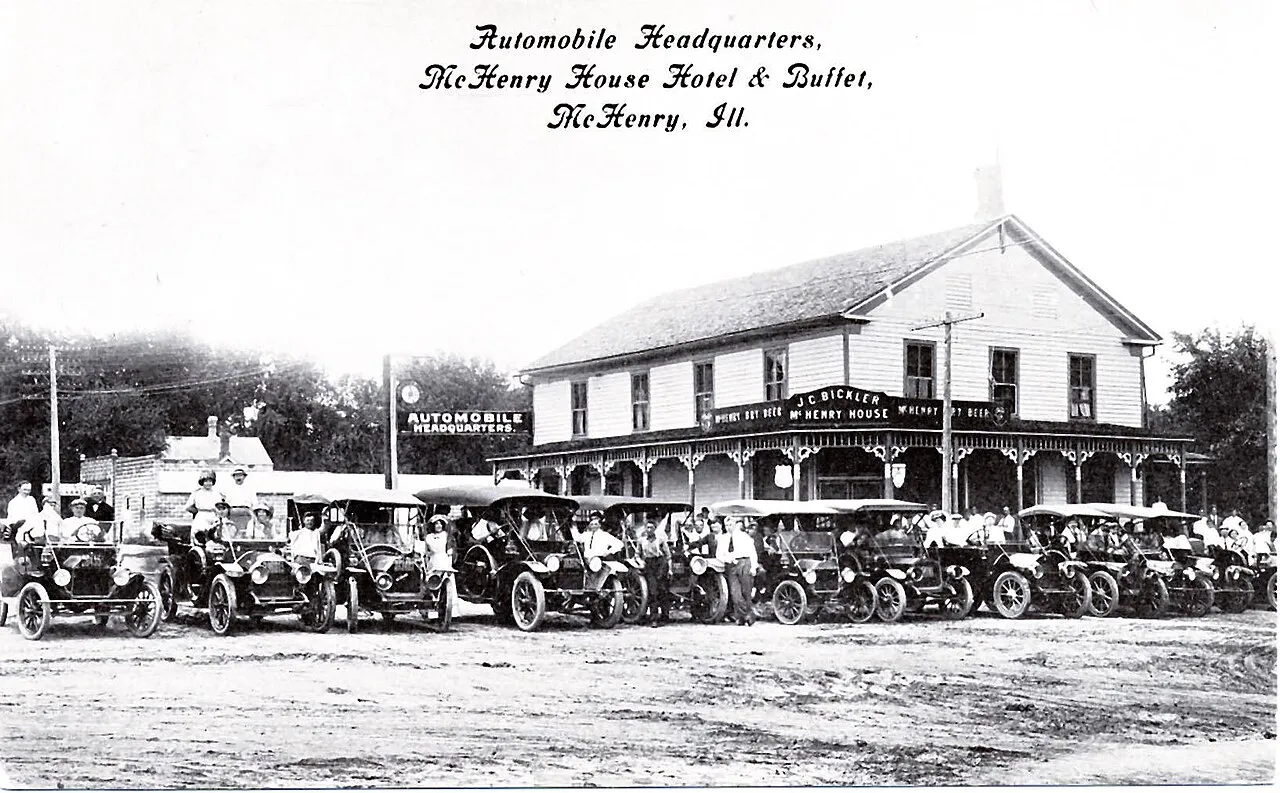
McHenry started at a river crossing. According to the City of McHenry's history page, Major William McHenry led an expedition through the area in 1832, and the hamlet that took his name was set up in 1836 at an old ford on the west bank of the Fox River. By 1837 there was a sawmill, a hotel and a ferry, and when McHenry County was created that year, McHenry was its first county seat. It held that title until 1844, when the seat moved to Woodstock.
The west side grew separately. George Gage, the area's first state senator, brought the railroad route from Chicago in 1854, and the settlement around it was called Gagetown before it became West McHenry. Gristmills went up along Boone Creek, and the village incorporated in 1872 with fewer than 800 people and, by the city's count, more than 80 businesses, including flour mills, a brewery and a pickle factory. That two-town origin is still visible today. The river side and the old West McHenry side each have their own small commercial streets.
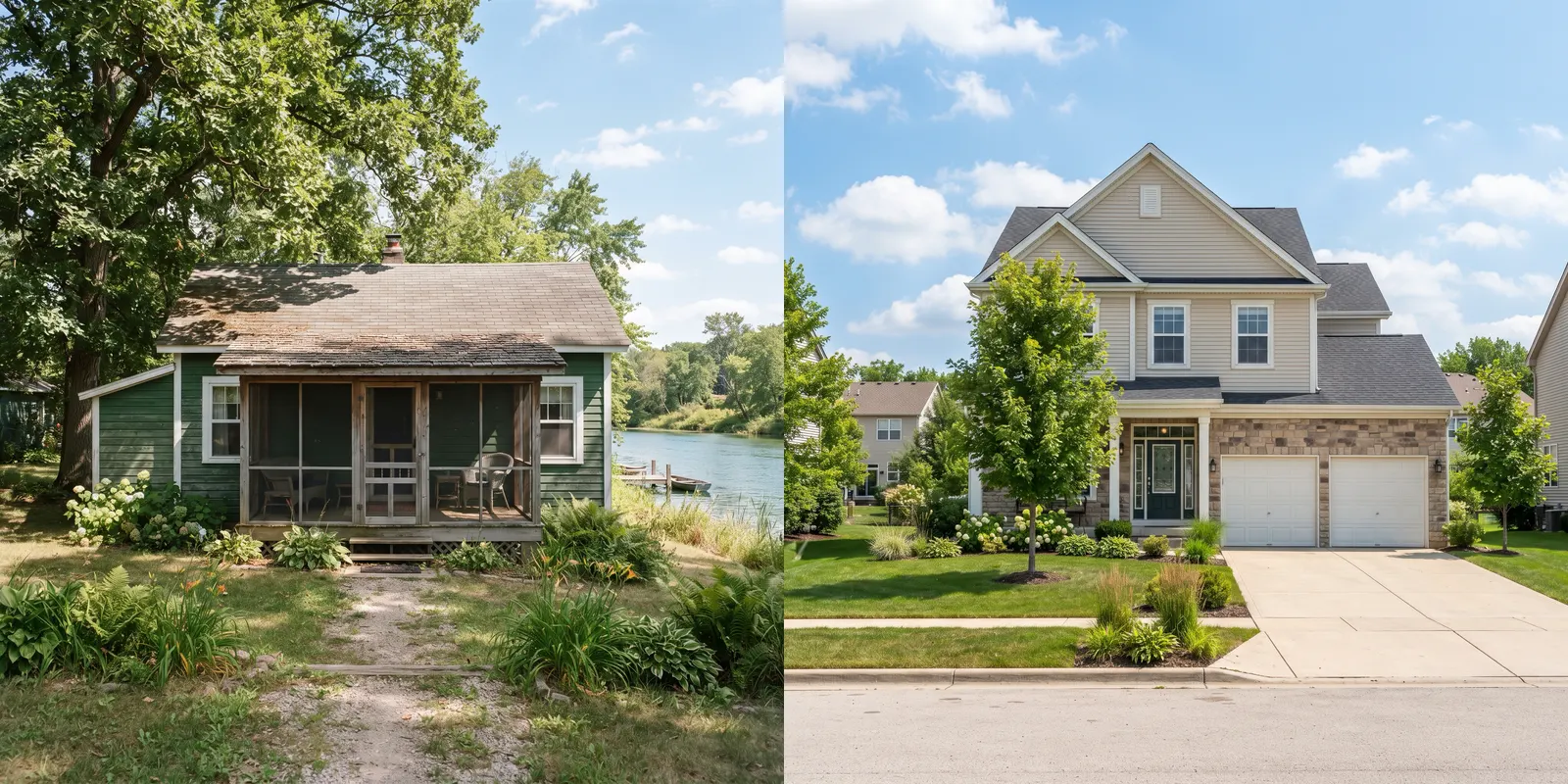
In the 1920s McHenry became a resort town. Chicagoans came up by train for the river, the lakes and the lotus beds, summer cottages filled the riverbanks, and boat building became a real local industry. A lot of the small lots and narrow streets along the river today started as those cottage colonies, which matters to anyone buying there now.
The big growth came after World War II. The city's own numbers show the population going from 2,080 in 1950 to 6,772 in 1970, then to 21,501 by 2000. Most of the subdivisions you will tour were built in that second wave.
McHenry at a Glance
McHenry sits in the northeast part of McHenry County, about 46 miles northwest of the Loop, where Route 31 and Route 120 cross in the middle of town. Wikipedia's city profile puts it at about 14.5 square miles and calls it "The Heart of the Fox River," which is the city's own motto. The whole city is in McHenry County according to the Census Reporter geography data. The Lake County line is only a few miles east, past Lakemoor.
The 2020-2024 Census ACS puts the population at 28,074 in 12,095 housing units. Of the 11,897 occupied homes, 8,847 are owner-occupied, about 74%. That is a little lower than many Lake County suburbs, because McHenry has more apartments, condos and duplexes than a typical bedroom town.
The Fox River is the dividing line locals use. It runs through the eastern part of the city. West of the river is downtown, the old West McHenry district, the hospital and most of the newer subdivisions toward Curran Road and Bull Valley Road. East of the river is a mix of older river neighborhoods and newer subdivisions off Route 120 and Chapel Hill Road, closer to Johnsburg and Lakemoor. One more thing to know early: plenty of homes with a McHenry mailing address are outside the city limits entirely. I cover that below.
River buyers also need to go in with eyes open on flood risk and insurance.
McHenry Neighborhoods, Pocket by Pocket
McHenry has three kinds of neighborhoods, and each one shops differently. The first is the old core: downtown, Green Street, Riverside Drive and the streets of the original West McHenry, with the oldest homes and the smallest lots. The second is the river and lake pockets, where many homes began as summer cottages and the lot, the water and the flood map matter more than the house. The third is the subdivisions, mostly built from the 1970s through the 2000s, with a new wave starting now around Curran Road and Bull Valley Road.
Walk Score rates the city 27 overall, which it calls car-dependent, and lists 20 named neighborhoods. Walking is realistic only in and near downtown and the Riverwalk. Everywhere else, plan on driving for groceries and school.
Below are the pockets you will see named on listings. Most of these descriptions come from agent subdivision directories rather than the city, and a few of the names sit just outside city limits with a McHenry address. Treat them as a starting point. If you want to know which pocket a specific address falls in, and what it has sold for lately, that is a conversation I am happy to have here.
The question I get most from buyers coming up from Lake County is why a McHenry house with the same square footage can cost so much less. Part of it is the commute and part of it is taxes, both covered further down. But a good part is simply that McHenry has more housing stock at every price, from river cottages to new construction, and that range is the best reason to look here.
Downtown, Green Street and Riverside Drive. The streets around the Riverwalk, Boone Creek and the Fox River. The oldest housing in the city, older bungalows and two-flats on small lots, plus newer apartments. The only part of McHenry where walking to dinner is normal.
Old Town and West McHenry. The original Gagetown side near Main Street and the Metra station. Older single-family homes on a street grid, close to the train.
Lakeland Park. One of the city's long-established neighborhoods, near downtown, with a mix of older and mid-century homes on modest lots.
McHenry Shores. A river neighborhood east of the Fox with small lots and cottage-era homes, some of them rebuilt. Check the flood map and the city limits on every address here.
Fox Ridge. Single-family homes built from 1974 to 1987, north of Bull Valley Road and west of Crystal Lake Road, ranging from about 1,260 to 3,435 square feet.
Boone Creek. Single-family homes east of Curran Road and south of Dartmoor Drive, most of them built by Gerstad Builders from the late 1990s to the mid-2000s. Sidewalks, ponds and walking paths.
Legend Lakes. West of Curran Road and north of Bull Valley Road, built from 2003 to 2023 in two phases by several national builders. Single-family homes, townhomes and condos, with pools, trails and water access. HOA dues vary widely by section.
Martin Woods. Larger single-family homes, about 2,148 to 5,400 square feet, west of Ringwood Road and south of McCullom Lake Road, built from 1969 to 2007 on wooded lots.
Liberty Trails. Gerstad-built single-family homes from the mid-2000s, west of Chapel Hill Road and south of Chapel Hill Country Club, on the east side of the river. Now sold out.
Chesapeake Hills, Winding Creek, Deerwood Estates, Patriot Estates and Prairie Lakes. Other subdivisions you will see named on listings. Ask for the build year, HOA and school assignment on each one; they vary.
What McHenry Homes Look Like, by Era
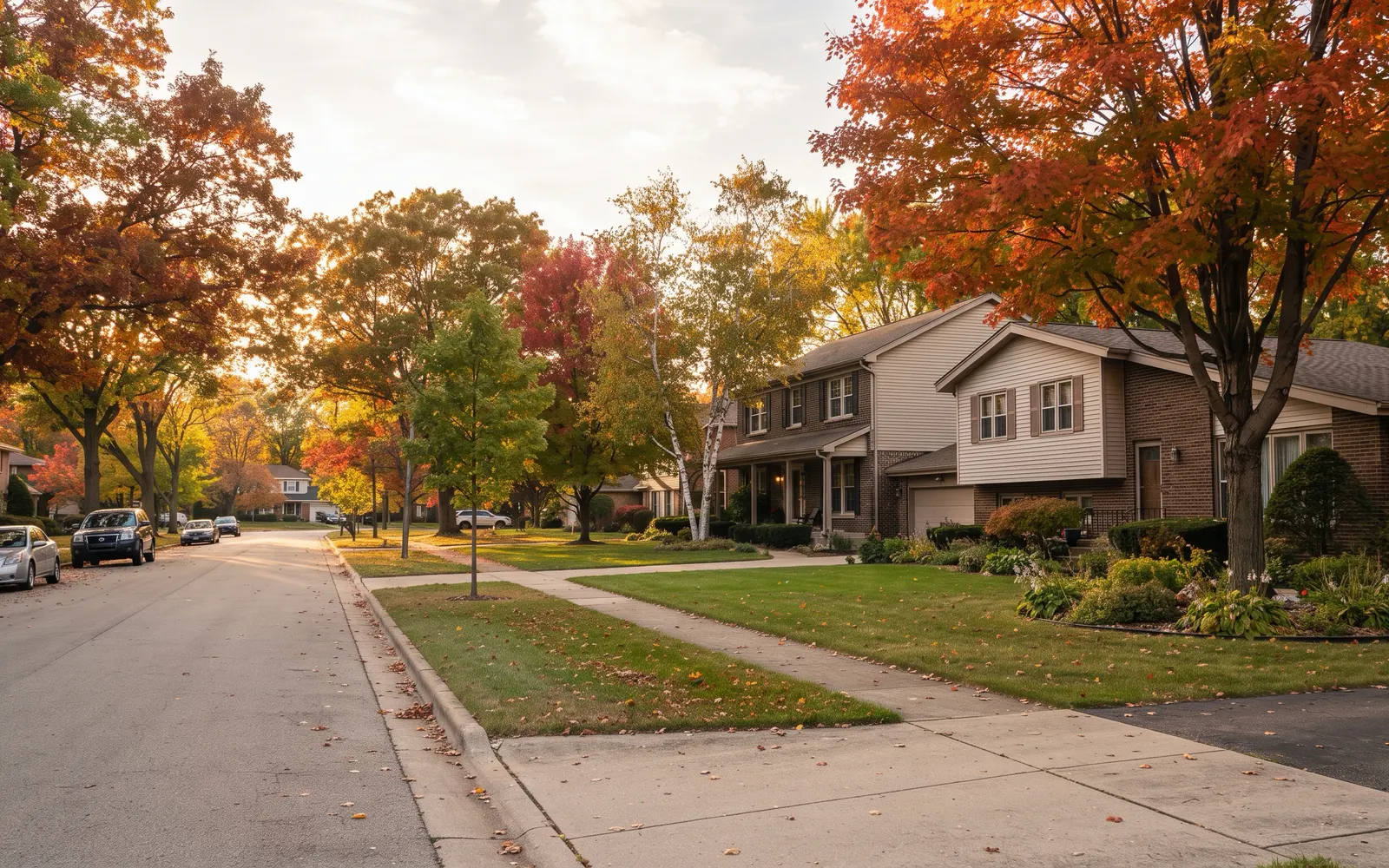
McHenry's housing is younger than most people expect. According to the 2020-2024 Census ACS, about 40% of the city's homes were built between 1990 and 2009, roughly 21% in the 2000s alone, and only about 20% before 1970. That matches what you see driving around. Outside the old core, most of the city is 1970s split-levels and raised ranches, 1990s and 2000s two-story colonials, and townhome communities.
The same ACS data puts 68% of homes as single-family detached and about 12% as attached, meaning townhomes and duplexes. The rest is apartments and condos, which gives McHenry more entry points than a town that is almost all detached houses. The ACS median home value is $266,500 and the median gross rent is $1,553. Both run below the sale prices in the market section, since the ACS is a five-year survey of what owners and renters report.
The older homes have their own character. Along the river and near downtown you will find prewar bungalows, cottages that were winterized decades ago, and a few Victorian-era houses from the mill days. Some are charming. Some have foundations, wiring and additions that were never done to any code an inspector would recognize. I have seen river cottages with three generations of additions stacked onto a crawl space, and the inspection on those always takes longer.
If you are weighing an older house, my home inspection checklist is a good place to start. For a 1990s or 2000s subdivision house, the items to budget for are usually the roof, the furnace and air conditioner, and the water heater, all of which are hitting the end of their life on houses that age.
Living on the Fox River and the Chain O'Lakes Near McHenry
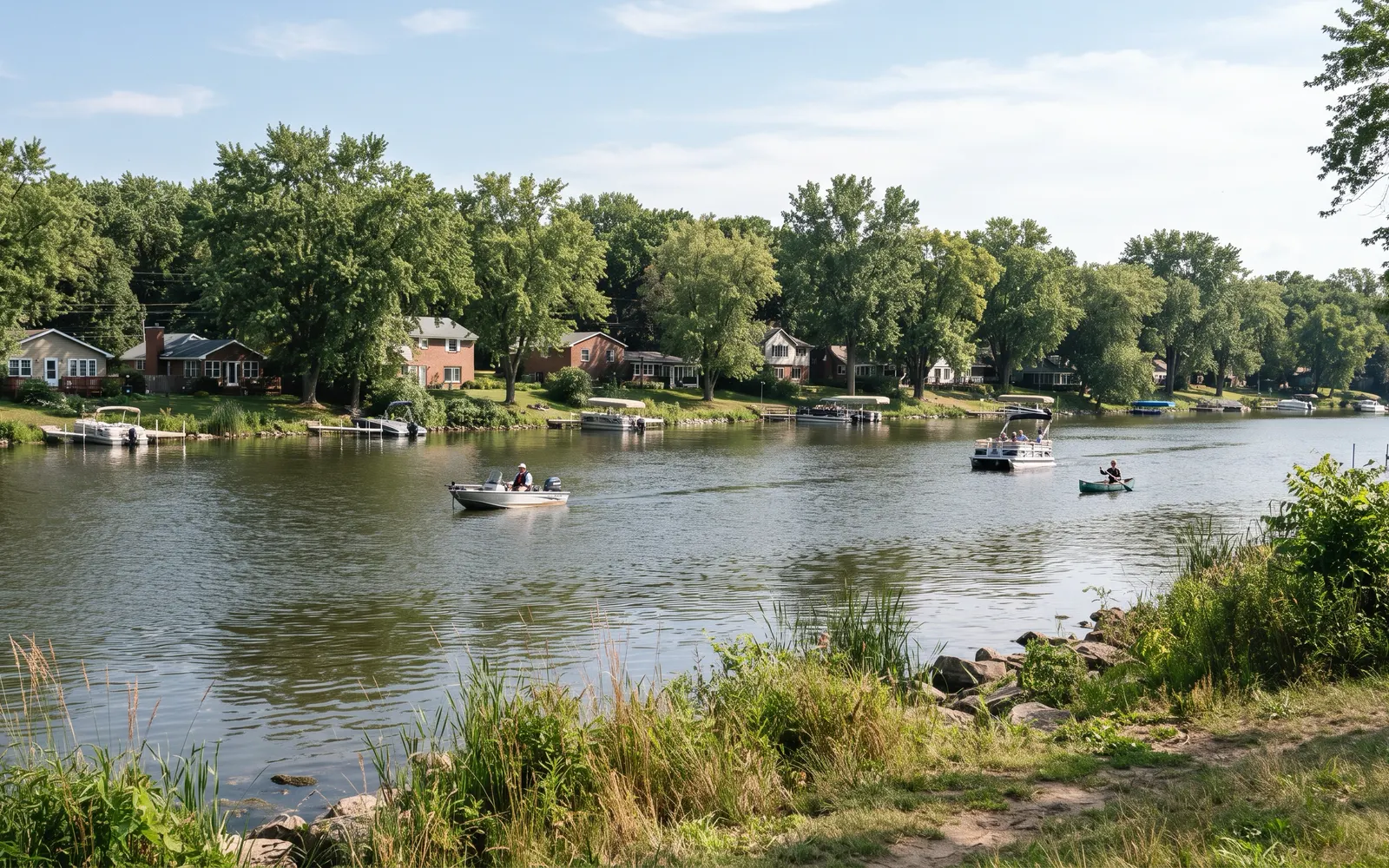
The river is the reason McHenry exists and still the reason a lot of buyers look here. The Fox River runs through the east side of the city on its way south from the Chain O'Lakes, a group of connected lakes just north and east of town. From a McHenry river lot you can boat north into the Chain or south toward Algonquin, and the city's Riverwalk and Miller Point Park put the water within reach even if you don't live on it.
Riverfront property is its own market. Frontage, water depth at the dock, whether the lot is on the main river or a channel, and the height of the house above the water all move price more than the kitchen does. So does the city limit line, because several river neighborhoods with McHenry addresses are unincorporated and run on their own rules for docks, septic and permits.
The other thing I tell every river buyer is that water goes both ways. The same river that makes the view is the one that rose to record levels in July 2017, which I cover in the flood section below. Ask for the elevation certificate if one exists, ask what the house did in 2017, and get a flood insurance quote before you write an offer, not after.
McCullom Lake and Wonder Lake are just west, and my Wonder Lake guide covers that market. Pistakee Lake and the rest of the Chain are east, near Johnsburg.
McHenry Addresses Outside the City Limits
A McHenry mailing address does not mean the house is in the City of McHenry. The 60050 and 60051 ZIP codes reach well past the city into unincorporated McHenry Township, the river and lake colonies along the Fox, and the edges of Johnsburg, McCullom Lake and Bull Valley. Pistakee Highlands, for example, is a separate unincorporated community on Pistakee Lake that still uses a McHenry address.
That changes four things. First, services: unincorporated homes usually have a private well and a septic system instead of city water and sewer, and some have neither a sidewalk nor a streetlight. Second, rules: zoning, building permits and septic inspections go through McHenry County, not the city. Third, police: the McHenry County Sheriff instead of the McHenry Police Department. Fourth, taxes: the tax code is different, and you do not pay the city levy.
For a buyer, a well and septic are not a problem as long as they are inspected. I ask for a well water test and a septic inspection on every unincorporated purchase, and I make the offer contingent on both. A failed septic field is one of the most expensive surprises in this part of the county.
The tax split shows up in the data. Ownwell's 2026 figures put the median effective rate at 2.53% in 60050 and 2.29% in 60051, with median bills of $6,099 and $5,499. The difference comes from different school districts and taxing bodies across the two ZIPs.
The McHenry Housing Market in 2026
McHenry homes are selling at about list price, a little slower than last year. In the three months ending August 2026, Redfin reported a median sale price of $349,769, up 18.6% from the same period a year earlier. The median home sold in 48 days, compared with 42 days a year before, at 100.1% of list price. Redfin counted 123 homes sold, down from 140, and gives McHenry a Compete Score of 69 out of 100, which it calls somewhat competitive, with about two offers on the average home.
That 18.6% jump needs context. Over the same period Redfin shows the median price per square foot at $175, down 8.4%. Prices per foot falling while the median rises means this summer's sales skewed toward bigger homes, not that every house gained 18%. Zillow's home value index, which estimates the value of all homes whether they sold or not, was $315,402 for August 2026, up 5.3% from $299,603 a year earlier. My read is that values rose about 5%, and the mix of what sold shifted up.
What that means in practice: this is a balanced market by suburban Chicago standards. Redfin says hot homes can sell about 2% over list and go pending in about 34 days, while the average home sells near asking. A well-priced house in a good subdivision still moves. An overpriced river house or a dated split-level can sit.
Village-wide numbers only go so far in a city this varied. A river cottage in McHenry Shores and a 2010s Legend Lakes two-story are different markets with different buyers. If you are also looking at the next town south, my Crystal Lake guide covers a market that runs about 22% higher by Zillow's index.
McHenry Property Taxes and the Real Cost of Owning
Property tax is lower in dollars here than in most Lake County towns I work in, but the rate is still high by national standards. Ownwell's data, updated April 13, 2026, puts McHenry's median effective rate at 2.48% and the median annual bill at $5,919. That compares with a McHenry County median rate of 2.42% and bill of $7,056, and an Illinois median rate of 2.33%.
Here is what that looks like on a real purchase. At 2.48%, a house bought at this summer's $349,769 median would eventually carry about $8,670 a year in tax, roughly $720 a month on top of the mortgage. The current bill on the same house may be lower, because the median bill Ownwell reports is based on assessments that trail the market. The expectation I most often have to reset is buyers who budget off the seller's current bill instead of the rate.
Most of the city is in McHenry Township, with part of it in Nunda Township, and each township has its own assessor. Each combination of township, elementary district, high school district, park and fire district is a separate tax code, so two houses at the same price can carry different bills. McHenry County mails bills in two installments.
If you already own and think your assessment is high, the appeal goes through your township assessor and then the McHenry County Board of Review, and Ownwell lists June 1, 2026 as this year's homeowner deadline. This is general information, not tax advice. Your actual bill depends on your parcel, your exemptions and the assessor.
McHenry Schools: District 15 and McHenry High School
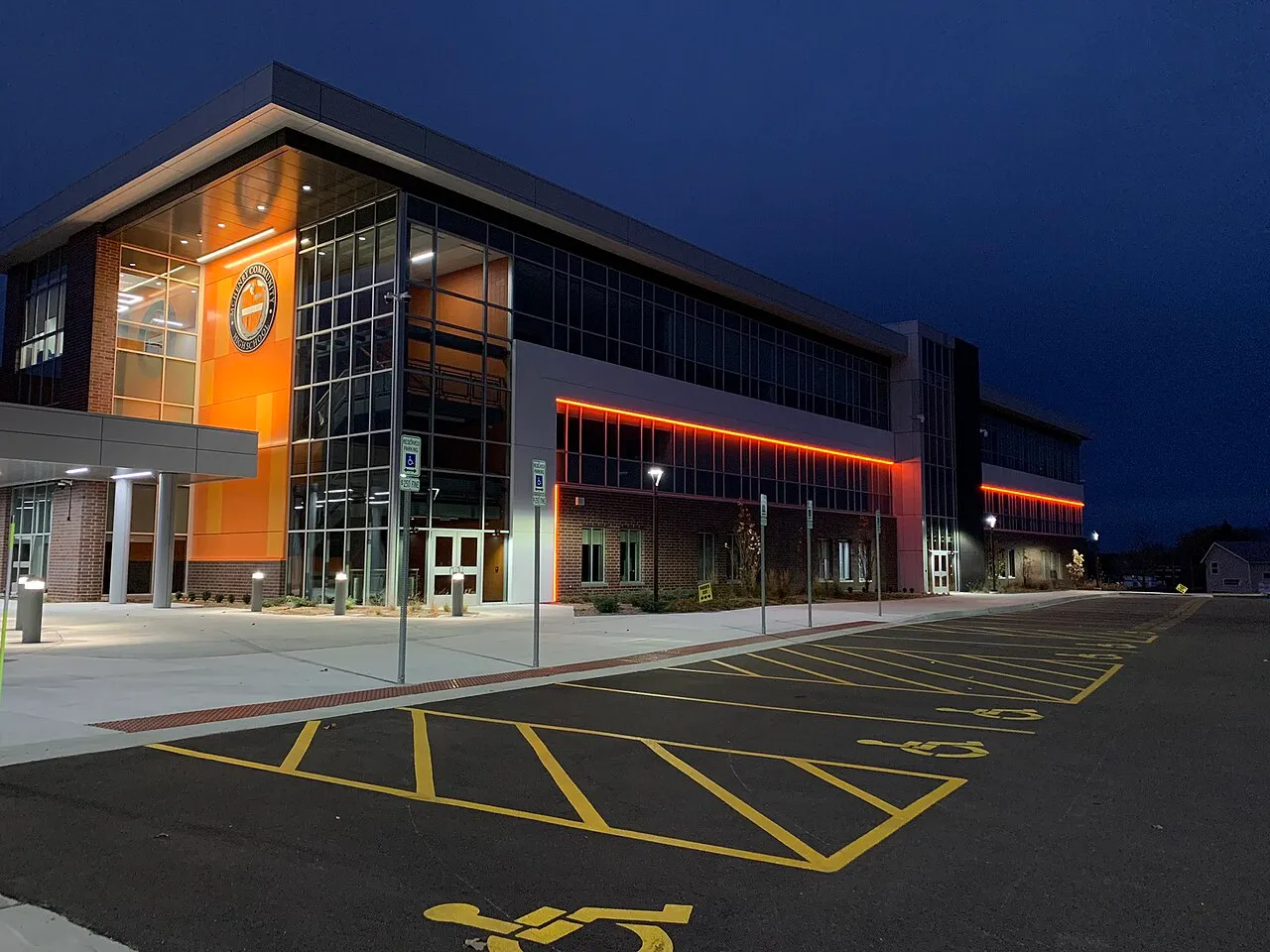
Most of the city is served by McHenry School District 15 for pre-kindergarten through eighth grade and McHenry Community High School District 156 for high school. District 15 lists seven schools and about 4,000 students: Edgebrook, Hilltop, Riverwood and Valley View elementary schools, Chauncey H. Duker School, and two middle schools, McHenry Middle School and Parkland School.
One change that older guides miss: District 15 closed Landmark School, its 1894 building and year-round school-of-choice program, at the end of the 2024-25 school year. Shaw Local reported that the board cited a $10 million to $12 million estimate to bring the building up to modern life-safety standards. The building's future is covered in the development section.
District 156 runs McHenry High School on two campuses: a Freshman Campus for ninth grade and the Upper Campus for grades 10 through 12.
Assignment is the detail that trips people up. Parts of McHenry and many "McHenry" addresses fall in other districts, including Johnsburg District 12 on the east side and Harrison District 36 and others toward Wonder Lake and Prairie Grove. Don't assume from the address. Check each house with the district directly before you write an offer, and ask me if you want the boundary checked for a specific house.
Edgebrook Elementary School. District 15.
Hilltop Elementary School. District 15.
Riverwood Elementary School. District 15. Agent directories list it for Boone Creek, Fox Ridge and Legend Lakes.
Valley View Elementary School. District 15.
Chauncey H. Duker School. District 15.
McHenry Middle School and Parkland School. District 15's two middle schools.
McHenry High School, Freshman Campus and Upper Campus. District 156, grade 9 at the Freshman Campus and grades 10 to 12 at the Upper Campus.
Commuting from McHenry: The Metra Branch and Its Limits
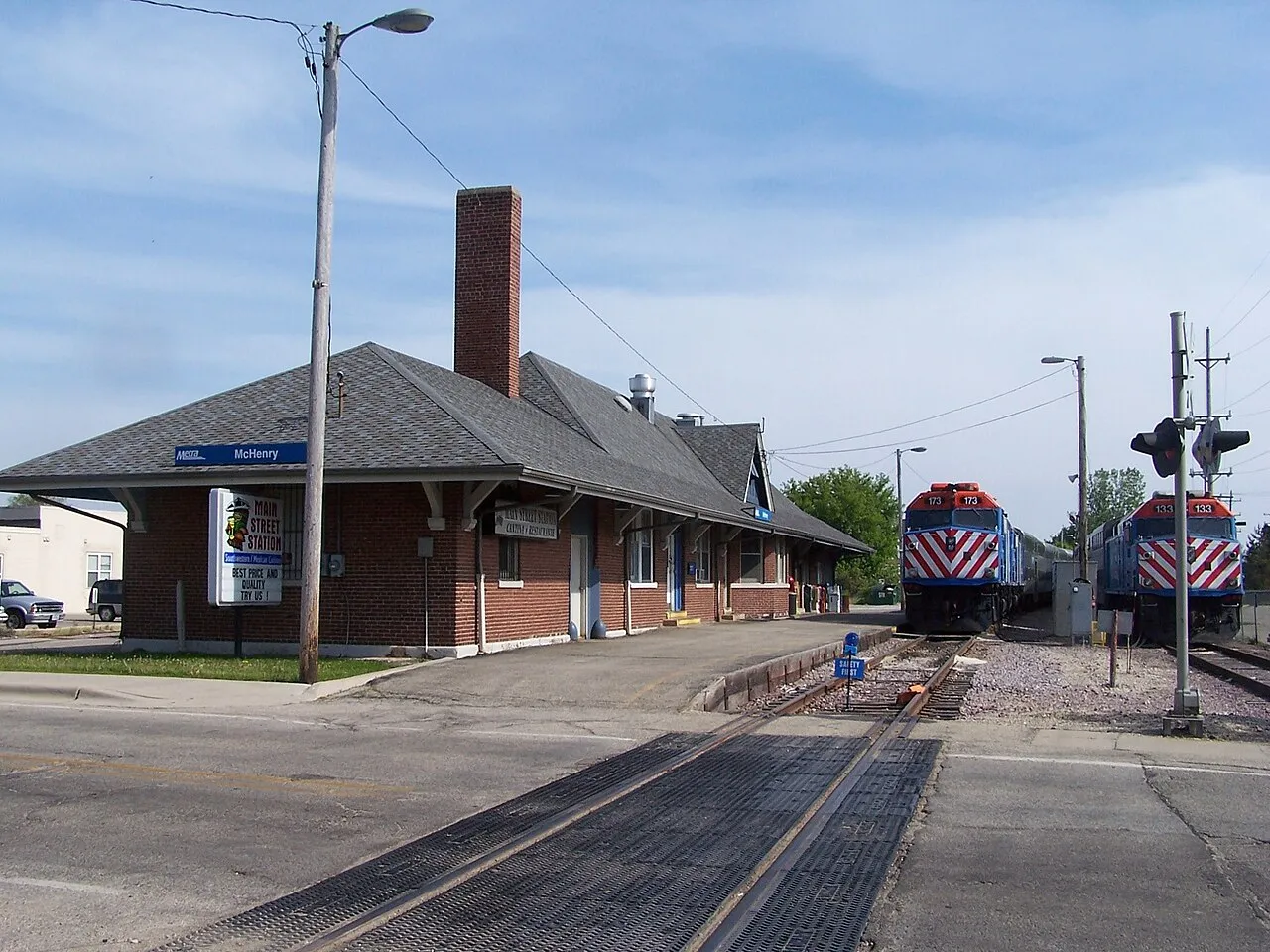
McHenry is the end of a short branch of Metra's Union Pacific Northwest line, and the service is thin. According to Metra's UP-NW schedule generated September 18, 2026, three inbound trains leave McHenry on weekdays, at 5:24, 6:24 and 7:24 a.m., each reaching Ogilvie Transportation Center about 82 minutes later. Three outbound trains come back, leaving Ogilvie at 3:22, 4:22 and 5:22 p.m. and arriving in McHenry at 4:50, 5:50 and 6:50. There is no weekend or midday service at the McHenry station.
That is fine if you work a standard downtown schedule and it is a problem if you don't. Miss the 5:22 p.m. and there is no later train to McHenry. Plenty of McHenry commuters drive south instead to the Crystal Lake or Pingree Road stations on the main line, which have far more trains, including weekends. I cover those schedules in my Crystal Lake guide.
The practical question for a buyer is how often you actually need to be downtown. If it is two or three days a week on a fixed schedule, the branch works. If it is five days with late meetings, add the drive to Crystal Lake to your commute math.
Driving from McHenry: Route 31, Route 120 and the Tollways
McHenry has no interstate of its own. Route 31 runs north to south through the city and Route 120 runs east to west, crossing near downtown. For most drives to the Chicago area you take Route 120 east toward Route 12 and the Lake County tollways, or Route 31 south through Crystal Lake to I-90. O'Hare is roughly an hour away outside rush hour, and rush hour can add a lot to that.
The project to know about is on Route 31 south of town. According to Shaw Local's June 2026 report, IDOT's widening of Route 31 is set to start in 2027, and a traffic signal will go in at Route 31 and Veterans Parkway as part of it. Expect a construction season or two of slower drives between McHenry and Crystal Lake, and a better road afterward.
Is McHenry Walkable?
Mostly not. Walk Score rates McHenry 27 for walking and 43 for biking. That is car-dependent, and typical for a city built mostly in the car era.
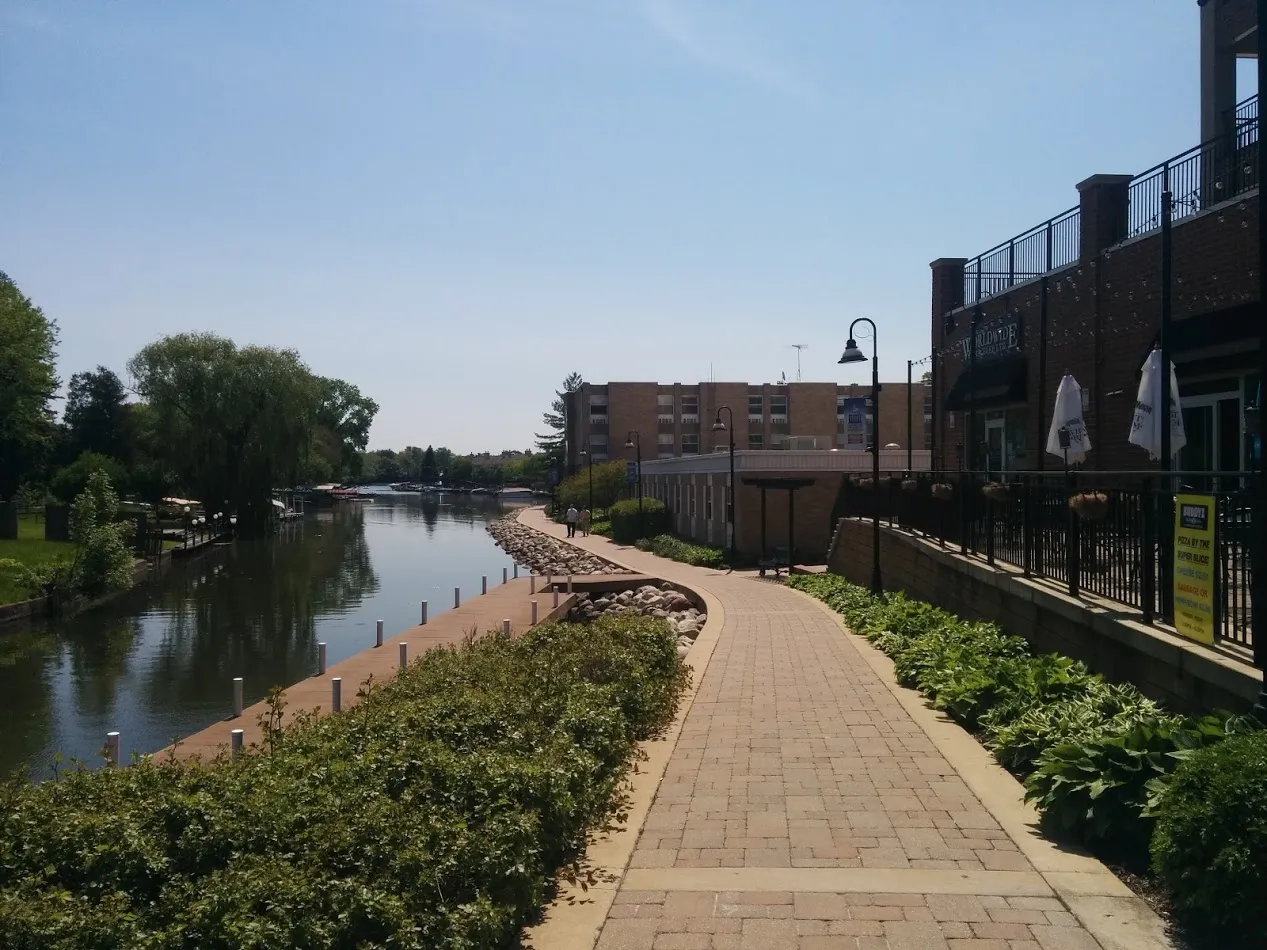
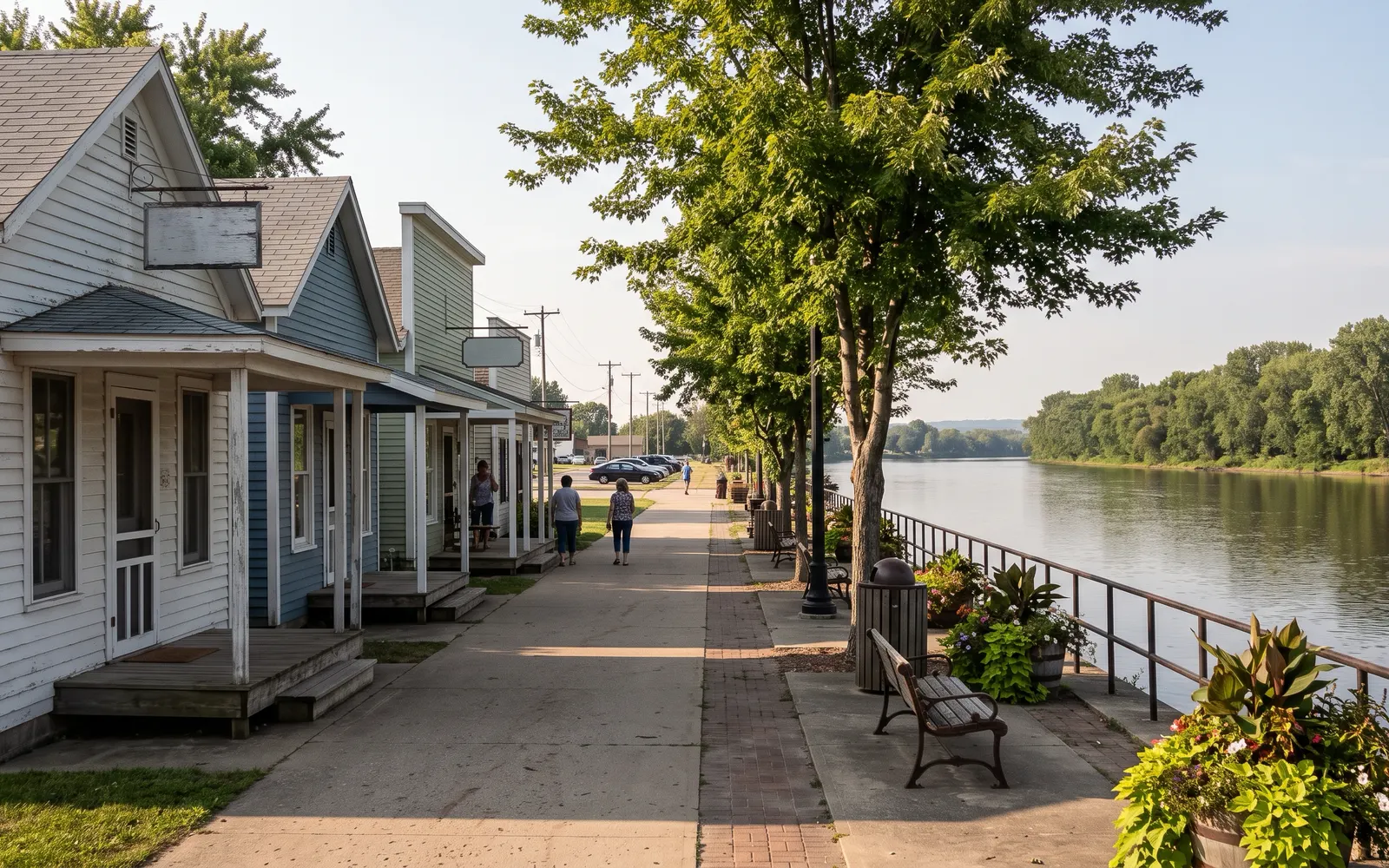
The exception is downtown. The Riverwalk runs along Boone Creek from Green Street to Riverside Drive and the Fox River, and the blocks around it have restaurants, bars and the Miller Point shops within a few minutes on foot. For recreation, the Prairie Trail bikeway passes through town and runs north and south through the county, so a long ride is easy even from a car-dependent subdivision.
Downtown McHenry and Shopping
Downtown McHenry is really three small districts tied together by the Riverwalk: Green Street, Riverside Drive along the Fox, and Main Street in the old West McHenry. The most distinctive piece is the McHenry Riverwalk Shoppes at Miller Point Park: ten small incubator shops where local businesses test an idea for a season. Shaw Local reported that 2026 is the program's fourth year, with a lineup that includes cakes, candies and books.
The bigger errands happen along Route 31 and Route 120, where the chain stores and strip centers are. For a full mall or outlet trip, most residents drive to Crystal Lake, Gurnee Mills or Woodfield.
Groceries and Everyday Errands in McHenry
Groceries are easy to keep local. Jewel-Osco and Aldi both have stores in McHenry, and the very large Woodman's at the Route 12 and Route 120 crossroads in Lakemoor is about a ten-minute drive east. Pharmacies, banks and hardware stores cluster along Route 31 and Route 120, so most weekly errands are a short drive from any subdivision.
Where McHenry Eats
Dining clusters downtown. Riverside Drive and Green Street have the bars and restaurants with river views and patios, and in summer the boats that tie up nearby are part of the scene. Route 31 and Route 120 carry the chains. Downtown also hosts seasonal events that double as food festivals, like ShamROCKS the Fox, which ran March 13 to 15, 2026, with live music, food trucks and a beer tent at Miller Point Park.
Parks, Beaches and Open Space in McHenry
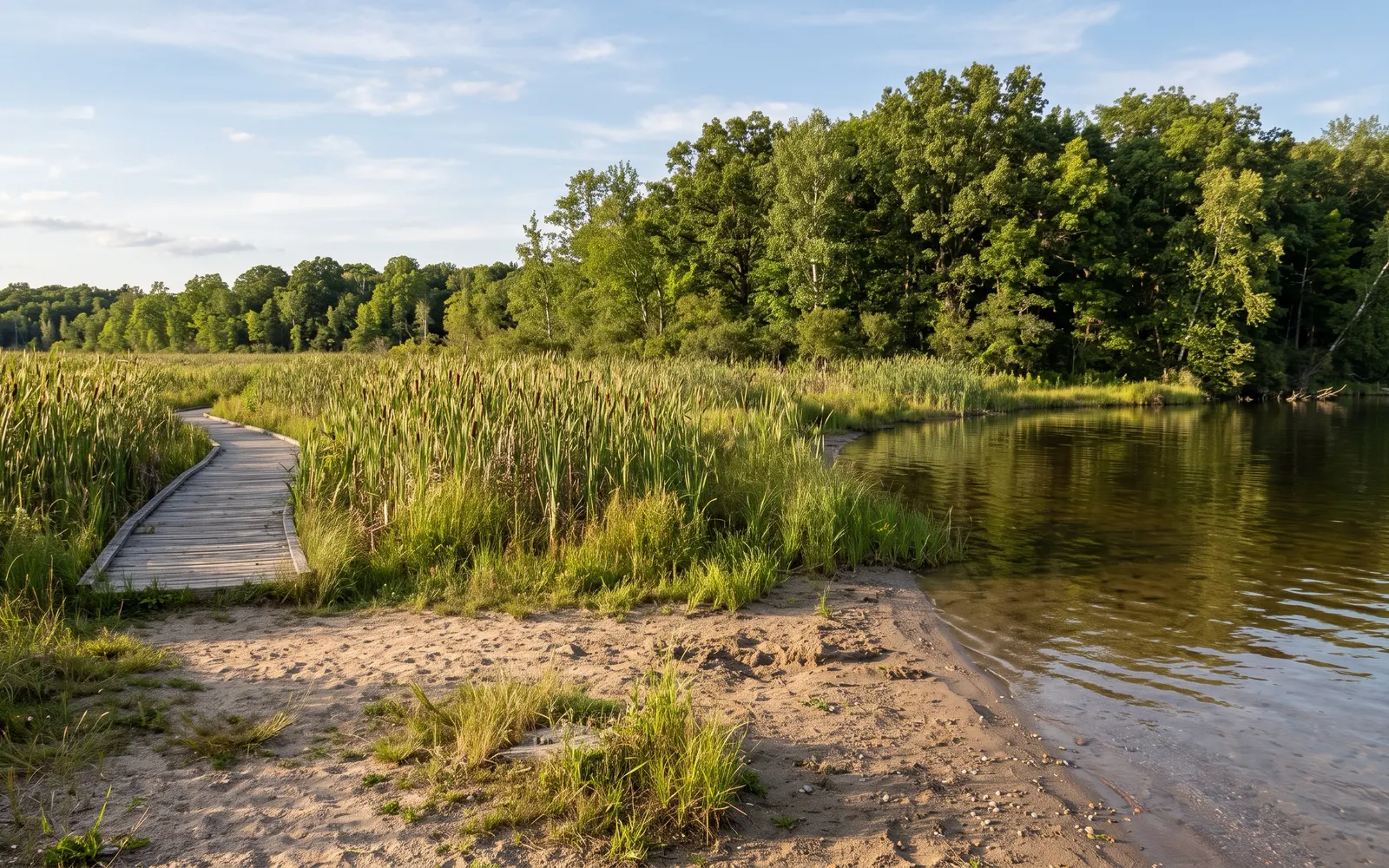
McHenry has more open space around it than almost any town in the Chicago suburbs. Moraine Hills State Park, about 2,200 acres of lakes, marsh and trails, sits just southeast of the city along the Fox River. Boone Creek Conservation Area and the rest of the McHenry County Conservation District's sites are a short drive west toward Bull Valley.
Inside the city, Petersen Park on McCullom Lake has a swimming beach and hosts the first week of Fiesta Days. Veterans Memorial Park is downtown and hosts concerts and the art fair. Miller Point Park at the mouth of Boone Creek has the amphitheater and the Riverwalk Shoppes. The Prairie Trail bikeway connects to all of it.
For buyers, this is one of the real selling points. Very few McHenry homes are more than a short drive from a trail, a beach or a boat launch.
The McHenry Public Library District
The McHenry Public Library District serves the city and surrounding unincorporated areas. Like most suburban libraries it runs youth and adult programs, study rooms and local history resources, and it is the first place I would ask for archival photos of the old riverfront. Check whether a specific address is inside the library district before you count on a card.
Utilities in McHenry
Inside city limits, the City of McHenry provides water and sewer, and like the rest of McHenry County the water comes from wells rather than Lake Michigan, so plan on a water softener. ComEd delivers electricity and Nicor Gas provides natural gas. Outside the city, as covered above, expect a private well and septic system. Ask the seller for the last septic pump date and any well water test results, and confirm with the city which services a specific address actually gets.
Hospitals in McHenry
McHenry has its own full-service hospital. According to Wikipedia's city profile, Northwestern Medicine McHenry Hospital has 143 beds and provides emergency, inpatient and outpatient care. It began as the Northern Illinois Medical Center, which opened in 1956, according to the city's history page. Northwestern Medicine Huntley Hospital is the next closest in the same system.
The Drive-In and Summer Nights Near McHenry
The McHenry Outdoor Theater, a working drive-in on Chapel Hill Road just across the Lakemoor line, is one of the few left in the Chicago area, and its 2026 season opened April 3. Summer weekends otherwise revolve around the water: boating on the Chain, the Riverwalk bars, and concerts in Veterans Memorial Park and at the Miller Point amphitheater.
Fiesta Days and McHenry's Yearly Traditions
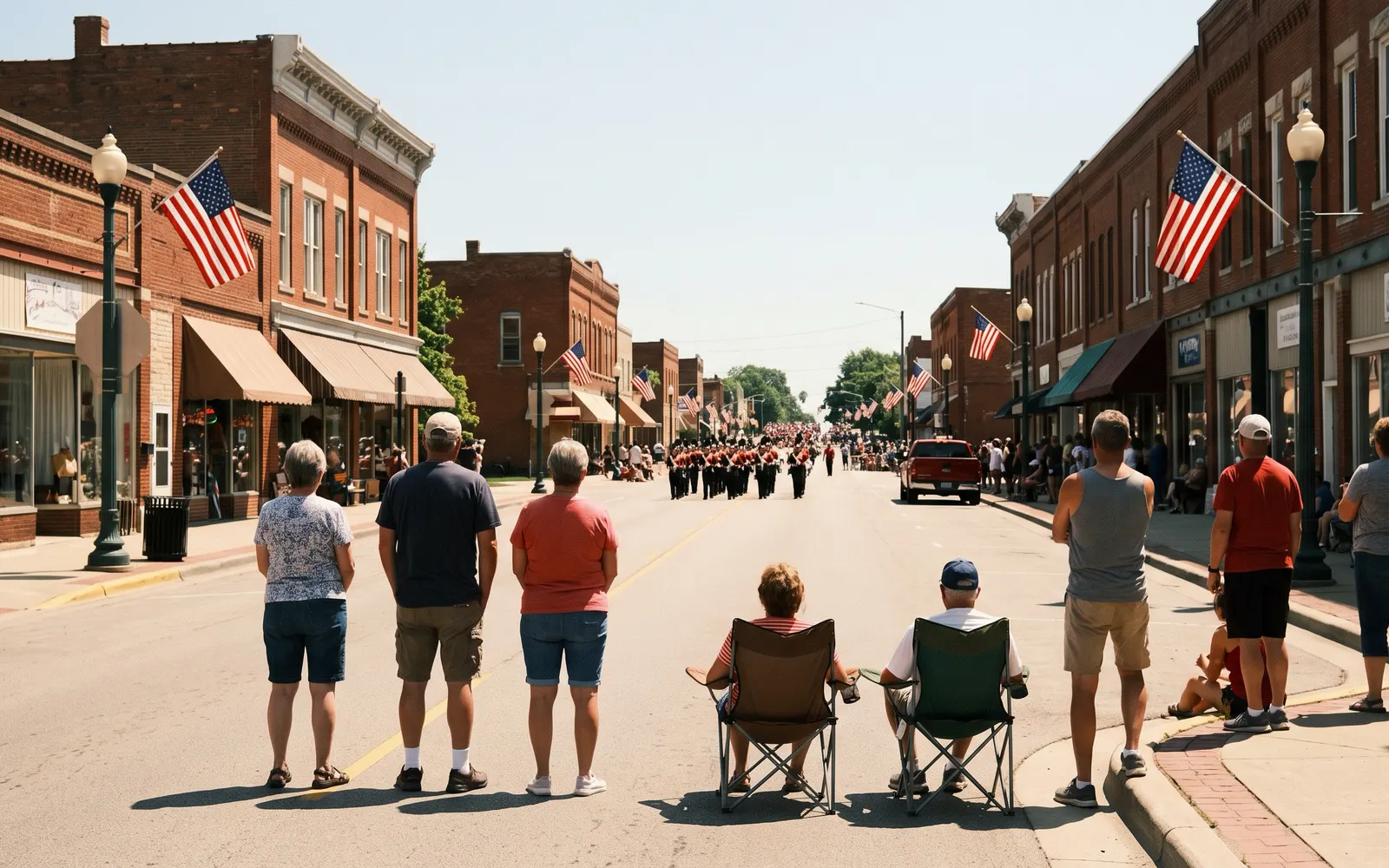
The big one is McHenry Fiesta Days, which runs for about two weeks every July. In 2026 the first week was at Petersen Park, with Cask and Barrel Night, the Music Fest weekend and a carnival from July 10 to 12, then a free Sunday with a car show, beach events and fireworks. The second week moved to Veterans Memorial Park and downtown for a concert in the park, an art and street fair, and the Fiesta Days parade on Sunday, July 19.
The rest of the calendar has a steady rhythm: ShamROCKS the Fox in March, the Riverwalk Shoppes opening in May, and summer concerts downtown. If you are touring houses in July, drive the parade route. It tells you more about the city than any listing will.
What's Being Built in McHenry
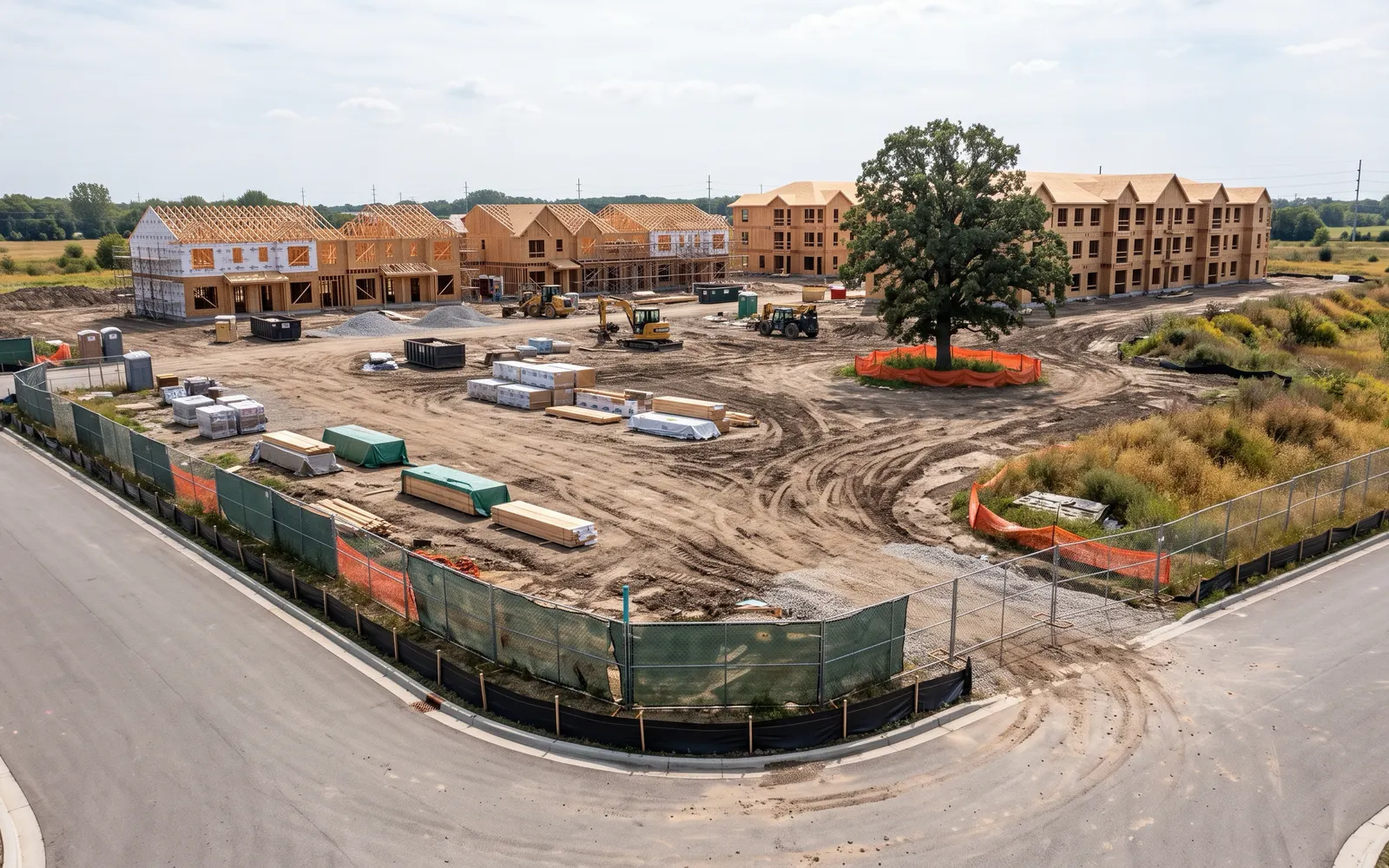
McHenry is about to add more new homes than it has in 20 years. The biggest project is Lennar's Preserves of Boone Creek, which the city council approved 5-2 on July 21, 2026, according to Shaw Local. It covers 304 acres at Bull Valley and Curran roads with about 600 single-family homes in three product types. One section is two- and three-bedroom homes on slabs of 1,170 to 2,200 square feet, which a consultant for the project described as "probably in the $300,000 range." Six parks and a residents-only pool are planned.
A second large subdivision is in the concept stage. The Oaks at Irish Prairie, at Barreville Road and Veterans Parkway, was cut from 362 to 335 homes, 181 single-family and 154 townhomes, by ADL Associates with Ryan Homes, according to Shaw Local's June 2026 report. The land was first annexed in 2005 and stalled when the original builder went bankrupt in 2008.
Rentals are growing too. Cunat's Residences of Fox Meadows, 540 apartments in 18 three-story buildings at Route 31 and Veterans Parkway, was approved in 2022 and is under construction. Redwood's 177 single-story, two-bedroom rental townhomes on the southeast corner of Chapel Hill Road and Route 120 were approved in December 2024.
Downtown, the former Landmark School at 3614 W. Waukegan Road is being sold. Shaw Local reported in January 2026 that District 15 approved a $50,000 bid from buyers who plan a community center, the sale was still being finalized, and the city had already designated the building a local landmark. For buyers, all of this means more choice in new construction and rentals over the next few years. For sellers of older starter homes, it means more competition for the same first-time buyers.
I don't label any town or neighborhood as safe or unsafe.
Flood Risk in McHenry
Flooding in McHenry is concentrated in specific areas, and it follows the Fox River and Boone Creek. Redfin's Downtown McHenry page, using First Street's model, shows 22% of properties there at risk of severe flooding over the next 30 years. Redfin's citywide page did not have a current flood figure when I checked in September 2026. In McHenry the address matters far more than the city average.
The river's history backs that up. In July 2017, heavy rain pushed the Fox River and the Chain O'Lakes to record flood levels, comparable to the floods of 1973, 1979 and 1986. A 2021 Shaw Local review of county flood buyouts found that McHenry County flood insurance policyholders were paying an average of $1,013 across 2,058 policies, less than half of what the risk would price at, and that properties outside FEMA flood zones accounted for about 20% of flood insurance claims.
Two checks before you write an offer. Look the address up on the FEMA flood map, because a mapped flood zone can mean required flood insurance on a mortgage. And ask the seller directly about water in the basement or crawl space. On river homes, ask what happened in 2017.
Frequently Asked Questions
How much does a house cost in McHenry, IL?+
Redfin reported a median sale price of $349,769 for the three months ending August 2026, and Zillow's home value index was $315,402 for August 2026, up 5.3% from a year earlier. Prices range from river cottages to new construction.
What are property taxes in McHenry, IL?+
The median effective rate is about 2.48%, with a median bill of about $5,919 (Ownwell, April 2026). Rates vary by tax code, 60050 runs higher than 60051, and a home's bill usually rises after a sale once it is reassessed.
What school district is McHenry, IL in?+
Most of the city is in McHenry School District 15 for pre-kindergarten through eighth grade and McHenry Community High School District 156 for high school. Some addresses fall in Johnsburg District 12 or other districts, so confirm each address with the district.
How long is the commute from McHenry to downtown Chicago?+
Metra's McHenry branch runs three inbound weekday trains, at 5:24, 6:24 and 7:24 a.m., each about 82 minutes to Ogilvie, and three outbound in the afternoon. There is no weekend service, so many commuters use the Crystal Lake or Pingree Road stations.
Is McHenry walkable?+
Not citywide. The Walk Score is 27, but downtown along the Riverwalk is walkable.
What neighborhoods are in McHenry, IL?+
Commonly named areas include downtown and Riverside Drive, Old Town and West McHenry, Lakeland Park, McHenry Shores, Fox Ridge, Boone Creek, Legend Lakes, Martin Woods and Liberty Trails. Some river and lake communities with McHenry addresses are unincorporated.
Is McHenry, IL in a flood zone?+
Parts of it are. Risk concentrates along the Fox River and Boone Creek; Redfin/First Street shows 22% of Downtown McHenry properties at severe 30-year risk. Check each address on the FEMA flood map.
Is new construction available in McHenry?+
Yes, and more is coming. Lennar's 600-home Preserves of Boone Creek was approved July 21, 2026, and the 335-home Oaks at Irish Prairie is in the concept stage, alongside new rental communities. How builder contracts, timelines and allowances work is on my new construction homes in Illinois page.
Eshu Chikoti has extensive access to off-market listings throughout McHenry and the rest of McHenry County — homes that never make it to the public listing sites. That matters right now: in a seller's market like this one, well-priced homes routinely go under contract within days, and buyers relying only on public listings are competing for whatever is left over. Working with someone plugged into off-market inventory means seeing homes before the crowd does.
Eshu Chikoti · 847-691-4282 ·
Get new McHenry listings by email
When a home comes on the market in McHenry, I'll email it to you.
Just your email. Unsubscribe any time by replying.
Thinking About McHenry?
Whether you're buying, selling, or just curious what's on the market, I can walk you through McHenry street by street.