Lakemoor, IL
Lakemoor, IL is a village of about 6,450 people split between Lake and McHenry counties, built around Lily Lake and the Route 12 and Route 120 crossroads, with a Woodman's that draws shoppers from across the region.
Living in Lakemoor, IL means a typical home value near $295,000, property tax of roughly 2.4% to 2.7% depending on which county you're in, and a drive to the Metra. The catch is that school district, library, fire district and tax rate all change by address. Here is how it breaks down, subdivision by subdivision.
Written by Eshu Chikoti · 847-691-4282 ·
How Lakemoor, IL Got Here: A Short History
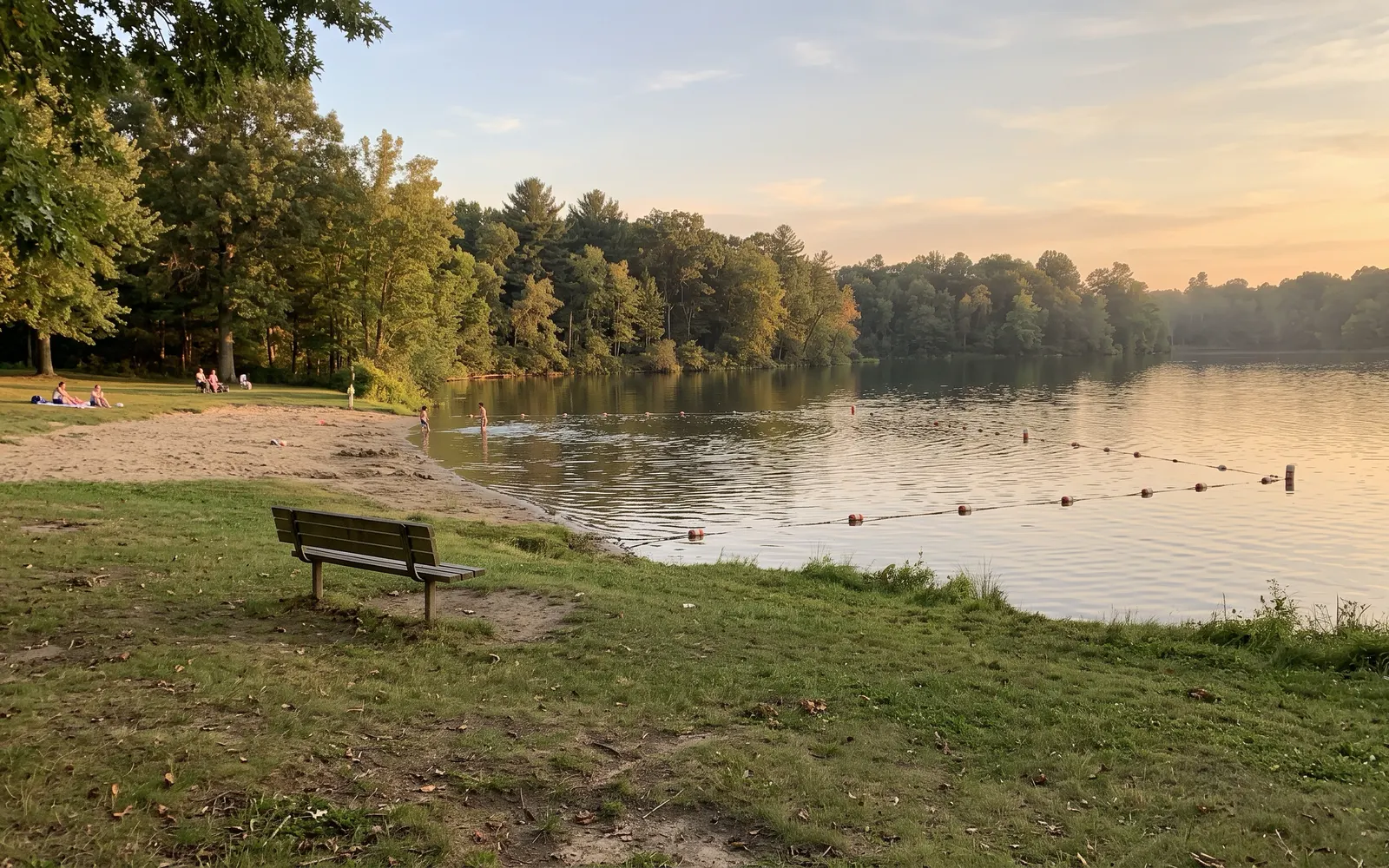
Lakemoor started as a summer place. In the 1920s, lots along what is now Route 120 near the Lake and McHenry county line were sold for cottages, marketed on access to Lily Lake and the other small glacial lakes nearby. Chicagoans drove out for the season, and for decades the year-round population was small.
The village has two founding dates, which is unusual. Local histories record that the area first incorporated as the Village of Lily Lake in 1938, largely through the votes of seasonal residents, then dissolved that incorporation by election in 1943 in a dispute over taxes. A new petition was filed with McHenry County in 1951, and the Village of Lakemoor was established in June 1952 after a close vote.
The Census numbers show how slowly it grew after that. Wikipedia's census table puts Lakemoor at 736 people in 1960 and 723 in 1980. Then the subdivisions arrived: 1,322 people in 1990, 2,788 in 2000 and 6,017 in 2010. That means most of the houses you will tour here were built in a twenty-year window, which matters for everything from roof age to HOA dues.
The last big chapter is commercial. Woodman's Market opened at the Route 12 and Route 120 crossroads in September 2019, according to the village's economic development site, and the shopping center around it has changed the village's budget and its traffic more than anything since the 1950s. Lakemoor's growth also shaped its neighbor: Volo incorporated in 1993 partly to avoid being annexed into Lakemoor, a story I cover in my Volo guide.
Lakemoor at a Glance
Lakemoor covers about 5.55 square miles, 5.30 of it land, according to the Census gazetteer figures on Wikipedia. It sits on the western edge of Lake County, about 45 miles northwest of the Loop, where Route 12 and Route 120 cross. Its neighbors include Volo to the east, McHenry to the west and Island Lake and Wauconda to the south. Lakemoor's ZIP code is 60051, the same one McHenry uses, so a mailing address alone won't tell you which town a house is in.
The most important fact about Lakemoor is the county line. The Census Bureau's Vintage 2024 estimates put the village at 6,451 people on July 1, 2024. Of those, 3,890 live in Lake County, split between Grant Township (3,043) and Wauconda Township (847). The other 2,561 live in McHenry County, split between McHenry Township (1,916) and Nunda Township (645). Four townships means four different combinations of township, school, library and fire district levies.
The 2020-2024 Census ACS counts 2,574 housing units, 2,483 of them occupied, and 65.1% of occupied homes are owner-occupied. That owner share is lower than in most Lake County villages because Lakemoor has a real mix of townhomes and apartments alongside its single-family subdivisions, which I get into below.
In practice, the county line changes who assesses your house, when your tax bill arrives and which county's stormwater rules apply to an addition. I check it on every Lakemoor listing before I run numbers, and I'd suggest you do the same.
The typical home value near $295,000 is well below the county's high-priced towns, and the effective tax rates, 2.42% on the Lake side and 2.72% on the McHenry side, are near the county medians rather than above them.
Here, every address needs its own homework.
Lakemoor Neighborhoods and Subdivisions
Lakemoor doesn't have official neighborhoods, but it does have a clear split between the old lake village and the newer subdivisions. The original cottage-era streets sit around Lily Lake along Route 120. The planned subdivisions, mostly from the 1990s and 2000s growth spurt, fill in the land around them on both sides of the county line.
The village's homeowners association page lists the organized communities: four associations inside Lakemoor Farms, Rockwell Place and the Townes of Rockwell, and The Pines of Lakemoor. The earlier version of this page called that last one "The Pines of Lakewood." The village spells it The Pines of Lakemoor. Savannah of Lakemoor is listed by the village as an active residential development, and The Ports of Sullivan Lake is another named subdivision you will see on listings.
One trap to know about: several subdivisions near the east edge of town carry a Volo or Round Lake mailing address but sit in Lakemoor, and the reverse happens too. Before you fall for a house, confirm the municipality on the county parcel record, because that decides the village services, the tax code and sometimes the schools.
The honest answer on price is that the subdivision matters less here than the building type. A townhome in Lakemoor Farms and a detached house a few streets away are different markets. If you want to know what a specific subdivision has actually sold for lately, that is a conversation I am happy to have here.
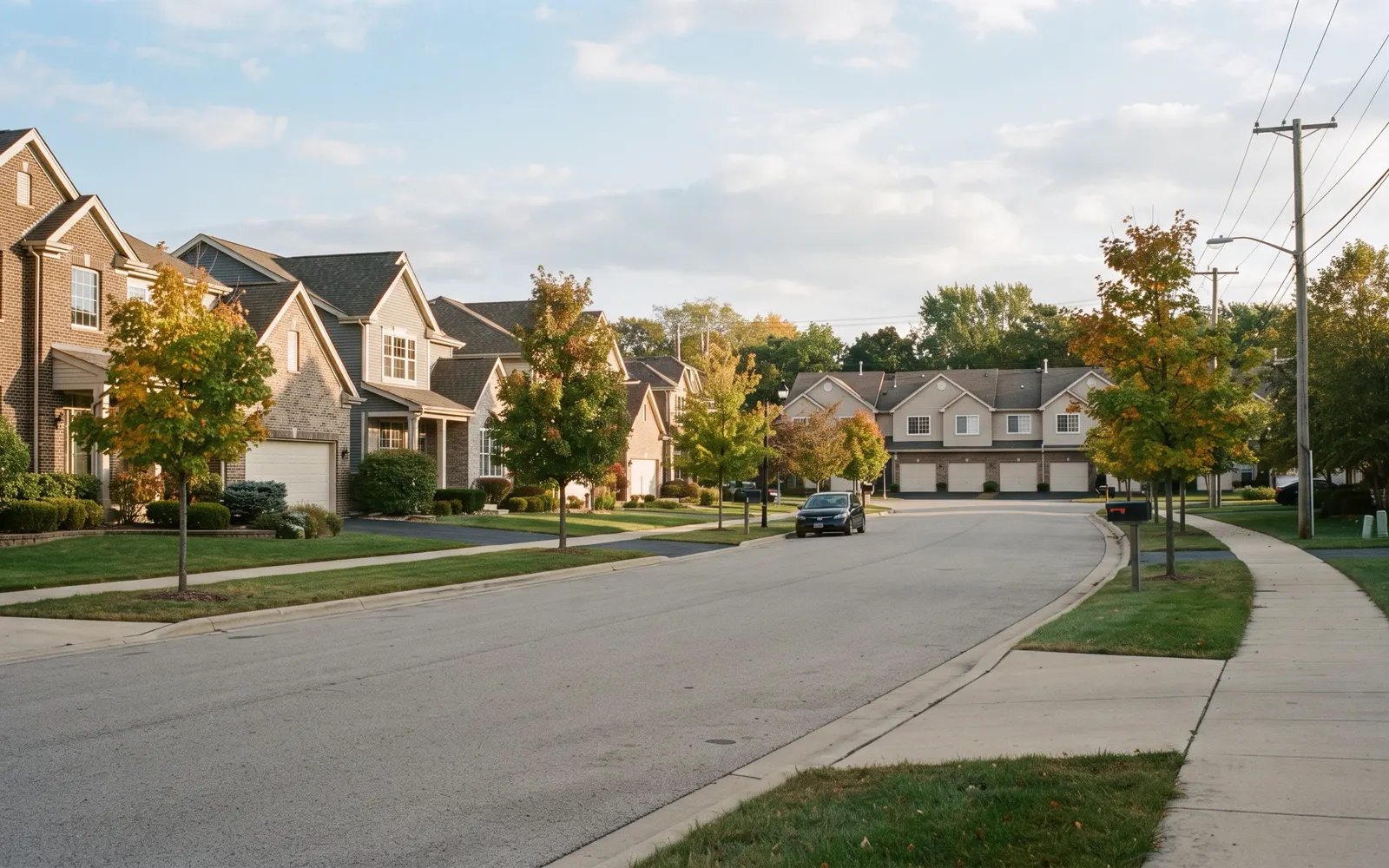
The original Lily Lake area. The 1920s cottage-lot streets along Route 120 and around Lily Lake. Older and smaller homes, many expanded or rebuilt over the years. The village says much of this original subdivision is in the FEMA floodplain, so read the flood section before you offer.
Lakemoor Farms. The largest organized community the village lists, with four associations: single-family homes, The Glens, Bridle Court and Morris Court, and townhomes. Ask which association a unit belongs to, since dues and rules differ.
Rockwell Place and the Townes of Rockwell. A single-family association and a townhome association side by side.
The Pines of Lakemoor. A separate HOA listed by the village. Confirm the build year and school assignment on each listing.
The Ports of Sullivan Lake. A subdivision around Sullivan Lake. The village notes that parts of it are in the FEMA floodplain.
Savannah of Lakemoor. Listed by the village as an active residential development. Ask the builder for current phases, lot premiums and which school district the lots feed.
What Lakemoor Homes Look Like
Lakemoor's housing is younger and more varied than most people expect from a small village. The 2020-2024 Census ACS puts the median year built at 1998. Of the 2,574 housing units, 1,229 are detached single-family homes, 736 are single-family attached (townhomes), and 410 are in buildings of 20 to 49 units. The rest are small multi-unit buildings and a few mobile homes.
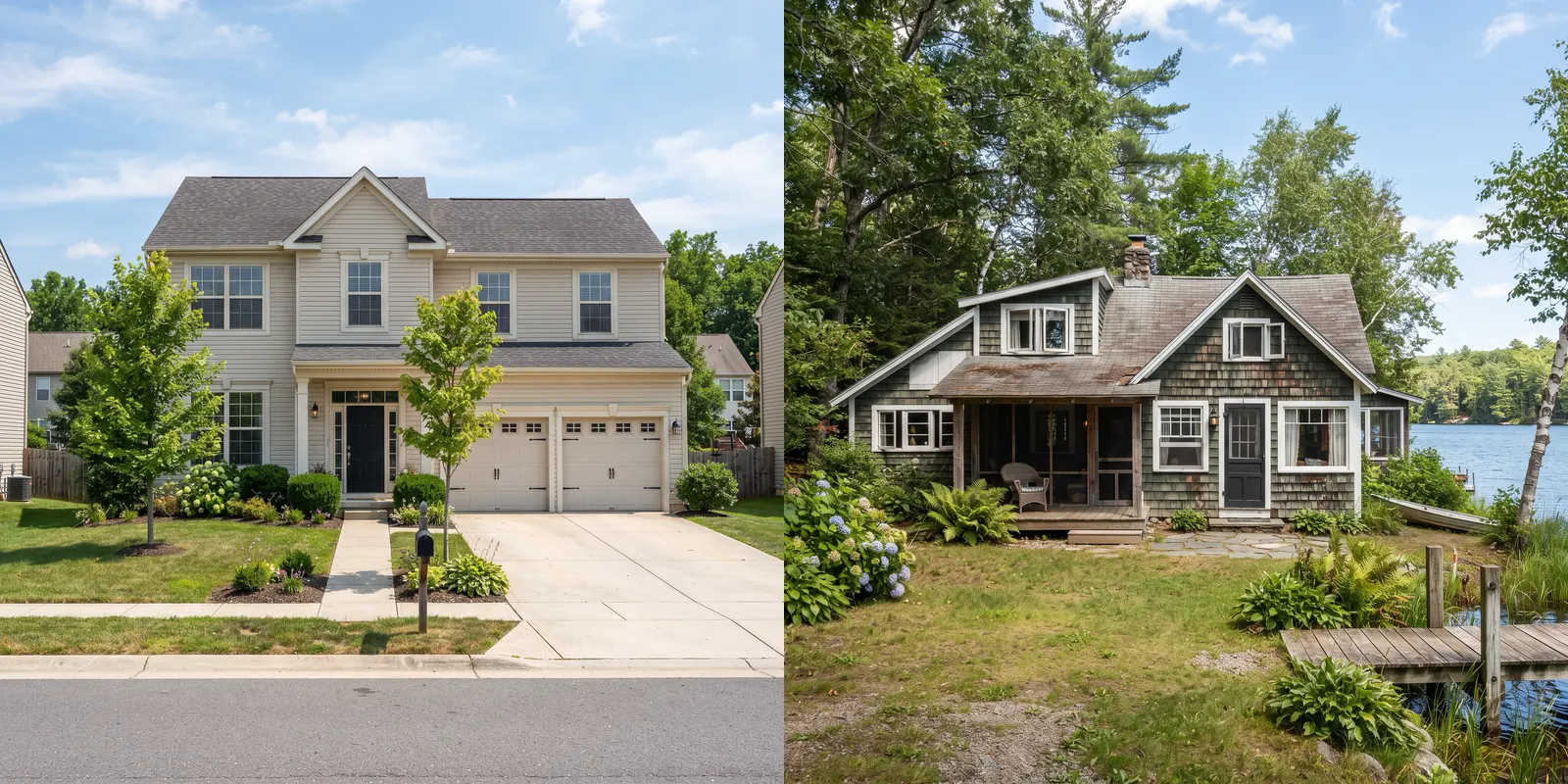
That mix gives buyers three distinct options. The townhomes in Lakemoor Farms and the Townes of Rockwell are the lowest-cost way into the village, usually with an HOA covering exteriors and snow. The detached homes in the planned subdivisions are mostly 1990s and 2000s two-stories and ranches with attached garages. The older homes near Lily Lake are the wild card: smaller lots, cottages that have been winterized and expanded, and the occasional full rebuild.
The ACS puts the median value of owner-occupied homes at $265,500 and median gross rent at $1,726 a month. Rent matters here more than in most towns because about a third of occupied homes are rentals, which means a steady pool of renters who could become buyers.
My inspection advice depends on the era. On a 2000s subdivision house, I look hardest at the roof, the water heater and the furnace, because a lot of them are reaching the end of their first life at the same time. On a lake-era cottage, I want to know what's under the additions, how the foundation was done and whether the house has taken water. My home inspection checklist is a good place to start either way.
The Lakemoor Housing Market in 2026
Lakemoor is a small market, and that is the first thing to understand about its numbers. Zillow's home value index for Lakemoor was $294,993 in August 2026, up 3.3% from $285,502 a year earlier and up about 5.1% from $280,645 in August 2024. That index estimates the value of all homes in the village, sold or not, so it moves slowly.
The sales numbers tell a different story for the same month. Movoto's market page reports a median sold price of $259,900 in August 2026 across just 18 sales, down from 31 sales a year earlier. Homes took a median 53 days to sell, compared with 21 days the year before, and there were 29 active listings when I checked in September 2026.
Both can be right. Eighteen sales is a small sample, and one month with more townhomes than houses pulls the median down. The index says values edged up. The sales data says homes are taking longer and buyers have more to pick from than they did a year ago. My read is that Lakemoor has moved from a market where everything sold in three weeks to one where price and condition decide who sells.
The earlier version of this page quoted a median sale price of $347,950, up about 25%, with no source or date. I could not find that figure in any current source, so it is gone. For a wider read across the county, see my Lake County market report for Q3 2026.
Lakemoor Property Taxes on Both Sides of the County Line
Lakemoor has two property tax pictures, one per county. Ownwell's Lake County figures, last updated April 13, 2026, put the median effective rate on the Lake side at 2.42% and the median bill at $5,957, with the middle half of bills between $4,027 and $7,991. Ownwell's McHenry County figures put the McHenry side at 2.72% with a median bill of $5,232. For comparison, Ownwell lists Lake County's median rate at 2.61% and McHenry County's at 2.42%.
The earlier version of this page said 3.11% with a $4,765 median bill. Neither number matches the current data, and a single village-wide rate hides the county split, so I replaced it.
Here is what that looks like on a real purchase. On a $295,000 house, about the Zillow index value, 2.42% works out to about $7,140 a year, or roughly $595 a month on top of the mortgage. At 2.72% the same house carries about $8,025 a year, roughly $670 a month. The expectation I most often have to reset is buyers budgeting off the seller's current bill, which can be much lower if the seller has owned for years or carries exemptions you won't get.
Inside each county, the bill still depends on the tax code: township, one of six school districts, library district, and one of three fire districts (McHenry Township, Fox Lake or Wauconda, according to the village). The village also has a special service area page for SSA 97-1, so ask whether a house sits inside it. If you already own here and think your assessment is high, my Lake County property tax appeal guide walks through the process. This is general information, not tax advice. Your actual bill depends on your parcel, your exemptions and the assessor.
Lakemoor Schools: Six Districts, Assigned by Address
No town I cover has a more complicated school map. The village's education page lists four elementary districts and two high school districts that serve parts of Lakemoor: McHenry School District 15, Johnsburg District 12, Big Hollow School District 38 and Wauconda Community Unit School District 118 for the younger grades, and McHenry Community High School District 156 and Grant Community High School District 124 for high school. The earlier version of this page listed five and missed Johnsburg.
Which one a house feeds depends on the street, not the subdivision name and not the county. Wauconda District 118 is a single prekindergarten-through-12th-grade district that includes Lakemoor in its service area, so its students go to Wauconda High School. Big Hollow District 38 runs one campus at 26051 W. Nippersink Road in Ingleside and feeds Grant Community High School in Fox Lake. McHenry District 15 and Johnsburg District 12 are McHenry County districts; District 15 feeds McHenry District 156, and Johnsburg District 12 runs its own high school.
I don't rank schools on this page.
Before you write an offer, call the district, give them the exact address and get the assigned schools in writing. Ask me for the boundary if you want it checked on a specific house. A wrong assumption here is one of the few mistakes you can't fix after closing.

McHenry School District 15. Elementary and middle grades for parts of the McHenry County side.
Johnsburg Community Unit School District 12. Listed by the village for part of the west side.
Big Hollow School District 38. One campus at 26051 W. Nippersink Rd., Ingleside, feeding Grant Community High School.
Wauconda Community Unit School District 118. Prekindergarten through 12th grade, including Wauconda High School.
Grant Community High School District 124. Grant Community High School, 285 E. Grand Ave., Fox Lake.
McHenry Community High School District 156. High school for the McHenry District 15 side.
Commuting from Lakemoor: The Metra Options
Lakemoor has no Metra station, so every train commute starts with a drive. There are three realistic choices, on two different lines, and they run very different schedules.
East of the village is Round Lake, on the Milwaukee District North line to Union Station. According to Metra's current MD-N schedule, generated September 21, 2026, 9 weekday trains leave Round Lake for Chicago and 12 come back. Morning peak trains take about 77 to 82 minutes. The catch is the middle of the day: after the 7:39 a.m. inbound, the next train to Chicago is at 4:36 p.m. Fox Lake, the end of the same line north of Lakemoor, has 12 inbound weekday trains, and weekends have 9 each way.
West of the village is McHenry, at the end of a short branch of the Union Pacific Northwest line to Ogilvie. The UP-NW schedule shows three inbound weekday trains from McHenry, at 5:24, 6:24 and 7:24 a.m., each about 82 minutes to Ogilvie, and three back in the evening. There is no weekend or midday service there. Commuters who need more trains drive south to the Crystal Lake station on the main UP-NW line.
The practical question is how often you need to be downtown and when. Two or three fixed days a week works fine from here. Five days with late meetings means adding the drive to Crystal Lake or Fox Lake to your math.

Driving from Lakemoor: Route 12, Route 120 and the Crossroads
Almost every drive in Lakemoor runs through one intersection. Route 12 (Rand Road) runs northwest to southeast and Route 120 (Belvidere Road) runs east to west, and they cross at the heart of the village. According to the village's economic development site, the crossroads averages about 55,000 daily trips, and Route 120 through the middle of town carries about 22,000.
There's no expressway in the village. Route 120 east takes you to Grayslake and on toward I-94. Route 12 southeast runs through Wauconda and Lake Zurich toward Palatine, and Route 31 south through Crystal Lake is the usual way to I-90. Downtown Chicago is about 45 miles away, which in my experience means an hour or more by car depending on the day. O'Hare is a similar drive.
One local detail every new resident learns fast: the crossroads has red-light cameras. The village's program page says they cover northbound, westbound and eastbound traffic, with a $100 fine that doubles to $200 if it isn't paid on time. Illinois Policy reported in 2019 that the cameras had generated $19.2 million since 2012, as cited on Wikipedia. Come to a full stop before turning right on red.
Is Lakemoor Walkable?
No, and nobody should buy here expecting it. Walk Score doesn't publish a single village-wide score for Lakemoor, but it says residents can walk to an average of 0.1 restaurants, bars and coffee shops in five minutes. The shopping at the crossroads is built for cars, with big parking fields and buildings set back from the road.
The exceptions are recreational. The streets around Lily Lake are pleasant for an evening walk, Morrison Park sits on the lake, and many of the planned subdivisions have sidewalks and internal paths. For longer walks and rides, Moraine Hills State Park is a short drive west and the Volo Bog trails a short drive east.
Lakemoor Commons and Shopping at the Crossroads
Shopping in Lakemoor means Lakemoor Commons, the 74-acre center at Route 12 and Route 120 anchored by Woodman's. According to Shaw Local's November 2023 report, the 244,171-square-foot Woodman's draws more than 2 million visitors a year. The village's economic development site describes the center as having 15 outlots, a junior box site and in-line space.
The tenants that opened after Woodman's, per the same report, include Buona (February 2022), Chipotle, Jersey Mike's, Wingstop, Taco Bell, Starbucks, Heartland Dental and SportClips. At the time, a 7,000-square-foot cannabis dispensary, a $29.6 million Advocate Health Care outpatient center, a pharmacy and a third Woodman's gas station were planned or under construction.
For bigger trips, McHenry's Route 31 corridor is a few minutes west, and the stores along Route 12 and Route 120 toward Round Lake Beach and Grayslake cover the rest. The four antique malls at the Volo Museum, covered in my Volo guide, are a short drive east.

Groceries and Everyday Errands in Lakemoor
For most of the village, groceries mean Woodman's. It is employee-owned, according to Wikipedia's company history, and most Woodman's stores run 24 hours with a gas station nearby, so check this store's hours. The format is warehouse-scale: long aisles and a very large selection under one roof.
If you want a smaller store, the Jewel-Osco and Aldi locations in McHenry are a short drive west, and the Route 12 and Route 120 corridors to the east have more. Pharmacies, banks, dental offices and quick errands cluster at Lakemoor Commons and along Route 120, so most weekly errands are a five- to ten-minute drive from anywhere in the village.
Where Lakemoor Eats
Dining in the village is mostly quick-service and concentrated at Lakemoor Commons: Buona for Italian beef, Chipotle, Jersey Mike's, Wingstop, Taco Bell and Starbucks. Walk Score counts about 16 restaurants, bars and coffee shops in the village in total.
In summer, the village schedules food trucks at Lily Lake; "Food Trucks on Lily Lake" has its own filter on the village events calendar, so check it for the current dates. For a sit-down dinner, most people drive to downtown McHenry and the Riverwalk a few minutes west, or to Wauconda around Bangs Lake. Neither is far, and both have far more choice than the village itself.
Lily Lake, Morrison Park and the State Parks Near Lakemoor
Lakemoor doesn't have a large park district of its own; recreation runs through the village's Parks and Recreation department, with a rentable pavilion and youth sports run with local clubs. The center of village recreation is Lily Lake, a glacial lake of about 89 acres according to Wikipedia. Morrison Park sits on the lake with a playground, basketball and volleyball courts and a beach, and a boat launch gives water access from Route 120.
The bigger draw is what surrounds the village. The village's parks page points residents to two state sites. Moraine Hills State Park, just west, covers about 2,200 acres along the Fox River, with Lake Defiance and the McHenry Dam. Volo Bog State Natural Area, just east, protects the only remaining open-water quaking bog in Illinois, with a half-mile boardwalk into the bog and a 2.75-mile trail around it.
For boating, the Fox River and the Chain O'Lakes are a short drive north and west. If lake access is the point of your move, ask about it house by house: a lakefront lot, a lot with association lake rights and a lot a block from the water are three very different purchases.

Libraries Serving Lakemoor
Like the schools, library service depends on the address. The village's community page links residents to the River East Public Library at 813 W. Route 120 in McHenry, open Monday through Thursday 10 a.m. to 7 p.m., Friday 10 to 5 and Saturday 10 to 2. Parts of the village, particularly in the Wauconda school district, are served by the Wauconda Area Public Library at 801 N. Main Street instead.
A library card is tied to the library district your property taxes support, not to the village. Some pockets of unincorporated land around the edges aren't in any library district at all. Look up the address with the library before you count on a card, and check the tax bill: the library district is listed on it.
Utilities in Lakemoor
The village's Public Works department delivers drinking water, maintains water mains and hydrants, and runs stormwater, street and snow services, according to the Public Works page. The village also links Aqua Illinois, which serves some areas, so confirm which water provider a house uses before you estimate bills.
Sanitary sewer comes from the Northern Moraine Water Reclamation District, which serves Lakemoor, Port Barrington, Island Lake and Holiday Hills. It serves more than 15,000 people through 24 pump stations and about 80 miles of sewer mains, with a treatment plant on a 36-acre site that has run since 1978 at a design average of 2 million gallons a day. ComEd delivers electricity and Nicor Gas provides natural gas. Some older homes near the lakes may be on a well or septic system, so ask for it in writing on any older house.
Hospitals Near Lakemoor
The closest full-service hospital is Northwestern Medicine McHenry Hospital, a few minutes west. According to Wikipedia's McHenry profile, it has 143 beds and provides emergency, inpatient and outpatient care. To the east, Advocate Condell Medical Center in Libertyville is Lake County's Level I trauma center.
For everyday care, Lakemoor Commons was slated to get a $29.6 million Advocate Health Care outpatient center and a pharmacy, according to Shaw Local's 2023 report, with a dental office already open there. Northwestern Medicine's clinics in McHenry cover immediate and specialty care.
The Drive-In, the Volo Museum and Summer Near Lakemoor
Lakemoor's best-known night out is on its west edge: the McHenry Outdoor Theater, a working drive-in on Chapel Hill Road with a Lakemoor address. Its 2026 season opened April 3. It is one of the few left in the Chicago area, and on a summer weekend the line of cars on Chapel Hill Road tells you it is open.
A few minutes east, the Volo Museum has been open since 1960 and shows more than 50 famous TV and movie cars across five buildings, including a George Barris Batmobile from the 1960s series, KITT and a Mystery Machine replica, plus four antique malls on the same grounds. The earlier version of this page called the Mystery Machine the original; the museum's display is a replica.
Summer otherwise revolves around water: boating on the Chain O'Lakes and the Fox River, concerts in downtown McHenry, and evenings at Lily Lake.

Lakemoor Events Through the Year
Lakemoor's calendar is smaller than a town with a downtown and a park district, and it is organized around the lake. The village events calendar has its own category for Food Trucks on Lily Lake in season, and the village's news page lists a Trunk or Treat for 2026 with a haunted house and prizes for the best-decorated trunk. The village posts most event news on the Friends of Lakemoor Facebook page as well.
The earlier version of this page described a two-day Lakemoor Fest in early August with fireworks and a fishing derby. I couldn't find a 2026 date for it on the village's site, so check the calendar before you plan around it. For a bigger summer festival, McHenry's Fiesta Days and the Fourth of July events in nearby towns are a short drive.
What's Being Built in Lakemoor
Lakemoor Commons is still the development story. Shaw Local reported in November 2023 that village sales tax revenue was $1.5 million in 2022, with $1.9 million projected for 2023 and $2.4 million projected for 2024, representing about $240 million in sales. The earlier version of this page presented the 2023 and 2024 figures as actual results; they were projections at the time.
The financing has a history worth knowing. Per the same report, Woodman's receives 50% of the sales tax its store generates, starting in the fifth year, until a $4 million utility extension loan is repaid. The village created a special financing district for the project, and the other taxing bodies sued. After five years, they settled in 2020 on splitting 50% of the surplus property tax generated in the district. The earlier version of this page said the lawsuit was resolved before the store opened in 2019; the settlement came after.
The village is marketing more land. Its economic development site describes a Midtown area anchored by the new village hall, with sites from 1 to 40 acres, and a Downtown mixed-use opportunity along Route 120 at the geographic center of town. It also offers TIF and sales tax incentives to businesses. On the residential side, Savannah of Lakemoor is listed as an active development. I haven't seen an approved plan for a Downtown project yet, and I'd treat those areas as possibilities, not promises.
I don't label any town or neighborhood as safe or unsafe.
Flood Risk in Lakemoor
In Lakemoor, flood risk is specific and mapped. The village's floodplain construction page says that much of the village's original subdivision and parts of The Ports of Sullivan Lake are in areas FEMA designates as having a 1% annual chance of flooding. Houses in those areas with a federally backed mortgage usually need flood insurance.
The same page sets the rules for renovating there. New construction and substantial improvements, meaning work worth 50% or more of the structure's market value, must put the lowest floor and utilities at least 2 feet above the base flood elevation, with an engineer's or surveyor's topographic survey and county stormwater approval. In practice, a buyer who plans a big addition on an older lake house needs to price that in before making an offer.
Two checks on every house: look the address up on FEMA's Flood Map Service Center, and ask the seller directly about water in the basement or crawlspace. In my experience with lake-area homes, the follow-up question about what they did about it is the one that matters.
Frequently Asked Questions
Why is Lakemoor in two counties?+
The village grew outward from Lily Lake across the Lake and McHenry county line. The Census estimates 3,890 residents on the Lake County side and 2,561 on the McHenry County side in 2024, across four townships.
How much does a house cost in Lakemoor, IL?+
Zillow's home value index was $294,993 in August 2026, up 3.3% from a year earlier. Movoto reported a $259,900 median sold price for August 2026 on 18 sales. Townhomes, subdivision houses and lake cottages price very differently.
What are property taxes in Lakemoor, IL?+
Ownwell's April 2026 data puts the Lake County side at a 2.42% median effective rate and a $5,957 median bill, and the McHenry County side at 2.72% and $5,232. Bills usually rise after a sale once the home is reassessed.
What school district is Lakemoor, IL in?+
It depends on the address. The village lists McHenry D15, Johnsburg D12, Big Hollow D38 and Wauconda CUSD 118 for the younger grades, and McHenry D156 and Grant D124 for high school. Confirm each address with the district.
Does Lakemoor have a Metra station?+
No. Round Lake on the Milwaukee District North line has 9 weekday trains to Union Station, about 77 to 82 minutes at peak, and McHenry on the Union Pacific Northwest branch has three morning trains to Ogilvie. Both are a drive.
Is Lakemoor walkable?+
No. Walk Score says residents can walk to an average of 0.1 restaurants in five minutes. Lily Lake, Morrison Park and the subdivision sidewalks are the walking options.
Is Lakemoor in a flood zone?+
Parts of it. The village says much of the original subdivision and parts of The Ports of Sullivan Lake are in FEMA's 1% annual-chance floodplain. Check each address on FEMA's flood map.
What subdivisions are in Lakemoor, IL?+
The village lists HOAs in Lakemoor Farms, Rockwell Place, the Townes of Rockwell and The Pines of Lakemoor. Savannah of Lakemoor is an active development, and The Ports of Sullivan Lake and the original Lily Lake area are other named parts of town.
Eshu Chikoti has extensive access to off-market listings throughout Lakemoor and the surrounding North Shore — homes that never make it to the public listing sites. That matters right now: in a seller's market like this one, well-priced homes routinely go under contract within days, and buyers relying only on public listings are competing for whatever is left over. Working with someone plugged into off-market inventory means seeing homes before the crowd does.
Eshu Chikoti · 847-691-4282 ·
Towns Neighboring Lakemoor
Most buyers looking at Lakemoor end up touring a couple of the towns next door before they decide. Each of these has a full guide of its own — same depth on schools, commute, taxes, and what the housing stock actually looks like.
Get new Lakemoor listings by email
When a home comes on the market in Lakemoor, I'll email it to you.
Just your email. Unsubscribe any time by replying.
Thinking About Lakemoor?
Whether you're buying, selling, or just curious what's on the market, I can walk you through Lakemoor street by street.