Hampshire, IL
Hampshire, IL is a fast-growing Kane County village of about 8,500 people on I-90 west of Huntley, with a small State Street downtown, a 150-year-old farm-town grid and whole subdivisions still being platted around it.
Living in Hampshire, IL means a median sale price near $395,000 this summer, an I-90 interchange at Route 20 on the edge of the village and new homes from about $359,000. The trade-offs are no Metra station, property tax near 2.4% of value plus subdivision SSAs, and few errands on foot. Here is how it breaks down.
Written by Eshu Chikoti · 847-691-4282 ·
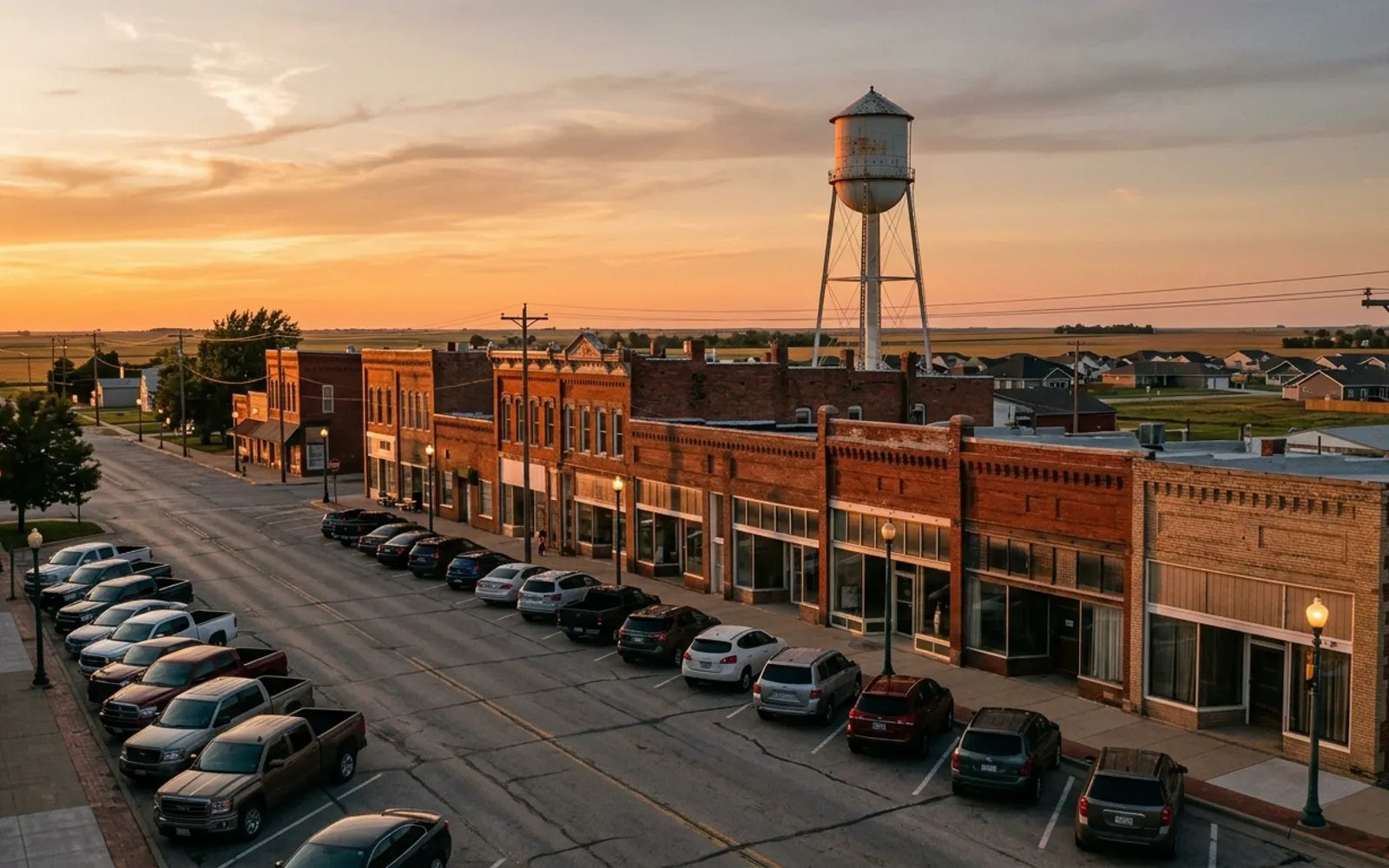
How Hampshire, IL Got Here: A Short History
Hampshire started with a different name in a different spot. According to the Village of Hampshire's history page, the first settler, Zenas Allen of Vermont, arrived in 1836, and the settlement was known as Henpeck. From 1837 to 1845 Henpeck sat along the Chicago to Galena stagecoach trail where Old State Road (today's Route 20) met Big Timber and Brier Hill Roads. Hampshire Township was organized in 1845, and the name changed to Hampshire.
The town moved in 1876. It relocated to be on the Chicago-Pacific Railroad line and incorporated the same year, with Samuel Rowell as its first village president. By 1893, the village history says, Hampshire was the second-largest milk producing and shipping station in Illinois. During World War II the village was chosen for a prisoner-of-war camp, and its 250 prisoners worked at the Inderrieden Canning Company.
That 1876 date makes 2026 the village's 150th year. The Village Board's July 16, 2026 minutes note a 150th-birthday float in this summer's Coon Creek parade, and the August 20 minutes record that the 150 Committee's float was a success.
For most of those 150 years Hampshire stayed small. The census counts in the Wikipedia summary run from 483 people in 1880 to 970 in 1950 and 2,900 in 2000. Then the subdivisions arrived: 5,563 people in 2010 and 7,667 in 2020. The Hampshire Township Historical Society, formed in 2001, holds free public programs at the Township Building at 170 Mill Avenue, and the Ella Johnson Memorial Library keeps a digital local history collection if you want to see old photos of the village.
Hampshire at a Glance
Hampshire sits in the northwest corner of Kane County, about 52 miles northwest of the center of Chicago, according to Wikipedia. It lists the village at 9.51 square miles, with most of it in Hampshire Township, a small piece in Rutland Township to the east and a small piece north into Coral Township in McHenry County. Huntley borders it to the northeast, Pingree Grove to the southeast and Burlington to the southwest. If a listing sits on the north edge, check which county the parcel is in before you run numbers, because McHenry has its own assessor and tax calendar.
The 2020-2024 Census ACS counts 8,524 people in 2,604 housing units. Of those, 2,169, or 83.3%, are owner-occupied and 435 are rented. The ACS counted no vacant units, a sign of how tight the market has been.
Most of the land inside the village line is still farmland. The Chicago Metropolitan Agency for Planning's June 2026 Community Data Snapshot puts 55.4% of Hampshire's 6,158 acres in agricultural use in 2023, against 14.7% in single-family homes, 3.6% industrial and 2.6% commercial, with another 8.7% vacant. That is the growth story in one line. The village has already drawn its boundary around far more land than it has built on, and the rest fills in one subdivision phase at a time.
The layout is easy once you know three roads. State Street runs north and south through the old downtown. Route 72, which is Oak Knoll Drive through town, runs east and west through the southern part of the village. Route 20 runs along the northeastern edge to the I-90 interchange. Almost every subdivision description you will read uses one of those three as the reference point.
The tax rate is close to the Kane County median, most of the housing is from 2000 or later, and the builders are still building.
The nearest Metra station is 8.5 miles away with no weekend service, big grocery runs mean a drive, and the growth that makes Hampshire affordable also means construction traffic for years.
Hampshire Neighborhoods, Subdivision by Subdivision
Hampshire has no official neighborhoods, but it has a lot of named subdivisions, and they are the unit buyers actually shop by. The village splits three ways. The first is the original grid around State Street, where the oldest homes are. The Census ACS counts 161 built before 1950. The second is the ring of subdivisions from the late 1990s and 2000s along Route 72 and Oak Knoll Drive. The third is the master-planned land still being built out north and east of downtown, where Prairie Ridge, Tamms Farm and Oakstead are adding homes this year.
Every subdivision below also sits inside a village special service area, or SSA, which I cover in the tax section. Build years, sizes, association fees and average taxes come from the Homes by Marco subdivision directory, read in September 2026. A directory is not the MLS, and boundaries are informal, so treat this as a starting point. If you want to know which subdivision a specific address is in and what nearby homes have actually sold for, that is a conversation I am happy to have here.
The first question my buyers ask in Hampshire is what the tax bill will be, and the second is which elementary school the street feeds. The third, which they often forget until I ask, is whether the lot backs to a detention pond, a farm field or a future phase. A field behind the house today can be a row of new homes in two years, and the village's development pages will tell you which.
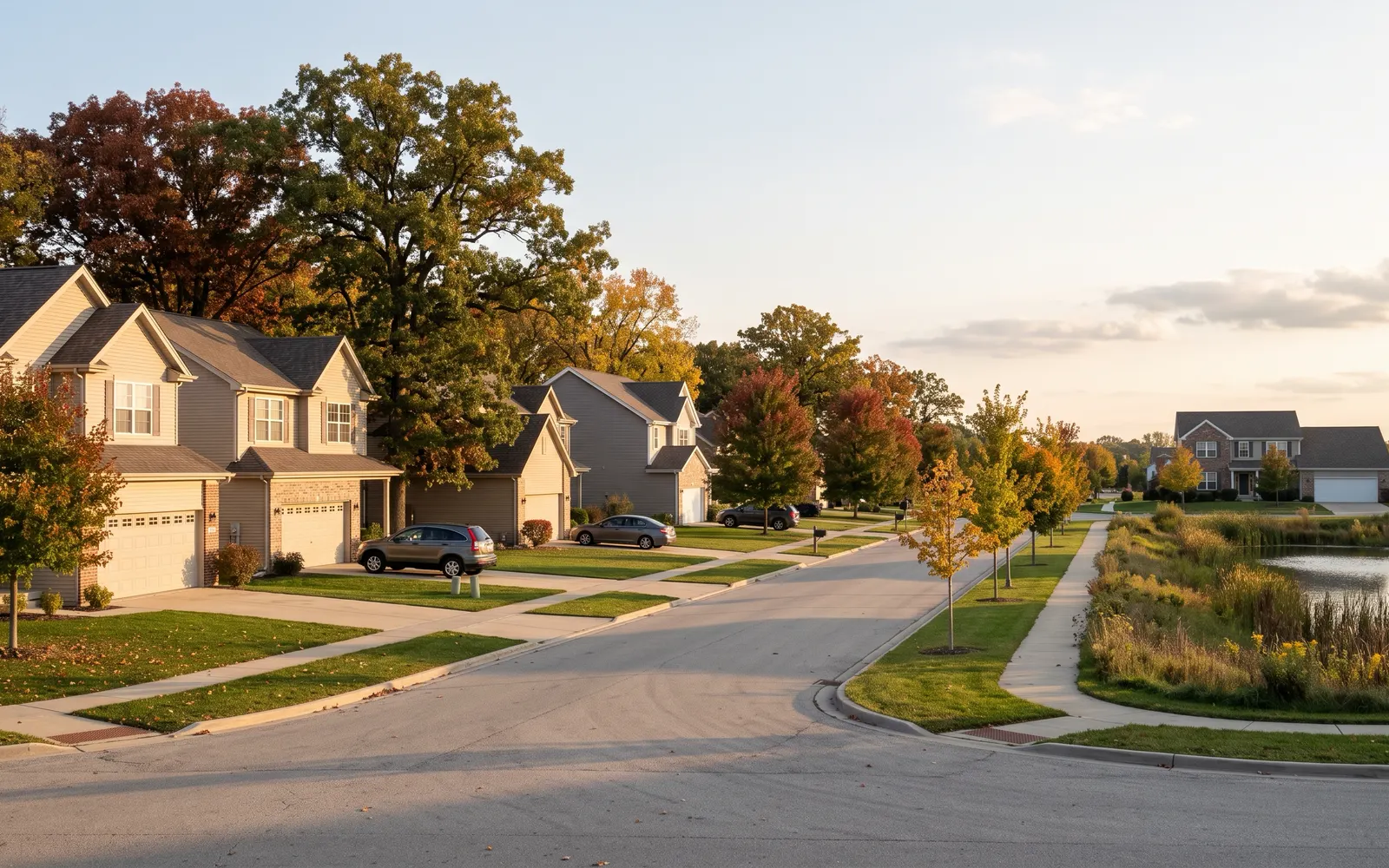
Downtown and the original grid. The blocks around State Street, Washington Avenue, Jefferson Avenue and Mill Avenue. Older frame and brick houses on smaller lots, walkable to the library, Block's Fresh Market and the State Street restaurants. Expect older mechanicals, and ask whether the house has a lead water service line (see utilities).
Old Mill Manor. On Warner north of Route 72. Townhomes, condos and single-family homes built from 1987 to 2023, about 1,122 to 3,800 square feet, with a $150 monthly association fee and an average annual tax of $5,944.30.
Hampshire Prairie. North of Oak Knoll Drive and west of State Street. Duplexes and single-family homes built from 1996 to 2022, about 1,800 to 3,163 square feet, with a $130 monthly association fee and an average annual tax of $5,990.04.
Hampshire Highlands. North of Oak Knoll Road and east of State Street, built largely from 2005 by William Ryan Homes. The directory lists a lake and community pool, and an average annual tax of $8,405.43.
Hampshire Fields. South of Route 72 (Oak Knoll Drive) and west of Getzelman Road. Single-family homes built from 1998 to 2005, about 1,639 to 2,935 square feet, with an average annual tax of $9,327.47.
Hampshire Hills. West of Getzelman and south of Route 72. Larger single-family homes from the early 2000s, with the highest directory tax average of the in-town subdivisions at $10,599.51.
White Oak Ponds. On Route 72. Kennedy Homes single-family houses built from 2001 to 2004, about 2,448 to 3,883 square feet, with an average annual tax of $8,183.24.
Hampshire Meadows. On Schmidt Drive. Single-family homes built from 2003 to 2008, about 1,640 to 3,908 square feet, with a $100 monthly association fee and an average annual tax of $8,969.59.
Tuscany Woods and Torino at Tuscany Woods. North of Route 72, with Torino west of Brier Hill Road and north of Big Timber Road. Townhomes, condos and single-family homes built from 2007 to 2018, association fees of about $30 to $243 a month and average taxes near $6,200 to $6,300.
Lakewood Crossing. Which the directory places just off Route 47 south of I-90. Duplexes, townhomes and single-family homes built from 2007 to 2016, about 924 to 4,147 square feet, association fees of $49 to $83 a month and an average annual tax of $6,823.44.
Prairie Ridge. West of State Street and south of Allen Road, a Crown Community Development master plan now selling D.R. Horton, Ryan Homes and Silverthorne Homes. Homes of about 1,366 to 3,065 square feet, association fees of $14 to $224 a month and an average annual tax of $6,990.70.
Tamms Farm. Lennar and Pulte single-family homes built from 2022 to 2025, about 1,455 to 3,146 square feet, with a $38 monthly association fee and an average annual tax of $8,239.74.
Oakstead. Crown Community Development's next master plan, off Route 20 south of Big Timber Road, with five new neighborhoods platted in August 2026 (see the development section).
Stoneshire Condominiums. North of Oak Knoll Road and east of State Street. Condos of about 1,223 to 1,832 square feet built from 2005 to 2007, with a $175 monthly fee and an average annual tax of $2,853.
Hampshire Oaks and Hampshire Pointe. Larger lots on Higgins Road west of Route 20, with county-grid addresses like Felsmith Road and Woodview Parkway. Some of these parcels may be outside the village, so confirm whether a house is on village water and sewer or on a well and septic.
What Hampshire Homes Look Like, by Era
Hampshire is one of the newest housing stocks in Kane County. According to CMAP's June 2026 snapshot, the median home in the village was built in 2004, against 1985 for Kane County and 1970 for the Chicago region. The Census ACS counts 1,152 units built from 2000 to 2009 alone, 44% of everything in town, plus 583 from the 2010s and 76 more since 2020. Put together, about 70% of Hampshire's homes are from 2000 or later.
The older layer is thin but real. The ACS counts 90 homes built before 1940 and 71 from the 1940s, mostly on the blocks around State Street. The 1950s through the 1980s added 319 more. That is the stock you see when you drive from the library to Route 72: a farm-town grid for a few blocks, then subdivision entrances.
The mix of home types is unusual too. CMAP counts 1,727 detached houses and 857 attached single-family homes, which means 32.9% of Hampshire's housing is townhomes and duplexes, against 12.0% for Kane County. There are almost no apartment buildings: 20 units in buildings of three or more. Most homes are mid-sized, with 46.4% at three bedrooms and 29.3% at four. The ACS median home value is $329,800, and the median gross rent on the 435 rented homes is $2,589.
With a housing stock this new, the inspection list is different from an older river town's. On a 2000s Hampshire house, the items I watch are the original water heater and furnace reaching the end of their life at the same time, roofs from the first build cycle, sump pumps in basements next to detention ponds, and grading that has settled around the foundation. On a brand-new build, it is the punch list and the builder warranty. None of that should kill a deal. All of it belongs in the price. My home inspection checklist covers what to ask for.
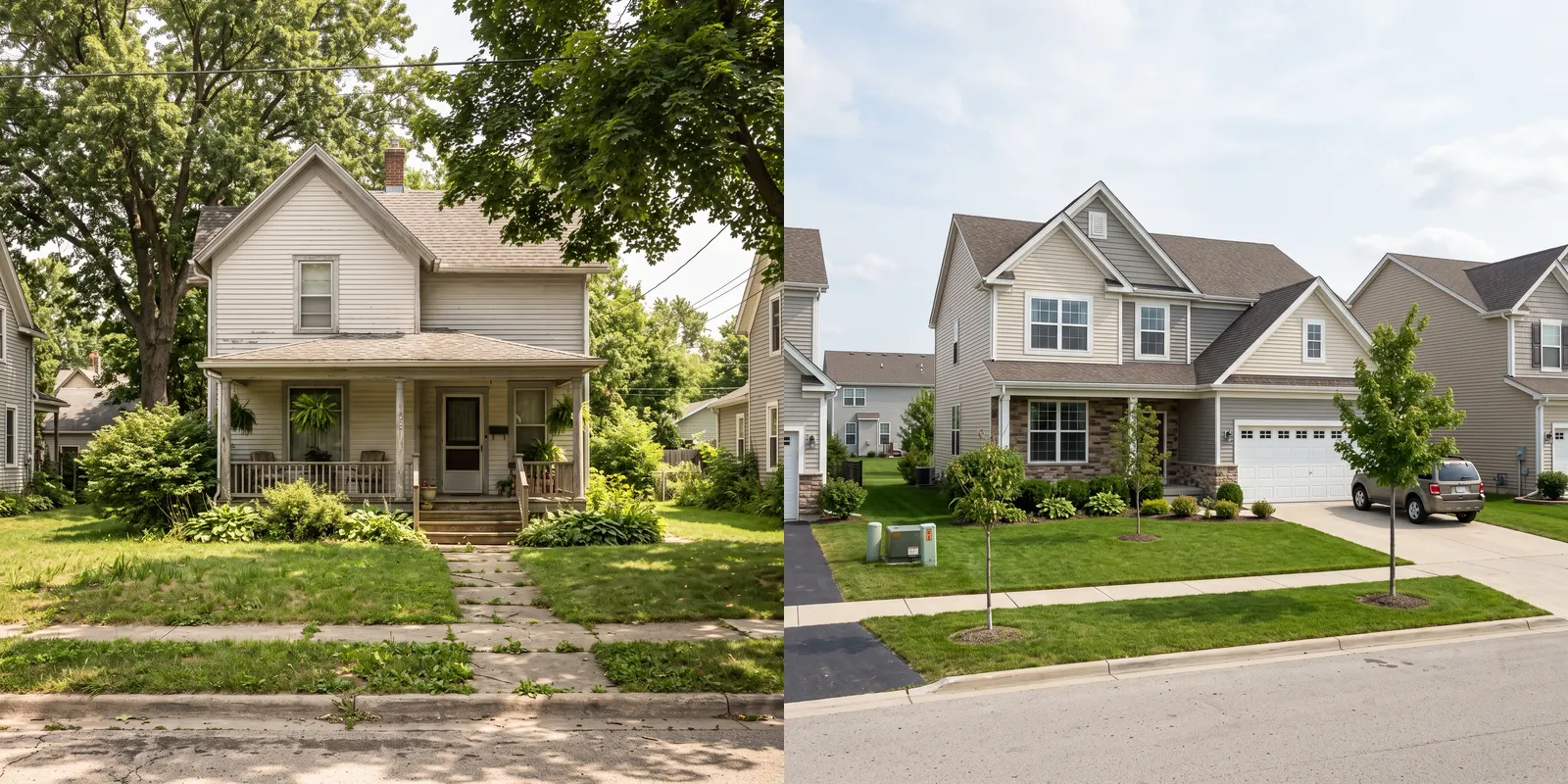
New Construction in Hampshire: Prairie Ridge, Tamms Farm and Oakstead
New construction is the main reason most of my buyers look at Hampshire at all. The village's July 2026 building report shows 18 new single-family home permits in July and 158 for the calendar year through July, an average of about 22 a month. Very few Kane County villages are still permitting new houses at that pace.
Prairie Ridge is where most of that is happening today. It is a Crown Community Development master plan, according to Crown's Prairie Ridge page, with Ryan Homes, D.R. Horton and Silverthorne Homes building. The Village Board approved revised plans for Prairie Ridge North on March 16, 2023, according to the village's Prairie Ridge North page, and in May 2026 the board reduced the developer's letters of credit on Neighborhoods G, H, I and J, which is the paperwork step that follows finished roads and utilities. D.R. Horton's Prairie Ridge page listed its traditional single-family homes from $358,990 and from 1,561 square feet in September 2026.
Tamms Farm, which the Homes by Marco directory lists as Lennar and Pulte homes built from 2022 to 2025, is largely sold. Oakstead, covered in the development section, is next.
Buying new here comes with a few questions I make every buyer ask before signing. What is in the base price and what is an upgrade? What does the lot premium buy? Which SSA is the lot in, and what is its current rate? What will the tax bill be once the house is assessed as finished, since the first bill on a new home is often based on a vacant lot? And what is planned for the field behind the house? The builder's sales office is there to sell houses. I represent the buyer, and that works best when I am registered with the builder on your first visit. If you are starting, my guide to Illinois first-time buyer programs and my Illinois closing costs guide are good places to begin.
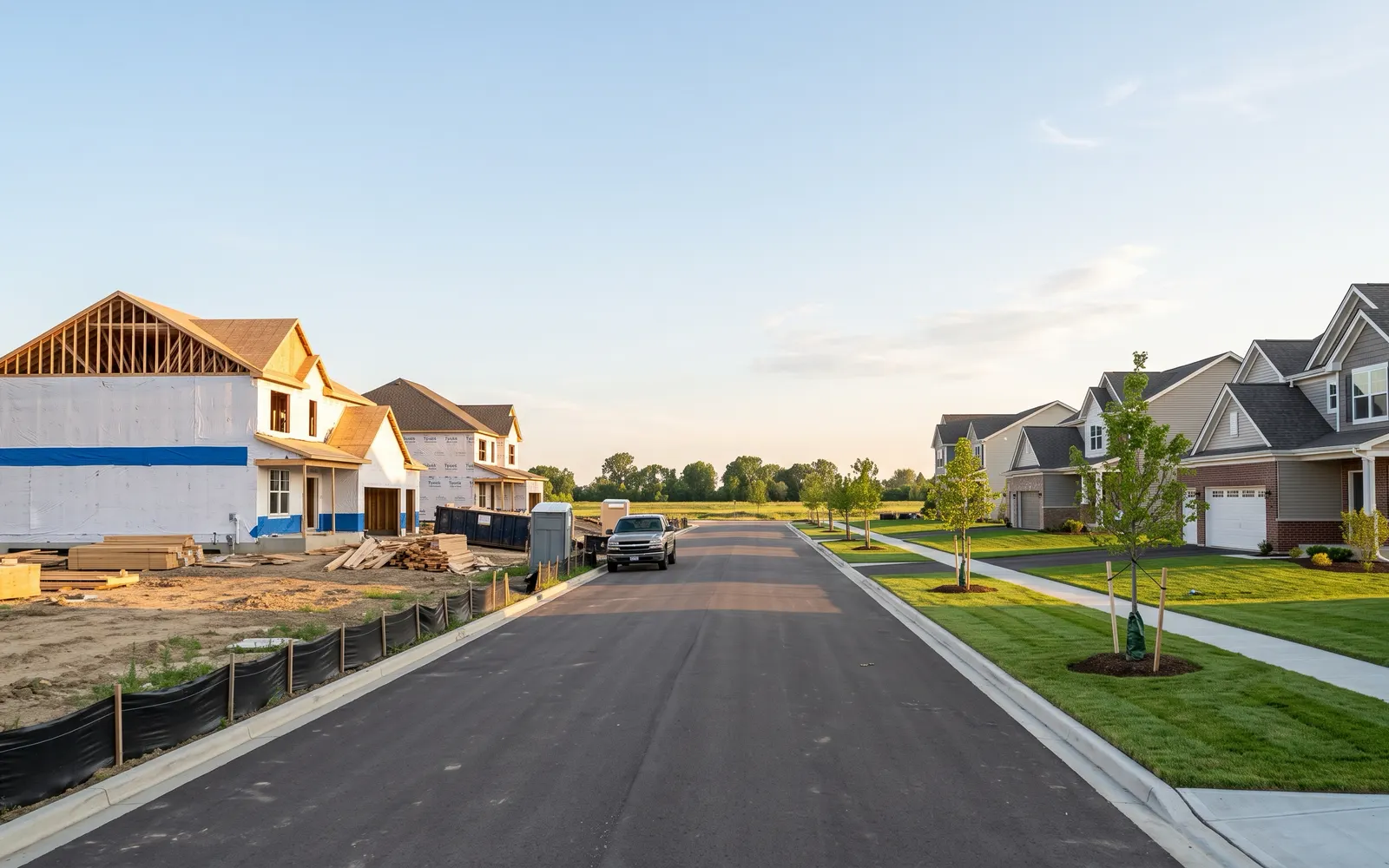
The Hampshire Housing Market in 2026
Hampshire is a busier market than its size suggests, and a steadier one than most of Kane County this summer. In the three months ending August 2026, Redfin reported a median sale price of $394,739, down 0.69% from a year earlier. It counted 48 homes sold in August, against 50 a year earlier. The median home took 57 days to sell, up from 54, and sold at 99.6% of list price. 34.1% of homes sold over asking and 24.4% of listings took a price cut. Redfin's Compete Score for Hampshire is 64, which it calls somewhat competitive.
Zillow's home value index tells a slightly different story. Its August 2026 value for Hampshire is $417,168, up 4.3% from $399,973 a year earlier and up 8.8% from $383,381 two years earlier. Both can be right. Redfin's median is the middle of whatever happened to sell in a three-month window, and in Hampshire that window always includes a lot of new construction and townhomes. Zillow's index estimates the value of every home, sold or not. My read is that existing homes kept gaining value while the mix of what sold held the median flat.
One number to read carefully: Redfin reported a median price per square foot of $224, up 21.1% year over year. That is not a sign that values jumped a fifth in a year. A month heavy with smaller townhomes pushes price per square foot up even when prices do not move. Redfin's city figures also follow its own map of Hampshire, and the 60140 ZIP code is shared with Pingree Grove and unincorporated land, so I treat the sale counts as approximate.
For context, Zillow's August 2026 index puts Elgin at $339,753, Marengo at $366,265, Pingree Grove at $374,323, Gilberts at $420,158, Burlington at $424,865 and Huntley at $427,385. Hampshire sits in the same band as Gilberts and Huntley and about $43,000 above Pingree Grove next door.
What that means in practice: a well-priced resale in a good subdivision still sells, and a third of them go over list. An overpriced resale competes with a builder down the road offering a brand-new house and incentives, and that is the comparison buyers make first. If you want the payment math at these prices, my guide to how much house you can afford in 2026 walks through it.
Hampshire Property Taxes, SSAs and the Real Cost of Owning
Property tax is the line that changes the monthly payment most in Hampshire, and it never shows up in the list price. Ownwell's data, last updated April 13, 2026, puts the median effective rate at 2.40% and the median annual bill at $7,584. Ownwell lists the Kane County median at 2.49% and Illinois at 2.33%. Its Hampshire bills run from $4,317 at the 10th percentile and $5,463 at the 25th to $9,172 at the 75th and $10,960 at the 90th.
Here is where that bill comes from. The Kane County Clerk's 2025 rate listing, for taxes payable in 2026, shows District 300 at 4.468571%, the Hampshire Fire Protection District at 0.787351%, the village at 0.396880%, Elgin Community College at 0.361699%, Kane County at 0.269368%, the township road district at 0.156191%, the park district at 0.149434%, the forest preserve at 0.136162%, the Ella Johnson library at 0.101816%, the township at 0.094768% and the cemetery at 0.002136%. Added up, that is about 6.92% of equalized assessed value for a typical in-town parcel, and District 300 is about 65% of it. The village's own page showed a 2022 total of 8.208184%. A lower rate does not mean a lower bill, because the bill also tracks your assessed value.
A worked example. Kane County assesses homes at 33.33% of market value, and the Kane County Treasurer's property tax guide uses an $8,000 general homestead exemption in its example. On a house bought at this summer's $394,739 median, that is about $131,580 of assessed value, $123,580 after the exemption, and roughly $8,560 a year at 6.92%, or about $713 a month on top of the mortgage. Ownwell's 2.40% rate on the same price gives about $9,470. Assessments trail the market, and the expectation I most often have to reset is buyers who budget off the seller's current bill, or off a new build's first bill, which is often based on a vacant lot.
Then there are SSAs. The village's special service area page lists 20 of them, most created to maintain a subdivision's detention ponds and common ground. The 2025 county listing shows active rates for SSA 7 (Hampshire Hills) at 0.083899%, SSA 10 (White Oak Ponds) at 0.047758%, SSA 11 (Hampshire Highlands) at 0.037443%, SSA 12 (Hampshire Meadows) at 0.020764%, SSA 8 (Hampshire Fields) at 0.015733%, SSA 6 (Hampshire Prairie) at 0.010232% and SSA 2 (Old Mill Manor) at 0.005188%. On the example house, the highest of those adds about $104 a year. The two infrastructure SSAs, 13 (Tuscany Woods) and 14 (Lakewood Crossings), were set up to repay bonds for subdivision improvements. The SSAs for Prairie Ridge, Oakstead and Tamms Farm are listed by the village as inactive maintenance SSAs, and back-up SSAs are taxed only after the village does emergency work. Many showed no rate in the 2025 listing. Read the seller's actual bill line by line anyway, because the SSA line is where surprises live.
Hampshire Township's assessor handles most of the village. This is general information, not tax advice. Your actual bill depends on your parcel, your exemptions and the assessor.
Hampshire Schools: District 300 and Hampshire High School
Most of Hampshire is in Community Unit School District 300. According to the Hampshire High School about page, District 300 is the sixth-largest district in Illinois by enrollment, with more than 23,000 students across 118 square miles. Hampshire High School, at 1600 Big Timber Road, was built in 2008, served 2,139 students in 2025-26 and graduated 463 in the class of 2025. It draws from Hampshire, Pingree Grove, Gilberts, Sleepy Hollow, Carpentersville and a portion of Huntley.
Four District 300 schools have Hampshire addresses, according to the village's schools page: Hampshire Elementary at 321 Terwilliger Avenue, Gary D. Wright Elementary at 1500 Ketchum Road, Hampshire Middle School at 560 S. State Street and the high school. The Hampshire Middle School page says it served 856 students in 2025-26 and lists Big Timber, Gilberts, Hampshire and Wright elementaries as feeders. Crown's Prairie Ridge page lists Wright Elementary for that subdivision.
The detail that trips people up is the edge of the district. The village's schools page also lists Huntley School District 158 and Central District 301's Howard B. Thomas Grade School on Plato Road, which tells you that some Hampshire-area addresses are not in District 300 at all. Separately, the Village Board accepted the public improvements for a District 300 elementary school at Oakstead on May 7, 2026, according to the board minutes. I have not seen an opening date or boundary for that school, and a new school usually means new lines. Check the specific address with the district's attendance boundary lookup before you write an offer.
Confirm the district for a specific address with the district office, and read each district's profile on the Illinois Report Card at illinoisreportcard.com. I am happy to pull the boundary for a specific house.
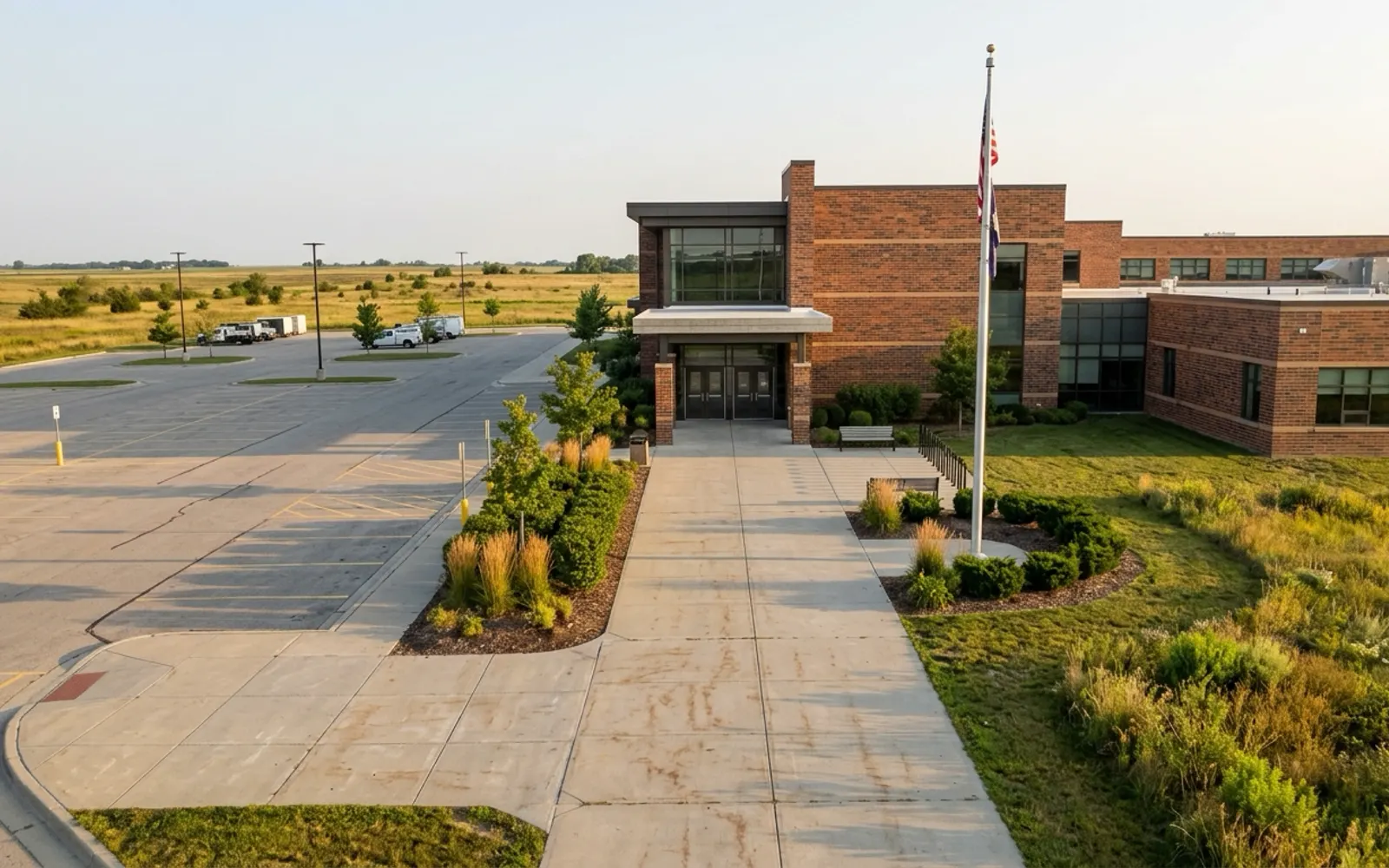
Hampshire Elementary School. 321 Terwilliger Ave. Grades K-5, District 300; 428 students in 2025-26.
Gary D. Wright Elementary School. 1500 Ketchum Rd. Grades K-5, District 300; listed for Prairie Ridge.
Big Timber Elementary School. District 300; a Hampshire Middle School feeder.
Hampshire Middle School. 560 S. State St. Grades 6-8, District 300.
Hampshire High School. 1600 Big Timber Rd. Grades 9-12, District 300; current building opened 2008.
St. Charles Borromeo School. 296 E. Jefferson Ave. Grades K-8, private.
Cambridge Lakes Charter School. 840 Campus Dr., Pingree Grove. Grades K-12, a District 300 charter.
Commuting from Hampshire: The Metra Options
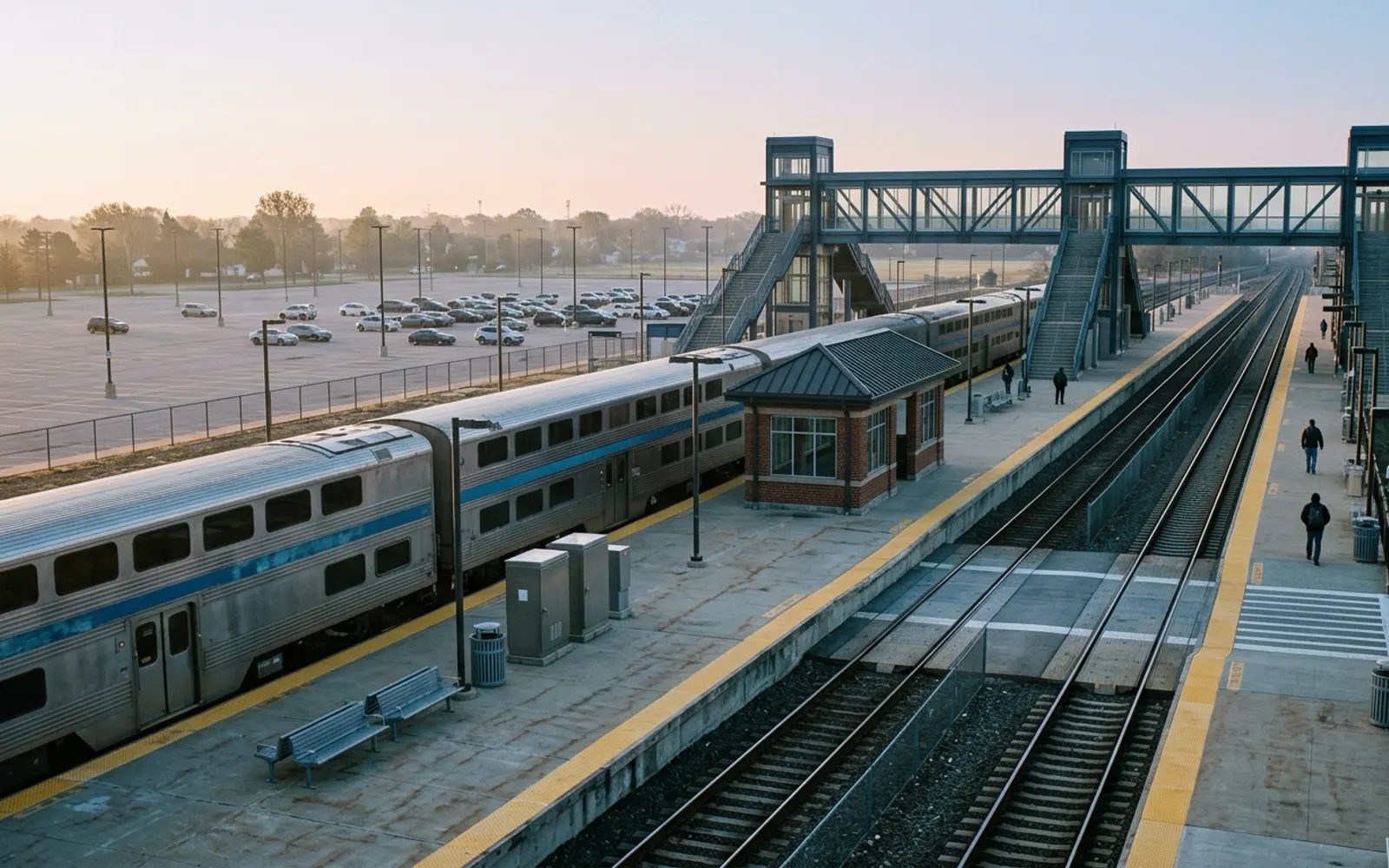
Hampshire has no train station, and the village's transportation page says it plainly: on weekdays you board at Big Timber in Elgin, and on weekends you board in downtown Elgin. Both are on the Milwaukee District West line to Union Station. I counted trains in Metra's published schedule data for weekday service on September 29, 2026.
Big Timber is the closer of the two, about 8.5 miles in a straight line from downtown Hampshire. It has 19 inbound and 22 outbound weekday trains. Its fastest runs, at 6:20 and 7:20 a.m., reach Union Station in 67 minutes, and most other morning trains take 75 to 87. It has no weekend service at all.
Downtown Elgin, about 11 miles away, adds a few minutes of driving and saves time on the train. It has 22 trains each way on weekdays, and its 6:26 and 7:26 a.m. runs take 61 minutes. On weekends it has 12 trains each way on Saturday and 9 on Sunday, at about 77 minutes.
In practice most Hampshire commuters drive. CMAP's snapshot puts transit at 0.4% of work trips from the village and the mean commute at 28.2 minutes. If you will ride Metra to the Loop, time the 6:20 from Big Timber and the 6:26 from Elgin on a weekday before you choose a house. Six minutes of train time is worth more than it sounds when you add it up over a year.
Driving from Hampshire: I-90, Route 20 and Route 72
I-90 is why Hampshire grew. According to the I-90 in Illinois article, the Jane Addams Tollway enters Kane County in Hampshire, where it meets Route 20 at Exit 42. The next exit east is Route 47 at Exit 47, between Pingree Grove and Huntley. From there I-90 runs east to Schaumburg, O'Hare and the Kennedy, and west to Rockford.
The village lists O'Hare at about 40 miles and Chicago Rockford International at about 35, both via I-90. Rockford is closer than O'Hare from here, which buyers moving from the east side of the metro often don't expect.
On local roads, Wikipedia puts Route 72 through the southern part of the village, 4 miles east to Starks and 8 miles west to Genoa, and Route 20 along the northeastern edge, 13 miles to Marengo and 12 miles to Elgin. Most trips to Randall Road shopping, the hospitals and the Metra stations start on one of those two.
Expect to drive a lot. CMAP estimates the average Hampshire household drove 20,958 miles in 2023, against 18,057 for Kane County as a whole. One local option for short trips: since June 16, 2025, the village has issued golf cart and UTV permits for $150. They are allowed only on village streets posted at 35 mph or less, can cross county and state roads only at intersections, and cannot use parks or sidewalks.
Is Hampshire Walkable?
Downtown is, a little. The rest of the village is built around the car. Walk Score rates 109 S. State Street, the library, at 53 for walking and 42 for biking, which it calls somewhat walkable. Its Hampshire page counts about 15 restaurants, bars and coffee shops in the village.
In the subdivisions, plan on driving for groceries, school drop-off and most errands. The subdivisions themselves are good for walking, with sidewalks, ponds and paths inside Prairie Ridge, Tuscany Woods and others, but the walk out to Route 72 or State Street is long from most of them.
If walking to the library and a restaurant matters to you, it narrows your search to the old grid and the few subdivisions nearest State Street, like Hampshire Prairie and Stoneshire. If it does not, the whole village is open to you.
Downtown Hampshire and State Street
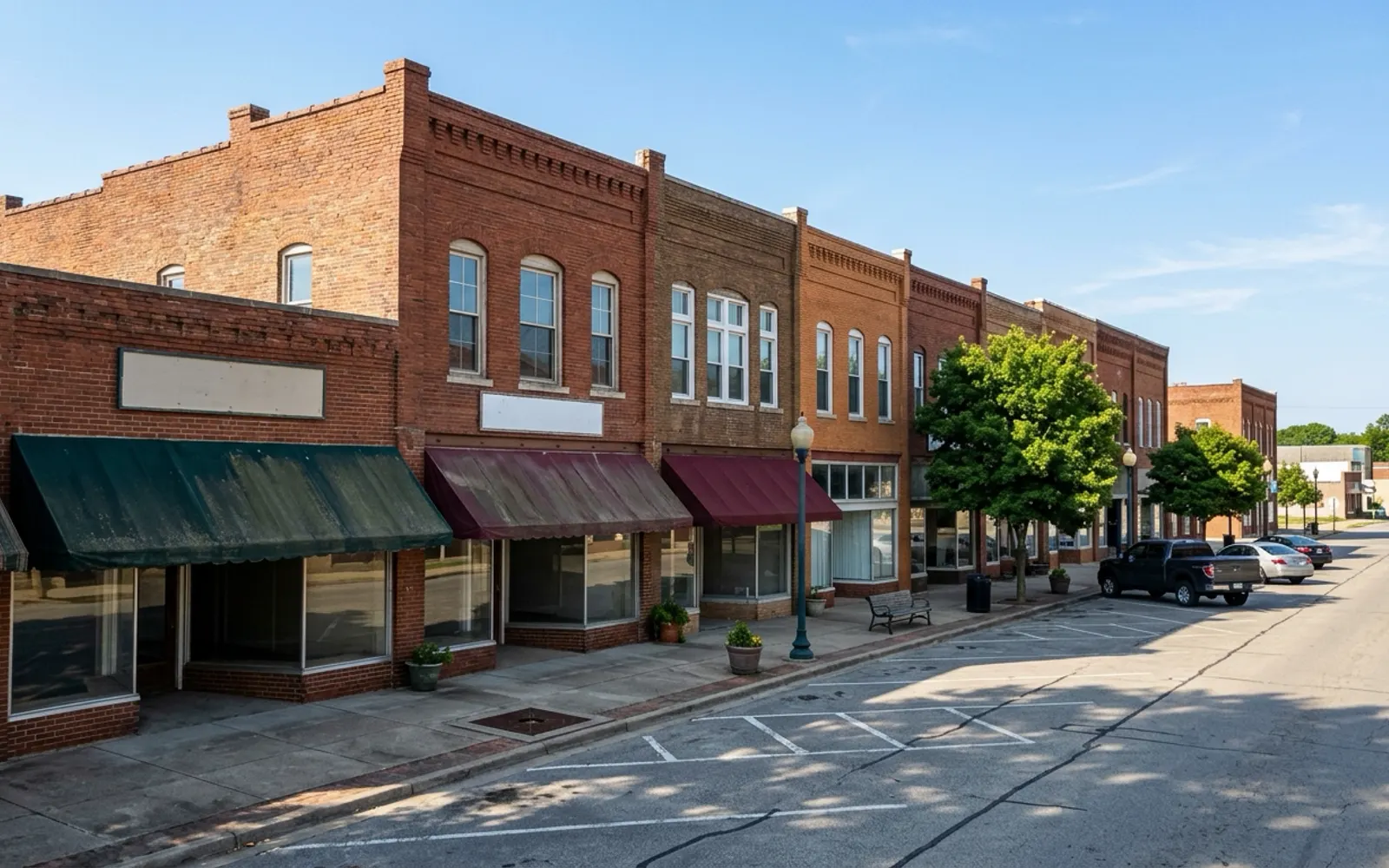
Downtown Hampshire is a few blocks of State Street, and it is small enough to learn in one walk. The library, the village offices at 234 S. State Street, Block's Fresh Market, a handful of restaurants and bars, and the older storefronts are all within a few minutes of each other. The village's Central Area tax increment financing district covers about 107 acres of downtown and adjacent blocks, according to the village's TIF page, and funds improvements inside that area.
There is room to grow. The village's downtown available-properties page lists storefronts for lease and sale on State Street, including a 3,078-square-foot building at 141 S. State Street for $375,000. In June 2026 the Village Board rezoned 279 N. State Street from the downtown business district to single-family residential, according to the June 18 minutes.
What people want downtown has not changed in years. The village's Business Development Commission ran a resident business survey this summer, and the August 20, 2026 minutes report more than 300 responses, with a bakery and a hardware store at the top of the wish list. The minutes note the results were the same as the survey eight years earlier.
For the bigger errands, most people drive east. My Huntley guide covers the Route 47 corridor and my Elgin guide covers Randall Road.
Groceries in Hampshire
Hampshire has one grocery store downtown, and it has been there a long time. According to the village's feature on Block's Fresh Market, the store has served the village since 1921, when A. F. Block opened it, and it has changed hands only a few times since. The Hampshire Area Chamber listing puts it at 199 Maple Place, with grocery, deli, produce, meat and liquor.
For a full weekly shop at a large chain store, most people drive east toward Huntley or south toward Randall Road in Elgin. That drive is part of the Hampshire trade-off, and from the newer subdivisions on the east side it is about the same distance as the drive downtown.
Where Hampshire Eats and Drinks
Hampshire's restaurants are local and casual. The Hampshire Area Chamber's restaurant directory lists Angel's Pancake Cafe, Copper Barrel on State, Double R Dogs, Hampshire Social, Neon Cow Creamery & Sub Shop, Newman's Corner Pub, Nikos Tavern & Neighborhood Grill, Rosati's Pizza and Tria Lounge, among others, as of September 2026.
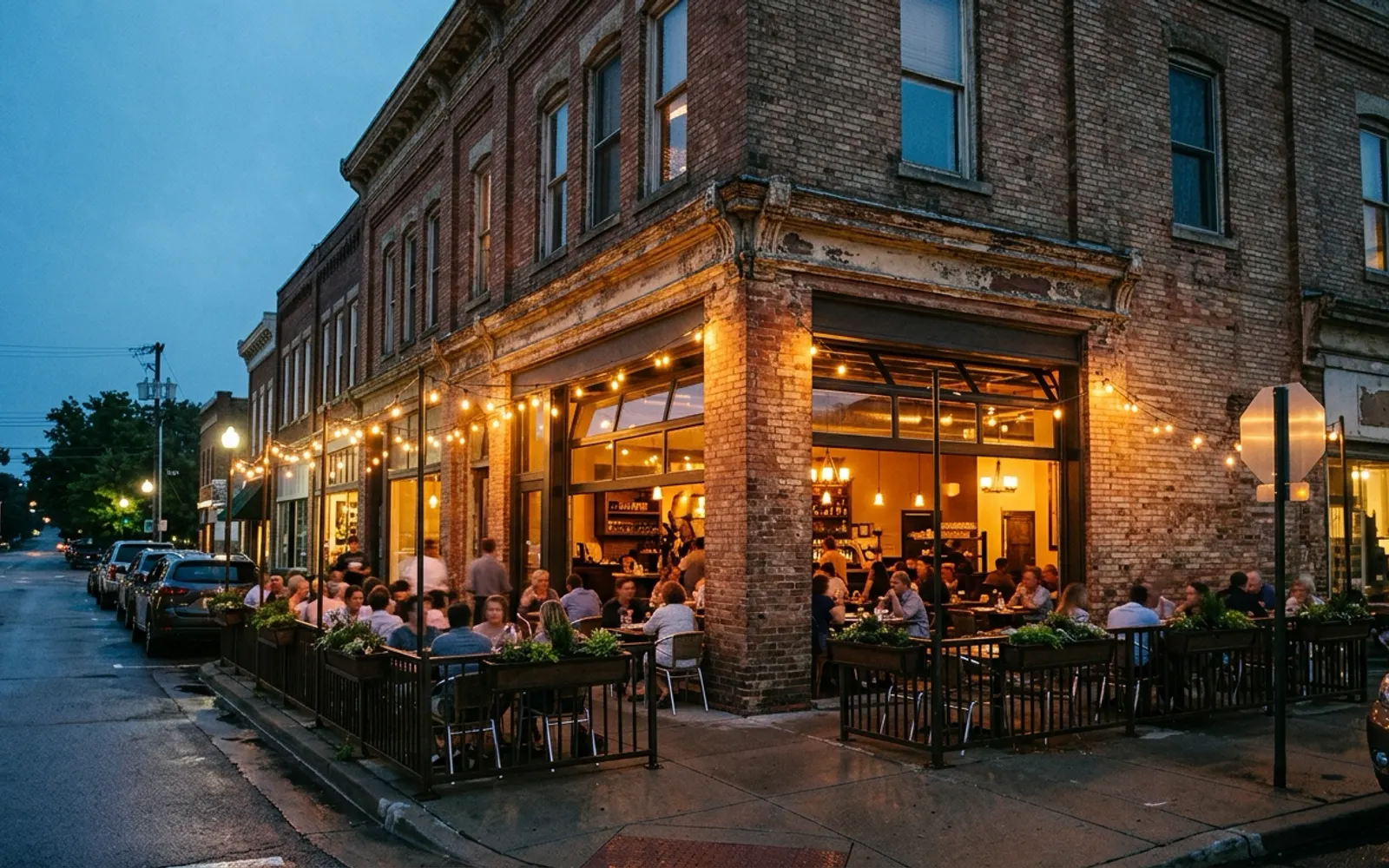
Copper Barrel on State is the one I hear about most. According to the village's profile, it opened downtown in the fall of 2018, smokes its own meats on site and runs a Friday night fish fry that fills the room. The village also levies a 2% places-for-eating tax on prepared food, according to its local tax page, so a restaurant bill here carries a little more than the state rate.
Parks and Recreation in Hampshire
Parks and programs in Hampshire are run by the Hampshire Township Park District, which lists Ralph Seyller Memorial Park, Bruce Ream Memorial Park, Kelley Road Park and the Dr. Tom Getzelman Dog Park among its sites, plus the Catherine B. Seyller Community Room. It runs sports leagues, dance, day care and preschool, and a set of fall events: an outdoor movie at Ream Park on September 26, 2026, Trunk or Treat downtown on October 11 from 4 to 7 p.m., and a ticketed Haunted Trail on October 23 and 24.
Inside the subdivisions, most of the green space is ponds, paths and small parks maintained by homeowners associations, with village SSAs behind them. The Kane County Forest Preserve District is one of the taxing bodies on every bill, and the countryside around the village is still open farmland, so the drive to a trailhead is short.
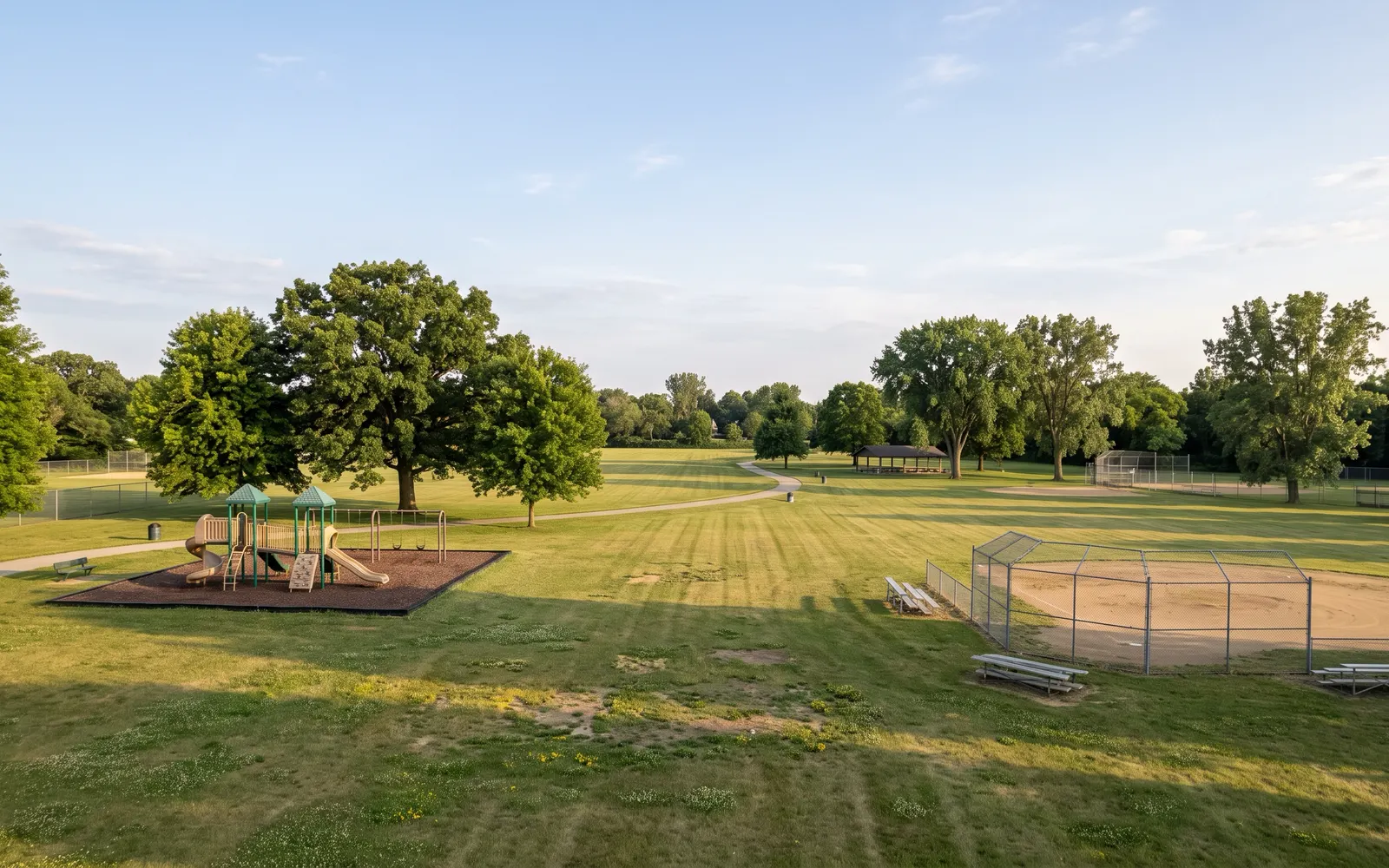
The Ella Johnson Memorial Library in Hampshire
Hampshire's library is the Ella Johnson Memorial Public Library District at 109 S. State Street. Its district covers about 100 square miles, from the Kane County line on the west toward South Elgin on the east, and it keeps book drops in Hampshire, in Burlington and at the Cambridge Lakes Community Center. It runs a business center for copying, scanning and faxing, tech help, and the local history collections the history section mentions. Its share of the 2025 tax rate is 0.101816%, one of the smaller lines on the bill.
Utilities and Village Services in Hampshire
The Village of Hampshire runs its own water and sewer. According to the village infrastructure page, it has four wells able to pump 3,600 gallons a minute, three water treatment plants able to produce 5 million gallons a day and four elevated tanks holding 5 million gallons, against average use of about 600,000 gallons a day. The wastewater plant is rated for a maximum flow of 6.9 million gallons a day and averages about 1 million. For a village adding a new house almost every business day, that headroom matters.
Bills come every two months. According to the village's utility FAQ, rates effective July 2026 are $6.68 per 1,000 gallons for water and $7.81 per 1,000 gallons for sewer, plus a $50 capital improvement fee, a $1 billing charge and $47.24 for garbage each billing cycle. A household using 10,000 gallons in two months would pay about $243 per bill at those rates. The village offers a sewer deduct meter for outdoor watering, and if you are selling, you need to schedule a final meter read as close to closing as possible.
Flood Brothers collects trash, normally on Thursdays, according to the village garbage page, and the board approved a contract extension on June 4, 2026. ComEd delivers electricity and Nicor Gas provides natural gas, and the village runs an electric aggregation program. For internet, the village lists AT&T, Mediacom, Fox Valley Internet and Comcast in limited areas, so check the specific address before you assume fiber.
On an older downtown house, ask about the water service line. The Village Board approved contracts in May and July 2026 to replace lead service lines at individual addresses. If the house predates the subdivisions, ask the village what material its line is.
Hospitals Near Hampshire
The closest full-service hospital is Northwestern Medicine Huntley Hospital at 10400 Haligus Road in Huntley. According to Northwestern Medicine, it opened in 2016 as a 128-bed hospital with a Level 2 trauma center, a cardiac catheterization lab and a birth center. The other option is Advocate Sherman Hospital at 1425 N. Randall Road in Elgin, a Level II trauma center whose current campus opened on December 15, 2009, according to Wikipedia. Fire protection in the village comes from the Hampshire Fire Protection District, the second-largest line on the tax bill.
Coon Creek Country Days and Hampshire's Event Calendar
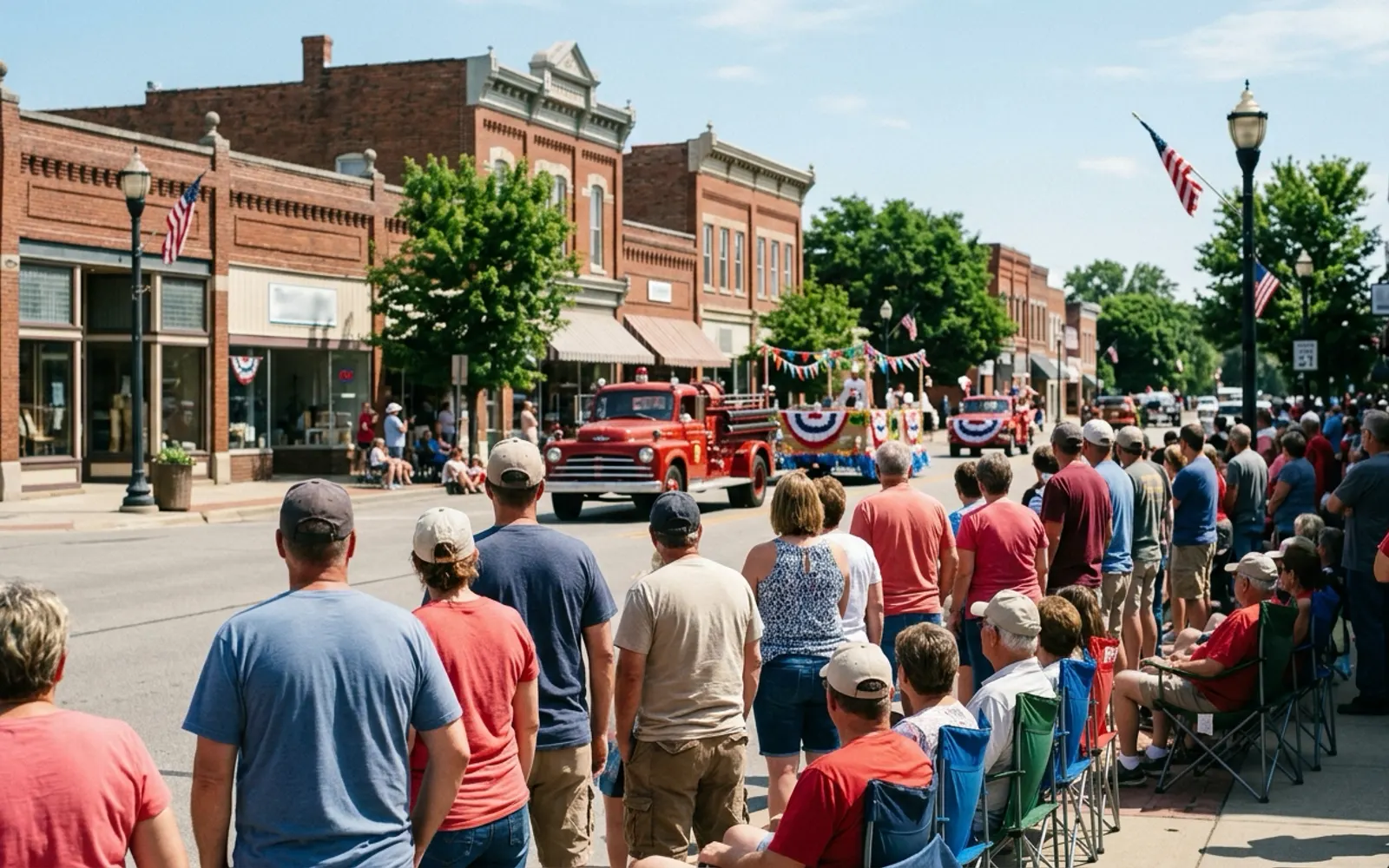
The big one is Hampshire Coon Creek Country Days, the village's summer festival. In 2026 it ran August 13 to 16: Thursday and Friday evenings, Saturday from 1 p.m. to midnight and a Sunday parade at noon on State Street, with a carnival, beer garden, craft and vendor fair, fireworks and a free corn roast. This year's parade included the village's 150th-birthday float. The Village Board's March 19, 2026 minutes record $19,000 in village support for the festival, plus in-kind help like police coverage and the use of village land.
The rest of the year has a steady rhythm. The park district's Trunk or Treat fills downtown in October. The village's Jingle Fest Parade runs on a December evening; in 2025 it was Friday, December 12, at 6:30 p.m. The August minutes also mention a Hampshire Park District run and the Suds and Fun Car Show. If you are touring houses in mid-August, go to Coon Creek. It tells you more about the town than any listing will.
What's Being Built in Hampshire
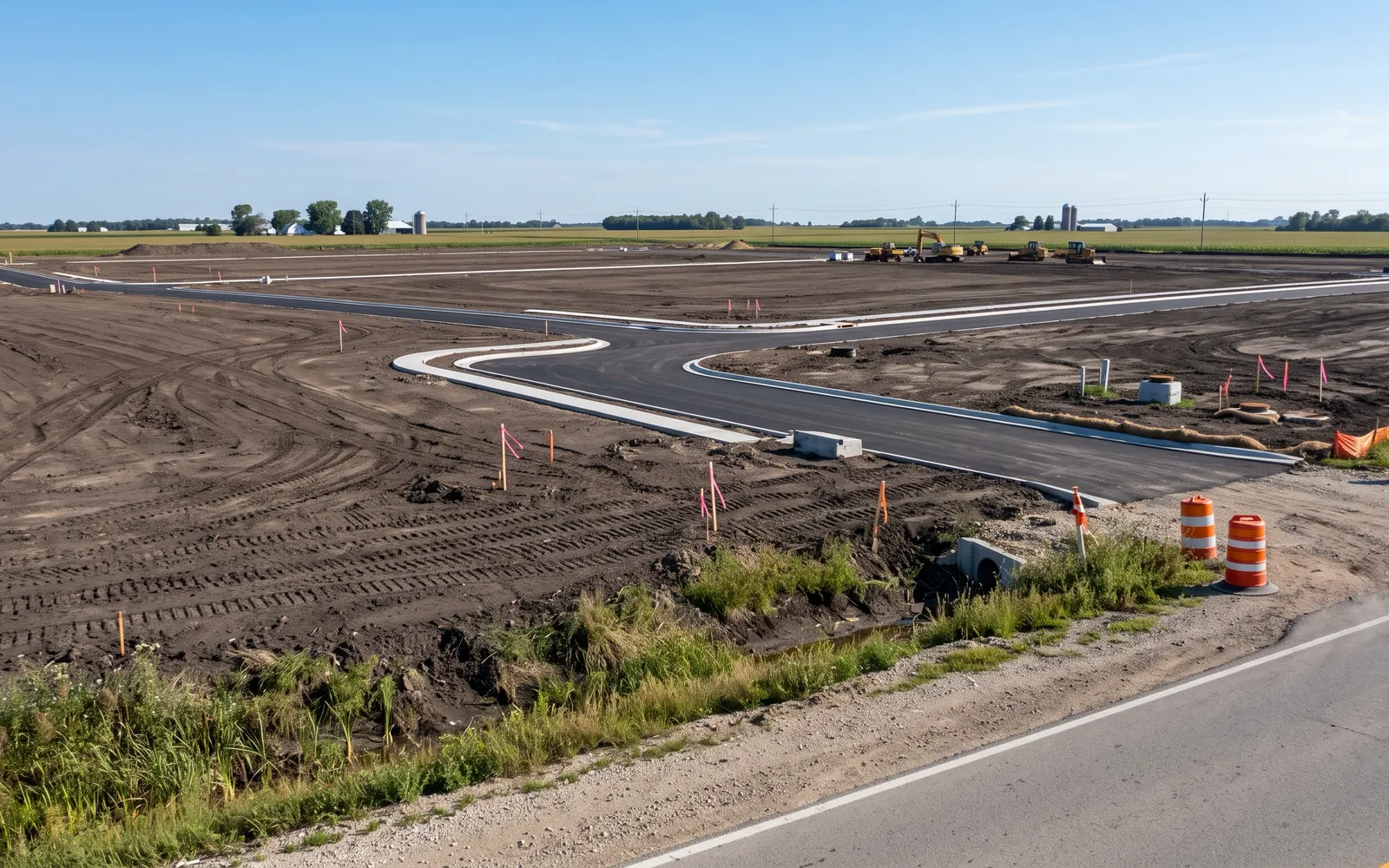
Hampshire's development story is two master plans filling in and an industrial edge along I-90 and Route 20. Most guides online describe Hampshire as if it were finished. It is not close.
Oakstead is the biggest residential item this year. It is a Crown Community Development project first planned in 2004 and revised in 2021, when the board also annexed land for a school site, according to the village's Oakstead page. On August 6, 2026, the Village Board approved final plats for Oakstead Neighborhoods H, I, J, K and S. The staff report in the agenda packet counts 299 homes across those five neighborhoods, 41 in H, 48 in I, 81 in J, 83 in K and 46 in S, on minimum lots of 6,890 to 9,100 square feet. A sixth neighborhood, R, with 18 townhome buildings, was pulled by the developer for now. An off-site water main from Route 20 to the west side of Oakstead was accepted the same night.
Prairie Ridge North keeps building out, with the board reducing letters of credit on four neighborhoods in May 2026, and the District 300 elementary school site at Oakstead had its public improvements accepted on May 7. Together, that is several hundred more homes and a new school in the pipeline.
On the industrial side, the village markets the Hampshire 90 Logistics Park with lots of 13 to 26 acres zoned for general industrial use, plus sites in the Hampshire Woods Business Park and on Gast Road. In 2026 the board annexed and rezoned land at 44W452 Route 20 for industrial use with outdoor storage (March 19), and annexed and rezoned a parcel for an outdoor concrete and asphalt milling operation (June 18), according to the village's 2026 board minutes. The board also voted 5 to 1 against rezoning 201 Keyes Avenue for a rubber recycling center on May 7.
For a buyer, the practical read is this. Homes near the Route 20 and I-90 edge will see more truck traffic over time, and any field next to a subdivision may already be platted. Before you buy next to open land, look at the village's major developments page and ask me to pull the plat.
I don't label any town or neighborhood as safe or unsafe.
Flood Risk in Hampshire
Flooding is not a village-wide issue in Hampshire, but drainage is a lot-by-lot one. Redfin, using First Street's model, rates Hampshire's overall flood risk as minor, with 17 properties, about 1% of the total, at risk of severe flooding over the next 30 years. The same page rates wildfire risk as moderate, with 9% of properties at some risk.
What matters more here is stormwater. Many subdivisions drain to detention ponds, and the most common village SSA exists to maintain them, according to the SSA page. A house that backs to a pond has a view and a sump pump that works hard in spring.
Two checks before you write an offer. Look the address up on the FEMA flood map, because a mapped flood zone can mean required flood insurance on a mortgage. And ask the seller directly about water in the basement and how often the sump pump runs. In my experience with 2000s subdivision homes, the follow-up question about the battery backup is the one that matters.
Frequently Asked Questions
How much does a house cost in Hampshire, IL?+
Redfin reported a median sale price of $394,739 for the three months ending August 2026, and Zillow's home value index was $417,168 for August 2026, up 4.3%. New construction in Prairie Ridge was listed from about $358,990 in September 2026.
What are property taxes in Hampshire, IL?+
The median effective rate is about 2.40%, with a median bill of $7,584 (Ownwell, April 2026). The 2025 composite rate for a typical in-town parcel is about 6.92% of assessed value, and some subdivisions add a small SSA line.
What is an SSA in Hampshire, IL?+
A special service area is a village taxing district for one subdivision or site, usually to maintain its detention ponds and common ground. Hampshire lists 20 of them. The active 2025 rates were all under 0.1% of assessed value, and back-up SSAs are taxed only after emergency work.
What school district is Hampshire, IL in?+
Mostly Community Unit School District 300, with Hampshire Elementary, Gary D. Wright Elementary, Hampshire Middle School and Hampshire High School. Some nearby addresses fall in District 158 or District 301, so confirm each address with the district.
How long is the commute from Hampshire to downtown Chicago?+
There is no station in town. From Big Timber in Elgin, the fastest weekday trains reach Union Station in 67 minutes; from downtown Elgin, in 61 minutes. Big Timber has no weekend trains.
What neighborhoods are in Hampshire, IL?+
Commonly named subdivisions include Prairie Ridge, Tamms Farm, Oakstead, Old Mill Manor, Hampshire Prairie, Hampshire Highlands, Hampshire Fields, Hampshire Hills, White Oak Ponds, Hampshire Meadows, Tuscany Woods and Lakewood Crossing, plus the older blocks around State Street.
Is new construction still available in Hampshire, IL?+
Yes. Ryan Homes, D.R. Horton and Silverthorne Homes are building in Prairie Ridge, and the village approved final plats for 299 more homes in Oakstead on August 6, 2026. Hampshire issued 158 new single-family permits from January through July 2026. How builder contracts, timelines and allowances work is on my new construction homes in Illinois page.
Eshu Chikoti has extensive access to off-market listings throughout Hampshire and the rest of Kane County — homes that never make it to the public listing sites. That matters right now: in a seller's market like this one, well-priced homes routinely go under contract within days, and buyers relying only on public listings are competing for whatever is left over. Working with someone plugged into off-market inventory means seeing homes before the crowd does.
Eshu Chikoti · 847-691-4282 ·
Get new Hampshire listings by email
When a home comes on the market in Hampshire, I'll email it to you.
Just your email. Unsubscribe any time by replying.
Thinking About Hampshire?
Whether you're buying, selling, or just curious what's on the market, I can walk you through Hampshire street by street.