West Chicago, IL
West Chicago, IL is a DuPage County city of about 25,400 people built around the first railroad junction west of Chicago, with a Metra stop downtown, a regional airport and some of central DuPage's lower home prices.
Living in West Chicago, IL means a 52-minute express train to Ogilvie, a median sale price near $387,000 in Redfin's August 2026 report, and property tax around 2.7% of value. The trade-offs are a car-dependent layout and a mailing address that can land a house in any of several school districts. Here is how it breaks down.
Written by Eshu Chikoti · 847-691-4282 ·
How West Chicago, IL Got Here: A Short History
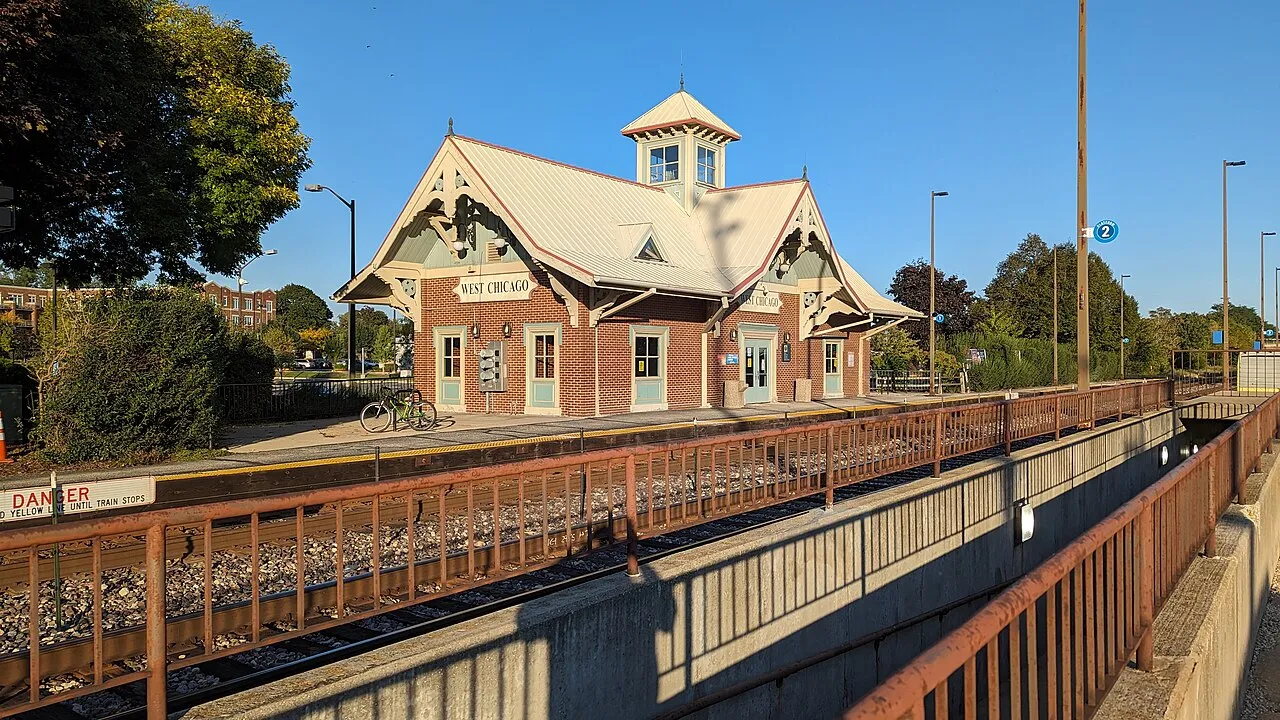
West Chicago exists because two railroads met here. According to the city's history as summarized on Wikipedia, Erastus Gary homesteaded 760 acres along the DuPage River in the 1830s. The Galena and Chicago Union Railroad arrived in 1849 and the Aurora Branch Railroad in 1850, which made this spot the first railroad junction point west of Chicago. John B. Turner, president of the Galena and Chicago Union, recorded the first plat in 1855 under the name Town of Junction.
The name changed twice after that. Dr. Joseph McConnell and his wife Mary platted a second section in 1857, and the settlement became Turner Junction after the railroad president. It incorporated as the Village of Turner in 1873. In 1896 local business leaders renamed it West Chicago, on the theory that the new name sounded more cosmopolitan and would attract industry. The Elgin, Joliet and Eastern Railway came through in 1888 offering free factory sites, and by 1910 the town had about 2,378 people, a Borden's milk condensing plant and the Turner Brick Company.
The chapter every West Chicago buyer should know is the thorium story. From 1932 to 1973 a plant on the south side of town, later called the Rare Earths Facility, extracted thorium from monazite ore. Kerr-McGee bought it in 1967 and production stopped in 1973. Waste from the plant was spread around the community for decades, and four areas became federal Superfund sites: residential properties, Reed-Keppler Park, the city's sewage treatment plant, and Kress Creek with the West Branch of the DuPage River.
The cleanup took most of four decades. I cover where it stands today in the development section below, because it's the single question I get most often from buyers who have heard the story secondhand. The short version is that the soil work is done and the last pieces are being closed out in 2026.
West Chicago at a Glance
West Chicago sits on the western edge of DuPage County, about 30 miles west of the Loop, with Wheaton and Winfield to the east, Carol Stream to the northeast, Wayne to the north and St. Charles and Geneva across the Kane County line to the west. The whole city is in DuPage County. It covers about 15.4 square miles of land, which is large for its population, because DuPage Airport and a good deal of industrial and forest preserve land sit inside the city limits.
The 2020-2024 Census ACS puts the population at 25,395 across 7,745 housing units. Of the 7,459 occupied homes, about 70.9% are owner-occupied, and about two-thirds of all units are detached single-family houses. The rest is a mix of townhomes, small multi-unit buildings and apartment complexes, mostly near Route 59 and the older core.
Most of the city is in Winfield Township, which the township itself describes as covering most of West Chicago, Winfield and Warrenville. The north end is in Wayne Township, along with a large unincorporated area.
That last point matters more than people expect. The 60185 ZIP code and the "West Chicago" mailing address reach well past the city limits into unincorporated Wayne and Winfield townships. A house can say West Chicago on the listing and still be outside the city, with township roads, a different tax code and a school district that has nothing to do with West Chicago's own. Before you run numbers on any listing, check whether the parcel is actually in the city.
West Chicago Neighborhoods, Pocket by Pocket
West Chicago has no official neighborhoods, but it splits cleanly by age and by road. The old core around downtown and the depot has the city's oldest housing, much of it on small lots and some of it more than a century old. Moving out from there you hit mid-century blocks, then the 1990s and 2000s subdivisions that make up most of what sells above the city median, many of them west and north of Route 59.
The second split is school district, and in West Chicago that split is sharper than in most towns. Subdivisions a few minutes apart can feed District 33, Benjamin District 25, St. Charles District 303 or Elgin-area U-46. I cover the districts in the schools section. For pocket shopping, the point is that the subdivision name alone doesn't tell you the school, and neither does the mailing address.
Walk Score lists about 20 named areas in West Chicago, including Downtown West Chicago, the East Washington Historic District, Hampton Hills, Oak Meadows, Woodland Heights, High Lake, Appletree and Hillside. Listings use subdivision names more often. The build years and school assignments below come from subdivision pages on local agent sites, so treat them as a starting point and confirm each address with the district.
If you want to know which pocket a specific address falls in, and which district it actually feeds, that is a conversation I am happy to have here.
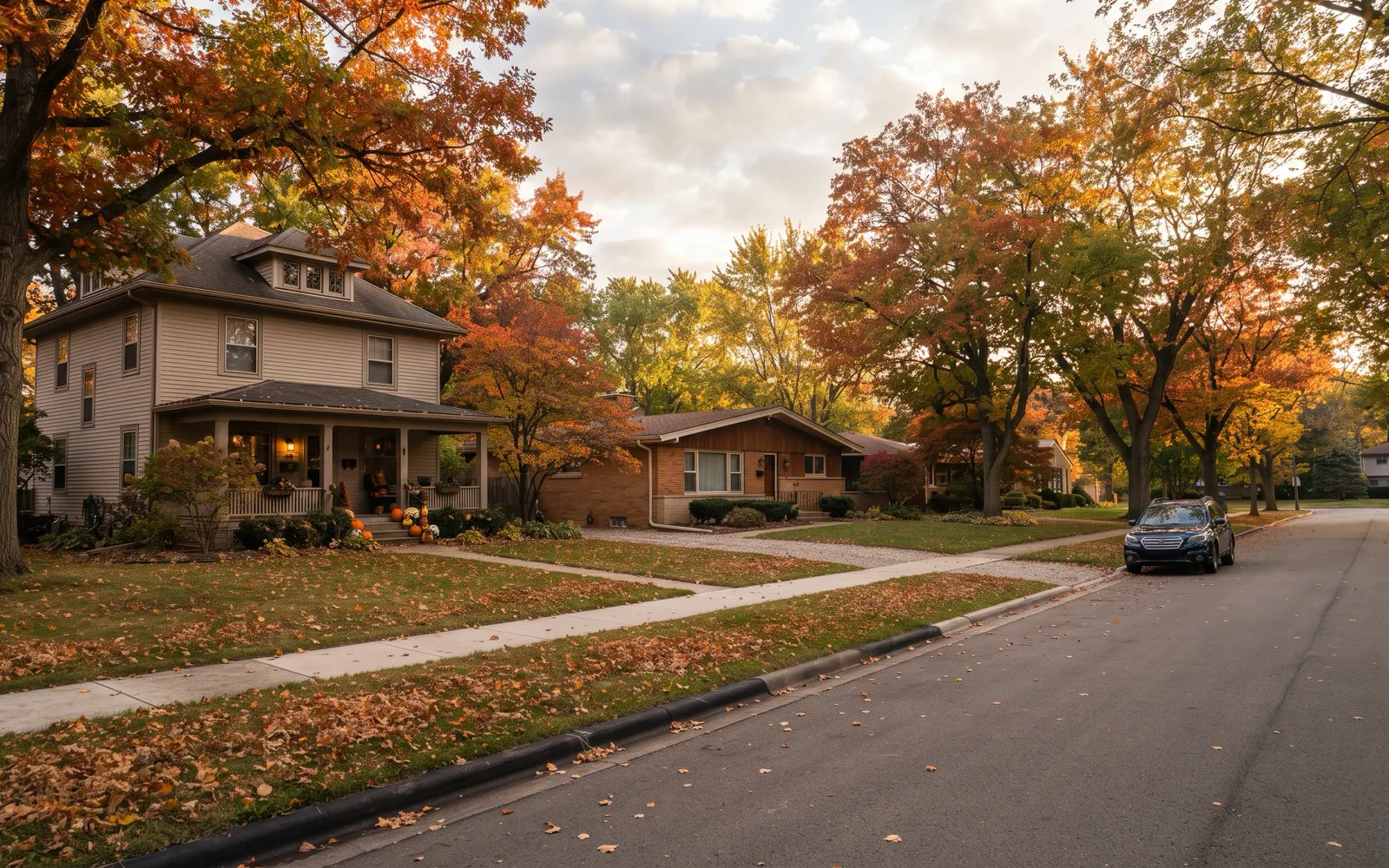
Downtown and the East Washington Historic District. The original core around Main Street and the Metra depot. The oldest homes in the city, many on small lots, and the only part of West Chicago where walking to the train is realistic.
The south side near Pioneer Park. Older blocks south of downtown around Pioneer Park and the former Kerr-McGee site, which is becoming a 44-acre city park.
Hampton Hills. Single-family homes built from about 1994 to 2002 with a lake park and sidewalks, per its subdivision page. Listed as feeding Benjamin District 25 and Community High School District 94.
Indian Knoll (the subdivision). Homes built over a long span, roughly 1964 to 2004, per its subdivision page, listed in Benjamin District 25. Not to be confused with Indian Knoll Elementary, which is a District 33 school.
Prestonfield. Concord Homes single-family houses built from 2003 to 2006, about 2,375 to 4,400 square feet, per its subdivision page. Listed as feeding Wegner Elementary and Leman Middle in District 33.
Cornerstone Lakes. Single-family homes built from 1998 to 2003 on the west side toward St. Charles. One subdivision page lists St. Charles District 303 schools (Norton Creek, Wredling, St. Charles East); another agent page lists Districts 33 and 94. Confirm each address with the district.
Smythe Settlement. Larger homes on bigger lots built from about 1989 to 2006, north of Smith Road and east of Route 59, with horse trails, per its subdivision page. Listed in U-46, feeding Bartlett High School.
Other names you will see on listings. Prairie Meadows, Forest Trails, Willow Creek, Wayne Oaks, Arbors, Lakewood, Meadow Wood and Ingalton Hill Estates. Ask for the build year, the school assignment and whether the parcel is inside the city on each one.
What West Chicago Homes Look Like, by Era
West Chicago has a wider spread of housing ages than most of DuPage County, and the Census ACS shows it. About 12% of the city's 7,745 housing units were built before 1940, which is a large share for a suburb. Another 1,421 units date from the 1950s and 1960s, and 1,415 from the 1970s. The biggest wave came later: about 2,984 units, close to 39% of the total, were built between 1990 and 2009. Only about 76 units date from 2010 or later.
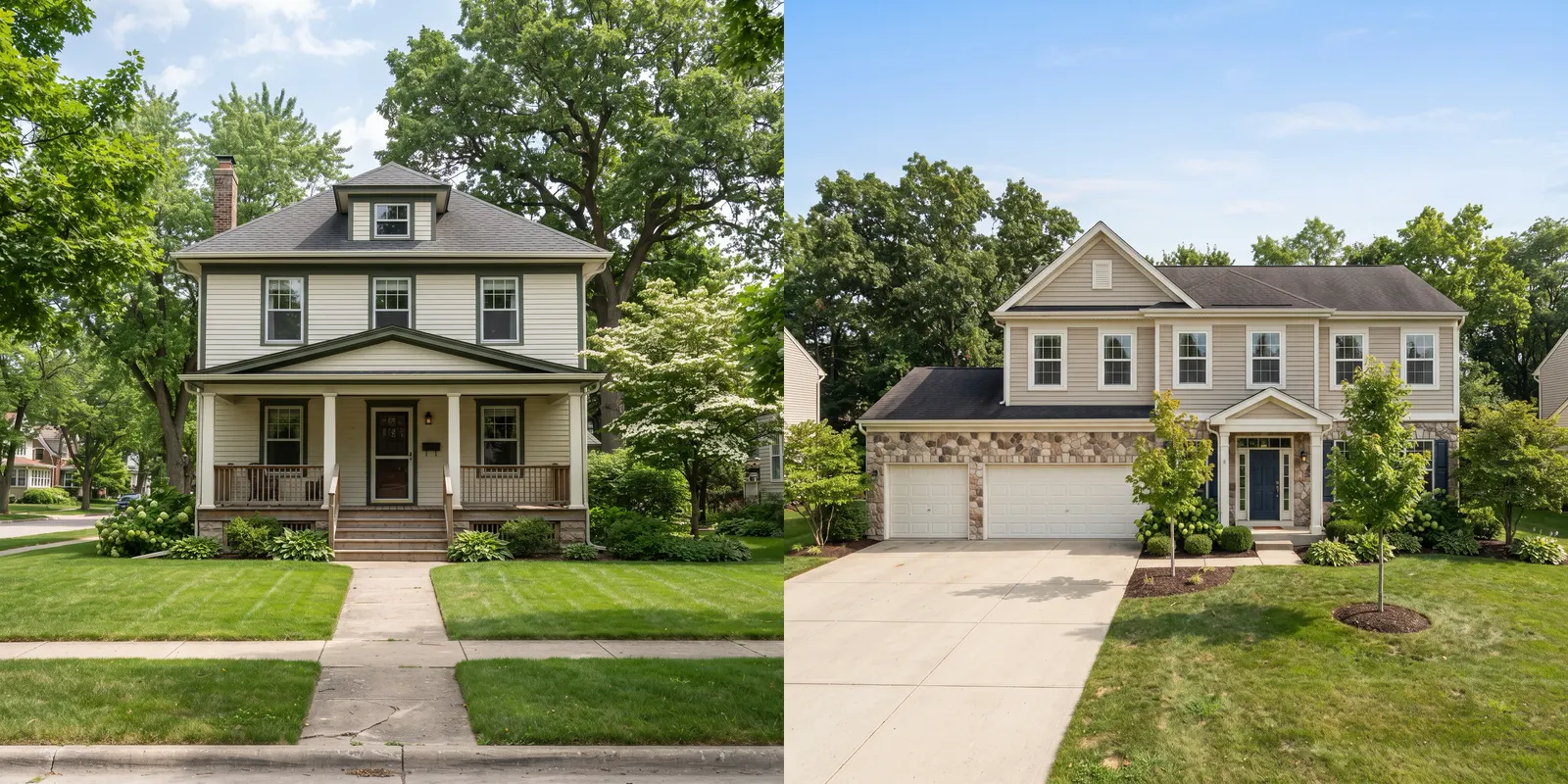
In practice that means three different shopping experiences. Near downtown you find frame houses from the railroad era, bungalows and small older homes, often with detached garages and narrow lots. The mid-century blocks are ranches, split-levels and bi-levels. The 1990s and 2000s subdivisions are two-story colonials and larger single-family homes, many between 2,000 and 4,000 square feet, with attached garages, sidewalks and small HOA dues.
The ACS puts the median value of an owner-occupied home at $336,800 and the median gross rent at $1,469. Both trail the current market, as ACS medians always do, but they show the gap between West Chicago and its neighbors to the east.
I have walked buyers through enough older houses to know which surprises to expect in the pre-1940 stock: original or undersized electrical service, galvanized supply lines, stone or block foundations that have seen water, and lead service lines, which the city is actively replacing. None of those should kill a deal. All of them belong in the price. If you are weighing an older house, my home inspection checklist is a good place to start.
The West Chicago Housing Market in 2026
West Chicago homes sell fast and usually over asking. In the three months ending August 2026, Redfin reported a median sale price of $387,244, up 1.9% from a year earlier. The median home sold in 43 days, down from 49, at 102.8% of list price, and 66.8% of homes sold over asking. Redfin gives West Chicago a Compete Score of 81 out of 100, which it calls very competitive, and says homes here get about eight offers on average.
Zillow's home value index agrees on direction. For August 2026 it puts the typical West Chicago home at $390,277, up about 4.2% from $374,477 a year earlier and up from $357,995 in August 2024. Redfin's price per square foot, $221, was up 4.2% as well. The two sources measure different things. Redfin's median is the middle of whatever happened to sell in a three-month window, and Zillow's index tracks the estimated value of all homes. When they move the same way, as they do here, the trend is real.
One number to read carefully: Redfin counted 37 sales in August 2026, down 21.4% from 47 a year earlier. That's a thin monthly sample, and a single month's average can swing hard on a handful of sales, which is why I quote the three-month median instead. Fewer sales with more offers per house tells me supply is the constraint, not demand. Only 10.7% of listings took a price cut this summer, down 8.3 points from last year.
What that means in practice: a well-priced house draws multiple offers, often in the first weekend. Redfin says hot homes can go for about 3% over list. An overpriced house still sits, and the buyers I work with here are careful because they are often comparing West Chicago against Wheaton, Winfield and St. Charles at the same time.
West Chicago Property Taxes and the Real Cost of Owning
Property tax is the cost that changes the monthly payment most in West Chicago, and it never shows up in the list price. Ownwell's data, last updated April 2026, puts the median effective rate at 2.68% and the median annual bill at $7,112 for the 60185 ZIP code.
Here is what that looks like on a real purchase. At 2.68%, a house bought at Redfin's summer median of $387,244 would eventually carry about $10,400 a year in tax, roughly $865 a month on top of the mortgage. The seller's current bill may be lower because assessments trail the market, but the assessor catches up. The expectation I most often have to reset is buyers who budget off the seller's bill. For a newer subdivision house, agent sites list average bills closer to $11,700 to $12,000 a year, which is in line with that math.
Each combination of township, school district, park district and fire district is its own tax code, and West Chicago has a lot of combinations. A house in the city in District 33 and a house with a West Chicago address in unincorporated Wayne Township in U-46 can carry different rates at the same price. Pull the actual bill for any house you are serious about; DuPage County posts them by PIN or address.
**Two West Chicago closing details.** The city has no real estate transfer tax, according to the Attorneys' Title Guaranty Fund's ordinance summary, but sellers have to get a free deed certification from the city. That requires a point-of-sale city inspection. The city's property transactions page says to schedule it at least two months before closing, the fee is $100 plus 12 cents per square foot (about $316 on an 1,800-square-foot house), and the result is good for six months. A buyer taking a house as-is can sign a letter of intent, post a $1,600 bond and finish the repairs within 90 days. My Illinois closing costs guide covers who usually pays what.
This is general information, not tax advice. Your actual bill depends on your parcel, your exemptions and the assessor.
West Chicago Schools: District 33, District 94 and the Boundary Question
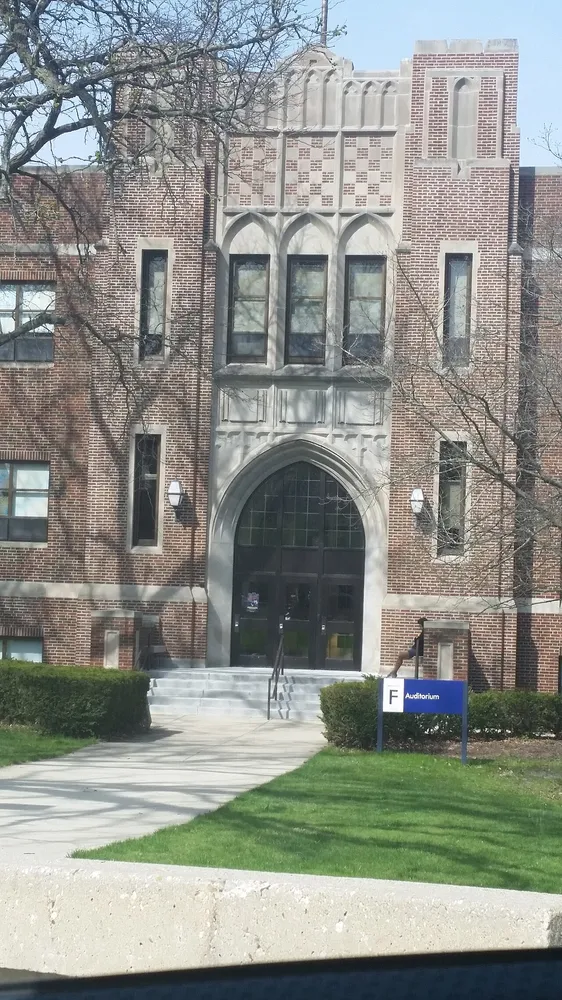
Most of the city is served by West Chicago Elementary School District 33 for kindergarten through eighth grade and Community High School District 94 for high school. District 33 runs Currier, Gary, Indian Knoll, Turner and Wegner elementary schools, Leman Middle School, Pioneer Preschool and a birth-to-three program, and it offers a dual language program. District 94 has one school, Community High School) at 326 Joliet Street, known locally as WeGo, with about 2,040 students in 2024-25.
That is the simple version. The real map is more complicated, and it is the most important thing to understand before you shop here. Parts of West Chicago and its mailing-address area feed Benjamin School District 25 (Evergreen Elementary and Benjamin Middle, then Community High School). The west side toward St. Charles can feed St. Charles District 303 (Norton Creek Elementary, Wredling Middle, St. Charles East High School). The north end, around Smythe Settlement, can feed U-46 and Bartlett High School. And Community Unit School District 200, which runs Wheaton North and Wheaton Warrenville South, also covers part of West Chicago.
Don't assume from the city name or the subdivision name. Check the exact address with the district before you write an offer, and ask me for the boundary if you want it done for a specific house.
Confirm the district for a specific address with the district office, and read each district's profile on the Illinois Report Card at illinoisreportcard.com.
Currier Elementary. District 33.
Gary Elementary. District 33.
Indian Knoll Elementary. District 33.
Turner Elementary. District 33.
Wegner Elementary. District 33.
Leman Middle School. District 33.
Community High School (WeGo). 326 Joliet St. Community High School District 94.
Other districts serving West Chicago addresses. Benjamin District 25, St. Charles District 303, U-46 and District 200, depending on the street.
Commuting from West Chicago: Metra to Chicago
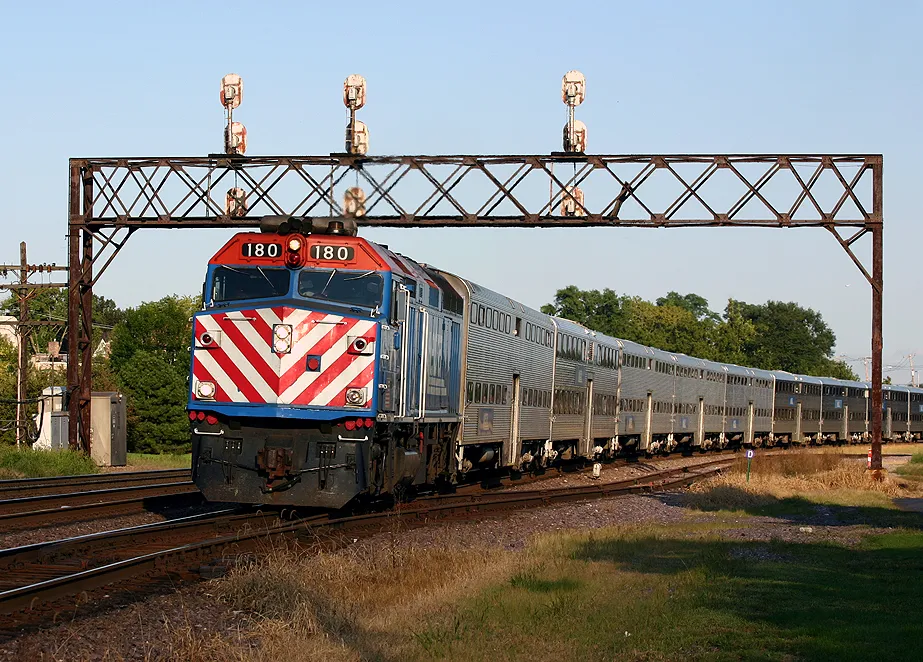
The West Chicago Metra station at 508 W. Main Street is on the Union Pacific West line, a one-seat ride to Ogilvie Transportation Center in the Loop. According to Metra's published schedule data for the service running September 28 to October 25, 2026, 26 trains leave West Chicago for Chicago on weekdays and 25 come back. On weekends there are 10 trains each way on Saturdays and 9 each way on Sundays.
Which train you catch matters a lot here. The fastest inbound train leaves at 7:08 a.m. and reaches Ogilvie at 8:00, 52 minutes. A string of express runs at 5:35, 6:05, 6:35, 7:15, 7:45 and 8:15 a.m. take about 57 minutes. Everything else, including the midday and evening trains, is a local at about 68 minutes. Coming home, the fastest train leaves Ogilvie at 5:10 p.m. and arrives at 5:58, 48 minutes. The first inbound train leaves at 4:35 a.m. and the last at 10:45 p.m.
Parking is cheap by DuPage standards. The city's parking page lists commuter lots at 500 and 542 Main Street, daily parking at $1.75 for 24 hours, and a quarterly permit at $105, with a waitlist when permits run out. Bike lockers rent for $10 a year.
If you are comparing commutes, Wheaton and Winfield on the same line are closer to the city and get more express service.
Driving from West Chicago: Highways and Airports
West Chicago is a state-route town, not an interstate town. Route 59 runs north to south through the east side of the city, Route 38 (Roosevelt Road) crosses the south end, and Route 64 (North Avenue) crosses the north. Route 59 south is the usual way to I-88, and Roosevelt Road or North Avenue east is the usual way to I-355. That's fine for jobs in the western suburbs and along the I-88 corridor, and slower than towns closer to the interstates for anyone driving into Chicago.
West Chicago also has its own airport. DuPage Airport covers about 2,800 acres inside the city, with four runways, including a 7,571-foot main runway that the airport describes as the second longest in the Chicago region after O'Hare. It serves business and private aviation, not airline flights, so for commercial travel you still drive to O'Hare or Midway. If you are looking at homes on the west side, ask about flight paths.
One road project to know about this fall. The city's Town Road project is reconstructing and widening Town Road between Roosevelt Road and Forest Avenue, with new storm sewers. Phase two started the week of September 14, 2026, and runs through November 2026, with Town Road one-way northbound between Roosevelt and Brown Street during the work.
Is West Chicago Walkable?
Mostly not. Walk Score rates the city 38 for walking and 48 for biking, which it calls car-dependent. It counts about 81 restaurants, bars and coffee shops in town, but the average resident can walk to fewer than one of them in five minutes. The subdivisions are built for driving, and most errands happen along Route 59 and Roosevelt Road.
The exception is downtown. The blocks around Main Street, the depot, city hall and the library put the train, the Railroad Days grounds at Pioneer Park and a handful of shops within a short walk. If walking to the Metra matters to you, it narrows your search to the oldest part of town, and those houses sell to a specific buyer.
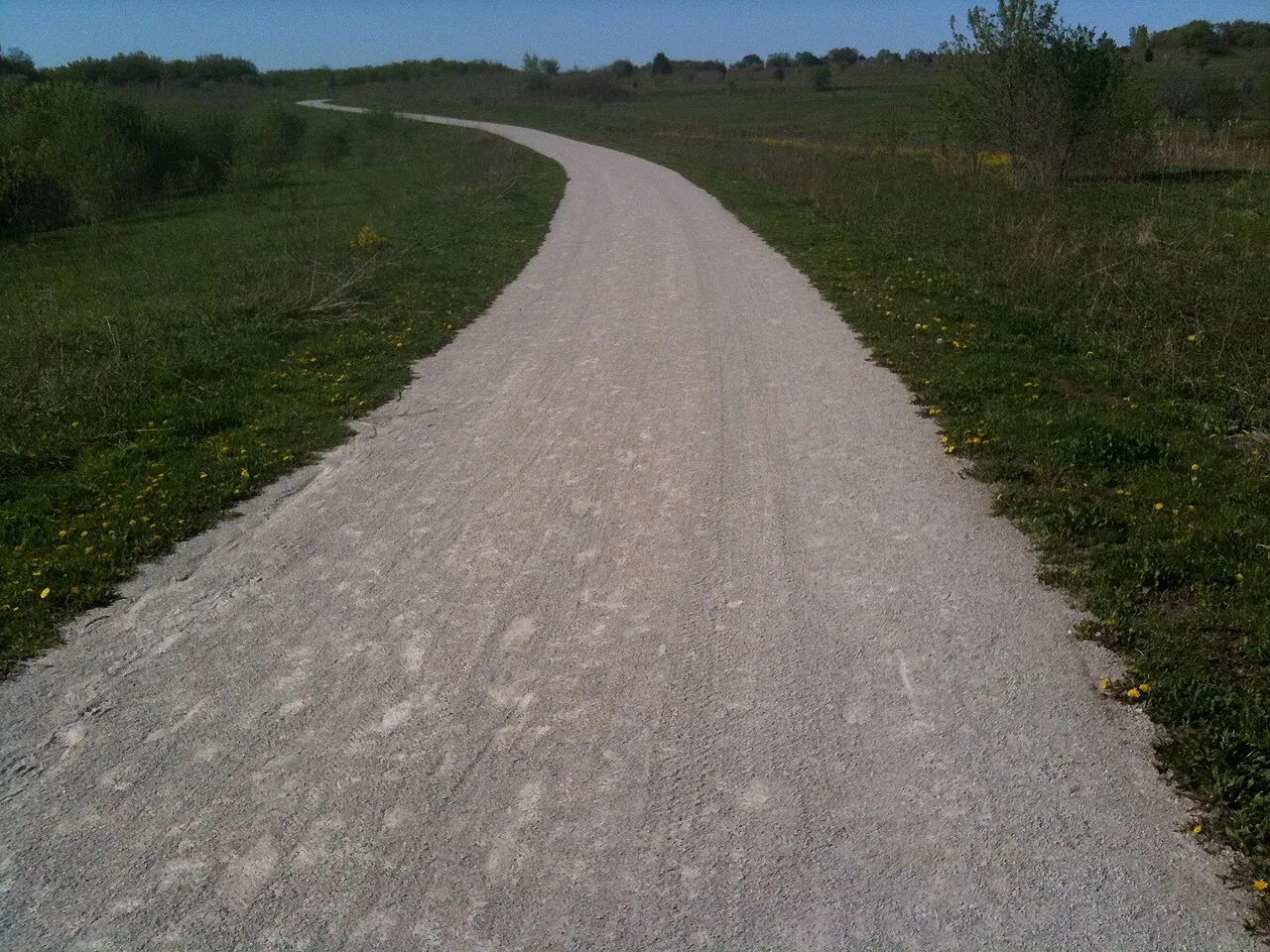
For recreation, West Chicago does better than its Walk Score suggests. The Illinois Prairie Path and the Great Western Trail both reach the city, with a trailhead at Timber Ridge Forest Preserve, so long bike rides and runs on crushed-limestone trail are easy to reach from most of town.
Downtown West Chicago and Shopping
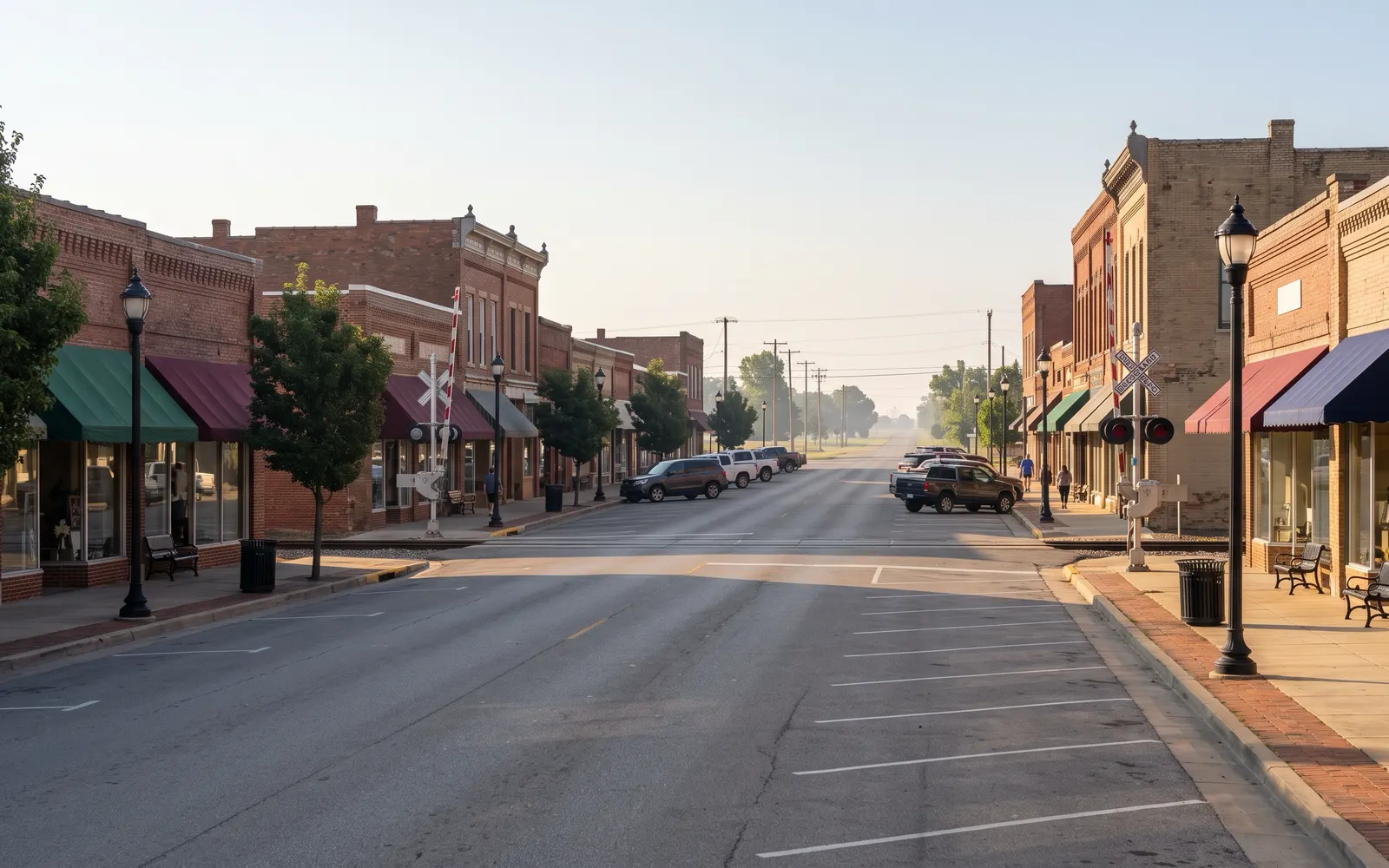
West Chicago's shopping is split between two places. The historic downtown on Main Street is small, with local shops, restaurants and services around city hall at 475 Main Street and the depot. Route 59 and Roosevelt Road carry the big-box stores, national chains and most of the daily errands.
The city has been working on connecting the two for years. Its Central Main Street Redevelopment Plan, updated in May 2018, targets underused city-owned property in the downtown TIF district along Main Street between the old downtown and the Route 59 corridor. In 2026 the city added a temporary downtown revitalization commission, covered in the development section below.
For a bigger shopping trip, Geneva Commons and downtown St. Charles and Geneva are a short drive west across the Fox River, and Town Square Wheaton and the Oakbrook Center are east.
Groceries and Everyday Errands in West Chicago
The main full-size grocery store in the city is Jewel-Osco at 177 E. Roosevelt Road, with a pharmacy. Route 59 and Roosevelt Road hold most of the rest of the weekly errands: pharmacies, banks, hardware and auto service. Depending on which side of town you live on, the stores along Randall Road in St. Charles and Geneva or along Roosevelt Road in Wheaton are often just as close, and many West Chicago residents split their shopping that way.
Where West Chicago Eats
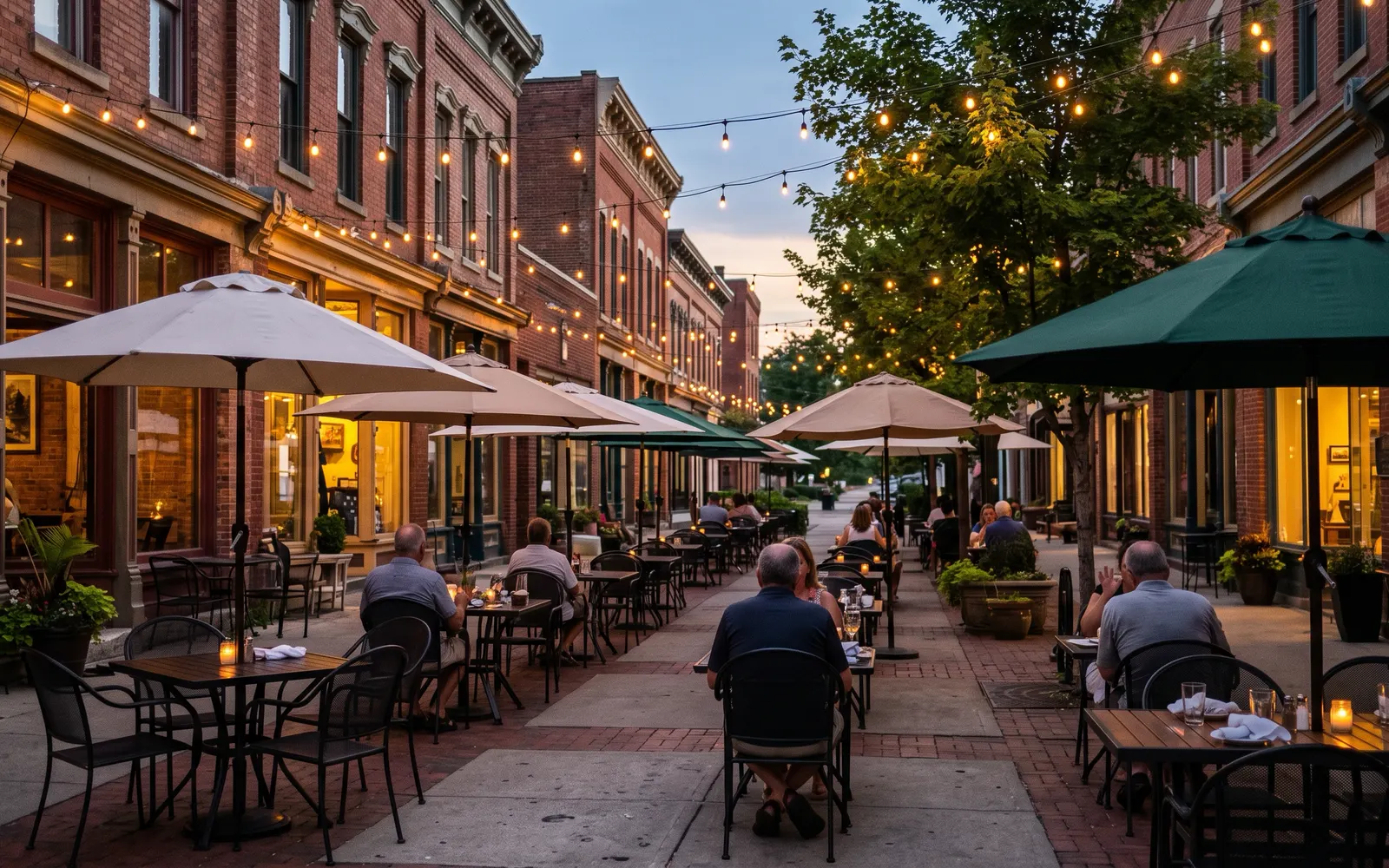
West Chicago's restaurants are mostly independent and mostly casual. Walk Score counts about 81 restaurants, bars and coffee shops in the city, clustered on Main Street downtown and along Route 59 and Roosevelt Road. The downtown spots are the ones people walk to after a Railroad Days evening or a Blooming Fest morning.
I'd rather send you to try a few than rank them here. If you are touring houses, eat downtown once and on Route 59 once. The contrast tells you a lot about the two sides of the city.
Parks, Prairies and Recreation in West Chicago
West Chicago has more open land than most buyers expect. The West Chicago Park District runs the ARC Center fitness facility at 201 W. National Street, Turtle Splash Water Park, the Pioneer Splash Pad and a disc golf course, plus parks including Pioneer Park, Reed-Keppler Park, Cornerstone Lakes Park, Kress Creek Farms, Prestonfield Park and Meadow Woods Park.
The forest preserves are the bigger story. Timber Ridge Forest Preserve covers 1,149 acres of oak woodland, prairie and wetland, with fishing at Timber Lake and a trailhead for both the Great Western Trail and the Illinois Prairie Path. It is also home to Kline Creek Farm, the Forest Preserve District's 1890s living history farm, with a working farmstead, livestock and farmhouse tours.
On the south side, West Chicago Prairie covers 358 acres and includes the 126-acre Truitt-Hoff Nature Preserve, which the Forest Preserve District calls one of the most biologically diverse sites in northeastern Illinois, with more than 600 native plant and animal species. There are no formal trails, and dogs and bikes aren't allowed. It is a place for a quiet walk through a rare remnant prairie.
For golf, Prairie Landing Golf Club is a links course on DuPage Airport land, and Cantigny's course in Wheaton is a short drive east.
The West Chicago Public Library and City Museum
The West Chicago Public Library District is downtown at 118 W. Washington Street, a short walk from the depot. Its Western DuPage Chamber listing gives hours of 9 a.m. to 9 p.m. Monday through Thursday, 9 to 5 Friday and Saturday, and 1 to 5 on Sunday. Check the library's site before a Sunday visit in summer.
The West Chicago City Museum occupies the city's historic former town hall and is the best place to see the Turner Junction and railroad history covered above.
Utilities in West Chicago
The city bills water and sewer directly every two months. Its utilities page lists water at $9.90 per 1,000 gallons above the minimum usage and sewer at $11 per 1,000 gallons. According to the city's Kerr-McGee page, drinking water comes from the deep bedrock aquifer, which the thorium cleanup did not affect.
Groot Industries collects residential trash and recycling under a city contract; a standard 35-gallon cart was $20.53 in 2026 and yard waste is an annual $208 subscription. ComEd delivers electricity and Nicor Gas provides natural gas.
Two infrastructure items to know if you buy an older house. The city is replacing lead service lines, including an expansion announced September 2, 2026 tied to the York Avenue rehabilitation. Ask whether a house has been done. And if the house is outside the city with a West Chicago address, it may be on a private well and septic system instead of city water and sewer, which changes your inspection list.
Hospitals Near West Chicago
The closest full-service hospital for most of West Chicago is Northwestern Medicine Central DuPage Hospital on Winfield Road in neighboring Winfield, a short drive east. Northwestern Medicine Delnor Hospital in Geneva is close for the west side of town, and Marianjoy Rehabilitation Hospital in Wheaton, part of the same system, handles rehabilitation care.
Kline Creek Farm, the Airport and Nights Out Near West Chicago
West Chicago's entertainment is outdoors and local more than it is big-ticket. Kline Creek Farm runs seasonal programs on its 1890s farmstead, and the Timber Ridge Visitor Center has rotating exhibits on DuPage County's farming history. DuPage Airport draws aviation fans, and Prairie Landing's clubhouse is open to the public.
For a bigger night out, downtown Geneva and St. Charles along the Fox River are about ten minutes west, with the Arcada Theatre in St. Charles for concerts. Downtown Wheaton and Cantigny Park are east. If you are also looking east, my Wheaton guide covers the city next door, and my St. Charles guide covers the river towns.
Railroad Days, Blooming Fest and West Chicago's Yearly Traditions
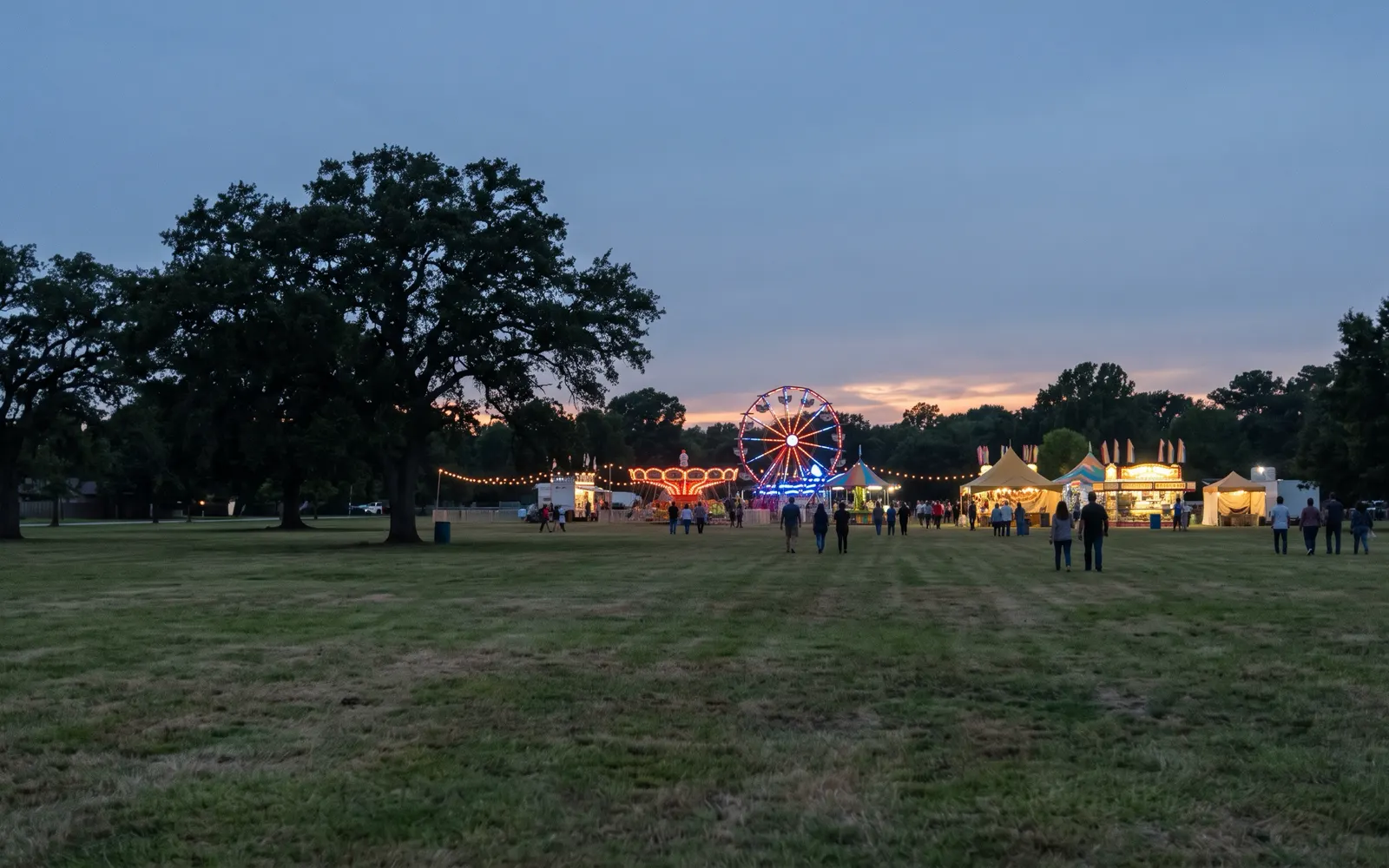
The big one is Railroad Days, a four-day summer festival at Pioneer Park, 479 W. Forest Avenue, organized by the Western DuPage Chamber of Commerce. In 2026 it ran June 18 through 21 with carnival rides, a beer garden, live music and fireworks at dusk on Saturday, with free shuttle buses on the Saturday.
In spring there is Blooming Fest, which the city bills as DuPage County's official welcome to spring. The 2026 edition, the festival's 25th, was on Saturday, May 16, downtown, with more than 5,000 plants for sale through the West Chicago Garden Club, craft, garden and food vendors, live music and a new Chalk the Walk art competition.
The park district fills in the rest of the calendar, including Boo Bash in October. If you are touring houses in June, go to Railroad Days on a weeknight. It tells you more about the town than any listing will.
What's Changing in West Chicago: Cleanup, a New Park and a Moratorium
The biggest change in West Chicago is the end of the thorium cleanup. According to the EPA, the Kerr-McGee Kress Creek and West Branch DuPage River site was deleted from the Superfund list on September 3, 2026. Crews removed more than 129,000 cubic yards of contaminated soil and sediment along a 6.7-mile stretch between 2005 and 2014, with restoration through 2025. Reed-Keppler Park came off the list in 2010 and the sewage treatment plant in 2013. The residential areas cleanup is complete, but that site stays on the list until the former factory site is closed out under Illinois Emergency Management Agency oversight.
For buyers, the practical history is this. Reporting by the IWMF counts 670 residential properties cleaned by 2003 and 13 more by 2015. The city says all on-site soil at the former factory now meets residential standards, and a small area of shallow groundwater with uranium is being treated but doesn't reach the deep aquifer the city drinks from. If you are looking at a house on the south side, ask the seller and your attorney for any cleanup records on the property. I would rather you ask and hear "none" than wonder later.
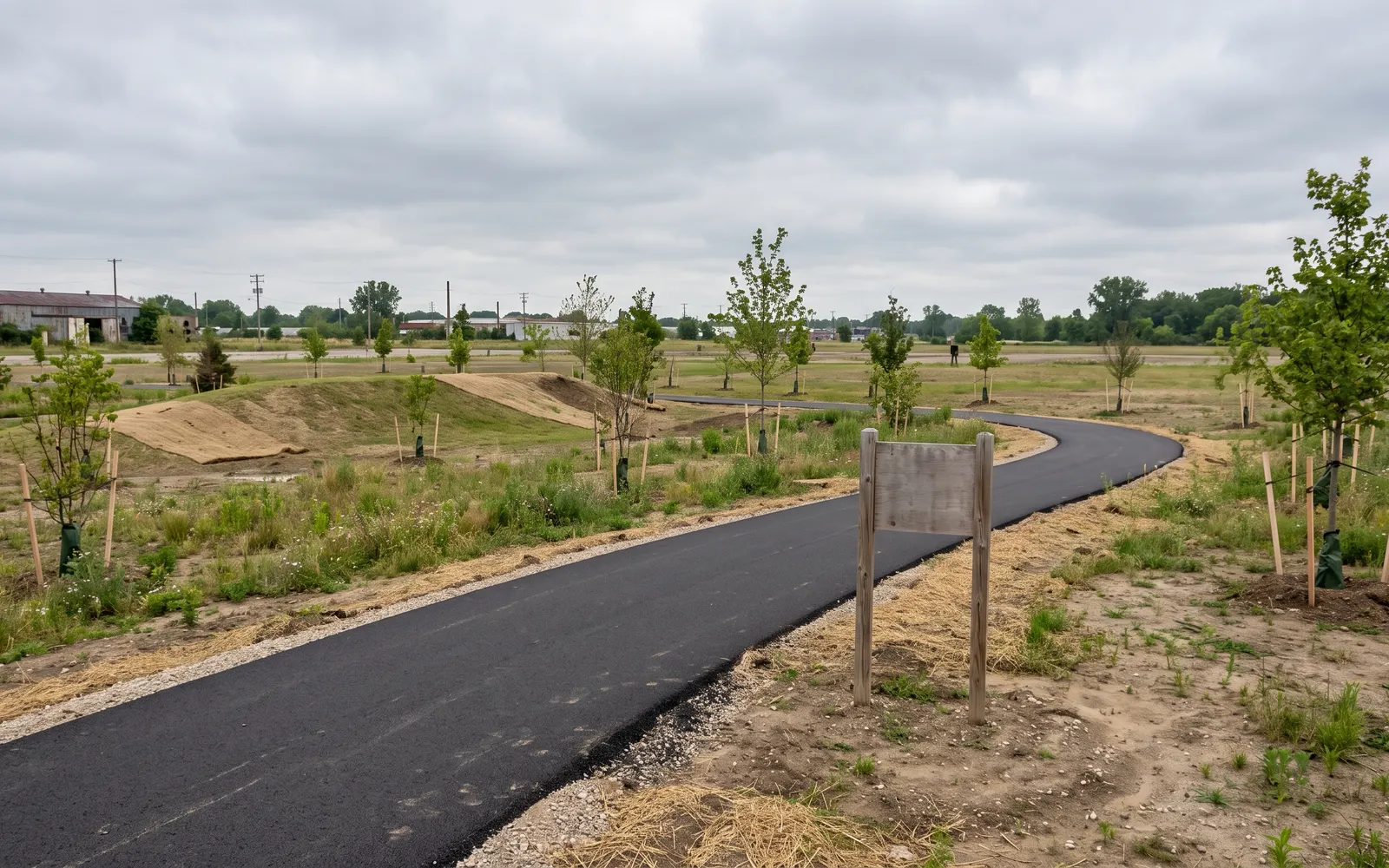
The old factory site is becoming a park. The city's Community Park Project will turn about 44 acres west of Pioneer Park and east of Weyrauch Street into public green space. Phase 0, the north end between Ann Street and Pomeroy Street, began construction in June 2026 with completion expected in November 2026: accessible trails, two picnic shelters, more than 80,000 square feet of restored prairie and a monarch waystation. The city awarded the contract on March 16, 2026, for $1,127,296. Later phases, including a playground, courts and a multi-use field in the 2023 master plan, depend on more funding.
Two other items are worth watching. The city approved a 180-day moratorium on new data centers and battery energy storage systems on July 20, 2026. It runs to January 16, 2027 while the city studies rules, and survey results from August and September are posted on the project page. If you are looking near the industrial areas or the airport, follow it. And in August 2026 the City Council voted to create a nine-member temporary downtown revitalization commission to guide downtown redevelopment. I haven't seen a specific downtown project approved yet.
I don't label any town or neighborhood as safe or unsafe.
Flood Risk in West Chicago
Flooding in West Chicago is a house-by-house question. Redfin, using First Street's model, rates the city's overall flood risk as moderate, with about 4% of properties, roughly 154 homes and buildings, at risk of severe flooding over the next 30 years. That risk concentrates along Kress Creek, the West Branch of the DuPage River and the low ground near them, and the city's current Town Road project is partly a storm sewer upgrade for that reason.
Two checks before you write an offer. Look the address up on the FEMA flood map, because a mapped flood zone can mean required flood insurance on a mortgage. And ask the seller directly about water in the basement. In my experience with older houses near downtown, the answer is often "once," and the follow-up question about what they did about it is the one that matters.
Frequently Asked Questions
How much does a house cost in West Chicago, IL?+
Redfin reported a median sale price of $387,244 for the three months ending August 2026, and Zillow's home value index was $390,277 for August 2026, up about 4.2% from a year earlier. Prices vary widely by pocket, from older homes near downtown to 2000s subdivisions.
What are property taxes in West Chicago, IL?+
The median effective rate is about 2.68%, with a median bill of about $7,112 (Ownwell, April 2026). A home bought at the summer median would carry about $10,400 a year once reassessed. Rates vary by tax code, so pull the actual bill for any house.
Does West Chicago have a real estate transfer tax?+
No. The city has no transfer tax, but it requires a free deed certification, which requires a point-of-sale city inspection. The fee is $100 plus 12 cents per square foot, and the city asks sellers to schedule it at least two months before closing.
What school district is West Chicago, IL in?+
Most of the city is in West Chicago Elementary District 33 and Community High School District 94. Parts of West Chicago and its mailing-address area feed Benjamin District 25, St. Charles District 303, U-46 or District 200 instead, so confirm each address with the district.
How long is the commute from West Chicago to downtown Chicago?+
On Metra's Union Pacific West line, the fastest morning train reaches Ogilvie in 52 minutes, several express runs take about 57, and locals take about 68. There are 26 inbound weekday trains.
Is West Chicago walkable?+
Not city-wide. The Walk Score is 38, but downtown around Main Street and the Metra depot is walkable, and the Illinois Prairie Path and Great Western Trail reach the city.
What neighborhoods are in West Chicago, IL?+
Commonly named areas include Downtown, the East Washington Historic District, Hampton Hills, Indian Knoll, Prestonfield, Cornerstone Lakes, Smythe Settlement, Prairie Meadows, Forest Trails, Oak Meadows and Woodland Heights. School assignments vary by subdivision.
Is the Kerr-McGee thorium cleanup in West Chicago finished?+
The soil cleanup is done. The EPA deleted the Kress Creek and West Branch DuPage River site from the Superfund list on September 3, 2026, after earlier deletions of Reed-Keppler Park (2010) and the sewage treatment plant (2013). The residential areas cleanup is complete, and the former factory site is becoming a 44-acre city park.
Eshu Chikoti has extensive access to off-market listings throughout West Chicago and the rest of DuPage County — homes that never make it to the public listing sites. That matters right now: in a seller's market like this one, well-priced homes routinely go under contract within days, and buyers relying only on public listings are competing for whatever is left over. Working with someone plugged into off-market inventory means seeing homes before the crowd does.
Eshu Chikoti · 847-691-4282 ·
Get new West Chicago listings by email
When a home comes on the market in West Chicago, I'll email it to you.
Just your email. Unsubscribe any time by replying.
Thinking About West Chicago?
Whether you're buying, selling, or just curious what's on the market, I can walk you through West Chicago street by street.