Wheaton, IL
Wheaton, IL is the DuPage County seat, a city of about 53,600 people on the Union Pacific West Metra line, with a walkable downtown, two stations and one of the widest ranges of home types in the western suburbs.
Living in Wheaton, IL means a 43-minute express train to Ogilvie, a median sale price near $525,000 in Redfin's August 2026 report, and property tax around 2.1% of value. The trade-offs are a car-dependent layout outside downtown and four school districts that split the city by street. Here is how it breaks down.
Written by Eshu Chikoti · 847-691-4282 ·
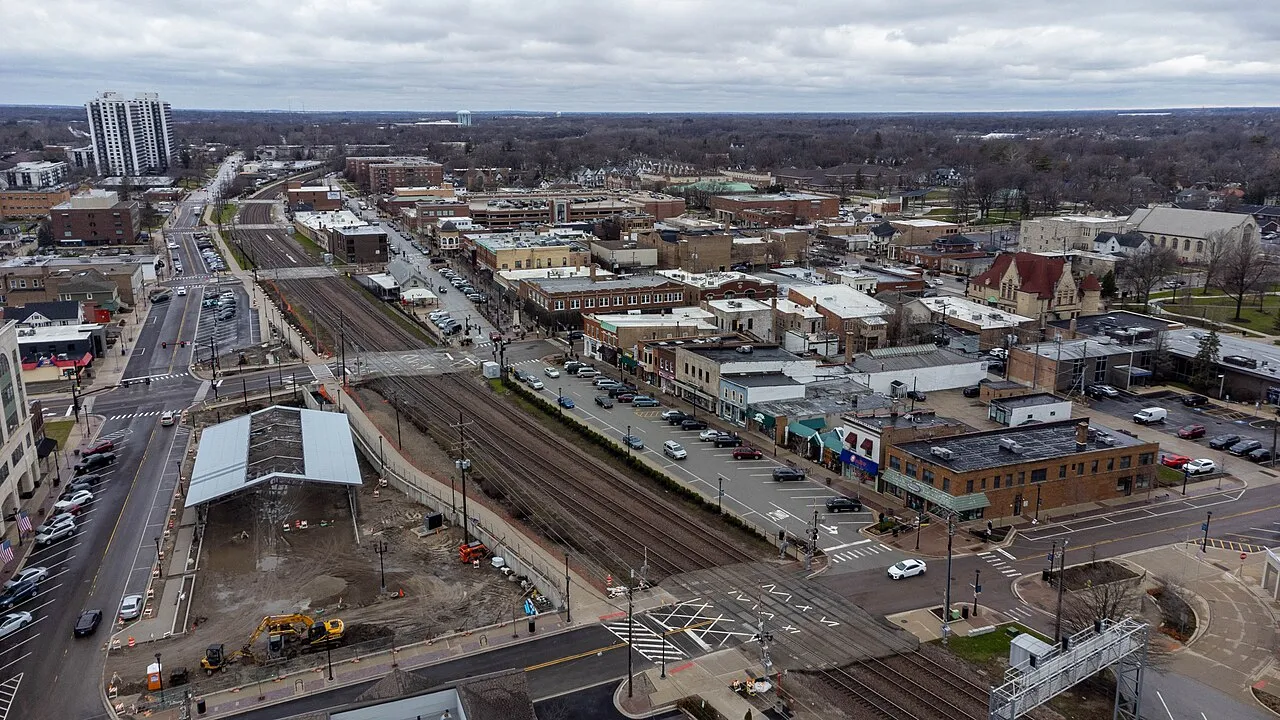
How Wheaton, IL Got Here: A Short History
The first land claims here came in the 1830s. Erastus Gary claimed 790 acres, and in 1837 Warren Wheaton arrived from Connecticut and claimed 640 acres, with his brother Jesse taking 300 more nearby. According to the city's history as summarized on Wikipedia, the brothers gave the Galena and Chicago Union Railroad three miles of right-of-way in 1848, and the railroad named its depot after them. Ten blocks were platted in 1850, with free lots offered to anyone who would build right away.
Wheaton incorporated as a village on February 24, 1859, with Warren Wheaton as its first president, and became a city on April 24, 1890. Its first mayor was Judge Elbert Gary, Erastus Gary's son, who later gave his name to Gary, Indiana.
The story every local knows is the county seat fight. Naperville held the DuPage County seat and won an 1857 vote 1,542 to 762. Ten years later Wheaton won the rematch 1,686 to 1,635 and built a $20,000 courthouse, dedicated July 4, 1868. Naperville would not hand over all the records, and a group of Wheaton Civil War veterans went and took them in what is still called the Midnight Raid. The courthouse was rebuilt in 1887 for $69,390 and served 94 years. The county moved to a new $52.5 million complex on a 57-acre site on County Farm Road on November 2, 1990.
Two more pieces of history still shape the city. Wheaton banned alcohol sales in 1887 and kept that ban until 1985, which is why its downtown restaurant scene is newer than the buildings it sits in. And the Chicago Aurora and Elgin interurban, which ran through town from 1902 to 1959, left behind the right-of-way that became the Illinois Prairie Path.
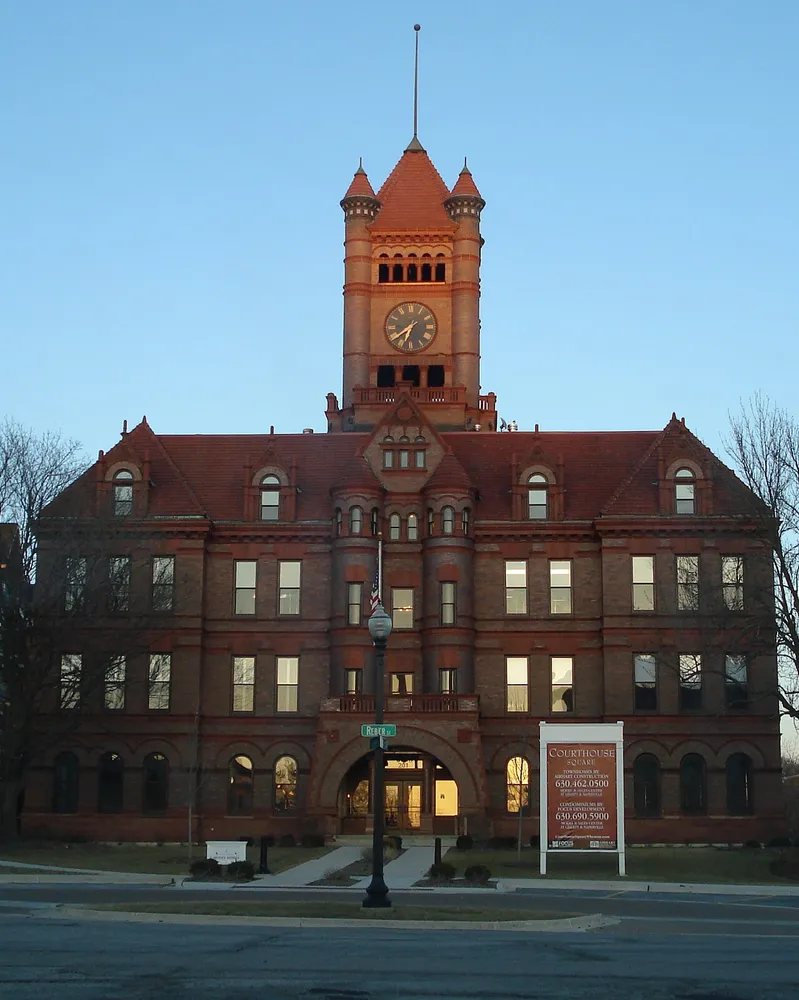
Wheaton at a Glance
Wheaton sits in the middle of DuPage County, about 25 miles west of the Loop by rail, and covers roughly 11.3 square miles across Milton and Winfield townships. The whole city is in DuPage County. Glen Ellyn borders it on the east, Winfield and West Chicago on the west, Carol Stream on the north, and Warrenville and Naperville to the south.
The 2020-2024 Census ACS puts the population at 53,557 in 20,359 housing units. 71.7% of occupied homes are owner-occupied, lower than in a lot of DuPage suburbs because Wheaton has a real stock of condos, townhomes and apartment buildings alongside its single-family streets. The ACS median value of an owner-occupied home is $455,700 and the median gross rent is $1,799.
Being the county seat changes the feel of the place. The DuPage County complex on County Farm Road, the county fairgrounds on Manchester Road and Wheaton College near downtown all bring weekday traffic and jobs that a pure bedroom suburb does not have.
One thing to know before you search: a "Wheaton" mailing address is not the same as being inside the city. Wheaton is ringed by unincorporated DuPage County pockets, and you can spot many of them by their grid-style addresses (numbers like 1N or 26W at the front). Those parcels can have different zoning, different services and a different tax bill. I check city limits on every address before I run numbers for a buyer.
The median sale price sits around $525,000, the tax rate around 2.1%, and you can buy anything from a condo by the station to a 1980s colonial near the forest preserves.
And because four school districts serve Wheaton addresses, the search takes more checking than the town name suggests.
Wheaton Neighborhoods, Pocket by Pocket
Wheaton is big enough that nobody shops it as one market. Locals split it two ways. The first is the railroad: the older grid of streets around downtown and Wheaton College versus the subdivisions that spread out from there in the 1960s through the 1980s. The second is Roosevelt Road. North of it is most of the historic city and the train. South of it, toward Butterfield Road and Danada, the streets are newer, the lots are more uniform and the drive to I-88 is shorter.
Walkability follows the same line. Walk Score rates the city 40 overall, which it calls car-dependent, but the blocks within a few minutes of Front Street and the two stations are a different experience from a cul-de-sac in Arrowhead. Walk Score does not publish scores for Wheaton's named pockets, so I don't quote them here.
Below are the pockets you will see named on listings. Boundaries and build eras mostly come from Patch's subdivision profiles and local agent descriptions, and they are informal, so treat them as a starting point. The school district is the part to check hardest. Four districts serve Wheaton addresses, and two houses in the same pocket can feed different schools.
I have not closed a sale inside Wheaton yet, so I won't pretend to a block-by-block history here. What I do on every Wheaton search is the same three checks: city or unincorporated, which school district, and which township. If you want those answered for a specific address, that is a conversation I am happy to have here.
Downtown and Courthouse Square. The blocks around Front Street, Hale Street and the Wheaton Metra station. Courthouse Square, built in 2006 around the old courthouse, has about 50 Georgetown-style rowhouses and six condominiums of roughly 3,000 to 4,000 square feet. Downtown also has apartment and condo buildings, including the two 20-story Wheaton Center towers.
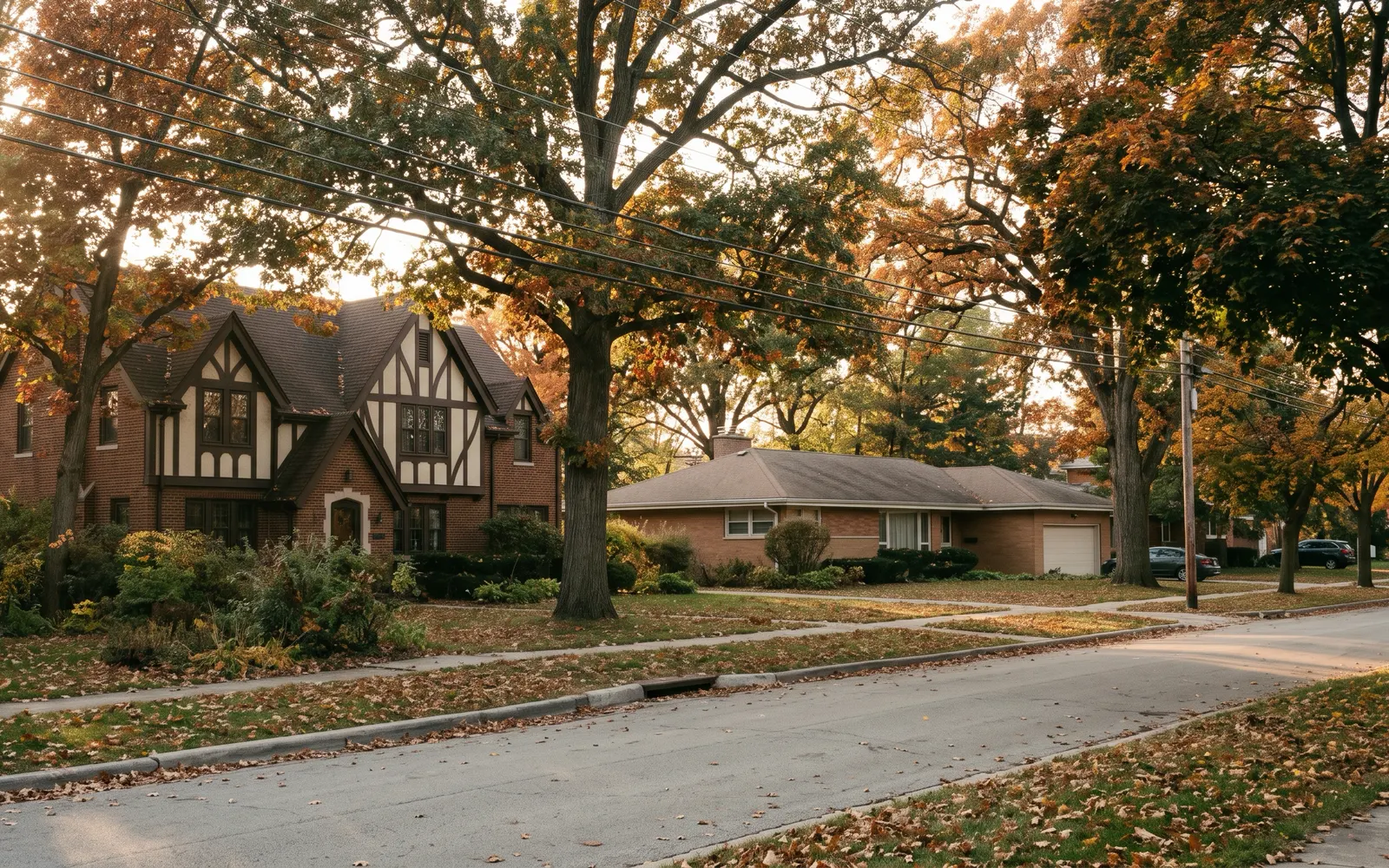
Around Wheaton College. The older streets north and east of downtown near the College Avenue station. This is where most of the city's prewar houses are, on smaller, deeper lots with mature trees.
North Wheaton. Off Pleasant Hill Road and south of Geneva Road. Wheaton Crossing was built in the mid to late 1990s by Windham and Concord Homes, with houses of roughly 2,000 to 3,300 square feet. Wheaton Ridge is nearby.
Hawthorne. South of Geneva Road and east of Main Street. Single-family homes a short drive or bike ride from downtown.
Arrowhead and Legends of Wheaton. Around Arrowhead Golf Club on the west side. Arrowhead East dates to the 1980s, and Legends of Wheaton was built by Keim in the early 2010s across from the golf course and Herrick Lake Forest Preserve. Lots here run larger than in the central grid.
Stonehedge. Single-family homes built in the 1980s by Joe and Ed Keim and Faganel Builders, on larger lots near the forest preserves on the southwest side.
Danada. Danada East, Danada West and Danada North, all 1980s single-family subdivisions around Naperville Road and Blanchard Road, close to Danada Square and Rice Lake Square. Hollybrook, off Blanchard north of Butterfield, dates to the 1970s.
Farnham. West of Naperville Road between Kelly Park and Seven Gables Park, built in the 1960s and 1970s, close to the Chicago Golf Club.
Briarcliffe. Near the College of DuPage on the south side. Briarcliffe itself (early 1970s) mixes townhouses and single-family homes, Briarcliffe Lakes is late-1970s condos, Briarcliffe Knolls is 1980s townhomes and houses, and Briarcliffe West is 1970s townhomes south of Roosevelt Road.
Adare Farms, Windham Commons and Wheaton Estates. Adare Farms is early-1980s single-family and townhomes built by Hemphill. Windham Commons, north of Roosevelt and west of Main, is late-2010s construction. Wheaton Estates sits east of President Street and south of Roosevelt.
What Wheaton Homes Look Like, by Era
Wheaton is mostly a 1970s and 1980s housing town, with an older core and a newer edge. The 2020-2024 Census ACS counts 28.3% of the city's housing units as built in the 1970s and 19.8% in the 1980s. Another 12.8% date to the 1950s and 9.2% to the 1960s. Only 8.9% were built before 1940, and 4.8% since 2010.
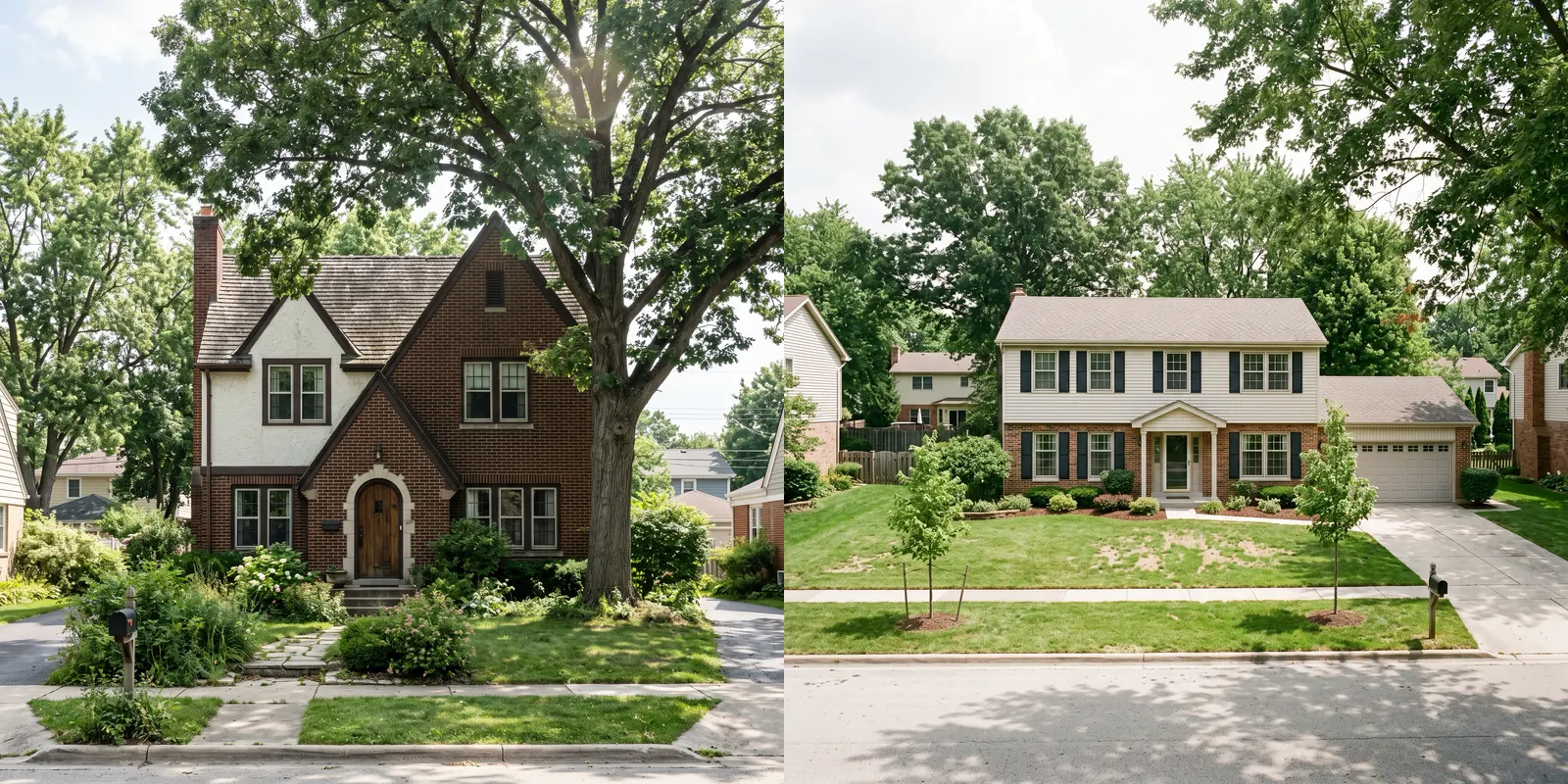
That spread shows up on the street. The prewar houses near downtown and the college are the four-squares, Victorians and bungalows you would expect in a railroad town. The 1950s and 1960s pockets have ranches, split-levels and Cape Cods. Farnham, Briarcliffe, Danada, Arrowhead East and Stonehedge carry the 1970s and 1980s colonials, bi-levels and two-story traditionals that make up the bulk of the market. Newer construction is scattered: Wheaton Crossing in the 1990s, Legends of Wheaton and Windham Commons in the 2010s, and teardown rebuilds on single lots in the older neighborhoods.
Wheaton also has more attached housing than most people expect. The ACS counts 58.0% of units as single-family detached and 11.5% as attached townhomes. About 8.8% of units are in buildings with 50 or more apartments, which includes Wheaton Center downtown, built in 1975 with 758 apartments across six buildings on 14 acres.
The surprises I prepare buyers for depend on the decade. The prewar houses near downtown can have knob-and-tube wiring, old galvanized plumbing and basements that have seen water. The 1970s and 1980s houses usually have their original windows, siding and mechanicals due or overdue. Neither should kill a deal, but both belong in the price. My home inspection checklist is a good place to start.
The Wheaton Housing Market in 2026
Wheaton homes sell at a steady pace and usually at or slightly above asking. Redfin's August 2026 report puts the median sale price at $524,653, up 6.0% from a year earlier. 194 homes sold in August 2026, down 7.7% from 210 the year before. The median home sold in 44 days, five days slower than last year, at 101.4% of list price, and 50.9% of homes sold over asking.
Redfin gives Wheaton a Compete Score of 75 out of 100, which it calls very competitive, and says homes get about four offers on average. The price per square foot was $274, up 1.5%.
This year the two big data sources agree on direction. Zillow's home value index for Wheaton was $514,751 in August 2026, up 5.3% from $488,871 a year earlier. Redfin's number is the middle of what happened to sell. Zillow's index estimates the value of every home, sold or not. When both move the same way by about the same amount, I read it as a real price gain rather than a shift in what sold.
The softer signals are worth watching. 15.7% of listings took a price cut, up 4.2 points from a year earlier, and the share selling over asking fell 7.7 points. The pattern I see is that a well-priced house still draws several offers in the first weekend, while an overpriced one sits, and the gap between those two outcomes is wider than it was a year ago.
Keep the median in context. Wheaton's mix of condos, townhomes and single-family houses means the citywide number sits below what a typical detached house sells for, and a Danada colonial and a downtown condo live in different price bands. For the monthly math on any of them, see my guide to how much house you can afford in 2026.
Wheaton Property Taxes and the Real Cost of Owning
Property tax is the number that changes the monthly payment most, and it never shows up in the list price. Ownwell's Wheaton data, updated April 2026, puts the median effective rate at 2.10% and the median annual bill at $8,514. That rate is a little below the DuPage County median of 2.16% that Ownwell reports.
The two main ZIP codes differ. Ownwell shows 60187, which covers the north and central city, at a 2.09% median rate and a $7,811 median bill, and 60189, the south side around Danada and Butterfield Road, at 2.12% and $9,187. The bill gap is mostly about home values, not the rate.
Here is what that looks like on a real purchase. At 2.10%, a house bought at Redfin's $524,653 August median would carry about $11,000 a year in tax, roughly $920 a month on top of the mortgage. Ownwell's median bill is lower because it is based on a median home value of about $403,000, well under what homes are selling for now. The expectation I most often have to reset is buyers who budget off the seller's current bill instead of the rate.
Each combination of township, school district, park district and city or county is its own tax code. Wheaton spans Milton and Winfield townships and four school districts, and the unincorporated pockets skip the city levy but pay into other districts, so two houses at the same price can carry different bills. Look up the parcel on the DuPage County tax records before you write an offer. This is general information, not tax advice. Your actual bill depends on your parcel, your exemptions and the assessor.
Wheaton Schools: District 200 and the Other Three
Most of Wheaton is served by Community Unit School District 200, a single K-12 district that also covers Warrenville and parts of Carol Stream, Winfield and West Chicago. It runs two high schools (Wheaton North and Wheaton Warrenville South), four middle schools (Edison, Franklin, Hubble and Monroe), 13 elementary schools and the Jefferson Early Childhood Center, per the district's Wikipedia profile).
The part that trips people up is that District 200 is not the whole city. According to the City of Wheaton's schools page, some homes in the northeast part of Wheaton are in Glen Ellyn School District 41 and Glenbard Township High School District 87, and some in the southeast are in Community Consolidated School District 89 and Glenbard District 87. Those addresses feed Glenbard West and Glenbard South respectively, not a Wheaton high school.
Even inside District 200, the elementary and middle school depend on the street. Don't assume from the town name or the ZIP code. Check the address with the district directly before you write an offer, and ask me for the boundary if you want it done for a specific house.
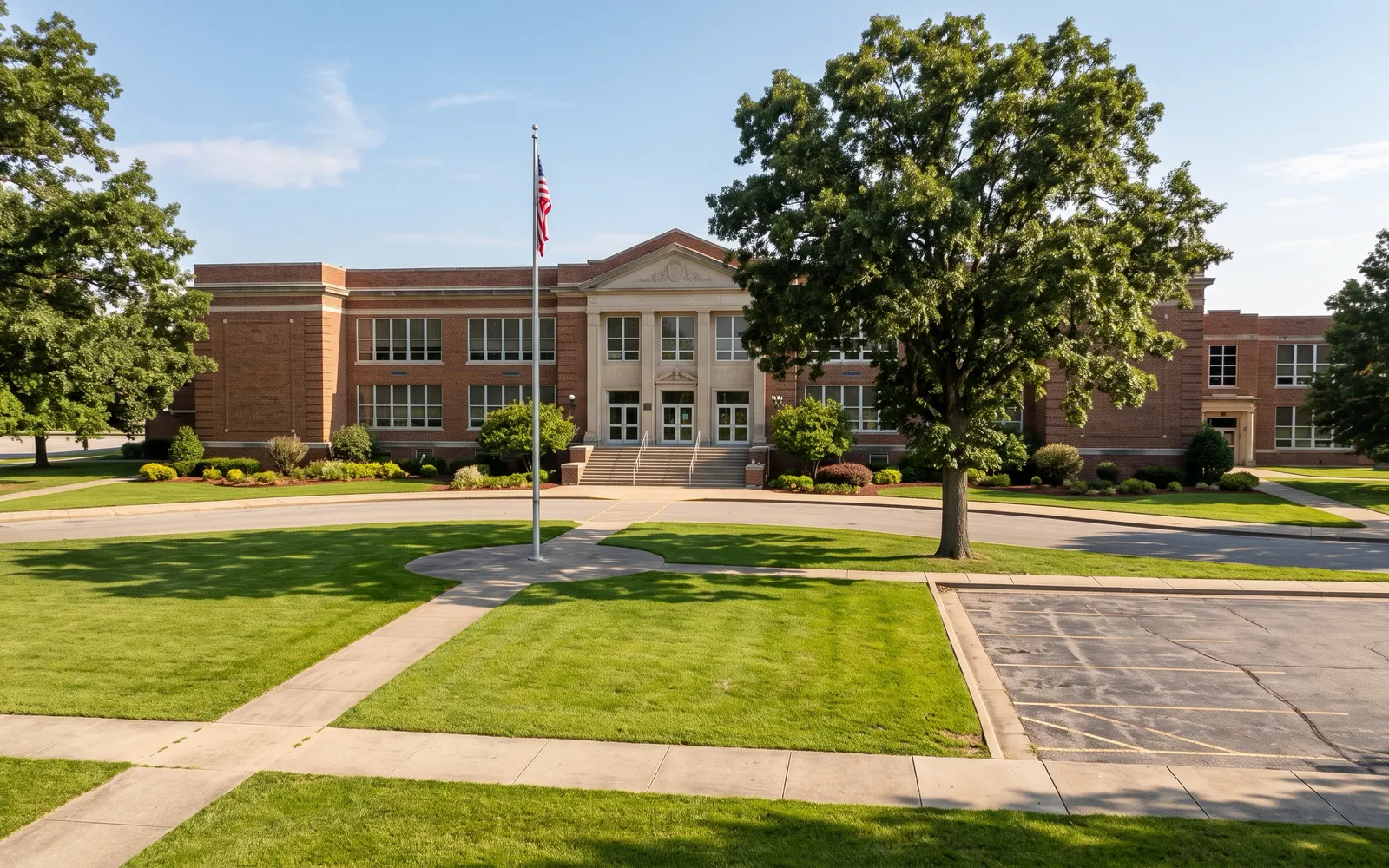
Wheaton North High School. CUSD 200.
Wheaton Warrenville South High School. CUSD 200.
Edison, Franklin, Hubble and Monroe Middle Schools. The four CUSD 200 middle schools.
CUSD 200 elementary schools. Bower, Emerson, Hawthorne, Johnson, Lincoln, Longfellow, Lowell, Madison, Pleasant Hill, Sandburg, Washington, Whittier and Wiesbrook, plus the Jefferson Early Childhood Center.
Glen Ellyn District 41 and Glenbard West. Serves some homes in northeast Wheaton.
District 89 and Glenbard South. Serves some homes in southeast Wheaton.
Commuting from Wheaton: Metra to Chicago
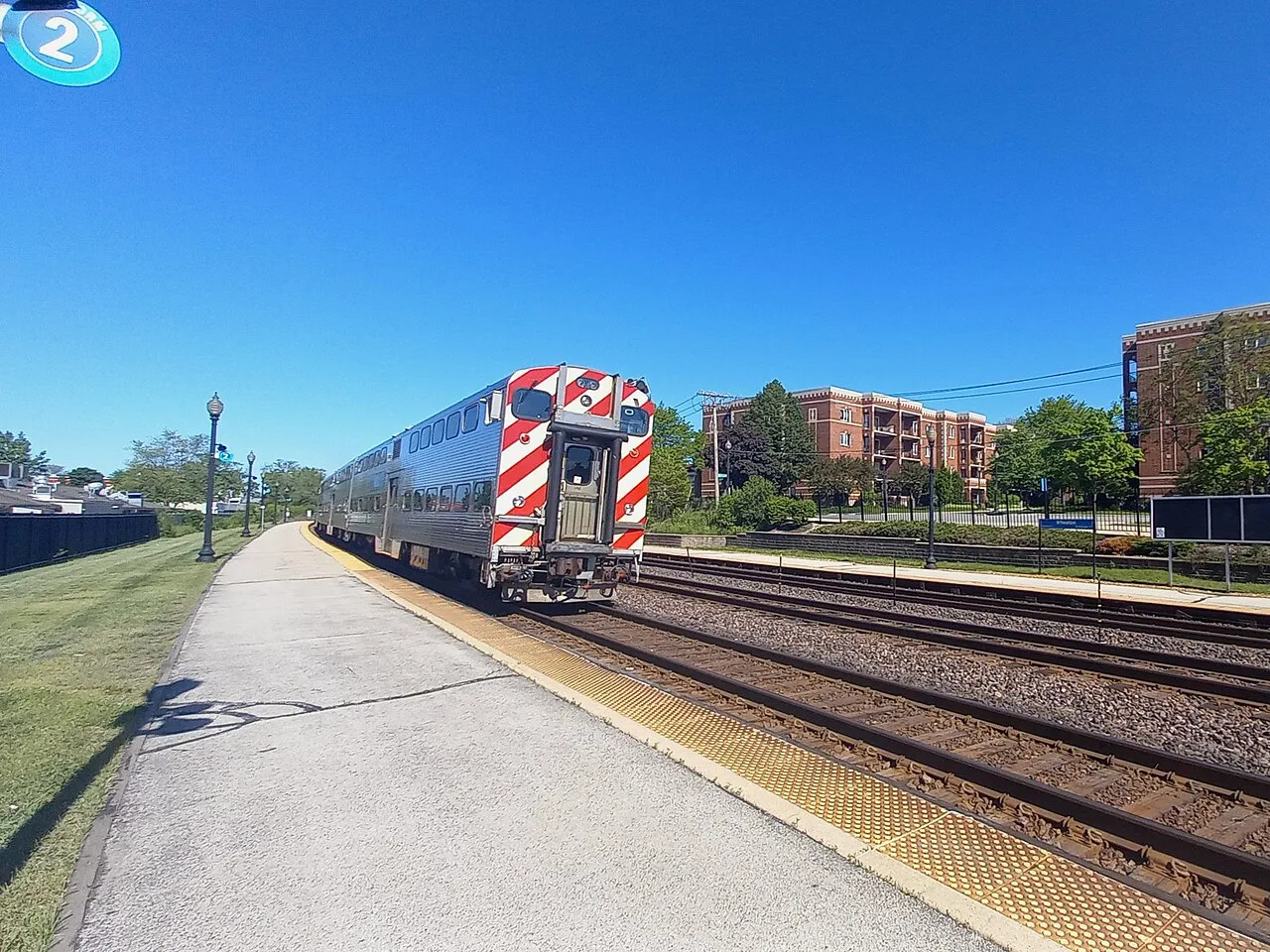
Wheaton has two stations on Metra's Union Pacific West line, both a one-seat ride to Ogilvie Transportation Center. The main Wheaton station is at 402 Front Street downtown, 25 miles from Ogilvie. College Avenue station sits a mile east, next to Wheaton College.
According to Metra's published schedule data for fall 2026, the Wheaton station has 28 inbound and 27 outbound trains on weekdays, 10 each way on Saturdays and 9 each way on Sundays. College Avenue has 28 inbound and 26 outbound on weekdays with the same weekend service.
The travel time depends on which train you catch. The fastest morning express leaves Wheaton at 7:17 a.m. and reaches Ogilvie at 8:00, 43 minutes. Most rush-hour expresses take about 48 minutes, and local and weekend trains take about 59. From College Avenue the same trains run about three minutes shorter, 40 minutes at best and 56 on a local. If you're choosing between two houses and one is a walk to either station, that difference compounds every day you commute.
Pace buses connect Wheaton to Naperville, Forest Park and surrounding towns for the trips Metra doesn't cover.
Driving from Wheaton: Highways and O'Hare
Wheaton has no interstate inside the city, which keeps the through traffic down and adds a few minutes to every highway trip. Roosevelt Road (Route 38), Butterfield Road (Route 56) and North Avenue (Route 64) cross the city east to west. Naperville Road and County Farm Road are the main north-south routes. I-88 is reached to the south via Naperville Road or Winfield Road, and I-355 to the east via Roosevelt or Butterfield.
O'Hare is about 20 miles away by road, usually via I-355 and I-290 or I-88 and the Tri-State. Plan on 35 to 45 minutes outside rush hour. The south side of Wheaton, around Danada and Butterfield Road, has the shortest run to I-88.
Two city road items are worth knowing. The City of Wheaton's current projects list shows Gary Avenue improvements between Jewell Road and Harrison Avenue in Phase II engineering, and the Roosevelt Road Corridor Plan, covering nearly two miles from Carlton Avenue to the Glen Ellyn border, in its implementation phase.
Is Wheaton Walkable?
Downtown is, most of the rest of the city is not. Walk Score rates Wheaton 40 overall, car-dependent, and Redfin's transportation data adds a Transit Score of 23 and a Bike Score of 51.
The exception is the grid around Front Street, Hale Street and the two stations, where the train, the library, the French Market and downtown restaurants are all a short walk. If that matters to you, it narrows the search to a small part of the city, and those houses and condos tend to go first.
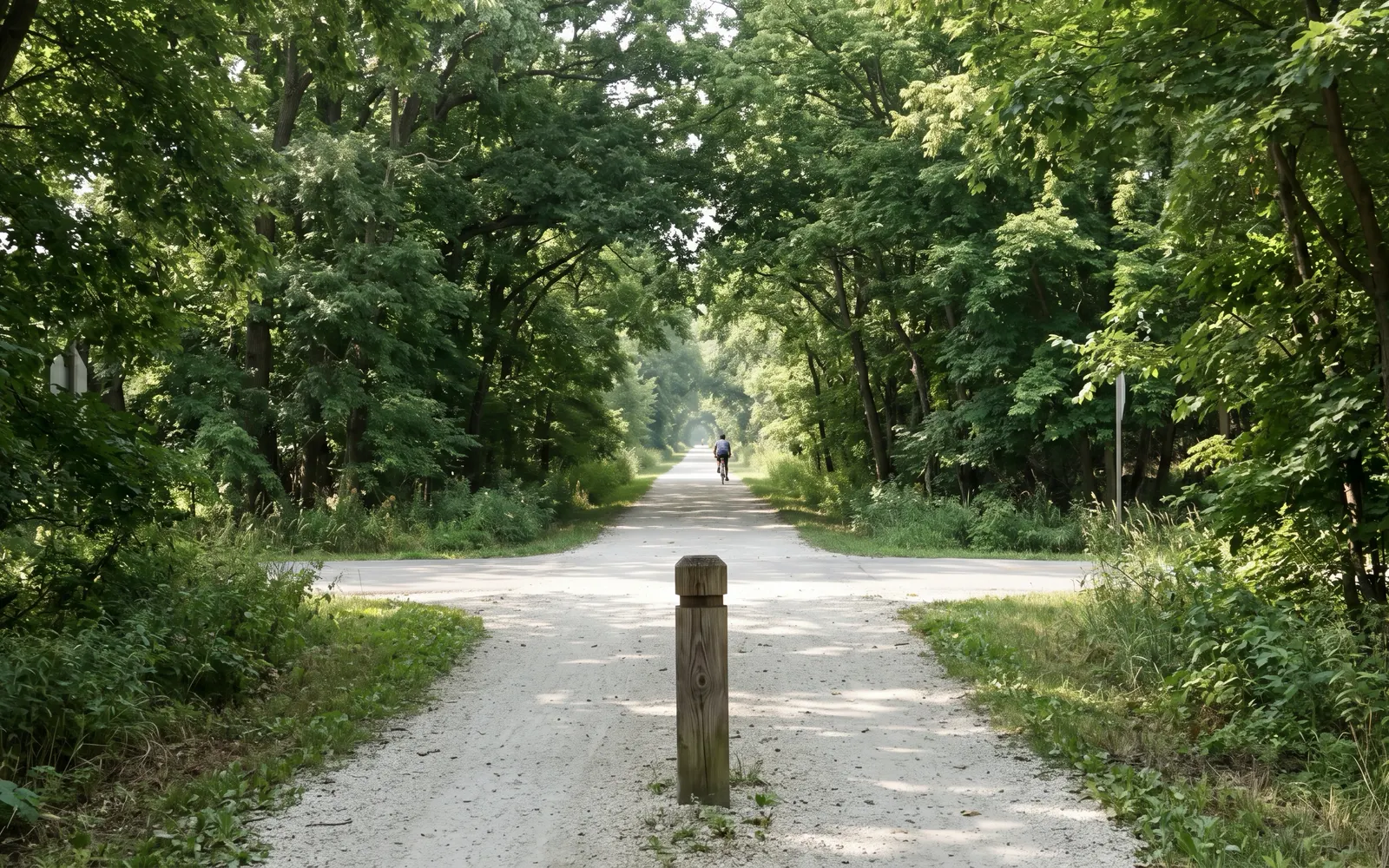
Wheaton is a better biking town than its Walk Score suggests. The Illinois Prairie Path runs straight through downtown, and Wheaton is where its main stem splits toward Elgin and Aurora, so a long ride on crushed limestone starts a few blocks from the station. The city is also adding sidewalks, with a program to build at least one sidewalk on every street across about 95 identified areas.
Downtown Wheaton and Shopping
Downtown Wheaton is the part of the city with character: independent shops, restaurants and services along Front Street, Hale Street and Main Street on both sides of the tracks. The city has spent years on a downtown streetscape plan, and its current projects page shows the fourth and final phase underway.
For bigger errands, the south side does the work. Danada Square East and Danada Square West sit on either side of Butterfield Road near Naperville Road, named for Dan and Ada Rice, whose estate became the Danada area. Rice Lake Square and Town Square Wheaton, which opened in 1992, fill in the rest, and Roosevelt Road is a long commercial corridor of its own. Oakbrook Center and Yorktown Center in Lombard are the nearest large malls, each a short drive east.
Groceries and Everyday Errands in Wheaton
Groceries are easy to keep local. Mariano's is at 625 S. Main Street, at Roosevelt and Naperville Road. Jewel-Osco has two stores, one at 2031 N. Main Street on the north side and one at 30 Danada Square West on the south side. Pete's Fresh Market is at 151 Rice Lake Square, and Trader Joe's is just over the line at 680 Roosevelt Road in Glen Ellyn. Pharmacies, banks and dry cleaners cluster along Roosevelt, Butterfield and Main, so most weekly errands are a short drive from anywhere in the city.
Where Wheaton Eats
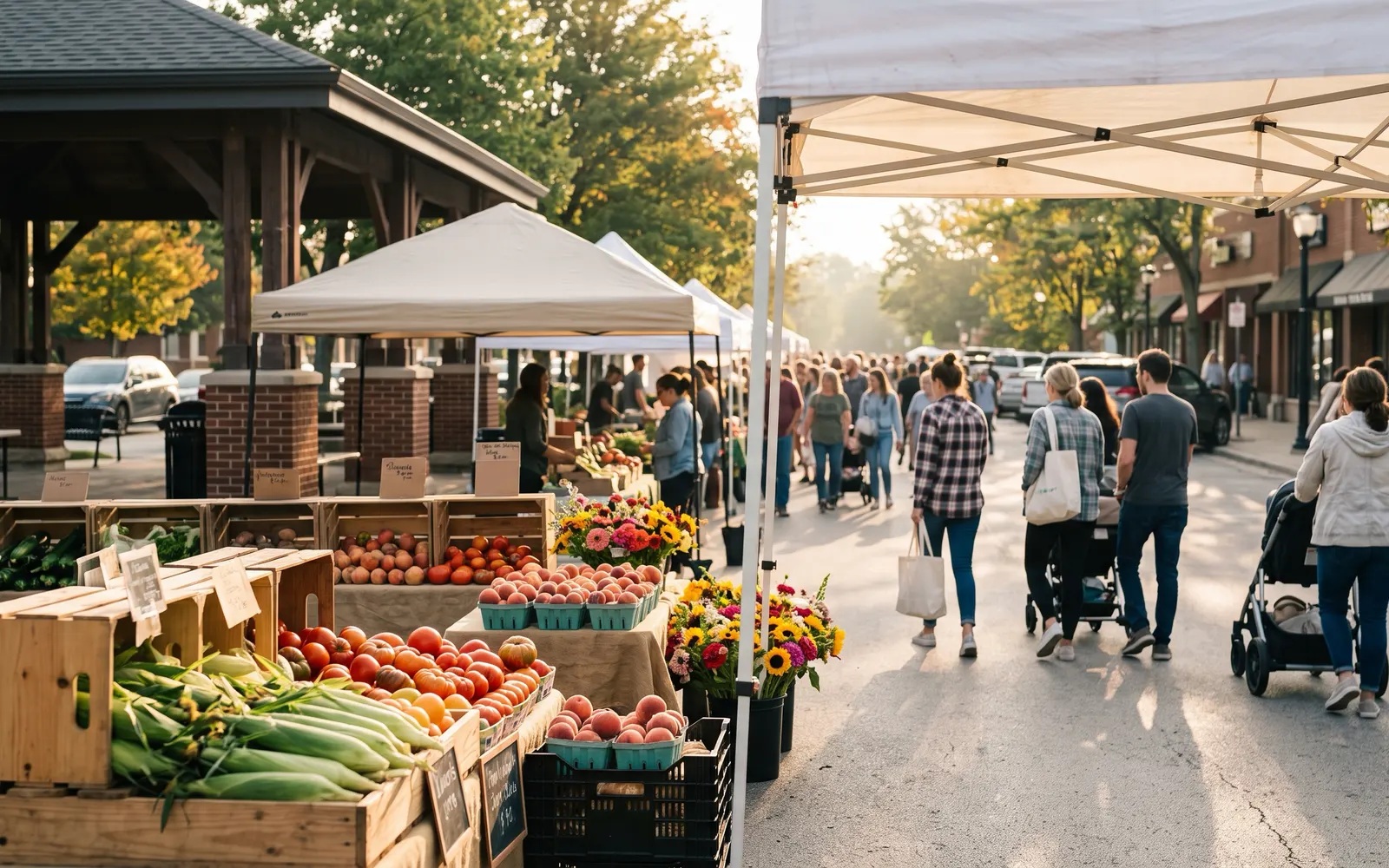
Because Wheaton was dry until 1985, its restaurant scene is newer than most in the western suburbs, and it has grown up mostly downtown, where cafés, pubs and sit-down restaurants now line Front Street and Hale Street. The downtown pavilion south of the tracks, home of the Saturday market, gives the area a second gathering spot.
One long-running name is coming back. Egg Harbor Café, which sat on the block now being redeveloped as The Faywell, is returning in a 4,502-square-foot ground-floor space at the corner of the new building, according to Shaw Local's report on the project approval.
On Saturdays the Wheaton French Market fills the pavilion near Main Street and Liberty Drive with produce, baked goods, flowers and prepared food. In 2026 it runs 8 a.m. to 2 p.m. from April 11 through October 31, then 8 a.m. to 1 p.m. from November 7 through November 28, one of the longest seasons of any market in the area.
Parks, Golf and Recreation in Wheaton
The Wheaton Park District runs 52 park sites on more than 800 acres, per the park district summary on Wikipedia. The facilities list is long for a suburb: Rice Pool and Water Park, the Northside Park aquatic center, a community center and fitness center, Memorial Park and its bandshell, a mini golf course and skate park at Clock Tower Commons, and the DuPage County Historical Museum.
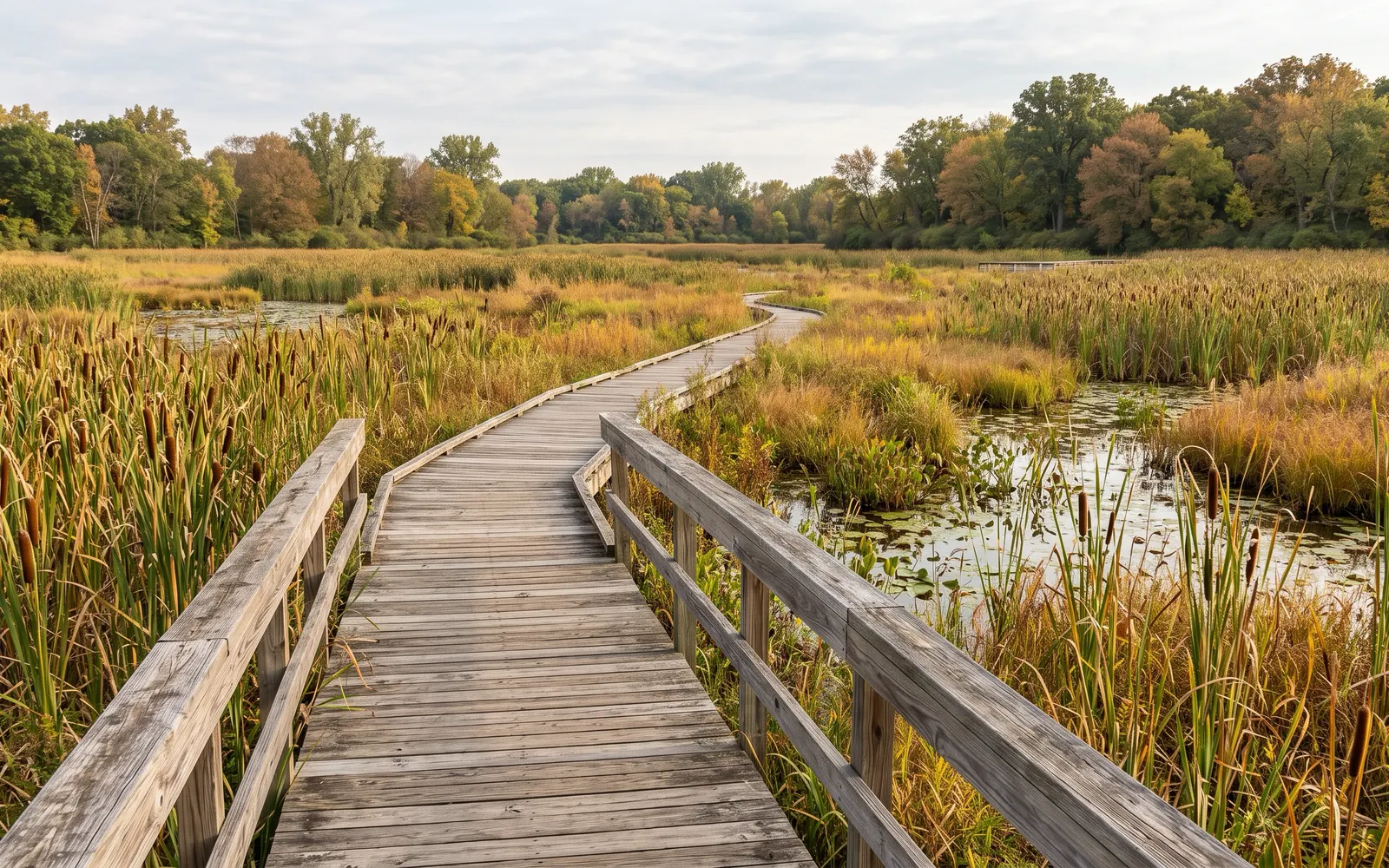
Two places stand out. Cosley Zoo, on about five acres, has farm animals and native wildlife and is free to walk through. Lincoln Marsh Natural Area is a wetland and prairie preserve with trails and a challenge course on the west side. For golf, the park district's Arrowhead Golf Club has 27 holes and dates to 1924, when it opened as Antlers Golf Club.
The Forest Preserve District of DuPage County adds more. Herrick Lake and Danada forest preserves sit on Wheaton's south side, and Danada is home to an equestrian center. Cantigny Park, covered below, has its own 27-hole public course.
The Wheaton Public Library
The Wheaton Public Library sits on Cross Street, a short walk north of downtown and the Wheaton station. It runs youth and adult programs through the year, plus a local history collection that is the first place to look if you want to know the story of a specific older house. Popular programs fill up, so register early.
Utilities in Wheaton
Since 1992 the City of Wheaton has bought Lake Michigan water from the DuPage Water Commission, according to the city's water division. The city bills water, sewer and stormwater. Sewage treatment is a separate bill from a separate agency: most of the city is served by the West Branch Water Reclamation District, and the far southeast corner by DuPage County Public Works. ComEd delivers electricity and Nicor Gas provides natural gas.
The city is also in a multi-year program to replace lead water service lines with copper. If you're buying an older house, ask whether its service line has been replaced; it is a fair question for any pre-1950s home.
Unincorporated addresses are different. Some are on city water by agreement, some on county or private systems, and some on private wells or septic. Confirm the utilities on any unincorporated listing before you write an offer.
Hospitals Near Wheaton
The closest full-service hospital is Northwestern Medicine Central DuPage Hospital on Winfield Road in Winfield, just west of the city line and a few minutes from most of Wheaton. Marianjoy Rehabilitation Hospital, part of the same system, is on Roosevelt Road in Wheaton. Edward Hospital in Naperville and the hospitals along the I-88 corridor are within a short drive for specialty care.
Cantigny, Cosley Zoo and Summer Nights in Wheaton
Cantigny Park, the former estate of Chicago Tribune publisher Robert R. McCormick, is the big draw. It has formal gardens, the McCormick Museum, the First Division Museum, walking trails and a 27-hole golf course. Entry is by the car, not the person. Cantigny's 2026 fee schedule lists $6 parking on weekdays and $16 on weekends through October, and $21 on concert nights and special event days, with the museums themselves free.
Closer to downtown, the Wheaton Municipal Band plays summer concerts at the Memorial Park bandshell, and Cosley Zoo makes an easy free outing any time of year. If you are also looking at the town next door, the downtown restaurants of Glen Ellyn and Naperville's Riverwalk are each a short drive.
Wheaton's Yearly Traditions
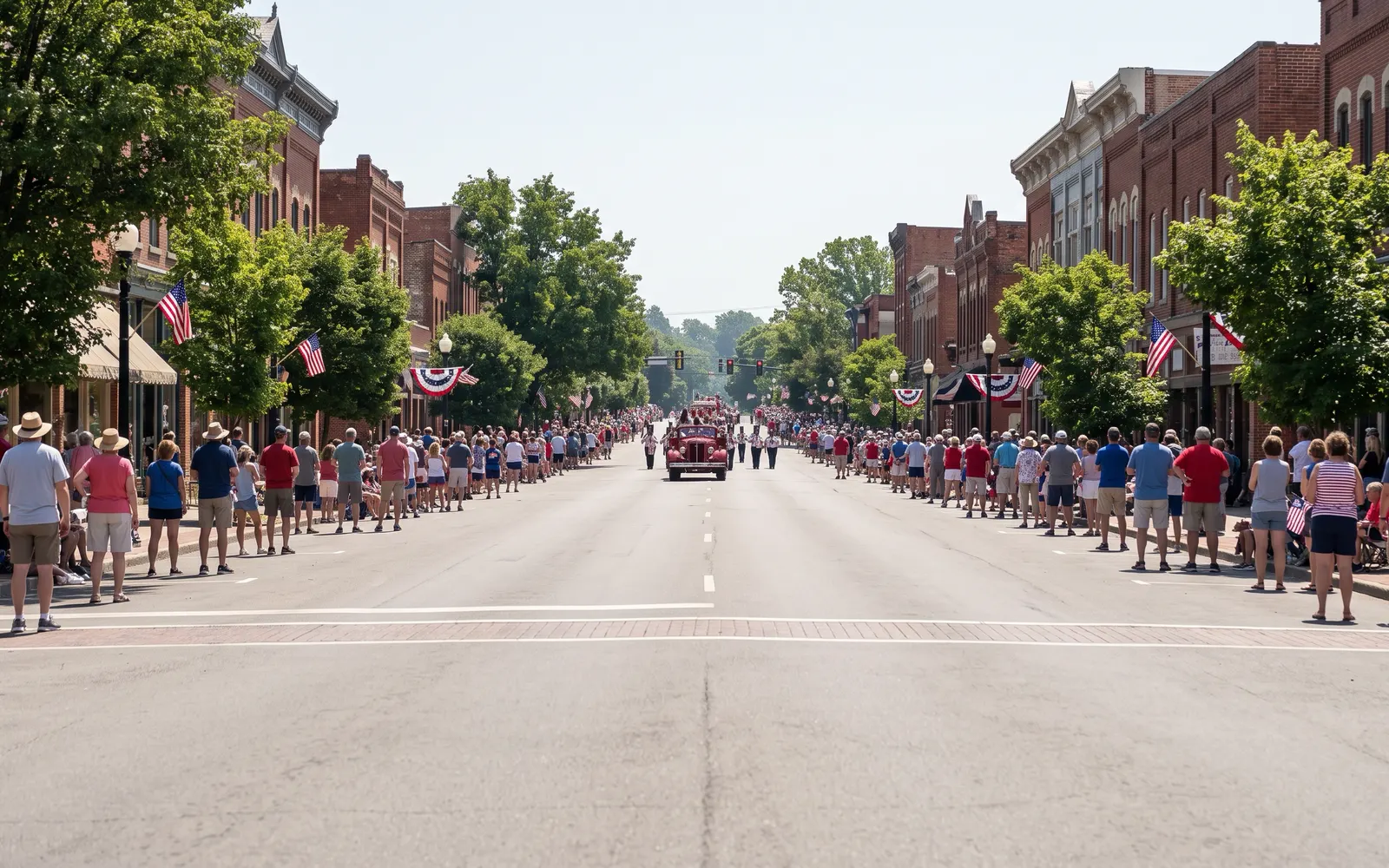
The Fourth of July is the big one. The Independence Day parade steps off downtown at 10 a.m., and in 2026 its theme was "Wheaton Celebrates America 250." The park district's fireworks and drone show normally runs on the Fourth; in 2026 weather pushed it to July 12 at Graf Park, according to the Daily Herald. On July 2, the Wheaton Municipal Band played its annual patriotic concert at the Memorial Park bandshell.
Late July brings the DuPage County Fair to the fairgrounds at 2015 Manchester Road. The 2026 fair, the 72nd, ran July 23 to 26 with livestock exhibits, a carnival and live music. Parking is at county lots with free shuttles to the gate.
The rest of the year has a steady rhythm: the Saturday French Market from April to late November, summer concerts in Memorial Park, and Cantigny's concert and garden events. If you are touring houses in early July, drive the parade route downtown. It tells you more about the city than any listing will.
What's Being Built in Wheaton
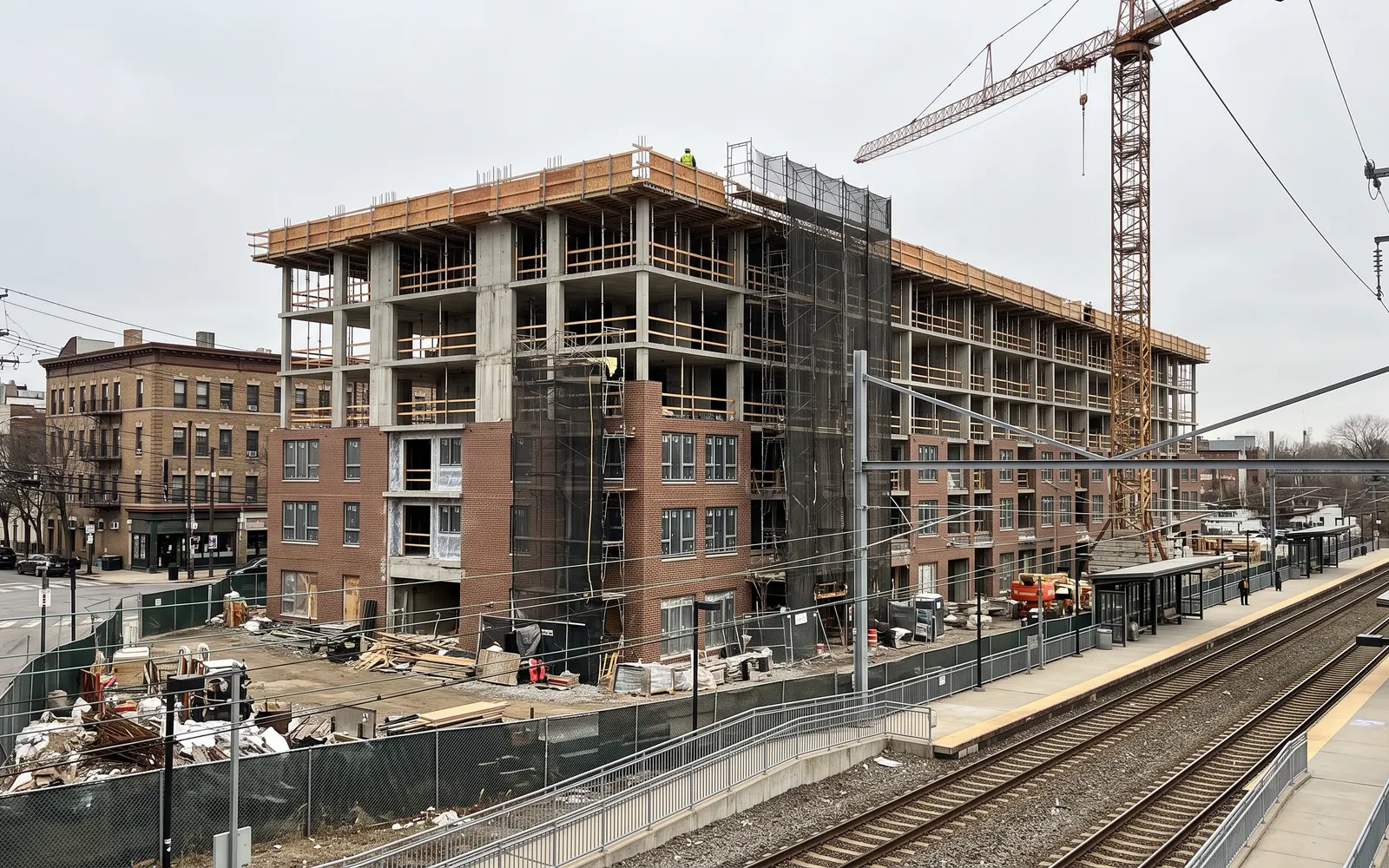
The biggest change is downtown, south of the tracks. Banner Real Estate Group is building The Faywell at 220 W. Liberty Drive, a seven-story building with 334 rental apartments on the 2.6-acre block bounded by Liberty Drive, Hale Street, Willow Avenue and Wheaton Avenue. That block used to hold the old Egg Harbor Café, a four-story former bank office building and two smaller buildings. The city approved the rezoning on August 1, 2022, per Shaw Local. The unit mix is 54 studios, 135 one-bedrooms, 128 two-bedrooms and 17 three-bedroom townhouses, with an indoor garage and direct access to the Prairie Path. According to Chicago Agent Magazine's groundbreaking report, first move-ins are expected in fall 2026, with completion slated for the first quarter of 2027.
What that means in practice: a few hundred new renters within a block of the Metra station, more foot traffic downtown, and more people trying Wheaton before they buy. For owners of downtown condos and townhomes, it adds new rental competition. For buyers, it is one more reason the blocks near the station hold their value.
A smaller project was also approved this year. In February 2026 the Planning and Zoning Board recommended, 5 to 1, a four-story, 20-unit supportive housing building with on-site services at 300 S. Main Street and 104-108 W. Willow Avenue, and the City Council took up the final ordinance in March 2026, per the city's agenda memo.
Beyond that, the city's own pipeline is mostly infrastructure: the final phase of the downtown streetscape, the Roosevelt Road Corridor Plan, Gary Avenue engineering, lead service line replacement and a stormwater project at Cadillac and Wakeman. I haven't seen a large new single-family subdivision approved inside the city. New houses here mostly come one lot at a time.
I don't label any town or neighborhood as safe or unsafe.
Flood Risk in Wheaton
Flooding isn't a citywide problem in Wheaton, but it is a house-by-house one. Redfin, using First Street's model, rates Wheaton's overall flood risk as minor, with about 6% of properties, or 333 homes, likely to be severely affected over the next 30 years. The risk concentrates near the creeks and in low, bowl-shaped spots where stormwater has nowhere to go.
The city is working on some of those spots. Its current projects list includes storm sewer upgrades for the Cadillac and Wakeman depressional area to reduce overland flooding, and a feasibility study on sediment in Streams Lake.
Two checks before you write an offer. Look the address up on the FEMA flood map, because a mapped flood zone can mean required flood insurance on a mortgage. And ask the seller directly about water in the basement. In my experience with older houses, the answer is often "once," and the follow-up about what they did about it is the one that matters.
Frequently Asked Questions
How much does a house cost in Wheaton, IL?+
Redfin reported a median sale price of $524,653 in its August 2026 report, up 6.0% from a year earlier, and Zillow's home value index was $514,751 for August 2026. Prices range widely, from condos near downtown to larger single-family homes in Arrowhead and Stonehedge.
What are property taxes in Wheaton, IL?+
The median effective rate is about 2.10%, with a median bill of about $8,514 (Ownwell, April 2026). At that rate a home bought for $525,000 would carry about $11,000 a year. Rates vary by tax code, township and school district.
What school district is Wheaton, IL in?+
Most of Wheaton is in Community Unit School District 200, which runs Wheaton North and Wheaton Warrenville South high schools. Parts of northeast Wheaton are in Glen Ellyn District 41 and Glenbard District 87, and parts of the southeast are in District 89 and Glenbard District 87. Confirm every address with the district.
How long is the commute from Wheaton to downtown Chicago?+
On Metra's Union Pacific West line, the fastest express reaches Ogilvie in about 43 minutes from the Wheaton station and 40 from College Avenue, and local trains take about 59. There are 28 inbound weekday trains from each station.
Is Wheaton walkable?+
Not citywide. Wheaton's Walk Score is 40, but the blocks around downtown and the two Metra stations are walkable, and the Illinois Prairie Path runs through downtown.
What neighborhoods are in Wheaton, IL?+
Commonly named pockets include Downtown and Courthouse Square, the Wheaton College area, North Wheaton, Wheaton Crossing, Hawthorne, Arrowhead, Legends of Wheaton, Stonehedge, Danada, Farnham, Briarcliffe and Adare Farms.
What is being built in downtown Wheaton?+
The Faywell, a seven-story, 334-unit apartment building at 220 W. Liberty Drive by Banner Real Estate Group, with first move-ins expected in fall 2026 and Egg Harbor Café returning on the ground floor.
Is a Wheaton mailing address always inside the city?+
No. Unincorporated DuPage County pockets around Wheaton use Wheaton addresses, often in a grid format like 1N or 26W. Those parcels can have different zoning, utilities, services and tax bills, so confirm city limits before you make an offer.
Eshu Chikoti has extensive access to off-market listings throughout Wheaton and the rest of DuPage County — homes that never make it to the public listing sites. That matters right now: in a seller's market like this one, well-priced homes routinely go under contract within days, and buyers relying only on public listings are competing for whatever is left over. Working with someone plugged into off-market inventory means seeing homes before the crowd does.
Eshu Chikoti · 847-691-4282 ·
Get new Wheaton listings by email
When a home comes on the market in Wheaton, I'll email it to you.
Just your email. Unsubscribe any time by replying.
Thinking About Wheaton?
Whether you're buying, selling, or just curious what's on the market, I can walk you through Wheaton street by street.