St. Charles, IL
St. Charles, IL is a Fox River city of about 32,900 people in Kane County, with a walkable historic downtown on both banks of the river, its own electric utility and a housing stock that runs from 1800s homes to 2000s subdivisions.
Living in St. Charles, IL means a riverfront downtown, District 303 schools and a median sale price of about $456,000 this summer. The trade-offs are property tax near 2.4% of value and no Metra stop inside the city, so train commuters drive to Geneva. Here is how it breaks down, east side and west side, pocket by pocket.
Written by Eshu Chikoti · 847-691-4282 ·

How St. Charles, IL Got Here: A Short History
The first claim on the land that became St. Charles was staked in 1833 on the Fox River, and the settlers who came the next year called the place Charleston. Another Illinois town already had that name, so on February 9, 1839, the settlement was renamed St. Charles and incorporated as a city. It was reincorporated on October 17, 1874, under the 1870 Illinois Constitution. Those dates come from the city's history as summarized on Wikipedia, which draws on the St. Charles History Museum.
The river is the reason the town exists. Mills and factories grew up along the Fox, and the most famous of them was the Cable Piano Company, which built pianos here from 1901 to 1937 and employed up to about 500 people. The factory building later reopened as the Piano Factory Outlet Mall from 1986 to 1997. When locals talk about the "old industrial" parts of the east side, that is the history they mean.
The downtown most visitors know today dates to the 1920s. The Arcada Theatre opened on Labor Day, September 6, 1926, with silent films and vaudeville, and the Hotel Baker opened on the west bank of the river in 1928. Both were built with money from Edward J. Baker, a local benefactor, and both are still operating. The hotel is on the National Register of Historic Places. The city's nickname, "Pride of the Fox," comes from that same stretch of riverfront.
The chapter that shaped the housing market came after World War II. Farmland on both sides of town turned into subdivisions in waves, and the biggest wave came between 1980 and 2009, when roughly half of the city's current homes were built (details in the homes section below). That is why so much of St. Charles looks like a newer suburb once you leave the blocks around downtown.
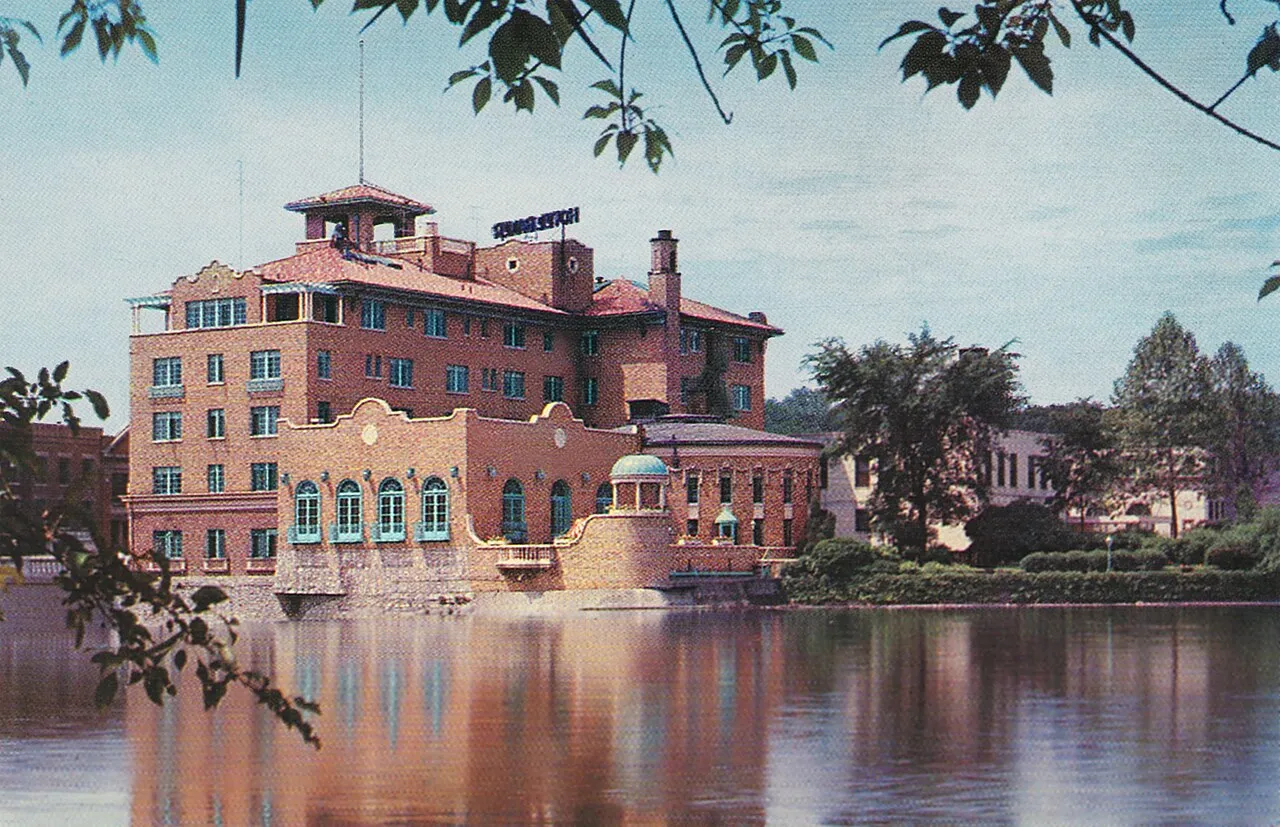
St. Charles at a Glance
St. Charles sits on the Fox River in eastern Kane County, about 40 miles west of the Loop, between Geneva to the south and South Elgin to the north. Most of the city is in Kane County, but a piece of the far east side crosses into DuPage County. The former Pheasant Run resort on East Main Street is the landmark most people know in that DuPage piece. That matters because DuPage and Kane run different assessors, different treasurers and different tax calendars, so if a listing you like is on the far east edge, check which county the parcel is in before you run numbers.
The 2020-2024 Census ACS puts the population at 32,854 across 14.5 square miles, with 13,829 housing units. About 70% of occupied homes are owner-occupied, and 73% of all homes are single-unit buildings. The rest is a real mix of townhomes, condos and apartments, more than you will find in most Kane County towns this size.
St. Charles is one of the three "Tri-Cities" with Geneva and Batavia. The three share a stretch of the Fox River, a regional bike trail and a lot of daily traffic.
The layout is simple once you have it. The Fox River splits the city into an east side and a west side, and locals describe almost everything by which side of the river it is on. Main Street (Route 64) runs east to west through downtown and crosses the river on the Main Street bridge. Randall Road is the big north-south retail corridor on the west side, Kirk Road does the same job on the east side, and Routes 25 and 31 hug the river on either bank.
One more thing before you shop: a St. Charles mailing address is not the same as the City of St. Charles. The 60174 and 60175 ZIP codes reach well beyond the city limits into unincorporated Kane County and the Village of Campton Hills. I cover what that changes in the neighborhoods section.
Confirm the district for a specific address with the district office, and read each district's profile on the Illinois Report Card at illinoisreportcard.com. It costs less to buy here than in most of the North Shore and the closer-in DuPage suburbs, and the tax rate, at about 2.4%, is high but not unusual for the Fox Valley.
Confirm the district for a specific address with the district office, and read each district's profile on the Illinois Report Card at illinoisreportcard.com.
St. Charles Neighborhoods, Pocket by Pocket
St. Charles has no official neighborhoods, but it is not one market. The first split is the river. The blocks closest to downtown on both banks are the oldest part of town, with a street grid, older homes and the highest walkability. The east side beyond that has more of the 1970s through 1990s subdivisions, the Kirk Road corridor and the Charlestowne and Pheasant Run sites. The west side has the Randall Road corridor and, further out, the larger subdivisions and big-lot pockets that run toward Campton Hills.
The ZIP codes give a rough sense of the price gap. Ownwell's April 2026 data puts the median home value at about $317,600 in 60174, which covers downtown and much of the east side, and about $422,100 in 60175, which covers the west side and reaches out into unincorporated land and Campton Hills. That is a ZIP-level average, not a rule, and there are expensive streets in 60174 and modest ones in 60175.
The second split is the one most buyers do not know to ask about: is the house actually in the city? Kane County uses a grid system for unincorporated addresses, so a listing with an address like 39W944 or 5N961 is almost always outside a municipality. Redfin's list of new St. Charles listings this month includes several of them. Outside the city you usually do not get city water, sewer or electric, many homes run on a private well and septic system, the county or township maintains the road, and the tax code is different. None of that is bad. Some of the best big-lot homes in the area are on those roads. It just has to be priced and inspected differently, and I ask for well and septic records on every one.
Below are the subdivisions you will see named in listings. The list, locations and build eras come from a single Patch subdivision roundup, so treat the boundaries as a starting point, and several of the west-side names include homes outside the city limits. If you want to know which pocket a specific address actually falls in, and what that pocket has sold for lately, that is a conversation I am happy to have here.
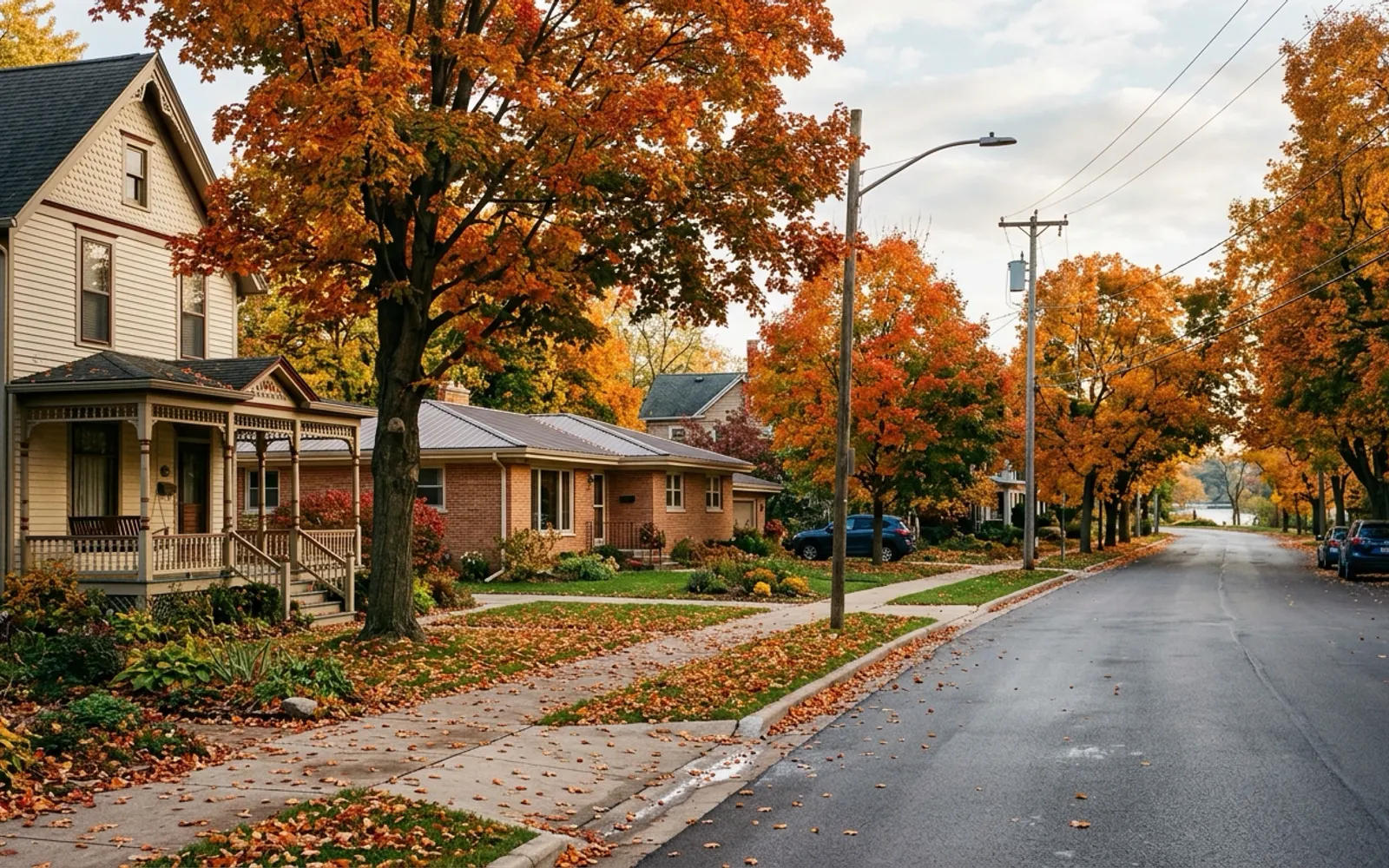
Downtown and the river blocks. Both banks of the Fox around Main Street. The oldest homes in the city, many built before 1940, on a walkable grid close to the riverwalk, shops and restaurants.
Royal Fox. East side, east of Dunham Road and south of Army Trail Road, around the Royal Fox Country Club. Single-family homes built roughly 1988 to 2001.
Woods of Fox Glen. East side, south of Army Trail and east of Route 25. Custom homes, mostly 1990s and early 2000s.
Kingswood. East side, on Foxfield east of Kirk Road. Townhomes and single-family homes from the late 1990s.
Persimmon Woods and Wildrose Springs. East side subdivisions from the mid-1980s to early 1990s.
Tanglewood and Willowgate. Townhome communities, Tanglewood on Division east of 7th Avenue (mid-1990s) and Willowgate on Route 31 south of Route 64 (late 1990s).
The Windings of Ferson Creek. West side, on Empire west of Burlington. Single-family homes and townhomes from the mid-1970s.
Red Gate Ridge and Heritage Oaks. West side near Randall Road. Red Gate Ridge dates to the late 1980s; Heritage Oaks, on Silver Glen west of Randall, to the late 1990s.
Harvest Hills and Renaux Manor. West side along Route 64. Harvest Hills (early 2000s) has about 302 single-family homes and 350 townhomes; Renaux Manor (late 1990s, near Campton Hills Road) about 263 single-family homes and 227 townhomes.
Prairie Lakes. West side, north of Route 64. Custom single-family homes built in the mid-to-late 2010s, one of the newer pockets.
Crane Road Estates, Fox Mill, Burr Hill and Three Lakes. Larger-lot subdivisions on the west and north edges. Several carry St. Charles addresses without being in the city, so confirm the jurisdiction, water and sewer on each house.
What St. Charles Homes Look Like, by Era
St. Charles has more range in its housing than most Fox Valley towns, and the 2020-2024 Census ACS shows it clearly. Of the city's 13,829 homes, about 1,281 were built before 1940. Another 2,755 went up between 1940 and 1969, 4,189 in the 1970s and 1980s, 4,668 between 1990 and 2009, and only about 936 since 2010. The median year built is 1984.
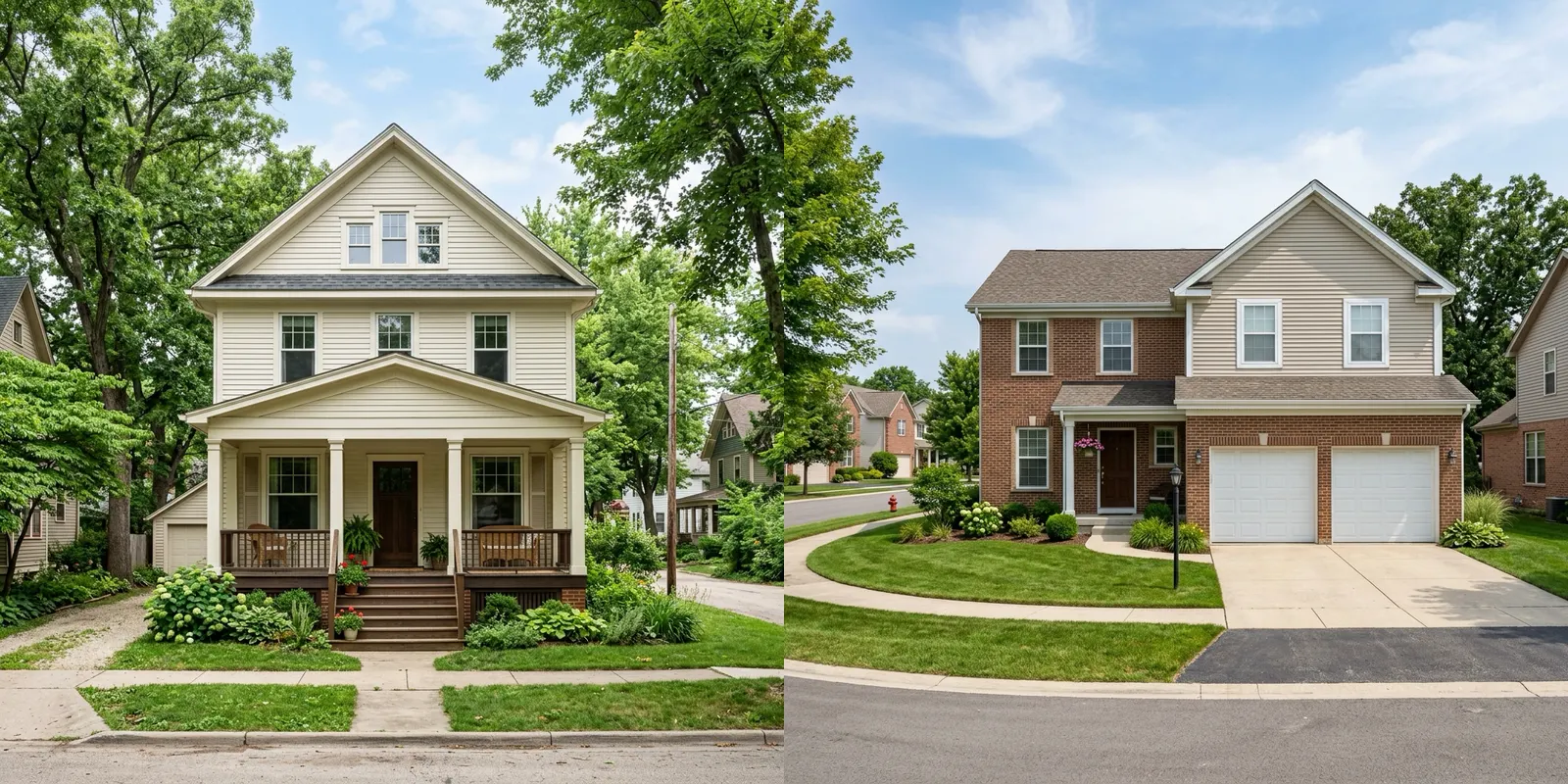
In plain terms, there are four kinds of house to understand before you tour. The first is the pre-1940 stock around downtown on both banks: Victorians, foursquares, bungalows and farmhouses, many with updates layered on over a century. The second is the post-war ranches, split-levels and bi-levels of the 1950s through the 1970s, often on generous lots. The third, and the biggest group, is the 1980s through 2000s subdivision home: two-story colonials and contemporaries with attached garages and full basements, plus a lot of townhome communities from the same years. The fourth is a thin layer of newer construction, mostly custom homes in pockets like Prairie Lakes and infill near downtown.
The ACS puts the median value of owner-occupied homes at $377,400 and the median gross rent at $1,819. Both trail what homes are actually selling for this year, because the survey averages five years of responses. About 30% of occupied homes are rented, which is a bigger rental market than many nearby towns have, much of it in the townhome and apartment communities.
I have walked buyers through enough older Fox Valley houses to know the usual surprises: original electrical in the pre-1940 homes, galvanized supply lines, basements near the river that have taken water, and in the 1990s subdivisions, original roofs, windows and furnaces that are all reaching the end of their life at the same time. None of those should kill a deal. All of them belong in the price. My home inspection checklist is a good place to start.
The St. Charles Housing Market in 2026
St. Charles is a steady market this year, not a frantic one. In the three months ending August 2026, Redfin reported a median sale price of $455,698, up 1.0% from a year earlier. The median home sold in 47 days, six days slower than last year, at 101.6% of list price, and 52.5% of homes sold over asking. Redfin counted 147 homes sold in August, down from 163 a year earlier, and gives St. Charles a Compete Score of 68 out of 100, which it calls somewhat competitive, with about three offers on the average home.
Zillow's home value index for August 2026 is $480,166, up 6.3% from $451,916 in August 2025. The two numbers point the same direction but not at the same speed, and the reason is what they measure. Redfin's median is the middle of whatever happened to sell in a three-month window. Zillow's index estimates the value of all homes in its St. Charles area, sold or not, and that area likely includes some of the larger unincorporated homes that share the address. Redfin's median price per square foot, $253, was up 12.9%, which tells me values rose more than the median suggests and this summer's sales tilted toward smaller homes and townhomes.
What that means in practice: a well-priced house still sells over asking about half the time, but 19.0% of listings took a price cut this summer, up 3.6 points from last year. Buyers have a little more room to negotiate than they did in 2024 and 2025, especially on homes that need work. Sellers still do best when the list price is right on day one.
Numbers at the city level only go so far here. A downtown townhome, a 1990s colonial in Royal Fox and a five-acre property on a grid-address road are three different markets. If you are working out a budget, my guide to how much house you can afford in 2026 is the place to start, and my read on whether it is a good time to buy covers the rate side.
St. Charles Property Taxes and the Real Cost of Owning
Property tax is the number that changes the monthly payment most in St. Charles, and it never shows up in the list price. Ownwell's data, updated April 13, 2026, puts the median effective rate at 2.36% and the median annual bill at $8,774. By ZIP code, the median bill is about $6,687 in 60174 and $10,146 in 60175, with effective rates of 2.34% and 2.37%.
Here is what that looks like on a real purchase. At 2.36%, a house bought at this summer's $455,698 median would eventually carry about $10,750 a year in tax, roughly $900 a month on top of the mortgage. The seller's current bill may be lower, because assessments trail the market, but the assessor catches up. The expectation I most often have to reset is buyers who budget off the seller's bill instead of the rate.
The city itself is a small slice. According to the City of St. Charles, the city's portion is about 10% of a resident's total bill, and a $300,000 home paid about $675 to the city last year. The city is one of ten taxing bodies on a typical bill, and the school district is the largest. Most of the city sits in St. Charles Township, with pieces in Geneva, Campton and Wayne townships, and the DuPage piece is taxed through DuPage County. Each combination of township, school district, park district and library district is its own tax code with its own rate, so two houses a mile apart can carry different bills at the same price.
The Kane County Treasurer's site lets you print the actual bill for any parcel, and I pull it on every house I show. This is general information, not tax advice. Your actual bill depends on your parcel, your exemptions and the assessor. Closing costs are the other number buyers underestimate, and my Illinois closing costs guide walks through them.
St. Charles Schools: Community Unit District 303
Most of St. Charles is served by St. Charles Community Unit School District 303, a single district that runs from preschool through high school. According to the district's site, D303 runs eleven elementary schools (Anderson, Bell-Graham, Corron, Davis, Ferson Creek, Fox Ridge, Munhall, Norton Creek, Richmond, Wasco and Wild Rose), two middle schools (Thompson and Wredling) and two high schools (St. Charles East and St. Charles North), plus an early childhood program, Compass Academy and a transition program. The district office is at 201 South 7th Street.
A unit district is simpler than the split elementary and high school districts common in Lake and Cook counties. There is one board, one tax line and one set of boundaries from kindergarten through 12th grade. It also means the district reaches well past the city: D303 serves Campton Hills and parts of neighboring towns, which is why school boundaries do not follow the city limits.
The detail that trips people up is assignment. Which elementary, middle and high school a house feeds depends on the street, and the East/North split does not line up neatly with the river. Edges of the city can also fall into neighboring districts. Check the address with D303's attendance boundary lookup before you write an offer, and ask me for the boundary if you want it done for a specific house.
I have not quoted a statewide ranking here. The ranking sites I could reach this month gave figures I could not match to a current edition, and the Illinois Report Card is the better place to compare test scores, graduation rates and class sizes for the specific schools a house feeds.
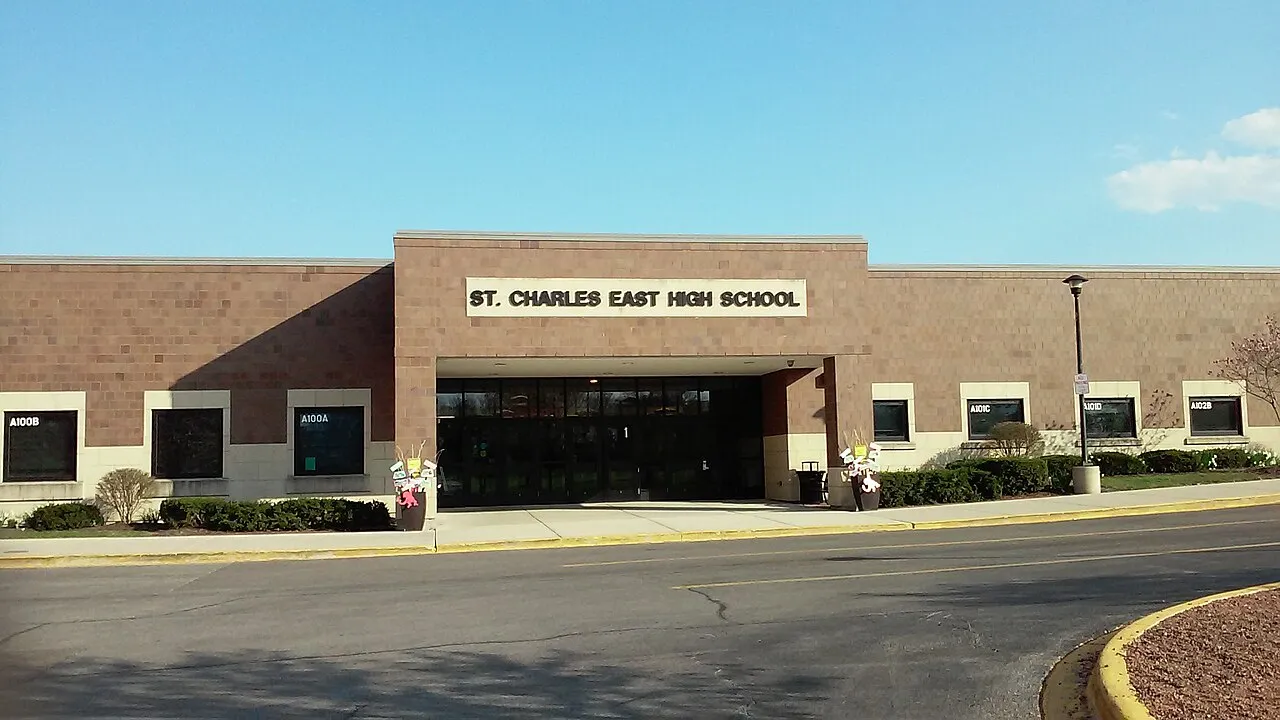
St. Charles North High School. 255 Red Gate Road, on the north end of the west side. District 303.
St. Charles East High School. East side. District 303.
Thompson Middle School and Wredling Middle School. District 303.
Elementary schools. Anderson, Bell-Graham, Corron, Davis, Ferson Creek, Fox Ridge, Munhall, Norton Creek, Richmond, Wasco and Wild Rose, all District 303. Several sit outside the city limits.
Commuting from St. Charles: Metra via Geneva
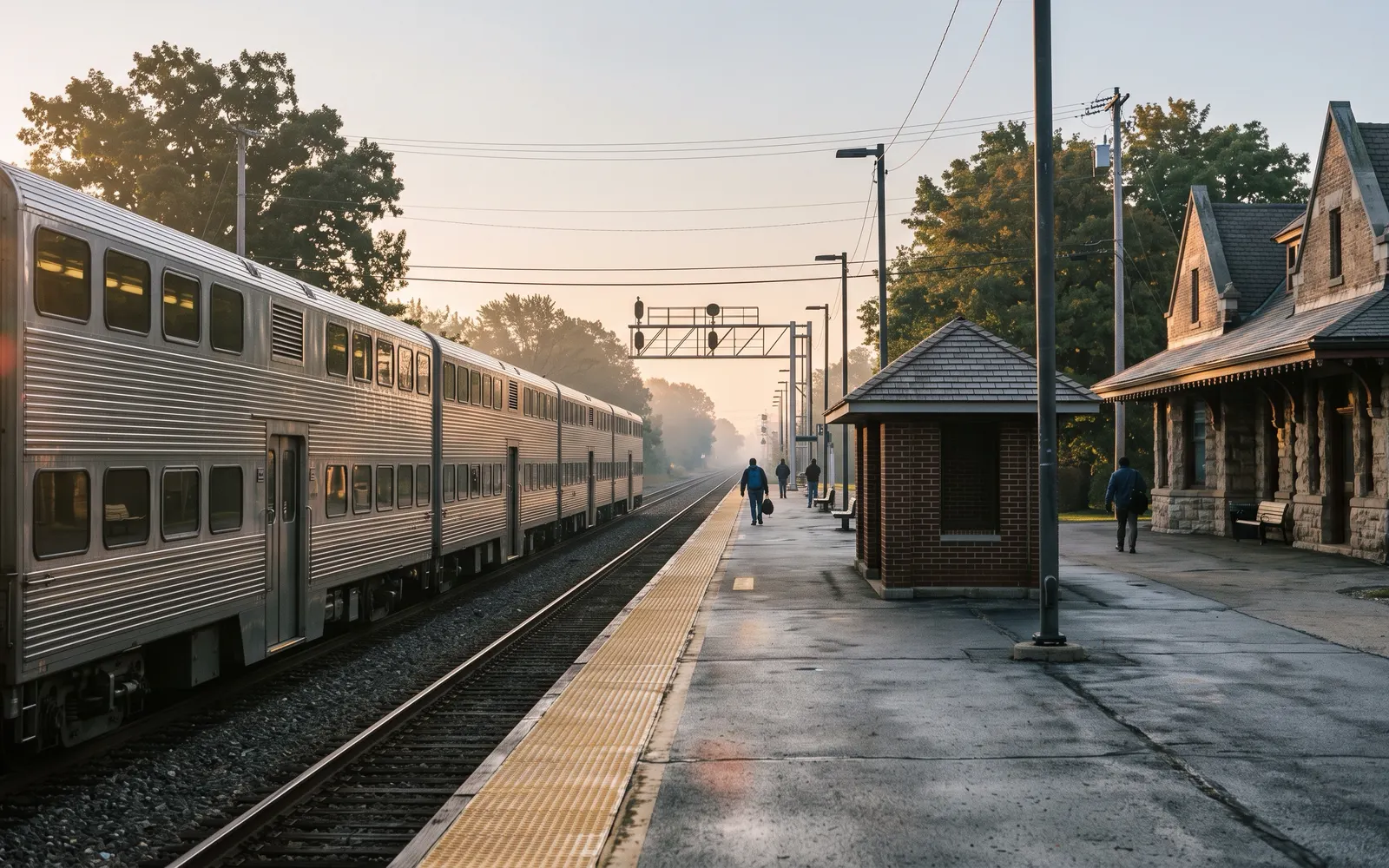
There is no Metra station inside St. Charles, and that is the single most important commuting fact about the city. Most train commuters drive or get dropped off at the Geneva station on the Union Pacific West line, a little over two miles south of downtown St. Charles in a straight line, and ride to Ogilvie Transportation Center in the West Loop.
The schedule is solid. According to Metra's current UP-W timetable, 28 trains leave Geneva for Chicago on weekdays and 28 come back, with 10 each way on Saturdays and 9 on Sundays. The fastest morning train, the 7:00 a.m., reaches Ogilvie at 8:00. The rush-hour expresses mostly take about 65 minutes, and the local and midday trains about 76. Coming home, trips run from about 57 to 72 minutes.
Add the drive to Geneva, parking and the walk at the other end, and a door-to-desk commute to the Loop is realistically 80 to 95 minutes from most of St. Charles. The 2020-2024 Census ACS shows how residents actually get to work: 73% drive alone, 2% take public transit and 15% work from home, with a mean travel time of 27 minutes. In other words, most people who live here work in the suburbs or from home, and the train is for the days they go downtown.
Driving from St. Charles: Highways and O'Hare
St. Charles is a Route 64 town. Main Street carries traffic east through Wayne and into DuPage County toward the North Avenue corridor, and west past Randall Road toward Campton Hills and the farmland beyond. Randall Road is the main north-south route on the west side, and it connects to I-90 to the north and to I-88 to the south. Kirk Road plays the same role on the east side toward I-88.
There is no interstate inside the city, and the city's own planning documents list the "lack of interstate access" as one of the reasons the Charlestowne Mall site has been hard to redevelop. For a homeowner, that cuts both ways. There is less highway noise and through-traffic, and a slower drive to the tollways. O'Hare is roughly 30 miles away, and the drive usually takes 45 minutes or more depending on the time of day and whether you take I-90 or the local roads.
Where you live inside St. Charles changes the drive more than people expect. Crossing the Fox River at rush hour is the bottleneck everyone complains about, because there are only a few bridges. If you work on the east side or in DuPage, living on the east side saves a daily river crossing. If you head for I-90 or the Randall Road corridor, the west side is easier.
Is St. Charles Walkable?
Mostly not, with one real exception. Walk Score rates the city 37 for walking, which it calls car-dependent, and 50 for biking, which it calls somewhat bikeable. That is normal for a Fox Valley suburb built mostly after 1970.
The exception is downtown. The blocks on both banks of the river around Main Street have the riverwalk, the Arcada, the library, restaurants and shops within a few minutes on foot. If walking to dinner and the river matters to you, it narrows your search to a small part of town, and those homes tend to be older, smaller-lot and in demand.
For recreation, St. Charles does better than its score. The Fox River Trail runs along the river through the city and connects south to Geneva and Batavia and north toward Elgin, and Pottawatomie Park has direct access to it. A long bike ride or a riverfront run is easy from much of town even if the errands still need a car.
Downtown St. Charles and Shopping
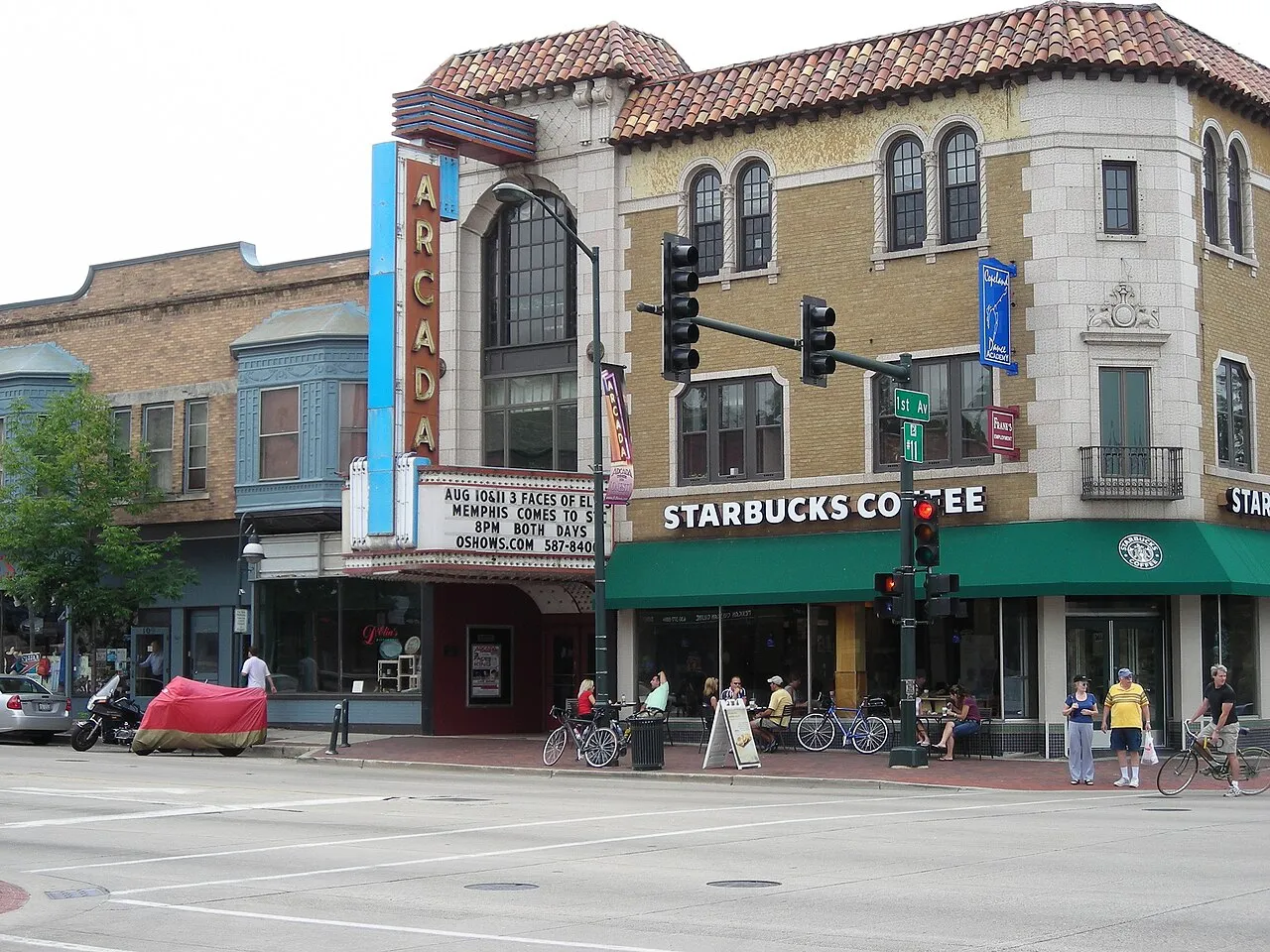
Downtown St. Charles is the center of town and the reason a lot of buyers look here first. Shops, restaurants and bars line Main Street and the side streets on both banks, the Arcada Theatre anchors the east side of the bridge and the Hotel Baker anchors the west, and the riverwalk ties them together. On a summer weekend it is the busiest place in the city.
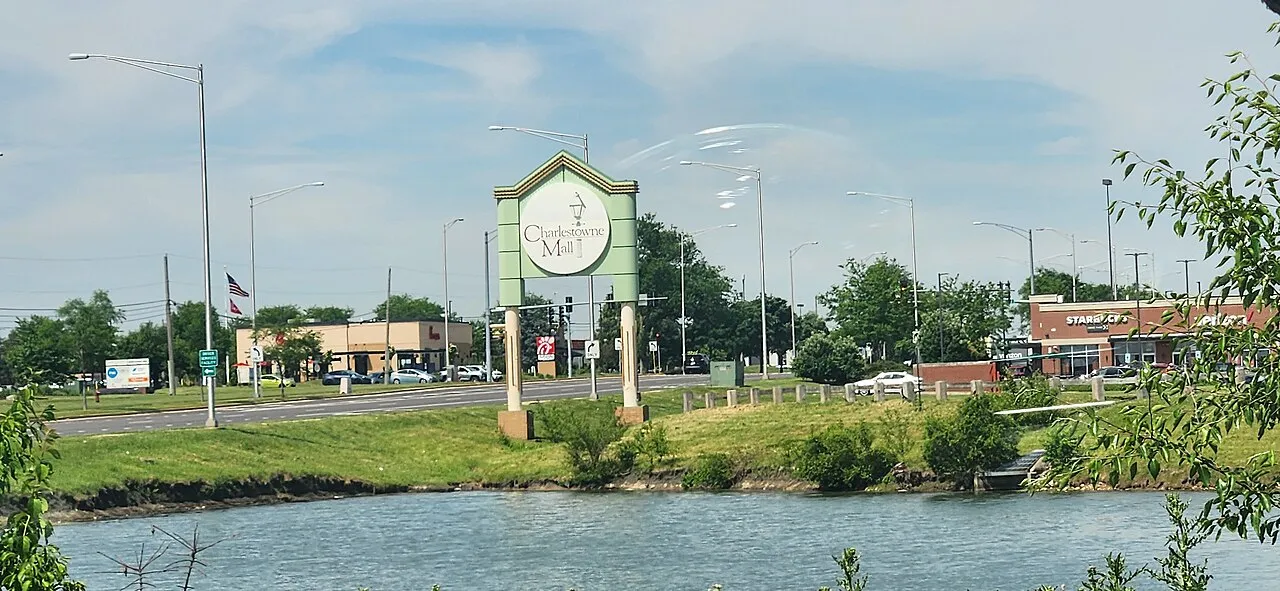
Randall Road on the west side is where the big-box stores, grocery chains and chain restaurants cluster, and it continues south into Geneva's commercial corridor. On the east side, the Charlestowne Mall site on Route 64 is mostly closed. According to the city's October 2025 summary, only Von Maur and Classic Cinemas remain open inside, with outlot tenants including Cooper's Hawk, Chipotle and Starbucks. For a full mall, most people drive to Geneva Commons or to Oakbrook Center and Woodfield further east.
Groceries and Everyday Errands in St. Charles
Weekly errands in St. Charles mostly happen on the two commercial corridors. Randall Road on the west side and Kirk Road and Route 64 on the east side have the grocery stores, pharmacies, banks and dry cleaners, so most homes are within a short drive of a full grocery store. From Friday mornings into the fall, the St. Charles outdoor farmers market runs 8 a.m. to 1 p.m. at 211 Riverside Avenue, just north of the Municipal Center, through the end of September.
Where St. Charles Eats
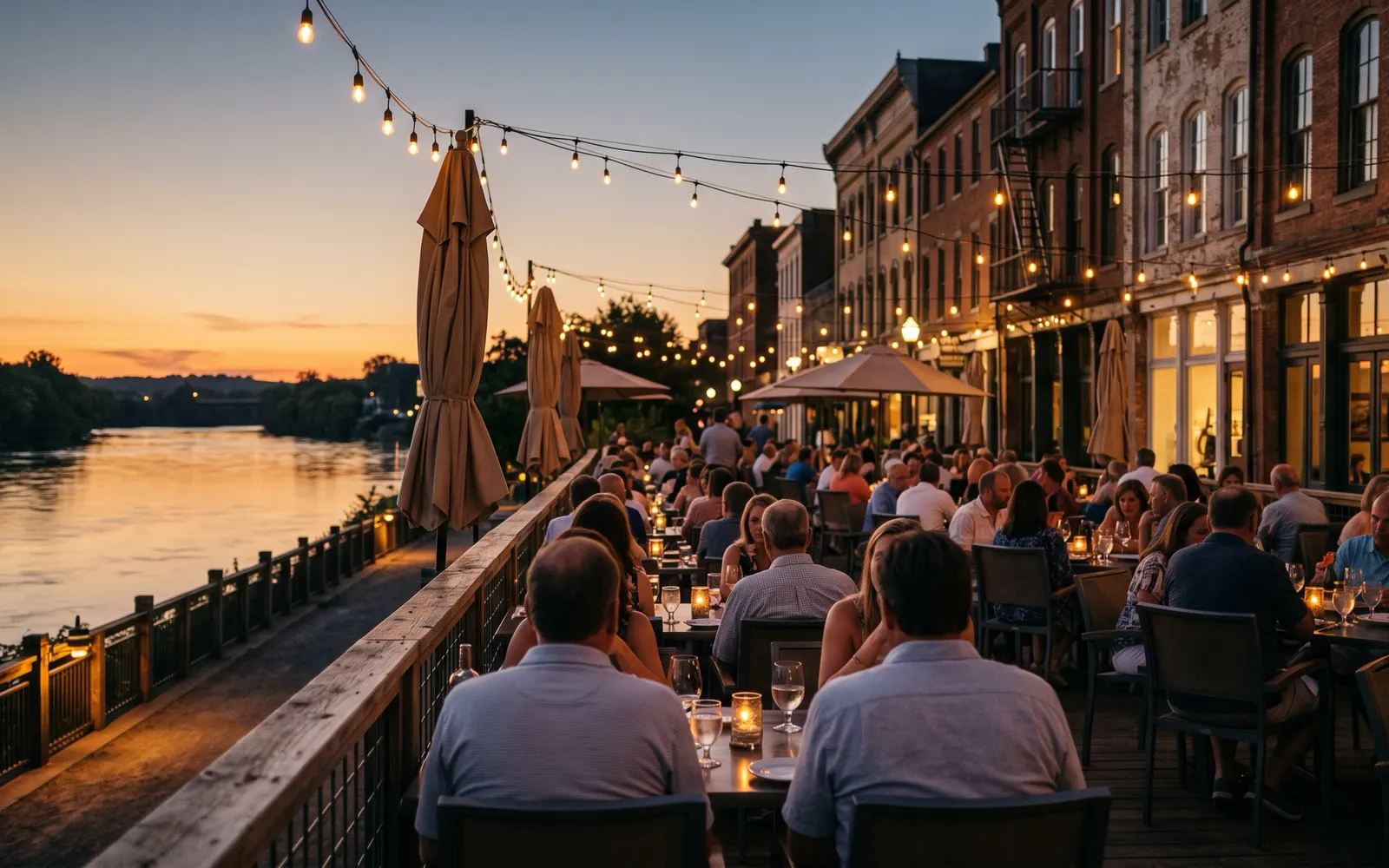
Downtown is where most of the city's independent restaurants are, many with river views or patios on the riverwalk. Walk Score counts about 137 restaurants, bars and coffee shops in St. Charles, but notes that the average resident can walk to fewer than one in five minutes, which is the whole walkability story in one number. Chain dining clusters along Randall Road and at the Charlestowne outlots, where Cooper's Hawk is the best-known name.
The Hotel Baker's restaurant and ballroom are a local institution for dinners and events, and a summer evening on a downtown patio overlooking the Fox is the thing people who move here mention first.
Parks, the Fox River and Recreation in St. Charles
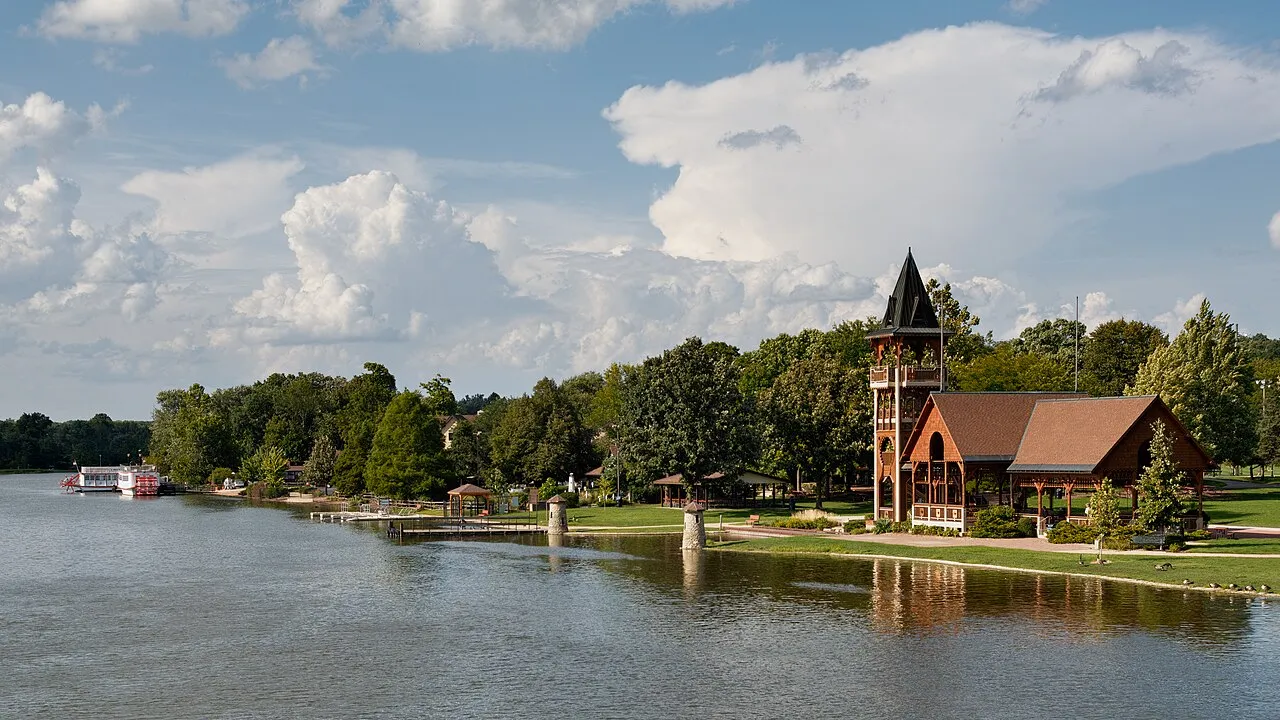
The St. Charles Park District's signature park is Pottawatomie Park, 38.3 acres on the Fox River at 8 North Avenue, a few blocks north of Route 64. The park district formally acquired it in 1911. It has a golf course and a miniature golf course, Swanson Swimming Pool, a boat launch with rentals and fishing access, tennis and pickleball courts, sand volleyball, a softball diamond, a playground, an amphitheater, 1.36 miles of trails and direct access to the Fox River Trail. The Jack Kerr Memorial Riverwalk runs along the water, and the paddlewheel riverboat cruises leave from the park in season.
Beyond Pottawatomie, the river itself is the main recreation asset. Kayakers and anglers use it all summer, the Fox River Trail runs the length of the city, and the forest preserves and park district natural areas on the edges of town give the west side a lot of open land. If you are comparing houses, ask how far each one is from the trail. A short walk to it is worth something to a lot of buyers.
The St. Charles Public Library
The St. Charles Public Library is downtown at 1 South Sixth Avenue, on the east side a few blocks from the river. It is open seven days a week, with evening hours Monday through Friday, and runs a full calendar of youth and adult programs. The library district reaches beyond the city limits, so check whether a house outside the city is in the district before you count on a free card.
Utilities in St. Charles: The City Runs the Electric
This is one of the most unusual things about owning a home in St. Charles. The city runs its own electric utility, which dates to 1892 and now serves more than 15,500 customers through nine substations. Power comes through a long-term purchase agreement with the Illinois Municipal Electric Agency that runs until 2035. ComEd delivers power to the city at high voltage, but inside the city limits your electric bill comes from St. Charles, not ComEd.
The city also provides water and sewer, all on one city utility bill, and contracts residential trash and recycling pickup. Nicor Gas provides natural gas. Homes outside the city limits with a St. Charles address are a different story: most are on ComEd for electric and many have a private well and septic system. It is one of the fastest ways to tell whether a listing is really in the city. Ask which electric company sends the bill.
Hospitals Near St. Charles
The closest full-service hospital is Northwestern Medicine Delnor Hospital at 300 South Randall Road in Geneva, just south of the St. Charles city line and a short drive from most of the west side. Northwestern Medicine and other systems also run outpatient offices and immediate care clinics along Randall Road and Route 64 in St. Charles itself.
The Arcada, the Riverboats and Nights Out in St. Charles
The Arcada Theatre on Main Street has been open since September 6, 1926, and today books concerts and comedy most weekends, which is unusual for a city this size. The Hotel Baker, across the river since 1928, hosts events in its ballroom, and Classic Cinemas at the Charlestowne site is still showing movies. In summer the paddlewheel riverboats run cruises on the Fox from Pottawatomie Park.
That concentration of things to do within a few blocks of the river is the real draw of downtown St. Charles, and it is why the homes closest to it hold their value. If you are also looking south, my Geneva guide covers the next town down the river.
Scarecrow Weekend and St. Charles's Yearly Traditions
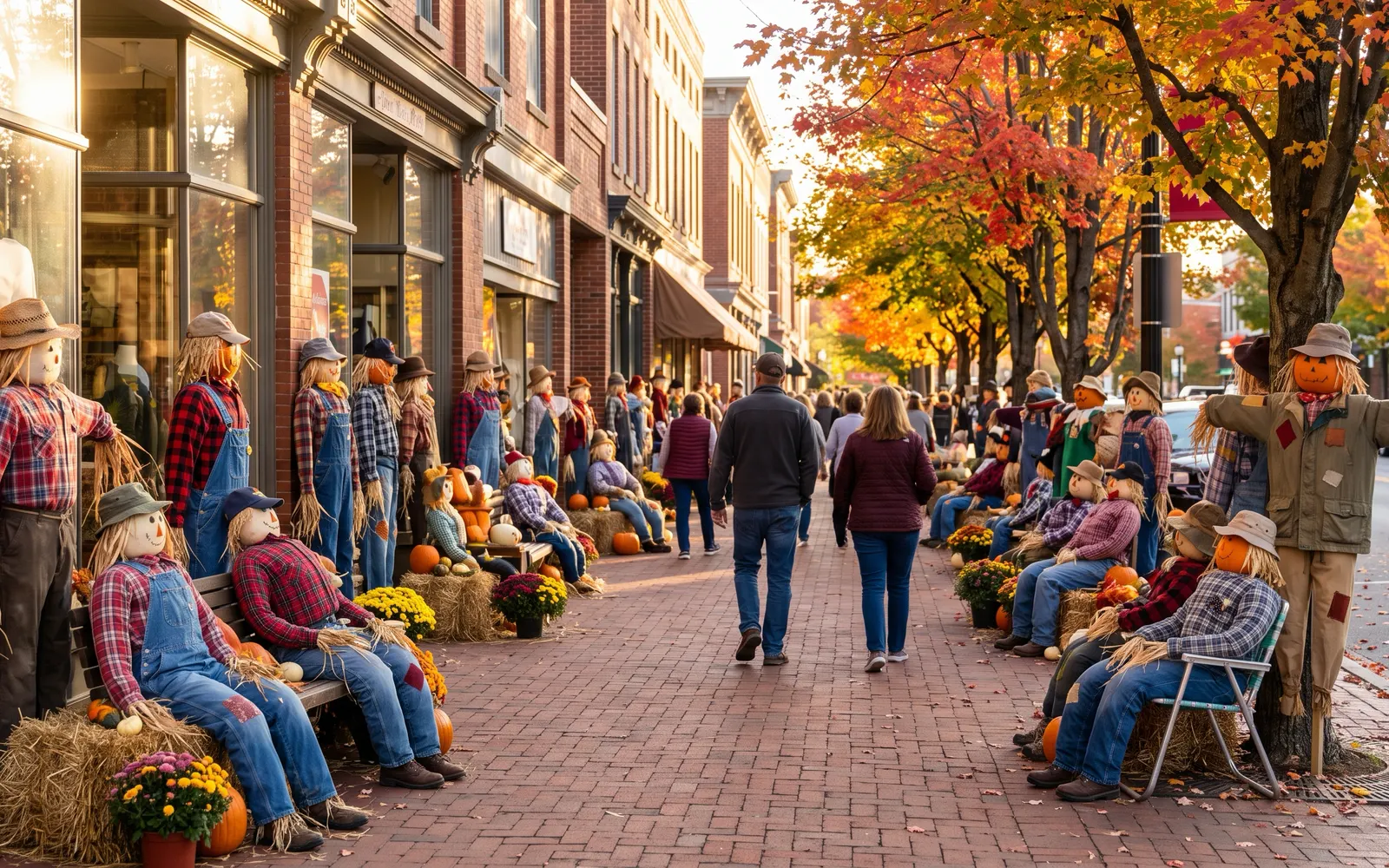
The big one is Scarecrow Weekend, which runs Friday, October 9 through Sunday, October 11, 2026, across downtown. More than 100 handmade scarecrows go up around town for visitors to view and vote on, with live entertainment, an inflatable corn maze, a climbing wall, pumpkin painting and food vendors. The Autumn on the Fox Craft Show runs in Pottawatomie Park the same weekend, and admission is free.
The rest of the year has a steady rhythm. The Friday farmers market runs through September, and the city's events calendar lists the Holiday Homecoming lighting of the lights downtown on November 27, 2026. If you are touring houses in October, come on Scarecrow Weekend. It tells you more about downtown than any listing will, and it also tells you what parking near the river is like on a busy weekend.
What's Being Built in St. Charles
Three sites will shape the east side and the near-downtown market over the next few years, and all three are still in motion as of September 2026.
The biggest is Charlestowne Mall. According to the city's October 2025 summary, the 800,000-square-foot mall opened in 1991, went into receivership in 2005, was bought by the Krausz Companies in 2013 and has seen several redevelopment proposals fall through. In September 2025, Krausz hired Frontline Real Estate Partners to market the 72-acre site to a developer. The city estimates getting the site "pad-ready" could cost $30 million or more, approvals could take 8 to 12 months once a plan is filed, and construction would likely run in phases over three to five years. Earlier proposals have mixed apartments and townhomes with retail. I have not seen an approved plan.
The second is the former Pheasant Run resort at 4051 East Main Street, which closed in 2020 and was demolished after a 2022 fire. The Real Deal reported on August 5, 2026 that Vequity's plan for The Shops at Pheasant Run, 14 commercial lots on about 34 acres with a Chase bank, an oil change shop and a Dutch Bros among the named tenants, had been pushed back two weeks by the City Council over the number of drive-thrus. Vequity has asked for $3.3 million in incentives. Two car dealerships already occupy 21 acres of the old resort property.
The third is residential. Pulte Homes has proposed Seventh Street Commons, 93 single-family homes and 12 townhomes on the former Applied Composites industrial site northwest of downtown, between North 5th and North 12th streets. Shaw Local reported on July 31, 2026 that the council had started the process for a $3 million TIF to move power lines on the site, with townhomes starting around $530,000 and single-family base prices of roughly $600,000 to $635,000. Pulte is aiming for a 2027 groundbreaking and early 2028 move-ins. For buyers, that is a rare chance at new construction within walking distance of downtown. For sellers of older homes nearby, it is a new price reference point.
I don't label any town or neighborhood as safe or unsafe.
Flood Risk in St. Charles and the Fox River
Flooding isn't a citywide problem in St. Charles, but it is a real one on the low ground near the Fox River and its creeks. Redfin, using First Street's model, rates the city's overall flood risk as minor, with 323 properties, about 5% of the total, likely to be severely affected by flooding over the next 30 years.
The river does rise. In April 2026 the Fox ran well above flood stage upstream, and Shaw Local reported that forecasts flagged low-lying parts of St. Charles, Batavia and Montgomery along the river. The city's engineering division keeps the current FEMA maps and will tell you whether a property is in the floodplain.
Two checks before you write an offer on any house near the river or a creek. Look the address up on the FEMA flood map, because a mapped flood zone can mean required flood insurance on a mortgage. And ask the seller directly about water in the basement. In my experience with older river-town homes, the answer is often "once," and the follow-up question about what they did about it is the one that matters.
Frequently Asked Questions
How much does a house cost in St. Charles, IL?+
Redfin reported a median sale price of $455,698 for the three months ending August 2026, and Zillow's home value index was $480,166 for August 2026. Prices range widely, from downtown townhomes to large homes on big lots on the west side.
What are property taxes in St. Charles, IL?+
The median effective rate is about 2.36%, with a median bill of about $8,774 (Ownwell, April 2026). The median bill is about $6,687 in 60174 and $10,146 in 60175. A home's bill usually rises after a sale once it is reassessed.
What school district is St. Charles, IL in?+
Most of the city is in St. Charles Community Unit School District 303, which runs eleven elementary schools, Thompson and Wredling middle schools, and St. Charles East and St. Charles North high schools. Assignment depends on the street, so confirm each address with the district.
Does St. Charles, IL have a Metra station?+
No. Commuters use the Geneva station on the Union Pacific West line, a little over two miles south of downtown. It has 28 weekday trains each way to Ogilvie, with the fastest about 60 minutes and most expresses about 65.
Is St. Charles, IL in Kane County or DuPage County?+
Mostly Kane County. A small piece of the far east side, around the former Pheasant Run site on East Main Street, is in DuPage County, which has a different assessor and tax calendar.
Is St. Charles walkable?+
Not citywide. The Walk Score is 37, but downtown, on both banks of the Fox River, is walkable, and the Fox River Trail runs through the city.
What neighborhoods are in St. Charles, IL?+
Commonly named pockets include downtown and the river blocks, Royal Fox, Woods of Fox Glen, Kingswood, Persimmon Woods, Wildrose Springs, The Windings of Ferson Creek, Red Gate Ridge, Heritage Oaks, Harvest Hills, Renaux Manor and Prairie Lakes. Locals usually describe them by their side of the river.
What is happening with Charlestowne Mall in St. Charles?+
The owner has been marketing the 72-acre site to developers since September 2025. Only Von Maur, Classic Cinemas and the outlot restaurants remain open, and no redevelopment plan had been approved as of September 2026.
Eshu Chikoti has extensive access to off-market listings throughout St. Charles and the rest of Kane County — homes that never make it to the public listing sites. That matters right now: in a seller's market like this one, well-priced homes routinely go under contract within days, and buyers relying only on public listings are competing for whatever is left over. Working with someone plugged into off-market inventory means seeing homes before the crowd does.
Eshu Chikoti · 847-691-4282 ·
Get new St. Charles listings by email
When a home comes on the market in St. Charles, I'll email it to you.
Just your email. Unsubscribe any time by replying.
Thinking About St. Charles?
Whether you're buying, selling, or just curious what's on the market, I can walk you through St. Charles street by street.