Warrenville, IL
Warrenville, IL is a DuPage County city of about 14,700 people on the West Branch of the DuPage River, surrounded by three forest preserves, with I-88 on its southern edge and one of the lower price points in central DuPage.
Living in Warrenville, IL means a median sale price near $347,000 in July 2026, property tax around 2.3% of value, CUSD 200 schools and three forest preserves inside city limits. The trade-offs are no Metra station of its own, hard well water and a car-dependent layout. Here is how it breaks down, pocket by pocket.
Written by Eshu Chikoti · 847-691-4282 ·
How Warrenville, IL Got Here: A Short History
Warrenville is one of the oldest settlements in DuPage County. According to the city's own history page, Julius Warren and his family came west from New York and settled along the DuPage River in 1833. His father Daniel claimed land at what is now McDowell Woods, and Julius claimed the land that is now Warrenville Grove Forest Preserve. Julius Warren was the settlement's surveyor, developer, mail carrier, census taker and innkeeper, and he picked up the title of Colonel along the way.
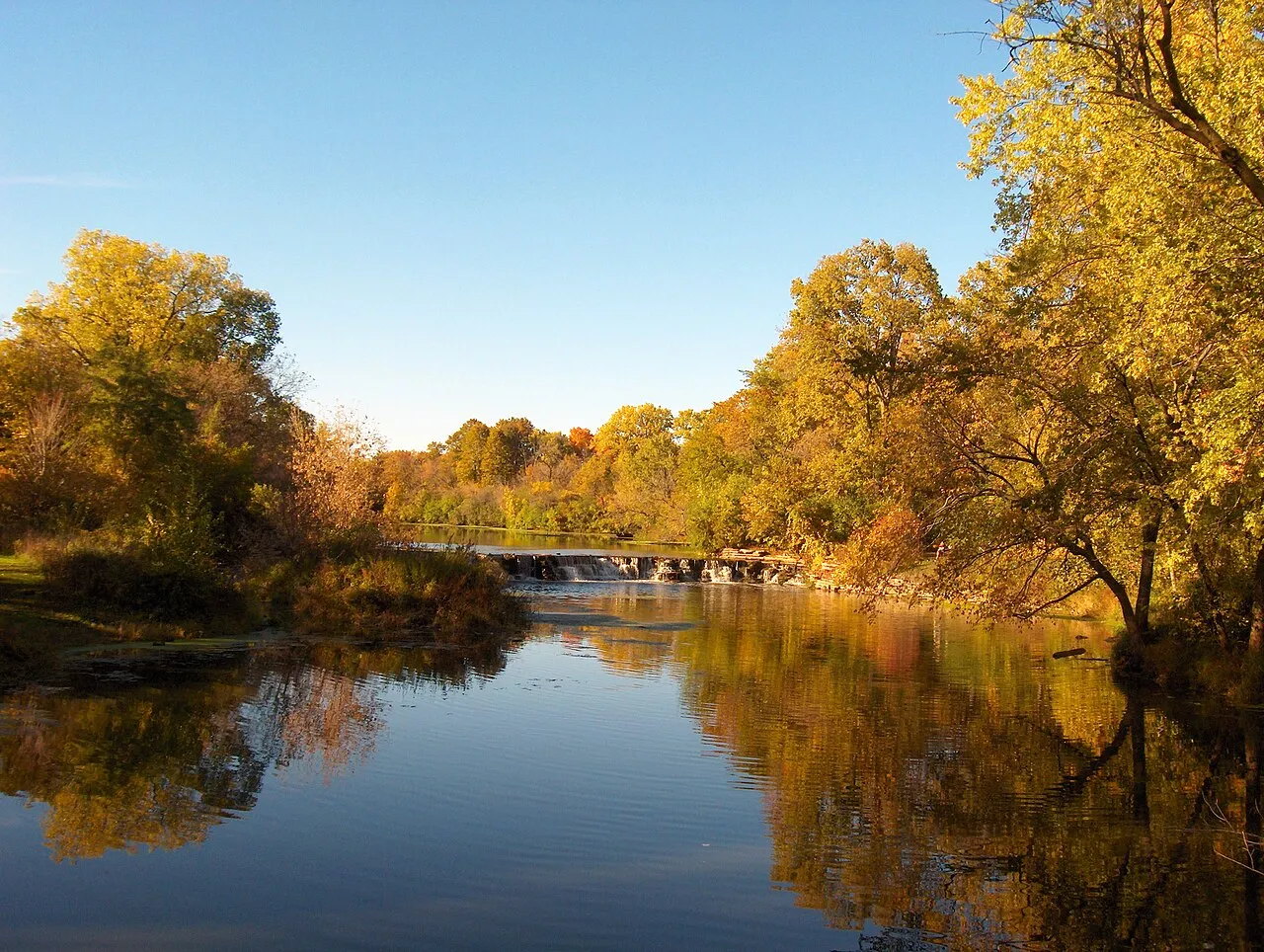
The river is why the town is where it is. A dam went in across the West Branch in 1847, per the Forest Preserve District of DuPage County, and the mills it powered made Warrenville a grain and milling stop for the farms around it. A plank road connected it to Naperville and Winfield. The main railroads bypassed the town, and rail only arrived in 1902 with the Chicago Aurora and Elgin interurban, which ran until the late 1950s, per Wikipedia's summary of the city's history. That old right-of-way is now part of the Illinois Prairie Path.
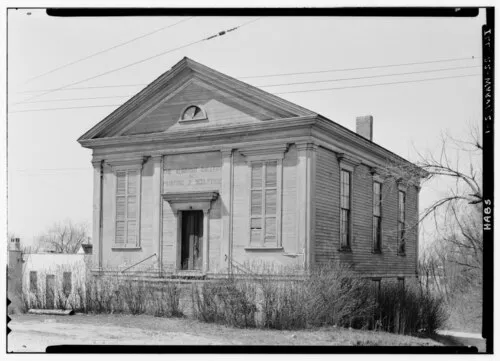
The building most people ask about is the Warren Tavern, which Julius Warren built in 1838 as a hotel with a hall for dancing. It was a stop for travelers from Chicago, Naperville and the Fox River towns. When it faced demolition in 1991, volunteers formed a preservation group, and on October 7, 1992, the building was moved to its current spot at 3S540 Second Street in the city's historical park.
Next door is the Albright Studio, built in 1858 as a Methodist church. The painter Adam Emory Albright bought it in 1924 and ran a gallery there with his twin sons, one of whom was the painter Ivan Albright. The city bought and renovated the building in 1981, and the Warrenville Historical Society now runs it as the city museum.
Warrenville took a long time to become a city. It incorporated in 1967, after five failed attempts, with about 4,000 people. Most of the housing you will tour today was built in the three decades after that.
Warrenville at a Glance
Warrenville covers about 5.6 square miles in west-central DuPage County, just north of I-88. The whole city is in DuPage County, and it spans parts of Winfield Township and Naperville Township. Wheaton and Winfield are to the north and east, Naperville and Lisle to the south and southeast, West Chicago to the northwest, and Aurora and Batavia to the west, with the Fermilab campus along much of the western edge.
The 2020-2024 Census ACS puts the population at 14,718 in 6,022 housing units. 74.6% of occupied homes are owner-occupied. The ACS median value of an owner-occupied home is $286,100 and the median gross rent is $1,926.
A lot of Warrenville is open land. Blackwell Forest Preserve, St. James Farm and Warrenville Grove all sit inside or along the city, and together they take up a large share of the map. That is the defining feature of the place. It is also why the city feels smaller than its population, since the neighborhoods are tucked between preserves, the river and the I-88 office corridor.
The layout is easy to learn. Route 59 runs north to south along the west side. Butterfield Road (Route 56) runs east to west through the middle. Batavia Road cuts diagonally through the old part of town and crosses Butterfield at the Civic Center. Winfield Road marks the east side, and Diehl Road and I-88 mark the south. Almost every neighborhood description you will hear uses those roads as the reference point.
One thing to know before you search: the ZIP code does not always match the city. Most of Warrenville is 60555, but parts of the south side use Naperville's 60563, and some unincorporated DuPage parcels carry a Warrenville mailing address. Those can have different services and a different tax bill. I check city limits on every address before I run numbers.
The median sale price was about $347,000 in July 2026, the tax rate is about 2.3%, and three forest preserves are a few minutes from any house in the city. It is also one of the few places in the area where you can buy a nearly new townhome.
Hard well water is a real, if manageable, cost. And if you are looking near the river, the flood check is not optional.
Warrenville Neighborhoods, Pocket by Pocket
Warrenville is small enough to learn in a weekend, but it is not one market. Locals split it two ways. The first is Route 59: the pockets east of it are closer to the old town, the river and the Prairie Path, while the pockets west of it back up toward Fermilab and Aurora. The second is Butterfield Road. North of it are the forest preserves and the older townhome communities. South of it, toward Diehl Road and Cantera, the housing is newer and the drive to I-88 is a couple of minutes.
The mix of home types matters as much as the location. Warrenville has an unusually large share of townhomes and condos for DuPage County, and many of the named communities below are attached housing rather than single-family streets. If you are shopping for a detached house, the list of pockets to look at gets shorter fast.
Below are the pockets you will see named on listings. Build years and locations mostly come from one local agent's subdivision profiles and the city's own history, and boundaries are informal, so treat them as a starting point. Walk Score's Warrenville page also lists Old Town, Downtown Warrenville, Civic Center, Herrick Hills, Highland Terrace, Pinecrest, Saddle Ridge, Stone Ridge, Whitehall and Hidden Cove, which you will see on some listings.
I have not closed a sale inside Warrenville yet, so I won't pretend to a block-by-block history here. What I do on every Warrenville search is the same three checks: city or unincorporated, which school district, and whether the house sits near the river or a preserve's low ground. If you want those answered for a specific address, that is a conversation I am happy to have here.
Old Town and Downtown. The historic core around Batavia Road, Warrenville Road and the river, with the Warren Tavern, the Albright Studio and the Civic Center at Butterfield and Batavia. Older single-family houses on irregular lots, and the area the city's 2024 mixed-use overlay is aimed at.
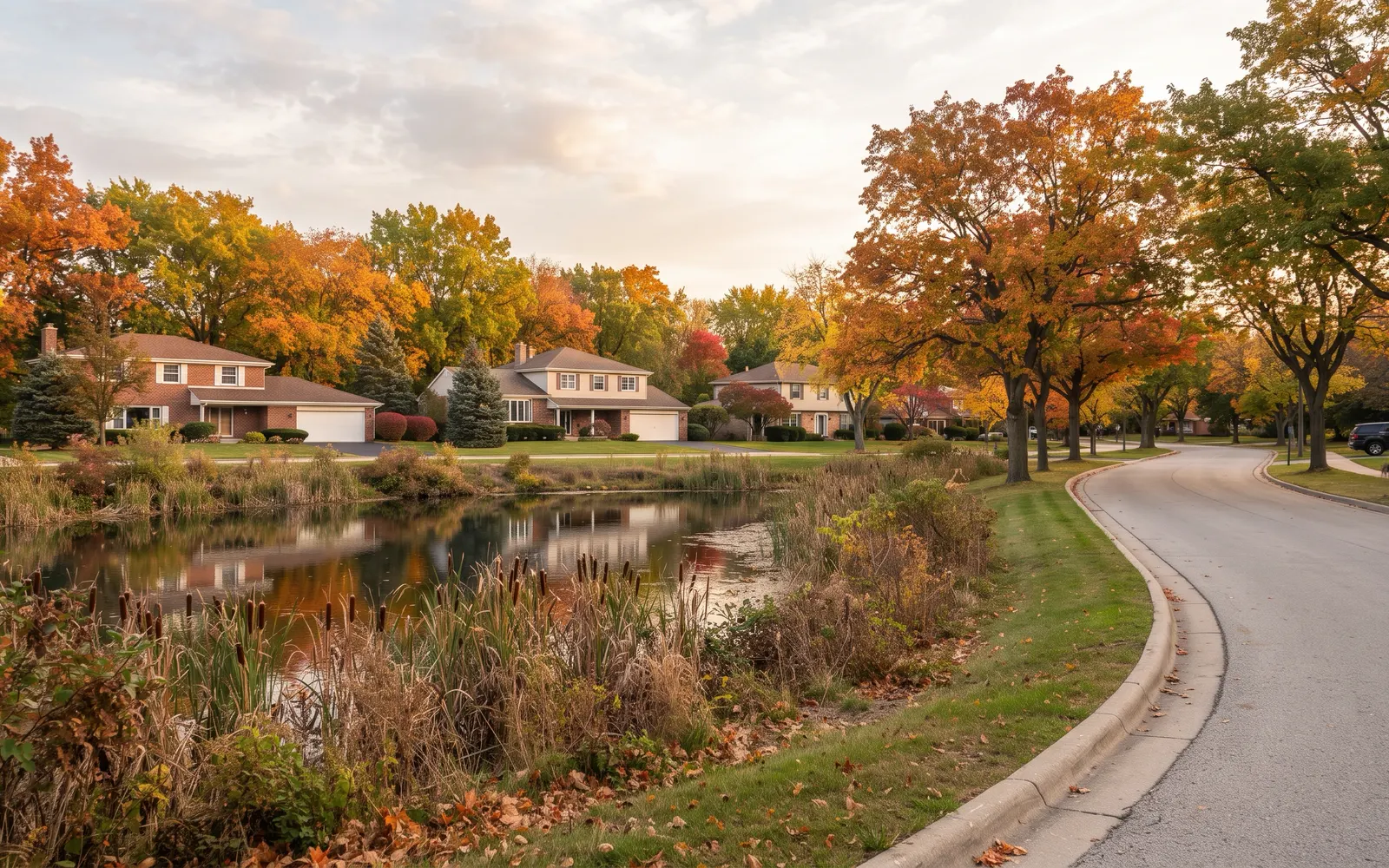
Summerlakes. Single-family homes built in the 1970s and 1980s around a series of ponds, with a homeowners association that runs a clubhouse, pool and tennis courts. Listed as west of Route 59 and south of Batavia Road. One of the larger detached-home pockets in the city.
Fox Hollow. Single-family homes built from 1976 to 1988 by Anden Corp., off Mack Road west of Route 59, close to Blackwell Forest Preserve.
River Oaks. Single-family homes built in 1987 and 1988, east of Route 59 and north of Batavia Road.
Thornwilde and Edgebrook. Townhome and condo communities from the mid to late 1970s, north of Butterfield Road and east of Route 59.
Warrenville Lakes. Townhomes and condos built from 1979 to 1989, south of Batavia Road and east of Route 59.
Timber Creek and Maple Hill. Timber Creek is a late-1980s townhome and condo community by Kirk Corp. on Meadow Avenue just east of Route 59. Maple Hill is townhomes and condos built from 1989 to 1996 by Lexington Homes.
Cantera Village. Condos and townhomes built from 1996 to 1999 by Concord Homes, part of the Cantera development south of Butterfield near Diehl Road.
Everton. Townhomes built from 2019 to 2022 by M/I Homes, east of Route 59 between Butterfield Road and Ferry Road. The newest named community in the city.
The wooded edges. Near the forest preserves, and in some unincorporated pockets with Warrenville addresses, there are custom houses on wooded lots of an acre or more. These can be on private wells and septic, so they need their own checks.
What Warrenville Homes Look Like, by Era
Warrenville is mostly a 1970s and 1980s housing town with a burst of new building in the last few years. The 2020-2024 Census ACS counts 27.4% of the city's housing units as built in the 1970s and 19.6% in the 1980s. Another 15.1% date to the 1990s. Only 5.2% were built before 1940, and 7.3% in the 1950s.
The newest numbers stand out. The ACS counts 7.5% of units as built in 2020 or later, more than in the whole decade from 2010 to 2019 (5.1%). That is the Everton townhomes and the other recent attached-housing projects showing up in the data. For a city this size, it means a buyer can find a nearly new townhome here, which is hard to do in much of central DuPage.
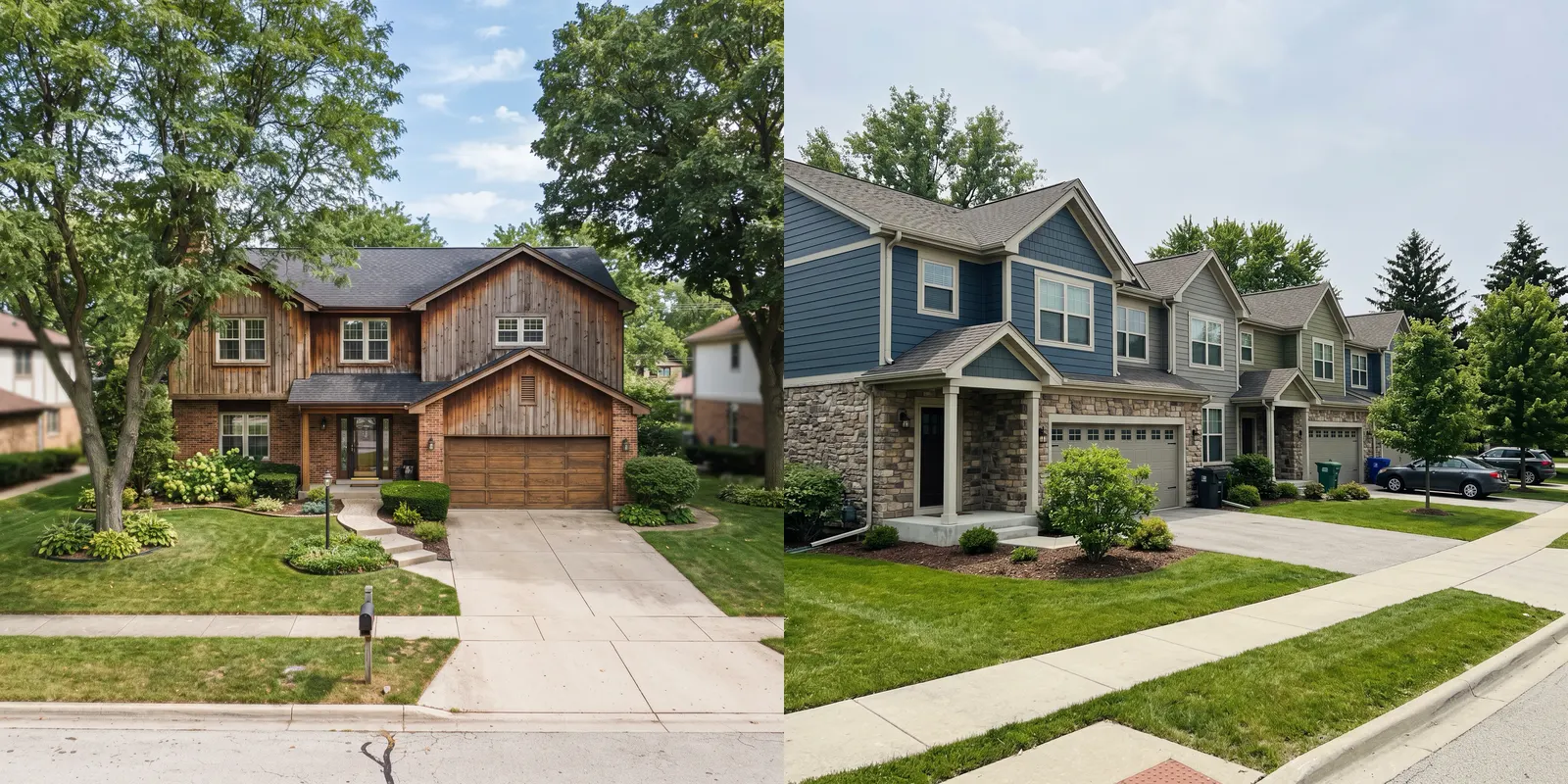
The other number that surprises people is the share of attached homes. The ACS counts 43.4% of Warrenville's housing units as detached single-family houses and 26.8% as attached townhomes, a townhome share more than twice Wheaton's. Another 15.8% are in small buildings of five to nine units, and only 4.7% are in buildings of 50 or more. So the typical Warrenville listing is as likely to be a townhome or a condo in a small building as a detached house.
On the street, that looks like this. The old town has farmhouses and early 20th-century houses on irregular lots. Summerlakes, Fox Hollow and River Oaks carry the 1970s and 1980s ranches, split-levels and two-story colonials. Thornwilde, Edgebrook, Warrenville Lakes, Timber Creek and Maple Hill are the townhome and condo communities from the same decades, most with homeowners associations. Cantera Village added 1990s condos and townhomes, and Everton added new townhomes from 2019 to 2022.
The surprises I prepare buyers for depend on the decade. A 1970s or 1980s house usually has its original windows, siding or mechanicals due or overdue. A townhome's condition depends as much on the association's reserves as on the unit, so read the budget and the minutes before you commit. And in Warrenville specifically, check the water softener and the water heater, for reasons covered in the utilities section. My home inspection checklist is a good place to start.
The Warrenville Housing Market in 2026
Warrenville is one of the more affordable ways into central DuPage County, and prices are still rising. Redfin's Warrenville page lists a median sale price of $347,326 for July 2026, up 4.6% from a year earlier. Redfin rates the market 63 out of 100 on its Compete Score, which it calls somewhat competitive, and says most homes go under contract in about 28 days.
Zillow's home value index tells the same story. Zillow put the typical Warrenville home value at $359,598 in August 2026, up 3.7% from $346,754 a year earlier and up from $329,382 in August 2024. Redfin's number is the middle of whatever happened to sell. Zillow's index estimates the value of every home, sold or not. When both move the same way by about the same amount, I read it as a real price gain rather than a shift in what sold.
A word of caution on the monthly numbers. Warrenville only has a few dozen sales in a typical month, and a large share of them are townhomes and condos. One month with more detached houses closing can push the median up by tens of thousands of dollars, and one heavy on condos can pull it down. You will see Redfin summaries that disagree with each other by 5% or more depending on the window. I trust the direction over a year more than any single month.
What that means in practice: a well-priced single-family house in a pocket like Summerlakes or Fox Hollow still draws real competition, because there are not many of them. Townhomes move at a steadier pace, and condition and association fees decide how fast. If you are buying your first place and weighing a townhome here against a condo elsewhere, run the full monthly cost with the association fee included. My guide to how much house you can afford in 2026 walks through that math.
Warrenville Property Taxes and the Real Cost of Owning
Property tax is the number that changes the monthly payment most, and it never shows up in the list price. Ownwell's Warrenville data, updated April 13, 2026, puts the median effective rate at 2.29% and the median annual bill at $6,185. That rate is a little above the DuPage County median of 2.16% that Ownwell reports, while the median bill is lower than the county's $7,578 because Warrenville's home values are lower.
The two ZIP codes differ. Ownwell shows 60555, which covers most of the city, at a 2.29% median rate and a $6,122 median bill. 60563, the Naperville ZIP that takes in part of Warrenville's south side, runs 2.38% with an $8,476 median bill. Some of that 60563 data is Naperville, not Warrenville, so treat it as a range rather than a rule.
Here is what that looks like on a real purchase. At 2.29%, a house bought at Redfin's $347,326 July median would carry about $7,950 a year in tax, roughly $660 a month on top of the mortgage. Ownwell's median bill is lower because it is based on a median home value of about $264,000, well under what homes sell for now. The expectation I most often have to reset is buyers who budget off the seller's current bill instead of the rate.
Each combination of township, school district, park district, library district and city or county is its own tax code. Warrenville spans Winfield and Naperville townships, two school districts and a tax increment financing district around Cantera, and the unincorporated pockets skip the city levy but pay into other districts. So two houses at the same price can carry different bills. Look up the parcel on the DuPage County tax records before you write an offer. This is general information, not tax advice. Your actual bill depends on your parcel, your exemptions and the assessor.
Warrenville Schools: District 200 and a Small Piece of 203
Most of Warrenville is served by Community Unit School District 200, a single preschool-through-12th-grade district shared with Wheaton and parts of Carol Stream, Winfield and West Chicago. Inside Warrenville, District 200 runs Bower Elementary, Johnson Elementary and Hubble Middle School, which moved to Warrenville in 2009, per Wikipedia's Warrenville summary.
High school for most of the city is Wheaton Warrenville South, which sits just over the line in Wheaton. The school took its current name in 1992, and the district dropped the hyphen from "Wheaton-Warrenville" on purpose, to signal one school for both towns. It had about 1,845 students in the 2022-23 school year.
The part that trips people up is that District 200 is not the whole city. The City of Warrenville notes that Naperville Community Unit School District 203 serves a small portion of Warrenville. Those addresses feed Naperville schools, not WWS. District 203 asks that any address be confirmed with its central enrollment office.
Even inside District 200, the elementary school depends on the street. Don't assume from the town name or the ZIP code. Check the address with the district directly before you write an offer, and ask me for the boundary if you want it done for a specific house.
Warrenville also has private options, including Four Winds Waldorf School for preschool through eighth grade and St. Irene School.
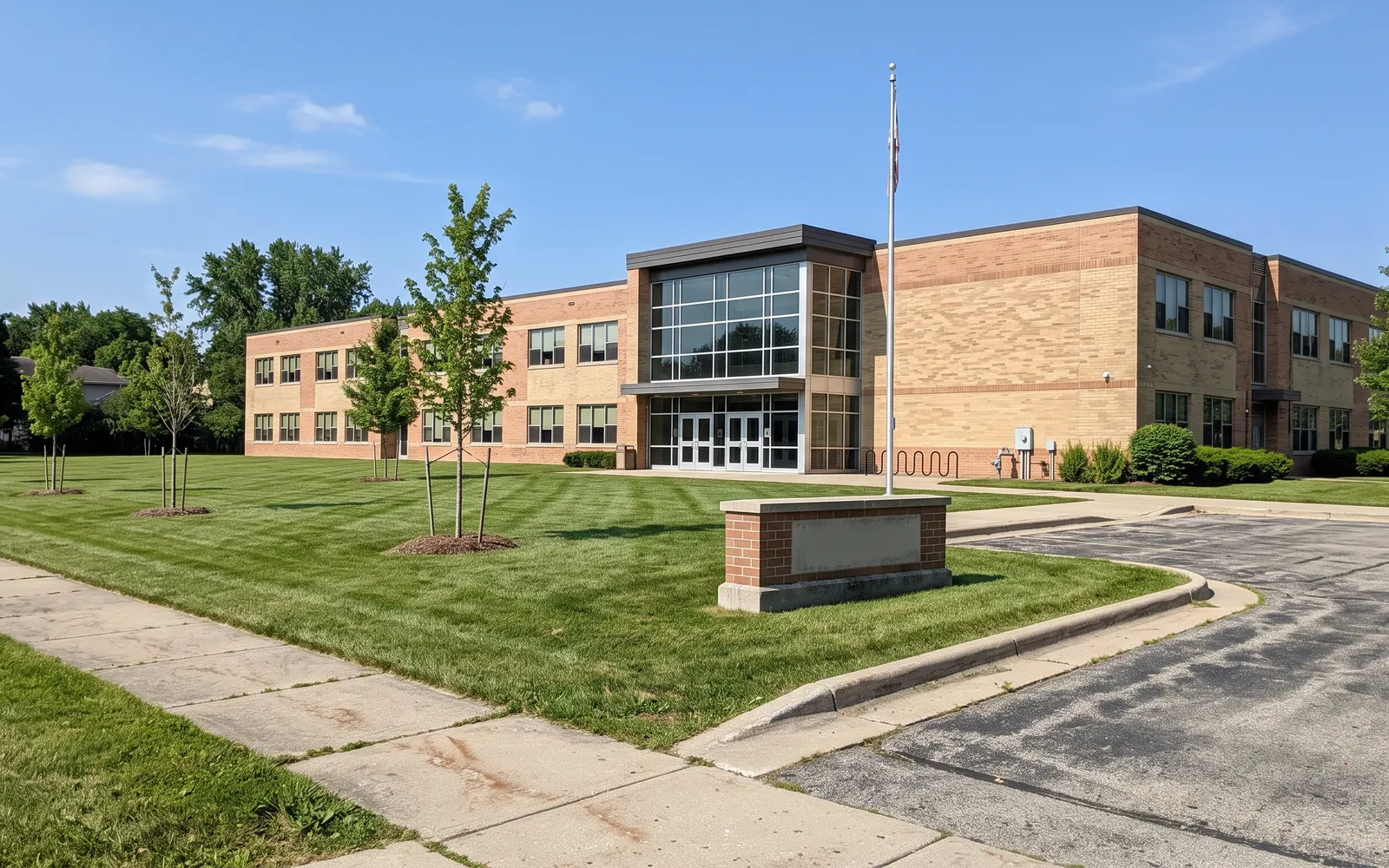
Bower Elementary School. CUSD 200, in Warrenville.
Johnson Elementary School. CUSD 200, in Warrenville.
Hubble Middle School. CUSD 200. Moved to Warrenville in 2009.
Wheaton Warrenville South High School. CUSD 200, in Wheaton. Named in 1992; about 1,845 students in 2022-23.
Naperville District 203. Serves a small portion of Warrenville; confirm the address with the district.
Private options. Four Winds Waldorf School (preschool to grade 8) and St. Irene School.
Commuting from Warrenville: Metra and the Nearest Stations
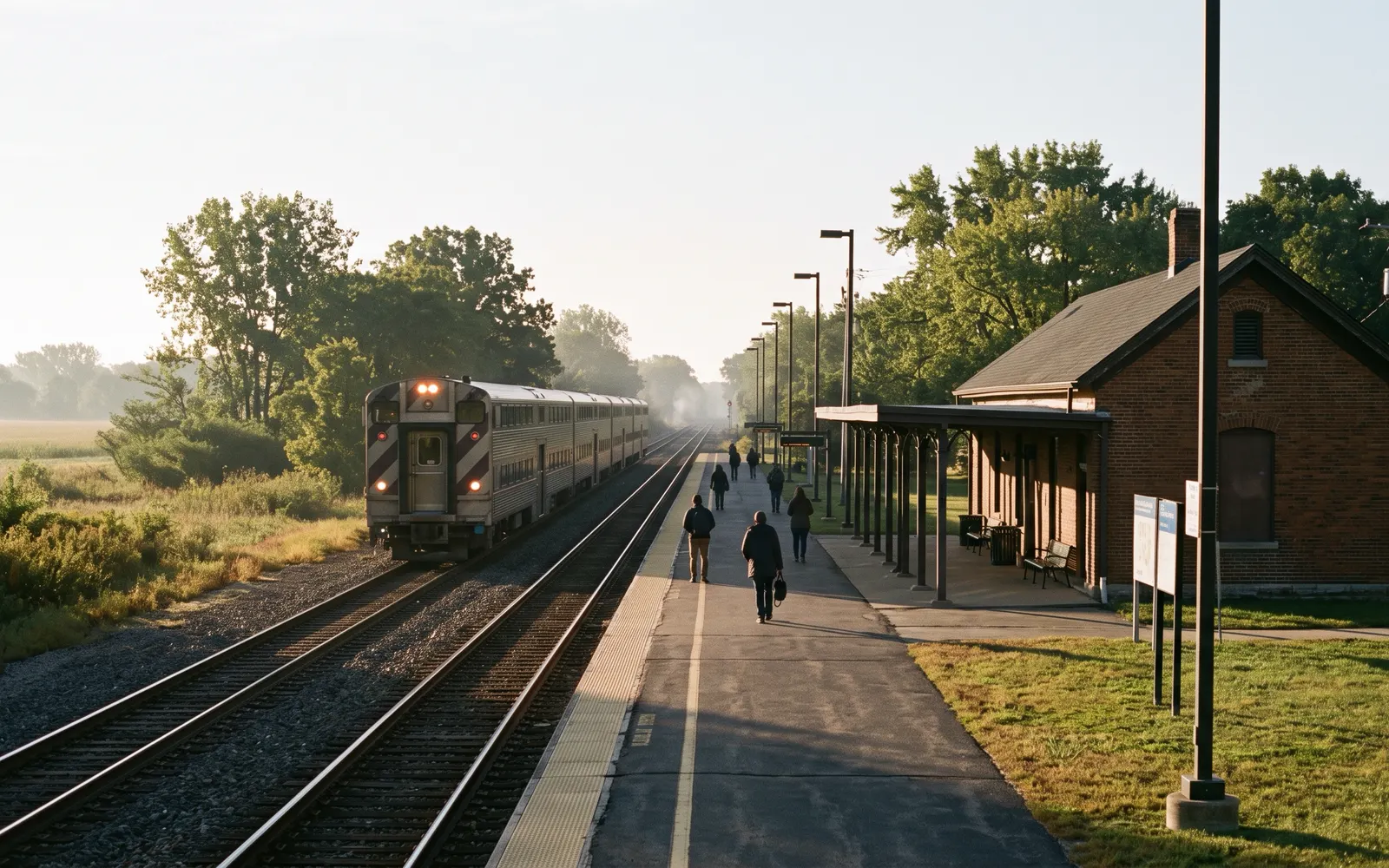
Warrenville has no Metra station of its own. That is the single biggest thing to understand about commuting from here. When the Chicago Aurora and Elgin interurban stopped running in the late 1950s, the town lost its rail link, and it never got a commuter station back. Warrenville commuters drive or get dropped off at one of three stations on two different lines.
The first is Winfield, on the Union Pacific West line to Ogilvie Transportation Center, a short drive north up Winfield Road. According to Metra's published schedule data for fall 2026, Winfield has 25 inbound and 24 outbound trains on weekdays, 10 each way on Saturdays and 9 each way on Sundays. The fastest morning express leaves Winfield at 7:12 a.m. and reaches Ogilvie at 8:00, 48 minutes. Most other trains take closer to an hour.
The other two are on the BNSF line to Union Station, a short drive south. The Route 59 station, on the Aurora and Naperville border, has 32 inbound weekday trains, and its fastest expresses reach Union Station in 45 minutes. Downtown Naperville's station, also 32 inbound on weekdays, has expresses as fast as 39 minutes. Both BNSF stations run about 20 trains each way on Saturdays and Sundays, twice Winfield's weekend service.
Which station suits you depends on where in Warrenville you live and where in the Loop you work. The north and east sides are closest to Winfield and the West Loop via Ogilvie. The south side and Cantera are closest to Route 59 and Union Station. Parking at the BNSF stations is in high demand, so check the permit and daily-fee situation before you count on it.
Driving from Warrenville: I-88, Route 59 and O'Hare
Driving is where Warrenville does well. I-88, the Reagan Memorial Tollway, runs along the south edge of the city, with interchanges at Route 59 and at Winfield Road. That puts the office corridors in Naperville, Lisle, Downers Grove and Oak Brook within a short drive, and it is why so much of Warrenville's commercial land sits along Diehl Road next to the tollway.
Route 59 is the main north-south road on the west side, and Butterfield Road (Route 56) crosses the city east to west. Winfield Road runs north to Winfield and Central DuPage Hospital and south to I-88. O'Hare is roughly 25 miles away by road, usually via I-88 to the Tri-State or I-355 to I-290. Plan on about 35 to 45 minutes outside rush hour.
A few city road projects are worth knowing. The City of Warrenville's projects page lists a $3.2 million project to add multi-use paths on both sides of Route 59 from Batavia Road to Continental and Meadow Avenue, with final engineering starting in summer 2026 and construction expected in 2027 or 2028. The Shaw Drive area street rehabilitation was scheduled to start the week of July 6, 2026, and run to the end of October. And the Mack Road bridge over the West Branch DuPage River, east of Route 59, is in final engineering and land acquisition, with no construction date set yet.
Is Warrenville Walkable?
For errands, mostly not. Walk Score does not publish a citywide score for Warrenville, but it counts about 48 restaurants, bars and coffee shops in the city and says the average resident can walk to about one of them in five minutes. Most of those are clustered at Cantera and along Route 59. Plan on driving for groceries and most errands.
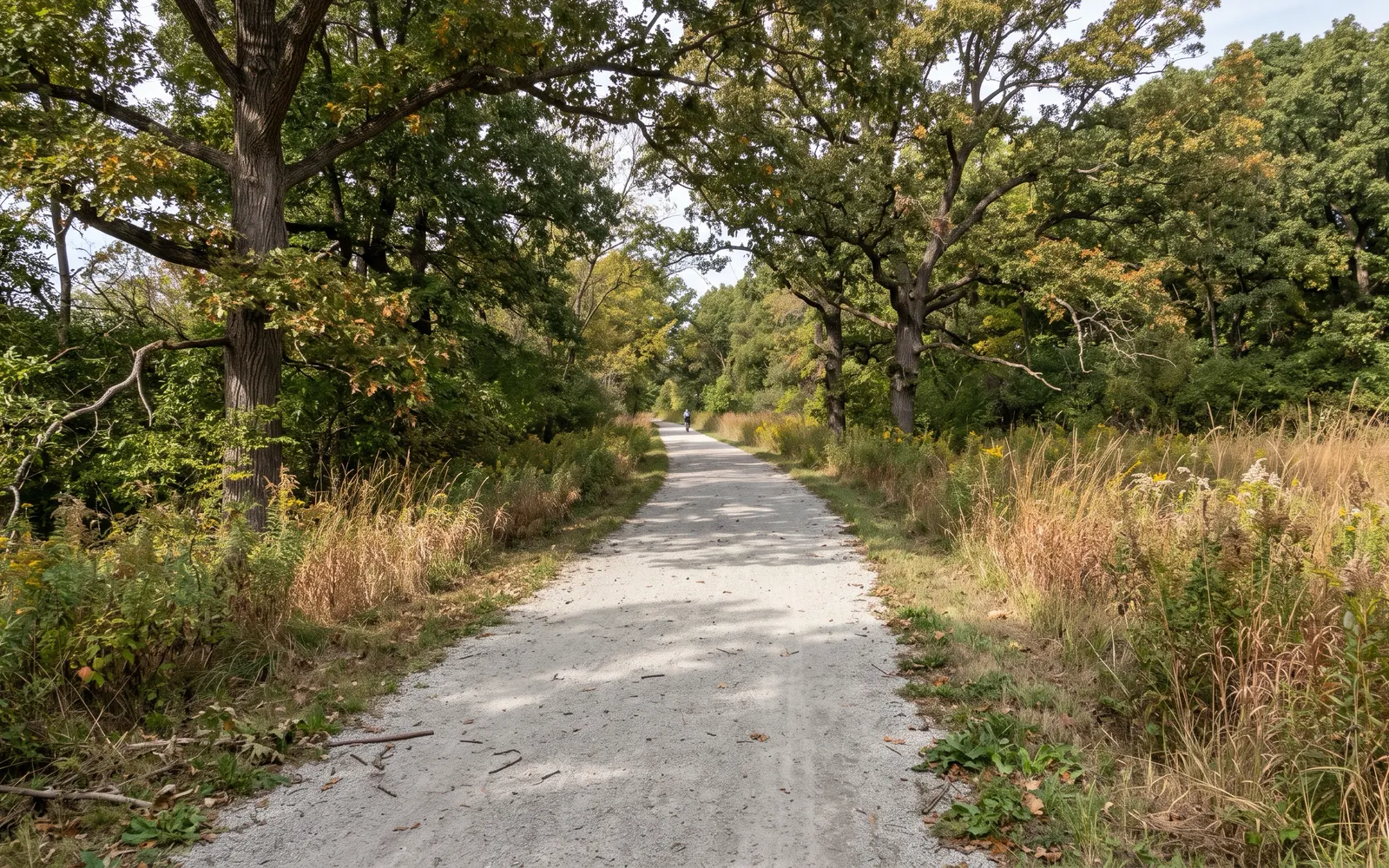
For getting outside on foot or a bike, Warrenville is one of the best-connected towns in the western suburbs. The Illinois Prairie Path runs through the city, and the West Branch DuPage River Trail links Warrenville Grove north to the Prairie Path and on to Blackwell, St. James Farm and Herrick Lake, per the Forest Preserve District. A long ride on crushed limestone can start at the end of many Warrenville streets.
The city is adding to that network. Besides the Route 59 paths, the Mack Road bridge project includes a 10-foot path on the north side of Mack Road connecting to Blackwell's trails, and the Shaw Drive project adds an 8-foot multi-use path along the west side of Shaw Drive.
Cantera, Route 59 and Shopping in Warrenville
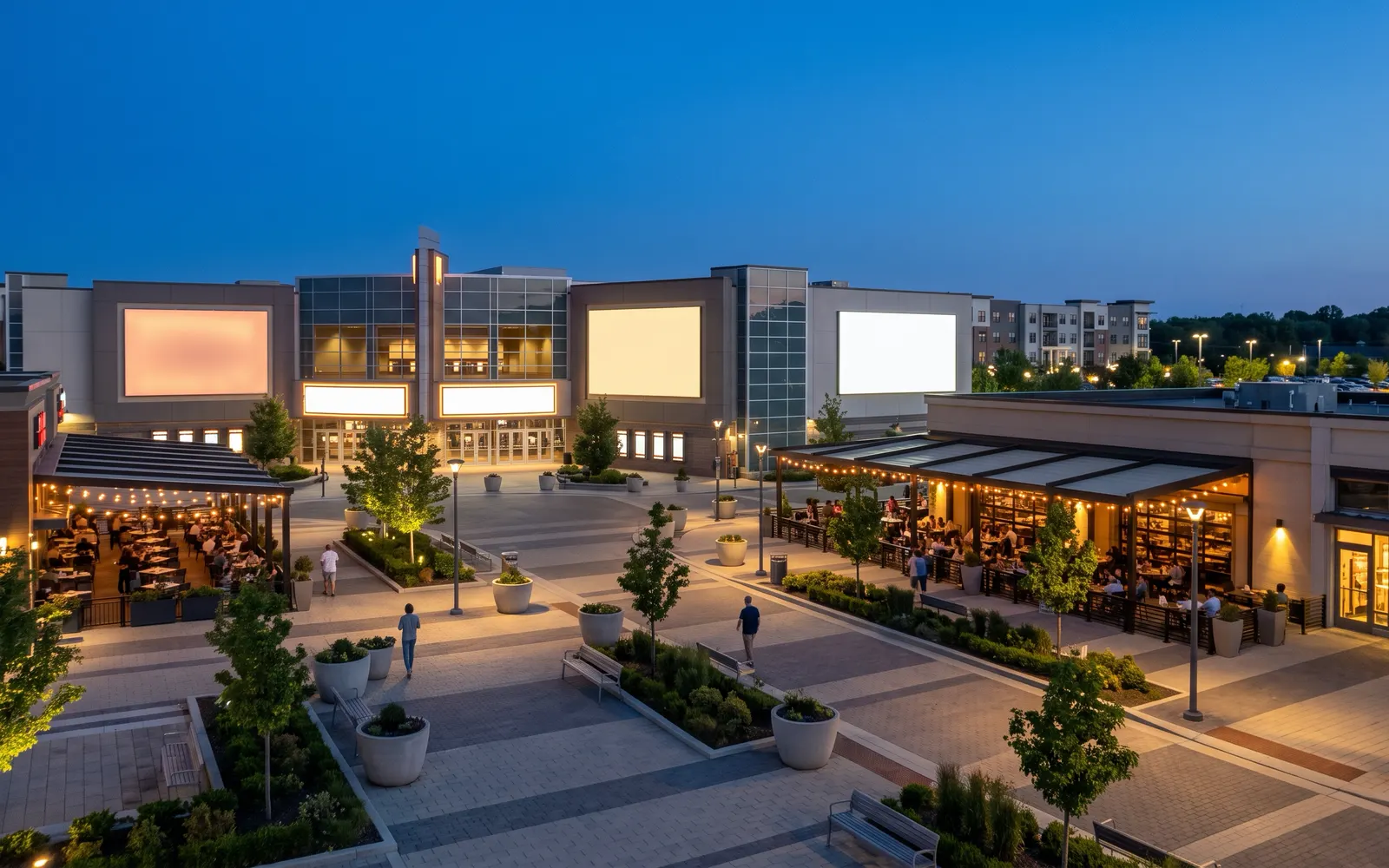
Warrenville's shopping and dining center is Cantera, south of Butterfield Road along Diehl Road and I-88. According to Wikipedia, Cantera was built on a former 650-acre limestone quarry (cantera is Spanish for quarry) using tax increment financing, and it combines corporate offices, hotels, restaurants and a 17-screen movie theater, now the Cinemark Cantera. It is the reason Warrenville has more restaurants than a city of its size usually does.
Route 59 is the other commercial strip, with fast food, gas stations and smaller shopping centers along the west side of the city. For bigger shopping trips, residents head south to the Route 59 corridor in Naperville and Aurora, east to Danada Square and Rice Lake Square in Wheaton, or to Oakbrook Center and Yorktown in Lombard for a full mall.
Downtown Warrenville, around the Civic Center at Butterfield and Batavia, is small today. That is exactly what the city's 2024 zoning overlay and the Old Town redevelopment site covered further down are trying to change.
Groceries and Everyday Errands in Warrenville
Groceries are the one errand where Warrenville's size shows. OpenStreetMap's listings show one supermarket inside the city, Family Foods on Route 59, plus convenience stores at the gas stations. Most weekly grocery runs go a few minutes south to the stores along Route 59 in Naperville and Aurora, or east to Wheaton's south side. Pharmacies, banks and dry cleaners cluster along Route 59 and near Cantera, so most other errands are a short drive.
Where Warrenville Eats and Drinks
The name most people connect with Warrenville is Two Brothers Brewing. The brewery has a taproom in Warrenville as well as one in Aurora, per the Daily Herald, and it is now the anchor of the biggest development proposal in the city, covered below.
Cantera holds most of the sit-down restaurants. OpenStreetMap's listings put Rock Bottom Brewery, Eddie Merlot's steakhouse, Red Robin, Corner Bakery and a pancake house on Diehl Road, with more chains and independent spots along Route 59. Restaurants change faster than guides do, so check hours before you go.
Warrenville does not run a weekly farmers market of its own. The closest large ones are in downtown Naperville and the Wheaton French Market, each a short drive.
Forest Preserves, Parks and Recreation in Warrenville
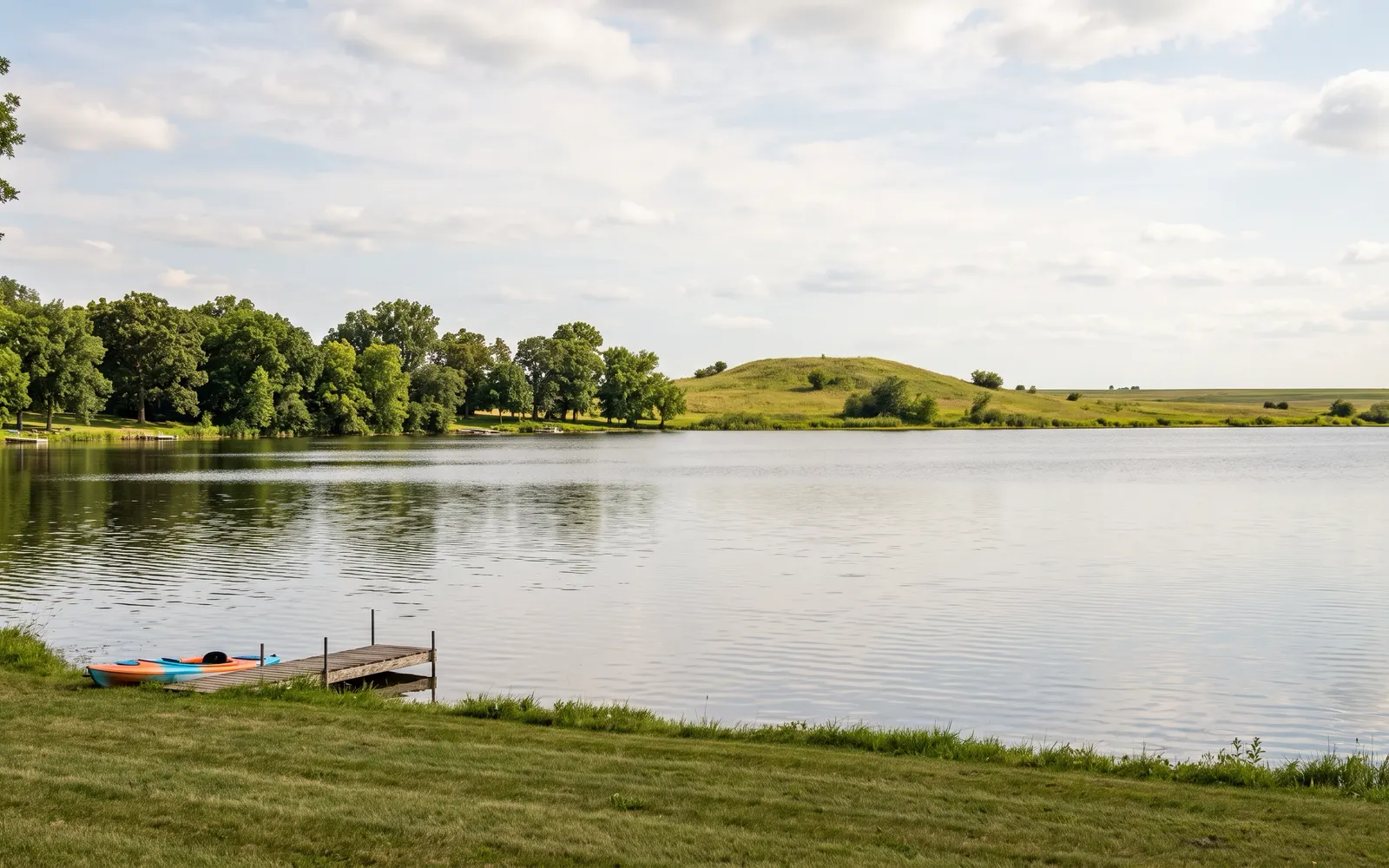
This is Warrenville's strongest section. Three Forest Preserve District of DuPage County sites sit in or along the city, and together they give Warrenville more open land per resident than almost any town around it.
Blackwell Forest Preserve, entered from Butterfield Road just west of Winfield Road, has more than 7 miles of trails, fishing on Silver Lake, White Pond and Sand Pond, canoe and kayak rentals on Silver Lake from April to September, campsites, an off-leash dog area and an archery range. In winter, Mount Hoy opens for snow tubing once there are more than 3 inches of snow. A woolly mammoth skeleton was found at Blackwell in 1977, one of the oldest such finds in northeastern Illinois.
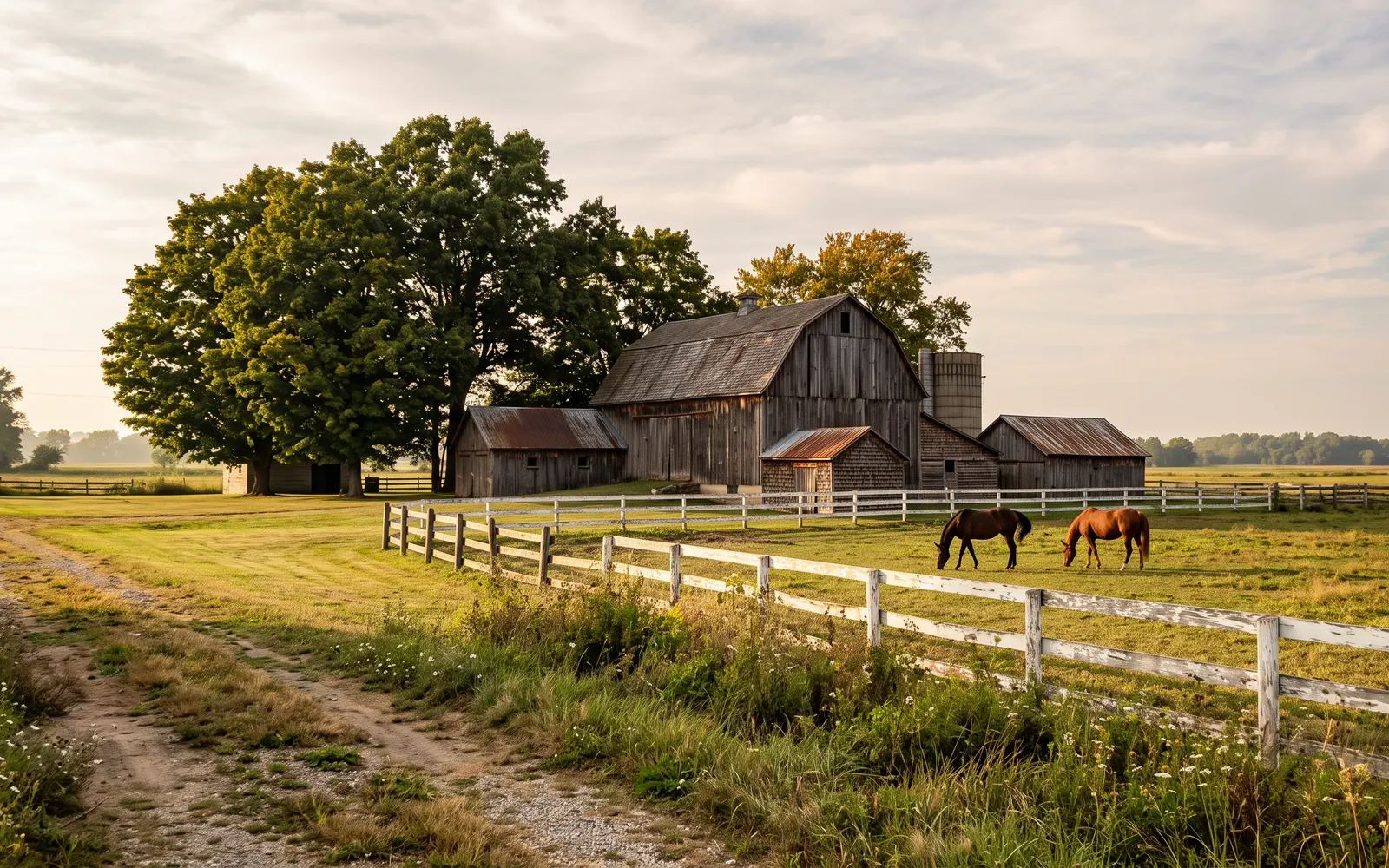
St. James Farm covers 595 acres on Winfield Road north of Butterfield. It is the former McCormick family estate, with historic barns, an indoor riding arena, more than 100 acres of woodland, prairie and wetland, a fishing pond and trails for walking, biking, riding and cross-country skiing. Warrenville Grove, 127 acres on Batavia Road, is where the old mill dam stood until it was removed in 2012; the 1930s limestone abutments and the millrace are still there.
The Warrenville Park District runs the neighborhood parks, a recreation center at 3S260 Warren Avenue and programs from gymnastics to pickleball. Cerny Park is getting a second phase of improvements in 2026, per the city's project page: a splash pad, a renovated game area with horseshoe pits, a bocce court, new ball field fencing and a dugout shelter. Lions Park is getting a new playground. Just north of the city, Cantigny Park in Wheaton adds formal gardens, two museums and a 27-hole golf course.
The Warrenville Public Library
The Warrenville Public Library District is at 28W751 Stafford Place, next to City Hall. It was created by referendum in February 1979, opened a 10,000-square-foot building in 1986, and finished an addition in 2003 that tripled its size, per Wikipedia. It is open seven days a week: 9:30 a.m. to 9 p.m. Monday through Thursday, 9:30 to 7 on Friday, 9:30 to 5 on Saturday and 1 to 5 on Sunday.
Beyond books, it runs storytimes, STEAM programs, book clubs, genealogy classes and language conversation groups for adults, a makerspace, meeting rooms and curbside pickup. Popular programs fill up, so register early.
Utilities and Water in Warrenville
This is the section most guides skip, and it is the one Warrenville buyers ask me about after they move in. Unlike Wheaton, Naperville and most of DuPage County, Warrenville does not use Lake Michigan water. According to the city's water Q&A, the city draws groundwater from four main shallow wells, removes iron, and treats the water with chlorine, fluoride and phosphates for corrosion control.
The practical result is hard water. The city puts hardness at 24 to 26 grains per gallon and says a water softener is highly recommended. On a house tour, that means three questions: is there a softener, how old is it, and has the water heater been flushed. A house that has gone years without one can show it in the fixtures and the water heater.
The city is adding capacity. Its Well No. 13 project at 30W121 Estes Street pairs a new well with an iron filtration building, on a $5.815 million contract with construction starting in 2025. The city is also monitoring nearby private wells on Briggs and Estes during that work, a reminder that some homes in and around Warrenville are still on private wells.
The City Council set 2026 water and sewer rates on May 28, 2026. ComEd delivers electricity and Nicor Gas provides natural gas, and the city runs a municipal electric aggregation program that lets residents use an alternative supplier. Unincorporated addresses can be different on every count, including private wells and septic, so confirm the utilities on any unincorporated listing before you write an offer.
Hospitals and Medical Care Near Warrenville
The closest full-service hospital is Northwestern Medicine Central DuPage Hospital on Winfield Road in Winfield, a short drive north of the city. Edward Hospital in Naperville is a short drive south. Inside Warrenville, the medical offices along Davis Parkway at Cantera house specialty practices, and Loyola Medicine has an ambulatory care center at 28301 Ferry Road, a three-story, 98,600-square-foot building listed on the city's projects page.
Art, Museums and Nights Out in Warrenville
Warrenville's culture is small and local. The Albright Studio museum and the Warren Tavern in the historical park on Second Street tell the town's story, and the Warrenville Historical Society runs them with volunteers. In early September the city hosts Art on the Prairie, a two-day juried fine art festival with jewelry, ceramics, painting and photography, plus live music, per the city's events page.
For a night out, Cantera has the movie theater and most of the restaurants. Fermilab, the national physics laboratory on the city's western edge in Batavia, holds public lectures and events. And the bigger entertainment districts of downtown Naperville and Wheaton are each about 15 minutes away. If you are also looking at the town next door, my guides to Naperville and Wheaton cover both.
Summer Daze and Warrenville's Yearly Traditions
The city runs a full calendar for its size, per the community events page. The Fourth of July celebration takes two days at Cerny Park: a parade on July 3, then the Firecracker 5K at 8 a.m. on July 4, followed by games, live music and food, and fireworks to close. The 2026 celebration went ahead at Cerny Park despite the construction there.
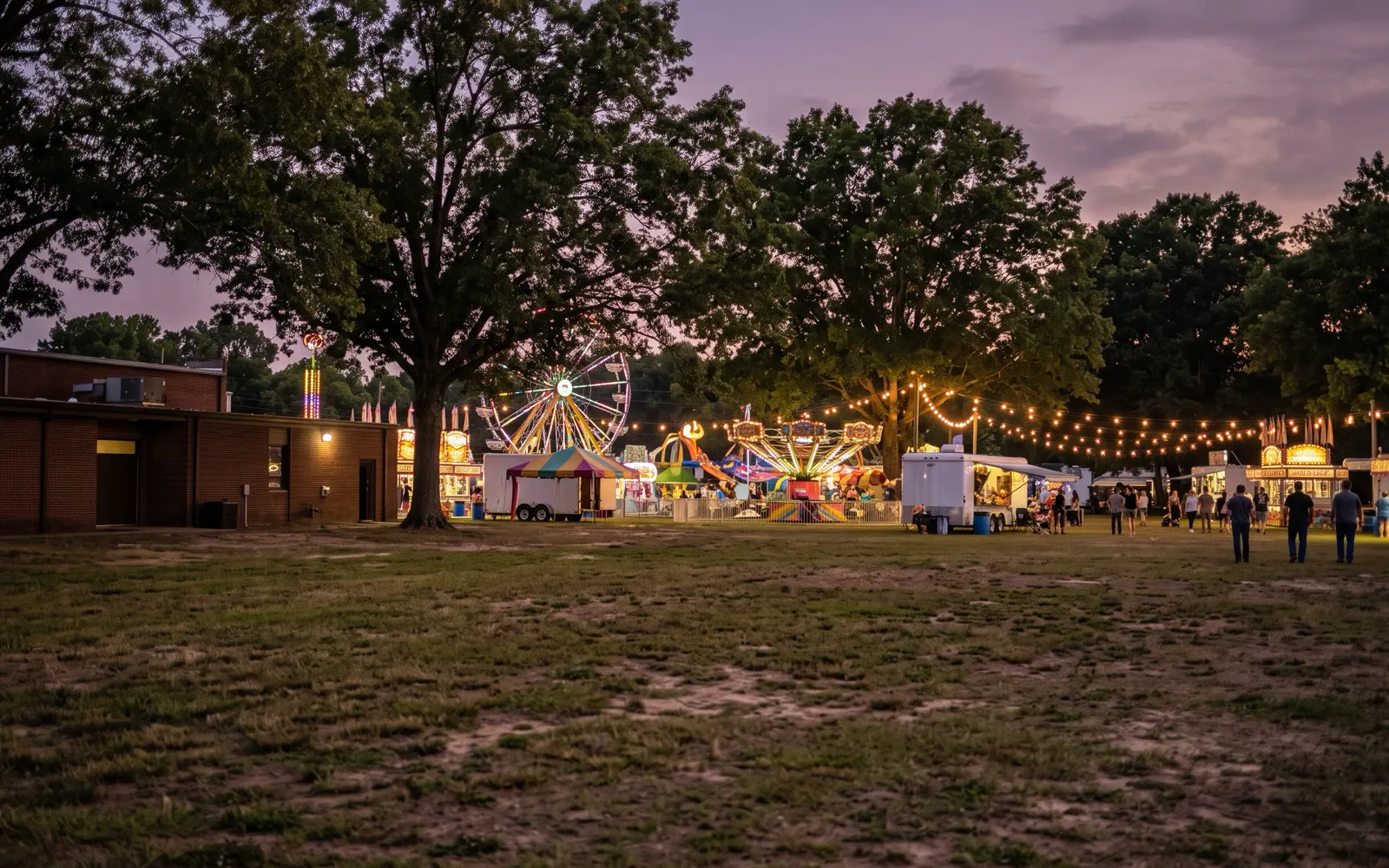
The big summer festival is Summer Daze, on the first Friday and Saturday of August at the Civic Center at Butterfield and Batavia Road, with rides, games, business booths, live music, food and a car show. National Night Out, hosted by the police department on the first Tuesday of August, brings emergency vehicles and a touch-a-truck.
The rest of the year has a steady rhythm: Arbor Day tree giveaways on the last Saturday in April, a bike rodeo at City Hall in May, Art on the Prairie in early September, the park district's Fall Fest on October 30, 2026, and Holly Days, usually on the first Friday in December, with a bonfire, carriage rides and the holiday lighting on Warren Avenue. If you are touring houses in early August, go to Summer Daze. It tells you more about the city than any listing will.
What's Being Built in Warrenville
The biggest proposal is at the northwest corner of Butterfield Road and Route 59. In April 2026, Two Brothers Brewing and Synergy Construction & Development announced a plan for about 20 acres there, according to the Daily Herald. It calls for 180 rental units in nine two-story buildings of 20 units each, laid out like townhomes, a Two Brothers tap house that runs as a café in the morning, a large green space for concerts and markets, a clubhouse with a pool, and more restaurant and commercial space. A formal zoning application was targeted for summer 2026, and the project needs Plan Commission and City Council approval, plus council approval of any tax increment financing. I haven't seen final zoning approval yet.
The second project is in Old Town. The city bought a former gas station at 28W244 Warrenville Road in 2020, demolished it in 2021, and finished environmental cleanup in 2024, per the city's Old Town Redevelopment Site page. In February 2026 the council approved a purchase and sale agreement with Denver Capital for a three-story mixed-use building with ground-floor commercial space, apartments above and outdoor dining, on 1.39 acres at the northeast corner of Batavia and Warrenville roads. The Daily Herald reported the price as $10, contingent on the developer meeting its milestones, and that the developer is not asking for TIF money. The land only transfers after the plans are approved.
Both projects follow from the city's planning. The Warrenville by Design overlay, approved August 5, 2024, allows mixed-use buildings and "middle housing" such as townhomes and small multi-unit buildings around Butterfield and Batavia and around Warrenville and Batavia. And in July 2026 the city launched Forward 59, a year-long plan for the Route 59 corridor, with public review of the draft expected in summer 2027.
What that means in practice: more rentals and townhome-style housing near the center of town, more places to eat downtown, and more people trying Warrenville before they buy. For owners of older townhomes, it adds new competition. For buyers of detached houses, it doesn't change the supply much, since the city's single-family pockets are built out.
I don't label any town or neighborhood as safe or unsafe.
Flood Risk in Warrenville
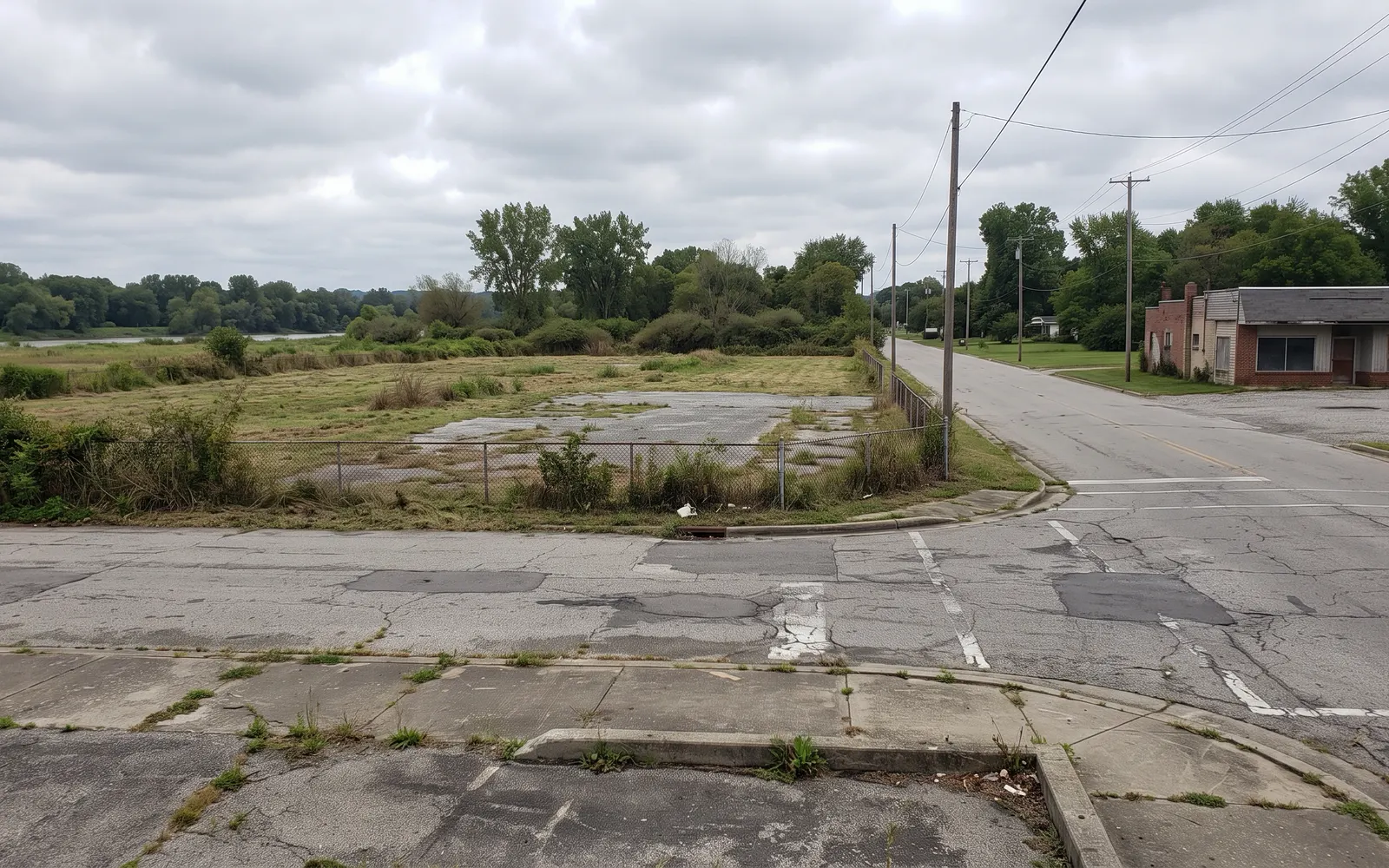
Flooding is a bigger question in Warrenville than in most DuPage towns, because the city grew up on the West Branch DuPage River and much of its open land is floodplain. The storm people still talk about came on July 17 and 18, 1996, when about 17 inches of rain fell on the area in 24 hours and both branches of the DuPage River overflowed, per Wikipedia's DuPage River summary. DuPage County later bought out and removed many flood-damaged homes around the county.
The risk is house by house, not citywide. Most of Warrenville's neighborhoods sit away from the river, but the old town, the pockets near Warrenville Grove and the low ground near the preserves are where it concentrates. The city is a complete waiver community under the DuPage County Stormwater and Flood Plain Ordinance, meaning the city itself enforces the county's floodplain rules, and it posts floodplain maps and real-time river data on its stormwater and floodplain page. The Mack Road bridge project, for example, has to provide compensatory storage for any fill it puts in the floodplain.
Two checks before you write an offer. Look the address up on the FEMA flood map, because a mapped flood zone can mean required flood insurance on a mortgage. And ask the seller directly about water in the basement or crawl space. In my experience the answer is often "once," and the follow-up about what they did about it is the one that matters.
Frequently Asked Questions
How much does a house cost in Warrenville, IL?+
Redfin lists a median sale price of $347,326 for July 2026, up 4.6% from a year earlier, and Zillow's home value index was $359,598 for August 2026. Prices range from condos and townhomes to larger single-family homes near the forest preserves.
What are property taxes in Warrenville, IL?+
The median effective rate is about 2.29%, with a median bill of about $6,185 (Ownwell, April 2026). At that rate a home bought for $347,000 would carry about $7,950 a year. Rates vary by tax code, township and school district.
What school district is Warrenville, IL in?+
Most of Warrenville is in Community Unit School District 200, which runs Bower and Johnson elementary schools and Hubble Middle School in Warrenville and Wheaton Warrenville South High School in Wheaton. A small part of the city is in Naperville District 203. Confirm every address with the district.
Does Warrenville have a Metra station?+
No. Warrenville commuters use Winfield on the Union Pacific West line, where the fastest express reaches Ogilvie in 48 minutes, or the Route 59 and Naperville stations on the BNSF line, where expresses reach Union Station in 45 and 39 minutes.
Is Warrenville walkable?+
Not for errands; Walk Score doesn't publish a citywide score, and most restaurants are at Cantera and on Route 59. For trails it is excellent: the Illinois Prairie Path and the West Branch DuPage River Trail connect the city's three forest preserves.
What neighborhoods are in Warrenville, IL?+
Commonly named pockets include Old Town, Summerlakes, Fox Hollow, River Oaks, Thornwilde, Edgebrook, Warrenville Lakes, Timber Creek, Maple Hill, Cantera Village and Everton. Many are townhome and condo communities.
Why is Warrenville's water so hard?+
Warrenville uses its own shallow wells instead of Lake Michigan water. The city rates the hardness at 24 to 26 grains per gallon, removes iron at treatment, and highly recommends a water softener.
What is being built in Warrenville?+
Two Brothers Brewing and Synergy proposed 180 townhome-style rentals, a tap house and a green space at Butterfield Road and Route 59 in April 2026, and Denver Capital is under agreement for a three-story mixed-use building on the Old Town site at Batavia and Warrenville roads.
Eshu Chikoti has extensive access to off-market listings throughout Warrenville and the rest of DuPage County — homes that never make it to the public listing sites. That matters right now: in a seller's market like this one, well-priced homes routinely go under contract within days, and buyers relying only on public listings are competing for whatever is left over. Working with someone plugged into off-market inventory means seeing homes before the crowd does.
Eshu Chikoti · 847-691-4282 ·
Get new Warrenville listings by email
When a home comes on the market in Warrenville, I'll email it to you.
Just your email. Unsubscribe any time by replying.
Thinking About Warrenville?
Whether you're buying, selling, or just curious what's on the market, I can walk you through Warrenville street by street.