Rolling Meadows, IL
Rolling Meadows, IL is a Cook County city of about 24,000 people that began as Kimball Hill's 1953 ranch-house development, sits at the I-90 and Route 53 interchange, and had a summer 2026 median sale price near $380,000.
Living in Rolling Meadows, IL means a median sale price of about $380,000 this summer, property tax near 2.70% of value, and a Metra ride from Arlington Heights or Arlington Park, since the city has no station of its own. Most homes are 1950s ranches or 1960s and 1970s subdivisions. Here it is, pocket by pocket.
Written by Eshu Chikoti · 847-691-4282 ·
How Rolling Meadows, IL Got Here: Kimball Hill's Postwar City
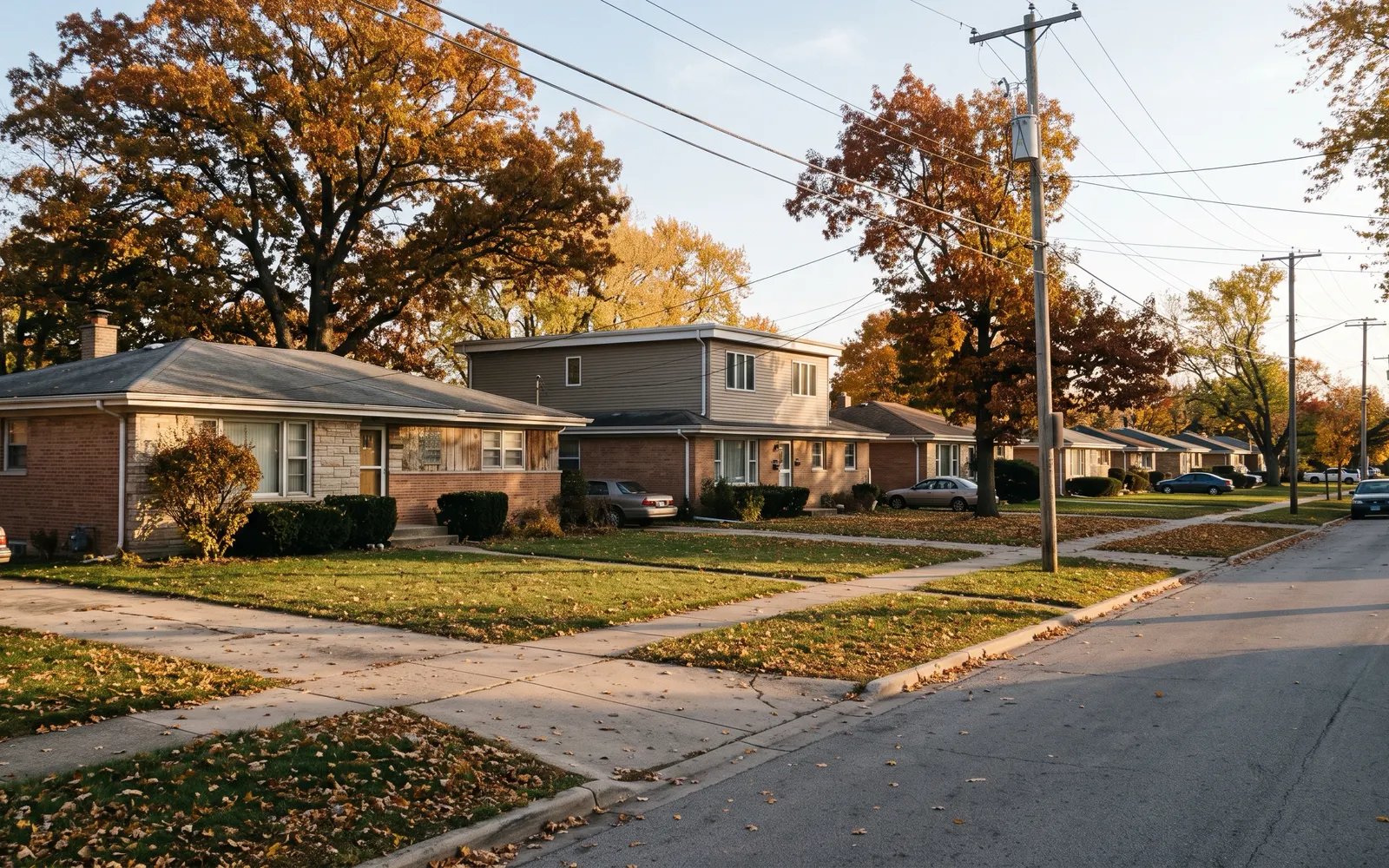
Rolling Meadows is one of the few suburbs where you can name the person who started it. In the early 1950s a builder named Kimball Hill bought about 1,200 acres of farmland northwest of Chicago and named the development for the rolling ground he found there. According to the Daily Herald's history of the founding (published July 14, 2015), the first homes went up along Campbell Street and Wilke Road in 1953.
Hill built on an assembly line. His crews turned out 20 houses a week, marketed to returning World War II veterans. The same Daily Herald piece reports that two-bedroom houses were advertised at $11,390 and three-bedrooms at $12,890. By 1955 he had sold about 700 of them, according to a 2011 Daily Herald neighborhood profile. Residents voted to incorporate in a February 19, 1955, election, and Rolling Meadows became a city on February 26, 1955.
Hill did more than sell houses. The 2011 profile says he put $200 from every home sale toward a school system, built and equipped the first elementary school, founded a homeowners association and donated land for parks. The elementary school on Meadow Drive still carries his name, and so does the city's central park.
After the first wave, the city filled in over three decades. The 1960s and 1970s brought larger houses on the west side near Meacham Road, townhome and condo villages along Plum Grove Road and Kirchoff Road, and office buildings along Golf Road and Algonquin Road. The office corridor is why Rolling Meadows has a daytime business population much larger than its residential one. The city's community overview says businesses here, including several Fortune 500 headquarters, employ about 44,000 people.
If you want to see what a 1953 house looked like inside, the Rolling Meadows Historical Museum keeps a replica of an original Kimball Hill home furnished with appliances and household items from the decade, per the 2011 Daily Herald profile. Buyers touring the original ranches today find it useful for a simple reason. It shows exactly which walls, kitchens and additions came later.
Rolling Meadows at a Glance
Rolling Meadows sits about 24 miles northwest of the Loop, between Arlington Heights to the east, Palatine to the north and west, and Schaumburg to the southwest. Wikipedia's entry puts its area at 5.62 square miles, and it notes that the city spreads across parts of three Cook County townships: Palatine, Elk Grove and Wheeling. That township split matters for taxes, covered below.
The Census Bureau's 2020-2024 American Community Survey counts 24,027 residents and 9,881 housing units. Of the occupied homes, 71.8% are owner-occupied. About 53% of all housing units are detached houses, about 9% are townhomes and other attached houses, and about 32% sit in buildings of five or more units. That mix is the practical story of Rolling Meadows: a ranch-house core, a ring of townhome villages, and apartment and condo buildings along the busy roads.
Route 53 is the spine. It runs north and south through the middle of the city and meets I-90 at the south end. Locals describe almost every address by which side of 53 it is on. East of 53 is the original Kimball Hill grid, City Hall on Kirchoff Road and Rolling Meadows High School. West of 53 are the later subdivisions near Meacham Road and the corporate campuses along Golf Road.
The Cook County Circuit Court's Rolling Meadows Courthouse at 2121 Euclid Avenue is the Third Municipal District location for the northwest suburbs, so a steady flow of attorneys, jurors and court staff comes through town on weekdays. Arthur J. Gallagher & Co. is headquartered in Rolling Meadows, and its campus is one of the large office buildings along Golf Road.
The trade-offs are a property tax rate near 2.70%, housing that is mostly 60 to 70 years old, no Metra station of its own and no walkable downtown.
Rolling Meadows Neighborhoods, Pocket by Pocket
Rolling Meadows is small enough to drive across in ten minutes, but it is not one market. The first split is Route 53. East of 53 you are mostly in the original Kimball Hill grid of 1950s ranches, close to the high school, the library and Kirchoff Road. West of 53 you are in the 1960s and 1970s subdivisions near Meacham Road, where houses and lots are generally larger and a different high school district takes over for part of the area.
The second split is house versus townhome. A large share of the city's for-sale inventory is in townhome and condo villages built from the 1960s through the early 2000s, plus a few newer infill communities. Those villages sell to a different buyer and on a different timeline than the detached houses, so a city-wide median mixes two markets.
Below are the subdivisions you will see named in listings. Build years and rough boundaries come from Homes by Marco's subdivision pages, checked September 28, 2026. Boundaries are informal and agents draw them a little differently, so treat them as a starting point. If you want to know which pocket a specific address falls in, and what that pocket has sold for lately, that is a conversation I am happy to have here.
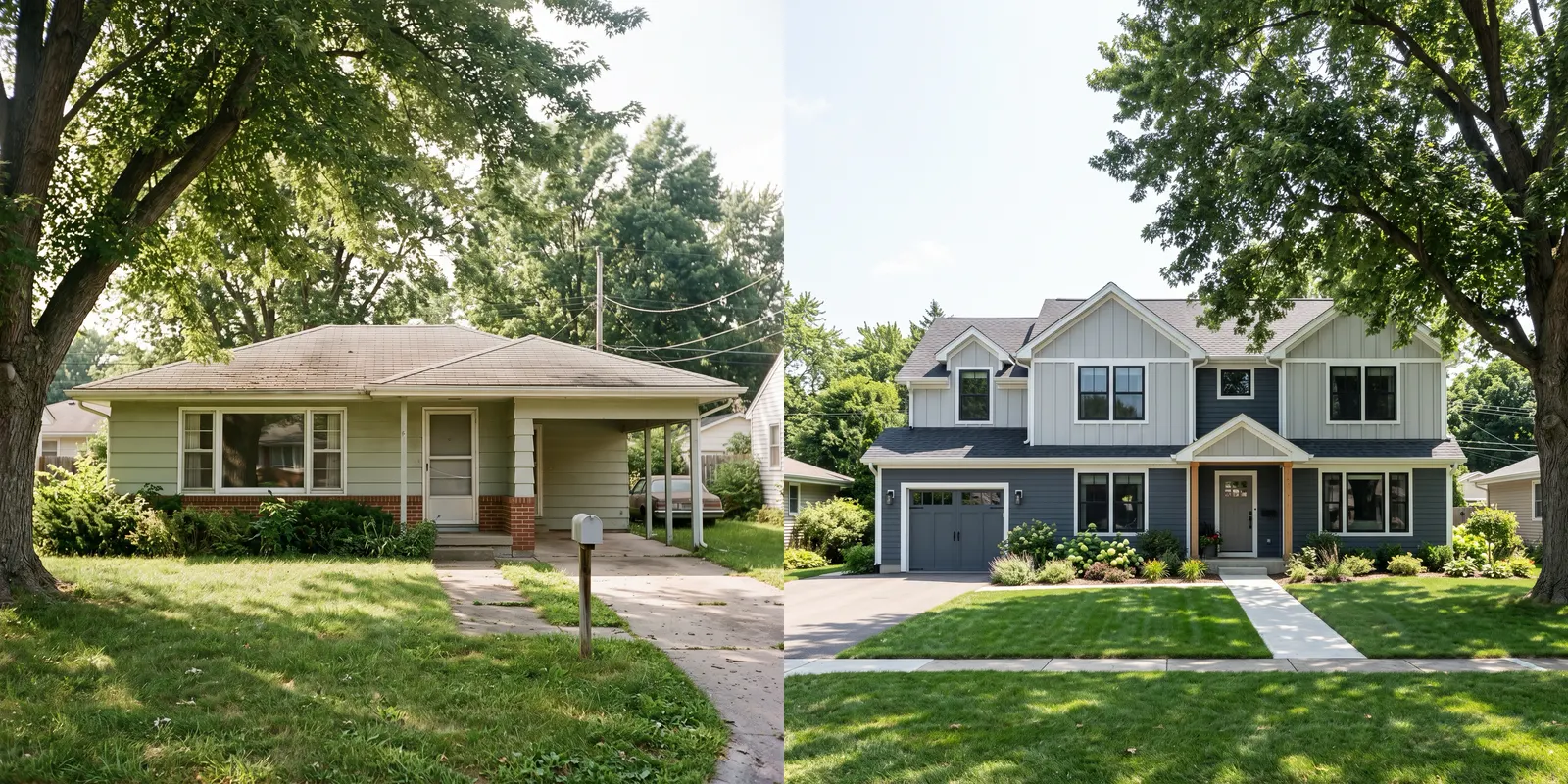
The pattern I watch most in Rolling Meadows is the gap between an original ranch and the same ranch after an addition. On the same street you can find a two-bedroom, one-bath house and a four-bedroom house that started as the identical model. Comparing them by address alone will mislead you. Compare them by square footage, bathroom count and the age of the addition.
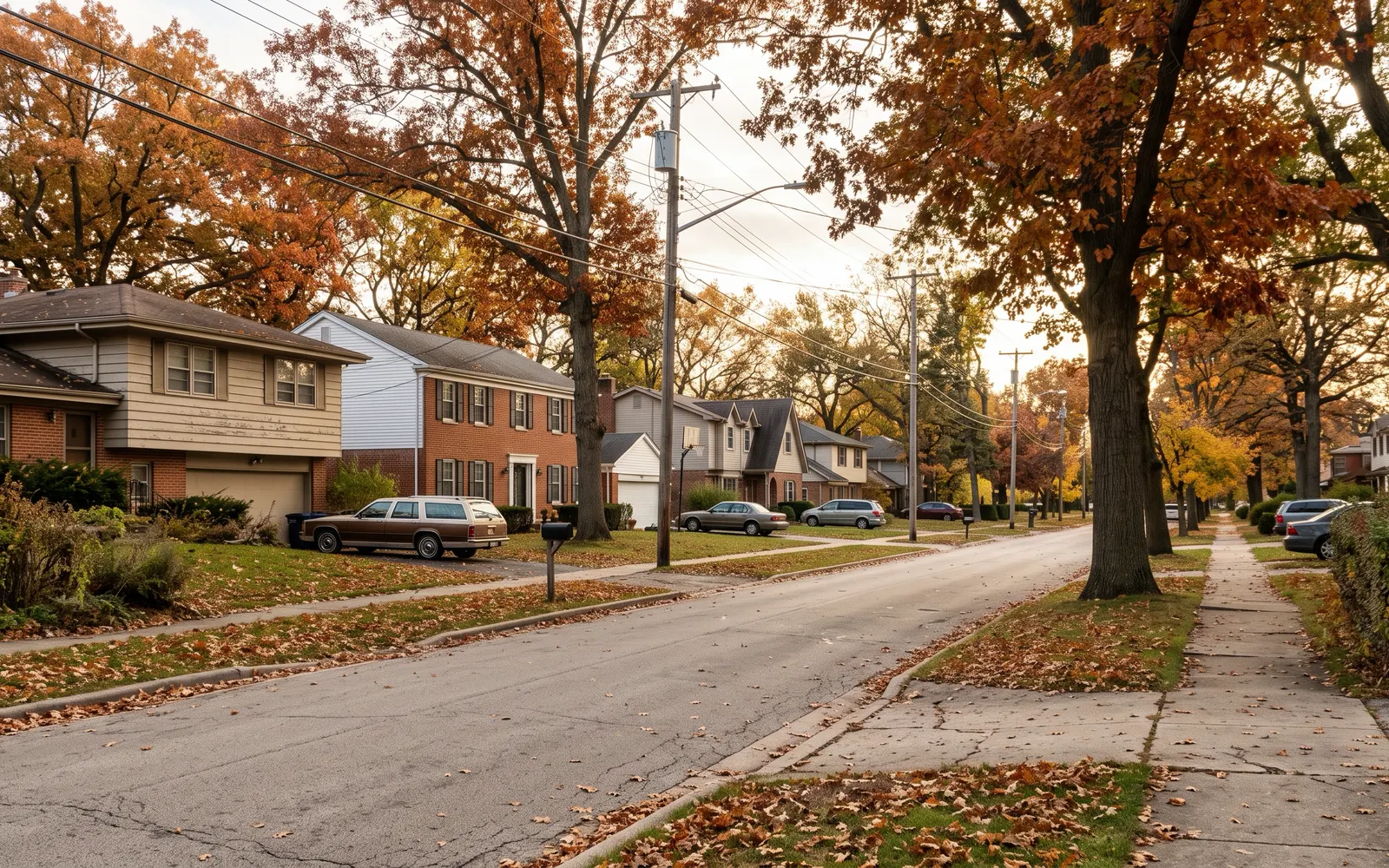
Kimball Hill. The original city, south of Kirchoff Road and north of Central Road, east of Route 53. Built mostly from 1953, with infill into the 1980s. Small ranches, many with second-story or rear additions on deep lots.
Waverly Park. South of Central Road and west of New Wilke Road. Detached houses built from 1961 to 1978.
Plum Grove Hills. North of Algonquin Road (Route 62) and east of Route 53. Detached houses built from 1964 to 1974.
Creekside. North of Algonquin Road and east of Meacham Road on the west side. Detached houses built from 1967 to 1979, some of the larger houses in the city.
Dawngate. East of Meacham Road and south of Kirchoff Road. A small pocket of detached houses built from 1971 to 1973.
Plum Tree. West of Plum Grove Road and south of Euclid Avenue. Detached houses built from 1974 to 1982.
Plum Grove Village. South of Euclid Avenue and east of Plum Grove Road. Townhomes and condos built from 1963 to 1982, roughly 1,393 to 2,349 square feet.
Winthrop Village. North of Kirchoff Road and east of Plum Grove Road. Townhomes and condos built from 1965 to 1973.
Fairfax Village. South of Kirchoff Road and east of Meacham Road. Townhomes and condos built from 1970 to 1978.
Meadow Edge. South of Euclid Avenue and west of Meacham Road. Townhomes built from 1975 to 2001.
Elizabeth Place and Townhomes of Westminster. Late-1990s townhome communities. Elizabeth Place, south of Algonquin Road and west of New Wilke Road, was built from 1997 to 1999 by Kimball Hill Homes, with plans of about 1,180 to 1,470 square feet.
Lexington Crossing. South of Kirchoff Road and east of Library Road. Townhomes built from 2016 to 2018 by Lexington Homes, the newest for-sale community on this list.
What Rolling Meadows Homes Look Like, by Era
The Census numbers line up with what you see driving around. In the 2020-2024 ACS, 26.6% of Rolling Meadows housing units were built in the 1950s, and about 41% were built between 1950 and 1969. Another 24.3% date to the 1970s. Only about 11% were built in 2000 or later. This is a city of mid-century houses, with very little new construction.
The original Kimball Hill ranch is the signature. The 2011 Daily Herald profile describes them as two or three bedrooms with one bath, on deep lots, and notes how many owners have added a second story or pushed a split-level out the back instead of moving. That is why listing sizes in Kimball Hill run from about 1,000 square feet to well over 2,000 on the same street.
West of Route 53, the 1960s and 1970s subdivisions are two-stories, split-levels and larger ranches, often with attached garages. The townhome villages from the same era vary widely. Some are two-story end units with basements; others are single-level condos. The late-1990s and 2010s townhomes, like Elizabeth Place and Lexington Crossing, are the closest thing Rolling Meadows has to new construction.
The ACS puts the median value of owner-occupied homes at $326,200 and the median gross rent at $1,607. Both lag today's market because they are five-year survey averages.
The expectation I most often have to reset with older Rolling Meadows houses is the age of the mechanicals. A 1953 ranch with a 2019 kitchen can still have its original sewer line, and an addition built in the 1970s can have its own roof and its own heating quirks. None of that should kill a deal. All of it belongs in the price. My home inspection checklist is a good place to start, and on these houses I always suggest a sewer scope.
The Rolling Meadows Housing Market in 2026
Rolling Meadows homes are selling well above last year's prices. For the three months ending August 2026, Redfin reported a median sale price of $379,749, up 16.8% from the same period a year earlier. The median price per square foot was $261, up 8.1%. Homes sold in about 43 days, compared with 47 a year earlier, and at 100.8% of list price on average. Redfin counted 90 sales, against 93 a year before.
Redfin gives Rolling Meadows a Compete Score of 74 out of 100, which it calls very competitive. Homes average three offers. Redfin's read is that the typical home sells about 1% over list and goes pending in about 44 days, while the best-priced homes sell about 3% over and go pending in about 34.
Zillow agrees on direction but not on size. Zillow's home value index for Rolling Meadows was $339,504 for August 2026, up 7.3% from $316,531 a year earlier. The gap comes from what each one measures. Redfin's median is the middle of whatever happened to sell in three months, and a summer with more detached houses and fewer condos pushes that median up fast. Zillow's index estimates the value of every home in the city, sold or not, including the townhome and condo stock. Redfin's price per square foot, up 8.1%, lands much closer to Zillow's 7.3%. My read is that values rose about 7% to 8% this year and the mix of sales did the rest.
In practice that means two markets. Detached houses in good condition still draw multiple offers in the first weekend. Older condos and townhomes with high assessments or special assessments can sit. If you are looking at a condo, read the association's budget and reserve study before you write an offer, not after.
The median tells you about the city and very little about a specific house. A two-bedroom Kimball Hill ranch and a four-bedroom Creekside two-story can be $300,000 apart. If you are still working out a budget, my guide to how much house you can afford in 2026 walks through the math with Cook County tax bills in mind.
Rolling Meadows Property Taxes: Three Townships, One Cook County Cycle
Property tax is the number that moves the monthly payment most, and in Rolling Meadows it runs through Cook County. Ownwell's Rolling Meadows data, updated April 13, 2026, puts the median effective rate at 2.70% and the median annual bill at $6,340. The Cook County median on the same page is 2.14%, and the Illinois median is 2.33%. Ownwell's bills run from $3,658 at the 25th percentile to $11,878 at the 90th. In the 60067 zip code, which covers part of the west side, it shows a 2.93% rate and a $12,566 median bill.
Rolling Meadows is split among three townships, and all three were reassessed in 2025. Cook reassesses one-third of the county each year, so each area comes up every three years, and the north suburbs were last done in 2022. The Palatine Township release of September 10, 2025, lists Rolling Meadows among its towns and reports a 2024 median house sale of $425,000 against the assessor's median estimate of $431,000. The Elk Grove Township release of May 6, 2025, and the Wheeling Township release of August 18, 2025, also include parts of Rolling Meadows. All three say the 2025 values affect second-installment bills issued in 2026. On the three-year rhythm, the next reassessment here would be 2028.
The bills come in two pieces. For tax year 2025, the first installment was due April 1, 2026, and the second is due October 1, 2026, per the Cook County Treasurer. The second installment carries the new values and rates. Cook County said on August 18, 2026, that those bills would be mailed September 1, about two months late because of a technology overhaul. If you close this fall, ask your attorney how the proration handles that bill.
Here is what the rate looks like on a real purchase. At this summer's $379,749 median, 2.70% works out to about $10,250 a year, or about $854 a month on top of the mortgage. Current bills on the same house may be lower, because assessments trail the market. The mistake I see most is buyers budgeting off the seller's current bill. The Cook County homeowner exemption takes $10,000 off the equalized assessed value of an owner-occupied home. Once you apply, it renews automatically, but a new owner has to apply.
Sellers pay one city cost. According to the ATG summary of the city ordinance, effective March 4, 2025, Rolling Meadows charges a transfer tax of $3.00 per $1,000 of value, rounded up to the next $1,000 and paid by the seller. A $380,000 sale carries $1,140 in city stamps. Final water and sewer bills must be paid first, and the pre-sale check is a water meter reading only. The Illinois Department of Revenue lists the county transfer tax at 25 cents per $500, or $190 on the same sale. My Illinois closing costs guide covers the rest. This is general information, not tax advice. Your bill depends on your parcel, your exemptions and the assessor.
Rolling Meadows Schools: District 15, District 214 and District 211
Most of Rolling Meadows is in Community Consolidated School District 15 for kindergarten through eighth grade. The District 15 school directory lists three elementary schools and two middle schools with Rolling Meadows addresses, plus its early learning center and a therapeutic day school on Central Road. District 15 also serves Palatine and parts of several neighboring towns, and some Rolling Meadows addresses feed District 15 schools with Palatine addresses. Other elementary districts may reach a few addresses at the edges.
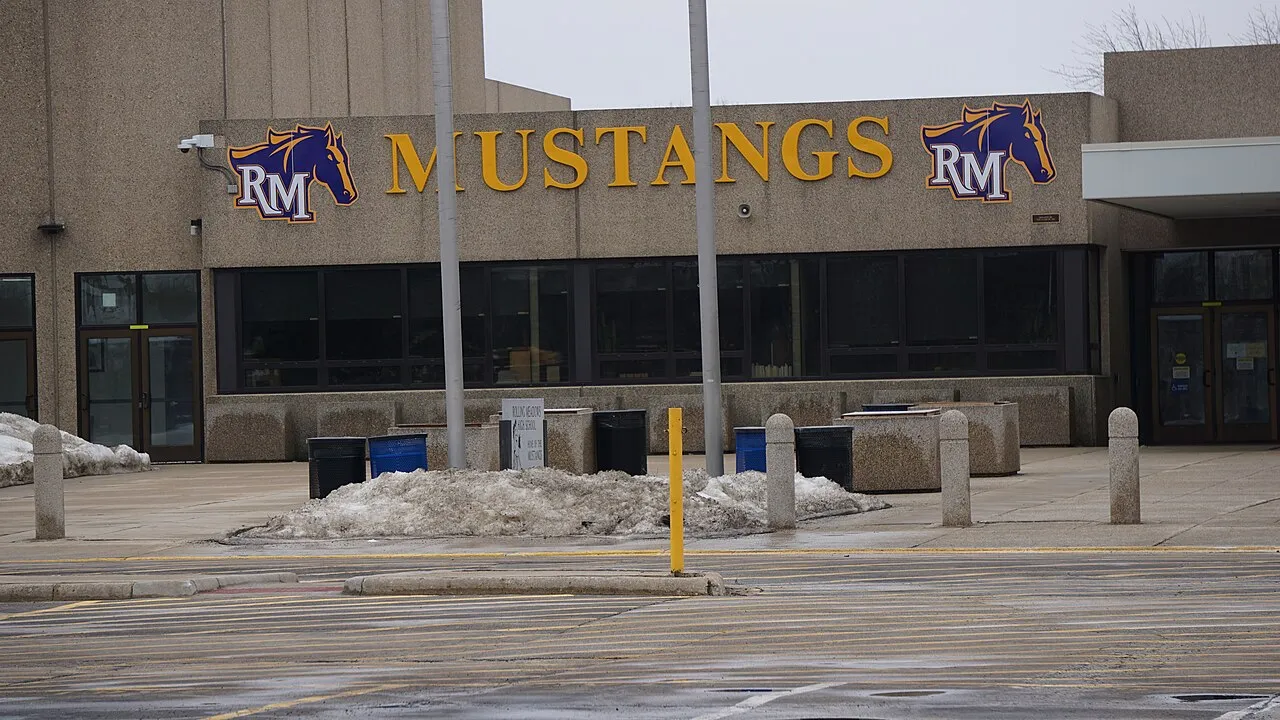
High school splits in two. Rolling Meadows High School, at 2901 Central Road, belongs to Township High School District 214. Wikipedia's entry on the school says it opened for the 1971-72 school year and serves mainly central and east Rolling Meadows, east of Route 53, along with a large part of Arlington Heights. West Rolling Meadows is served by William Fremd High School in Palatine, part of Township High School District 211, per Fremd's Wikipedia entry.
That split is the single most important school fact in town. Two houses a mile apart, on either side of Route 53, can feed different high school districts. Don't assume from the city name or the zip code. Check the address with District 15 and with District 214 or District 211 directly before you write an offer, and ask me for the boundary if you want it done for a specific house. The Illinois Report Card has each school's own data.
For college, Rolling Meadows is inside Harper College's District 512, and the campus is just north in Palatine. It opened in 1967.
Central Road Elementary. 3800 Central Rd. Grades K-5, District 15.
Kimball Hill Elementary. 2905 Meadow Dr. Grades K-5, District 15. Named for the city's founder.
Willow Bend Elementary. 4700 Barker Ave. Grades K-5, District 15.
Carl Sandburg Middle School. 2600 Martin Ln. Grades 6-8, District 15.
Plum Grove Middle School. 2600 Plum Grove Rd. Grades 6-8, District 15.
Rolling Meadows High School. 2901 Central Rd. District 214, serving central and east Rolling Meadows.
William Fremd High School. 1000 S. Quentin Rd., Palatine. District 211, serving west Rolling Meadows.
Harper College. Palatine. The community college district that includes Rolling Meadows.
Commuting from Rolling Meadows: Metra from Next Door
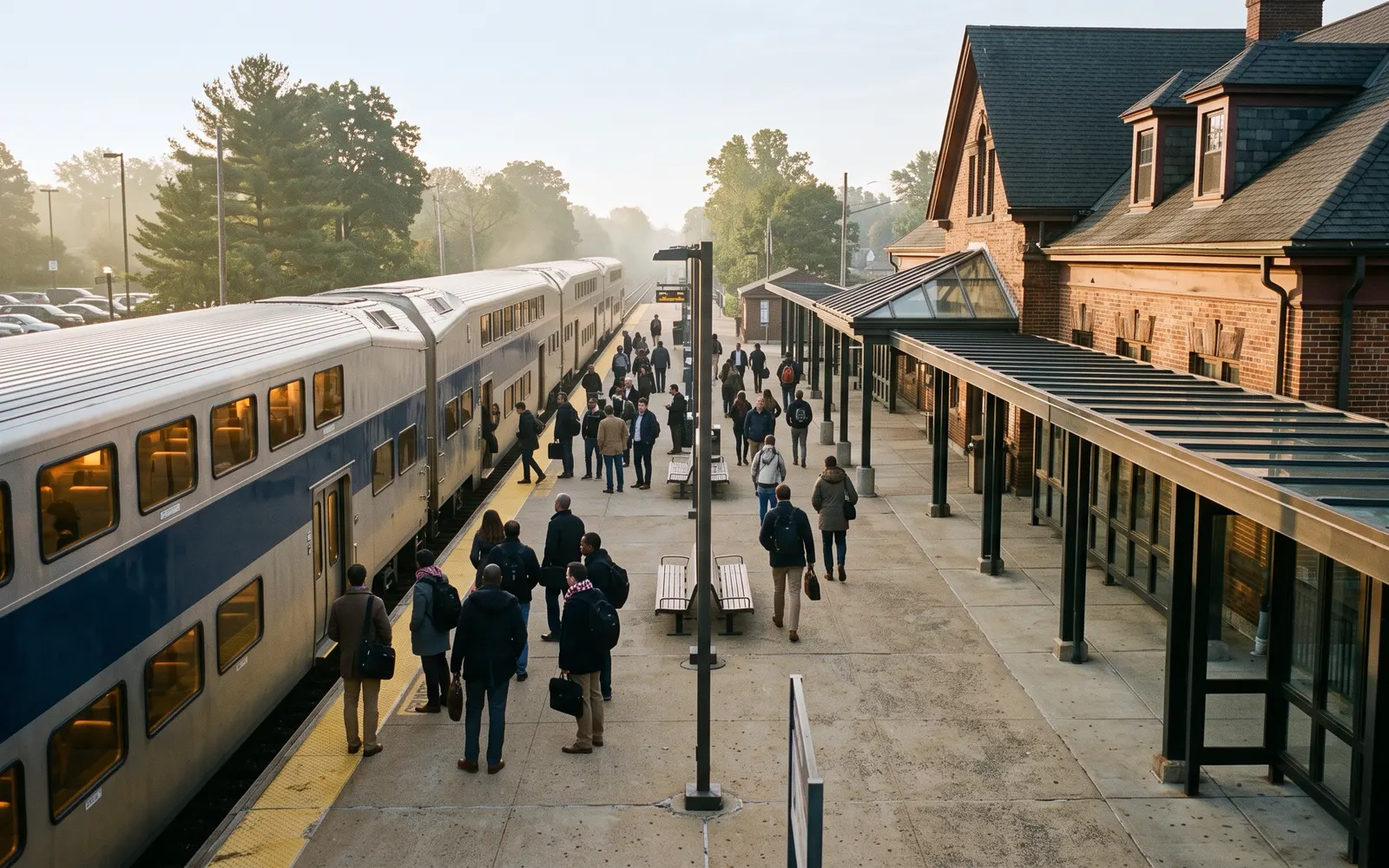
Rolling Meadows has no Metra station of its own. Residents drive or get dropped off at one of three stations on the Union Pacific Northwest line, all a few minutes away: Arlington Park and Arlington Heights to the east, and Palatine to the north. All three run to Ogilvie Transportation Center downtown.
I counted service from Metra's current UP-NW schedule, generated September 28, 2026, and Metra's published schedule data for the week of September 29. On weekdays, 31 inbound trains stop at Arlington Park and 31 at Arlington Heights, and 35 stop at Palatine. On Saturdays it drops to 16 or 17 inbound trains, and on Sundays to 9 or 10.
Travel time depends on the train. The fastest weekday trip from Arlington Heights is the 6:49 a.m., which reaches Ogilvie at 7:25, 36 minutes. From Arlington Park, the 6:45 a.m. makes the same 7:25 arrival in 40 minutes, and its regular rush-hour expresses take about 44. Local trains take 53 to 57 minutes from those two stations. From Palatine the fastest trains take 40 minutes and locals about an hour.
Which station you use usually comes down to which side of Route 53 you live on and where you can park. East-side addresses tend to head to Arlington Heights or Arlington Park; north and west-side addresses often find Palatine easier. If the train matters to you, drive to the station at 7 a.m. on a weekday before you buy and check the parking.
Pace buses serve Rolling Meadows as well, per Wikipedia, connecting the city to neighboring suburbs. Check Pace's current routes for your street.
Driving from Rolling Meadows: Route 53, I-90 and O'Hare
Driving is where Rolling Meadows earns its location. Route 53 runs through the middle of the city and meets I-90, the Jane Addams Tollway, at the south end, the interchange the Daily Herald calls "prominent" in its May 2026 coverage of the city's new TIF districts. I-90 runs east to O'Hare and the Kennedy, and west to Schaumburg and Elgin. Route 53 runs north toward Lake County and south to I-290 and I-355. The city's community overview places Rolling Meadows in the Golden Corridor, the I-90 office belt, with convenient access to O'Hare.
For local trips, Algonquin Road, Golf Road, Kirchoff Road and Euclid Avenue carry most of the traffic east and west, and Plum Grove Road and Meacham Road carry it north and south. Golf Road is a state route with three lanes each way. The city's February 2026 request for proposals for a new eastbound turn lane at Golf Road and Apollo Drive counts about 32,800 vehicles a day on that stretch.
Two road projects to know about. The Golf and Apollo turn lane is targeted for construction in fall 2026 or spring 2027, per that RFP. And the city is engineering a resurfacing of Kirchoff Road from Plum Grove Road to Hicks Road and Plum Grove Road from Emerson Avenue to Taft Avenue, with new ADA ramps and landscaped medians. The city's January 2026 RFP says federal funds will cover 80% of construction and targets a November 2027 letting. If you are buying on either road, expect a construction season sometime after that.
Is Rolling Meadows Walkable?
Mostly not. Walk Score rates Rolling Meadows 42 for walking, which it calls car-dependent, and 59 for biking, which it calls bikeable. Walk Score counts about 94 restaurants, bars and coffee shops in the city, but an average of only about two within a five-minute walk of any given home.
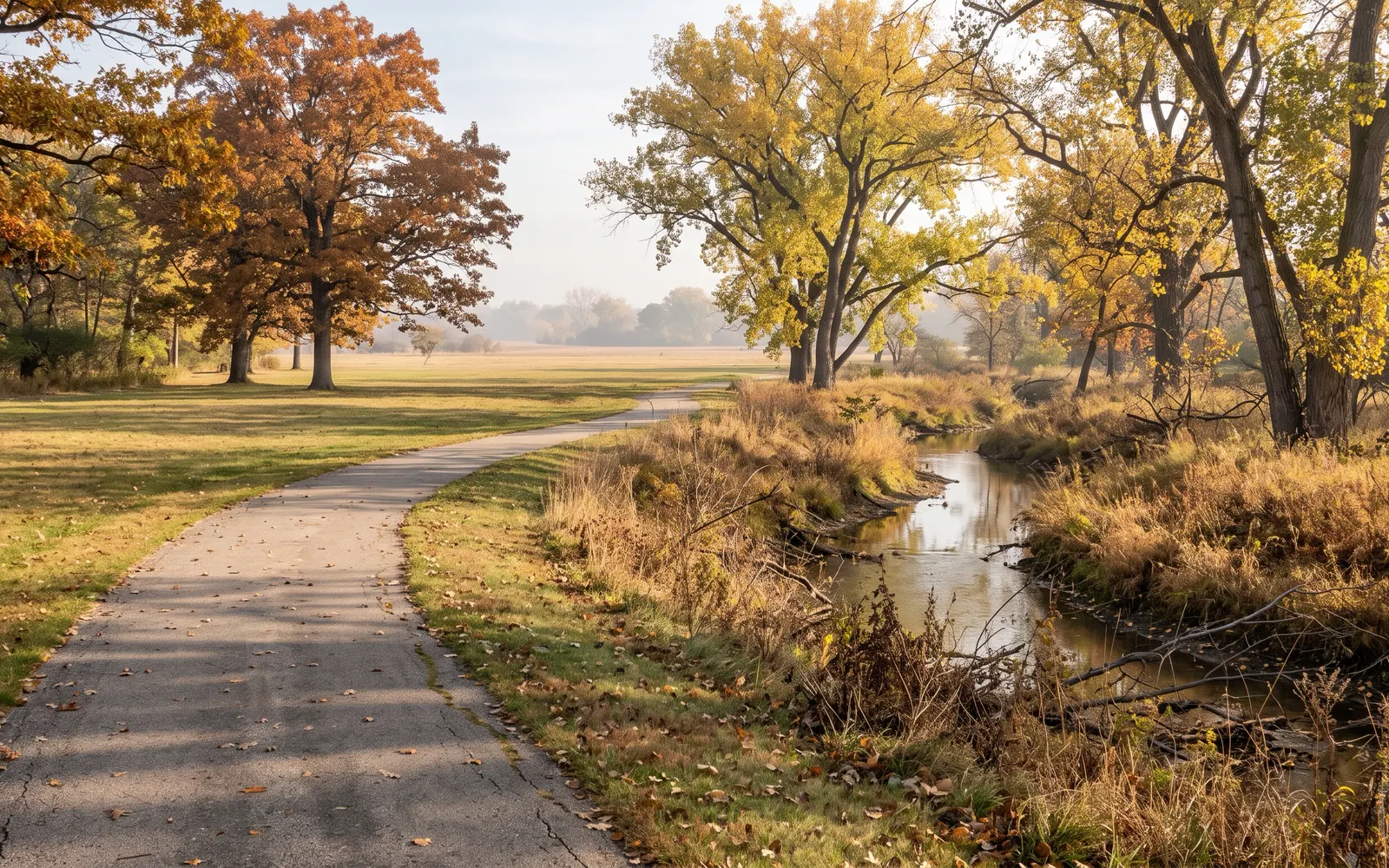
The bike score is higher for a reason. Kirchoff Road has a bike path along its south side and Plum Grove Road has one along its west side, according to the city's 2026 resurfacing RFP, and the park district maintains walking paths along Salt Creek. Busse Woods, just south of the city, adds a 10.4-mile paved trail. A lot of Rolling Meadows is more pleasant on a bike than on foot.
Inside Kimball Hill, the grid of short blocks and sidewalks makes it easy to walk to Kimball Hill Park, the elementary school and the library. Errands still mean driving to Kirchoff Road or Algonquin Road. Walk Score does not publish scores for individual Rolling Meadows neighborhoods, so if walking matters to you, check the score for the exact address.
Shopping in and Around Rolling Meadows
Rolling Meadows does not have a traditional downtown. Its retail is strung along Kirchoff Road, Algonquin Road and Golf Road in strip centers built for drivers. Some of those centers have struggled. The Daily Herald reported in May 2026 that the Algonquin Road corridor has been "subject to more and more retail and office vacancies," which is part of why the city created two new redevelopment districts there, covered below.
For bigger shopping, Woodfield Mall in Schaumburg is a short drive southwest down Route 53, and the city's own overview uses it as a landmark. My Schaumburg guide covers that side of the interchange in detail. Downtown Arlington Heights, a few minutes east, is the nearest walkable downtown with restaurants and a theater.
Groceries and Errands in Rolling Meadows
Everyday errands are easy to keep local. Jewel-Osco runs a full store with a pharmacy at 3000 Kirchoff Road, at Meadow Drive, open from 6 a.m. to midnight every day. It sits at the edge of Kimball Hill, so many original-city addresses are a two-minute drive or a short walk away. Additional grocery, big-box and warehouse options are clustered around Woodfield and along the Route 53 and Golf Road corridors in the neighboring towns. Pharmacies, banks and dry cleaners line Kirchoff and Algonquin.
Where Rolling Meadows Eats
Rolling Meadows eats on its main roads. Walk Score counts about 94 restaurants, bars and coffee shops in the city, most of them in the strip centers along Kirchoff, Algonquin and Golf roads and in the office corridor, where weekday lunch is the busiest time of the week. The Aloft hotel and its neighbors near the I-90 interchange add hotel dining for business travelers.
For a sit-down dinner with a walk afterward, most residents head to downtown Arlington Heights or to the restaurants around Woodfield. The city's own Fridays Rock nights and Meadows Fest, covered under events, bring food vendors into the park in summer and early fall. If you are touring on a weekday, have lunch on Golf Road to see how busy that corridor gets.
Rolling Meadows Parks, Salt Creek and Busse Woods
The Rolling Meadows Park District runs more than 150 acres of parks and green space, with several miles of walking paths along Salt Creek, nine baseball fields and about a dozen playgrounds. Its main buildings are the Community Center, the West Meadows Ice Arena, the Nelson Sports Complex with its outdoor pool, the Plum Grove Park and Banquet Hall, and The Grove fitness studio. Kimball Hill Park, in the middle of the original city, is the one most residents mean when they say "the park," and it hosts the big city festivals. Chicago Northwest's visitor guide also lists a disc golf course at Salk Park.
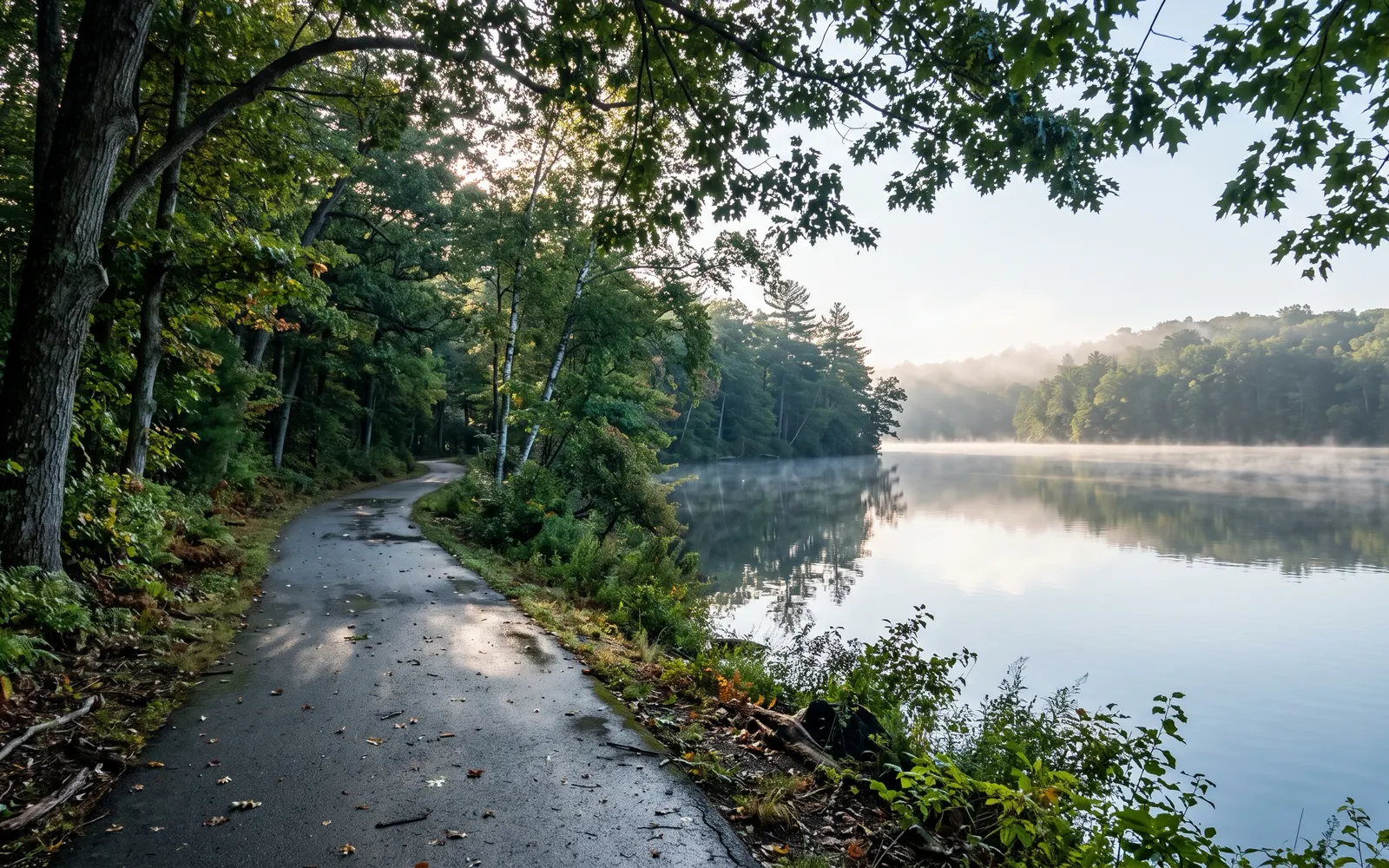
The larger outdoor asset is just south of the city. Ned Brown Forest Preserve, better known as Busse Woods, adjoins Rolling Meadows, Elk Grove Village and Schaumburg. Wikipedia's entry puts it at 3,700 acres, run by the Forest Preserve District of Cook County, with a 590-acre lake and a 10.4-mile paved trail that includes a 7.3-mile loop. For a lot of my buyers, a ten-minute drive to that loop is worth more than a bigger backyard.
Salt Creek itself starts in Rolling Meadows, per the same entry, and runs south through the park district's paths toward Busse Lake. That is pleasant for walking and matters for flood risk, covered below.
The Rolling Meadows Library
The Rolling Meadows Library sits at 3110 Martin Lane, a few blocks from Kimball Hill Park. It is open 9 a.m. to 9 p.m. Monday through Thursday, 9 to 5 on Friday and Saturday, and noon to 5 on Sunday. Beyond books, it lends a Library of Things, streaming devices and hotspots, and it offers study and meeting rooms and notary service. The library is joining a shared catalog with more than 34 northern suburban libraries, with the new catalog set to launch October 20, 2026, which will widen what a Rolling Meadows card can borrow.
Hospitals Near Rolling Meadows
The closest full-service hospital is Northwest Community Hospital at 800 W. Central Road in Arlington Heights, a few minutes east of Rolling Meadows High School on the same road. Wikipedia's entry lists it at 489 beds and part of Endeavor Health. For most Rolling Meadows addresses it is under ten minutes away.
Meadows Fest, the Fourth of July and the Rolling Meadows Year
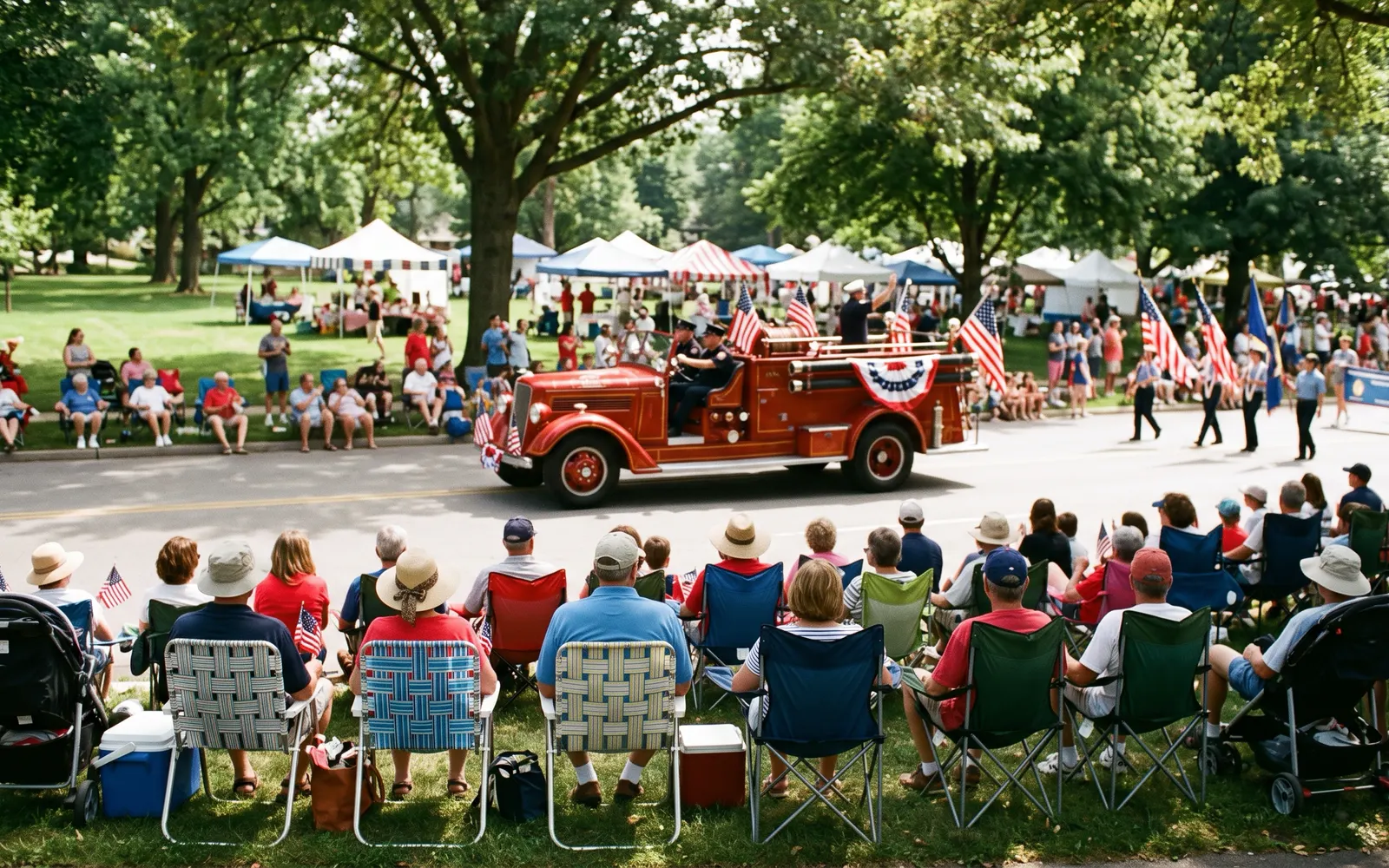
The city's calendar is built around a few big nights. According to the city's 2026 community events page, the Fourth of July parade stepped off at 11:30 a.m. on Saturday, July 4, on the Owl Lane route through the original Kimball Hill streets. The summer Fridays Rock concerts ran June 19, July 17 and August 14 from 6 to 10 p.m. Meadows Fest, the city and park district's fall festival, ran September 25 to 27, 2026. The park district's 2025 Meadows Fest page shows that edition in Kimball Hill Park with live bands and the park district's fishing derby.
The park district fills in the rest of the year. Its 2026 calendar lists Bark in the Park on October 3, the Shannon McNamara Memorial 5K on October 25, a Pumpkin Smash on November 7 and Santa's Workshop on December 5.
If you are touring houses in early July, drive the parade route along Owl Lane. It is the fastest way to see the original Kimball Hill blocks at their busiest.
What's Being Built in Rolling Meadows, and the Arlington Park Question
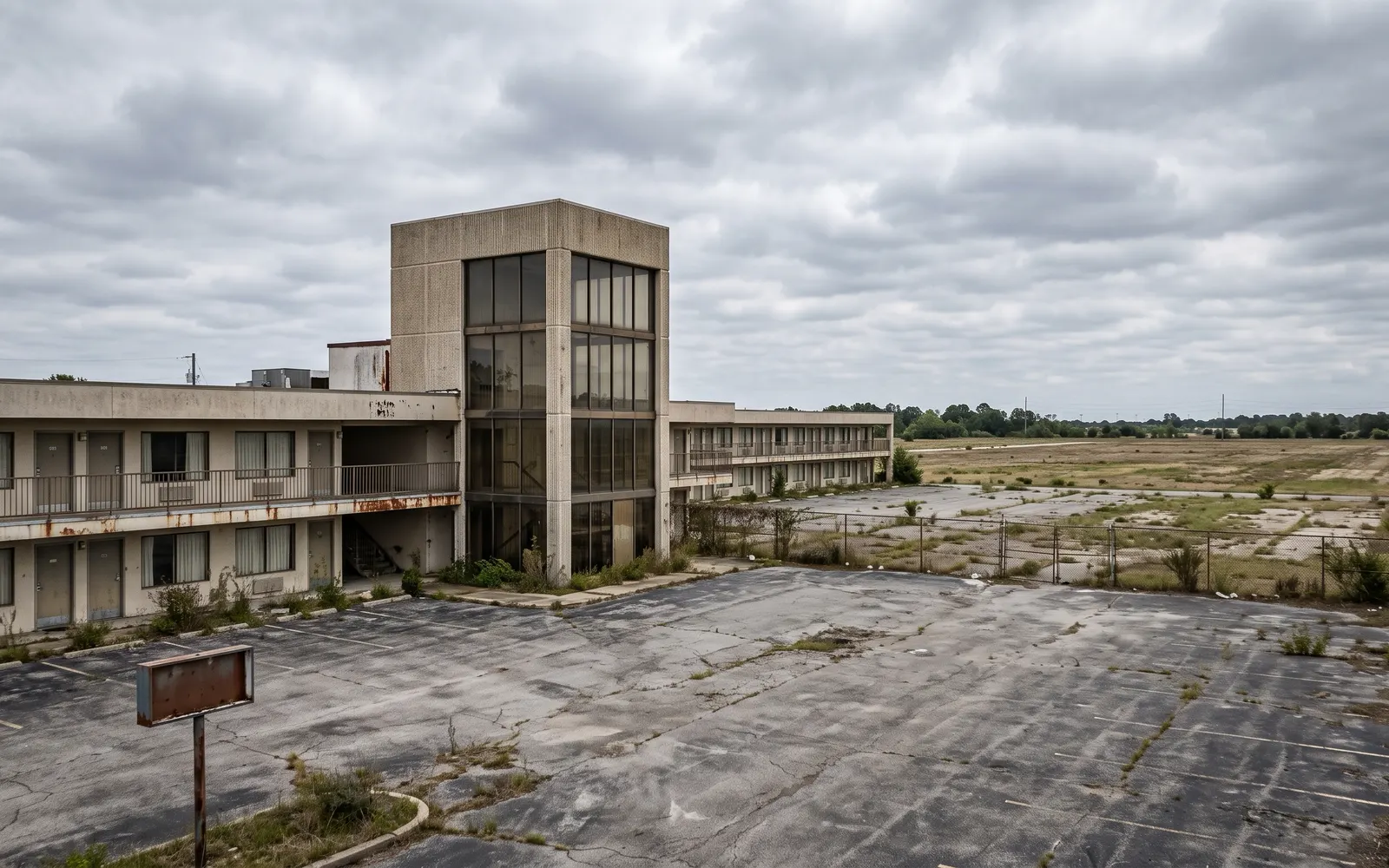
The biggest change coming to Rolling Meadows is along Algonquin Road. In May 2026 the city council approved two tax increment financing districts there, according to the Daily Herald. The larger, the Algonquin and Orchard TIF, covers 59 acres near the I-90 and Route 53 interchange. It includes the former 170-room Holiday Inn and indoor Holidome at 3405 Algonquin Road, closed since 2018, whose owner has sought city help to demolish it and build a residential tower with street-level retail. The city's consultant estimated $58 million in eligible project costs there. The smaller Algonquin and Keystone TIF covers 27 acres between Algonquin Road, Carriage Way Drive, South Old Wilke Road and Salt Creek, with an estimated $52 million in costs. No specific building has been approved on either site yet.
The city is also updating its comprehensive plan for the Golf Road and Algonquin Road corridors. The city's TIF and plan update page notes that the office market has shifted since the pandemic and that both corridors have aging and underused properties. On the housing side, the Journal & Topics reported that the September 8, 2026, city council meeting took up accessory dwelling unit rules. I have not seen the final ordinance text, so check with the city before you plan a coach house or basement unit.
Then there is the question buyers ask me most: the Chicago Bears and Arlington Park. The former racetrack sits just east of Rolling Meadows in Arlington Heights. The Bears bought the 326-acre site in February 2023 for $197.2 million, per Wikipedia's stadium entry. On June 5, 2026, the team announced that its board had voted to advance a stadium project in Hammond, Indiana. Capitol News Illinois reported that the vote was not described as a final decision, that the Bears still own the Arlington Heights land, and that Illinois lawmakers were still talking with the team. As of late September 2026, I would not buy or sell a Rolling Meadows house based on a stadium either way. If a plan is approved for that site, it will change traffic on Euclid Avenue and Route 53 and the value of land near it, and I will update this page.
I don't label any town or neighborhood as safe or unsafe.
Flood Risk in Rolling Meadows and Salt Creek
Flood risk in Rolling Meadows follows Salt Creek. The creek starts in the city and runs south to Busse Lake, which, per Wikipedia, was built partly as a flood-control catchment for Salt Creek. Redfin, using First Street's model, rates the city's flood factor as major, with about 7% of properties at risk of severe flooding over the next 30 years. Most of that risk sits in the low ground near the creek and its tributaries, not across the whole city.
Two checks before you write an offer. Look the address up on the FEMA flood map, because a mapped flood zone can mean required flood insurance on a mortgage. And ask the seller directly about water in the basement or crawl space. With the older ranches and split-levels here, the follow-up question about what they did about it, a sump pump, a backup battery, overhead sewers or regrading, is the one that matters.
Frequently Asked Questions
How much does a house cost in Rolling Meadows, IL?+
Redfin reported a median sale price of $379,749 for the three months ending August 2026, up 16.8% from a year earlier. Zillow's home value index was $339,504 for August 2026, up 7.3%. Townhomes and condos generally sell below detached houses.
What are property taxes in Rolling Meadows, IL?+
Ownwell (April 2026) puts the median effective rate at 2.70% and the median bill at $6,340. The city spans Palatine, Elk Grove and Wheeling townships, all reassessed in 2025, and a home's bill usually rises after a sale once the assessment catches up.
What school district is Rolling Meadows, IL in?+
Most of the city is in District 15 for kindergarten through eighth grade. For high school, central and east Rolling Meadows goes to Rolling Meadows High School in District 214, and the west side goes to Fremd High School in District 211. Confirm each address with the districts.
Does Rolling Meadows have a Metra station?+
No. Residents use the Arlington Heights, Arlington Park or Palatine stations on the Union Pacific Northwest line. The fastest weekday train from Arlington Heights reaches Ogilvie in 36 minutes, per Metra's September 2026 schedule.
What neighborhoods are in Rolling Meadows, IL?+
Commonly named areas include Kimball Hill, Waverly Park, Plum Grove Hills, Creekside, Dawngate and Plum Tree for detached houses, and Plum Grove Village, Winthrop Village, Fairfax Village, Meadow Edge, Elizabeth Place and Lexington Crossing for townhomes and condos.
Are the Bears building a stadium next to Rolling Meadows?+
Not as of September 2026. The Bears own the 326-acre Arlington Park site in Arlington Heights, but on June 5, 2026, they announced a board vote to advance a stadium project in Hammond, Indiana. Reports described that vote as not final.
Is Rolling Meadows walkable?+
Not city-wide. Walk Score rates it 42 for walking and 59 for biking. Bike paths on Kirchoff Road and Plum Grove Road and the Busse Woods trail make cycling easier than walking to errands.
Is there a transfer tax in Rolling Meadows?+
Yes. The city charges $3 per $1,000 of sale price, paid by the seller, after final water and sewer bills are paid, per ATG's summary of the ordinance effective March 4, 2025. Cook County adds 25 cents per $500.
Eshu Chikoti has extensive access to off-market listings throughout Rolling Meadows and the rest of Cook County — homes that never make it to the public listing sites. That matters right now: in a seller's market like this one, well-priced homes routinely go under contract within days, and buyers relying only on public listings are competing for whatever is left over. Working with someone plugged into off-market inventory means seeing homes before the crowd does.
Eshu Chikoti · 847-691-4282 ·
Get new Rolling Meadows listings by email
When a home comes on the market in Rolling Meadows, I'll email it to you.
Just your email. Unsubscribe any time by replying.
Thinking About Rolling Meadows?
Whether you're buying, selling, or just curious what's on the market, I can walk you through Rolling Meadows street by street.