Schaumburg, IL
Schaumburg, IL is a Cook County village of about 77,000 people built around Woodfield Mall, the I-90 corridor and a Metra station on the Milwaukee District West line, with a summer 2026 median sale price near $373,000.
Living in Schaumburg, IL means a median sale price of about $373,000 this summer, a 44-minute express train from the village's own Metra station, and property tax near 2.49% of value. Almost every home is 1960s to 1980s subdivision housing, and the tax bill runs on Cook County's three-year reassessment cycle. Here it is, pocket by pocket.
Written by Eshu Chikoti · 847-691-4282 ·
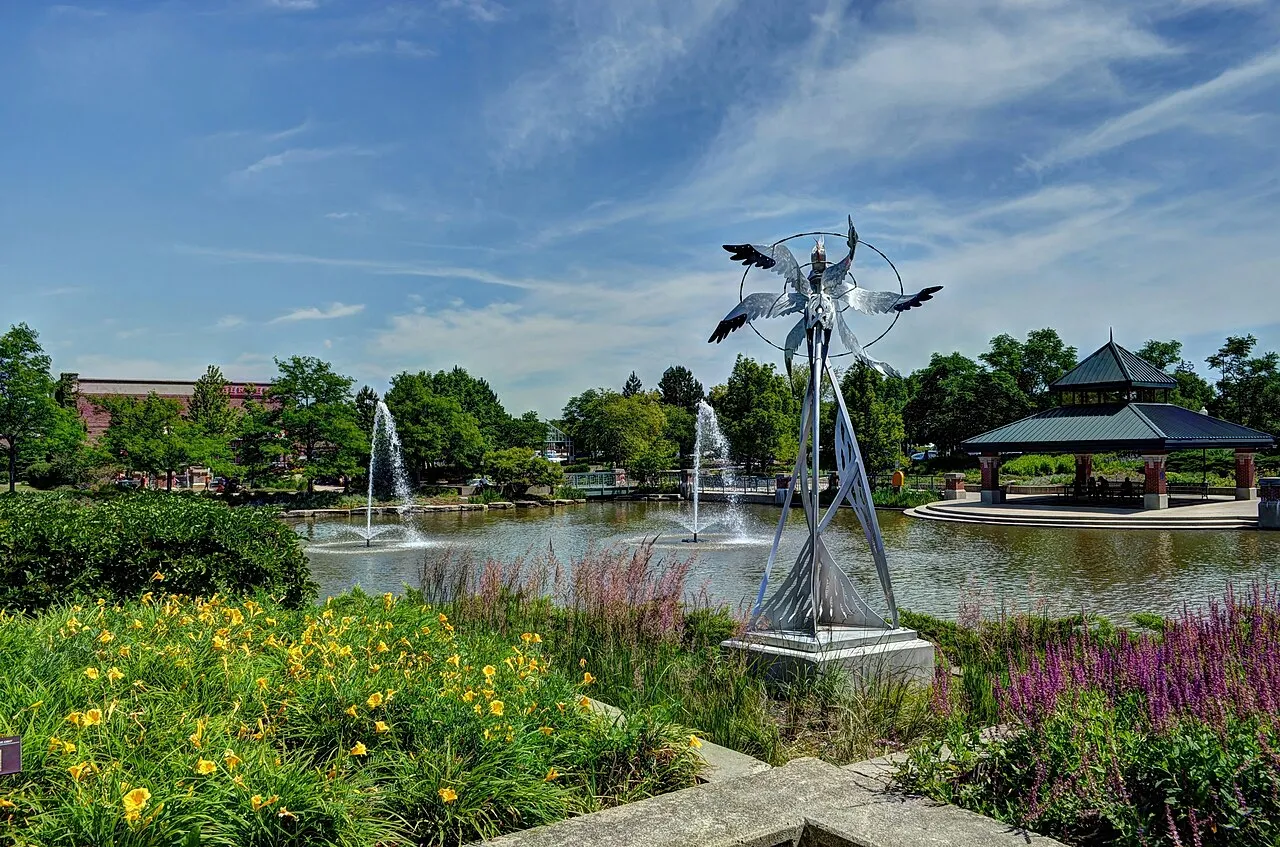
How Schaumburg, IL Got Here: From Sarah's Grove to Woodfield
Schaumburg was farmland for more than a century before it was a suburb. According to the village's Wikipedia entry, an 1842 survey named the area's woodland Sarah's Grove, and by 1870 most of the township's land was held by farmers who had come from the Schaumburg and Schaumburg-Lippe region of Germany or by their descendants. The name itself dates to an 1850 township meeting, when a landowner named Friedrich Heinrich Nerge settled the question in Low German: "Schaumburg schall et heiten!" It will be called Schaumburg.
The village is much younger than the name. Schaumburg incorporated on March 7, 1956, with about 130 residents, and the 1960 census counted 986. Then two projects changed everything. In 1959 builder Alfred Campanelli started Weathersfield, a subdivision that eventually grew past 6,800 units. And on September 9, 1971, Woodfield Mall opened with more than two million square feet of space.
The population numbers show how fast it happened: 18,724 in 1970, 53,305 in 1980 and 68,586 in 1990. By 2020 the census counted 78,723, and Wikipedia describes Schaumburg as the most populous incorporated village in the United States. It is a village by legal form and a city by size.
The corporate chapter matters to buyers today. Motorola built its headquarters campus here, and that 225-acre campus is now the Veridian redevelopment covered further down. Zurich North America and Motorola Solutions are still among the village's largest employers. If you are looking at a house in Schaumburg, most of what you'll see was built during that 1960s-to-1980s run, and most of the land you drive past was a farm within living memory.
Schaumburg at a Glance
Schaumburg covers about 19.5 square miles, roughly 26 miles northwest of the Loop and 10 miles northwest of O'Hare, per the Wikipedia entry. Hoffman Estates is to the west, Palatine and Rolling Meadows to the north, Elk Grove Village to the east, and Roselle and Hanover Park to the south.
I list Schaumburg under both Cook and DuPage on this site because the village boundary does cross the county line. In practice, it is a Cook County town. The Census Bureau's Vintage 2025 population estimates put all 77,249 residents in Cook County and zero in the DuPage part. By township, that is about 69,980 in Schaumburg Township, 4,840 in Palatine Township and 2,430 in Hanover Township. The DuPage piece sits in Bloomingdale Township along the south edge, and the Schaumburg Regional Airport entry places the village-owned airport in both counties. So if you are buying a home with a Schaumburg address, plan on a Cook County tax bill.
The housing is a mix. The 2020-2024 Census ACS counts 33,346 housing units, with 62.9% of occupied homes owned and 37.1% rented. Much of the rental stock is apartments and condos near Woodfield and the office corridors.
Schaumburg is also a job center. CMAP's June 2026 community snapshot counts 74,297 private-sector jobs in the village in 2025, close to one job for every resident. That is why weekday traffic on Golf, Higgins and Meacham Roads can surprise people who come from bedroom suburbs.
At a $373,000 summer median, it offers everything from a Woodfield-area condo to a four-bedroom colonial, with one county, one assessor and one tax calendar to learn.
The Metra station is on the southwest edge, the Walk Score is 43, and only 2.9% of homes were built since 2010, with Loeber Farm and Veridian still to come. Traffic around Woodfield is real.
Schaumburg Neighborhoods, Pocket by Pocket
Schaumburg has no official neighborhoods, but it has a lot of named subdivisions, and most of them were built by a handful of large builders over about 25 years. The two names you'll hear most are Weathersfield, Campanelli's subdivision in the middle of the village, and Sheffield, the group of Levitt developments on the west side around Bode and Barrington Roads.
The second way to split the village is by road. Golf Road, Woodfield and the I-90 and I-290 corridors in the north and east carry the offices, the mall and most of the apartments and condos. The land south of Schaumburg Road and west of Roselle Road is mostly single-family and townhome subdivisions. The Olde Schaumburg area at Schaumburg and Roselle Roads is the historic crossroads and the civic center.
Below are the subdivision names you will see on listings. Build dates come from the library's local history blog and agent directories, so treat them as a starting point. If you want to know which subdivision, school district and park district a specific address falls in, that is a conversation I am happy to have here.
The expectation I most often have to reset with my buyers in Schaumburg is that two ranches a mile apart are the same house. They were often built by different builders, a decade apart, on different lot sizes, and they feed different schools. The subdivision name on the listing tells you more than the square footage does.
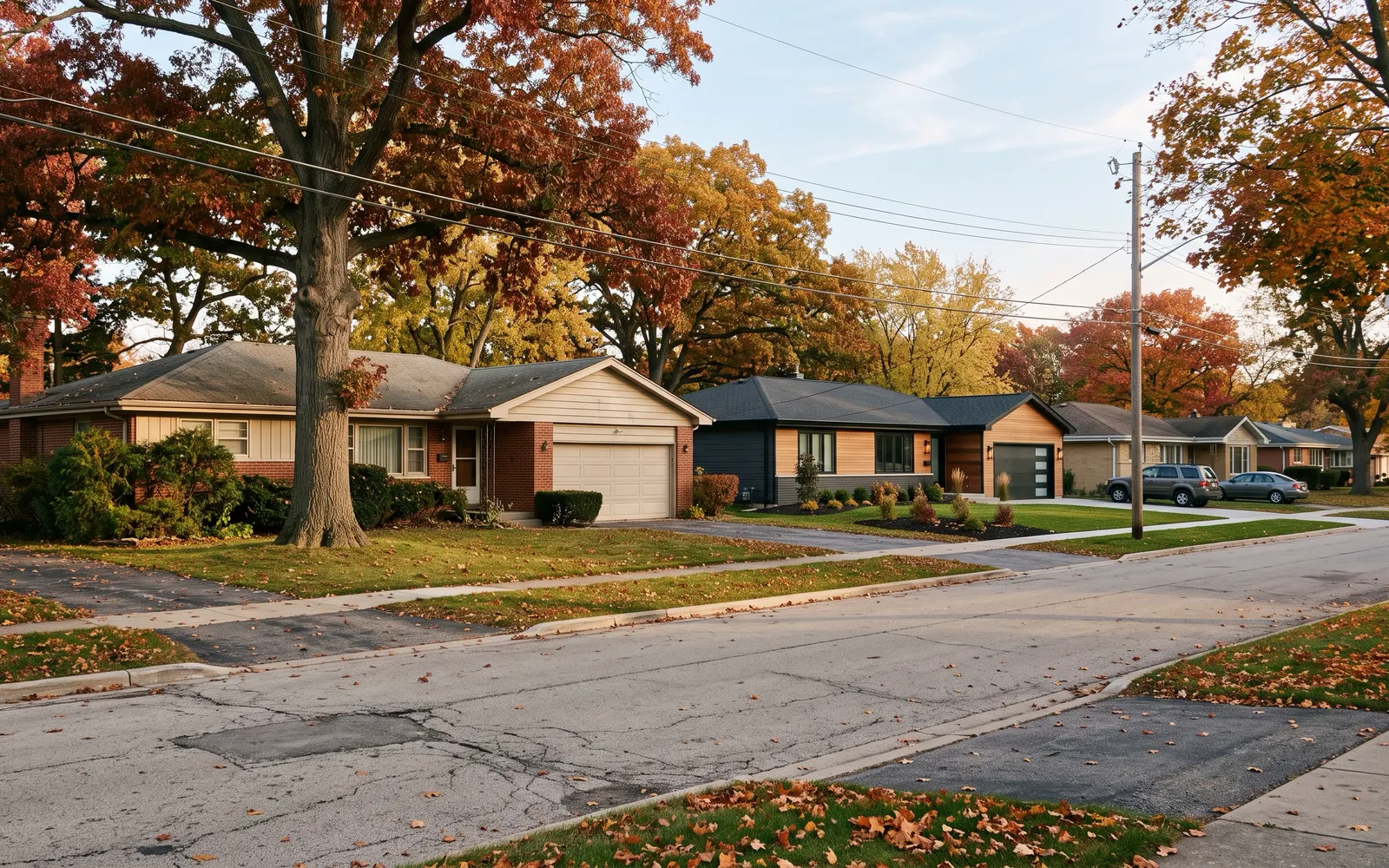
Weathersfield. Alfred Campanelli's subdivision, begun in 1959 and eventually more than 6,800 units per Wikipedia. A brokerage history page says it started near Walnut and Schaumburg Roads and was built in more than 20 phases, with ranch models such as the Standish, Hyannis, Salem, Concord and Chatham. An agent directory places the main section west of Salem Drive and north of Weathersfield Way, built mostly in the 1960s and 1970s.
Sheffield Park. Levitt & Sons, from 1969, south of Bode Road and east of Springinsguth Road. The library's history blog says about 1,200 single-family homes were planned.
Sheffield Towne and Sheffield Manor. Attached housing from the same builder. Sheffield Towne (1969 to 1971, west of Walnut Lane and north of Bode Road) had 171 townhouses, and Sheffield Manor (1972 to 1973, near Bode and Barrington Roads) had 564 manor homes, per the same library post.
Sheffield Park East, Sheffield Estates and Sheffield Ridge. Sheffield Park East opened in 1971 on Schaumburg Road east of Barrington Road with 700 units, Sheffield Estates opened in late 1974 with 552 single-family homes, and Sheffield Ridge was built from 1978 to 1981 on Bode Road about a mile east of Barrington Road, with about 310 houses.
Sunset Hills and Pleasant Acres. Two of the oldest pockets, per the library's subdivisions archive. Pleasant Acres started in 1952 near Schaumburg and Roselle Roads. Sunset Hills started in 1957 north of Nerge Road between Roselle and Plum Grove Roads, with custom ranches.
Nantucket Cove West and Pheasant Walk. Late-1970s subdivisions off Roselle Road. Nantucket Cove West sits at the northeast corner of Wise and Roselle Roads, and Pheasant Walk had 93 homes, per the library archive.
Other named subdivisions. An agent directory lists about 70, including Lexington Fields Estates, Timbercrest, Lancer Park, Sarah's Grove, Essex Club, Lion's Gate and Summerfield Estates for single-family homes, and Del Lago, Colony Lake, Olde Schaumburg, Towne Place, Wyndham Cove and Tuscany on the Pond for townhomes. Ask for the build year, builder and school assignment on each one.
What Schaumburg Homes Look Like, by Type and Era
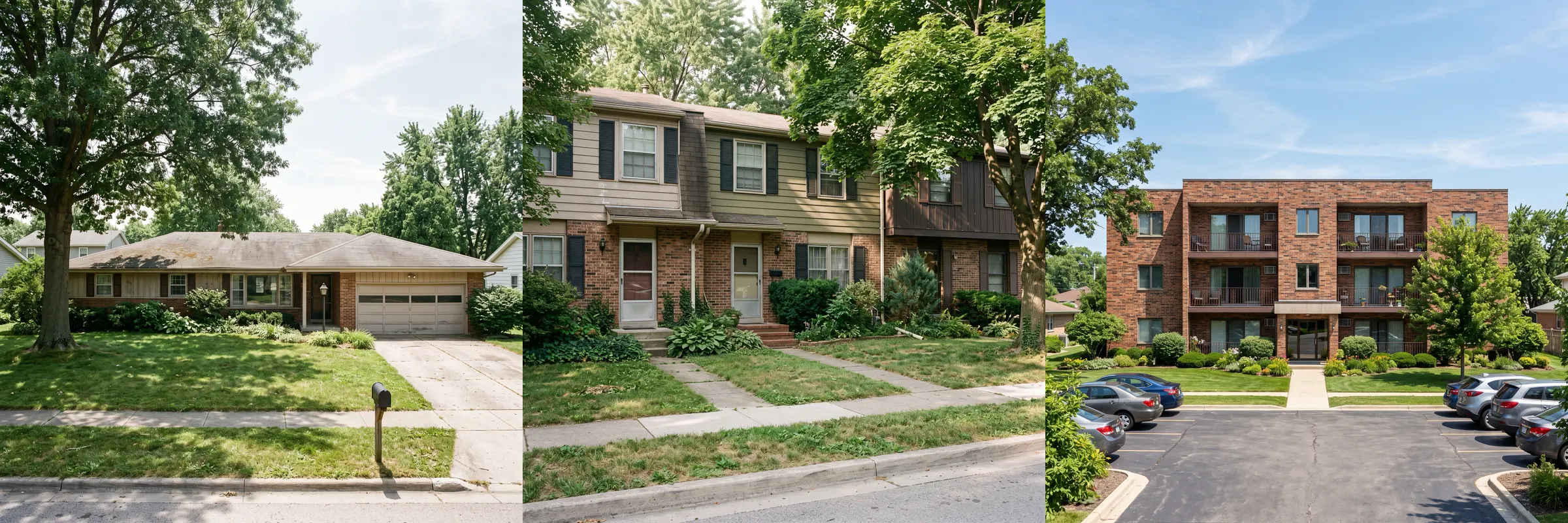
Schaumburg has one of the most mixed housing stocks in the northwest suburbs. CMAP's snapshot, built on the 2020-2024 ACS, counts 11,630 detached single-family homes, 34.9% of all units, and 6,204 attached single-family homes such as townhouses, another 18.6%. Buildings of three or four units add 14.7%, and buildings of five or more units add about 30%, including 15.9% in buildings of 20 or more. In other words, fewer than four in ten homes here are detached houses.
The era is narrow. CMAP counts 60.0% of units built between 1970 and 1989, with a median year built of 1979. Only 2.9% were built in 2010 or later. The bedroom mix follows the product: 37.8% of units have two bedrooms, 27.2% have three and 14.9% have four. The two-bedroom share is the condos and townhomes. The three- and four-bedroom share is the Weathersfield and Sheffield houses.
The detached houses are mostly ranches, raised ranches and two-story colonials on subdivision lots. Weathersfield is the ranch capital of the village. The Sheffield developments mix detached houses with some of the earliest townhouse communities in the area. The Census ACS puts the median home value at $330,400 and median gross rent at $1,812.
For a buyer, that mix means three markets under one town name: detached houses, townhomes and condos. They carry different association costs, appeal to different buyers and appraise off different comparable sales, so I price them separately. The 1960s and 1970s houses also have their own inspection list. Original windows and furnaces are common, some houses from that era have aluminum branch wiring, and slab ranches need a close look at the heating and plumbing that run under the floor. None of those should kill a deal. All of them belong in the price. My home inspection checklist covers what to ask for.
The Schaumburg Housing Market in 2026
Schaumburg is a steady, busy market with a lot of turnover for its size. In the three months ending August 2026, Redfin reported a median sale price of $372,753, up 9.6% from a year earlier. Its report shows 309 sales, down from 331 a year before. The median home sold in 46 days at 100.4% of list price, and 48.2% sold above asking.
The rest of Redfin's numbers show a balanced market. Price per square foot was $243, up 1.3%. About 17.4% of listings took a price cut. Redfin gives Schaumburg a Compete Score of 73 out of 100, which it calls very competitive, and says the average home gets about four offers. A well-priced house still draws a crowd. An overpriced one sits.
Zillow's home value index moved more slowly. It put the typical Schaumburg home at $360,740 in August 2026, up 4.9% from August 2025 and 9.2% from August 2024. The gap between the two is about mix. Redfin's median is the middle of whatever sold this summer, and a summer tilts toward detached houses. Zillow's index estimates every home, including the condos and townhomes that make up most of the village. Price per square foot, up only 1.3%, tells me the typical house gained a few percent and the summer's sales leaned toward bigger houses.
For context against the neighbors, Zillow's August 2026 index put Rolling Meadows at $339,504, Streamwood at $334,228, Roselle at $383,521, Palatine at $393,104, Elk Grove Village at $402,937 and Hoffman Estates at $408,240. Schaumburg sits in the middle of that group, and it offers the widest range of product in it, from a condo near Woodfield to a four-bedroom colonial. If you are buying your first home here, my overview of Illinois first-time buyer programs is a good place to start.
Schaumburg Property Taxes: Cook County's Three-Year Cycle
Property tax is the number that moves the monthly payment most, and in Schaumburg it runs through Cook County. Ownwell's Cook County data for Schaumburg, updated April 13, 2026, puts the median effective rate at 2.49% and the median annual bill at $6,074. The Cook County median on the same page is 2.14%.
Cook reassesses one-third of the county each year, so each area is revalued every three years. The north suburbs, which include Schaumburg, Palatine and Hanover townships, were reassessed in 2025. The Cook County Assessor's Schaumburg Township release of October 2, 2025, said the new values would affect second-installment bills issued in 2026, and it noted the 2024 median single-family sale in the township was $390,000 against the assessor's median estimate of $381,000. Per the assessor's reassessment schedule, the north suburbs come up again on the same three-year rhythm. Between reassessments, a house's assessed value usually stays put even if the market moves.
The bills come in two pieces. The first installment is 55% of the prior year's total, and for tax year 2025 it was due April 1, 2026, per the Cook County Treasurer. The second installment carries the new values and rates. In 2026 those bills were mailed September 1 and are due October 1, about two months late because of the county's tax system overhaul, according to Cook County. If you close this fall, ask your attorney how the proration handles that late bill.
Here is what the rate looks like on a real purchase. At this summer's $372,753 median, 2.49% works out to about $9,280 a year, or $773 a month. Current bills are often lower because assessments trail the market. The mistake I see most is buyers budgeting off the seller's current bill. The Cook County homeowner exemption takes $10,000 off the equalized assessed value of an owner-occupied home, and new owners have to apply for it.
The DuPage sliver is a different system: township assessors, a DuPage calendar and a general homestead exemption of $8,000. Since the Census counts no residents there, it matters only if you are buying land near the airport, or if you are comparing a Schaumburg house with one across the line in Roselle, Bloomingdale or Hanover Park.
Sellers pay one village cost. According to the ATG summary of the village ordinance, Schaumburg charges a transfer tax of $1.00 per $1,000 of value, paid by the seller, so a $373,000 sale carries about $373 in village stamps. Stamps are bought at Village Hall after the final water bill is confirmed, and there is no pre-sale inspection. The Illinois Department of Revenue lists the county transfer tax at 25 cents per $500, or about $186 on the same sale. My Illinois closing costs guide covers the rest. This is general information, not tax advice. Your bill depends on your parcel, your exemptions and the assessor.
Schaumburg Schools: District 54, District 211 and the Edges
Most of Schaumburg is in Schaumburg Community Consolidated School District 54 for kindergarten through eighth grade. According to Wikipedia's District 54 entry, the district serves Schaumburg and parts of Hoffman Estates, Hanover Park, Elk Grove Village and Roselle, runs 28 schools (21 elementary, five junior highs and one K-8) and enrolled 15,298 students in 2025-26.
High school is Township High School District 211. The Schaumburg Wikipedia entry lists five District 211 high schools serving the village: Schaumburg, Conant, Hoffman Estates, Fremd and Palatine. Which one a house feeds depends on the street.
The edges take checking. Palatine District 15's boundary page lists Schaumburg among the communities it serves, so some north-side addresses go to District 15 schools instead of District 54. Other districts may reach a few addresses at the village edges. Check every address with the district before you write an offer, and ask me for the boundary if you want it done for a specific house. I don't rank schools on this page. The Illinois Report Card has each school's own data.
Two colleges are close. Roosevelt University's Schaumburg campus is at 1400 N. Roosevelt Boulevard, and Harper College, the area's community college, is just north in Palatine.
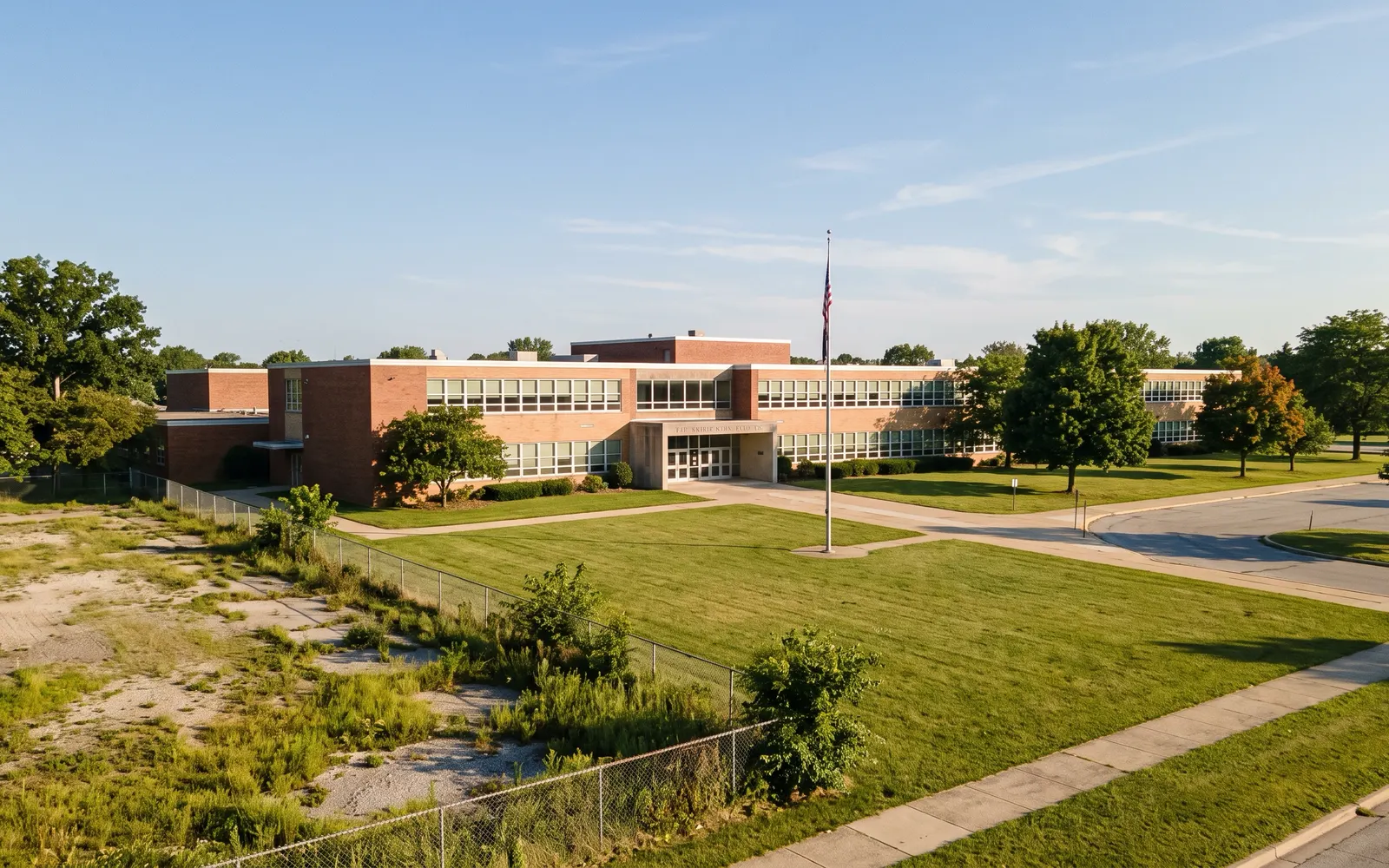
District 54 elementary schools in Schaumburg. Campanelli, Aldrin, Blackwell, Enders-Salk, Dirksen, Hoover Math and Science Academy, Collins, Hale, Dooley and Churchill, per Wikipedia's district list.
District 54 junior highs in Schaumburg. Keller, Addams and Frost.
Palatine District 15. Serves part of Schaumburg; check the address on the district's boundary locator.
District 211 high schools serving village addresses. Schaumburg, James B. Conant, Hoffman Estates, William Fremd and Palatine high schools.
Colleges. Roosevelt University's Schaumburg campus (1400 N. Roosevelt Blvd.) and Harper College in Palatine.
Commuting from Schaumburg: Metra, Pace and the I-90 Express Buses
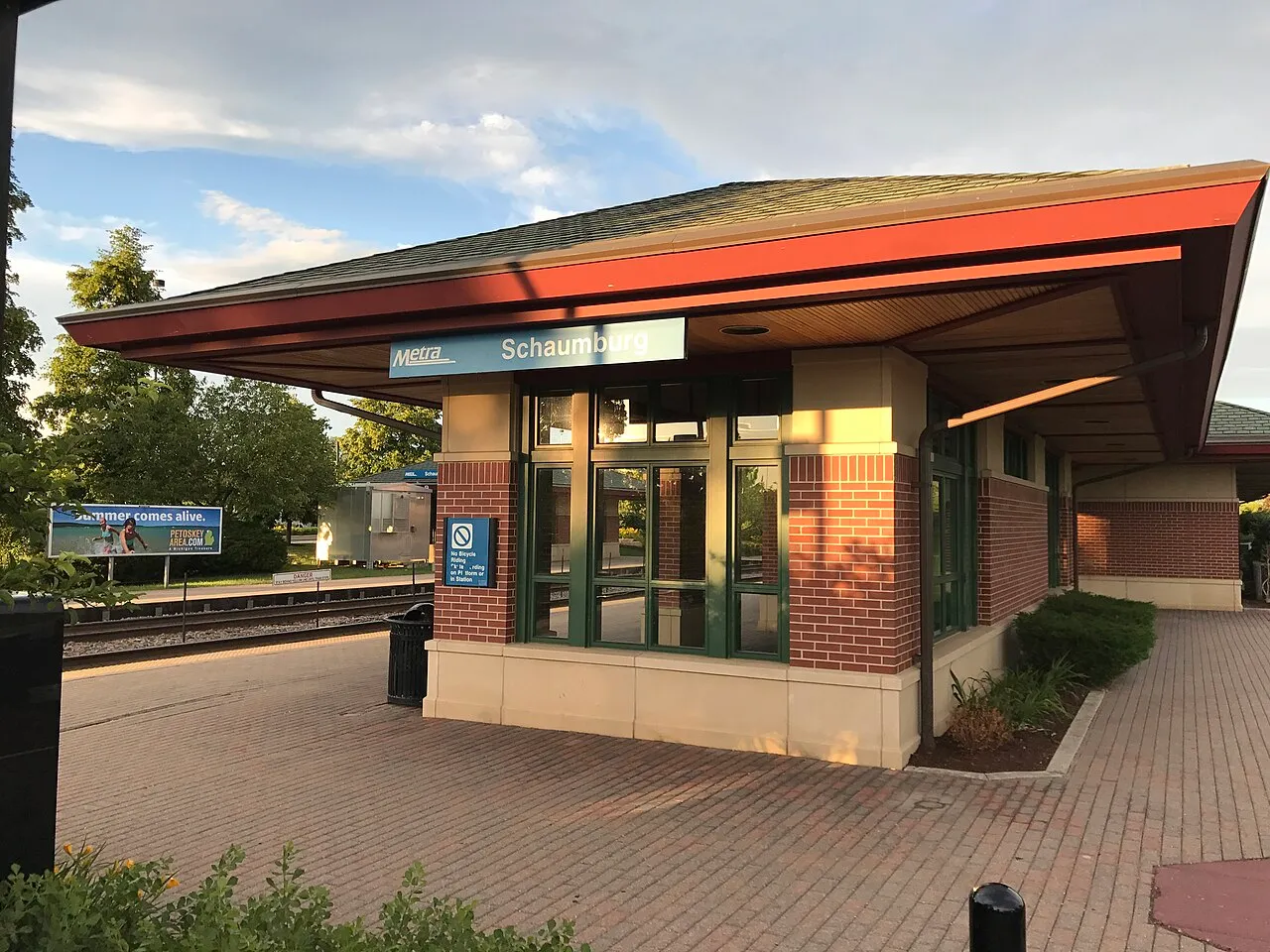
Schaumburg has its own Metra station, at the far southwest corner of the village. The Schaumburg station at 2000 S. Springinsguth Road opened on November 1, 1982, on the Milwaukee District West line, 26.5 miles from Union Station, next to Wintrust Field. Metra's own data puts it in fare zone 4.
According to Metra's schedule data for the week of September 28, 2026, 20 trains leave Schaumburg for Union Station on weekdays and 22 come back. Saturdays have 12 each way and Sundays 9. The two fastest morning trains, at 6:43 and 7:43 a.m., reach Union Station in 44 minutes. Most trains take about 60 minutes. Midday trains leave at 45 minutes past each hour, so a missed train costs an hour.
The station's location is the catch. It is on the southwest edge, so for most of the village the train is a drive, not a walk. The Roselle station at 540 Irving Park Road, on the same line, has 23 weekday trains each way in the same schedule, with the fastest reaching Union Station in 39 minutes. Buyers on the south and east sides often find it just as convenient.
Schaumburg also has something most suburbs don't: express buses on the tollway. Pace's I-90 service runs Routes 600 and 606 between Rosemont and Schaumburg and Route 607 from Randall Road to Schaumburg, ending at the Northwest Transportation Center. The Barrington Road park-n-ride on I-90 has free parking. For a reverse commute or a trip to the Blue Line at Rosemont, it is often faster than the train.
Still, most people drive. CMAP's snapshot shows 68.6% of Schaumburg workers driving alone and 20.1% working from home, with 3.5% on transit and an average commute of 27.8 minutes.
Driving from Schaumburg: I-90, I-290, IL-390 and O'Hare
Schaumburg was built around highways, and it shows. The Jane Addams Tollway (I-90) runs across the north side of the village toward O'Hare and the Kennedy in one direction and Elgin and Rockford in the other. I-290 runs along the east edge, south toward the Eisenhower and north into Route 53. The Wikipedia entry puts O'Hare about 10 miles southeast.
The newer road is IL-390, the Elgin-O'Hare Tollway. It begins at Lake Street in Hanover Park, runs through portions of Schaumburg and meets I-290 at a major interchange in Itasca. Its last section, from IL-83 in Bensenville to the western edge of O'Hare, is under construction and was expected to open in 2026. When it does, the south side of Schaumburg gets a toll road straight into the airport's west side.
For local trips, Golf Road, Higgins Road (Route 72), Schaumburg Road and Irving Park Road carry east-west traffic, and Roselle, Meacham, Plum Grove and Barrington Roads carry north-south traffic. Rush hour around Woodfield is its own problem. If you are choosing between two houses and one sits on the far side of Golf and Meacham from your daily route, drive it at 5 p.m. before you decide.
Is Schaumburg Walkable?
Mostly not, though it bikes better than it walks. Walk Score rates Schaumburg 43 for walking, which it calls car-dependent, and 66 for biking. It publishes no named neighborhoods for Schaumburg, only ZIP codes: 60173, the Woodfield side, scores 43, and 60193, the south side, scores 42.
The layout explains it. CMAP's land use inventory for 2023 shows 31.9% of the village's 12,458 acres in single-family residential use and 16.4% in commercial use, but the commercial land is concentrated around Woodfield, Golf Road and the office corridors, not woven into the neighborhoods.
The bike network makes up for some of it. The Schaumburg Park District's history page counts 85 miles of bikeways, and Busse Woods, just east of the village, has one of the best-known paved trail loops in the region. The Town Square area around the library and the farmers market is the closest thing Schaumburg has to a walkable center.
Woodfield and Shopping in Schaumburg
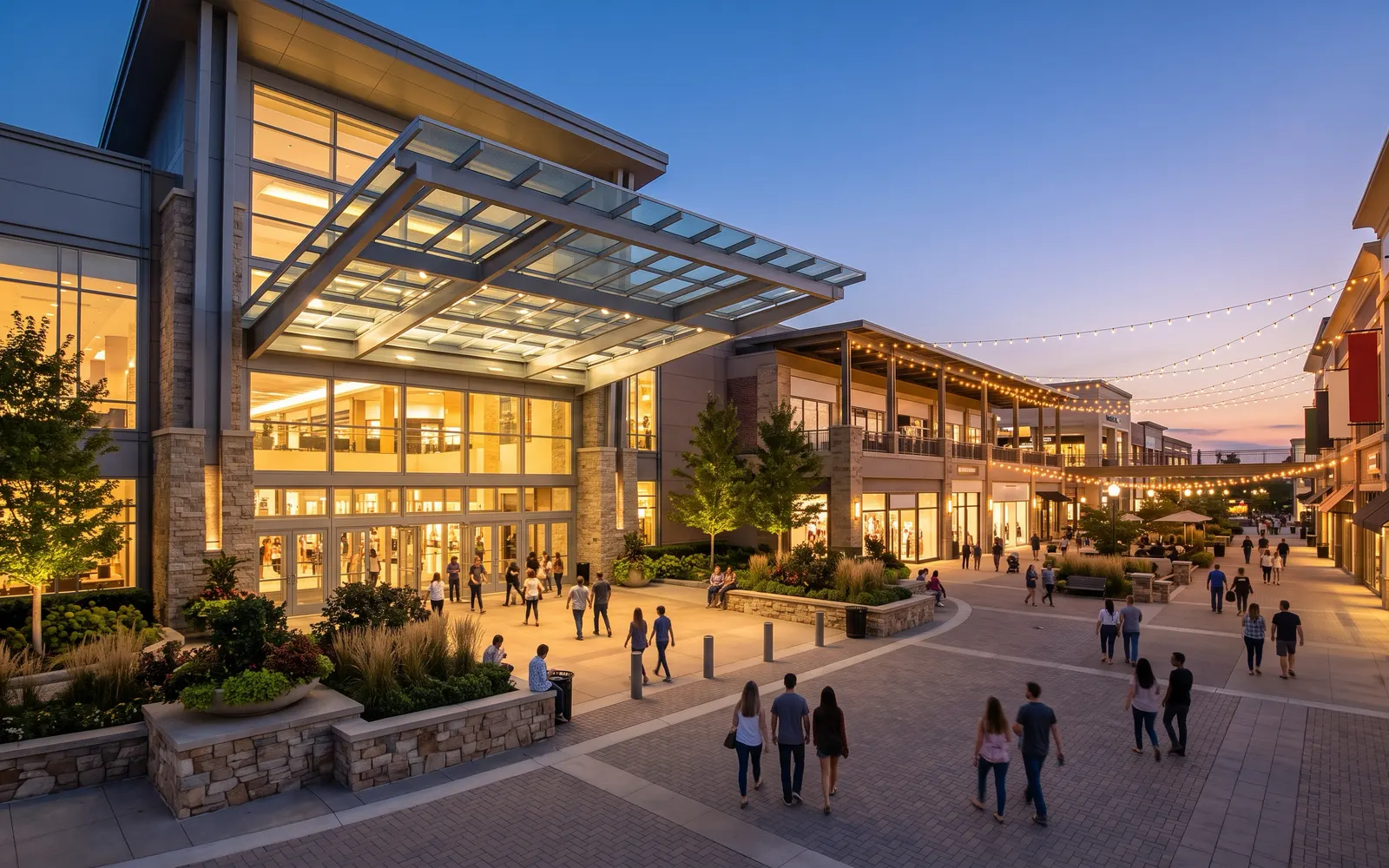
Shopping is the thing Schaumburg is famous for. Woodfield Mall, owned by Simon and CalPERS, has about 2.15 million square feet of leasable space and 234 stores. Its anchors are JCPenney, Macy's, Nordstrom and Primark, which opened in the upper level of the former Sears space on October 12, 2023, with Zellano Home taking the lower level in January 2024. Sears itself closed on November 14, 2021, and Lord & Taylor closed in August 2020, so older guides that still list them are out of date.
Nearby, Streets of Woodfield at 601 N. Martingale Road adds about 589,000 square feet of outdoor retail and entertainment, including an AMC theater, Dave & Buster's, Dick's, an RH Outlet and a Whole Foods. IKEA's Schaumburg store is nearby on McConnor Parkway.
All of that has a real effect on the tax base. CMAP's snapshot, using Illinois Department of Revenue data, shows about $4.69 billion in retail sales in the village in 2025, or $61,076 per resident, against $23,200 for Cook County. Sales tax from the mall area is one reason commercial property carries such a large share of the village's assessed value. For everyday errands, the strip centers along Roselle, Schaumburg and Barrington Roads mean most residents never need to go near Woodfield on a Saturday.
Groceries and Everyday Errands in Schaumburg
Groceries are easy to keep local. Jewel-Osco has two full stores in the village, at 1151 S. Roselle Road near Wise Road and at 2501 Schaumburg Road near Barrington Road, both with pharmacies and both open 6 a.m. to midnight. Whole Foods anchors part of Streets of Woodfield on the north side.
Beyond those, the commercial strips along Roselle, Schaumburg, Barrington and Golf Roads carry the warehouse clubs, big-box stores and independent grocers and bakeries that cover the rest of the week. Because the village is so large, the grocery store you use will depend on which side you live on. That is worth mapping before you buy, the same way you'd map the train.
On Fridays from June into fall, the Schaumburg Farmers Market runs 7 a.m. to 1 p.m. at the Trickster Cultural Center lot, 190 S. Roselle Road, next to Town Square.
Where Schaumburg Eats
Schaumburg has more restaurants than most towns twice its size, because it feeds a weekday office population and a weekend mall crowd on top of its residents. The biggest concentrations are around Woodfield, along Golf Road, at Streets of Woodfield and in the Town Square area on Roselle Road. National chains dominate the Woodfield corridor. The independent places are spread through the strip centers on Roselle, Schaumburg and Barrington Roads.
I don't try to list them here, because in a market this size the list turns over every year. The best advice I give buyers is to eat near each house you are serious about. It's the fastest way to learn which part of Schaumburg you'd actually use day to day, and whether the traffic to get there bothers you.
In summer, two more options open up. The Friday farmers market at the Trickster Cultural Center lot has prepared-food vendors along with produce, and Septemberfest's food row at the municipal center over Labor Day weekend is the biggest single food event of the year in the village.
Parks, Busse Woods and Recreation in Schaumburg
The Schaumburg Park District, founded in 1963, covers about 23 square miles and describes itself as the sixth-largest park district in Illinois. It runs 85 miles of bikeways, the 27-hole Schaumburg Golf Club, a 100,000-square-foot Sport Center, a 6.5-acre dog park and Olympic Park with 12 soccer fields. Spring Valley is the district's nature preserve, 135 acres with 3.5 miles of trails, and it includes Heritage Farm, a working farm site that shows what Schaumburg looked like before the subdivisions. Park district boundaries don't line up exactly with the village, so check which district an address pays into.
The biggest open space is county land just east of the village. Busse Woods, the Ned Brown Forest Preserve, covers about 3,700 acres around the 590-acre Busse Lake, with about 10.4 miles of paved trail including a 7.3-mile loop. On a summer weekend it is one of the busiest trail systems in the Chicago area.
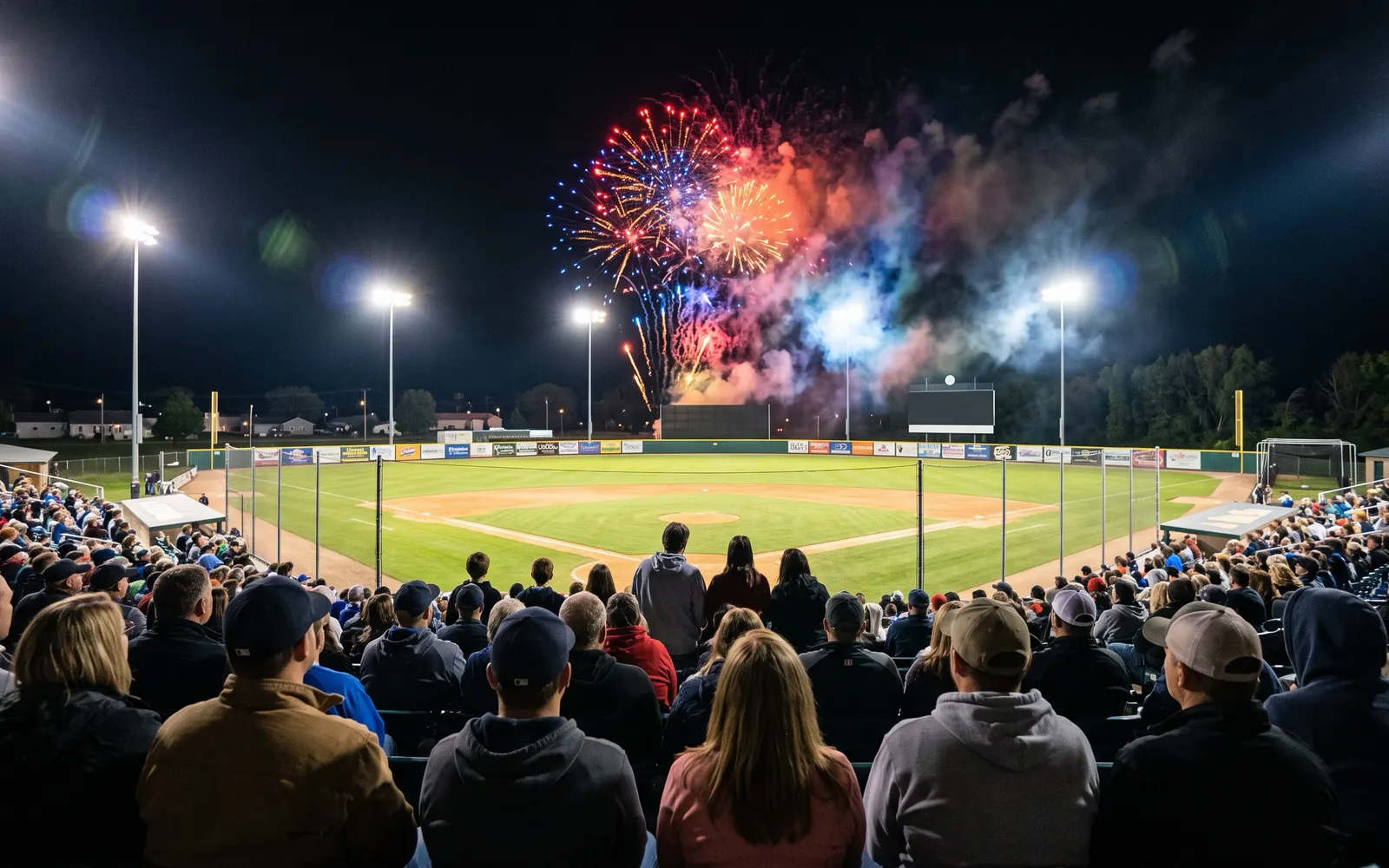
Schaumburg also has its own ballpark. Wintrust Field, at 1999 S. Springinsguth Road next to the Metra station, opened in 1999, is owned by the village and seats 5,665, or about 7,365 with the lawn. It is home to the Schaumburg Boomers, covered in the events section below.
The Schaumburg Township District Library
The Schaumburg Township District Library is one of the most-used public buildings in the northwest suburbs. The central library at 130 S. Roselle Road is a 166,000-square-foot building that opened in 1998, and Wikipedia describes it as the second-largest public library in Illinois. It anchors the Town Square area.
According to the library's hours page, the central building is open seven days, 9 a.m. to 9 p.m. Monday through Thursday, with shorter hours Friday through Sunday. The district also runs branches in Hanover Park (1266 Irving Park Road) and Hoffman Estates (1550 Hassell Road), and all three have 24-hour pickup lockers. The library also runs the "Our Local History" blog, which is where most of the subdivision history in this guide comes from.
Utilities and Village Services in Schaumburg
Schaumburg drinks Lake Michigan water. The village is one of seven members of the Northwest Suburban Municipal Joint Action Water Agency, along with Elk Grove Village, Mount Prospect, Rolling Meadows, Hoffman Estates, Hanover Park and Streamwood, per Journal & Topics' April 2025 report. The agency buys treated lake water from Chicago and pipes it to the member towns.
Trash, recycling and yard waste go through the village's contract with Lakeshore Recycling Systems, the exclusive residential hauler since May 1, 2022. Each home gets two free carts, one for waste and one for recycling, in 35-, 64- or 96-gallon sizes. ComEd delivers electricity and Nicor Gas provides natural gas.
One practical note for sellers: the village confirms the final water bill before it sells the transfer stamp, so schedule the final reading early.
Hospitals Near Schaumburg
Two full-service hospitals sit just outside the village. Endeavor Health Northwest Community Hospital, at 800 W. Central Road in Arlington Heights, has 489 beds and a Level II trauma center. Ascension Saint Alexius) is in Hoffman Estates, just west. Which one is closer depends on which side of Schaumburg you live on, and the rest of the northwest suburbs' hospitals are a short drive on I-90 or I-290.
Boomers Baseball and Nights Out in Schaumburg
Schaumburg has more to do after dark than most suburbs. The Schaumburg Boomers play at Wintrust Field, and Patch reported that the 2026 home schedule had 53 games, 19 fireworks nights and five drone shows, under new owner REV Entertainment, with lawn seats at $12 and free parking. A summer weeknight game is one of the easiest nights out in the northwest suburbs.
Around Woodfield, Streets of Woodfield has the AMC theater, Dave & Buster's and the Legoland Discovery Center, which opened there on July 31, 2008. The convention center and hotel district along I-90 bring concerts and events through the year. Downtown Chicago is one train from the village's station, though the last trains back leave Union Station in the evening, so check the schedule before a late night.
Septemberfest and Schaumburg's Yearly Calendar
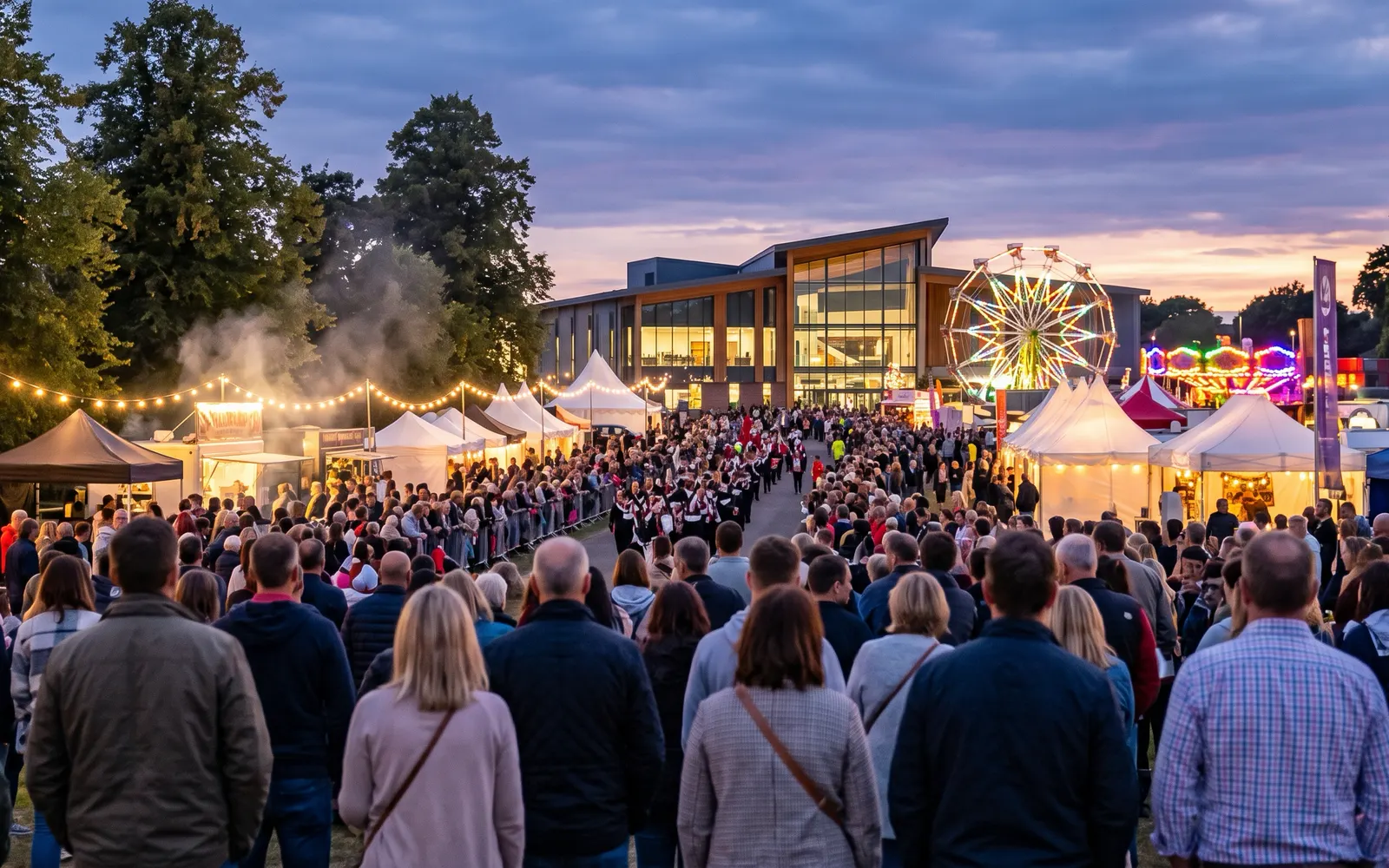
The big one is Septemberfest. In 2026 it ran Saturday, September 5, through Monday, September 7, at the Robert O. Atcher Municipal Center, 101 Schaumburg Court, per Lake.com's event listing. It has concerts, carnival rides, food, fireworks and a Labor Day parade, and it is the weekend the whole village seems to turn out. If you are touring houses over Labor Day, stop by. It tells you more about the town than a listing will.
The rest of the year has a steady rhythm. The farmers market started June 5, 2026, and runs Fridays into the fall at 190 S. Roselle Road. The Boomers season fills summer nights at Wintrust Field. The park district and library run programs through fall and winter, and the Town Square area hosts the village's holiday events.
What's Being Built in Schaumburg
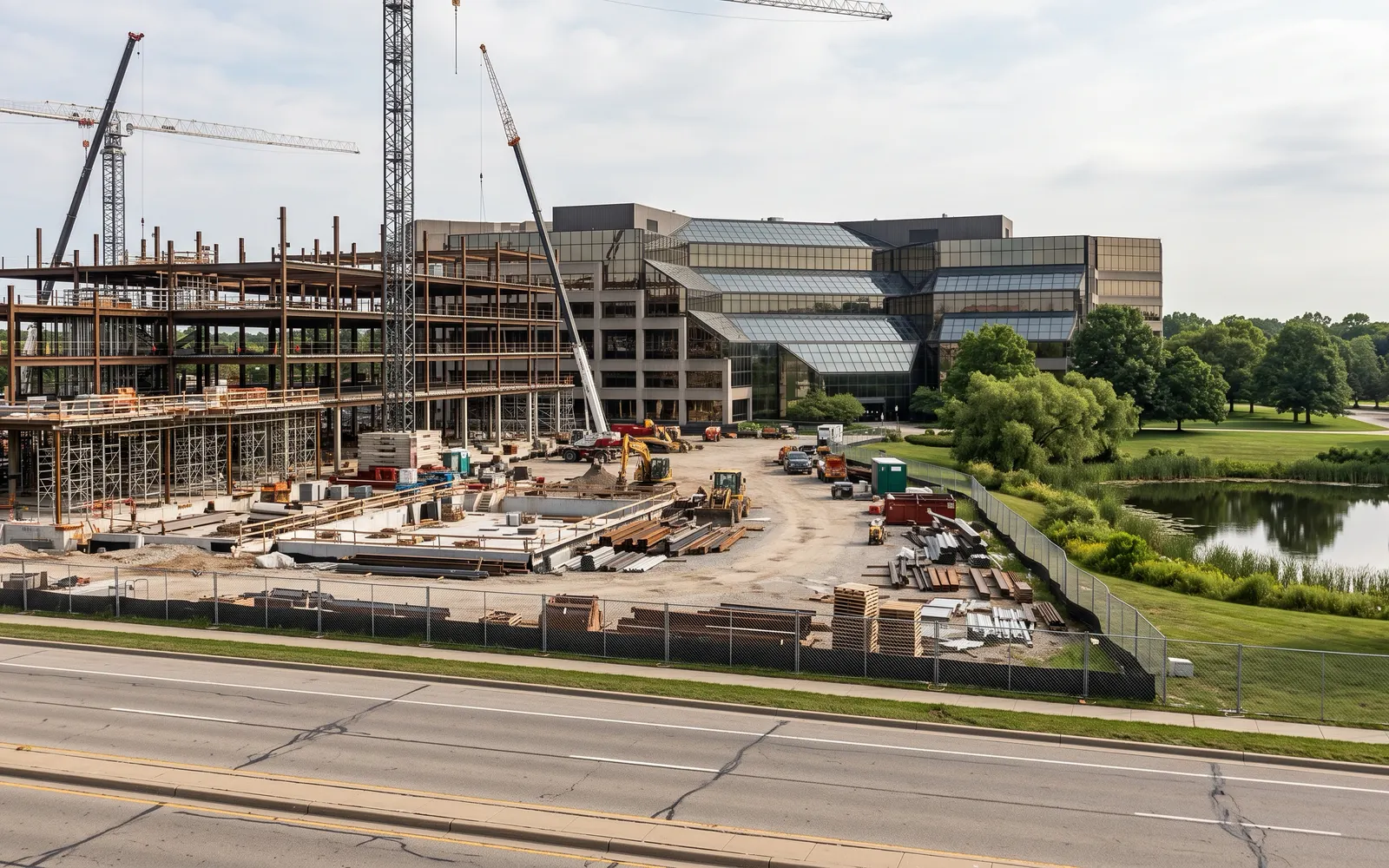
The biggest project in Schaumburg is Veridian, the redevelopment of the former Motorola campus. The retail core, the District at Veridian, is a 30-acre piece that broke ground in September 2025. That report described a first phase with 321 apartments opening in 2027, about 100,000 square feet of retail and a 26,000-square-foot Fresh Market, growing to more than 200,000 square feet of retail and more than 600 apartments at full build-out. Topgolf, Zurich North America, Motorola Solutions and D.R. Horton rowhomes are already on the site.
The newest piece is a proposal. In July 2026 the developer asked to save the six-story, roughly 360,200-square-foot Motorola atrium building and convert it, with a new sister building, into about 300 apartments, Hoodline reported on July 23, 2026. Interior demolition could start in fall or winter 2026. It was a proposal at that point, not an approval.
For buyers, the more interesting project is for sale. In January 2026 the village board approved Nitti Group's plan for the 33-acre Loeber Farm site off Meacham Road near the Rolling Meadows border, The Real Deal reported: 122 for-sale homes, including 43 single-family houses, 37 rowhouses in eight buildings and 42 townhouses in 16 buildings. It replaced an earlier plan for 357 rental units that was pulled after opposition. With only 2.9% of the village's homes built since 2010, Veridian's rowhomes and Loeber Farm are the main new-construction options in Schaumburg.
The village is also rebuilding its own campus. According to Chicago Construction News in February 2026, the village's five-year capital plan totals $453 million, including $22 million to finish the new village hall, $1.7 million to design a new police station and $7.4 million for the 90 North District, including a pedestrian bridge over Meacham Road.
I don't label any town or neighborhood as safe or unsafe.
Flood Risk in Schaumburg
Flooding is a lower-risk issue in Schaumburg than in many towns around it, but it is still a house-by-house question. Redfin, using First Street's model, rates Schaumburg's overall flood risk as minor, with 141 properties, about 2% of the total, likely to be severely affected by flooding over the next 30 years. The risk concentrates near creeks, retention ponds and low ground, and Loeber Farm's neighbors raised flooding as a concern during that project's review.
Three checks before you write an offer. Look the address up on the FEMA flood map, because a mapped flood zone can mean required flood insurance. Ask the seller directly whether the house has ever taken water; the Illinois disclosure form asks, but a direct question gets a better answer. And have the inspector look at the sump pump, the backup and the grading. If the ranch you are looking at sits on a slab or crawl space rather than a full basement, the question is less "did the basement flood" and more "where does the water go."
Frequently Asked Questions
Is Schaumburg, IL in Cook County or DuPage County?+
Cook County. The village boundary touches DuPage County along its south edge near the Schaumburg Regional Airport, but Census Bureau estimates for 2025 put all 77,249 residents in Cook County and none in DuPage, so homes in Schaumburg carry Cook County tax bills.
How much does a house cost in Schaumburg, IL?+
Redfin reported a median sale price of $372,753 for the three months ending August 2026, up 9.6% from a year earlier. Zillow's home value index was $360,740 for August 2026. Detached houses, townhomes and condos trade as separate markets.
What are property taxes in Schaumburg, IL?+
Ownwell (April 2026) puts the median effective rate at 2.49% with a median bill of $6,074. Cook County reassesses every three years; the north suburbs were revalued in 2025, and bills usually rise after a sale once the assessor catches up.
What school district is Schaumburg, IL in?+
Most of the village is in District 54 for kindergarten through eighth grade and District 211 for high school, which runs Schaumburg, Conant, Hoffman Estates, Fremd and Palatine high schools. Some north-side addresses fall in Palatine District 15. Confirm each address with the district.
Does Schaumburg have a Metra station?+
Yes. The Schaumburg station at 2000 S. Springinsguth Road is on the Milwaukee District West line. In fall 2026 it has 20 inbound weekday trains, with the fastest reaching Union Station in 44 minutes and most taking about 60.
How far is Schaumburg from O'Hare?+
About 10 miles. I-90 runs across the north side of the village toward the airport, and IL-390's final section to O'Hare's west side was expected to open in 2026.
Is Schaumburg walkable?+
Not village-wide. Walk Score rates it 43 (car-dependent) and 66 for biking. The park district counts 85 miles of bikeways, and the Town Square area on Roselle Road is the most walkable part of the village.
What neighborhoods are in Schaumburg, IL?+
Commonly named subdivisions include Weathersfield, Sheffield Park, Sheffield Towne, Sheffield Manor, Sheffield Estates, Sheffield Ridge, Sunset Hills, Pleasant Acres, Nantucket Cove West, Pheasant Walk, Lexington Fields Estates and Timbercrest.
Is new construction available in Schaumburg?+
Very little is finished. The village approved 122 for-sale homes at Loeber Farm in January 2026, and Veridian on the former Motorola campus includes D.R. Horton rowhomes and apartments due from 2027. Only 2.9% of Schaumburg's homes were built in 2010 or later. How builder contracts, timelines and allowances work is on my new construction homes in Illinois page.
Eshu Chikoti has extensive access to off-market listings throughout Schaumburg and the rest of Cook County — homes that never make it to the public listing sites. That matters right now: in a seller's market like this one, well-priced homes routinely go under contract within days, and buyers relying only on public listings are competing for whatever is left over. Working with someone plugged into off-market inventory means seeing homes before the crowd does.
Eshu Chikoti · 847-691-4282 ·
Get new Schaumburg listings by email
When a home comes on the market in Schaumburg, I'll email it to you.
Just your email. Unsubscribe any time by replying.
Thinking About Schaumburg?
Whether you're buying, selling, or just curious what's on the market, I can walk you through Schaumburg street by street.