Riverdale, IL
Riverdale, IL is a 3.7-square-mile Cook County village on the Little Calumet River at Chicago's southern border, with two Metra Electric stations, forest preserve land along the river and a summer 2026 median sale price near $150,000.
Living in Riverdale, IL means a median sale price of about $150,000 this summer, a 33- to 37-minute Metra Electric ride to Millennium Station, and property tax near 5.15% of value. Most homes are 1940s to 1960s brick houses and small apartment buildings. It is a separate village from Chicago's Riverdale neighborhood. Here it is, pocket by pocket.
Written by Eshu Chikoti · 847-691-4282 ·
How Riverdale, IL Got Here: River Crossing, Industry and Postwar Growth
Riverdale grew up at a river crossing. The village's own history timeline says the first settlers arrived in 1835, and that Riverdale and neighboring Dolton were practically one community until each incorporated in 1892. By the 1850s it was a farming community, followed by distilleries, lumber yards, ice houses, cattle pens, barrel makers and sugar refineries.
Industry defined the next century. Wikipedia's article on the village describes a beet sugar factory that Charles Pope opened in 1905 on the south bank of the Little Calumet River, on the site of an 1871 distillery, with access to the Illinois Central tracks. The village timeline says Acme Steel became a major force in the local economy in 1918. The railroads became a big part of the village's growth into the mid-1900s, and the village says the CSX and Indiana Harbor Belt rail yards are two of its largest today.
Riverdale's biggest growth came after World War II. The village timeline dates its expansion to the postwar years, and the census counts in Wikipedia's table show the population going from 5,840 in 1950 to 12,008 in 1960 and 15,806 in 1970. That burst is why so much of the housing dates from the late 1940s through the 1960s.
The steel era has wound down. The former Acme works at 13500 Perry Avenue passed to Cleveland-Cliffs in 2020, and the company said in May 2025 that it would indefinitely idle its Riverdale plant around June 30, 2025, citing insufficient demand and pricing, per an Associated Press report in U.S. News.
Riverdale at a Glance
First, the name. There are two Riverdales on the south edge of Chicago. This guide is about the Village of Riverdale, a separate Cook County municipality with its own mayor, police, taxes and schools, ZIP code 60827. Chicago also has a community area called Riverdale, across the city line to the northeast, which is part of the City of Chicago. Wikipedia's village article notes the two share a name and a border. When you read public data or a listing, check which one it means.
The village sits along Chicago's southern border in southeast Cook County, between Harvey, Dolton and Blue Island, per the village's About page, which gives its area as 3.7 square miles. It is close to both I-57 and I-94. The Little Calumet River runs through it, and Wikipedia lists Calumet Park and Chicago to the north, Blue Island to the west, Dolton to the east and Dixmoor and Harvey to the south.
The village is split between two townships. The Census Bureau's Vintage 2025 estimates put all 10,280 residents in Cook County as of July 1, 2025: 8,908 in Thornton Township and 1,372 in Calumet Township. The village's local directory describes the Calumet Township part as north of 138th Street.
Riverdale has a large rental share and a lot of empty units. The 2020-2024 Census ACS counts 5,054 housing units, of which 3,760 were occupied; 51.5% of occupied homes were owned and 48.5% rented. CMAP's June 2026 snapshot shows how much of the village is not housing: of 2,400.2 acres in 2023, transportation and other uses took 35.5%, open space 21.7%, single-family homes 14.6% and industrial 14.0%.
The 5.15% median effective rate is more than double the county's 2.14%, so the tax bill can rival the mortgage payment. Walk Score counts about 5 restaurants and bars in the village. The sale inspection adds time and, if repairs are left to the buyer, a 3% escrow. The steel plant is idle, and Thornton Township's 2026 values have not been mailed yet.
Riverdale Neighborhoods, Pocket by Pocket
Riverdale has no official neighborhood map, and it is small enough that most people describe a location by street and station. What shapes the village are the river, the rail lines and the two main east-west streets, 138th and 144th.
Read it from north to south. North of 138th Street is the Calumet Township sliver, next to Calumet Park and the Chicago line. Between 138th and 144th Streets is the core of the village, with the Riverdale Metra station at 137th Street and Illinois Street, Riverdale Park, and the police and fire station on 138th. Along 144th Street are Village Hall, the public library and the Ivanhoe station at 144th and Tracy Avenue. The south and west edges run toward Dixmoor and Harvey, with the Kickapoo Woods preserve on Halsted Street.
The first thing I check on a house here is which township it is in, because Thornton and Calumet are on different assessment schedules. The second is where it sits relative to the river and the rail yards. Boundaries marked single-source should be checked against the MLS, and if you want a specific address placed on this map, that is a conversation I am happy to have here.
North of 138th Street (Calumet Township). The part of the village the village directory places in Calumet Township, next to Calumet Park and the Chicago line. Check the parcel record for the township.
Riverdale station area (137th Street). The Metra station at 137th Street and Illinois Street, per Wikipedia), with Riverdale Park at 138th Street and Wentworth Avenue nearby.
144th Street corridor. Village Hall at 157 W. 144th Street, the library at 208 W. 144th Street and the Ivanhoe station at 144th and Tracy, per the village's local directory.
Ivanhoe (single-source). Redfin groups some village sales under "Ivanhoe," the name of the Metra station and of Ivanhoe Drive, where the park district's office is. Treat it as shorthand.
Pacesetter Gardens. A National Register historic district of twelve townhouse buildings on the 13600 and 13700 blocks of South Lowe Avenue, per Wikipedia.
Halsted Street and Kickapoo Woods. The west side along Halsted, with the Kickapoo Woods forest preserve south of 144th Street and Whistler Woods on Forest View Avenue.
What Riverdale Homes Look Like, by Type and Era
Riverdale is a 1950s village. CMAP's snapshot, built on the 2020-2024 ACS, puts the median year built at 1957, against 1961 for Cook County. Of 5,054 units, 59.4% were built from 1940 to 1969, 14.6% before 1940 and 21.0% from 1970 to 1989. Only 2.2% date from 2010 or later.
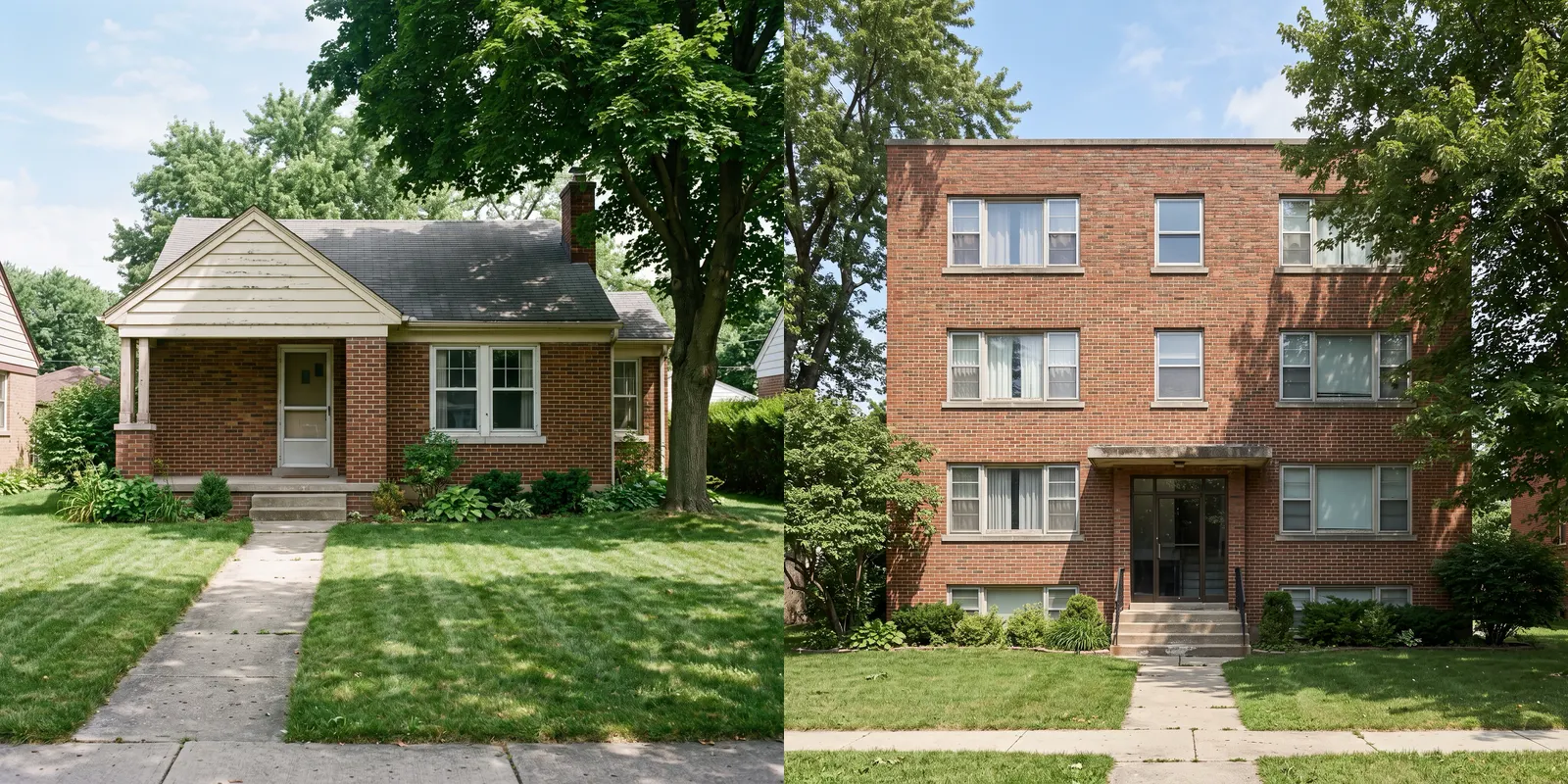
About half the homes are houses. Detached single-family homes are 2,615 units, or 51.7%, above the county's 39.6%. Townhomes add 8.2%, a higher share than the county. The rest are mostly small apartment buildings: 5- to 9-unit buildings are 14.6% and 10- to 19-unit buildings 9.1%, while buildings of 20 or more units are 4.2%.
Homes are on the small side. CMAP counts 40.7% of units with two bedrooms and 31.3% with three, with only 11.5% at four or more; the median home has 5.0 rooms. The Census ACS puts the median home value at $113,800 and median gross rent at $1,231 for 2020-2024.
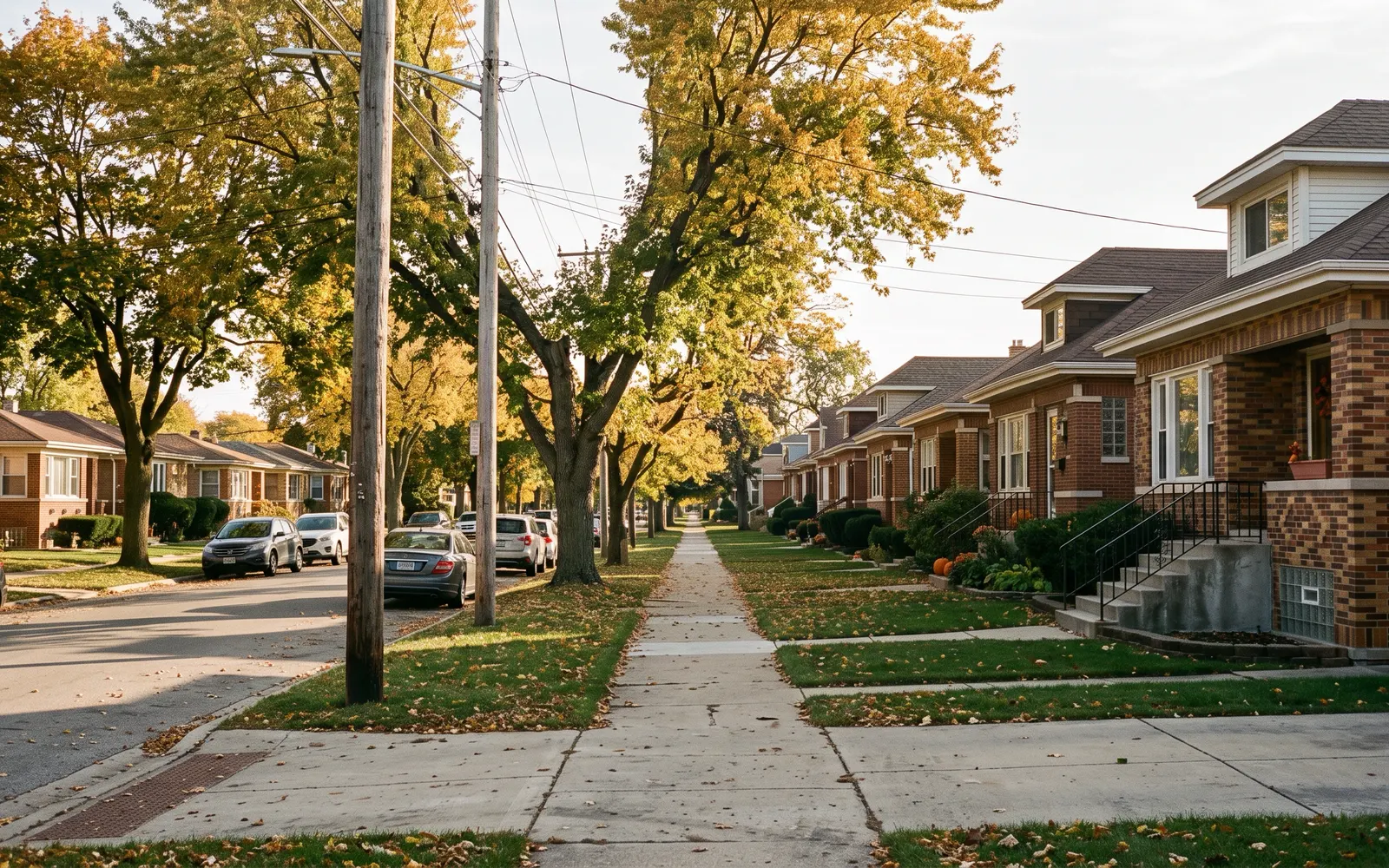
On the street that means postwar brick bungalows, ranches and Cape Cods on regular blocks, 1960s and 1970s walk-up apartment buildings, and a few older frame houses. One townhouse group is on the National Register: Pacesetter Gardens, twelve buildings on South Lowe Avenue built in 1960 by developer and architect Harry J. Quinn and listed on November 16, 2005. Houses from the 1950s bring their own inspection list: original electrical panels, galvanized plumbing, clay or cast-iron sewer lines, basement water and lead paint in anything built before 1978. My home inspection checklist covers what to ask for, and Riverdale's own sale inspection (see the tax section) will flag code issues too.
The Riverdale Housing Market in 2026
Riverdale is one of the lower-priced markets in Cook County, and it is thin. In the three months ending August 2026, Redfin reported a median sale price of $149,901, down 18.0% from a year earlier. Homes sold in about 71 days, up from 66, and Redfin counts 22 homes sold in August, down from 25. The Redfin page lists Riverdale, IL 60827 addresses, so it is the village, not the Chicago neighborhood.
The negotiation numbers favor buyers more than in most suburbs. Homes sold for 96.9% of list price on average in August 2026, up 0.1 point. Redfin gives Riverdale a Compete Score of 44 out of 100, somewhat competitive. Its summary is that the average home sells for about 4% below list and goes pending in about 71 days, while hot homes sell for about 2% above list and go pending in about 47 days.
Zillow's home value index points the other way. It put the typical Riverdale home at $121,430 in August 2026, up 6.1% from $114,442 in August 2025 but still 2.3% below $124,258 in August 2024. With only about 22 sales a month, Redfin's median swings with whichever houses happened to close. A summer with more small or distressed sales pulls it down even while the index of all homes rises. I'd trust the direction of the Zillow index over a single three-month median here.
For context, Zillow's August 2026 index put Robbins at $120,033, Harvey at $109,303, Dolton at $158,803, Markham at $157,367, Calumet City at $158,534 and South Holland at $232,988. Blue Island, covered in my Blue Island guide, was $210,344. If you are working out a budget, my guide to how much house you can afford walks through the numbers.
The pattern I see in the data is that condition drives price more than location inside the village. Renovated houses and houses needing major work trade in different worlds, and the village's sale inspection (below) affects both. I price them separately.
Riverdale Property Taxes, the 2026 Reassessment and the Sale Inspection
Property tax is the line that surprises buyers in Riverdale. Ownwell's Cook County data for Riverdale, updated April 13, 2026, puts the median effective rate at 5.15% and the median annual bill at $4,250, against a Cook County median of 2.14%. The rate is high because home values are low relative to the local levies. Within ZIP 60827, Ownwell's 25th and 75th percentile rates are 4.31% and 7.70%, so the range is wide.
2026 is a reassessment year for both of Riverdale's townships. Cook County revalues one-third of the county each year, and the south and west suburbs are this year's group; the Assessor's Bremen Township release says they were last reassessed in 2023 and that "property values certified in 2026 will affect second-installment tax bills issued in 2027." The assessment calendar, checked September 28, 2026, shows Calumet Township notices mailed August 20 with appeals open until October 2, 2026, and Thornton Township notices not yet mailed. On the three-year cycle, by my arithmetic the next reassessment for both is 2029.
The bills you pay now still carry the 2023 values. For tax year 2025, the first installment was due April 1, 2026, and the second is due October 1, 2026, per the Cook County Treasurer. Cook County said on August 18, 2026, that those bills would be mailed September 1, about two months late because of the county's tax system overhaul.
Here is what the rate looks like on a real purchase. At this summer's $149,901 median, 5.15% works out to about $7,720 a year, or about $643 a month. That can be close to the principal and interest on the loan, so run both. The Cook County homeowner exemption takes $10,000 off the equalized assessed value of an owner-occupied home; the savings equal that $10,000 times your local tax rate, which matters more where rates are this high.
Riverdale's sale inspection is the closing item to plan around. The village's Certificate of Compliance application, revised in 2025, says village code 15.54 requires an interior and exterior inspection for every change in ownership, applied for at least two weeks before closing. The fee is $220 for a single-family or two-unit building and $55 for each additional unit, and includes one re-inspection. The transfer stamp is issued once violations are fixed and the seller provides a copy of the deed, a paid final bill and proof of a termite inspection. If the buyer takes on the repairs, the village can issue a conditional certificate with a 60-day affidavit and an escrow of 3% of the purchase price. The county adds 25 cents per $500 of value, per the Illinois Department of Revenue, or about $75 at the median. My Illinois closing costs guide covers the rest. This is general information, not tax advice.
Riverdale Schools: Districts 133, 148 and Thornton District 205
Riverdale is served by more than one elementary district. The village's local directory lists School District 133 at 150 W. 137th Street and School District 148, which covers elementary and junior high grades, at 114 W. 144th Street, both in the village. It also lists an Early Childhood Center at 560 W. 144th Street, Park Elementary at 14200 Wentworth Avenue, Riverdale Elementary at 325 W. 142nd Street, Washington School at 13900 School Street and Roosevelt Elementary and Junior High at 111 W. 146th Street in Dolton.
High school is in Thornton Township High School District 205. District 205's site says the district was formed in 1892 and runs three schools: Thornton Township High School in Harvey (1898), Thornridge High School in Dolton (1960) and Thornwood High School in South Holland (1972), and it lists Riverdale among the communities it serves. The village directory lists Thornton High School at 15001 S. Broadway in Harvey and Thornridge at 15000 Cottage Grove Avenue in Dolton.
Which school a house feeds depends on the street, and with two elementary districts in a small village, the line matters. Check every address with the district before you make an offer. South Suburban College (District 510) in South Holland is the community college.
I don't rank schools on this page. The Illinois Report Card has each school's own data.
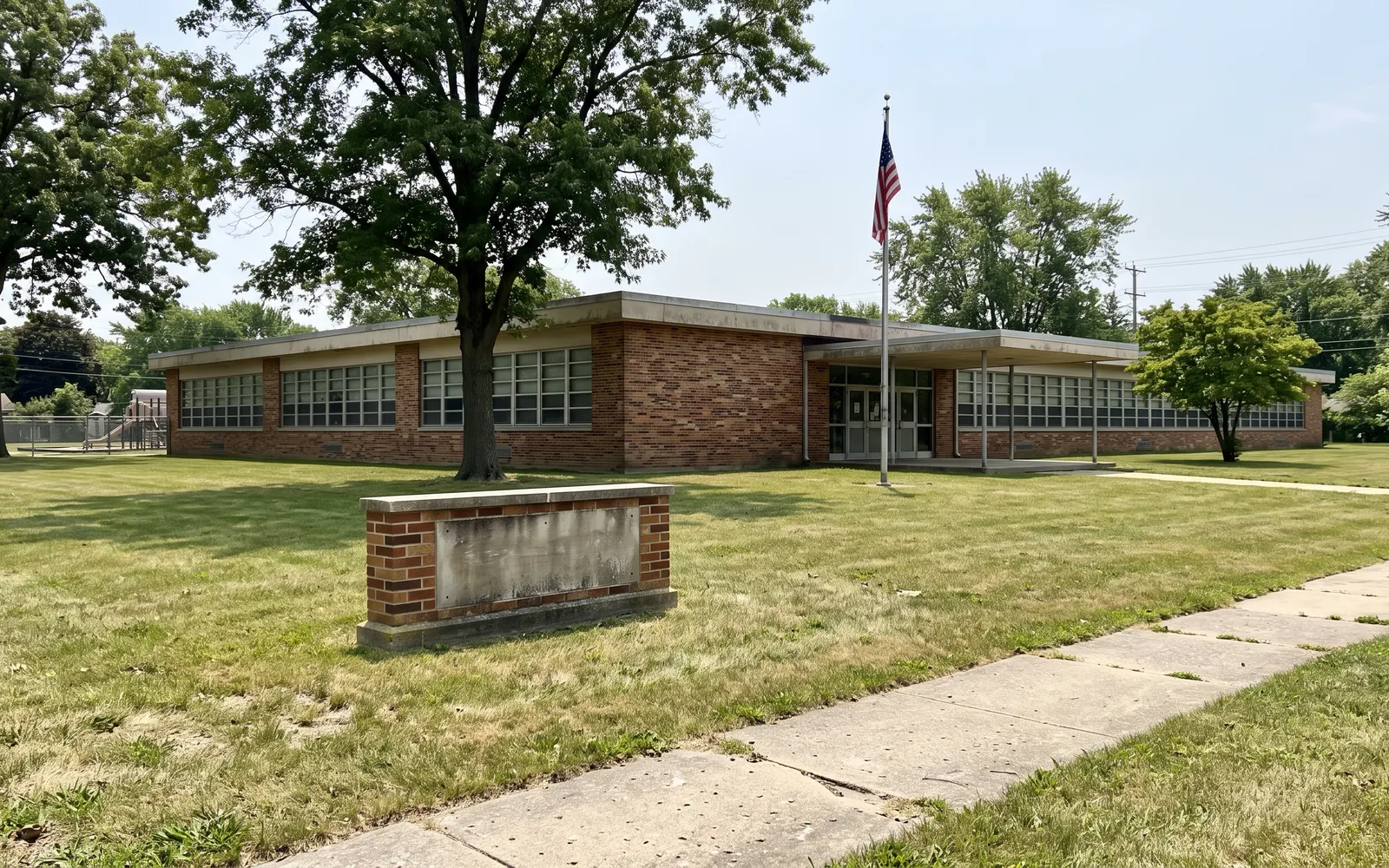
School District 133. Office at 150 W. 137th Street, per the village directory.
School District 148. Office at 114 W. 144th Street; the directory lists Park Elementary, Riverdale Elementary, Washington School, the Early Childhood Center and Roosevelt Elementary and Junior High in Dolton among the area schools.
District 205 high schools. Thornton Township High School (Harvey) and Thornridge High School (Dolton), per the village directory; Thornwood in South Holland is the district's third school.
Community college. South Suburban College, District 510, in South Holland.
Commuting from Riverdale: Two Metra Electric Stations
Riverdale has two stations on the Metra Electric main line. Wikipedia and the village directory place the Riverdale station at 137th Street and Illinois Street and the Ivanhoe station at 144th Street and Tracy Avenue, both in the village. Both are in fare zone 2. The Riverdale station article) puts it 17.3 miles from Millennium Station, with parking mostly along Illinois Street.
The schedule is frequent for a suburb. According to Metra's schedule data for the week of September 28, 2026, 27 weekday trains leave Riverdale for Millennium Station and 26 come back. Most midday trains take 35 minutes, the fastest morning trains take 33, and a few evening trains take up to 50. Saturdays have 21 trains each way and Sundays 12. Ivanhoe has the same trains, typically 35 to 37 minutes.
The census shows transit matters more here than in most suburbs. CMAP's snapshot has 14.7% of Riverdale workers taking transit, above the county's 11.8%, with 57.5% driving alone and 11.6% working from home, and an average commute of 33.9 minutes.
Pace buses connect the village to its neighbors. The Riverdale station article lists Pace route 348, Harvey, Riverdale and Blue Island, on weekdays, and the village posted detours for routes 348 and 359 in August 2026. Check Pace for current routes.
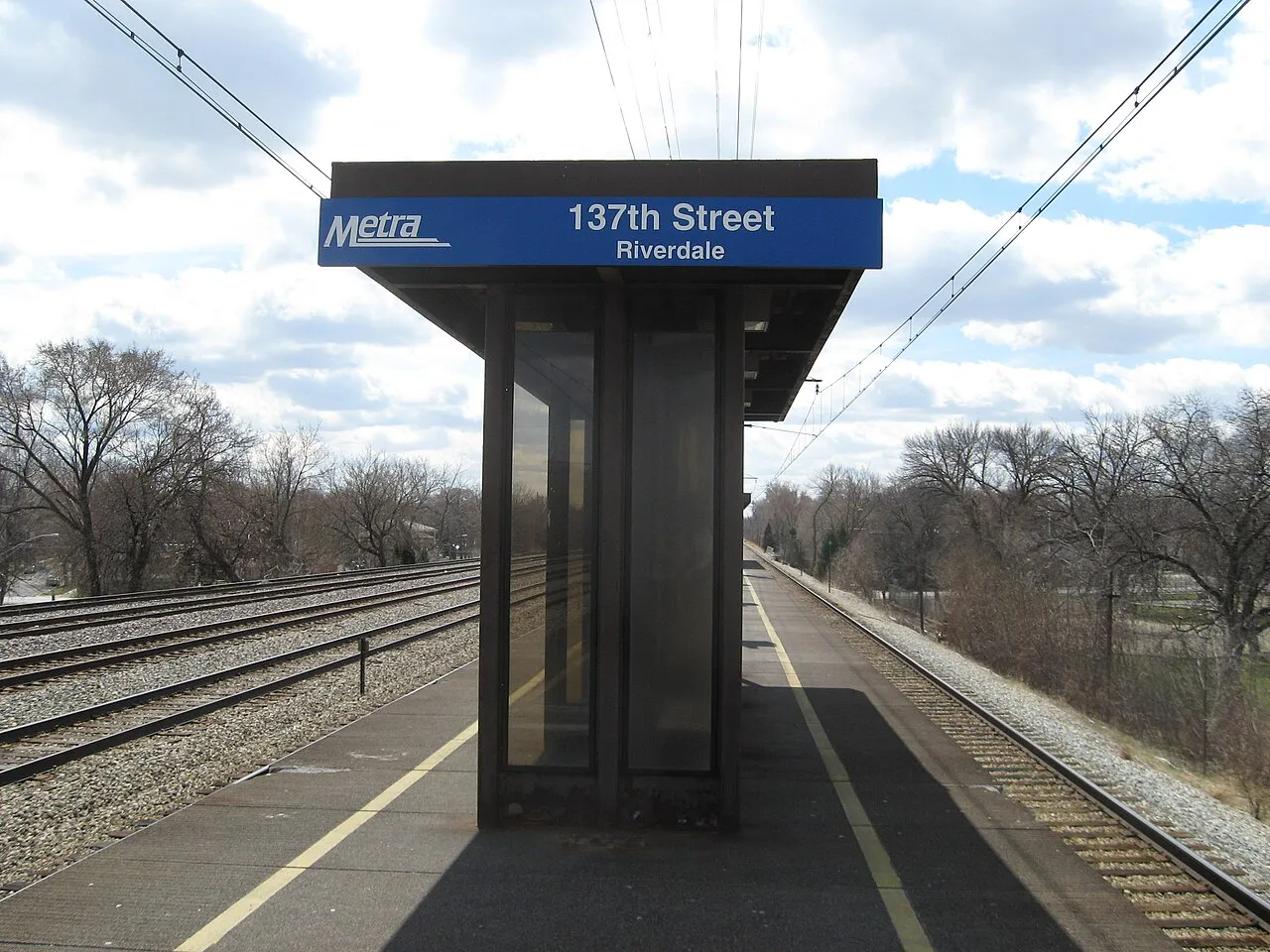
Riverdale station (137th and Illinois). 27 inbound weekday trains, most 33 to 35 minutes to Millennium; 21 on Saturdays, 12 on Sundays.
Ivanhoe station (144th and Tracy). Same trains, typically 35 to 37 minutes to Millennium.
Pace buses. Route 348 (Harvey, Riverdale, Blue Island) on weekdays and route 359, per the village and Wikipedia.
Driving from Riverdale: I-94, I-57 and the Main Streets
The village says Riverdale is close to both I-57 and I-94. I-94, the Bishop Ford Freeway, runs just east of the village toward downtown Chicago and Indiana, and I-57 runs to the west toward the Dan Ryan and south toward the south suburbs.
Inside the village, 138th Street and 144th Street carry most east-west traffic, and Halsted Street, Indiana Avenue and Wentworth Avenue carry north-south traffic. The river, the rail yards and the forest preserve land mean fewer through streets than a normal grid, so some trips take a longer way around.
Plan around the rail crossings. Riverdale has major freight yards, and the village posted Pace detours in August 2026 during Metra crossing repairs in neighboring Blue Island. If you commute by car, drive the route at rush hour before you buy.
Is Riverdale Walkable?
For errands, not really. Walk Score's Riverdale page did not show a village-wide score when I checked in September 2026, but it counts about 5 restaurants, bars and coffee shops in the village and says the average resident can walk to 0.3 of them in five minutes. Plan on driving for groceries and dining.
For the train and the outdoors, it is better. Most of the village is within a mile of one of its two Metra stations, and the Cal-Sag Trail and Kickapoo Woods trail are on the west side. The sidewalks are on a regular grid in the residential blocks between 138th and 144th Streets.
If walking to things matters to you, look at each address on a map for the distance to the station and the nearest store. It varies more block to block here than the village's small size suggests.
Shopping and Everyday Errands in Riverdale
Riverdale has very little retail of its own. CMAP's snapshot, using Illinois Department of Revenue data, shows about $68 million in retail sales in 2025, or $6,610 per resident, against $23,200 for Cook County. Commercial land was only 53.3 acres, 2.2% of the village, in 2023.
Most shopping is next door. Groceries, big-box stores and restaurants are a short drive in Blue Island, Calumet Park, Harvey, Dolton and Chicago. I could not confirm a full-size supermarket inside the village for 2026, so check the map from any address you are considering.
The tax base shows the effect. Of about $123 million in equalized assessed value in 2024, about $76 million was residential, $25 million industrial, $12 million commercial and $10 million railroad. With the steel plant idled since 2025, the industrial share is worth watching, because homeowners pick up more of the levy when other property values fall.
Where Riverdale Eats
Riverdale is a drive-to-dinner village. Walk Score counts about 5 restaurants, bars and coffee shops inside it, most along the main streets. For more choice, Uptown Blue Island on Western Avenue is a few minutes west, and Walk Score counts about 80 places there.
I don't try to list every restaurant, because the list changes every year, and in a village this small it can change with one opening or closing. The best advice I give buyers is to eat near each house you are serious about. It is the fastest way to learn which neighboring town you would use day to day.
Kickapoo Woods, the Cal-Sag Trail and Parks in Riverdale
Open space is Riverdale's strongest amenity. CMAP counts 520.4 acres of open space, 21.7% of the village's land, in 2023, a larger share than most suburbs, much of it forest preserve along the river.
Kickapoo Woods, entered from Halsted Street south of 144th Street, is the main preserve. The Forest Preserves list a one-mile paved trail loop, a carry-in canoe landing on the Little Calumet River, a model airplane flying field, a picnic shelter for 50 people and wooded areas, wet prairie and savanna, open sunrise to sunset. Whistler Woods on Forest View Avenue east of Halsted is an access point for the Cal-Sag Trail, which the Forest Preserves list for Riverdale; they note the eastern portion of the trail there is not complete.
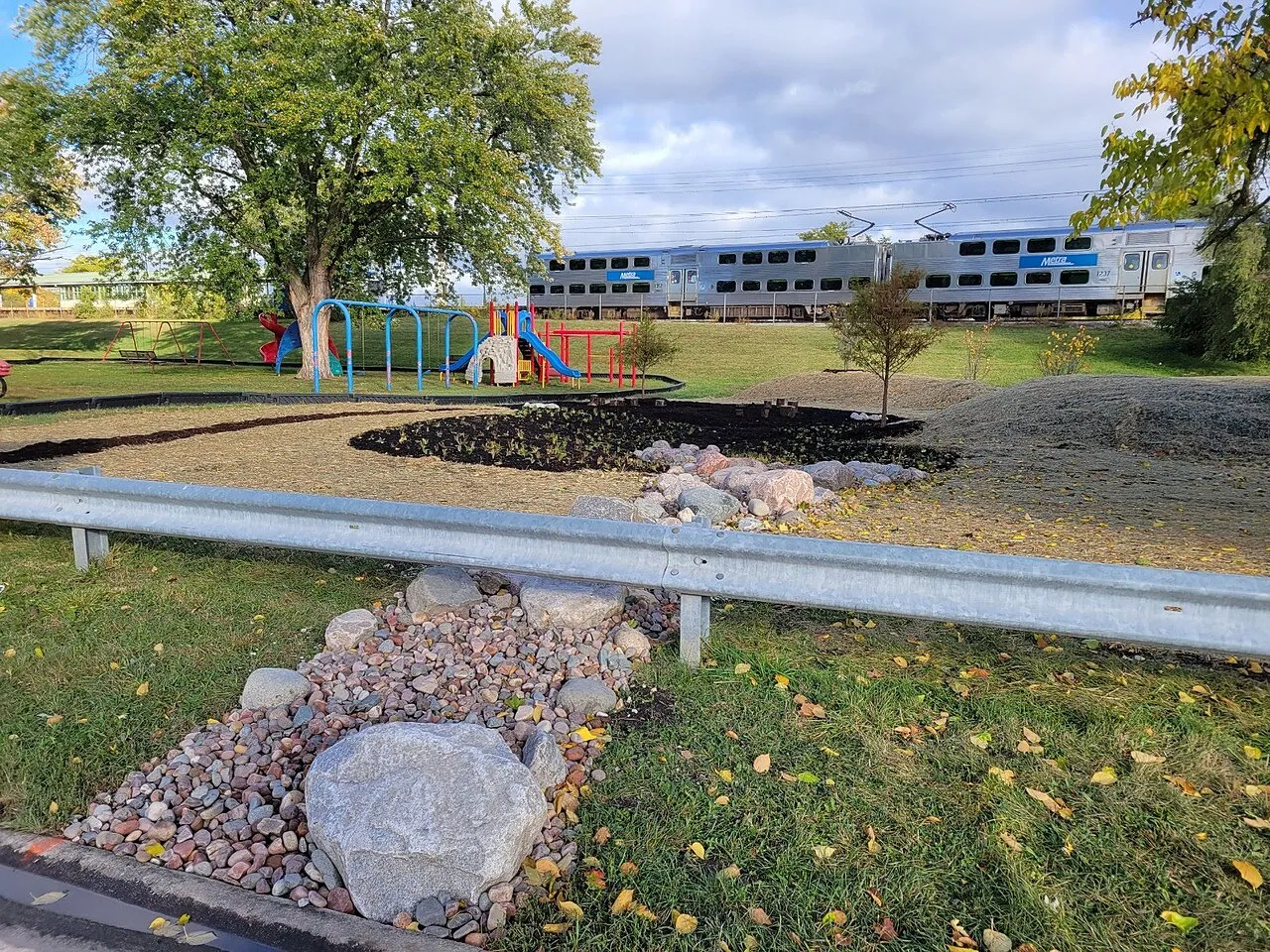
The Riverdale Park District says it runs eight parks and playgrounds across the village, with its office and equipment building at 14322 Ivanhoe Drive. Riverdale Park at 138th Street and Wentworth Avenue hosts village events. Some parks can be rented for events with a permit.
The Riverdale Public Library District
The Riverdale Public Library District is at 208 W. 144th Street, on the same corridor as Village Hall. Its posted hours are 10 a.m. to 6 p.m. Monday through Thursday, 10 to 5 Friday and 10 to 2 Saturday, closed Sunday. It uses the SWAN shared catalog, so a card reaches many other suburban libraries.
The library is a separate taxing district, so it shows up as its own line on the tax bill. In a village where the tax rate is this high, it is worth reading every line of the bill for the house you are buying.
Utilities, Stickers and Rental Rules in Riverdale
Trash, recycling and yard waste go through Flood Bros. Disposal, per the village's garbage page. Each single-family home gets a 95-gallon refuse cart, all materials are collected on the same day each week, and yard waste is collected weekly from March 15 through December 15. Public Works at 14101 S. Halsted Street maintains streets, water and sewer lines, street lights and trees.
Every vehicle needs a village sticker. The village sticker page lists $40 for a passenger vehicle bought in May and $45 in June, doubling to $90 after June 30; stickers run July 1 to June 30. New owners have a 30-day grace period with proof of closing.
If you plan to rent a unit, read the rules first. The village's inspectional services page requires an occupancy permit, $55 per unit, and a village inspection before a new tenant moves in, plus an annual rental license with its own inspection. The housing page says annual rental registration runs October 1 to 31 and that leases must reflect the Cook County Residential Tenant Landlord Ordinance in effect since January 1, 2026. Heat season in the village runs October 1 to May 1.
Hospitals and Health Care Near Riverdale
Riverdale does not have a hospital inside the village. Its own local directory lists three nearby, but one of them, MetroSouth Medical Center in Blue Island, closed in 2019, per Wikipedia. Don't rely on that listing.
For outpatient care, Cook County Health runs the Blue Island Health Center at 12757 S. Western Avenue, a short drive west. The village's fire department at 725 W. 138th Street provides emergency medical service, per the village.
For a hospital emergency room, check drive times from the specific address you are considering, because the river and rail crossings can change the fastest route.
Riverdale Strong and the Village Calendar
The village's biggest recent event was in August. The village announced Riverdale Strong for Saturday, August 8, 2026: a parade at 10 a.m. followed by a celebration from noon to 3 p.m. at Riverdale Park, 138th Street and Wentworth Avenue, organized by local nonprofits with the Riverdale Park District.
The rest of the calendar is practical and posted on the village website. In 2026 it has included shred days, a prescription drug take-back program and storm-recovery notices after the August 11 severe weather in southern Cook County, when the county issued a disaster proclamation. The park district posts its own programs.
If you are touring houses on an event day, go. It tells you more about a block than a listing will.
What's Changing in Riverdale: The Steel Plant, Vacant Land and the Trail
The biggest change is the one that already happened. Cleveland-Cliffs said on May 2, 2025, that it would indefinitely idle its Riverdale steel plant, along with two Pennsylvania plants, around June 30, 2025, citing insufficient demand and pricing for rail, specialty plate and high-carbon sheet, per the Associated Press report. The company called the idling temporary but indefinite. I found no announced reuse or restart as of September 2026. For a homeowner, the plant matters through jobs and the industrial tax base.
The land picture leaves room for change. CMAP counts 163.4 vacant acres in the village in 2023, 6.8% of its land, and 335.6 acres of industrial land. The village's 2025 forms include an enterprise zone incentives sheet for businesses. I did not find a specific approved residential or commercial project to report.
The trail is the positive long-term item. The Cal-Sag Trail already reaches Whistler Woods in Riverdale, and the Forest Preserves say its eastern portion is not complete. When it is, the plan is a continuous 26-mile paved path from Lemont to the Burnham Greenway near Indiana.
I don't label any town or neighborhood as safe or unsafe.
Flood and Basement Water Risk in Riverdale
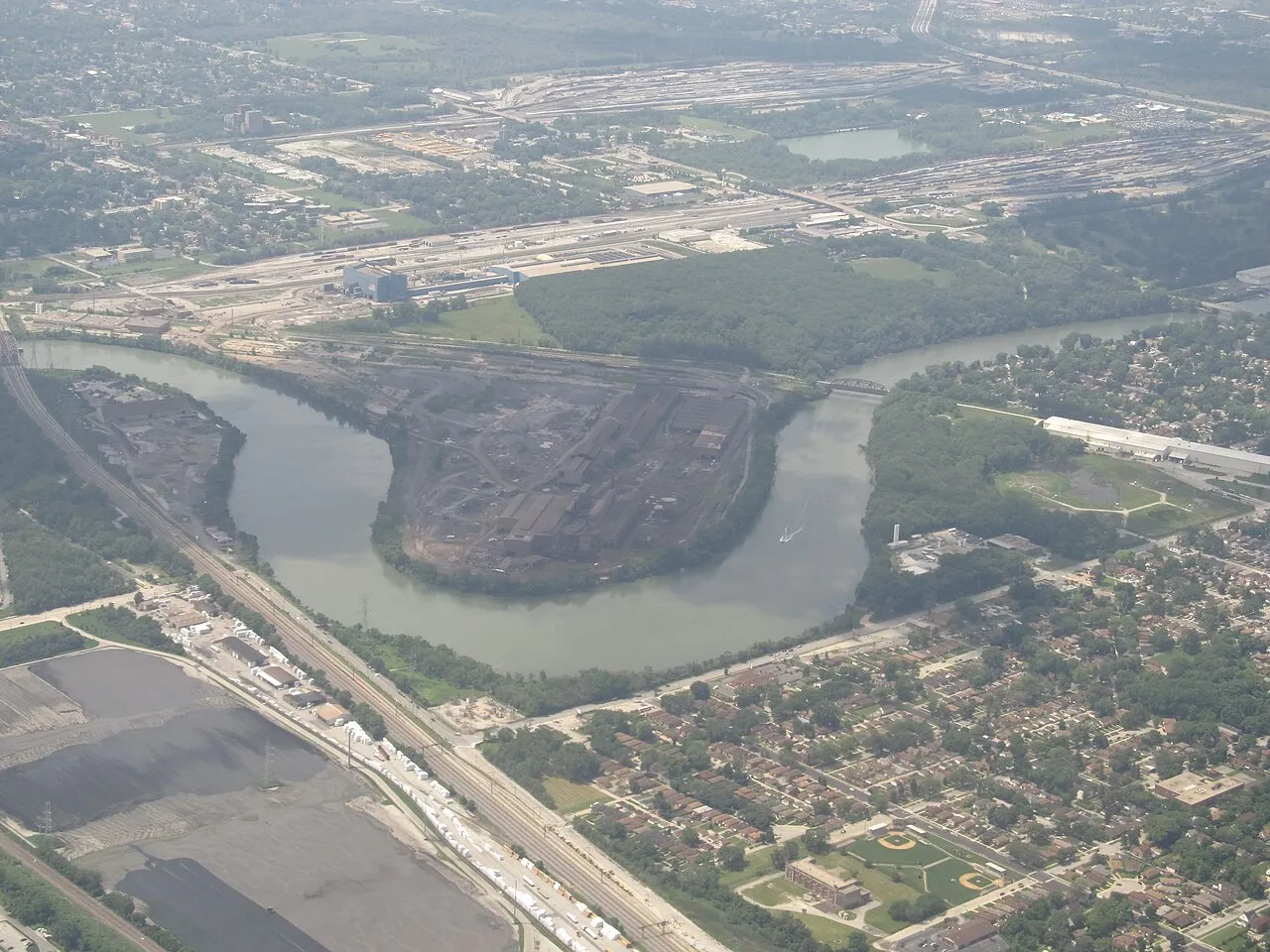
A river runs through the village, so water deserves a close look. Redfin, using First Street's model, rates Riverdale's flood risk as minor and says 5% of properties are at risk of severe flooding over the next 30 years. That share is lower than some buyers expect, because much of the land along the river is forest preserve and industrial rather than homes.
Heavy rain still matters. In July 2026 the village posted a notice about pickup for flood-damaged items, and after the August 11, 2026 storms that produced three EF-1 tornadoes across southern Cook County, the county issued a disaster proclamation that the village shared on its website. Basement water in older houses usually comes from sewer backup and grading as much as from the river.
Three checks before you write an offer. Look the address up on the FEMA flood map, especially near the Little Calumet. Ask the seller directly whether the basement has ever taken water; the Illinois disclosure form asks, but a direct question gets a better answer. And have the inspector look at the sump pump, any backflow valve, the grading and the sewer line to the street, ideally with a camera.
Frequently Asked Questions
Is Riverdale, IL the same as Chicago's Riverdale neighborhood?+
No. The Village of Riverdale is a separate Cook County municipality with its own government, police, schools and taxes, ZIP code 60827. Chicago's Riverdale is a community area inside the City of Chicago, across the city line. Check which one a listing or data source means.
Is Riverdale, IL in Cook County?+
Yes. Census Bureau estimates for July 1, 2025, put all 10,280 village residents in Cook County, 8,908 in Thornton Township and 1,372 in Calumet Township.
How much does a house cost in Riverdale, IL?+
Redfin reported a median sale price of $149,901 for the three months ending August 2026, down 18.0% on about 22 sales a month, with homes selling at 96.9% of list. Zillow's home value index was $121,430 for August 2026, up 6.1% for the year.
What are property taxes in Riverdale, IL?+
Ownwell (April 2026) puts the median effective rate at 5.15% with a median bill of $4,250, against 2.14% for Cook County. Both townships are being reassessed in 2026, and the assessor says 2026 values affect second-installment bills issued in 2027.
What does Riverdale require when a house sells?+
Village code 15.54 requires a Certificate of Compliance inspection for every change in ownership, applied for at least two weeks before closing. The fee is $220 for a single-family home. A conditional certificate, where the buyer makes repairs, requires a 60-day affidavit and a 3% escrow.
What school district is Riverdale, IL in?+
Riverdale is served by School Districts 133 and 148 for elementary grades and Thornton Township High School District 205 for high school. Assignment is by street, so confirm each address with the district.
How long is the train from Riverdale to Chicago?+
From the Riverdale station at 137th Street, most Metra Electric trains reach Millennium Station in 33 to 35 minutes, with 27 inbound weekday trains in fall 2026. From Ivanhoe at 144th Street, trips typically take 35 to 37 minutes.
Is the Riverdale steel plant still open?+
Cleveland-Cliffs said in May 2025 that it would indefinitely idle its Riverdale plant around June 30, 2025, citing insufficient demand and pricing. I found no announced restart or reuse as of September 2026.
What neighborhoods are in Riverdale, IL?+
Riverdale has no official neighborhoods. Common ways to describe a location are north of 138th Street, the Riverdale station area at 137th, the 144th Street corridor near Village Hall and the Ivanhoe station, Pacesetter Gardens on South Lowe Avenue and the Halsted Street side near Kickapoo Woods.
Eshu Chikoti has extensive access to off-market listings throughout Riverdale and the rest of Cook County — homes that never make it to the public listing sites. That matters right now: in a seller's market like this one, well-priced homes routinely go under contract within days, and buyers relying only on public listings are competing for whatever is left over. Working with someone plugged into off-market inventory means seeing homes before the crowd does.
Eshu Chikoti · 847-691-4282 ·
Get new Riverdale listings by email
When a home comes on the market in Riverdale, I'll email it to you.
Just your email. Unsubscribe any time by replying.
Thinking About Riverdale?
Whether you're buying, selling, or just curious what's on the market, I can walk you through Riverdale street by street.