Richmond, IL
Richmond, IL is a village of about 2,100 people in the northeast corner of McHenry County, just south of the Wisconsin line, with a historic downtown on Route 12, the Prairie Trail running beside it and some of the county's best open land all around.
Living in Richmond, IL means a median sale price near $382,000 this summer, a walkable 1800s downtown, Glacial Park and the Prairie Trail next door, and village wells or private wells depending on the address. The trade-offs are no Metra station in town, property tax near 2.3% of value, and a very small market.
Written by Eshu Chikoti · 847-691-4282 ·
How Richmond, IL Got Here: A Short History
Richmond's story starts with one settler and one oak tree. According to the Village of Richmond's history page, William A. McConnell, a carpenter from Pennsylvania, came to what is now Richmond Township in 1837 and built a log house 16 feet by 18 feet. The village says he spent his first night under an oak tree on what is now Broadway Street, and that the tree still stands. McConnell bought 480 acres from the government in 1840, became the first postmaster, and opened what the village calls the first cheese factory in McHenry County, a half mile west of town.
The village was laid out in 1844. The name came from a contest. The man who climbed highest at the raising of the new mill won the right to name the town, and Isaac Reed picked Richmond, after the Vermont town he remembered from childhood. By the mid-1840s there was a flour mill, a sawmill, a wagonmaker, a blacksmith, a hotel, a doctor and a lawyer. The railroad came next. The village history records the first train crossing Nippersink Creek on November 26, 1855, and McConnell sat on the railroad's board.
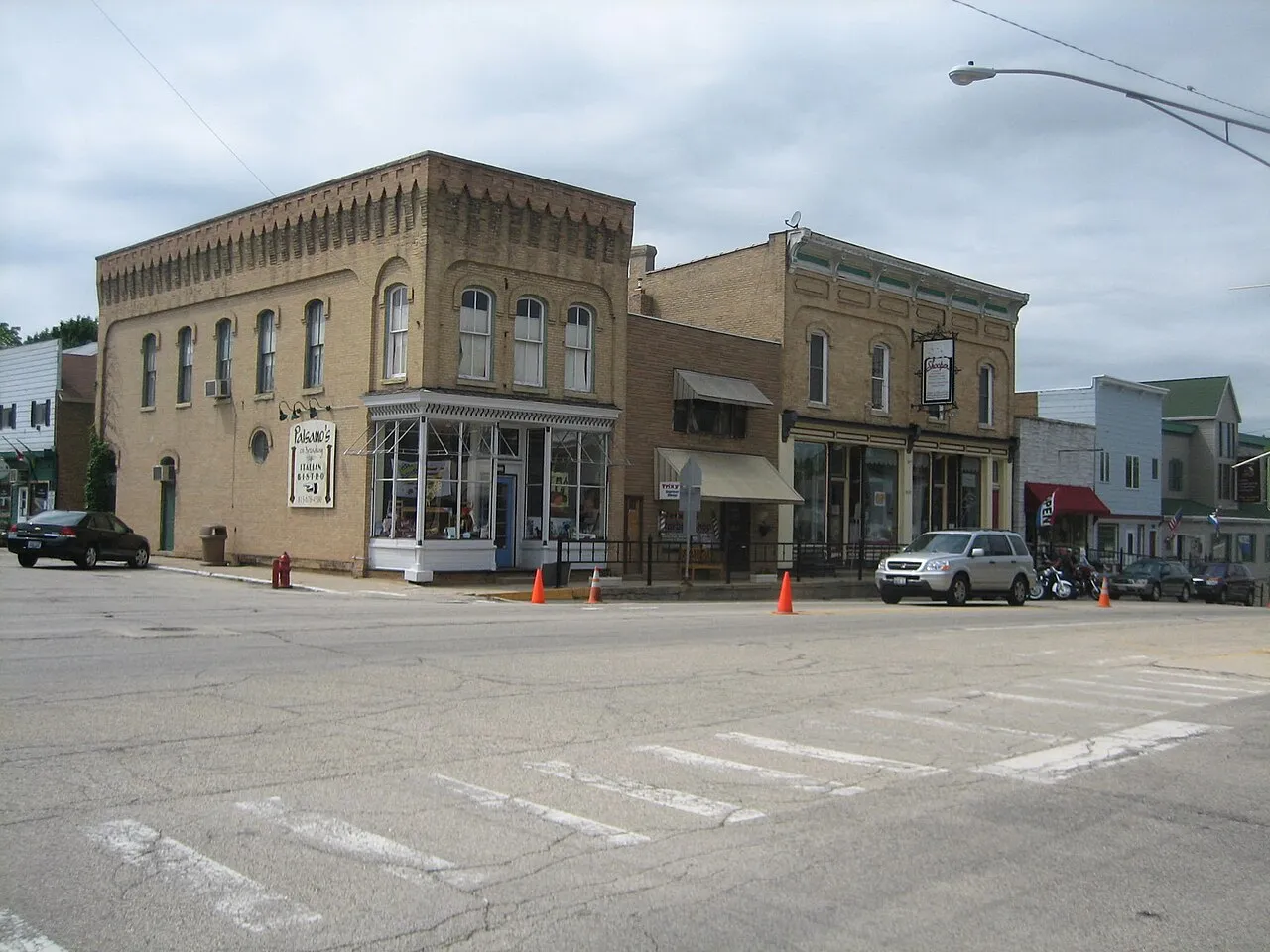
Wikipedia's Richmond entry adds the rest of the arc. Richmond incorporated in 1872. Cheese factories, a creamery, a box factory, a wagon works and a pickle factory followed McConnell's first one. Then on Christmas Eve 1902 a fire swept the commercial district and destroyed 20 buildings, most of them uninsured or underinsured. Many owners never rebuilt. That fire is the reason downtown Richmond is smaller than its 1890s self, and the rebuild between 1903 and 1905 is the reason several of its landmarks date from those years.
The most visible of them is Memorial Hall at 10308 Main Street, built in 1907 with a $10,000 bequest from Charles DeWitt McConnell, the first settler's grandson. It served as village hall, police station, library and school gym over the years. It was listed on the National Register of Historic Places in 1993, and according to Wikipedia the village sold it to a private owner in April 2021 for $230,000 for commercial use. Village offices now sit at 5600 Hunter Drive.
Richmond at a Glance
Richmond sits in the northeast corner of McHenry County, right below the Wisconsin line and about 65 miles northwest of Chicago, according to Wikipedia. The village covers 4.3 square miles of land in the Census Bureau's 2024 gazetteer, and the Census place file lists it entirely inside McHenry County. There is no Lake County or Wisconsin piece to worry about on the tax side, though Lake County starts a few miles east and Wisconsin a short drive north.
The size of the town is the first thing to understand. The 2020 census counted 2,089 people. The newer 2020-2024 Census ACS estimate is 2,622, but with a margin of error of plus or minus 358, which is what happens when a survey samples a village this small. The ACS counts 1,397 housing units, and 51% of occupied homes (630 of 1,236) are owner-occupied. That is a lower owner share than most McHenry County villages, and the reason is simple: Richmond has a real stock of apartment buildings, covered in the homes section below.
The second thing to understand is the mailing address. The 60071 ZIP code reaches far past the village limits into Richmond Township and the countryside around Solon Mills. A listing that says "Richmond" can be a house on a downtown street with village water and sewer, or a house on five acres on a private well and septic. Those are different purchases, and I sort them out before I show a buyer anything.
The layout comes down to three state routes. US Route 12 is Main Street through the village, running north into Wisconsin and southeast toward Spring Grove and Fox Lake. Illinois Route 173 crosses Route 12 in Richmond and runs east and west. Illinois Route 31 heads south toward McHenry, and Richmond-Burton Community High School sits on it. Downtown centers on Broadway, Mill and George streets where they meet Main Street, with the Prairie Trail on its west side.
A median sale price near $382,000 buys a newer single-family home or a restored historic one here, and Glacial Park, the Prairie Trail and the Hackmatack land are not going anywhere.
With six sales in a month, patience is part of the price. The property tax rate, near 2.3% of value, is also higher than the price tag suggests.
Richmond Neighborhoods, Pocket by Pocket
Richmond has no official neighborhoods, but the market splits into four kinds of property, and the first question I ask anyone looking here is which one they mean.
The first is the old village: the original plat and early additions around Broadway, Mill, George and Kenosha streets. The village's historic homes page says the oldest houses here are about 150 years old and that the old section "remains primarily as it was," because most new building happened around it rather than in it. This is where the Greek Revival, Italianate and Queen Anne houses are, and the only part of Richmond where you can walk to coffee, dinner and the Prairie Trail.
The second is the ring of subdivisions built from the 1980s through the 2000s. The Census ACS counts 436 homes built from 2000 to 2009 alone, about 31% of everything in the village, plus 224 from the 1990s and 235 from the 1980s. These are the two-stories and ranches with attached garages and full basements that make up most single-family resales.
The third is new construction, which in Richmond means a handful of builders finishing subdivisions that were platted before 2008. The fourth is everything with a Richmond address outside the village: acreage, horse property and older country subdivisions on wells and septic. That group follows county rules, and I cover it under utilities below.
My buyers who are coming up from Lake or Cook County usually have one of two pictures in mind: a restored old house they can walk downtown from, or a newer three- or four-bedroom with a yard. Richmond has both, in small numbers. With only a handful of sales a month, the right house may not be on the market the week you look, so it pays to know the pockets ahead of time. If you want to know which pocket a specific address falls in and what similar homes nearby have sold for, that is a conversation I am happy to have here.
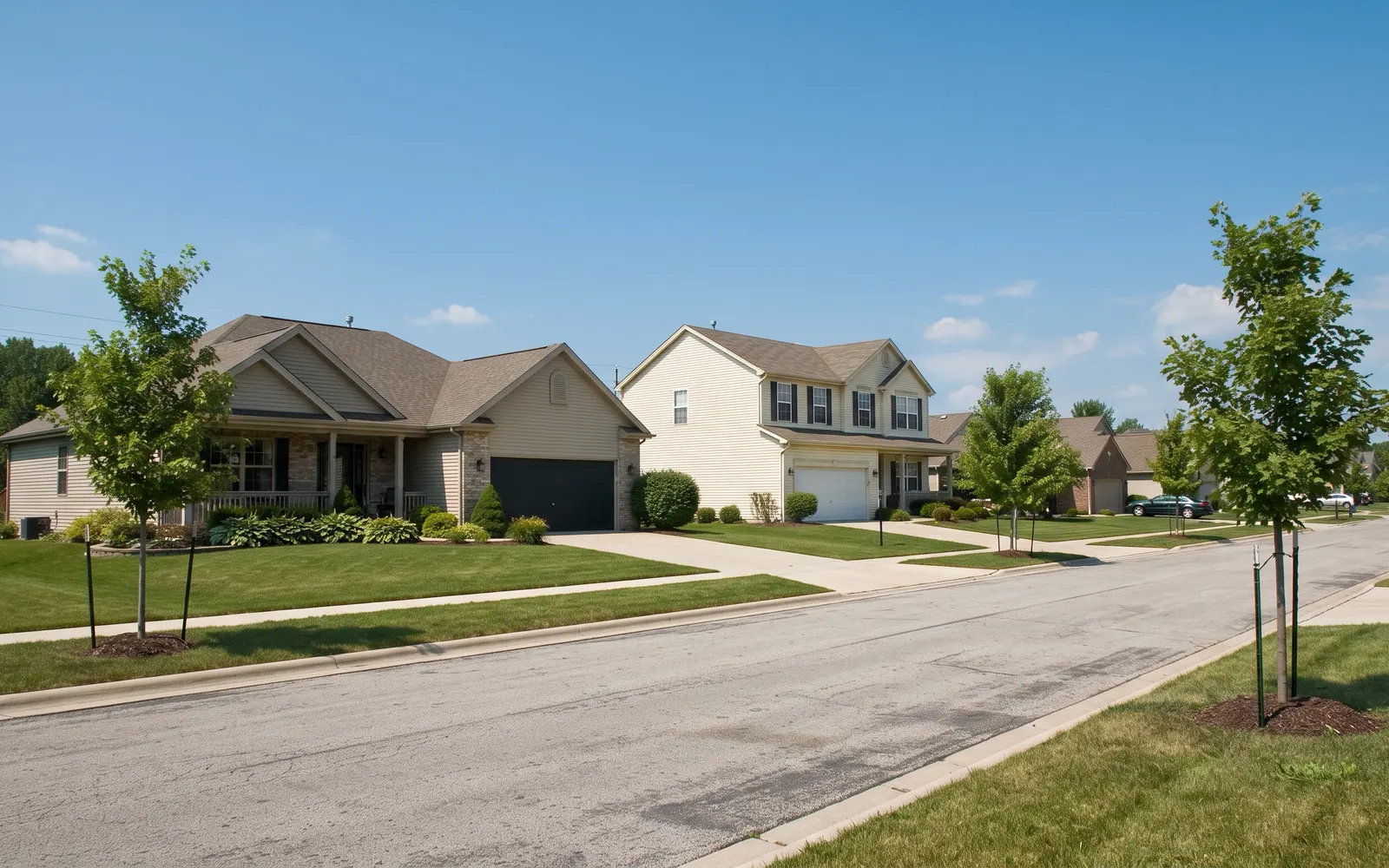
The old village and Historic Overlay District. The blocks along Broadway, Mill and George streets between the Prairie Trail and East Street, plus Main Street between George and Mill. Houses from the mid-1800s through the 1940s, the walkable part of town, and design review on exterior work (see the historic homes section).
Sunset Ridge. On Hunt Club Road. Built by KLM Builders, which still advertises new ranch and two-story homes here from the upper $300,000s. Cotting Park, with tennis and pickleball courts, is inside the subdivision.
Hunt Club Estates. Single-family homes built from about 2003 into the 2020s, per a local agent's subdivision page.
Preservation Oaks. Single-family homes and a few remaining lots, built mostly from about 2005 to 2008, per the same source.
Trails of Pheasant Ridge. East of Route 12 near the Wisconsin line, built by Gerstad Builders, per the same source.
Glenrich. Penny Lane and Taffy Court southwest of Route 12, built from about 1987 to 1993.
Hillview and the May Avenue area. East of Route 12 and south of Route 173, with homes from about 1959 onward, next to McConnell Park and its kayak launch.
Thornhill Estates, Overton Estates and Canterbury. Older subdivisions from the 1960s through the early 1990s, several on larger lots. Confirm on each listing whether the house is inside village limits or in unincorporated Richmond Township.
Kensington Manor. Condominiums built in the early 2000s south of Route 12, one of the few owned attached options in town.
What Richmond Homes Look Like, by Era
Richmond's housing is more mixed than its size suggests. The 2020-2024 Census ACS shows about 10% of the village's homes were built before 1940, about 19% between 1940 and 1979, about 17% in the 1980s, 16% in the 1990s, 31% from 2000 to 2009, and under 7% since 2010. Almost a third of the town went up in one decade, and that decade shapes what you will see on a tour.
The type mix is the bigger surprise. Only about 40% of Richmond's housing units are single-family detached houses (561 of 1,397). Another 444 units, about 32%, are in buildings of 10 to 19 units, and 151 are in two-unit buildings. That is why the owner-occupied share is about half. If you are looking for a rental in McHenry County's northeast corner, Richmond has more apartment options than its neighbors, and the ACS puts the median gross rent at $1,220. If you are buying a single-family house, the pool is smaller than the housing count makes it look.
The ACS median value of an owner-occupied home is $238,600. That figure trails the market because it is a five-year survey average of what owners think their homes are worth, and it includes the older, smaller houses downtown. Current sale prices, in the next section, run well above it.
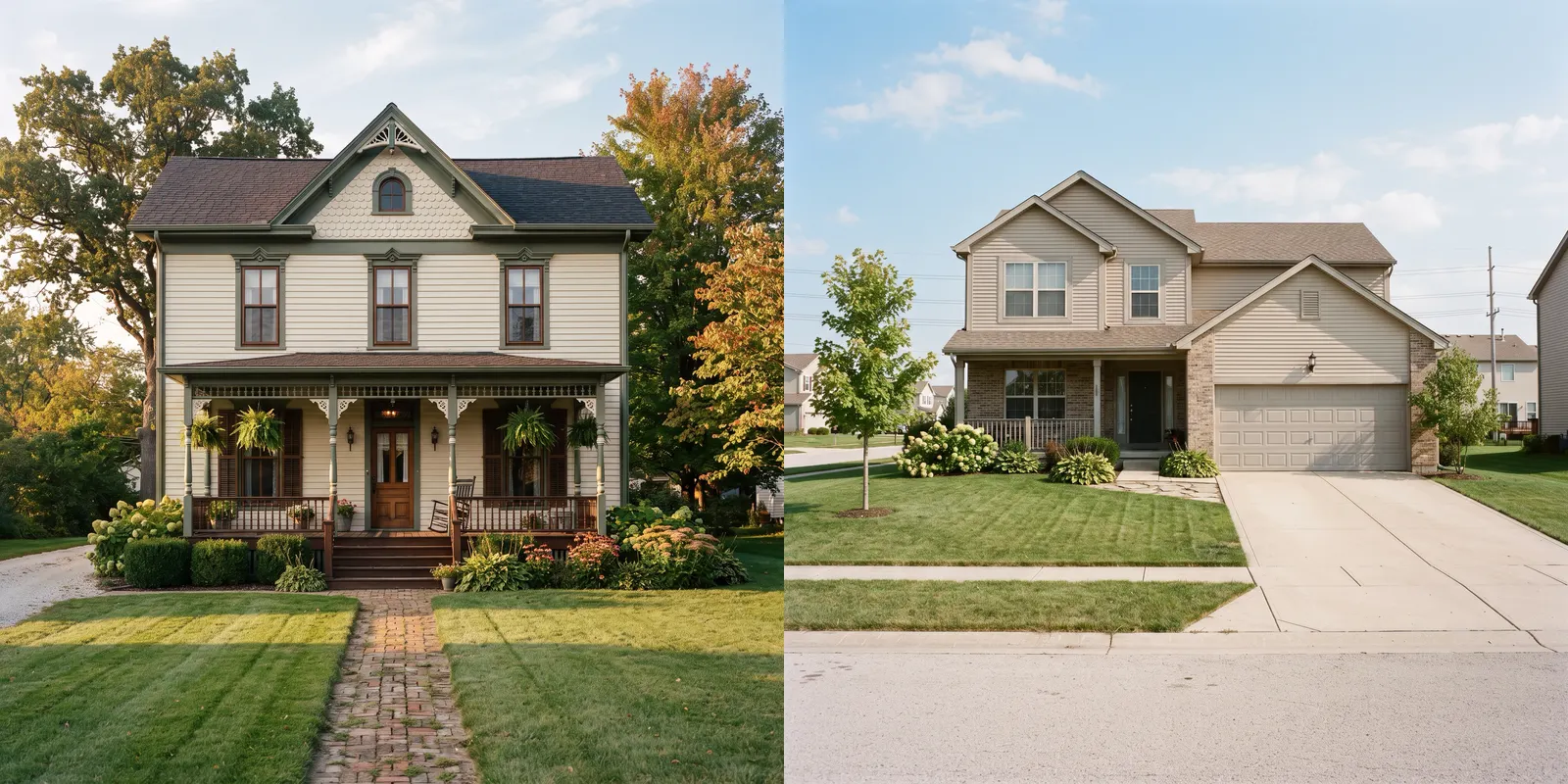
Each era carries its own inspection list. The 1850s to 1920s houses in the old village have stone or brick foundations, plaster walls, old wiring and galvanized plumbing somewhere in the house. The 1980s and 1990s subdivisions are coming up on original roofs, furnaces and windows. The 2000s homes are the easiest to finance and insure, and they sell the most often. Whatever the era, ask about the sump pump and the basement. My home inspection checklist covers what to ask for.
Buying a Historic Home in Richmond
Richmond takes its old houses seriously, and a buyer should know that before falling for one. The village keeps a historic homes and buildings list with 22 featured properties, from the John McConnell House at 6119 Broadway, a Greek Revival built in 1852 across the street from the first settler's log cabin, to the Queen Anne houses built after 1900. The styles run from Greek Revival, Gothic Revival, Italianate and Second Empire through Stick style, Queen Anne, Colonial Revival, Foursquare and Bungalow.
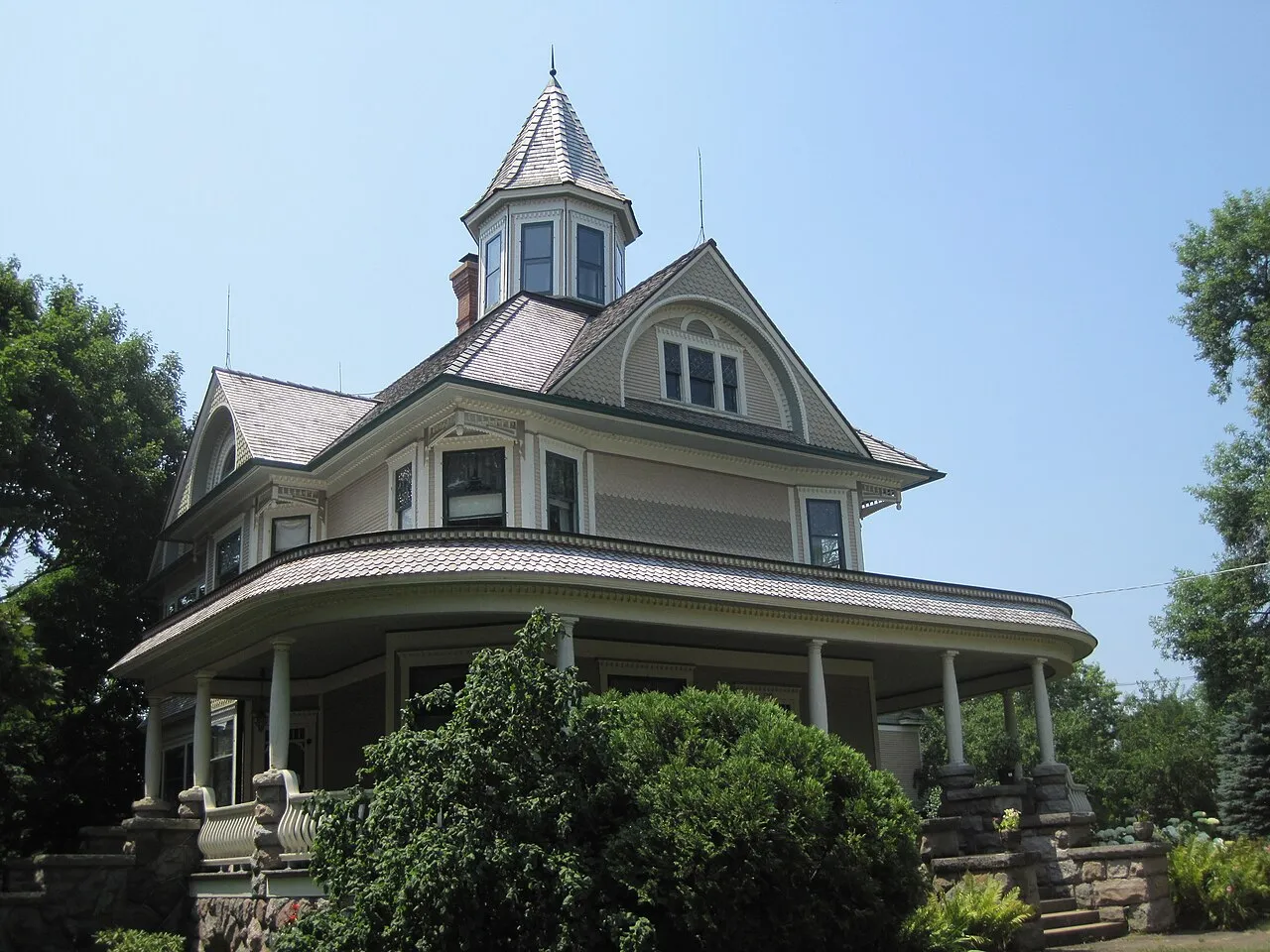
Two Richmond buildings are on the National Register of Historic Places. Memorial Hall was listed in 1993. The Lucien Boneparte Covell House, a 1905 Queen Anne with seven gables, a wraparound veranda and its original carriage house, was listed in 1989 and is still a private home.
The part that affects ownership is the Historic Overlay District. The village created it to encourage restoration and prevent demolition of historic buildings, and it sets up design review for improvements to property inside it. According to the village's overlay map, the district covers properties fronting George Street, Broadway and Mill Street between the Prairie Trail and East Street, plus Main Street and East Street between George and Mill. If you are buying inside those lines and planning new siding, windows, a porch rebuild or an addition, ask the village's building and zoning department what review applies before you close, not after.
For commercial buildings downtown there is also help. The village's Facade and ADA Improvement Program reimburses up to 50% of eligible exterior work such as tuckpointing, windows, awnings, lighting and accessible entrances, with the 2026 first-cycle applications due April 2. That is aimed at storefronts, but it tells you the village is investing in the look of downtown.
What I tell buyers about an old Richmond house: budget for the house you are buying, not the one in the photos. Get a sewer scope, have an electrician look at anything original, and ask the seller what has been done to the foundation. A well-restored house here is a rare thing, and they do not come up often.
The Richmond Housing Market in 2026
Richmond is a small market, and every number about it should be read with that in mind. In the three months ending August 2026, Redfin reported a median sale price of $382,247, up 23.7% from the same period a year earlier. The median price per square foot was $172, down 19.8%. Homes sold in a median of 40 days, down from 70 a year earlier, at 98.9% of list price, and none sold over asking. Redfin counted 6 homes sold in August 2026, down from 13 the August before. It gives Richmond a Compete Score of 76 out of 100, which it calls very competitive.
A price up almost 24% while the price per square foot is down almost 20% is not a contradiction. It means the homes that sold this summer were bigger. When a town has six sales in a month, two or three large houses on acreage can move the median by tens of thousands of dollars. Zillow's home value index gives the steadier picture: $391,766 for August 2026, up 8.1% from $362,392 in August 2025 and up from $344,215 in August 2024. Zillow estimates the value of every home, sold or not, so it doesn't swing with the mix. My read is that Richmond values are rising at a high single-digit pace, and the Redfin swing is mostly about which houses happened to sell.
What that means in practice: a well-priced house in good shape goes under contract in about a month and a half, close to list. There are not enough sales for bidding wars to be routine, and a house that is overpriced has no crowd of buyers to bail it out. Sellers should price off the handful of true comparables, not the town median. Buyers should be ready to move when the right house appears, because there may not be a second one like it this season.
Keep the rural market separate in your head. A house on five acres with a pole barn outside the village and a 1990s house in a subdivision both carry a Richmond address, and they are priced on different things. If you are starting the math on a first purchase, my guides to Illinois first-time buyer programs and how much house you can afford in 2026 are good places to start.
Richmond Property Taxes and the Real Cost of Owning
Property tax is the number that moves the monthly payment most in Richmond, and it never shows up in the list price. Ownwell's data, last updated April 13, 2026, puts Richmond's median effective rate at 2.33% and the median annual bill at $6,146. McHenry County as a whole runs at 2.42%. Inside the 60071 ZIP code, Ownwell shows effective rates from 1.96% at the 10th percentile to 2.71% at the 90th.
Here is what that looks like on a real purchase. At 2.33%, a home bought at this summer's $382,247 median would eventually carry about $8,900 a year in property tax, roughly $740 a month on top of the mortgage. The current bill on the same house may be lower, because assessments trail the market. They catch up, and the reassessment after a sale is usually when a new owner sees the jump. The expectation I most often have to reset is a buyer who budgets off the seller's last bill.
Rates vary because every combination of township, school district, fire district, library district and village forms its own tax code. A lot inside the village pays the village levy and a lot in unincorporated Richmond Township doesn't, and school, library and fire district boundaries do not line up exactly with the village line. Farmland that qualifies for the agricultural assessment is taxed on a different basis than the homesite on the same parcel, which matters on rural listings.
If you already own in Richmond and think your assessment is high, the appeal runs through the Richmond Township assessor and the McHenry County Board of Review. My Lake County property tax appeal guide walks through the logic of an appeal; McHenry County's deadlines and forms are different, so check with the county before you file. This is general information, not tax advice. Your actual bill depends on your parcel, your exemptions and the assessor.
Richmond Schools: Nippersink District 2 and Richmond-Burton High School
Richmond is served by two districts. Nippersink School District 2 covers preschool through eighth grade, and Richmond-Burton Community High School District 157 runs the high school. According to the village's 2025 Bicycle and Pedestrian Plan, District 2 covers Richmond, Spring Grove, part of Fox Lake and the surrounding townships, and Richmond-Burton draws students from neighboring townships and towns including Spring Grove and Fox Lake.
The National Center for Education Statistics lists three schools in Richmond for 2024-25. Richmond Grade School at 5815 Broadway Street is kindergarten through fifth grade with 407 students. Nippersink Middle School at 10006 North Main Street is sixth through eighth grade with 377 students. Richmond-Burton High School at 8311 Illinois Route 31 has 521 students. District 2 also runs Spring Grove Elementary School in Spring Grove, preschool through fifth grade, with 327 students.
For building-level test data, the Illinois Report Card is the source I send buyers to.
One practical detail most guides miss: busing. The village's bike plan notes that the districts provide free busing only to students who live 1.5 miles or more from school. Richmond is small enough that most students living in the village are inside that line, which is part of why the village is planning more sidewalks and safer crossings of Route 12. The same plan puts the high school about 2.3 miles from downtown.
The detail that trips people up is assignment. Which elementary school a house feeds, Richmond Grade School or Spring Grove Elementary, depends on the address, and rural 60071 addresses near the edges can fall in other districts entirely. Never assume from the mailing address. Check each specific property with the districts before you write an offer.
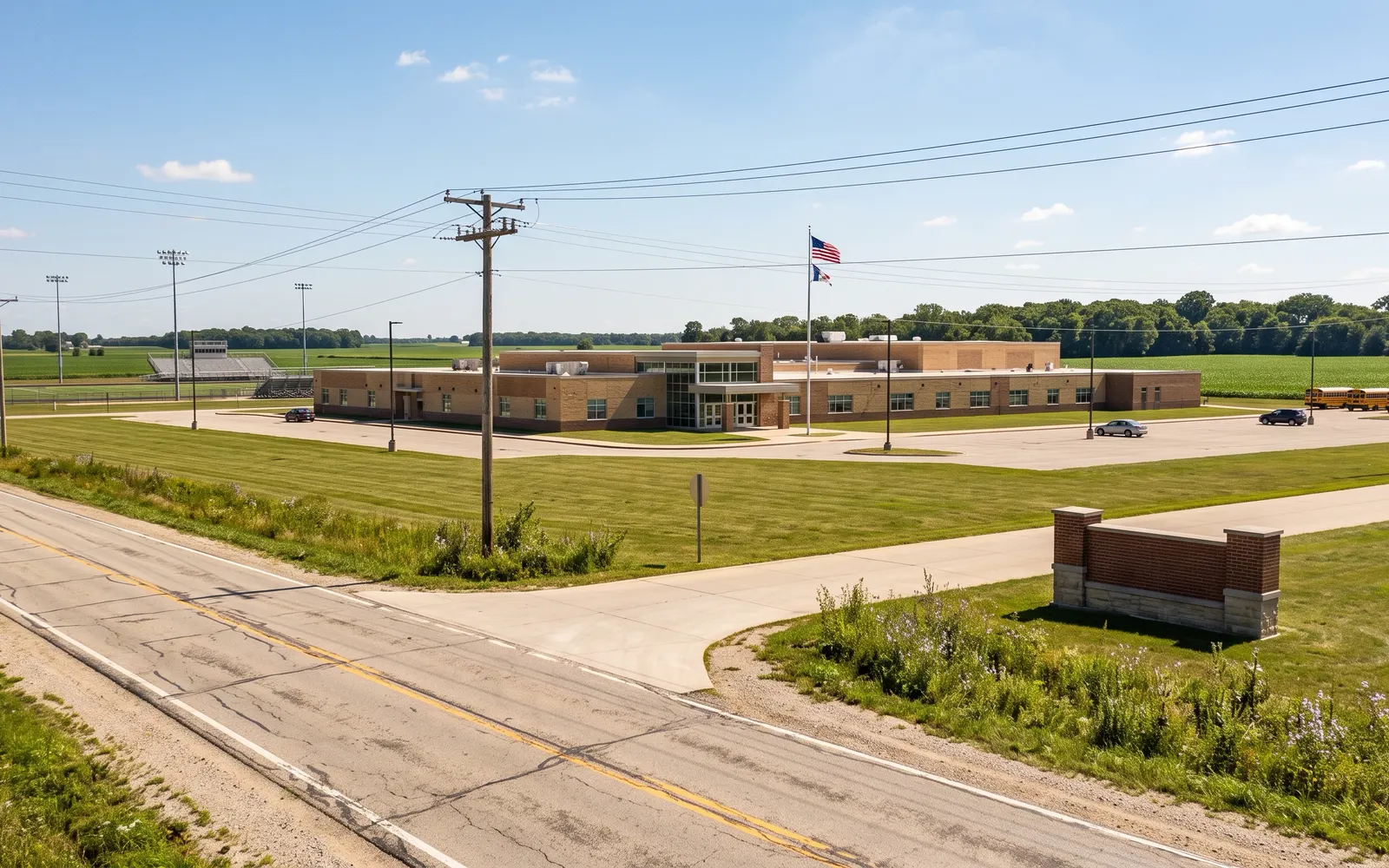
Richmond Grade School. 5815 Broadway St. Grades K-5, Nippersink District 2.
Spring Grove Elementary School. 2018 Main Street Rd, Spring Grove. Grades PK-5, Nippersink District 2.
Nippersink Middle School. 10006 N. Main St. Grades 6-8, Nippersink District 2.
Richmond-Burton High School. 8311 IL Route 31. Grades 9-12, District 157.
Commuting from Richmond: Which Metra Station to Use
Richmond has no Metra station. The old Chicago and North Western line through town is now the Prairie Trail. So the real question for a train commuter is which station to drive to, and there are three good answers. I measured straight-line distances from the Census Bureau's center point for the village using the station coordinates in Metra's published GTFS schedule data, and counted trains for the week of September 28 through October 4, 2026.
**Fox Lake** is the closest, about 8 miles away, and it is the end of the Milwaukee District North line into Union Station. It has 12 weekday trains in each direction. The rush-hour trains leaving between 5:15 and 7:28 a.m. reach Union Station in 88 to 93 minutes, and the evening trains back leaving Union Station between 3:55 and 5:43 p.m. take 88 or 89. Weekend service is 9 trains each way on Saturday and on Sunday. Because every inbound train starts at Fox Lake, you always get a seat.
**McHenry** is about 8.5 miles away on the Union Pacific Northwest branch to Ogilvie. It is fast but thin: 3 weekday trains inbound, at 5:24, 6:24 and 7:24 a.m., each taking 82 minutes, and 3 back in the evening, with no weekend service. **Crystal Lake**, about 15 miles away, has the most service on that line: 27 weekday trains inbound, with express trains reaching Ogilvie in 67 minutes.
Put plainly: from Richmond, downtown Chicago is roughly a 1 hour 45 minute trip door to door on the best combination, counting the drive to the station.

Driving from Richmond: Highways, Wisconsin and Airports
Richmond has no interstate. US Route 12 is the spine: south and east it runs through Spring Grove and Fox Lake toward Volo and Wauconda, and north it crosses into Wisconsin. Illinois Route 31 runs south through McHenry toward Crystal Lake and I-90. Illinois Route 173 runs east across the county line toward Antioch, where it meets I-94, the fastest road to Gurnee, the North Shore and the Tri-State.
The Wisconsin side matters more than buyers expect. The state line is just north of the village, and Genoa City and the Lake Geneva area are short drives up Route 12. For some jobs and some errands, Wisconsin is the easier direction. That also makes Milwaukee's airport a realistic option for some trips, along with O'Hare, which is well over an hour away in normal traffic.
Richmond's own streets are in active repair. The village's 2026 road program, posted September 11, 2026, repaves May Avenue from Main Street to its east end, Circle Drive, North Lane from May Avenue to Valley Road, George Street from Main Street to McConnell Drive, and South Street from Main Street to Williams Street this month. Route 12 and Route 173 are state highways, so problems on them go to IDOT, not the village.
Route 12 through town is also a truck route, and the village's 2025 bicycle and pedestrian plan says residents' top request was safer, more frequent crossings of it. If you are looking at a house on one side of Main Street and want to walk to the other, check the crossing first.
Is Richmond Walkable?
Downtown is, the rest of town mostly isn't. Walk Score does not publish a village-wide score for Richmond, but it counts about 18 restaurants, bars and coffee shops in the village and says the average resident can walk to 2 of them in five minutes. For a village of about 2,100 people, that is a lot of places within reach, and nearly all of them are downtown along Broadway and Main.
If you live in the old village, you can walk to breakfast, the candy shop, the library on Hill Road on a nice day, and the Prairie Trail. From the 2000s subdivisions, you will drive most places, and the village's own bike plan says sidewalk gaps and Route 12 crossings are what hold walking back. The plan, adopted in spring 2025, grew out of three rounds of public engagement in 2024 and included a painted purple trail crossing on Broadway Street in October 2024 to make Prairie Trail users more visible to drivers.
For recreation, the Prairie Trail changes the picture. It runs just west of downtown, parallel to Route 12, and connects Richmond by bike to Glacial Park, McHenry, Crystal Lake and beyond.
Downtown Richmond and Shopping
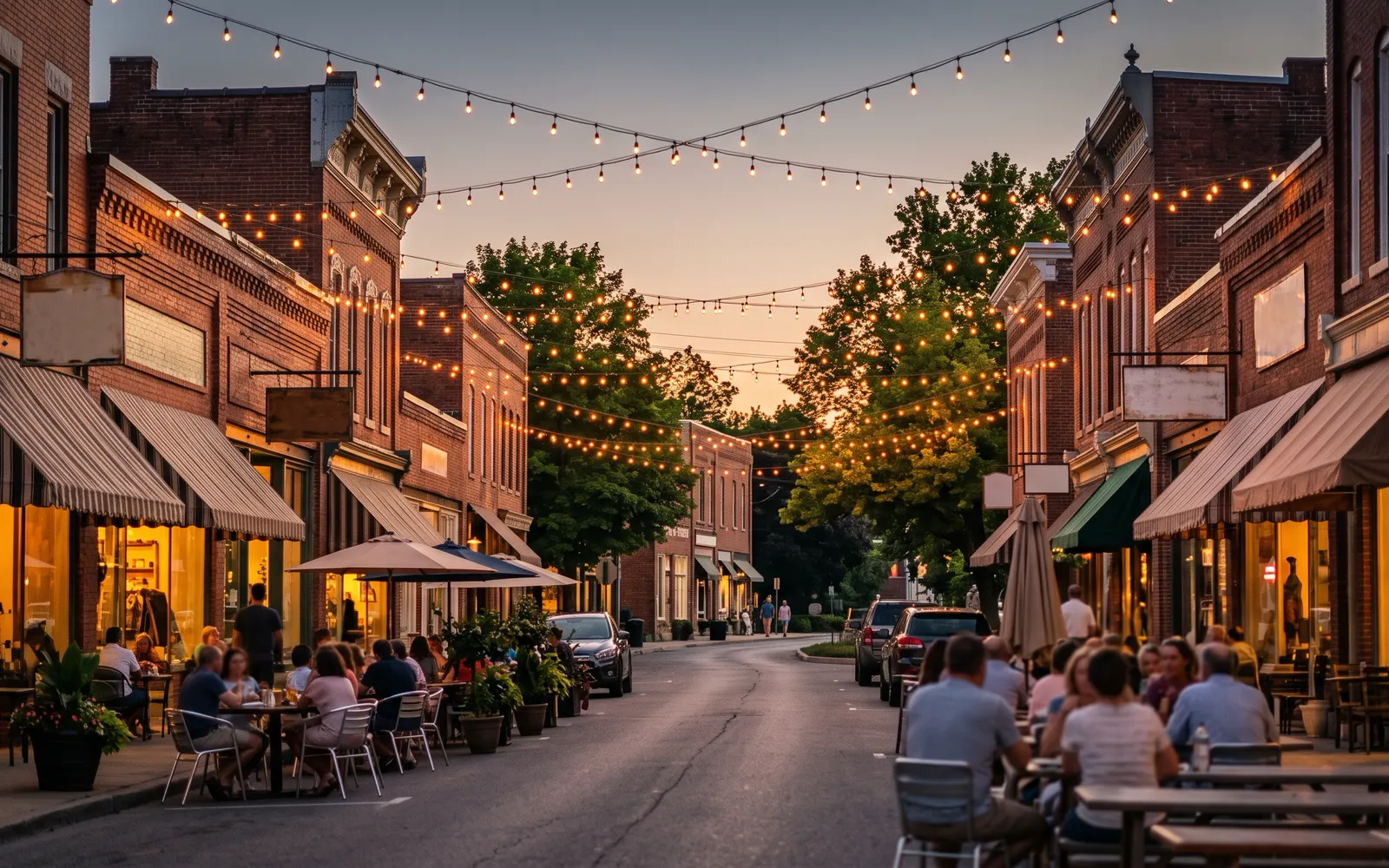
Downtown Richmond is the reason a lot of people visit before they ever think about moving here. The village's visitor page describes a downtown of vintage and antique shops, home decor, handmade goods and boutiques, and notes that the businesses are mostly locally owned. On the village's FY2027 business list, downtown includes Solid Brass Fine Antiques and Harper G! Mercantile on Broadway, Oldies & Goodies and Magpie Market on Main Street, the Richmond Flea Market on Kenosha Street, and Grace & Lace Bridal on Broadway. The village even markets itself for weddings, pointing out that the gown, the rehearsal dinner and the venue can all be found within two miles.
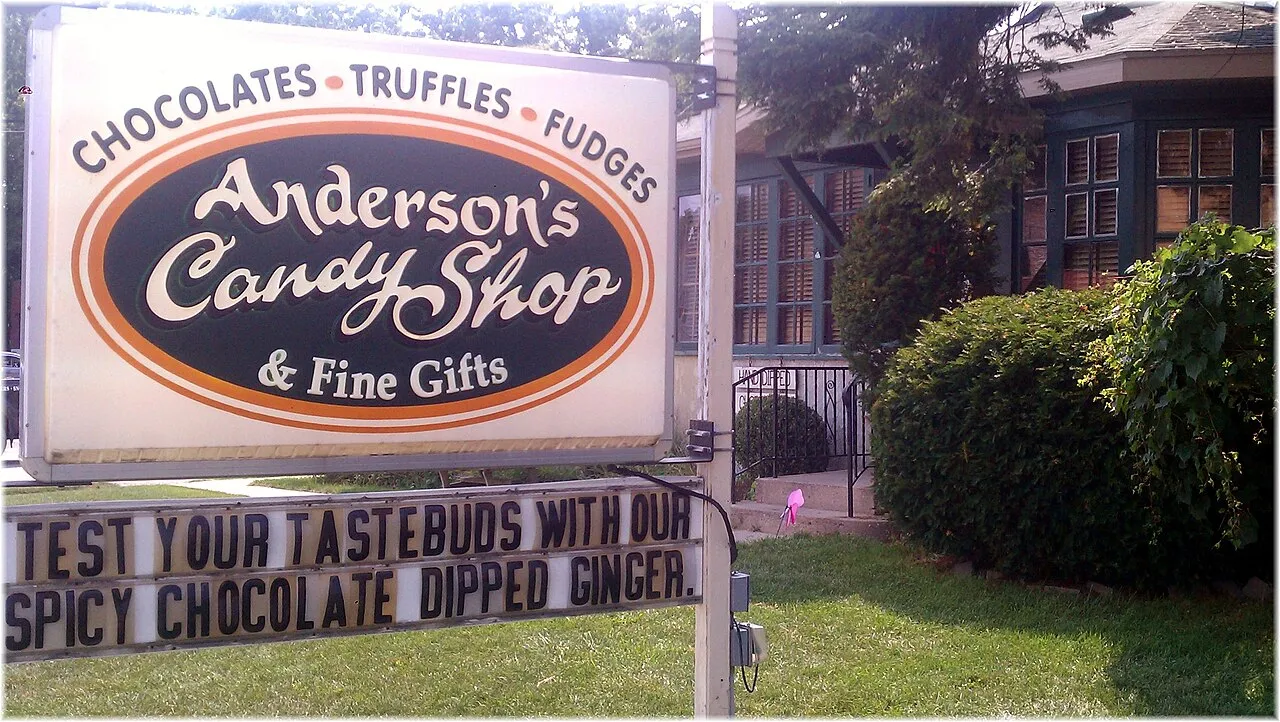
The anchor is Anderson's Candy Shop at 10301 North Main Street. According to Shaw Local's June 25, 2026 story, the business was founded in Chicago in 1919, moved to Richmond 100 years ago, and still makes small-batch, hand-dipped chocolates in the same house on Route 12. It celebrated its centennial in town during the 2026 Round-Up Days.
Parking is easy. The village has two free downtown lots entered from West Broadway, one-way out onto George Street, plus on-street parking and a ChargePoint electric vehicle charger in the West Broadway lot. For bigger shopping, Richmond Ace Hardware and a Dollar General are on Main Street, and the chain stores and big boxes are in McHenry, Crystal Lake and across the line in Wisconsin.
Groceries and Everyday Errands in Richmond
The grocery store in town is Angelo's Fresh Market at 9914 North Main Street, listed on the village's FY2027 business list. For a bigger weekly run, most residents drive south to McHenry or across the line into Wisconsin. The everyday errands are in town: Richmond Ace Hardware at 10824 North Main, a NAPA Auto Parts on Commercial Street, a Dollar General on Main, two dental offices, an eye doctor, a veterinary clinic and a credit union branch. Garbage and recycling go out on Thursdays through the village's hauler, and the village picks up brush on the third Monday of each month from April through November.
Where Richmond Eats
For a village this size, Richmond eats well. Downtown on Broadway, Paisano's on Broadway, Seaside Prime Seafood & Steak and the Olive Black Martini Lounge handle dinner, and Sweet Angeline's Bake Shop is a few doors down. On Main Street there is the Richmond Café, the Richmond Brathaus, The Hideaway Inn, and Sweets & Bean Ice Cream Parlor. Doyle's Pub is on Mill Street. Along Route 12, Jamie's Country Kitchen and the Cubby Café cover breakfast, and Dilar's Restaurant has been a local stop for years. All of those are on the village's FY2027 business list, and the village's visitor page notes that Richmond's restaurants tend to have strong reviews.
One change this year: Red Dogs Sandwiches closed on June 28, 2026 after 40 years on Route 12, and a Culver's is set to replace it by next spring, according to Shaw Local. The Sunday blues jam that met there moved to Doyle's Pub's patio for now.
Richmond Parks and Recreation
Richmond runs its own parks instead of having a separate park district. The village's parks page lists four, all available to reserve for private events. McConnell Park at 5200 Nippersink Drive has a playground, picnic tables, a gazebo, bike racks and the village's kayak launch on the North Branch of Nippersink Creek. Bennett Park at 5913 Milwaukee Avenue, south of Richmond Grade School, has the ballfields, a playground and a fieldhouse with a concession stand. Cotting Park at 10810 Partridge Trail in Sunset Ridge has a playground, a ballfield, tennis and pickleball courts and bocce. Stevens Park at 10314 Main Street is the downtown gazebo. The amenity lists come from the village's 2025 bike plan.
The parks have been getting better. According to Shaw Local's February 16, 2026 report, Richmond has been using tax revenue from the Spark'd dispensary to upgrade its parks. Youth sports run through Richmond-Area Youth Athletics, and the high school's fields host a lot of the rest.
Glacial Park, the Prairie Trail and Richmond's Open Land
The land around Richmond is the best argument for living here. The village's outdoors page lays out what is within a few miles, and it is a lot.
**Glacial Park**, run by the McHenry County Conservation District just south of town, covers more than 3,400 acres of rolling prairie, glacial kames, oak savanna and the meandering Nippersink Creek. The district calls it its most popular site, with more than 64,000 visitors a year, and it has horse trails, fishing landings at Keystone Landing and Pioneer Road, and a stretch of the Prairie Trail along its eastern edge.
**The Prairie Trail** runs about 26 miles from the Kane County line to just short of the Wisconsin line on the old Chicago and North Western rail bed. In Richmond it runs just west of downtown. It is open to biking, hiking, horseback riding, cross-country skiing and snowmobiling, and it links to the Hebron Trail, which runs west through the **North Branch Conservation Area**, 521 acres of wetland, savanna and creek about 2.2 miles northwest of downtown.
**Nippersink Creek** is the paddling route. From McConnell Park, the village's kayak launch ties into the county's Nippersink Canoe Trail, about 5.67 miles to the creek fork. Check water levels first; the village warns that blockages happen and it can't clear them.
The biggest news is **Hackmatack National Wildlife Refuge**. In 2024 the Conservation Fund, the Illinois Audubon Society and Openlands bought Tamarack Farms, 985 acres in Richmond, for the refuge. The village's outdoors page calls it the largest conservation acquisition in the Chicago region since Midewin in 1996, and says it connects existing preserves into a continuous 5,600-acre block. For a homeowner, that is land that will not become a subdivision.

The Nippersink District Library
Richmond's library is the Nippersink District Library at 5418 Hill Road. It is open Monday through Thursday from 9 a.m. to 8 p.m. and Friday and Saturday from 9 a.m. to 5 p.m. It is part of the PrairieCat catalog, so you can borrow from a long list of northern Illinois libraries, and adult cardholders get free or discounted admission to Chicago-area museums and attractions through the state's Explore More Illinois program. The library also offers remote printing from a phone or laptop.
Utilities in Richmond: Village Wells Versus Private Wells
Inside the village, water comes from the village's own wells. Richmond's water quality reports identify the source as groundwater, and the 2023 report lists Well 2 and Well 3. It also summarizes an Illinois EPA source water assessment: wells 1 and 2 were rated not susceptible to contamination, and the source water for well 3 was rated susceptible, so its recharge area is tracked. The newest report was posted April 30, 2026, along with a monitoring violations notice dated June 22, 2026. Read both before you buy; the village posts them on the same page.
Water and sewer are billed quarterly by the village. Under the rates for May 2026 through April 2027, water is $17.50 for the first 4,000 gallons and $2.75 per 1,000 after that. Sewer is $80 for the first 4,000 gallons and $10 per 1,000 after that. There is also a $39 per quarter debt service surcharge for the wastewater plant. So the smallest possible bill is $136.50 a quarter, and a household using 12,000 gallons a quarter would pay about $238.50. Sewer, not water, is the bigger part of the bill. Garbage and recycling are billed separately by the village's hauler, LRS, with Thursday pickup.
Outside the village, assume a private well and a septic system, and often propane instead of natural gas. Before you buy, test the well water (bacteria and nitrates at a minimum), get the septic pumped and inspected, and find out who owns the propane tank. The village's lead service line page is worth reading too if you are buying an older house in town, since Illinois now requires water systems to inventory and replace lead service lines.
Hospitals and Clinics Near Richmond
For everyday care there is a primary care clinic in town. Mercyhealth Richmond at 9715 Prairie Ridge offers family medicine and primary care but not urgent care, and Family Medicine Specialists is on North Main Street. For a hospital, the closest full-service option is Northwestern Medicine McHenry Hospital at 4201 West Medical Center Drive in McHenry, a 143-bed acute care hospital with an emergency department and cardiovascular and cancer programs. It is a straight drive down Route 31.
Round-Up Days and Richmond's Town Calendar
The big weekend in 2026 was the Round-Up Days Revival on June 27 and 28. The village organized it with the Richmond Township Fire Protection District and Anderson's Candy Shop to mark the country's 250th birthday, the fire district's 100th year and the candy shop's 100th year in town. It brought back the old Round-Up Days with live music, food, a street dance, historical displays and a parade.
The rest of the calendar is smaller and very local: a Trunk or Treat on Saturday, October 10, 2026, car shows downtown in summer, and events around the gazebo at Stevens Park. The village's Art in Richmond project is also visible downtown. In 2024 it won a $10,000 National Endowment for the Arts grant for two downtown murals celebrating the area's natural landscape, painted by artists from southern Wisconsin. If you are touring houses on a summer weekend, walk Broadway afterward. It tells you more about Richmond than any listing will.

What's Being Built in Richmond
Richmond is not a boomtown, and I would be suspicious of anyone who says otherwise. The ACS counts only about 91 homes built in the village since 2010. Growth comes in small pieces, and most of the big changes are about land staying open.
On the residential side, KLM Builders is still building in Sunset Ridge, with ranch plans from 1,350 square feet and two-stories starting in the upper $300,000s on its current price sheet. Lots are also on the market in a few older subdivisions, which is the other path to a new house here: buy a lot and hire a builder.
On the commercial side, the change people will notice first is the Culver's planned on the former Red Dogs site at 11011 Route 12. The Village Board approved its sign variance on May 21, 2026, and it is expected by spring 2027, according to Shaw Local. Downtown, the facade and ADA grant program is paying for storefront repairs, and the 2025 bike plan lays out sidewalks, bike lanes and safer Route 12 crossings to come.
The largest change is Hackmatack. The 985-acre Tamarack Farms purchase in 2024 is set aside for the national wildlife refuge, and the village's bike plan notes that the U.S. Fish and Wildlife Service has bought the area west of Route 12 and north of Tryon Grove Road for the refuge, with public amenities not yet known. For owners nearby, that means open views that are likely to last. Treat any refuge amenities as plans until they are built.
I don't label any town or neighborhood as safe or unsafe.
Flood Risk in Richmond
Flooding in Richmond is a creek question, not a town-wide one. The North Branch of Nippersink Creek runs through the village past McConnell Park, and the low ground along it is where water collects. First Street's flood model counts 39 of 986 properties in Richmond as having flood risk, about 4%. Redfin, which uses the same model, says it is still updating Richmond's flood numbers and rates wildfire risk at under 1%.
Two checks belong on every house. Look up the address on the FEMA flood map, because a mapped flood zone can mean required flood insurance on a mortgage. And ask the seller directly about water in the basement, especially on the older houses near the creek and on rural lots near wetlands. In my experience the follow-up question, what they did about it, matters more than the first answer.
Frequently Asked Questions
How much does a house cost in Richmond, IL?+
Redfin reported a median sale price of $382,247 for the three months ending August 2026, and Zillow's home value index was $391,766 for August 2026, up 8.1% from a year earlier. With so few sales, the median can swing a lot month to month.
What are property taxes in Richmond, IL?+
The median effective rate is about 2.33%, with a median bill of about $6,146 (Ownwell, April 2026). Rates vary by tax code, and a home's bill usually rises after a sale once it is reassessed.
What school district is Richmond, IL in?+
Nippersink School District 2 for preschool through eighth grade (Richmond Grade School, Spring Grove Elementary and Nippersink Middle School) and Richmond-Burton Community High School District 157 for high school. Confirm each address with the districts.
Does Richmond, IL have a Metra station?+
No. The closest station is Fox Lake on the Milwaukee District North line, about 8 miles away, with 12 weekday trains to Union Station taking 88 to 93 minutes. McHenry and Crystal Lake on the Union Pacific Northwest line are the other options.
Do homes in Richmond have city water or wells?+
Homes inside the village are on village water from Richmond's own groundwater wells and village sewer. Most homes with a Richmond address outside the village use a private well and septic system.
What neighborhoods are in Richmond, IL?+
Buyers usually think in terms of the historic old village around Broadway and Mill Street, the 1980s to 2000s subdivisions such as Sunset Ridge, Hunt Club Estates, Preservation Oaks, Glenrich and Hillview, and the rural 60071 area outside the village.
How close is Richmond, IL to Wisconsin?+
Very close. The village sits just south of the state line, and Route 12 runs north into Wisconsin toward Genoa City and the Lake Geneva area.
Is Richmond, IL in a historic district?+
Part of it is. The village's Historic Overlay District covers properties along Broadway, George and Mill streets and part of Main Street downtown, with design review for exterior work. Memorial Hall and the Covell House are on the National Register.
Eshu Chikoti has extensive access to off-market listings throughout Richmond and the rest of McHenry County — homes that never make it to the public listing sites. That matters right now: in a seller's market like this one, well-priced homes routinely go under contract within days, and buyers relying only on public listings are competing for whatever is left over. Working with someone plugged into off-market inventory means seeing homes before the crowd does.
Eshu Chikoti · 847-691-4282 ·
Get new Richmond listings by email
When a home comes on the market in Richmond, I'll email it to you.
Just your email. Unsubscribe any time by replying.
Thinking About Richmond?
Whether you're buying, selling, or just curious what's on the market, I can walk you through Richmond street by street.