Montgomery, IL
Montgomery, IL is a Fox River village of about 21,500 people that sits in both Kane and Kendall counties, with a historic mill downtown, subdivisions built mostly in the 2000s, and some of the lower home prices in the Fox Valley.
Living in Montgomery, IL means a median sale price near $378,000 this summer, a 2000s-era house on a subdivision street, and a Metra station about three miles north in Aurora. The trade-offs are five possible school districts, two county tax systems and a car for nearly every errand. Here is how it breaks down, pocket by pocket.
Written by Eshu Chikoti · 847-691-4282 ·
How Montgomery, IL Got Here: A Short History
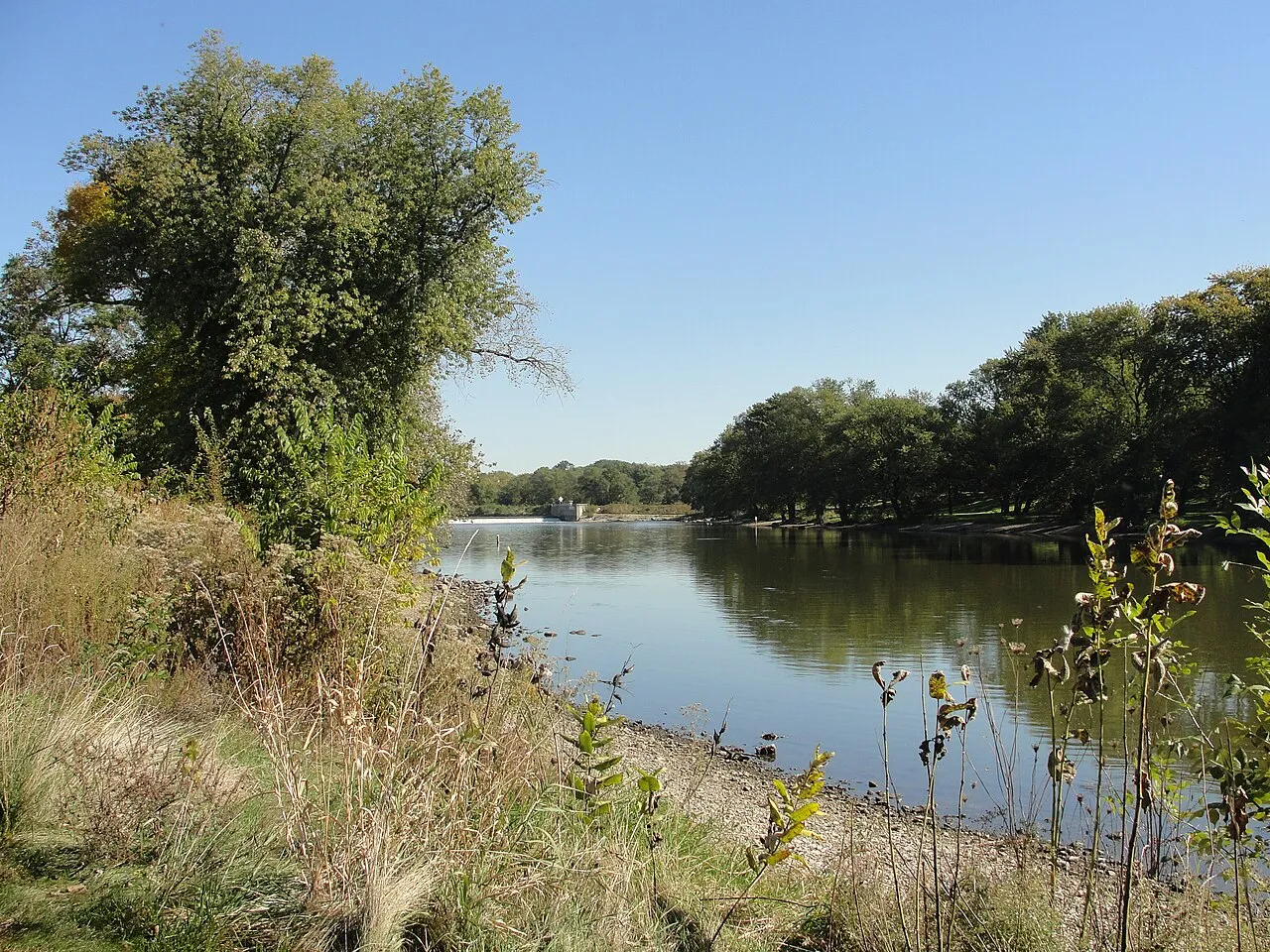
The first settler of European descent in the area was Jacob Carpenter, who arrived from Logan County, Ohio, in November 1832. The man the village credits as its founder came a few years later. Daniel S. Gray, from Montgomery County, New York, visited his brother's farm in 1835 and built the first frame house in the settlement in the fall of 1836, near the west bank of the Fox River. For several years people called the place Graystown. Gray talked the other settlers into naming it after the New York county many of them had come from.
Gray built most of what the early village had: a store, foundries, a shop that made reapers and headers, and a stone grist mill on the river. According to the village's own history page, he had the land surveyed and platted for lot sales in 1853 and died in October 1855. The village incorporated on February 17, 1858, by a vote of 30 to 4, and his son Ralph Gray became the first village president.
For a century Montgomery stayed small. The Census history on Wikipedia shows 350 people in 1900 and 773 in 1950. Industry is what kept the village on the map. Lyon Metal was founded here in 1904. Western Electric's Montgomery Works on River Street employed 1,500 people making telephone parts in 1962, became part of Lucent Technologies and closed in 1995. Caterpillar's Aurora plant, on the village's southern edge, has built wheel loaders since 1959.
The change that shaped today's housing came fast. Montgomery had 5,471 residents in the 2000 Census and 18,438 in 2010. Almost all of that growth was new subdivisions on former farmland west of the river and south into Kendall County. It is the single most useful fact about the village for a buyer, because it explains why so much of the housing stock is the same age.
Montgomery at a Glance
Montgomery covers about 9.55 square miles on both banks of the Fox River, roughly 45 miles southwest of the Loop. Aurora borders it to the north and east, Oswego and unincorporated Boulder Hill to the south, and Yorkville to the southwest. The village is split between Kane County on the north and Kendall County on the south, and it touches four townships: Aurora and Sugar Grove in Kane, Bristol and Oswego in Kendall.
That county split is the first thing I check on any Montgomery address. Kane and Kendall run separate assessors, separate tax calendars and different rates, and the line runs east to west through the middle of the village. Two houses a few blocks apart can sit in different counties and carry different bills at the same price.
The 2020-2024 Census ACS puts the population at 21,515, and 79.3% of occupied homes are owner-occupied. The village counts 7,507 housing units. About 72% are detached single-family homes and another 17% are single-family attached, which mostly means townhomes.
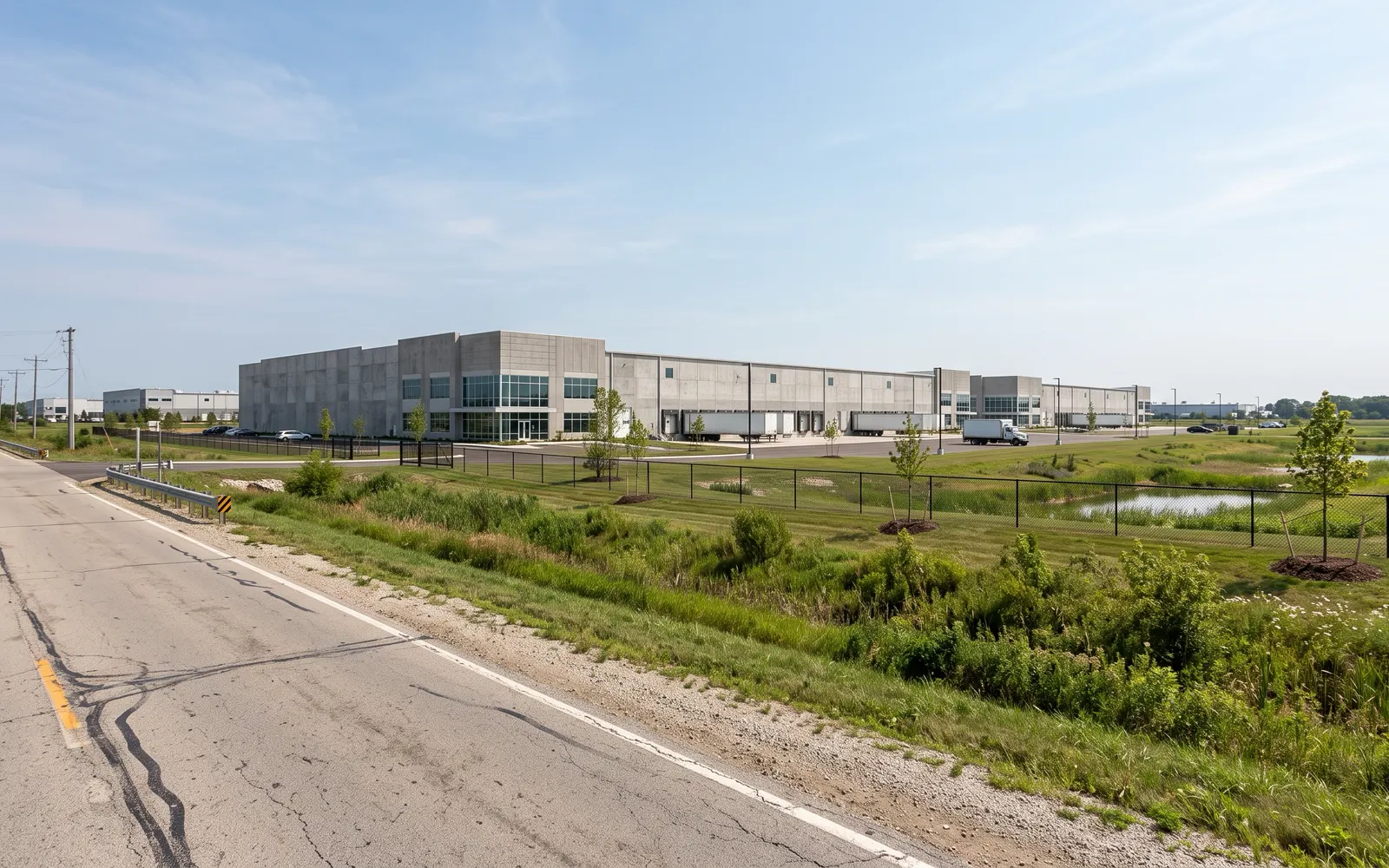
Montgomery is also an industrial town, which is unusual for a place this size. Caterpillar's plant anchors the south end, and the corridor along Orchard Road and Caterpillar Drive has been filling with new warehouses and plants. That gives the village a business tax base that a pure bedroom suburb doesn't have, and it gives you truck traffic on a few roads that you should drive before you buy on them.
A median sale price near $378,000 buys a 2000s house here that would cost more in most of the towns around it.
Montgomery has five school districts, two counties and several park and library districts.
Montgomery Neighborhoods, Pocket by Pocket
Montgomery has no official neighborhoods, but it splits cleanly into a few areas once you know the roads. The Fox River divides the village east and west. The old village sits along the river on River Street. East of the river, the older and mid-century streets give way to subdivisions around Douglas Road. West of the river, and especially west of Orchard Road, is where most of the 2000s building happened.
Before the pockets, one trap. A "Montgomery, IL 60538" mailing address does not always mean the house is in the village. Boulder Hill, a separate unincorporated community of 8,394 people (2020 Census) just south of the village, uses the Montgomery post office. Its homes are governed by Kendall County and Oswego Township, not by the village. That changes who plows the street, which police department responds, and what the tax bill funds. Some market data you will see for "Montgomery" mixes the two. Ask the listing agent, or look up the parcel, before you assume.
The names below are the ones you will see on listings. Boundaries are informal, so treat them as a starting point. If you want to know which pocket a specific address falls in, which county and school district it sits in, and what that pocket has sold for lately, that is a conversation I am happy to have here.
The mistake I most want buyers to avoid in Montgomery is comparing two houses on price alone. A $370,000 house on the Kane side and a $370,000 house on the Kendall side can differ by hundreds of dollars a year in tax and send you to different school districts. Location inside Montgomery changes the monthly cost more than finishes do.
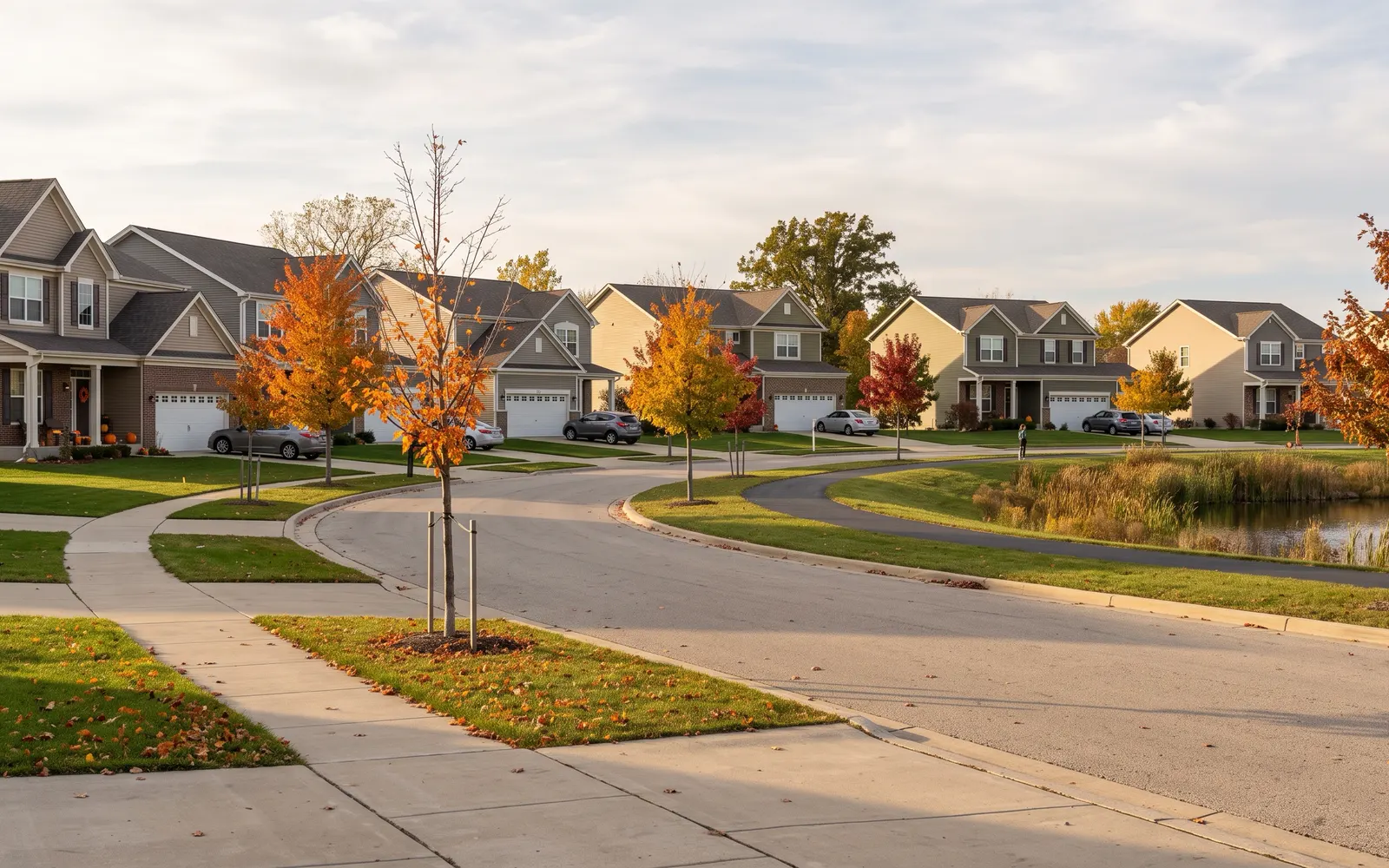
Downtown and the old village. Along River Street and the Fox River near Montgomery Park and Village Hall. The oldest houses in town, on smaller lots, and the only part of Montgomery where walking to a restaurant is realistic.
East side near Douglas Road. East of the river, around Krug Park, Arbor Ridge Park and Austin Park. A mix of mid-century homes and later subdivisions, close to the Douglas Road and Ogden Avenue shopping.
Seasons Ridge. East side, home to Briarcliff Woods Park and its lake. The village notes that parks in Seasons Ridge are run by the Oswegoland Park District.
Marquis Pointe. Another subdivision whose parks the Oswegoland Park District operates. Confirm the school district on each address.
Lakewood Creek. West of Orchard Road, around Lakewood Creek Park and Lakewood Creek Elementary. 2000s construction.
Blackberry Crossing. West side, around Blackberry Crossing Park on Troon Drive, near the Blackberry Creek Forest Preserve.
Fairfield Way, Huntington Chase and Foxmoor. West-side subdivisions the village lists with their own neighborhood parks. Mostly 2000s single-family homes.
Boulder Hill (not in the village). Unincorporated, 1.47 square miles, with a Montgomery mailing address. Ask for the parcel's jurisdiction before you run numbers.
What Montgomery Homes Look Like, by Era
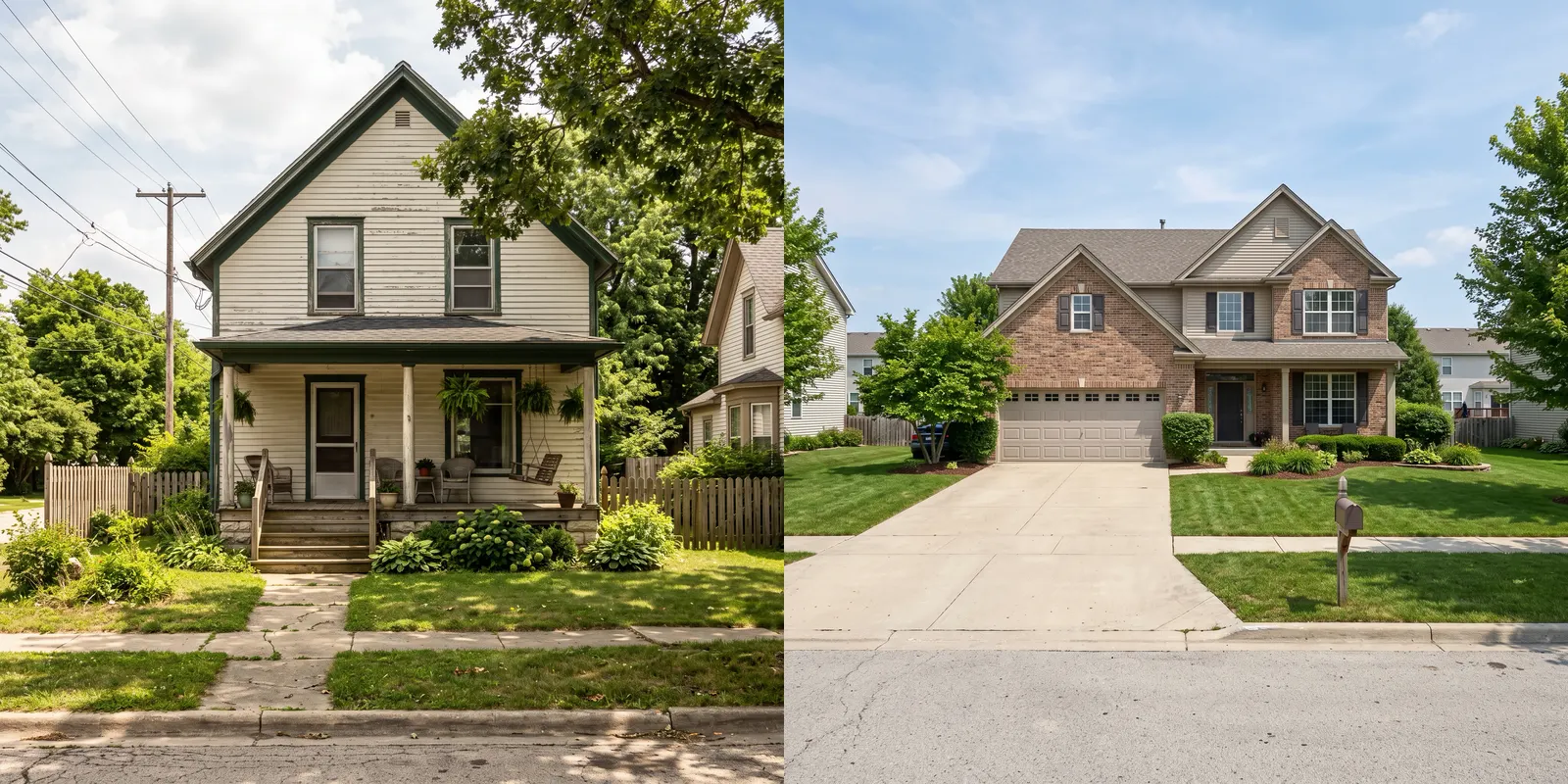
Montgomery's housing is younger than most of the Fox Valley, and the Census makes that plain. According to the 2020-2024 ACS, 53% of the village's 7,507 housing units were built between 2000 and 2009. Another 17% went up in 2010 or later. Only about 11% date from before 1960, and those are mostly in the old village along the river.
That gives you three broad types to tour. The old village has older frame houses and small ranches on narrow lots, with the character and the maintenance that come with age. The 1960s through 1990s pockets east of the river have ranches, split-levels and two-stories. And the 2000s subdivisions, which are most of the market, have two-story homes and townhomes built by production builders, often with basements, attached garages and a homeowners association.
The ACS puts the median home value at $299,500 and the median gross rent at $1,984. Rentals are a real slice of the market here, about 21% of occupied homes, and many of them are townhomes and houses in the same 2000s subdivisions.
A 2000s house carries its own checklist. By 2026 a house built in 2004 is about 22 years old, which is when roofs, water heaters, furnaces and air conditioners tend to come due at the same time. None of that should kill a deal. All of it belongs in the price. If you are weighing one, my home inspection checklist covers what to look for, and in a subdivision with an HOA, read the budget and the reserve study before you remove contingencies.
The Montgomery Housing Market in 2026
Montgomery is a competitive market at a price point that is hard to find elsewhere in the western suburbs. In the three months ending August 2026, Redfin reported a median sale price of $378,250, up 7.3% from a year earlier. Homes sold in a median of 43 days, four days slower than last year, at 101.0% of list price. 60.4% sold above list, and Redfin says homes drew three offers on average. It gives Montgomery a Compete Score of 75 out of 100, which it calls very competitive.
Zillow's home value index for Montgomery was $332,881 in August 2026, up 3.4% from $322,074 a year earlier. Both sources point the same direction this year. The gap between them is about what they measure. Redfin's median is the middle of whatever sold in a three-month window, and this summer's sales leaned toward the 2000s single-family homes that are most of the market. Zillow's index estimates the value of every home, whether it sold or not. Redfin's price per square foot, $192, was also up 7.3%.
Two numbers tell you how to price. 22.0% of listings took a price cut, up 6.6 points from last year, so an overpriced house does sit. But well-priced houses still go over asking. Montgomery rewards getting the list price right on day one, and buyers who wait for a second price cut on a good house usually lose it.
One caution on the data. Redfin's recently sold list for Montgomery includes some streets I believe are in unincorporated Boulder Hill, which shares the 60538 ZIP code. Treat the village-level numbers as a read on the area, not on a specific pocket. For the county picture, my Q3 2026 market report covers how I read these numbers, and is it a good time to buy in 2026 covers the rate side.
Montgomery Property Taxes in Kane and Kendall Counties
Property tax is the number that changes the monthly payment most in Montgomery, and it depends on which side of the county line the house is on. Ownwell's data, updated April 13, 2026, puts the Kane County side at a median effective rate of 2.33% with a median bill of $5,136, and the Kendall County side at 2.55% with a median bill of $6,620.
Those median bills look low next to the sale prices because they are based on older, lower assessed values across the whole ZIP code. Here is what the rates look like on a real purchase. A house bought at this summer's $378,250 median would eventually carry about $8,810 a year in tax on the Kane side, roughly $735 a month, and about $9,650 a year on the Kendall side, roughly $805 a month. Current bills may be lower because assessments trail the market, but the assessor catches up. The expectation I most often have to reset is buyers who budget off the seller's current bill.
The ranges inside each county are wide too. Ownwell shows effective rates from 1.75% to 2.90% on the Kane side and 2.31% to 2.72% on the Kendall side. Each combination of township, school district, park district, library district and fire district is its own tax code with its own rate, and Montgomery has more of those combinations than most towns its size.
If you already own and think your assessment is high, the appeal process works the same way in principle as the one in my property tax appeal guide, though Kane and Kendall set their own deadlines. This is general information, not tax advice. Your actual bill depends on your parcel, your exemptions and the assessor.
Montgomery Schools: Five Districts, One Village
Schools are where Montgomery takes the most homework, because five public school districts serve parts of the village. The village's schools page lists West Aurora School District 129, East Aurora School District 131, Oswego Community Unit School District 308, Yorkville Community Unit School District 115 and Kaneland Community Unit School District 302. The district follows the parcel, not the village name.
**Oswego District 308** covers much of the Kendall County side. Two of its elementary schools, Lakewood Creek and Long Beach, have Montgomery addresses, and the district runs two high schools, Oswego High School and Oswego East High School. **West Aurora 129** and **East Aurora 131** cover parts of the north end near Aurora. **Kaneland 302**, headquartered in Maple Park, reaches into the west side. **Yorkville 115** covers parts of the southwest.
Redfin's list of schools for the village includes Old Post, Lakewood Creek, Kaneland McDole, Nicholson and Boulder Hill elementary schools, which shows how many districts a short drive crosses. I don't rank schools on this page.
The detail that trips people up is assignment. A house can sit in Montgomery, have a Montgomery address, and feed a school in Oswego, Aurora or Yorkville. Check every address with the district directly before you write an offer, and ask me for the boundary if you want it done for a specific house.
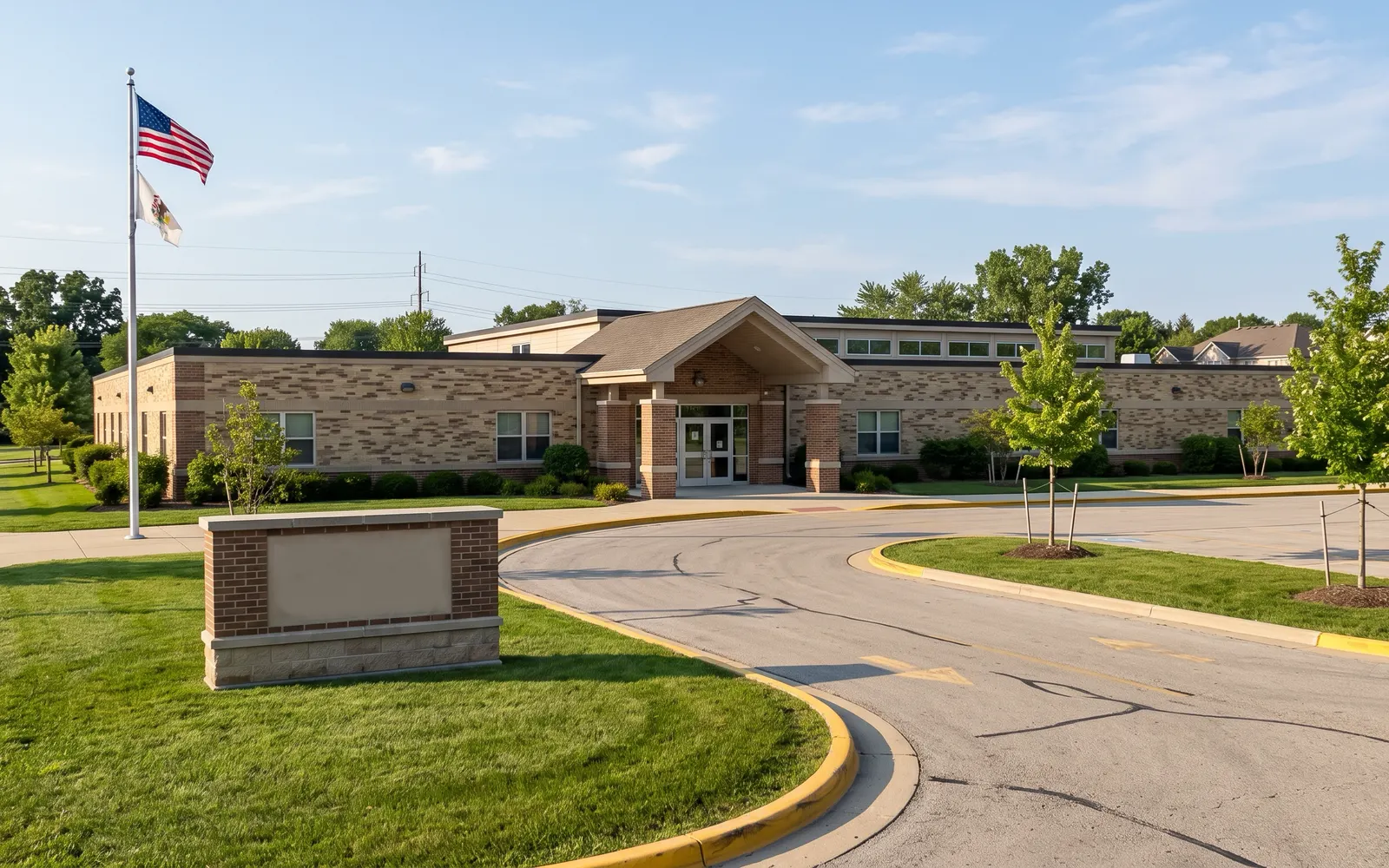
Lakewood Creek Elementary. District 308. Opened 2004, west side.
Long Beach Elementary. District 308. Opened 1967.
Oswego High School and Oswego East High School. District 308's two high schools.
West Aurora 129 and East Aurora 131. Parts of the north end of the village.
Kaneland 302. Parts of the west side; district office in Maple Park.
Yorkville 115. Parts of the southwest.
Commuting from Montgomery: Metra from Aurora
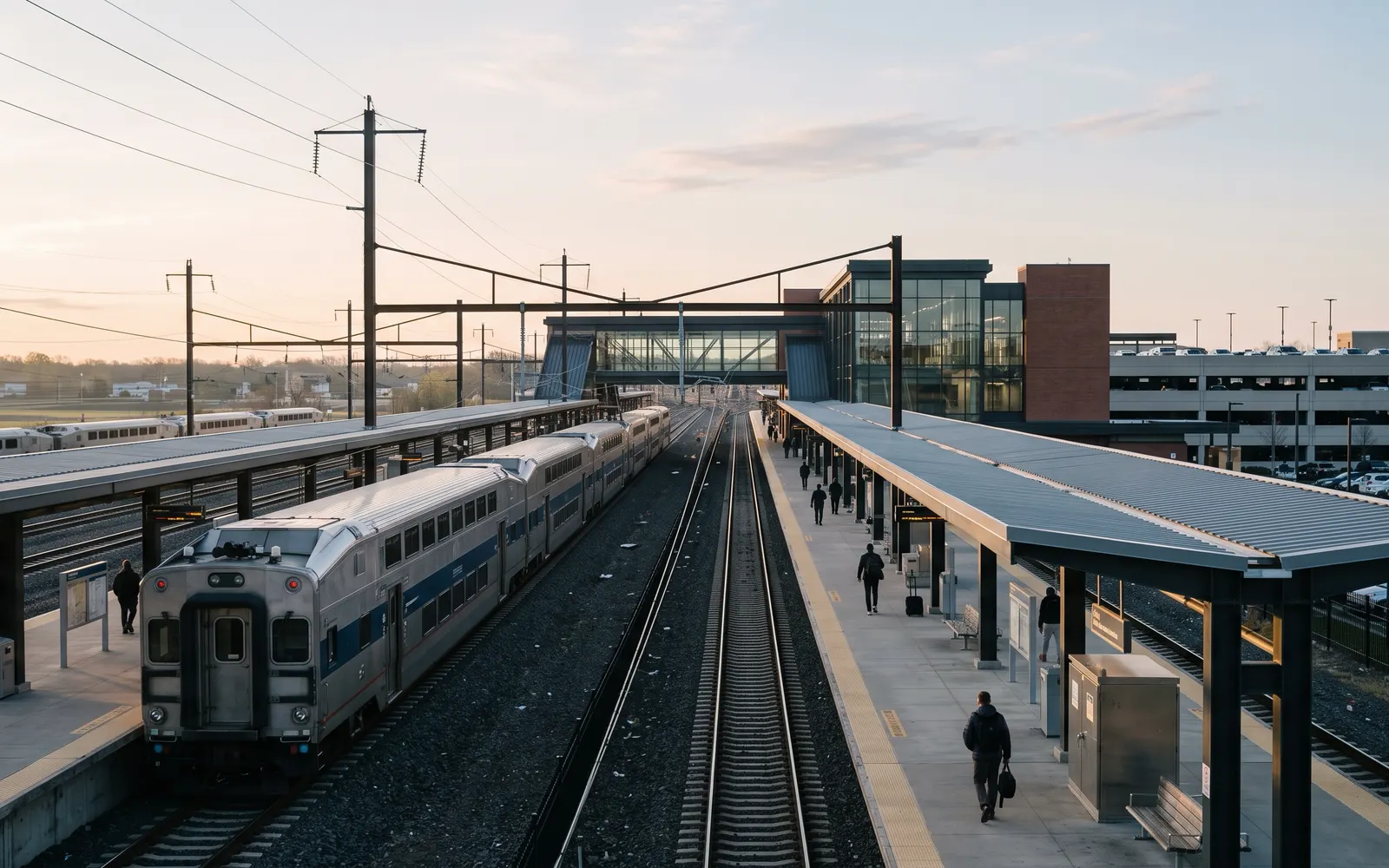
Montgomery has no Metra station of its own. The closest is the Aurora Transportation Center) at 233 N. Broadway, about three miles north of downtown Montgomery, at the end of the BNSF line. It is 37.1 miles from Union Station.
According to Metra's published schedule for service starting September 28, 2026, there are 32 weekday trains toward Chicago on the BNSF, and 20 on Saturdays and on Sundays. From the Aurora station, the fastest rush-hour trains reach Union Station in about 54 minutes, most take about 58, and midday trains take about 75.
Many commuters from the east side of Montgomery drive the extra miles to the Route 59 station on the Aurora and Naperville border instead, where the fastest expresses reach Union Station in about 45 minutes. Parking and the drive there matter as much as the train, so run both options at the time you would actually leave.
Local transit is thin. Walk Score calls Montgomery's public transportation minimal, and Redfin gives it a Transit Score of 0. If a daily train is central to your plans, the north and east sides put you closest to the stations.
Driving from Montgomery: I-88 and the Fox Valley Roads
Most commuting from Montgomery is by car. The Reagan Memorial Tollway (I-88) runs a few miles north of the village, and the two closest interchanges are Orchard Road and Route 31). From there it is a straight run east to Naperville, Lisle, Oak Brook and the I-88 office corridor.
Inside the village, a few roads carry most of the traffic. Orchard Road runs north and south along the west side. U.S. Route 30 crosses the village and leads about 11 miles southeast to Plainfield and 7 miles northwest to Sugar Grove. Route 31 runs along the west bank of the river and Route 25 along the east bank, both linking Aurora to the north with Oswego to the south. Douglas Road and Ogden Avenue (Route 34) serve the east side.
For O'Hare, the usual route is I-88 east to I-294 north, roughly an hour or more outside rush hour. One thing I tell buyers: the Fox River has only a handful of bridges, and crossing it at rush hour takes longer than the map suggests. If you work east of the river and are looking west of it, drive the route at the hour you would really leave before you decide.
Is Montgomery Walkable?
For daily errands, no. Walk Score rates the village 15, which it calls car-dependent, meaning almost all errands require a car. That is typical for a village built mostly as 2000s subdivisions with shopping clustered on a few arterial roads.
The one exception is the old village along River Street, where Village Hall, Montgomery Park, the Gray's Mill restaurants and the river are all within a few blocks. If walking to dinner matters to you, that narrows your search to a small part of town with older houses.
The better story is biking. Redfin rates Montgomery's Bike Score at 52, which it calls bikeable. The village maintains its own bike paths, and the Fox River Trail runs through the Fox Valley along the river, connecting north toward Aurora, Batavia and Geneva and south toward Oswego. Many of the west-side subdivisions have paths that tie into their neighborhood parks and ponds.
Shopping in Montgomery: Orchard Road and Ogden Avenue
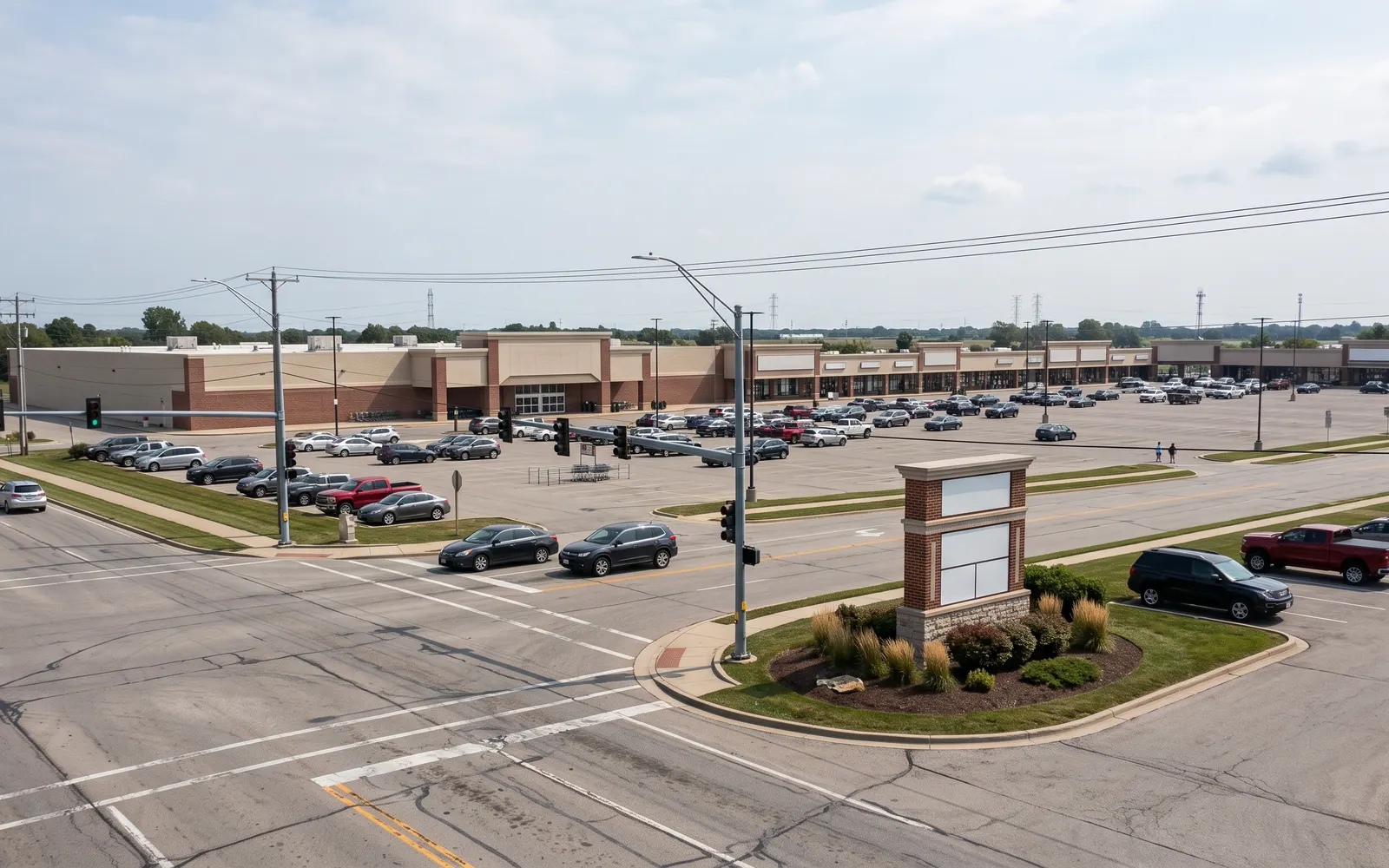
Montgomery's shopping sits in two clusters at opposite ends of the village, according to OpenStreetMap listings checked in September 2026. On the west side, the Orchard Road and Route 30 corner has a Walmart Supercenter at 2000 Orchard Road, an Aldi on Mayfield Drive, and a strip of quick-service restaurants and coffee. On the east side, the Ogden Avenue and Route 30 area has Menards at 1200 Ogden Avenue, Sam's Club, JCPenney and Cooper's Hawk.
The village's development page lists more coming. A Chipotle is planned on the Orchard Road corridor, and a Hawaiian Brothers, a 7 Brew and a Wintrust Bank are listed as coming soon at Ogden Hill.
For a full mall, Fox Valley Mall in Aurora and the Chicago Premium Outlets off I-88 are both a short drive. Downtown Montgomery itself is small. It is a river, a park, a historic mill and a few restaurants rather than a shopping street.
Groceries and Everyday Errands in Montgomery
Weekly groceries in Montgomery mostly mean the west side. The Walmart Supercenter at 2000 Orchard Road and the Aldi at 2050 Mayfield Drive are next to each other near Route 30. On the east side, Sam's Club at 1050 Ogden Avenue covers bulk shopping, and more full-size grocery stores sit a few minutes away in Aurora and Oswego. Pharmacies, banks and quick errands cluster along Douglas Road, Ogden Avenue and Orchard Road, so most weekly errands are a short drive from any pocket.
Where Montgomery Eats
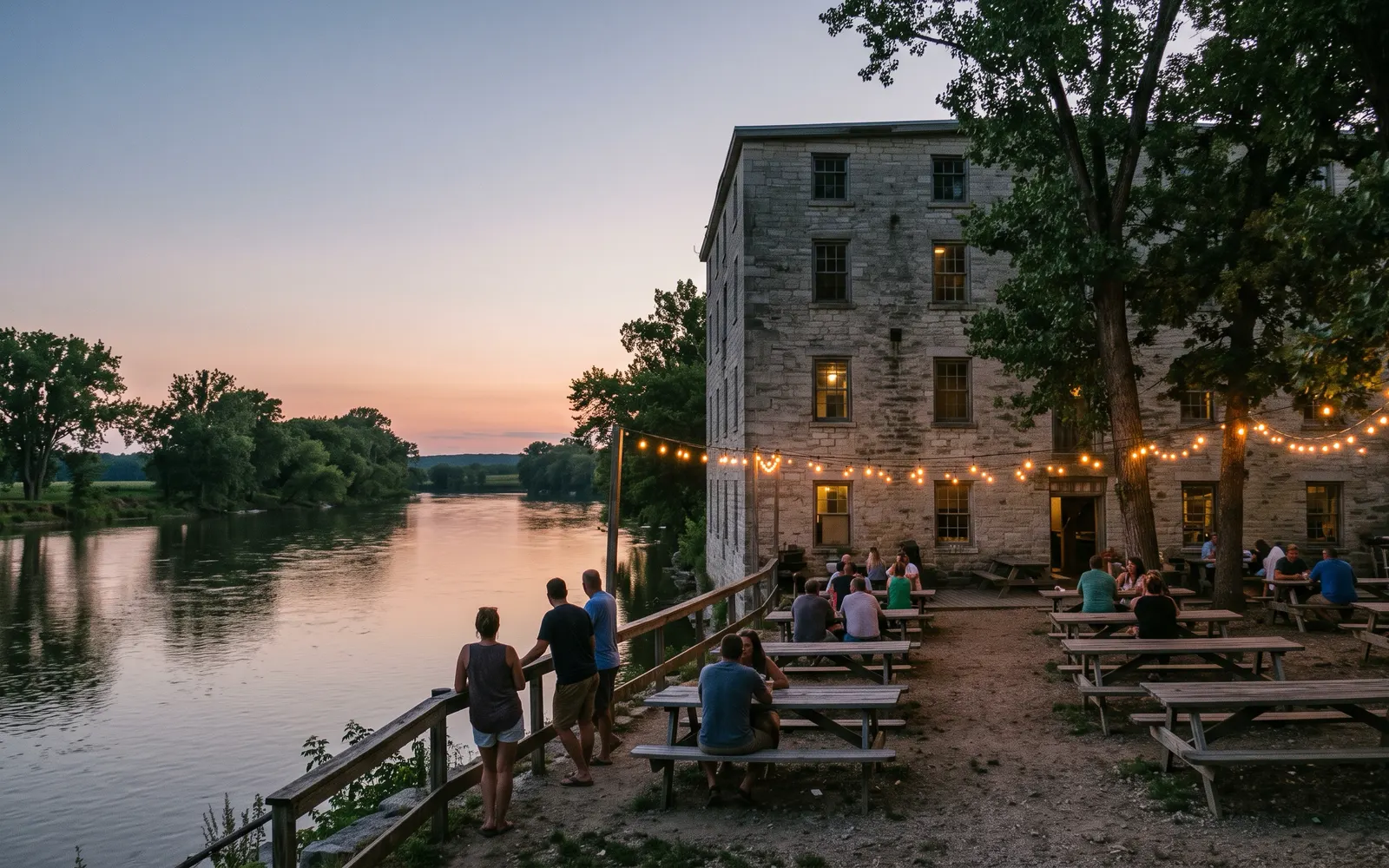
The most distinctive place to eat in Montgomery is the old mill. The Gray-Watkins Mill on the river sat vacant for years before new owners reopened it in 2021 as Gray's Mill, with Danny Boy's pub in the basement, a beer garden and banquet space on the upper floors. The village approved up to $400,000 in grants from its development fund to help it reopen. Across River Street, Grumpy Gaucho is another downtown option.
The rest of the dining is along the commercial roads. Cooper's Hawk sits on Route 30 near Ogden Avenue, and Douglas Road, Ogden Avenue and Orchard Road carry most of the chain restaurants, pizza and coffee. Pig Dog Pub on South Broadway is a neighborhood bar near the river. If you are touring on a summer evening, have dinner downtown by the mill. It tells you more about the old village than any listing will.
Parks, Trails and the River in Montgomery
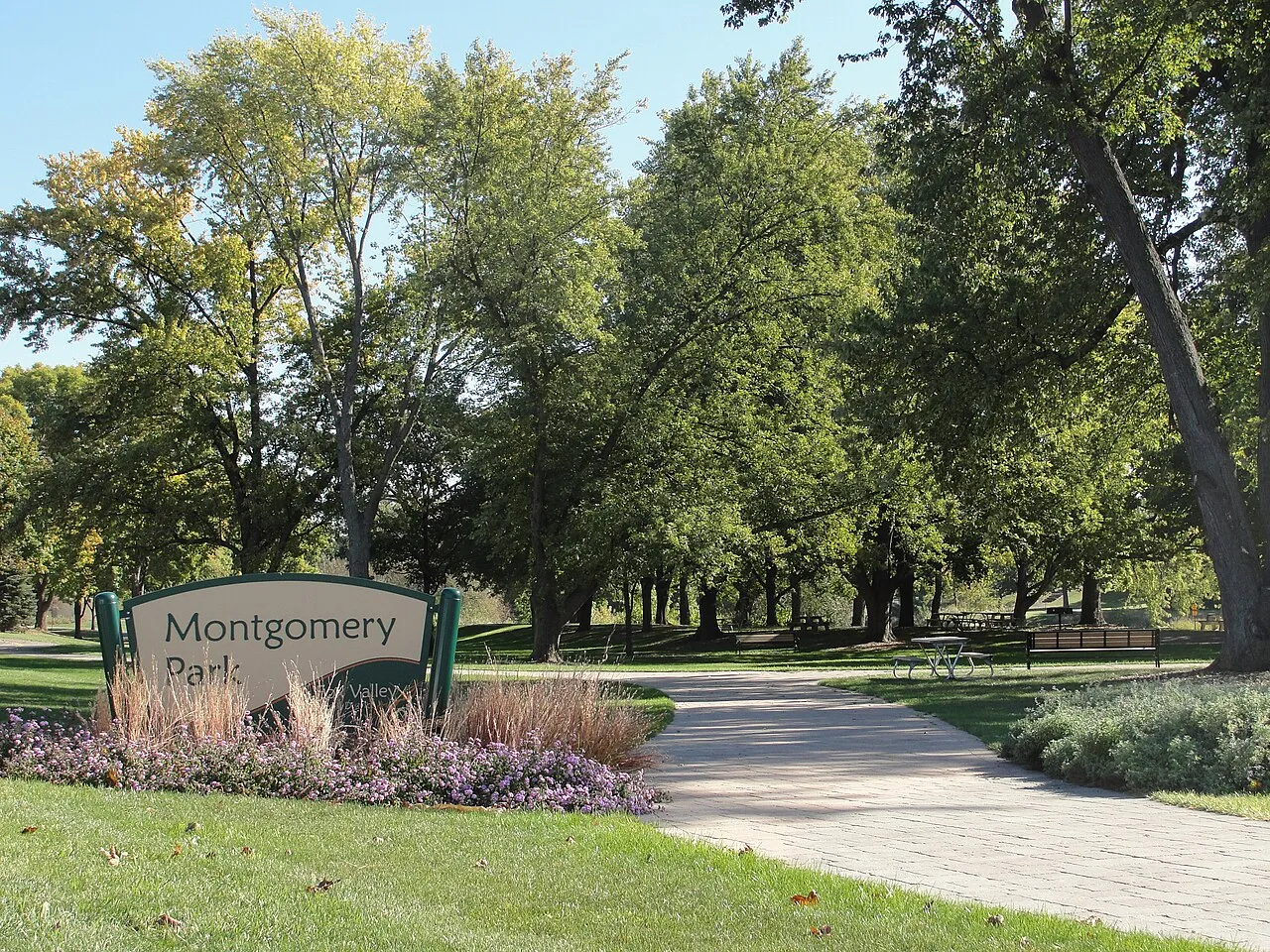
Montgomery has three layers of parks. The village runs its own, led by Montgomery Park downtown on River Street, which has a playground, a picnic pavilion and, according to the village's website, a new ADA-accessible kayak launch dedicated on July 22. The village also lists Austin Park, Krug Park and Briarcliff Woods on the east side, plus neighborhood parks in Lakewood Creek, Huntington Chase, Fairfield Way and Foxmoor on the west side, and a dog park.
Then there are the park districts. Most of the village is in the Fox Valley Park District, which maintains 172 parks and more than 2,600 acres across the area, including the Stuart Sports Complex on Montgomery's west side and Jericho Lake Park to the north. Parts of the Kendall County side, including Seasons Ridge and Marquis Pointe, are in the Oswegoland Park District instead. Which one you are in decides which pools, programs and resident rates you get.
The third layer is open land. The Blackberry Creek Forest Preserve runs along the creek on the west side, and the Fox River itself is the village's biggest amenity. The village has its own fishing page, the river is popular for kayaking, and the Fox River Trail runs through the valley north and south.
Libraries Serving Montgomery
Montgomery has no library of its own, and like schools and parks, the library you use depends on the parcel. The village points residents to two districts. The Oswego Public Library District runs its Montgomery Campus at 1111 Reading Drive, open 9 a.m. to 9 p.m. Monday through Thursday, 9 to 5 on Friday and Saturday, and noon to 4 on Sunday. Parts of the west side are in the Sugar Grove Public Library District instead. Homes outside both districts may need a nonresident card, so it is worth asking on any specific address.
Utilities in Montgomery and the Switch to Lake Michigan Water
According to the village's utilities page, the Village of Montgomery provides water, Fox Metro handles sewer, ComEd delivers electricity, Nicor Gas provides natural gas, and LRS handles garbage and recycling. AT&T, Xfinity and MetroNet offer internet service.
The bigger story is the water source. Montgomery, Oswego and Yorkville have relied on wells drawing from a deep sandstone aquifer that the Illinois State Water Survey says is being drawn down faster than it refills. On June 10, 2026, the three communities and the DuPage Water Commission broke ground on WaterLink, a roughly 30-mile, nearly $400 million pipeline to bring Lake Michigan water to the three towns. Construction is scheduled to finish in 2028, the village will keep billing residents directly, and the existing wells will stay available as backup.
For a buyer, that means two things. The long-term water supply question has an answer. And a project that size is paid for partly through local bonds and rates, so ask what the village expects water bills to do before and after the switch.
Hospitals Near Montgomery
Montgomery has no hospital inside the village, but two are close in Aurora. Rush Copley Medical Center is on Aurora's east side near Route 34, and Ascension Mercy is on the west side of Aurora. Both are generally a 10- to 15-minute drive from most of Montgomery. For specialty care, Northwestern Medicine Delnor in Geneva and Edward Hospital in Naperville are within reach.
Nights Out Near Montgomery
For a night out, Montgomery leans on Aurora, which is close enough that downtown Aurora functions as Montgomery's entertainment district. The Paramount Theatre runs a Broadway series, RiverEdge Park hosts summer concerts on the river, and the new Hollywood Casino Aurora near Farnsworth Avenue and I-88 opened in June 2026. My Aurora guide covers all three.
Closer to home, the evenings are about the river. A summer night at the Gray's Mill beer garden, a kayak put-in at Montgomery Park, or a ride on the Fox River Trail are the local versions. Naperville's downtown and Riverwalk are about 20 minutes east, and my Naperville guide covers what is there.
Montgomery Fest and the Village's Yearly Traditions
The big one is Montgomery Fest, held on a weekend in mid-August at Montgomery Park, 301 N. River Street. In 2026 it ran Friday through Sunday, August 14 to 16. According to WSPY's preview, it had a carnival with wristband specials each day, food vendors and free shuttles. Friday brought a Billy Joel tribute band. Saturday had a daytime program with fire safety activities and pet adoptions, plus a craft fair and a car show. Sunday closed with a carp derby, a parade, a corn boil and a rubber duck race.
The rest of the year is quieter and more local. The village's Historic Preservation Commission runs history programs, including a September 24 presentation on the Underground Railroad in northern Illinois, and keeps the Settler's Cottage Museum. The village also posts a fall brush pickup and other seasonal notices on its homepage. If you are touring in August, go to the Fest. It tells you more about the village than any listing will.

What's Being Built in Montgomery
Most of Montgomery's current building is industrial and commercial, not residential. The largest recent announcement came in February 2026, when the state announced that Tangent Technologies, a maker of recycled plastic lumber, will invest $50 million to consolidate its operations into a 1.5 million square foot facility in Montgomery, with 110 new jobs.
Along Orchard Road, two big parcels have been approved. In March 2023 the village approved the Karis Center for Commerce, a 204-acre industrial and commercial development near the southeast corner of Orchard Road and Caterpillar Drive in the Kendall County part of the village. In June 2023 it annexed and rezoned 250 acres on the west side of Orchard Road north of Route 30, with 67.1 acres zoned for retail, the rest for manufacturing, a sand and gravel mining area of just over 62 acres and a 23-year TIF district. If you are looking at homes on the west side near Jericho Lake Park or along Orchard Road, drive the area and ask what is planned next door.
Downtown, the village is trying to put its own riverfront land to work. In January 2026 the Village Board considered a letter of intent with The Williams Group for the village-owned lot at 310 N. River Street: a two-story building with commercial space on the ground floor and apartments above, with a $76,000 purchase price if the project goes ahead. I haven't seen a final approval yet. Add the WaterLink pipeline covered above, and the next few years in Montgomery are mostly about jobs, water and a small downtown infill project, not a wave of new subdivisions.
I don't label any town or neighborhood as safe or unsafe.
Flood Risk in Montgomery
A village built on both banks of a river has flood questions, but in Montgomery they are house by house. Redfin, using First Street's model, rates Montgomery's overall flood risk as minor, with 224 properties, about 6%, at risk of severe flooding over the next 30 years. That risk concentrates along the Fox River and along Blackberry Creek on the west side. The village has said a large part of the 250-acre Orchard Road parcel covered in the development section sits in the Blackberry Creek floodplain.
The river does rise. In April 2026 high water along the Fox flooded docks, riverbanks and some basements up and down the valley. Two checks before you write an offer. Look the address up on the FEMA flood map, because a mapped flood zone can mean required flood insurance on a mortgage. And ask the seller directly about water in the basement and whether the sump pump has a battery backup. On a 2000s house, the follow-up question about what they did about it is the one that matters.
Frequently Asked Questions
How much does a house cost in Montgomery, IL?+
Redfin reported a median sale price of $378,250 for the three months ending August 2026, up 7.3% from a year earlier. Zillow's home value index was $332,881 for August 2026, up 3.4%.
What county is Montgomery, IL in?+
Both Kane and Kendall. The north part of the village is in Kane County and the south part is in Kendall County, and each county has its own assessor and tax rates.
What are property taxes in Montgomery, IL?+
Ownwell (April 2026) puts the median effective rate at 2.33% on the Kane County side and 2.55% on the Kendall County side. Bills usually rise after a sale once the home is reassessed.
What school district is Montgomery, IL in?+
Five districts serve parts of the village: West Aurora 129, East Aurora 131, Oswego 308, Yorkville 115 and Kaneland 302. Assignment follows the parcel, so confirm each address with the district.
Is Boulder Hill part of Montgomery?+
No. Boulder Hill is an unincorporated community in Kendall County that uses the Montgomery post office, so its homes have Montgomery mailing addresses but are not in the village.
How long is the commute from Montgomery to downtown Chicago?+
Montgomery has no Metra station. From the Aurora Transportation Center about three miles north, most rush-hour BNSF trains reach Union Station in about 58 minutes. The Route 59 station farther east has 45-minute expresses.
Is Montgomery walkable?+
Not for daily errands. The Walk Score is 15, though the old village along River Street is walkable to the park, the river and the Gray's Mill restaurants.
Where does Montgomery get its water?+
From village wells today. The WaterLink pipeline, which broke ground June 10, 2026, is scheduled to bring Lake Michigan water to Montgomery, Oswego and Yorkville by 2028.
Eshu Chikoti has extensive access to off-market listings throughout Montgomery and the rest of Kane County — homes that never make it to the public listing sites. That matters right now: in a seller's market like this one, well-priced homes routinely go under contract within days, and buyers relying only on public listings are competing for whatever is left over. Working with someone plugged into off-market inventory means seeing homes before the crowd does.
Eshu Chikoti · 847-691-4282 ·
Get new Montgomery listings by email
When a home comes on the market in Montgomery, I'll email it to you.
Just your email. Unsubscribe any time by replying.
Thinking About Montgomery?
Whether you're buying, selling, or just curious what's on the market, I can walk you through Montgomery street by street.