North Barrington, IL
North Barrington, IL is a village of about 3,100 people on just under five square miles of lakes, wooded lots and two private golf clubs, with no downtown and no village water or sewer.
Living in North Barrington, IL means large wooded lots, Honey Lake and two private clubs, Biltmore and Wynstone, with a median sale price near $865,000 this summer. The trade-offs are well and septic on most lots, property tax around 2.2% of value, and a drive for every errand. Here is how it breaks down, pocket by pocket.
Written by Eshu Chikoti · 847-691-4282 ·
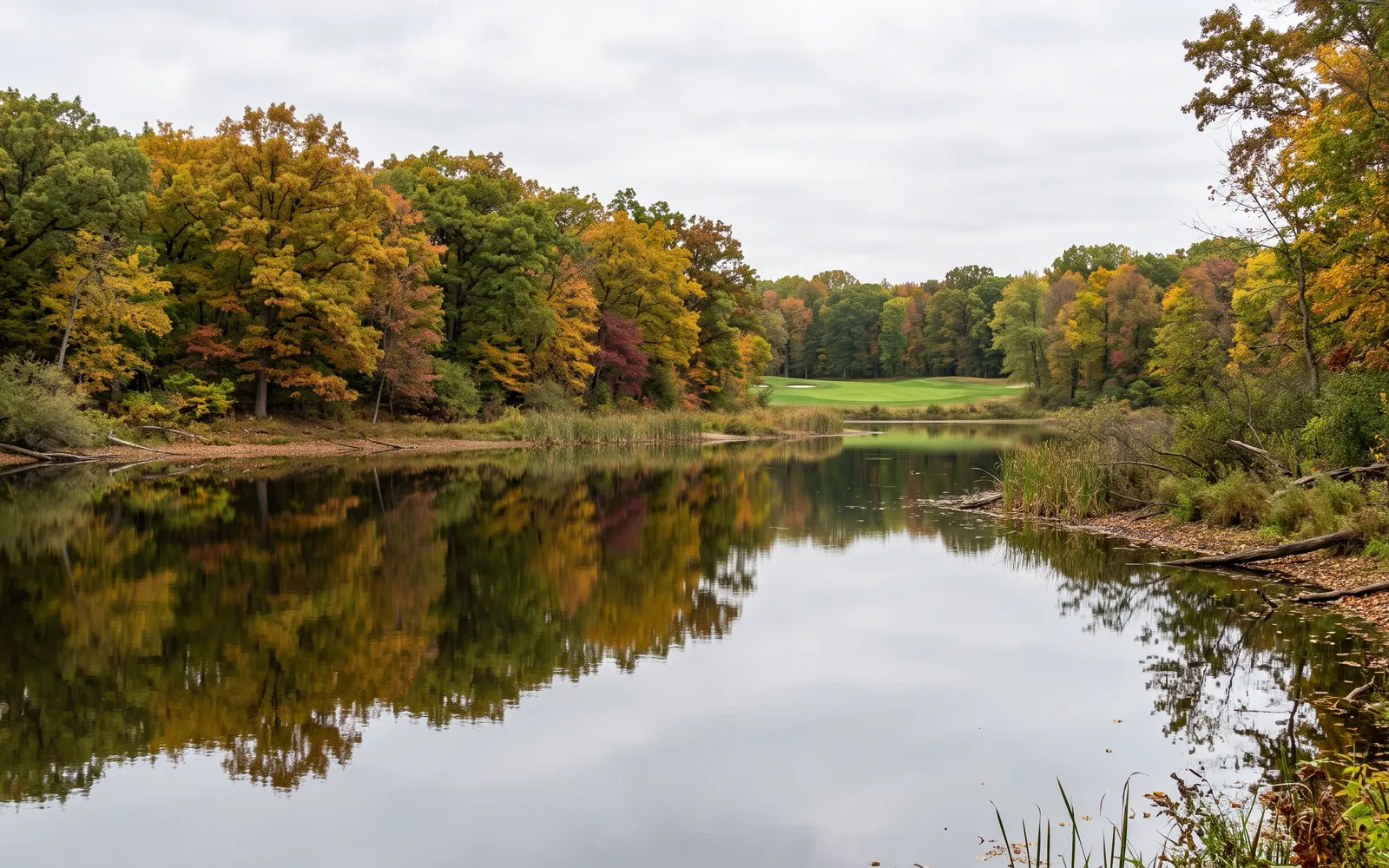
How North Barrington, IL Got Here: A Short History
The first settlers reached the Barrington area in the 1830s, according to the village's history page. A few of their houses still stand inside today's village: the Kimberly House at 156 Kimberly Road (about 1857), which local lore says Theodore Roosevelt visited, the house at 150 Old Barrington Road (about 1860), and the Kuhlman House at 615 Miller Road (about 1875).
The village's modern shape starts with Honey Lake. Around 1900 the Sandman family farmed the land, and in the early 1900s William Grace bought the Sandman farm and built a red brick mansion with a water tower on the high ground above the lake. In 1925 Clifford Leonard, a Chicago banker, bought the Grace property and surrounding farmland, about 800 acres, and laid out Biltmore Country Estates around a new 18-hole course designed by Leonard Macomber. The course opened in 1926, the Grace mansion became the clubhouse, and Bruce Bell built the first house in 1927, according to Biltmore Country Club and Quintessential Barrington.
The village itself came later. On October 31, 1959, residents voted 108 to 28 to incorporate, meeting in the Krumlinde farmhouse on Signal Hill Road. The first village covered less than two square miles and about 200 people. The Biltmore area to the east was annexed in May 1961 after a close vote. The reason for incorporating, in the village's own words, was to let residents shape their environment more directly, which in practice meant low density and protected open land.
The last big chapter is Wynstone. In 1985 W. Clement Stone, the Chicago insurance executive, partnered with Jack Nicklaus's development company to turn part of his country estate into a golf community. North Barrington annexed the land in 1986, lot sales began in 1987, and the course opened in 1989, according to Chicago Golf Report. The current Village Hall at 111 Old Barrington Road was built in 1992. Before that, village business was run out of homes on Indian Trail Road and on the Good Shepherd Hospital grounds.
North Barrington at a Glance
North Barrington sits in the southwest corner of Lake County, about 35 miles northwest of the Loop. Wikipedia, using Census figures, puts it at 4.98 square miles, of which 4.73 is land and 0.25 is water. It shares the 60010 ZIP code and the Barrington mailing address with its neighbors, which is why so many listings just say "Barrington." Check the village line on any listing before you assume which rules and which tax codes apply.
The village's own summary counts about 3,171 residents in roughly 1,100 homes, with two country clubs. Most home sites are in Cuba Township and Barrington School District 220. The eastern part of the village is in Ela Township and Lake Zurich School District 95. The 2020-2024 Census ACS counts 1,135 housing units, 1,117 of them detached single-family houses (98.4%), and 98.1% of occupied homes are owner-occupied. There is almost no rental housing.
The government is small. The village has three paid staff and contracts out legal, engineering, building and health work. Police service comes from the Lake County Sheriff under contract. Fire and paramedic service is split at Miller Road: the Wauconda Fire Protection District covers homes north of Miller and the Lake Zurich Rural Fire Protection District covers homes south of it, according to the village's public safety page. Both are separate taxing bodies, which shows up on the tax bill.
The draft zoning code bans short-term rentals and ADUs, and there is almost no rental housing today.
North Barrington Neighborhoods, Pocket by Pocket
North Barrington is not one market. It is at least three, and the village median hides the difference. Wynstone is a gated golf community with its own association and private roads. The Biltmore area around Honey Lake is the oldest part of the village, with the widest range of lot sizes and house ages. Everything else is a set of smaller subdivisions and individual estate parcels, most of them on well and septic and many with no association at all.
The zoning map is the second way to read the village. The official zoning map (dated December 2011) shows three single-family districts with different minimum lot sizes, plus a golf course district and a premier equestrian estate district. Many older lots, especially around Honey Lake, were platted before those minimums existed and are smaller than the district would allow today. That matters if you are buying to add on or rebuild, and it is covered in the next section.
The third split is the one buyers skip: which school district and which fire district an address falls in. Two houses a few minutes apart can feed different high schools and pay different fire district levies. I check both on every North Barrington address before we write an offer.
Boundaries below are informal and agents draw them slightly differently. If you want to know which pocket a specific address falls in and what that pocket has sold for lately, that is a conversation I am happy to have here.
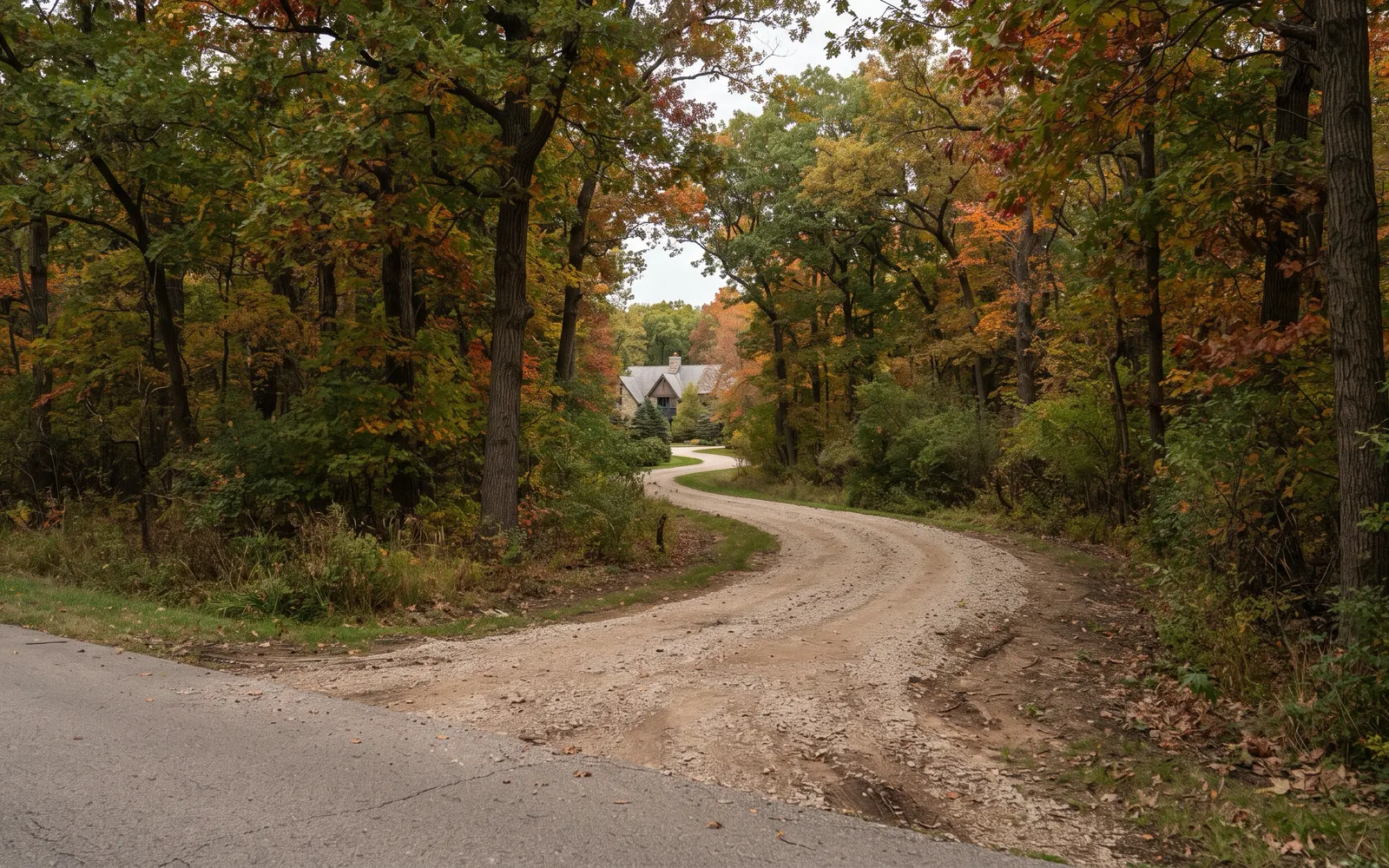
Wynstone. East side of the village. A gated community of about 750 acres, including roughly 120 acres of lakes, with more than 430 homesites around the Jack Nicklaus course, according to Wynstone and Chicago Golf Report. Private roads, a 24-hour Wynstone Public Safety Department, an on-site water treatment plant and the Wynstone Property Owners' Association.
Biltmore Estates and Honey Lake. Around Honey Lake and the Biltmore course, laid out from 1925. The original plan called for about 2,300 small lots, so parcel sizes vary more here than anywhere else in the village, and house ages run from the late 1920s to recent rebuilds.
Oaksbury. Around Duck Pond and Duck Pond Lane. One of the three areas the village's GHO drainage project is designed to fix; ask any seller about past water on the lot.
Grassmere Farms. Near Route 59. Also inside the GHO drainage project area.
Haverton on the Pond. Along Haverton Way, west of Route 59, next to the village-owned Haverton Conservation Area. The subdivision's detention pond is part of the GHO work.
Signal Hill. Around Signal Hill Road, the part of the original 1959 village where incorporation was voted.
Old Barrington Farm. A premier equestrian property inside the village, described by Quintessential Barrington as about 60 acres.
Brook Forest, Christopher Pines, Pennington Pond, Timbercreek and Arboretum. Smaller subdivisions you will see named on listings. Ask for the build year, the association (if any), the school district and the septic records on each one.
North Barrington Homes, Lot Sizes and Zoning
The old version of this page said most of North Barrington is zoned for five-acre lots. That is too simple. The village's July 2026 public draft zoning code lists three single-family districts: R-1 with a five-acre minimum lot and 200-foot minimum width, R-2 with a two-acre minimum and 125-foot width, and R-3 with a 40,000-square-foot minimum (a little under an acre) and 115-foot width. Maximum building coverage is 10% of the lot in R-1, 20% in R-2 and 35% in R-3, and the height limit is 35 feet in all three. There is also a golf course district and an equestrian estate district, where new residential lots must be at least five acres.
Two practical rules in that draft are worth knowing before you buy. Water does not count toward building coverage, so a four-acre lot with two acres of pond is treated as two acres when you calculate how big the house can be. And in R-1, keeping horses, goats or other livestock is allowed on three acres or more, up to three animals per five acres with a cap of six. The draft is not final; the village expects Board approval in late winter or early spring 2027, so confirm the rules in force at closing.
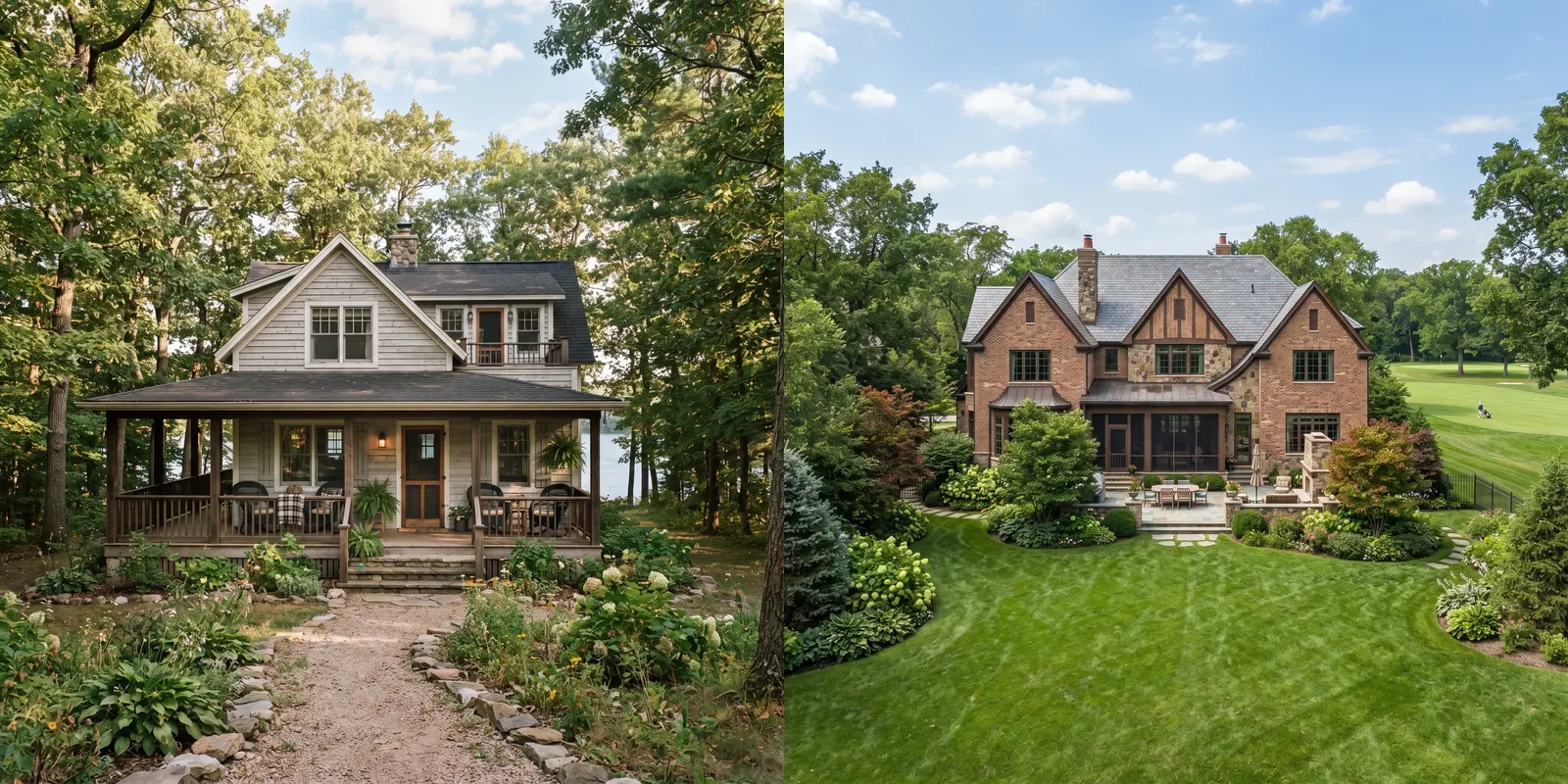
The housing itself is almost all detached single-family. The 2020-2024 Census ACS puts the median year built at 1983 and the median owner-estimated value at $765,900. In practice you will see 1930s to 1950s houses around Honey Lake, 1960s to 1980s custom homes on the estate parcels, the late-1980s and 1990s homes that made up Wynstone's first wave, and a steady run of rebuilds and additions on older lots.
What I tell buyers to budget for here is less about finishes and more about systems. A 1970s house on two acres usually has its original well, a septic field that may or may not have been replaced, a long driveway and a lot of roof. None of that should kill a deal. All of it belongs in the price. My home inspection checklist is a good start, and on this kind of house I add a septic inspection and a well water test to every offer.
The North Barrington Housing Market in 2026
North Barrington homes sell more slowly than most of Lake County, and the numbers swing because so few homes trade. In the three months ending August 2026, Redfin reported a median sale price of $864,928, down 15.0% from a year earlier. Its August report counted 15 sales, down from 20. The median home sold in 45 days, down from 74, at 100.7% of list price, and 40.1% of homes sold over asking. Redfin gives North Barrington a Compete Score of 51 out of 100, which it calls somewhat competitive.
Here is the number that explains the headline. Over the same period Redfin's median price per square foot rose 25.3%, to $230. When the median price falls while the price per square foot rises that much, the homes that sold were smaller, not cheaper. Zillow's home value index, which estimates the value of every home whether it sold or not, was $875,180 in August 2026, up 7.9% from $811,114 a year earlier. My read is that values rose this year and the mix of what sold shifted toward smaller houses.
Wynstone runs on its own track. Redfin's Wynstone neighborhood page shows a median sale price of $1,541,756 for the three months ending August 2026, up 34.1%, with 4 sales in its August report and a median of 59 days on market. Price per square foot there was $217, up 1.4%. Wynstone sells for more per house and slightly less per square foot than the village as a whole, because its houses are larger.
Two more signals from Redfin: 13.0% of listings took a price cut, and the average home sold near list price and went pending in about 55 days. In practice that means a well-priced house in a pocket buyers want still moves, and an overpriced estate sits. With this few sales, one closing can move the median by six figures, so the better tool for pricing a specific house is a hand-picked set of comparable sales from North Barrington, Lake Barrington, Tower Lakes and Kildeer, adjusted for acreage, water frontage, association and septic condition. For the county-wide picture, see my Lake County market report for Q3 2026.
North Barrington Property Taxes and the Real Cost of Owning
Ownwell's data, updated April 2026, puts North Barrington's median effective property tax rate at 2.18% and the median annual bill at $16,416, on a median home value of $697,774. That rate is below the Illinois median of 2.33% that Ownwell reports, but the dollar bill is almost double the Lake County median of $8,402 because the houses are worth more. Across the 60010 ZIP code, Ownwell puts the 25th percentile bill at $11,016, the 75th at $22,192 and the 90th at $27,041.
Here is what that looks like on a real purchase. At 2.18%, a house bought at this summer's $864,928 Redfin median would eventually carry about $18,860 a year in tax, roughly $1,570 a month on top of the mortgage. The seller's current bill may be lower because assessments trail the market, but the assessor catches up, usually in the reassessment after a sale. The expectation I most often have to reset is buyers who budget off the seller's current bill.
Your bill also depends on where in the village you are. Most homes are in Cuba Township and District 220; the east side is in Ela Township and District 95. The fire district changes at Miller Road. The library district also splits the village. Each combination is its own tax code with its own rate, so two houses at the same price can carry different bills. Lake County's tax-code rate tables block automated access, so I could not pull the TY2025 rates for each code for this page; I pull them by hand for any address you are serious about.
In Wynstone, add the property owners' association assessment and water charges to the monthly number, and ask separately about club dues, which are not part of owning the house. Outside Wynstone, the costs that don't show up on the tax bill are septic pumping and eventual replacement, well maintenance and a long driveway. If you already own here and think your assessment is high, my Lake County property tax appeal guide walks through the process and deadlines. This is general information, not tax advice. Your actual bill depends on your parcel, your exemptions and the assessor.
North Barrington Schools: District 220 and District 95
North Barrington is split between two unit districts. According to the village, most home sites are in Cuba Township and therefore in Barrington Community Unit School District 220. The eastern part of the village, in Ela Township, is served by Lake Zurich Community Unit School District 95.
District 220 runs eight elementary schools (Arnett C. Lines, Barbara B. Rose, Countryside, Grove Avenue, Hough Street, North Barrington, Roslyn Road and Sunny Hill), an Early Learning Center, Barrington Middle School's Prairie and Station campuses, and Barrington High School. North Barrington Elementary is the only public school inside the village. District 95 runs five elementary schools (Isaac Fox, May Whitney, Sarah Adams, Seth Paine and Spencer Loomis), Middle School North and Middle School South, and Lake Zurich High School.
The detail that trips people up is assignment. Which district, which elementary school and which middle school campus a house feeds depends on the parcel, not the town name, and a Barrington mailing address does not mean District 220. Check the address on District 220's boundary locator or District 95's boundary map, and confirm with the district before you write an offer.
I don't rank or grade schools on this page.
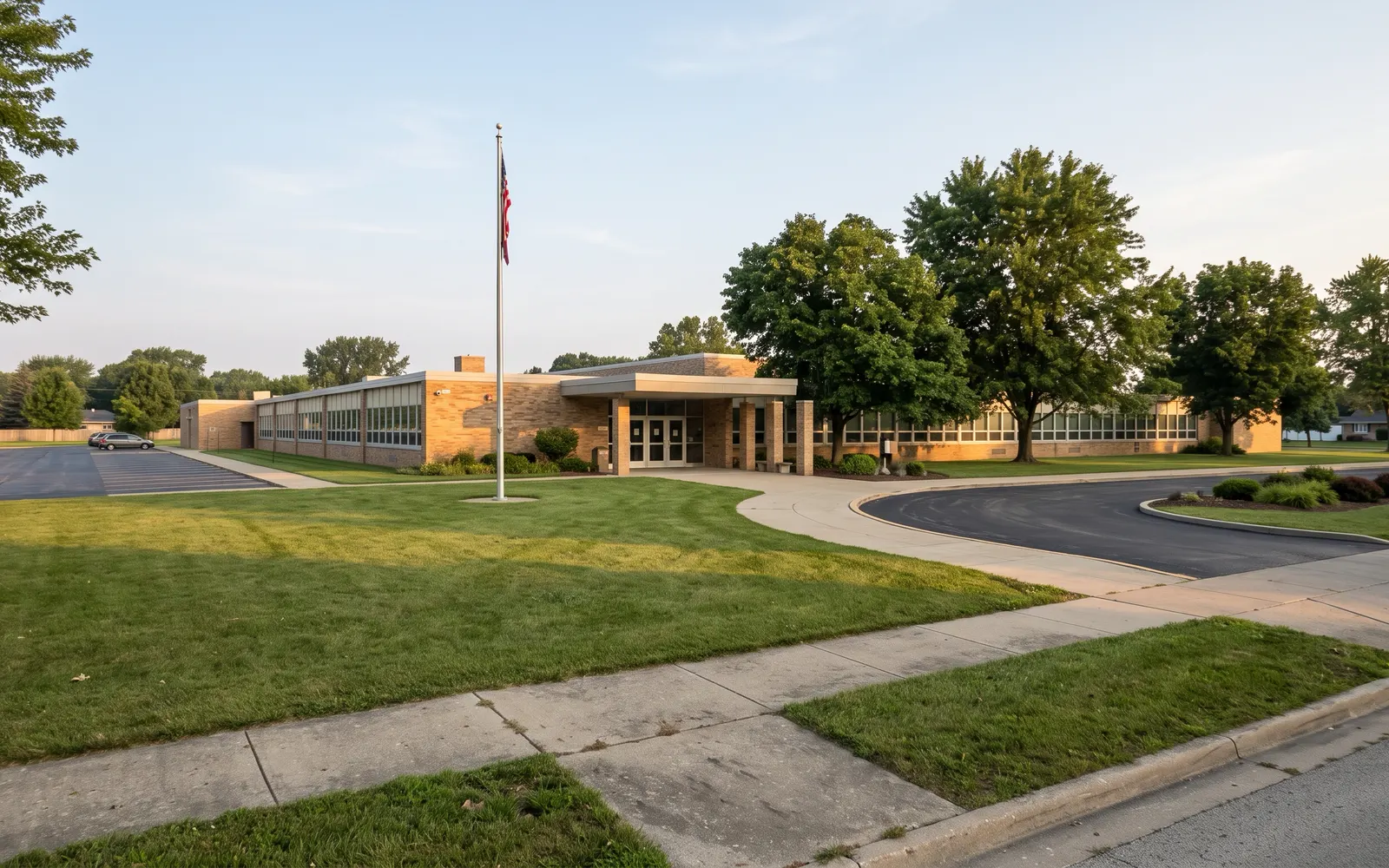
North Barrington Elementary. District 220. The only public school inside the village.
Barrington Middle School, Prairie and Station campuses. District 220, grades 6-8. Confirm which campus an address feeds.
Barrington High School. District 220's high school.
District 95 elementary schools. Isaac Fox, May Whitney, Sarah Adams, Seth Paine and Spencer Loomis. Confirm which one an east-side address feeds.
Middle School North and Middle School South. District 95.
Lake Zurich High School. District 95's high school.
Commuting from North Barrington: Metra to Chicago
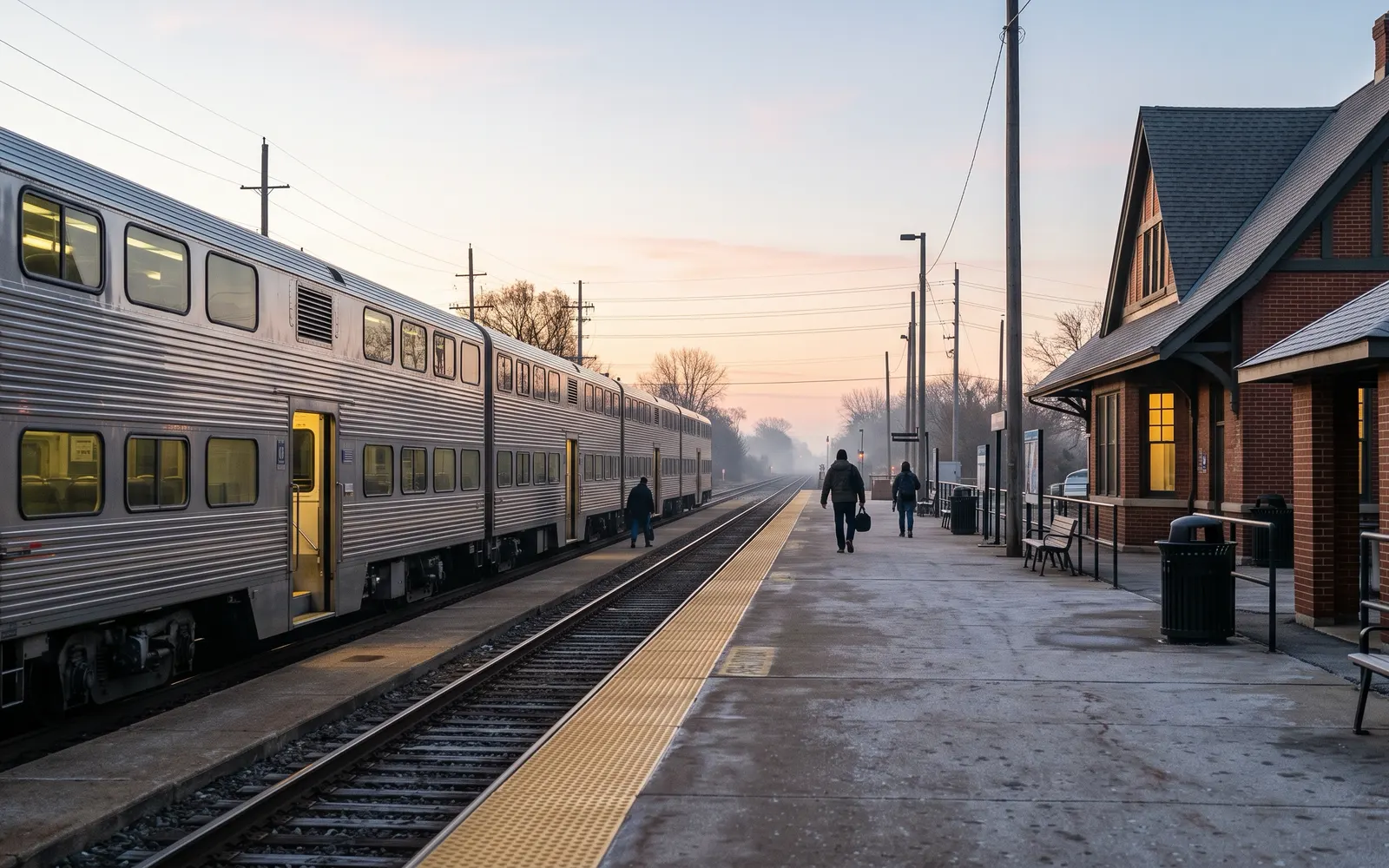
North Barrington has no train station. The closest is Barrington, on Metra's Union Pacific Northwest line in downtown Barrington, usually a 10 to 15 minute drive south depending on which side of the village you start from. Trains run to Ogilvie Transportation Center in the Loop.
Service is frequent. Metra's published schedule data for the fall 2026 schedule shows 34 inbound and 31 outbound weekday trains stopping at Barrington. On Saturdays there are 16 inbound and 17 outbound, and on Sundays 9 inbound and 11 outbound.
Which train you catch matters. The morning expresses make it from Barrington to Ogilvie in 47 minutes: the 6:15 a.m. arrives at 7:02, the 6:45 at 7:32, the 7:15 at 8:02 and the 7:45 at 8:32. Locals that stop everywhere take 65 to 68 minutes. Outbound, the ride home runs from 42 minutes on the fastest train to about an hour. If you will commute daily, the difference between an express and a local adds up to more than two hours a week.
There is no fixed-route bus in the village. The village lists Pace dial-a-ride service on its news page for eligible riders. For everyone else, plan on driving to the station and paying for Barrington's commuter parking.
Driving from North Barrington: Routes 59, 22 and Rand Road
Three state and federal routes frame the village. Illinois Route 59 runs north to south along the west side, Illinois Route 22 runs east to west along the south edge toward Lake Zurich and Barrington, and US Route 12 (Rand Road) runs along the east side past Lake Zurich. Old Barrington Road, Miller Road and Signal Hill Road carry most of the local traffic in between. For longer trips, most drivers head south through Barrington toward the Jane Addams Tollway (I-90). The Loop is about 35 miles away, and in my experience O'Hare is usually 40 to 50 minutes off-peak, longer in traffic.
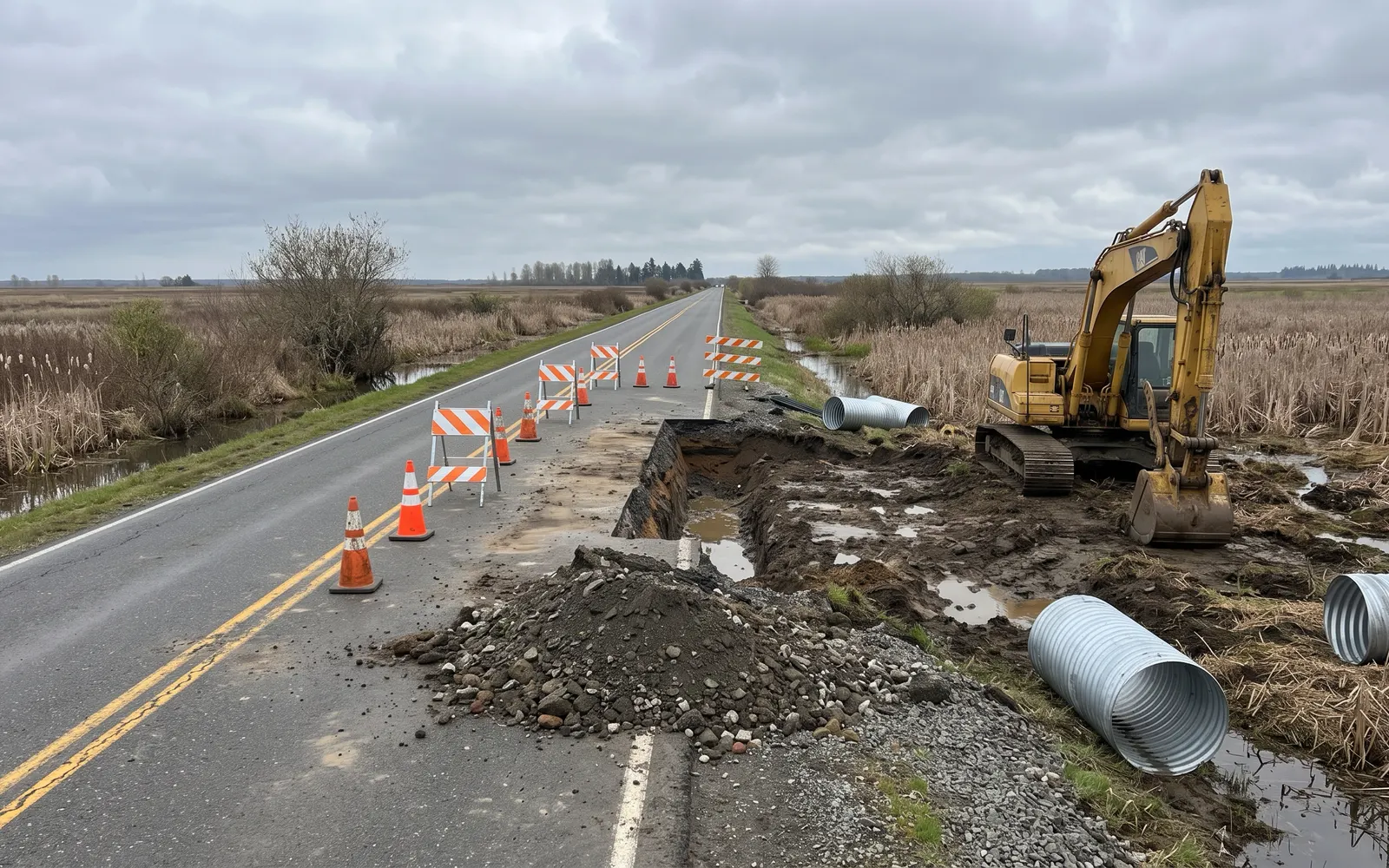
Two current road issues are worth knowing. First, the village closed Route 59 in both directions between Cuba Road and Route 22 starting August 13, 2026, to replace a failed box culvert under the highway. Its September 15 press release expects the highway to reopen on or about October 1, weather permitting, with the posted detour running Route 59 to Cuba Road, Ela Road, Route 12 and Route 22. Earlier notices gave September 15 as the reopening date, so check the village site before you plan around it.
Second, the village has closed Clover Hill Lane to northbound traffic west of the Kohl's entrance, according to its road update page. The reason given is cut-through traffic avoiding the Rand Road and Miller Road intersection. Drivers who go around the barriers are ticketed, with a minimum $120 citation.
Is North Barrington Walkable?
For errands, no. Walk Score rates the Village Hall address on Old Barrington Road a 0 for walking and a 13 for biking. There is no store, restaurant or gas station within walking distance of most homes, and most roads have no sidewalks.
For recreation, it is a different story. Wynstone has its own internal paths for residents. The village parks and the Grassy Lake Forest Preserve in the northwest corner of the village give you trails, and Cuba Marsh Forest Preserve is a short drive west. If a daily walk to the train or a coffee shop matters to you, North Barrington is the wrong town. If a long walk on a quiet road or a trail matters more, it works.
Shopping Near North Barrington
North Barrington has no downtown and no shopping district of its own, and the village has kept it that way on purpose. Downtown Barrington, a short drive south, is the closest place to walk between shops, with independent stores and services around the Metra station and Main Street. Lake Zurich, along Rand Road on the east side, has the chain stores and big-box errands.
For larger trips, Deer Park Town Center is a short drive southeast, and the Arboretum of South Barrington, an outdoor center off Route 59 south of I-90, is the nearest collection of national retailers. Woodfield Mall in Schaumburg is farther south along the same corridor.
Groceries and Errands from North Barrington
There is no grocery store in the village. The closest full supermarket for most of North Barrington is the Jewel-Osco at 150 W. Main Street in downtown Barrington, with a pharmacy, pickup and delivery. East-side homes are often closer to the Lake Zurich stores along Rand Road.
Trash is handled by the village's contracted hauler, Lakeshore Recycling Systems, at rates the village posted in September 2025. LRS also offers weekly food scrap and organics pickup by subscription, the village is a member of SWALCO for household hazardous waste, and Cuba Township runs a brush pickup that starts September 28 this year, according to the village home page.
Where North Barrington Eats
The restaurants inside North Barrington are private. Biltmore Country Club and The Club at Wynstone both run dining rooms for members and their guests, and for many owners that is the reason to join. Membership at either club is separate from owning a home, so ask what it costs and whether there is a waitlist before you count on it.
For public dining, downtown Barrington has the most sit-down restaurants, coffee shops and bars within a few blocks of the train. Lake Zurich and Deer Park Town Center cover casual meals and carryout, and the Arboretum of South Barrington adds larger chain restaurants.
Parks, Lakes and Golf in North Barrington
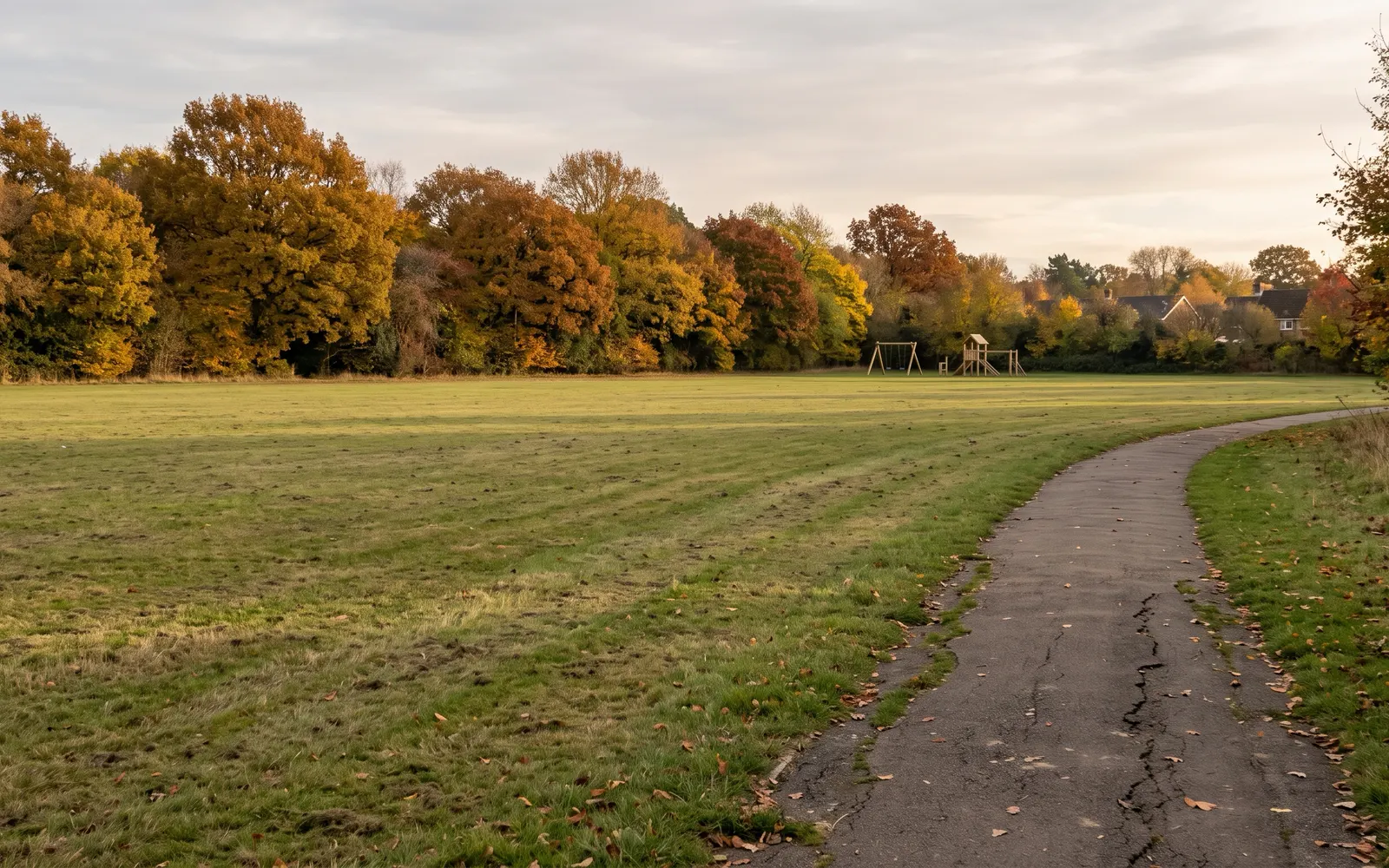
The village owns its parks directly rather than through a park district. The Trust for Public Land's ParkServe data, as published by MyTownView in 2025, lists six village parks covering about 67 acres: Haverton Conservation Area (about 18 acres), Eton Park (16), Lafferty Park (14), the Village Hall grounds (8), the Village Wildlife Refuge (6) and Leonard Park (4). Eton Park at 530 Eton Drive is where the village holds its festival and concerts. The Parks and Recreation Commission is working with Kimley-Horn on a five-year master plan and has been surveying residents.
The water is the bigger draw. Honey Lake, Grassy Lake, Duck Pond and Flint Creek run through the village, and Grassy Lake Forest Preserve sits in its northwest corner with more than five miles of trails. Lake access on Honey Lake runs mostly through ownership and the Biltmore club, so if the lake is the point for you, ask exactly what rights a given house carries.
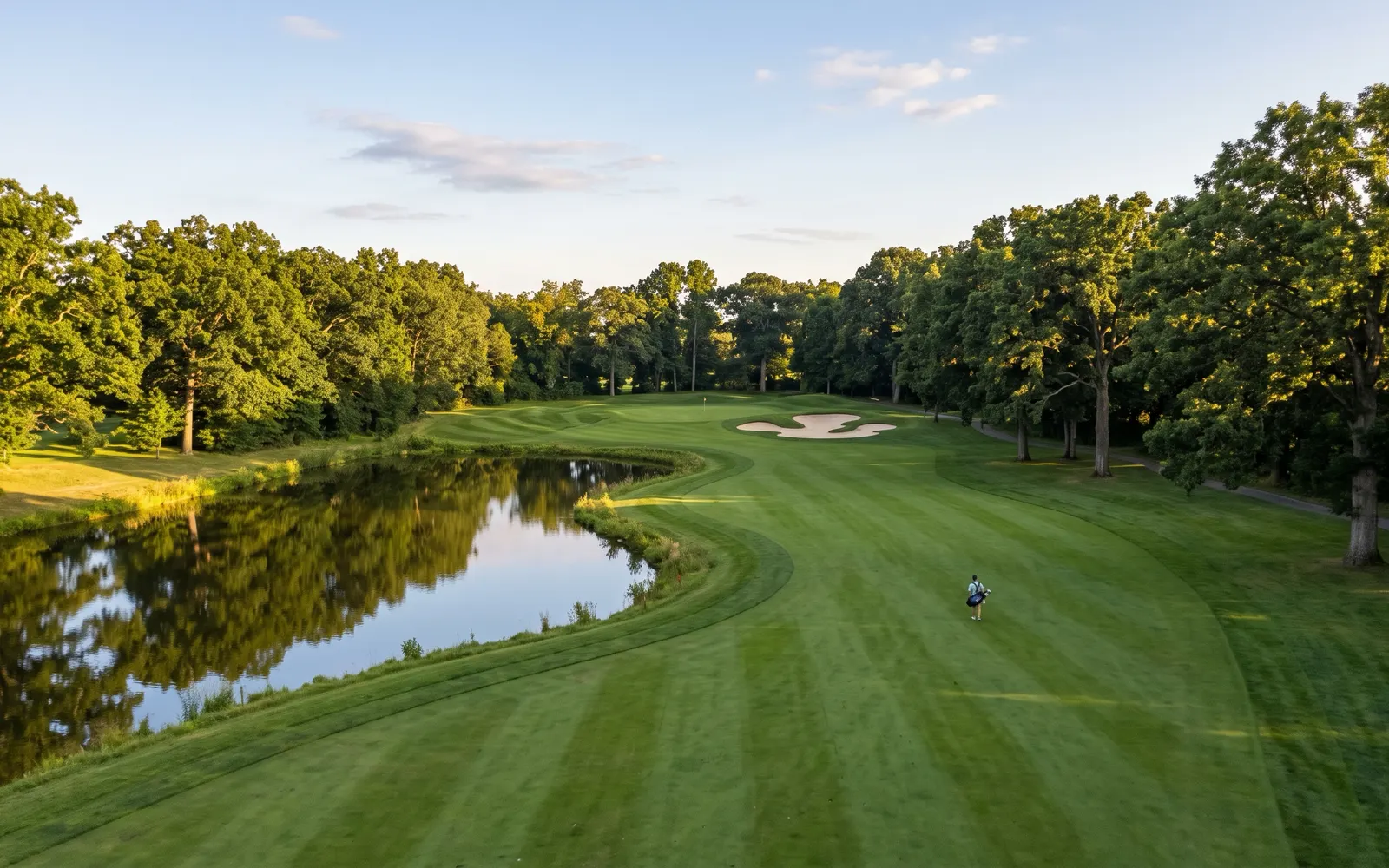
Golf is the other anchor. Biltmore's 18-hole course dates to 1926 and the club added a beach club and tennis facility in 2010. Wynstone's Nicklaus course, more than 7,100 yards from the back tees, was renovated in 2014-2015, updated its bunkers and practice area in 2024, and hosted the 77th Illinois Open in 2026, according to Chicago Golf Report. A group of nine resident owners bought the Wynstone club in 2017 and retired about $6 million of debt.
Libraries Serving North Barrington
North Barrington is split between two library districts, which the old version of this page missed. The Barrington Area Library at 505 N. Northwest Highway in Barrington serves much of the village. It is open 9 a.m. to 9 p.m. on weekdays, 9 to 5 on Saturday and 1 to 5 on Sunday. The Ela Area Public Library District, based at 275 Mohawk Trail in Lake Zurich, serves portions of North Barrington along with almost all of Lake Zurich, Kildeer and Hawthorn Woods.
Which library issues your card, and which one shows up as a levy on your tax bill, depends on the parcel. Check the address with both libraries if it matters to you.
Wells, Septic and Utilities in North Barrington
There is no village water or sewer system. Most homes outside Wynstone have a private well and a septic system, and Wynstone runs its own on-site water treatment plant through its property owners' association. The village's Health Department handles septic permits, including repairs and modifications, and the Environmental and Health Commission hears septic variance requests, according to the village's health page.
For a buyer, that changes the inspection. Get the septic system inspected and the tank located, ask for pumping records, and test the well for bacteria and nitrates. The Barrington Area Council of Governments runs a yearly private well testing day; in 2026 it is Tuesday, October 6, from 11 a.m. to 6:30 p.m. at the Barrington Area Library, according to BACOG. Confirm that it accepts North Barrington samples before you rely on it.
The draft zoning code also bans short-term rentals and accessory dwelling units, so a guest cottage or coach house you plan to rent out would not be allowed if the draft is adopted as written. Electricity is ComEd and natural gas is Nicor Gas across this area, but confirm service at the address, because some rural lots run on propane.
Hospitals Near North Barrington
The closest hospital is Advocate Good Shepherd Hospital at 450 W. Route 22 in Barrington, a short drive south or west from most of the village. Before the current Village Hall opened in 1992, the village's offices were at one point on the Good Shepherd grounds. Primary care, urgent care and specialist offices are spread through Barrington, Lake Zurich and Deer Park.
For emergencies, fire and paramedic response comes from the Wauconda Fire Protection District north of Miller Road and the Lake Zurich Rural Fire Protection District south of it.
Golf, Concerts and Nights Out Near North Barrington
The village's own entertainment is mostly outdoors and seasonal. The Parks and Recreation Commission runs a summer concert series at Eton Park; this year's September 12 show was a 9/11 tribute by Jazz Response, according to the commission's page. The golf clubs host tournaments, and Wynstone's hosting of the 2026 Illinois Open brought a state championship to the village.
The best-known night out nearby is the Catlow Theater in downtown Barrington, a 1927 single-screen movie house listed on the National Register of Historic Places in 1989. Downtown Barrington also has most of the area's bars and live music within a few blocks of the train.
The North Barrington Fall Festival and Village Traditions
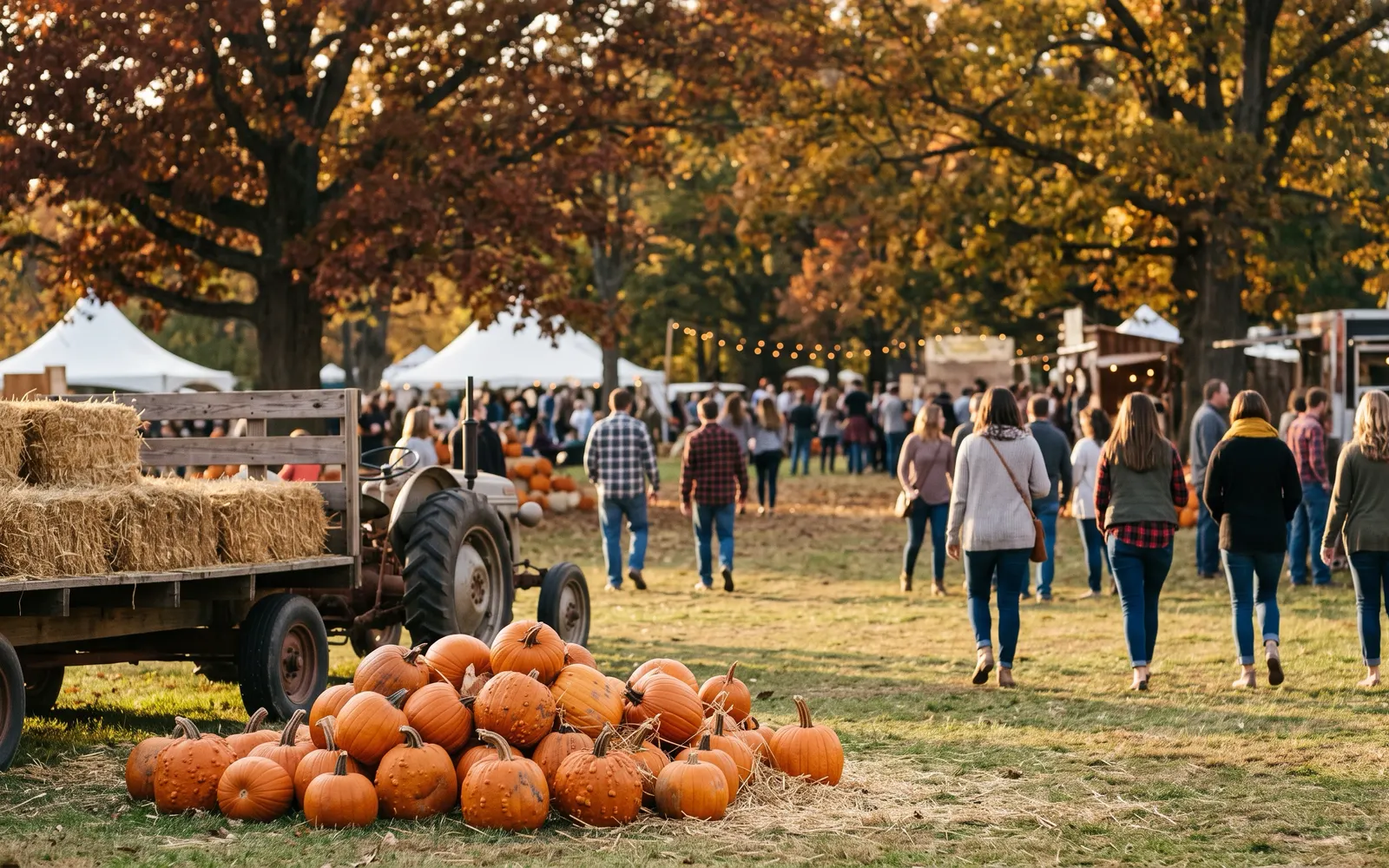
The big village event is the Fall Festival. In 2026 it is on Sunday, September 27, from 1 to 4 p.m. at Eton Park, 530 Eton Drive, with an America 250 theme, live music from Paddygrass, food, pumpkin painting, balloons, a petting zoo and hayrides, according to the village's festival page. It is a residents' event, and the commission recruits volunteers for setup and cleanup.
The rest of the calendar is small-town civic life: the summer concerts, the village's Tree of the Year award (2026 nominations are due November 1), and monthly commission meetings where the zoning rewrite and the parks plan are being decided. For larger festivals, most residents head to downtown Barrington or Lake Zurich.
What's Changing in North Barrington
North Barrington is mostly built out, so change comes through public projects and rules rather than new subdivisions. The biggest project is the Grassmere, Haverton and Oaksbury (GHO) drainage project. According to the village's project page, failed private drainage channels, old tiles and a collapsed culvert under Route 59 have flooded Haverton Way, Route 59, Grassmere Farms and Oaksbury for years, affecting more than 300 acres and more than 40 parcels. Route 59 was closed for seven days one winter when floodwater froze on the road.
The village awarded a $2,172,980 construction contract to Copenhaver Construction in March 2026. Funding includes up to $2,495,000 from the Illinois Department of Commerce and Economic Opportunity through the Lake County Stormwater Management Commission, and $600,000 from IDOT. Work began in mid-July 2026 after federal, state and county permits were approved, and it depended on twelve property owners granting sixteen easements. The Route 59 culvert replacement is the part drivers notice.
The second change is the zoning code rewrite. The village's July 2026 public draft, prepared by Camiros, reorganizes the code, adds lighting, fence, landscaping and native-plant rules, and prohibits short-term rentals, accessory dwelling units and data centers. A Plan Commission hearing comes first, and the village expects Board approval in late winter or early spring 2027. The Parks and Recreation master plan is the third.
The old version of this page listed projects in neighboring Barrington. I have left those out because they are not in North Barrington and I could not confirm their current status.
I don't label any town or neighborhood as safe or unsafe.
Flood and Wildfire Risk in North Barrington
With this much water, flooding is a house-by-house question. Redfin, using First Street's model, rates North Barrington's flood risk as moderate, with 8% of properties at risk of severe flooding over the next 30 years. The same model rates wildfire risk as moderate, with 20% of properties at some risk, which reflects the wooded and prairie lots rather than anything I have seen happen here.
The GHO project shows where the known problems are: Haverton Way, Grassmere Farms, Oaksbury and the low ground along Route 59. If you are buying there, ask the seller directly what happened in past storms and whether the lot drains through one of the private channels the project is replacing.
Before any offer, look the address up on the FEMA flood map, because a mapped flood zone can mean required flood insurance on a mortgage. On a septic lot, also ask where the field sits relative to low ground. A wet field is a far more expensive problem than a wet basement.
Frequently Asked Questions
How much does a house cost in North Barrington, IL?+
Redfin reported a median sale price of $864,928 for the three months ending August 2026, and Zillow's home value index was $875,180 for August 2026. Wynstone's Redfin median was $1,541,756 over the same period. Prices vary widely by pocket and acreage.
What are property taxes in North Barrington, IL?+
Ownwell (April 2026) puts the median effective rate at about 2.18% and the median bill at $16,416. Rates vary by tax code because township, school, fire and library districts all split the village, and a home's bill usually rises after a sale once it is reassessed.
What school district is North Barrington, IL in?+
Most of the village, in Cuba Township, is in Barrington CUSD 220. The eastern part, in Ela Township, is in Lake Zurich CUSD 95. Check each address with the district's boundary tool.
What is the minimum lot size in North Barrington?+
The village has three single-family districts: R-1 with a five-acre minimum, R-2 with two acres and R-3 with 40,000 square feet. Many older lots, especially around Honey Lake, predate those minimums. Check the zoning map for any specific parcel.
Does North Barrington have city water and sewer?+
No. Most homes have a private well and septic system, and Wynstone runs its own water treatment plant. Inspect the septic and test the well on every purchase.
How long is the commute from North Barrington to downtown Chicago?+
Drive about 10 to 15 minutes to the Barrington Metra station on the UP-NW line. Morning express trains reach Ogilvie in 47 minutes and locals in 65 to 68, with 34 inbound weekday trains on the fall 2026 schedule.
What is The Club at Wynstone?+
A private golf club at the center of Wynstone, a gated community of about 750 acres and more than 430 homesites with a Jack Nicklaus course that opened in 1989. Club membership is handled separately from owning a home there.
Why is Route 59 closed in North Barrington?+
The village closed Route 59 between Cuba Road and Route 22 on August 13, 2026 to replace a failed culvert as part of its GHO drainage project. It expects the highway to reopen on or about October 1, 2026, weather permitting.
Eshu Chikoti has extensive access to off-market listings throughout North Barrington and the surrounding North Shore — homes that never make it to the public listing sites. That matters right now: in a seller's market like this one, well-priced homes routinely go under contract within days, and buyers relying only on public listings are competing for whatever is left over. Working with someone plugged into off-market inventory means seeing homes before the crowd does.
Eshu Chikoti · 847-691-4282 ·
Towns Neighboring North Barrington
Most buyers looking at North Barrington end up touring a couple of the towns next door before they decide. Each of these has a full guide of its own — same depth on schools, commute, taxes, and what the housing stock actually looks like.
Get new North Barrington listings by email
When a home comes on the market in North Barrington, I'll email it to you.
Just your email. Unsubscribe any time by replying.
Thinking About North Barrington?
Whether you're buying, selling, or just curious what's on the market, I can walk you through North Barrington street by street.