Eola, IL
Eola, IL is a small unincorporated railroad hamlet in Naperville Township, DuPage County, surrounded by the city of Aurora, with its own 60519 post office, a BNSF rail yard and Indian Prairie District 204 schools.
Living in Eola, IL means owning in unincorporated DuPage County: the sheriff patrols, the township plows the roads, some homes still run on a well and septic, and there is no city line on the tax bill. It is a few dozen homes wrapped by Aurora, 1.8 miles from the Route 59 Metra station. Here is how it works.
Written by Eshu Chikoti · 847-691-4282 ·
How Eola, IL Got Here: A Railroad Stop That Stayed Small
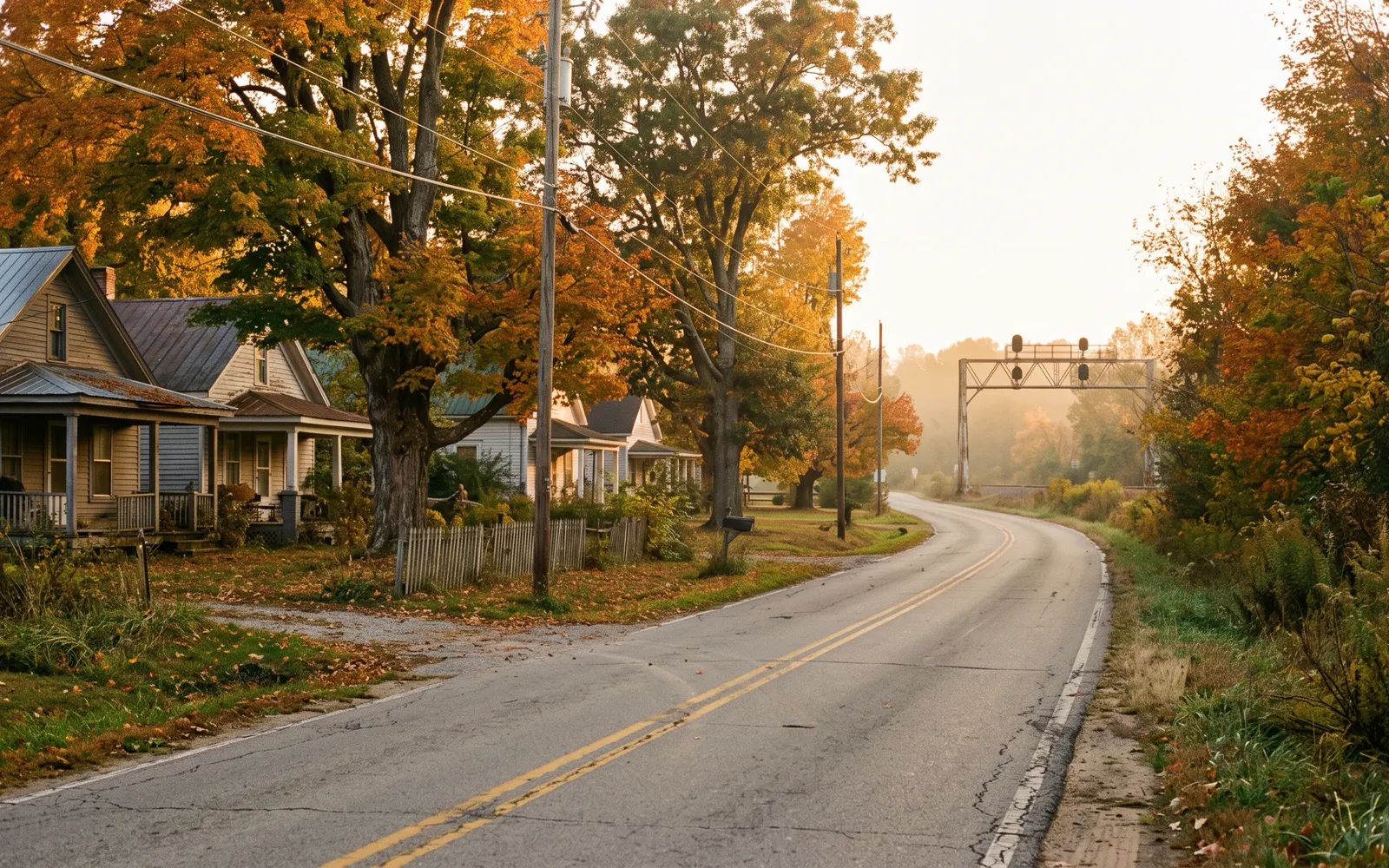
Eola started with the railroad. The Chicago, Burlington and Quincy finished its direct line between Aurora and Chicago in May 1864, according to a history of the CB&Q Eola yard, and a stop grew up on the flat ground between Aurora and Naperville. A 2024 West Suburban Living piece on local ghost towns dates the stop to the early 1860s and the post office to 1871.
There are two stories about the name. The one you will hear most often, repeated by Wikipedia and by railroaders, is that EOLA stands for "End Of Line Aurora," what a conductor called out on the last stop before the Aurora yards. The West Suburban Living piece says the post office was named for Aeolus, the Greek god of the winds. I can't tell you which one is right. Both are old enough that nobody alive can settle it.
In the early 1900s, the same article says, Eola had a canning factory that employed about 300 people and a plant that built plows. That was the peak. The cannery closed in the 1970s, Aurora annexed land on every side, and DuPage County moved Eola Road so it could build a bridge over the railroad. That last change is why the old main street is now called Old Eola Road and sits off to the side of the road that carries the traffic.
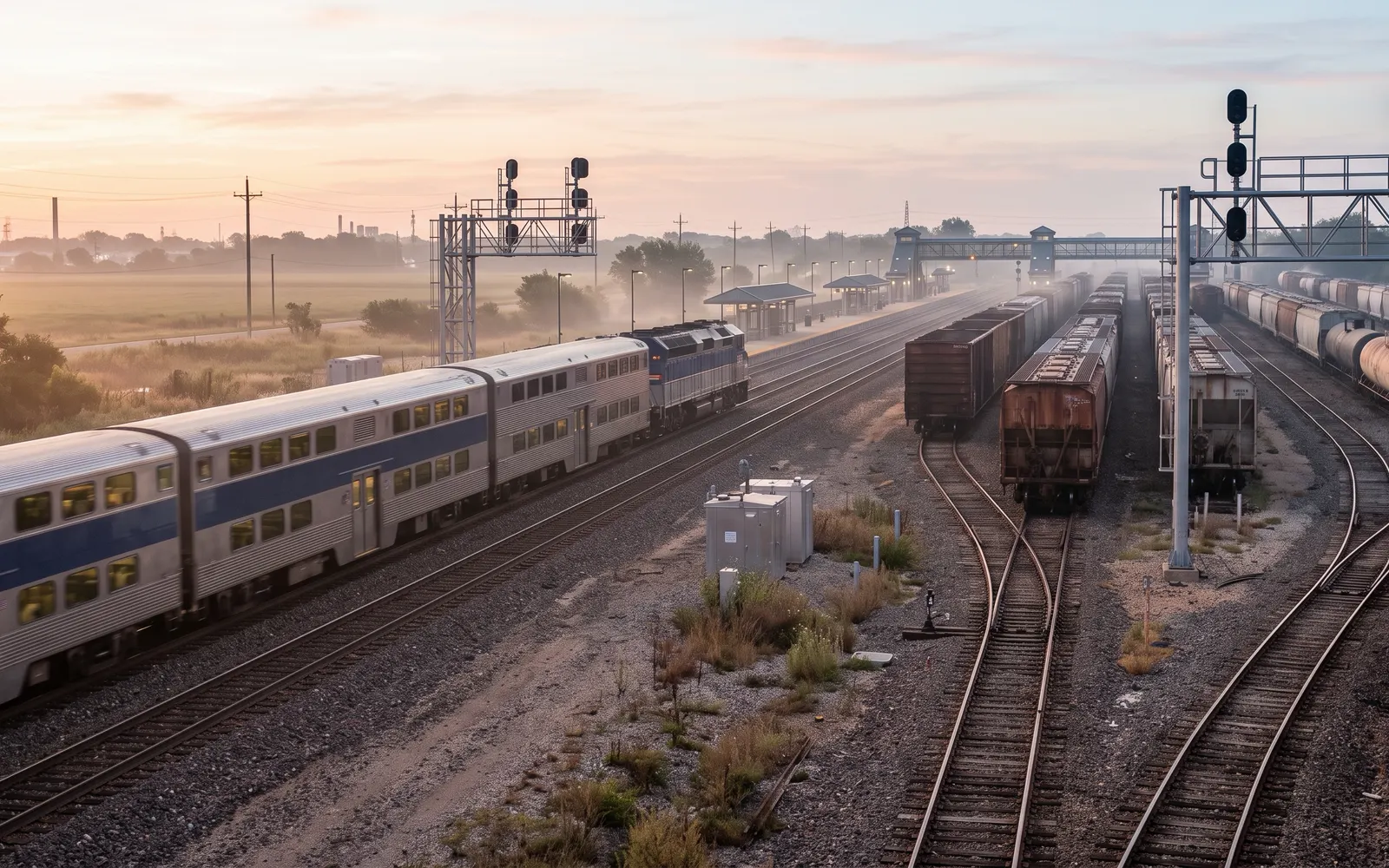
The railroad never left. BNSF still runs the Eola yard, with the main line through the middle and classification tracks on both sides. The railfan history above notes that the small roundhouse turntable at the west end was removed in 2007, and that Eola took on more carload work after BNSF converted its Clyde yard to intermodal. Metra trains run through Eola all day. They just don't stop.
Eola at a Glance
Eola is not a village or a city. It is an unincorporated community in Naperville Township, near the western edge of DuPage County, just north of the BNSF tracks, and completely surrounded by the city limits of Aurora. It appears on the U.S. Geological Survey's Naperville map as a populated place, according to HomeTownLocator. It has no mayor, no village board and no police department of its own.
Naperville Township is the local layer of government. According to Wikipedia's township profile, it was established on November 6, 1849, covers about 35.8 square miles, had 104,765 people in the 2020 Census, and contains parts of Naperville, Aurora and Warrenville along with a few unincorporated communities, Eola among them.
The name causes real confusion when you search for homes, because "Eola" means three different things. First, there is the hamlet itself, the few streets around Old Eola Road with the 60519 ZIP code. Second, there is "Eola Yards," a neighborhood label that Walk Score and Redfin put on a much larger area of Aurora and Naperville around Eola Road. Third, there is Eola Road, a long north-to-south road through the DuPage side of Aurora with thousands of city addresses on it. Only the first is unincorporated. A house on Eola Road with an Aurora address is in the city, pays city taxes and gets city services.
The 60519 ZIP is unusual too. ZIP-codes.com lists it as a PO Box ZIP, served by the Eola post office at 6S404 Old Eola Road with 96 PO boxes, yet listings for homes on Old Eola Road use it as their mailing address. When I see "Eola, IL 60519" on a listing, the first thing I do is confirm on the county's parcel records whether the lot is truly unincorporated or was annexed by Aurora at some point. Mailing address and municipality are two separate facts in DuPage County.
The rail yard is a working freight operation, which means train noise at all hours, so visit at night before you commit.
What Buying in Unincorporated Eola Actually Means
"Unincorporated" sounds technical, but for a homeowner it comes down to who you call. In Eola, the answer is almost never a city hall. Here is how the pieces fit, based on what each agency publishes.
Police. The DuPage County Sheriff's Office patrols the unincorporated parts of the county. Aurora police do not answer calls on an unincorporated parcel, even one that sits inside the city on every side.
Roads, snow and brush. The Naperville Township Road District covers about 36 square miles, focused on unincorporated areas. It lists pavement repair, snow and ice removal, storm sewer and drainage work, tree trimming and seasonal brush and leaf collection among its jobs. It generally maintains a 66-foot right-of-way, 33 feet from the center of the road on each side, which matters if you plan a fence, a driveway apron or landscaping near the street.
Fire and ambulance. DuPage County's page for the Naperville Fire Protection District says the district covers unincorporated areas of Naperville and Aurora and contracts with the City of Naperville for fire and emergency medical service. Ask for the fire district line on the tax bill of the exact house you are looking at, because fire district boundaries do not always follow township lines.
Permits and zoning. Additions, decks, fences and new homes go through DuPage County Building and Zoning, not Aurora. County zoning is different from city zoning, and if you are planning a project, read the county's rules for your lot before you close, not after.
Trash. Most unincorporated DuPage has several competing haulers, but the Daily Herald reported in 2023 that Naperville, Lisle and Downers Grove townships were the exceptions with single-hauler arrangements. Confirm the current hauler and billing with the township.
Parks and library. The Fox Valley Park District treats residents of Aurora, North Aurora and Montgomery as residents, and says nonresident class fees are generally 50% higher. The Aurora Public Library District sells a one-year nonresident card for $286 (September 2026) to people outside the city who do not pay taxes to another library. Whether an Eola parcel pays into either district shows up as a line on its tax bill, so that bill tells you what you get for free and what you would pay for.
The expectation I most often have to reset with buyers is that "surrounded by Aurora" means "basically Aurora." It doesn't. Those differences are not good or bad on their own. They are different, and they belong in your budget and your plans before you write an offer.
| Service | Who handles it |
|---|---|
| Police | DuPage County Sheriff's Office |
| Roads, snow and brush | Naperville Township Road District |
| Fire and ambulance | Naperville Fire Protection District (service contracted from the City of Naperville) |
| Permits and zoning | DuPage County Building and Zoning |
| Trash | Private haulers; confirm with the township |
| Parks and library | Depends on the tax bill: Fox Valley Park District, Aurora Public Library District ($286 nonresident card) |
Eola Neighborhoods: the Hamlet and the Eola Road Corridor
Eola itself is small. The Census Bureau's ZIP code tabulation area for 60519 counted about 28 housing units in the 2020-2024 American Community Survey, every one a detached single-family home, with a margin of error of plus or minus 19. There is no Census "place" for Eola, so that ZIP area is the closest official geography. It covers only the few streets around Old Eola Road and Reid Place, which is why I use it here instead of a larger tract that would mostly measure Aurora.
Most buyers who search "Eola" are really shopping the subdivisions around it, which are inside Aurora and carry Aurora addresses. They share the same schools and the same drive to the Route 59 station, but they pay city taxes and get city services. I treat them as one search area with two sets of rules.
Below are the pockets you will see come up. The hamlet description comes from public listing records on Old Eola Road; the subdivision details come mostly from one local agent's subdivision profiles and a Chicago Tribune report, so treat the boundaries as a starting point. Walk Score calls the broader area Eola Yards and gives it a Walk Score of 22.
I have not closed a sale inside the Eola hamlet. What I do on every search out here is the same three checks: is the parcel unincorporated or in Aurora, is it on a well and septic or on city water and sewer, and which District 204 schools does the street feed. If you want those answered for a specific address, that is a conversation I am happy to have here.
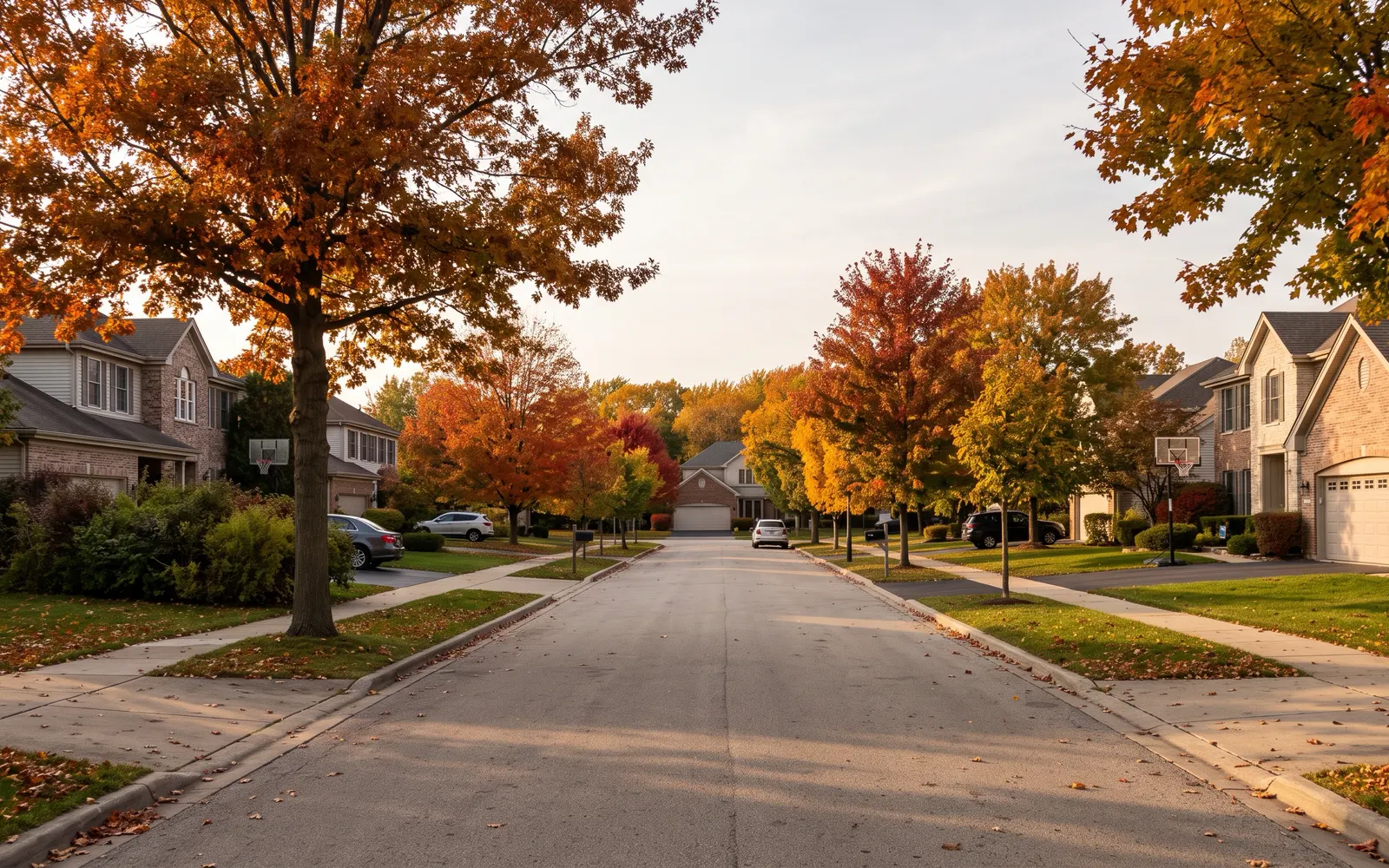
The Eola hamlet (unincorporated, ZIP 60519). Old Eola Road and Reid Place, just north of the BNSF yard. Older single-family houses on lots of roughly a quarter acre, some on private well and septic. The only part of this guide that is outside any city.
Stonebridge (Aurora). Built around Stonebridge Country Club, north of Indian Trail Road and west of Eola Road. Single-family homes from the 1990s and townhomes from the late 1990s into the early 2010s, from about 1,600 to over 9,000 square feet. Brooks Elementary and Granger Middle sit on Stonebridge Boulevard.
Riverstone (Aurora). A subdivision off Eola Road with its entrance at Waterstone Drive, next to the new Eola Preserve townhomes.
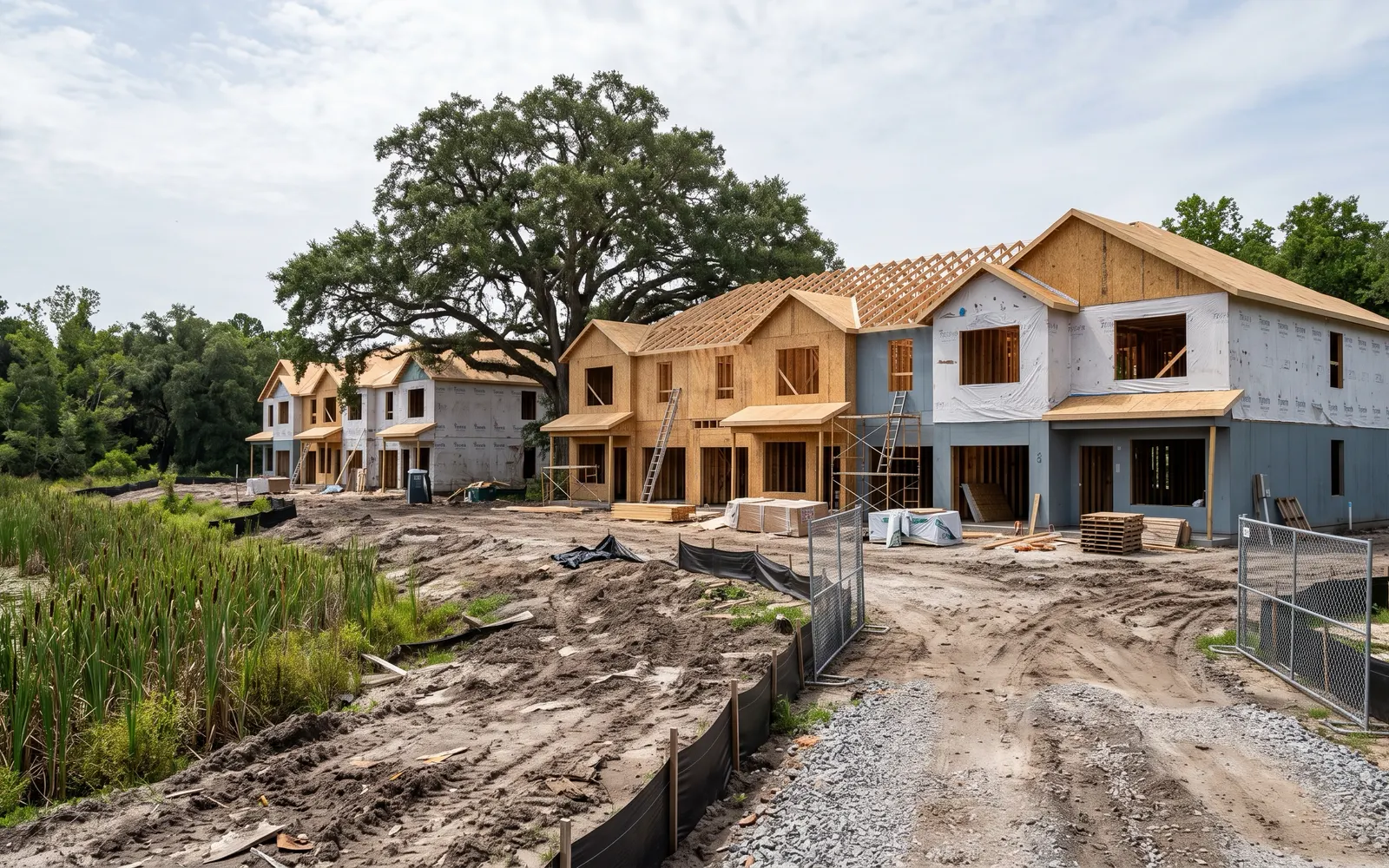
Eola Preserve (Aurora, new in 2026). Pulte's 54-townhome community at 620 N. Eola Road on the former WBIG and WMRO radio station site, with 11 of its 21 acres kept as wetlands.
Oakhurst (Aurora). A larger planned community of single-family homes and townhomes built from 1989 to 2003, described as south of New York Street and east of Eola Road. It feeds Waubonsie Valley High School in District 204.
What Eola Homes Look Like, From 1890 to 2026
The hamlet's houses are old by DuPage standards. The ACS estimates for ZIP 60519 put about 12 of the 28 homes in the 1950s, about 9 in the 1940s and about 7 before 1940, with no newer homes in the sample. The margins are wide, but the public listings back up the pattern. One house on Old Eola Road that sold in early 2015 was listed as built in 1890, and another that sold in 2024 was built in 1953.
Lots are modest. The two listings above were on about 0.29 and 0.25 acres. Houses run from small older homes to larger ones that have been added onto over the decades. The 1953 house, for example, was listed at 2,280 square feet with four bedrooms and a lower level with a second kitchen.
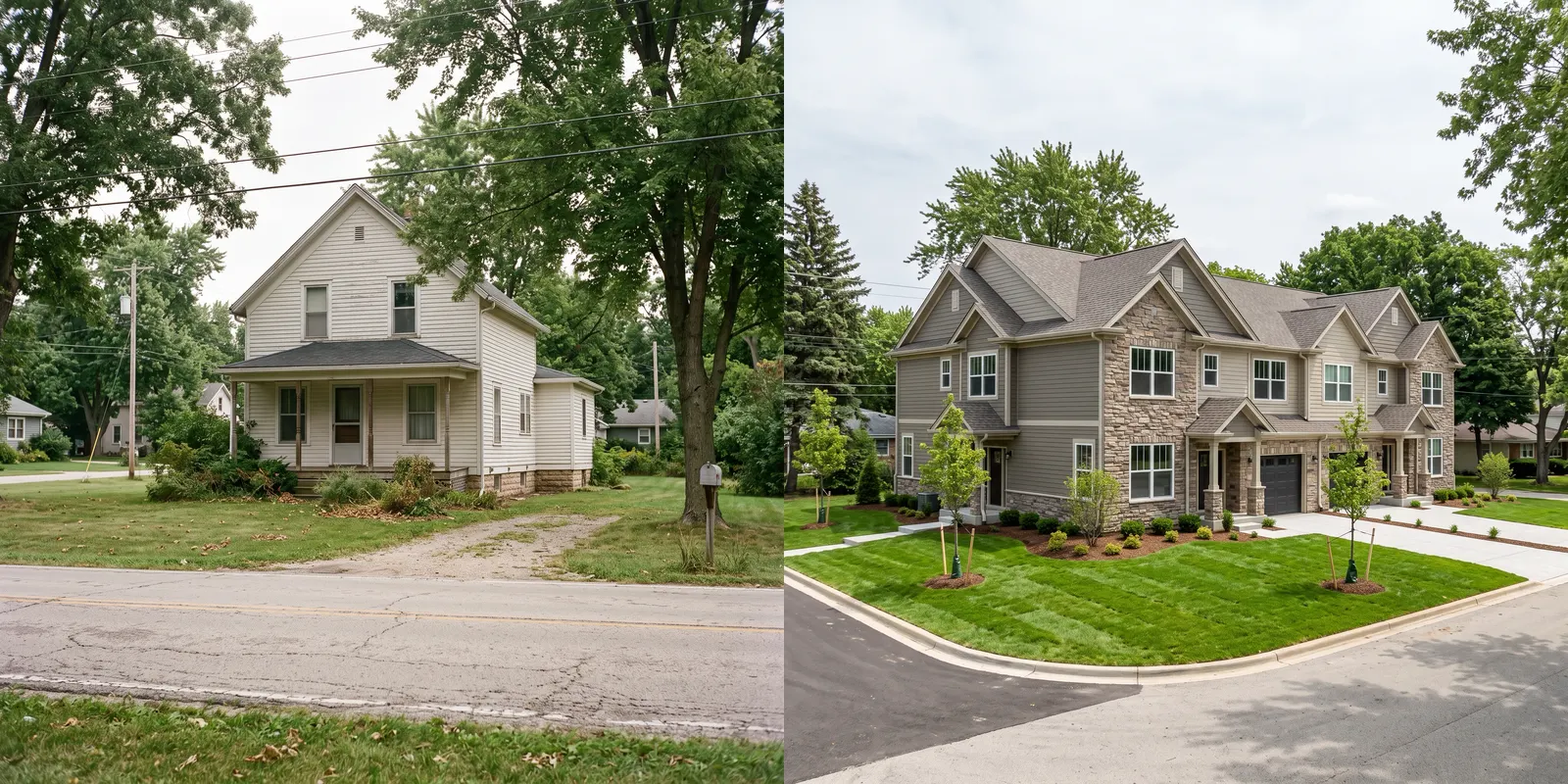
Cross Eola Road into Aurora and the housing jumps forward fifty years. The Stonebridge homes date to the 1990s, the townhomes around them to the late 1990s through the early 2010s, and Pulte's Eola Preserve townhomes, per the Tribune, run 1,883 to 2,508 square feet with three to four bedrooms. That is the contrast that defines this area: a handful of pre-war and mid-century houses on septic, ringed by subdivisions with HOAs, sidewalks and city sewer.
Older houses bring older-house questions. With the hamlet's homes I'd expect the inspector to spend time on the well, the septic, the electrical panel and any additions built without permits. None of those should kill a deal. All of them belong in the price. My home inspection checklist is a good place to start if you're weighing one of these.
The Eola Housing Market in 2026
There isn't enough activity in the hamlet to give you a meaningful median. With about 28 homes, a year can pass with one sale or none. The public records I could open show 6S258 Old Eola Road closing at $299,999 in August 2024 after listing that June,. One sale is not a market, and each house here is priced on its own lot, condition and utilities.
Zillow doesn't publish a home value index for ZIP 60519, so I look at the Aurora ZIP codes that surround it. According to Zillow's ZIP-level home value index, the typical home value in 60504 was $355,418 in August 2026, up 3.0% from a year earlier and 7.3% over two years. In 60502, north toward I-88, it was $422,463, up 1.5% for the year. For comparison, Naperville's 60563 was $468,741, up 3.4%. Those are the values the subdivisions around Eola are moving with.
Here is how I read that for the hamlet. An Eola house usually has a bigger lot and fewer neighbors than a comparable Aurora house, and no HOA. It can also have a well and septic, a county zoning code the buyer may not know, and a smaller pool of buyers who are comfortable with both. Those two lists roughly cancel. The result is a price that depends heavily on condition and on whether city water and sewer can be hooked up.
For new construction nearby, the Tribune reported an average price around $500,000 for the Eola Preserve townhomes when Aurora approved them in December 2024. If you are weighing timing more broadly, my take on whether 2026 is a good time to buy covers rates and inventory.
Eola Property Taxes: No City Line on the Bill
The clearest money difference between Eola and the Aurora streets around it is the tax rate. Ownwell's data for Eola, updated April 13, 2026, puts the median effective rate in ZIP 60519 at 2.02%. Ownwell's figure for the DuPage County part of Aurora is 2.51%, with 2.50% in 60504 and 2.54% in 60502. The DuPage County median is 2.16%. The biggest reason for the gap is that an unincorporated parcel pays no city levy.
Be careful with Ownwell's other Eola numbers. It lists a median bill of $1,655 and a median home value of $70,860, the lowest in DuPage County, but its 90th percentile value is $300,480. My read is that the Eola sample includes vacant lots and small parcels next to the rail yard, which drag the median down. The rate is the useful number. The median bill is not.
Here is what the rate difference looks like on a real purchase. On a $400,000 house, 2.02% works out to about $8,080 a year, roughly $673 a month. At Aurora's DuPage rate of 2.51%, the same price is about $10,040 a year, roughly $837 a month. That is about $1,960 a year. The one hamlet listing I could check lines up: 6S258 Old Eola Road carried a 2023 tax bill of $6,221 and sold for $299,999, about 2.07% of the price.
Two cautions. A lower rate can mean you pay for some things separately, like a nonresident park or library fee, a well repair or a septic pump-out. And assessments follow sales, so budget off the rate applied to your price, not the seller's bill. My closing costs guide covers how Illinois tax prorations work at closing. This is general information, not tax advice. Your actual bill depends on your parcel, your exemptions and the Naperville Township assessor.
Wells, Septic and City Water in Eola
This is the section most Eola buyers need and no other guide covers. Some homes in the hamlet do not have city water or city sewer. The 2014 listing for 6S312 Old Eola Road described the utilities as "Well & Septic Functioning well but Sewer & Water Hook-up available at Street".
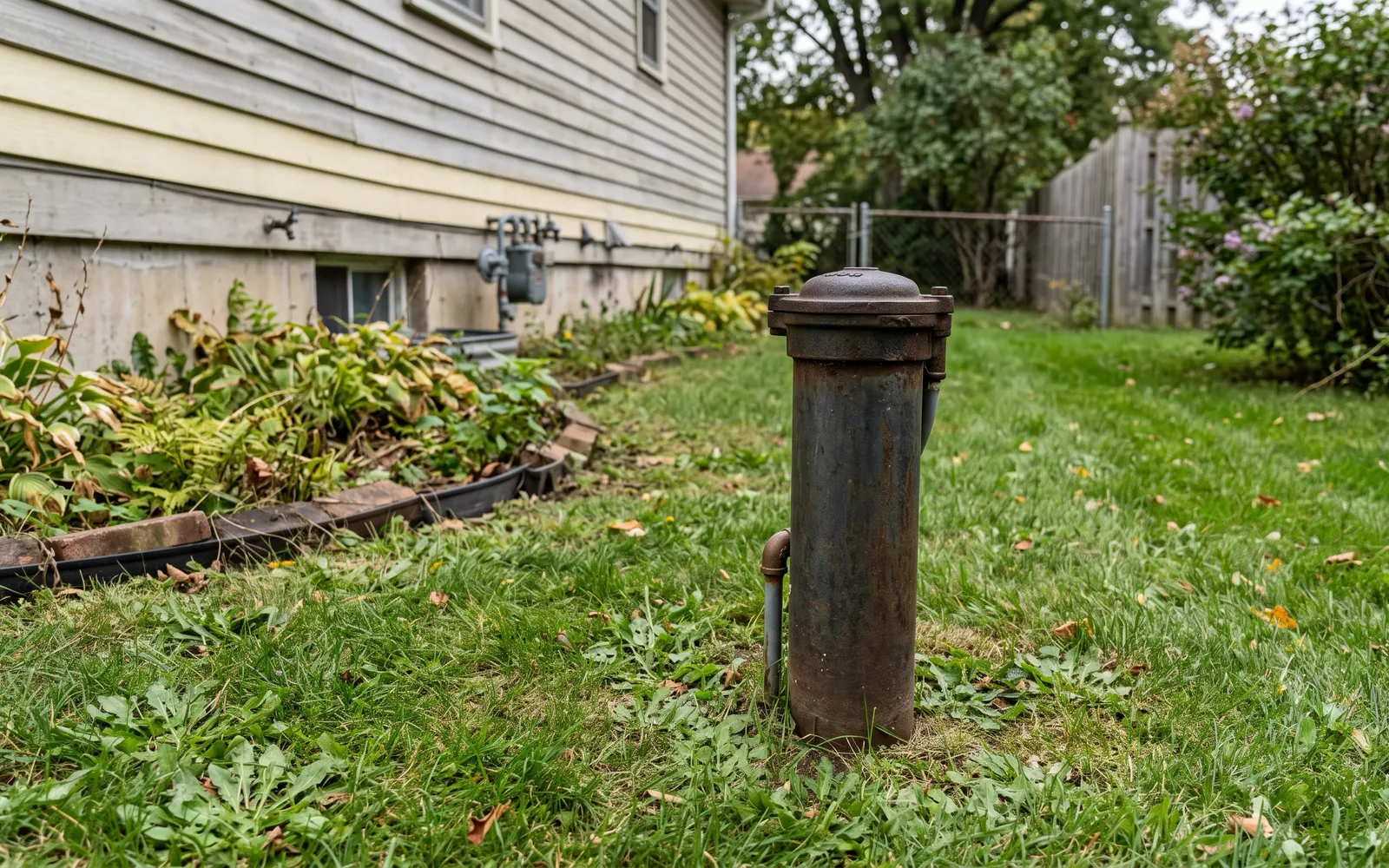
A well and septic are not a problem by themselves. They are a different set of responsibilities. You test your own water, you maintain your own pump and pressure tank, and you have the septic tank pumped and the field kept healthy. The DuPage County Health Department requires a permit to install or repair a private sewage system and publishes a homeowner's guide to wells and septic. Before you buy, I'd ask for a water test, a septic inspection and the county's permit records for both, and I'd write those into the inspection period.
The bigger question is connection. "Hook-up available at street" means Aurora's lines are close, but a city normally connects outside properties only under an annexation or water service agreement. In a May 2025 Aurora committee item for an unincorporated Kane County property, a city planner said annexing would let the owner go on city water "in order to not have them pay double water rates." If you are buying an Eola house partly to connect it, ask Aurora's planning staff about annexation, connection fees and timing before you close.
Electricity is ComEd and natural gas is Nicor Gas across this part of DuPage, the same as in the city around it.
Eola Schools: Indian Prairie District 204
The hamlet and the Aurora subdivisions around it are in Indian Prairie School District 204, which serves parts of Aurora, Naperville, Bolingbrook and Plainfield. Both Old Eola Road listings I checked, from 2014 and 2024, gave the same assignments: Brooks Elementary, Granger Middle School and Metea Valley High School. Brooks and Granger sit next to each other on Stonebridge Boulevard, each well under half a mile from the post office.
Metea Valley High School at 1801 N. Eola Road opened in August 2009, cost $124.7 million and was built for 3,000 students. It had 2,807 students in 2023-24.
Assignment is by street, and it changes as District 204 redraws lines. Eola Preserve, for example, is listed with Young Elementary rather than Brooks, and Oakhurst feeds Waubonsie Valley High School rather than Metea. Being unincorporated does not change the school district; the district line is separate from the city line. Check every address with District 204 directly before you write an offer, and ask me for the boundary if you want it done for a specific house.

Gwendolyn Brooks Elementary School. 2700 Stonebridge Blvd., Aurora. District 204. Listed for Old Eola Road homes in 2014 and 2024.
Granger Middle School. 2721 Stonebridge Blvd., Aurora. District 204.
Metea Valley High School. 1801 N. Eola Rd., Aurora. District 204. Opened 2009.
Young Elementary and Waubonsie Valley High School. District 204 schools that serve some of the Aurora subdivisions near Eola, including Eola Preserve (Young) and Oakhurst (Waubonsie Valley).
Commuting from Eola: The Route 59 Metra Station
The trains that run through Eola do not stop there. The closest station is Route 59 on Metra's BNSF line, at 1090 N. Route 59 on the Aurora and Naperville border. By Metra's own coordinates it sits on almost the same latitude as the hamlet, 1.8 miles due east as the crow flies.
Using Metra's published schedule data for the week starting September 28, 2026, Route 59 has 32 weekday trains toward Chicago and 35 back, plus 20 in each direction on Saturdays and on Sundays. The fastest morning trains, the 6:56 and the 7:26, reach Union Station in 45 minutes. Most rush-hour trains take 49 minutes, a couple of slower ones take 76, and midday trains take 68.
Two other stations are within reach. The Aurora Transportation Center downtown is about 3.6 miles west, and it is the end of the line, which makes it easier to get a seat but adds time to the ride. Naperville's main station is about 5 miles east. Most people I work with out here use Route 59 because of the express trains, and it is worth pricing a parking permit there as part of the commute.
Driving from Eola: Eola Road, Route 59 and I-88
Eola Road is the local spine. It runs north past Metea Valley toward I-88 and south past the Eola Community Center toward Ogden Avenue (U.S. 34). Route 59 is the main north-to-south highway a short drive east, with the Route 59 interchange on I-88 to the north. I-88 is the fastest route east to the I-294 and I-355 corridors and west toward DeKalb.
One project to plan around: Naperville's North Aurora Road Improvement Project, a joint effort with Aurora and the Naperville Township Road District, is widening North Aurora Road to two lanes each way with a center turn lane, a multi-use trail and sidewalk between Pennsbury Lane and Frontenac Road, and replacing a railroad bridge that is roughly 110 years old. Phase 2 started in fall 2025 and is expected to finish in late 2027. As of August 2026 the road had reopened after a pipeline relocation, with more closures expected in 2027.
On unincorporated streets like Old Eola Road, remember that the road district, not the city, plows and repairs them. In my experience that makes little difference on an ordinary winter morning, but it is worth knowing whom to call.
Is Eola Walkable?
For errands, no. Walk Score gives the Eola post office address a 48, which it still calls car-dependent, and a Bike Score of 45. The wider area it labels Eola Yards scores 22 for walking and 11 for transit. Aurora as a whole scores 40.
The hamlet's advantage is that a few things are close. The Jewel-Osco at 1157 N. Eola Road and the District 204 schools on Stonebridge Boulevard are a short trip, but crossing Eola Road on foot is not something I'd plan a daily routine around.
Trails are improving. In September 2024 an Aurora committee endorsed a state grant application for an Eola Road multi-use path from Autumn Grove Circle to the Waubonsee Creek Trail, estimated at about $3.75 million. I have not seen whether the grant was awarded.
Shopping and Groceries Near Eola
Groceries are close. The Jewel-Osco at 1157 N. Eola Road, near Indian Trail Road, has a pharmacy and is the nearest full supermarket to the hamlet. More grocery and big-box options sit along Route 59 and Ogden Avenue in Aurora and Naperville.
For bigger shopping, Fox Valley Mall is on Route 59 between Ogden Avenue and New York Street. It opened on July 30, 1975, and Macy's and JCPenney are its remaining anchors. The mall is in the middle of a long redevelopment. The first apartment building on the site, Lumen, opened in November 2022 with 304 units, and the second, Lucca, opened in June 2025 with 323. That turns the mall from a pure retail stop into a small mixed-use district a few minutes from Eola.
Downtown Naperville's shops and restaurants and downtown Aurora's riverfront are each a short drive. My Naperville guide and Aurora guide cover both.

Parks and Recreation Near Eola
The recreation hub for this side of Aurora is the Eola Community Center at 555 S. Eola Road. The Fox Valley Park District building opened in 1993, covers 63,000 square feet, and has a fitness center and track, a gym, a gymnastics studio, 12 meeting rooms and an Aurora Public Library branch. The park outside has two lighted baseball fields, two sand volleyball courts, a picnic shelter and an accessible playground.
The Fox Valley Park District itself dates to 1947 and covers 65 square miles across Kane, DuPage, Kendall and Will counties. If an Eola address is outside its resident boundary, expect nonresident pricing on classes, which the district says is generally 50% higher.
Stonebridge Country Club is the golf course next door, a private club with a separate membership fee from the neighborhood HOA. The Waubonsee Creek Trail runs south of the Eola Road corridor, and the Route 59 and Naperville trail networks connect from there.

Library Access from Eola
The nearest library is the Eola Road Branch of the Aurora Public Library District, inside the Eola Community Center. Aurora residents get a card as part of their taxes. Unincorporated residents are a different case. The library's card page says people who live outside city limits and do not pay taxes to another library can buy a one-year nonresident card for $286, payable quarterly, twice a year or annually, and it has a map tool to check an address. If your Eola tax bill includes a library district levy, that district's card may already be yours for free, so check the bill first.
Hospitals Near Eola
Two full-service hospitals are close. Rush Copley Medical Center at 2000 Ogden Avenue in Aurora is about 3.7 miles southwest of the hamlet in a straight line, and Edward Hospital at 801 S. Washington Street in Naperville is about 4.8 miles southeast. Both distances are my measurement from OpenStreetMap, not drive times. For an ambulance, the fire protection district on your tax bill decides which department responds.
What's Being Built Around Eola
The biggest change on Eola Road is Pulte's Eola Preserve. According to the Chicago Tribune's report of December 12, 2024, the Aurora City Council voted 9 to 3 on December 10, 2024 to approve 54 townhomes on 21 acres at 620 N. Eola Road, the former WBIG and WMRO radio station site. The land was rezoned from manufacturing to residential and conservation, 11 acres are protected as wetlands, and no more than 30% of the units may be rented. Nearby Riverstone owners raised traffic concerns about the shared exit at Waterstone Drive. The homes are being built in 2026.
Annexation is the quieter, longer story. Aurora keeps adding unincorporated DuPage land around Eola one parcel at a time. On August 26, 2026, an Aurora committee voted to fix a mapping error for a vacant parcel at 5S171 Eola Road that had been annexed in 2008 but never shown on the city's map. It stays zoned R-1 single-family, and the owners have no current plans to build. In November 2025 the council approved an annexation agreement for vacant DuPage land south of Sunrise Road, about two miles northeast, zoned for office, research and light industrial use. And in 2022 it approved a 270,934-square-foot warehouse annexation at Sunrise and Meridian roads despite neighbor objections about truck noise.
What this means for an Eola owner: nothing forces you into Aurora, but the land around you can change use through annexation, and the city's decisions shape your traffic and your view even when you don't get a vote in city elections. If a listing backs up to open land, I look up what it is zoned and whether it has an annexation agreement before an offer goes in.
Road work rounds it out. North Aurora Road's Phase 2 widening runs through late 2027, and Aurora's Eola Road path grant application from 2024 would add a multi-use trail south to the Waubonsee Creek Trail if funded.
I don't label any town or neighborhood as safe or unsafe.
Flood Risk and Drainage in Eola
I could not find a published flood-risk percentage for the hamlet, so I won't give you one. What I can tell you is how to check a specific house. DuPage County runs an online floodplain lookup where you can search an address or parcel number, see whether it sits in a mapped floodplain, and download the effective 2019 FEMA flood map panel. For unincorporated properties, the county's stormwater staff will also do a flood elevation determination on request.
Two local details make the check worth doing. The land around Eola includes real wetlands; Eola Preserve set aside 11 of its 21 acres for them. And the hamlet's drainage runs through road district ditches and storm sewers rather than a city system. On an older house, ask the seller directly about water in the basement or crawlspace, and about where the sump discharges. The follow-up question about what they did about it is the one that matters.
Frequently Asked Questions
Is Eola, IL incorporated?+
No. Eola is an unincorporated community in Naperville Township, DuPage County, surrounded by the city of Aurora. It has no village government; the DuPage County Sheriff, the Naperville Township Road District and DuPage County Building and Zoning provide the services a city would.
What ZIP code is Eola, IL?+
60519. It is a PO Box ZIP served by the Eola post office at 6S404 Old Eola Road, but homes on Old Eola Road also use it as their mailing address. Many "Eola Road" homes nearby are in Aurora with 60502 or 60504 addresses.
What does it mean to live in unincorporated Eola?+
The sheriff patrols, the township road district plows and maintains the roads, permits go through the county, and there is no city levy on the tax bill. Some homes use a private well and septic, and park and library access can carry nonresident fees.
How much does a house cost in Eola, IL?+
The hamlet has too few sales for a median. One 2024 sale on Old Eola Road closed at $299,999. Zillow's August 2026 index for the surrounding Aurora ZIPs is $355,418 in 60504 and $422,463 in 60502.
What are property taxes in Eola, IL?+
Ownwell's April 2026 data puts the median effective rate in ZIP 60519 at 2.02%, compared with 2.51% for the DuPage County part of Aurora. On a $400,000 home that is about $8,080 a year versus $10,040.
Do Eola homes have city water and sewer?+
Some do not. Older homes on Old Eola Road have been listed with a private well and septic, with Aurora water and sewer available at the street. Connecting generally requires annexation or a service agreement with Aurora.
What school district is Eola, IL in?+
Indian Prairie School District 204. Old Eola Road listings show Brooks Elementary, Granger Middle and Metea Valley High School. Confirm each address with the district.
Is there a Metra station in Eola?+
No. The BNSF line runs through Eola without stopping. The Route 59 station is 1.8 miles east, with 32 weekday trains to Chicago and expresses that reach Union Station in 45 minutes.
What does the name Eola mean?+
The common explanation is "End Of Line Aurora," a railroad call for the last stop before Aurora. A local history says the 1871 post office was named for Aeolus, the Greek god of the winds.
Eshu Chikoti has extensive access to off-market listings throughout Eola and the rest of DuPage County — homes that never make it to the public listing sites. That matters right now: in a seller's market like this one, well-priced homes routinely go under contract within days, and buyers relying only on public listings are competing for whatever is left over. Working with someone plugged into off-market inventory means seeing homes before the crowd does.
Eshu Chikoti · 847-691-4282 ·
Get new Eola listings by email
When a home comes on the market in Eola, I'll email it to you.
Just your email. Unsubscribe any time by replying.
Thinking About Eola?
Whether you're buying, selling, or just curious what's on the market, I can walk you through Eola street by street.