Barrington, IL
Barrington, IL is a village of about 10,600 people split between Cook and Lake counties, built around a historic downtown and a Metra station on the Union Pacific Northwest line, with a summer 2026 median sale price near $756,000.
Living in Barrington, IL means a summer 2026 median sale price near $756,000, a 47-minute express train from a downtown station, and Barrington 220 schools. The village sits in two counties, so your tax bill comes from either Cook or Lake, at roughly 2.2% of value either way. Here it is, pocket by pocket.
Written by Eshu Chikoti · 847-691-4282 ·
How Barrington, IL Got Here: From Miller Grove to the Railroad Town
Barrington is a railroad town. According to the village's Wikipedia entry, the land was Potawatomi territory until the 1833 treaty that ended the Black Hawk War. Pioneers from New York settled in what became Cuba Township in Lake County, at the corner of today's Route 68 and Sutton Road. That settlement was first called Miller Grove, after several settlers named Miller, and was later renamed Barrington Center. The name traces to Great Barrington, Massachusetts, since many early settlers came from Berkshire County.
The village itself came with the train. In 1854 the Chicago and North Western, today's Union Pacific Northwest line, reached the northwest corner of Cook County. That year a railroad civil engineer named Robert Campbell bought a farm about 2 miles northwest of the Deer Grove station, platted a town on it, and later got the railroad to move the station to roughly its current spot. He named it Barrington. By 1863 the settlement had about 300 residents, and the Illinois legislature granted its charter on February 16, 1865.
A few chapters still shape the town you'd buy into today. The village's history page says that in the early 1900s the area became a countryside retreat for Chicago business owners, which is where the horse farms and estate roads around the village came from. In 1929 the Jewel Tea Company built an office, warehouse and coffee roasting plant northeast of downtown. That site is now Citizens Park, and Jewel's name survives in the Jewel Park subdivision. On November 27, 1934, the "Battle of Barrington" left two FBI agents and the gangster Baby Face Nelson dead, and a memorial plaque for the agents is at Langendorf Park.
The most recent chapter is freight. In 1889 the Elgin, Joliet and Eastern Railway was built through town, crossing the passenger line northwest of downtown. When Canadian National bought the EJ&E in 2008, Barrington made national news opposing the purchase because it would add long freight trains to its at-grade crossings. The Route 14 underpass now under construction, covered below, is the result of that fight.
Barrington at a Glance
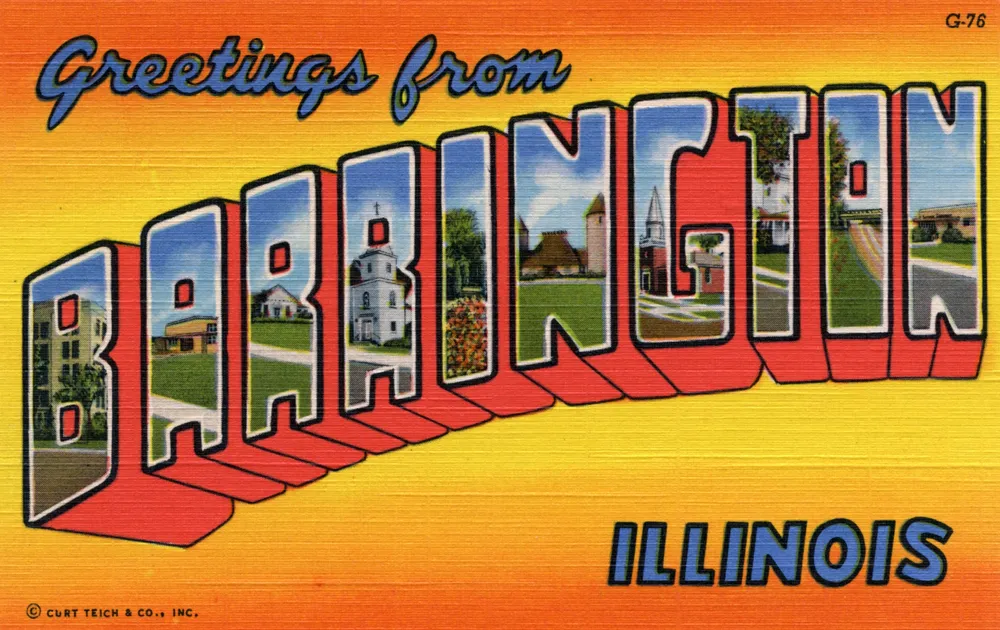
Barrington covers about 4.79 square miles, 4.61 of them land, and sits about 30 miles northwest of Chicago, per the Wikipedia entry. Barrington Hills wraps around the west and south, Lake Barrington and North Barrington are to the north, Deer Park and Kildeer are to the east, and Inverness and South Barrington are to the south and southeast. Lake-Cook Road, which is Main Street through downtown, is roughly the county line.
I file Barrington under Cook County on this site, but it is really a two-county village. The Census Bureau's Vintage 2025 subcounty estimates put the village at 10,586 residents: 5,740 in Cook County and 4,846 in Lake County. On the Cook side, about 4,715 live in Barrington Township and 1,025 in Palatine Township. On the Lake side, about 3,355 live in Cuba Township and 1,491 in Ela Township. So Cook has a slight majority, and almost half the village gets a Lake County tax bill.
That split matters more than anything else on this page for a buyer. Two houses a few blocks apart, on either side of Lake-Cook Road, can have different assessors, different reassessment years, different tax calendars and different exemption amounts. The schools are the same, since Barrington 220 covers both sides. The taxes section below walks through each county.
The housing is mostly owner-occupied. The 2020-2024 Census ACS counts 4,424 housing units and 11,077 residents, with 78.4% of occupied homes owned and 21.6% rented. Barrington is also a local job center. CMAP's June 2026 community snapshot counts 10,364 private-sector jobs in the village in 2025, about one for every resident.
Confirm the district for a specific address with the district office, and read each district's profile on the Illinois Report Card at illinoisreportcard.com.
I-90 is a drive south, CN freight still crosses at grade until the underpass is done in 2027, Claremont's new houses are still years out, and the county line means two sets of tax rules within one village.
Barrington Neighborhoods, Pocket by Pocket
The best map of Barrington's neighborhoods is the village's own. Chapter 11 of the 2021 Comprehensive Plan splits the village into 18 planning neighborhoods and describes each by lot size, street pattern and named subdivisions. The pattern is simple once you see it. The closer you are to the train station, the older the house and the smaller the lot. The farther out you go, the bigger the lot, until you reach the edge where Barrington Hills zoning takes over.
Close in, the planning neighborhoods northeast and southeast of downtown are mostly single-family houses on lots of about 7,500 square feet, with some two-family houses near the village center and along Hough Street. The Historic District covers much of the southwest side. One ring out, Jewel Park, Barrington Highlands and the Roslyn Road area step up to 10,000- to 15,000-square-foot lots. On the far north and east, the Fox Point subdivisions around Lake Louise sit on lots of at least 20,000 square feet.
The expectation I most often have to reset with buyers in Barrington is that the "Barrington" on a listing means the village. The 60010 ZIP code and the Barrington mailing address cover a much bigger area, including Barrington Hills, Lake Barrington, North Barrington, South Barrington, Deer Park and unincorporated land. The plan itself notes that the lots south of Illinois Street in its Neighborhood Seven are mostly unincorporated Cook County, on septic systems. Check whether a house is actually inside the village before you compare it to village sales. If you want me to check that, and which county it's in, that is a conversation I am happy to have here.
Below are the pockets the plan names. Build eras come from the plan where it gives them and from single agent or association pages otherwise, so treat them as a starting point.
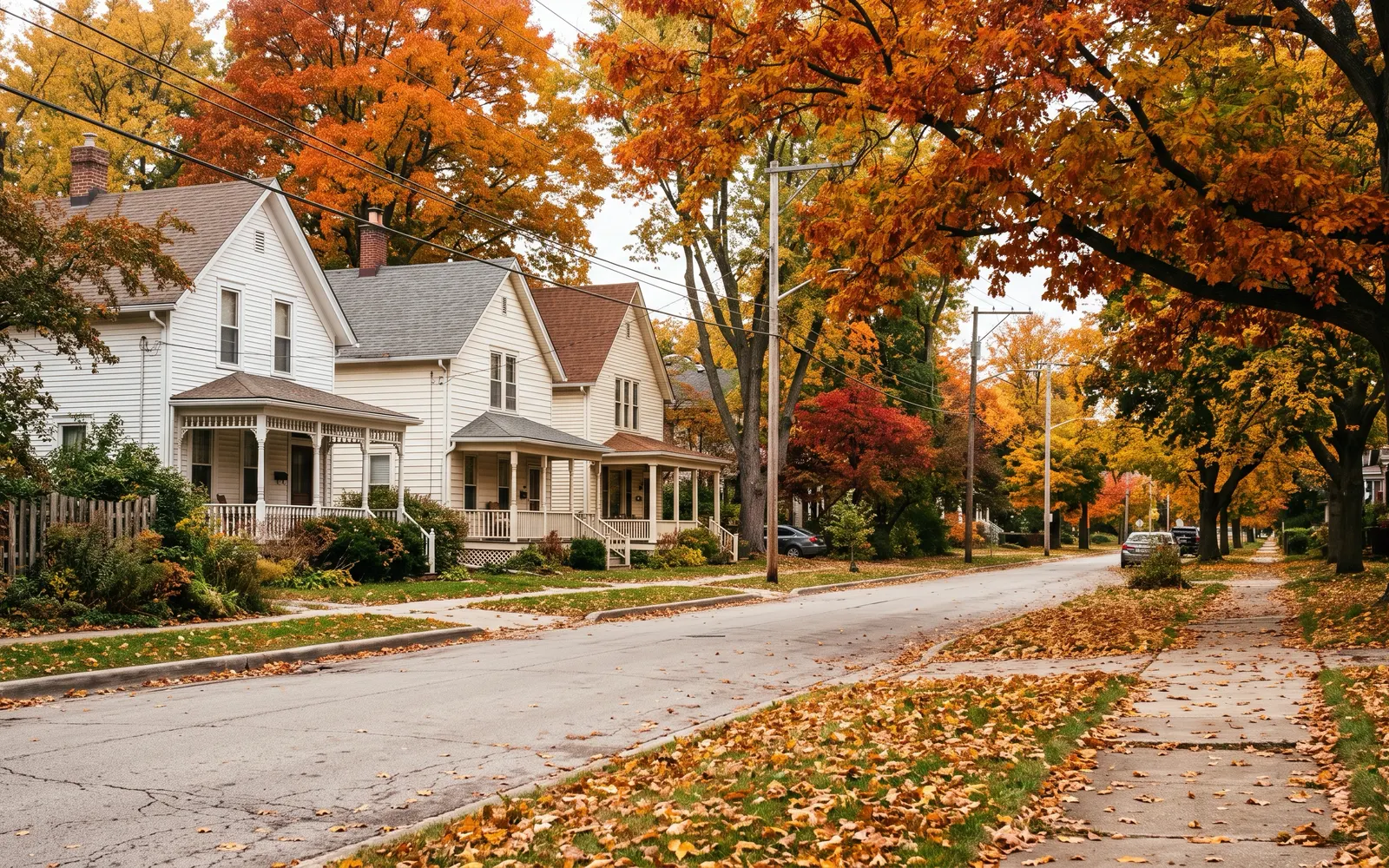
Village Center and the Historic District. The plan divides downtown into 11 districts, including the Main Street, Train Station, North Downtown, South Cook Street and James Street districts, all near the Metra station. Just south and west is the Barrington Historic District, 92 acres added to the National Register on May 16, 1986, bounded roughly by the railroad, Dundee Avenue, Hillside and Coolidge streets, and Spring and Grove streets. The village calls it one of the largest frame-home districts in Illinois, with Lake Street's Queen Anne houses as its showpiece.
Jewel Park. North of downtown between Route 59 and Route 14. The plan calls it one of the oldest residential developments in the area, subdivided and reforested in the 1930s by Jewel Companies under design covenants, with curving, tree-lined streets and lots of 15,000 square feet and larger.
Barrington Highlands. East of Dundee Avenue on the south side. Single-family houses built in the 1950s on lots of about 10,000 square feet, per the plan. West of Dundee Avenue in the same planning area, lots are at least 20,000 square feet.
Roslyn Road area, Barrington Court and Carriage Trail. Northwest of downtown near Roslyn Road Elementary. Lots of about 10,000 to 15,000 square feet on tree-lined streets that the plan says are not fully improved.
Fox Point. The Fox Point association says it has 411 homes built in the late 1960s and early 1970s by the Kennedy Company, with 295 in Lake County and 116 in Cook County, and its own private lake (Lake Louise), pool and tennis courts. The plan lists Fox Point North and East with Listhartke, Tall Trees, Castle Court, Barrington Hilltop and Barrington Meadows, on lots of at least 20,000 square feet. Fox Point South falls in the neighborhood along Main Street with Wyngate, Lakeview, Chateaux Bourne, Fairfield and Hillside Farms.
Chippendale, Steeple Chase and Flint Creek. Single-family subdivisions in the same planning neighborhood as Jewel Park, north of downtown.
Southgate: Park Barrington, The Reserve of Barrington and Brentwood. The area east of Barrington Road on the south side, which the plan says mixes offices and auto dealerships with a range of residential subdivisions, including attached housing not found elsewhere in the village. The Oaks of Barrington is just west of Barrington Road.
Kainer Court, Eastwood and Barrington East. Subdivisions on the northeast side near Citizens Park and the Barrington Area Library.
What Barrington Homes Look Like, by Type and Era
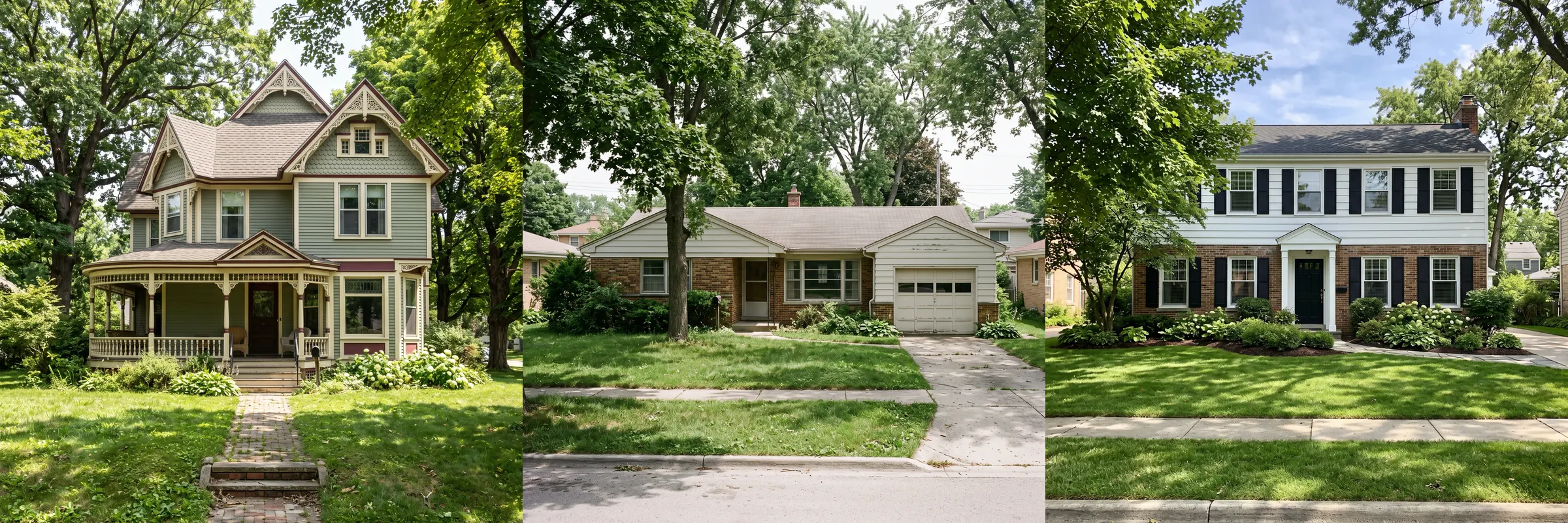
Barrington is mostly detached houses, and big ones. CMAP's snapshot, built on the 2020-2024 ACS, counts 3,008 detached single-family homes, 68.0% of all units, and 411 attached single-family homes such as townhouses, another 9.3%. Buildings of 20 or more units add 14.0%, and everything in between adds less than 9%. The bedroom mix tilts large: 33.8% of units have four bedrooms and 12.9% have five or more, and the median home has 7.6 rooms against 5.1 for Cook County as a whole.
The ages are spread out more than in most suburbs. CMAP counts 13.0% of units built before 1940, 34.0% from 1940 to 1969, 31.1% from 1970 to 1989, 16.7% from 1990 to 2009 and 5.2% since 2010. The median year built is 1971. That range is what you see on the ground: frame Victorians and bungalows near the tracks, 1950s ranches and split-levels in the Highlands, late-1960s colonials in Fox Point, and newer infill and townhomes near downtown.
The Census ACS puts the median home value at $582,500 and the median gross rent at $1,500. Those are five-year survey figures, so they trail today's prices, which the market section covers.
Two practical notes. In the Historic Overlay District, the village's historic district page says exterior changes need a Certificate of Appropriateness from the Architectural Review Commission, a review it says usually takes 60 to 90 days. Interiors are not reviewed. If you are buying there to add on, build that time into your plans. And older houses have their own inspection list: original windows, old wiring, aging sewer lines and, in a town with a 1971 median, a lot of furnaces and roofs near the end of their life. None of that should kill a deal. All of it belongs in the price. My home inspection checklist covers what to ask for.
The Barrington, IL Housing Market in 2026
Barrington had a strong summer on paper. In the three months ending August 2026, Redfin reported a median sale price of $755,750, up 17.6% from a year earlier. It counted 70 sales in August, up from 54 the August before, and a median of 50 days on market, down from 53.
The rest of Redfin's numbers describe a market that is steady, not frantic. The typical home sold at 99.8% of list price, and 35.3% sold above asking, down 5.4 points from a year earlier. About 20.7% of listings took a price cut. Price per square foot was $278, up 3.7%. Redfin gives Barrington a Compete Score of 61 out of 100, which it calls somewhat competitive, and says the average home sells for about 1% below list and goes pending in around 58 days. A well-priced house moves. An overpriced one sits through a season.
Zillow's home value index tells a calmer story. It put the typical Barrington home at $645,992 in August 2026, up 8.3% from $596,229 in August 2025 and 12.2% from $575,572 in August 2024. The gap between the two is mostly mix. Redfin's median is the middle of whatever sold this summer, and summer sales tilt toward larger detached houses. Zillow's index estimates every home in the village, including the condos and townhomes. The clue is Redfin's own price per square foot, up only 3.7%. The typical house gained somewhere in the high single digits, and this summer's buyers bought bigger houses.
For context against the neighbors, Zillow's August 2026 index put Lake Barrington at $558,094, Tower Lakes at $662,689, Deer Park at $781,384, Inverness at $821,574, North Barrington at $875,180, Barrington Hills at $1,090,687 and South Barrington at $1,165,345. Barrington is the lower-priced way into the 220 district, next to Lake Barrington, with the difference that you can walk to a train. If you are working out a budget, my guide to how much house you can afford is the place to start.
Barrington Property Taxes: Cook County or Lake County
Property tax is the number that moves the monthly payment most, and in Barrington the first question is which county the house is in. The rates end up close. Ownwell's Cook County data for Barrington, updated April 13, 2026, puts the median effective rate at 2.16% and the median annual bill at $10,370, on a median home value of $500,000. Ownwell's Lake County data, updated the same day, puts it at 2.19% and $11,755 on a median value of $537,518. Both pages are keyed to the Barrington name and the 60010 ZIP code, so they may include some homes just outside the village.
**Cook side.** Cook reassesses one-third of the county each year, so each area is revalued every three years. The Cook County Assessor's release of July 7, 2025, says Barrington Township was reassessed that year, with notices mailed July 3 and appeals due August 15, 2025, and that the new values affect second-installment bills issued in 2026. The release lists a 2024 median single-family sale of $734,000 in the township against the assessor's median estimate of $803,000, but the township also includes South Barrington, Barrington Hills and part of Inverness, so those figures run higher than the village alone. The Palatine Township part of the village is in the same north-suburban group on the assessor's reassessment schedule. For tax year 2025, the first installment was due April 1, 2026, per the Cook County Treasurer, and the second-installment bills were mailed September 1 and are due October 1, 2026, according to Cook County, later than usual because of the county's tax system overhaul. The Cook County homeowner exemption takes $10,000 off the equalized assessed value of an owner-occupied home.
**Lake side.** Outside Cook County, Illinois reassesses on a four-year cycle, and township assessors do the work. The Lake part of Barrington is in Cuba Township (the Cuba Township assessor is on Cuba Road) and Ela Township. A Ryan tax advisory notes that 2023 was the quadrennial reassessment year for counties outside Cook, so the next full one falls in 2027, with adjustments in between. Lake bills come once a year in two installments. For the 2025 taxes payable in 2026, the Lake County calendar shows bills mailed May 1, with installments due June 4 and September 4, 2026. The Lake County general homestead exemption takes $8,000 off the equalized assessed value.
Here is what the rates look like on a real purchase. At this summer's $755,750 median, 2.16% is about $16,320 a year, or $1,360 a month, on the Cook side. At 2.19% on the Lake side it is about $16,550 a year, or $1,380 a month. Current bills are often lower because assessments trail the market and the Ownwell medians are built on lower home values. The mistake I see most is buyers budgeting off the seller's current bill.
Closing costs are simpler than in most Cook County towns. The ATG summary of the village ordinance lists no village transfer tax, only a final water reading before closing. The Illinois Department of Revenue lists the county transfer tax at 25 cents per $500, about $378 on a $755,750 sale. My Illinois closing costs guide covers the rest. This is general information, not tax advice. Your bill depends on your parcel, your exemptions and the assessor.
Barrington Schools: District 220 on Both Sides of the County Line
Both halves of Barrington are in Barrington Community Unit School District 220, which runs kindergarten through 12th grade. Wikipedia describes the district as covering 72 square miles with the village at its center.
The district's school directory lists several buildings inside the village. Barrington High School is at 616 W. Main Street, and Wikipedia's entry) says it opened in 1949 and enrolled 2,718 students in 2024-25. The middle school has two campuses, Prairie at 40 E. Dundee Road and Station at 215 Eastern Avenue. Four elementary schools are in the village: Arnett C. Lines, Grove Avenue, Hough Street and Roslyn Road. The district's other elementary schools, Barbara B. Rose, Countryside, North Barrington and Sunny Hill, are in neighboring towns.
Which elementary and middle school campus a house feeds depends on the street. Check every address with the district before you write an offer, and ask me for the boundary if you want it done for a specific house. I don't rank schools on this page. The Illinois Report Card has each school's own data.
The village is also changing around the high school. The village's development page says the board approved a new auditorium and classroom additions at Barrington High School on February 23, 2026, and that the project is under construction. St. Anne Catholic Community runs a K-8 school in the village, per Wikipedia.
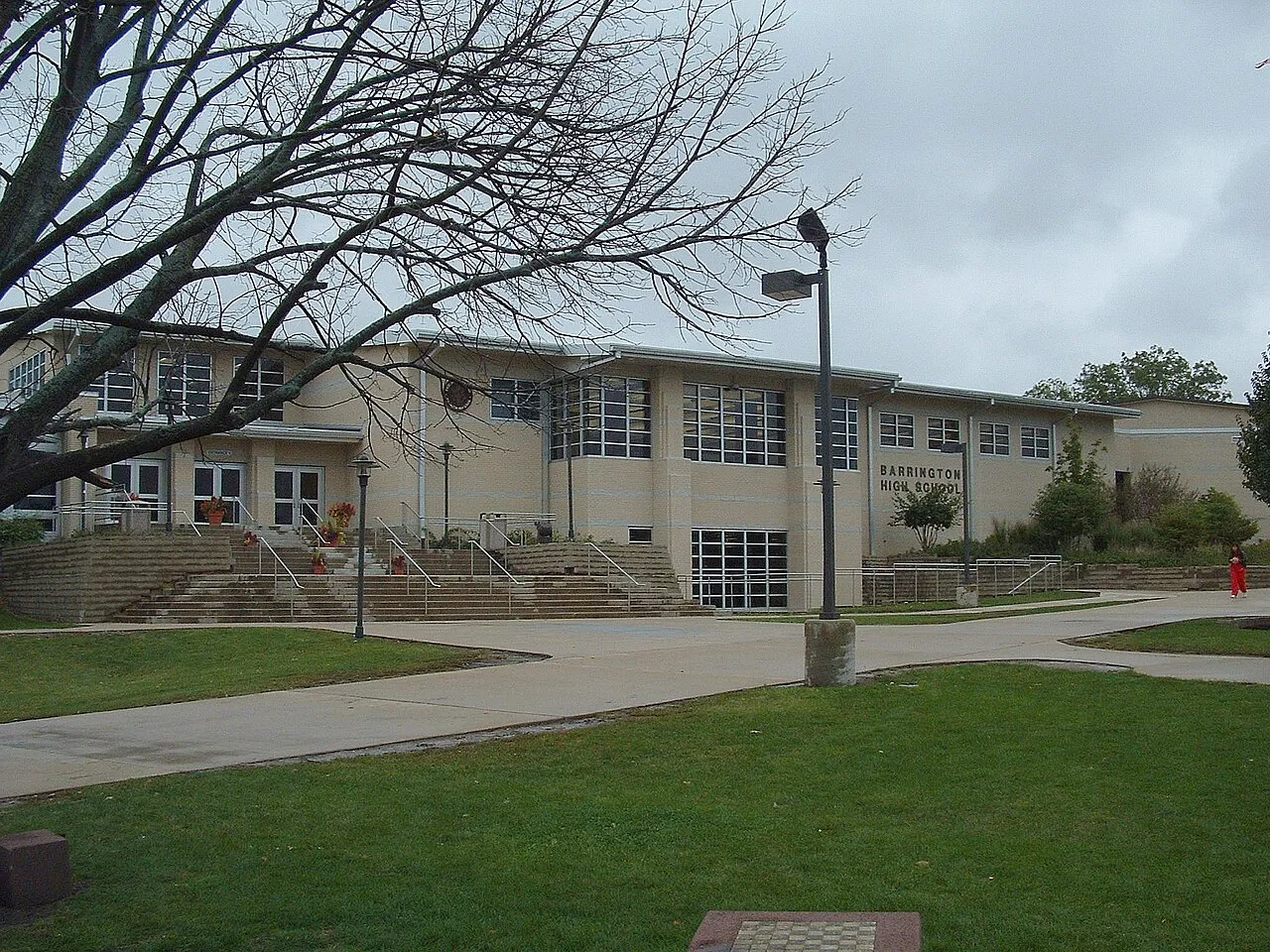
Barrington High School. 616 W. Main Street. District 220's only high school; opened in 1949. A new auditorium and classroom additions were approved in February 2026.
Barrington Middle School, Prairie Campus. 40 E. Dundee Road, which also houses the district's Early Learning Center.
Barrington Middle School, Station Campus. 215 Eastern Avenue.
Arnett C. Lines Elementary. 217 Eastern Avenue.
Grove Avenue Elementary. 900 S. Grove Avenue.
Hough Street Elementary. 310 S. Hough Street.
Roslyn Road Elementary. 224 Roslyn Road.
Other District 220 elementary schools. Barbara B. Rose (South Barrington), Countryside (Barrington Hills area), North Barrington and Sunny Hill (Carpentersville address). A few village addresses may be assigned to one of these; confirm with the district.
Commuting from Barrington: The Metra Union Pacific Northwest Line
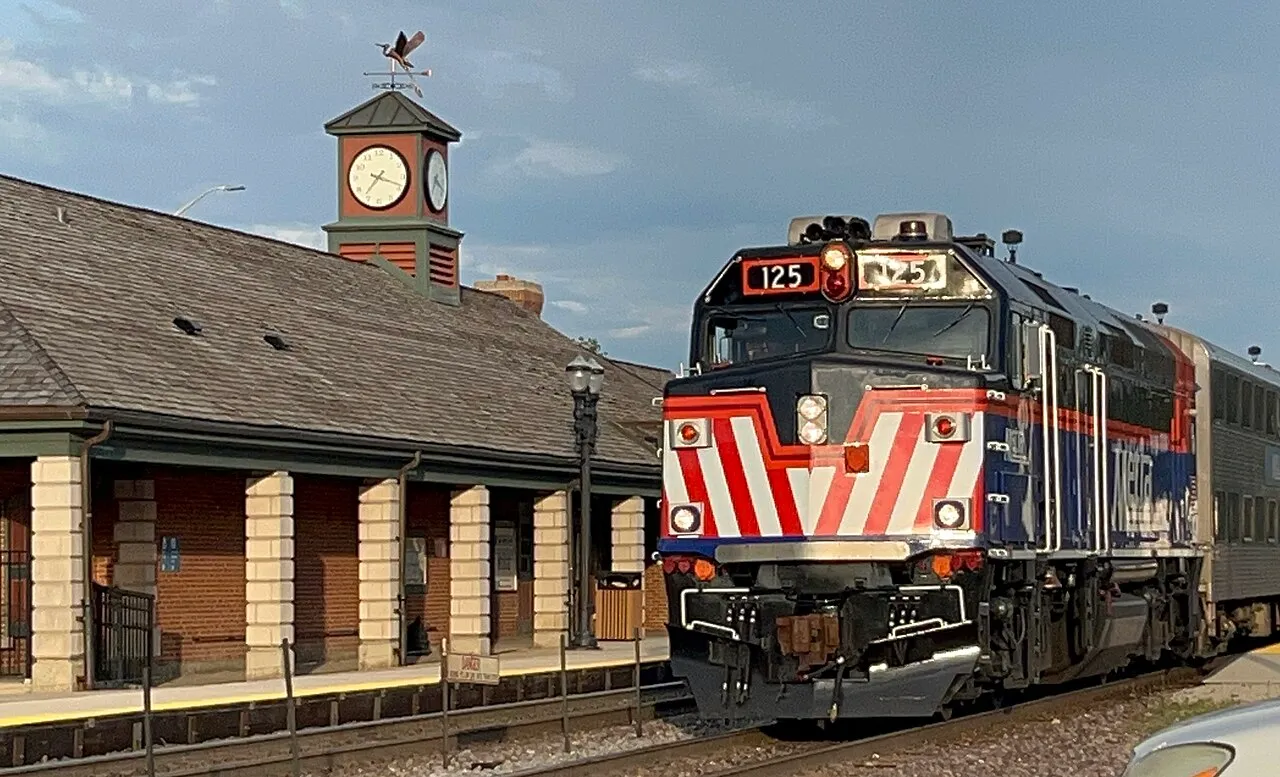
The train is the reason Barrington exists, and it still sets the rhythm of downtown. The Barrington station is at 201 S. Spring Street, 31.9 miles from Ogilvie Transportation Center on the Union Pacific Northwest line. It is in fare zone 4 and is owned by the village. In 2018 it averaged 1,725 weekday boardings, which Wikipedia says made it the 16th busiest of Metra's 236 stations outside downtown.
According to Metra's schedule data for the week of September 28, 2026, 34 trains leave Barrington for Ogilvie on weekdays and 31 come back. The fastest morning trains, at 6:15, 6:45, 7:15 and 7:45 a.m., reach Ogilvie in 47 minutes. A second group at 5:51, 6:21, 6:51, 7:21 and 7:51 a.m. takes about 55 minutes. The typical train takes about 65 minutes. Saturdays have 16 trains inbound and 17 outbound, with the fastest at 51 minutes, and Sundays have 9 inbound and 11 outbound.
The station's position is the real advantage. Unlike many suburban stations, it is in the middle of downtown, so the Historic District and the in-town neighborhoods are a walk to the platform. Wikipedia also notes that Barrington is the southernmost station on the line without a third express track, which begins just southeast of the station. For comparison, Palatine, the next big stop in, has 35 weekday trains inbound with the fastest at 40 minutes.
Even so, most people drive. CMAP's snapshot shows 33.9% of Barrington workers working from home, 55.1% driving alone and 5.6% taking transit, with an average commute of 30.5 minutes for those who travel.
Driving from Barrington: Route 14, Route 59 and the Freight Crossings
Barrington is a state-highway town, not an interstate town. Wikipedia lists three highways through the village: US-14 (Northwest Highway), IL-59 (Hough Street) and IL-68 (Dundee Road). Lake-Cook Road runs through downtown as Main Street. Most drivers reach I-90 by heading south on Barrington Road or Route 59, and Route 14 runs southeast through Palatine toward Arlington Heights.
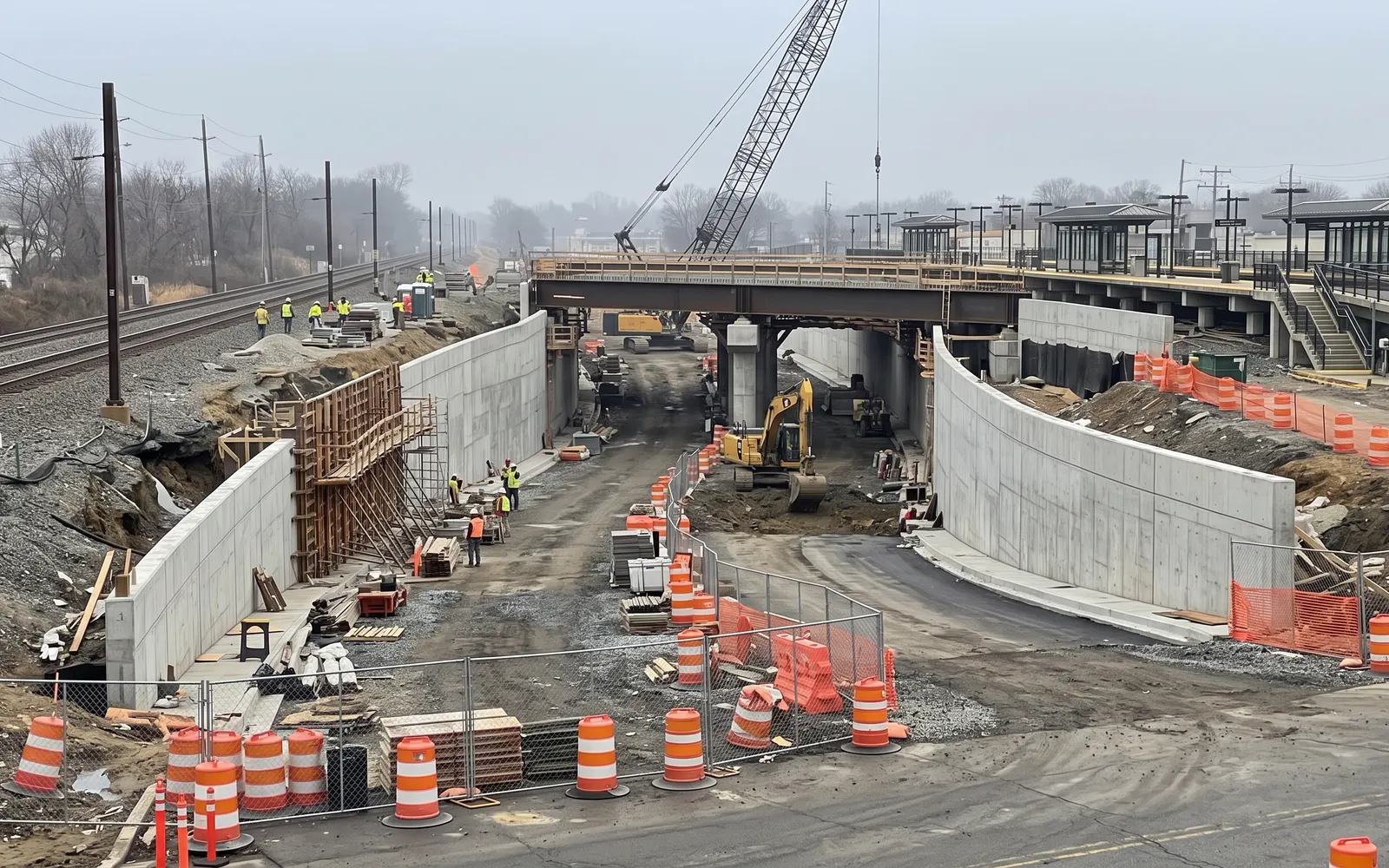
The local traffic story is the freight line. The former EJ&E, now Canadian National, crosses Route 14, Lake Zurich Road and Cuba Road at grade. Wikipedia describes an October 15, 2010, afternoon when a stopped 133-car CN train blocked those crossings for more than an hour and a half. The fix is under construction. The Route 14 underpass project lowers Route 14 under a new CN railroad bridge, relocates part of Flint Creek, lowers Lake Zurich Road to meet it and adds multi-use paths on both sides. Route 14 reopened on a temporary four-lane roadway at the end of October 2025, and the village said it expects substantial completion in 2027. The September 21, 2026 update reported work on the railroad bridge footings and a new Route 59 culvert, with traffic shifting on Hough Street this fall.
If a house you like sits north of the CN tracks and your commute runs south, drive the route at rush hour before you decide. Until the underpass opens, a freight train can add real minutes, and the Route 59 and Route 14 work zones will shift again before 2027.
Is Barrington Walkable?
Downtown is. The rest of the village mostly isn't. Walk Score publishes no village-wide number for Barrington, only neighborhood names, so I checked public addresses instead. Village Hall at 200 S. Hough Street scores 86, "very walkable," with a Bike Score of 64. The Metra station at 201 S. Spring Street scores 80. The Barrington Area Library at 505 N. Northwest Highway scores 76. Out in the neighborhoods the numbers drop fast: Barrington High School on West Main scores 47 and Roslyn Road Elementary scores 46.
The land use explains it. CMAP's land use inventory for 2023 shows 37.8% of the village's 3,073 acres in single-family residential use, 16.6% in open space and 9.3% in commercial use, with the commercial land concentrated downtown and along Route 14, Route 59 and Dundee Road.
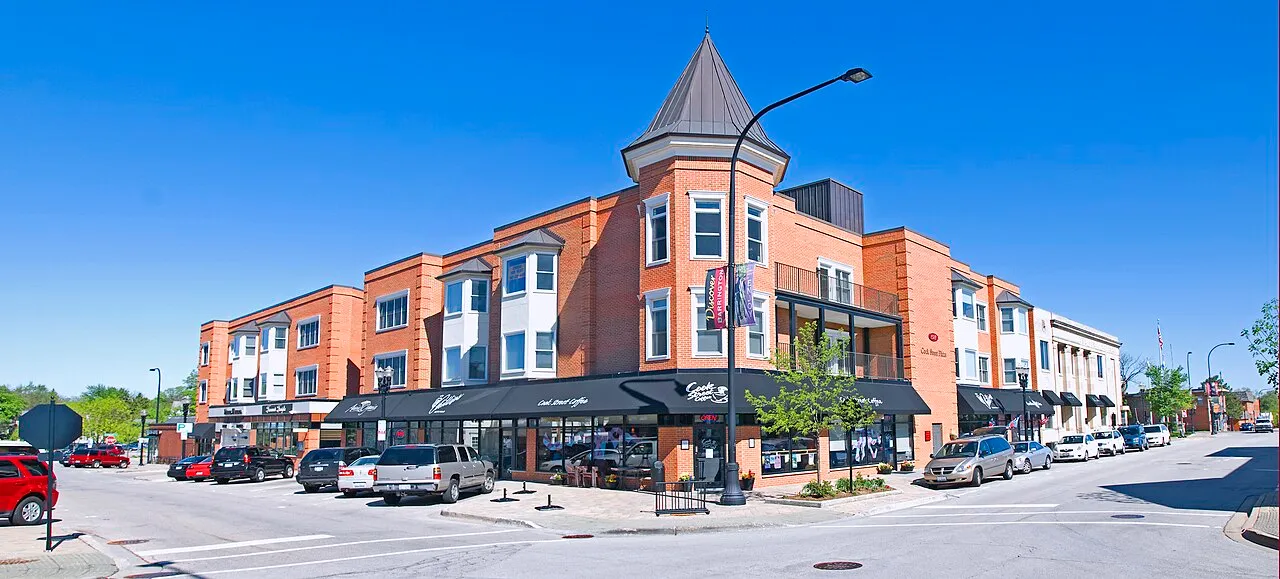
The village is working on the gaps. The comprehensive plan points to the Dreamway, a path along Flint Creek under the Union Pacific tracks that links Barrington High School, the Shops at Flint Creek and Langendorf Park, and the Route 14 underpass will add multi-use paths. The village's development page says the first phase of a downtown streetscape project, with new sidewalks and expanded outdoor dining on Cook Street, Station Street and Park Avenue, is nearly complete.
Downtown Barrington, the Ice House and Everyday Shopping
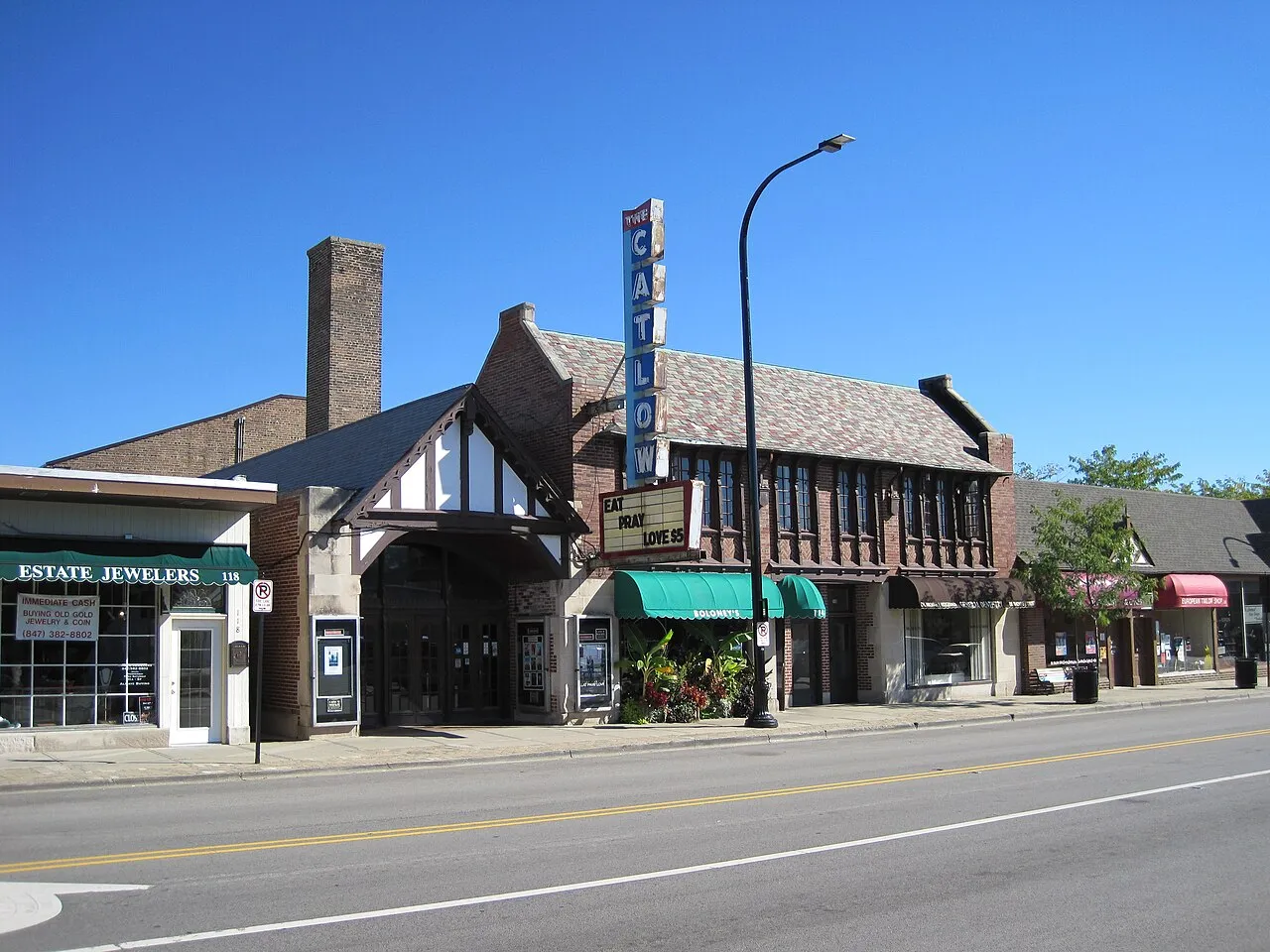
Barrington's shopping is a downtown plus a highway strip. Downtown is the historic core around Main, Cook and Station streets and Park Avenue, with local shops, restaurants and the Catlow Theater. Just northwest of the center, the Ice House Mall occupies a brick building built in 1904 for the Bowman Dairy that served as a real ice house for 68 years before its conversion to specialty shops starting in the 1970s. The village's development page lists two new Ice House tenants for 2026: Bell House Books, an independent bookstore, and The Pepper Pot, a needlepoint shop.
The everyday shopping is on the edges. The Foundry shopping center is on Northwest Highway northwest of town, and the Shops at Flint Creek are near Langendorf Park. Route 14 and Dundee Road also carry most of the village's car dealerships, which is a big part of the tax base. CMAP's snapshot, using Illinois Department of Revenue data, shows about $849 million in retail sales in the village in 2025, or $76,626 per resident, against $23,200 for Cook County. That figure is much higher than a town of this size would produce from shops alone. The village is still adding dealerships: a stand-alone Motor Werks Porsche at Grove Avenue and Dundee Road is under construction.
For bigger trips, the Deer Park Town Center and the Route 12 corridor are a short drive east.
Groceries and Everyday Errands in Barrington
Two full grocery stores are downtown, a few blocks apart. Jewel-Osco is at 150 W. Main Street at Hough Street and is open 6 a.m. to midnight every day. Heinen's is at 500 N. Hough Street. Having both within walking distance of the Historic District is unusual for a town this size, and it is one of the practical reasons downtown houses hold their value.
Beyond those two, the strip centers along Northwest Highway and Dundee Road cover pharmacies, hardware and the rest of the week's errands, and the bigger warehouse and big-box stores are a short drive toward Lake Zurich, Deer Park or Palatine.
In summer, the village runs a farmers market as part of Thursday Night Out. The village's 2025 listing shows it on Station Street from 4 to 8 p.m. on Thursdays, with classic cars and live music later in the evening.
Where Barrington Eats
Most of Barrington's restaurants are downtown, within a few blocks of the station, with more along Northwest Highway and in the strip centers. The village has been pushing for more outdoor dining. The streetscape project widened sidewalks on Cook and Station streets for patios, and the village's development page says a new plaza on Park Avenue, converting a short stretch of road into outdoor gathering and dining space, is expected to start construction in fall 2026 or spring 2027.
The same page lists several openings for 2026: Kurbside Pizza's first brick-and-mortar location at 215 N. Hough Street, Fix Sandwich Shop moving to 113 S. Cook Street, a new pub called Long Story Short at 113 E. Main Street, Taco Maya in the former Dunkin' space at 108 S. Northwest Highway, and Bundle at the Shops of Flint Creek. A new Dunkin' drive-thru opened at 306 W. Northwest Highway.
I don't try to rank restaurants here, because the list turns over every year. The best advice I give buyers is to eat downtown on a weeknight and a Saturday before you buy. It tells you quickly whether you'd actually use the village center or just drive past it.
Parks, Cuba Marsh and Recreation in Barrington
The Barrington Park District runs the village's main parks. Its flagship is Citizens Park, a 45-acre park off Northwest Highway and Lake Zurich Road on the site of the old Jewel Tea Company. It was dedicated in 2007 and has walking trails, waterfalls, a pavilion, a lodge and an amphitheater, plus lighted tennis and basketball courts and a winter ice rink. Its trails connect to Cuba Marsh. Langendorf Park, per the village's recreation page, has an outdoor pool and splash pad, ballfields, a par-3 golf course, an indoor gym and the recreation center. Ron Beese Park on the south side is mostly ballfields.
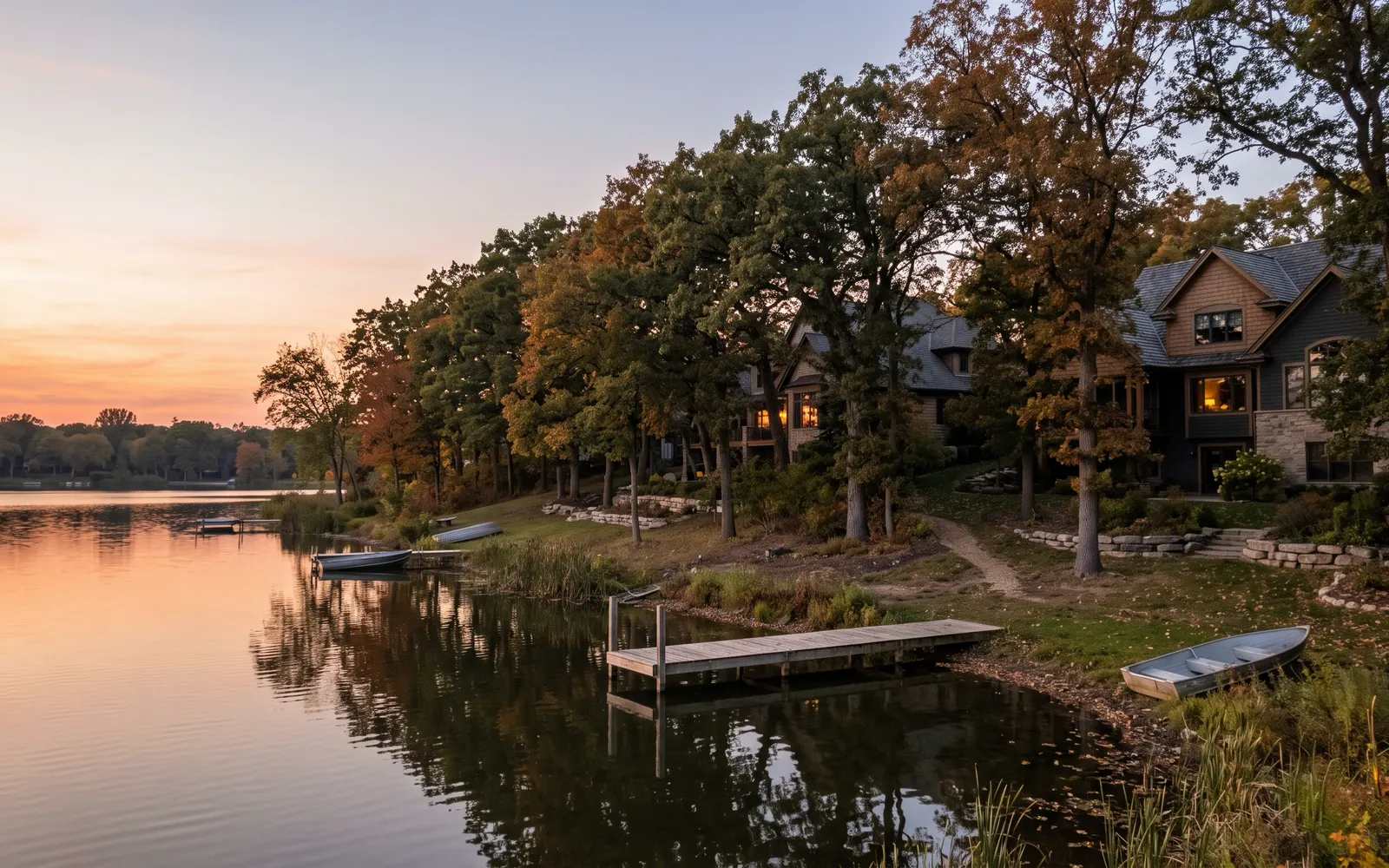
The bigger open spaces are county preserves at the edges. Cuba Marsh, northeast of town and run by the Lake County Forest Preserves, is a 782-acre wetland with about 3 miles of crushed-gravel trail. The comprehensive plan notes that Baker's Lake, on the south side, is an Illinois Nature Preserve surrounded by Cook County Forest Preserve, park district and village land. Deer Grove, Crabtree and Spring Creek preserves are a short drive south and west.
Golfers have the Makray Memorial Golf Club, an 18-hole course southeast of downtown on Northwest Highway that Wikipedia puts at about 7,000 yards. And the village points out that on weekend mornings cyclists park at the high school and ride out onto the country roads through Barrington Hills. Park district boundaries don't match the village exactly, so check which district an address pays into.
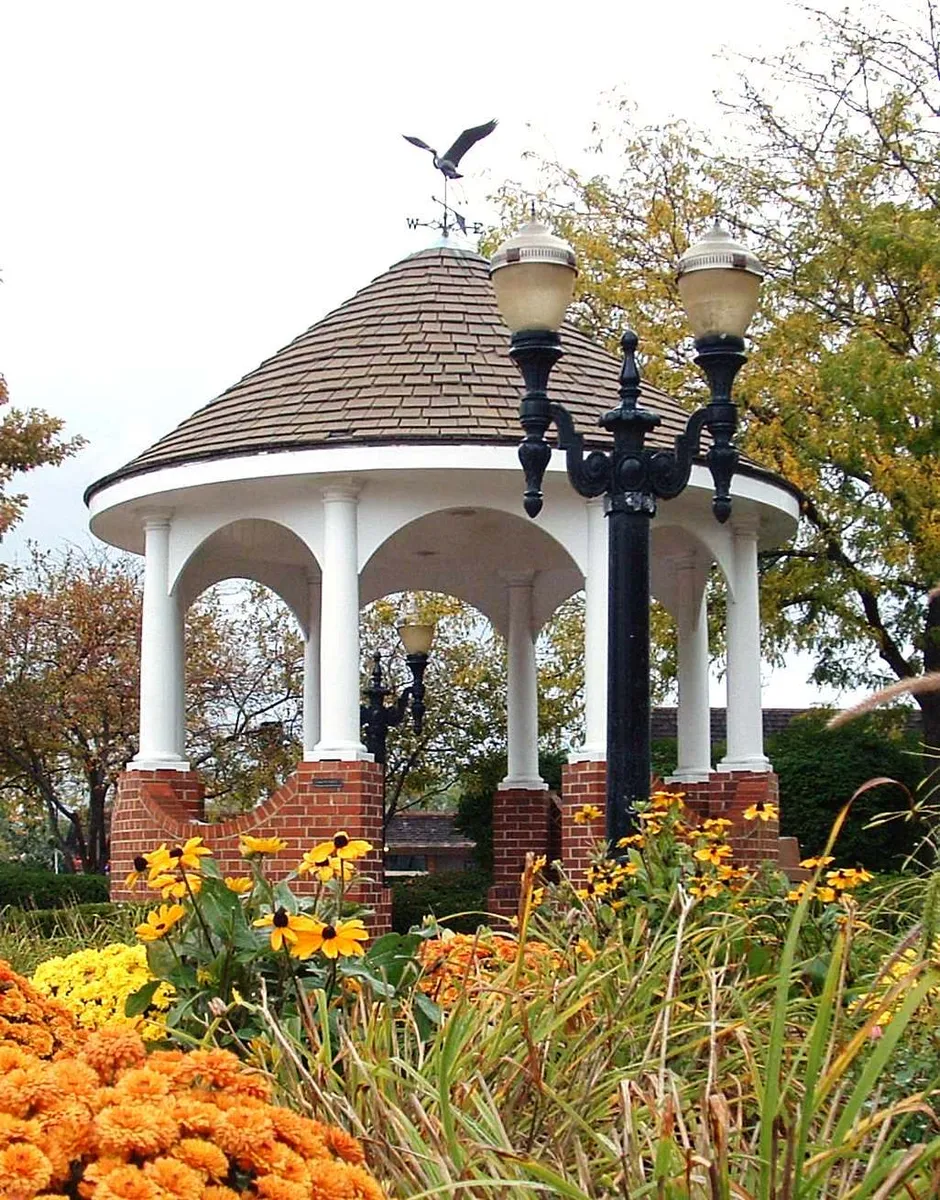
The Barrington Area Library
The Barrington Area Library at 505 N. Northwest Highway serves a district of about 45,360 residents covering 72 square miles in Cook, Lake and neighboring counties, which makes it one of the largest library districts by area in Illinois. The 60,000-square-foot building holds a collection of about 330,000 items.
Its history is very local. Wikipedia says the library started in 1914 with a $1,000 bequest from Caroline Ela, and the Barrington Woman's Club ran it out of a drug store before it had a building. The current site was donated by the Jewel and Kendall companies in 1972, and the building opened in 1978, with an addition finished in 1993. It sits next to Citizens Park, so the library and the park work as one campus. The library's local history collection is also where most of the older Barrington history in this guide traces back to.
Utilities and Village Services in Barrington
Barrington pumps its own water. The village's water production page says the Public Works Department runs four well sites, three reservoirs and three elevated tanks, producing all the drinking water for the village and parts of Inverness and Barrington Hills. The village also runs its own wastewater treatment plant. Well water and Lake Michigan water are different products, so if hardness matters to you, ask about a softener when you tour.
Trash and recycling go through the village's contract with Groot Industries. Pickup is on Friday for refuse, recycling and yard waste, Groot takes electronics at the curb by appointment, and there is year-round food scrap collection in a 95-gallon compost cart. ComEd delivers electricity and Nicor Gas provides natural gas.
Some homes near the village edges are not on village water or sewer. The comprehensive plan describes one subdivision west of Lake Zurich Road on a common well and private septic tanks, and unincorporated pockets south of Illinois Street on individual septic systems. If the listing says "Barrington" and the house is outside the village, ask for the well and septic records along with the inspection.
Hospitals Near Barrington
The closest hospital is Advocate Good Shepherd Hospital at 450 W. Highway 22, just north of the village with a Barrington address. According to Wikipedia, residents pushed for a local hospital through the 1960s and 1970s, and Good Shepherd opened in 1979. Its emergency department page says it is a state-certified Level II trauma center, one of 47 in Illinois, and treats about 35,000 emergency patients a year.
For other hospitals, Northwest Community Hospital in Arlington Heights and Ascension Saint Alexius in Hoffman Estates are the usual next options, both reached by Route 14 or Route 59.
The Catlow, Barrington's White House and Nights Out
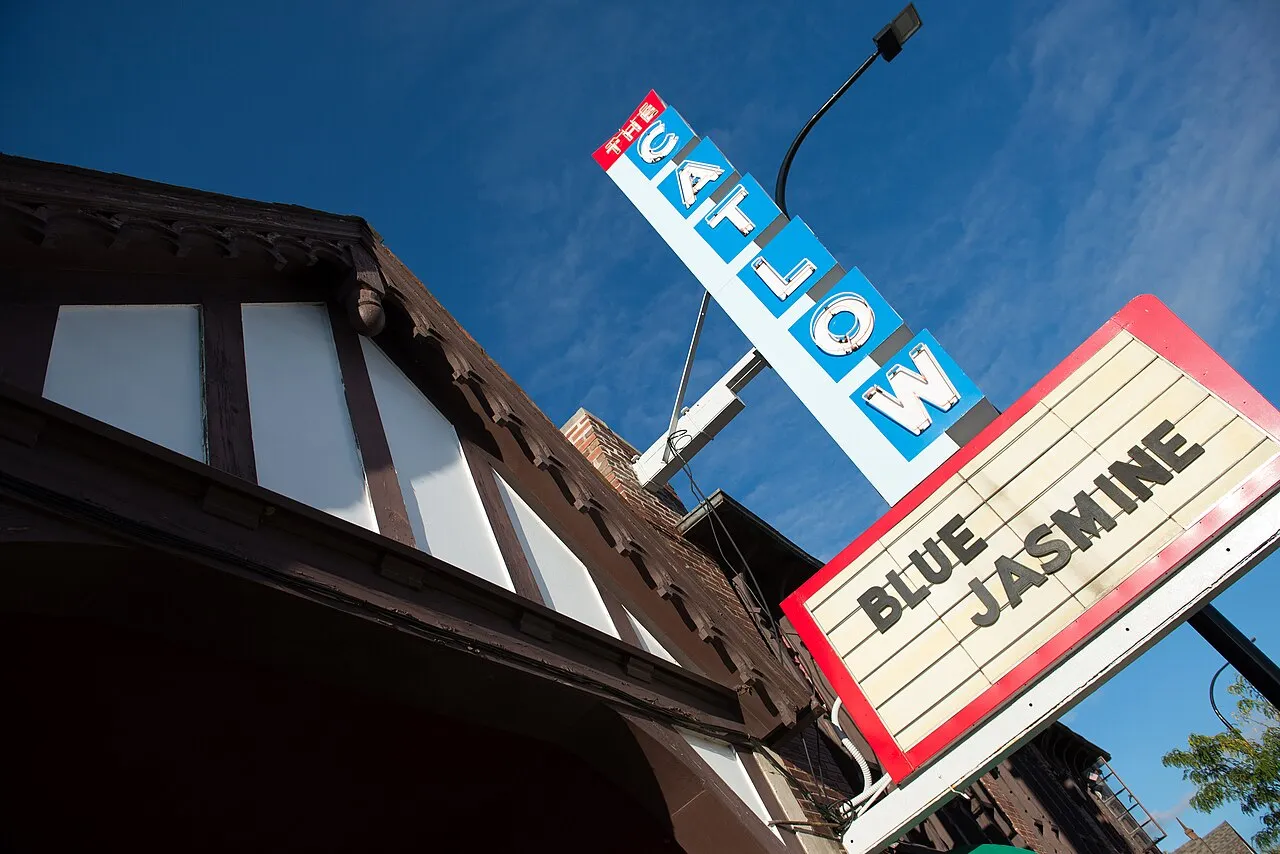
Barrington's nights out are small-scale and downtown. The Catlow Theater opened in May 1927, has interiors by the Prairie School designer Alfonso Iannelli and is on the National Register of Historic Places. It is still a single-screen movie house, and you can bring food in from the restaurant next door.
The village's cultural center is Barrington's White House, a restored mansion on Main Street. The village's cultural affairs page says it opened in 2015 as a venue for concerts, lectures, art exhibits and private events. The village's events guide for fall 2026 lists something there most weeks, from jazz and classical concerts to a monthly "Third Thursday Art Night Out."
In summer, the village runs Metra Lot Concerts in the commuter lot next to the station, and the Barrington Lions Club runs its Brat Tent around the Fourth of July. For anything bigger, downtown Chicago is one train away, though the last trains back leave Ogilvie in the evening, so check the schedule before a late night.
Barrington's Yearly Calendar: Parades, Scarecrows and the Holiday Festival
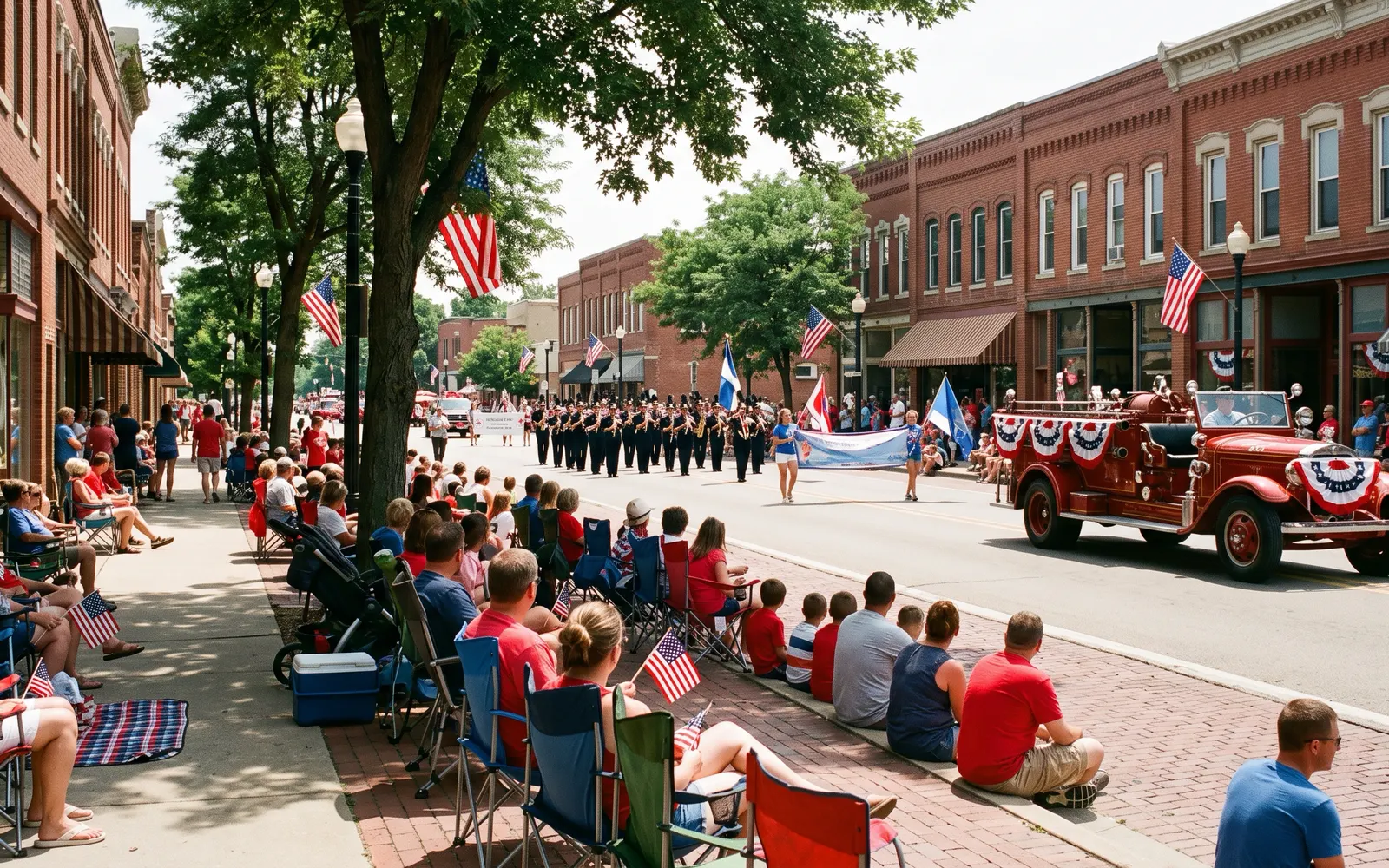
Barrington runs a busy calendar for a village its size. The village's special events page lists the annual set: a holiday festival and tree lighting in winter; a spring wine walk, the Barrington Art Festival and the Memorial Day parade in spring; Metra Lot Concerts, Thursday Night Out, the Fourth of July parade, the Brat Tent and Sizzlin' Sale Days in summer; and a fall wine walk, a plein air painting event, the Scarecrow Festival and open houses at the police, fire and public works departments in fall.
The 2026 dates, from the village's event listings: the Art Festival ran downtown on May 24; the Memorial Day parade stepped off at 10:30 a.m. on May 25 from the Veterans Memorial on Park Avenue; and the Fourth of July parade left Barrington High School at 10 a.m. on Saturday, July 4, and ran down Main Street. The 25th Scarecrow Festival was September 26 at Memorial Park, Lincoln and Hough.
Still ahead this fall, per the events guide: the public safety open house and the Barrington High School homecoming parade on October 3, the fall wine walk downtown on October 10, the Veterans Day ceremony on November 11 and the holiday festival and tree lighting at Cook and Station streets on December 5. If you are touring houses on one of those weekends, stop downtown. It tells you more about the town than a listing will.
What's Being Built in Barrington
For a small, built-out village, Barrington has an unusual amount underway. The village's development page, checked September 28, 2026, is the source for most of what follows.
The biggest residential project is Claremont, on the former PepsiCo research site at 617 W. Main Street, across from the high school. The village approved 88 custom single-family homes in a gated community with a clubhouse, pool, courts and walking paths. The site is about 94 acres, but building is limited to the north part and will not go past Hidden Lake. As of this month, demolition of the old buildings is underway, with site work to follow. For buyers, that is the main source of new detached houses in the village for the next several years.
Downtown, the "Golden Triangle" is the long-stalled redevelopment area bounded by the Metra tracks, the CN tracks and Hough Street. The village says Joe Taylor of Compass Point Development plans a building with 125 apartments, more than 12,000 square feet of restaurant and retail space, and 37 car condominiums, with construction scheduled to start in fall 2026. On the north end of the same area, near Liberty and Hough streets, a separate proposal has changed shape. The Real Deal reported in February 2026 on a roughly $100 million, 223-unit plan called The Residences at Liberty Commons, with trustees flagging traffic. In September the Daily Herald reported that UrbanStreet Group had taken the lead with a scaled-down concept of 106 units: 91 apartments in two four-story buildings and 15 three-story rowhomes. That one was a concept at a committee meeting, not an approval.
Smaller projects round it out. Eight attached rowhomes at 150 Washington Street, on the old BMO drive-thru site, are nearly complete. A 12-unit townhouse plan at Taylor and 20th streets, cut down from a 21-unit building the plan commission recommended denying in February, had its hearing set for September 8, 2026. A roughly 100,000-square-foot self-storage building is approved for 1195 S. Northwest Highway. And the Route 14 underpass, covered in the driving section, is the biggest public project, with substantial completion expected in 2027.
I don't label any town or neighborhood as safe or unsafe.
Flood Risk in Barrington
Flooding is a house-by-house question in Barrington, and the creeks and wetlands are where to look. Redfin, using First Street's model, rates Barrington's overall flood risk as minor, with 3% of properties likely to be severely affected by flooding over the next 30 years. Flint Creek runs through the village, Cuba Marsh and Lake Louise sit on the north side, and Baker's Lake is on the south side. The comprehensive plan flags drainage and downstream stormwater capacity in several neighborhoods, and it recommends stormwater improvements along the Northwest Highway corridor near Roslyn Road. The village publishes a wetlands and floodplains map with the plan.
Three checks before you write an offer. Look the address up on the FEMA flood map, because a mapped flood zone can mean required flood insurance. Ask the seller directly whether the house has ever taken water; the Illinois disclosure form asks, but a direct question gets a better answer. And have the inspector look at the sump pump, the backup and the grading. In the older in-town neighborhoods, ask about the sewer lateral too.
Frequently Asked Questions
Is Barrington, IL in Cook County or Lake County?+
Both. Census Bureau estimates for 2025 put 5,740 of Barrington's 10,586 residents in Cook County (Barrington and Palatine townships) and 4,846 in Lake County (Cuba and Ela townships), roughly divided by Lake-Cook Road. The county decides your assessor and tax calendar; the whole village is in School District 220.
How much does a house cost in Barrington, IL?+
Redfin reported a median sale price of $755,750 for the three months ending August 2026, up 17.6% from a year earlier. Zillow's home value index was $645,992 for August 2026, up 8.3%. The gap reflects a summer mix of larger houses.
What are property taxes in Barrington, IL?+
Ownwell (April 2026) puts the median effective rate at 2.16% on the Cook side (median bill $10,370) and 2.19% on the Lake side ($11,755). Cook revalued Barrington Township in 2025; the Lake side follows Illinois's four-year cycle. Bills usually rise after a sale once the assessor catches up.
What school district is Barrington, IL in?+
Barrington Community Unit School District 220, on both sides of the county line. Barrington High School, both middle school campuses and the Lines, Grove Avenue, Hough Street and Roslyn Road elementary schools are in the village. Confirm each address with the district.
How long is the train from Barrington to Chicago?+
In fall 2026, four morning express trains from the Barrington Metra station reach Ogilvie in 47 minutes, a second group takes about 55, and most trains take about 65. There are 34 inbound trains on weekdays.
Does Barrington, IL have a transfer tax?+
ATG's summary of the village ordinance lists no village transfer tax, only a final water reading before closing. The county transfer tax of 25 cents per $500 still applies.
Is Barrington walkable?+
Downtown is. Walk Score rates Village Hall at 86 and the Metra station at 80, but addresses in the outer neighborhoods, such as Barrington High School (47) and Roslyn Road Elementary (46), are car-dependent.
What neighborhoods are in Barrington, IL?+
The village's comprehensive plan names the Historic District and Village Center, Jewel Park, Barrington Highlands, the Roslyn Road area, Fox Point, Chippendale, Steeple Chase, Park Barrington, The Reserve of Barrington, Brentwood and the Oaks of Barrington, among others.
Is new construction available in Barrington?+
Very little is finished. Claremont's 88 gated homes on the former PepsiCo site are in demolition, eight rowhomes at 150 Washington Street are nearly complete, and the Golden Triangle apartments are set to start construction in fall 2026. Only 5.2% of Barrington's homes were built in 2010 or later. How builder contracts, timelines and allowances work is on my new construction homes in Illinois page.
Eshu Chikoti has extensive access to off-market listings throughout Barrington and the rest of Cook County — homes that never make it to the public listing sites. That matters right now: in a seller's market like this one, well-priced homes routinely go under contract within days, and buyers relying only on public listings are competing for whatever is left over. Working with someone plugged into off-market inventory means seeing homes before the crowd does.
Eshu Chikoti · 847-691-4282 ·
Get new Barrington listings by email
When a home comes on the market in Barrington, I'll email it to you.
Just your email. Unsubscribe any time by replying.
Thinking About Barrington?
Whether you're buying, selling, or just curious what's on the market, I can walk you through Barrington street by street.