Woodstock, IL
Woodstock, IL is the McHenry County seat, a city of about 26,000 people built around a historic town square and an Opera House, at the far end of the Metra line with home prices well below the inner suburbs.
Living in Woodstock, IL means a median sale price near $325,000, a Victorian town square you can actually use, and a one-seat Metra ride to Chicago that takes about 79 minutes on the fastest trains. The trade-offs are distance, property tax near 2.7% of value, and a city that is mostly car-dependent outside downtown.
Written by Eshu Chikoti · 847-691-4282 ·
How Woodstock, IL Got Here: A Short History
Woodstock started in 1844 as Centerville, a name that described exactly what it was: the middle of McHenry County and the new county seat. According to the City of Woodstock's history page, it was renamed Woodstock in 1845 after a settler's hometown in Vermont, incorporated as a town in 1852 and became a city in 1873.
The railroad made it. When the Chicago and North Western line arrived in the mid-1800s, farmers around Woodstock could ship to Chicago, and the Borden dairy plant followed. In the early 1900s the Emerson and Oliver typewriter companies moved to town, and by 1922, the city says, Woodstock produced nearly half the world's typewriters. That industrial history is why the city has more older housing, more two-flats and more factory sites near downtown than most towns this far from Chicago.
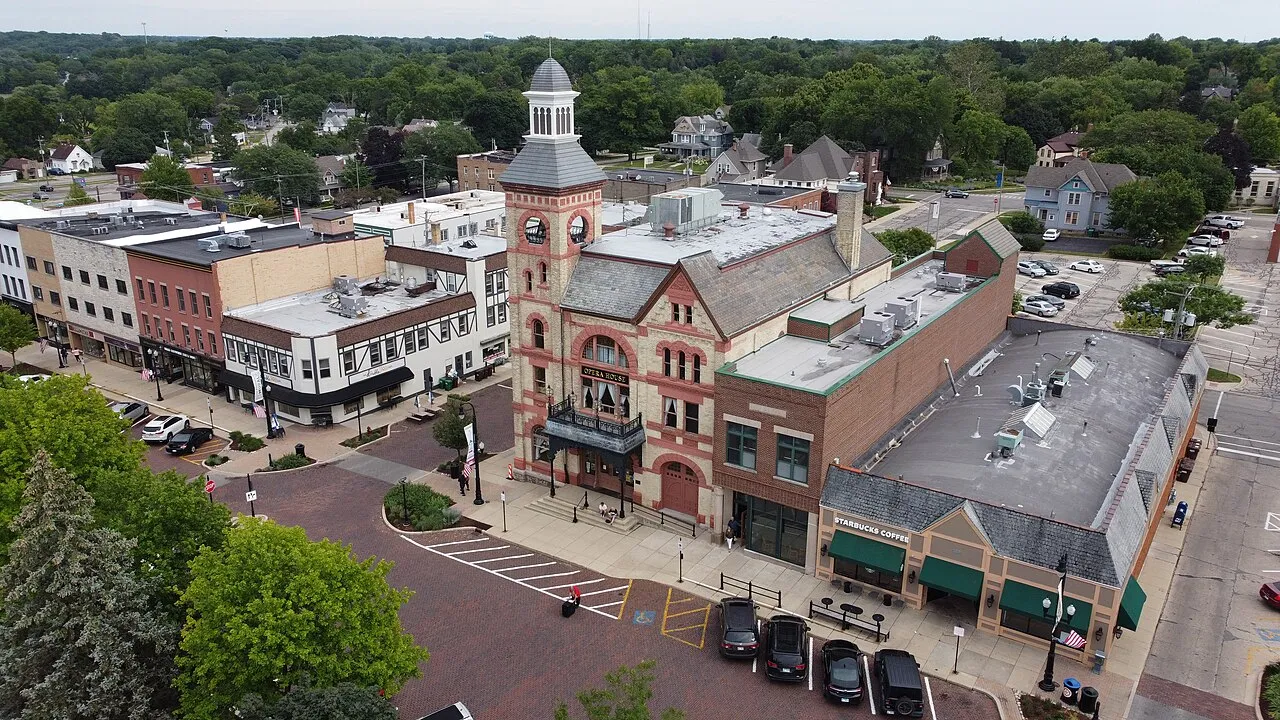
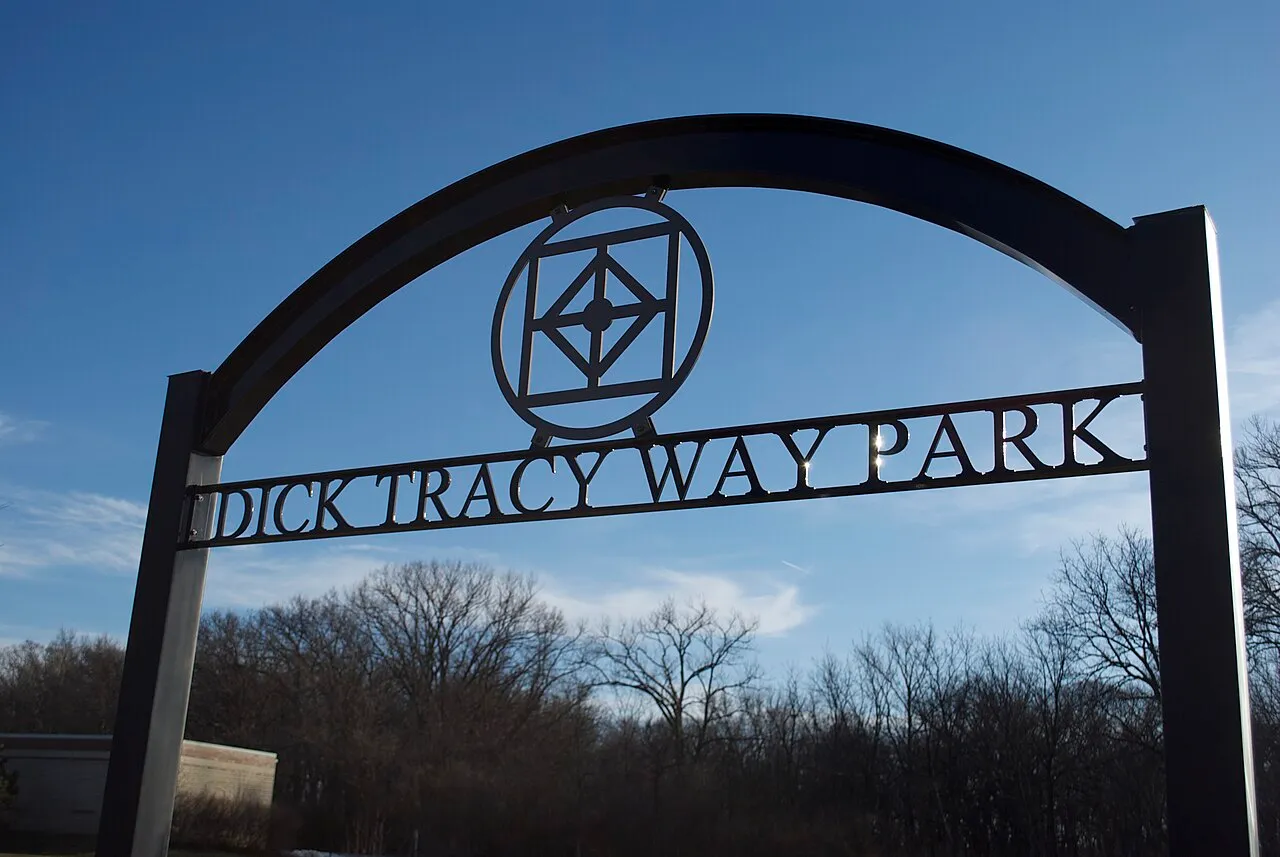
The buildings most people know went up during those boom years. The Old McHenry County Courthouse dates to 1857 and the Woodstock Opera House to 1889, when it held City Hall, the library, the fire department and an auditorium under one roof. Orson Welles performed on that stage while he was a student at the Todd School for Boys, and Paul Newman got his start with the Woodstock Players summer stock company. Chester Gould, who drew Dick Tracy, lived here for decades, which is why there is a Dick Tracy Way park on the city's list.
Then came the movie. The 1993 comedy Groundhog Day was filmed in the Woodstock Square Historic District, with Woodstock standing in for Punxsutawney, Pennsylvania. The city had already been named an All-America City in 1964, the Opera House and Courthouse were listed on the National Register in 1974, and the Square became a historic district in 1982. The film turned all of that into a tourism draw that still fills the Square every February.
Woodstock at a Glance
Woodstock covers about 13 square miles in the middle of McHenry County, roughly 51 miles northwest of the Loop by rail. It is the county seat, so the county government campus, the courts and a lot of the county's professional offices are here. It sits entirely in McHenry County. The city itself does not cross into another county, but its ZIP code, 60098, reaches well past the city limits into unincorporated farmland and into neighboring villages like Bull Valley, and that matters when you read listings.
The 2020-2024 Census ACS on Census Reporter puts the population at 26,147 across 10,846 housing units. Of the 10,656 occupied homes, 7,654, or about 72%, are owner-occupied, and roughly 28% are rented. That rental share is higher than in most McHenry County towns, which tells you Woodstock has more apartments, two-flats and older converted houses than its neighbors.
Woodstock is also a working town, not a pure bedroom suburb. Redfin's city page counts about 11,300 jobs here. Manufacturing, health care and county government all have a real presence, and the Northwestern Medicine hospital on Doty Road is one of the larger employers on the east side. That gives the city a weekday population and a tax base beyond its homeowners.
The layout is simple once you know it. The Square sits in the middle of the old town, with the Metra station a short walk south. Route 47 runs north to south along the east side and is the main commercial spine. US 14 cuts diagonally from southeast to northwest, and Route 120 heads east toward McHenry. Almost every neighborhood description you will hear uses the Square, Route 47 or Route 14 as the reference point.
Township lines add one more layer. According to the city's property tax page, Woodstock is split across four townships, Dorr, Greenwood, Hartland and Seneca, depending on the address. Each has its own elected assessor, which is the office you deal with if you ever appeal.
The countryside around the city has acreage at prices you will not find closer in.
Woodstock Neighborhoods, Pocket by Pocket
Woodstock has no official neighborhoods, but it sorts into three clear markets. The first is the old town around the Square: Victorian and early 1900s houses, two-flats and small lots on a street grid, many of them inside or next to the historic district. The second is the ring of subdivisions built from the 1970s through the 2000s, mostly along Route 47, Route 14 and Route 120. The third is the countryside, the unincorporated 60098 land on wells and septic that I cover in its own section below.
The second split is which high school a house feeds. District 200 runs two high schools, and in general the subdivisions north of the old town feed Woodstock North while the south and east subdivisions feed Woodstock High. That is a pattern, not a rule, and the assignments below come from subdivision pages, so confirm every address with the district.
Walkability is the third split. Walk Score rates the city 29, which is car-dependent, and almost all of the walkable addresses are the blocks within a few minutes of the Square and the station. If walking to the train, the library and the Opera House matters to you, your search is really a search of the old town.
Below are the subdivisions you will see named in listings. The build years, builders and school feeders come from Homes by Marco's subdivision pages, which are one agent's summaries of MLS data, so treat them as a starting point. If you want to know which pocket a specific address falls in and what it has actually sold for lately, that is a conversation I am happy to have here.
The Old Town and Square District. The streets around the Square and the Metra station. Pre-1940 houses, many Victorian, plus two-flats and small apartment buildings. The ACS counts 1,673 homes in the city built in 1939 or earlier, and most of them are here.
The Sonatas. East of Route 47 and north of Ware Road. Built from 2005 into 2026 by several builders including William Ryan, Ryland and CalAtlantic. Single-family homes, townhouses and condos from about 1,325 to 4,348 square feet. Listed as feeding Mary Endres Elementary, Northwood Middle and Woodstock North.
Sweetwater. North of Route 120 and east of Seminary Avenue. Built by Centex from 2005 to 2014. Single-family homes of about 1,417 to 3,535 square feet plus townhomes, with a community pool.
Meadows of Woodstock. West of Route 47 and south of Charles Road. Built between 1974 and 2002, mostly in the late 1990s and early 2000s. Single-family homes of about 1,040 to 2,638 square feet, one of the more common entry points.
Apple Creek Estates. South of Route 14 and east of Dean Street. Built from 2006 to 2019 by Kirk Homes, then Ryland and Lakewood. Single-family homes, townhouses and condos, with a lake and trails. Listed as feeding Prairiewood Elementary, Creekside Middle and Woodstock High.
Savanna Grove. East of Route 47 and south of Northwest Highway (US 14). Single-family homes built mostly from 2005 to 2007, about 1,545 to 3,090 square feet, with a pool.
Ponds of Bull Valley. Off McConnell Road east of Route 47. A Woodstock subdivision despite the name. Deer Point Homes built the first section in the early 2010s and D.R. Horton a newer one from 2019. Single-family homes of about 1,331 to 3,970 square feet.
Windmill Crossing. On Red Barn Road east of McConnell Road. Single-family homes built from 1995 to 2005, about 1,464 to 3,071 square feet.
Riverwoods. Lennar's current new-construction community at 2303 Scenic Drive, with duplex-style and single-family homes. Details in the development section below.
Other names you will see. Serenity Creek, Shannonwood, Dutch Crest, Kemps Place, Prairie Ridge, Todd Woods, Ridgewood Station, Victorian Country, Applewood, Walrose Manor, Fox Meadows and Parkway Estates. Ask for the build year and the school assignment on each one; they vary.
What Woodstock Homes Look Like, by Era
Woodstock's housing comes in two big waves with a quiet stretch in between, and the Census ACS year-built table shows it clearly. Of 10,846 housing units, 1,673 were built in 1939 or earlier, about 15%, which is a large share for a McHenry County town. Then building slowed through the middle of the century. The second wave came with the subdivisions: 1,830 units in the 1990s and 2,711 from 2000 to 2009, together about 42% of everything standing. Only 745 units have been built since 2010.
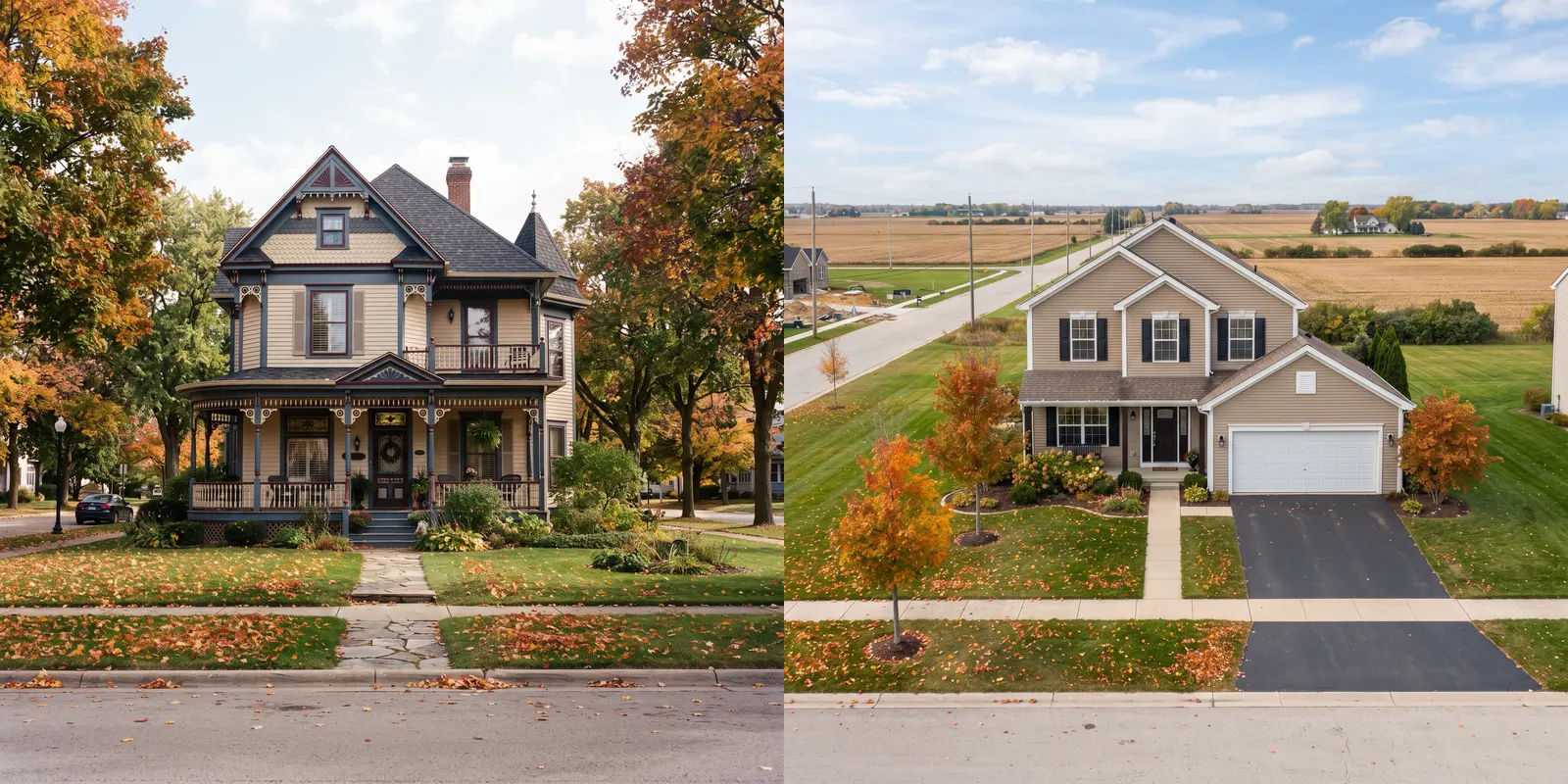
That gives you three kinds of house to shop. The old-town houses are Victorians, foursquares, cottages and two-flats on narrow lots, with character and with the maintenance that comes with 100-plus years. The 1990s and 2000s subdivision homes are two-story colonials, ranches and townhomes with attached garages, basements and HOAs that are usually modest. And there is a small but growing supply of new construction, mostly in Lennar's Riverwoods.
The building mix matters too. About 58% of Woodstock's housing units are single-family detached and another 14% are attached single-family, mostly townhomes. The rest are two-flats, small apartment buildings and a few larger complexes. The ACS puts the median value of owner-occupied homes at $245,700 and median gross rent at $1,212. Both trail today's market because the survey covers 2020 to 2024 and relies on owners' own estimates.
I spend a lot of time explaining older houses to buyers, and the pattern in the old town is predictable: original or undersized electrical service, some galvanized plumbing, stone or block foundations that have seen water, and knob-and-tube wiring that may or may not have been fully removed. None of that should kill a deal. All of it belongs in the price. If you are weighing an older house, my home inspection checklist is a good place to start.
Buying Land Around Woodstock: Zoning, Wells and Septic
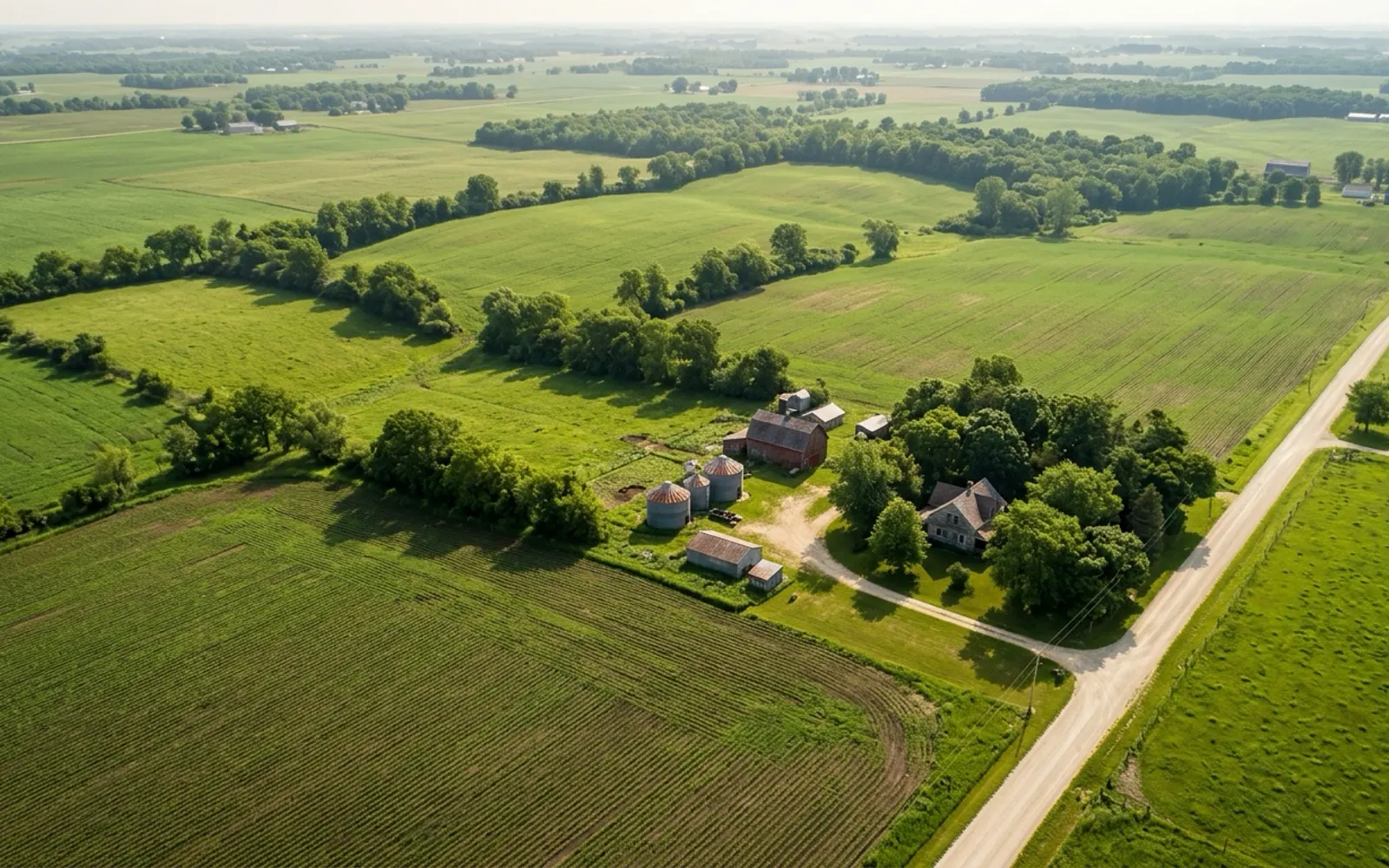
A lot of the listings with a Woodstock address are not in the city at all. The 60098 ZIP code wraps around the city into farmland, wooded parcels, horse properties and estate lots in unincorporated McHenry County, and those properties follow county rules, not city rules. This is where buyers make the most expensive mistakes.
Start with zoning. Under Table 16.36-1 of the McHenry County Unified Development Ordinance, a house in the A-1 Agriculture district needs a minimum of 40 acres, while the A-2 district allows a single-family home on 1 acre. The estate districts step down from E-5 (5 acres) through E-3 and E-2 to E-1 (1 acre), and R-1 allows half-acre lots. So a 10-acre parcel zoned A-1 may not be buildable for a house without a rezoning. Before you fall in love with a piece of vacant land, check its zoning on the county map and ask the county planning department what it would take to put a house on it.
The same rules apply to what you can do on land you already own: outbuildings, a second structure, horses, splitting off a lot. The county ordinance is where those answers live, and they differ by district. Agricultural districts also come with the normal noise, dust, odors and machinery of farming. If you buy next to a working grain or livestock operation, that is part of the deal.
Almost every rural Woodstock property runs on a private well and a septic system, and many heat with propane. I always recommend a well water test (bacteria and nitrates at a minimum), a septic inspection that includes pumping and a look at the field, and a check of the propane tank's ownership and lease terms. None of those are expensive compared to replacing a failed septic field.
Some addresses are in neither the city nor pure farmland. Bull Valley, to the east, is its own village with large wooded lots, and parts of the countryside are in other small villages or near the edge of neighboring school districts. My Bull Valley guide covers that village.
The Woodstock Housing Market in 2026
Woodstock prices are rising at a steady pace from a base that is still low for the Chicago suburbs. In the three months ending August 2026, Redfin reported a median sale price of $324,775, up 6.5% from the same period a year earlier. Homes took a median 51 days to sell, compared with 43 a year earlier, and sold at 100.2% of list price. About 37.9% sold over asking, 19.8% of listings took a price cut, and Redfin counted 106 homes sold in August, up 24.3% from 85. It gives Woodstock a Compete Score of 61 out of 100, which it calls somewhat competitive.
Here is the part that looks strange. The same Redfin page shows the median price per square foot at $163, down 16.4% from a year earlier, in the same months the median price rose. Both can be true. This summer's sales tilted toward larger homes, so the typical sale was bigger and cost more in total while costing less per square foot. Zillow's home value index, which estimates the value of every home whether it sold or not, reads $335,290 for August 2026, up 4.0% from $322,334 a year earlier and up from $307,677 in August 2024. My read is that values are climbing in the low-to-mid single digits and the mix of what sold shifted.
What that means in practice: this is a market that rewards correct pricing. A well-priced house in good condition still draws multiple offers and sells near or above asking; Redfin notes its hot homes sell about 2% over list and go pending in around 33 days. An overpriced house sits, and nearly one listing in five took a price cut this summer. The expectation I most often have to reset is sellers who price off a Crystal Lake sale. Woodstock is further out, and buyers do that math.
Village-wide numbers also blur several markets together. An old-town two-flat, a 2000s four-bedroom in The Sonatas and a five-acre parcel off Route 14 are all "Woodstock," and each is priced on different terms.
Woodstock Property Taxes and the Real Cost of Owning
Woodstock's home prices are moderate, but its property tax rate is not. Ownwell's data, last updated April 13, 2026, puts the median effective rate at 2.67% and the median annual bill at $6,927, against an Illinois median rate of 2.33%. Inside the 60098 ZIP code, Ownwell shows effective rates from about 2.19% at the 10th percentile to 3.07% at the 90th, and bills at the 90th percentile reach $11,309.
Here is what that looks like on a real purchase. At 2.67%, a home bought at this summer's $324,775 median would eventually carry about $8,670 a year in property tax, roughly $723 a month on top of the mortgage. The current bill on the same house may be lower because assessments trail the market, but they catch up, and the reassessment after a sale is often when a new owner sees the jump. Budget off the rate, not the seller's last bill.
Where the money goes is worth knowing. The city's property tax page says the city's own share is just under 16% of the total bill. The rest goes to District 200, the county, the township, the library, the fire district and other taxing bodies. Every combination of those bodies forms its own tax code, which is why two houses at the same price in Dorr and Seneca townships can carry different bills. Assessment notices go out in mid-July, and the city notes the appeal window is 30 days from the notice.
If you already own in Woodstock and think your assessment is high, the appeal runs through your township assessor and the McHenry County Board of Review. My Lake County property tax appeal guide walks through the logic of an appeal; the deadlines and forms in McHenry County are different, so check with the county before you file. This is general information, not tax advice. Your actual bill depends on your parcel, your exemptions and the assessor.
Woodstock Schools: District 200 and Its Two High Schools
Woodstock is served by Woodstock Community Unit School District 200, a single pre-K through 12th grade district that also covers Bull Valley, Greenwood and the west side of Wonder Lake, according to Wikipedia's district summary. The district's site lists the Verda Dierzen Early Learning Center, six elementary schools (Dean Street, Greenwood, Mary Endres, Olson, Prairiewood and Westwood), two middle schools (Creekside and Northwood), two high schools (Woodstock High and Woodstock North) and Clay Academy.
Confirm the district for a specific address with the district office, and read each district's profile on the Illinois Report Card at illinoisreportcard.com.
The detail that trips people up is assignment. Having two high schools in one small city means the town name tells you nothing about which one a house feeds. Subdivision pages list Apple Creek Estates, Savanna Grove, Windmill Crossing and Riverwoods as feeding Woodstock High, and The Sonatas and Meadows of Woodstock as feeding Woodstock North, but boundaries move and rural addresses near the district edge can fall into a neighboring district entirely. Check every address with District 200 before you write an offer, and ask me for the boundary if you want it done for a specific house.
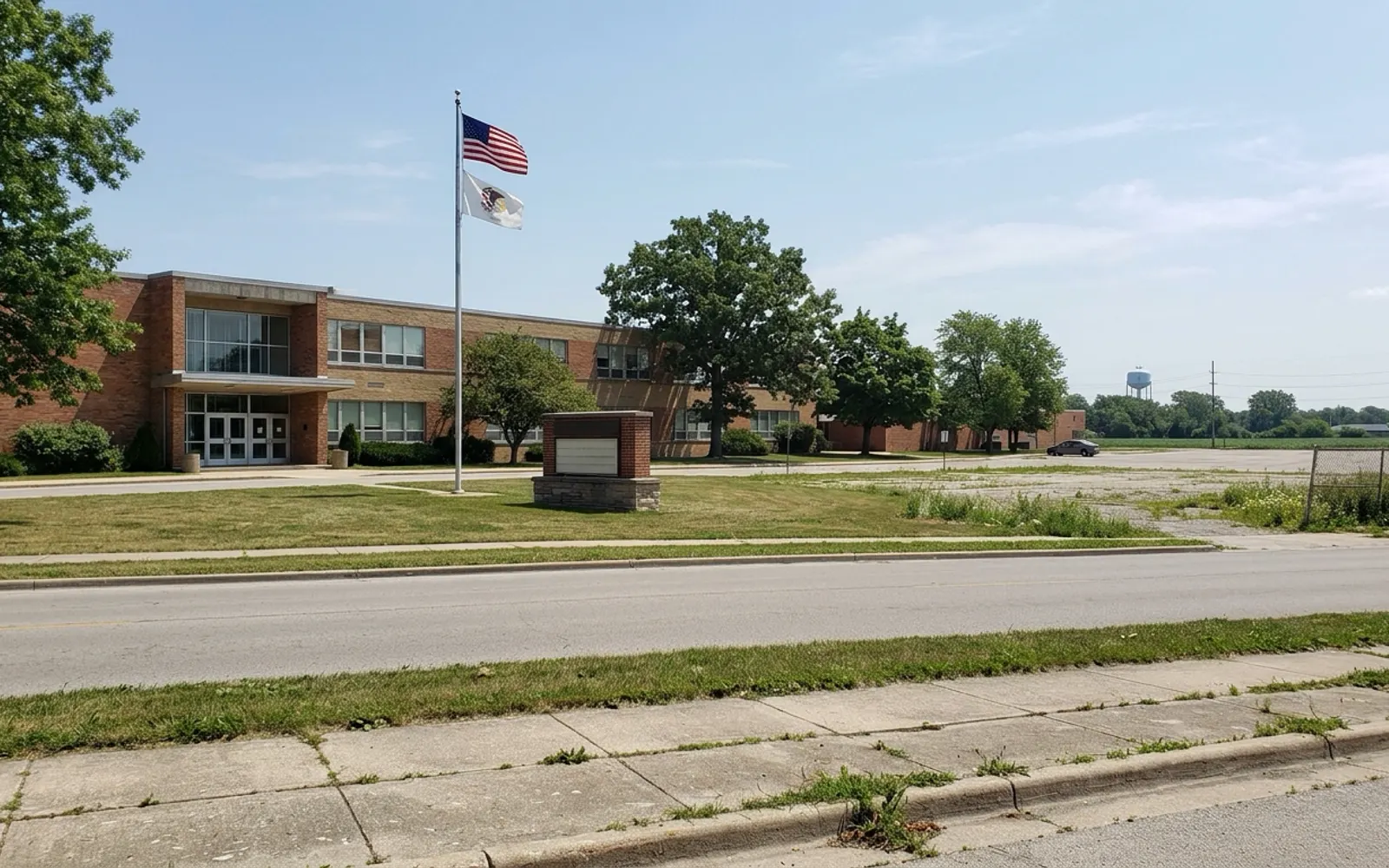
Verda Dierzen Early Learning Center. Pre-K and early grades, District 200.
Elementary schools. Dean Street, Greenwood, Mary Endres, Olson, Prairiewood and Westwood.
Creekside Middle School. Listed as the middle school for the south and east subdivisions.
Northwood Middle School. Listed as the middle school for the north-side subdivisions.
Clay Academy. The district's alternative school.
Commuting from Woodstock: Metra to Chicago
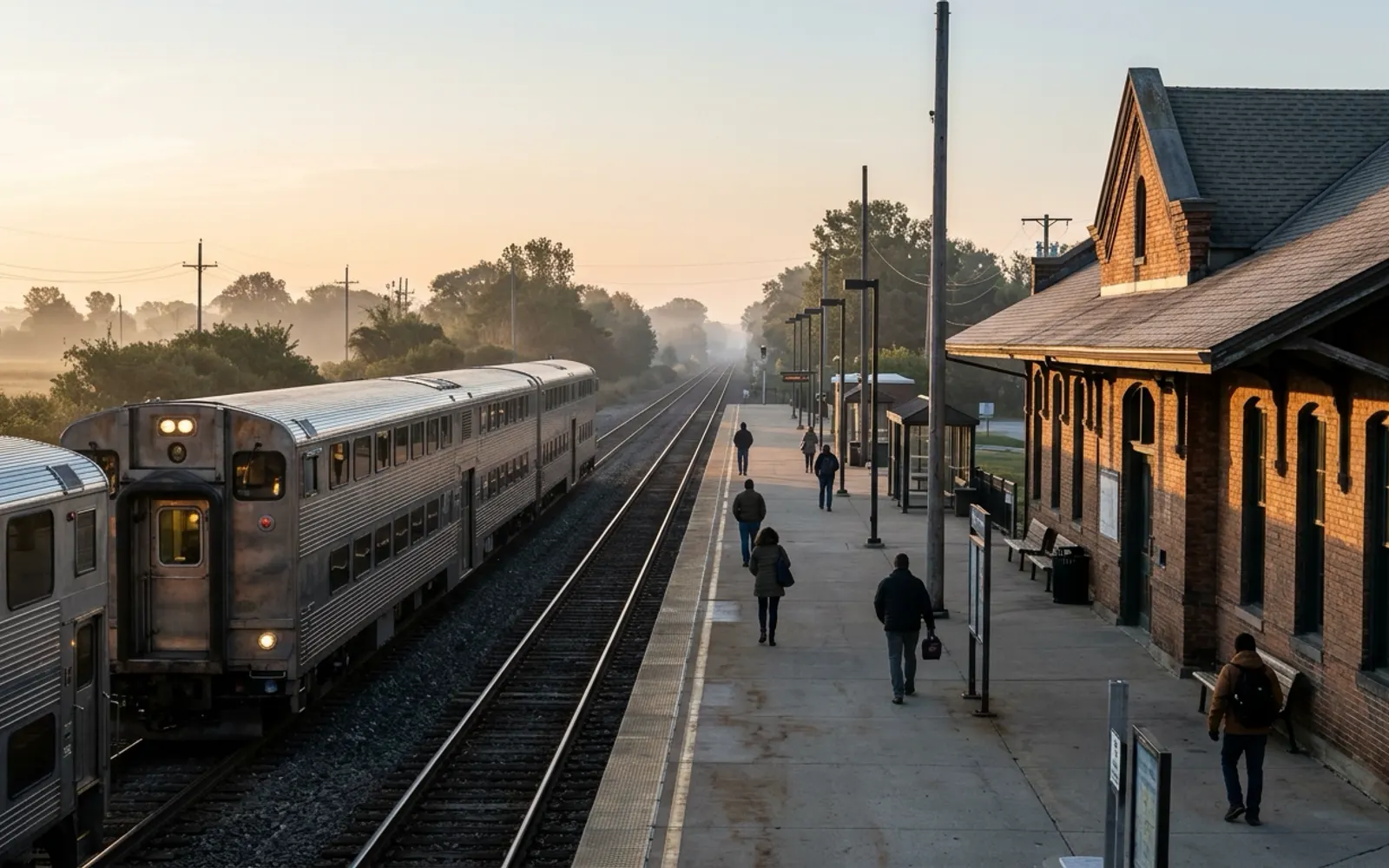
The Woodstock station at 90 Church Street, a short walk from the Square, is on Metra's Union Pacific Northwest line, a one-seat ride to Ogilvie Transportation Center in the Loop. The station opened in 1915 and was rebuilt in 1993, according to Wikipedia's station entry), and it sits in fare zone 4, about 51.6 rail miles from Chicago.
Using Metra's published GTFS schedule feed for the week of September 21, 2026, 14 weekday trains leave Woodstock for Chicago and 13 come back. The four earliest inbound trains, leaving between 5:43 and 7:13 a.m., make fewer stops and reach Ogilvie in 79 minutes. Midday and evening trains stop everywhere and take about 97 minutes. Heading home, the peak evening trains out of Ogilvie at 4:15, 4:45 and 5:15 p.m. reach Woodstock in 73 minutes. On Saturdays the feed shows 10 trains each way, and on Sundays 7 inbound and 8 outbound.
That is a real commute, and I tell buyers so plainly. For a five-day office schedule, the stations in Crystal Lake and Cary cut the ride. Woodstock is also one stop short of the end of the line; Harvard is the last station.
Driving from Woodstock: Highways and the Route 47 Rebuild
Woodstock has no interstate of its own. US 14 runs southeast through Crystal Lake toward the inner suburbs and northwest to Harvard and Wisconsin. Route 47 runs south toward Huntley and the Jane Addams Tollway (I-90), which is the fastest way to O'Hare and the western suburbs. Route 120 runs east to McHenry, and Route 176 runs east along the south side toward Crystal Lake and Mundelein. Most drives into Chicago or to O'Hare take well over an hour, so the car commute is a real consideration too.
The project to plan around is Route 47. The city's Route 47 project page describes widening 2.25 miles of the road, from US 14 to Route 120, from one lane to two lanes in each direction, with roundabouts at Lake Avenue, McConnell Road and Judd Street-Irving Avenue, a sidewalk on the west side and a mixed-use path on the east. Construction began in spring 2026 and the city expects completion by the end of 2028. The total cost is about $78.4 million; the city's share is $9.5 million after $15.65 million in outside grants.
For buyers, that means about two more years of lane closures on the city's main commercial road, and then a faster, walkable corridor. If you are looking at a house whose daily route runs down 47, drive it at rush hour before you buy.
Is Woodstock Walkable?
Mostly not, with one strong exception. Walk Score rates the city 29 for walking, which it calls car-dependent, and Redfin shows a Bike Score of 39. Walk Score counts about 57 restaurants, bars and coffee shops in the city, and outside downtown the average resident can reach less than one of them on foot in five minutes.
The exception is the old town. From the blocks around the Square you can walk to the Metra station, the Opera House, the library, the farmers market and a couple of dozen restaurants and shops. That is rare this far from Chicago, and it is the main reason those houses hold their value even when they need work. If walking matters to you, it narrows your search to a small part of town, and those houses tend to go first.
For recreation, the city lists 23 parks, and several of the newer subdivisions have their own paths, lakes and pocket parks. The Route 47 project will add a sidewalk and a mixed-use path along the east side of the corridor when it is done.
The Woodstock Square and Shopping
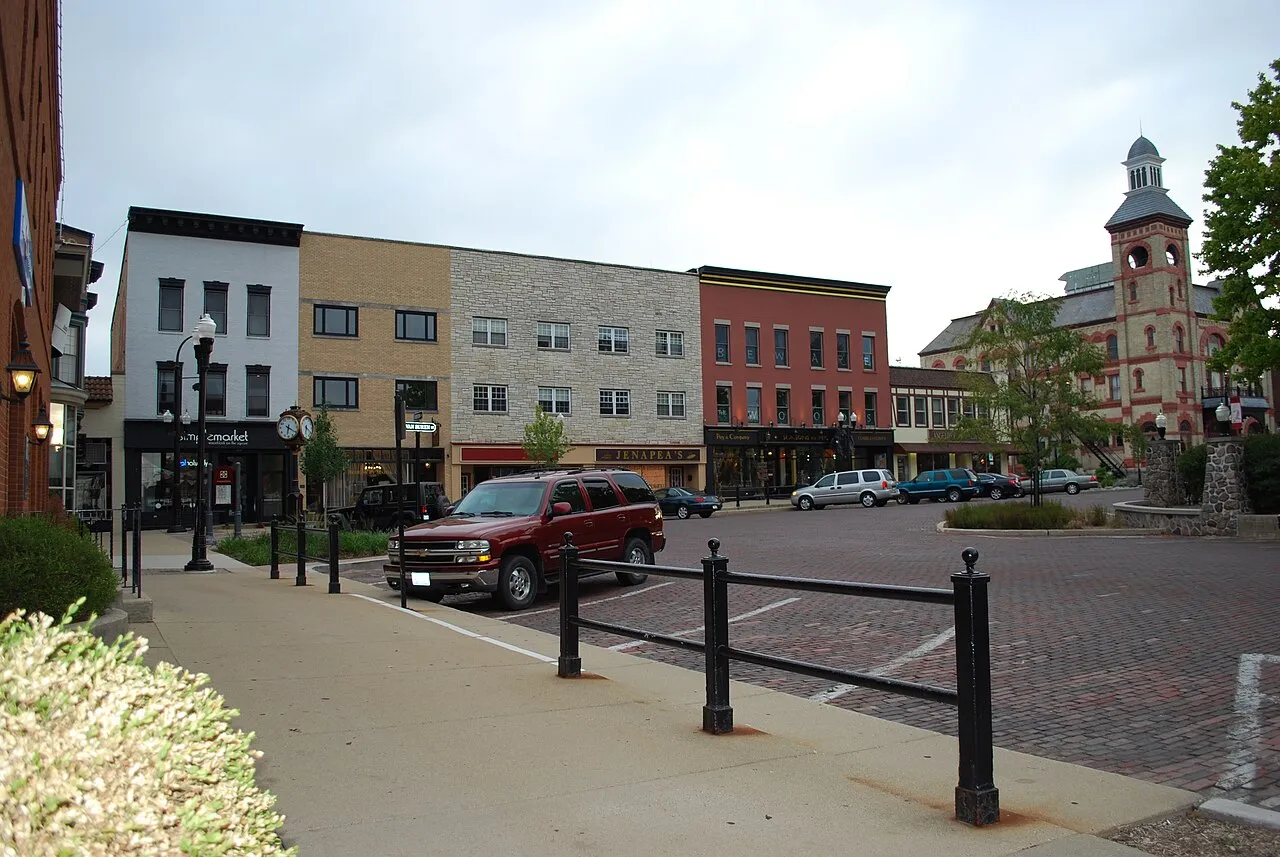
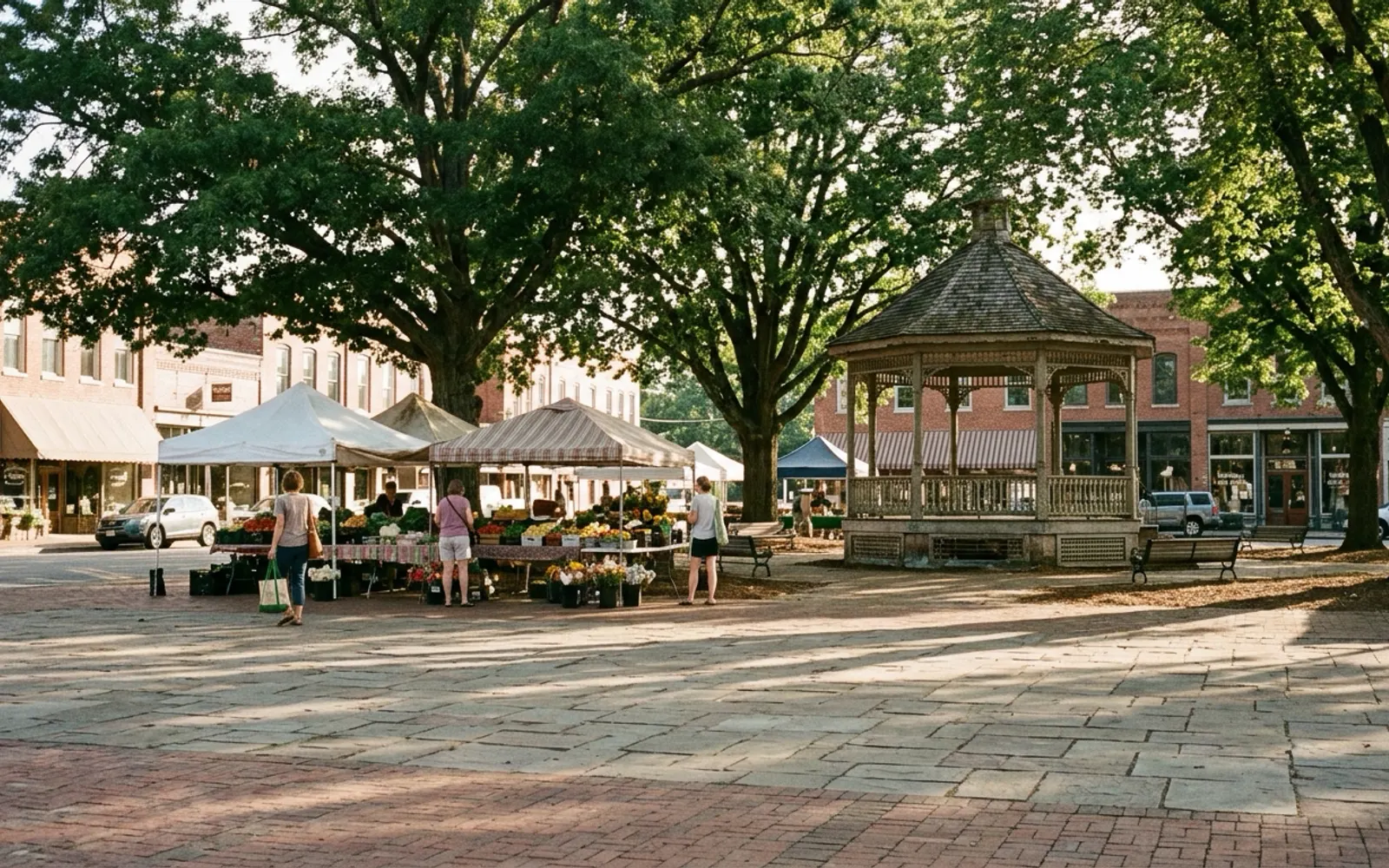
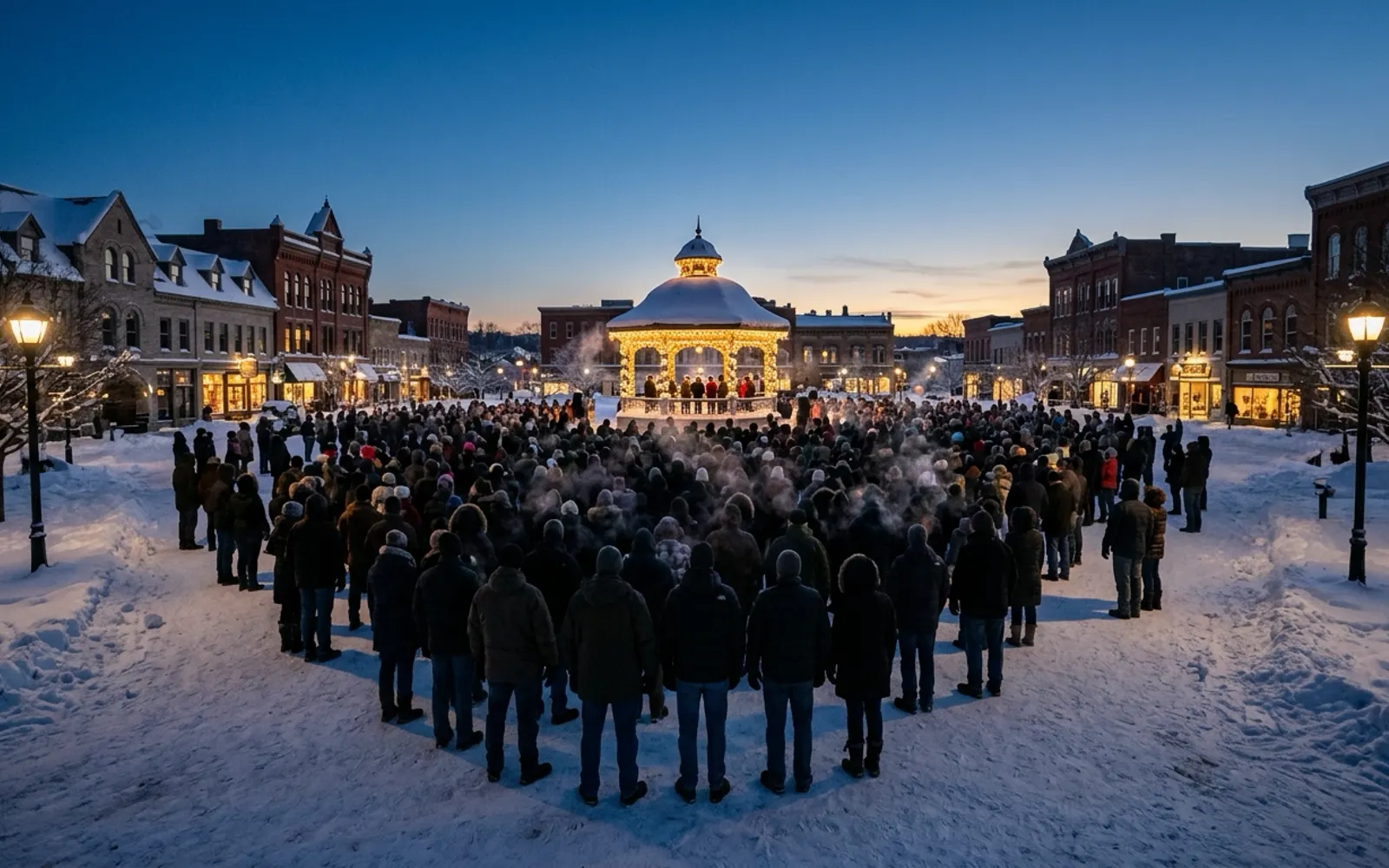
The Woodstock Square is the center of town: a small park with a gazebo surrounded on four sides by two- and three-story brick buildings, the Opera House and the Old Courthouse. The ground floors hold independent boutiques, antique and book shops, galleries, cafes and restaurants, and the city's Square District page covers the district's rules and events. It is a place people come to on purpose, not just a place they drive through.
The Old McHenry County Courthouse was rehabilitated by the city and reopened as the Old Courthouse Center in 2023. The Northwest Herald reported that the project cost the city about $22 million, and that the former MobCraft brewery space inside the building's sheriff's house closed in late 2024 and was being marketed to a new restaurant, brewery or entertainment tenant.
For bigger errands, the retail lives along Route 47 and US 14 on the east side, with the usual chain stores, pharmacies and banks. Crystal Lake and McHenry, each about a 15- to 20-minute drive, cover the larger stores and malls.
Groceries and Everyday Errands in Woodstock
Groceries are easy to keep local. Jewel-Osco at 145 S. Eastwood Drive is the full-service supermarket, and Aldi on Lake Avenue covers the budget run. From May through October, the Woodstock Farmers Market on the Square is where a lot of people buy produce, meat, eggs and bread twice a week, and in winter it moves indoors (details in the dining section). Pharmacies, hardware and auto service cluster along Route 47 and US 14, so most weekly errands are a five- to ten-minute drive from anywhere in the city.
Where Woodstock Eats
Most of Woodstock's dining is on and around the Square. Public House of Woodstock, Ethereal Confections for chocolate and coffee, Cesaroni's Cafe and Deli, Sofie's Whiskey & Wine and Tawan Thai & Ramen are names that come up often, and newer places keep opening; the Northwest Herald reported Oak & Alchemy, serving wood-fired pizza and barbecue, opening near the Square this summer. Restaurants change hands, so check before you plan a night around one.
The standing tradition is the market. The Woodstock Farmers Market, running since 1982, sets up around all four sides of the Square and in the park on Tuesdays and Saturdays from 8 a.m. to 1 p.m. Tuesday markets run through the last Tuesday in September and Saturday markets through the last Saturday in October. From November through April it moves indoors to All Seasons Orchard on Route 176, Saturdays from 9 a.m. to 1 p.m., weekly through Thanksgiving, then on a reduced schedule.
Parks, Pools and Trails in Woodstock
Woodstock has no separate park district. The city owns the parks, Public Works maintains them and the city's Recreation Department runs the programs. The city's park directory lists 23 parks on about 550 acres, from the two-acre Park in the Square to 130-acre Emricson Park and 82-acre Merryman Fields.
Emricson Park is the big one. According to the city's Emricson Park page, it has a paved walking trail, play structures, a nine-hole disc golf course, sports fields and courts including pickleball, pavilions and fishing. Its northwest corner holds Woodstock Water Works, the city's aquatic center at 1313 Kishwaukee Valley Road, with a zero-depth pool, a double flume slide, an eight-lane lap pool with diving boards and a baby pool. Indoors, the Dean Street Rec Center at 1201 Dean Street is open early weekday mornings through the evening.
For quieter ground, the city's own list includes Ryders Woods, Hennen Conservation Area, Silver Creek Conservation, Westwood Conservation and W.C. Donato Conservation, all with trails or nature areas. Just northwest of town, the McHenry County Conservation District's Brookdale Conservation Area at 18410 US 14 covers 1,766 acres with 7.2 miles of trail, an 11-acre pond with a fishing pier, horse trails and a cross-country ski route.
The Woodstock Public Library
The Woodstock Public Library at 414 W. Judd Street, a couple of blocks from the Square, runs programs for every age and a full events calendar. It is open seven days a week during the school year, with evening hours Monday through Thursday and shorter Sunday afternoon hours. The library started life inside the Opera House in 1889, one more piece of the Square's history.
Utilities in Woodstock
Inside the city, water, sewer and garbage are billed by the City of Woodstock on one quarterly bill. The city's water and sewer page lists rates effective April 21, 2025, and gives an example: 22 hundred cubic feet of water in a quarter comes to $202.40 before garbage service. ComEd delivers electricity and Nicor Gas provides natural gas in town.
Outside the city limits it is a different setup. Rural 60098 properties generally have their own wells and septic systems, many heat with propane, and trash is contracted privately or through the township. Ask for a year of utility bills on any rural house, because a propane-heated farmhouse can carry winter costs a city buyer never budgets for.
Hospitals in Woodstock
Woodstock has its own hospital. Northwestern Medicine Woodstock Hospital at 3701 Doty Road on the east side has a comprehensive emergency department open 24 hours, inpatient rehabilitation, imaging and two medical office buildings on the campus. Larger hospitals in the same system are in McHenry and Huntley, and Crystal Lake and Rockford are within reach for other specialty care.
The Woodstock Opera House and a Night Out
The Woodstock Opera House is still a working theater, and it is the reason Woodstock has more of an arts calendar than towns twice its size. Built in 1889 as City Hall, it now hosts concerts, plays, dance, lectures and community productions through the year, and its stage was dedicated to Orson Welles in 2013. Seeing a show there and walking to dinner on the Square is the evening most of my out-of-town buyers remember from their first visit.
Beyond the Opera House, the Square hosts art fairs, live music and seasonal events, and the Groundhog Day filming sites are a self-guided walking tour most of the year. For bigger concerts and sports, you are driving to the Chicago area or taking the train.
Groundhog Days and Woodstock's Yearly Traditions
The big one is Groundhog Days. In 2026 it ran from Friday, January 30 to Monday, February 2, with a 5K on January 31 starting north of the Metra station and the prognostication on the Square at 7 a.m. on February 2, when Woodstock Willie makes his forecast. There are walking tours of the filming sites, a showing of the movie and events around the Square all weekend. The Woodstock Groundhog Days site posts each year's schedule. If you have never seen the Square packed at dawn in February, it is worth the trip once.
The rest of the year has a steady rhythm: the farmers market twice a week from May into October, the Woodstock Art Fair on the Square in early October, and the Lighting of the Square to open the holiday season. If you are touring houses during one of those weekends, spend an hour on the Square. It tells you more about the town than any listing will.
What's Being Built in Woodstock
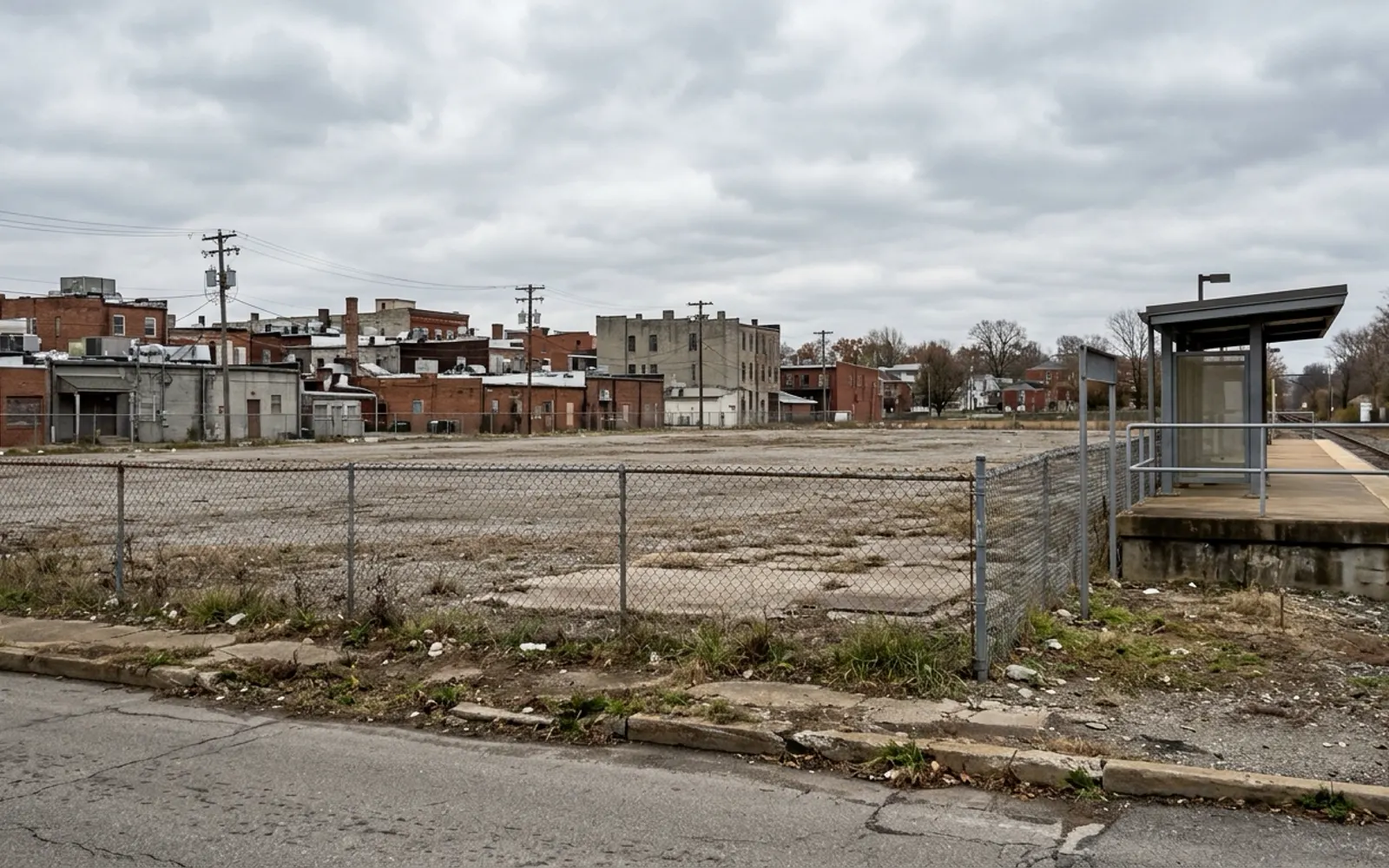
The biggest project is the former Die Cast site, about nine acres of long-vacant industrial land next to the Metra station and a few steps from the Square. It has a history of plans that did not happen. A 2024 agreement with Chicago Hubs Realty for senior housing and a Metra parking deck fell apart, and the Northwest Herald reported that the council terminated that contract in November 2024. Many online summaries still describe that senior housing plan. It is dead.
The current plan is different. On August 18, 2026, according to the city's press release, the City Council approved a redevelopment agreement with an affiliate of Chicago-based Murphy Development Group for about 187 rental apartments in two phases, an investment of more than $45 million. The Northwest Herald's coverage describes seven three-story buildings with 281 parking spaces, city help capped at about $11.8 million including the land, tax increment reimbursement and fee waivers, and a timeline that has construction starting October 1, 2027 and the first phase finished by February 28, 2031. Neighbors in the adjacent Brownstones raised traffic concerns about Clay Street. The site plan still has to go through the city's design review, and the developer has to secure financing first.
Two other items matter to buyers. The city adopted a new Downtown Master Plan on June 16, 2026, a 10- to 15-year guide for the Square and the blocks around it. And the former Hearthstone senior campus on North Seminary Avenue, which closed in 2025, drew a February 2026 proposal from True North Properties to convert it into about 200 apartments, but the Woodstock Independent reported in March that a court approved a sale to a different buyer. I have not seen an approved plan for that site yet.
On the for-sale side, Lennar is building Riverwoods at 2303 Scenic Drive, with about 52 acres of preserved woods and detention. Current pricing starts around $323,990 for a two-bedroom duplex-style home and runs from about $414,990 to $456,990 for three- and four-bedroom single-family plans. For buyers, more rentals downtown mean more people trying Woodstock before they buy. For sellers of older starter homes, Riverwoods is new competition at a similar price.
I don't label any town or neighborhood as safe or unsafe.
Flood Risk in Woodstock
Flooding isn't a city-wide problem in Woodstock, but it is a house-by-house one. Redfin, using First Street's model, rates Woodstock's flood risk as minor, with 214 properties, about 4% of the total, at risk of severe flooding over the next 30 years. That risk sits in the low ground along the creeks and wetlands, and in older basements.
Two checks before you write an offer. Look the address up on the FEMA flood map, because a mapped flood zone can mean required flood insurance on a mortgage. And ask the seller directly about water in the basement. In my experience with older homes near the Square, the answer is often "once," and the follow-up question about what they did about it is the one that matters. On rural parcels, ask where the septic field sits relative to low ground as well.
Frequently Asked Questions
How much does a house cost in Woodstock, IL?+
Redfin reported a median sale price of $324,775 for the three months ending August 2026, up 6.5% from a year earlier, and Zillow's home value index was $335,290 for August 2026. Prices range from old-town two-flats to new Lennar homes and rural acreage.
What are property taxes in Woodstock, IL?+
The median effective rate is about 2.67%, with a median bill of about $6,927 (Ownwell, April 2026), and rates in the 60098 ZIP code run from about 2.19% to 3.07%. A home's bill usually rises after a sale once it is reassessed.
What school district is Woodstock, IL in?+
Woodstock Community Unit School District 200, which runs six elementary schools, two middle schools and two high schools. Assignment depends on the address, so confirm with the district.
How long is the Metra commute from Woodstock to Chicago?+
On the Union Pacific Northwest line, the early weekday trains reach Ogilvie in about 79 minutes and local trains in about 97. There are 14 weekday trains toward Chicago and 13 back.
What county is Woodstock, IL in?+
McHenry County. Woodstock is the county seat, and the city sits entirely within McHenry County, though its 60098 ZIP code reaches into unincorporated land and neighboring villages.
What neighborhoods are in Woodstock, IL?+
The old town around the Square, plus subdivisions including The Sonatas, Sweetwater, Meadows of Woodstock, Apple Creek Estates, Savanna Grove, Ponds of Bull Valley, Windmill Crossing and Lennar's new Riverwoods.
Was Groundhog Day filmed in Woodstock, IL?+
Yes. The 1993 film was shot in the Woodstock Square Historic District, with Woodstock standing in for Punxsutawney. The city holds Groundhog Days every year around February 2.
What is being built at the Die Cast site in Woodstock?+
On August 18, 2026 the City Council approved an agreement with Murphy Development Group for about 187 apartments next to the Metra station, a project of more than $45 million with construction scheduled to start in October 2027.
Eshu Chikoti has extensive access to off-market listings throughout Woodstock and the rest of McHenry County — homes that never make it to the public listing sites. That matters right now: in a seller's market like this one, well-priced homes routinely go under contract within days, and buyers relying only on public listings are competing for whatever is left over. Working with someone plugged into off-market inventory means seeing homes before the crowd does.
Eshu Chikoti · 847-691-4282 ·
Get new Woodstock listings by email
When a home comes on the market in Woodstock, I'll email it to you.
Just your email. Unsubscribe any time by replying.
Thinking About Woodstock?
Whether you're buying, selling, or just curious what's on the market, I can walk you through Woodstock street by street.