Winnetka, IL
Winnetka, IL is a Lake Michigan village of about 12,500 people in Cook County's New Trier Township, with three Metra stations, three business districts, five public beaches and its own electric utility.
Living in Winnetka, IL means a 37-minute express Metra ride to Ogilvie, New Trier High School, and a median sale price near $2.1 million this summer. The trade-offs are a property tax rate near 2.3% of value and a stormwater history every buyer should check. Here it is, pocket by pocket.
Written by Eshu Chikoti · 847-691-4282 ·
How Winnetka, IL Got Here: A Short History
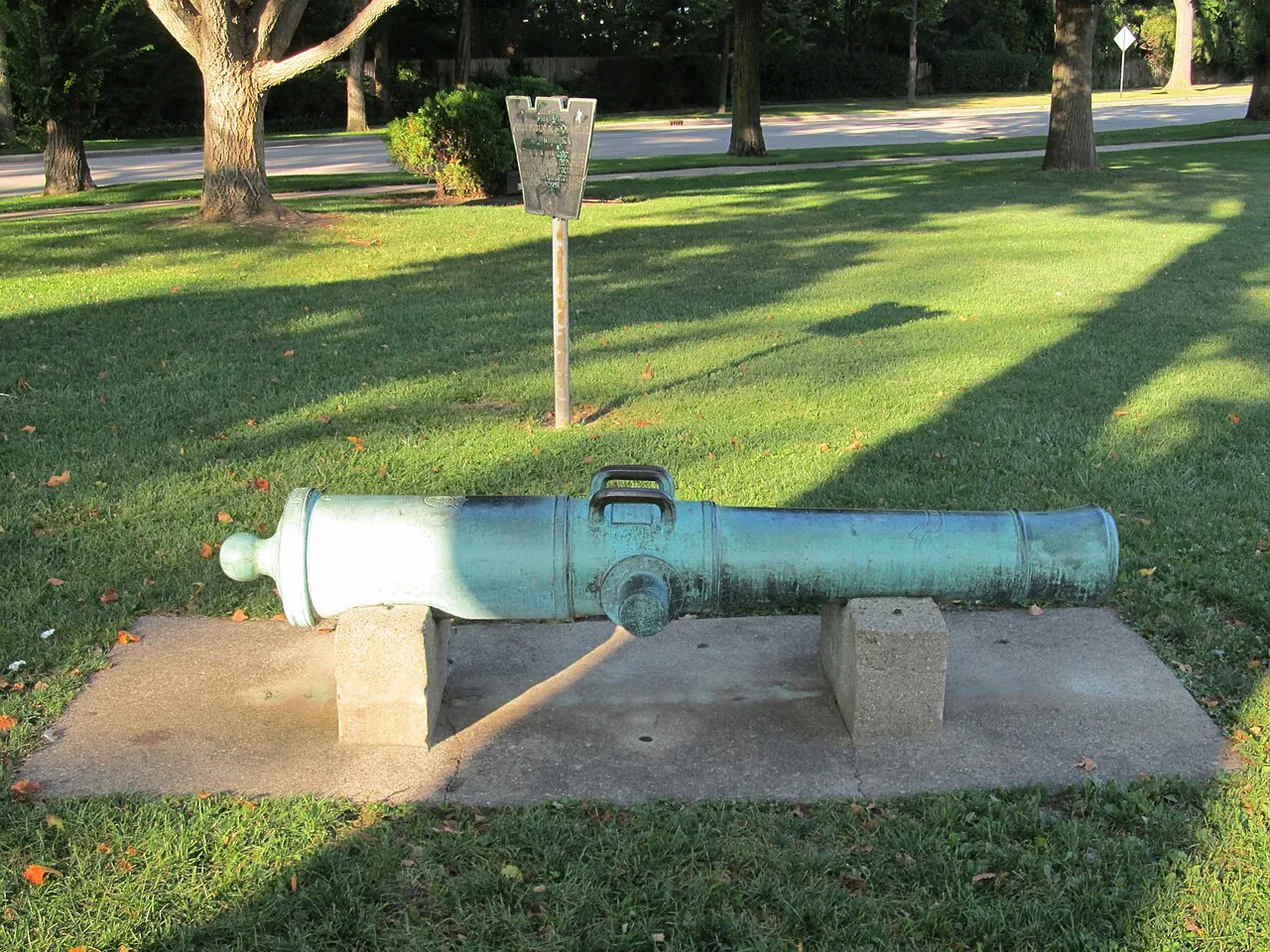
The first houses in what is now Winnetka went up in 1836, when Erastus Patterson arrived from Vermont and opened a tavern for travelers on the Green Bay Trail post road. The name is usually traced to a Native American word, translated as "beautiful place" by Wikipedia and "beautiful land" by the Village of Winnetka.
The town took shape in 1854, when Charles Peck and Walter S. Gurnee subdivided the land. The railroad came through in 1855, and Winnetka incorporated as a village in 1869 with about 450 people. The Pecks donated the Village Green that same year. Between 1937 and 1942 the tracks were lowered into the trench that still runs through town, which is why you drive over the railroad here instead of waiting at crossings.
Two early decisions still shape daily life. The village built its own water plant in 1893 and its own electric plant in 1900, and residents voted to keep the power plant public in fights that ran from 1909 to a 1957 referendum, according to the Winnetka Historical Society. The park district followed in 1904. In the classrooms, Superintendent Carleton Washburne's "Winnetka Plan" made the district a national name in progressive education, and Crow Island School, opened in 1940 and designed by Eliel and Eero Saarinen with Perkins, Wheeler & Will, became a National Historic Landmark in 1990.
There is also a chapter I think every buyer should know. On July 25, 1965, Dr. Martin Luther King Jr. spoke on the Village Green to a crowd the Winnetka Historical Society puts at 8,000 to 10,000. The North Shore Summer Project that brought him here was organized against housing discrimination; the society notes that real estate advertisements of that era sometimes specified that non-white and non-Christian buyers were barred. The effort led to the Interfaith Housing Center of the Northern Suburbs, today called Open Communities. Housing discrimination is illegal, and I report this history as fact because it is part of how the North Shore housing market was built.
Winnetka at a Glance
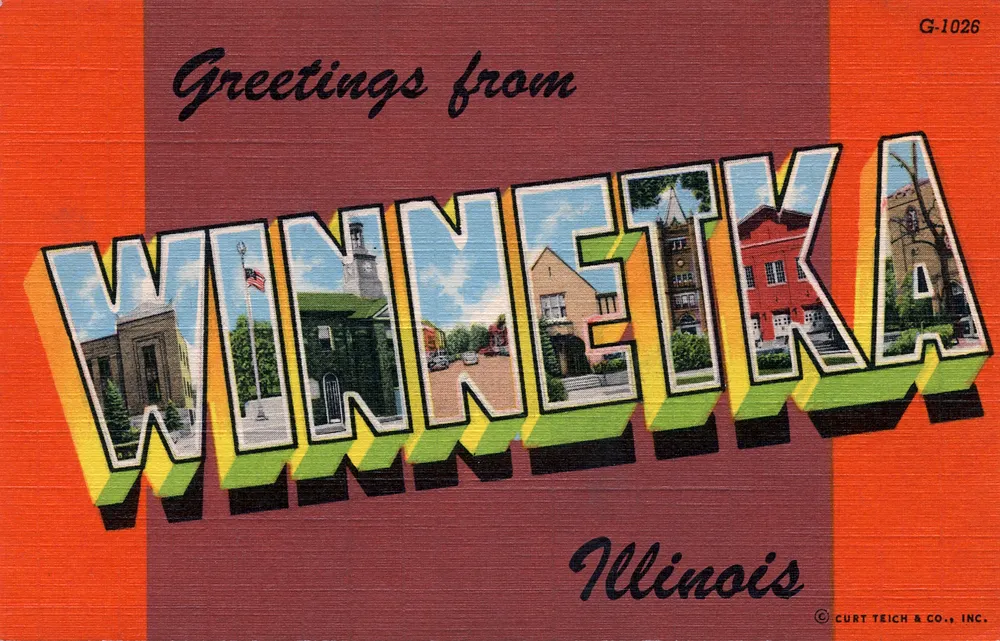
Winnetka covers 3.81 square miles along Lake Michigan in Cook County, less than 20 miles north of Chicago, according to the Village of Winnetka. Wilmette and Kenilworth sit to the south, Glencoe to the north, and Northfield to the west. For tax purposes the whole village is in New Trier Township, which the Cook County Assessor groups with Glencoe, Wilmette, Kenilworth and parts of Glenview and Northfield.
The 2020-2024 Census ACS puts the population at 12,484. Of 4,172 occupied homes, 3,837 are owner-occupied, or 92.0%. Of 4,539 housing units, 4,018 are single detached houses (88.5%), and 2,216 (48.8%) were built in 1939 or earlier. That last number is the one to remember. Almost half the housing stock is older than World War II.
The layout is simple once you know it. The Metra tracks run north to south through the middle of town, with Green Bay Road beside them. Sheridan Road follows the lake on the east side. The three business districts sit on the tracks: Hubbard Woods at the north end, Elm Street in the center, and Indian Hill at the south end, each next to its own train station. When a local says "east of the tracks" or "west of Green Bay," that is the reference point.
You also get a municipal electric utility, three small business districts instead of one strip, and a housing stock that is mostly pre-war.
At a 2.26% effective rate, the property tax on a $2 million house is in the mid-$40,000s a year, and the stormwater fee adds more on a large lot.
Winnetka Neighborhoods, Pocket by Pocket
Winnetka has no official neighborhoods, but it does not trade as one market. The two splits that matter are east versus west of the tracks, and how close a house sits to one of the three stations. East of the tracks, toward the lake, is where most of the oldest and largest houses are. West of the tracks has more mid-century houses, more new construction on older lots, and most of the parks and schools that sit on bigger parcels.
Distance to a station changes daily life more than buyers expect. Walk Score rates the Elm Street station block 89 and the Hubbard Woods area 74, while Indian Hill comes in at 58 and the Crow Island area at 36. Those are scores for a point in each area, not averages, so check the exact address.
Below are the pockets you will see named in listings. Boundaries are informal and agents draw them slightly differently, so treat them as a starting point. Confirm the district for a specific address with the district office, and read each district's profile on the Illinois Report Card at illinoisreportcard.com. If you want a specific address checked, that is a conversation I am happy to have here.
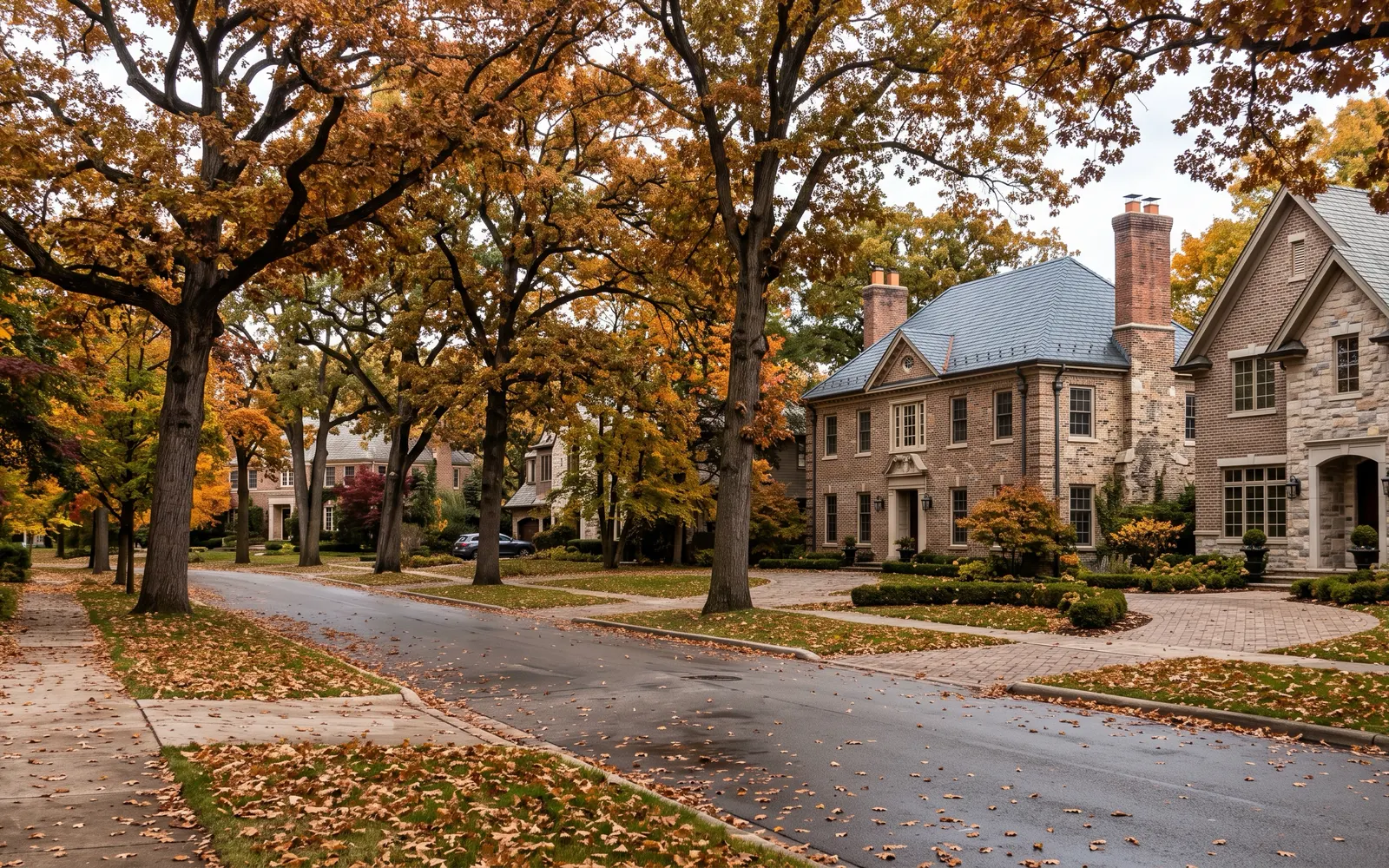
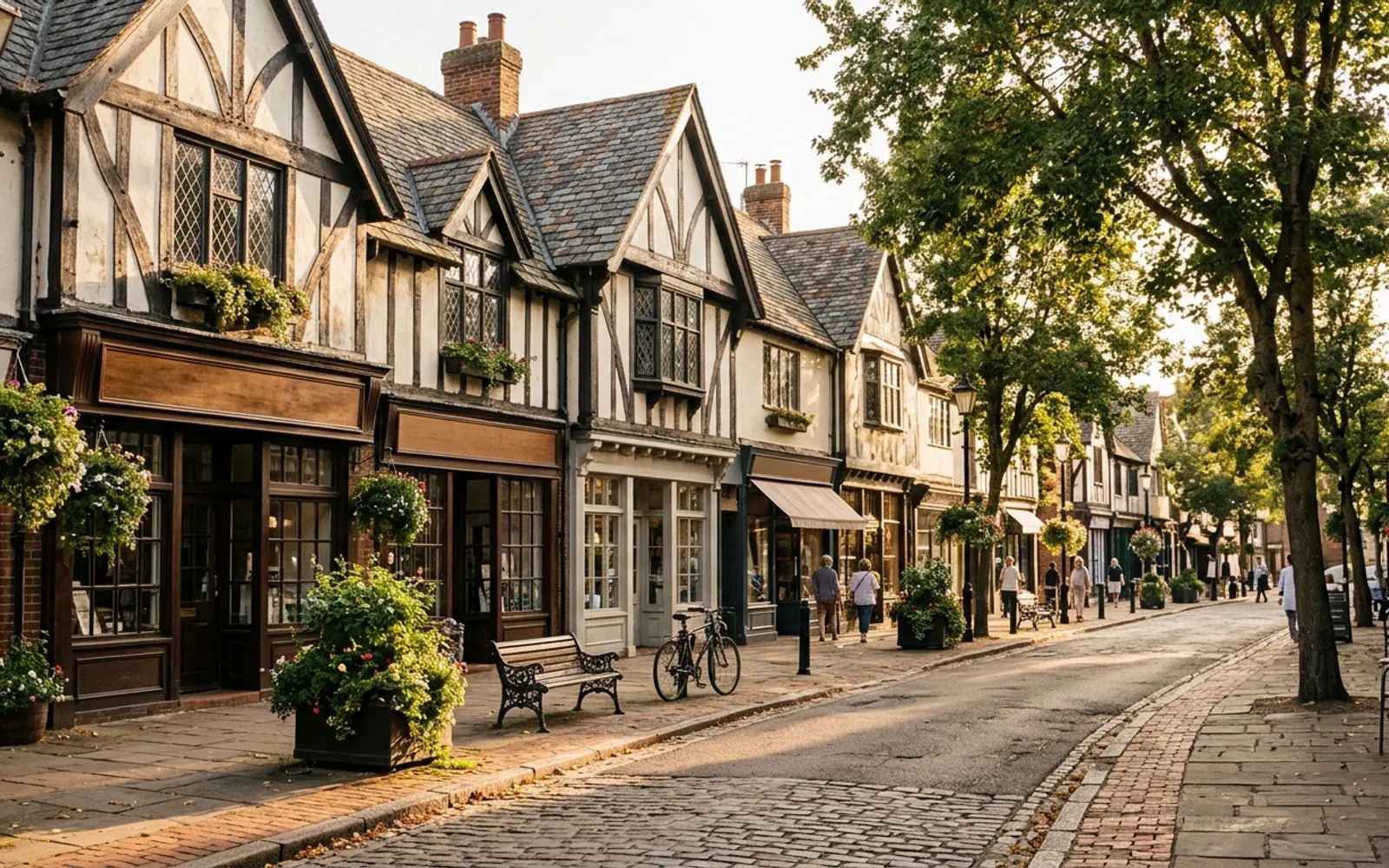
Hubbard Woods. The north end of the village, around the Hubbard Woods Metra station and the business district of Tudor-style storefronts on Green Bay Road. A mix of single-family homes and condos, with Hubbard Woods Park and Hubbard Woods School nearby. Walk Score 74.
East Elm and the Village Green. The center of town east of the tracks: Elm Street shops, Village Hall, the library and the Village Green. Some of the oldest houses in Winnetka are on the streets around it. The Elm Street station block scores 89.
West Elm. The Elm Street district west of the tracks and the streets behind it toward Hibbard Road, closer to New Trier's Winnetka campus and the Skokie School and Washburne School campus.
Indian Hill. The south end, around the Indian Hill Metra station, a small service-oriented business district and the private Indian Hill Club golf course, which dates to 1914. Walk Score 58.
The Crow Island area. The west side around Crow Island School, Crow Island Woods and Willow Road. More mid-century houses and newer builds, and the part of town where most of the west-side stormwater work was done. Walk Score 36.
The Sheridan Road lakefront. The east edge along Lake Michigan, with the village's largest estate lots and some properties that back directly onto the lake. Ask early about bluff, erosion and flood-zone questions on any lakefront parcel.
Other listing names. Walk Score also lists East Hills, Gross Point, Winnetka Manor and Doral Greens as Winnetka neighborhoods. I could not confirm their boundaries, so ask for the build year and the school assignment on each one.
What Winnetka Homes Look Like, and the Teardown Rules
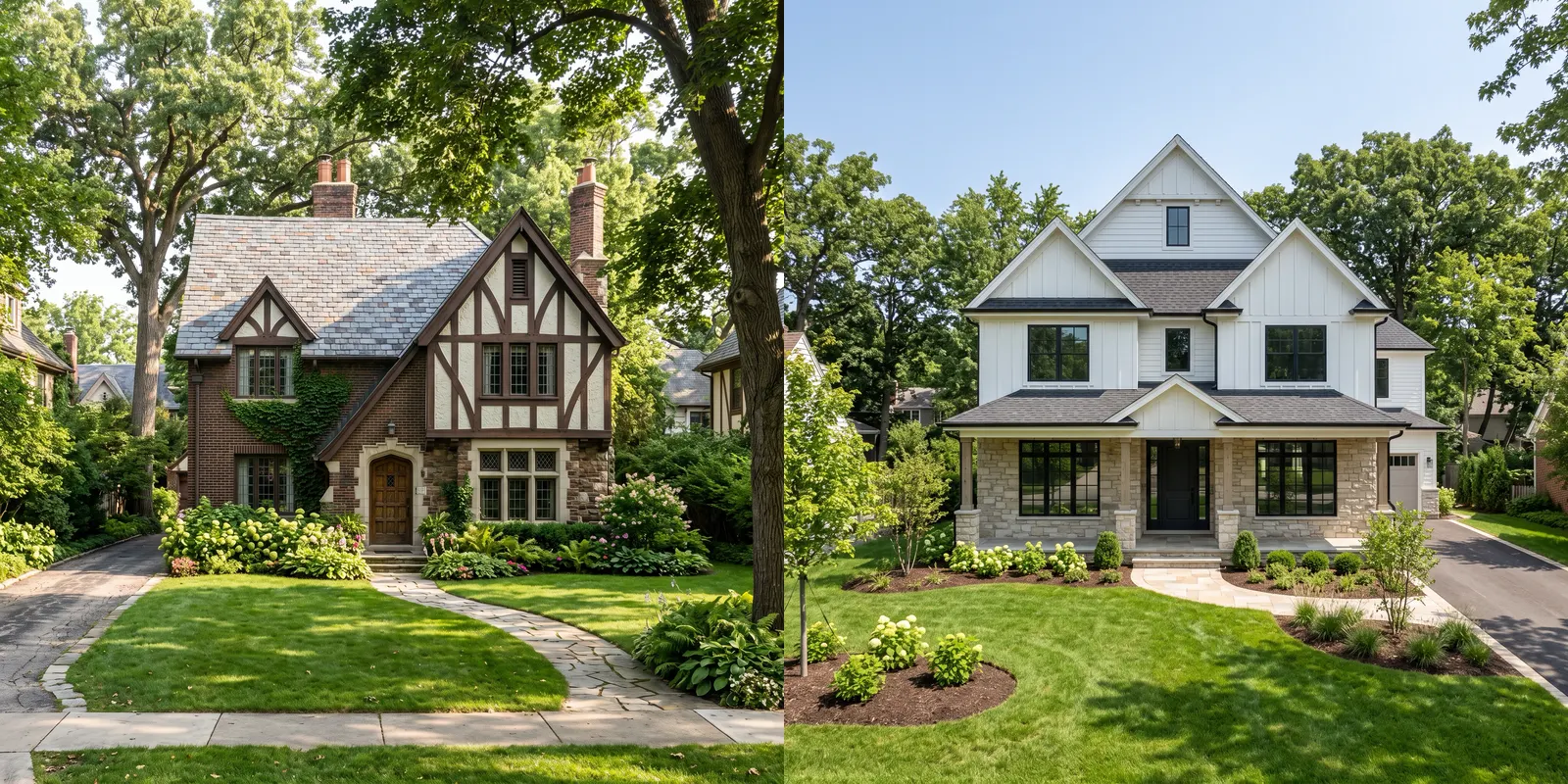
Winnetka is an old-house town. The ACS counts 2,216 homes built in 1939 or earlier, close to half of all housing units. Only 610 were built in 2000 or later. The eastern sections are where the pre-war stock concentrates: Arts and Crafts, Colonial Revival, Tudor, Georgian and early modernist houses, many by named architects, as one local agent's guide describes them. The west side has more mid-century houses and newer custom builds on larger lots.
The ACS median home value is $1,337,800 and the median gross rent is $1,842. Rentals are a small part of the market. Condos exist mainly near Hubbard Woods and Elm Street, and small new buildings keep adding a few units at a time: The Walden, a five-unit building at 688-694 Green Bay Road approved in January 2022, and a four-story building at 564 Green Bay Road with one apartment on each of its three upper floors, listed as under construction on the village's development page.
Teardowns are where Winnetka differs from most suburbs, and it matters if you plan to build. Under Ordinance MC-2-2021, adopted March 16, 2021, the Historic Preservation Commission can delay the demolition of a house it finds historic or architecturally significant for up to 270 days. The village says a demolition review for a significant house typically takes 300 to 330 days from a complete application, compared with 30 to 120 days for other houses. The carrot is a building size bonus of up to 20% for keeping a significant house instead of tearing it down.
For a buyer, that means two things. If you are buying to tear down, find out before you write the offer whether the house is likely to be found significant, and price the delay in. If you are buying an old house to keep, have it inspected by someone who knows pre-war systems. My home inspection checklist is a good place to start.
The Winnetka Housing Market in 2026
Winnetka homes are selling fast and above asking. In the three months ending August 2026, Redfin reported a median sale price of $2,096,113, up 21.5% from a year earlier. The median home sold in 35 days, down from 49, at 106.1% of list price, and 61.4% of homes sold over asking. Only 2.7% of listings took a price cut. Redfin counts 64 homes sold, down 10.4%, and gives Winnetka a Compete Score of 78 out of 100, which it calls very competitive.
Zillow's home value index agrees on direction but not on size. It puts the typical Winnetka home at $1,940,311 in August 2026, up 13.9% from $1,703,943 a year earlier and up 20.6% from $1,609,504 in August 2024. The gap between 13.9% and 21.5% is about what sold. Redfin's median is the middle of a small set of summer sales, and with 64 sales a few large houses can move it a lot. Zillow's index estimates the value of every home in the village, sold or not. Redfin's price per square foot, $550, was up 4.6%, which is closer to Zillow's read. My take is that values are up double digits and this summer's sales tilted toward bigger houses.
What that means in practice: a well-priced Winnetka house draws multiple offers. Redfin says the average home sells for about 5% above list and goes pending in around 36 days, and hot homes sell for about 14% over list in around 22 days. Buyers who wait for a price cut in this market mostly keep waiting.
The village median also hides a wide range. The Cook County Assessor put the 2024 median single-family sale price across New Trier Township at $1,314,000. A condo near Hubbard Woods, a west-side mid-century house and a lakefront estate are three different markets. If you are working out a budget, my guide to how much house you can afford in 2026 walks through the math.
Winnetka Property Taxes and the Cook County Calendar
Property tax is the carrying cost that surprises Winnetka buyers most. Ownwell's data, updated April 13, 2026, puts the median effective rate at 2.26% and the median annual bill at $24,731. In the 60093 ZIP code, bills run from $11,235 at the 10th percentile to $50,943 at the 90th.
Here is what that rate means on this summer's median sale. At 2.26%, a house bought for $2,096,113 would carry about $47,400 a year in tax, or roughly $3,950 a month on top of the mortgage. The current bill on the same house may be lower, because assessments lag the market and every bill depends on the parcel's exemptions. The expectation I most often have to reset is a buyer budgeting off the seller's bill.
Cook County works on its own calendar, and 2026 is an unusual year. The Assessor reassesses one third of the county each year, and New Trier Township was reassessed in 2025. Notices went out April 23, 2025, the township's total assessed value rose 39% from the last reassessment in 2022, and the new values land on second-installment bills issued in 2026. On the three-year cycle, the next New Trier reassessment is due in 2028.
Those 2026 bills are late. The Cook County Treasurer set the Tax Year 2025 first installment due April 1, 2026 and the second installment due October 1, 2026. Cook County said on August 18, 2026 that second-installment bills would be released by September 1, about two months late, after an overhaul of the county's property tax technology. If you are closing this fall, make sure the tax proration in your contract accounts for a bill that may not have been paid yet. My Illinois closing costs guide covers how prorations work.
This is general information, not tax advice. Your actual bill depends on your parcel, your exemptions and the Assessor.
Winnetka Schools: District 36 and New Trier
Kindergarten through eighth grade is Winnetka Public Schools District 36, which enrolls 1,777 students in the 2025-26 school year across five schools: Greeley, Hubbard Woods and Crow Island at the elementary level, and Skokie and Washburne for the middle grades. The district describes itself as a K-8 progressive education program going back more than a century, which ties to the Winnetka Plan in the history section.
High school is New Trier Township High School District 203, one high school on two campuses. Freshmen attend the Northfield campus at 7 Happ Road, and grades 10 through 12 attend the Winnetka campus at 385 Winnetka Avenue. The district serves about 4,000 students from Glencoe, Kenilworth, Northfield, Wilmette, Winnetka and parts of Glenview and Northbrook.
Confirm the district for a specific address with the district office, and read each district's profile on the Illinois Report Card at illinoisreportcard.com.
The detail that trips people up is assignment. Which of the three elementary schools a house feeds depends on the street. Confirm the address with District 36 before you write an offer, and ask me for the boundary if you want it checked on a specific house.
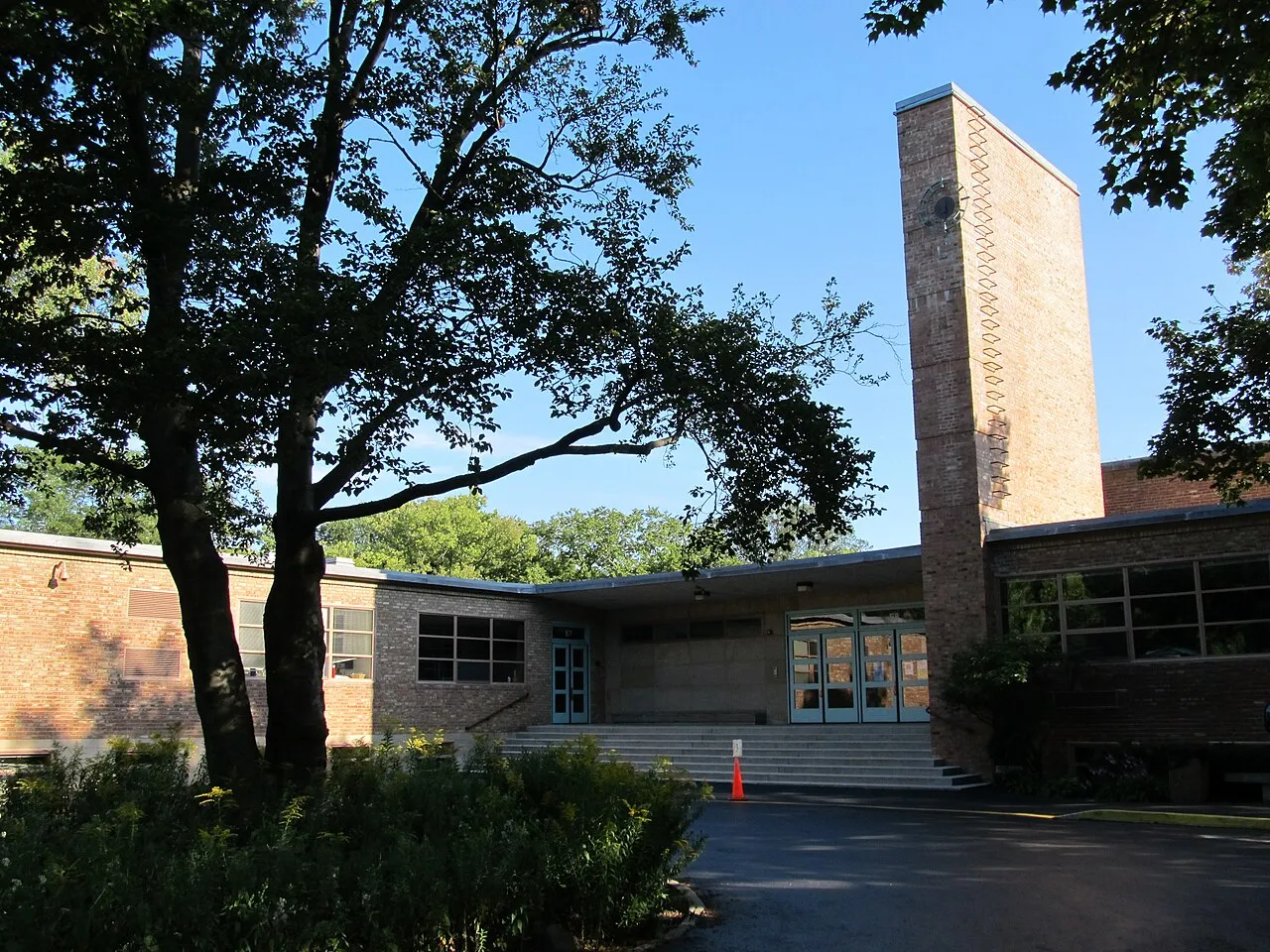
Greeley School. Elementary, District 36.
Hubbard Woods School. Elementary, District 36, at the north end of the village.
Crow Island School. Elementary, District 36, 1112 Willow Road. A National Historic Landmark since 1990.
The Skokie School. Middle grades, District 36.
Carleton Washburne School. Middle grades, District 36.
New Trier High School, Winnetka campus. Grades 10 to 12, 385 Winnetka Avenue, District 203.
New Trier High School, Northfield campus. Grade 9, 7 Happ Road, Northfield, District 203.
Commuting from Winnetka: Three Metra Stations
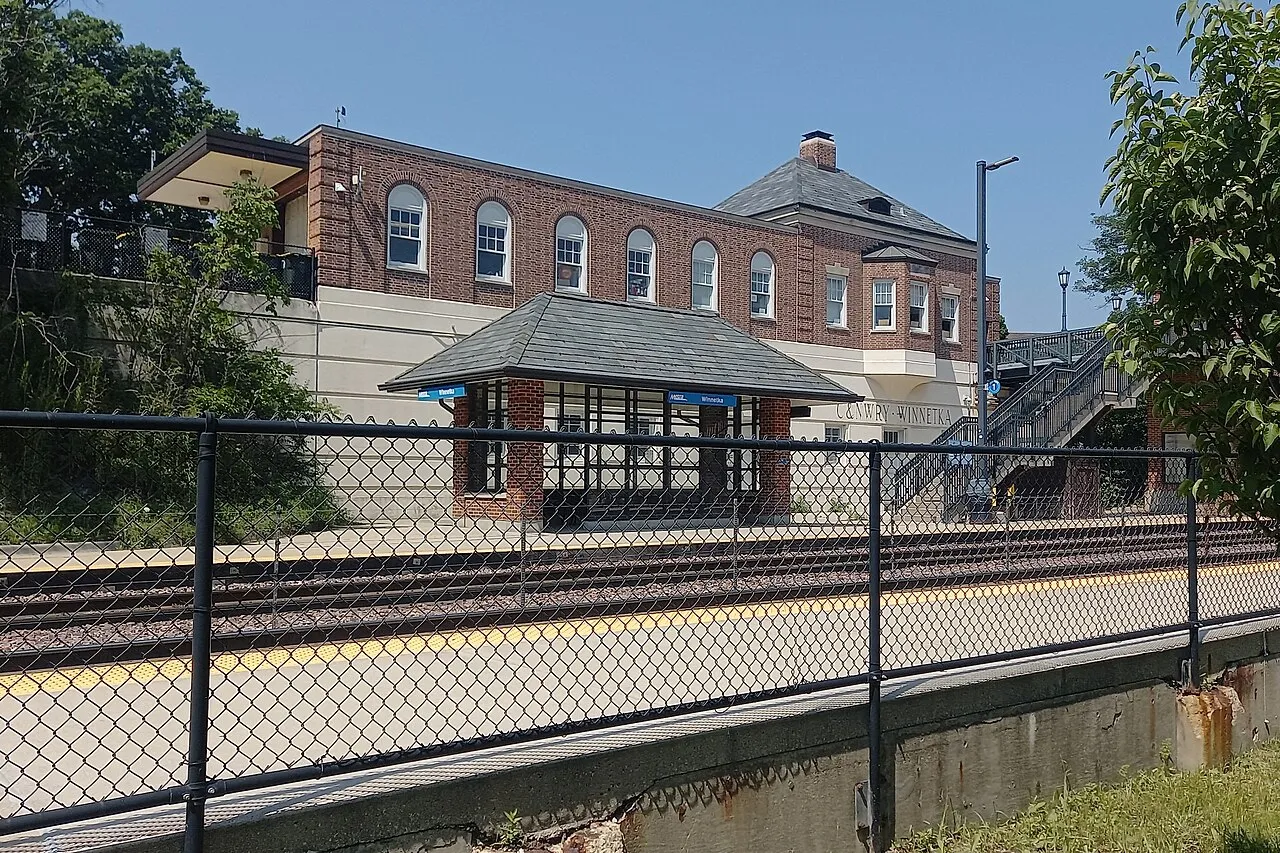
Winnetka has three stations on Metra's Union Pacific North line, which ends at Ogilvie Transportation Center in the Loop: Indian Hill at the south end, Winnetka at Elm Street in the center, and Hubbard Woods at the north end. I counted trains from Metra's published schedule data for the week of September 28, 2026 (the current schedules are on Metra's site).
Winnetka station has the most service: 35 inbound and 36 outbound trains on weekdays. Most inbound trains take 42 minutes to Ogilvie. The rush-hour expresses take 37: the 7:03, 7:33, 8:03, 8:33 and 9:03 a.m. departures. Indian Hill has 28 weekday trains in each direction at about 40 minutes. Hubbard Woods has 26 inbound and 24 outbound at about 45 minutes. On weekends each station has 15 trains in each direction.
That spread is worth a few minutes of thought when you choose a house. A walk to the Elm Street station gets you the express trains. A walk to Hubbard Woods or Indian Hill gets you a quieter platform and a few more minutes on the train. The old Elm Street station building at 754 Elm Street has been leased for a restaurant, according to the village's spring 2026 Winnetka Report.
Driving from Winnetka: The Edens and Willow Road
For driving, Winnetka's highway is I-94, the Edens Expressway, which runs west of the village. The village describes itself as less than 20 miles north of Chicago. Willow Road, Tower Road and Winnetka Avenue are the main east-west routes from the lake to the Edens, and Sheridan Road and Green Bay Road carry most north-south traffic.
The project to know about is Willow Road. The village announced on July 13, 2026 that a full reconstruction starts in November 2026, weather permitting, from the village's western limit (about 100 feet east of Forestway Drive) to Provident Avenue, with work on Hibbard Road about 400 feet south and 500 feet north of Willow. It includes a new storm sewer, new water mains and sanitary sewer repairs, and it is funded with a federal transportation grant and an IDOT cost share. Substantial completion is expected in fall 2027. If you commute west on Willow, expect about a year of construction.
Is Winnetka Walkable?
Near the stations, yes. Walk Score rates the Elm Street station block 89, which it calls very walkable, and the block by the Hubbard Woods station at 1065 Gage Street 81. Walk Score counts about 42 restaurants, bars and coffee shops in Winnetka, and most of them are in the three districts.
Farther from the tracks, scores drop fast. The Indian Hill area rates 58 and the Crow Island area on Willow Road rates 36. Walk Score does not publish a village-wide average for Winnetka, so I use addresses rather than one number. If walking to the train and to Elm Street matters to you, it narrows the search to a few blocks around each station, and those houses tend to go first.
For longer rides, the Green Bay Trail runs along the tracks through the village. Under ordinances passed in fall 2025, Class 1 and 2 e-bikes are allowed on the trail and e-scooters are not, according to the spring 2026 Winnetka Report.
Winnetka's Three Business Districts
Winnetka does its shopping in three districts on the Metra line, per the village: Hubbard Woods, Elm Street and Indian Hill. Hubbard Woods, at the north end, is built around Tudor-style buildings and courtyard-like commercial spaces on Green Bay Road, with a village parking structure at 939 Green Bay Road. Elm Street, split into East Elm and West Elm by the tracks, is the downtown, with boutiques, services, Village Hall and the Village Green. Indian Hill, at the south end, is smaller and mostly service businesses.
Retail on Elm Street is changing. The One Winnetka building at Elm and Lincoln is adding about 21,000 square feet of ground-floor commercial space, but its approved tenants so far are two restaurants, a fitness studio, a medical office, an audiology clinic and a financial office, and trustees have said publicly they wanted more traditional retail, as The Record reported in February 2026. For department stores and big-box errands, most Winnetka errands mean a drive to a nearby mall.
Groceries and Everyday Errands in Winnetka
The in-town grocery is The Grand Food Center at 606 Green Bay Road, open 7 a.m. to 8 p.m. daily, with a second store in Glencoe. For a full-size supermarket run, most people drive to a neighboring town. From June 6 to October 31, 2026, the Winnetka Farmers Market runs on Saturdays, per the village's spring 2026 Winnetka Report. Recycling and bulk pickup are handled through the village, which uses Lakeshore Recycling Systems, and electronics recycling runs Thursdays from 1 to 3 p.m., April through November, at the Public Works Yards at 1390 Willow Road.
Where Winnetka Eats
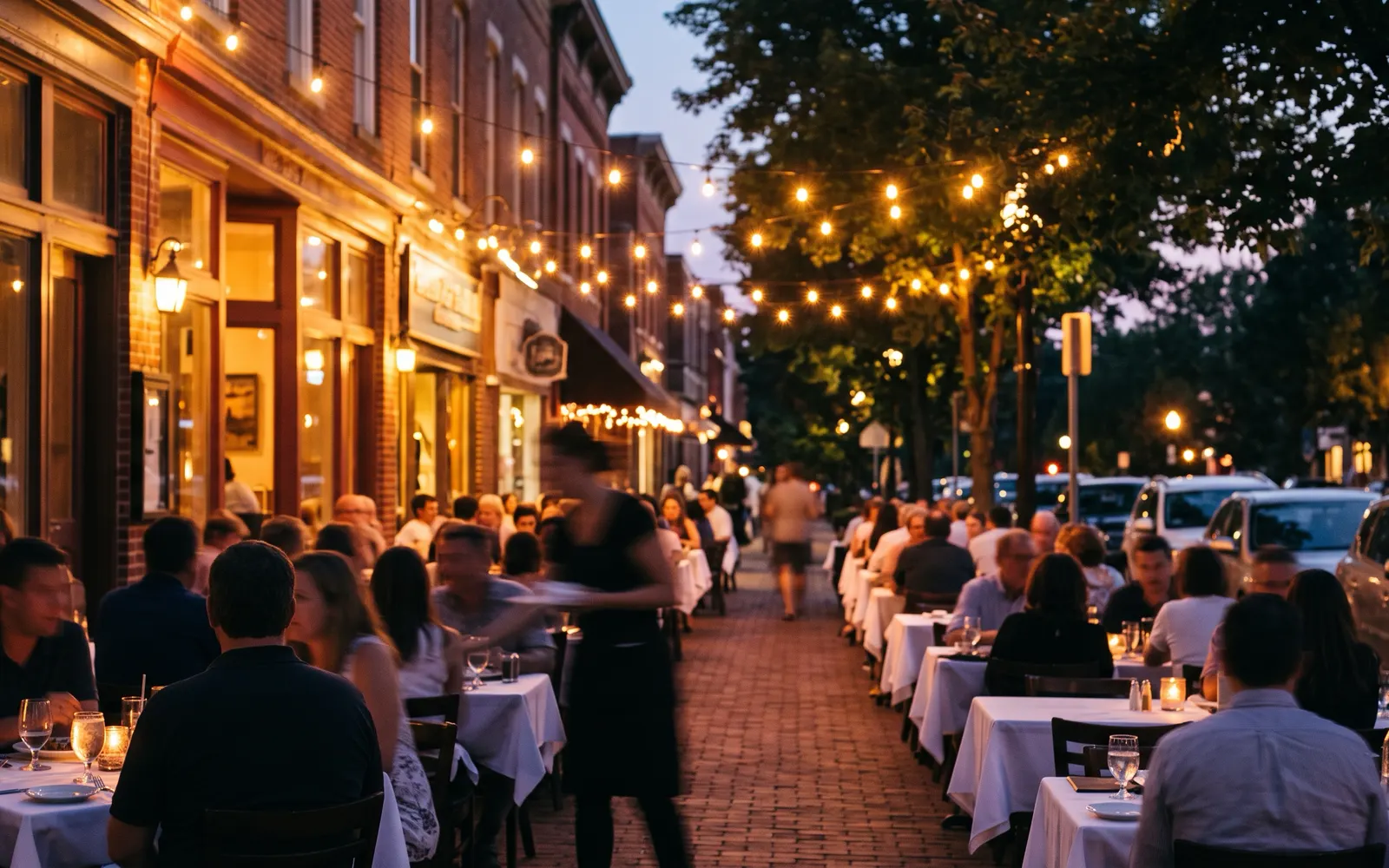
Winnetka's restaurants cluster in the business districts. A summer 2026 roundup lists Tocco at 985 Green Bay Road, Grateful Bites Pizza Shoppe at 899 Green Bay Road and Towne & Oak (café) in Hubbard Woods; 501 Local at 501 Chestnut Street and Jimoto (sushi) at 813 Oak Street near East Elm; and Aboyer, a French-American bistro, at 64 Green Bay Road in Indian Hill.
The next additions are at One Winnetka. Ballyhoo Hospitality's Mediterranean restaurant, still being renamed after its first name could not be used, got council approval on June 16, 2026 for a seasonal outdoor patio of 17 tables and 74 seats at Elm Street and Lincoln Avenue, open April 1 to November 30, The Record reported. The restaurant is expected to open in 2027, alongside a fast-casual spot called Fare.
Winnetka Beaches, Parks and Recreation
The Winnetka Park District, founded in 1904 and the fourth-oldest in Illinois, maintains 27 parks and five beaches, according to Wikipedia. The park district covers 4.8 square miles and runs the Winnetka Ice Arena, the A.C. Nielsen Tennis Center, the Winnetka Golf Club, platform tennis courts and the Skokie Playfield campus on Hibbard Road.
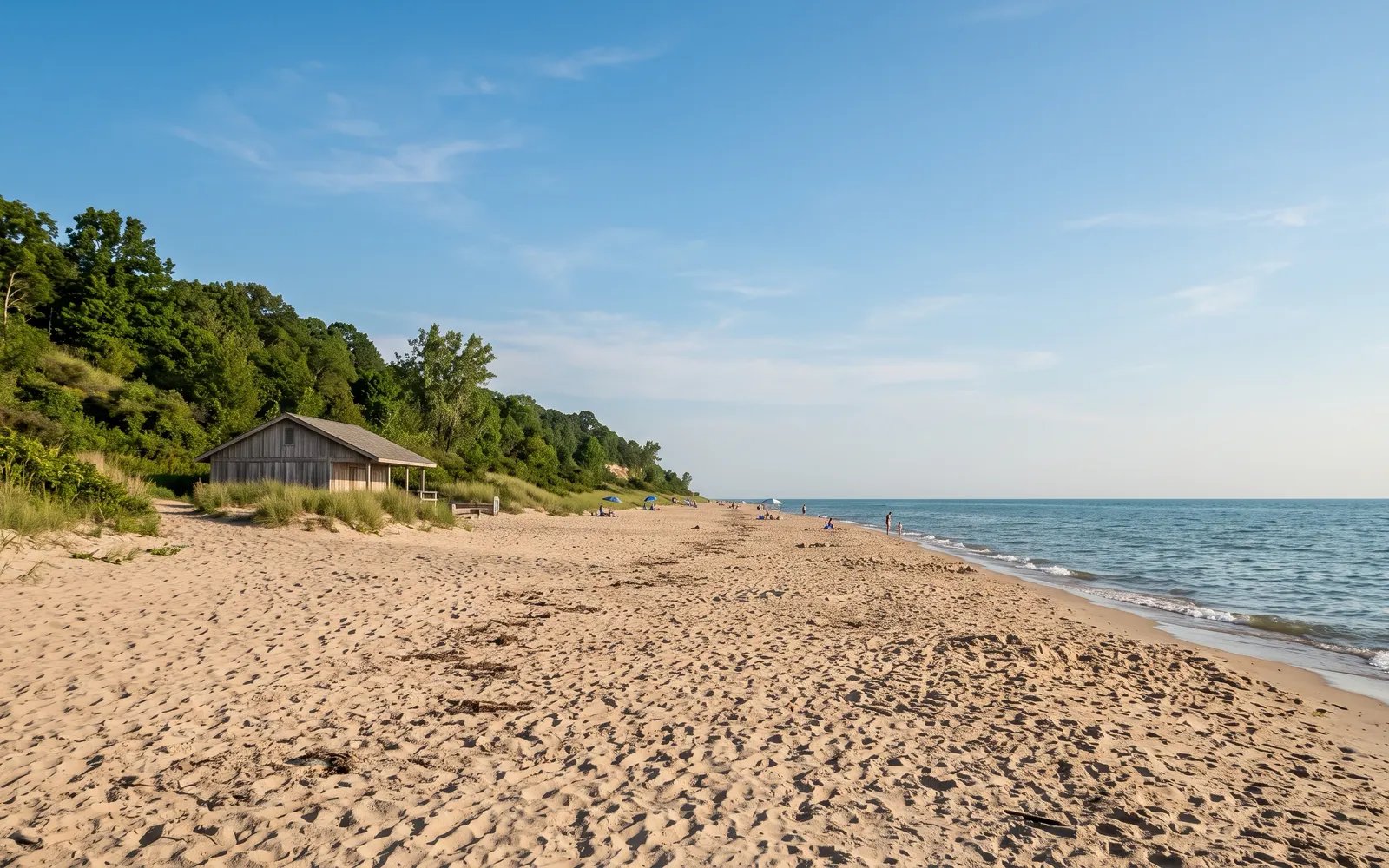
The lakefront is the draw. The five beaches are Tower Road, Maple Street, Elder Lane, Centennial and Lloyd. Tower Road and Maple Street have lifeguards and swim areas, and Lloyd has the boat launch. Elder Lane has been under the Waterfront 2030 plan, adopted in 2016, and the park district anticipated its full reopening for the 2026 season. The 2026 beach pass costs $45 per resident household member and $90 for non-residents, with a $90 ten-visit guest card for resident pass holders. Beach parking lots are for village residents only; non-residents are pointed to the Hubbard Woods parking structure.
Inland, Crow Island Woods is a 17.91-acre woodland on Willow Road with a boardwalk through a sedge meadow and the Schmidt-Burnham Log House, built around 1837.
The Winnetka-Northfield Public Library
Winnetka shares a library district with Northfield. The Winnetka Library is at 768 Oak Street, one block off Elm Street, open 9 a.m. to 9 p.m. Monday through Thursday, 9 a.m. to 5 p.m. Friday and Saturday, and 1 to 5 p.m. Sunday. The Northfield branch is at 1785 Orchard Lane.
Utilities in Winnetka: The Village Runs the Power
This is the part of Winnetka that surprises people moving from other suburbs. The village's Water & Electric Department has supplied water since 1893 and electricity since 1900. Your electric bill comes from the village, not ComEd, and the distribution lines are village-owned.
Since 1991 Winnetka has bought its wholesale power through the Illinois Municipal Electric Agency. The village still keeps its own plant at the foot of Tower Road, which supplies about 3% of Winnetka's electricity and can start within minutes, and the village receives about $1.5 million a year in power credits, according to the Winnetka Historical Society. The same society credits local ownership with faster storm repairs.
Solar is easier here than in most towns right now. The spring 2026 Winnetka Report says rooftop panels no longer need a special use permit, building permit fees for solar are waived in 2026, the utility offers rebates of up to $3,000, and net-metering customers earned $0.15 per kWh on average in 2025.
There is one more line on the bill to budget for. Winnetka charges a stormwater utility fee of $21.83 per month per Equivalent Runoff Unit, where one unit is 3,400 square feet of impervious surface such as roof and driveway. A big house on a big lot pays more.
Hospitals Near Winnetka
Winnetka has no hospital of its own. The closest full-service options are in the Endeavor Health system (formerly NorthShore): Evanston Hospital at 2650 Ridge Avenue, which has a Level I trauma center; Glenbrook Hospital at 2100 Pfingsten Road in Glenview; and Highland Park Hospital at 777 Park Avenue West in Highland Park, per Wikipedia.
Music, Ice and Nights Out Near Winnetka
Winnetka's big summer weekend is the Winnetka Music Festival, held June 19 and 20 in 2026, according to the village's spring Winnetka Report. In winter the Winnetka Ice Arena runs public skating and hockey. The Schmidt-Burnham Log House at Crow Island Woods opens to visitors on scheduled days through the fall.
For more, Ravinia Festival, the summer home of the Chicago Symphony Orchestra, is a few Metra stops north in Highland Park. My guide to Highland Park covers the town around it.
Winnetka's Fourth of July and Yearly Traditions
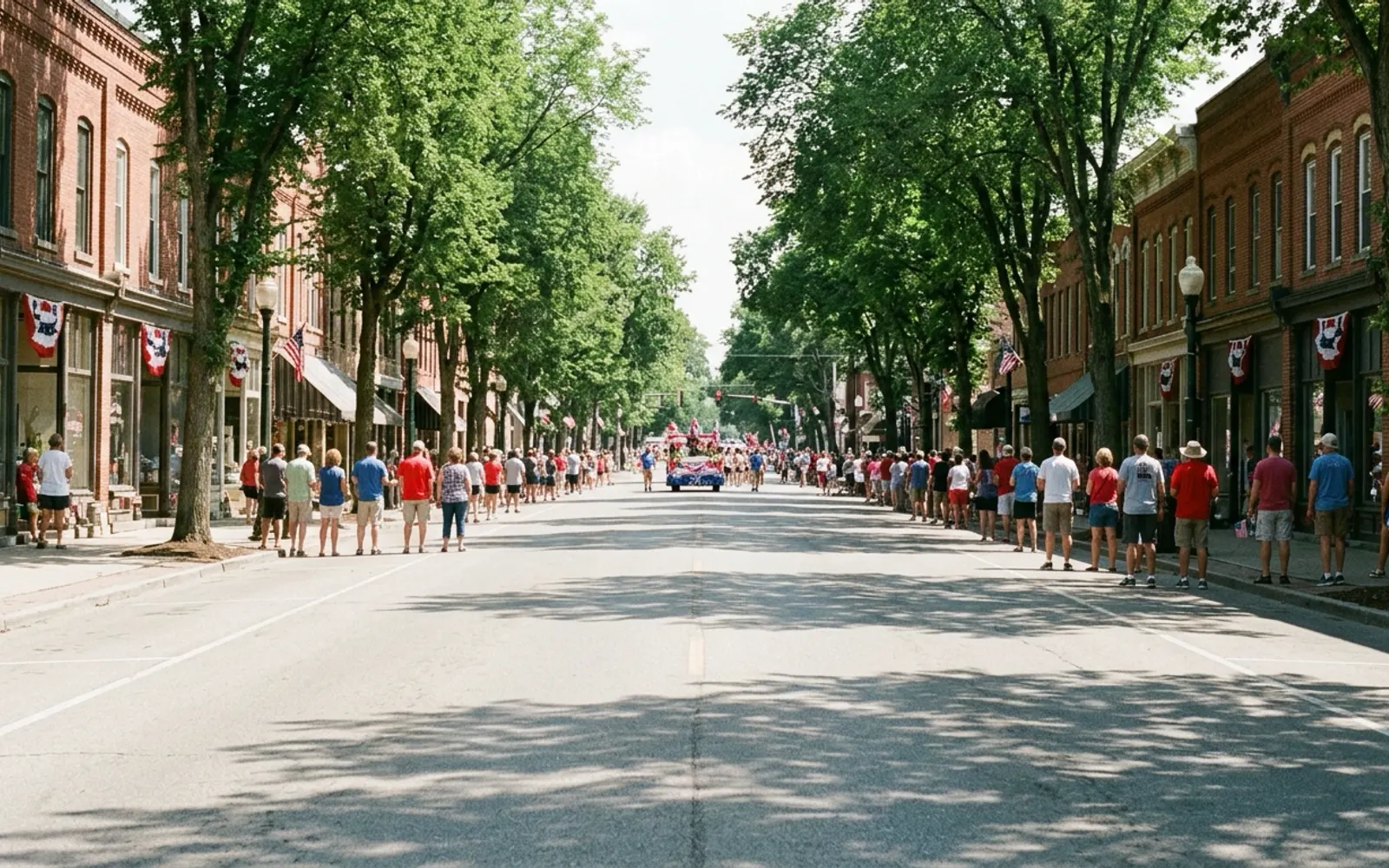
The calendar runs through the Village Green. In 2026, per the spring Winnetka Report, the Memorial Day parade stepped off at 10 a.m. on May 25 from Elm Street and Glendale Avenue, with a ceremony on the Village Green at 10:30. The Fourth of July parade, part of the village's 250th Independence Day program, stepped off at 10 a.m. on July 4 from the same corner, followed by events on the Green and music and fireworks at Duke Childs Field from 7 to 10 p.m.
Around those, 2026 added a new Artisan Market (May 30 and 31), a Touch-A-Truck morning at Village Hall (June 13), the Winnetka Music Festival (June 19 and 20) and the Saturday farmers market from June 6 to October 31. The park district's Fall Fest was Saturday, September 26, 2026, from 4 to 7 p.m. at Skokie Playfield, with a quieter sensory-friendly early entry.
What's Being Built in Winnetka
The biggest project is One Winnetka, at the southeast corner of Elm Street and Lincoln Avenue. Per the village, Murphy Development Group's building has about 20,000 square feet of ground-floor commercial space, 59 rental apartments with one to three bedrooms, and about 150 parking spaces, with Walsh Construction as contractor. It got final council approval in January 2025. The approved tenants are the Ballyhoo Mediterranean restaurant, Fare, Solidcore, Winnetka Aesthetic Studio, Charles Schwab and DUET Audiology, and the restaurant is expected to open in 2027.
The second project to watch is the old post office at 512 Chestnut Street. The village bought the site in 1982 and has talked about redeveloping it for decades. The building was demolished in spring 2026 and the land sodded as temporary green space; the post office itself moved to 586 Lincoln Avenue in December 2025. More than 1,200 residents answered a village survey, and consultant Teska Associates is expected to bring the top one or two concepts to the Village Council around October 2026, per The Record. Options range from a lawn to mixed use with retail, housing and underground parking. No plan is approved.
Smaller changes: a three-story Chase Bank building at Green Bay Road and Elm Street and the four-story Engel & Völkers building at 564 Green Bay Road are listed as under construction; the Hubbard Woods parking deck is getting structural repairs; and the council is drafting a 10 to 20 year capital plan that covers the water and electric plant, streetscapes and stormwater. Add the Willow Road reconstruction from November 2026 to fall 2027 and the west side will see construction for a while.
I don't label any town or neighborhood as safe or unsafe.
Flooding and Stormwater in Winnetka
In Winnetka, flooding is the due-diligence item I would put first. The village itself says the land is naturally a lowland marsh. Its flood plain page names two FEMA flood sources, the Skokie River and Lake Michigan, but says most flooding here is flash flooding when heavy rain overwhelms the storm sewers, which shows up as basement backups and water through window wells.
The event people remember is July 23, 2011, when nearly seven inches of rain fell and the pump station at Ash Street and Hibbard Road failed, Patch reported. What followed was a decade-long fight over the fix. A plan approved in 2013 centered on a $34.5 million tunnel under Willow Road to carry stormwater to Lake Michigan. Voters rejected it 1,679 to 1,402 in a non-binding March 2014 referendum, and when the estimate climbed from $58.5 million to $81.3 million, trustees dropped the tunnel in September 2015 and turned to routing water west instead.
What got built on the west side: pump stations in 2014 (Ash Street) and 2015 (Winnetka Avenue), which the village says raised storm sewer capacity by 50%, and detention tanks under Duke Childs Field, the park district golf course and the land behind Crow Island School. The east side is still being planned. Strand Associates has studied Elder Lane, Elm Street and Willow Road, Spruce Street and Hubbard Woods since April 2024, and the council heard an update on February 10, 2026, where it was told costs have risen and grants are getting harder to find.
Redfin, using First Street's model, rates Winnetka's flood risk as minor, with 103 properties, about 4%, at severe risk over 30 years. Winnetka holds a Community Rating System Class 6, which gives flood insurance policyholders up to a 20% premium reduction. Before you write an offer, look the address up on the FEMA flood map, ask the seller directly about water in the basement, and ask what has been done since 2011 on that block.
Frequently Asked Questions
How much does a house cost in Winnetka, IL?+
Redfin reported a median sale price of $2,096,113 for the three months ending August 2026, up 21.5% from a year earlier. Zillow's home value index was $1,940,311 in August 2026, up 13.9%. Prices range widely, from condos near Hubbard Woods to lakefront estates.
What are property taxes in Winnetka, IL?+
Ownwell puts the median effective rate at 2.26% and the median annual bill at $24,731 (updated April 2026). At that rate a home bought at the summer median would carry about $47,400 a year once assessed at its sale price.
When is Winnetka reassessed for property taxes?+
Winnetka is in New Trier Township, which the Cook County Assessor last reassessed in 2025, with notices mailed April 23, 2025. The township is on a three-year cycle, so the next reassessment is due in 2028. The Tax Year 2025 second-installment bills reflecting those values are due October 1, 2026.
What school district is Winnetka, IL in?+
Winnetka Public Schools District 36 for kindergarten through eighth grade (Greeley, Hubbard Woods, Crow Island, Skokie and Washburne) and New Trier Township High School District 203, with a Northfield campus for freshmen and a Winnetka campus for grades 10 to 12. Confirm the elementary assignment by address.
How long is the commute from Winnetka to downtown Chicago?+
On Metra's Union Pacific North line, rush-hour expresses from Winnetka station reach Ogilvie in 37 minutes and most trains take 42. Winnetka station has 35 inbound weekday trains; Indian Hill has 28 and Hubbard Woods 26.
What neighborhoods are in Winnetka, IL?+
Commonly named pockets include Hubbard Woods, East Elm and the Village Green, West Elm, Indian Hill, the Crow Island area and the Sheridan Road lakefront. Locals usually describe them by their side of the tracks and the nearest station.
Does Winnetka flood?+
Mostly through flash flooding when storms overwhelm the sewers, as on July 23, 2011. The village built west-side pump stations and detention tanks after dropping the Willow Road tunnel in 2015, and the east side is still being studied. Check the FEMA map and ask about basement water on every house.
Who provides electricity in Winnetka, IL?+
The Village of Winnetka does. It has run its own electric utility since 1900 and buys wholesale power through the Illinois Municipal Electric Agency, so residents are billed by the village rather than ComEd.
Eshu Chikoti has extensive access to off-market listings throughout Winnetka and the rest of Cook County — homes that never make it to the public listing sites. That matters right now: in a seller's market like this one, well-priced homes routinely go under contract within days, and buyers relying only on public listings are competing for whatever is left over. Working with someone plugged into off-market inventory means seeing homes before the crowd does.
Eshu Chikoti · 847-691-4282 ·
Get new Winnetka listings by email
When a home comes on the market in Winnetka, I'll email it to you.
Just your email. Unsubscribe any time by replying.
Thinking About Winnetka?
Whether you're buying, selling, or just curious what's on the market, I can walk you through Winnetka street by street.