Union, IL
Union, IL is a McHenry County village of about 550 to 750 people, less than a square mile in size, with its own water system, a lower property tax rate than its neighbors and the largest railroad museum in the United States.
Living in Union, IL means a small village grid, one newer subdivision and farmland on every side. Homes run on village water, the 2025 tax rate is about 6.27% of assessed value, and schools are Marengo-Union District 165 and Marengo High School. Sales are rare, so pricing takes care. Here is the detail.
Written by Eshu Chikoti · 847-691-4282 ·
How Union, IL Got Here: A Short History
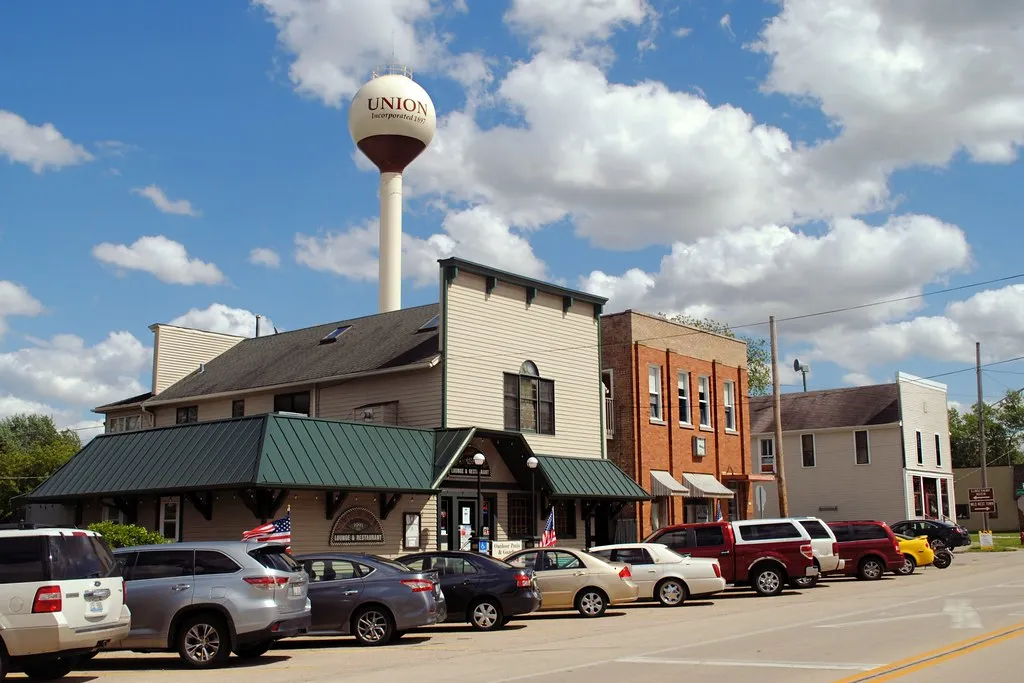
Union exists because of a railroad. According to the village's own history, William Jackson, an early settler of Coral Township who owned the land, platted Union in 1851 as a station on the Galena and Chicago Union Railroad. A railroad station followed in 1854. The post office, which opened in 1852, took its name from the federal "Union" of the United States, and Wikipedia cites a 1908 Chicago and North Western place-name history for the same origin.
The village history paints a working farm town by 1877: a doctor, a hotel, two general stores, four blacksmiths, a shoemaker, a cheese factory, a carpenter and a public library of 200 volumes. Union incorporated in 1897. In 1912 it bonded to build a municipal water system and began installing its electrical grid, which is why the village still runs its own water today.
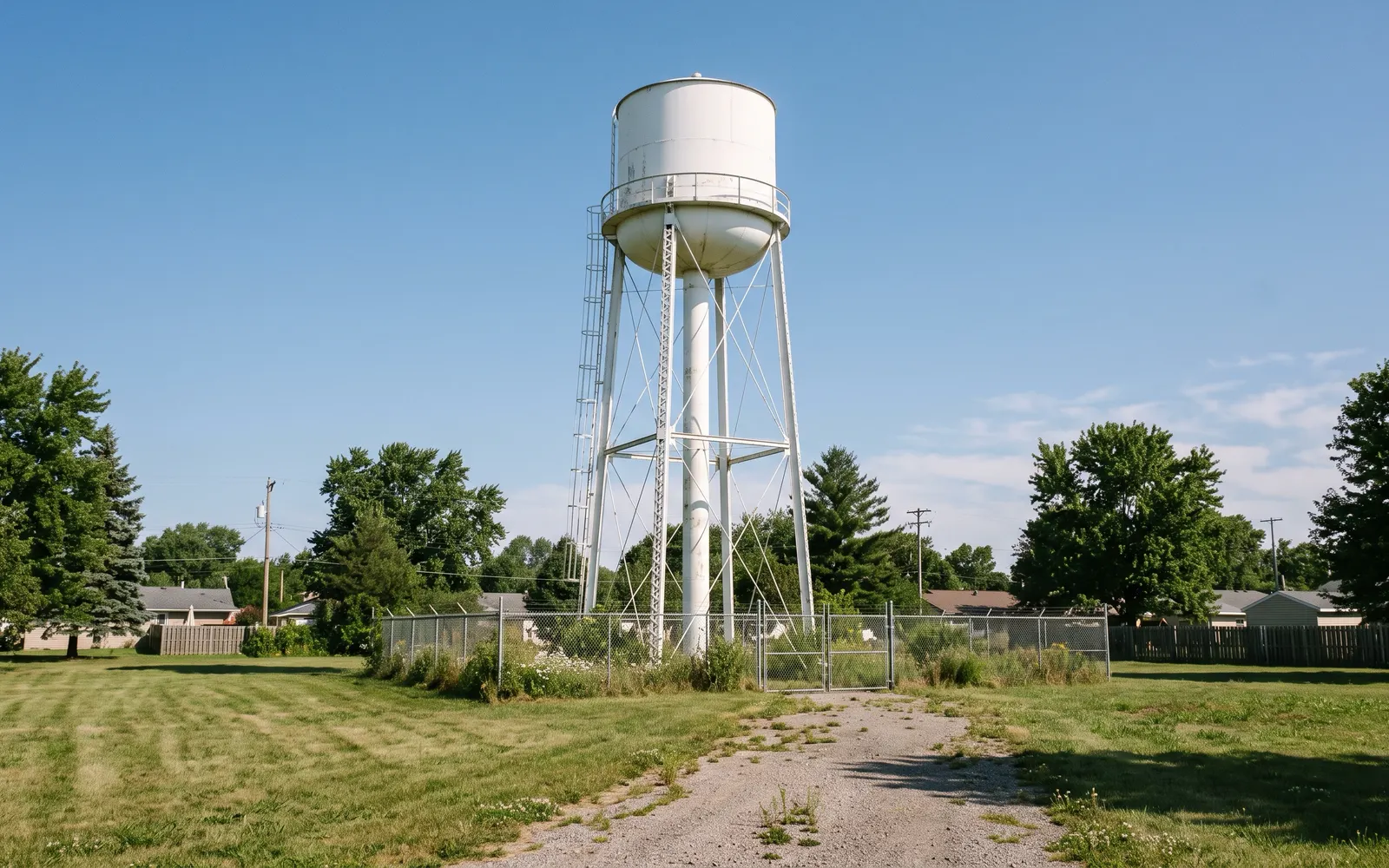
Union also has a claim most towns its size cannot make. The village and Wikipedia both credit it as the site of the world's first fully automatic electrical substation, on the spot where the water tower now stands just east of Main Street.
The population has barely moved in a century. The decennial census counts on Wikipedia run 432 in 1910, 480 in 1960, 622 in 1980, 580 in 2010 and 551 in 2020. The village itself now estimates about 750 residents, a figure that reflects the Railway Estates subdivision, covered below. The modern chapter began in 1964, when the Illinois Railway Museum moved to Union. It has shaped the village's identity ever since.
Union at a Glance
Union is one of the smallest incorporated places in McHenry County. The 2024 Census gazetteer puts its land area at 0.836 square miles, and it sits in Coral Township. Measured in a straight line from the village's Census center point, downtown Marengo is about 2.9 miles to the west and the Illinois Railway Museum is less than a mile to the east. The village's own About page describes Union as about 0.84 square miles with a population of 551 in 2020.
The 2020-2024 Census ACS counts 278 housing units in the village. Of the 259 occupied homes, 227 are owner-occupied, about 88%. About 95% of all units are single-family detached houses. The ACS population estimate is 624, but with a margin of error of 271, so I use the 2020 census count (551) and the village's own estimate (about 750) as the range.
The most important thing to know before you search: the Union ZIP code, 60180, is much larger than the village. A listing with a Union mailing address can be on a village street with village water, or it can be a farmhouse on acreage miles out in Coral Township with a private well and septic, a different fire district and possibly a different school district. The tax code on the bill tells you which. I check it on every property before anything else.
The village is governed by a Village President and six elected trustees. According to the village website, the Village Hall at 17703 O'Cock Road is open Tuesdays from 10 a.m. to 4 p.m. and Thursdays from 1 p.m. to 5 p.m., with email and voicemail answered within one business day.
Its 6.27% predominant tax rate is below every neighboring town I compared, and the tollway is a short drive away.
The water system's lead service lines, the sewer plant review and the Rockford rail line are open questions that will play out over the next few years.
Confirm the district for a specific address with the district office, and read each district's profile on the Illinois Report Card at illinoisreportcard.com.
Union Neighborhoods: the Village Grid, Railway Estates and the Countryside
Union is small enough that there are really three markets, and they barely overlap in price or in what you need to check.
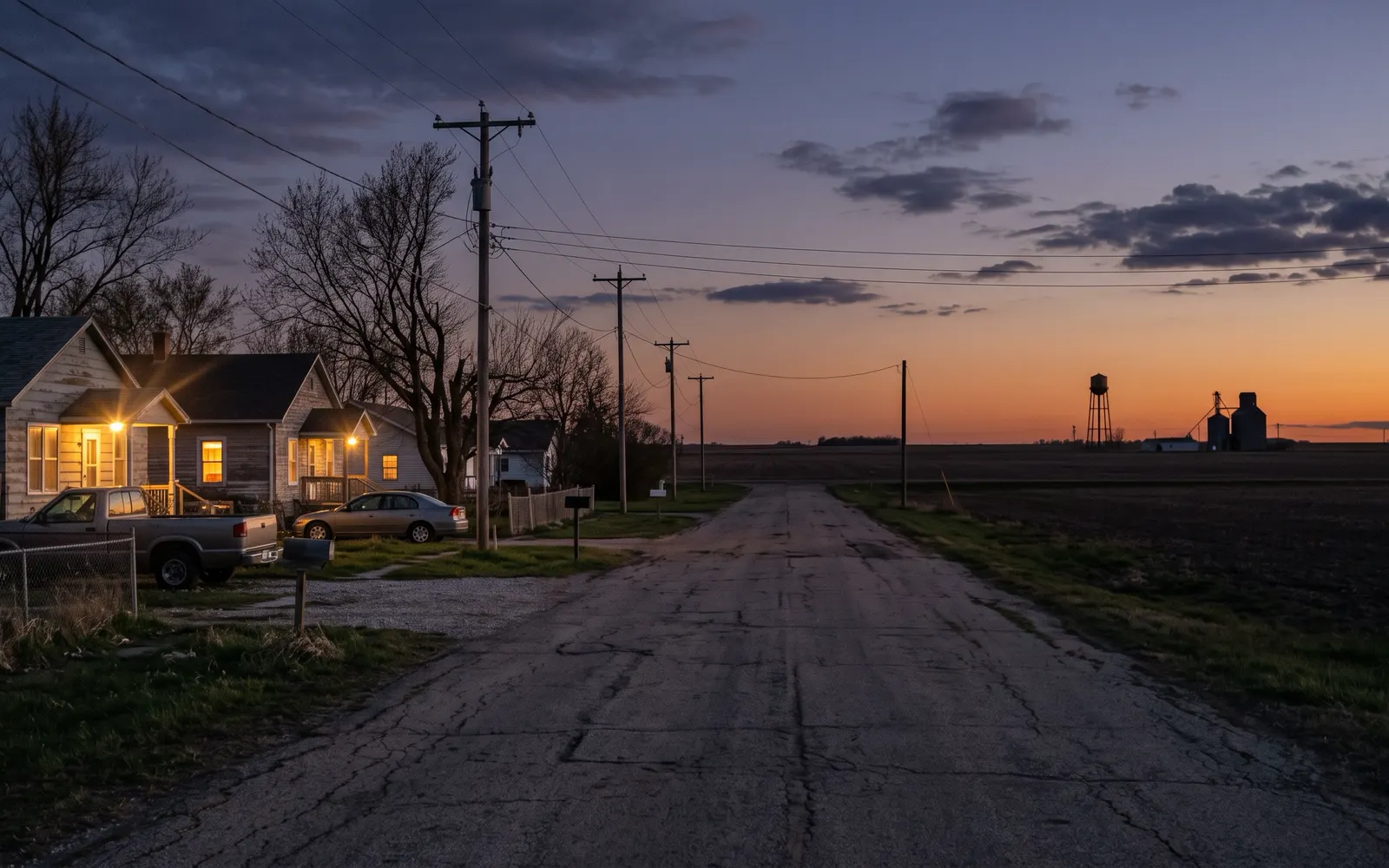
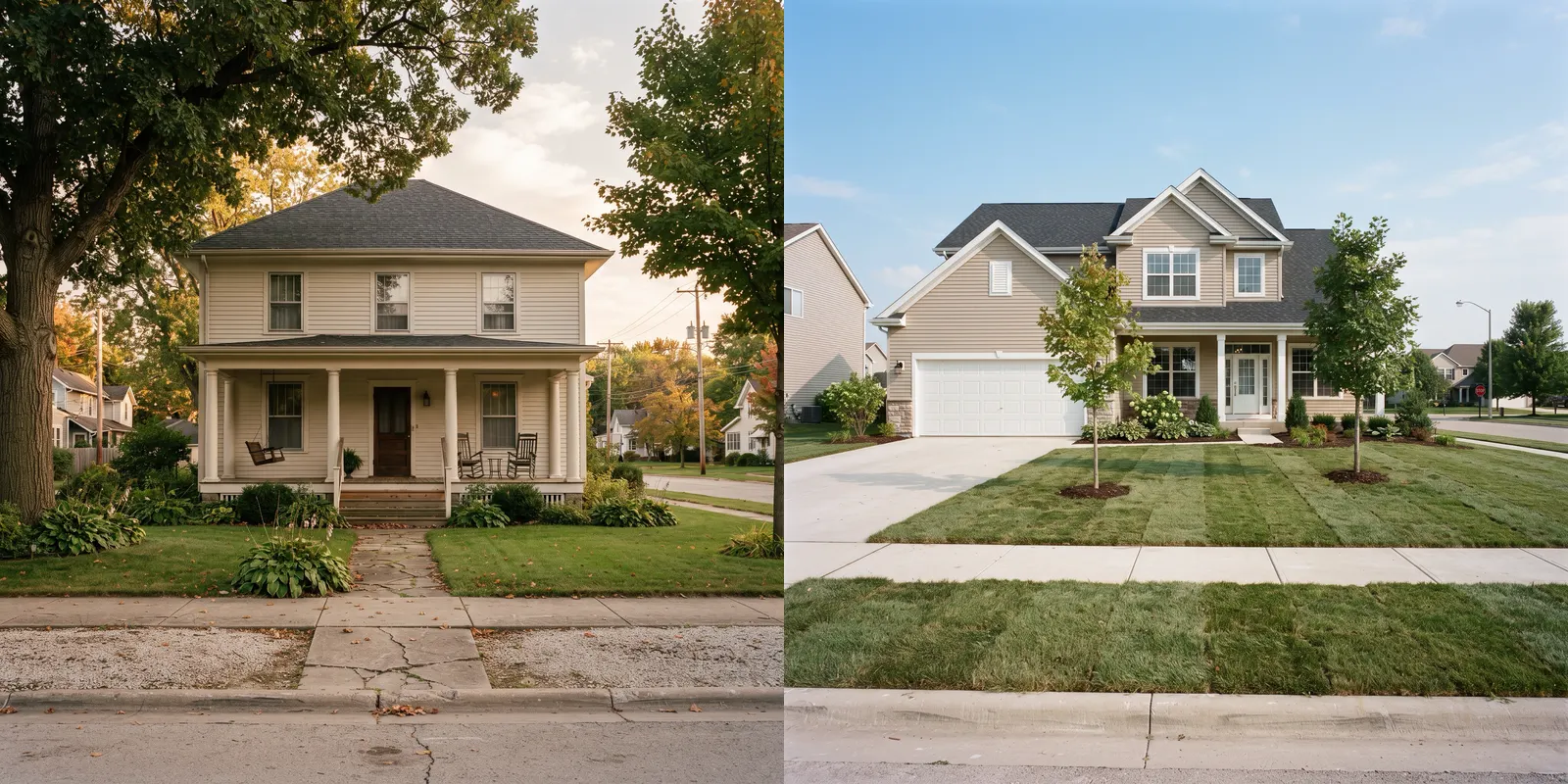
The first is the original village: the grid of streets around Main Street, laid out along the railroad. This is where most of Union's older houses are. The ACS counts 86 homes in the village built before 1940 and 63 more from the 1950s, which together are more than half the housing stock. The Village Hall, the McHenry County Historical Society museum on Main Street and the Veterans Park pavilion off Park Street are all in or next to this grid.
The second is Railway Estates, the village's one modern subdivision. The third is everything with a Union mailing address outside the village limits: farmhouses, acreage and rural homes spread across Coral Township, which is covered in its own section below because the rules are different.
If you want to know which of the three a specific address falls in, what its tax code is and what nearby homes have sold for, that is a conversation I am happy to have here.
The question I get most from buyers looking this far west is whether the drive is worth it. My answer is that it depends on where you drive to. Union is close to I-90 and far from a train, and that shapes everything else on this page.
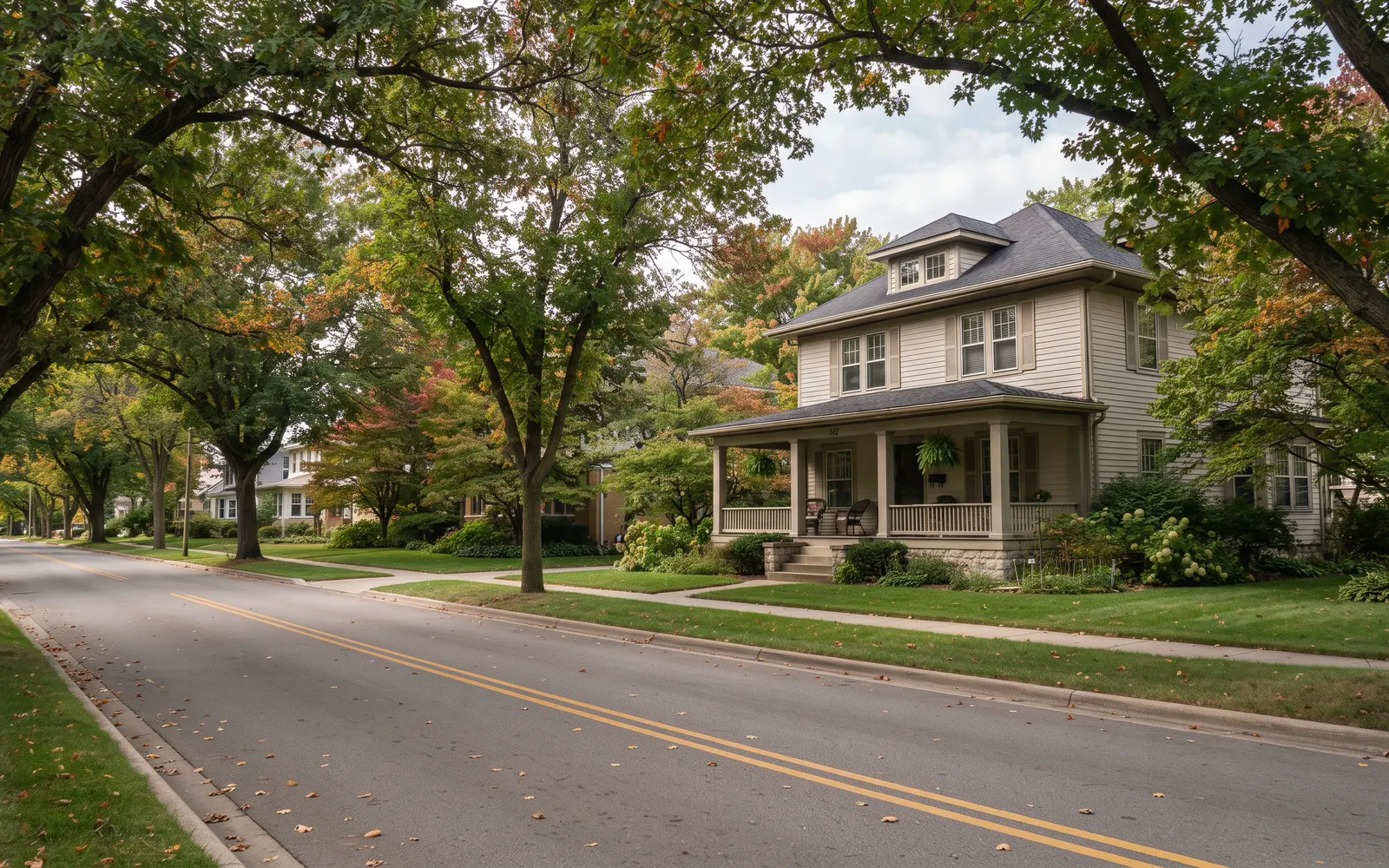
The village grid. The streets around Main Street and the railroad. Mostly homes built before 1960, on village water. The oldest and most varied housing in Union.
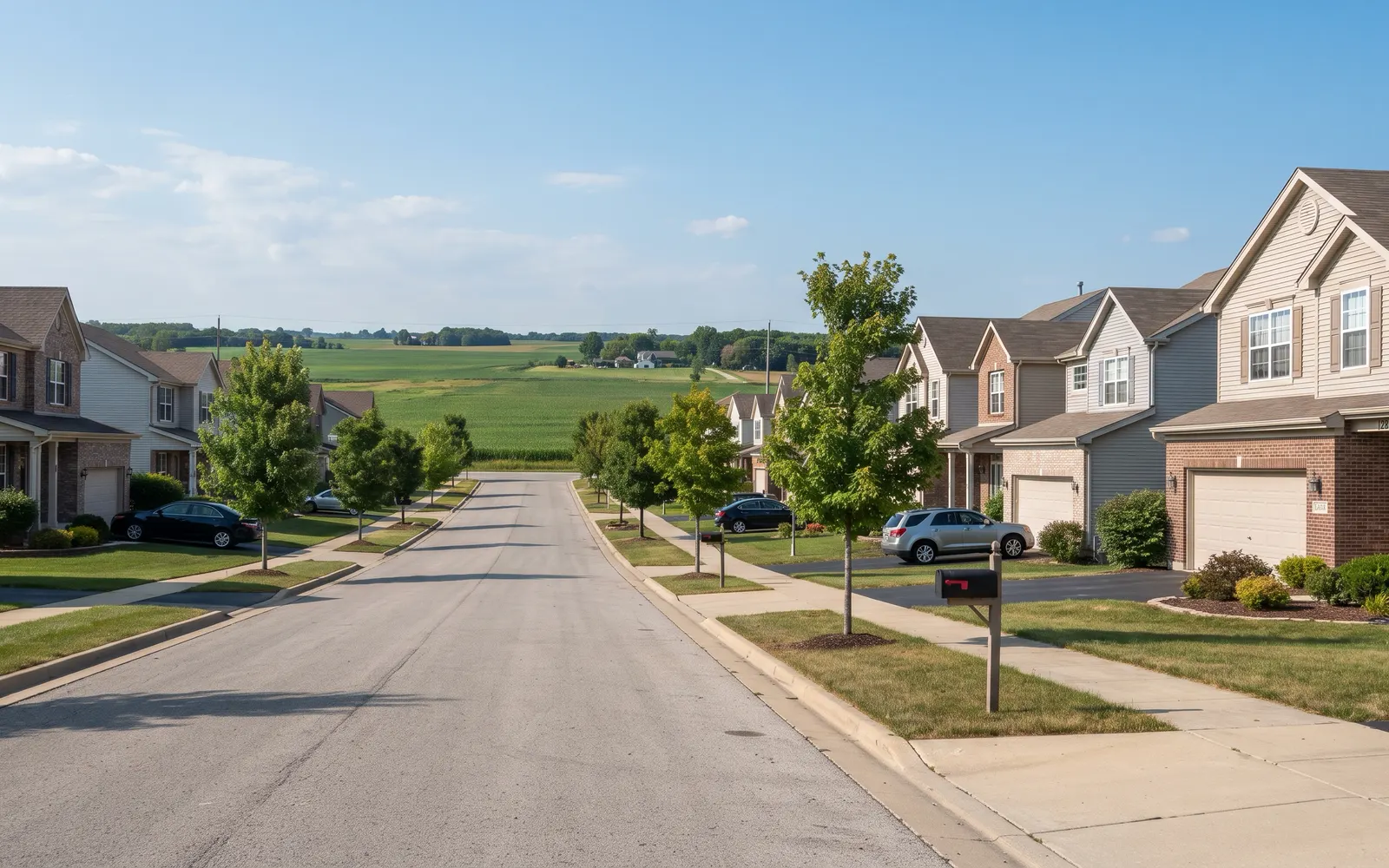
Railway Estates. Single-family homes built by Ryan Homes between 2006 and 2024, about 1,640 to 4,200 square feet, per homesbymarco.com, which lists curbs, sidewalks, street lights and a park, and an average annual tax bill of about $6,345. Streets include Great Northern Trail and Alexandra Lane. The subdivision carries a special service area charge covered in the taxes section.
Rural Union (Coral Township). Farmhouses, newer homes on acreage and working farmland with a Union 60180 address outside the village. Expect a private well and septic, and check the school and fire district on the tax bill.
What Union Homes Look Like, by Era
Union's housing is older than most of McHenry County. The 2020-2024 Census ACS puts the median year built at 1957. About 31% of homes (86 of 278) were built before 1940, 63 in the 1950s, 29 in the 1960s and 41 in the 1970s. The survey counts 23 built in the 1990s and 24 from 2000 to 2009. These are small-sample estimates with wide margins, and the newest Railway Estates homes may not be fully counted yet, so treat them as a shape rather than exact counts.
The homes are mid-sized. The same survey counts 138 three-bedroom homes (about half) and 84 with two bedrooms, with 48 four-bedroom and 4 five-bedroom homes. About 95% are single-family detached. There are almost no apartments. The ACS lists a median gross rent of $1,692, but it comes from only 32 renter-occupied homes, so I would not budget from it.
The ACS median value of owner-occupied homes is $252,200, with a margin of error of $26,484. That figure trails what homes have actually been selling for, which the market section explains.
In practice you will tour three types. Older village homes: frame farmhouses, bungalows and 1950s ranches on village lots, many updated in layers over the decades. Railway Estates: two-story and ranch plans from the 2000s to 2020s with attached garages and basements. And rural homes on acreage, which range from original farmhouses to newer custom builds.
On the older village homes, the inspection items I expect are the ones that come with age: original or undersized electrical service, galvanized or older plumbing, foundations that have seen water, and the water service line itself, which the next section explains. None of these should kill a deal. All of them belong in the price. My home inspection checklist is a good place to start.
Union Village Water, Lead Service Lines and Sewer
This is the section no other Union page covers, and it matters more here than in most towns.
Union runs its own water system. According to the village's services page, Union provides water service for all residents within village limits, bills quarterly, and takes payment at Prairie Community Bank in Union or through your bank's online bill pay. The water is groundwater. The 2025 Consumer Confidence Report lists Well 4 on Jefferson Street as the active source, and the state's source water assessment in that report rates wells 2 and 4 as not susceptible to contamination and well 3 as susceptible.
The same report shows no contaminant limit violations for 2025. Lead at the 90th percentile was 6.8 parts per billion against an action level of 15, with 2 sampled sites over. Copper was 0.59 against 1.3. Combined radium was 3.47 against a limit of 5. The report does list two paperwork violations: the prior year's water quality report went out late (July to September 2025), and the village did not certify to the Illinois EPA that it had sent the required annual notices to homes with lead or unknown service lines.
That second item connects to the most important fact for a buyer of an older Union house. In a March 2026 letter to residents, the Village President wrote that Union has about 95 lead service lines, about one-third of the town, mostly in homes served more than 50 years ago, and that newer homes from about 1970 on have copper or PVC. The village must present a replacement plan to the Illinois EPA and is looking for grants to pay for it. On any house built before 1970, ask the village whether the service line is lead before you close.
The same letter explains the 2026 rate increase: about $4 a month per household, across 302 water bills a quarter, raising about $15,000 a year to rebuild the water fund.
Sewer is less simple. The letter says the increase does not change the special service area charge paid by Railway Estates, that an engineering project is reviewing the future of the village's wastewater treatment plant, and that the Village President is working on ways to extend the sewer system. I read that as: Railway Estates is on the village treatment plant, and some older parts of the village may not be. I have not confirmed which streets are on sewer and which are on private septic, so ask the village for any specific address.
Outside the village limits, plan on a private well and a septic system. McHenry County controls septic closely. The county Health Department requires a permit to install, repair, replace or abandon a system, requires an IDPH-licensed contractor for the work, and requires the system to meet new-construction standards before a bedroom is added. Records are split: systems permitted before February 1, 2003 are with the county's Planning and Development department, and later ones are with the Health Department.
The Union Housing Market in 2026
Union's market statistics need a warning label: there are very few sales. In the three months ending August 2026, Redfin reported a median sale price of $460,000, up 21.7% from a year earlier, with one home sold in August against two a year before. The median price per square foot was $168, down 15.6%. Redfin gives Union a Compete Score of 76 out of 100, which it calls very competitive. The same page reports days on market two different ways (70 days in its summary and 17 in its score), which tells you how little data is behind it.
Redfin's monthly data file, updated June 2, 2026, shows how thin it really is. From June 2025 through May 2026 it records 12 sales in the village, all single-family, with no sales at all in August or December 2025. The monthly medians over that year ran from $230,000 to $453,250. One sale can move the Union median by $100,000.
Zillow's home value index, which estimates the value of all homes rather than the ones that sold, puts Union at $439,324 for August 2026, up 7.9% from $407,075 a year earlier. The 60180 ZIP code index is close behind at $431,869, up 8.1%. Both figures sit well above the Census median value of $252,200. My read is that Zillow's Union region follows the mailing address and includes newer homes and acreage outside the village, while the Census counts only homes inside the village limits. That is an inference, and it is one more reason to price a Union house from specific comparable sales.
The resale range inside Railway Estates is narrower. According to homesbymarco.com, four Railway Estates homes sold in the past year at $416,000 to $465,000, a median of $439,950.
What this means in practice: comparable sales for a Union house often have to reach back a year or cross into Marengo or rural Coral Township. A well-priced house draws attention because so few come up. An overpriced one has no recent sale next door to hide behind. For how I read the wider market this year, see whether it is a good time to buy in 2026.
Union Property Taxes and the Real Cost of Owning
Union's property tax rate is low for McHenry County, and the county's own numbers show it. The McHenry County Clerk's 2025 predominant rate table gives Union a total rate of 6.269379% of equalized assessed value, from tax code 17002. On the same table, Marengo is 7.220971%, Huntley 6.769948%, Harvard 8.386669% and Woodstock 8.599204%.
Ownwell's data, updated April 13, 2026, puts Union's median effective rate at 1.97%, below the McHenry County median of 2.42%, with a median annual bill of $5,990 on a median home value of $308,307.
The county treasurer explains that assessed value is roughly one-third of market value. Here is the worked example. A $300,000 house assesses at about $100,000. At 6.269%, that is about $6,269 a year before exemptions, roughly $522 a month, or about 2.1% of the price. At Redfin's $460,000 summer median, the same math gives about $9,613 a year.
The county's 2025 rates-by-tax-code report shows where the money goes. In tax code 17002, District 165 takes 2.36, District 154 takes 1.63, the county 0.50, the village 0.37, Union Fire 0.32, the Marengo Rescue Squad 0.30 and the Marengo-Union Library 0.14. The two school districts together are about 64% of the bill. The village's share is about 6%.
Railway Estates is different. The same report lists tax code 17017, identical to 17002 plus a "Union SSA1" special service area rate of 0.996369, for a total of 7.265748%. On the same $300,000 house that adds about $996 a year, for about $7,266 in total. The village's March 2026 letter ties that special service area to Railway Estates. Budget for it on any house there.
Bills are paid in two installments. The expectation I most often reset is buyers who budget off the seller's current bill. If the seller has senior exemptions or bought years ago, your bill after the sale will be different. This is general information, not tax advice. Your actual bill depends on your parcel, your exemptions and the assessor.
Buying Acreage and Farmland Near Union
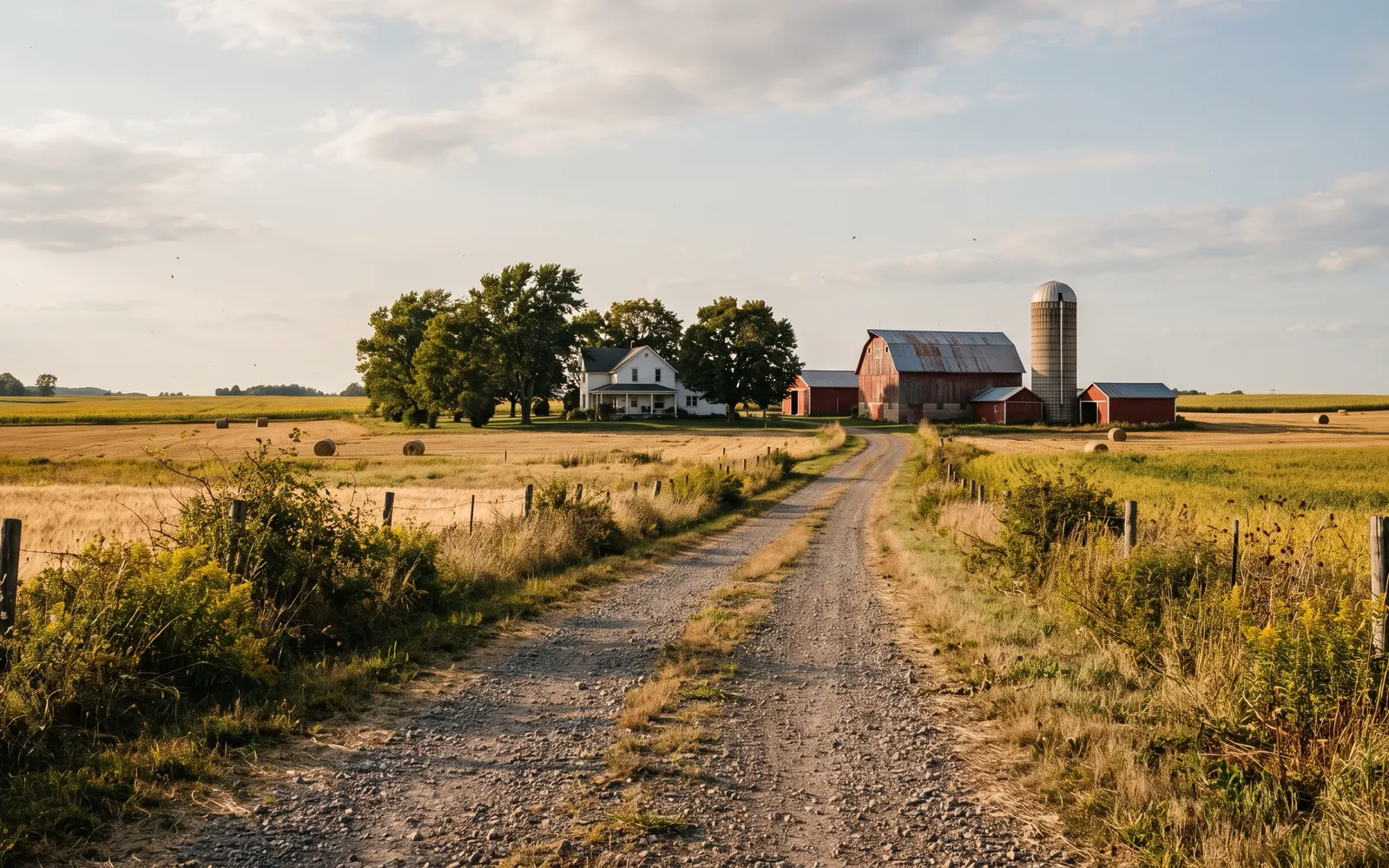
Drive a mile in any direction from Union and you are in farm country, and a good share of what comes up with a Union address is land. Buying it is a different process from buying a village house.
Start with the tax code. The county's 2025 report lists tax code 17003 in Coral Township, which pays into Riley School District 18 and the Marengo Fire District instead of District 165 and Union Fire, at a total rate of 6.187712%. So a rural Union address can mean a different grade school and a different fire department than the village a mile away. The mailing address will not tell you. The tax bill will.
Then look at how the land is assessed. Under the Illinois Property Tax Code, as summarized on the McHenry County farm assessment page, land used as a farm for the two preceding years is assessed on its soil productivity, not its market value. Permanent pasture is assessed at one-third of the cropland rate and other farmland at one-sixth. The house and its homesite are assessed separately. If the land stops being farmed, that preferential assessment can go away, and the bill changes. Ask how every acre is classified before you assume the current bill carries over.
Then the land itself: well and septic permits (see the water section), whether the parcel is buildable, and what is planned next door. The county Health Department notes that whether a lot is buildable depends on zoning, stormwater rules and the ability to provide water and septic, and may require a soil boring report.
Farmland near Union is also where the county's energy projects are landing. In August 2025, Shaw Local reported that the County Board approved a solar farm off McCue Road, north of Hemmingsen Road near Union, on the board chair's tie-breaking vote, after the zoning board recommended it unanimously. In July 2026, courts ordered the county to approve several other solar farms it had denied, because state law limits how far counties can restrict them. If you are buying acreage, ask what is filed on the neighboring parcels.
Union Schools: Marengo-Union District 165 and District 154
Union shares its schools with Marengo. Kindergarten through eighth grade is Marengo-Union Elementary District 165. According to Wikipedia, the district formed in 1986 when three districts consolidated, including Union Consolidated School District 8, and its number is the sum of the three old numbers: 8, 7 and 140.
All three District 165 schools are in Marengo. According to the federal school directory, Locust Elementary at 539 Locust Street serves pre-K to 3rd grade with 501 students, Ulysses S. Grant Intermediate serves 4th and 5th with 249, and Marengo Community Middle School serves 6th to 8th with 342, the last two at 816 East Grant Highway. The district counted 1,092 students in 2024-25. In August 2026 the district put two electric school buses into service, paid for by ComEd rebates and a federal grant, with a third expected this winter.
High school is Marengo Community High School District 154, a one-school district at 110 Franks Road with 685 students, per the same directory.
The county tax-code report is the tool here. Village tax codes 17002 and 17017 both pay into District 165 and District 154. Rural Coral Township code 17003 pays into Riley District 18 instead. Check every address with the district before you write an offer, and ask me for the tax code on a specific house if you want it checked.
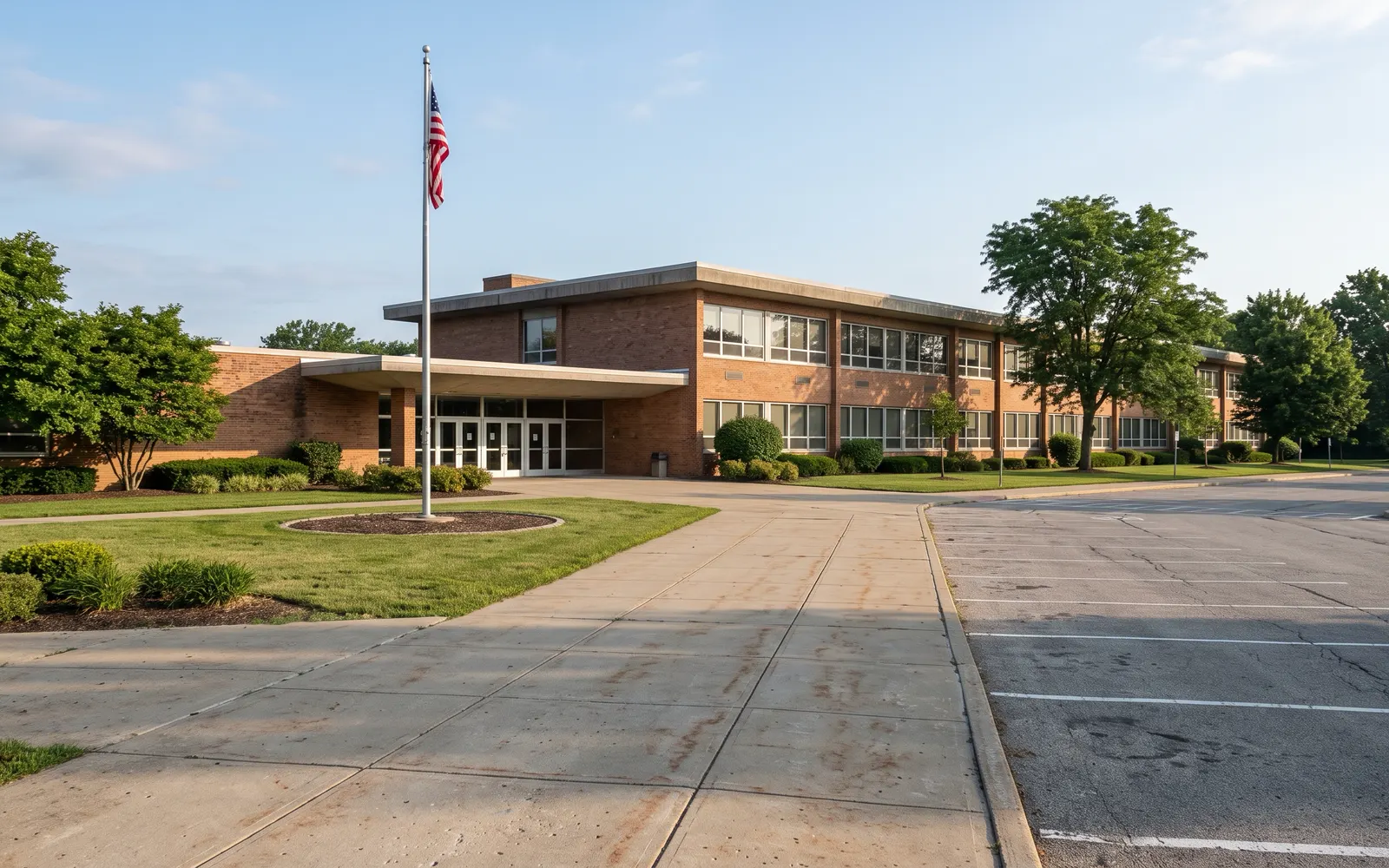
Locust Elementary School. 539 Locust St., Marengo. Pre-K to 3rd grade, District 165.
Ulysses S. Grant Intermediate School. 816 E. Grant Hwy., Marengo. Grades 4 and 5, District 165.
Marengo Community Middle School. 816 E. Grant Hwy., Marengo. Grades 6 to 8, District 165.
Marengo High School. 110 Franks Rd., Marengo. Grades 9 to 12, District 154.
Commuting from Union: Metra and the Rockford Line
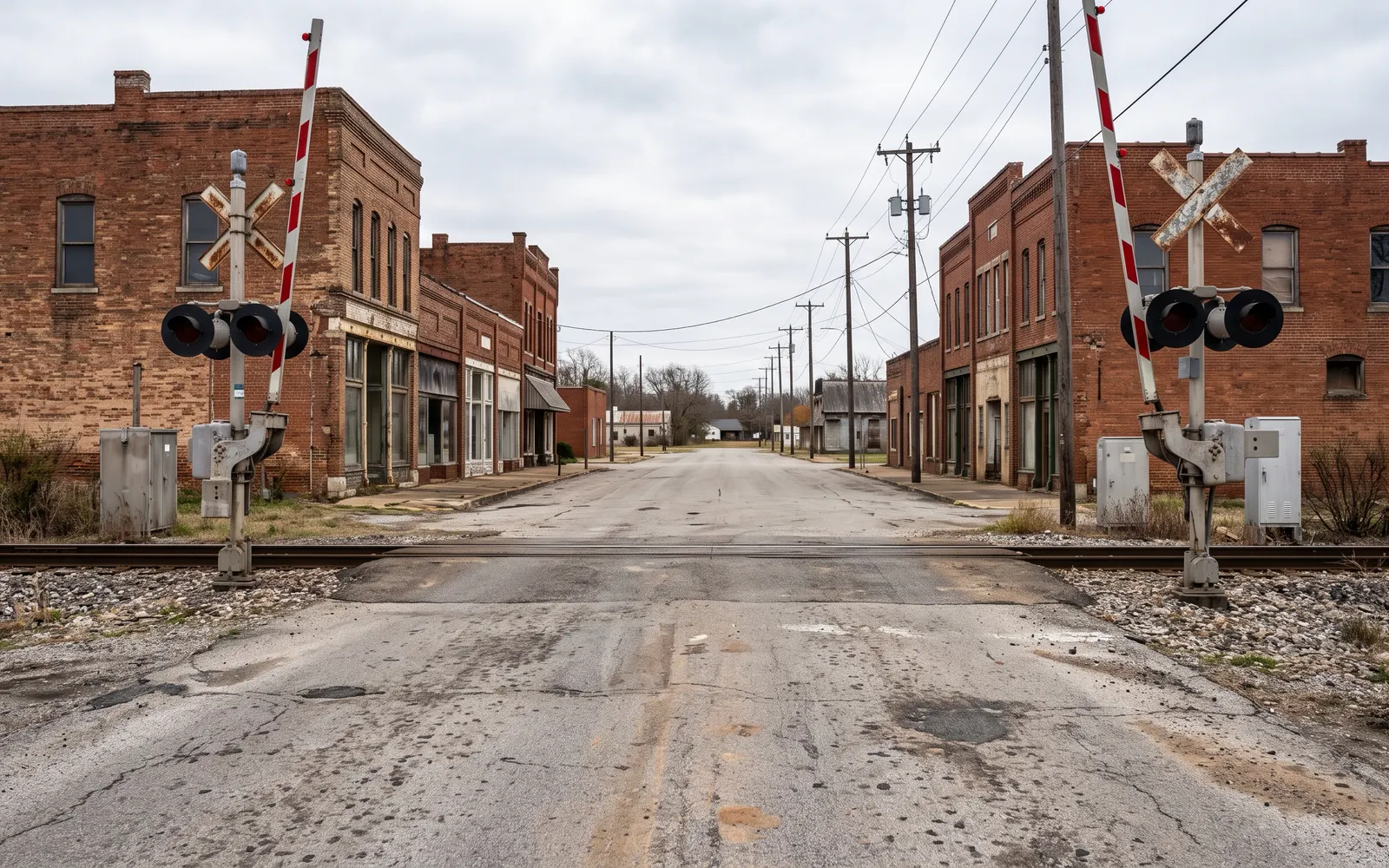
Union has no train station today, even though the Union Pacific line runs right through the village. Measured in a straight line from the village's Census center point, the nearest Metra station is Woodstock, about 7.7 miles away. Crystal Lake is about 11.7 miles, Pingree Road about 12.6 and Big Timber in Elgin about 16.3.
The station you pick matters more than the distance. From Metra's current schedule data for weekdays starting October 26, 2026, Woodstock has 14 inbound trains, with the fastest reaching Ogilvie in 79 minutes and the slowest in 97. Crystal Lake has 27 inbound trains, fastest 67 minutes. Pingree Road has 30, fastest 64. On Saturdays Woodstock has 10 inbound trains and Crystal Lake and Pingree Road 15 each. Big Timber, on the Milwaukee District West line to Union Station, has 19 weekday inbound trains, fastest 67 minutes, and no weekend trains in the current data.
Few people in Union commute by train. The 2020-2024 ACS counts 4 of 370 workers using commuter rail, while 309, about 84%, drive alone and 18 work from home. The margins on those numbers are wide in a village this small, but the direction is clear.
A new line may change this. The state is building Metra service from Chicago to Rockford over the Union Pacific tracks that pass through Union and Marengo. According to the project FAQ, two round trips a day are planned, and a siding near Marengo is part of the plan. In November 2025, Shaw Local reported that after Huntley declined a station, there was a request to explore a station in Marengo, Union or both. In August 2026, Streetsblog Chicago reported that IDOT still targets the end of 2027, while Metra's leader said he doubts that timeline. No Union station has been announced. I will update this section if one is.
Driving from Union: I-90 and the Route 23 Interchange
For most people in Union, the commute is a drive, and the road that made that practical is fairly new. According to Wikipedia, the full-access interchange connecting the Jane Addams Tollway (I-90) to Route 23 south of Marengo opened on December 23, 2019, at a cost of $33.4 million. It was the first interstate interchange built in McHenry County and closed a 17-mile gap between the nearest interchanges. For Union, that turned the tollway from a long detour into a short drive west.
Commute times from the 2020-2024 ACS show the spread. Of 352 commuters, about 60% get to work in under 30 minutes, and about 21% spend an hour or more each way. The first group mostly works nearby, in Marengo, Huntley, Woodstock or along I-90. The second group is driving toward Chicago or O'Hare.
Tolls went up. The 2025 Illinois transit bill, as Shaw Local reported, raised tolls by 45 cents for passenger cars across the tollway system. If you will drive I-90 every day, add it to the monthly budget next to the tax bill.
The rest of the road network is rural two-lane roads. Winter matters here. The village says it has one plow truck and one driver, and overnight parking is not allowed in the village. Plan driveway space and a little patience after a snowstorm.
Is Union Walkable?
Inside the village grid, yes, for a walk. For errands, no. Walk Score does not publish a village-wide score, but it counts about 2 restaurants, bars and coffee shops in Union and says the average resident can walk to 0.7 of them in five minutes. The Census counts zero residents who walk to work.
What you can walk to is the village itself: Main Street, the historical society museum, Veterans Park, and in season the Illinois Railway Museum on the east side. Railway Estates has sidewalks and street lights. Groceries, pharmacies and most errands mean a drive to Marengo or Huntley.
The Illinois Railway Museum in Union
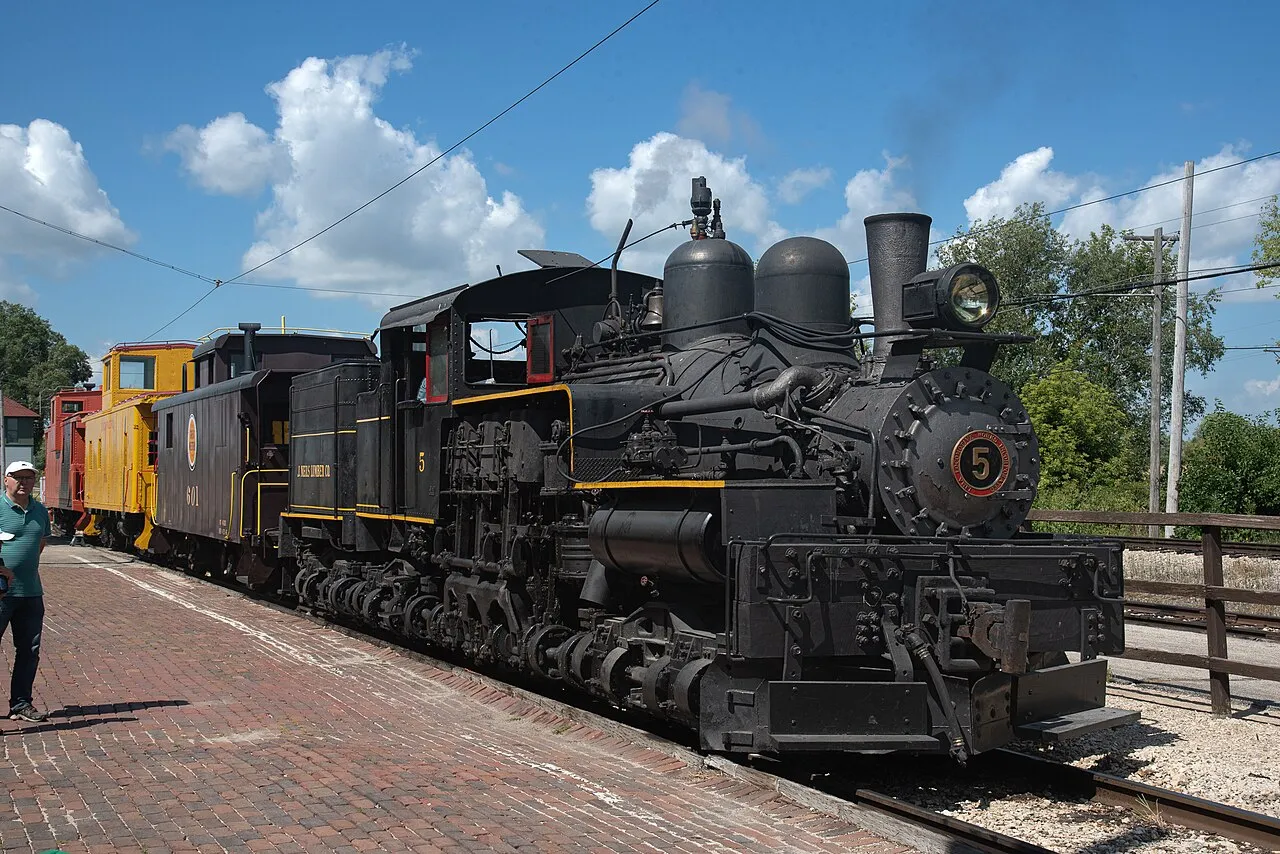
The Illinois Railway Museum is the reason most people have heard of Union. Its visitor page calls it the largest collection of historic railway equipment in America, spread across more than twenty structures on 100 acres at 7000 Olson Road. According to Wikipedia, it was founded in 1953 by ten people who bought a single interurban car, moved to Union in March 1964, bought 89 more acres of adjacent land in 2009 as a buffer against development, and is run by a membership of about 160 active volunteers.
What a visit looks like: a streetcar loop around the grounds that takes about 15 minutes, and a five-mile main line where a steam, diesel or electric train trip takes 35 to 45 minutes, both included with admission on most days. The museum's 1851 East Union Depot is the original Marengo depot, moved here in pieces. Its seasonal Central Diner serves lunch, and parking is always free. Scenes from the 1992 film A League of Their Own were shot at the depot, per Wikipedia.
The season runs spring to fall. According to the museum's hours page, it opens Sundays in April, weekends from May through September with weekday service from Memorial Day to Labor Day, and weekends in October. Coming up on the museum's calendar: Bus Day on September 26, Steam into Fall on October 4 and the Pumpkin Train on October 25, 2026.
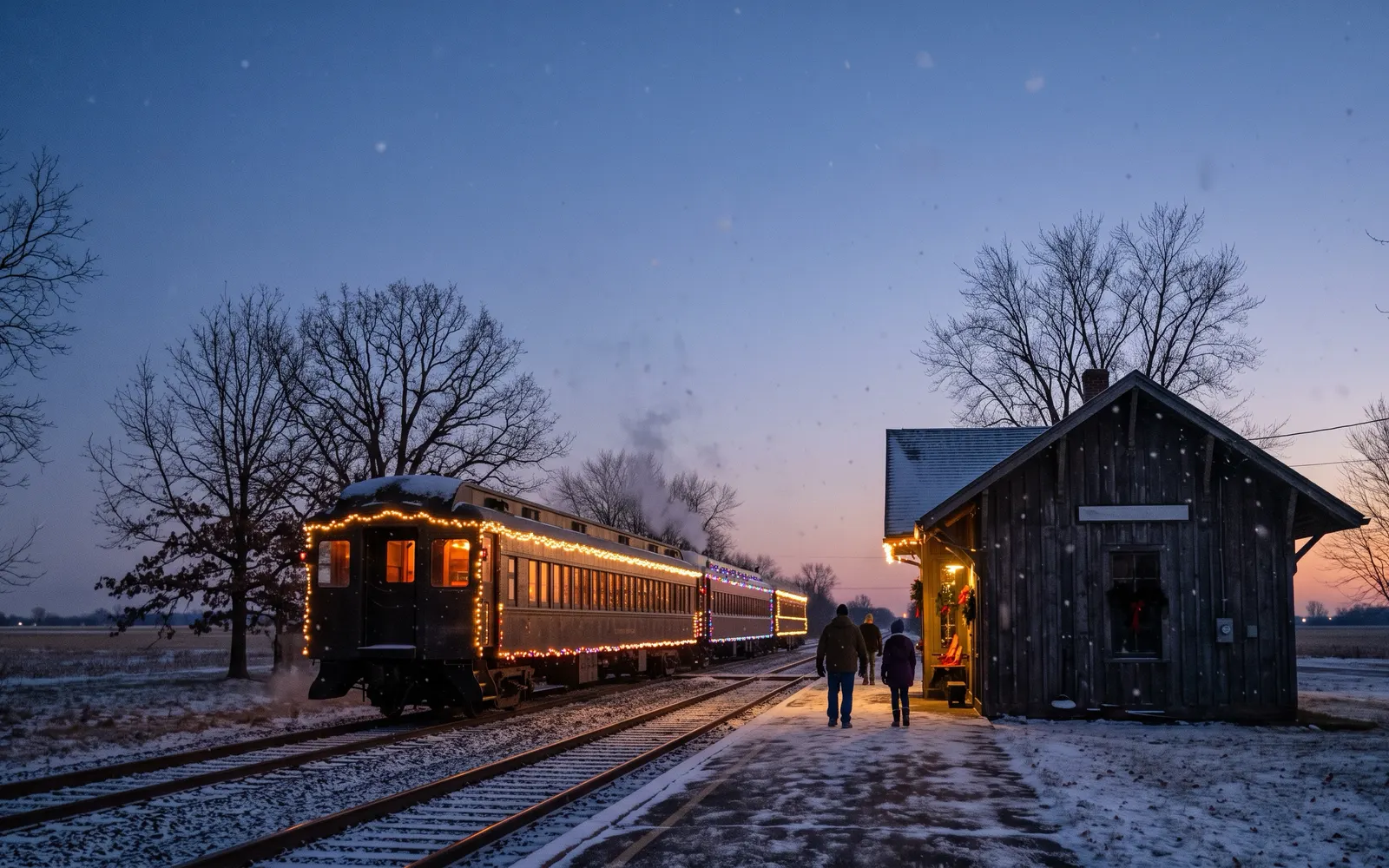
The biggest event of the year is the Happy Holiday Railway, a 40-minute holiday train ride. In 2026 it runs ten dates from Friday, November 27 through Monday, December 21, with departures from 11:30 a.m. to 7 p.m., fireworks at 5:45 p.m. on opening weekend, and tickets of $25 to $30. The museum collects canned food during the event for the M.O.R.E. Center, which serves Marengo and Union.
For a buyer, the museum is also a neighbor. On big event weekends, Olson Road and the east side of the village see a lot of visitor traffic. If you are looking at a house near the grounds, drive by on an event day before you decide.
The McHenry County Historical Society Museum in Union
Union is also home to the county's history museum. The McHenry County Historical Society and Museum is at 6422 Main Street. The museum is open Tuesday through Friday from 9 a.m. to 4 p.m. and Saturdays from 10 a.m. to 4 p.m., with $5 general admission, $3 reduced tickets and free entry for members. Its research library is open by appointment only.
According to its homepage, the society owns several historic buildings along with its collection, including the 1843 Gannon Log Cabin and an 1885 town hall known as Perkins Hall, and it runs programs in a restored 1895 schoolhouse. In late 2023, Shaw Local reported that the museum was out of storage room and looking to expand. If you are researching the history of a specific McHenry County house, this is where I would start.
Shopping, Dining and Errands from Union
Union has very little retail. Walk Score counts about two restaurants, bars and coffee shops in the village. The village's own events calendar lists Checkers on Main Street, which ran an Oktoberfest with music, food and beer through September 2026. Prairie Community Bank has a branch in Union, where the village takes water payments.
The old Donley's Wild West Town site on South Union Road is the other name locals know. According to its website, the amusement park is permanently closed after 45 years, and the Donley Auctions site says the park chapter ended in roughly 2021 and the property is now home to Donley Auctions.
For groceries, pharmacies and dining, residents drive to Marengo, a few minutes west, or to Huntley to the east. My guides to Marengo and Huntley cover both in detail. Before you buy, drive from the house to the store you will actually use on a weekday evening. It is the fastest way to learn how the location will feel.
Parks, Trails and Open Space Around Union
Union has no park district of its own. According to the village's services page, the Veterans Park Pavilion on the north side of the village off Park Street can be reserved for events through the Village Clerk, and Siems Park, a Lions Club park off Highbridge Road just outside the village limits, is booked through the Union Fire Protection District.
The bigger open space belongs to the McHenry County Conservation District. Coral Woods Conservation Area, at 7400 Somerset in the Marengo area, covers 808 acres with 2.8 miles of trail. The district says it is one of only eight oak groves left in the county with 100 or more acres of continuous oak woodland, and it has the county's largest sugar maple grove. Its history page names William M. Jackson among the area's early settlers, the same William Jackson who platted Union.
Marengo Ridge Conservation Area, at 2411 North Route 23, covers 818 acres with 7.65 miles of trail and a campground, set on a glacial moraine that the district says is 40 miles long.
The Library for Union Homes
Union homes pay into the Marengo-Union Library District. The county's 2025 rates-by-tax-code report shows a Marengo-Union Library rate of 0.135430% in the village's tax codes and in the neighboring Coral Township code. That is the district that issues your card. It is a small part of the bill, about $135 a year on a $300,000 house. Ask the district about card eligibility for any rural address before you assume it.
Utilities and Village Services in Union
According to the village's services page, trash is collected under a village contract with LRS, formerly Prairieland, with service delayed one day after holidays; yard-waste stickers are sold at the Village Hall, and LRS runs leaf pickup and electronics recycling at set times of year. Water is the village system covered above. Report a streetlight outage to the Village Clerk.
The 2020-2024 ACS shows about 91% of occupied homes (236 of 259) heating with utility gas, so most village homes are on natural gas. Rural homes outside the village are more likely to use propane, so ask about the tank on any acreage listing.
Fire protection inside the village comes from the Union Fire Protection District, and ambulance service from the Marengo Rescue Squad, both of which appear on the village tax codes. The village also contracts with Clarke for mosquito control, with spraying from May 1 to October 15, 2026, usually on Friday evenings, according to its public notices.
Two village rules to know. Overnight street parking is not permitted anywhere in the village, and the village has one plow truck and one driver in winter.
Hospitals Near Union
The closest full hospital is Northwestern Medicine Huntley Hospital at 10400 Haligus Road in Huntley, about 8.3 miles from the village's center point in a straight line. It opened in 2016, has 128 beds and includes a Level 2 trauma center, a cardiac catheterization lab and a 12-bed intensive care unit.
Emergency calls go to 911. The Union Fire Protection District and the Marengo Rescue Squad, both funded through the village tax codes, are the first responders for the village.
Union Events Through the Year
Union's calendar is set by its two museums. The Illinois Railway Museum runs themed weekends from spring to fall, from Pullman Weekend in May to Trolley Weekend in June and the Fourth of July weekend, according to its event list, and then the Happy Holiday Railway from late November to just before Christmas. The McHenry County Historical Society runs workshops and programs through the year on its event calendar.
In the village itself, events are small. The village's events page listed a month-long Oktoberfest at Checkers on Main Street in September 2026. For larger festivals, parades and fireworks, Marengo, Woodstock and Huntley are each a short drive; my Woodstock guide covers its calendar.
If you are touring homes in Union in December, take the Happy Holiday Railway. It tells you more about this village than any listing will.
What's Changing in Union
Union does not have a large development pipeline, but four things are in motion that a buyer should know about.
The water and sewer plan. The March 2026 village letter lays out a lead service line replacement plan the village must present to the Illinois EPA, an engineering review of the wastewater treatment plant, and early work on extending the sewer system. None of that has a date or a price yet. It will shape water bills and possibly special charges for years.
The Rockford rail line. IDOT's Chicago-to-Rockford service will run through Union on the Union Pacific tracks, with two round trips a day planned and service targeted for the end of 2027, per the project FAQ and Streetsblog Chicago. A station in Marengo, Union or both has been requested but not decided. More trains means more horns at the crossings. A station would mean a train to Chicago from the village itself.
The Wild West Town site. The former amusement park on South Union Road closed around 2021 and now hosts Donley Auctions, according to the Donley Auctions site. The park's own site says the owners are excited about future plans for the property. I have not seen a public plan.
Solar on the farmland. The county approved a solar farm near McCue and Hemmingsen roads in August 2025, and courts have since ordered the county to approve other projects it denied. Expect more proposals on farmland around the village.
For sellers, the thin supply of homes is the advantage. For buyers, the open questions are water, sewer and rail, and all three are worth asking about before you write an offer.
I don't label any town or neighborhood as safe or unsafe.
Flood Risk and Drainage in Union
Union is not a river town. Wikipedia notes that the village drains north toward the South Branch of the Kishwaukee River. Redfin, using First Street's model, rates Union's flood risk as minimal, with less than 1% of properties at risk of severe flooding over the next 30 years.
The risk that does exist is house by house: older basements in the village and low spots and drainage ways on rural acreage. Two checks before you write an offer. Look the address up on the FEMA flood map, because a mapped zone can mean required flood insurance on a mortgage. And ask about water in the basement and where the sump discharges. On a septic property, drainage and the septic field are linked, so grading matters more than it would on sewer.
Frequently Asked Questions
How much does a house cost in Union, IL?+
Redfin reported a $460,000 median for the three months ending August 2026 on one August sale. Its data file shows 12 sales from June 2025 to May 2026 with monthly medians from $230,000 to $453,250, and Zillow's August 2026 index is $439,324.
What are property taxes in Union, IL?+
The county's 2025 predominant rate for Union is 6.269% of assessed value, so a $300,000 home would pay about $6,269 a year before exemptions. Railway Estates carries a special service area charge that brings its rate to about 7.27%.
What school district is Union, IL in?+
Homes in the village are in Marengo-Union District 165 for pre-K to 8th grade and Marengo Community High School District 154. Some rural Union addresses are in Riley District 18. Confirm every address with the district.
Is Union, IL on city water?+
Yes, inside the village. Union runs its own groundwater system for all homes within village limits. About 95 homes have lead service lines the village must plan to replace. Homes outside the village usually use a private well and septic.
How far is Union from Chicago?+
There is no station in Union. Woodstock's Metra station is about 7.7 miles away, with express trains reaching Ogilvie in 79 minutes, and Crystal Lake and Pingree Road offer faster trains about 12 miles away. Most residents drive, using I-90 through the Route 23 interchange in Marengo.
Will the Chicago-to-Rockford train stop in Union?+
Not decided. The line will use the Union Pacific tracks through Union with two round trips a day planned for about late 2027, and a station in Marengo, Union or both has been requested but not announced.
What is the Illinois Railway Museum?+
It is the largest railroad museum in the United States, at 7000 Olson Road on the east side of Union, with a streetcar loop and a five-mile main line. It is open April through October, and its Happy Holiday Railway runs November 27 to December 21, 2026.
What neighborhoods are in Union, IL?+
There are three markets: the original village grid around Main Street, the Railway Estates subdivision built from 2006 to 2024, and rural homes and acreage with Union addresses in Coral Township.
Eshu Chikoti has extensive access to off-market listings throughout Union and the rest of McHenry County — homes that never make it to the public listing sites. That matters right now: in a seller's market like this one, well-priced homes routinely go under contract within days, and buyers relying only on public listings are competing for whatever is left over. Working with someone plugged into off-market inventory means seeing homes before the crowd does.
Eshu Chikoti · 847-691-4282 ·
Get new Union listings by email
When a home comes on the market in Union, I'll email it to you.
Just your email. Unsubscribe any time by replying.
Thinking About Union?
Whether you're buying, selling, or just curious what's on the market, I can walk you through Union street by street.