Marengo, IL
Marengo, IL is a city of about 7,000 people in southwest McHenry County where Route 23 meets U.S. 20, with a small downtown on State Street, its own I-90 interchange, prices well below the eastern suburbs and farmland and acreage on every side.
Living in Marengo, IL means a median sale price near $295,000 this summer, a Route 23 interchange that puts I-90 two minutes from town, and room to buy real acreage. The trade-offs are no Metra station of its own, property tax near 2% of value, and a drive for most shopping. Here is how it breaks down.
Written by Eshu Chikoti · 847-691-4282 ·
How Marengo, IL Got Here: A Short History
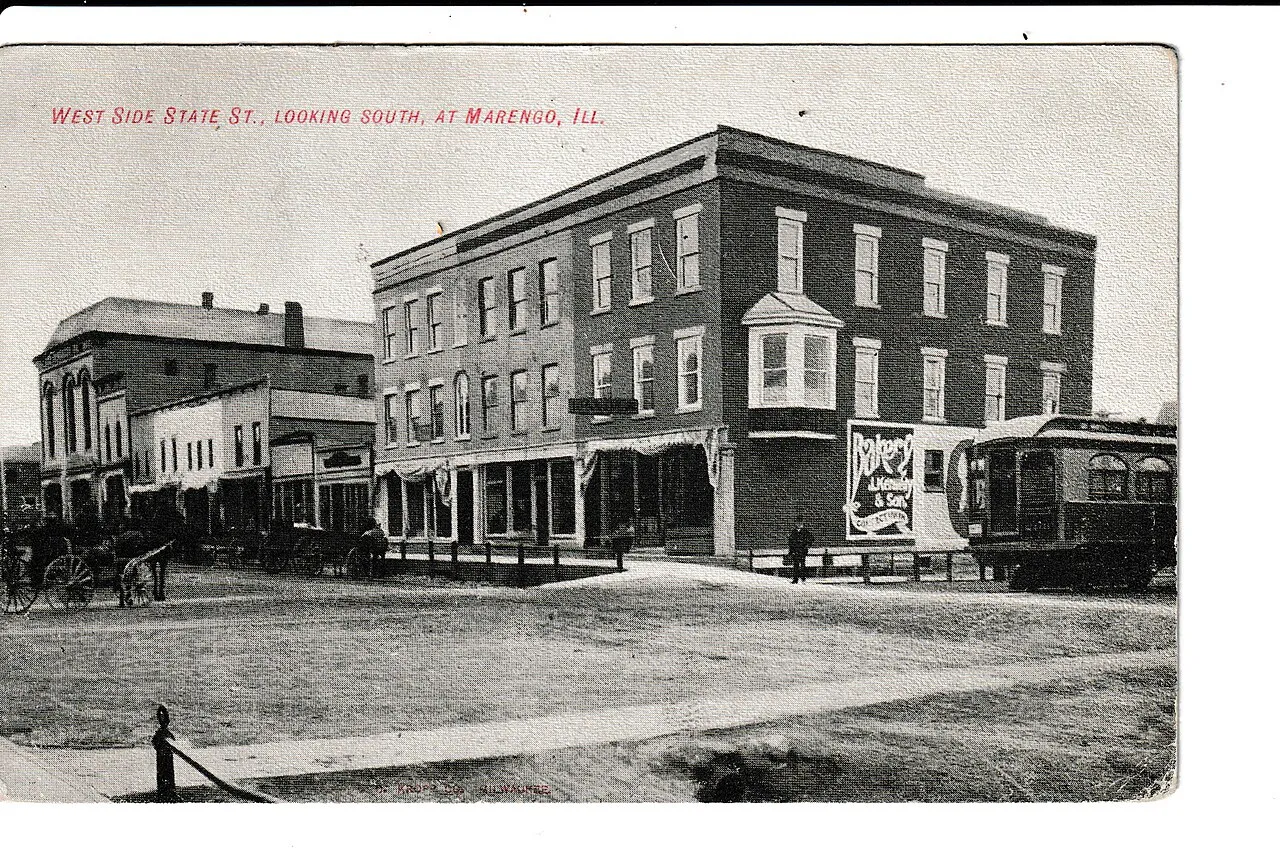
The first settler on record is Calvin Spencer, who arrived in the spring of 1835. According to the city's history as summarized on Wikipedia, the settlement was first called Pleasant Grove, after a grove of trees near the town site. When a post office opened in 1841 it took the name Marengo, after Napoleon's 1800 victory at the Battle of Marengo, and the township and the town both kept it. Spencer's name is still on Calvin Spencer Park.
Rail made the town. In 1851 the Galena and Chicago Union Railroad, the first railroad built west out of Chicago, put a station here. Marengo incorporated as a village on February 24, 1857, and became a city in 1893. By 1900 it had 2,005 residents, a foundry, a stove works, a condensed milk plant and a canning factory, and it sat in the middle of a dairy and fruit-growing district. Interurban electric lines ran to Elgin, Belvidere, Woodstock and Sycamore.
Passenger trains stopped calling at Marengo in 1950. The line is still there and carries Union Pacific freight, but the town has had no commuter rail for more than 75 years. The original 1851 depot did not go far. In 1967 the Illinois Railway Museum bought it, cut it into two sections, trucked it to its grounds in neighboring Union and reassembled it, and it still works as the museum's station.
The modern chapter started on December 23, 2019, when the Route 23 interchange on the Jane Addams Tollway opened just south of town. It was the first interstate interchange built in McHenry County, and it changed Marengo's commute and its economic development plans more than anything since the railroad. Both of those stories come up again below.
Marengo at a Glance
Marengo sits in the southwest part of McHenry County, about 60 miles northwest of the Loop and about 30 miles east of Rockford. The city covers roughly 8.9 square miles and spans parts of Marengo, Seneca, Coral and Riley townships. The city itself is entirely in McHenry County, but the Kane, DeKalb and Boone county lines are all a short drive away, so if you widen your search you will cross into a different assessor and a different tax calendar quickly. The Kishwaukee River runs along the north edge of town.
The 2020-2024 Census ACS puts the population at 7,040, against 7,568 in the 2020 census. The gap is mostly survey margin in a small city, so I treat Marengo as a town of roughly 7,000 to 7,500 people. The ACS counts 2,788 housing units, and about 63% of occupied homes are owner-occupied (1,716 of 2,719). That leaves a real rental market, mostly in two-flats, small apartment buildings and older houses near downtown.
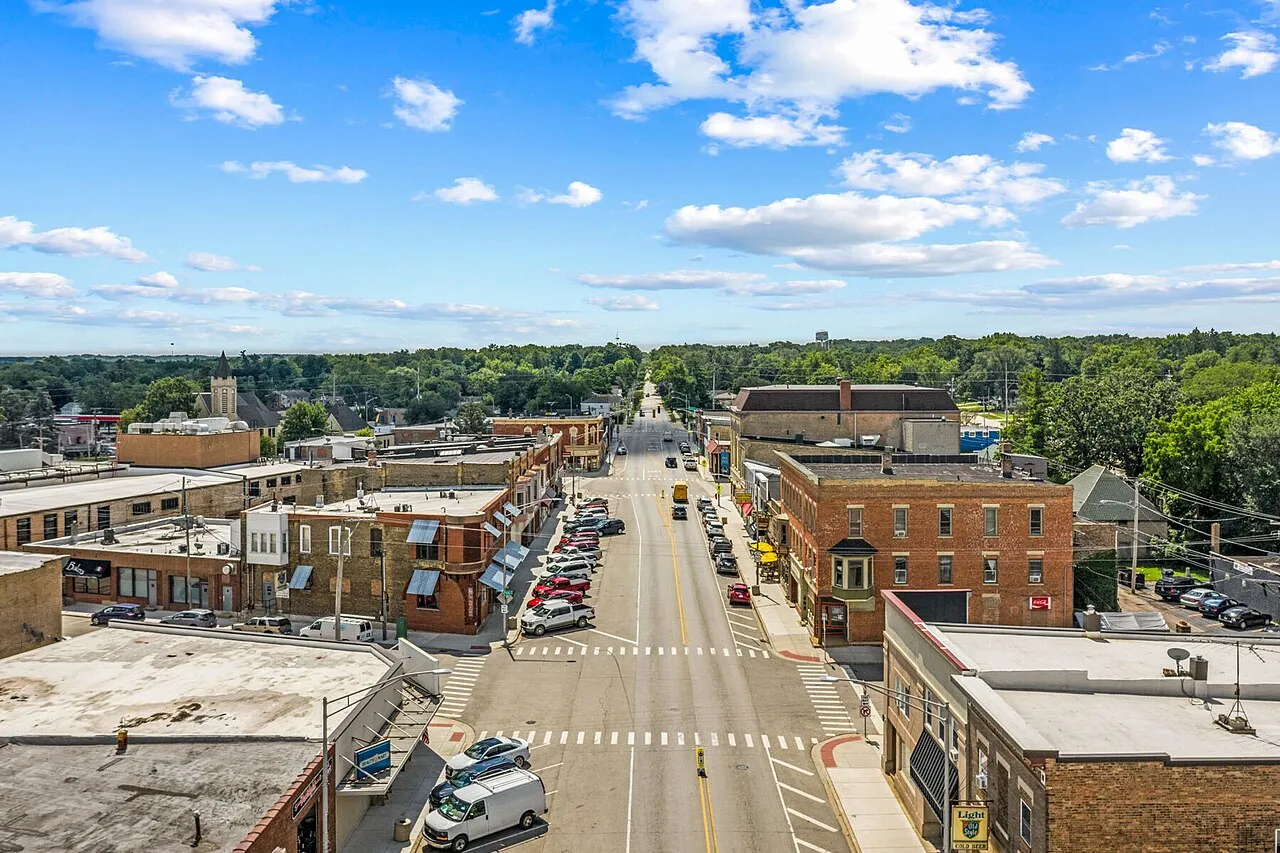
The layout is easy to learn. Route 23 runs north and south through the middle of town as State Street, and downtown is the stretch of State Street between Route 20 and the railroad. U.S. 20, called Grant Highway, runs east and west across town. Route 176, called Telegraph Street, heads east toward Crystal Lake. The tollway interchange is on Route 23 just south of town. Almost every direction a local gives you starts from one of those four roads.
Marengo is also a working town, not only a bedroom community. Mitsubishi Logisnext Americas builds forklifts here, and brick and paver maker Unilock has a plant on the Route 23 corridor. That gives Marengo a daytime economy and truck traffic on Route 23 and Grant Highway that buyers from further east sometimes don't expect.
The property tax rate is lower than most of the county but still about 2% of value.
Marengo Neighborhoods, Pocket by Pocket
Marengo has no official neighborhoods, but the market splits into four kinds of property, and the first question I ask any buyer looking here is which one they mean.
The first is the old town: the grid of streets on both sides of State Street around downtown and the railroad. The Census ACS counts 602 homes in the city built in 1939 or earlier, about 22% of the total, and most of them are here. This is where you find the lowest prices, the two-flats and the only part of Marengo where you can walk to a restaurant or the post office.
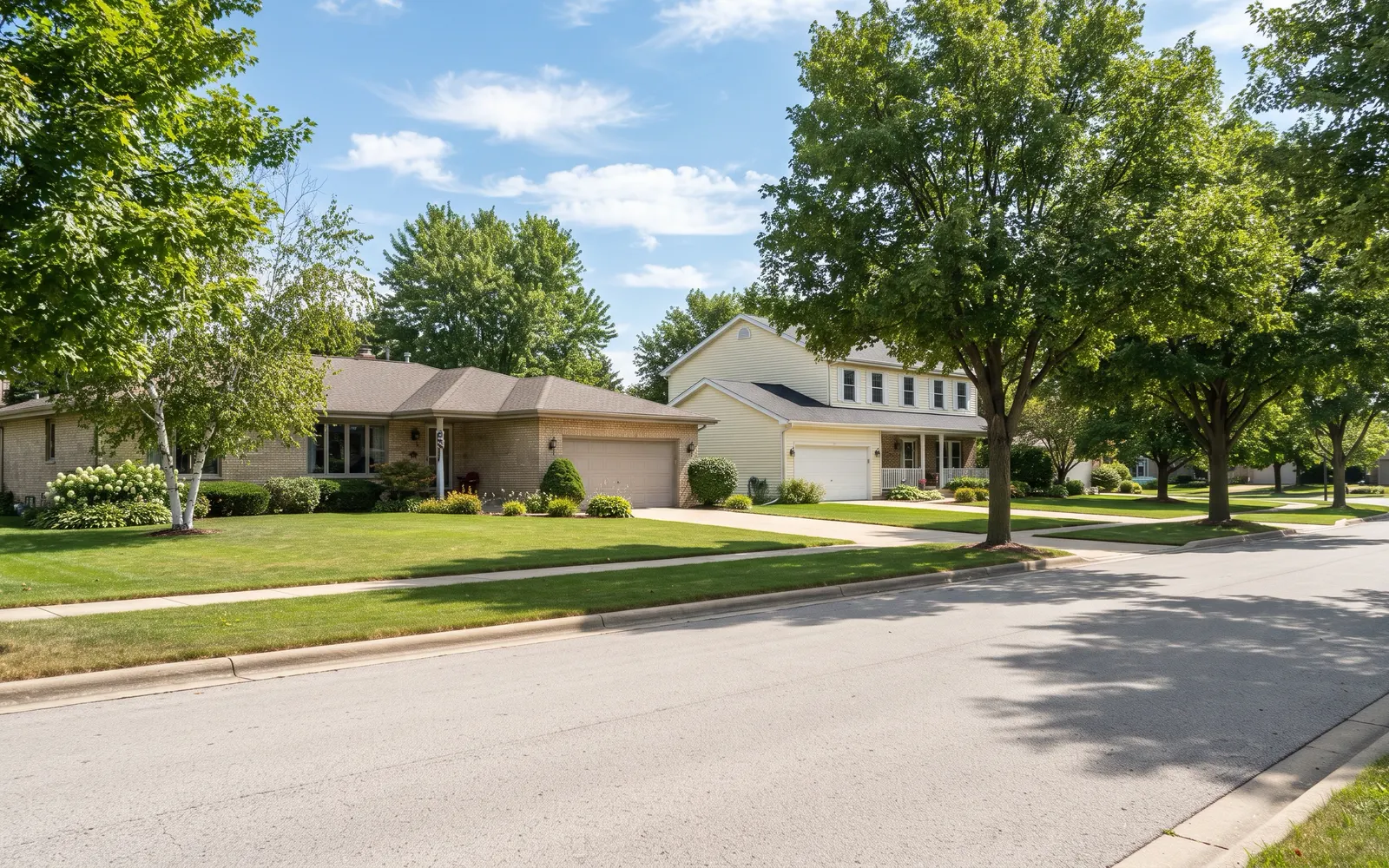
The second is the ring of subdivisions built from the 1960s through the late 2000s. The ACS counts 462 homes built in the 1960s, 464 in the 1990s and 486 from 2000 to 2009. Deerpass on the north side is the largest of the newer ones. Doral Ridge Estates, Southridge, Settlers Cove and a handful of smaller plats fill in around it, and these ranches, split-levels and two-stories are the core of the resale market.
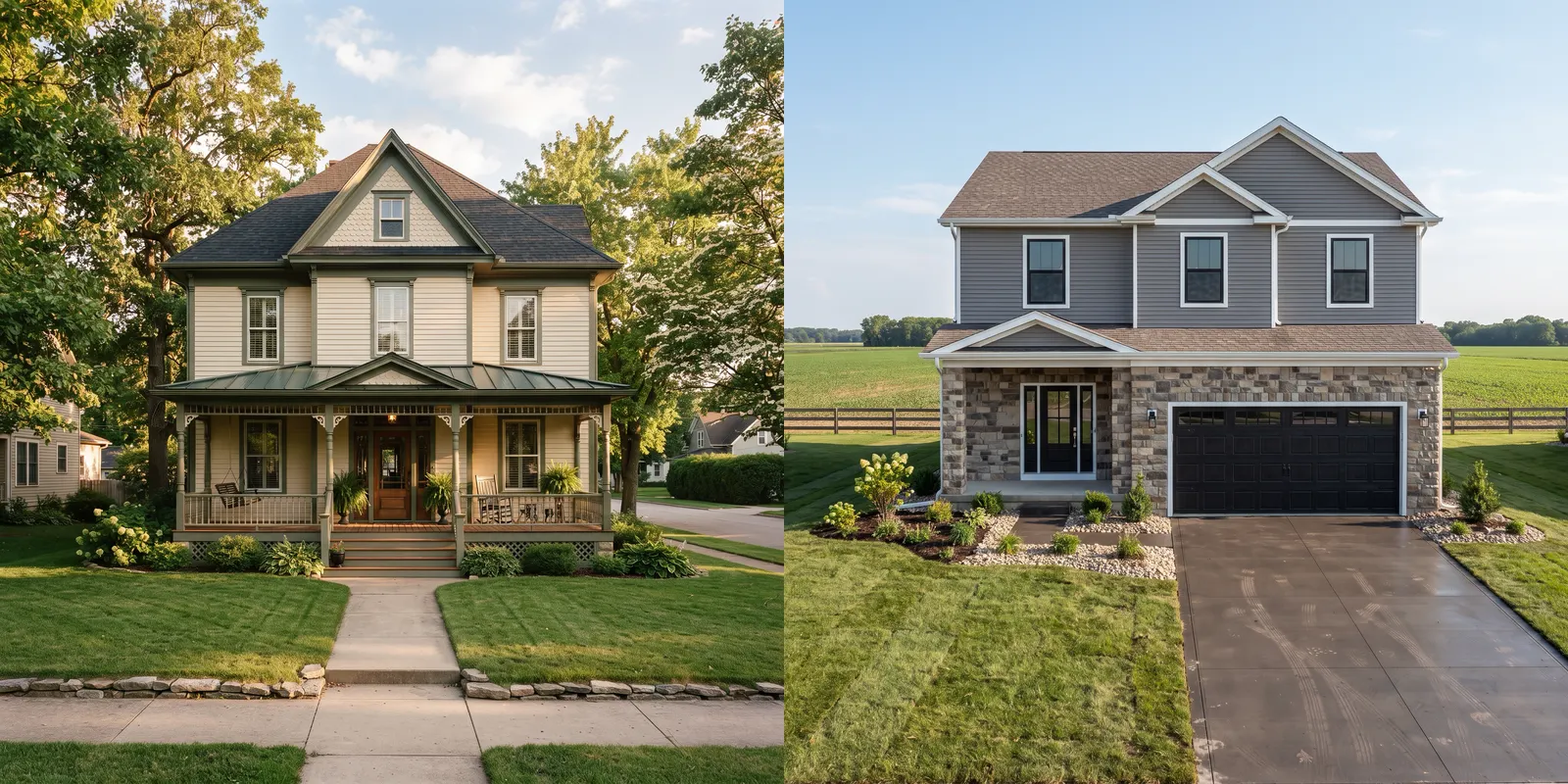
The third is new construction. Brookside Meadows on the south side was platted in the mid-2000s, stalled in the recession, and has been building out again since about 2022. It is the main place in Marengo to buy a brand-new house in 2026.
The fourth is everything outside city limits with a Marengo address: farms, horse properties, wooded acreage near Marengo Ridge, and country subdivisions around the two golf courses on wells and septic systems. That market gets its own section below because the rules are different.
Recent public sales show the spread. Redfin's list of September 2026 closings includes a three-bedroom on Woodcliff Drive that sold for $333,000, 11% over its list price, a four-bedroom on Hunters Path at $515,000, and a five-bedroom newer build on Paulson Drive at $669,900. That is a wide range for a town this size, and it is why I never price a Marengo house off the town median. If you want to know which pocket a specific address falls in and what similar homes nearby have sold for, that is a conversation I am happy to have here.
Downtown and the old town. The grid on both sides of State Street between Grant Highway and the railroad. Mostly homes from the late 1800s through the 1950s, plus two-flats and small apartment buildings. The lowest price points in Marengo and the only walkable part of town.
Deerpass and Deerpass Greens. On the north side, generally north of Route 176 along Deerpass Road. Built from about 1990 onward by several builders, with ranches, two-stories, townhomes and duplexes, according to a local new-construction site, which puts single-family HOA dues around $160 a month. Walk Score also names Deerpass as a Marengo neighborhood.
Brookside Meadows. On the south side near Route 20 and Route 23. Platted in the mid-2000s and revived around 2022 to 2023, with M/I Homes building two-story and ranch plans of roughly 1,460 to 3,200 square feet. The same source says the new M/I homes carry no HOA dues and no special service area; verify terms on each lot.
Hunter's Pointe. A newer pocket Walk Score names inside the city, where Hunters Path sits. Ask for the build year and the school assignment on anything listed there.
Doral Ridge Estates, Southridge, Settlers Cove and Parkside Place. Smaller single-family plats you will see named on listings, per a local agent's subdivision directory. Build years vary; ask on each one.
Indian Trails. An age-restricted 55-and-over community east of Meyer Road, per the same directory and Subdiview.
Golf course and country subdivisions. Blackstone, around Blackstone Golf Club, and the estates near Marengo Ridge Golf Club on Harmony Hill Road, plus country plats such as Coral Woods, Raven Hills and Fieldstone Place. Most are outside city limits on wells and septic.
Rural Marengo (60152 outside city limits). Farms, horse properties and wooded acreage in Marengo, Riley, Coral and Seneca townships. Covered in the acreage section.
What Marengo Homes Look Like, by Era
Marengo's housing falls into three eras, and each one comes with its own inspection list. The Census ACS shows the split: about 22% of the city's homes were built before 1940, about 42% between 1940 and 1989, and about 34% in the 1990s and 2000s. Only 75 homes, under 3%, were built from 2010 to 2019, which is the recession gap you can still see in half-finished plats around town.
The old-town houses are frame farmhouses, Victorians, foursquares and bungalows on city lots, some of them converted to two or three units over the years. They have character and the lowest prices in Marengo. They also carry what a century-old house carries: stone or block foundations, old wiring and plumbing, and basements that take on water in a wet spring. None of that is a reason to walk away. All of it belongs in the price.
The 1960s pockets are ranches and split-levels, usually three bedrooms. The 1990s and 2000s subdivisions are two-story colonials, ranches and townhomes on standard suburban lots with attached garages and, often, full basements. These are the easiest houses to finance and insure, and they make up most of what sells in any given month.
About 59% of the city's homes are single-family detached and another 11% are attached single-family, mostly townhomes. Two-flats and three- and four-unit buildings add 277 units, buildings of five to nine units add 295, and the ACS counts 216 mobile homes. It puts the median value of an owner-occupied home at $229,900 and median gross rent at $1,176. Both trail the market because they are five-year survey averages; current sale prices are in the market section.
If you are buying one of the older houses, spend the money on a thorough inspection and a sewer scope. My home inspection checklist covers what to ask for.
Buying Acreage Around Marengo: Zoning, Wells and Septic
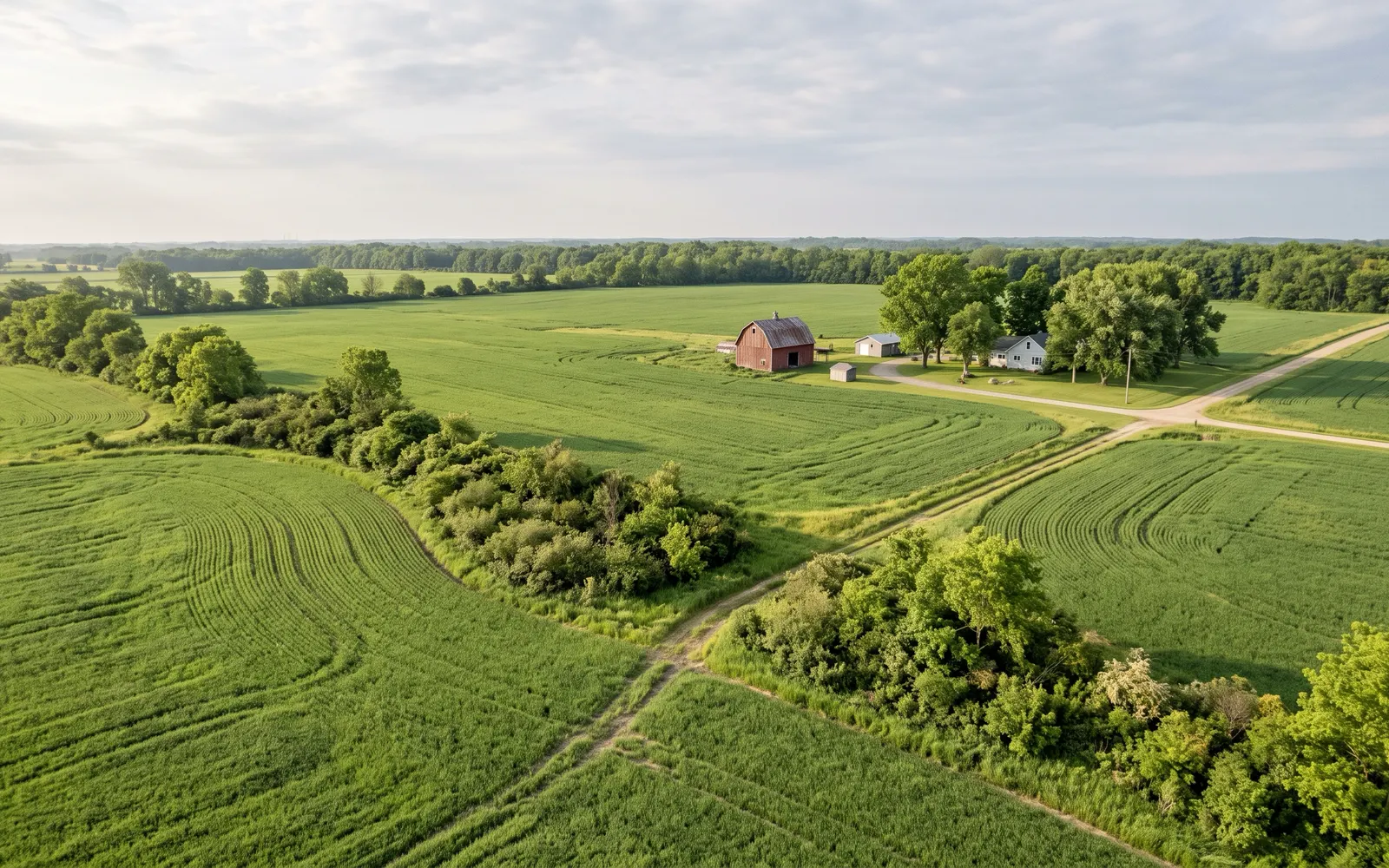
The countryside around Marengo is a big part of why buyers look here. Within a few minutes of State Street you can find hobby farms, horse properties, wooded parcels on the Marengo Ridge moraine and working farmland, at prices that would be out of reach closer to Chicago. It is also where buyers make the most expensive mistakes, because unincorporated McHenry County land follows county rules, not city rules.
Start with zoning. Under Table 16.36-1 of the McHenry County Unified Development Ordinance, a house in the A-1 Agriculture district needs a minimum of 40 acres. The A-2 district allows a single-family home on 1 acre. The estate districts step down from E-5 (5 acres) to E-1 (1 acre), and R-1 allows half-acre lots. So a 10-acre parcel zoned A-1 may not be buildable for a house without a rezoning. Before you fall in love with a piece of vacant land, check its zoning on the county map and ask the county planning department what it would take to put a house on it.
The same ordinance puts buyers on notice that agricultural districts come with the normal noise, dust, odors and machinery of farming, and that the Illinois Right to Farm law may bar nuisance claims against a normal farm operation. Around Marengo that includes grain operations, livestock and orchards. If you buy next to one, that is part of the deal.
Almost every rural Marengo property runs on a private well and a septic system, and many heat with propane. I always recommend a well water test (bacteria and nitrates at a minimum), a septic inspection that includes pumping and a look at the field, and a check of who owns the propane tank and what the lease says. None of those cost much compared with replacing a failed septic field.
One more check that matters here: which school district the land is in. Rural Marengo addresses can fall in Marengo-Union District 165, Riley District 18, or a neighboring district altogether, and the mailing address will not tell you. The schools section covers how to confirm it.
The Marengo Housing Market in 2026
Marengo is one of the more affordable places to buy in McHenry County, and prices are still rising at a steady pace. In the three months ending August 2026, Redfin reported a median sale price of $294,805, up 4.7% from the same period a year earlier. The median price per square foot was $182, up 19.0%. Homes took about 53 days to sell, compared with 54 a year earlier, and sold at 100.5% of list price on average. Redfin counted 29 homes sold in August, down from 40 the August before, and gives Marengo a Compete Score of 64 out of 100, which it calls somewhat competitive, with about three offers per home on average.
Zillow's home value index tells a higher version of the same story: $366,265 for August 2026, up 6.4% from $344,108 a year earlier and up from $329,535 in August 2024. It is unusual for Zillow's index to sit this far above Redfin's median. Redfin's number is the middle of whatever happened to sell in a three-month window, and with only a few dozen sales a month, a summer that leans toward older in-town houses pulls it down fast. Zillow's index estimates the value of every home, sold or not, so the newer subdivisions and larger country properties that rarely come up for sale count in full. My read is that values are rising at a mid-single-digit pace and this summer's sales tilted toward the lower end. The 19% jump in price per square foot points the same way, since smaller, older houses sell for more per foot.
What that means in practice: a well-priced house in good condition sells close to asking within about two months, and a sharp one can draw several offers. Homes that need work, or that are priced off a comparison to Huntley or Crystal Lake, sit. The expectation I most often have to reset is sellers who assume the interchange closed the gap with the towns further east. It narrowed it. It did not close it.
The town-level numbers also blur very different properties together. A two-flat near State Street, a 2000s four-bedroom in Deerpass and a house on ten acres in Riley Township are all "Marengo," and the rural one is priced on land, outbuildings and water, not on the median at all.
Marengo Property Taxes and the Real Cost of Owning
Marengo's property tax rate is lower than most of McHenry County, but it is still high by national standards. Ownwell's data, last updated April 13, 2026, puts the median effective rate in Marengo at 2.05% and the median annual bill at $5,545. McHenry County as a whole runs at about 2.42%, and Illinois at 2.33%. Inside the 60152 ZIP code, Ownwell shows effective rates from about 1.57% at the 10th percentile to 2.53% at the 90th.
Here is what that looks like on a real purchase. At 2.05%, a home bought at this summer's $294,805 median would eventually carry about $6,040 a year in property tax, roughly $500 a month on top of the mortgage. The current bill on the same house may be lower because assessments trail the market. They catch up, and the reassessment after a sale is often when a new owner sees the jump. Budget off the rate, not the seller's last bill.
Rates vary because every combination of township, school district, fire district, library and park district forms its own tax code. Marengo spans four townships, and a city lot served by District 165 and a country house served by Riley District 18 can carry different rates at the same value. Farmland that qualifies for the agricultural assessment is taxed very differently from the homesite on the same parcel, which is one more reason to look at the actual bill and how the land is classified on any rural listing.
Marengo also has two tax increment financing districts, downtown and along East Grant Highway, both created in 2011. A TIF does not raise your rate. It redirects the growth in property tax inside the district to the city for redevelopment until the district expires. Marengo Weekly's September 21, 2026 review found the East Grant Highway district helped fund a strip center at 20009 East Grant Highway, while the downtown district sat below its 2010 base value from 2012 through 2024 and is only now producing six figures a year.
If you already own in Marengo and think your assessment is high, the appeal runs through your township assessor and the McHenry County Board of Review, with deadlines set by the county each year. This is general information, not tax advice. Your actual bill depends on your parcel, your exemptions and the assessor.
Marengo Schools: Districts 165, 18 and 154
Marengo is served by separate elementary and high school districts, and the elementary side depends on where the house is. Inside the city and in much of the area around it, kindergarten through eighth grade is Marengo-Union Elementary Consolidated School District 165, which draws from Marengo and the neighboring village of Union. It runs three schools: Locust Elementary for preschool through third grade, Grant Intermediate for fourth and fifth, and Marengo Community Middle School for sixth through eighth. According to the district summary on Wikipedia, District 165 enrolled 1,081 students in 2023-24.
Parts of the countryside south and west of town are in Riley Community Consolidated School District 18, a single-building district serving kindergarten through eighth grade from Riley School. High school for both is Marengo Community High School District 154, a one-school district at 110 Franks Road that enrolled 689 students in grades 9 through 12 in 2023-24.
Confirm the district for a specific address with the district office, and read each district's profile on the Illinois Report Card at illinoisreportcard.com.
The detail that trips people up is assignment. A Marengo mailing address can put a house in District 165, Riley District 18 or, on the edges, a neighboring district such as Harvard, Huntley or Hampshire's. Subdivisions on the south side, including parts of Brookside Meadows, have been described as falling in either District 165 or Riley District 18 depending on the lot. Never assume from the mailing address. Check each specific address with the district directly before you write an offer, and ask me to pull the boundary if you want it done for a house you are considering.
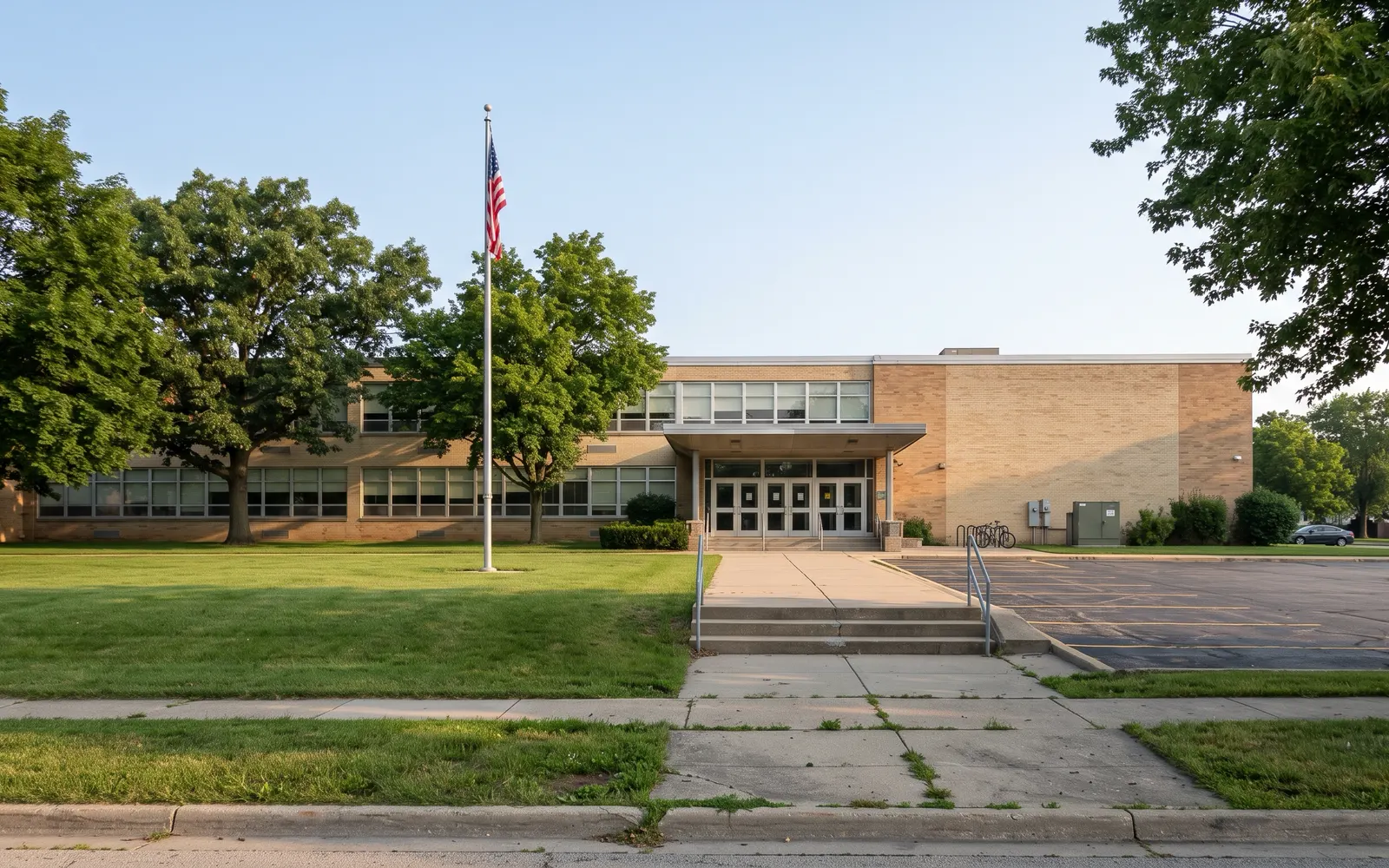
Locust Elementary School. 539 Locust St. Preschool through grade 3, District 165.
Grant Intermediate School. Grades 4-5, District 165.
Marengo Community Middle School. Grades 6-8, District 165.
Riley Community Consolidated School. Grades K-8, Riley District 18, serving parts of rural Riley Township.
Marengo Community High School. 110 Franks Rd. Grades 9-12, District 154.
Commuting from Marengo: No Metra, Three Stations Nearby
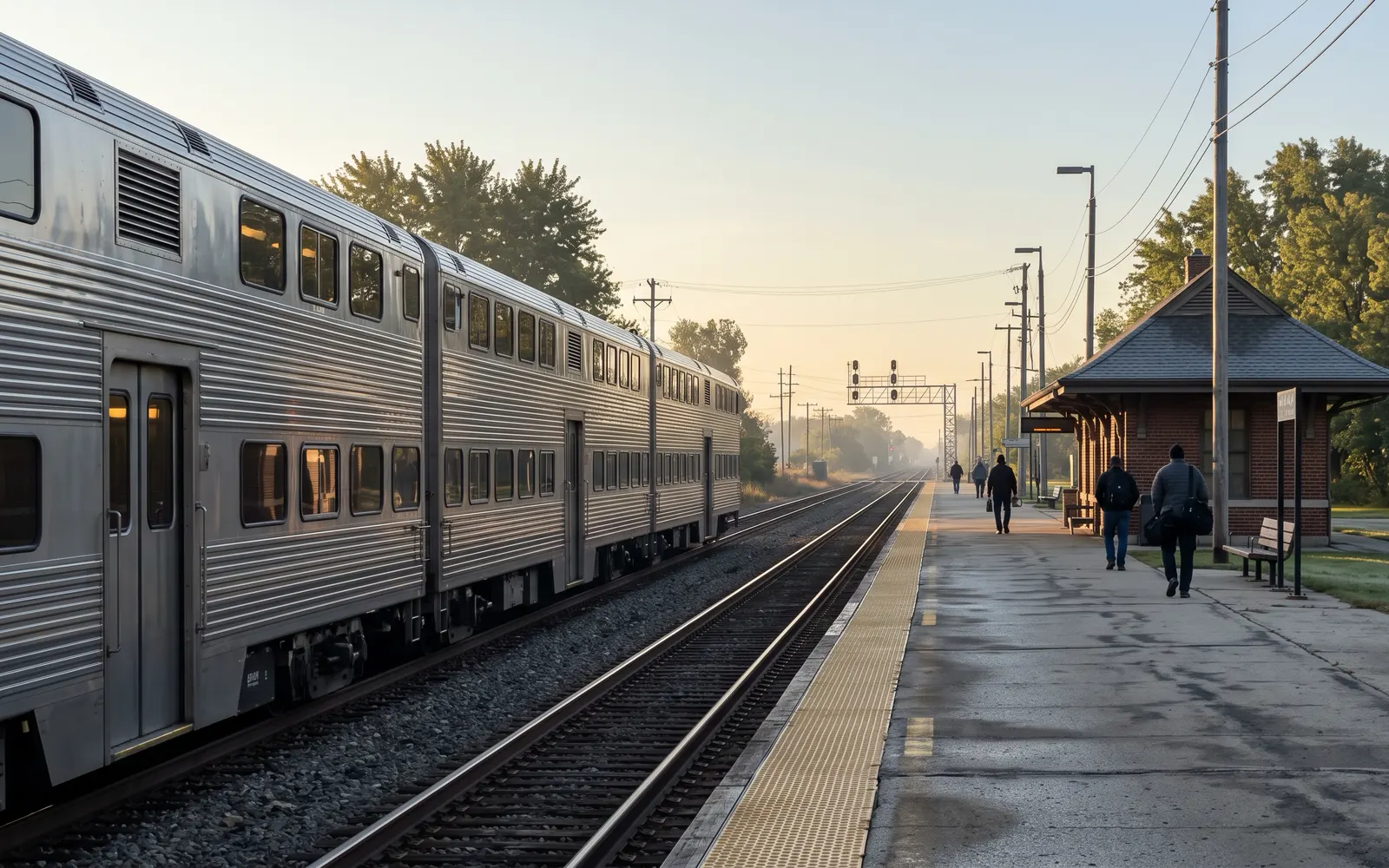
Marengo has no train station. Passenger service ended in 1950, and the Union Pacific line through town carries freight only. Commuters who take the train drive to one of three stations on Metra's Union Pacific Northwest line, which runs to Ogilvie Transportation Center in the West Loop.
The choice is a trade between drive time and train time. Using OpenStreetMap routing with no traffic, Harvard's station is about 12 miles north of downtown Marengo (roughly 19 minutes), Woodstock's is about 13 miles (21 minutes) and Crystal Lake's is about 16 miles (26 minutes). According to Metra's current UP-NW schedule data for September 21 through October 25, 2026, Harvard and Woodstock each have 14 weekday trains to Chicago. From Harvard the fastest take 92 minutes and midday trains about 110. From Woodstock the fastest take 79 minutes. Crystal Lake has 27 weekday inbound trains, and its rush-hour expresses reach Ogilvie in 67 minutes.
Put plainly: from Marengo, downtown Chicago by train is about an hour and a half door to station to desk on a good day, and closer to two with a local train. Most of the Marengo buyers I talk to who work in the city go in two or three days a week and drive to Crystal Lake for the express. For a five-day commute, be honest with yourself about that number. It is a big part of why Marengo costs what it does.
There is no fixed-route bus. MCRide, the countywide dial-a-ride service Pace operates with McHenry County and participating towns including Marengo, runs seven days a week by reservation.
Driving from Marengo: I-90, U.S. 20 and the Airports
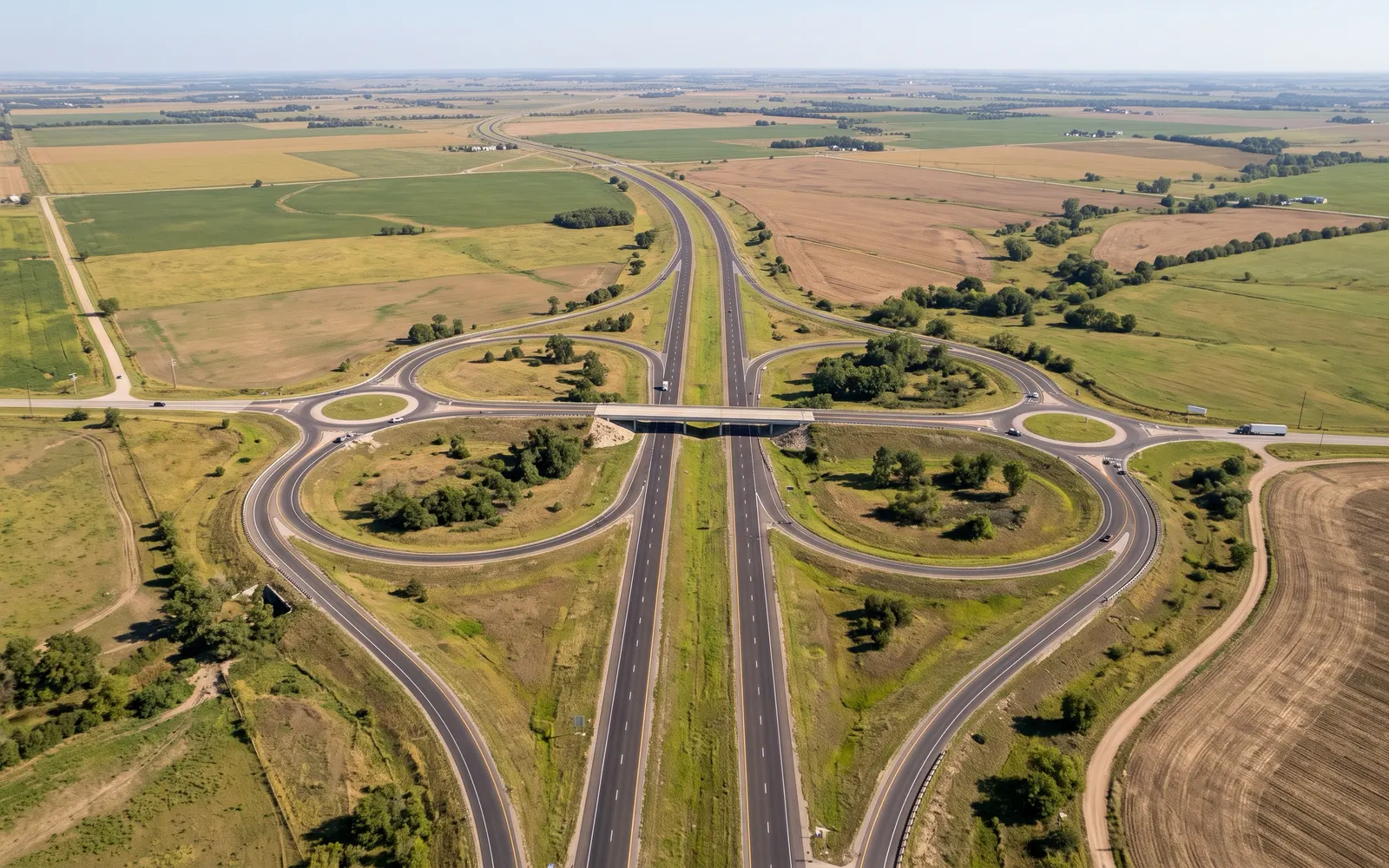
The Route 23 interchange is the reason Marengo's commute works for a lot of people. It opened on December 23, 2019, at a cost of $33.4 million, according to the Wikipedia summary. It was the first interstate interchange built in McHenry County and closed a 17-mile gap between the nearest tollway exits. It uses roundabouts and all-electronic tolling. From most of Marengo you are on I-90 within a few minutes.
From there, the tollway runs east through Huntley and Elgin to Schaumburg, O'Hare and the Kennedy, and west to Belvidere and Rockford. U.S. 20 parallels it as the free route toward Hampshire and Elgin in one direction and Rockford in the other. Route 23 north leads to Harvard, and Route 176 runs east to Crystal Lake.
Using OpenStreetMap routing without traffic, O'Hare is about 47 miles away, the Loop about 62 miles and Chicago Rockford International Airport about 30 miles. Rush-hour traffic on the Jane Addams can add a lot to the eastbound numbers, so drive the trip at the hour you would actually make it before you buy.
Two local projects to know about. The city has been extending water and sewer along Route 23 toward the interchange for industrial development, which means construction on that stretch through 2028; details are in the development section. And the city's Prospect Street reconstruction, which began in August 2025, rebuilt the street and its storm sewers and included a wider Union Pacific crossing.
Is Marengo Walkable?
Only right around downtown. Walk Score does not publish a single city-wide score for Marengo. Its own summary counts about 18 restaurants, bars and coffee shops in town and says the average resident can walk to 0.0 of them in five minutes. Outside the old town you will drive for groceries, school and almost everything else.
The streets closest to State Street are the exception. Downtown puts a handful of restaurants and bars, the post office, city hall and the Settlers' Days grounds within a reasonable walk for many of the older homes. If walking to a coffee shop matters to you, that narrows your search to a small grid, and those houses are also the oldest in town, so weigh the inspection list against the convenience.
For recreation, most walking and biking happens at Marengo Ridge Conservation Area north of town and in the park district's parks. The country roads around Marengo are popular for cycling, but many have no shoulder.
Downtown Marengo and Shopping
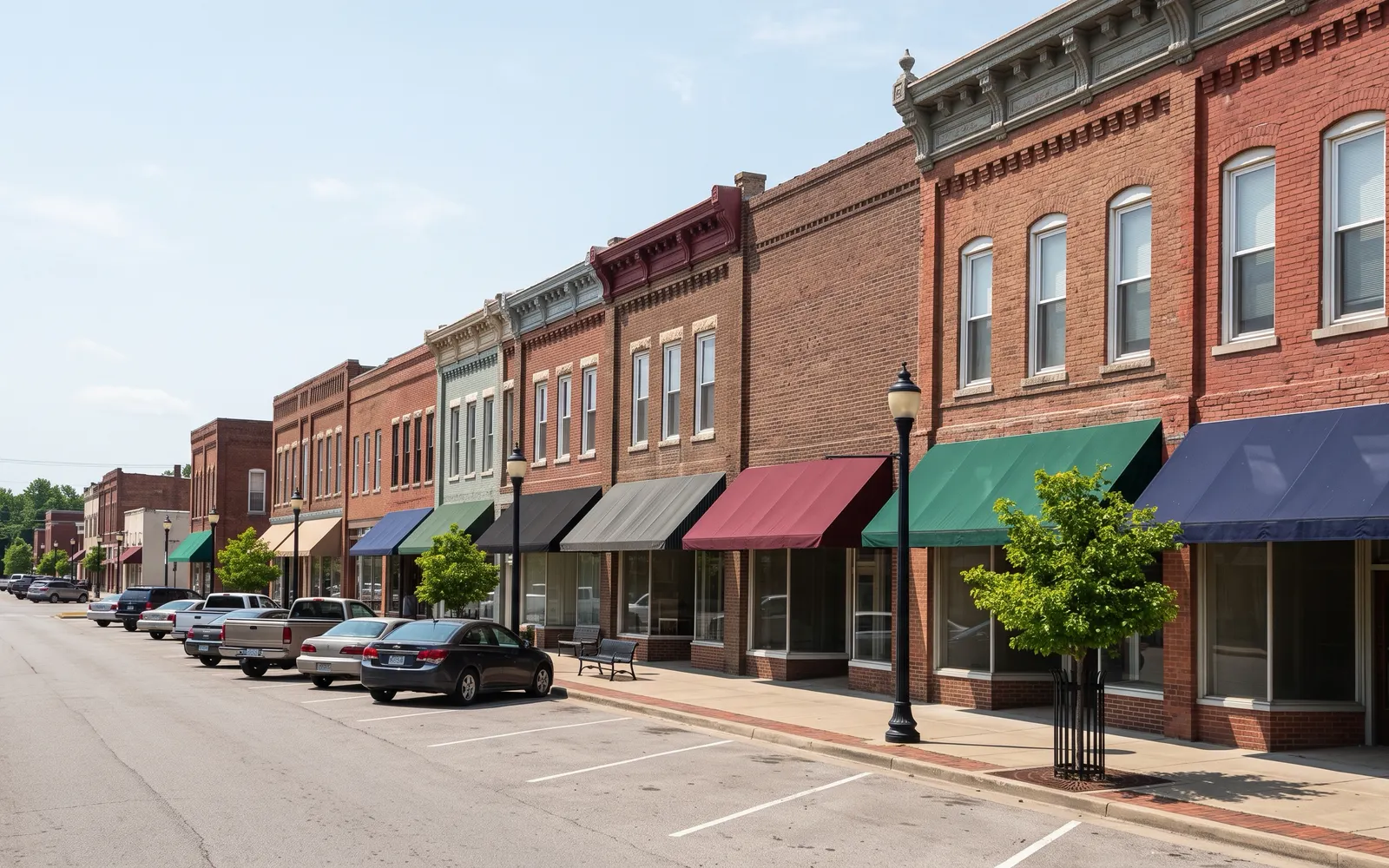
Downtown Marengo is a real small-town main street: two-story brick buildings along State Street with shops, restaurants, bars and services on the ground floor. It is not a shopping destination, and some storefronts turn over. Most of the town's everyday retail sits along East Grant Highway, including the strip center at 20009 East Grant Highway that the city helped fund through its TIF district in 2017.
For bigger errands, most people drive east on Route 20 or the tollway to Huntley, Algonquin and Crystal Lake, or west to Belvidere and Rockford. Huntley's outlet and big-box corridor near the tollway is the closest.
The city is still working on downtown. Marengo Weekly reported that a planned municipal parking lot downtown was pushed to the 2027-28 budget cycle after bids came in higher than expected. On September 14, 2026, according to its council recap, the city council voted 5 to 1 to rezone 605 East Grant Highway, at the southeast corner of Grant and Maple, from residential to commercial for a grocery market.
Groceries and Everyday Errands in Marengo
The main grocery store in town is Sullivan's Foods at 202 Lindow Lane, part of a Northern Illinois grocery chain that dates to 1967, with a bakery, deli and liquor department. The grocery market approved for 605 East Grant Highway would add a second option once it opens. For a wider selection, Marengo buyers drive to the supermarkets in Huntley, Crystal Lake or Belvidere.
Marengo's farm stands are the part of grocery shopping people from the city don't expect. Nichols Farm & Orchard at 2602 Hawthorn Road started in 1978 on 10 acres and has grown to about 300 acres, and it is known well beyond McHenry County for the sheer variety of fruit and vegetables it grows. In season, orchards and farm stands around town sell apples, berries, sweet corn and pumpkins. Pharmacies, banks, auto parts and hardware cluster along Grant Highway, so most weekly errands stay inside a few minutes' drive.
Where Marengo Eats
Marengo's restaurants are casual and mostly locally owned. On State Street downtown, Abbondanza Cucina at 228 South State Street serves pasta and dinner, and the downtown blocks also hold taverns and carryout spots. Out on Grant Highway, Cafe 20 at 756 East Grant Highway is a long-running breakfast and lunch stop. Marengo Cafe, Niko's Pointers Saloon, The Spot Tavern and StoneBakers Pizza are the other names locals mention most, along with the seasonal ice cream stand. The two golf clubs both run grilles, and for a bigger night out, most people head to Huntley, Crystal Lake or Rockford.
Parks, Golf and Open Space in Marengo
Local parks are run by the Marengo Park District, which has served the community since 1938 and has its office at 825 Indian Oaks Trail next to Indian Oaks Park. Calvin Spencer Park and Renwick Park are two of the parks in town, both named for early settlers.
The biggest open space is just north of town. Marengo Ridge Conservation Area, run by the McHenry County Conservation District at 2411 North Route 23, covers 818 acres of oak and hickory woods on one of the steepest glacial moraines in Illinois, a ridge the district describes as 40 miles long and 3 miles wide. It has about 7.65 miles of trails, two reservable picnic shelters, cross-country skiing in winter and the Thomas Woods Campground, with 29 tent sites and 18 RV sites.
Golf is close too. Marengo Ridge Golf Club is on Harmony Hill Road and Blackstone Golf Club is on Saint Andrews Drive, each with homes built around it. The Kishwaukee River along the north edge of town is a quiet paddling and fishing river.
A few minutes east in Union, the Illinois Railway Museum at 7000 Olson Road is the largest railroad museum in the United States, and it is where Marengo's 1851 depot now stands. It is the kind of weekend outing that surprises people who have lived in the suburbs for years without knowing it was there.
The Marengo-Union Library District
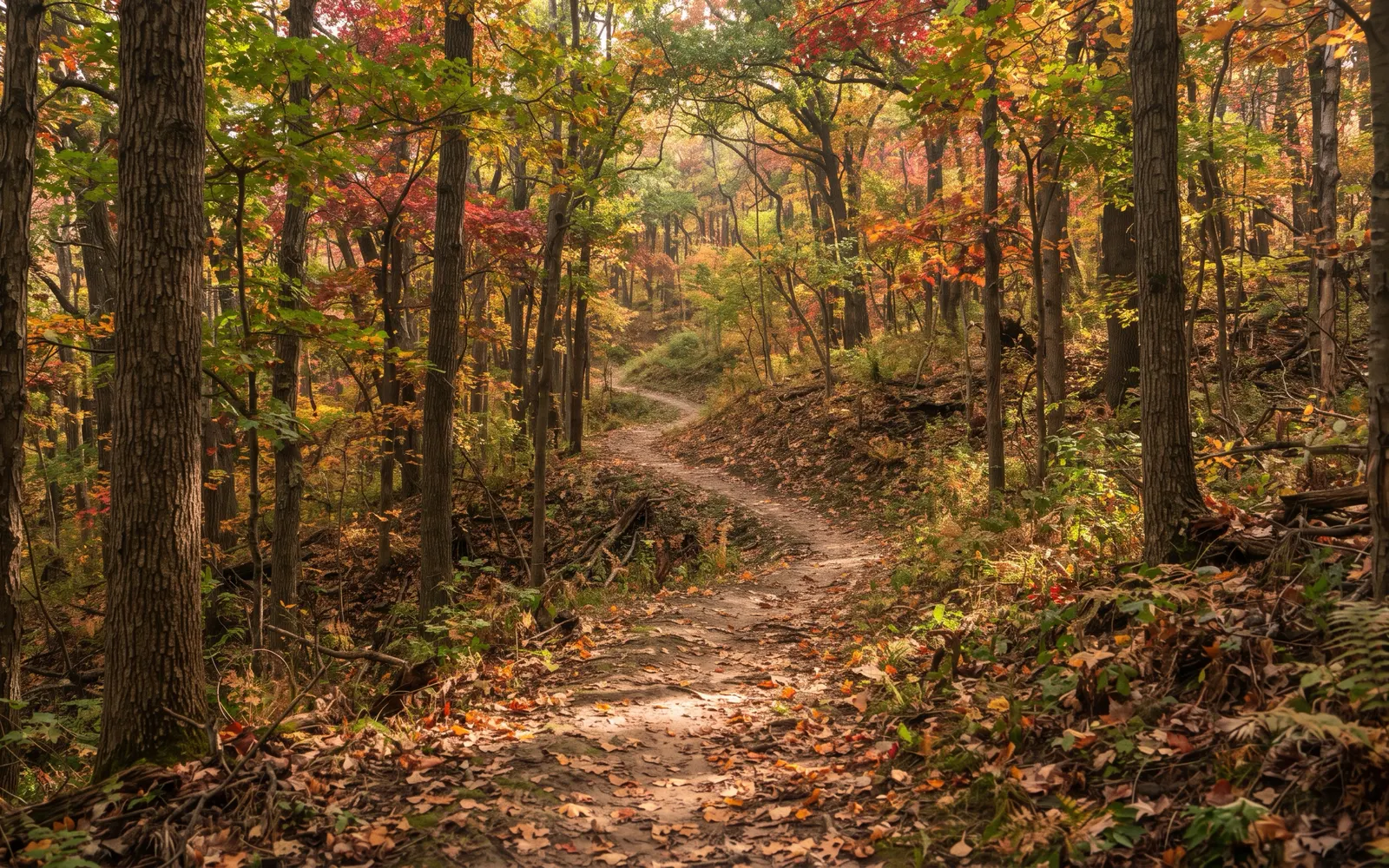
The Marengo-Union Library District at 19714 East Grant Highway serves Marengo and Union. It belongs to the PrairieCat consortium, so a Marengo card can request books from libraries across northern Illinois, and it lends a "Library of Things" collection alongside books and movies. It also gives access to digitized historical Illinois newspapers, which is a good starting point for anyone researching the history of a Marengo house.
Utilities in Marengo: City Water Versus Well and Septic
Inside city limits, the City of Marengo provides water and sewer from its own wells. New water and sewer rates took effect May 1, 2026, and the city ran a sewer lining project in August and September 2026. ComEd delivers electricity and Nicor Gas provides natural gas to most of town.
One recent item buyers ask about: in the fourth quarter of 2025, one of four routine samples from the city's Well #6 came back above the state threshold for manganese. The Illinois EPA had the city mail a public notice in January 2026. According to the city's update, no follow-up sample exceeded the threshold, and the IEPA confirmed on March 3, 2026, that manganese levels were within acceptable limits and the system was in full compliance. If you are buying in town, it is reasonable to ask the city for the latest water quality report.
Outside city limits, assume nothing. Most rural homes have a private well, a septic system and propane heat, and internet options vary road by road. Before you buy a rural property, ask for recent utility bills, the well and septic records and the propane supplier and tank terms, and check internet service at the exact address.
Hospitals Near Marengo
Marengo has no hospital of its own. The closest options are Northwestern Medicine Huntley Hospital to the east, reachable by the tollway or Route 20, and Mercyhealth's small hospital in Harvard to the north on Route 23, which has a 24-hour emergency department. Rockford's larger medical centers are about 30 miles west, and Northwestern Medicine and Mercyhealth also run hospitals in Woodstock, McHenry and Crystal Lake. Marengo Rescue Squad provides ambulance service locally.
Settlers' Days and the Marengo Calendar
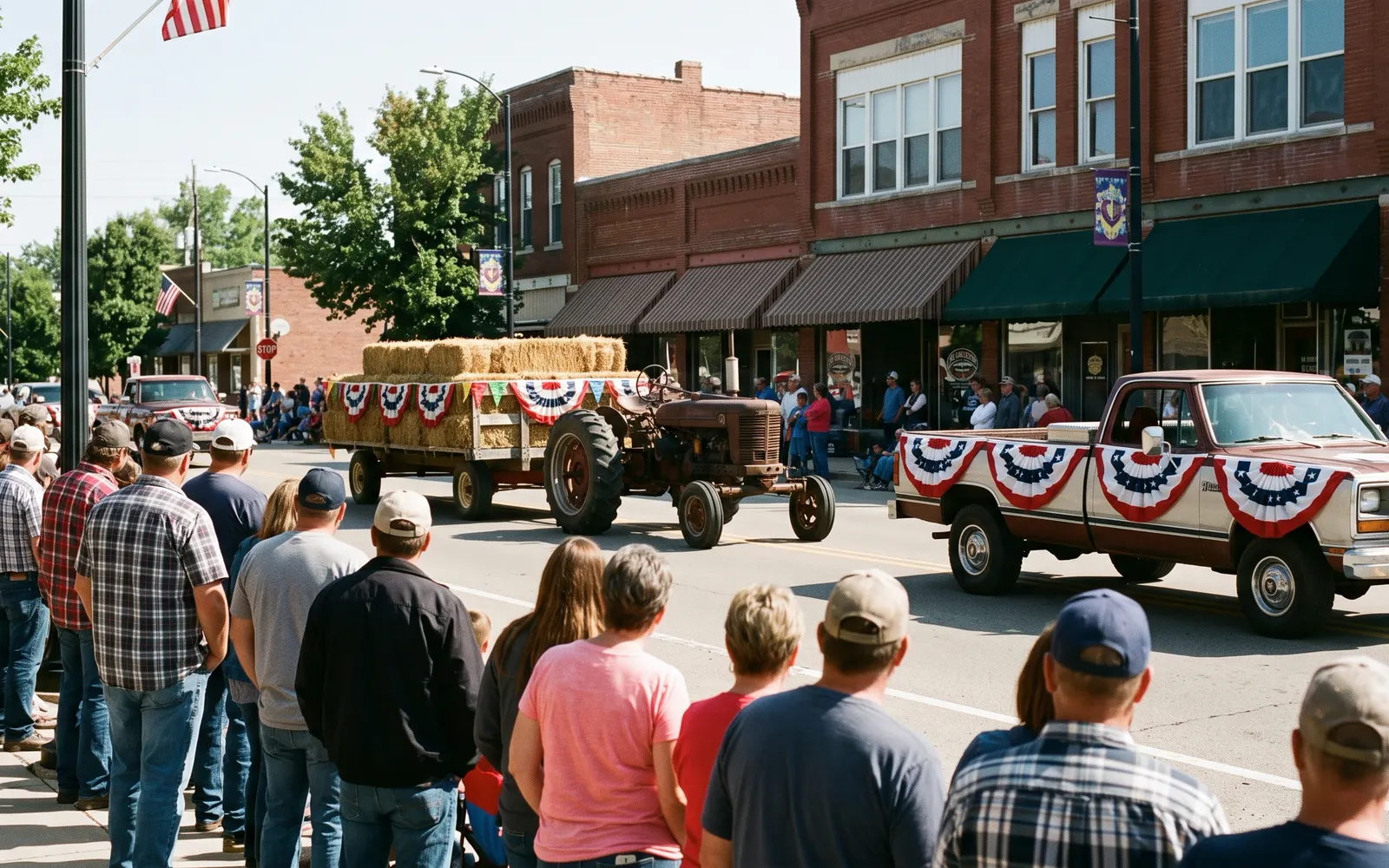
The big weekend is Settlers' Days, held downtown on State Street and Municipal Drive since 1971. According to Marengo Weekly, the 2026 festival runs October 9 through 11, its 55th year. The carnival opens at 5 p.m. on Friday in the municipal lot, "Saturday Night on Main Street" takes over State Street from 5 to 10 p.m. with live music and vendors, and the parade steps off at 2 p.m. on Sunday, October 11, heading down State Street to Washington Street. The festival also has a 5K, a car show, an arts and crafts fair and a pet parade. Expect Route 23 downtown to close Saturday evening and Sunday afternoon.
The rest of the year is quieter: school sports, events at the park district and the library, and fall weekends at the orchards and farm stands around town. The Illinois Railway Museum's operating days and the McHenry County Fair in Woodstock are both short drives. If you are touring houses in October, stay for the parade. It tells you more about Marengo than any listing will.
What's Being Built in Marengo
The biggest project in Marengo is not a subdivision. It is the land at the tollway. According to the city's April 7, 2026 update, Marengo has been extending water and sewer south along Route 23 to open more than 170 shovel-ready acres at the I-90 interchange for business. The state awarded nearly $27 million for the first phase in 2022, McHenry County approved a $750,000 match loan and the city secured a $3 million Site Readiness grant in 2025, and in 2026 it received another $4,649,628 from the Illinois Department of Commerce and Economic Opportunity. The city's timeline has utilities reaching existing employers, including Unilock, in June 2026, reaching roughly Anthony Road in October 2026, and the whole project finishing around the end of 2028.
For homeowners, the practical points are two. Expect construction traffic on Route 23 south of town for a couple of years. And watch who buys that land. A large employer at the interchange would matter to Marengo's tax base and its housing demand more than any single subdivision.
On the residential side, growth is steady and small. M/I Homes is building out Brookside Meadows on the south side, and builders are filling remaining lots in Deerpass. Downtown, the city deferred a new municipal parking lot to its 2027-28 budget after costs came in high, per Marengo Weekly, and in September 2026 the council rezoned 605 East Grant Highway for a grocery market.
The school district is investing too. District 165 put two electric school buses into service in August 2026, paid for through ComEd rebates and a U.S. Department of Energy grant, with a third expected later in the winter. Treat anything that is still a plan as a plan until you see it built.
I don't label any town or neighborhood as safe or unsafe.
Flood Risk in Marengo
Redfin's climate panel for Marengo, which uses First Street's models, did not show a current flood figure for the city when I checked it in September 2026. It rates wildfire risk as low, with under 1% of properties at risk over the next 30 years, and severe wind risk as minimal. So on flooding, go straight to the map.
Two checks belong on every house. Look up the address on the FEMA flood map, because a mapped flood zone can mean required flood insurance on a mortgage. The Kishwaukee River along the north edge of town and the creeks and low ground in the countryside are where to look hardest. And ask about water in the basement, especially in the older homes near downtown and on rural properties. In my experience the follow-up question, what they did about it, matters more than the first answer.
Frequently Asked Questions
How much does a house cost in Marengo, IL?+
Redfin reported a median sale price of $294,805 for the three months ending August 2026, up 4.7% from a year earlier, and Zillow's home value index was $366,265 for August 2026. Older homes near downtown sell for less, newer subdivision homes for more, and rural acreage is priced on the land.
What are property taxes in Marengo, IL?+
The median effective rate is about 2.05%, with a median bill of about $5,545 (Ownwell, April 2026), below McHenry County's 2.42%. Rates vary by township, school district and tax code, and a home's bill usually rises after a sale once it is reassessed.
What school district is Marengo, IL in?+
Most of Marengo is in Marengo-Union Elementary District 165 for preschool through eighth grade, with parts of the countryside in Riley District 18. High school is Marengo Community High School, District 154. Confirm each address with the district.
Is there a Metra station in Marengo?+
No. Passenger rail ended in 1950. The nearest Metra stations are Harvard (about 12 miles), Woodstock (about 13) and Crystal Lake (about 16) on the Union Pacific Northwest line. Crystal Lake's rush-hour expresses reach Ogilvie in 67 minutes.
How far is Marengo from Chicago and O'Hare?+
By road, the Loop is about 62 miles and O'Hare about 47 miles away, using the Route 23 interchange on I-90 that opened in December 2019. Traffic on the tollway can add a lot at rush hour.
Can I build a house on farmland near Marengo?+
It depends on the zoning. Under McHenry County's development ordinance, a house in the A-1 Agriculture district needs at least 40 acres, while A-2 allows a home on 1 acre and the estate districts range from 1 to 5 acres. Check the parcel's zoning with the county before you buy.
What neighborhoods are in Marengo, IL?+
Buyers usually think in terms of the old town around State Street, subdivisions such as Deerpass, Doral Ridge Estates, Southridge and Hunter's Pointe, new construction in Brookside Meadows, the golf course communities, and rural acreage outside city limits.
What happened with the manganese notice in Marengo's water?+
According to the City of Marengo, one sample from Well #6 in late 2025 exceeded the state manganese threshold, no follow-up samples did, and the Illinois EPA confirmed on March 3, 2026, that levels were within acceptable limits and the system was in full compliance.
Eshu Chikoti has extensive access to off-market listings throughout Marengo and the rest of McHenry County — homes that never make it to the public listing sites. That matters right now: in a seller's market like this one, well-priced homes routinely go under contract within days, and buyers relying only on public listings are competing for whatever is left over. Working with someone plugged into off-market inventory means seeing homes before the crowd does.
Eshu Chikoti · 847-691-4282 ·
Get new Marengo listings by email
When a home comes on the market in Marengo, I'll email it to you.
Just your email. Unsubscribe any time by replying.
Thinking About Marengo?
Whether you're buying, selling, or just curious what's on the market, I can walk you through Marengo street by street.