River Forest, IL
River Forest, IL is a 2.48-square-mile Cook County village of about 11,400 people between Oak Park and the Des Plaines River, with its own Metra station, two universities, Frank Lloyd Wright's Winslow House and a summer 2026 median sale price near $774,000.
Living in River Forest, IL means a median sale price near $774,000 this summer, a 26-minute Metra ride to Ogilvie, and a Cook County tax bill near 2.62% of value. About 42% of homes predate 1940, and roughly 860 properties sit in a local historic district. Here it is, block by block.
Written by Eshu Chikoti · 847-691-4282 ·
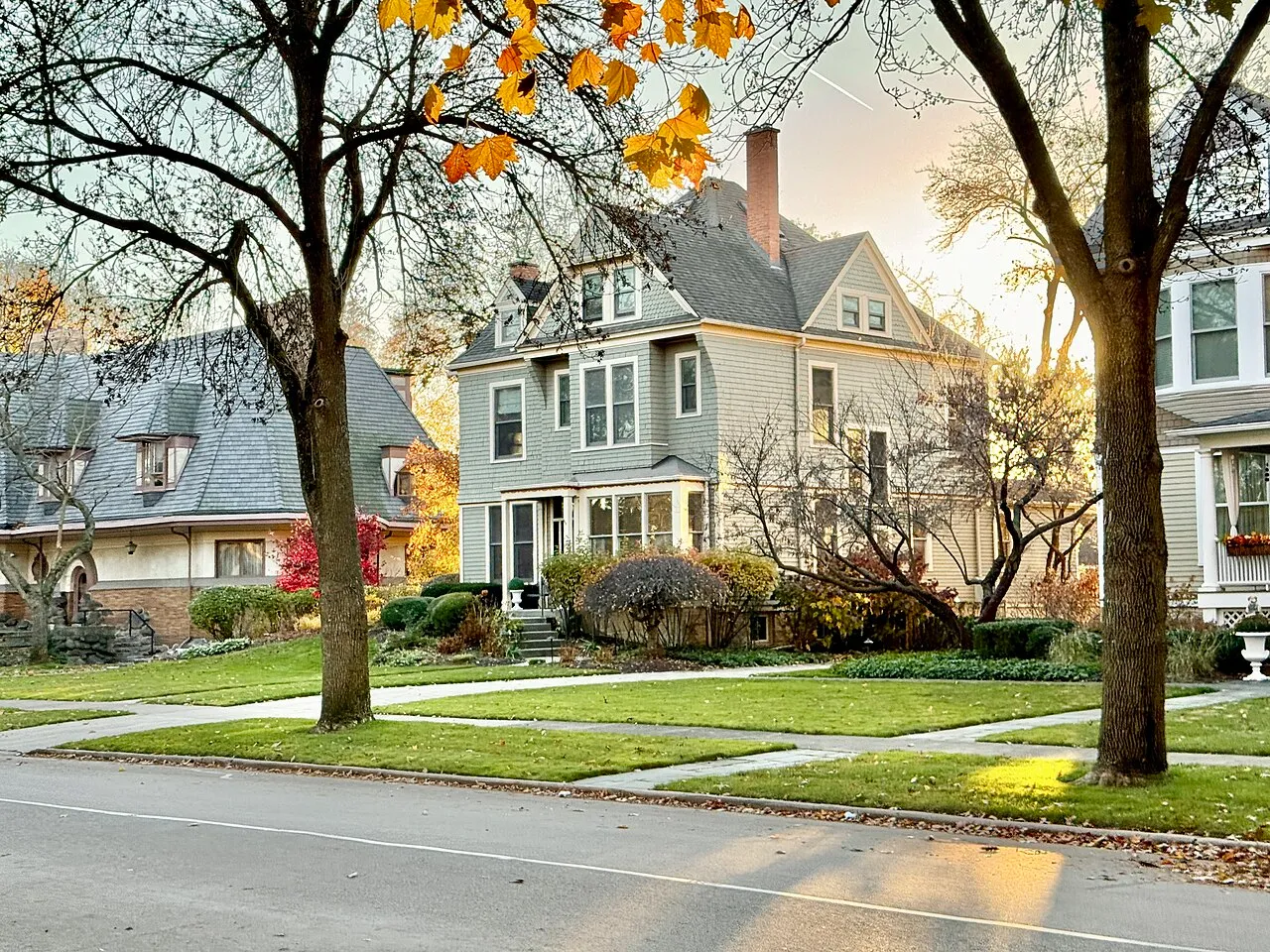
How River Forest, IL Got Here: From Noyesville to a Railroad Village
River Forest started at the river. According to the village's 2013 architectural and historical survey, George Bickerdike and Mark Noble built a steam-powered sawmill on the east bank of the Des Plaines River in 1831, about half a mile north of Lake Street. Ashbel Steele, later Cook County sheriff, arrived in 1836 and is credited as the first permanent settler. A plank road went down present-day Lake Street in 1842, and the Galena and Chicago Union Railroad began regular service to Chicago in 1849. The settlement was known as Noyesville at the time, per Wikipedia.
Two landowners shaped the map in the 1850s. Henry Quick, from Harlem, New York, bought a large tract east of Lathrop Avenue, gave it his hometown's name and named three streets for his sons: John (now Bonnie Brae), Henry (now Clinton Place) and William Street, per the survey. David C. Thatcher, a Chicago arms and ammunition merchant, bought 640 acres in 1854, from the river to Lathrop and from Madison to Division, and the west side became known as "Thatcher." The name River Forest came from the railroad: in 1872 the western depot, earlier called Noyesville, Desplaines and Thatcher, was renamed River Forest.
The village itself is a product of a local argument. The village's community profile says River Forest was incorporated on October 24, 1880, and that before then it was part of a larger community called Harlem that included parts of today's Oak Park and Forest Park. Residents who expected alcohol-related problems if Harlem incorporated banded together to form a smaller village that was initially "dry." The survey adds that the new village soon licensed two saloons at its east end to raise revenue.
Growth came in the twentieth century. The survey counts 1,539 people in 1900, 2,456 in 1910, 4,358 in 1920 and 8,829 in 1930. In 1916 the village annexed the land from Division Street north to North Avenue, adding a third of its present acreage, and that area filled in from the late 1920s through the 1950s. Concordia broke ground on its River Forest campus in 1912, and Rosary College, now Dominican University, moved here in 1922. The village says those two schools and the Dominican priory together occupy about 110 acres today. If you are looking at a house in River Forest, there is a good chance it was built before most of the suburbs around it existed.
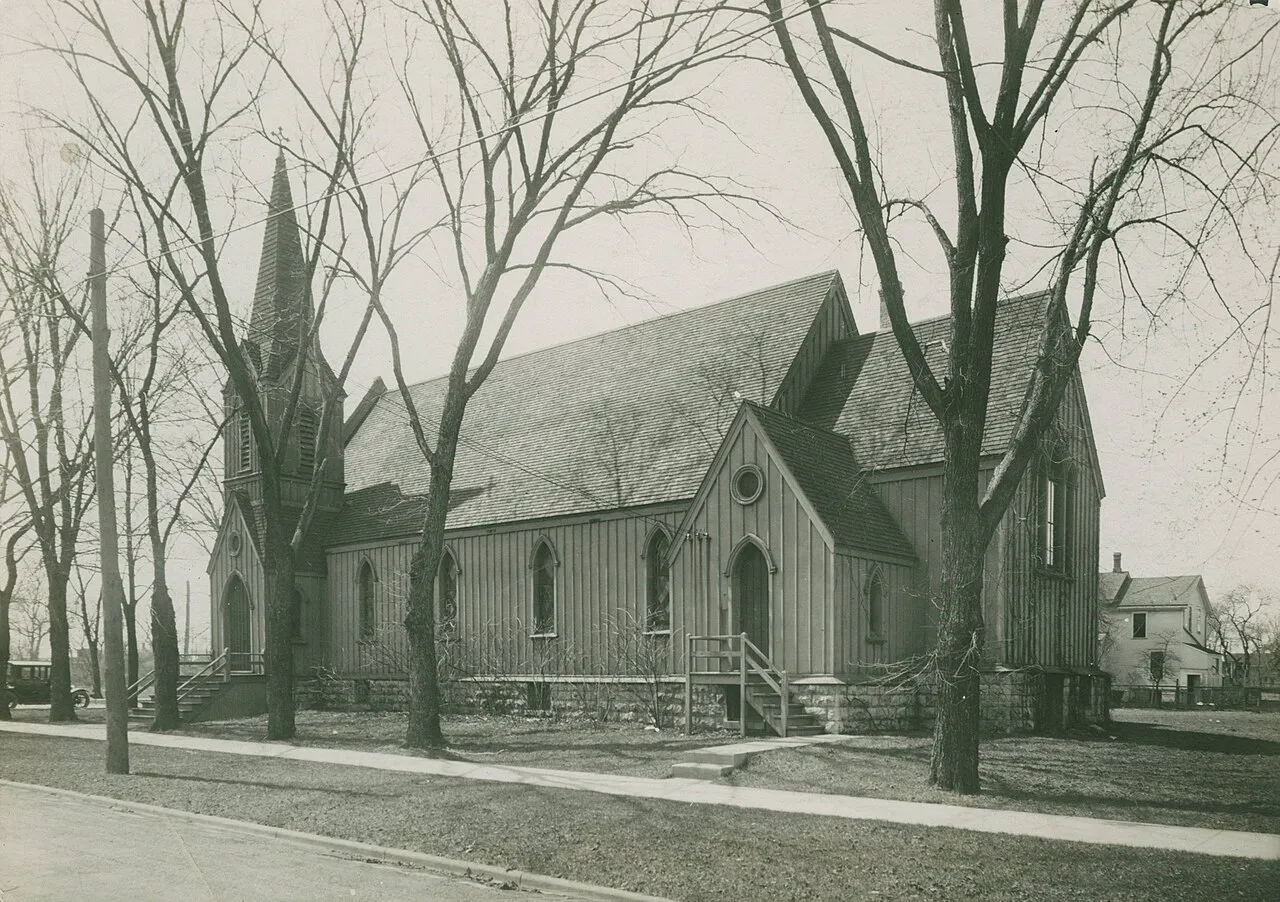
River Forest at a Glance
River Forest is small and almost entirely built out. Wikipedia puts it at 2.48 square miles, with the Des Plaines River and the Thatcher Woods forest preserve on the west, Harlem Avenue (Illinois Route 43) on the east and North Avenue (Illinois Route 64) on the north. The village places it about 10 miles west of downtown Chicago, with Oak Park to the east, Forest Park to the south, Elmwood Park to the north, and Melrose Park and Maywood across the river to the west. The only ZIP code is 60305.
The county and township question is the simplest in the west suburbs. The Census Bureau's Vintage 2025 estimates put all 11,393 residents in Cook County, and River Forest Township has exactly the same count. The Cook County Assessor states it plainly: River Forest Township is coterminous with the Village of River Forest. Every house in the village is on the same township assessment calendar and pays into the same village, park district, library and elementary school district.
This is a village of owned homes. The 2020-2024 Census ACS counts 4,680 housing units, with 87.7% of occupied homes owned and 12.3% rented, a much higher ownership share than the county's. The rentals are mostly the condo and apartment buildings along Harlem Avenue, Lake Street, Madison Street and North Avenue.
The land use tells the same story. CMAP's June 2026 community snapshot shows 42.5% of the village's 1,588 acres in single-family residential use in 2023, 22.6% in open space, 7.8% in institutional use such as the universities, and only 2.6% commercial. CMAP counts 4,162 private-sector jobs in the village in 2025, or 0.93 per household against 1.07 for Cook County. The village is a non-home rule community run by a Village President, six trustees and a professional Village Administrator, per its community profile.
At a summer 2026 median of about $774,000, the village offers everything from a Harlem Avenue condo to a Northwoods estate, with one village, one township and one set of taxing bodies to learn.
Only 1.2% of homes were built since 2010, the 2.62% effective rate on a $774,000 purchase is about $20,000 a year, and fewer than 50 homes sold in August. Exterior changes on a Significant Property also go through a 30-day review.
River Forest Neighborhoods, Block by Block
River Forest has no official neighborhoods, and most people describe a house by its street and whether it is north or south of Lake Street or Chicago Avenue. The names below come from how the land was subdivided, which the village's historical survey documents tract by tract. Those names rarely appear on a listing, but they explain why one block of River Forest looks so different from the next.
The easiest way to split the village is into three bands. South of the Union Pacific tracks, between Central Avenue and Madison Street, the lots are generally smaller and the survey records a wave of Craftsman bungalows between Madison and Hawthorne from 1900 to 1920. The middle band, from the tracks to Division Street, holds the oldest houses and the big estate lots, including the Quick tract on the east side and the Northwoods on the west. North of Division, land annexed in 1916 filled in from the late 1920s through the 1950s, and it is where most of the village's ranches and mid-century houses are.
School boundaries follow a version of that split. Wikipedia's District 90 entry says Willard Elementary serves the north part of River Forest and Lincoln Elementary the south part, with one middle school, Roosevelt, for everyone. The exact line is set by the district, so check the address.
The expectation I most often have to reset with buyers here is that two houses a few blocks apart are comparable because they share a ZIP code. In River Forest a 1920s Prairie house on a 200-foot lot in the Northwoods and a 1950s ranch north of Division can list for very different prices, carry different historic preservation reviews and sit in different elementary attendance areas. If you want to know which of these pockets a specific address falls in, and what that means for the house, that is a conversation I am happy to have here.
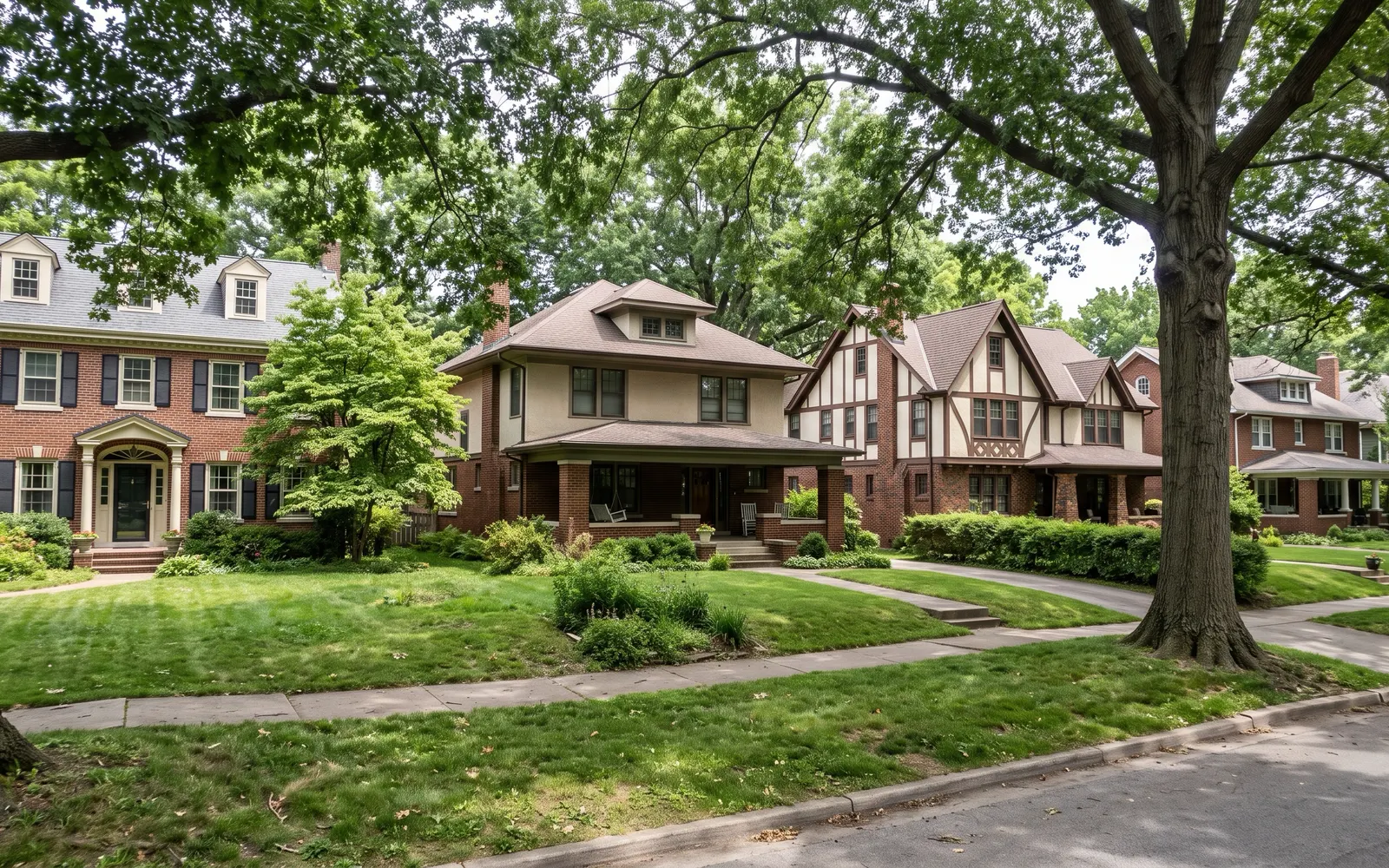
Village Center and Lake Street. The 2019 Comprehensive Plan defines the Village Center roughly as the area bounded by Lake Street, Central Avenue, Lathrop Avenue and Park Avenue, a mixed-use area around the Metra station, with multi-story condo and apartment buildings along Central. East of it, between Harlem and just east of Lathrop, is what the plan calls the Core Commercial Area: the Town Center shopping center and the Jewel-Osco. The plan describes Lake Street as a one-sided corridor, with homes and institutions on the north side and commerce on the south.
The Quick tract (east side, north of Lake Street). Henry Quick's land, bounded by Harlem, Lathrop, Lake and Chicago Avenue, was platted early but stayed mostly empty until 1905, when Cummings & Company bought the 135-acre tract and formed the River Forest Land Association to sell lots and build speculative homes, per the survey. Bonnie Brae, Clinton Place and William Street run through it. The survey singles out the 700 block of William Street for its dense concentration of Prairie-style houses.
The Northwoods (west-central). Edward C. Waller's 100-acre tract bounded by Thatcher, Lathrop, Chicago Avenue and Division Street, developed in the 1920s as the village's estate section. The survey says some lots sold with 200 feet of frontage, and that the Buurma Brothers bought 2,100 feet of frontage from Waller in 1928 and built many of the mansions.
The Braese tract (east-central, north of Chicago Avenue). A 140-acre tract bounded by Chicago Avenue, Harlem, Division and Monroe, bought by realtor Otto C. Braese in 1920. The survey says the Buurma Brothers and Visser & Company built dozens of speculative homes here, including on Clinton and William between Iowa and Augusta.
Thatcher and the west side. The survey dates the village's oldest surviving houses, on Keystone and Thatcher Avenues south of Chicago Avenue, to the 1860s and 1870s, when lots were laid out 50 to 100 feet wide and 200 to 300 feet deep. The Winslow House on Auvergne Place and Thatcher Woods are on this side of town.
North of Division. The survey says this land was subdivided in the 1920s but was most intensively developed from the 1930s through the 1950s. Named plats include the Keeney subdivision (Park, Thatcher, North Avenue and Greenfield), the E. E. Woods subdivision on the 1400 block of Ashland, and the Bonnie Brae subdivision (North, Greenfield, Harlem and William). The village's traffic page refers to the blocks between Greenfield and North Avenue, from Lathrop to Harlem, as the Northeast Neighborhood.
South of the tracks. The survey says the area south of the Northwestern tracks was largely undeveloped in the nineteenth century, and that Craftsman bungalows filled the parcels between Madison and Hawthorne from 1900 to 1920. Madison Street, the southern edge, is a commercial corridor with a TIF district.
Harlem Avenue. The comprehensive plan calls Harlem the village's 1.35-mile eastern edge, carrying 30,000+ vehicle trips a day, lined with single-family houses, condominium and apartment buildings, townhomes and part of the Dominican campus. This is where most of River Forest's condos are.
River Forest's Historic District and What It Means for Your Plans
River Forest has two historic districts, and buyers mix them up. The first is national. Wikipedia's River Forest Historic District entry says it was added to the National Register of Historic Places on August 26, 1977, covers 356 acres between Harlem Avenue and the Des Plaines River and includes 830 buildings, most of them houses. A National Register listing is mostly an honor and a door to incentives. It does not by itself control what a private owner does with a house.
The second is local, and it is the one that matters for permits. The village's historic preservation page says the locally established district runs irregularly from Harlem Avenue to the Des Plaines River and from Division Street to Washington Boulevard, and takes in about 860 properties. Separately, the Historic Preservation Commission has designated 298 homes as Significant Properties, and a smaller set of landmarks.
Here is what that means in practice, per the same village page. For a Significant Property, any repair, rehab, restoration, demolition or improvement involving more than 20% of any street facade, and any window replacement on a facade visible from the street, has to go to the commission before a permit is issued. The commission gets 30 days to review (7 days for windows), the owner must attend the meeting, and the commission's recommendations are advisory and not binding. Once the review period ends or the recommendations are in, the work can go ahead. Demolition is different: a public hearing within 60 days, published and mailed notice to owners within 500 feet, a sign in front of the house, and the commission can issue a demolition delay of up to six months to explore alternatives. For a designated landmark, the same kinds of facade and window work need a certificate of appropriateness.
For a buyer, the practical steps are simple. Before you write an offer on a house you plan to change, check the village's significant property list and searchable database, which the page links. If the house is on it, budget an extra month for exterior permits and plan to present your drawings. If you are thinking about a teardown, assume a hearing and a possible six-month delay. The page also points to federal, state and local financial incentives for owners who renovate in a historically sensitive way. My home inspection checklist covers what to look at in an older house before you commit.
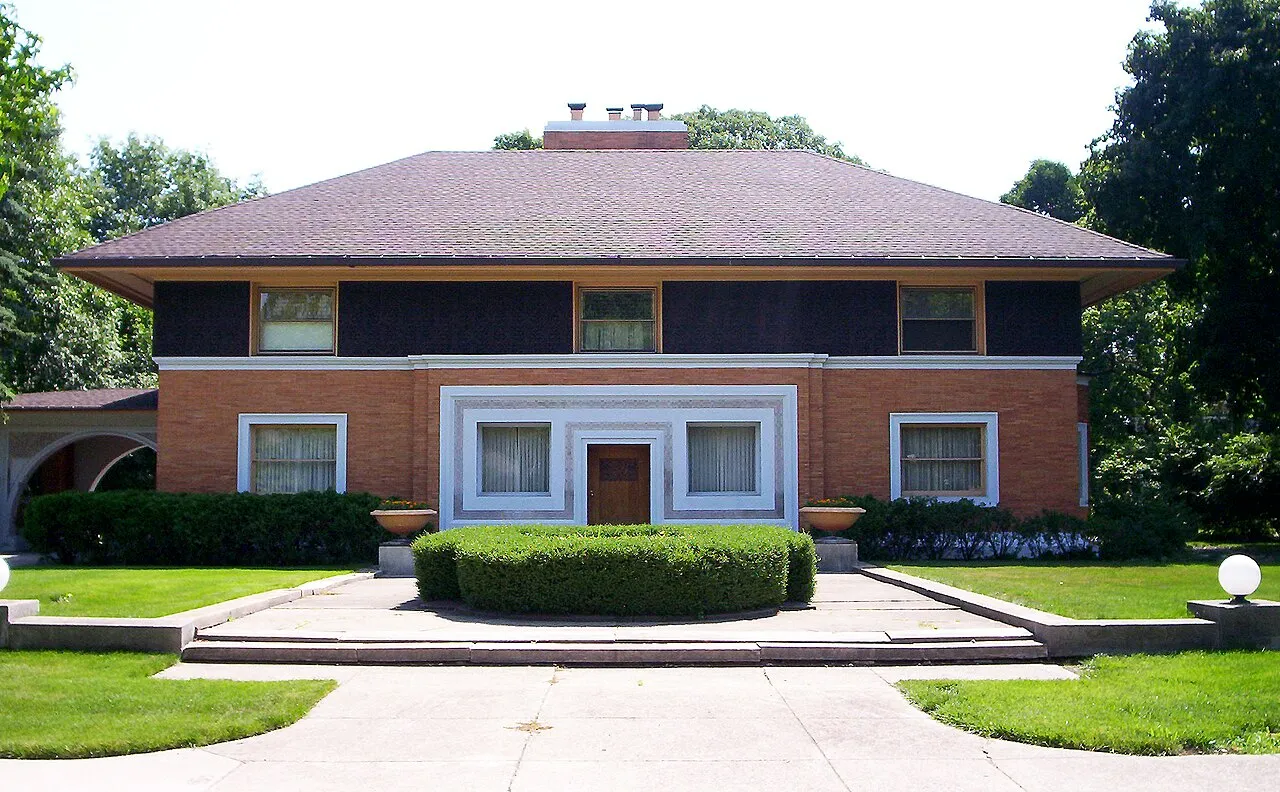
Winslow House, 515 Auvergne Place. Frank Lloyd Wright's first major independent commission, built 1893 to 1895, which Wright later called "the first 'prairie house'," per Wikipedia). Listed on the National Register on April 17, 1970. A private home; view it from the street.
Other Wright works in the village. Wikipedia's list of Wright works includes the Chauncey L. Williams House (1895), the E. Arthur Davenport House (1901), the Edward C. Waller Gates (1901), the River Forest Tennis Club (1906, moved to its present site in 1920), the Isabel Roberts House (1908) and the J. Kibben Ingalls House (1909).
Other Prairie School architects. The National Register district includes houses by William Drummond, Tallmadge and Watson, Purcell & Elmslie, John S. Van Bergen and Spencer & Powers, per Wikipedia. The village page names Drummond, Spencer and Powers and E. E. Roberts.
Local landmarks and Significant Properties. The village's searchable database and 2013 significant property list are the authority for any single address.
What River Forest Homes Look Like, by Type and Era
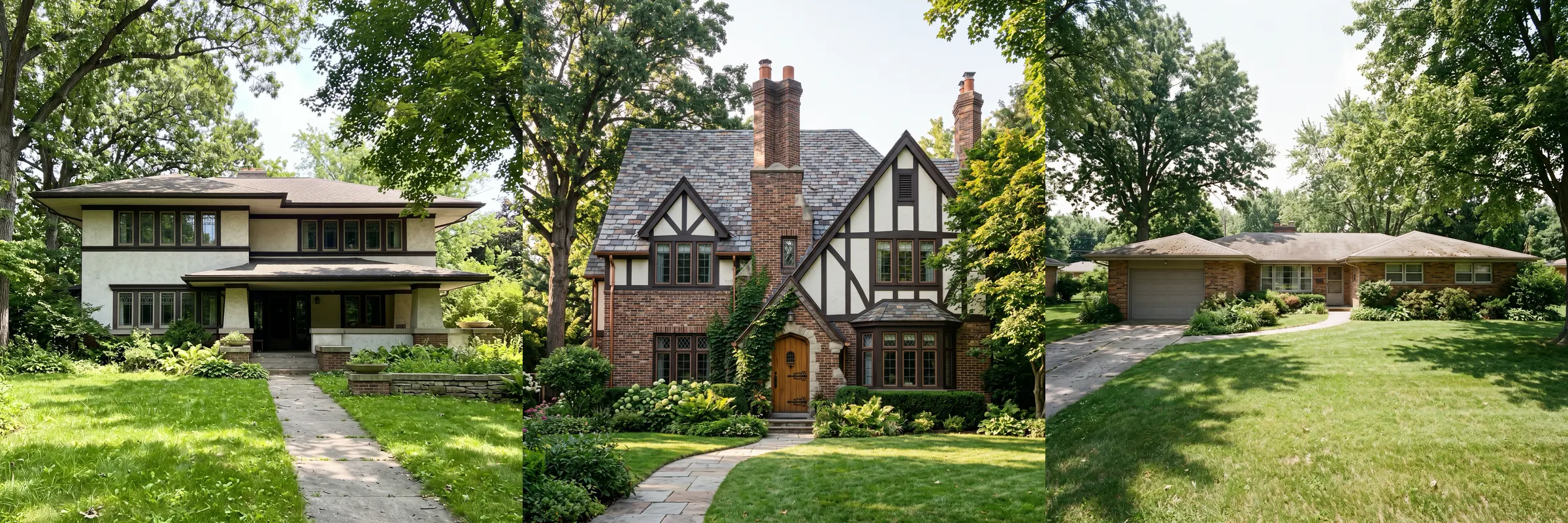
River Forest's housing is older and larger than almost anywhere else in Cook County. CMAP's snapshot, built on the 2020-2024 ACS, counts 1,977 homes built before 1940, or 42.2% of all units, against 27.8% for the county. Another 35.2% were built from 1940 to 1969. Only 13.0% date from 1970 to 1989, 8.4% from 1990 to 2009, and 55 units, or 1.2%, from 2010 or later. The median year built is 1946.
The homes are big. CMAP counts 20.3% of units with four bedrooms and 15.7% with five or more, against 12.8% and 4.6% countywide. The median home has 6.9 rooms, compared with 5.1 for Cook County. By type, 2,754 units, or 58.8%, are detached single-family houses, and 3.9% are townhouses or other attached homes. The rest are in multi-unit buildings: 13.9% in buildings of 20 or more units and 10.5% in buildings of five to nine, most of them along Harlem, Lake and Central.
The styles span a century. The village's historic preservation page lists Gothic Revival, Victorian, Prairie School, Tudor Revival, bungalows, Buurma-built homes, Art Deco and Moderne. The survey adds Italianate villas from the 1870s and 1880s, Queen Anne from the 1880s and 1890s, Italian Renaissance and French Eclectic houses from the 1920s, and more than 200 one-story and split-level ranches, many with Colonial Revival detailing, mostly north of Division. The Census ACS puts the median home value at $687,300 and median gross rent at $1,554 for 2020-2024.
For a buyer, age is the whole inspection conversation. A 1910s house can have knob-and-tube wiring hiding behind updated outlets, a clay sewer line to the street, an old boiler, plaster walls and a slate or tile roof that is expensive to repair correctly. None of those should kill a deal. All of them belong in the price. I also tell buyers to ask for the permit history, because a house on the significant property list may have had exterior work reviewed, and that paper trail is useful.
The River Forest Housing Market in 2026
River Forest is a high-priced, competitive market with very little inventory. In the three months ending August 2026, Redfin reported a median sale price of $774,487, up 7.0% from a year earlier. Its report shows 48 homes sold in August, down from 60 a year before. Homes sold in about 40 days, down from 49, at 100.3% of list price on average.
The rest of Redfin's numbers point the same way. The median sale price per square foot was $313, up 12.0%. Redfin gives River Forest a Compete Score of 72 out of 100, which it calls very competitive, and says many homes get multiple offers, some with waived contingencies. Its summary is that the average home sells for around list price and goes pending in about 40 days, while hot homes sell for about 3% above list and go pending in about 33 days.
Zillow's home value index is a little lower on the level and just as strong on the trend. It put the typical River Forest home at $738,290 in August 2026, up 11.3% from $663,438 in August 2025 and 16.6% from $633,157 in August 2024. The two measures do different jobs. Redfin's median is the middle of whatever sold this summer, and in a village this small, 48 sales a month can swing it. Zillow's index estimates every home in the village, including the condos on Harlem that did not sell. The Cook County Assessor adds a third view: the median single-family sale in 2025 was $900,000. That figure leaves out condos, which is why it is higher than both.
For context, Zillow's August 2026 index put Forest Park at $291,076, Elmwood Park at $359,481, Oak Park at $486,880, Riverside at $565,475, Park Ridge at $597,562, Elmhurst at $642,280, La Grange at $673,589, Western Springs at $912,036 and Hinsdale at $1,298,279. River Forest sits with La Grange and Elmhurst, at about 1.5 times Oak Park's typical value. The biggest thing buyers underestimate here is how thin the market is: with fewer than 50 sales a month in summer, the right house may come up once a season. My guide to how much house you can afford walks through the budget math.
River Forest Property Taxes: The 2026 Reassessment and Your Bill
Property tax is the biggest monthly cost after the mortgage, and in River Forest it is a large number. Ownwell's Cook County data for River Forest, updated April 13, 2026, puts the median effective rate at 2.62% and the median annual bill at $14,970. Its 25th to 75th percentile range runs from 2.47% to 2.74%. The Cook County median on the same page is 2.14%. Because the whole village shares one set of taxing bodies, the rate varies less from house to house than it does in towns split between districts.
This is a reassessment year. Cook reassesses one-third of the county each year, and the south and west suburbs are on the 2026 cycle. The Cook County Assessor's River Forest Township release, dated April 24, 2026, says initial values were released on April 20, that the south and west suburbs were last reassessed in 2023, and that property values certified in 2026 will affect second-installment tax bills issued in 2027. The assessor's calendar, updated September 28, 2026, shows River Forest closed for appeals with the assessor after June 2, 2026, certified on June 23, and a Board of Review appeal window from August 3 to September 1, 2026. By my arithmetic on the three-year cycle, the next scheduled reassessment would be 2029.
The bills come in two pieces. For tax year 2025, the first installment was due April 1, 2026, per the Cook County Treasurer. The second installment was mailed September 1 and is due October 1, 2026, about two months late because of the county's tax system overhaul, according to Cook County. Those 2025 bills still reflect the 2023 values. The new 2026 values show up on the second-installment bill in 2027. If you close this fall or next summer, ask your attorney how the proration handles each bill.
Here is what the rate looks like on a real purchase. At this summer's $774,487 median, 2.62% works out to about $20,290 a year, or about $1,690 a month. The seller's current bill is often lower, because the assessment trails the market and the seller may carry exemptions you won't have in year one. Budget off the purchase price, not the seller's bill. The Cook County homeowner exemption takes $10,000 off the equalized assessed value of an owner-occupied home; the savings equal that $10,000 times your local tax rate. You apply once, and it renews each year. River Forest Township runs an assessor's office that helps with exemptions and appeals.
River Forest also has a transfer tax, which sellers should know about. The ATG ordinance summary, last updated March 4, 2025, lists a village tax of $1.00 per $1,000 of price, paid by the seller under Village Code 11-2-2, with the final water bill paid, a copy of the PTAX form and a pre-transfer inspection required. On a $774,487 sale that is about $775. The Illinois Department of Revenue lists the county rate at 25 cents per $500, or about $387. My Illinois closing costs guide covers the rest. This is general information, not tax advice. Your bill depends on your parcel, your exemptions and the assessor.
River Forest Schools: District 90, OPRF and Two Universities
Almost all of River Forest is in River Forest Public Schools District 90 for kindergarten through eighth grade. Wikipedia's District 90 entry lists three schools: Lincoln Elementary for the south part of the village, Willard Elementary for the north part, both kindergarten through fourth grade, and Roosevelt Middle School for fifth through eighth grade for the whole village. It puts enrollment at about 1,370 as of 2024 and notes that the small part of River Forest outside the district is zoned for recreational or institutional use.
High school is shared with Oak Park. Oak Park and River Forest High School, District 200, is at 201 N. Scoville Avenue in Oak Park, was established in 1871 and enrolled 3,307 students in grades 9 to 12 in 2024-2025, per Wikipedia. It is one campus, so every River Forest address feeds the same high school. That also means River Forest homeowners help fund a district they share with Oak Park, which shows up on the tax bill.
The village also has private schools. The village's community profile lists Grace Lutheran, St. Luke, St. Vincent Ferrer and Keystone Montessori for the lower grades, and Trinity High School and Fenwick High School among private high schools. Trinity), in River Forest, was founded in 1918 by the Sinsinawa Dominican Sisters. The same profile names Triton College as the community college district.
I don't rank schools on this page. The Illinois Report Card has each school's own data. Because Lincoln and Willard split the village, confirm the attendance area for any address with District 90 before you write an offer.
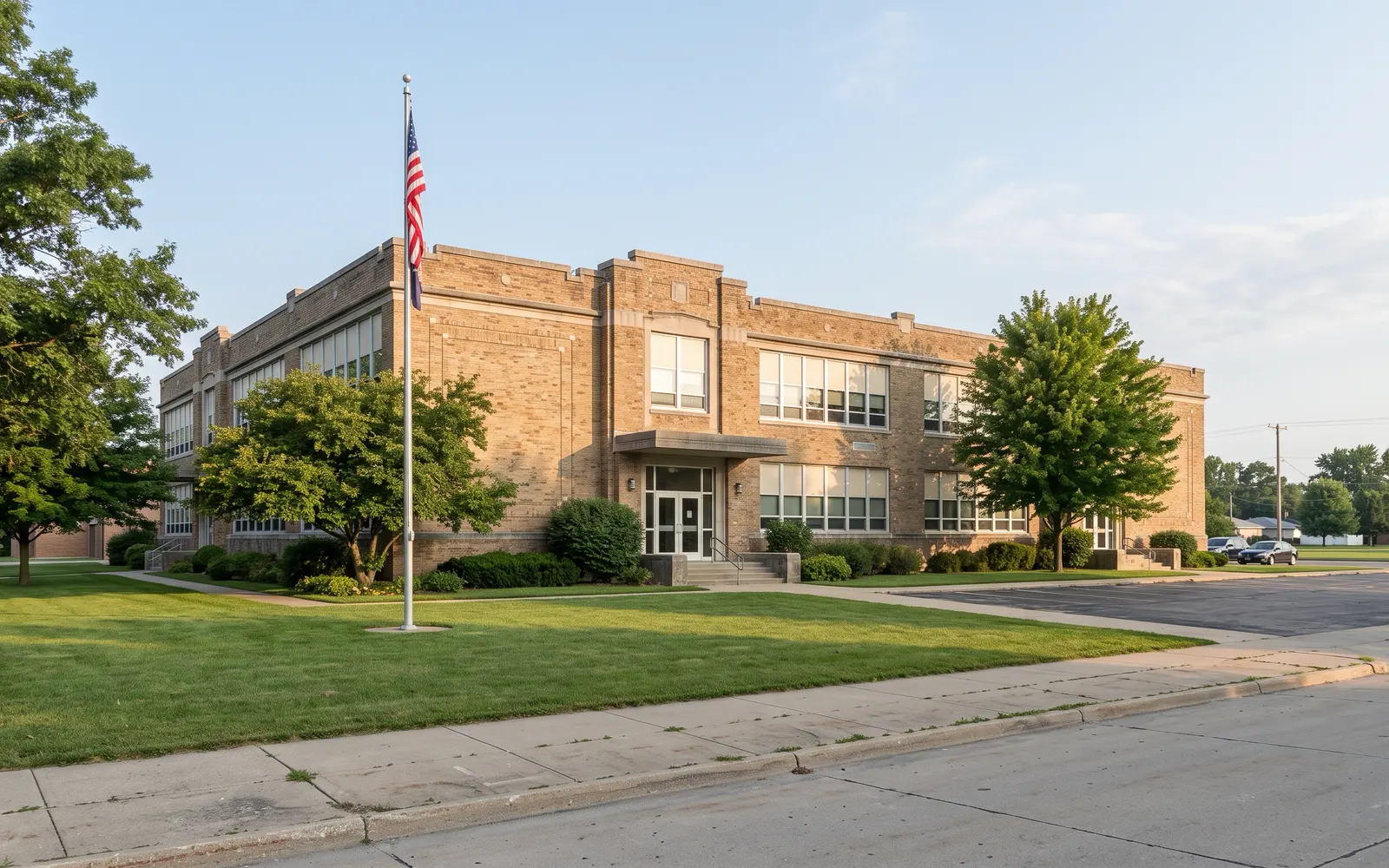
Lincoln Elementary School. District 90, kindergarten to fourth grade, serving the south part of the village, per Wikipedia.
Willard Elementary School. District 90, kindergarten to fourth grade, serving the north part of the village.
Roosevelt Middle School. District 90, fifth to eighth grade, for all of River Forest.
Oak Park and River Forest High School. District 200, 201 N. Scoville Avenue, Oak Park, grades 9 to 12.
Dominican University and Concordia University Chicago. Both campuses are on the village's north side; the next section covers them.
Dominican and Concordia: Two Universities on River Forest's North Side
Few villages this size have two universities. Dominican University) began in 1901 as St. Clara College, moved to River Forest as Rosary College in 1922 and took its current name in 1997, per Wikipedia. It sits on a 30-acre campus along Division Street and enrolled 3,803 students in fall 2025. Concordia University Chicago, founded in 1864 as the Addison Teachers Seminary, broke ground on its River Forest campus on November 12, 1912, and now covers 40 acres with 6,205 students, most of them graduate students.
For a homeowner, the campuses do three things. They add green space and lectures, performances and games that the village's new resident letter says are open throughout the year. They take up land that will not become new housing. And they bring traffic and parking pressure at the start and end of the day. The village's commuter parking study surveyed university students along with residents and commuters before the board changed parking rules by zone in 2020. If you are looking at a house on a block near either campus, check the posted parking restrictions and visit at 8 a.m. on a weekday.
Commuting from River Forest: Metra UP-W and the Green Line
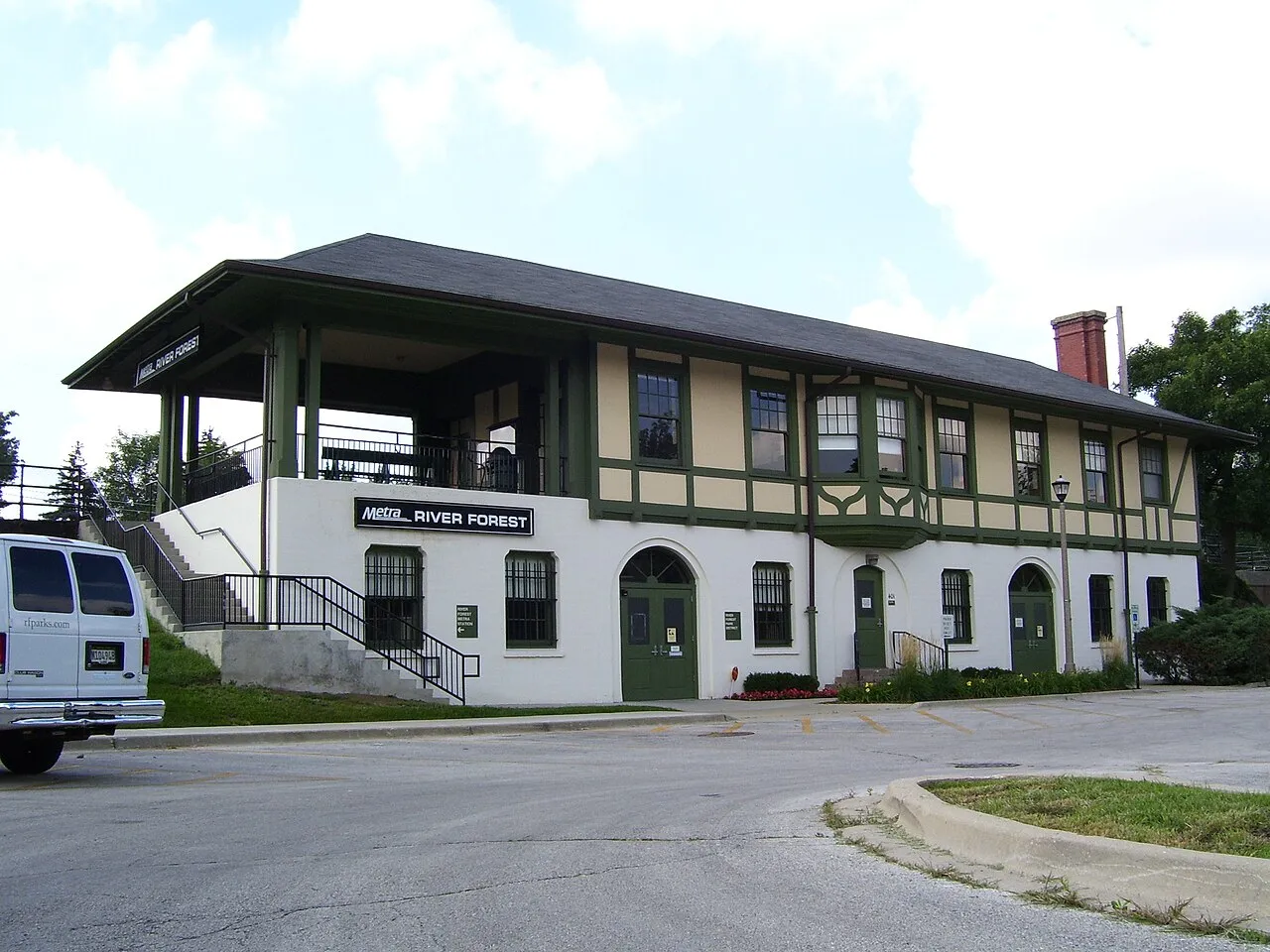
River Forest has two rail options within a short walk or bike ride of most houses. The River Forest Metra station, at the Thatcher Avenue end of the Village Center, is on the Union Pacific West line to Ogilvie Transportation Center, in fare zone 2. Wikipedia counts 448 average weekday boardings in 2018 and notes the station opened in its current form in 1915.
The schedule is frequent and simple. According to Metra's schedule data for the week of September 28, 2026, 21 trains leave River Forest for Ogilvie on weekdays and 22 come back, and every train takes 26 minutes. Morning departures include 5:17, 5:47, 6:27, 6:57, 7:27, 8:07, 8:37 and 9:27 a.m. Saturdays have 10 trains each way and Sundays 9, all at 26 minutes. The next stop east, Oak Park, has more trains, including some 18-minute expresses, which is worth knowing if you live on the east side of River Forest.
The other option is the CTA Green Line. Its western terminal, Harlem/Lake, is at 1 S. Harlem Avenue in Forest Park, across Harlem from River Forest's southeast corner. Wikipedia says it opened on October 28, 1962, was rebuilt in 1996 and recorded 704,657 riders in 2025. The village's community profile describes it as a 20-minute ride to downtown Chicago, and its new resident page also lists the CTA Blue Line and Pace buses among local transit options.
The commute numbers show how much the train matters here. CMAP's snapshot shows 19.7% of River Forest workers commuting by transit, against 11.8% for Cook County, with 41.8% driving alone, 26.8% working from home and 7.2% walking or biking. The average commute is 32.5 minutes. The village sells daily and monthly commuter parking; see its parking page for current permits.
Driving from River Forest: I-290, Harlem and North Avenue
River Forest is bounded by its main roads. Harlem Avenue (Illinois 43) runs along the east edge and North Avenue (Illinois 64) along the north, per Wikipedia. Lake Street runs east to west through the middle of the village, Madison Street along the south edge, and Division Street and Chicago Avenue cross the residential blocks. The comprehensive plan notes that Harlem is a state strategic regional arterial carrying more than 30,000 vehicle trips a day, which is why traffic changes there are hard to make.
The expressway is just south of the village. The village's community profile describes downtown Chicago as 10 minutes away via I-290, the Eisenhower, and says the village is conveniently placed for both O'Hare and Midway. Rush-hour reality on the Eisenhower is longer than 10 minutes, so test your own route at the time you would drive it.
The village runs red light cameras at North and Harlem and at Lake and Harlem, per its parking and traffic page. It has also completed a village-wide traffic study and a separate study of the northeast neighborhood between Greenfield and North Avenue. If you are choosing between a house on a quiet interior block and one on Harlem, Lake or Chicago Avenue, visit both at 8 a.m. and 5 p.m. on a weekday.
Is River Forest Walkable?
Around the Village Center, yes. On the north side, less so. Walk Score rates Village Hall at 400 Park Avenue at 77, very walkable, with a Bike Score of 65. That location is a few blocks from the Metra station, the library, Keystone Park and the Lake Street shops. By contrast, Walk Score rates 7900 W. Division Street, on the Dominican campus, at 40, car-dependent, with a Bike Score of 48.
Walk Score's River Forest page counts about 125 restaurants, bars and coffee shops and says the average resident can walk to about two of them in five minutes. That matches the land use: CMAP shows only 2.6% of the village in commercial use, concentrated on Lake Street, Harlem, Madison and North Avenue.
What River Forest does have is short distances. The whole village is 2.48 square miles, so most houses are within a mile of either the Metra station, the Green Line or the Des Plaines River Trail. The village has a bicycle plan and bike maps, and downtown Oak Park is across Harlem from the Town Center. CMAP counts 7.2% of workers who walk or bike to work, against 4.9% for the county.
Shopping in River Forest: Lake Street, the Town Center and Oak Park Next Door
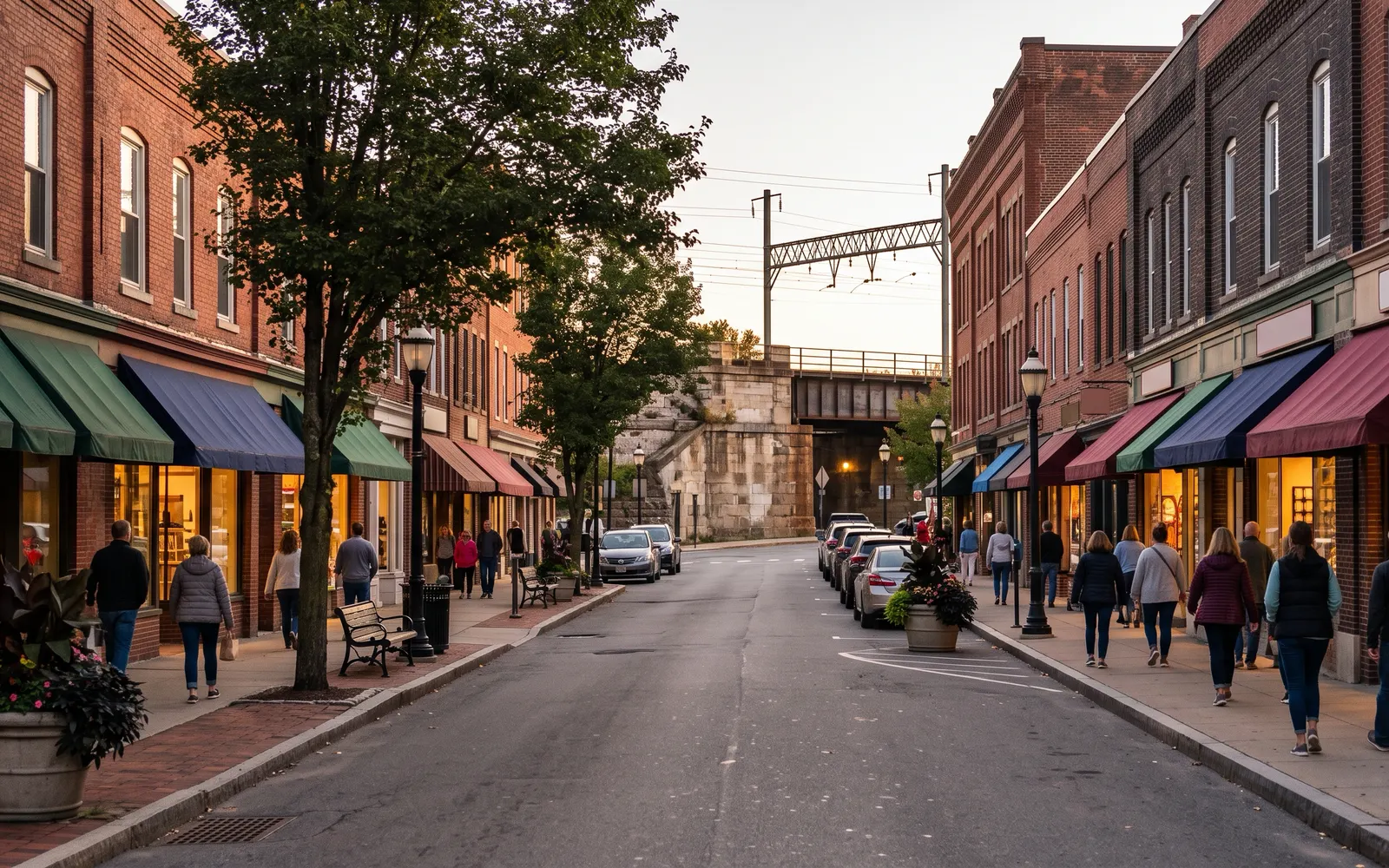
River Forest's shopping is concentrated at its southeast corner. The comprehensive plan calls the stretch of Lake Street between Harlem and just east of Lathrop the Core Commercial Area and names the Town Center shopping center and the Jewel-Osco as two of the village's most successful commercial developments. The village's new resident letter lists Whole Foods Market, Starbucks and Panera among the established stores in the Town Center, alongside boutique and local shops elsewhere in the village.
West of that, the Village Center around the Metra station is meant to be a smaller, walkable shopping street, per the plan. Madison Street and North Avenue carry more local businesses, each inside its own TIF district, and the village has offered facade improvement grants to businesses in those districts since spring 2025, per its Madison Street TIF page. For bigger shopping trips, downtown Oak Park is across Harlem Avenue, and the North Avenue corridor runs into Elmwood Park and Chicago.
The numbers show a strong base for a small village. CMAP's snapshot, using Illinois Department of Revenue data, shows about $307.6 million in retail sales in 2025, or $25,653 per resident, above Cook County's $23,200. The village's community profile puts the general merchandise sales tax at 10.00%, including a 1.00% village share. Even so, the tax base is mostly homes: of $746.6 million in equalized assessed value in 2024, about $678.0 million was residential and $67.2 million commercial.
Groceries and Everyday Errands in River Forest
River Forest has two full-size grocery stores, both on Lake Street, about half a mile apart. Jewel-Osco Lake & Lathrop at 7525 W. Lake Street is the only Jewel in the village, open 6 a.m. to midnight, with a Starbucks cafe, a deli and DriveUp & Go pickup. Whole Foods Market at 7245 Lake Street, in the Town Center, is open 8 a.m. to 10 p.m. daily and has an Amazon returns counter.
Everything else is a short drive. Harlem Avenue, North Avenue and downtown Oak Park carry the pharmacies, hardware stores and other errands the village's small commercial area cannot hold. Because River Forest is only 2.48 square miles, the drive is short from anywhere in town. Which side of Chicago Avenue you live on mostly decides whether you head south to Lake Street or north to North Avenue.
Where River Forest Eats
Walk Score counts about 125 restaurants, bars and coffee shops in River Forest, a number that includes places just over the borders on Harlem and North Avenue. Inside the village, the dining is in three places: the Town Center and Lake Street near Harlem, the Village Center near the Metra station, and the Madison Street and North Avenue corridors.
Most River Forest residents treat downtown Oak Park and Forest Park's Madison Street as part of their dining map. Both are across a border street, not a drive away. The comprehensive plan describes Lake Street as giving direct access to downtown Oak Park across Harlem Avenue.
I don't try to list every restaurant here, because the list changes every year. The best advice I give buyers is to eat near each house you are serious about. In River Forest that usually means walking from the house to Lake Street or to Harlem and seeing how long it actually takes.
Parks, Thatcher Woods and Recreation in River Forest
The River Forest Park District was organized by a July 31, 1913 election, 395 votes to 249. It took over the village's recreation programs in 1992. The village's community profile says the district maintains 10 parks, with baseball and soccer fields, lighted tennis courts, paddle tennis, a climbing wall, a sled hill and walking paths. The district's office is at 401 Thatcher Avenue.
A few facilities stand out. Keystone Park, on Lake Street near the Metra station, is the district's largest park, per the comprehensive plan. Priory Park has a 1,700-square-foot splash pad with 19 water features, open Memorial Day weekend through Labor Day. Constitution Park has an outdoor ice rink, open daily from 9 a.m. to 9 p.m. between December 1 and March 1 when the weather allows. The survey notes that the Lake Street green strip now called Memorial Parkway was bought by the park district in 1937.
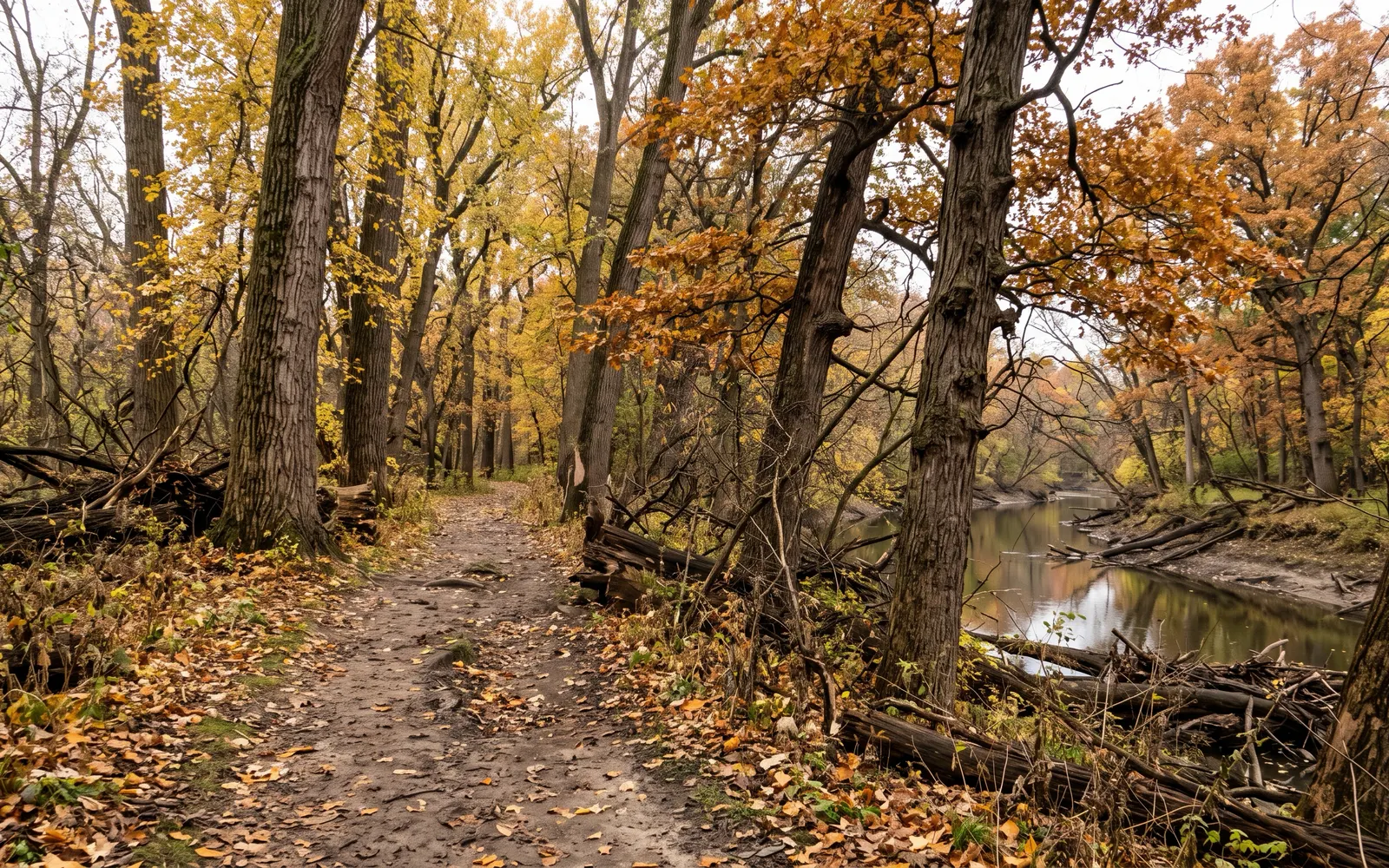
The biggest open space is county land along the river. Thatcher Woods, a 245-acre Forest Preserves of Cook County site with its entrance on Chicago Avenue west of Thatcher Avenue, combines floodplain forest, savanna and prairie, with more than 250 native plant species and at least 45 nesting bird species. The preserve calls it one of the only remaining examples of quality floodplain forest in its region of Illinois. About 4.9 miles of unpaved trails connect it to the Trailside Museum. The village's new resident letter says three miles of forest preserve trails border the town. CMAP counts 22.6% of the village's land as open space.
The River Forest Public Library and Trailside Museum
The River Forest Public Library is at 735 Lathrop Avenue, a few blocks north of the Metra station. It is open 9 a.m. to 9 p.m. Monday through Thursday, 9 to 5 on Friday and Saturday, and 1 to 5 on Sunday from Labor Day through Memorial Day. The library offers a Library of Things, museum and cultural passes, room reservations and home delivery. Because the library, the village and the township share the same boundary, every River Forest address is inside the library's service area.
The village's other public learning space belongs to the county. The Trailside Museum of Natural History at 738 Thatcher Avenue opened in 1932 as the Forest Preserves' first public nature education facility, in an 1876 mansion the district bought in 1919. It shows live native animals and wildflower gardens, and is open 9 a.m. to 5 p.m. from March through October and 9 to 4 from November through February, closed Fridays. Thatcher Pond, a 1.5-acre old oxbow of the Des Plaines River next to its parking lot, is open for fishing.
Utilities and Village Services in River Forest
River Forest's water comes from the City of Chicago, per the village's community profile, and the village bills owners for water and sewer every two months, per its new resident page. The village is also surveying properties to find lead service lines under the state Lead Service Line Replacement Act, and asks owners to fill out its survey. Ask the seller whether the house has a lead line and whether it has been replaced.
Trash goes through Lakeshore Recycling Systems, the village's contracted hauler. Standard service includes weekly pickup of up to two cans of refuse and unlimited recycling in a 32-gallon container or 18-gallon bins. ComEd delivers electricity and Nicor Gas provides natural gas. AT&T and Comcast provide cable and internet. Every vehicle registered in Illinois at a River Forest address also needs a village vehicle sticker, and dogs and cats must be licensed with the village each year.
One note for sellers: the ATG summary says the final water bill must be paid before the village transfer stamp is issued, and a pre-transfer inspection is required, so schedule both early.
Hospitals Near River Forest
The largest hospital nearby is just across the river. Loyola University Medical Center in Maywood has 547 beds and a Level I trauma center, per Wikipedia, and it is the academic medical center for Loyola University Chicago's medical and nursing schools. Loyola also runs Gottlieb Memorial Hospital in Melrose Park, a 264-bed community hospital. Other hospitals in Oak Park and on Chicago's West Side are a short drive east, and which one is closest depends on which corner of River Forest you live in.
Architecture Walks, Campus Events and Nights Out from River Forest
River Forest's culture is mostly quiet and outdoors. The architecture is the main attraction: the village's historic preservation page links a historic homes brochure and video series, free at Village Hall, and a Google map of significant properties that works as a self-guided walk. Start at the Winslow House on Auvergne Place, walk east past the Prairie houses on the 700 block of William Street, and you have seen more Prairie School architecture than most towns have in total.
The universities fill in the calendar. The village says Dominican and Concordia offer academic and cultural programming throughout the year, and the library and the Trailside Museum run events most weeks. For a bigger night out, downtown Oak Park is across Harlem, Forest Park's Madison Street is to the south, and the Loop is 26 minutes away on Metra or on the Green Line from Harlem/Lake.
River Forest's Yearly Calendar: Party in the Park to Deck the Depot
The park district runs most of the village's big events. In summer 2026, Party in the Park brought free live music on Thursday evenings, 6 to 7:30 p.m., to Keystone Park on June 18, Washington Commons Park on July 30 (moved from July because of heat and air quality) and Priory Park on August 13. The Food Truck Rally ran Friday, August 21, 2026, from 5 to 9 p.m. in the Depot parking lot and Keystone Park West, with a beer tent and live music. Wikipedia credits the Rotary Club of Oak Park River Forest with hosting the rally for charity, and says Keystone Park hosted the 2016 Little League Illinois State Tournament.
Fall and winter have their own rhythm. The Forest Preserves' events calendar lists the Halloween Hoot and Howl at Keystone Park on Friday, October 2, 2026, at 5 p.m., presented with the park district and the library, plus bird walks and programs at Trailside most weekends. The park district's calendar shows Santa's Arrival and Holiday Tree Trimming on November 19 and Deck the Depot on December 5.
For everything else, the village runs a shared calendar at RFHappenings.com that combines events from the village, District 90, OPRF, the park district, the library and the township in one place.

What's Being Built, and Fought Over, in River Forest
The biggest approved project is on Madison Street. On August 17, 2026, the Village Board approved a planned development and redevelopment agreement with Five Thirty One Partners for the village-owned site at Madison Street and Ashland Avenue, per the village's Madison Street page. The village's August 14, 2026 FAQ describes a five-story, mixed-use rental building, reduced from 72 to 69 units, with 129 parking spaces and estimated rents of $2,200 to $5,500 a month. The village bought the parcels in 2017 for $1.8 million, will sell them for $10 and will reimburse up to $2 million in TIF-eligible costs. The Madison Street TIF, created on November 28, 2016, expires in 2039. The board's approval added a $300,000 neighborhood impact fund, a post-occupancy traffic study and sidewalk and lead service line work on the nearby blocks of Ashland and Lathrop.
The most visible stalled site is at Lake and Lathrop. The village approved a redevelopment agreement there in 2016 and a planned development in 2018, and a building permit issued in February 2022 expired in August 2023, per the village's Lake and Lathrop page. The site is now tied up in a foreclosure case between the owner and its lender. At a September 15, 2026 hearing, the judge set a deadline for discovery by the end of the year, and the next status hearing is October 19. The village is not a party to the case. If you are looking near that corner, expect the site to stay as it is for a while.
The biggest open question is a railroad proposal. The village's O'Hare Flyer page, updated September 17, 2026, says the Village Board unanimously passed a resolution on September 14 opposing a private proposal, called the O'Hare Flyer, to run express trains through River Forest. The Wednesday Journal reported that the plan calls for battery-powered trains between downtown Chicago and O'Hare every 15 minutes from 4 a.m. to 10 p.m., at around 80 mph, at an estimated $2.25 billion. The village says it will oppose the project before the federal Surface Transportation Board. Nothing has been approved. If you are looking at a house near the rail line on the west side, ask me for the current status.
Other changes are smaller. The North Avenue TIF was created on August 20, 2018, per its village page, and both TIF districts have offered facade grants since spring 2025. The village's Stormwater Master Plan was finalized in April 2025 with a list of capital projects that the village is still seeking funding for. And the village FAQ notes that the state's People Over Parking Act now bars minimum parking requirements for projects within half a mile of a transit hub, which covers much of River Forest's commercial land.
I don't label any town or neighborhood as safe or unsafe.
Flood Risk in River Forest
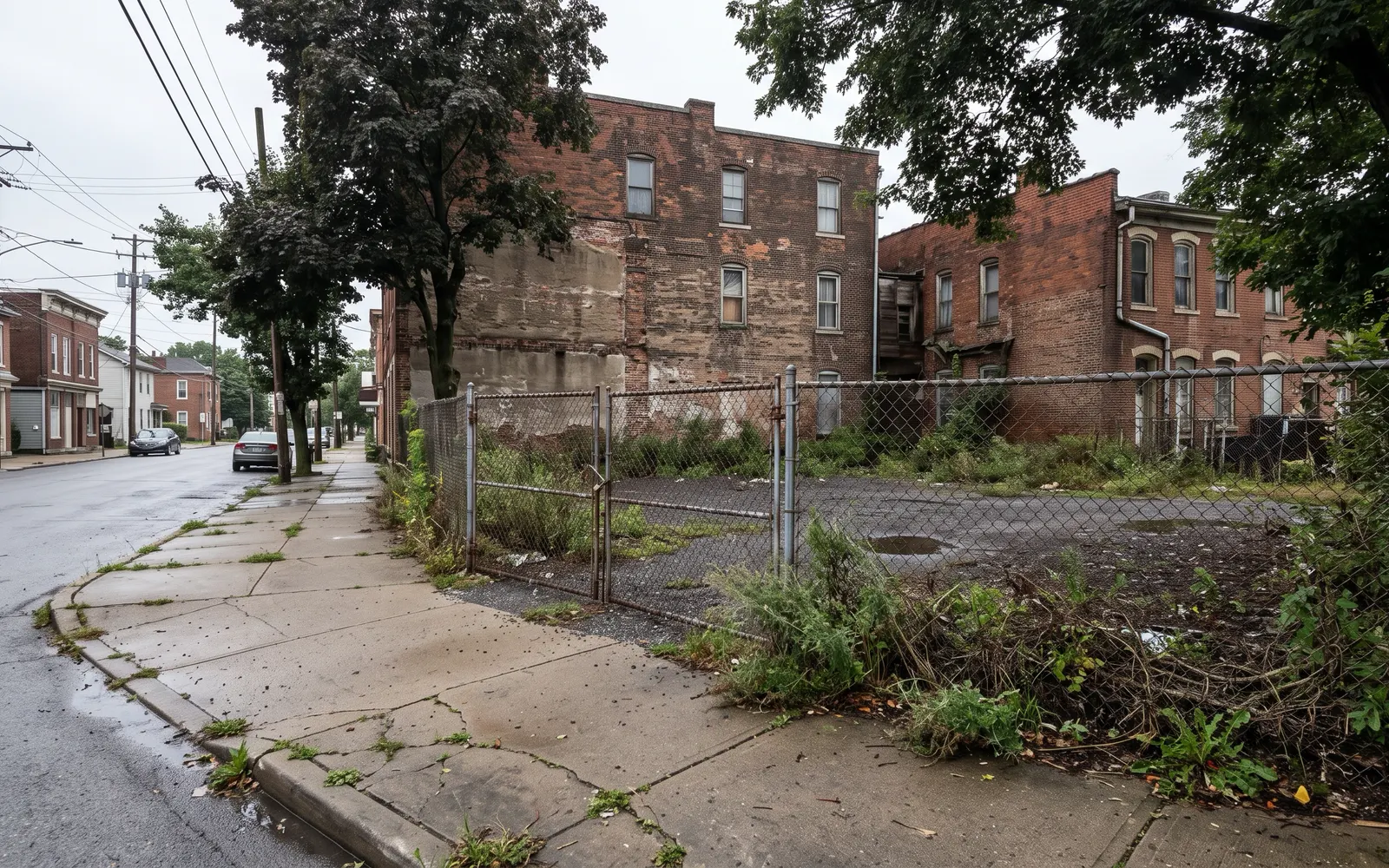
River Forest's flood question is mostly about basements, not the river. Redfin, using First Street's model, rates the village's flood risk as minor overall but says 11% of properties are at risk of severe flooding over the next 30 years. The Des Plaines River and Thatcher Woods sit on the west edge, and the Forest Preserves note that Thatcher Pond, an old oxbow of the river, is prone to flooding. Most houses, though, are well east of the floodplain.
The bigger issue is the sewer system. The village's Stormwater Master Plan page says River Forest was developed before modern stormwater management, with limited storage, poor overland flow routes in rear yards and a combined sewer system that carries both sewage and stormwater. The plan was commissioned in 2021 after heavy rains in 2020. The village's flooding page lists the three most common types residents see: sewer backup, groundwater seepage and yard flooding. It offers a resident assistance program to protect basements, a sewer lateral repair reimbursement program, a pump loaner program and a flood zone map.
Three checks before you write an offer. Look the address up on the village's flood zone map and the FEMA flood map, because a mapped flood zone can mean required flood insurance. Ask the seller directly whether the basement has ever taken water; the Illinois disclosure form asks, but a direct question gets a better answer. And have the inspector look at the sump pump, the overhead sewer or backflow valve if there is one, and the grading. The village's backflow prevention page explains the options.
Frequently Asked Questions
Is River Forest, IL in Cook County?+
Yes. Census Bureau estimates for 2025 put all 11,393 village residents in Cook County, and the Cook County Assessor says River Forest Township is coterminous with the village. Every home carries a Cook County tax bill on the south and west suburban reassessment cycle.
How much does a house cost in River Forest, IL?+
Redfin reported a median sale price of $774,487 for the three months ending August 2026, up 7.0% from a year earlier. Zillow's home value index was $738,290 for August 2026, up 11.3%. The Cook County Assessor's 2025 median single-family sale was $900,000.
What are property taxes in River Forest, IL?+
Ownwell (April 2026) puts the median effective rate at 2.62% with a median bill of $14,970. River Forest Township was reassessed in 2026, and the new values will affect second-installment bills issued in 2027. At the summer median price, expect about $20,290 a year.
Does River Forest have a real estate transfer tax?+
Yes. ATG lists a village transfer tax of $1.00 per $1,000 of price, paid by the seller, with the final water bill paid and a pre-transfer inspection required. The Cook County transfer tax of 25 cents per $500 also applies.
What school district is River Forest, IL in?+
Almost all of River Forest is in District 90 for kindergarten through eighth grade: Lincoln Elementary (south), Willard Elementary (north) and Roosevelt Middle School. High school is Oak Park and River Forest High School, District 200. Confirm the elementary attendance area for each address.
How long is the train from River Forest to Chicago?+
Every weekday train from the River Forest Metra station reaches Ogilvie in 26 minutes. In fall 2026 there are 21 inbound weekday trains on the Union Pacific West line. The CTA Green Line's Harlem/Lake terminal is across Harlem Avenue in Forest Park.
Can I renovate a house in River Forest's historic district?+
Yes. For the 298 Significant Properties, street-facing work over 20% of a facade or visible window replacement gets a 30-day advisory review (7 days for windows), and the commission's recommendations are not binding. Demolition requires a public hearing and can be delayed up to six months.
What neighborhoods are in River Forest, IL?+
River Forest has no official neighborhoods. The names that come from its history include the Village Center, the Quick tract on the east side, the Northwoods estate section, the Braese tract, the Thatcher west side, the north end past Division Street and the blocks south of the Metra tracks.
Is River Forest in a flood zone?+
Most of it is not. First Street's model via Redfin rates River Forest's flood risk as minor, with 11% of properties at severe 30-year risk. Basement flooding from the combined sewer system is the more common problem, so check the flood map and inspect the sump and backflow valve.
Eshu Chikoti has extensive access to off-market listings throughout River Forest and the rest of Cook County — homes that never make it to the public listing sites. That matters right now: in a seller's market like this one, well-priced homes routinely go under contract within days, and buyers relying only on public listings are competing for whatever is left over. Working with someone plugged into off-market inventory means seeing homes before the crowd does.
Eshu Chikoti · 847-691-4282 ·
Get new River Forest listings by email
When a home comes on the market in River Forest, I'll email it to you.
Just your email. Unsubscribe any time by replying.
Thinking About River Forest?
Whether you're buying, selling, or just curious what's on the market, I can walk you through River Forest street by street.