Richton Park, IL
Richton Park, IL is a 4.4-square-mile Cook County village on the Metra Electric line, 29.3 rail miles from Millennium Station, with its own I-57 interchange at Sauk Trail, 5,772 homes and a summer 2026 median sale price near $204,000.
Living in Richton Park, IL means a median sale price near $204,000 this summer, a 53-minute Metra Electric ride to Millennium Station, I-57 at Sauk Trail and property tax near 3.63% of value. Most homes were built from 1970 to 1989, there is no village transfer tax, and here it is, subdivision by subdivision.
Written by Eshu Chikoti · 847-691-4282 ·
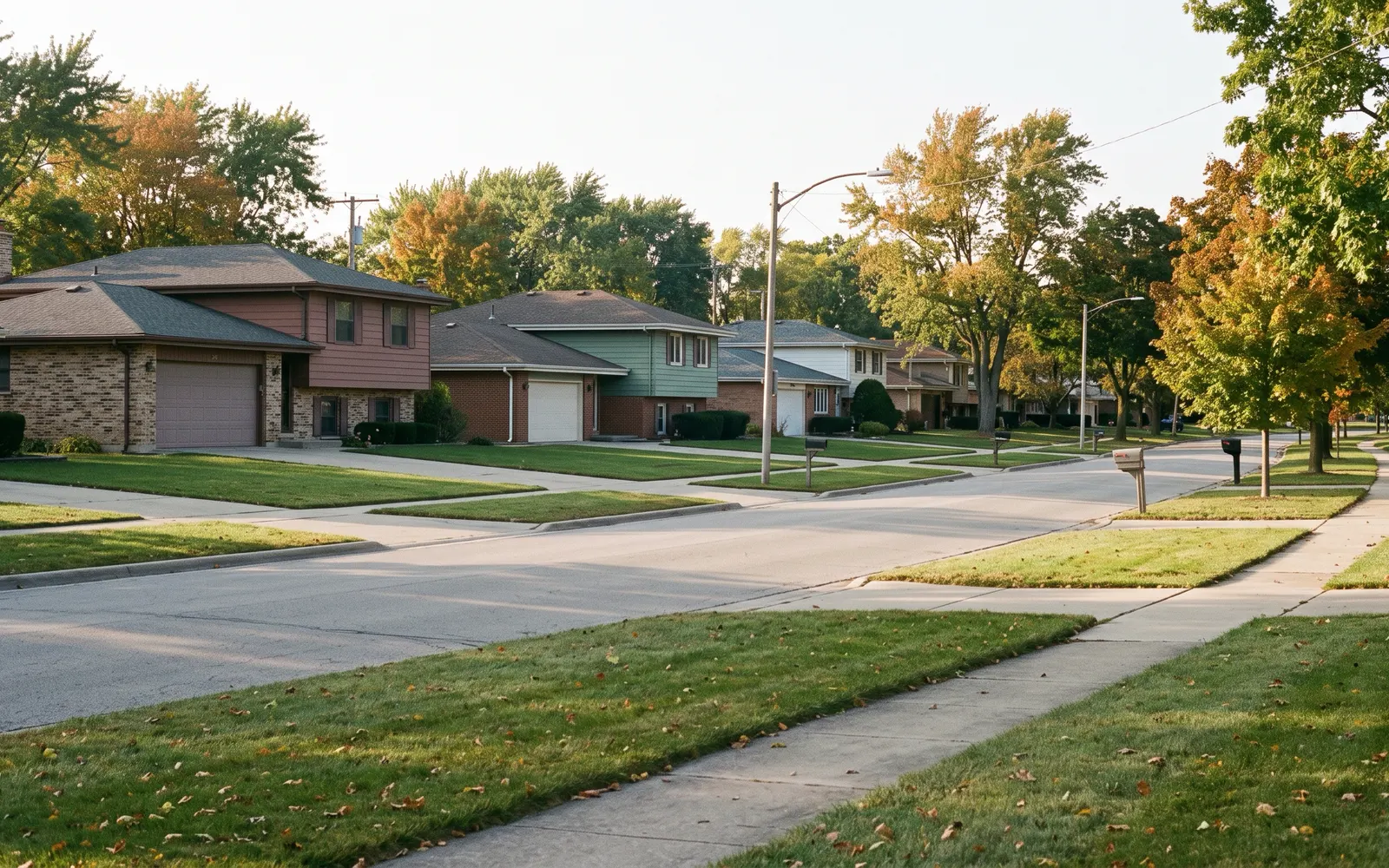
How Richton Park, IL Got Here: A Rail Crossing on the Sauk Trail
Richton Park started where a railroad crossed an old trail. The village's history page describes the Sauk Trail as a travel route that was in use long before the railroad came. The Illinois Central Railroad arrived in 1852, and developers set up a depot and platted a small farm village where the tracks crossed the trail. Wikipedia says the area was being farmed by the 1840s and that the name came from Richton, Vermont, the home of an early settler, citing a 1922 Illinois Central magazine.
The village is exactly 100 years old this year. The Illinois Central electrified its suburban lines in 1926 with Richton as the last stop, and residents incorporated the village and renamed it Richton Park, per the village. Its centennial page gives the incorporation date as June 8, 1926, and the village marked the date with a special Centennial Board Meeting on June 8, 2026, according to a September 2, 2026 village news post. For its first 40 years it stayed small. The village history says it "remained a tiny community surrounded by farms heavily planted with asparagus," and the Census counted 137 people in 1930 and 232 in 1950, per Wikipedia.
The houses came in one 30-year run. The village says Chicago's growth reached the area in the late 1960s and 1970s and the population boomed as the village annexed new housing developments: 2,558 people in 1970, about 9,403 in 1980 and 12,533 in 2000. Wikipedia's census table adds 13,646 in 2010 and 12,775 in 2020. The Census Bureau's Vintage 2025 estimates put the village at 12,483 on July 1, 2025.
Two more dates matter for a buyer. The current Richton Park Metra station was built by the Illinois Central in 1946 and was the end of the line until 1977, when University Park station opened, per Wikipedia's station article. And on the evening of June 7, 2008, an EF2 tornado damaged homes and businesses in parts of the village, per Wikipedia. That is one reason I always ask what year a roof was replaced, and why.
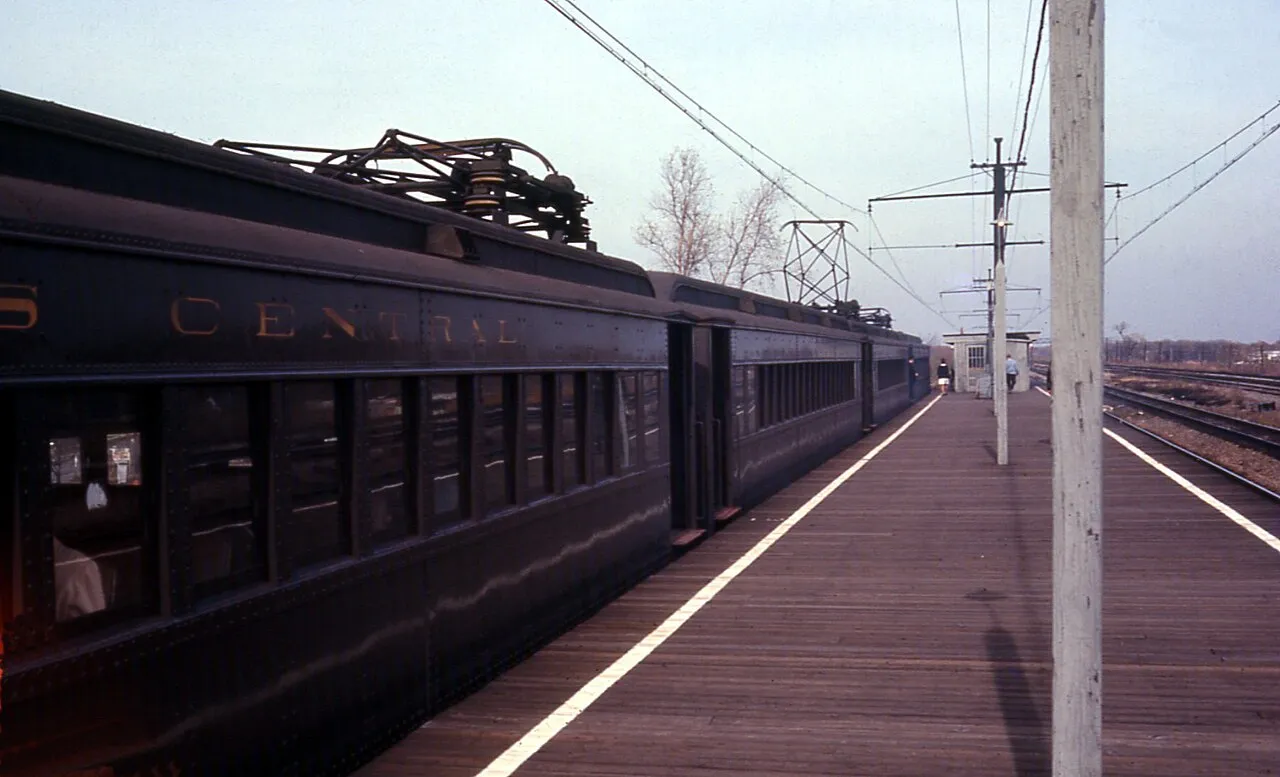
Richton Park at a Glance
Richton Park covers 4.40 square miles, 4.39 of it land, per the 2020 Census gazetteer figures quoted on Wikipedia. Wikipedia puts Matteson on the north, Park Forest on the east and University Park on the south. The Metra Electric station is 29.3 miles from Millennium Station downtown, per Wikipedia's station article.
The county question comes up a lot here, because the Will County line is close. I checked it two ways. The Census Bureau's 2020 place-by-county file for Illinois lists Richton Park village in Cook County only. The Vintage 2025 subcounty estimates, which list every county piece of a village even when nobody lives in it, put all 12,483 Richton Park residents in Cook County and in Rich Township, with no Will County row at all. So as of the Census Bureau's 2025 boundaries, no part of Richton Park is in Will County, and every address is on the Cook County Assessor's calendar.
The Will County line is just south, though. The same Census files put Monee entirely in Will County and University Park mostly in Will County: 6,710 of its 7,019 residents in 2025, with 309 in Cook. If you are searching the area and a listing says University Park or Monee, you are almost always looking at Will County taxes and a different assessment system. Richton Park is also one of five villages in the Will Cook Enterprise Zone, with Matteson, Monee, Park Forest and University Park, which is a business incentive program and does not change anyone's county.
It is mostly a place people live, with a lot of open land still on the map. CMAP's June 2026 community snapshot counts 2,818.6 acres in 2023. Single-family homes took 29.0%, transportation and other uses 26.6%, and agriculture 22.6%, or 638 acres. Another 208.5 acres, 7.4%, were vacant. Few inner suburbs have that much undeveloped land inside their limits. The 2020-2024 Census ACS counts 5,772 housing units, with 51.9% of occupied homes owned and 48.1% rented.
Two recent village actions are on the record. Voters granted Richton Park home rule powers in the March 19, 2024 primary, per the village's home rule page. On June 25, 2026, the village said S&P Global Ratings upgraded its bond rating from BBB to BBB+ with a stable outlook, and that S&P put village reserves at about $8.1 million in fiscal 2025, roughly 57% of operating revenues.
There is no village transfer tax, and the village has put its pre-sale inspection rules in writing.
The 3.63% median effective rate is well above Cook County's 2.14%, Rich Township's 2026 reassessment is still ahead, and homes carry about 90% of the tax base. Walk Score rates ZIP 60471 at 44. Only 2.1% of homes date from 2010 or later. Days on market run 75 to 97 by Redfin's measures, so selling can take patience too.
Richton Park Neighborhoods, Subdivision by Subdivision
Richton Park does not publish a neighborhood map, but it names its subdivisions in two useful places. The garbage and recycling page splits the village into pickup routes by subdivision, and the homeowners association page lists ten associations. Put together, they give a practical list of the names you will see on listings.
The easiest way to read the village is by its two big roads and the railroad. Sauk Trail runs east and west through the middle and carries most of the commercial space. Governors Highway and the Metra Electric tracks run through the east side, where the station and the Town Center are. I-57 crosses the west side, with its interchange at Sauk Trail. Per the Cook County Sauk Trail study, the stretch of Sauk Trail west of I-57 is sparsely developed and agricultural.
Some subdivisions have their own association and some do not, and that changes the monthly cost. Greenfield has separate single-family and townhome associations, Lincoln Crossings has a main association and a townhome association, Lakewood has an association plus condo associations #1, #2 and #5, and Lioncrest and Lincoln Crossings Townhomes list a management company. Ask for the dues, what they cover and the last two years of minutes before you write an offer on any home in one of them.
The expectation I most often have to reset with buyers here is that one Richton Park price applies to every street. A 1970s ranch, a townhome with association dues and a newer two-story in a subdivision with its own lake are three different products. Below are the names I could source. The single-source ones should be checked against the MLS subdivision field before anyone relies on them, and if you want a specific address placed, that is a conversation I am happy to have here.
Richton Hills. The village's garbage routes split it into Richton Hills (Cicero to Churchill) and Richton Hills East (Kostner to Poplar), and it has its own homeowners association. One of the village's three water treatment plants and towers is in Richton Hills, per the water and sewer page.
Lakewood. The garbage routes name Lakewood North, South and East, and the park pages refer to Lakewood #2 and Lakewood #3. It has a homeowners association and condo associations #1, #2 and #5. Klawitter Park and Lake George with its fishing pier are in Lakewood #2, and Neil Armstrong School (District 159) owns the Klawitter Park land, per the village park page. A second water plant is here.
Lincoln Crossings. Has a homeowners association and a separate townhome association, per the HOA page. Pierce Park, with tennis courts and the outdoor Fitness Court, is here, as is the third and largest water tower (500,000 gallons).
Greenfield. Separate single-family and townhome associations meet at Village Hall, per the HOA page. Greenfield Park is 3.25 acres with a gazebo and a bike and walking path.
Meadow Lake Estates. Listed as Meadowlake on the garbage routes. It has a homeowners association, and Christina Covington Park, 10 acres with a pavilion and a walking path, sits in the middle of it.
Raleigh Place, Farm Trace, Falcon Crest and the East Side. Named on the garbage routes. Raleigh Place has an association that meets annually, and Farm Trace has a quarter-acre park at Amber Lane and Rita Drive.
Lioncrest. Listed on the HOA page with a management company and monthly Zoom meetings. It does not appear on the garbage routes, so confirm its location and whether it is inside the village.
Names on listing sites (single-source). Walk Score's list of Redfin neighborhoods also shows Lakewood Estates, Meadow Lake Estates, Richton Hills, Southwick Courtyards, Destination Pointe and Fawnbrook Apartments under Richton Park, but the same list includes names that belong to Matteson, such as Old Matteson and Apple Oak. Treat it as shorthand, not boundaries.
What Richton Park Homes Look Like, by Type and Era
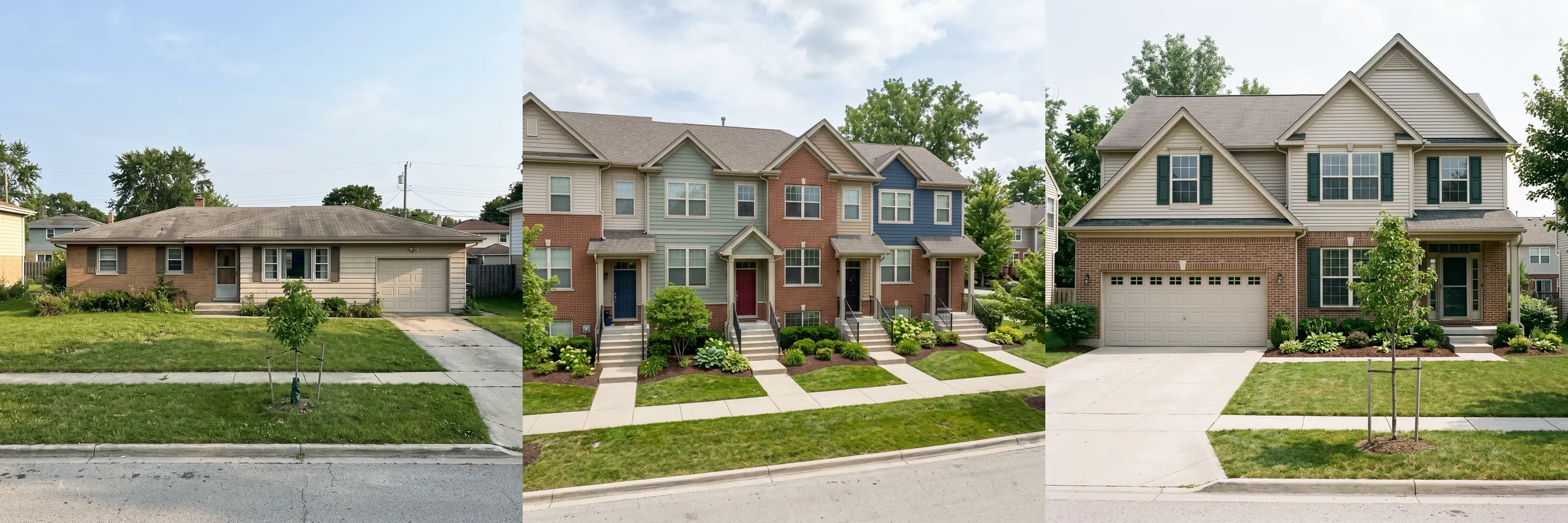
Richton Park is a 1970s and 1980s village. CMAP's snapshot, built on the 2020-2024 ACS, puts the median year built at 1978, against 1961 for Cook County. Of 5,772 units, 52.2% were built from 1970 to 1989 and 23.3% from 1990 to 2009. Another 21.4% date from 1940 to 1969, only 1.0% predate 1940, and just 2.1%, about 123 units, were built in 2010 or later.
The mix is more varied than the street view suggests. Detached single-family homes are 2,958 units, or 51.2%, well above Cook County's 39.6%. Townhomes and other attached single-family homes add 8.3%. At the other end, buildings of 20 or more units hold 1,291 units, or 22.4%, and 5- to 19-unit buildings another 14.1%. Two-flats are almost absent at 0.6%. So about six in ten homes here are houses or townhomes and a bit over a third are in apartment and condo buildings.
Bedroom counts lean to the middle. CMAP counts 34.2% of units with three bedrooms and 17.1% with four, both above the county, and only 1.0% with five or more. One-bedroom and studio units are 19.8%. In practice that means a lot of three- and four-bedroom ranches, split-levels, raised ranches and two-story houses, plus townhomes and condo and rental buildings, several of them near Sauk Trail and the station.
The Census ACS puts the median home value at $220,900 and the median gross rent at $1,294 for 2020-2024. Those are five-year survey numbers and trail the market, which I cover in the next section.
A 1970s and 1980s house has its own inspection list. Original windows and furnaces, aging water heaters, roofs on their second or third cycle, sump pumps and the sewer line to the street are the usual items. The village's lead service line page says homes built before 1986 may have a lead or galvanized steel service line, and it is collecting data house by house under a state-required replacement plan, so ask the seller what the house has. My home inspection checklist covers what to ask for.
The Richton Park Housing Market in 2026
Richton Park is one of the lower-priced markets on the Metra Electric line, and this summer's numbers point two ways. In the three months ending August 2026, Redfin reported a median sale price of $203,865, down 9.39% from a year earlier. Its median price per square foot rose 4.4% to $154 over the same stretch. Redfin counted 34 homes sold in August, down from 42 a year before, and said homes sold after about 75 days on market, up from 64.
The competition numbers are moderate. Homes sold for 98.4% of list price on average, 2.2 points lower than a year before. Redfin gives Richton Park a Compete Score of 40 out of 100, which it calls somewhat competitive, and says some homes get multiple offers. Its summary is that the average home sells for about 1% below list and goes pending in about 97 days, and hot homes sell for about 2% above list and go pending in about 54 days. The 75-day and 97-day figures are Redfin's two different measures on the same page.
Zillow's home value index points up. It put the typical Richton Park home at $229,978 in August 2026, up 7.3% from $214,343 in August 2025 and 10.0% from $209,161 in August 2024. The two numbers measure different things. Zillow estimates every home in the village, and Redfin's median is the middle of whatever sold in three summer months, which in a village this size is only about a hundred sales. When the median falls 9.39% while the price per square foot rises 4.4%, that tells me this summer's sales tilted toward smaller homes, not that the typical house lost value.
For context, Zillow's August 2026 index put Park Forest at $161,174, Chicago Heights at $177,907, Steger at $177,254, University Park at $197,599, Country Club Hills at $217,181, Homewood at $253,699, Matteson at $275,871, Oak Forest at $303,969, Tinley Park at $337,869, Flossmoor at $343,485, Olympia Fields at $348,213 and Monee at $354,801. Richton Park sits below its neighbors Matteson and Olympia Fields and above Park Forest and University Park, which sits mostly across the county line. If you are working out a budget, my guide to how much house you can afford walks through the numbers.
The pattern I see in the data is a slow, price-sensitive market. At 75 to 97 days on market and 98.4% of list, a buyer usually has time to inspect and negotiate, and a seller who prices above the recent sales for the same subdivision tends to sit. I price townhomes, condos and detached houses separately here, and I'd tell any buyer to look at the sale-to-list ratio for the product they want, not the village-wide number.
Richton Park Property Taxes: Rich Township's 2026 Reassessment
Property tax is the line that surprises most buyers in Richton Park. Ownwell's Cook County data for Richton Park, updated April 13, 2026, puts the median effective rate at 3.63% and the median annual bill at $6,402, on a median home value of $180,010. The Cook County median effective rate on the same page is 2.14%. For ZIP code 60471, Ownwell lists a 25th percentile rate of 3.18% and a 75th percentile rate of 4.26%, so two similar houses can carry noticeably different bills.
Part of the reason is the tax base. CMAP's snapshot puts the village's 2024 equalized assessed value at $206.3 million, and $185.7 million of it, about 90%, was residential. Commercial property was $18.6 million and industrial under $1 million. The village's board also passed Resolution R-26-23 in 2023 stating its intent, if voters approved home rule, to freeze the village's portion of the residential tax bill for five years. Voters approved home rule in March 2024. The village portion is one line on the bill; schools and other bodies levy the rest.
2026 is a reassessment year for Rich Township, and it had not started yet when I checked. Cook County revalues one-third of the county each year, and the Assessor's assessment calendar, last updated September 28, 2026, says the south and west suburbs are this year's group. As of that date, Rich Township was still listed with no reassessment notice date, along with Bloom and Thornton. When the notices go out, owners will have a window to appeal to the Assessor and then to the Board of Review. Watch for the notice if you are buying or selling this fall.
The last time was 2023. The Assessor's 2023 Rich Township page says notices went out on September 20, 2023, with appeals due October 23, 2023, and that those values would be "reflected on tax bills in 2024." It put the 2022 median single-family sale in the township at about $196,000 and the Assessor's 2023 median single-family estimate at $207,000, and said total residential assessed value in the township rose 54%. By my own arithmetic on the three-year cycle, the 2026 values would reach bills in 2027 and the next reassessment after this one would be 2029.
The bills you pay now still carry the 2023 values. For tax year 2025, the first installment was due April 1, 2026, and the second is due October 1, 2026, per the Cook County Treasurer. Cook County said those second-installment bills would be mailed September 1, 2026, later than the usual schedule because of the county's tax system overhaul. If you close this fall, ask your attorney how the proration handles that bill.
Here is what the rate looks like on a real purchase. At this summer's $203,865 median, 3.63% works out to about $7,400 a year, or about $617 a month. On Zillow's $229,978 index value it is about $8,348 a year. The seller's current bill can be lower or higher, because it reflects the 2023 assessment and the seller's exemptions, and the 2026 reassessment is still coming. Budget off the purchase price. The Cook County homeowner exemption takes $10,000 off the equalized assessed value of an owner-occupied home; the savings equal that $10,000 times your local tax rate.
Richton Park has no village transfer tax. The ATG ordinance summary lists the rate as "None," and the board's 2023 Resolution R-29-23 says the village will refrain from asking voters to authorize one. The county still charges 25 cents per $500 of value, per the Illinois Department of Revenue, or about $102 at the median. My Illinois closing costs guide covers the rest. This is general information, not tax advice. Your bill depends on your parcel, your exemptions and the assessor.
Buying or Selling in Richton Park: The Occupancy Inspection
The village step that catches sellers off guard is the occupancy inspection. The village's occupancy inspection page says an occupancy inspection is required before any change in ownership or tenancy, for residential and commercial property alike. The ATG ordinance summary, last updated in 2011, lists a $75 pre-transfer inspection fee and says liens and the water bill must be paid and a heating certification and the original deed are required.
The order matters. The village says any money owed to it, such as a delinquent water bill, property maintenance violations or liens, must be paid before the inspection can be scheduled. If the inspector finds no violations and you hand over the heating certificate, you get the Certificate of Occupancy at the end of the inspection. If there are violations, you have 30 days to fix them and one free return visit; a third visit means paying the full fee again. The village posts the inspection checklist it uses, and I'd walk the house with it before listing.
There is a safety valve for closings. If fixing the violations in time would put the sale at risk, the inspector may issue a Conditional Certificate of Occupancy, provided an escrow of at least $500 plus reinspection fees is posted with the village and the buyer agrees in writing to make the repairs within 30 days. The certificate is good for six months and can be renewed once, with a new inspection and no extra fee.
For a buyer, that inspection is useful but it is not a home inspection. It checks code items the village cares about. It does not replace your own inspector, the sewer scope or the questions about the roof and the furnace. For a seller, the practical advice is simple: order it as soon as you sign a listing agreement, pay the water bill first and fix the small items before the inspector sees them.
Richton Park Schools: Districts 162, 159 and Rich Township 227
Richton Park is split between two elementary districts, so the school question starts with the address. The village's schools page lists Matteson School District 162 and Elementary School District 159 for the lower grades, and Rich Township High School District 227 and Southland College Prep Charter High School for high school.
District 162 is headquartered in Richton Park, at 4601 Sauk Trail, per Wikipedia. The district's website says it has seven schools and more than 2,900 students in pre-K through eighth grade. Two of them are in the village, per the village: Richton Square School for pre-K through third grade and Sauk Elementary School for fourth through sixth. Its middle school is O.W. Huth Middle School in Matteson. Its other elementary schools are Arcadia, Illinois, Indiana and Matteson Elementary.
District 159 serves other parts of the village. Its Richton Park school is Neil Armstrong School, kindergarten through fifth grade, per the village schools page; the village says Klawitter Park in Lakewood #2 sits on land that belongs to Neil Armstrong School and District 159. The district's website lists Colin Powell Middle School and Marya Yates, Sieden Prairie and Woodgate elementary schools as its other schools.
High school is Rich Township High School District 227, which runs one high school on two campuses. The district's campus page puts the Fine Arts and Communications Campus at 5000 Sauk Trail in Richton Park and the STEM Campus at 3600 203rd Street in Olympia Fields. The district's homepage lists 2,209 students. Southland College Preparatory Charter High School is also in the village, at 4601 Sauk Trail, per Wikipedia.
I don't rank schools on this page. The Illinois Report Card has each school's own data. What I will say is that with two elementary districts in one village, the first thing to confirm on any Richton Park house is which district it is in, and the second is which school and which District 227 campus it feeds. Call the districts with the address before you make an offer.
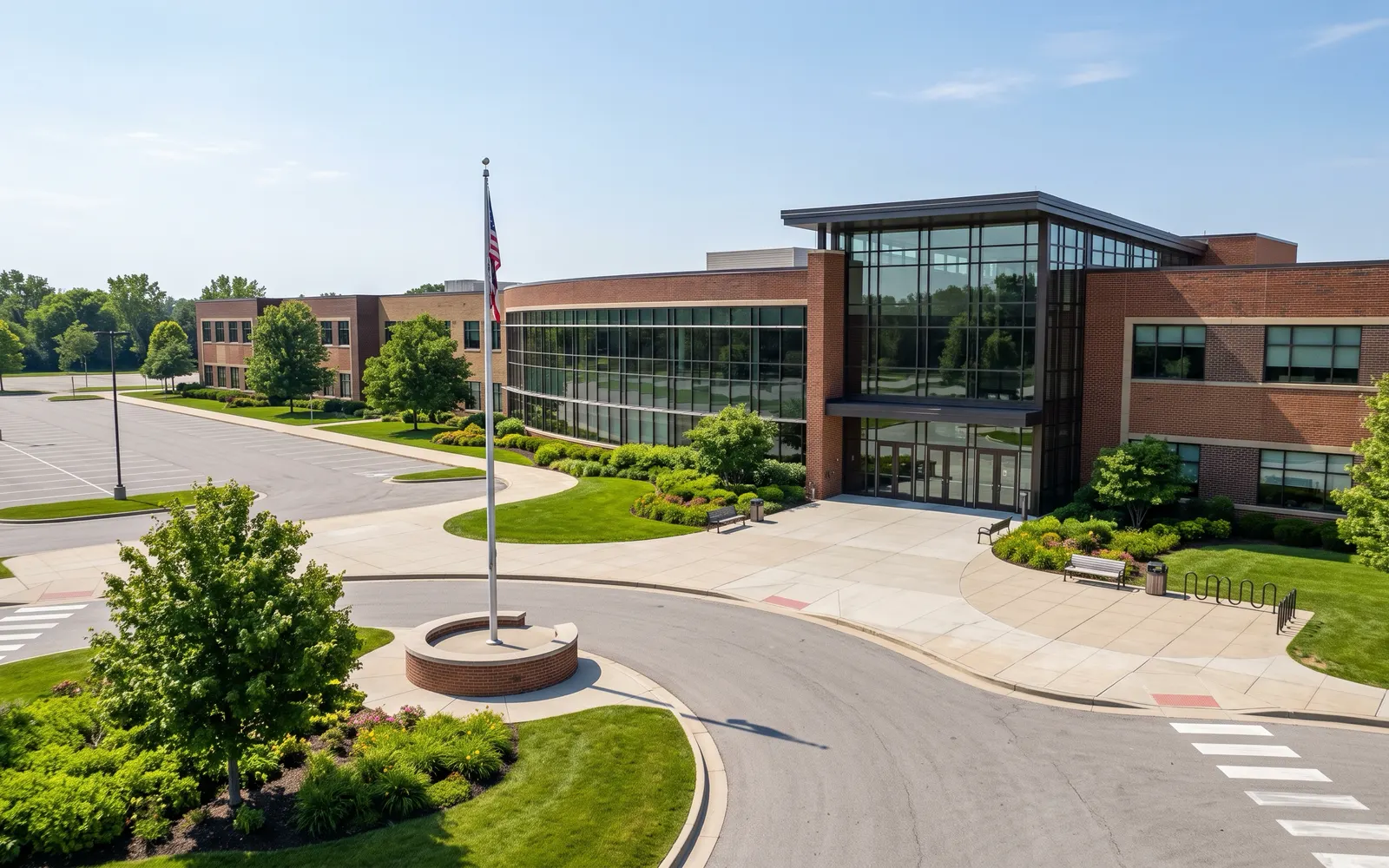
District 162 schools in Richton Park. Richton Square School (pre-K to 3) and Sauk Elementary School (4 to 6), per the village; middle school is O.W. Huth in Matteson. District office at 4601 Sauk Trail.
District 159 school in Richton Park. Neil Armstrong School (K to 5), per the village; middle school is Colin Powell Middle School.
Rich Township High School District 227. Fine Arts and Communications Campus, 5000 Sauk Trail, Richton Park; STEM Campus, 3600 203rd Street, Olympia Fields.
Charter high school in the village. Southland College Preparatory Charter High School, 4601 Sauk Trail.
Commuting from Richton Park: The Metra Electric to Millennium Station
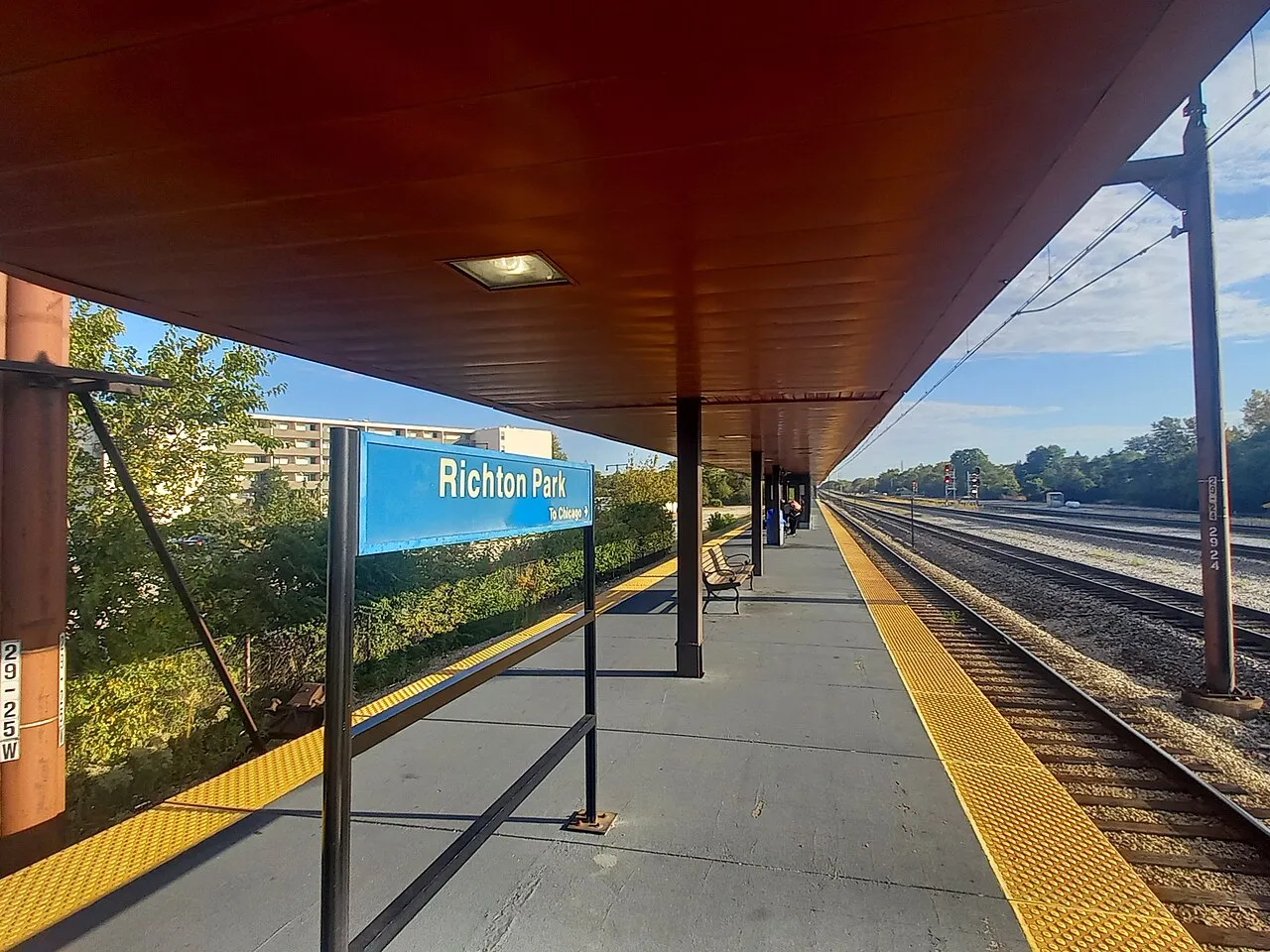
Richton Park has its own Metra Electric station, and it is the second-to-last stop on the main line. Wikipedia's station article puts it on Sauk Trail east of Governors Highway, at 3807 Tower Drive, 29.3 miles from Millennium Station, in fare zone 3. University Park is the only stop south of it. Heading north, the next stops are Matteson, 211th Street, Olympia Fields, Flossmoor and Homewood.
According to Metra's schedule data for the week of September 28, 2026, 27 trains leave Richton Park for Millennium Station on weekdays. The first leaves at 4:18 a.m. and the last at 11:53 p.m. Ride times run from 53 to 75 minutes. The fastest are the 6:20, 6:40, 7:00 and 7:15 a.m. departures, which take 53 or 54 minutes. Midday trains run hourly on the hour and take about 60 minutes. Coming home, 26 weekday trains run outbound, at 47 to 70 minutes. Saturdays have 21 trains each way and Sundays 12, at 61 to 67 minutes.
Parking is cheap and plentiful. The village's commuter parking page describes it as one of the largest commuter lots in the south suburbs, at the northeast corner of Sauk Trail and Governors Highway. It lists two daily lots with 582 spaces at $2 a day, two monthly lots with 273 spaces at $35 a month and one quarterly lot with 194 spaces at $90 a quarter, for 1,049 spaces in all. Daily parking can be paid in the Passport Parking app. Wikipedia puts the station's average weekday boardings at 1,059 in Metra's 2018 count, 47th busiest of 236 stations outside downtown.
The census shows most people still drive to work. CMAP's snapshot has 73.1% of workers driving alone and 4.8% riding transit in 2020-2024, against 11.8% transit for Cook County, with 13.2% working from home. The average commute is 33.1 minutes. The same report's Census job-location data for 2023 shows Chicago as the top work location for village residents, at 28.1%.
Driving from Richton Park: I-57, Sauk Trail and Cicero Avenue
Interstate 57 is Richton Park's highway, and the village has its own exit. Wikipedia's I-57 exit list puts Exit 339, Sauk Trail, in Richton Park. The next exit north is in Matteson, and the next exits south are University Park at Exit 337 and Monee at Exit 335. The village's economic development page says more than 70,000 vehicles a day travel I-57 through the village, and that its three other commercial corridors average about 20,000 vehicles a day each.
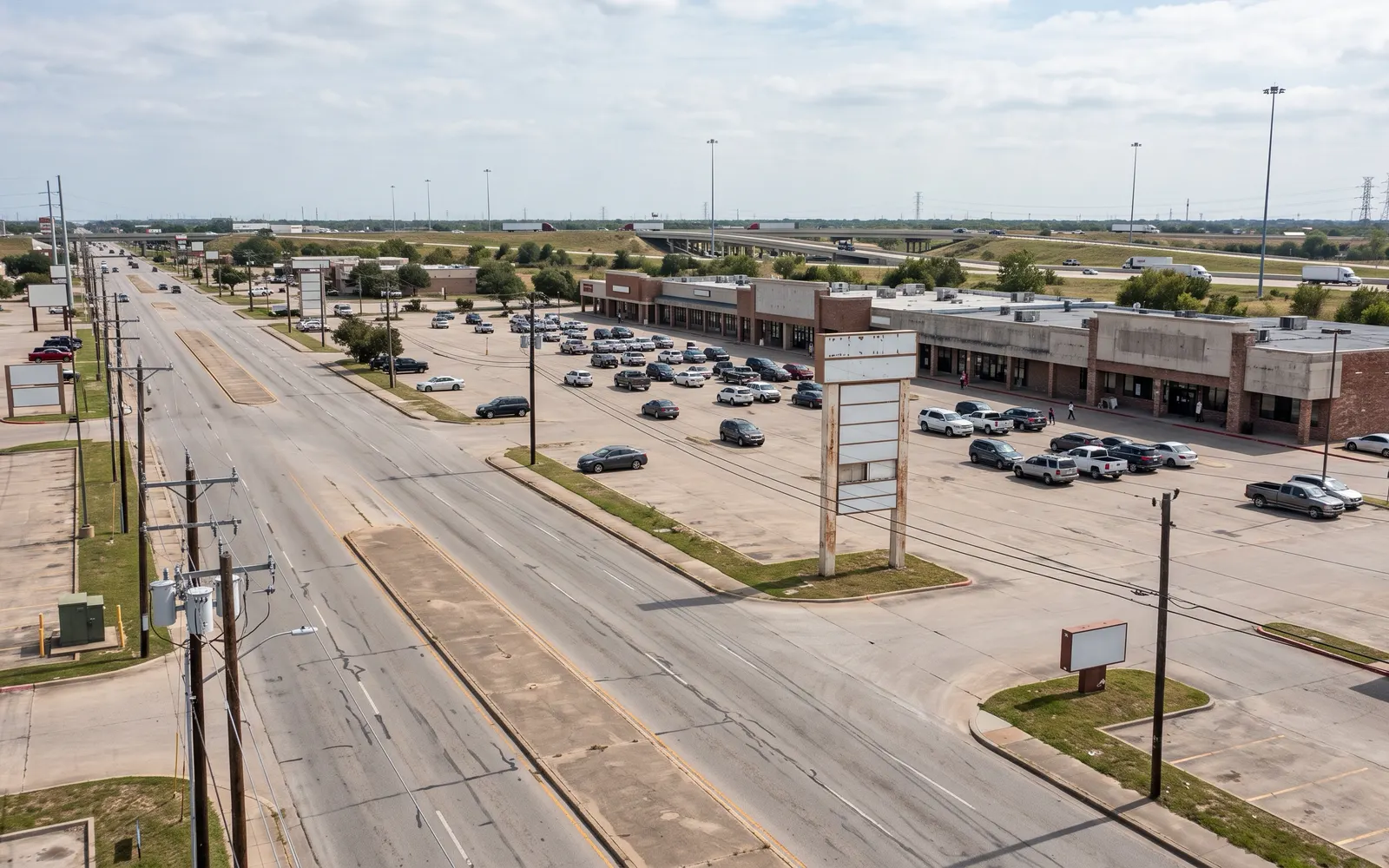
The local roads are simple. Sauk Trail runs east and west through the middle of the village. Per the Cook County Sauk Trail study, it is a county road with two lanes each way and a turn lane or median through Richton Park, a 40 mph limit between Central Avenue and Governors Highway and 30 mph from Governors Highway to Main Street. Its busiest stretch, between Governors Highway and Main Street, carried 27,300 vehicles a day in IDOT's 2022 count. Cicero Avenue (Illinois 50) and Governors Highway are the state roads that cross it.
Two planned road projects are worth knowing about. The Cook County study is looking at safety changes on a 4.2-mile stretch of Sauk Trail from Central Avenue to Western Avenue, through Richton Park and Park Forest, including narrower lanes, better crossings and sidewalks or sidepaths; it notes there are no sidewalks on Sauk Trail between Central Avenue and Thomas Drive. And the village's January 2026 economic development update lists a $300,000 Cook County grant to design a two-way conversion of Richton Road and $800,000 in state money for a southern extension of Richton Road near the station.
Most households here run more than one car. CMAP counts 46.7% of households with two or more vehicles in 2020-2024, and an average of 16,858 vehicle miles per household in 2023, against 11,618 for Cook County. If you are comparing Richton Park with a town closer in, add the driving to the budget.
Is Richton Park Walkable?
For most errands, no. Walk Score rates ZIP code 60471 at 44, which it treats as car-dependent, and counts about 19 restaurants, bars and coffee shops in Richton Park. It says the average resident can walk to 0.2 of them in five minutes. CMAP's commute data agrees, with 0.0% of workers walking or biking to work in 2020-2024.
There are exceptions. Homes near the station and the Town Center can walk to the train, and the subdivisions have park paths: Helen A. Jones Park has an extra-large bike and walking path, and Glaeser, Pierce, Greenfield and Covington Parks have paths too, per the village's park pages. The Cook County Sauk Trail study notes a 0.4-mile north-south trail along a utility right-of-way just east of Kostner Avenue.
The village is trying to change this around the station. Its 2024 Town Center Plan page calls for connected sidewalks and trails, a bike trail network linking the Metra station and open spaces, and a greenway along Butterfield Creek. None of that is built yet. If walking to the train matters to you, look at the streets within a few blocks of Sauk Trail and Governors Highway first.
Shopping, Groceries and Dining in Richton Park
Most of Richton Park's shopping is on Sauk Trail. The village's December 2025 redevelopment notice names Walmart, Starbucks, McDonald's, Tropical Smoothie Cafe, Family Dollar and Dollar Tree as existing retailers on Sauk Trail near the I-57 exit. The Town Center, near the station at Sauk Trail and Governors Highway, has smaller shops and services.
The biggest grocery change is in the Town Center. The village's January 2026 economic development update listed Richton Park Fresh Market at 3736 Sauk Trail as opening soon, in the building a Save-A-Lot left. The same update listed Furniture Trendz at 3913 Sauk Trail as opening soon, and Sharks Fish & Chicken at 4801 Sauk Trail and My Beauty Lounge at 22101 Governors Highway as recently opened. Check that a store is open before you plan around it.
The numbers say most spending happens outside the village. CMAP's snapshot, using Illinois Department of Revenue data, shows about $178.2 million in retail sales in 2025, or $14,232 per resident, against $23,200 for Cook County. The village's economic development page says Richton Park, Matteson and Olympia Fields together form a retail trade area of more than $830 million a year, which is the practical answer for bigger shopping trips: they happen a few minutes north, in Matteson.
For dining, Walk Score counts about 19 restaurants, bars and coffee shops in the village. I don't try to list them, because the list changes every year. The best advice I give buyers is to drive Sauk Trail from Governors Highway to I-57 at dinner time, and then drive to the Matteson side of Cicero Avenue and Route 30, because that is where most day-to-day errands will happen.
Parks and Recreation in Richton Park
Richton Park runs its parks through a village Parks and Recreation Department rather than a separate park district. The department's page lists its office at the Community Center, 4445 Sauk Trail, with programs, park rentals and a calendar through RecDesk. The village's parks page calls Glaeser, Pierce, Covington and Greenfield its premier parks.
Glaeser Park is the big one. The village's Glaeser Park page puts it at Poplar Avenue and Rockingham Road on 24 acres, with four baseball fields, a soccer field, an outdoor basketball court, an extra-large pavilion, indoor restrooms, a concession kitchenette, a warming shelter and a bike and walking path. It is also where the village holds its summer house music festival.
The neighborhood parks are smaller and spread through the subdivisions. Pierce Park in Lincoln Crossings covers 7 acres with tennis courts, a sledding hill and the outdoor Fitness Court. Helen A. Jones Park, behind Richton Square School, has 7.8 acres and a pond. Christina Covington Park in Meadow Lake Estates is 10 acres. At Klawitter Park in Lakewood #2, the village owns the fishing pier on Lake George and holds its annual fishing derby there every June.
Open space is limited on paper. CMAP counts 71.9 acres of open space, or 2.6% of the village's land, in 2023. Most houses are a few blocks from a small subdivision park rather than next to a large one.
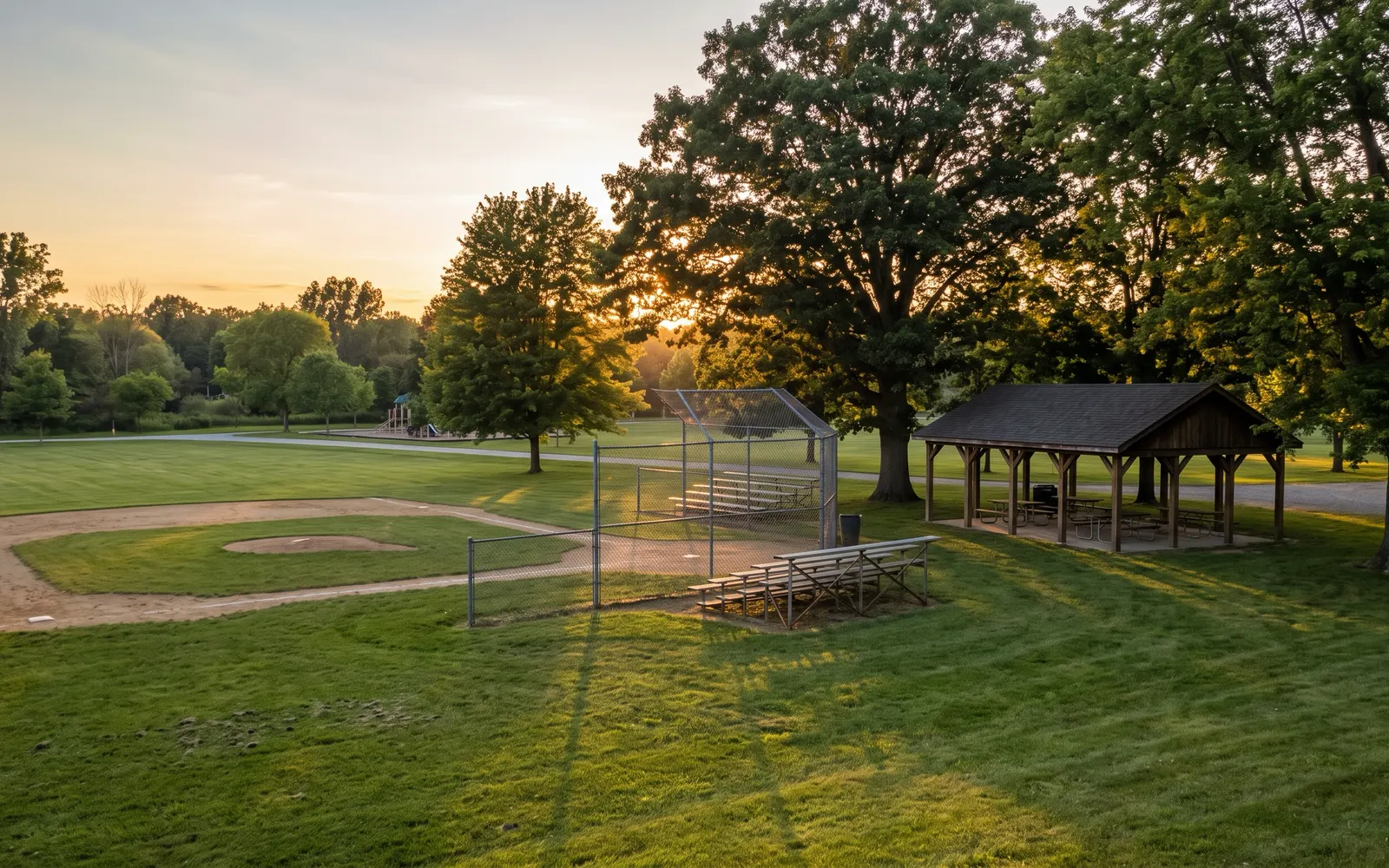
Glaeser Park. Poplar Avenue and Rockingham Road, 24 acres, four baseball fields, soccer field, basketball, large pavilion, restrooms, warming shelter.
Christina Covington Park. Meadow Lake Estates, 10 acres, pavilion, bike and walking path.
Helen A. Jones Park. Richton Square Road and Lee Street, behind Richton Square School, 7.8 acres, pond, extra-large walking path.
Pierce Park. Imperial Avenue and Latonia Lane in Lincoln Crossings, 7 acres, tennis courts, Fitness Court, hill.
Greenfield Park. Greenfield Road and Crosswind Road, 3.25 acres, gazebo, walking path.
Klawitter Park. Imperial Road and Amy Drive in Lakewood #2, 2.2 acres of District 159 land, with the village's Lake George fishing pier.
Smaller parks. Indian Trail Park (0.39 acres, Lakewood #3) and Farm Trace Family Park (0.25 acres).
The Richton Park Public Library
The Richton Park Public Library District started in 1972 in a rented storefront at 22365 Governors Highway, staffed by volunteers with donated books. Voters created the library district by referendum in 1974. It moved into the old Village Hall at 4045 Sauk Trail in 1981, and after voters passed a $6 million bond referendum on March 20, 2012, it opened its current 18,400-square-foot building at 22310 Latonia Lane on September 27, 2014, per the library's history page.
The library's website lists hours of 10 a.m. to 8 p.m. Monday through Friday and 10 a.m. to 2 p.m. Saturday, with a 24-hour drive-up return, curbside service, wireless printing and notary services. Its catalog runs through the SWAN library network. This summer it also offered free Ravinia lawn passes through Ravinia's Words and Music program.
The library is its own taxing district, so it shows up as its own line on a Richton Park tax bill. Before you buy, confirm on the county's tax records that the address is inside the library district, as you would for any special district.
Utilities and Village Services in Richton Park
Richton Park drinks well water, not Lake Michigan water. The village's water and sewer page says the water comes from three wells 400 to 800 feet deep and is treated with aeration, ion exchange softening, chlorine and fluoride. Each well has its own treatment plant and elevated tank, in the Richton Hills, Lakewood and Lincoln Crossings subdivisions, with one million gallons of storage in all. The system has about 42 miles of water main. CMAP's snapshot lists the source as shallow groundwater.
The pipes are aging, and the rates rise every year. The same village page says 22.54 of the village's 42.02 miles of sewer line are more than 51 years old, and that the village sends all wastewater to the Metropolitan Water Reclamation District. The village's water rate page says an ordinance raises water and sewer rates 5% every year. As of May 2026, water is $12.04 and sewer $4.01 per 1,000 gallons, with a stormwater fee of $15.76 and a garbage fee of $63.95. Bills come every two months, and a 10% penalty applies to late payments.
Garbage goes to Homewood Disposal. The village's garbage page says each home gets a 95-gallon garbage cart and a 95-gallon recycling cart, garbage goes out weekly on Tuesday, Wednesday or Thursday depending on the subdivision, recycling goes every other week, and yard waste is collected weekly from April through December 30. One bulk item a week is included.
Two more village rules to know. Resident vehicle stickers were eliminated in 2024; only commercial vehicles need them now, per the village's vehicle sticker page. And the lead service line program replaces lead lines with copper from the main to inside the house, with a 12-month warranty on the work, and homeowners can sign up online.
Hospitals Near Richton Park
The closest full hospital is in Olympia Fields, just north of Matteson. The Illinois Hospital Report Card lists it as Olympia Fields Hospital at 20201 South Crawford Avenue, Olympia Fields. Many people still call it Franciscan Health Olympia Fields. Prime Healthcare announced on April 14, 2026, that the Illinois Health Facilities and Services Review Board voted 8-0 to approve its acquisition of the 214-bed hospital, effective on or around May 1, 2026.
A name change like that affects insurance networks and doctor affiliations, so check your plan against the hospital's current name before you count on it. Village fire and ambulance service runs out of Richton Park's own fire department.
Richton Park's Centennial Year and Yearly Calendar
2026 is Richton Park's centennial year. The village's centennial page says a yearlong celebration began in January 2026 with events, storytelling, public art and commemorative items. The official moment was a Special Centennial Board Meeting on June 8, 2026, the 100th anniversary of incorporation, where each trustee signed a centennial proclamation.
Summer and fall are the busy season. The village's events page lists the fourth annual Lost in Music Richton Park House Fest on Saturday, August 22, 2026, at Glaeser Park, with more than 4,000 people expected, and the YourParty Music Fest on Saturday, September 26, 2026, from 1 to 9 p.m. at the Metra Station Center at 22120 Richton Road. The House Fest page says it runs rain or shine, bans grills and glass bottles, and charges $10 to park along Poplar Avenue and Balmoral Drive.
The rest of the year is steady. The village's Community Resource and Wellness Expo is Saturday, October 3, 2026, from 4 p.m. at the Community Center. The annual fishing derby is every June at Klawitter Park's Lake George pier, per the village's park page. If you are touring houses on one of these days, go. It tells you more about a village than a listing will.

What's Changing in Richton Park: The Town Center and Sauk Trail
The biggest plan is the Town Center around the Metra station. The village's Town Center page says the 2024 Town Center Plan, which the January 2026 update says was accepted in June 2024, starts from the principle that "Public Investment should come before Private Investment." It calls for a new Village Green at the station, pedestrian- and bike-friendly streets, a Butterfield Creek greenway and new housing near the station, from rowhouses and condominiums to apartments and live-work units.
The village is marketing specific sites. A December 2025 village notice asked for developer proposals, due January 26, 2026, on five sites. Two are on Sauk Trail within half a mile of I-57: the Sauk Field Lots at 5087 Sauk Trail, 10 acres for retail, dining, entertainment or hospitality, and the Sauk Building Shell at 5125 Sauk Trail, 30,000 square feet on nearly 3 acres. Three are in the Town Center within 500 yards of the station, for multifamily or mixed-use buildings: 3747 Sauk Trail, the old Firehouse One site at 22303 Richton Square Road, and the 1.65-acre Hilltop Site at 22106 Richton Road. I found no announced developer for any of them as of September 2026.
The money behind it is mostly grants. The village's January 2026 update lists $800,000 in state Rebuild Downtowns and Main Streets money for a southern extension of Richton Road, a $300,000 Cook County grant to design a two-way Richton Road, applications for $500,000 more for the extension and $250,000 for sidewalk work near Southland College Prep, and a planned multi-town application for Sauk Trail resurfacing and medians. The village's brownfields page says a $400,000 U.S. EPA grant awarded in 2023 pays for environmental assessments, mostly in the Town Center, through September 30, 2027. Four TIF districts cover most commercial areas, per the TIF page: Governors/Sauk, Lakewood, Town Center and Sauk West.
On Sauk Trail itself, the Cook County study of safety changes from Central Avenue to Western Avenue is still a feasibility study; the county held a public presentation on October 22, 2024. If you are buying near Sauk Trail, near the station or next to one of the five sites, ask what is planned before you commit.
I don't label any town or neighborhood as safe or unsafe.
Flood and Basement Water Risk in Richton Park
Richton Park's flood risk is low overall, with one creek to know about. Redfin, using First Street's model, rates the village's flood risk as minor and says 4% of properties are at risk of severe flooding over the next 30 years. The same page rates wind risk minor and heat risk moderate.
The water feature on the map is Butterfield Creek, which the village's Town Center Plan wants to turn into a greenway with creek restoration areas. Several subdivisions also have retention ponds and small lakes, such as Lake George in Lakewood and the pond at Helen A. Jones Park. The village charges every account a stormwater fee, $15.76 per bill as of May 2026, per its rate page.
Three checks before you write an offer. Look the address up on the FEMA flood map, especially near Butterfield Creek or a pond. Ask the seller directly whether the basement or crawlspace has ever taken water; the Illinois disclosure form asks, but a direct question gets a better answer. And have the inspector look at the sump pump, the grading and the sewer line to the street, ideally with a camera, since more than half the village's sewer mains are over 50 years old.
Frequently Asked Questions
Is Richton Park, IL in Cook County or Will County?+
Cook County. The Census Bureau's 2020 place-by-county file and its July 1, 2025 estimates put the whole village, all 12,483 residents, in Cook County and Rich Township, with no Will County part. University Park (mostly) and Monee to the south are in Will County.
How much does a house cost in Richton Park, IL?+
Redfin reported a median sale price of $203,865 for the three months ending August 2026, down 9.39% from a year earlier, with price per square foot up 4.4% and homes selling at 98.4% of list. Zillow's home value index was $229,978 for August 2026, up 7.3%.
What are property taxes in Richton Park, IL?+
Ownwell (April 2026) puts the median effective rate at 3.63% with a median bill of $6,402, against 2.14% for Cook County. Rich Township is scheduled for reassessment in 2026, and as of September 28, 2026, the Assessor had not yet mailed its notices.
Does Richton Park have a real estate transfer tax?+
No village transfer tax, per the ATG ordinance summary, and a 2023 board resolution says the village will not seek one. Sellers still need a village occupancy inspection, with a $75 fee listed by ATG, and the Cook County transfer tax of 25 cents per $500 applies.
What school district is Richton Park, IL in?+
Either Matteson School District 162 or Elementary School District 159 for the lower grades, depending on the address, and Rich Township High School District 227 for high school, whose Fine Arts and Communications Campus is at 5000 Sauk Trail. Confirm every address with the districts.
How long is the train from Richton Park to Chicago?+
On the Metra Electric line, four weekday morning trains reach Millennium Station in 53 or 54 minutes and the rest take up to 75, with 27 inbound weekday trains in fall 2026. Daily parking at the station is $2.
Is Richton Park walkable?+
Mostly not. Walk Score rates ZIP code 60471 at 44 and counts about 19 restaurants, bars and coffee shops. Homes near the Metra station can walk to the train, and most subdivisions have park paths.
What neighborhoods are in Richton Park, IL?+
The village names its subdivisions on its garbage-route and HOA pages: Richton Hills, Lakewood, Greenfield, Lincoln Crossings, Meadow Lake Estates, Raleigh Place, Farm Trace, Falcon Crest, Lioncrest and the East Side.
Eshu Chikoti has extensive access to off-market listings throughout Richton Park and the rest of Cook County — homes that never make it to the public listing sites. That matters right now: in a seller's market like this one, well-priced homes routinely go under contract within days, and buyers relying only on public listings are competing for whatever is left over. Working with someone plugged into off-market inventory means seeing homes before the crowd does.
Eshu Chikoti · 847-691-4282 ·
Get new Richton Park listings by email
When a home comes on the market in Richton Park, I'll email it to you.
Just your email. Unsubscribe any time by replying.
Thinking About Richton Park?
Whether you're buying, selling, or just curious what's on the market, I can walk you through Richton Park street by street.