Prospect Heights, IL
Prospect Heights, IL is a Cook County city of about 15,600 people that incorporated in 1976, split between half-acre lots on private wells and condo communities along the Des Plaines River, with a summer 2026 median sale price near $395,000.
Living in Prospect Heights, IL means a Metra stop of its own, a 2026 median sale price near $395,000 and a Cook County tax rate around 2.7%. It also means checking things other suburbs never ask about: private well or city water, which of four school districts, and flood risk. Here is how it breaks down, pocket by pocket.
Written by Eshu Chikoti · 847-691-4282 ·
How Prospect Heights, IL Got Here: A Short History
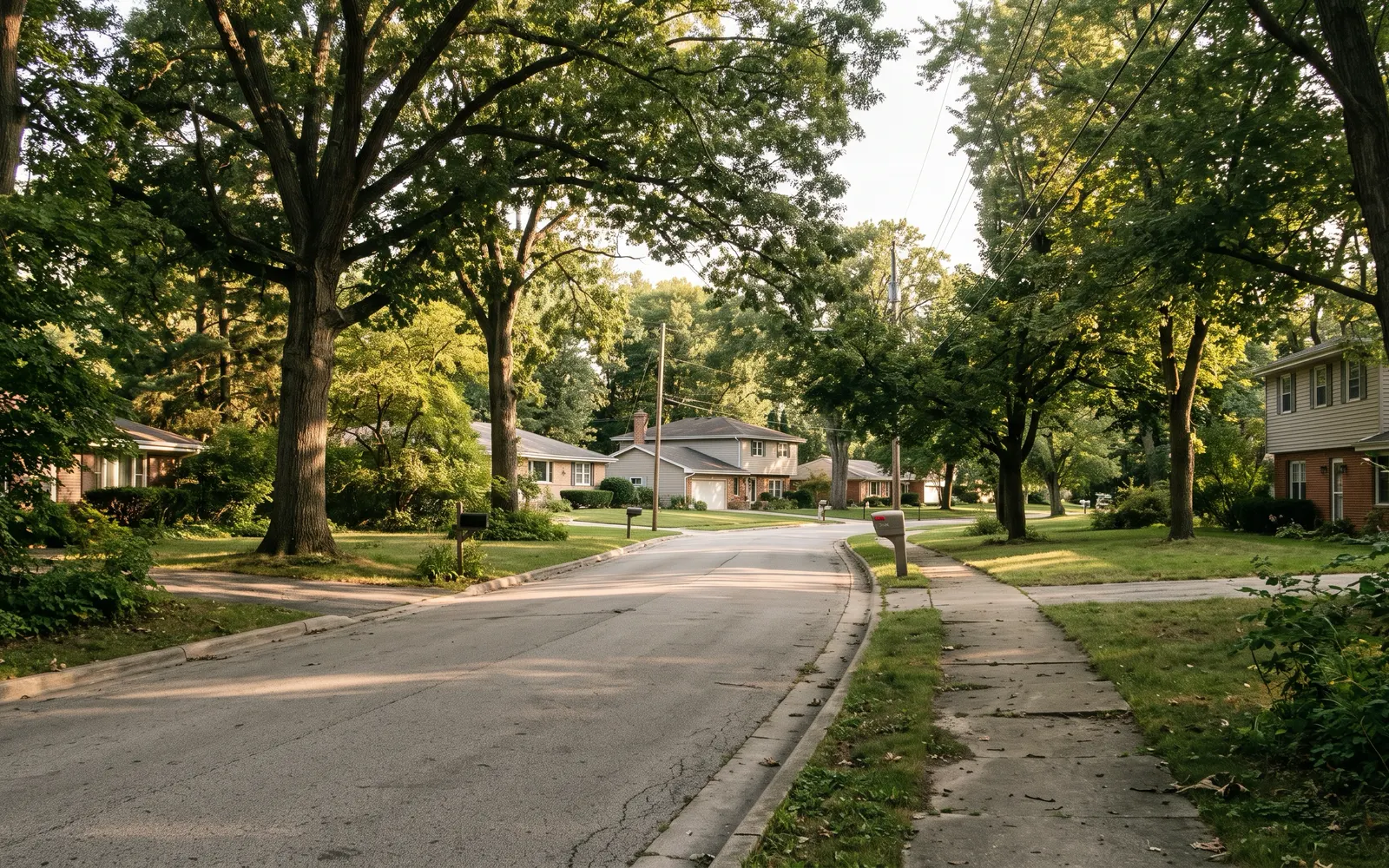
The story starts with a dairy farm. According to the city's 2024 hazard mitigation annex to the Cook County plan, Hiram Kennicott set up a 1,000-acre farm around 1830 near what is now Elmhurst Road and Willow Road, supplying dairy products to the growing Chicago market.
The houses came a century later. In 1935, developers Carlton Smith and Allen Dawson started building homes on farmland along Elmhurst Road. The City of Prospect Heights history page says the first homeowners moved in during January 1936, and by the end of that year there were six homes. The same county annex notes that Smith and Dawson were known for promoting Federal Housing Administration financing, which is part of why those first houses were sold as affordable.
For almost 40 years, Prospect Heights had no government of its own. Residents formed the Prospect Heights Improvement Association in 1938, and it ran the community as a de facto government for 38 years with no legal authority. By 1945 there were 317 homes. By 1955 there were nearly 600. Most of the construction came in the 1960s, and with it came worries about growth and, per the county annex, threatened annexation by neighbors.
A referendum settled it. More than half the voters backed incorporation, and the City of Prospect Heights was born on January 31, 1976, exactly 40 years after the first homeowners moved in. That makes 2026 the city's 50th anniversary. The late start explains a lot of what buyers see today: roads without curbs, lots platted before any city code existed, and utilities that were never built out to every street.
The airport on the east side is older than the city. Chicago Executive Airport's history page dates it to 1926 as Gauthier's Flying Field, later Pal-Waukee Air Port. On December 26, 1986, the City of Prospect Heights and the Village of Wheeling bought it from Priester Aviation, and it was renamed Chicago Executive Airport on October 17, 2006.
Prospect Heights at a Glance
Prospect Heights covers about 4.2 square miles in north Cook County. The county hazard annex puts it 22 miles northwest of downtown Chicago, in an area bounded roughly by Hintz Road on the north, Euclid Avenue on the south, Sanders Road on the east and Dryden Avenue on the west. Wheeling sits to the north, Arlington Heights and Mount Prospect to the west and south, and Glenview and Northbrook across the Des Plaines River to the east.
The 2020-2024 Census ACS puts the population at 15,618 in 6,915 homes, and 66.8% of occupied homes are owner-occupied, per the ACS tenure table. The 2020 census count was 16,058.
The city is two different places stitched together, and every other section of this guide comes back to that. The county annex describes the west side as houses on half-acre lots with private wells, with two sloughs and McDonald Creek running through it. The east side, along the river and next to the airport, holds more than half the city's housing in multifamily complexes, about 2,800 units protected by a levee.
One practical quirk to know before you search. Prospect Heights does not have a clean mailing identity. The city's own restaurant and hotel directory lists Rand Road businesses with Arlington Heights addresses and the Hilton on Milwaukee Avenue with a Northbrook address, each marked "located in Prospect Heights." Houses can work the same way. Check the municipality on the tax bill, never the city in the mailing address.
The city's own tax share is small.
It asks more homework than most suburbs. You have to check the water source, the school district, the flood map and the mailing address on every house, because each one changes by street. The west side has no sidewalks and few curbs. The Metra stop in town runs six trains a day.
Prospect Heights Neighborhoods, Pocket by Pocket
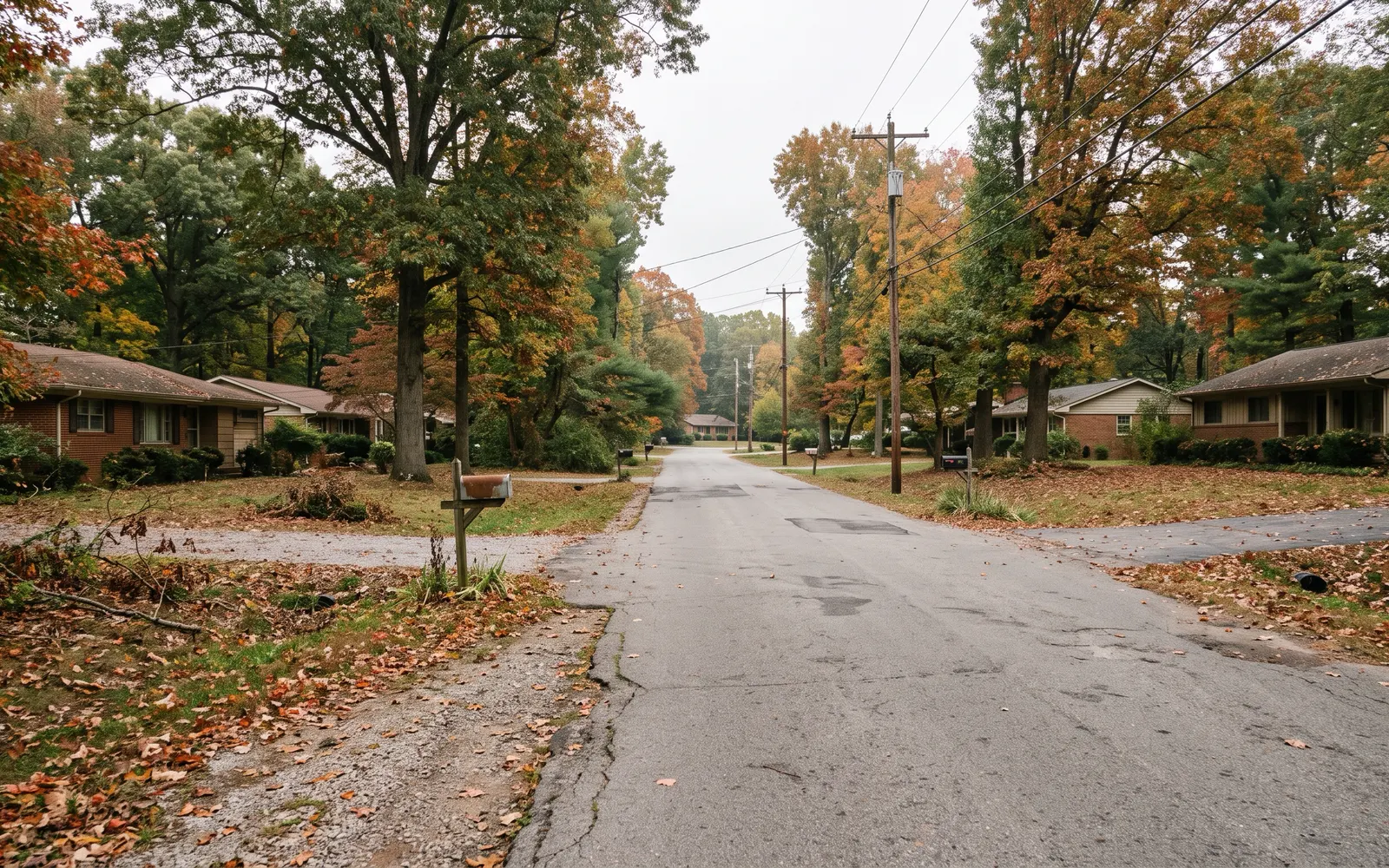
Prospect Heights has no official neighborhoods, but it has more named subdivisions than most towns its size, because it grew one plat at a time for 40 years with no city to coordinate it. The first split is east versus west. West of roughly Wolf Road you are mostly in single-family homes on big lots, many on private wells. East of it, toward Milwaukee Avenue and the river, you are mostly in condos, townhomes and apartments on city water.
The second split is era. The ACS year-built table shows 64.1% of the city's homes were built between 1960 and 1989, and only 9.9% since 2000. So most of what you tour will be a 1960s ranch or split-level, a 1970s condo, or a 1980s subdivision house.
Below are the subdivision names you will see on listings. The build years and rough boundaries come from one public listing site that draws on MLS subdivision fields, so treat them as a starting point, not a survey. If you want to know which pocket a specific address falls in, what it sold for lately and whether it is on a well, that is a conversation I am happy to have here.
Smith and Dawsons. The original subdivision, south of Willow Road and west of Route 83 (Elmhurst Road). Single-family homes with build years listed from 1938 to 2018, so expect everything from original cottages to rebuilt houses on the same street.
Prospect Heights Manor and Country Club Acres. Older single-family pockets with build years listed from the late 1940s into the 2000s. Home sizes vary widely, from under 1,500 square feet to over 4,500.
Bonnie Brook. North of Camp McDonald Road and east of Wheeling Road. Single-family homes built from 1951 to 1965, roughly 1,500 to 2,700 square feet.
Arrowhead. Single-family homes built from 1957 to 1977, from about 1,400 to 4,700 square feet.
Lake Claire Estates. East of Wheeling Road and north of Camp McDonald Road. Single-family homes built from 1980 to 1991, about 2,300 to 4,400 square feet.
Fairway Estates. North of Euclid and west of Wolf Road. Single-family homes built from 1984 to 1989.
Shires. Single-family homes built from 1986 to 1993, about 2,300 to 4,100 square feet.
Somerset Park. Single-family homes built from 1988 to 1999, from about 2,500 to 6,000 square feet, among the newest and largest in the city.
Cherry Creek and Country Gardens. Single-family pockets on the northwest side, south of Hintz Road and west of Schoenbeck Road (Cherry Creek) and east of Schoenbeck and north of Palatine Road (Country Gardens).
Rob Roy Country Club Village. Condos and townhomes east of Wheeling Road and north of Euclid Avenue, built from 1981 to 1997, about 1,200 to 2,700 square feet, with HOA fees listed from $301 to $775 a month.
Pinecrest, Quincy Park, Willow Heights, River Trails and Old Willow Falls. Condo communities from the late 1960s through the 1980s. Old Willow Falls sits on Old Willow Road west of River Road; Pinecrest is south of Palatine Road and east of Wolf Road. Units run from about 550 to 1,500 square feet.
What Prospect Heights Homes Look Like, by Type and Era
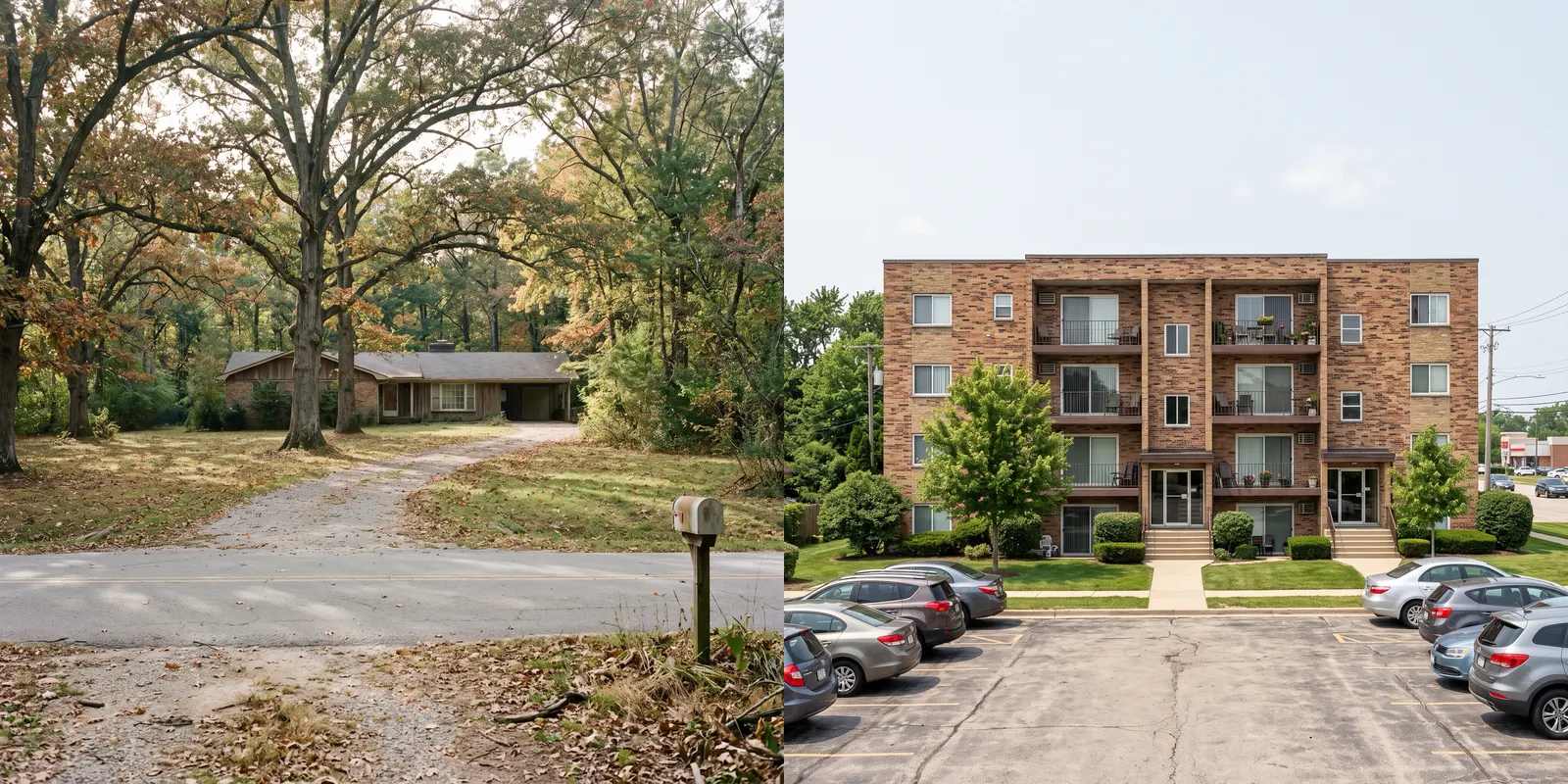
Prospect Heights has more condos than people expect. The ACS units-in-structure table counts 37.0% of homes as detached single-family, 10.8% as attached townhomes, 8.5% in three- or four-unit buildings and 43.7% in buildings with five or more units. That is close to an even split between houses and condos, and the two trade as separate markets.
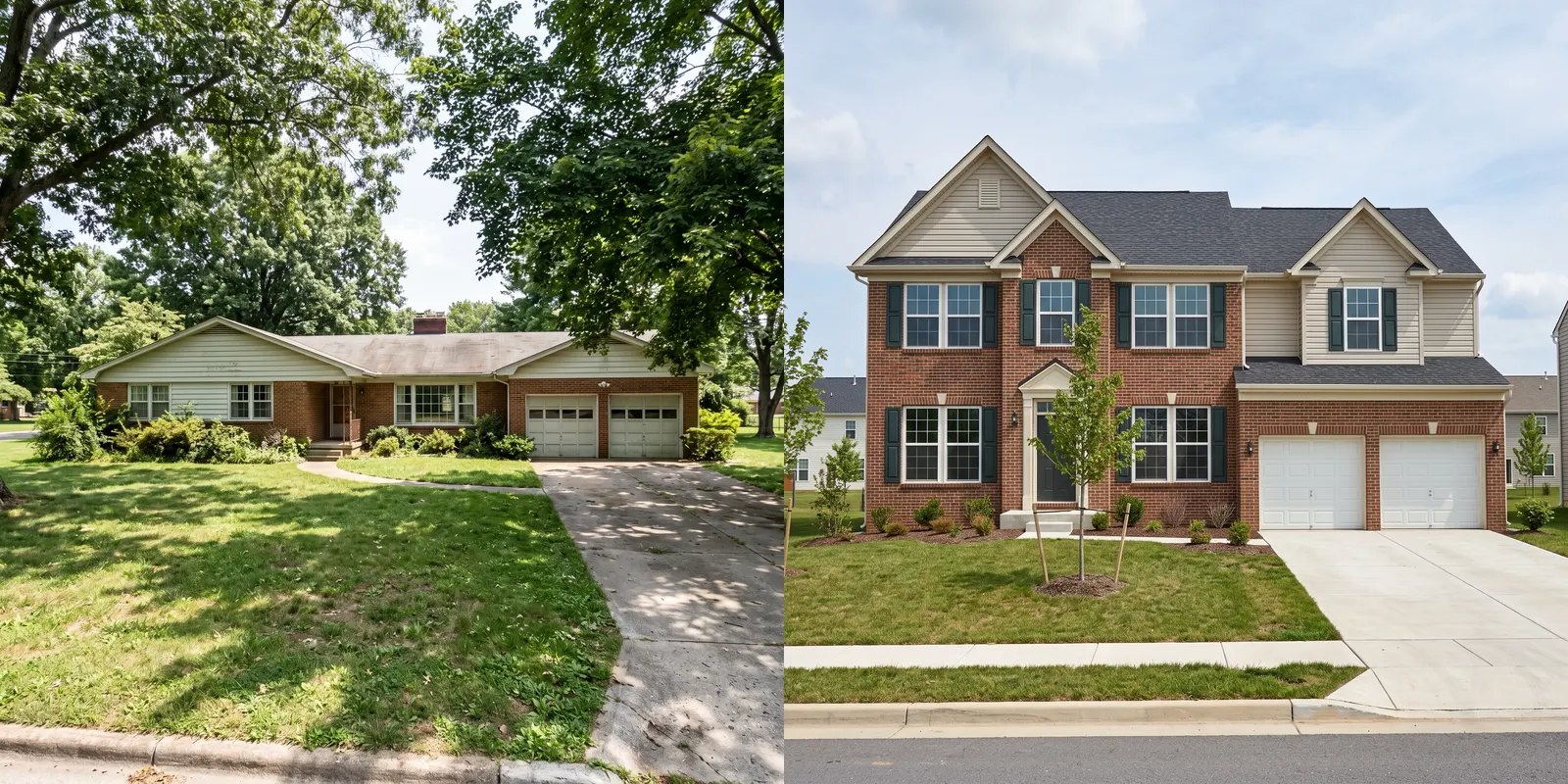
The houses fall into three groups. The oldest, from the 1930s through the 1950s, are small houses near Elmhurst Road, many added onto over the years. The 1960s and 1970s brought ranches, split-levels and bi-levels on the big west-side lots. The 1980s and 1990s subdivisions like Lake Claire Estates, Shires and Somerset Park are two-story colonials, and those are the biggest houses in town.
The condos are mostly 1970s buildings. On the east side you will see garden-style and mid-rise complexes with one- and two-bedroom units, while Rob Roy Country Club Village mixes condos and townhomes. The Census ACS puts the median value of owner-occupied homes at $346,500, and the median gross rent at $1,475.
The lot is often the asset. A half-acre lot in Prospect Heights is rare this close to O'Hare, and on the west side I see buyers pay for the land and plan to update or replace the house. Before you do, budget for what a 1960s house on a well brings: the well itself, the pressure tank and water treatment, drainage, and whatever the sewer or septic setup is. My home inspection checklist covers the basics, and on a well house I would add a water test and a well inspection.
The Prospect Heights Housing Market in 2026
The headline number this summer looks wild. In the three months ending August 2026, Redfin reported a median sale price of $394,739, up 43.5% from a year earlier. The median home sold in 46 days, at 100.4% of list price, and 44.3% of homes sold over asking. Redfin counts 63 sales in its August report, up 9.8%, gives Prospect Heights a Compete Score of 73 out of 100, which it calls very competitive, and shows 21.8% of listings taking a price cut.
Home values did not jump 43% in a year. The same Redfin page shows the median price per square foot at $223, down 0.22%. Zillow's home value index, which estimates every home whether it sold or not, put the typical Prospect Heights home at $333,406 in August 2026, up 7.2% from $310,991 in August 2025. Here is what happened. Prospect Heights is almost half condos, so the median swings with the mix. Last summer more of the sales were small condos. This summer more were houses. Per square foot, prices were flat.
This is a small market, and small samples move a lot. Sixty-some sales across condos and big-lot houses is not enough to read a trend from one quarter. I watch price per square foot and Zillow's index for direction and ignore the median swing.
What it means in practice. A well-priced single-family house still draws competition, and nearly half of this summer's sales closed over list. Condos are a separate market with separate buyers, and HOA fees and building finances matter as much as the list price. If you are deciding what you can carry across that range, my guide to how much house you can afford in 2026 walks through the math.
Prospect Heights Property Taxes: Cook County's Three-Year Cycle
Property tax is the number that changes the monthly payment most, and in Prospect Heights it runs through Cook County. Ownwell's Prospect Heights data, updated April 13, 2026, puts the median effective rate at 2.72% and the median annual bill at $5,615. The Cook County median on the same page is 2.14%. In ZIP 60070 the 25th-percentile bill is $3,572 and the 75th is $9,823, which is the condo-versus-house split again.
The city itself is a small part of the bill. According to the city's 2026 road bond page, a typical $450,000 home pays less than $500 a year in property tax to the City of Prospect Heights. Most of the bill goes to the school, park, library, fire and county districts that overlap the city, and the mix changes by address.
Cook reassesses one-third of the county each year. For assessment, Prospect Heights sits in Wheeling Township, and the Cook County Assessor's Wheeling Township release of August 19, 2025, said the north suburbs had last been reassessed in 2022. That release put the 2024 median single-family sale in the township at $457,000 against the assessor's median estimate of $429,000, and said the new values would affect second-installment bills issued in 2026. If the three-year cycle holds, the next north suburbs reassessment is 2028. Between reassessments, the assessor's 2026 calendar still lists a Wheeling Township appeal window, open until October 22, 2026.
Bills come in two pieces. For tax year 2025, the first installment was due April 1, 2026, and the second is due October 1, 2026, per the Cook County Treasurer. If you close this fall, ask your attorney how the proration handles that bill.
Here is what the rate looks like on a real purchase. At this summer's $394,739 median, 2.72% works out to about $10,737 a year, or $895 a month. Current bills are often lower because assessments trail the market, and the mistake I see most is buyers budgeting off the seller's current bill. The Cook County homeowner exemption takes $10,000 off the equalized assessed value of an owner-occupied home. New owners have to apply, and it renews automatically after that.
Two referendums touch the bill. In March 2026, voters approved a $21.5 million, 20-year road bond, 1,345 votes (72%) to 524, per Journal & Topics. The city says it replaces a 2010 bond that expires December 31, 2026, at the same rate, so no net increase. And on November 3, 2026, District 23 asks for a school tax increase, covered in the schools section below.
On a sale, the Illinois Department of Revenue lists the county transfer tax at 25 cents per $500 of value, about $197 on a $394,739 sale. I could not find a Prospect Heights city transfer stamp, so confirm that with your attorney. My Illinois closing costs guide covers the rest. This is general information, not tax advice. Your bill depends on your parcel, your exemptions and the assessor.
Prospect Heights Schools: Four Districts and Two High Schools
Schools are where Prospect Heights gets complicated, and it is the first thing I check on any address. For kindergarten through eighth grade, the city is split among at least three districts. According to Wikipedia's Prospect Heights entry, most of the city is in Prospect Heights School District 23, with other parts in Wheeling Community Consolidated School District 21 and River Trails School District 26.
District 23 is the city's own. Wikipedia lists its schools by grade band: Dwight D. Eisenhower Elementary, Betsy Ross Elementary, Anne Sullivan Elementary and MacArthur Middle School. Per the District 23 website, Eisenhower is at 1 N. Schoenbeck Road (a Mount Prospect mailing address) and MacArthur at 700 N. Schoenbeck Road.
High school is Township High School District 214. Wikipedia says District 23 addresses go to either Wheeling High School or John Hersey High School, District 21 addresses to Wheeling, and District 26 addresses to Hersey.
Watch the ballot. District 23 is asking voters on November 3, 2026, to approve a tax increase that would raise up to $4 million a year, according to Journal & Topics on August 19, 2026. The district estimates the cost at $28 a month, or $336 a year, on a $350,000 home. The money would fund full-day kindergarten and current programs. Separately, the district is building a classroom addition at Eisenhower under a $16.5 million plan with no tax impact, due to finish in August 2027.
The detail that trips people up is assignment. It depends on the street, not the town name, and two houses a block apart can feed different elementary, middle and high schools. Check every address with the district before you write an offer, and ask me for the boundary if you want it done for a specific house. The Illinois Report Card has each school's own data.
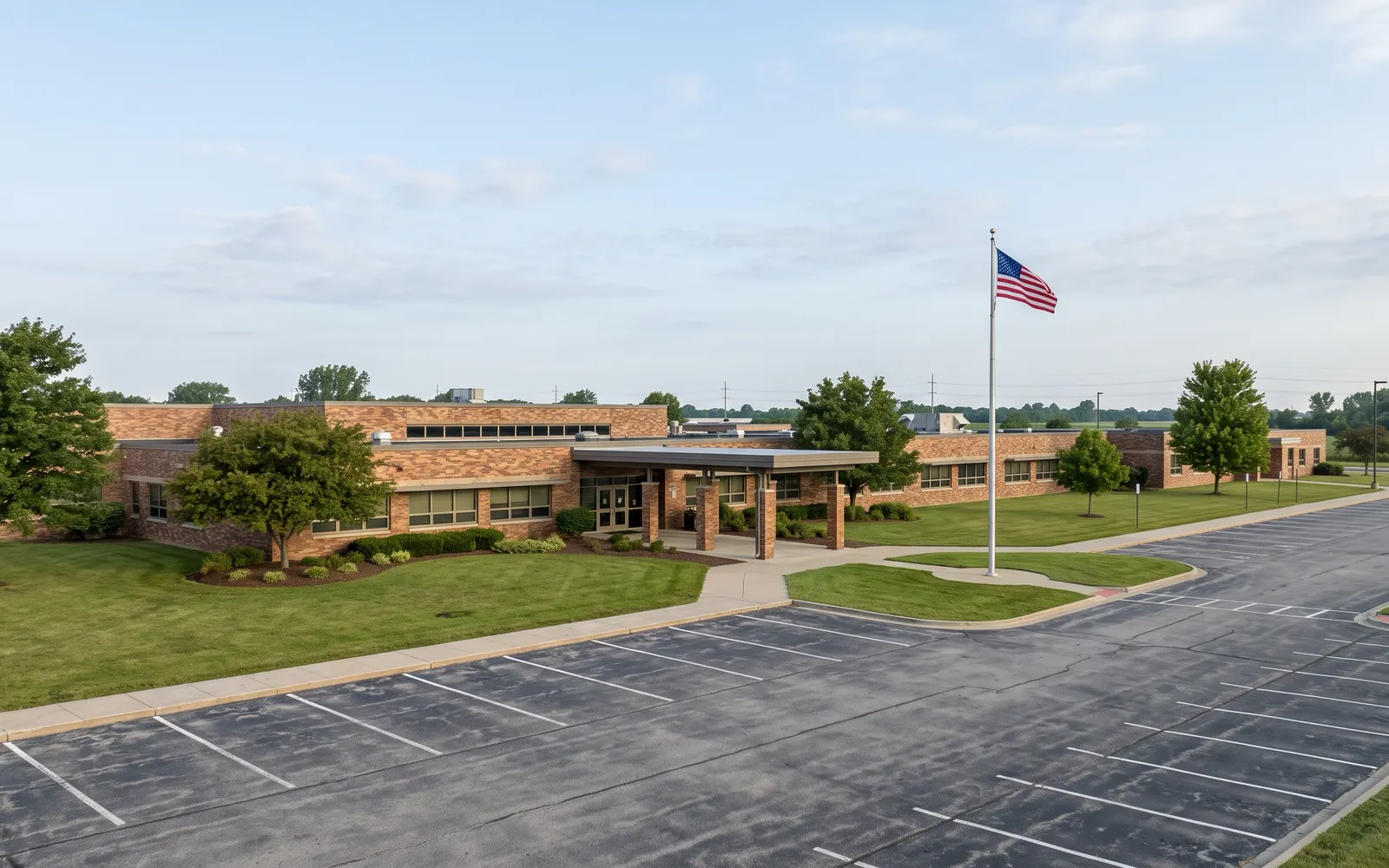
Dwight D. Eisenhower Elementary School. 1 N. Schoenbeck Road. District 23; getting a classroom addition due August 2027.
Betsy Ross and Anne Sullivan Elementary Schools. District 23, on the Schoenbeck Road campus.
MacArthur Middle School. 700 N. Schoenbeck Road. District 23, grades 6-8.
District 21 schools. Per Wikipedia, Whitman and Twain elementary and Holmes Middle School in Wheeling and Frost Elementary in Mount Prospect serve the District 21 part of the city.
District 26 schools. Euclid Elementary at 711 E. Euclid Avenue and River Trails Middle School at 1000 N. Wolf Road, both with Mount Prospect addresses, per the River Trails district site.
John Hersey High School. 1900 E. Thomas Street, Arlington Heights. District 214.
Wheeling High School. 900 S. Elmhurst Road, Wheeling. District 214.
Commuting from Prospect Heights: Two Metra Lines
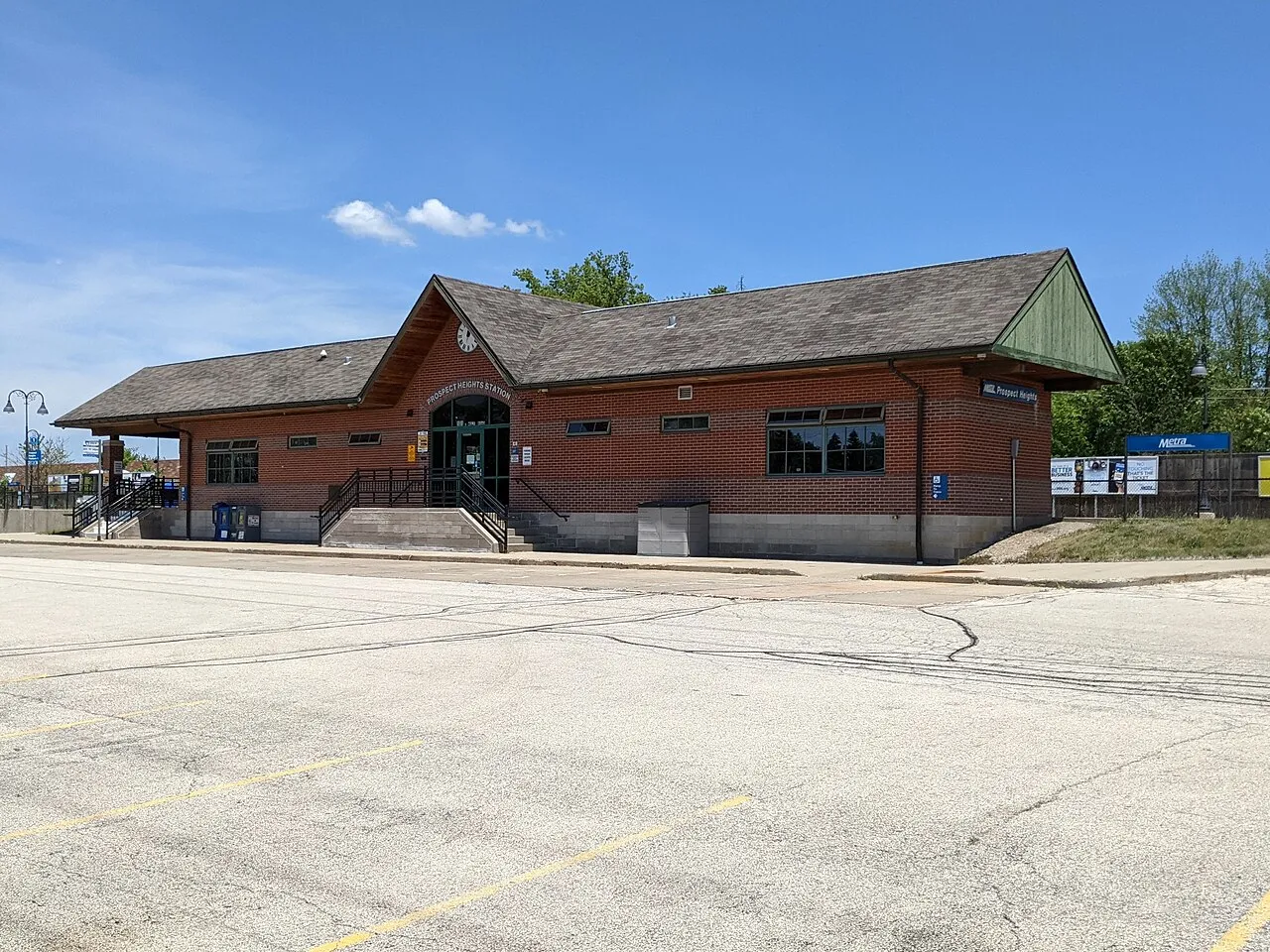
Prospect Heights has its own Metra stop, which surprises people. The Prospect Heights station at 55 S. Wolf Road opened in 1996 on the North Central Service, a one-seat ride to Union Station. The catch is frequency. Metra's current schedule data for the week of September 28, 2026, shows 6 trains toward Chicago and 6 back on weekdays, and none on weekends. Inbound trains leave at 6:00, 6:46, 7:48, 8:48 and 9:58 a.m. and 4:28 p.m., and take 51 to 55 minutes to Union Station.
Most daily commuters drive a few minutes to the Union Pacific Northwest line instead. From Mount Prospect, the same schedule data shows 31 trains each way on weekdays. The rush-hour expresses reach Ogilvie in 31 to 35 minutes, and local trains take 46 to 49. Arlington Heights also has 31 each way, at 36 to 54 minutes. Mount Prospect keeps weekend service, with 16 inbound trains on Saturdays and 9 on Sundays.
So the commute question is really a parking question. If you work near Union Station and keep regular hours, the Wolf Road stop can work. If you need flexibility, plan on the UP-NW and check the station's parking permit wait before you buy. Wikipedia's station entry notes Pace buses also serve the city.
Driving from Prospect Heights: Roads and O'Hare
Prospect Heights is a car town built along busy roads. The city's economic development page lists daily traffic counts of 27,800 vehicles on Rand Road (Route 12), 41,200 on Palatine Road at Milwaukee Avenue, 26,100 on Milwaukee Avenue at Palatine Road and 22,100 on Elmhurst Road at Camp McDonald Road. Those four corridors carry most of the city's shopping, and they also carry through traffic that has nothing to do with Prospect Heights.
For a daily drive, Palatine Road is the fast east-west route, and Milwaukee Avenue and Elmhurst Road run north-south. The county hazard annex notes the city's access to the Tollway. O'Hare sits about 8 miles south in a straight line from the Metra station, per Metra's station coordinates.
Two driving notes buyers ask me about. Many west-side streets have no curbs or sidewalks, which is part of the rural feel and part of why the 2026 road bond passed. And the city says 26.1 miles of local road, about 65% of its network, need resurfacing or partial reconstruction by 2030, so expect road work somewhere in town for the next few summers.
Is Prospect Heights Walkable?
Mostly not. Walk Score rates the 60070 ZIP code 45, which it calls car-dependent, and says people here can walk to an average of 2 restaurants, bars and coffee shops in five minutes. On the west side, streets without sidewalks make walking even less practical than the score suggests.
The exceptions are small. The area around Elmhurst Road and Camp McDonald Road puts City Hall, the library, the park district's recreation center and a few shops close together. The east side's condo communities sit near the Milwaukee Avenue and Wolf Road restaurants and the Metra stop. If walking to anything matters to you, those two areas are where to look.
For recreation, the park district's bike path runs about 4.2 miles through town, and the Des Plaines River Trail is a short drive east. That is covered under parks below.
Shopping In and Around Prospect Heights
Prospect Heights has strip shopping, not a downtown. The city's economic development page names three corridors. Rand Road on the west edge has Tony's Fresh Market, restaurants and a 700-unit indoor self-storage building. Milwaukee Avenue on the east side is what the city calls its tourism district, with hotels, restaurants and Chicago Executive Airport. Elmhurst Road at Camp McDonald Road is the town center.
Per the county annex, the building at Camp McDonald and Elmhurst Roads served as meeting place, general store and post office for the early community, and the intersection is still where City Hall, the police department, the fire district, the library and the park district sit.
For bigger shopping, Randhurst Village is about a mile south in Mount Prospect. It just changed hands: the Daily Herald reported on September 23, 2026, that Rhino Investments Group bought the core of the 94-acre center for $95 million, including the Macy's, the AMC theater and Home Depot parcels. It is worth watching if you are buying on the south side of town.
Groceries and Everyday Errands in Prospect Heights
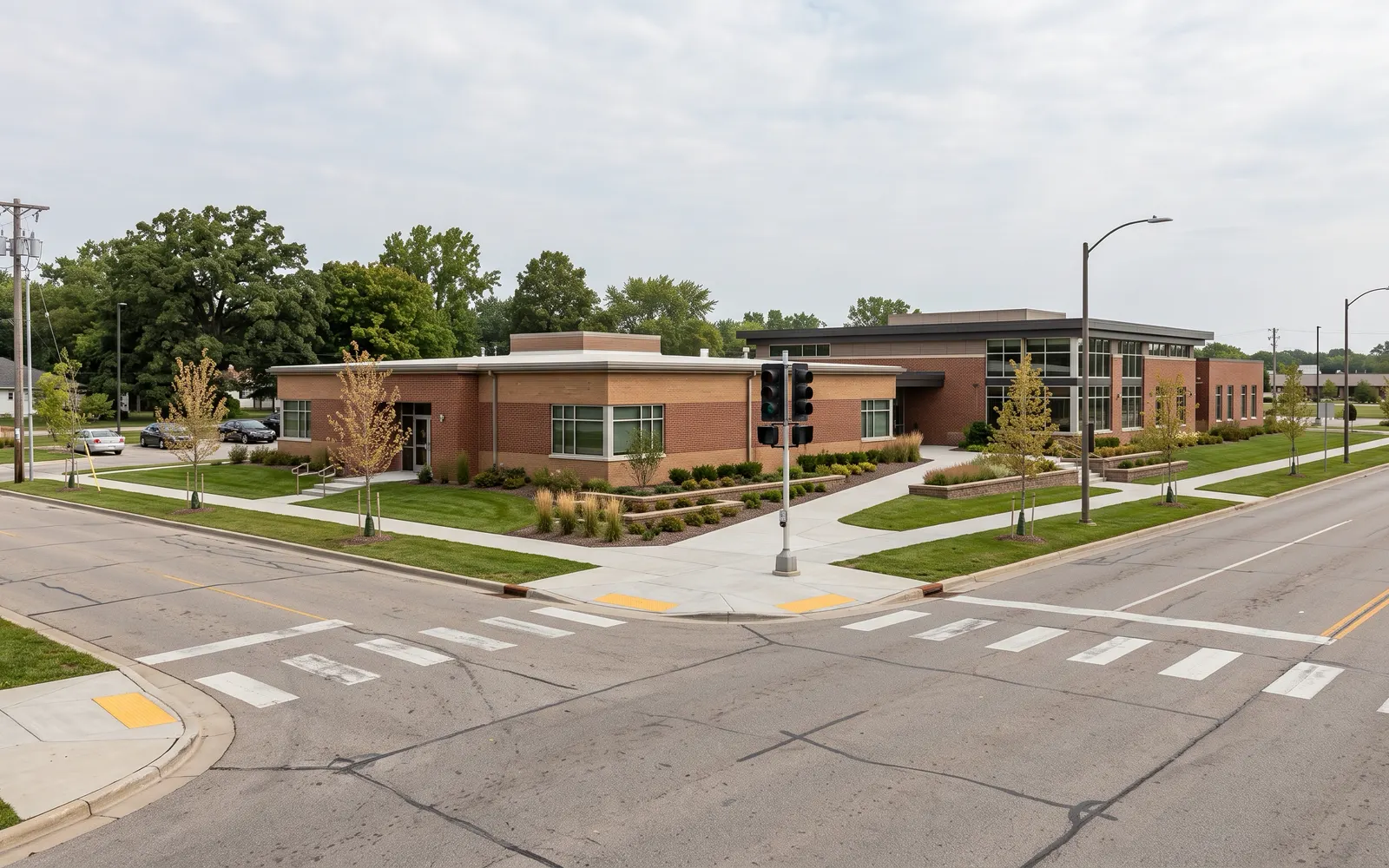
The city's own grocery anchor is Tony's Fresh Market on Rand Road, per the city's economic development page. For everything else, most people use the big-box and grocery options along Rand Road and Elmhurst Road in Mount Prospect and Arlington Heights, a few minutes away. Pharmacies, banks and fast food cluster on Rand Road, Milwaukee Avenue and Elmhurst Road, so most weekly errands are a short drive in any direction.
Where Prospect Heights Eats
The city's restaurant directory lists more than 40 places, and they cluster in three spots. Along Milwaukee Avenue there are Rocky Vanders Café and Bar, The Dog Walk, Monica's Restaurant, Bravo Bakery and Fry The Coop. On Wolf Road near the Metra stop there is Union Ale House, and Player's Pub & Grill is on River Road. Along Rand Road, with Arlington Heights mailing addresses, there are Eggcellence Café, Elsie's Place Café, Lola's Pizza and Tugo Tea House. Near the town center, Nacho's Pizza and Pizza Pavia are on Elmhurst Road.
Walk Score counts about 62 restaurants, bars and coffee shops in Prospect Heights overall. For a bigger night out, downtown Arlington Heights and downtown Mount Prospect are each a short drive.
Parks, Golf and the Bike Path in Prospect Heights
The Prospect Heights Park District runs the Gary Morava Recreation Center at 110 W. Camp McDonald Road, next to Lions Park and Lions Pool, with a fitness center and studio. It also owns Old Orchard Country Club, a golf course at 700 W. Rand Road in Mount Prospect. The district marked its 60th anniversary in 2026.
The park district's project page names parks across town, including Rosemary Roth, Lions, Country Gardens, Izaak Walton, Jaycee, School Street, Wedgewood, Tully and Muir. Three projects are live. Country Gardens Park at 901 N. Schoenbeck Road won a state OSLAD grant in August 2026, with construction set to start in spring 2027. Tully Park grew in September 2026 when the district, the city and the water reclamation district bought a flood-prone home at 214 S. Wheeling Road and turned it into open space. And the district is applying for state money to improve the roughly 4.2-mile bike path, after 517 people answered its survey.
The Des Plaines River is the big open space. The Forest Preserves of Cook County run Allison Woods at Milwaukee Avenue and Winkelman Road, with a canoe landing, picnic grove and access to the unpaved Des Plaines River Trail, which follows the river through more than a dozen preserves.
The Prospect Heights Public Library
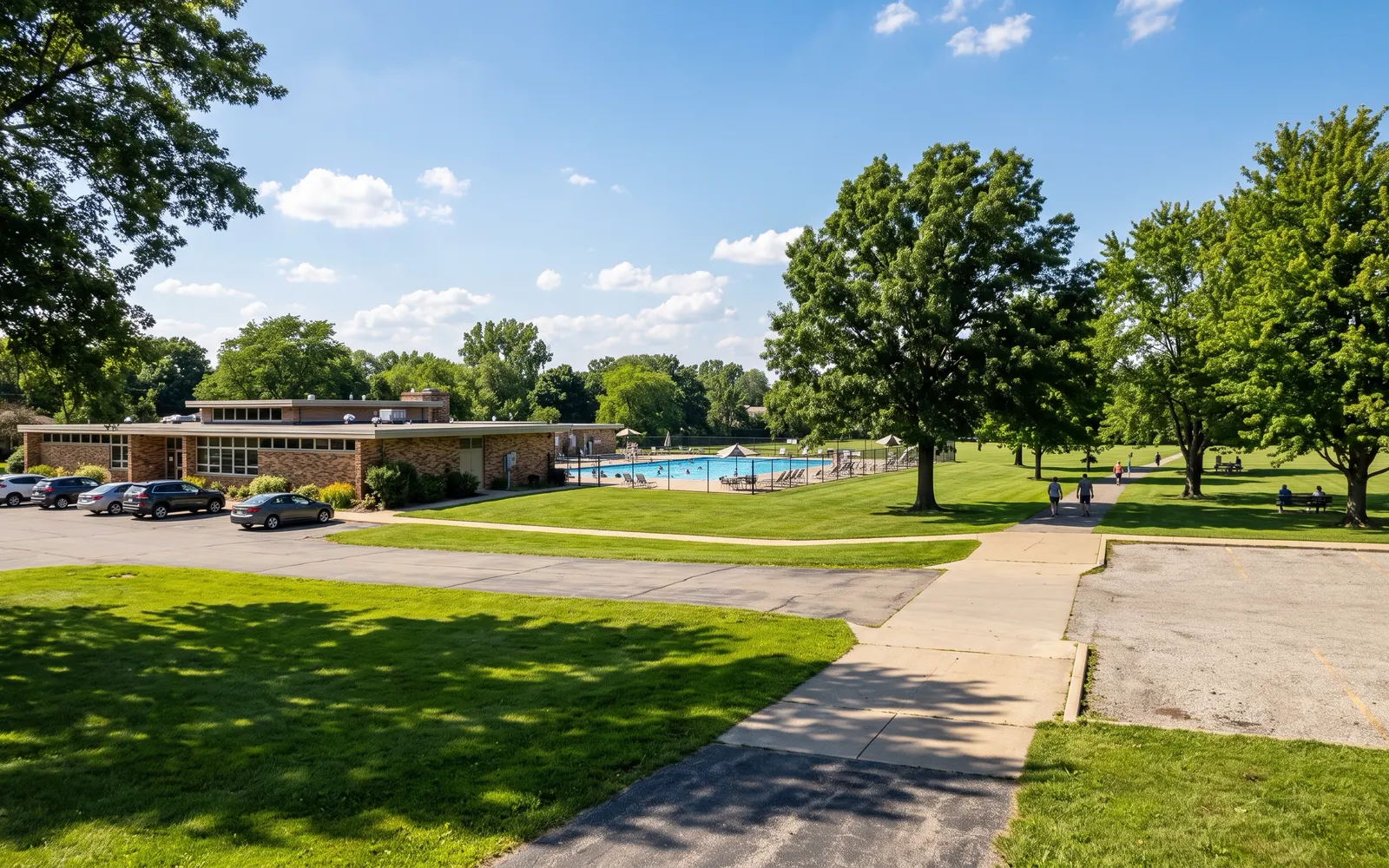
The Prospect Heights Public Library District is at 12 Elm Street, a block off the town center. It is open seven days a week: 9 a.m. to 9 p.m. Monday through Thursday, 9 to 6 on Friday, 9 to 5 on Saturday and 1 to 5 on Sunday. The fall 2026 calendar runs from storytime and a sign language club to a classic film series. It is a library district, so check whether a specific address is inside it before you count on a free card.
Well Water or City Water in Prospect Heights
This is the section most buyers from other suburbs have never needed. According to the city's water page, Public Works supplies water to "a portion" of the city. Properties outside that system run on private wells, and the city does not regulate private wells. Owners maintain and test their own. The county hazard annex describes the west side as half-acre lots with private wells.
The city has studied bringing Lake Michigan water to the well areas for years. Its Lake Michigan water page links a 2000 white paper, a 2007 water system master plan and a 2013 study that looked at extending service to the areas on wells. As of this writing, the well areas are still on wells.
Here is what I do on every Prospect Heights house. Look it up on the city's Property Potable Water Source Map, linked from the water page. If it is on a well, order a water test and a well inspection with the home inspection, and ask the seller for records on the pump, tank and any treatment system. If it is on city water, the city bills monthly, and the water page warns that the buyer is responsible for any unpaid utility balance left at closing, so have your attorney confirm the final bill.
The storm side matters too. The county annex says several neighborhoods are served by aging and undersized storm sewer or none at all, and that most of the city developed without urban planning. That ties directly to the flood section below.
The Prospect Heights Block Party and the Yearly Calendar
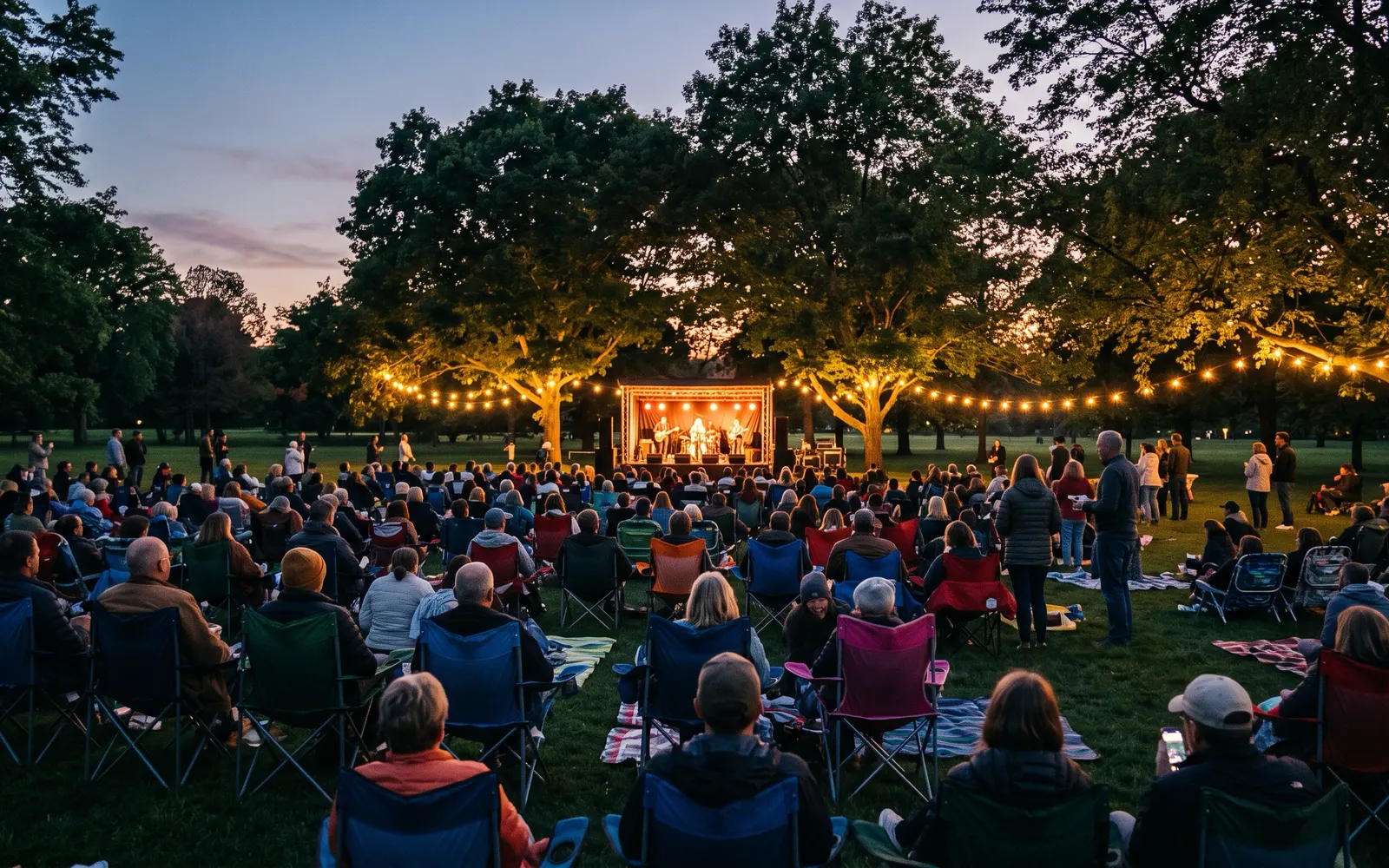
The big one is the Prospect Heights Block Party. In 2026 it ran Saturday, June 20, from 4 to 11 p.m. around the Gary Morava Recreation Center and Lions Park, and it doubled as the city's 50th anniversary and the park district's 60th. Elm Street closed for food trucks and a beer and wine garden, Lions Pool had a free swim, the Prospect Heights Lions Club ran its duck race, and 7th Heaven closed the night on the main stage.
The rest of the year is quieter and runs through the park district and the library: seasonal programs, the library's storytime and film series, and fall events listed in the park district's program guide. This fall's ballot also carries the District 23 school referendum on November 3. If you are touring in June, drive the block party.
What's Being Built in Prospect Heights
The project to know is the townhouse plan north of Muir Park. The Daily Herald reported on March 23, 2026, that Wheeling-based Neder Capital Services LLC wants to take over a 69-unit townhouse plan on the 5.2-acre site of the closed Jolly Fun House Academy at 1001 Oak Avenue. The council approved the original Lexington Homes version 3-2 in November 2020, but the sale never closed and the approval expired. The plan includes a land swap with the park district and a tax increment financing district. Neighbors along Drake Terrace have called it too dense. On the park district's project page, the district says it signed a purchase and sale agreement with Neder on August 7, 2026.
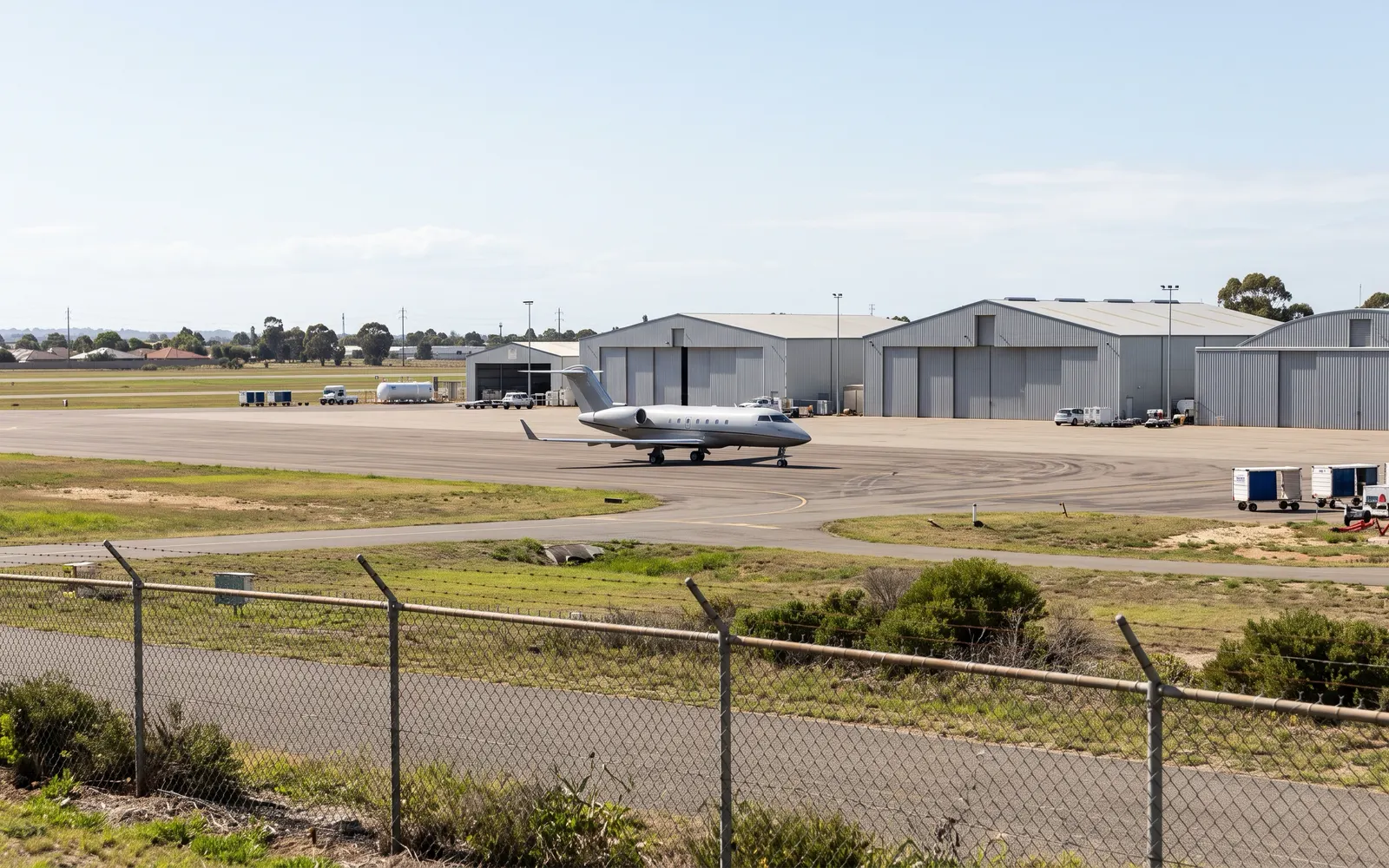
At the airport, New York-based Sky Harbour has proposed seven new hangars of 42,800 square feet each, mostly on the Prospect Heights side of Chicago Executive Airport, per a Daily Herald report on July 21, 2026. The project was headed to the city council on August 24. I have not confirmed the final vote. The airport has three runways on more than 412 acres and calls itself the fourth busiest airport in Illinois, so if you are buying on the east side, look at the flight paths and ask about the airport's noise programs.
The public projects are roads, schools and parks. The $21.5 million road bond resurfaces or rebuilds 26.1 miles of streets by 2030. District 23 is adding classrooms at Eisenhower through August 2027. The park district starts work on Country Gardens Park in spring 2027 and is chasing a grant for the bike path.
I don't label any town or neighborhood as safe or unsafe.
Flood Risk in Prospect Heights
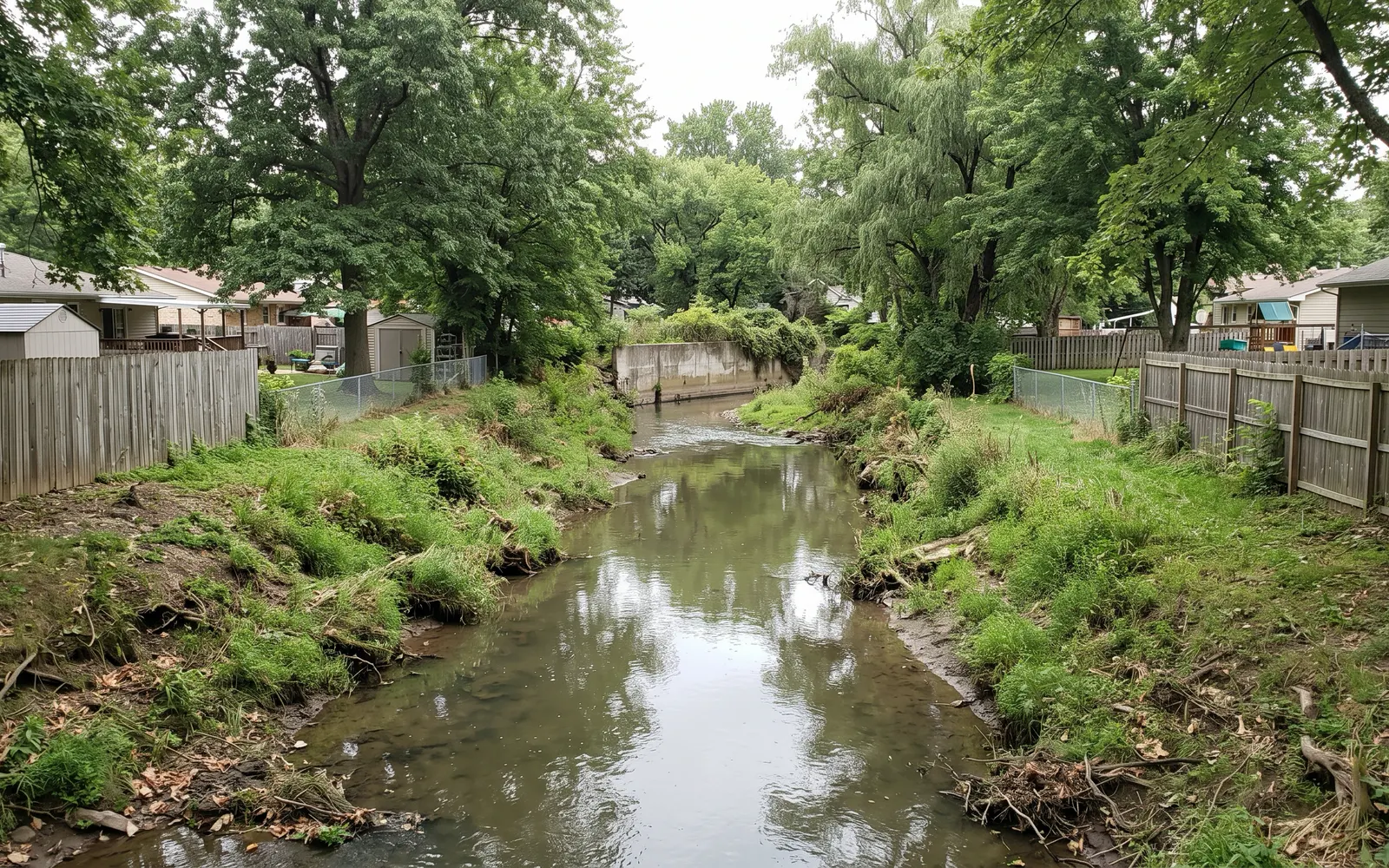
Flooding is a real issue in Prospect Heights, and the city says so itself. In the county hazard annex, the city describes itself as sitting in one of the lowest-lying areas in Cook County, with at least a dozen major floods since 1976. Redfin, using First Street's model, rates the city's flood risk as moderate and says 18% of properties are at risk of severe flooding over the next 30 years.
The risk has two sources. On the east side, the Des Plaines River is held back by Levee 37, more than 8,000 feet of wall at Milwaukee Avenue and River Road that the annex says protects about 2,800 multifamily units. On the west side, McDonald Creek and its tributaries overflow. The annex lists flooding on Willow Road between Elmhurst and Wheeling Roads, in the Arlington Countryside subdivision, on Elmhurst Road between Willow and Camp McDonald, and near homes on Patricia, Wheeling, Alton and Elm Streets, among others. It counts 5 FEMA repetitive-loss properties.
Three checks before you write an offer. Look the address up on the FEMA flood map, because a mapped flood zone can mean required flood insurance on a mortgage. Ask the seller directly about water in the basement or crawl space, and what they did about it. And on the west side, walk the lot after a rain if you can. In my experience with older big-lot houses, drainage and grading are where the surprises are.
Frequently Asked Questions
How much does a house cost in Prospect Heights, IL?+
Redfin reported a median sale price of $394,739 for the three months ending August 2026, and Zillow's home value index was $333,406 for August 2026. Condos and single-family houses trade as separate markets, so the median swings with the mix.
What are property taxes in Prospect Heights, IL?+
The median effective rate is about 2.72%, with a median bill of $5,615 (Ownwell, April 2026). Prospect Heights is in Wheeling Township, reassessed in 2025, and tax year 2025 second installments are due October 1, 2026.
Does Prospect Heights have city water?+
Only in part. The city supplies water to a portion of Prospect Heights, and the rest, including much of the west side, is on private wells the city does not regulate. Check the city's water source map for each address.
What school district is Prospect Heights, IL in?+
Mostly Prospect Heights School District 23, with parts in Wheeling District 21 and River Trails District 26. High school is District 214, either John Hersey or Wheeling High School. Assignment depends on the street, so confirm each address with the district.
Does Prospect Heights have a Metra station?+
Yes. The Prospect Heights station at 55 S. Wolf Road is on the North Central Service, with 6 weekday trains each way and no weekend service. Many commuters use the Union Pacific Northwest line in Mount Prospect, with 31 weekday trains each way.
Is Prospect Heights walkable?+
Not town-wide. Walk Score rates ZIP 60070 at 45, and many west-side streets have no sidewalks. The Elmhurst and Camp McDonald area and the east side near Milwaukee Avenue are the most walkable.
Does Prospect Heights flood?+
Parts of it do. First Street's model via Redfin says 18% of properties face severe flood risk over 30 years. The east side sits behind a Des Plaines River levee, and McDonald Creek has flooded west-side streets. Check the FEMA map for every house.
When did Prospect Heights become a city?+
Prospect Heights incorporated on January 31, 1976, after about 40 years as an unincorporated community run by the Prospect Heights Improvement Association. It celebrated its 50th anniversary in 2026.
Eshu Chikoti has extensive access to off-market listings throughout Prospect Heights and the rest of Cook County — homes that never make it to the public listing sites. That matters right now: in a seller's market like this one, well-priced homes routinely go under contract within days, and buyers relying only on public listings are competing for whatever is left over. Working with someone plugged into off-market inventory means seeing homes before the crowd does.
Eshu Chikoti · 847-691-4282 ·
Get new Prospect Heights listings by email
When a home comes on the market in Prospect Heights, I'll email it to you.
Just your email. Unsubscribe any time by replying.
Thinking About Prospect Heights?
Whether you're buying, selling, or just curious what's on the market, I can walk you through Prospect Heights street by street.