Park Ridge, IL
Park Ridge, IL is a Cook County city of about 38,500 people on O'Hare's northeast edge, with two Metra stations on the Union Pacific Northwest line, an Uptown built around the 1928 Pickwick Theatre, and a summer 2026 median sale price near $665,000.
Living in Park Ridge, IL means a median sale price of about $665,000 this summer, a 32-minute Metra ride to Ogilvie from two stations in town, and property tax near 2.51% of value. O'Hare sits just past the city's southwest edge, so airport noise and basement water belong on every checklist. Here it is, pocket by pocket.
Written by Eshu Chikoti · 847-691-4282 ·
How Park Ridge, IL Got Here: From Brickton to Uptown
Park Ridge started as a brickyard. According to the city's Wikipedia entry, the soil here is full of clay, and in 1854 George Penny set up a brickworks that supplied a fast-growing Chicago. The settlement was first called Pennyville, after him, and then Brickton. It incorporated in 1873.
For its first few decades it stayed small. The census counted 2,009 people in 1910 and 10,417 in 1930. The big jump came after World War II: 16,602 in 1950, 32,625 in 1960 and 42,466 by 1970. That twenty-year run is the reason so much of the city's housing dates from the 1950s and 1960s, as the homes section below shows. The 2020 census counted 39,656 residents.
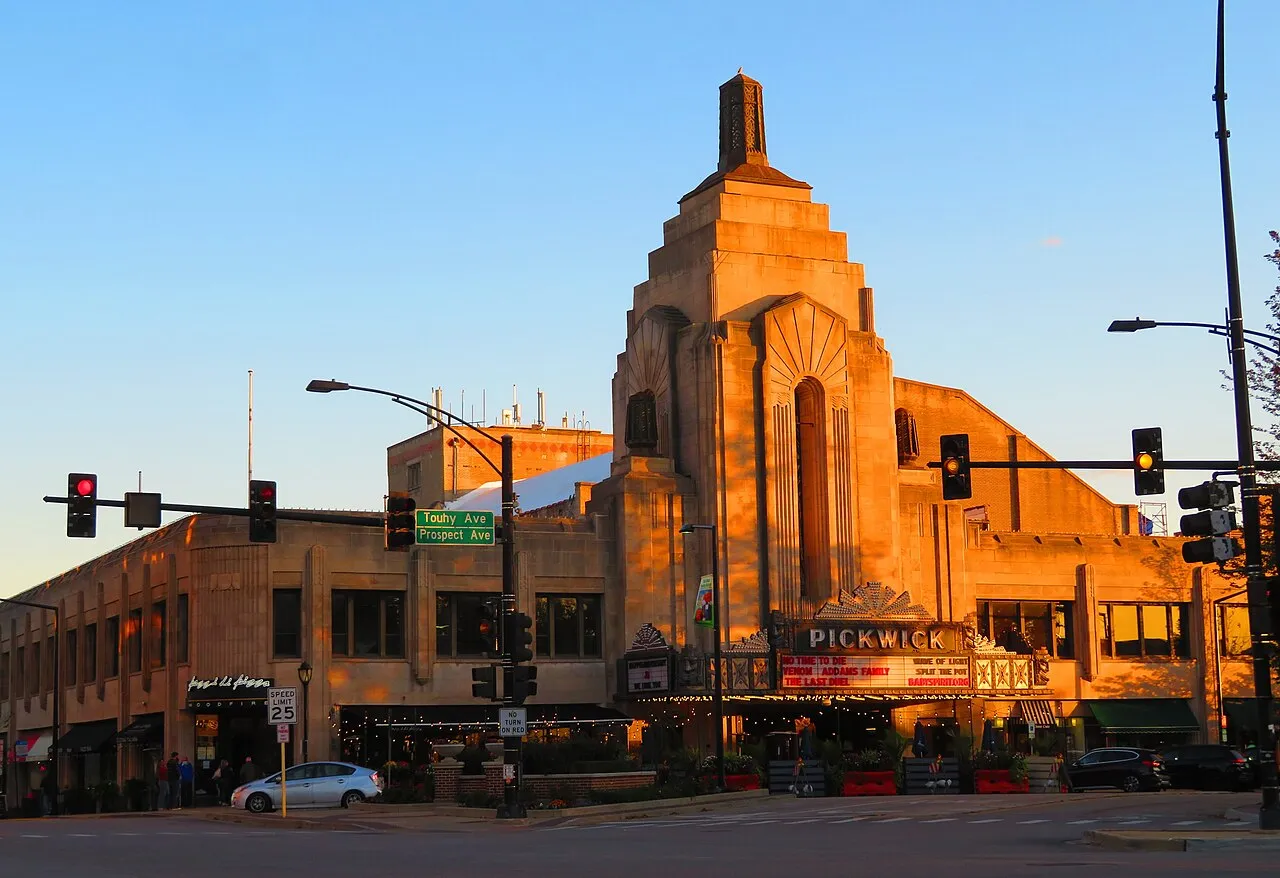
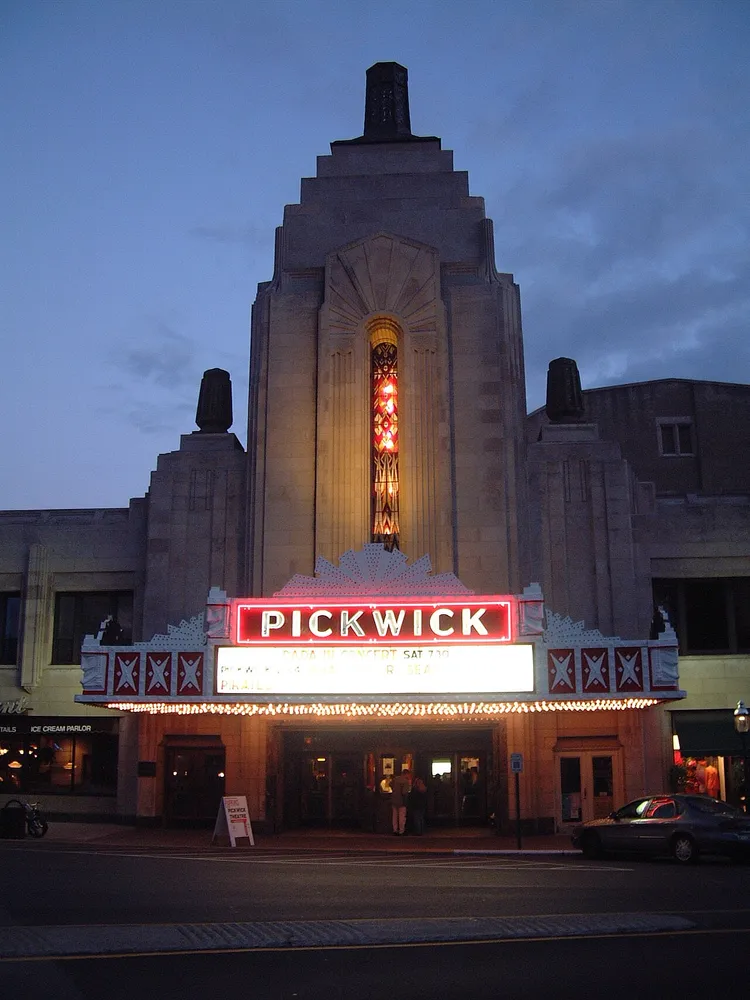
A few buildings anchor the story. The Pickwick Theatre opened on Prospect Avenue in 1928 and was listed on the National Register of Historic Places on February 24, 1975. Maine Township High School, now Maine East, opened its current building at Dempster Street and Potter Road in 1929. Lutheran General Hospital moved to Park Ridge in 1959, and Maine South opened in 1964 on the grounds of a former landfill.
The last big change to the map came from next door. O'Hare grew into one of the busiest airports in the world just past the city's southwest edge, and the airport's expansion has shaped local politics here for decades. That topic gets its own section below, because for a buyer it matters more than most of the history does.
Park Ridge at a Glance
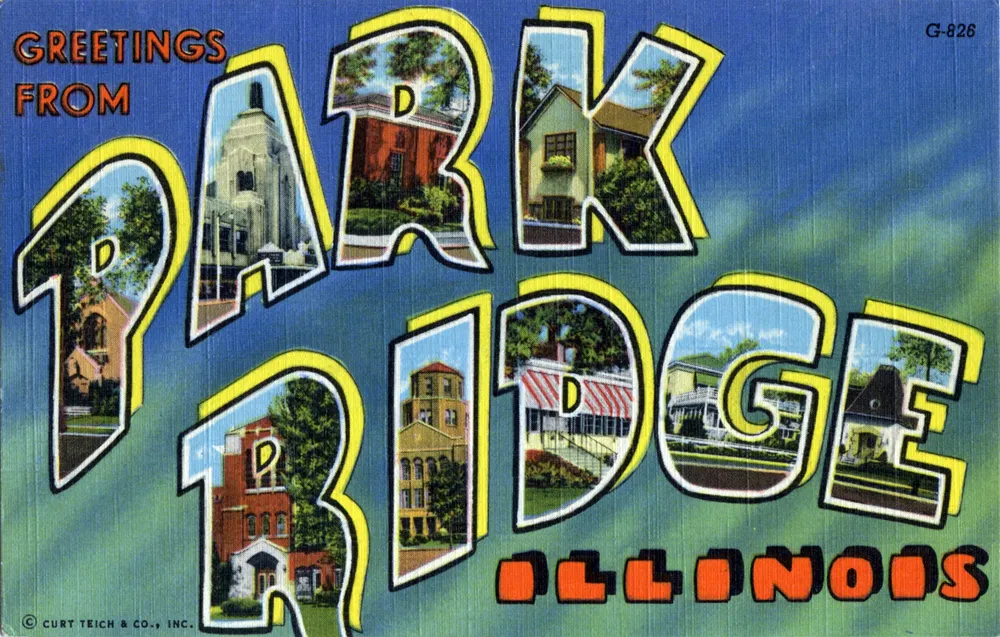
Park Ridge covers 7.14 square miles, about 15 miles northwest of the Loop, per the Wikipedia entry. The Des Plaines River separates it from Des Plaines on the west. Niles and unincorporated Maine Township are to the north. Chicago's Edison Park and Norwood Park neighborhoods are to the east and southeast, and Chicago's O'Hare community area and Rosemont are to the south and southwest.
It is a city by legal form, and all of it is in Cook County. The township picture is less simple. The Census Bureau's Vintage 2025 population estimates put Park Ridge at 38,463 people in 2025, split across three townships: about 32,460 in Maine Township, 3,980 in Norwood Park Township and 2,030 in Leyden Township. None of it is in Niles Township. For a buyer the split matters less than it sounds, because all three townships are on the same Cook County reassessment year, as the tax section explains.
The housing is mostly owned. The 2020-2024 Census ACS counts 15,573 housing units, with 84.8% of occupied homes owned and 15.2% rented. That is one of the higher ownership shares in the near northwest suburbs, and it is why the for-sale market here is mostly detached houses.
Park Ridge is not a big job center, but it is not only a bedroom suburb either. CMAP's June 2026 community snapshot counts 18,522 private-sector jobs in the city in 2025, up 2,268 (14.0%) from 2015. The largest single employer is Advocate Lutheran General Hospital.
At a $665,000 summer median, it costs more than most of its neighbors and less than Glenview.
O'Hare is next door, and most of the city is outside the sound-insulation contour. About 9% of properties carry a severe 30-year flood risk in First Street's model, and the city's own plan blames an old combined sewer system. The effective tax rate near 2.51% on a $665,000 house is about $16,680 a year once the assessor catches up. And new construction here almost always means a rebuild on an old lot.
Park Ridge Neighborhoods, Pocket by Pocket
Park Ridge has no official neighborhoods, and listings rarely use subdivision names the way Schaumburg or the far northwest suburbs do. Locals describe a house by its landmark instead: near Uptown, near Maine South, by Centennial, south of Higgins, by the hospital. The city itself uses three business-district names in its shop-local program: Uptown, North Park and the South Park/Higgins corridor.
The simplest way to split the city is by the railroad and the big east-west streets. The Union Pacific Northwest tracks cut diagonally through the middle, with Uptown around the Park Ridge station and the Dee Road station farther northwest. Touhy Avenue, Oakton Street, Dempster Street, Devon Avenue and Higgins Road run east-west. Each band has its own school feed, its own walk to the train and its own exposure to airport traffic.
Below are the pockets I use when I talk buyers through the city. The boundaries are my working description built from the landmarks, not official lines, so treat them as a starting point. If you want to know which elementary school, park and flight path a specific address falls under, that is a conversation I am happy to have here.
The expectation I most often have to reset with buyers in Park Ridge is that two houses on the same street will carry the same bill and the same noise. They often don't. A house that was rebuilt in 2005 and a 1955 ranch three doors down can have very different assessments, and a few blocks can change how often a plane passes overhead at night. I look at both before I look at the kitchen.
Uptown. The downtown around the Park Ridge Metra station (100 S. Summit Ave.), the Pickwick Theatre (5 S. Prospect Ave.), the Park Ridge Public Library (20 S. Prospect Ave.) and Hinkley Park (25 Busse Hwy.). The blocks around it hold much of the city's oldest housing and most of its condos. It is the most walkable part of town and the one the Uptown Master Plan covers.
Centennial and the west side. The blocks around Centennial Park (100 S. Western Ave., 13.6 acres), west of Uptown toward the Des Plaines River. Mostly detached houses from the postwar decades, with a pool, fitness center and sled hill at the park.
Dee Road and Maine South. The northwest part of the city around the Dee Road station (881 N. Dee Rd.) and south along Dee Road to Maine South at 1111 S. Dee Rd. Much of the 1950s and 1960s housing is here. It is closer to I-294 and O'Hare than Uptown is.
North end: Oakton to Dempster. The area around Oakton Park (2800 W. Oakton St.), Maine Park (2701 W. Sibley St.), Maine East at Dempster and Potter, and Advocate Lutheran General Hospital. Per Wikipedia, addresses in northern Park Ridge have the option of Maine East or Maine South. The city's North Park business district is in this part of town.
South Park and the Higgins corridor. The southern part of the city around South Park, which the park district bought in 1936 and has flooded for outdoor skating since 1948, down to Higgins Road and the edge of O'Hare and the Kennedy. This is the part of Park Ridge closest to the airport, and most of it is on the Norwood Park and Leyden township side of the map.
East side by Edison Park. The blocks between Uptown and Chicago's Edison Park neighborhood, along Northwest Highway and Touhy. Edison Park has its own Metra stop on the same line, which some east-side buyers use.
What Park Ridge Homes Look Like, by Type and Era
Park Ridge is a detached-house town. The 2020-2024 Census ACS counts 11,061 detached single-family homes, 71.0% of all units. Townhomes and other attached houses add 4.2%, buildings with two to four units add 5.9%, and buildings with five or more units add 17.5%, most of them the condo and apartment buildings around Uptown and along the main roads.
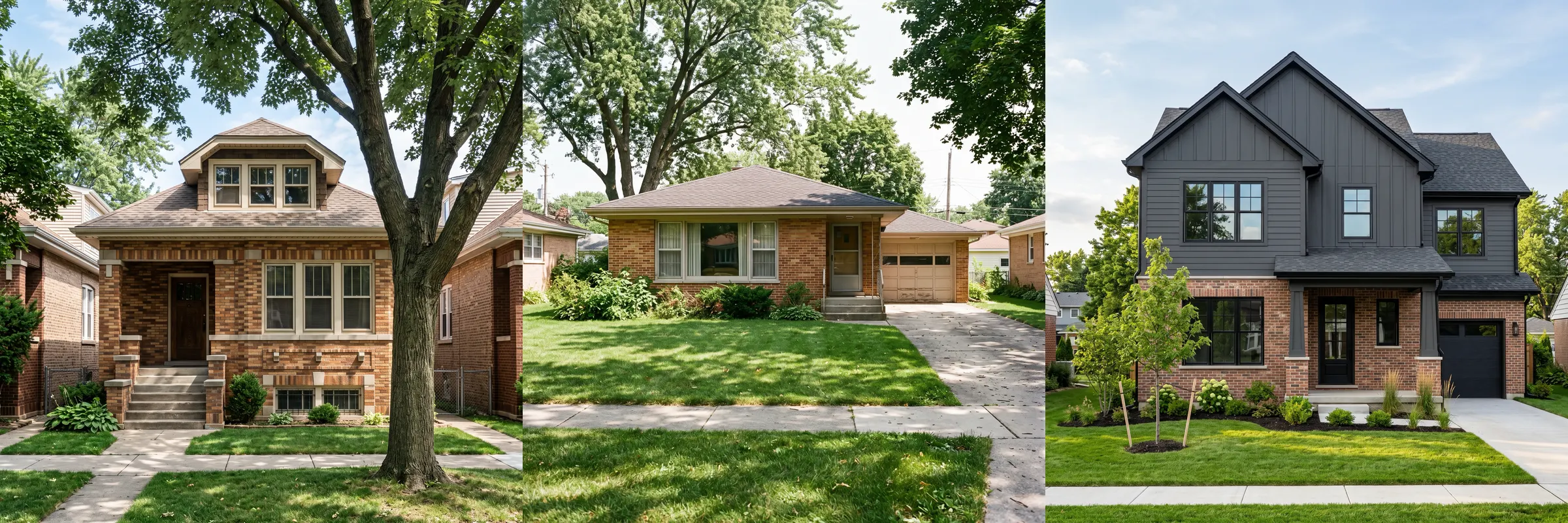
The era is mid-century. The same survey puts the median year built at 1960. About 16.2% of homes were built before 1940, and 49.9% were built between 1940 and 1969, with the 1950s alone at 27.5%. Only 3.0% date from the 1980s. Then the numbers rise again: 8.5% were built in the 2000s and 5.0% in the 2010s. In a city with almost no vacant land, most of that newer housing is a new house on an old lot.
The bedroom mix follows the product. About 39.3% of homes have three bedrooms, 24.5% have four and 8.1% have five or more. Two-bedroom homes, mostly condos and smaller older houses, are 20.8%. The ACS puts the median value of owner-occupied homes at $551,200 and median gross rent at $1,537.
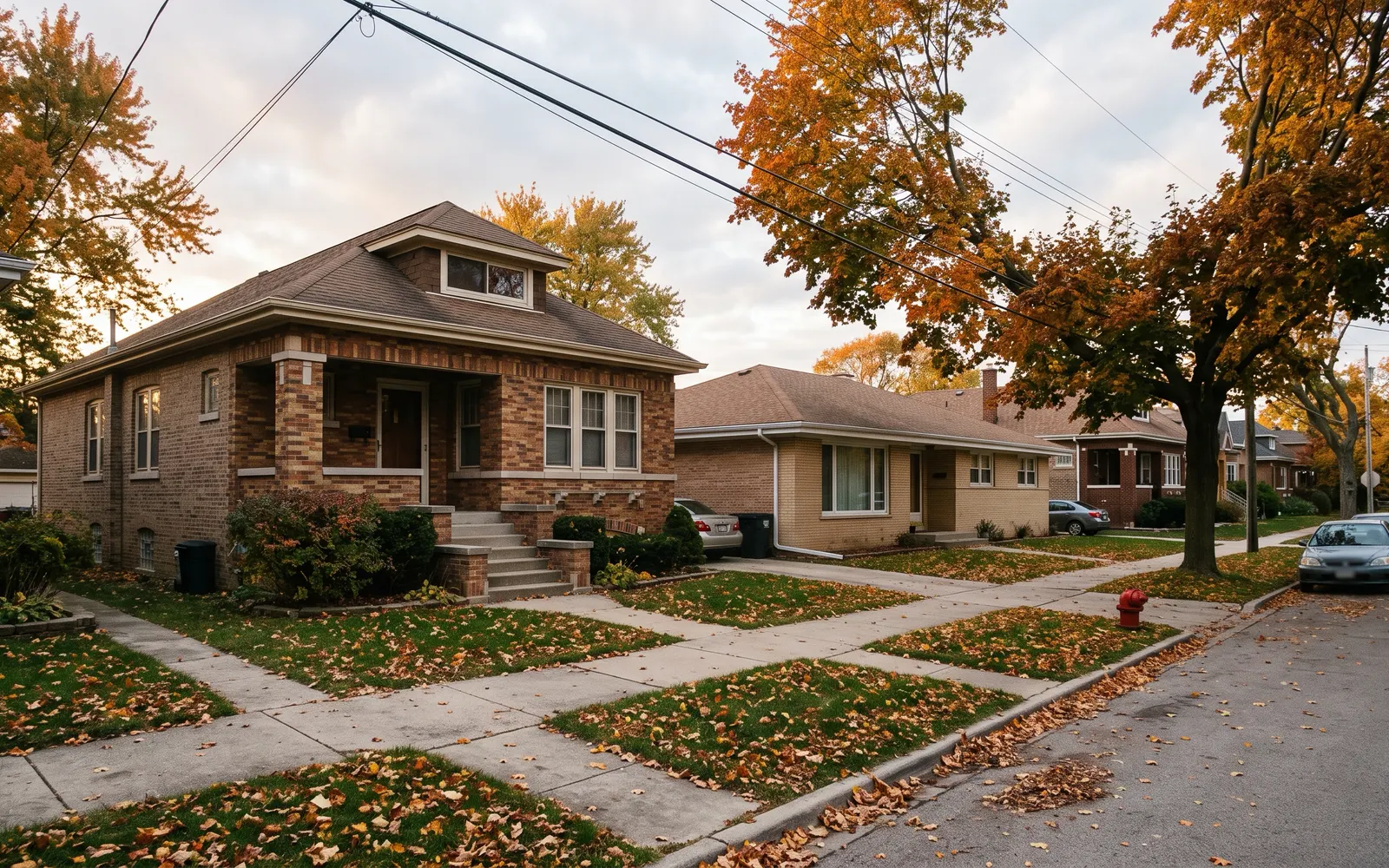
For a buyer that means three different purchases under one city name. There is the original house: a 1920s bungalow or colonial near Uptown, or a 1950s brick ranch or Cape Cod farther out. There is the rebuilt or heavily expanded house from the last 25 years, often twice the size of its neighbors. And there is the condo near the train. They trade at very different prices per square foot, and I price them off different comparable sales.
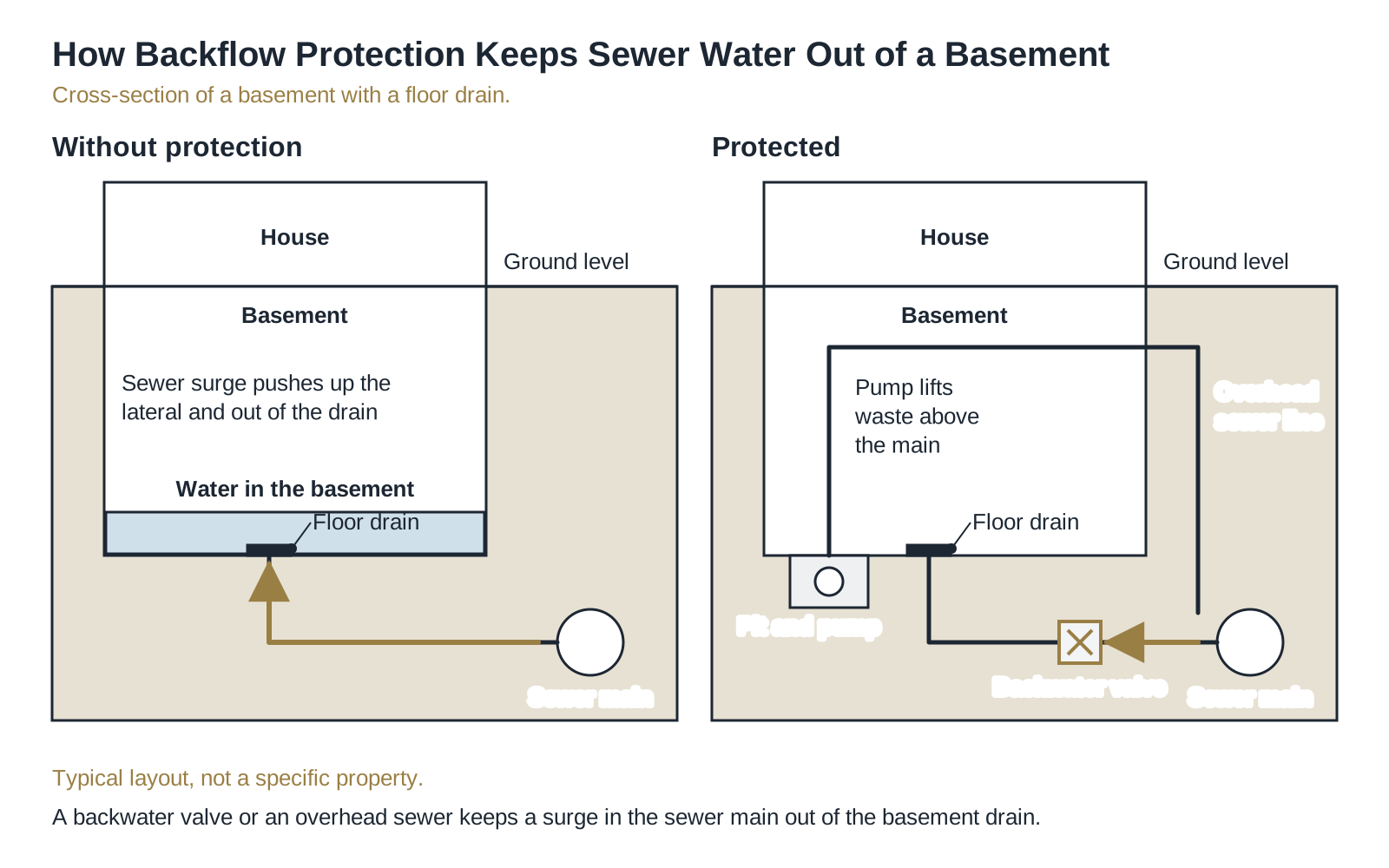
The older houses carry their own inspection list. Many have original sewer lines running to the street, and in a town with a documented basement-flooding history, a sewer camera inspection is money well spent. Check for a working overhead sewer or backflow valve, the age of the sump pump, and the drain tile. None of those should kill a deal. All of them belong in the price. My home inspection checklist covers what to ask for. The city's Historic Preservation Commission also keeps a map of historic landmarks and 100-year-old homes, which is worth a look if you are buying one of the oldest houses in town.
The Park Ridge Housing Market in 2026
Park Ridge had a strong summer. In the three months ending August 2026, Redfin reported a median sale price of $664,560, up 12.6% from a year earlier. Its report shows 150 homes sold, up from 126 a year before. The median home sold in 45 days, four days faster than last year, at 100.1% of list price, and 43.2% sold above asking.
The rest of Redfin's numbers show a market that is busy but not frantic. Price per square foot was $319, up 7.0%. About 20.6% of listings took a price cut, up 3.1 points from last year. Redfin gives Park Ridge a Compete Score of 69 out of 100, which it calls somewhat competitive, and says the average home gets about three offers. In practice that means the well-priced, move-in-ready house still draws a crowd, and the house that needs work or sits on a busy street waits for a price cut.
Zillow's home value index moved a little more slowly. It put the typical Park Ridge home at $597,562 in August 2026, up 9.4% from August 2025 and 14.6% from August 2024. The gap between the two is about mix. Redfin's median is the middle of whatever sold this summer, and summer sales tilt toward bigger detached houses. Zillow's index estimates every home in the city, including the condos. Both sources agree on direction, and both put this year's gain well ahead of inflation.
For context against the neighbors, Zillow's August 2026 index put Des Plaines at $358,473, Niles at $421,137, Norridge at $422,384, Mount Prospect at $453,639, Morton Grove at $454,351, Arlington Heights at $495,520 and Glenview at $697,923. Park Ridge sits near the top of that group, below Glenview and well above the towns on the other sides of O'Hare. If you are working out a budget at these prices, my guide to how much house you can afford is a good place to start.
Park Ridge Property Taxes: Cook County's Three-Year Cycle
Property tax is the line that moves the monthly payment most in Park Ridge. Ownwell's Cook County data for Park Ridge, updated April 13, 2026, puts the median effective rate at 2.51% and the median annual bill at $10,082. The Cook County median on the same page is 2.14%.
Cook reassesses one-third of the county each year, so each area is revalued every three years. Park Ridge's three townships, Maine, Norwood Park and Leyden, are all in the north suburbs group, which the assessor's reassessment schedule shows was reassessed in 2025. The Cook County Assessor's Maine Township release of June 2025 reported a 2024 median single-family sale in the township of $433,000 against the assessor's median estimate of $403,000, and said the 2025 values affect second-installment bills issued in 2026. Maine was last reassessed in 2022. At that reassessment, the assessor reported that total assessed value in the township rose 41% and residential assessed value rose 34%. Between reassessments, a house's assessed value usually stays put even when the market moves.
One structural point matters more here than in towns with a mall or an industrial park. CMAP's snapshot, using state data, shows $1.81 billion of the city's $2.05 billion equalized assessed value in 2024 was residential, about 88%. Commercial property was $237 million and industrial almost nothing. In plain terms, homeowners carry most of the local levy.
The bills come in two pieces. For tax year 2025, the first installment was due April 1, 2026, and the second is due October 1, 2026, per the Cook County Treasurer. Those second-installment bills were mailed September 1, about two months late because of the county's tax system overhaul, according to Cook County. If you close this fall, ask your attorney how the proration handles that late bill.
Here is what the rate looks like on a real purchase. At this summer's $664,560 median, 2.51% works out to about $16,680 a year, or $1,390 a month. Many current bills are lower because assessments trail the market, and the mistake I see most is buyers budgeting off the seller's bill. The Cook County homeowner exemption takes $10,000 off the equalized assessed value of an owner-occupied home, and new owners have to apply for it.
Sellers pay one city cost. According to the ATG summary of the city ordinance, updated March 4, 2025, Park Ridge charges a transfer tax of $2.00 per $1,000 of value, rounded to the nearest $1,000 and paid by the seller, so a $665,000 sale carries about $1,330 in city stamps. Stamps are bought at City Hall after the final water bill is paid, and the city wants a photo of the water meter taken no more than five days before closing. There is no pre-sale inspection. The Illinois Department of Revenue lists the county transfer tax at 25 cents per $500, or about $332 on the same sale. My Illinois closing costs guide covers the rest. This is general information, not tax advice. Your bill depends on your parcel, your exemptions and the assessor.
Park Ridge Schools: District 64 and Maine Township District 207
Most of Park Ridge is in Park Ridge-Niles School District 64 for kindergarten through eighth grade. According to the district's own facts page, District 64 serves Park Ridge and part of Niles with eight schools: five elementary schools, two middle schools and an early childhood center, and about 4,600 students in the 2024-25 school year.
High school is Maine Township High School District 207. Wikipedia's district entry says the district takes in all of Park Ridge. Most of the city goes to Maine South at 1111 S. Dee Road, which had 2,491 students in 2023-24. Maine East, at Dempster Street and Potter Road on the city's north edge, had 1,840 students in 2024-25. Per the Park Ridge Wikipedia entry, students in northern Park Ridge can choose either Maine East or Maine South.
The edges take checking. Park Ridge spans three townships, and elementary boundaries do not always follow the city limit, so a few addresses near the south and east edges may be assigned elsewhere. Check every address with the district before you write an offer, and ask me for the boundary if you want it done for a specific house. I don't rank schools on this page. The Illinois Report Card has each school's own data.
The community college is Oakton College; Park Ridge is in its district, per Wikipedia.
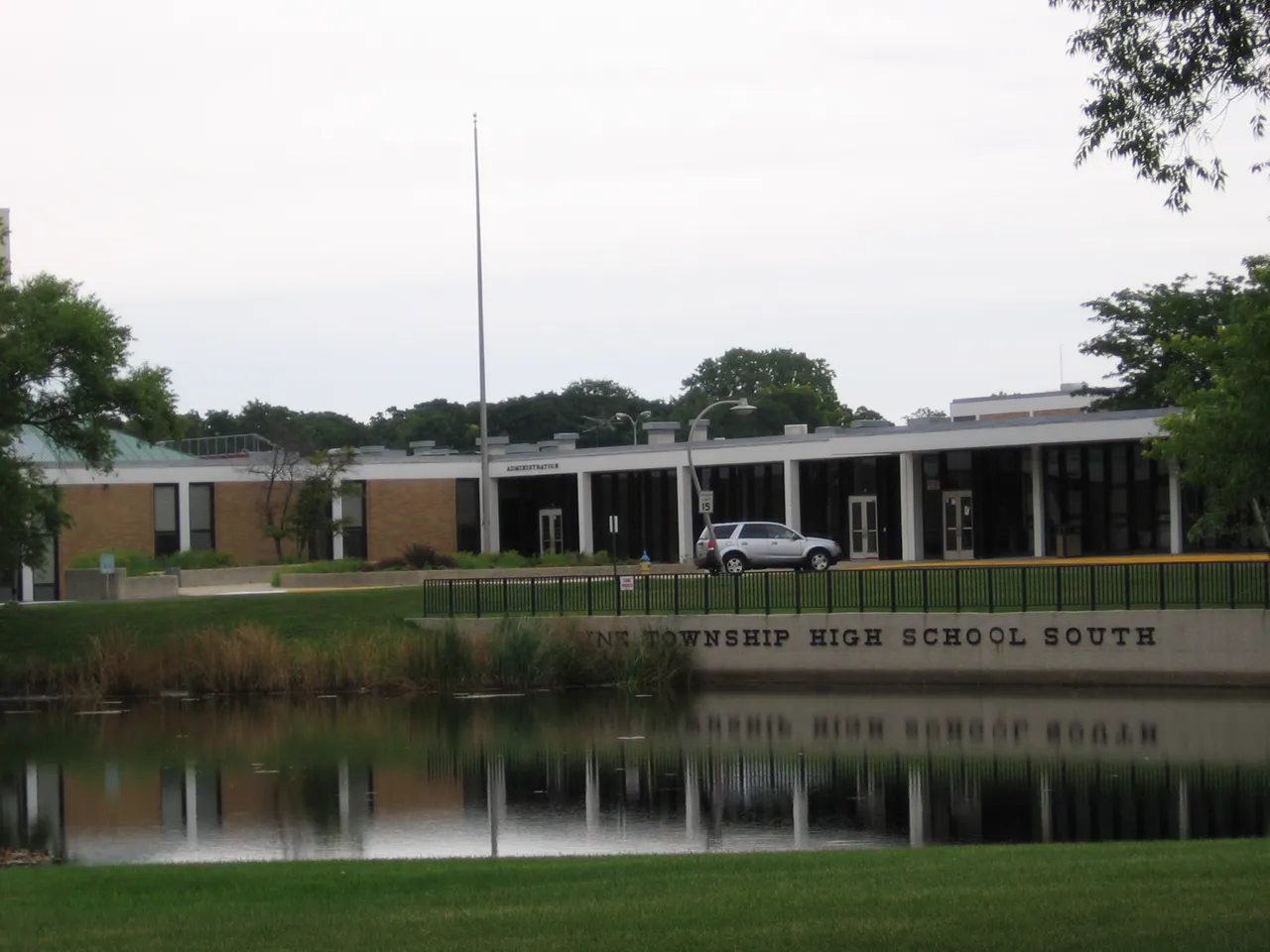
District 64 elementary schools. Carpenter, Field, Franklin, Roosevelt and Washington, all in Park Ridge, per the district.
District 64 middle schools. Lincoln Middle School in Park Ridge and Emerson Middle School in Niles.
District 64 early childhood. Jefferson School, in Niles.
District 207 high schools serving city addresses. Maine South (1111 S. Dee Rd.) and Maine East (2601 W. Dempster St.). Maine West, the district's third high school, is in Des Plaines.
College. Oakton College's district includes Park Ridge.
Commuting from Park Ridge: Two Metra Stations on the UP-NW
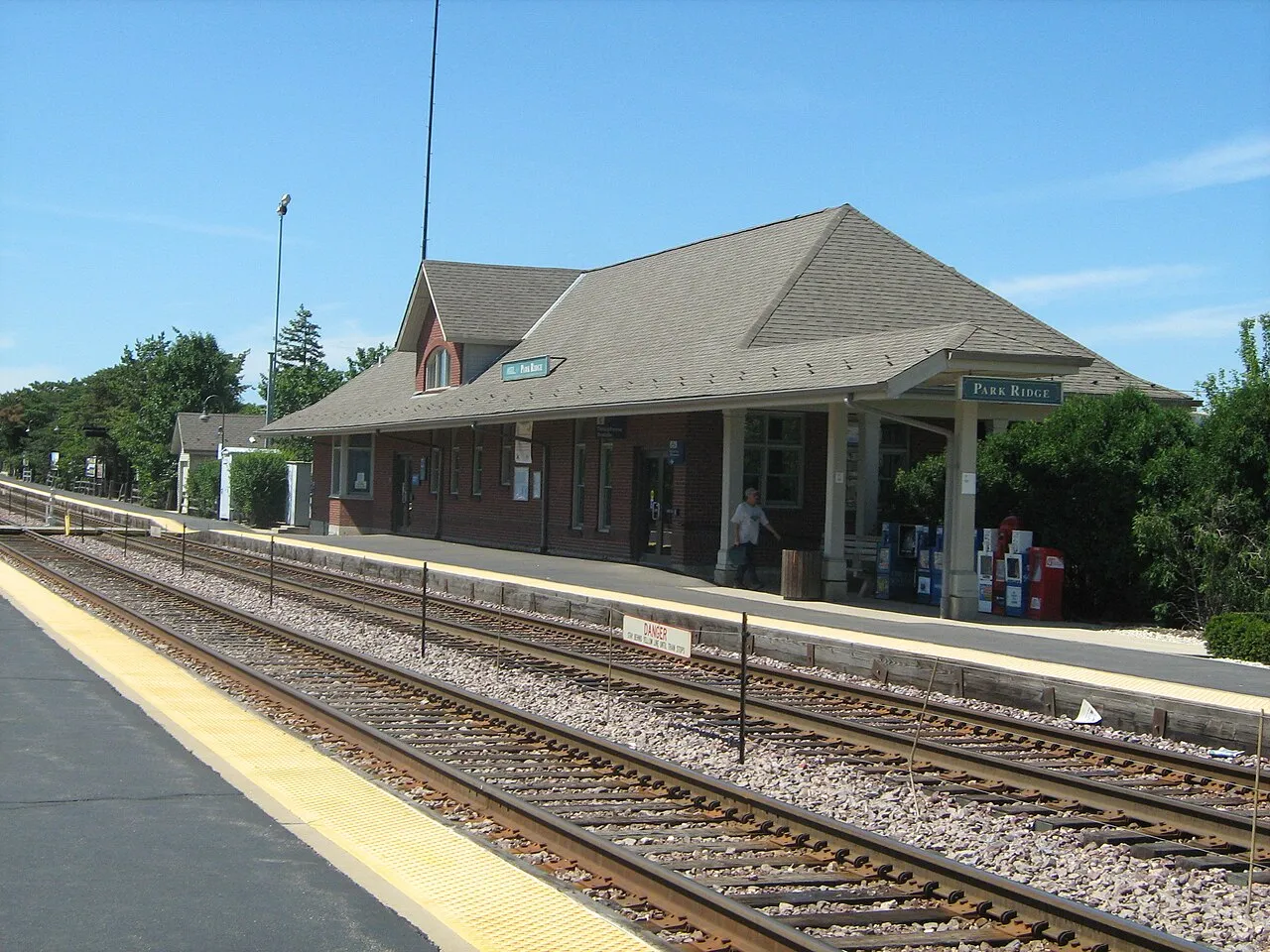
Park Ridge has two Metra stations on the Union Pacific Northwest line, which runs to Ogilvie Transportation Center in the West Loop. The Park Ridge station) at 100 S. Summit Ave. in Uptown is 13.1 miles from Ogilvie. The Dee Road station at 881 N. Dee Rd. is 15.1 miles out and was rebuilt in 2006. Both are in Metra's fare zone 2.
According to Metra's schedule data for the week of September 28, 2026, 25 trains leave Park Ridge for Ogilvie on weekdays and 25 come back. Every inbound train takes 32 to 35 minutes, with a median of 32. There are seven inbound departures before 8:30 a.m.: 5:08, 5:38, 6:08, 6:39, 7:14, 7:39 and 8:14. Midday, trains leave at 38 minutes past each hour, so a missed train costs an hour. Saturdays have 16 inbound and 15 outbound trains, and Sundays have 9 inbound and 10 outbound.
Dee Road has the same 25 trains each way on weekdays, three minutes earlier inbound and 35 to 38 minutes to Ogilvie. Outbound, the fastest ride home from Ogilvie is 28 minutes to Park Ridge and 30 to Dee Road. One thing the schedule makes clear: the line's express trains skip both stations. Of the 39 weekday inbound trips on the line, 14 pass through Park Ridge without stopping. The trade is that every train that does stop is a short ride.
Parking works differently at each station. At Park Ridge, per Wikipedia), there is on-street parking along Summit Avenue and Busse Highway and a lot at Summit and Touhy on the north side, with more parking farther south of Main Street. Dee Road has its own lots, and Pace Route 226 on Oakton Street serves it on weekdays. Walk Score counts about eight bus lines in the city.
Most people still drive. The 2020-2024 ACS shows 59.4% of Park Ridge workers driving alone, 23.5% working from home and 8.6% on public transit, including 6.1% by commuter rail. CMAP puts the average commute at 29.1 minutes.
Driving from Park Ridge: I-294, the Kennedy and O'Hare
Park Ridge is surrounded by expressways without having one run through the middle of it. The Tri-State Tollway (I-294) runs north-south near the west side along the Des Plaines River. The Kennedy (I-90) passes the southeast corner, where the city's own hazard mitigation annex places the Kennedy at Cumberland "in Park Ridge." I-190 runs from the Kennedy into the airport.
O'Hare is the neighbor that defines the driving picture. Wikipedia lists Chicago's O'Hare community area directly south of the city and Rosemont to the southwest. For anyone who flies often, or works at the airport or in the Rosemont convention and hotel district, that is a short trip without an expressway at all.
For local trips, Touhy Avenue, Oakton Street, Dempster Street, Devon Avenue and Higgins Road carry east-west traffic, and Northwest Highway runs diagonally along the railroad through Uptown. Cumberland Avenue, Greenwood Avenue, Dee Road and Canfield Road carry much of the north-south traffic. Dempster near the hospital and Touhy near the tollway are the stretches that back up. If you are choosing between two houses, drive both routes at 5 p.m. before you decide.
O'Hare Noise in Park Ridge: What to Know and How to Check
Airport noise is a real part of the Park Ridge decision, and I'd rather you hear it here than after closing. O'Hare now runs eight runways, per Wikipedia: six parallel east-west runways, three on the north airfield and three on the south, plus two diagonal runways. That layout is the result of the O'Hare Modernization Program, which Wikipedia says wrapped up in 2021. East-west runways send arrivals and departures along east-west paths, and Park Ridge sits to the northeast of the airfield.
The city has been active on the issue for years. In July 2023 the Park Ridge City Council approved a formal comment asking the FAA to speed up its review of noise policy, Journal & Topics reported. The city's comment said five of O'Hare's eight runways point in its direction and that many neighborhoods did not qualify for soundproofing during the modernization program. A resident group, Fair Allocation in Runways, or FAiR, has pushed for measures such as an overnight curfew and limits on shoulder-hour flights. Those are the city's and the group's positions. The airport and the FAA see the runway plan differently, and I am reporting the debate, not taking a side in it.
There is a formal body for this. Park Ridge is a member of the O'Hare Noise Compatibility Commission, which has worked on aircraft noise since 1996 and counts 43 communities and 18 school districts, District 64 among them. In August 2022 the commission approved a new Fly Quiet program for nighttime runway use, with six runway configurations that rotate weekly between the north and south airfields and between east and west flow, so that no area takes the overnight traffic every week. Park Ridge sat on the committee that built it, with FAiR as a non-voting member. The Chicago Department of Aviation says the Fly Quiet program dates to June 17, 1997, and asks pilots to use nighttime routes over less-populated areas such as forest preserves, highways and industrial land.
Sound insulation depends on the map. The O'Hare Residential Sound Insulation Program covers homes inside the O'Hare Modernization Program's full build-out 65 DNL noise contour, a line set by the FAA's September 2005 environmental impact statement, per the commission's eligibility page. The Chicago Department of Aviation says more than 12,029 homes near O'Hare have been insulated at a cost of more than $385 million. The city's complaint to the FAA was that many of its neighborhoods fell outside that line. Whether a given house is inside it is an address-by-address question.
Here is how I check a specific house. First, look the address up on the CDA's property locator to see where it sits against the noise contour. Second, open the CDA's flight tracker and watch the flight paths over the block on a few different days. Third, visit at different times: a weekday evening rush and a late night, and ideally in a week when the runway rotation points traffic your way. Some blocks hear very little. Others hear a lot. The only way to know is to go.
Is Park Ridge Walkable?
Parts of it are. Walk Score rates Park Ridge 54 for walking, which it calls somewhat walkable, 53 for biking and 39 for transit. It publishes no named neighborhoods for Park Ridge, only the 60068 ZIP code, which also scores 54.
The score is an average of two very different places. Uptown, with the train, the library, the Pickwick, Hinkley Park and most of the restaurants within a few blocks, is the part of town where you can run errands on foot. The rest of the city is residential blocks with sidewalks and parkway trees, where the walk is pleasant but the destinations are a drive away. CMAP's land use inventory for 2023 shows why: 46.7% of the city's 4,566 acres is single-family residential and only 3.6% is commercial, with another 15.3% in open space.
If walking to the train matters to you, the pocket matters more than the city. A house within a few blocks of either station gets you a 32- to 38-minute ride without a car. A house on the far side of Dempster or down by Higgins does not.
Uptown, Groceries and Everyday Errands in Park Ridge
Park Ridge is not a big shopping town, and the numbers say so. CMAP's snapshot, using Illinois Department of Revenue data, shows $714 million in retail sales in the city in 2025, or $18,462 per resident, below the Cook County figure of $23,200. The big-box and mall trips go to Niles, Des Plaines, Rosemont and Glenview, all a short drive away.
What Park Ridge has is local retail in three districts. Uptown, around the train, the Pickwick and Prospect Avenue, is the main one. The city's shop-local program also names the North Park business district and the South Park/Higgins corridor. Northwest Highway, Touhy Avenue and Devon Avenue fill in the rest.
For groceries, Jewel-Osco has one store in the city, at 481 Busse Highway near Greenwood, open 6 a.m. to midnight with a pharmacy. Beyond that, most residents shop at supermarkets and warehouse clubs just over the city line, and which one you use depends on which side of Park Ridge you live on. That is worth mapping before you buy, the same way you'd map the train.
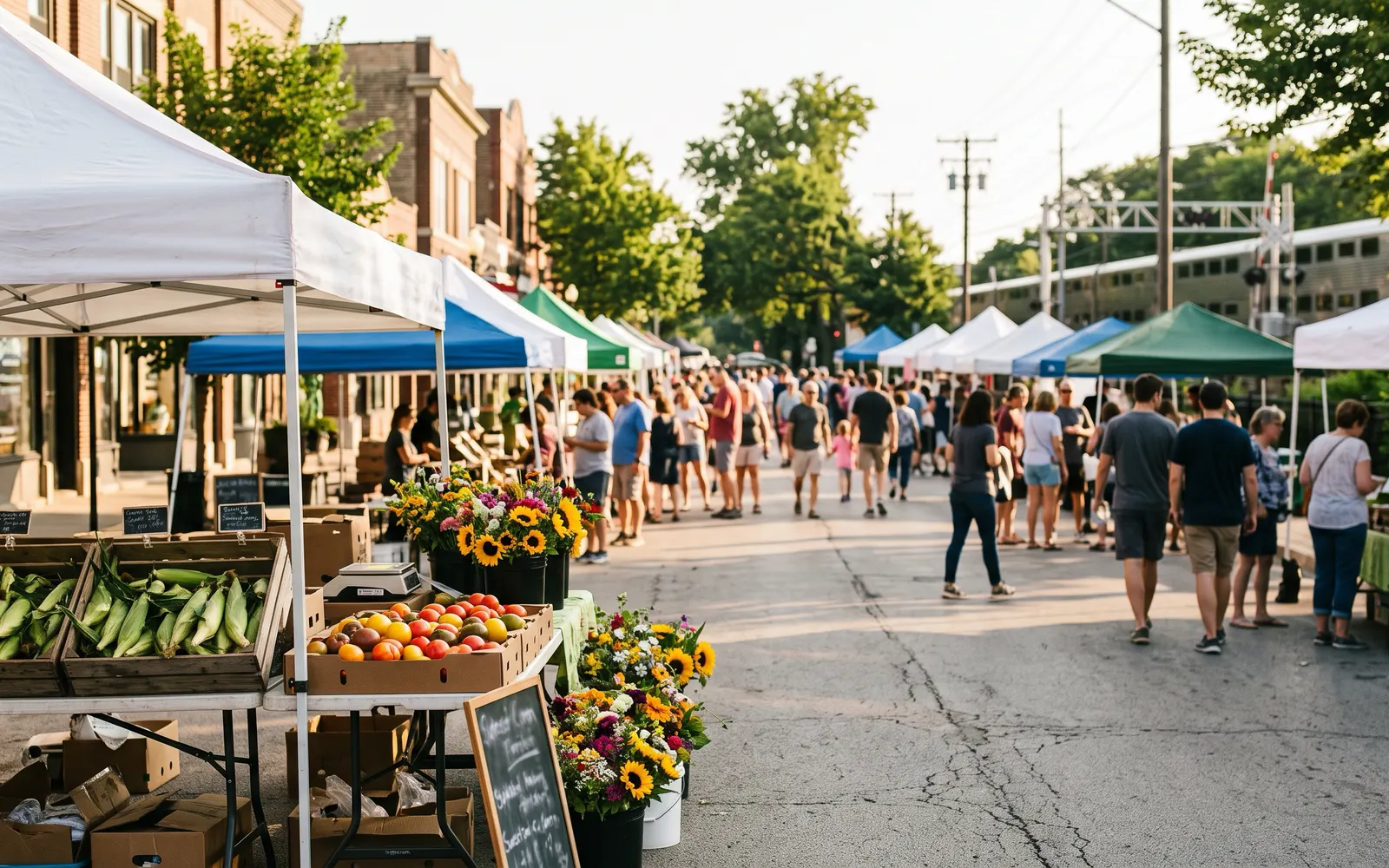
From Memorial Day weekend through the end of October, the Park Ridge Farmers Market runs Saturdays, 7 a.m. to 1 p.m., rain or shine, at 15 Prairie Avenue between Main and Garden in Uptown. The market accepts Link cards and offers matching vouchers of up to $25 for fruits and vegetables.
Where Park Ridge Eats
Most of Park Ridge's restaurants are in Uptown or strung along a handful of roads. Walk Score counts about 132 restaurants, bars and coffee shops in the city. The city's own Restaurant Week, in its most recent edition, listed 21 participating restaurants, with addresses on Prospect Avenue and Main Street in Uptown, along Northwest Highway and Touhy Avenue, on Busse Highway and Fairview Avenue, and out on Higgins Road, Canfield Road and Devon Avenue. That spread is a fair map of where to eat.
I don't try to rank restaurants here, because the list turns over. The advice I give buyers is to eat near each house you are serious about. It is the fastest way to learn which part of Park Ridge you'd actually use day to day. A house a few blocks from Uptown gets you a walkable dinner. A house on the north end or by Higgins gets you a short drive, or a trip into Edison Park, Niles or Rosemont.
Summer adds one more option. The Saturday farmers market in Uptown has prepared-food vendors along with produce, and it turns Prairie Avenue into the busiest block in town for a few hours each week.
Parks, Pools and the Ice Arena in Park Ridge
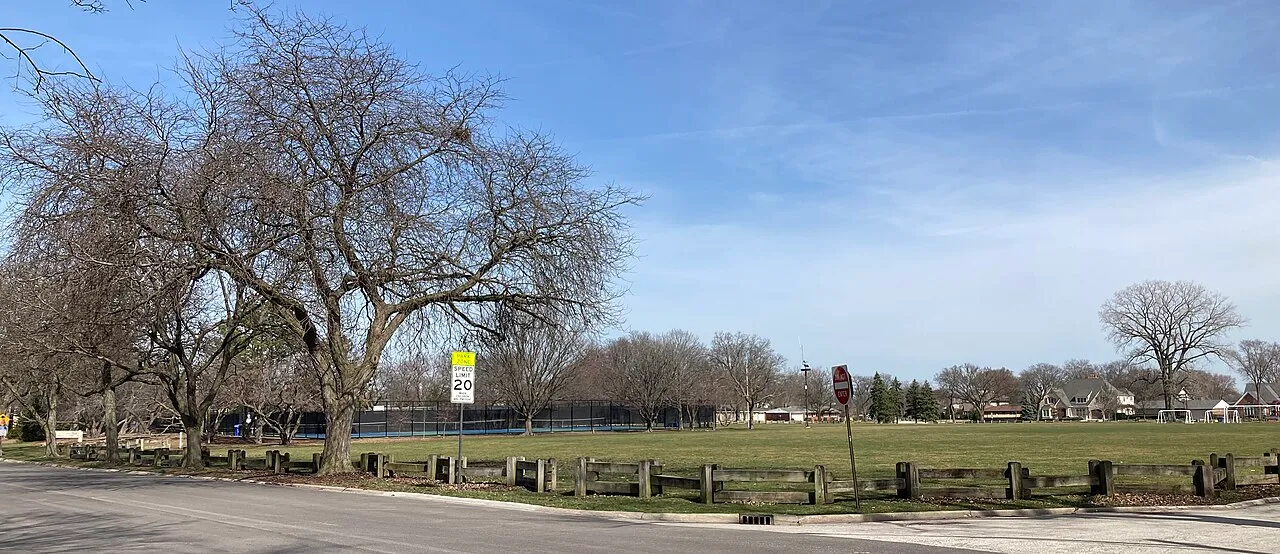
The Park Ridge Park District has served the city since 1914, and its seven community parks are the backbone of weekend life here: Centennial, Hinkley, Hodges, Maine, Oakton, Prospect and South Park.
Centennial Park, at 100 S. Western Ave., covers 13.6 acres and holds three district facilities: the Centennial Fitness Center, the Centennial Activity Center and the Centennial Aquatic Center, plus ball fields, a walking track and the sled hill, which is under restoration this fall. It was called West Park until 1976. Hinkley Park, 12.5 acres at 25 Busse Hwy. in Uptown, was acquired in 1927 and has a pool, a skate park, a lighted field, a community garden and a picnic pavilion added in a 2024 renovation.
The biggest recent investment is on the north end. Oakton Park, 16.5 acres at 2800 W. Oakton St., is home to the new Oakton Sports Complex, built with referendum approval, with a renovated main rink, a new studio rink, an indoor turf field and a free indoor walking track. The driving range and the Paws Park dog park were closed for construction as of this fall. Maine Park, 10.1 acres at 2701 W. Sibley St., was its own park district until voters merged it into Park Ridge's in 1954. South Park, bought in 1936 for $27,300, has hosted outdoor skating every winter since 1948.
Park district fees favor residents. At the Centennial Aquatic Center, open swim was $11 for residents and $16 for non-residents this season, and an Oakton public skating season pass was $95 for residents and $125 for non-residents. For bigger open space, the Cook County forest preserves along the Des Plaines River are just west of the city.
The Park Ridge Public Library
The Park Ridge Public Library sits in the middle of Uptown at 20 S. Prospect Ave., a block from the train. It opened to the public on December 6, 1913, after a $7,500 grant from the Carnegie Corporation, and Wikipedia puts its collection at about 175,000 items with annual circulation above 500,000.
According to the library's website, it is open 9 a.m. to 9 p.m. Monday through Thursday, 9 a.m. to 6 p.m. Friday, 9 a.m. to 5 p.m. Saturday and noon to 5 p.m. Sunday. Beyond books, it runs The Studio, a makerspace; a media lab; museum passes; home delivery; and test proctoring. For a buyer working from home, it is also the quietest desk in Uptown.
The local history lives elsewhere. The Park Ridge Historical Society runs the Park Ridge History Center on the former Youth Campus grounds at Prospect Park, per Wikipedia's Youth Campus entry. The campus operated from 1908 to 2012, and the park district took over most of the land after it closed.
Utilities and City Services in Park Ridge
Park Ridge drinks Lake Michigan water bought from the City of Chicago. According to the city's water quality page, Park Ridge re-chlorinates the treated water it buys, stores 15 million gallons underground at two pumping stations and keeps a one-million-gallon water tower.
Trash changed hands this year. As of May 1, 2026, the city contracts with SBC Waste Solutions for residential garbage, recycling, yard waste and food scraps, with weekly pickup at the curb or alley for single-family and two-flat homes. Collection days did not change. Condo and apartment buildings arrange their own service with the hauler. ComEd delivers electricity and Nicor Gas provides natural gas.
Two practical notes for sellers. The city sells the transfer stamp only after the final water bill is paid, and it wants a photo of the water meter taken within five days of closing, so plan the reading early. And if your house has had a flood-control system added, such as an overhead sewer or a backflow valve, keep the paperwork; buyers here ask for it.
Advocate Lutheran General and Healthcare in Park Ridge
Park Ridge has one of the largest hospitals in the Chicago area inside its limits. Advocate Lutheran General Hospital is a 645-bed teaching hospital with a Level I trauma center, the highest trauma designation. Wikipedia calls it the sixth-largest hospital in the Chicago area. It opened at its Park Ridge site in 1959 and is also home to Advocate Children's Hospital's Park Ridge campus.
It matters to the local economy as well. Wikipedia's table from the city's 2020 financial report lists the hospital as the city's largest employer, with 3,693 employees. It also matters for flood control: the Metropolitan Water Reclamation District's creek project, covered in the flood section, enlarges a pond on the hospital's west side.
For a buyer, a Level I trauma center a few minutes away is a real convenience. The one cost is traffic and some ambulance noise on Dempster Street and the approaches to the campus, which is worth hearing for yourself if you are looking nearby.
The Pickwick Theatre and Nights Out in Park Ridge
The Pickwick is the center of Park Ridge's night life, and it has been since 1928. According to Wikipedia, the Art Deco theater at 5 S. Prospect Ave. was designed by Roscoe Harold Zook and William F. McCaughey with Alfonso Iannelli. The main auditorium originally seated 1,400 and now seats about 800. Three smaller screens were added in 1990 and a 39-seat room in 2017.
Its future has been a local story. A plan for the Copernicus Foundation to lease the main auditorium for live performances fell through, Journal & Topics reported on October 2, 2024, and the building's owners, the Vlahakis and Loomis ownership group, continue to run it. It still shows first-run movies, and the Park Ridge Classic Film series runs monthly screenings there at 1 p.m. and 7 p.m., with tickets at $12, or $10 in advance.
Beyond the Pickwick, a night out in Park Ridge means dinner in Uptown or along Northwest Highway. Rosemont's arena, theater and entertainment district is a short drive south, and downtown Chicago is one train from either station. The last inbound trains run late, but check the return schedule before a late night in the city.
Park Ridge's Yearly Calendar
Park Ridge's calendar runs on small, steady events rather than one big festival. The farmers market is the weekly anchor from Memorial Day weekend through October. Journal & Topics reported in April 2026 that this year's market got a larger footprint on Prairie Avenue and part of the city lot at 15 S. Prairie, with a designated picnic area.
The city's Restaurant Week fills a stretch of late winter. In fall and winter, the park district's event calendar carries Halloween Hoopla on October 16, 2026, with pumpkin carving, hayrides and a campfire, and a holiday bazaar on November 7. The Pickwick's classic film series has monthly screenings through the fall, and Oakton's public skating runs from September into January.
If you are touring houses on a summer Saturday, start at the farmers market. It tells you more about how Uptown works than a listing will.
What's Being Built in Park Ridge
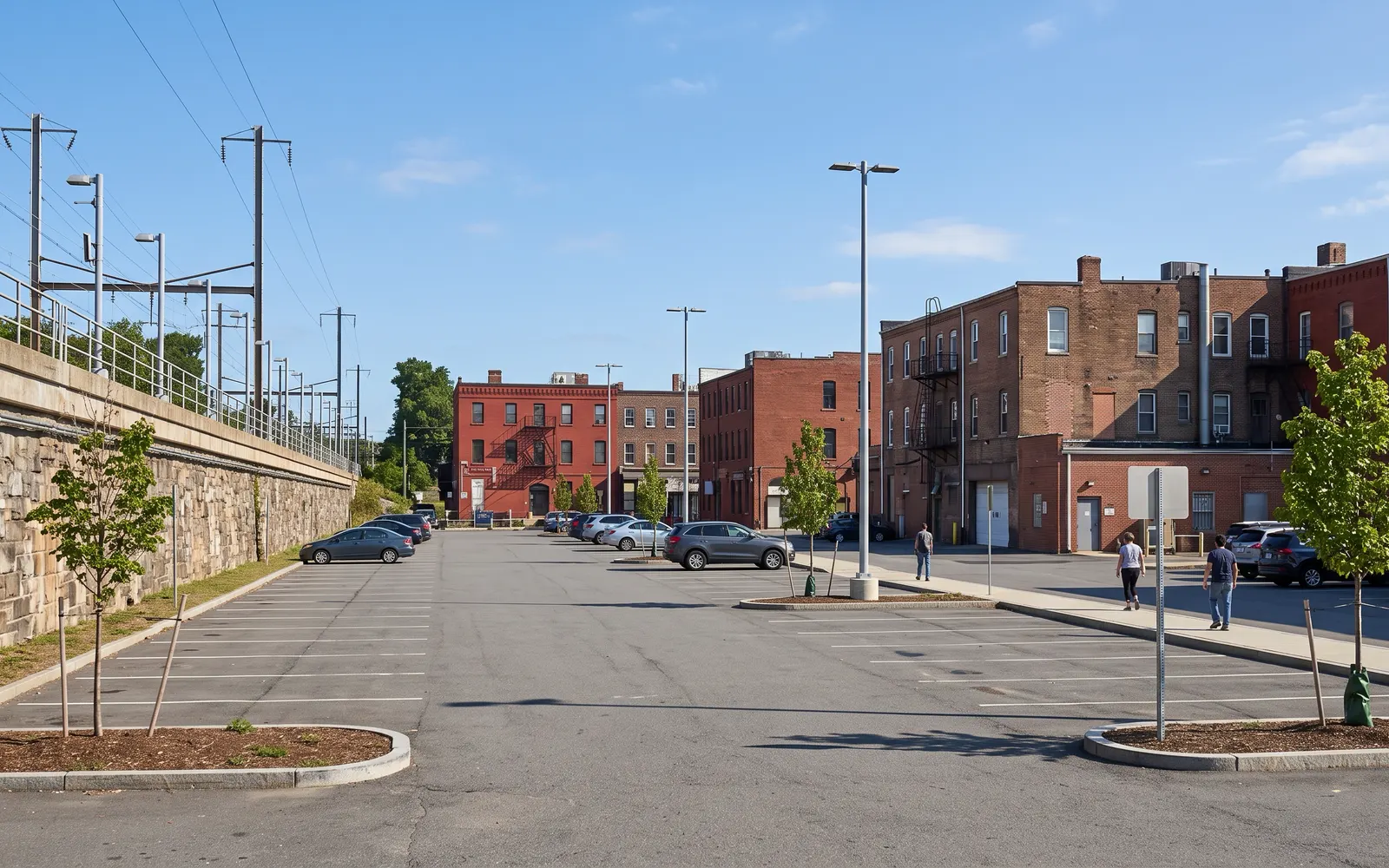
Park Ridge is almost fully built out, so change here happens lot by lot, and most of it is in Uptown. In April 2025 the City Council unanimously adopted a new Uptown Master Plan, Journal & Topics reported. It recommends pedestrian and bike improvements, more consistent zoning and a look at opening several city-owned parking lots for development. Per the city's plan page, the process started in September 2022 and sets goals for the next five to ten years.
The biggest Uptown fight is over two parking lots. The former AT&T lots at 36 and 40 S. Prairie Ave. are owned by Reign Capital, and developer Hubbard Street Group has proposed 39 three-story rental townhomes there. In January 2026 the council postponed a vote on the rezoning, Journal & Topics reported, and on January 20 it voted unanimously to begin eminent domain proceedings to acquire the lots for public parking and farmers market space. In February 2026 the developer said it had offered to sell the 36 S. Prairie lot to the city and build on the other, per Journal & Topics. As of the latest reports I could open, it was unresolved.
Smaller projects show where the city is headed. In October 2024 the council approved an eight-unit, three-story mixed-use building with ground-floor retail on a parking lot at 29-31 S. Fairview Ave., per Journal & Topics.
For buyers, the practical effect is that new construction in Park Ridge usually means a rebuilt single-family house on an existing lot, or a small building in Uptown. Large new subdivisions are not coming.
I don't label any town or neighborhood as safe or unsafe.
Flood Risk in Park Ridge: Basements, Sewers and What's Being Built
Flooding is a real issue in Park Ridge, and it is mostly a basement issue. Redfin, using First Street's model, rates the city's overall flood risk as minor but counts 544 properties, about 9% of the total, likely to be severely affected by flooding over the next 30 years. That share is several times what I usually see in the northwest suburbs.
The history backs it up. The city's own annex to the 2024 Cook County hazard mitigation plan says a July 23, 2011 storm flooded nearly 500 basements in Park Ridge, and that in September 2008 at least eight people had to be rescued from vehicles stuck in flood water. It counts five significant flood events in 2018 alone and 17 FEMA-identified repetitive-loss properties. And it names the main cause plainly: most urban flooding here comes from the city's "antiquated combination sewer system," with some low-lying areas flooding too. In a combined system, storm water and sewage share the same pipes, so a big rain can push water back up into basement drains.
The city and the Metropolitan Water Reclamation District are working on it. The city finished a stormwater master plan in February 2018. In 2021 it built an underground detention vault under the Marvin Parkway median between Seminary and Wilkinson, per the city. The MWRD's Farmers and Prairie Creeks project adds streambank work, culvert and sewer upgrades, a larger pond at Lutheran General and a new pump station, and is meant to protect more than 100 homes, businesses and roads, with completion targeted for late 2026 as of the March 2024 announcement.
Four checks before you write an offer. Look the address up on the FEMA flood map; the countywide map in effect dates from August 19, 2008, per the same plan, and a mapped flood zone can mean required flood insurance. Ask the seller directly whether the basement has ever taken water and whether the house has an overhead sewer or backflow valve. Have a sewer camera inspection done on the line to the street. And check the sump pump, its backup and the grading. If you are buying your first home here, these questions matter as much as the kitchen does.
Frequently Asked Questions
What county and township is Park Ridge, IL in?+
Cook County. Census Bureau estimates for 2025 put Park Ridge's 38,463 residents in three townships: about 32,460 in Maine, 3,980 in Norwood Park and 2,030 in Leyden. All three were reassessed by the Cook County Assessor in 2025.
How much does a house cost in Park Ridge, IL?+
Redfin reported a median sale price of $664,560 for the three months ending August 2026, up 12.6% from a year earlier. Zillow's home value index was $597,562 for August 2026. Original houses, rebuilds and condos trade as separate markets.
What are property taxes in Park Ridge, IL?+
Ownwell (April 2026) puts the median effective rate at 2.51% with a median bill of $10,082. At the $664,560 summer median, that rate works out to about $16,680 a year. Cook County reassesses every three years; Park Ridge's townships were revalued in 2025.
What school district is Park Ridge, IL in?+
Most of the city is in Park Ridge-Niles District 64 for kindergarten through eighth grade and Maine Township District 207 for high school. Most addresses go to Maine South; northern Park Ridge can choose Maine East or Maine South. Confirm each address with the district.
Does Park Ridge have a Metra station?+
Two. The Park Ridge station (100 S. Summit Ave.) and Dee Road station (881 N. Dee Rd.) are on the Union Pacific Northwest line. In fall 2026 each has 25 weekday trains each way, and the ride from Park Ridge to Ogilvie takes 32 to 35 minutes.
Is Park Ridge affected by O'Hare noise?+
It can be, depending on the block and the week. O'Hare borders the city to the south and southwest, and the 2022 Fly Quiet program rotates nighttime runways weekly. Only homes inside the 65 DNL contour qualify for sound insulation. Check the address on the Chicago Department of Aviation's property locator and visit at different times.
Does Park Ridge, IL flood?+
Some parts do. First Street's model (via Redfin) counts 544 properties, about 9%, at severe 30-year flood risk, and the city's hazard plan cites nearly 500 flooded basements in a July 2011 storm, mostly from an old combined sewer system. Ask about backflow protection and scope the sewer line.
Is Park Ridge walkable?+
Uptown is. The city as a whole has a Walk Score of 54 (somewhat walkable) and a Bike Score of 53. Only 3.6% of the city's land is commercial, so most residential blocks are a drive from shops.
What is being built in Uptown Park Ridge?+
The city adopted an Uptown Master Plan in April 2025. A proposal for 39 rental townhomes on the former AT&T lots on Prairie Avenue stalled when the council voted in January 2026 to pursue eminent domain for parking and the farmers market, and an eight-unit mixed-use building was approved at 29-31 S. Fairview in 2024.
Eshu Chikoti has extensive access to off-market listings throughout Park Ridge and the rest of Cook County — homes that never make it to the public listing sites. That matters right now: in a seller's market like this one, well-priced homes routinely go under contract within days, and buyers relying only on public listings are competing for whatever is left over. Working with someone plugged into off-market inventory means seeing homes before the crowd does.
Eshu Chikoti · 847-691-4282 ·
Get new Park Ridge listings by email
When a home comes on the market in Park Ridge, I'll email it to you.
Just your email. Unsubscribe any time by replying.
Thinking About Park Ridge?
Whether you're buying, selling, or just curious what's on the market, I can walk you through Park Ridge street by street.