Park City, IL
Park City, IL is a 1.16-square-mile Lake County city between Waukegan and Gurnee, where more than half of the homes are manufactured homes and the rest are modest houses and apartments along the US-41 corridor.
Living in Park City, IL means some of Lake County's lowest entry prices, a spot between Waukegan and Gurnee on US-41, and a Pace bus to the Waukegan Metra station. Zillow's typical home value is about $288,500, but most homes here are manufactured homes on leased lots. Here is how it breaks down, pocket by pocket.
Written by Eshu Chikoti · 847-691-4282 ·
How Park City, IL Got Here: A Short History
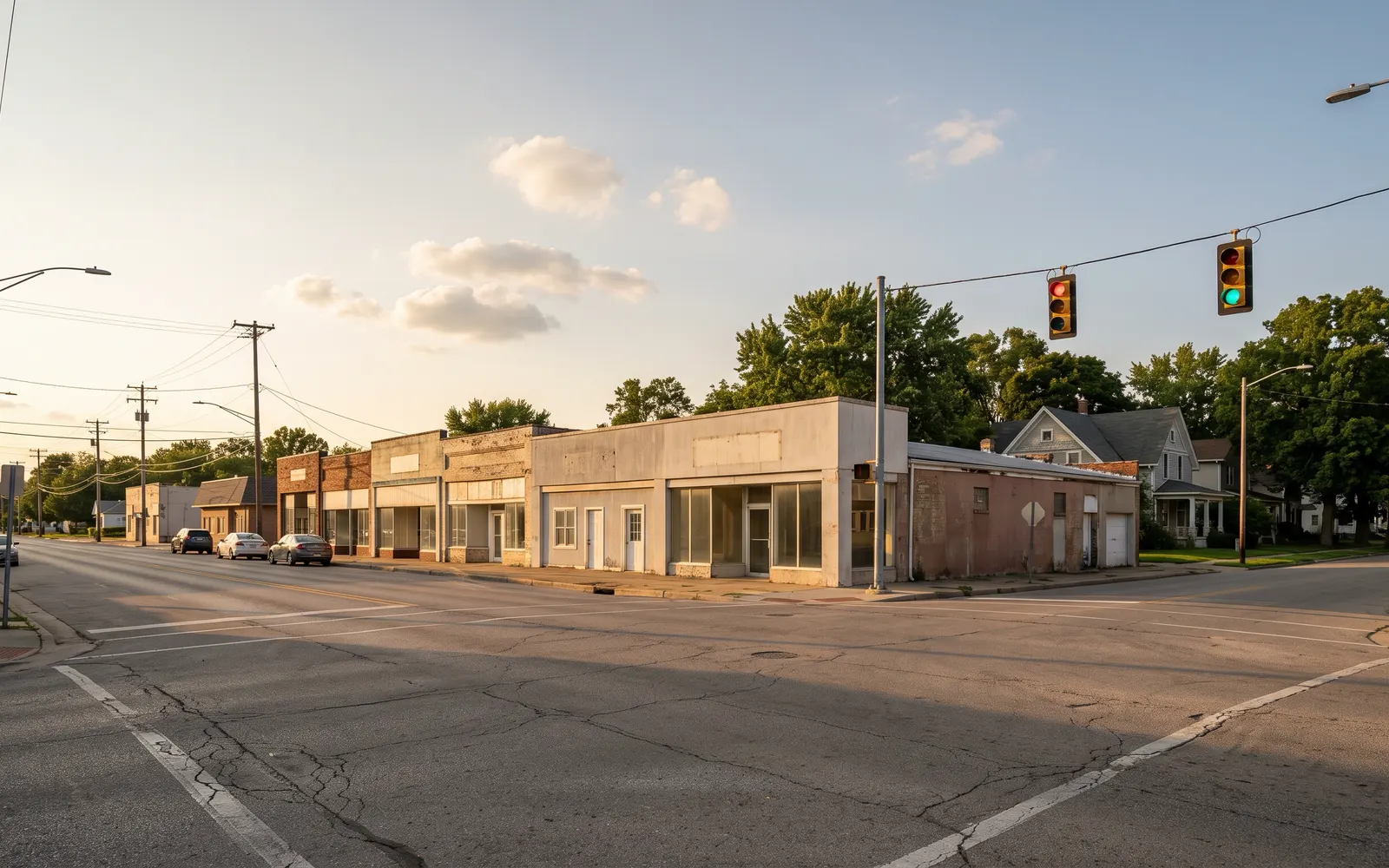
Park City is a young city by Lake County standards. It incorporated on March 24, 1958, after a resident referendum. According to Wikipedia's history of the city, the push was led by the owners of four trailer parks who wanted to avoid being annexed by Waukegan. That origin explains almost everything about the city today: its small size, its location wedged between two larger neighbors, and a housing stock that is still more than half manufactured homes.
The city was organized as a home rule municipality with a mayor, a city clerk, a treasurer and six aldermen, two from each of three wards, all elected to four-year terms. Home rule gives a city this size more room to set its own taxes and rules than a non-home-rule village would have, which is worth knowing if you are buying a business property or planning work on a house.
Growth came with the US-41 corridor and the retail and industrial land along Belvidere Road and Old Skokie Road. The 2020 Census counted 7,885 people, and the city's own economic development page uses a figure of 7,881. Either way, it is one of the smallest incorporated cities in the county by land area and one of the densest.
Park City at a Glance
Park City covers about 1.16 square miles in eastern Lake County. Waukegan wraps around it to the north and east, Gurnee sits to the west, and North Chicago and Naval Station Great Lakes are a short drive to the southeast. The city straddles two townships, Warren and Waukegan, which matters at tax time because the township line changes the tax code on the bill.
The 2020-2024 Census ACS puts the population at 7,827 and counts 2,840 housing units, which works out to about 6,765 people per square mile. That density is several times what most Lake County suburbs carry, and you feel it on the ground: small lots, short blocks and very little vacant land.
The road grid is simple. Skokie Highway (US-41) runs north to south along the city. Belvidere Road (IL-120) crosses it east to west and is where City Hall sits, at 3355 Belvidere Road. Old Skokie Road runs parallel to US-41 through the middle of the city, and Washington Street and Greenleaf Avenue fill in the rest. When locals describe where something is, it is almost always relative to Belvidere, Old Skokie or US-41.
One practical detail: Park City shares the 60085 ZIP code with a large part of Waukegan. A 60085 address does not tell you which city a house is in, and the city is what decides who plows the street, who bills your water and which police department answers the call. On any listing I look at here, I confirm the municipality on the county's parcel record first.
A manufactured home in one of the Kehm Boulevard communities costs a fraction of any house nearby, and the single-family houses, at Zillow's $288,547 typical value, still sit below Gurnee and close to Waukegan. You also get a central location between Waukegan and Gurnee, US-41 without a toll, and a Pace bus to the Metra station.
The lots are small, the Loop commute starts with a drive or a bus, and most shopping is on the corridors. If you are looking at a manufactured home, the trade is lot rent and community rules in exchange for the low price, and that deserves a careful read of the lease before you commit.
Park City Neighborhoods, Pocket by Pocket
Park City is too small for formal neighborhoods, but it is not one market. The real split is by housing type. More than half of the city's homes sit inside manufactured home communities, most of them along Kehm Boulevard. The rest are single-family houses, small multi-unit buildings and apartment complexes on the streets around them, plus commercial and light-industrial land along the corridors.
That split changes how you buy. In a manufactured home community you usually buy the home and rent the lot, so the monthly cost includes lot rent set by the community owner, and financing works differently than a regular mortgage. On a single-family street you buy the land and the house together, like anywhere else in Lake County. Two listings a few hundred feet apart can be completely different transactions.
Walkability also varies more than people expect for a city this size. Walk Score rates the area around City Hall on Belvidere Road a 61 for walking, while an address on Kehm Boulevard scores 49. Walk Score also names North Waukegan and Rosewood Terrace as the neighborhoods it maps inside Park City.
Below are the pockets you will see named in listings and community directories. Boundaries are informal, so treat them as a starting point. If you want to know what a specific address is, what it sold for and what the lot rent or tax bill looks like, that is a conversation I am happy to have here.
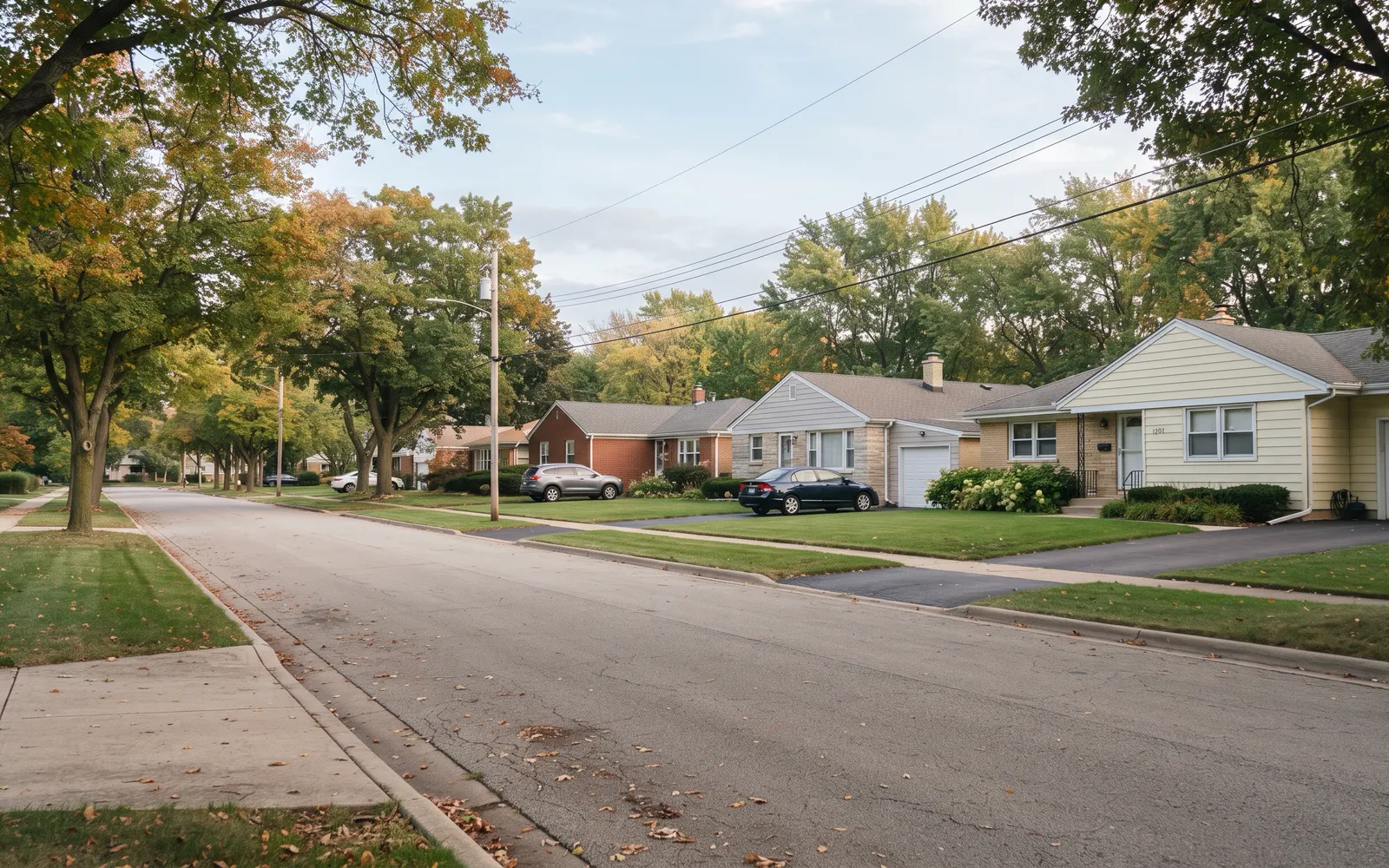
Kehm Boulevard communities. The largest cluster of manufactured home communities in the city. MHVillage lists Farmington Estates, Midway Estates and Maple Grove Estates at 3308 Kehm Boulevard and Park City Manufactured Home Community at 3418 Kehm Boulevard. Ask each community for its current lot rent, rules and approval process before you make an offer.
Genes Evergreen Estates. A manufactured home community at 735 Staben Street, listed separately from the Kehm Boulevard group.
Rosewood Terrace. One of the two Park City neighborhoods Walk Score maps. Mostly single-family houses on small lots.
North Waukegan (Park City side). The second Walk Score neighborhood name, covering streets along the Waukegan edge. Confirm the municipality on each address, since the name crosses the city line.
Belvidere Road and Old Skokie Road corridors. Commercial and light-industrial frontage with apartment buildings and small multi-unit properties behind it. The best Walk Scores in the city are here.
What Park City Homes Look Like, by Type
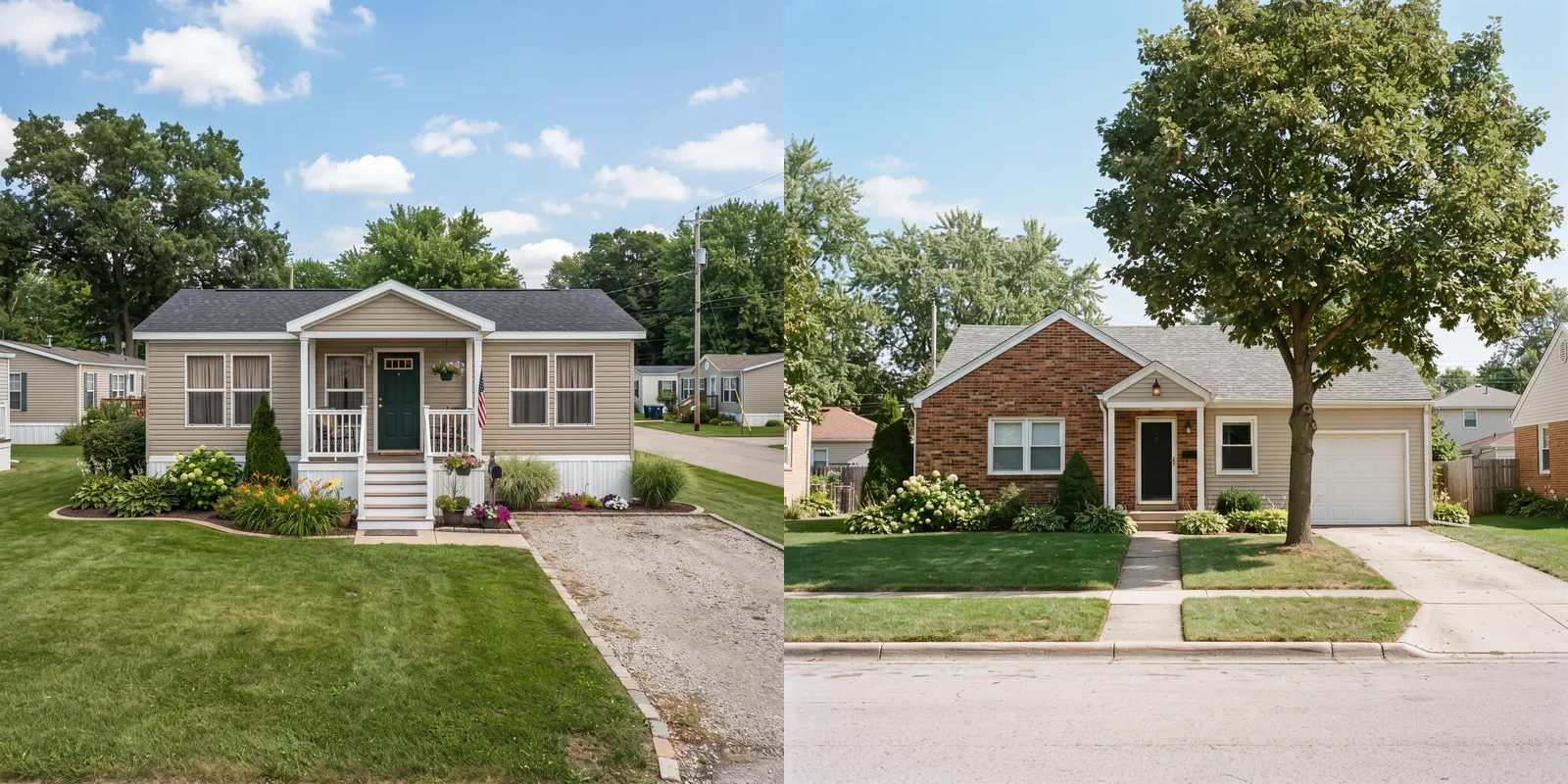
The 2020-2024 Census ACS counts 2,840 housing units in Park City. Of those, 1,584, about 56%, are mobile or manufactured homes. Another 554, about 20%, are detached single-family houses. The remaining units are townhouses and buildings with two or more units, including about 530 units in buildings of five or more apartments. Wikipedia's summary of the same pattern is that roughly two-thirds of residential units are manufactured housing or apartments and one-third are houses.
That mix is why Park City's numbers look strange next to its neighbors. The ACS median value of owner-occupied homes is $57,400, with a margin of error of almost $40,000, because most owner-occupied units here are manufactured homes whose value does not include land. According to City-Data's 2024 figures, mobile homes in Park City average about $28,675 in value and detached houses about $238,329. The ACS median gross rent is $1,110 a month.
About 63% of occupied homes are owner-occupied (1,726 of 2,745 households in the ACS). The single-family houses are mostly modest: ranches and small two-stories on narrow lots, many of them from the decades after incorporation. I haven't found a reliable public source for build years by street, so ask for the year built on every listing.
I have walked buyers through enough older Lake County houses to know which surprises to expect: original electrical panels, galvanized plumbing and basements or crawl spaces that have seen water. On a manufactured home, add the age of the unit, the roof, the skirting and the tie-downs. None of those should kill a deal. All of them belong in the price. My home inspection checklist is a good place to start.
The Park City Housing Market in 2026
Zillow's home value index for Park City was $288,547 in August 2026, up 6.7% from $270,478 a year earlier. The index has climbed steadily: it was $185,038 in August 2019, so typical values are up about 56% in seven years. For comparison, Zillow's index for Waukegan was $247,657 and for Gurnee $382,364 in the same month.
Here is the part that confuses people. The Census puts the median owner-occupied value at $57,400, and Zillow says $288,547. Both can be right. Zillow's index covers single-family homes, condos and co-ops, so it mostly reflects the houses. The Census median includes every owner-occupied unit, and in Park City most of those are manufactured homes on rented lots, which trade for a fraction of a house. If you are shopping for a single-family house, the Zillow figure is the closer guide. If you are shopping in a manufactured home community, neither number tells you much, and recent sales inside that specific community are what matter.
With only a few hundred detached houses in the city, sales are thin. A handful of closings in a month can move any "median sale price" a lot, so I would not read much into a single month's number from any site. Ownwell's April 2026 data puts the median home value it uses for tax estimates at $226,945, with a range of about $181,000 to $314,000 across the ZIP code.
What that means in practice: a well-priced house under $300,000 in eastern Lake County still draws real interest, because there are so few of them. For a broader read across the county, see my Lake County market report for Q3 2026, and if you are weighing whether to buy at all, my rent vs. buy analysis for Lake County walks through the math.
Park City Property Taxes and the Real Cost of Owning
Ownwell's April 2026 data puts Park City's median effective property tax rate at 2.72% and the median annual bill at $6,186. That rate is above the Lake County median of 2.61% and the Illinois median of 2.33% in the same data. Across the 60085 ZIP code, Ownwell shows effective rates from about 2.34% to 3.10%.
Here is what that looks like on a house. At 2.72%, a house bought at Zillow's August 2026 typical value of $288,547 would eventually carry about $7,850 a year in tax, roughly $654 a month on top of the mortgage. Current bills may be lower because assessments trail the market, but the assessor catches up, usually in the reassessment year after a sale. The expectation I most often have to reset is buyers who budget off the seller's current bill.
Manufactured homes are a different calculation. When you own the home but rent the lot, the monthly lot rent is its own cost, and the home is generally taxed separately from a regular real estate bill. Ask the community for the lot rent and any scheduled increases in writing, and ask the Lake County Treasurer how the specific home is billed before you budget.
Because Park City sits in both Warren and Waukegan townships and in four different school districts, each combination is its own tax code with its own rate. Two houses a few blocks apart can carry different bills at the same price. If you already own here and think your assessment is high, my Lake County property tax appeal guide walks through the process and deadlines. This is general information, not tax advice. Your actual bill depends on your parcel, your exemptions and the assessor.
Park City Schools: Four Districts, One City
This is the section most data sites get wrong, including the old version of this page. Park City is not served by a single school district. According to Wikipedia's Park City article, most students attend Woodland Community Consolidated School District 50 for kindergarten through eighth grade and Warren Township High School District 121 for high school, with some parts of the city in Gurnee School District 56 and some in Waukegan Community Unit School District 60. Each district's own description confirms Park City is part of its area: District 50, District 56, District 60 and District 121.
Woodland District 50 runs grade centers rather than neighborhood K-8 schools: a Primary School for early childhood and kindergarten, an Elementary School for grades 1 to 3, an Intermediate School for grades 4 and 5, and Woodland Middle School for grades 6 to 8. Gurnee District 56 runs Spaulding (pre-K to 2), Prairie Trail (3 to 5) and Viking (6 to 8), with River Trail School as a K-8 option. District 60 is a unified K-12 district with about 22 schools, so homes in its part of the city feed Waukegan High School rather than Warren. My post on District 50 vs. District 56 covers how those two grade-center systems work.
Warren Township High School is one school on two campuses: the O'Plaine Campus in Gurnee for grades 9 and 10 and the Almond Campus for grades 11 and 12, with about 3,687 students in 2023-24.
The detail that matters most is assignment. Which district a Park City house is in depends on the exact address, and the boundaries do not follow the city limits. Check the address with the district directly before you write an offer, and ask me for the boundary if you want it done for a specific house.
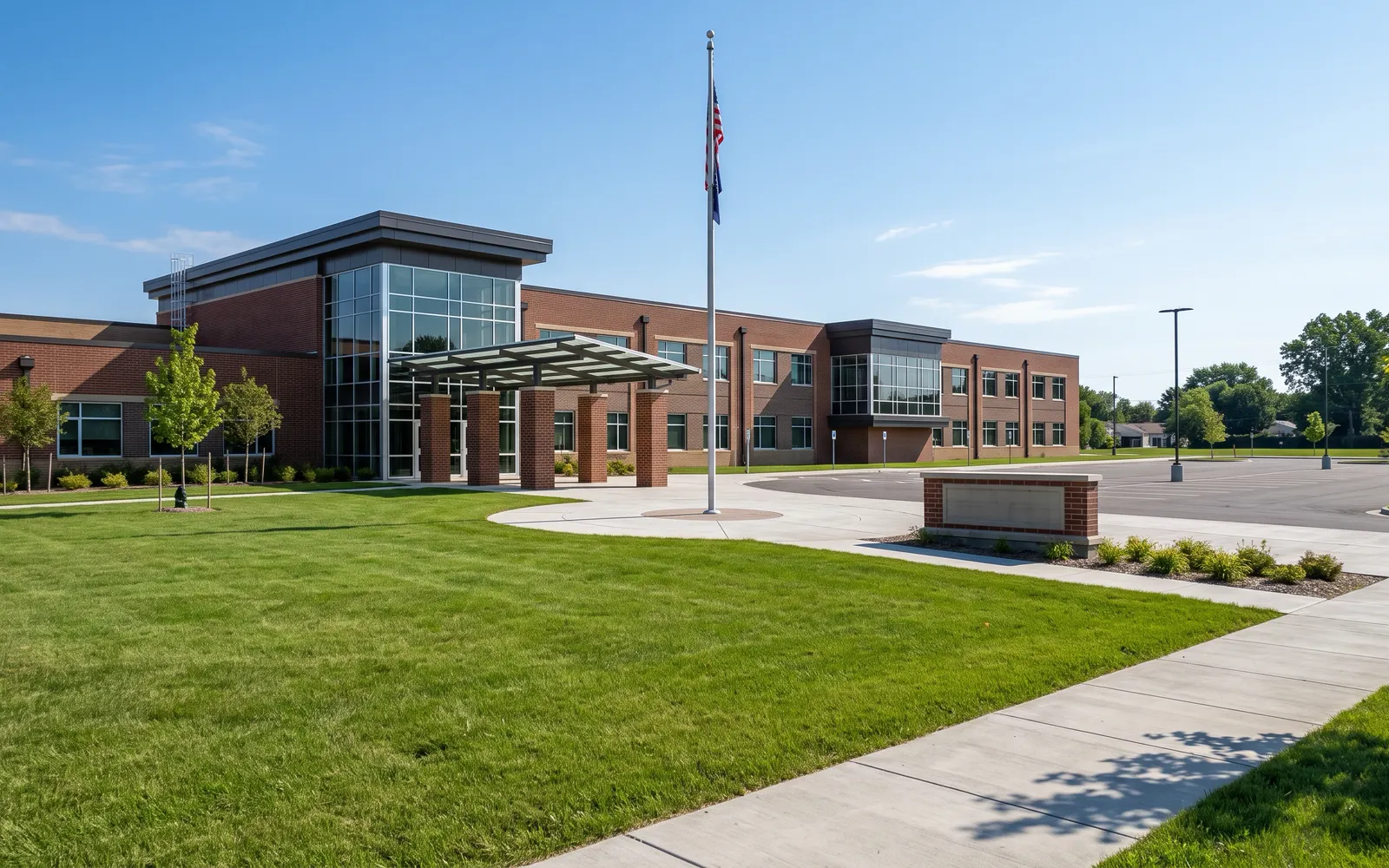
Woodland Primary, Elementary, Intermediate and Middle School. Woodland CCSD 50, grade centers from early childhood through 8th grade. Serves most of Park City.
Spaulding, Prairie Trail, Viking and River Trail. Gurnee School District 56, pre-K through 8th grade. Serves part of Park City.
Waukegan CUSD 60 schools. A unified K-12 district of about 22 schools. Serves part of Park City; high school is Waukegan High School.
Warren Township High School, O'Plaine Campus. 500 N. O'Plaine Rd, Gurnee. Grades 9 and 10.
Warren Township High School, Almond Campus. 34090 N. Almond Rd, Gages Lake. Grades 11 and 12.
Commuting from Park City: Metra and Pace
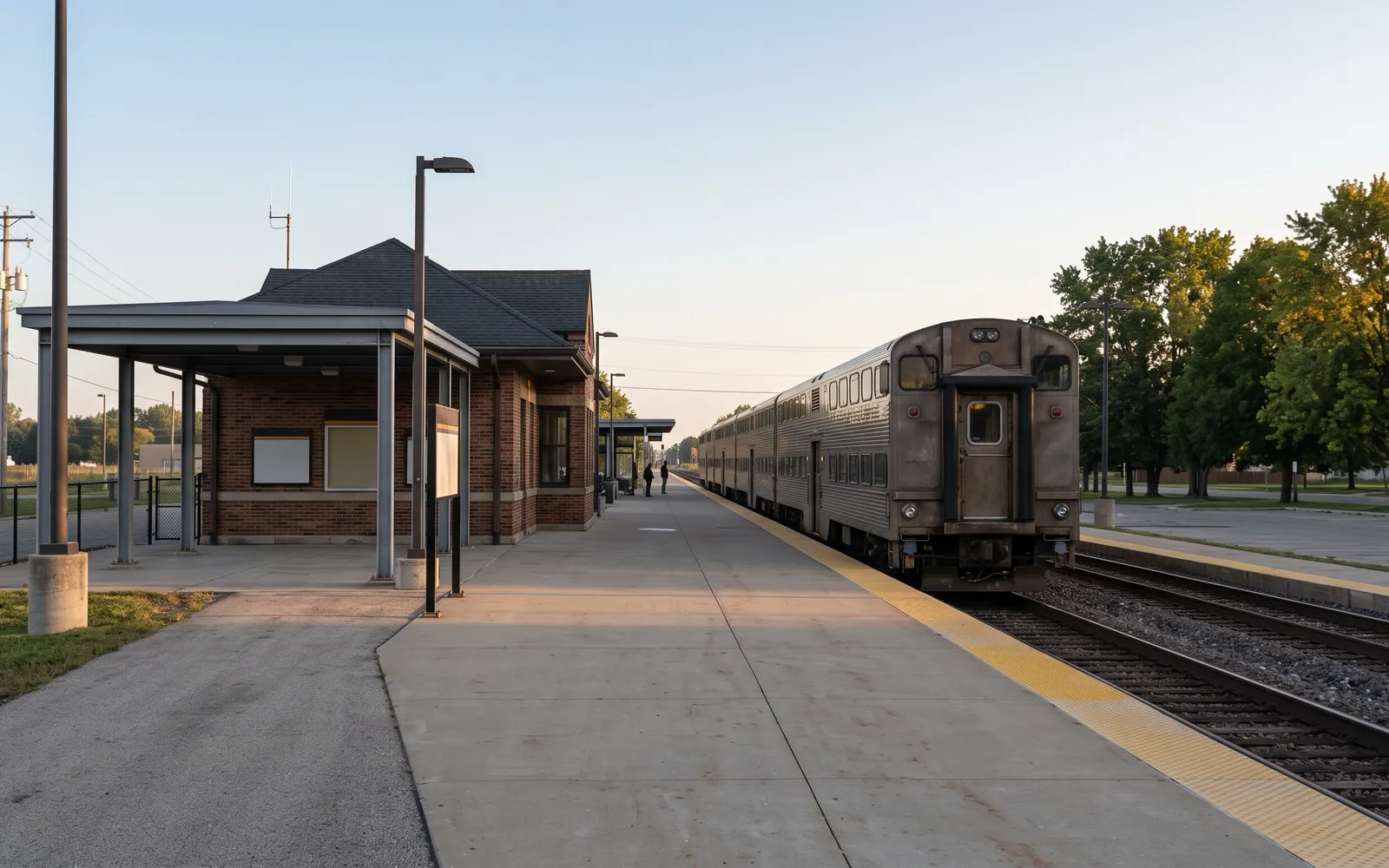
Park City has no Metra station. The closest is the Waukegan station on the Union Pacific North line, a short drive east, which runs to Ogilvie Transportation Center in the Loop. According to Metra's current UP-N schedule, Waukegan has 26 inbound trains on weekdays and 25 outbound, with 15 each way on Saturdays and Sundays.
The travel time depends on the train. The rush-hour departures from Waukegan between 6:30 and 8:30 a.m. reach Ogilvie in about 70 minutes; the 6:30 arrives at 7:40. Most other trains, including the early 4:05 a.m. run, take about 80 minutes. Add the drive or bus to the station and a door-to-door Loop commute from Park City is realistically an hour and a half each way.
The bus link is Pace Route 572 Washington. It runs between the Waukegan Metra station and the College of Lake County in Grayslake, serving Waukegan, Park City, Gurnee and Grayslake, with stops at Six Flags Great America and Warren Township High School along the way. It runs weekdays and Saturdays. The old version of this page also listed Pace Routes 564 and 568; Pace's route pages describe 564 as a Waukegan and North Chicago route and 568 as a Waukegan route along Belvidere, so check the current maps before you count on either one from a specific address.
Driving from Park City: US-41, I-94 and O'Hare
For most people who live here, the car is the commute. Skokie Highway (US-41) runs along the city and heads south toward Lake Forest and the North Shore without a toll. Belvidere Road (IL-120) runs west to Gurnee and the I-94 Tri-State Tollway interchange area, and east into Waukegan. Washington Street is the other east-west option and the Pace 572 route.
That position is the practical advantage of Park City. It sits between Waukegan's lakefront and Gurnee's shopping district, with Naval Station Great Lakes and North Chicago a short drive southeast. Getting to Chicago by car means US-41 or I-94 south, and the drive time depends almost entirely on traffic. O'Hare is a straight run south on I-94 and the Tri-State (I-294).
If you commute west, the Belvidere Road and Grand Avenue corridors near Gurnee Mills and Six Flags back up on summer weekends and during the holiday shopping season. Locals learn to use Washington Street to get around the busiest stretch.
Is Park City Walkable?
Partly, and more than most Lake County suburbs. The density helps. Walk Score rates the area around City Hall on Belvidere Road a 61 for walking and 45 for biking, which it calls somewhat walkable. An address inside the Kehm Boulevard communities scores 49 for walking and 40 for biking, which is car-dependent for most errands.
Walk Score's city page counts about 27 restaurants, bars and coffee shops in Park City, but notes that the average resident can walk to only 0.2 of them in five minutes. In practice that means the businesses are on the corridors, and the residential streets are a longer walk away. US-41 is a hard barrier to cross on foot.
For anyone who doesn't drive every day, Pace Route 572 on Washington Street is the real option, because it reaches the Metra station, Gurnee's shopping and the College of Lake County without a transfer.
Shopping In and Around Park City
Park City's own retail sits along Belvidere Road and the US-41 frontage, with smaller businesses on Old Skokie Road. The city's economic development page says the market area has "a market gap/leakage of over $1 billion" in unmet demand for retail and food and drink. That is the city's own marketing estimate, not an independent study, but it tells you the city wants more stores and restaurants on its corridors and is offering sales tax incentives to get them.
For bigger shopping trips, most people go west. Gurnee Mills, about 1.94 million square feet of outlet and full-price stores, is on Grand Avenue near I-94, and the Grand Avenue corridor around it has most of the big-box stores in eastern Lake County. Downtown Waukegan and the Waukegan stretch of Belvidere Road cover the rest. From most Park City addresses, either one is a short drive.
Groceries and Everyday Errands in Park City
Groceries are close by, even if many of the stores are just over the line in Waukegan or Gurnee. The Belvidere Road corridor has the closest supermarkets and big-box stores, and the Grand Avenue corridor in Gurnee has the full range of national grocers. Because the city is only a little over a mile across, very few Park City addresses are more than a five-minute drive from a full grocery store.
Pharmacies, auto services, banks and quick-service restaurants cluster on Belvidere Road and along US-41. If you are touring homes, drive Belvidere from US-41 west toward Gurnee and east toward Waukegan once. You will see almost every weekly errand on that one road.
Where Park City Eats
Dining in Park City is corridor dining. Walk Score counts about 27 restaurants, bars and coffee shops inside the city, mostly quick-service and small local places on Belvidere Road, US-41 and Old Skokie Road. The city's own economic development materials flag food and drink as a category it wants to grow.
For a wider choice, the Grand Avenue corridor in Gurnee has dozens of sit-down chain restaurants built to serve Six Flags and Gurnee Mills visitors, and downtown Waukegan has the Genesee Theatre district and the lakefront. Both are a short drive. My Gurnee guide covers that side in more detail.
Parks and Recreation in Park City
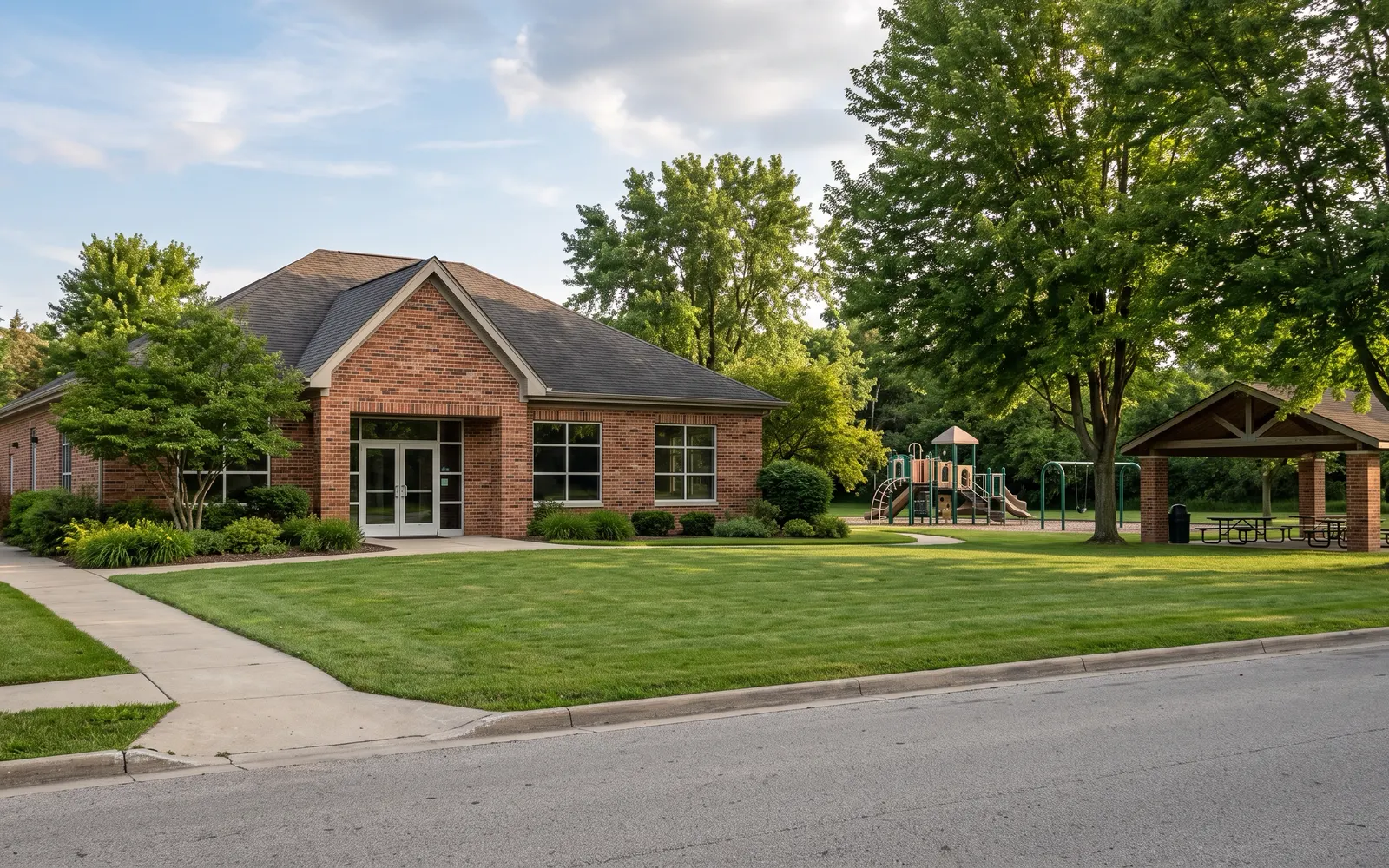
Park City runs its own parks and a teen center through the city rather than a separate park district, and a volunteer Parks & Recreation Board advises the council. The Park City Community Center at 333 Teske Boulevard, next to the city's public works facility and a park, is the main public gathering space. Residents can rent it for parties from noon to 10 p.m. for $300 a day plus a $200 deposit, with a capacity of 70 people.
For bigger open space, residents go a few minutes west or south. The Lake County Forest Preserves and the Des Plaines River Trail run along the river on the Gurnee side, Gurnee's park district has the larger sports parks, and the Waukegan lakefront and its beach are a short drive east. Six Flags Great America in Gurnee, which opened its 50th season on April 25, 2026, is a few minutes west on Belvidere Road or Grand Avenue.
The Library for Park City: Warren-Newport
Park City is in the Warren-Newport Public Library District, which serves about 67,000 people across 55 square miles of Warren and Newport townships, including Gurnee, Wadsworth, Park City, Wildwood, Grandwood Park and Old Mill Creek. The library is at 224 O'Plaine Road in Gurnee, a short drive west.
Because the district boundary follows the townships and not the city line, a few Park City addresses near the Waukegan Township side may fall under a different library. If a library card matters to you, confirm the address with Warren-Newport before you move.
Utilities and City Services in Park City
According to the city's water department page, Park City buys Lake Michigan water through the City of Waukegan and provides water and sewer to homes and businesses, with sewer treatment by the North Shore Sanitary District. New residents have 30 days to sign up for water in person at City Hall, 3355 Belvidere Road.
Manufactured home communities work differently. The city sells water to each community, and the community resells it to its residents and is responsible for the water lines inside its property. If you are buying in a community, ask how water is billed and who fixes a broken line.
Two more details new residents miss. Park City requires an annual city vehicle sticker, bought each April and displayed by May 1, and new residents have 30 days to buy one. Fire and ambulance service comes through the Gurnee Fire Department under an arrangement the city lists on its site. ComEd delivers electricity and Nicor Gas provides natural gas.
Hospitals Near Park City
The closest hospital is Vista Medical Center East in Waukegan, a few minutes east, and its situation is uncertain. It stopped offering maternity and obstetrics services in October 2025, and in September 2026 ComEd sued the hospital over more than $2.2 million in unpaid electric bills, according to Lake and McHenry County Scanner. Check its current services before you rely on it.
The other full-service options are Advocate Condell Medical Center in Libertyville and Northwestern Medicine Lake Forest Hospital, both a short drive south. Advocate Condell also runs outpatient imaging and immediate care on Hunt Club Road in Gurnee.
Entertainment Near Park City
Park City itself is mostly homes and businesses, so entertainment means a short drive. Six Flags Great America and Hurricane Harbor are just west in Gurnee, and Six Flags celebrated its 50th season in 2026. Downtown Waukegan, a few minutes east, has the Genesee Theatre for concerts and shows and the lakefront harbor. For a bigger night out, Ravinia Festival in Highland Park is a drive down US-41 or a ride down the UP-N line.
Naval Station Great Lakes, the Navy's only boot camp, sits a short drive southeast in North Chicago. My North Chicago guide covers the base and the neighborhoods around it.
Community Life and Local Events in Park City
Park City doesn't have a big annual festival of its own. Community life runs through the Community Center on Teske Boulevard, the teen center and the city's parks, and through City Council meetings, which post agendas and minutes on the city's website. Council meetings are where the Old Skokie Road plans, the TIF district and zoning questions get decided, so they are worth watching if you own property here.
Most of the big summer events are next door. Gurnee Days, Waukegan's lakefront events and Six Flags' seasonal programs are all within a few miles. If you are touring homes on a summer weekend, drive Belvidere Road toward Gurnee in the late afternoon. It tells you more about daily traffic than any listing will.
What's Being Planned in Park City
The main project is the Old Skokie Road corridor. The city's home page describes it as a 1.27-mile stretch running parallel to Route 41 that serves as the city's main gateway and business corridor, and says the Old Skokie Road Strategic Plan is the first step in redeveloping it. The same page links a form for anyone who wants updates on a Tax Increment Financing district proposed for properties along Old Skokie Road, labeled "Old Skokie TIF District 2025." I haven't seen a public record confirming the TIF was adopted, so treat it as proposed until the city says otherwise.
The city markets itself as pro-business: an expedited approval process, sales tax incentives, "multiple sites for both large and small-scale developments" and the $1 billion retail gap estimate covered above. For homeowners, the practical question is what a TIF would change. Property taxes on parcels in a TIF still get paid; the growth in value is redirected to the district to pay for improvements rather than spread across the other taxing bodies. A TIF usually signals new road, utility and storefront work in that corridor over the following years.
The old version of this page presented the $1 billion figure as a settled market fact. It is the city's own estimate from its economic development page, and I've labeled it that way here.
I don't label any town or neighborhood as safe or unsafe.
Flood Risk and Drainage in Park City
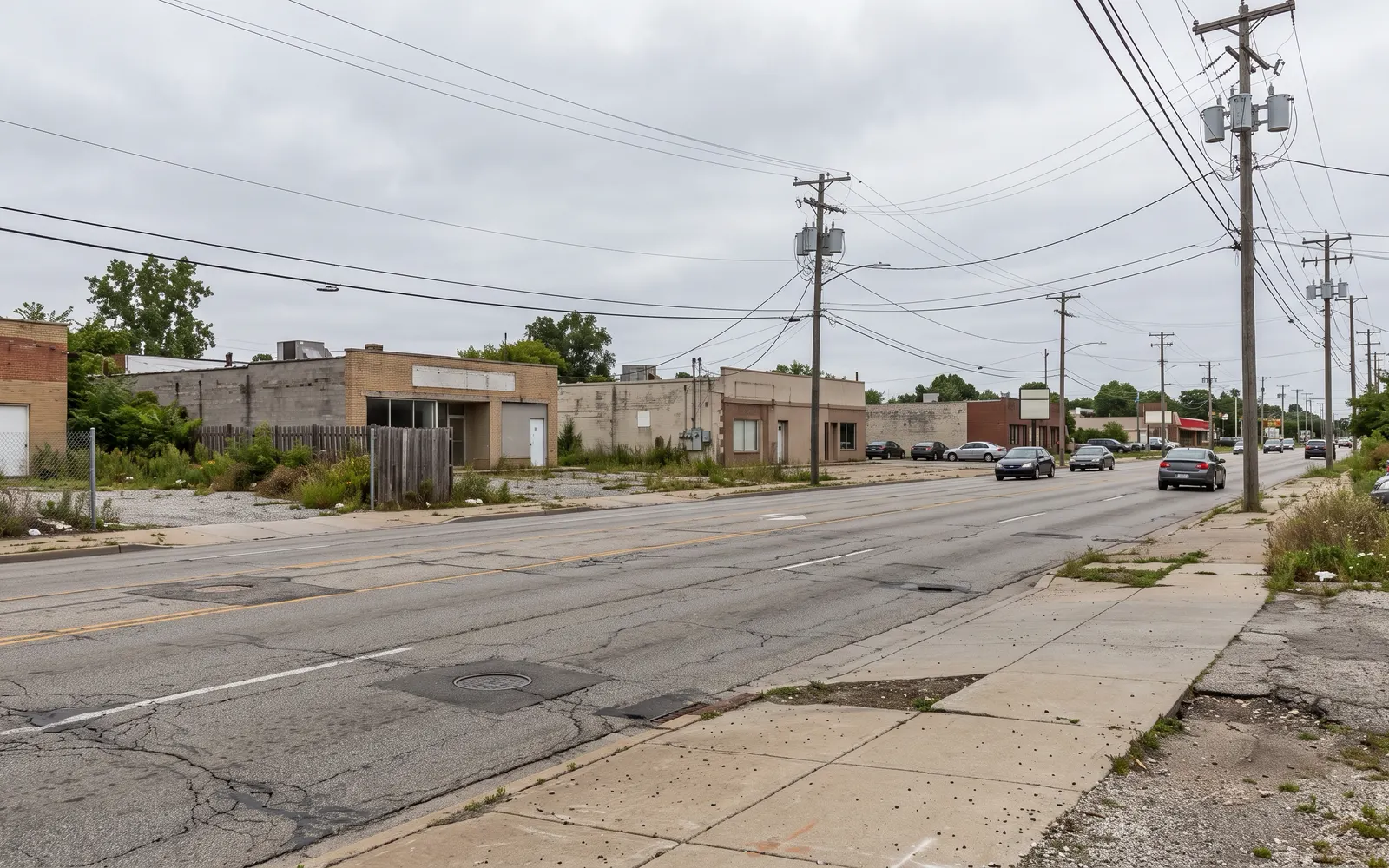
Park City is flat and densely built, so drainage is a house-by-house question. The city sits in the Old Skokie Drainage District, and its stormwater management page points buyers to the FEMA flood maps and notes that agents commonly confirm a property is outside the floodplain or floodway before a sale. I do that on every listing here.
Two checks before you write an offer. Look the address up on the FEMA flood map, because a mapped flood zone can mean required flood insurance on a mortgage. And ask the seller directly about water in the basement, the crawl space or, on a manufactured home, under the unit. In my experience with older Lake County homes, the answer is often "once," and the follow-up question about what they did about it is the one that matters.
Frequently Asked Questions
How much does a house cost in Park City, IL?+
Zillow's home value index for Park City was $288,547 in August 2026, up 6.7% from a year earlier. That mostly reflects single-family houses. Manufactured homes, which are more than half of the city's housing, sell for far less, and City-Data puts their average value at about $28,675 (2024).
Why is the Census median home value in Park City so low?+
The 2020-2024 ACS median owner-occupied value is $57,400 because about 56% of Park City's housing units are manufactured homes, most on rented lots, so their value does not include land. Detached houses average about $238,329 (City-Data, 2024).
What are property taxes in Park City, IL?+
The median effective rate is about 2.72%, with a median bill of $6,186 (Ownwell, April 2026). Rates vary by township and school district, and a home's bill usually rises after a sale once it is reassessed. Manufactured homes on leased lots are billed differently and add lot rent.
What school district is Park City, IL in?+
It depends on the address. Most of Park City is in Woodland District 50 for K-8 and Warren Township High School District 121, with parts in Gurnee District 56 and Waukegan District 60. Confirm each address with the district.
Is there a Metra station in Park City?+
No. The closest is the Waukegan station on the UP-N line, where rush-hour trains reach Ogilvie in about 70 minutes and others in about 80. Pace Route 572 connects Park City to the station on weekdays and Saturdays.
Why was Park City incorporated?+
Park City incorporated on March 24, 1958, by referendum. The effort was led by the owners of four trailer parks who wanted to avoid annexation by Waukegan.
What is the Old Skokie Road Corridor?+
It is Park City's main business corridor, a 1.27-mile stretch running parallel to US-41. The city's Old Skokie Road Strategic Plan targets it for redevelopment, and a Tax Increment Financing district was proposed for it in 2025.
Who provides water in Park City?+
The city buys Lake Michigan water through Waukegan and provides water and sewer, with sewer treatment by the North Shore Sanitary District. Manufactured home communities buy water from the city and resell it to residents.
Eshu Chikoti has extensive access to off-market listings throughout Park City and the surrounding North Shore — homes that never make it to the public listing sites. That matters right now: in a seller's market like this one, well-priced homes routinely go under contract within days, and buyers relying only on public listings are competing for whatever is left over. Working with someone plugged into off-market inventory means seeing homes before the crowd does.
Eshu Chikoti · 847-691-4282 ·
Towns Neighboring Park City
Most buyers looking at Park City end up touring a couple of the towns next door before they decide. Each of these has a full guide of its own — same depth on schools, commute, taxes, and what the housing stock actually looks like.
Get new Park City listings by email
When a home comes on the market in Park City, I'll email it to you.
Just your email. Unsubscribe any time by replying.
Thinking About Park City?
Whether you're buying, selling, or just curious what's on the market, I can walk you through Park City street by street.