Oak Park, IL
Oak Park, IL is a 4.7-square-mile Cook County village on Chicago's western border with three historic districts, a Metra station, four CTA stations inside its limits and two more on its edge, and a summer 2026 median sale price near $545,000.
Living in Oak Park, IL means a median sale price of about $545,000 this summer, an 18- to 23-minute Metra ride to Ogilvie plus the Green and Blue Lines, and property tax near 3.04% of value. Most homes were built before 1940, and a third of the village sits in historic districts. Here it is, pocket by pocket.
Written by Eshu Chikoti · 847-691-4282 ·
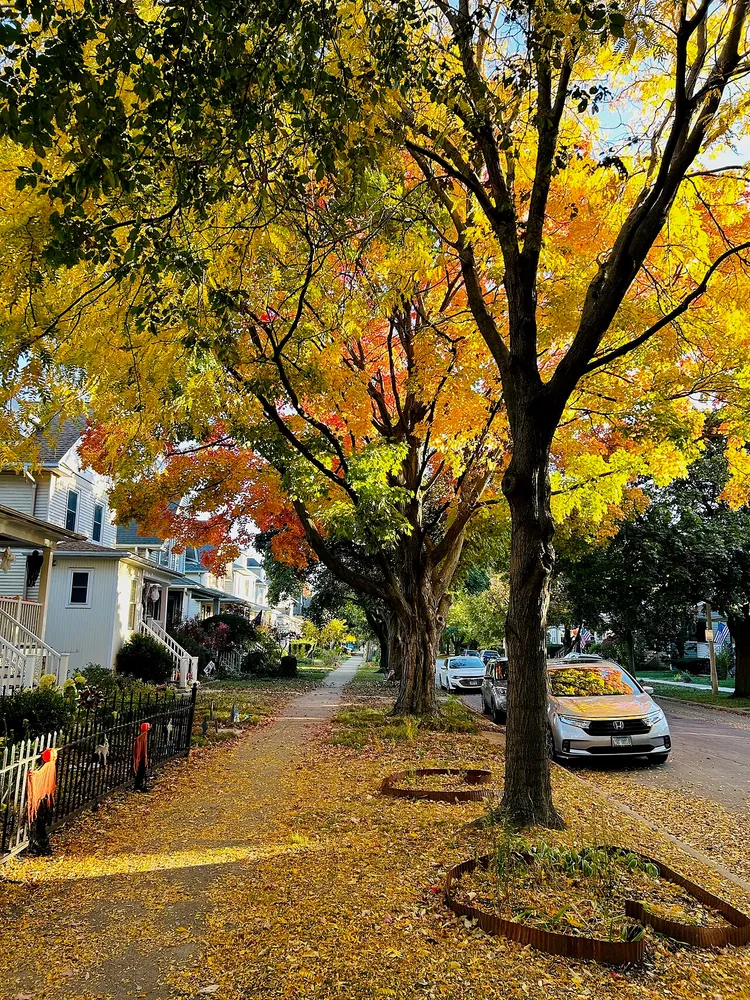
How Oak Park, IL Got Here: From Kettlestrings Grove to the "World's Largest Village"
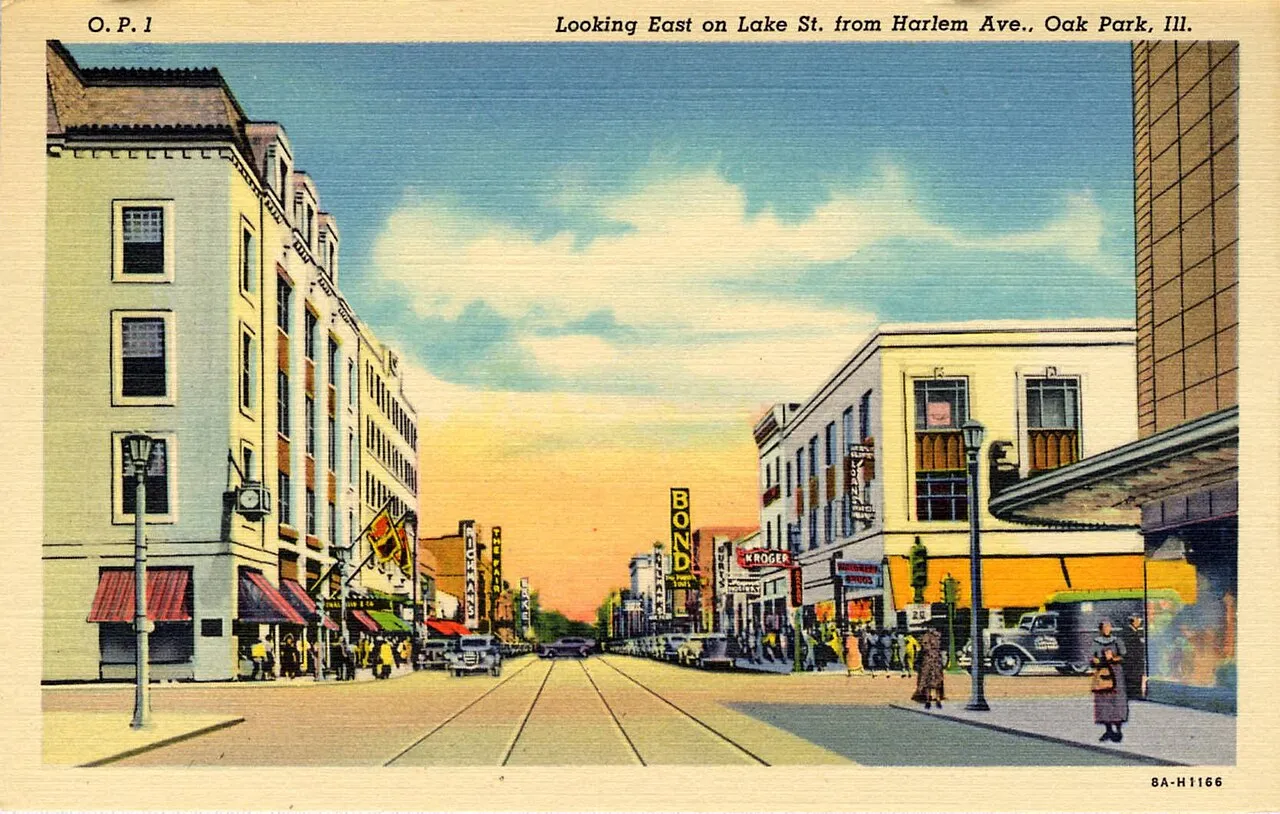
Oak Park began as one farm. According to Wikipedia's history of the village, Joseph and Betty Kettlestrings staked out a farm near what is now Lake Street and Harlem Avenue in 1835. The area went by several names, including Oak Ridge and Kettlestrings Grove. When the post office opened, Oak Ridge was already taken in Illinois, so it chose Oak Park, and the name stuck.
The railroad turned a farm settlement into a suburb. The Galena and Chicago Union Railroad, the line Metra's Union Pacific West trains use today, reached the area by 1850. Oak Park got its own depot in 1872, and by 1877 the railroad ran 39 trains a day between Oak Park and Chicago. The population went from 500 in 1872 to 1,812 in 1890 and 9,353 in 1900. The Lake Street Elevated, today's CTA Green Line, reached Oak Park between 1899 and 1901, and the Metropolitan West Side Elevated, today's Blue Line, followed in 1905. For most of the 1800s the land was part of the town of Cicero. Voters approved a referendum to separate, and the village says Oak Park was incorporated on January 25, 1902.
Almost everything standing today went up in one 60-year run. Wikipedia quotes the local historical society saying the period from 1892 to 1950 "saw the construction of almost all of the housing stock in Oak Park." The census counted 63,982 people in 1930, when Oak Park called itself the "World's Largest Village," and 66,015 in 1940, more than live here now. Frank Lloyd Wright moved to Oak Park in 1889 and worked here until 1909. Ernest Hemingway was born here on July 21, 1899, at 339 N. Oak Park Avenue.
The middle of the 20th century left three marks that still matter to a buyer. The Eisenhower Expressway cut through the south end of the village in the mid-1950s, and the Blue Line moved into its median in 1958. The village has used the council-manager form of government since 1951. In 1968, Oak Park enacted an open housing ordinance, per the same Wikipedia history. And historic preservation became village policy with an ordinance passed in 1972, which is why so much of the pre-1940 housing is still here.
Oak Park at a Glance
Oak Park covers 4.7 square miles immediately west of Chicago. The village's About page puts it 9 miles from downtown Chicago, 10 miles from O'Hare and 8 miles from Midway. Per Wikipedia, Austin Boulevard on the east and North Avenue on the north are the Chicago line. Roosevelt Road on the south is the border with Cicero and Berwyn, and Harlem Avenue on the west is the border with Forest Park to the south and River Forest to the north.
The county question has one answer. The Census Bureau's Vintage 2025 estimates put all 52,823 Oak Park residents in Cook County as of July 1, 2025. The same file counts Oak Park Township at exactly 52,823, because the township and the village share one boundary. The Cook County Assessor says the same thing: "Oak Park Township is coterminous with the Village of Oak Park." So every Oak Park address has one assessment calendar and one set of local taxing bodies.
Oak Park is dense and a large share of its homes are rented. The 2020-2024 Census ACS counts 24,872 housing units, with 60.0% of occupied homes owned and 40.0% rented. That rental share lives mostly in the courtyard and walk-up apartment buildings along the transit lines and the main streets, and in the newer towers downtown.
It is a place people live more than a place people commute into. CMAP's June 2026 community snapshot counts 14,484 private-sector jobs in the village in 2025, or 0.62 per household, against 1.07 for Cook County. The same report shows how built-out the village is: of 3,007.9 acres in 2023, single-family homes took 45.4% and transportation, mostly streets, alleys and rail, took 32.3%. Only 10.3 acres were vacant.
At a $545,000 summer median, the range runs from a one-bedroom condo in a courtyard building to a five-bedroom Prairie house north of Lake Street.
Only 4.2% of homes date from 2010 or later. The 3.04% median effective rate is well above the county's 2.14%, and 2026 reassessed values reach bills issued in 2027. Sellers pay $8 per $1,000 in village transfer tax. About a third of the village is historic district, where demolition needs approval and permit work gets advisory review. And the zoning rules may change in the next year.
Oak Park Neighborhoods, Pocket by Pocket
Oak Park has no official neighborhood map. What it has instead are three historic districts with legal boundaries, a set of business districts the village names on its business districts page, and park names that listing sites use as shorthand. On listings you will see all three kinds mixed together.
The easiest way to read the village is by its two rail lines and the expressway. The Green Line and the Union Pacific tracks run east and west just south of Lake Street, through the middle of the village. North of them sit the Frank Lloyd Wright district, the big lots and most of the detached houses. Between the tracks and I-290 are downtown, the Hemingway and Pleasant districts, the Ridgeland-Oak Park district and much of the apartment stock. South of I-290, down to Roosevelt Road, the lots get smaller and the houses get more uniform, with the Gunderson district, the Harrison Street arts district and Southtown.
Street addresses follow their own system. Per Wikipedia, east-west numbers start at Austin Boulevard, and north-south numbers start at the elevated tracks just south of Lake Street, which is why you see "North" and "South" on nearly every address. Border streets follow the neighbor's numbering instead, so a house on Austin Boulevard carries a Chicago-style address.
The expectation I most often have to reset with buyers in Oak Park is that two houses a few blocks apart are in the same market. North of the tracks and south of the Eisenhower are different price points, different lot sizes and, in the historic districts, different rules for what you can change. Below are the names you will see. The boundaries marked single-source should be checked against the MLS before anyone relies on them, and if you want a specific address placed on this map, that is a conversation I am happy to have here.
Frank Lloyd Wright District (north and northwest). The National Register district runs roughly between Harlem Avenue, Division Street, Clyde Avenue and Lake Street and covers 457 acres, per Wikipedia. It holds more than 20 Wright buildings and about 60 by other Prairie School architects. The local district and the National Register district have different boundaries, so check both.
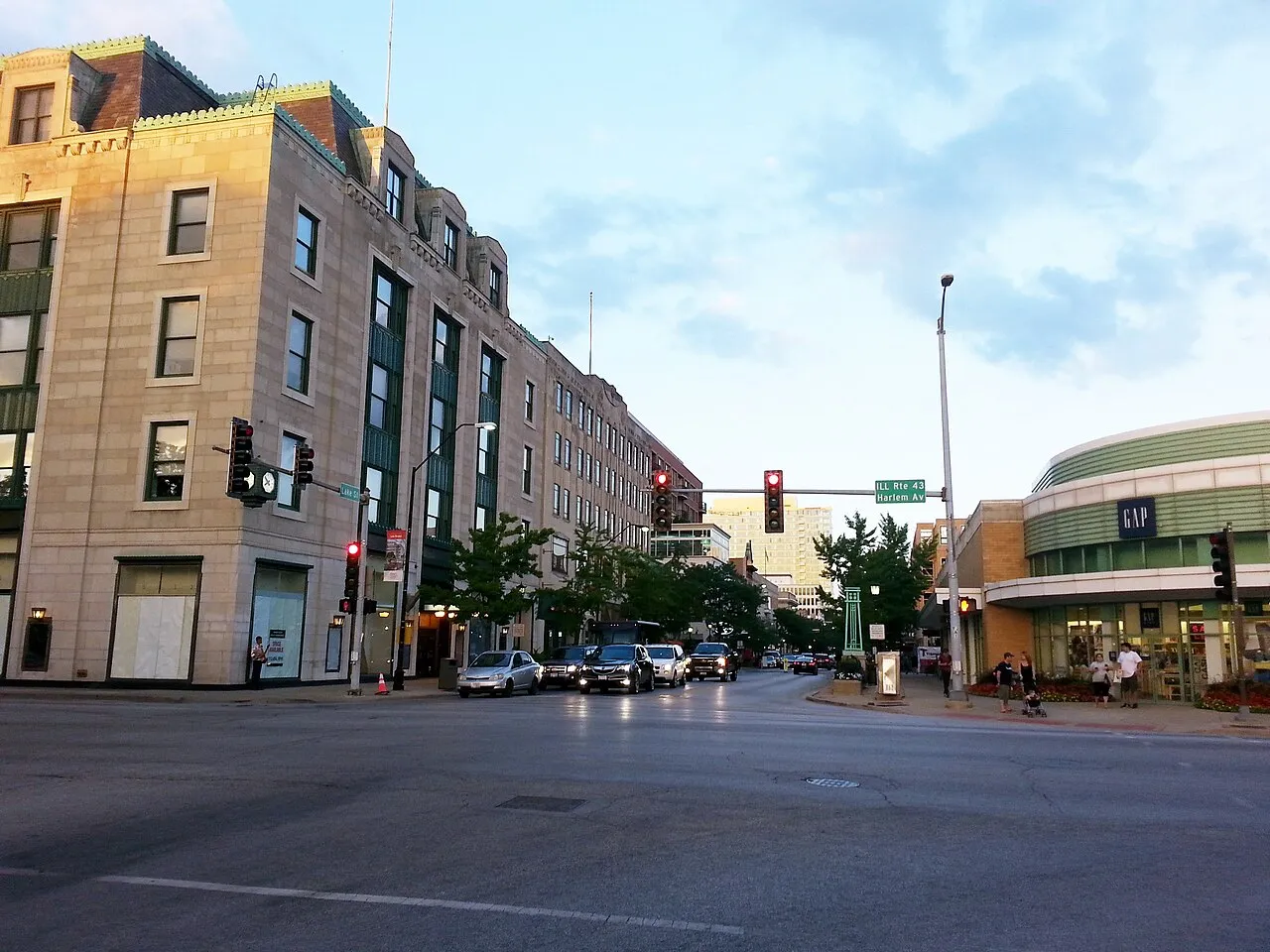
Downtown Oak Park. The Lake Street shopping district east of Harlem Avenue, which the village says has more than 750,000 square feet of retail and office space. This is where the newer condo and apartment towers are, next to the Harlem/Lake Green Line terminal and the Metra station.
Hemingway District. Oak Park Avenue around Lake Street, near the Hemingway Birthplace, Unity Temple, Scoville Park and the Main Library, served by Metra and the Oak Park Green Line stop, per a Wednesday Journal district roundup (August 20, 2026). Oak Park Avenue here is under reconstruction through November 2026.
Pleasant District. South of downtown along south Marion Street, with Mills Park and Pleasant Home, per the same roundup.
Ridgeland-Oak Park District (east-central). A 539-acre National Register district with 1,558 contributing buildings, listed in 1983, per Wikipedia. Its rough edges are Austin Boulevard, Ridgeland and Chicago Avenues and Lake and Madison Streets, with extensions. Ridgeland Avenue follows the old shoreline of glacial Lake Chicago.
Gunderson District (south). 230 homes built from 1906 to 1920 on 42 acres, roughly between Madison Street, Harrison Street, Gunderson Avenue and Ridgeland Avenue, per Wikipedia. Mostly American Foursquares by S.T. Gunderson and Sons.
Oak Park Arts District. Harrison Street immediately west of Austin Boulevard, per the village, next to the Austin Blue Line stop. Wikipedia describes it as running from Austin to Ridgeland.
Southtown. South Oak Park Avenue between Lexington and Van Buren Streets, a quarter-mile stretch that crosses I-290 at the Oak Park Blue Line stop, per the village and the Wednesday Journal.
North Avenue and Roosevelt Road edges. North Avenue lines the north border from Austin to Harlem with shops, offices and apartment buildings; Roosevelt Road is the south border with Cicero and Berwyn. Both are commercial corridors with homes on the side streets.
Park-named pockets (single-source). Listing sites group homes by names such as Rehm Park, Taylor Park and Midway Park. I found these only in Walk Score's list of Redfin neighborhoods, so treat them as shorthand, not boundaries.
Oak Park Historic Districts: What the Rules Mean for Your Plans
A third of Oak Park is historic district, and that changes how you buy. The village's historic preservation page names three locally designated districts: Ridgeland/Oak Park, the Frank Lloyd Wright-Prairie School of Architecture district and Gunderson. Together they cover "approximately a third of the Village." The village also counts more than 70 locally designated landmarks, 11 buildings and one park on the National Register and one building on the UNESCO World Heritage List.
The rules have two levels, and the difference matters. A Certificate of Appropriateness from the Historic Preservation Commission is required for designated landmarks, for "full or partial demolition in a historic district" and for properties altered with village funding. Everything else inside a district goes through advisory review when it needs a building permit. The village also says the commission does not review "ordinary maintenance and repairs that do not require a building permit, such as exterior painting." So for most houses in a district, the practical rule is: permit work on the outside gets looked at, demolition needs approval, and painting does not.
That tells you what to ask before an offer. If you plan to take down a garage, remove a porch, add a second story or tear the house down, find out first whether the property is a landmark and whether the work counts as partial demolition. If you plan new windows, siding or a rear addition that needs a permit, expect advisory review and build a few weeks into the schedule. The village's Historic Resource Database lets you look up an address before you write the offer.
Two details trip people up. First, the National Register boundaries and the local district boundaries are not the same; Wikipedia notes this for the Wright district in particular. Second, being on the National Register by itself does not trigger local review; the local designation does. The first question I ask about any Oak Park house with renovation plans attached is which of those lists it is on.
For a buyer the trade is real on both sides. The rules slow down some projects and add a review step. They are also part of why the streetscape in these districts looks the way it does, and why the housing stock from 1892 to 1950 is still standing. If you want to renovate, budget time as well as money, and talk to the village before you close.
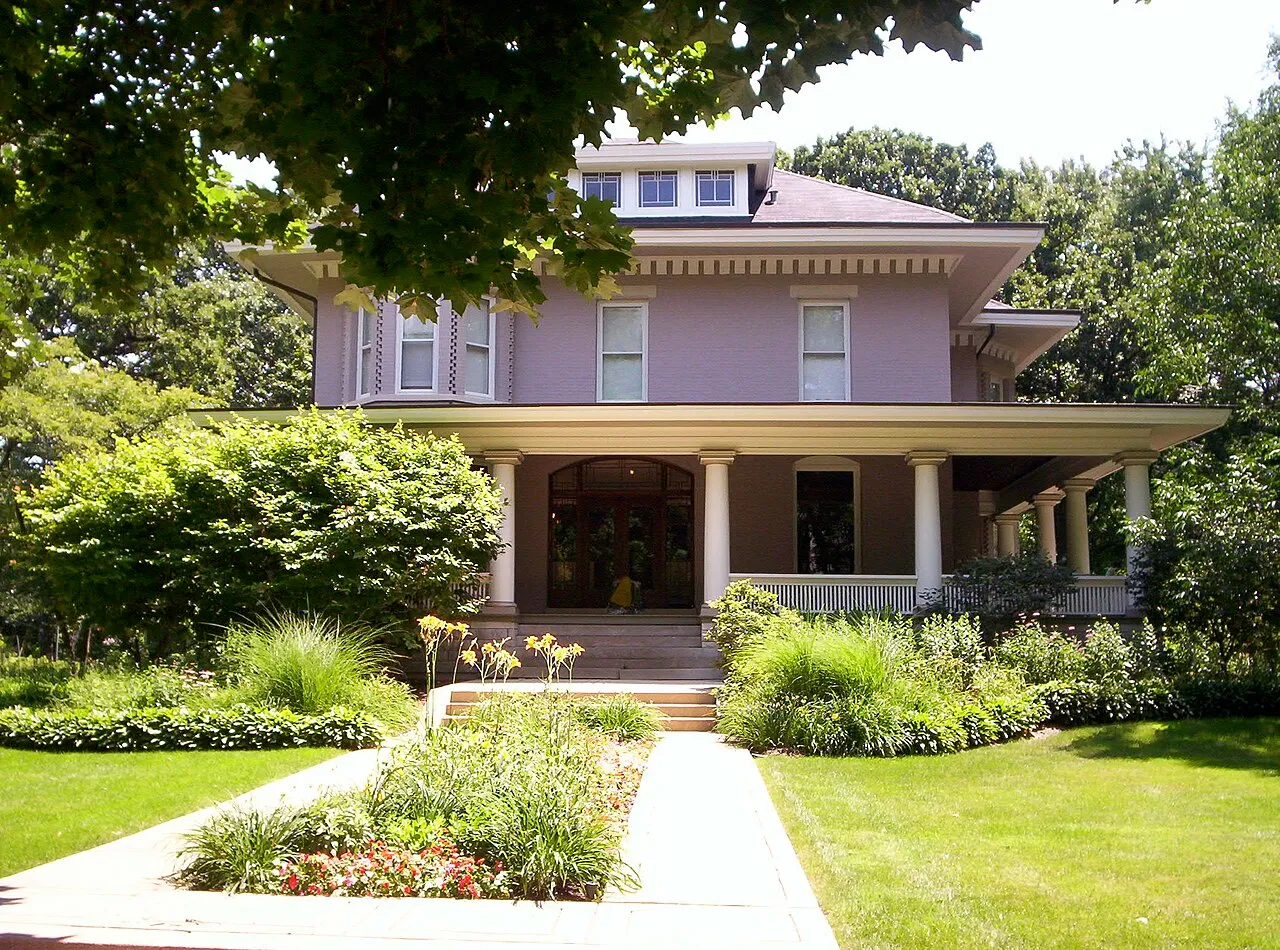
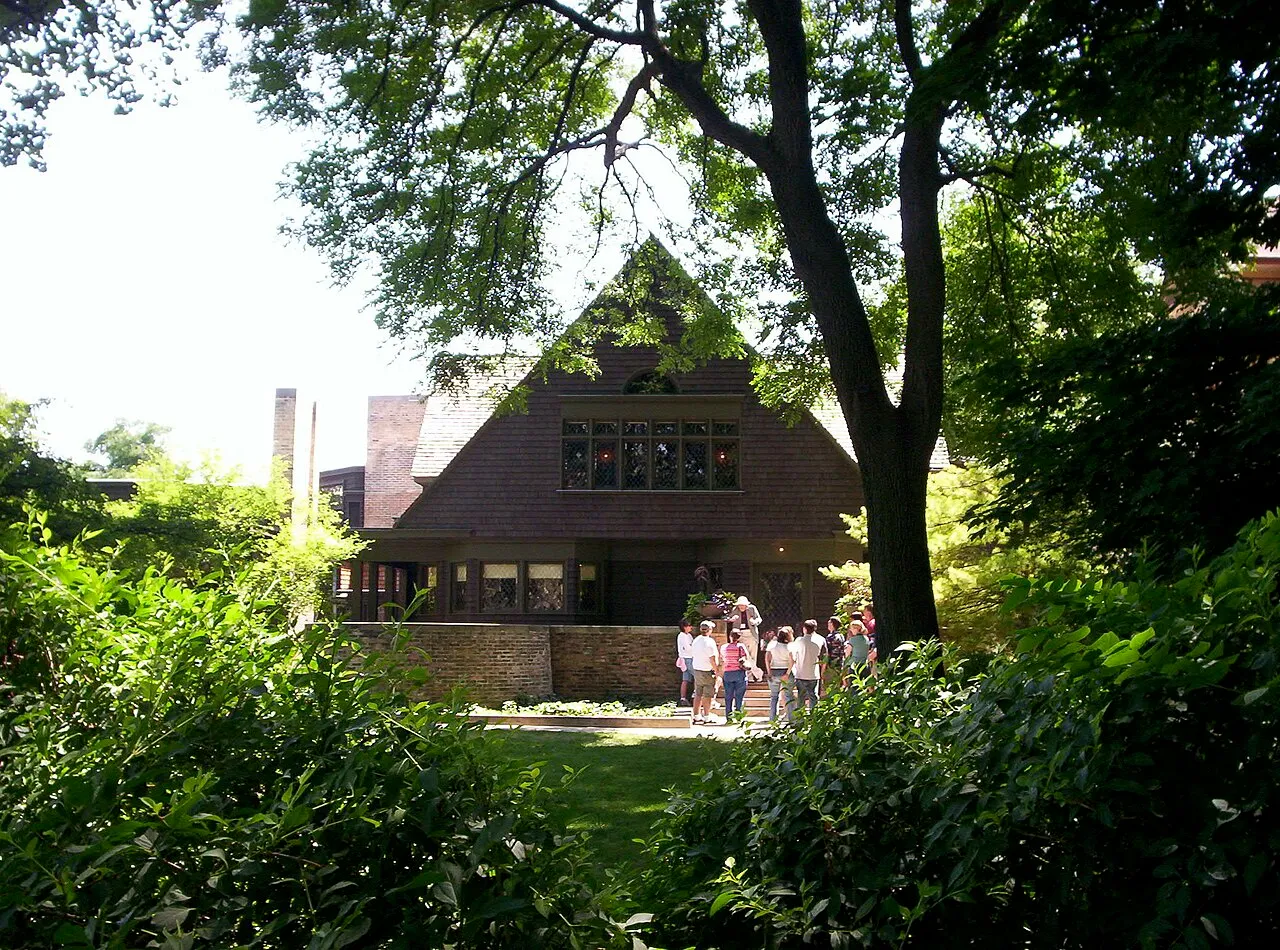
Frank Lloyd Wright-Prairie School of Architecture Historic District. Listed on the National Register on December 4, 1973, 457 acres, more than 20 Wright designs, per Wikipedia. The Home and Studio at 951 Chicago Avenue is a contributing property.
Ridgeland-Oak Park Historic District. Listed December 8, 1983, 539 acres, 1,558 contributing buildings, including Unity Temple, Wright's George W. Smith House and the 1933 Art Deco post office on Lake Street.
Gunderson Historic District. Listed March 1, 2002, 42 acres, 230 residential buildings from 1906 to 1920, most of them American Foursquares designed by Frank DeMoney.
What Oak Park Homes Look Like, by Type and Era
Oak Park is one of the oldest housing stocks in the region. CMAP's snapshot, built on the 2020-2024 ACS, puts the median year built at 1938, against 1961 for Cook County. Of 24,872 units, 59.3% were built before 1940 and another 19.9% from 1940 to 1969. Only 6.7% date from 1990 to 2009 and 4.2% from 2010 or later.
The mix is not what people picture. Detached single-family homes are 9,862 units, or 39.7% of the total, almost exactly the Cook County share of 39.6%. Buildings of 20 or more units are 25.4%, above the county's 20.1%, and 5- to 19-unit buildings add another 21.4%. Two-flats are 5.4% and three- and four-unit buildings 4.9%. Townhomes are rare at 3.3%. So about four in ten homes here are houses, and about half are in apartment and condo buildings of five units or more.
Bedroom counts split the same way. CMAP counts 30.7% of units with zero or one bedroom, well above the county's 21.1%, which is the courtyard buildings and towers. At the other end, 14.2% have four bedrooms and 6.7% have five or more, both above the county. Those are the big Victorian, Prairie and Foursquare houses on the north side and in the historic districts.
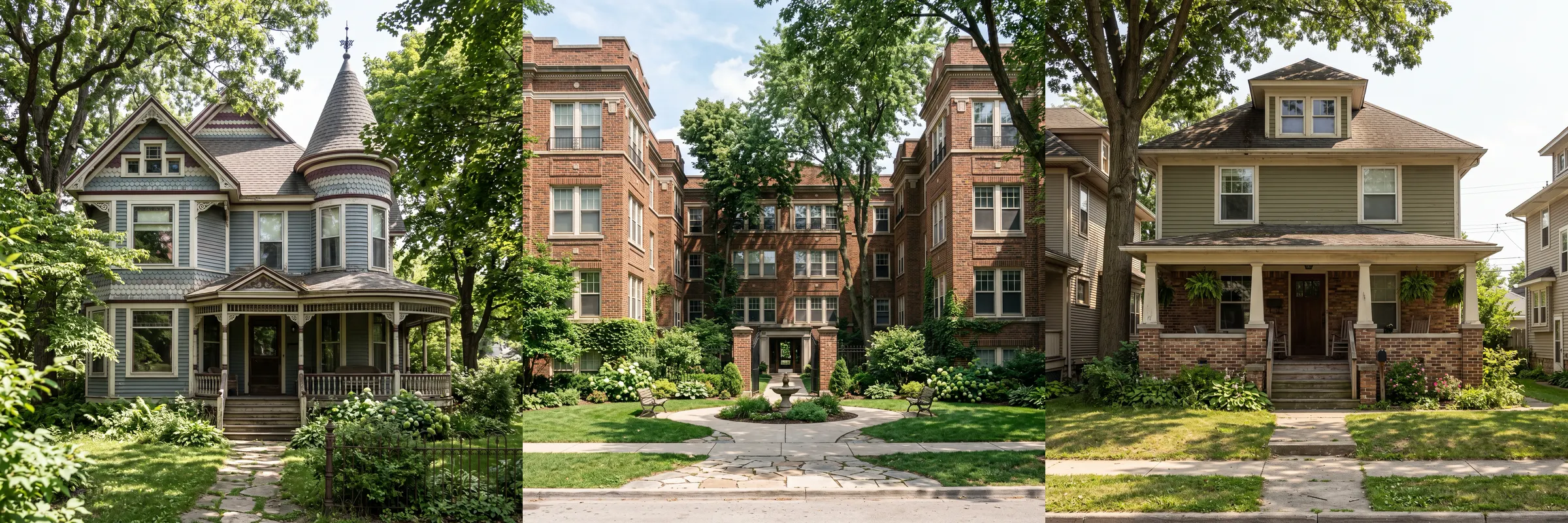
By era, the detached houses run from 1870s to 1890s Victorians and Queen Annes, to Prairie School houses from about 1900 to 1920, to Foursquares, bungalows and Craftsman houses from the 1900s through the 1920s, to smaller brick houses south of the expressway. The Census ACS puts the median home value at $465,500 and median gross rent at $1,593 for 2020-2024.
Old houses carry an old-house inspection list. Knob-and-tube wiring, original plumbing, clay sewer lines to the street, lead service lines, lead paint in anything built before 1978, slate or tile roofs and stucco all show up here. The village's water department has a lead service line replacement plan posted under the state law that requires one, so ask what the house has. None of this should kill a deal. All of it belongs in the price and the inspection period. My home inspection checklist covers what to ask for.
The Oak Park Housing Market in 2026
Oak Park is a fast, competitive market with prices rising. In the three months ending August 2026, Redfin reported a median sale price of $544,640, up 10.0% from a year earlier. Homes sold in about 41 days, down from 44, and Redfin's report counts 221 homes sold in August.
The competition numbers are the part buyers feel. Homes sold for 103.7% of list price on average, up 2.2 points from a year before. 57.8% sold above list, up 9.3 points, and only 12.4% had a price drop. Redfin gives Oak Park a Compete Score of 77 out of 100, which it calls very competitive. Its summary is that the average home sells for about 3% above list and goes pending in about 43 days, and hot homes sell for about 8% above list and go pending in about 32 days.
Zillow's home value index agrees on the direction and comes in lower on the level. It put the typical Oak Park home at $486,880 in August 2026, up 10.7% from $439,985 in August 2025 and 16.6% from $417,647 in August 2024. The two numbers measure different things. Zillow estimates every home in the village, including the one-bedroom condos that make up a big share of the stock. Redfin's median is the middle of whatever sold this summer. Redfin's price per square foot fell 5.0% to $266 while its median rose 10.0%, which tells me this summer's sales tilted toward bigger houses, not that the typical home lost value.
For context, Zillow's August 2026 index put Forest Park at $291,076, Berwyn at $321,149, Elmwood Park at $359,481, Evanston at $493,385, Riverside at $565,475, Elmhurst at $642,280, La Grange at $673,589 and River Forest at $738,290. Oak Park sits close to Evanston, the other old inner-ring suburb with rail on two sides. If you are working out a budget, my guide to how much house you can afford walks through the numbers.
The pattern I see in the data is two markets under one name. Condos in the older buildings trade at a small fraction of the median, and four- and five-bedroom houses north of Lake Street trade well above it. I price them separately, and I'd tell any buyer to look at the sale-to-list ratio for the product they want, not the village-wide number.
Oak Park Property Taxes: The 2026 Reassessment and the Transfer Tax
Property tax is the biggest line in an Oak Park monthly payment after the mortgage itself. Ownwell's Cook County data for Oak Park, updated April 13, 2026, puts the median effective rate at 3.04% and the median annual bill at $11,084. The Cook County median effective rate on the same page is 2.14%. By ZIP code Ownwell lists median effective rates of 3.02% in 60301, 3.07% in 60302 and 3.00% in 60304, with median bills of $5,170, $10,900 and $11,467. The low 60301 bill reflects that ZIP's mix of smaller downtown units.
The rate is high because several bodies levy on the same parcel. Wikipedia's government section lists five besides the village: Oak Park Township, the high school district (which also levies in River Forest), the elementary district, the library and the park district. County-level bodies come on top. The Wednesday Journal reported on December 11, 2025, that the village board raised the village levy 3.24% for 2026, that the village levy includes the library's share, and that the village portion is only about 15% of a typical bill. The two school districts take a larger share.
2026 is a reassessment year here. Cook County revalues one-third of the county each year, and the south and west suburbs are this year's group. The Assessor's Oak Park Township release says initial values came out on May 6, 2026, that the township was last reassessed in 2023, and that "property values certified in 2026 will affect second installment tax bills issued in 2027." It put the 2025 median single-family sale in the township at $596,000 against the assessor's median estimate of $559,000. The assessment calendar lists the appeal deadline as June 18, 2026, and the Board of Review window as August 3 to September 1, 2026, so both are closed for this cycle. By my arithmetic on the three-year cycle, the next reassessment would be 2029.
The bills you pay now still carry the 2023 values. For tax year 2025, the first installment was due April 1, 2026, and the second is due October 1, 2026, per the Cook County Treasurer. Cook County said those second-installment bills were mailed September 1, about two months late because of the county's tax system overhaul. If you close this fall, ask your attorney how the proration handles that bill, and ask what the 2026 notice on the house said.
Here is what the rate looks like on a real purchase. At this summer's $544,640 median, 3.04% works out to about $16,557 a year, or about $1,380 a month. The seller's current bill can be lower, because it still reflects the 2023 assessment and the seller's exemptions. Budget off the purchase price. The Cook County homeowner exemption takes $10,000 off the equalized assessed value of an owner-occupied home; the savings equal that $10,000 times your local tax rate.
Oak Park also has a village transfer tax, and it is one of the higher ones. The ATG ordinance summary lists $8.00 per $1,000, rounded to the nearest $1,000, paid by the seller, and says the final water and sewer reading must be taken and the final water bill paid before the stamps are issued. An Illinois Realtors policy brief updated March 2025 lists the same $8 rate and says only three area communities charge more. On a $545,000 sale that is $4,360 from the seller. The county adds 25 cents per $500 of value, per the Illinois Department of Revenue, or about $272 at the median. My Illinois closing costs guide covers the rest. This is general information, not tax advice. Your bill depends on your parcel, your exemptions and the assessor.
Oak Park Schools: District 97, OPRF and the Rest
Oak Park's public schools are simple to map at the district level. Every address in the village is in Oak Park Elementary School District 97 for kindergarten through eighth grade and in Oak Park and River Forest High School District 200 for high school. Wikipedia's village article says District 97's ten schools "serve the entire city limits," and District 200 serves Oak Park and River Forest.
District 97 runs eight elementary schools and two middle schools, per its own website. The elementary schools are Beye, Hatch, Holmes, Irving, Lincoln, Longfellow, Mann and Whittier. The middle schools are Percy Julian and Gwendolyn Brooks, which Wikipedia notes were formerly named Hawthorne and Emerson. Which elementary and middle school a house feeds depends on the street, so check every address with the district before you make an offer.
High school is one building. Oak Park and River Forest High School at 201 N. Scoville Avenue is the only school in District 200. It was founded in 1871, and the current building opened in 1907. Fenwick High School, a Catholic college preparatory school, is also in the village, per Wikipedia.
I don't rank schools on this page. The Illinois Report Card has each school's own data. What I will say is that the one-district, one-high-school setup makes the school question easier here than in towns where a street can split two or three districts.
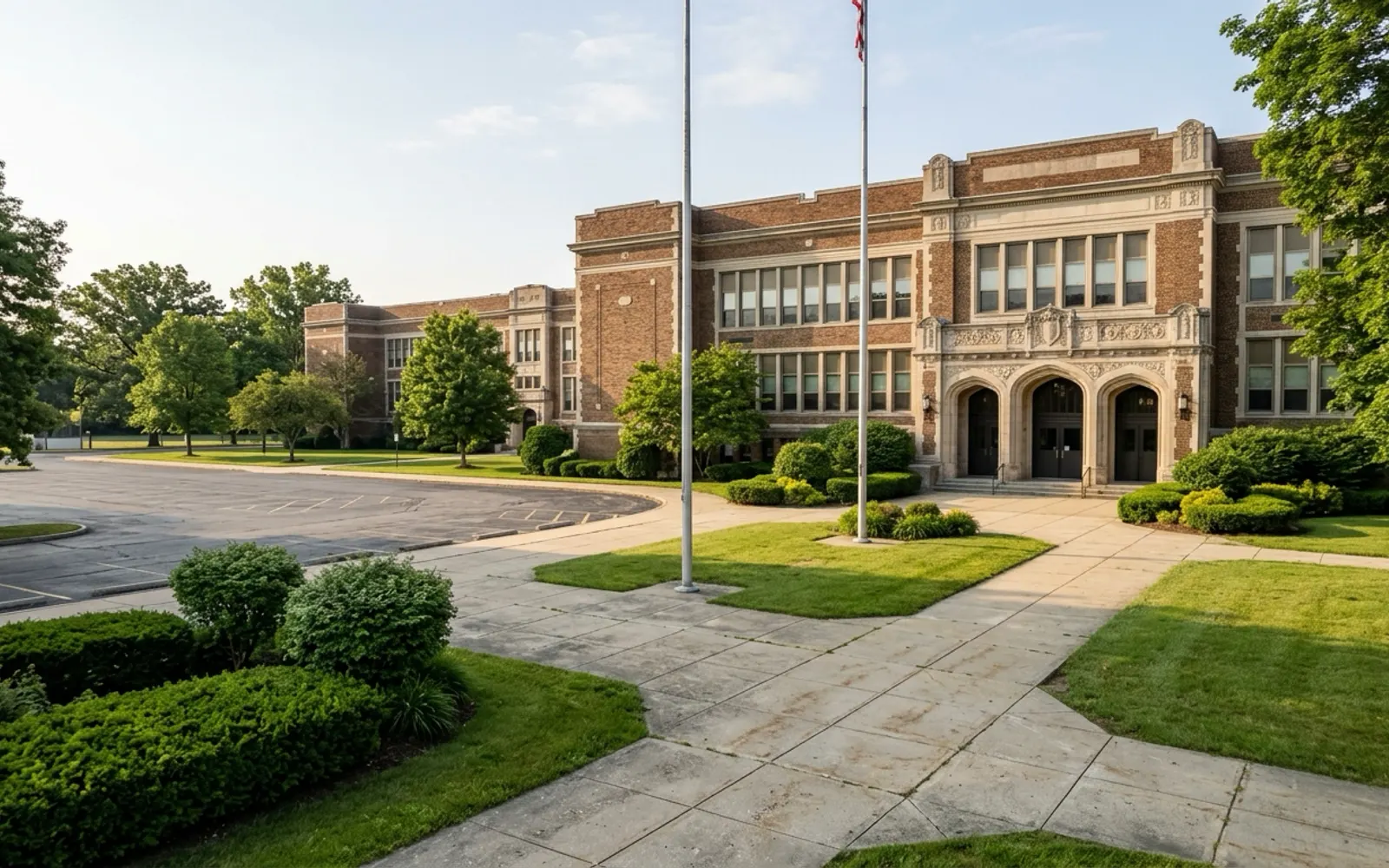
District 97 elementary schools. Beye, Hatch, Holmes, Irving, Lincoln, Longfellow, Mann and Whittier, per the district's website.
District 97 middle schools. Percy Julian Middle School and Gwendolyn Brooks Middle School.
District 200. Oak Park and River Forest High School, founded 1871, current building opened 1907, serving both villages.
Private high school in the village. Fenwick High School, per Wikipedia.
Commuting from Oak Park: Metra, the Green Line and the Blue Line
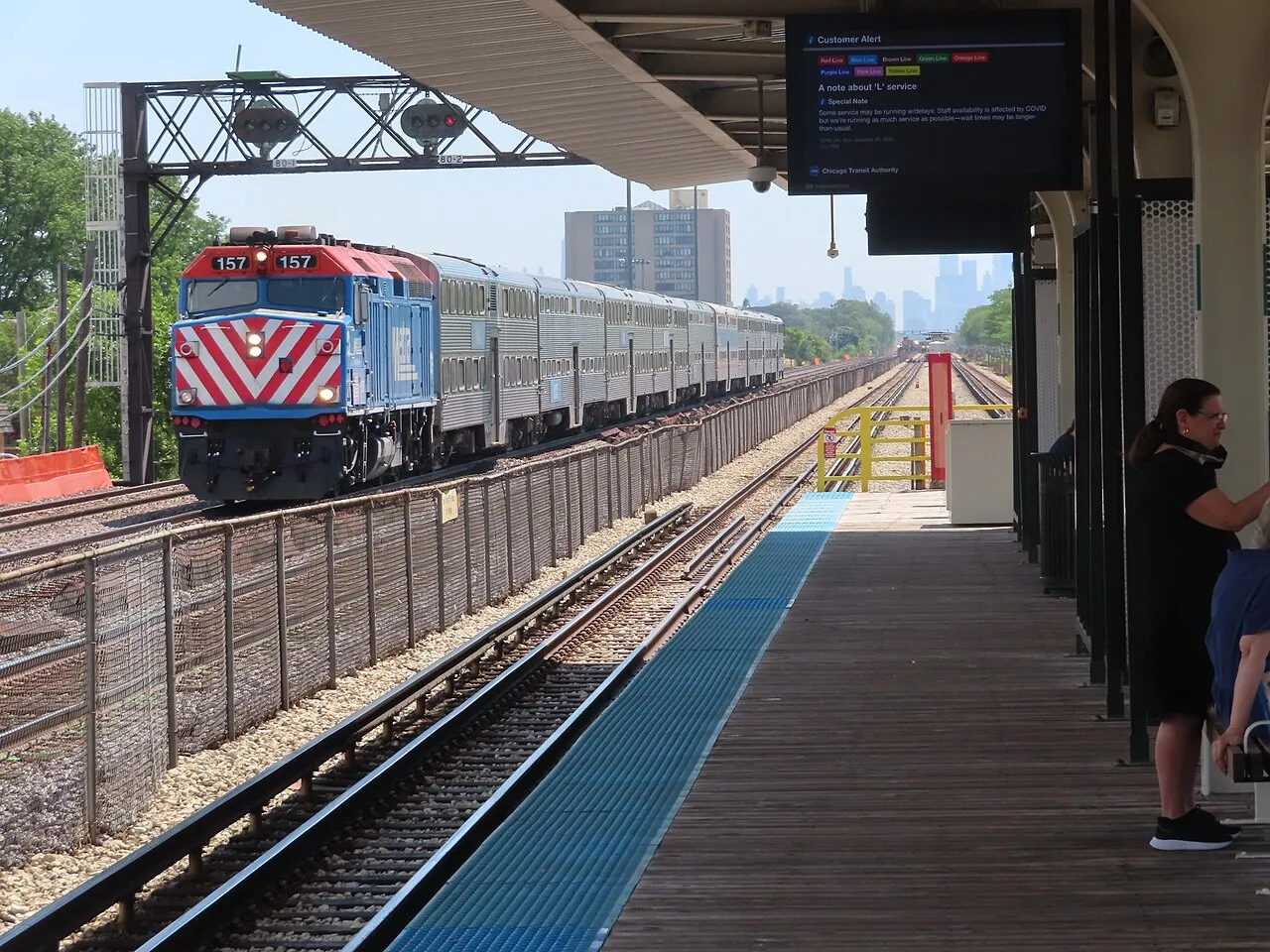
Oak Park has more rail than almost any suburb. It has one Metra station, two Green Line stations and two Blue Line stations inside the village, and two more CTA stations right on the Harlem Avenue border. For a downtown job, that means most of the village is within walking distance of at least one line.
The Metra station is the fastest ride. The Oak Park station) at 1115 North Boulevard is on the Union Pacific West line, in fare zone 2. According to Metra's schedule data for the week of September 28, 2026, 28 trains leave Oak Park for Ogilvie Transportation Center on weekdays and 28 come back. Six morning trains, at 6:14, 6:44, 7:14, 7:54, 8:24 and 8:54 a.m., reach Ogilvie in 18 minutes, and the others take 23. Saturdays have 10 trains each way and Sundays 9, all at 23 minutes.
The Green Line runs east and west through the middle of the village. The Oak Park station) at Oak Park Avenue and South Boulevard opened in 1901 and is the closest stop to the Frank Lloyd Wright Home and Studio; Wikipedia lists 269,763 riders in 2025. Ridgeland is the other Green Line stop inside the village. The western terminal, Harlem/Lake, sits on the Harlem Avenue border with a Forest Park address and carried 704,657 riders in 2025.
The Blue Line runs in the median of I-290 along the south side. The Oak Park Blue Line station) at 950 S. Oak Park Avenue had 179,081 riders in 2025, and the Austin station) at 1050 S. Austin Boulevard had 211,662. Harlem, the next stop west, has a Forest Park address. The branch has been slow for years, and a fix is in design. The Wednesday Journal reported on July 14, 2026, that the CTA board approved an agreement with IDOT on July 8 to put $18 million toward design of the rebuild between the Illinois Medical District and Forest Park. The plan would be the first complete track replacement since the branch opened in 1958, and it would make the Austin, Oak Park and Harlem stations fully accessible. IDOT was still applying for federal money for construction.
The census shows how much people use it. CMAP's snapshot has 13.1% of Oak Park workers riding transit, against 11.8% for Cook County, with 45.0% driving alone and 31.0% working from home. The average commute is 31.6 minutes.
Driving from Oak Park: I-290 and the Grid
The Eisenhower Expressway, I-290, is Oak Park's highway. It crosses the south part of the village with the Blue Line in its median, runs east to downtown Chicago and west toward I-294, I-88 and O'Hare. The village says it is 9 miles to downtown, 10 to O'Hare and 8 to Midway.
The rest is a grid. Harlem Avenue (Illinois 43) on the west border and Austin Boulevard on the east are the main north-south routes, with Ridgeland and Oak Park Avenues in between. North Avenue (Illinois 64) and Roosevelt Road (Illinois 38) mark the north and south borders, and Chicago Avenue, Lake Street and Madison Street carry east-west traffic through the middle. Many side streets end in cul-de-sacs or diverters to keep through traffic out, per Wikipedia.
Two things to plan for in 2026. Oak Park Avenue from Randolph Street to Lake Street is closed to through traffic and street parking through November 2026 for the Renew the Avenue project, per the Hemingway District, with east-west crossings kept open. And most blocks have alleys, so garages and parking are usually at the back of the lot. A house with no garage and no alley access is worth a second look at the village's overnight parking rules before you buy.
Is Oak Park Walkable?
Yes, more than almost anywhere in the suburbs. Walk Score gives Oak Park an average of 78, which it calls very walkable, and says most errands can be done on foot. Redfin's Oak Park page shows the same 78 with a Transit Score of 61 and a Bike Score of 66.
It varies by ZIP code. Walk Score ranks 60301, the downtown ZIP, at 94, 60304 on the south side at 80 and 60302, the largest, at 76. It counts about 229 restaurants, bars and coffee shops in the village and says the average resident can walk to about four of them in five minutes.
The layout is why. Oak Park was built around streetcars and trains before cars, on a street grid with shops on the main streets and houses behind them. Wikipedia notes that Augusta Boulevard is part of the Grand Illinois Trail and that the Illinois Prairie Path trailhead is less than a mile away.
Shopping in Oak Park: Downtown, the Districts and the Border Corridors
Oak Park shops on foot. The village's business districts page names Downtown Oak Park, the Hemingway District, the Pleasant District, the Oak Park Arts District, Southtown and the North Avenue corridor, and Roosevelt Road on the south border is its own strip.
Downtown is the biggest by far, with more than 750,000 square feet of retail and office space, per the village. A Wednesday Journal district roundup from August 20, 2026, counts more than 40 restaurants and cafes there and lists a small Target, a new Barnes & Noble, The Book Loft, Wild Fork Foods, Sephora and Old Navy, plus the Lake Theatre. The village's development page places the Barnes & Noble, a 25,000-square-foot store, at 1144 Lake Street at Harlem Avenue.
The smaller districts each have their own feel. The same roundup lists Dandelion Bookshop, Oak Park Records and Geppeto's Toy Box in the Hemingway District; Fleet Feet, Oak Park Jewelers and Anfora Wine Merchants in the Pleasant District; Val's Halla Records and Bead In Hand in the Arts District on Harrison Street; and Barnard's Cyclery, which it says has been on North Avenue since 1911.
The numbers say a lot of spending leaves the village. CMAP's snapshot, using Illinois Department of Revenue data, shows about $829 million in retail sales in 2025, or $15,560 per resident, against $23,200 for Cook County. Of $2.35 billion in equalized assessed value in 2024, about $2.06 billion was residential. With so little commercial property, homeowners carry most of the tax base, which is part of the tax story above.
Groceries and Everyday Errands in Oak Park
The biggest grocery news of 2026 is on Madison Street. Pete's Fresh Market opened its second Oak Park store at Madison Street and Oak Park Avenue on August 19, 2026, the Wednesday Journal reported, after a project that had been in development since 2018 and under construction since 2021. The chain's store list gives the new address as 668 Madison Street and the older Oak Park store as 259 Lake Street.
Jewel-Osco has two stores in the village, per its locator: 438 W. Madison Street at Ridgeland, open 6 a.m. to midnight, and 7036 Roosevelt Road near Harlem, open 6 a.m. to 11 p.m. Trader Joe's is at 483 N. Harlem Avenue. Downtown's small Target and Wild Fork Foods cover quick trips.
The Oak Park Farmers' Market runs every Saturday from May 23 through November 14, 2026, 7 a.m. to 1 p.m., in the Pilgrim Church parking lot at 460 Lake Street, one block west of Ridgeland Avenue. The village says it was started in 1976.
Because the village is small, almost every house is within a mile of a full grocery store. The question for a buyer is less which store and more whether you want to walk to it, and that is worth checking on the map for any house you are serious about.
Where Oak Park Eats
Walk Score counts about 229 restaurants, bars and coffee shops in Oak Park, and most of them are in the business districts rather than in strip centers. That matters for a buyer, because it means a lot of houses are a short walk from dinner.
The Wednesday Journal's August 2026 roundup names places across each district. Downtown has Lou Malnati's, Jerusalem Cafe, Khyber Pass and Hecho en Oak Park. The Hemingway District has Maya del Sol, Rustico, Il Vicolo, Scratch on Lake and coffee at Spilt Milk and The Wolf. The Pleasant District has Egg Harbor Cafe and Poor Phil's. Southtown has Hole in the Wall ice cream and the Oak Park Bakery. The Arts District on Harrison Street has Trattoria 225, The Happy Apple Pie Shop and Publican Quality Bread. North Avenue has The Onion Roll, which the roundup dates to 1954.
Oak Park was dry for most of its history. Per Wikipedia, no alcohol could be sold when the village incorporated. Restaurants were allowed to serve it with meals in 1973, and some grocery stores got permission to sell packaged liquor in 2002. Today the bars and restaurants look like any other inner suburb's.
I don't try to list every restaurant, because the list changes every year. The best advice I give buyers is to eat near each house you are serious about. It is the fastest way to learn which district you would use day to day.
Parks, Pools and the Conservatory in Oak Park
The Park District of Oak Park has run the village's parks since 1912. It lists 18 parks totaling 84 acres, seven neighborhood recreation centers at Stevenson, Andersen, Barrie, Carroll, Field, Fox and Longfellow Parks, two outdoor pools at Rehm Park and Ridgeland Common, the Paul Hruby Ice Arena at Ridgeland Common, a gymnastics center and a 42,000-square-foot Community Recreation Center at 229 Madison Street. Scoville Park is the village green and Austin Gardens is a wooded park near downtown.
Parkland is tight in a village this built-out. CMAP counts 80 acres of open space, or 2.7% of the village's land, in 2023. Most houses are a few blocks from a small park rather than next to a large one. For large open space, the Forest Preserves along the Des Plaines River are a short drive west.
Three historic properties belong to the park district. The Oak Park Conservatory at 615 Garfield Street dates to 1929, holds more than 3,000 plants and was added to the National Register of Historic Places in March 2005. Pleasant Home, in the northeast corner of Mills Park, is a National Historic Landmark designed in 1897 by Prairie School architect George W. Maher. Cheney Mansion is the third.
There is a pool decision still ahead. In March 2026, voters turned down a park district bond referendum for an indoor aquatics facility at Ridgeland Common, the district announced on March 18, 2026. The district said it will plan improvements to the Ridgeland outdoor pool instead, with construction anticipated for 2031 to 2032 at an estimated $10 million.
The Oak Park Public Library: Main, Dole and Maze
The Oak Park Public Library has three buildings. The Main Library at 834 Lake Street, next to Scoville Park, opened in its current building on October 5, 2003, after voters approved a $30 million referendum in 2000. The Dole Branch is at Augusta Street and Cuyler Avenue on the north side, in a building Mr. and Mrs. Andrew Dole gave the village in 1939. The Maze Branch is at Harrison Street and Gunderson Avenue on the south side, in a 1936 building designed by E.E. Roberts and Elmer C. Roberts.
The library's first home was the Scoville Institute on the same Lake Street site, starting in 1903. Oak Park Public Library is part of the SWAN network, which links it with River Forest and many other suburban libraries, per Wikipedia.
Unlike some suburbs where the library district and village lines differ, the library's boundary follows the village. Its levy is included in the village's, per the Wednesday Journal's 2025 budget report, so it shows up inside the village line on your tax bill.
Utilities and Village Services in Oak Park
Oak Park drinks Chicago's water. The village's water and sewer page says it buys Lake Michigan water from the City of Chicago, stores it in underground reservoirs and pumps it through 105 miles of water main. The same page links the village's lead service line replacement plan and two programs worth knowing about for an old house: basement flooding prevention and a sewer backup protection grant.
Trash and recycling go through Lakeshore Recycling Systems, which collects weekly from residential buildings of up to five units, with 64- and 96-gallon trash carts and a separate opt-in compost program. Carts go out by 7 a.m. and come back in by 10 p.m. on collection day. ComEd delivers electricity and Nicor Gas provides natural gas.
For sellers, the transfer process runs through the water bill. The ATG summary of the village ordinance says a final water and sewer reading is required and the final bill must be paid before transfer stamps are issued, along with a copy of the contract or PTAX form. Schedule the reading early.
Hospitals in Oak Park: Rush Oak Park and West Suburban
The hospital open in the village today is Rush Oak Park Hospital at 520 S. Maple Avenue. Rush lists it as open 24 hours, with a 55,000-square-foot emergency department with 22 private rooms serving about 40,000 patients a year.
The village's second hospital is closed. Resilience Healthcare abruptly closed West Suburban Medical Center in late March 2026 and furloughed most of its staff, the Chicago Sun-Times reported on September 11, 2026. The same report said a Cook County judge would appoint a receiver to "secure the assets" of West Suburban and Weiss Memorial Hospital. Whether and when it reopens is not settled, so don't count on it when you think about emergency care from an east-side address.
Chicago's West Side and downtown medical centers are a short drive or Blue Line ride east.
Wright, Hemingway and Nights Out in Oak Park
Oak Park's culture starts with two names. The Frank Lloyd Wright Home and Studio at 951 Chicago Avenue, where Wright lived and worked from 1889 to 1909, runs tours from 10 a.m. to 4 p.m. daily, with admission from $24 to $38 per the Frank Lloyd Wright Trust. The Trust says the surrounding district has the greatest number of Wright-designed homes in the world. Unity Temple at 875 Lake Street, built from 1905 to 1908, was added to the UNESCO World Heritage List in July 2019 as part of "The 20th-Century Architecture of Frank Lloyd Wright."
The Ernest Hemingway Birthplace Museum is at 339 N. Oak Park Avenue. Per Wikipedia, the 1890 Queen Anne house was bought by the Ernest Hemingway Foundation of Oak Park in 1992, restored and opened as a museum in 2001.
For theater, Oak Park Festival Theatre was founded in 1975 and performs outdoors in Austin Gardens near downtown; its website lists 2026 as Season 51. The Lake Theatre downtown is the movie house. Wikipedia also lists the Oak Park Art League, founded in 1921, and the Symphony of Oak Park and River Forest.
For a bigger night out, Chicago is one train away in almost any direction. The Green Line from the Oak Park Avenue stop runs straight into the Loop, which is the part of living here that buyers coming from other suburbs tend to underestimate.
A Day in Our Village, Thursday Night Out and Oak Park's Yearly Calendar
The village's biggest civic day is A Day in Our Village, held the first Sunday in June at Scoville Park, per the village's event page. The village says more than 140 Oak Park organizations set up booths, with live entertainment and a food court, and that 2025 was the 52nd year.
Summer Thursdays belong to downtown. Thursday Night Out ran every Thursday from June 4 to August 27, 2026, 5 to 9 p.m., with dine-around tickets at four for $25 and live music on Marion Street in the Pleasant District.
The rest of the calendar is steady. The Fourth of July parade starts at 10 a.m. at Longfellow Park, at Ridgeland and Adams, and marches north on Ridgeland to Augusta. The farmers market runs Saturdays from late May to mid-November. Oak Park Festival Theatre plays in Austin Gardens in summer, and the Arts District holds What's Blooming on Harrison each spring, per the Wednesday Journal. If you are touring houses on one of these days, go. It tells you more about a block than a listing will.

What's Changing in Oak Park: Zoning, Oak Park Avenue and Madison Street
The biggest change on the table is zoning. Oak Park has had areas zoned only for single-family homes since a zoning ordinance adopted in 1921, the Wednesday Journal reported. The village hired Opticos Design to recommend changes, and its proposal, called Shape Oak Park, would consolidate the residential districts into neighborhood zones that allow two-flats and duplexes. The consultants told the board on July 28, 2026, that existing single-family homes stay and owners keep the right to live in, sell, expand and rebuild them, per a second Wednesday Journal report.
Where it stands: on July 21, 2026, the board voted 5-1 against putting an advisory referendum on the November ballot. On July 28 it voted unanimously to send the proposal to the Plan Commission, with a public hearing tentatively set for September 17. On September 15, it created an ad hoc Housing Advisory Task Force to review the proposal and other housing measures, the Wednesday Journal reported on September 22. Nothing has been adopted yet. If you are buying a house next to a lot that could change under the new rules, watch this process.
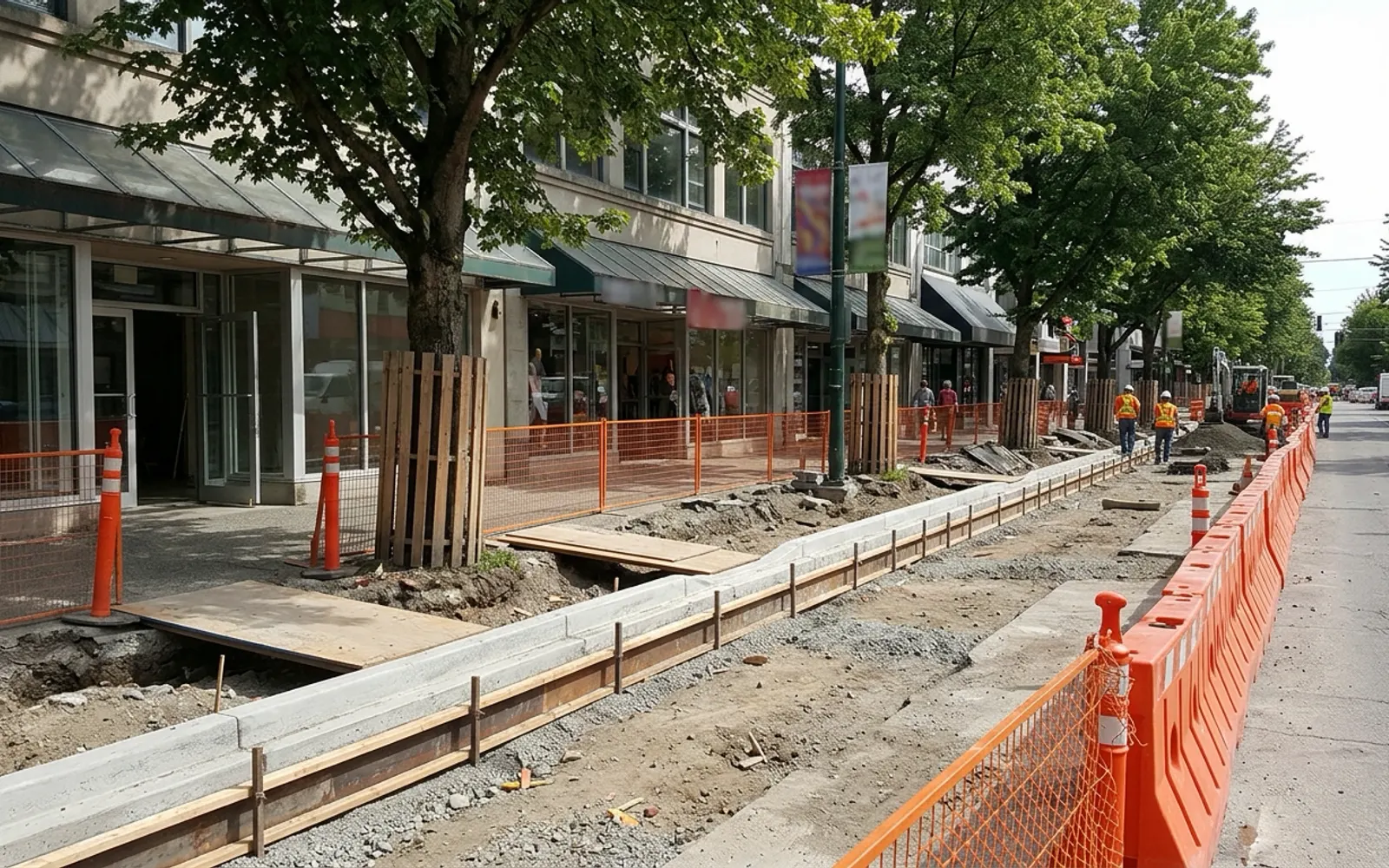
The second change is on Oak Park Avenue. The Renew the Avenue project is replacing water pipes more than 100 years old and rebuilding the streetscape in the Hemingway District. Oak Park Avenue from Randolph Street to Lake Street has been closed to through traffic and street parking since the week of March 23, 2026, and is scheduled to stay closed through November 2026, per the Hemingway District. The North Boulevard garage offers 90 minutes free while the work goes on.
Madison Street is the third. Pete's Fresh Market opened at Madison and Oak Park Avenue in August. The village board voted in February 2026 to pay $1 million from its Affordable Housing Fund to secure 1106 Madison Street for Interfaith Housing Development Corporation's planned 36-unit Keystone Apartments, the Wednesday Journal reported; the developer still needed state tax credits to build. The village's development page also lists a 68-room Holiday Inn Express at 1132-1142 Lake Street, the Barnes & Noble at 1144 Lake Street and a redevelopment effort for the 2.3-acre Mohr property on Harlem Avenue south of I-290. And on the rail side, the Blue Line rebuild described above is in design.
Village Hall itself is on the list. The Wednesday Journal's December 2025 budget report said the village is working through the cost of a new police station and a Village Hall renovation, which the village president called the first facilities project of that size in 50 years. That is a tax question to watch.
I don't label any town or neighborhood as safe or unsafe.
Flood and Basement Water Risk in Oak Park
Oak Park has no river, but water in the basement is still a real question. Redfin, using First Street's model, rates Oak Park's flood risk as minor and says 509 properties, 6% of the total, are likely to be severely affected by flooding over the next 30 years.
In an old, built-out village the risk is mostly heavy rain and sewers, not creeks. The village's water and sewer page lists a basement flooding prevention program and a sewer backup protection grant, which tells you where the village sees the problem. Wikipedia notes a continental divide runs north-south through the village, so water drains two ways from the high ground.
Three checks before you write an offer. Look the address up on the FEMA flood map. Ask the seller directly whether the basement has ever taken water; the Illinois disclosure form asks, but a direct question gets a better answer. And have the inspector look at the sump pump if there is one, any overhead sewer or backflow valve, the grading and the sewer line to the street, ideally with a camera.
Frequently Asked Questions
Is Oak Park, IL in Cook County?+
Yes. Census Bureau estimates for July 1, 2025, put all 52,823 village residents in Cook County. Oak Park Township has exactly the same boundary as the village, so every Oak Park home has one Cook County assessment calendar.
How much does a house cost in Oak Park, IL?+
Redfin reported a median sale price of $544,640 for the three months ending August 2026, up 10.0% from a year earlier, with homes selling at 103.7% of list. Zillow's home value index was $486,880 for August 2026, up 10.7%. Condos and houses trade as separate markets.
What are property taxes in Oak Park, IL?+
Ownwell (April 2026) puts the median effective rate at 3.04% with a median bill of $11,084, against 2.14% for Cook County. Oak Park Township was reassessed in 2026, and the assessor says those values affect second-installment bills issued in 2027.
Does Oak Park have a real estate transfer tax?+
Yes. The village charges $8.00 per $1,000 of sale price, paid by the seller, per the ATG ordinance summary, and requires a final water reading and paid water bill. The Cook County transfer tax of 25 cents per $500 also applies.
What are the historic district rules in Oak Park?+
About a third of the village is in three local historic districts. Landmarks, demolition in a district and village-funded work need a Certificate of Appropriateness from the Historic Preservation Commission. Other permit work in a district gets advisory review, and exterior painting is not reviewed.
What school district is Oak Park, IL in?+
Every address is in Oak Park Elementary School District 97 for kindergarten through eighth grade and District 200 for high school at Oak Park and River Forest High School. Elementary and middle school assignment is by street, so confirm each address with District 97.
How long is the train from Oak Park to Chicago?+
On the Metra UP-W line, six weekday morning trains from the Oak Park station reach Ogilvie in 18 minutes and the rest in 23, with 28 inbound weekday trains in fall 2026. The CTA Green and Blue Lines also stop in the village.
Is Oak Park walkable?+
Yes. Walk Score rates Oak Park 78 (very walkable), with a Transit Score of 61 and a Bike Score of 66. The downtown ZIP code, 60301, scores 94.
What neighborhoods are in Oak Park, IL?+
Oak Park has no official neighborhoods. Commonly used names include the Frank Lloyd Wright, Ridgeland-Oak Park and Gunderson historic districts, Downtown Oak Park, the Hemingway and Pleasant districts, the Oak Park Arts District on Harrison Street, Southtown and the North Avenue corridor.
Eshu Chikoti has extensive access to off-market listings throughout Oak Park and the rest of Cook County — homes that never make it to the public listing sites. That matters right now: in a seller's market like this one, well-priced homes routinely go under contract within days, and buyers relying only on public listings are competing for whatever is left over. Working with someone plugged into off-market inventory means seeing homes before the crowd does.
Eshu Chikoti · 847-691-4282 ·
Get new Oak Park listings by email
When a home comes on the market in Oak Park, I'll email it to you.
Just your email. Unsubscribe any time by replying.
Thinking About Oak Park?
Whether you're buying, selling, or just curious what's on the market, I can walk you through Oak Park street by street.