Niles, IL
Niles, IL is a Cook County village of about 30,400 people between Park Ridge and Skokie, built around Milwaukee Avenue, the 1934 Leaning Tower and the Golf Mill Shopping Center, with a summer 2026 median sale price near $425,000.
Living in Niles, IL means a median sale price near $425,000 this summer, property tax near 2.23% of value, and no Metra station inside the village. What Niles has instead is Milwaukee Avenue, a free village bus, two Pace Pulse lines and a mall in the middle of a redevelopment plan. Here it is, pocket by pocket.
Written by Eshu Chikoti · 847-691-4282 ·

How Niles, IL Got Here: From Dutchman's Point to Golf Mill
Niles started as a crossroads on the road to Milwaukee. According to the village's Wikipedia entry, Joseph Curtis settled here in 1827 and John Dewes followed in 1831, and the settlement was first known as Dutchman's Point. The early farms sat along what is now Milwaukee Avenue, which the village's own 2024 hazard mitigation annex says was then the North Plank Road that growers used to haul produce to the Chicago markets.
Niles Township was organized at a meeting at the North Branch Hotel on April 2, 1850, per Wikipedia. Nobody is sure where the name came from. Wikipedia lists three theories: a Baltimore newspaper called the Niles Weekly Register, an early builder, or settlers who came from Niles, Michigan. The village itself incorporated on August 24, 1899, with about 500 people. The hazard plan puts the population at 200 in 1884 and 2,135 by the 1930s.
The big change came after World War II. Wikipedia says Niles had about 3,500 people in 1950, that farms and nurseries turned into subdivisions fast enough to triple the population in five years, and that the village reached 18,863 by 1962 and peaked at 31,432 in 1970. The village grew partly by annexing unincorporated land, and the most important of those annexations became the Golf Mill Shopping Center, which opened in October 1960, per Wikipedia's Golf Mill entry. That mall shaped the village's finances for the next 60 years, as the tax section explains.
Two civic firsts still show up in how Niles runs. Wikipedia says Niles started free ambulance service in 1946, the first community in Illinois to do so, and was named an All-America City in 1964. The village later added the free bus that still runs today. The best-known landmark is older than all of it: the Leaning Tower of Niles, completed in 1934, which gets its own section below.
Niles at a Glance
Niles covers 5.85 square miles, per the Wikipedia entry, and the village's hazard mitigation annex puts it about 15 miles from downtown Chicago. Chicago borders it to the south, Skokie and Morton Grove to the east and northeast, Glenview to the north, and Park Ridge and unincorporated Cook County to the west. Milwaukee Avenue runs diagonally through the middle, and the North Branch of the Chicago River runs north-south through the east side.
All of Niles is in Cook County, but it sits in two townships. The Census Bureau's Vintage 2025 population estimates put the village at 30,443 people in 2025: about 20,940 in Maine Township and 9,510 in Niles Township. That works out to roughly 69% and 31%. The 2020 census counted 30,912. Both townships were reassessed by the county in 2025, so for tax purposes the split matters less than it does for schools.
The housing is mostly owned. The 2020-2024 Census ACS counts 12,172 housing units, with 74.6% of occupied homes owned and 25.4% rented. That rental share is higher than in Park Ridge or Glenview, and it tracks the village's mix of mid-rise condo and apartment buildings along the main roads.
Niles is also a job center. CMAP's June 2026 community snapshot counts 21,496 private-sector jobs in the village in 2025, up 3,370 (18.6%) from 2015, against 2.7% growth for Cook County as a whole. That works out to 1.87 jobs per household, well above the county's 1.07. Companies based here include Shure, the Bradford Exchange and Hammacher Schlemmer, per Wikipedia. The village is also a home rule community, which its finance department says gives it more room on local sales taxes and bonds.
At a $425,000 summer median, it costs more than Des Plaines and less than most of its other neighbors.
There is no Metra station in the village, so every rail commute starts with a drive or a bus. The school district can change from one block to the next. About 6% of properties carry a severe 30-year flood risk in First Street's model, and the village's own plan names more than a dozen neighborhoods with a flooding history. And the north end's future depends on a Golf Mill redevelopment that has already missed a deadline.
Niles Neighborhoods, Pocket by Pocket
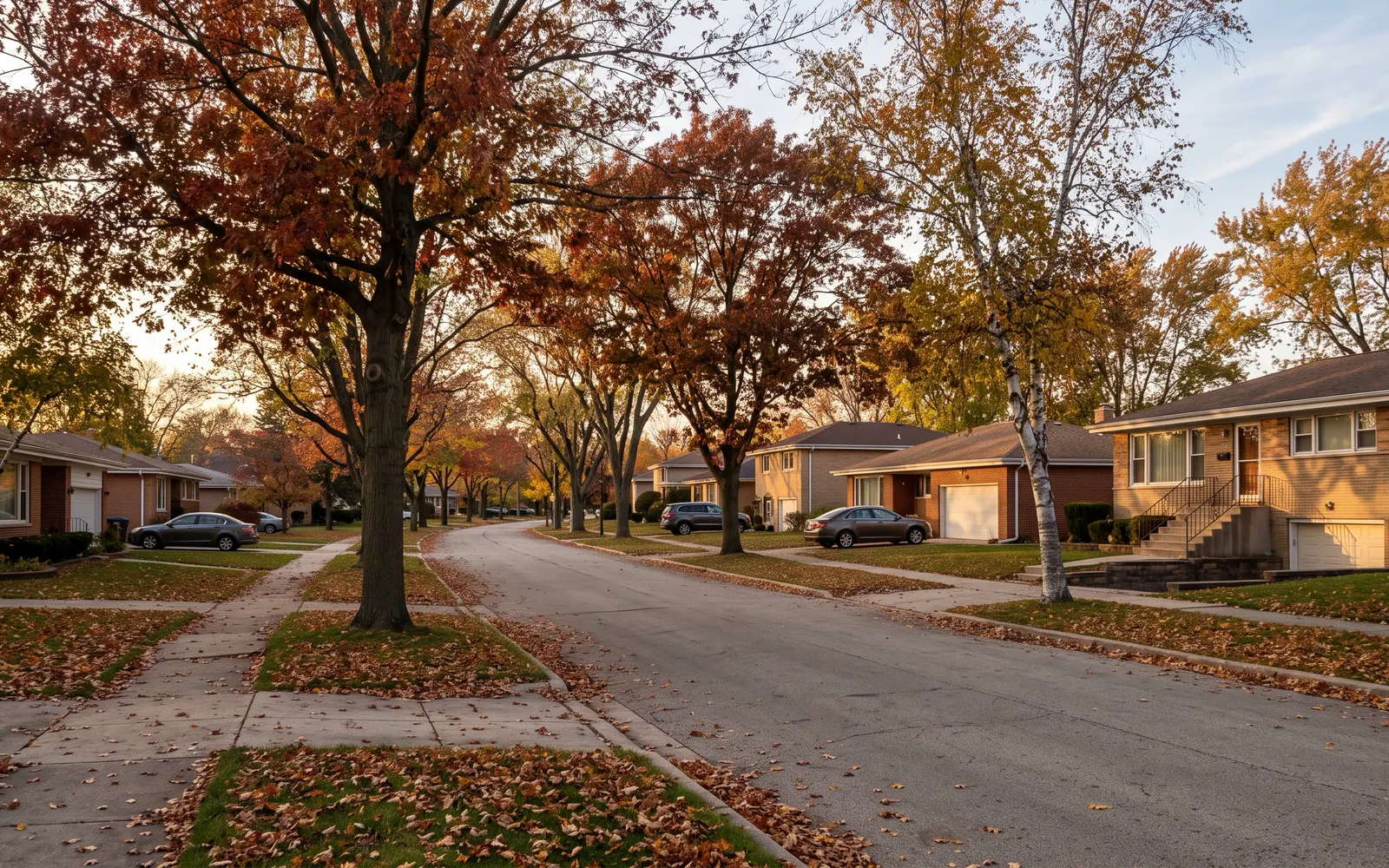
Niles does have neighborhood names, and the village uses them. Its own 2024 hazard mitigation annex names Dutchman's Point, Jonquil Terrace, Grennan Heights, Evergreen Estates, Oakton Manor, Ransom Ridge, Chesterfield Gardens, Oak Park, Washington Park, Ballard Terrace, Courtland Park, Golden Forties and River Gardens. Most were postwar subdivisions, and many share a name with the park or school at their center. Listings use them unevenly, so most buyers end up describing a house by its cross streets instead.
The simplest way to read the village is by its big roads. Milwaukee Avenue cuts diagonally from the Chicago border in the southeast to Golf Mill in the north. Golf Road, Dempster Street, Oakton Street, Howard Street and Touhy Avenue run east-west. Harlem Avenue runs north-south through the middle, and it is a useful line to know: Wikipedia describes District 219's western edge as Harlem Avenue, so houses east of it generally feed Niles North or Niles West and houses west of it generally feed Maine Township schools.
Below are the pockets I use when I talk buyers through Niles. The boundaries are my working description built from those roads and landmarks, not official lines, so treat them as a starting point. If you want to know which school district, flood history and bus route a specific address falls under, that is a conversation I am happy to have here.
The expectation I most often have to reset with buyers in Niles is that one village means one school system. It doesn't. Two houses a few blocks apart can sit in different elementary districts and different high school districts, and the tax bill follows the district. I check the district before I check the kitchen.
Golf Mill and the north end. The area around Golf Mill Shopping Center at Golf Road, Milwaukee Avenue and Greenwood Avenue, and Golf Mill Park. This is the part of Niles with the most change coming, because it is the site of the planned Golf Mill Town Center covered in the development section. Housing here mixes 1950s and 1960s single-family blocks with condo and apartment buildings near the mall.
Milwaukee Avenue corridor. The diagonal spine from Golf Mill southeast past Oakton and Howard to the Chicago border. It carries the Pace Pulse Milwaukee Line, most of the village's restaurants and several newer buildings, including the five-story, 48-unit Grand Stone at 9201 N. Milwaukee Ave. and the approved White Eagle redevelopment at 6767-6839 N. Milwaukee Ave., per the village. Homes a block or two off the avenue trade some traffic for a short walk to the bus.
Central Niles: Oakton to Dempster, west of Harlem. The blocks around the Niles-Maine District Library at 6960 W. Oakton St. and Grennan Heights park at 8255 Oketo Ave., where the Fourth of July parade ends. Mostly brick ranches, split-levels and raised ranches from the village's boom years, on the Maine Township side.
East side along the river. East of Harlem toward Caldwell Avenue and the North Branch of the Chicago River, with Bunker Hill forest preserve, the park district's Tam golf course and tennis center, the Howard Leisure Center at 6676 W. Howard St. and the LoVerde Sports & Rec Center at 7847 Caldwell Ave. This is the Niles Township side, with the North Branch Trail at the edge of the neighborhood.
South end: Touhy Avenue. The blocks around the Leaning Tower at 6300 W. Touhy Ave. and down to the Chicago line. Touhy is a busy commercial road with a Jewel-Osco at 5667 W. Touhy Ave. For some buyers the draw is how close this part of Niles is to Chicago's Edison Park and its Metra stop.
West side toward Dee Road. The western blocks toward Greenwood Avenue, Dee Road and Park Ridge, near the Jewel-Osco at Dempster and Greenwood and the "Terrace Square Gardens (Dee Road)" stop on the village's free bus route 412. This is the corner of Niles closest to I-294 and O'Hare, and one where the village limit and unincorporated Maine Township sit side by side, so confirm which one a house is in.
What Niles Homes Look Like, by Type and Era
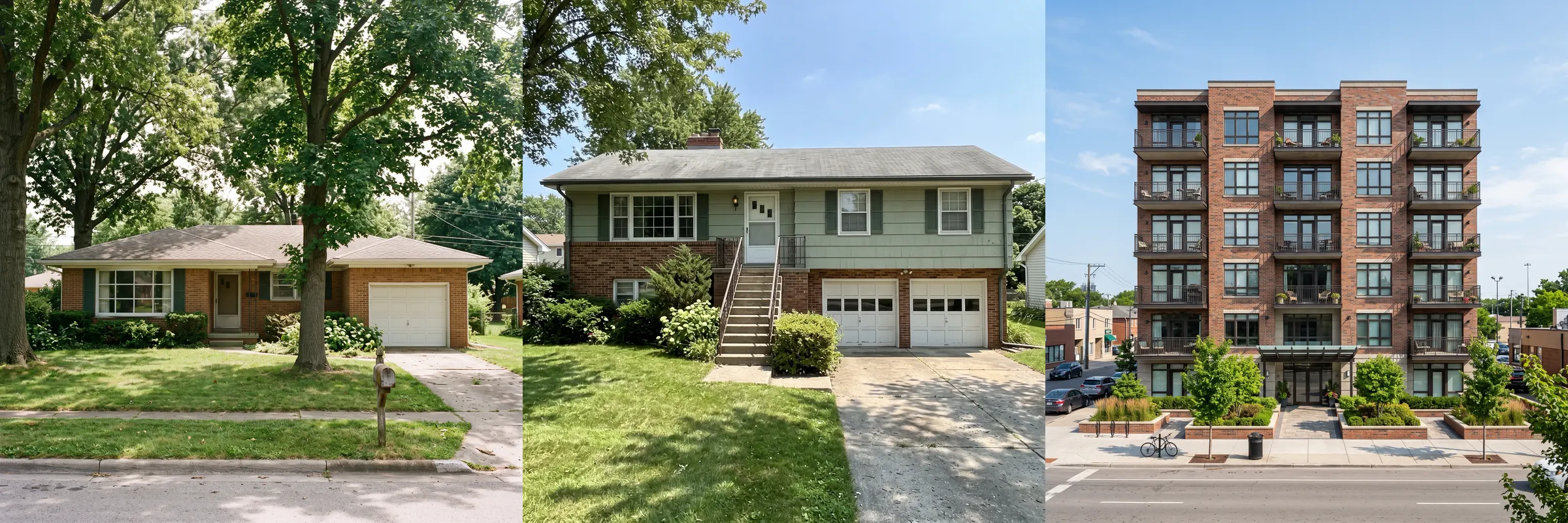
Niles is about half detached houses and about a third larger buildings. The 2020-2024 Census ACS counts 6,402 detached single-family homes, 52.6% of all units. Townhomes and other attached houses add 7.2%, and buildings with two to four units add 6.4%. Buildings with five or more units make up 33.1%, and 16.4% of all homes are in buildings of 50 units or more. Those are the mid-rise and high-rise condo buildings that line parts of Milwaukee Avenue, Touhy and the streets around Golf Mill.
The era is postwar, and more concentrated than in most of the northwest suburbs. The same survey puts the median year built at 1965. About 32.4% of homes were built in the 1950s and 24.2% in the 1960s, so 56.5% date from those two decades alone. Another 14.2% came in the 1970s, mostly the larger condo buildings. Only 2.8% predate 1940, and just 6.3% were built from 2000 on. In a village with almost no vacant land (CMAP's land use inventory counts 13.8 vacant acres out of 3,742.7), new housing mostly means a teardown or a redeveloped commercial site.
The bedroom mix follows the product. About 40.7% of homes have three bedrooms, 11.5% have four and 3.5% have five or more. Two-bedroom homes are 25.7%, and studios and one-bedrooms together are 18.6%, most of them condos. The ACS puts the median value of owner-occupied homes at $358,700 and median gross rent at $1,336.
For a buyer that means two very different markets under one village name. There is the house: a 1950s brick ranch, a Cape Cod, a split-level or a raised ranch, often on a lot around the size the postwar builders used, sometimes expanded with a second floor. And there is the condo, from a garden unit to a high-rise with an elevator, a doorman or a pool. They trade at very different prices per square foot, and I price them off different comparable sales.
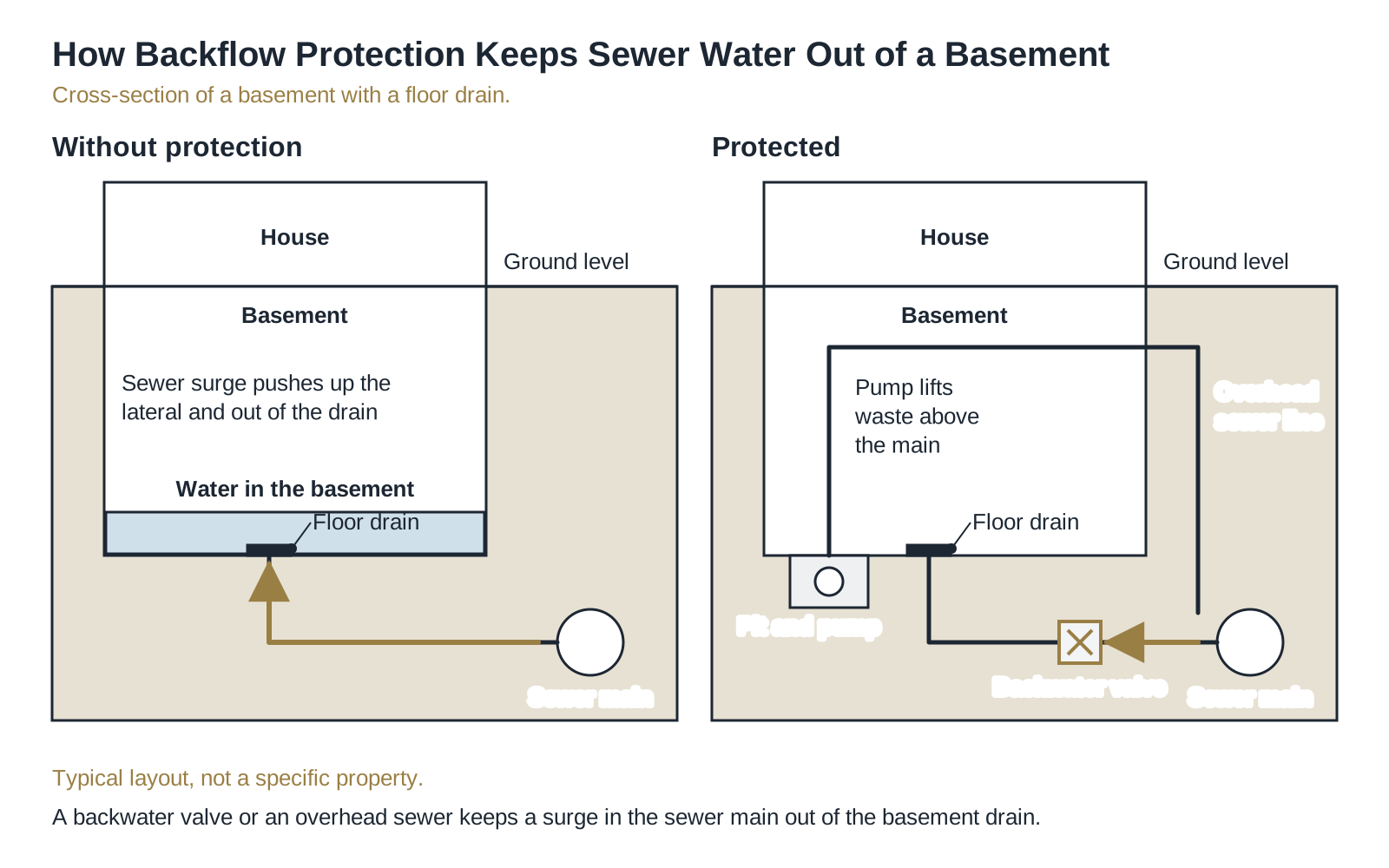
The houses carry their own inspection list. Many have original sewer lines running to the street, and Niles has a documented basement-flooding history, so a sewer camera inspection is money well spent. Check for a backflow valve or overhead sewer, the age of the sump pump and the grading. For condos, read the association's budget, reserve study and recent special assessments before you fall for the view. My home inspection checklist covers what to ask for.
The Niles Housing Market in 2026
Niles prices kept climbing this summer. In the three months ending August 2026, Redfin reported a median sale price of $424,719, up 13.6% from a year earlier. Its report shows 93 homes sold, down 5.7% from 99 a year before. The median home took 49 days to sell, five days longer than last year, and sold at 100.0% of list price. About 45.1% sold above asking, up 2.7 points.
The rest of Redfin's numbers describe a market that is competitive but not frantic. Price per square foot was $282, up 7.8%. Only 16.4% of listings took a price cut, down 4.9 points from last year. Redfin gives Niles a Compete Score of 64 out of 100, which it calls somewhat competitive, says the average home gets about three offers, and says its "hot homes" can sell for about 4% over list and go pending in about 34 days. In practice, the updated ranch at a sensible price draws a crowd in the first week, and the dated condo waits.
Zillow's home value index agrees on the level and disagrees on the speed. It put the typical Niles home at $421,137 in August 2026, up 7.9% from August 2025 and 14.2% from August 2024. The gap in growth is about mix. Redfin's median is the middle of whatever sold this summer, and a summer with more detached houses and fewer condos in the sales pushes that median up faster. Zillow's index estimates every home in the village, condos included, so it moves more slowly. Both say prices are well above where they were two years ago.
For context against the neighbors, Zillow's August 2026 index put Des Plaines at $358,473, Harwood Heights at $391,634, Norridge at $422,384, Skokie at $433,130, Morton Grove at $454,351, Lincolnwood at $578,800, Park Ridge at $597,562 and Glenview at $697,923. Niles sits in the middle of that group: above Des Plaines, about even with Norridge and a little below Skokie and Morton Grove. If you are working out a budget at these prices, my guide to how much house you can afford is a good place to start.
Niles Property Taxes: Two Townships, One Cook Cycle
Property tax in Niles runs a little below its neighbors in rate, and the reason is the mall. Ownwell's Cook County data for Niles, updated April 13, 2026, puts the median effective rate at 2.23% and the median annual bill at $6,651, on a median home value of $310,000. The Cook County median on the same page is 2.14%.
Here is why the rate is not higher. CMAP's snapshot, using state data, shows the village's equalized assessed value in 2024 was $1.62 billion, and only $854 million of it, about 53%, was residential. Commercial property was $481 million (about 30%) and industrial $285 million (about 18%). In Park Ridge, homes are 88% of the base, so homeowners carry most of the levy. In Niles, the stores and factories carry almost half. The village's finance department says its 2.25% share of the local sales tax is its primary source of general revenue, and that in tax year 2021 its own property tax levy was about 10% of the average resident's bill. The rest goes to school districts, the park district, the library and the other taxing bodies.
Cook reassesses one-third of the county each year, so each area is revalued every three years. Both of Niles' townships are in the north suburbs group, which the assessor's valuation reports page lists under 2025. The Niles Township release, dated November 2, 2025, reported a 2024 median single-family sale in the township of $432,000 against the assessor's median estimate of $389,000. The Maine Township release of June 2025 reported $433,000 against $403,000. Both say the 2025 values affect second-installment bills issued in 2026. At the last reassessment in 2022, the assessor reported that total assessed value in Niles Township rose 34%, with residential up 33%. On the normal three-year cycle, the next north suburbs reassessment would come in 2028.
The bills come in two pieces. For tax year 2025, the first installment was due April 1, 2026, and the second is due October 1, 2026, per the Cook County Treasurer. Cook County said those second-installment bills would be released by September 1. If you close this fall, ask your attorney how the proration handles that bill.
Here is what the rate looks like on a real purchase. At this summer's $424,719 median, 2.23% works out to about $9,470 a year, or about $790 a month. Many current bills are lower because assessments trail the market, and the mistake I see most is buyers budgeting off the seller's bill. The Cook County homeowner exemption takes $10,000 off the equalized assessed value of an owner-occupied home, and new owners have to apply for it. Condo buyers should add the monthly association fee on top.
In Niles, the buyer pays the village transfer tax. The village's transfer tax page sets it at 0.3%, or $3 per $1,000 of the sale price, so a $425,000 purchase carries about $1,275 in village stamps. Niles residents who sell a home in Niles and buy another in the village within 12 months can get 67% of it rebated. The seller has to call the village's finance department 10 days before closing so it can take a final water reading and search the property for open fines, fees or violations, per the stamp procedure, and a buyer who will not live in the home has to apply for a rental license when buying the stamp. ATG's summary of the ordinance, updated March 4, 2025, also lists a $25 pre-transfer inspection. The Illinois Department of Revenue lists the county transfer tax at 25 cents per $500, or about $212 on the median sale. My Illinois closing costs guide covers the rest. This is general information, not tax advice. Your bill depends on your parcel, your exemptions and the assessor.
Niles Schools: Five Elementary Districts, Two High School Districts
School assignment in Niles is the most complicated thing about buying here. The Wikipedia entry lists five elementary districts that serve parts of the village: East Maine District 63, Park Ridge-Niles District 64, Golf District 67, Niles Elementary District 71 and Fairview District 72. The village's own Live in Niles schools page highlights 63, 64 and 71, which cover most addresses.
High school splits two ways. Maine Township High School District 207 takes in part of Niles, and the village says two of its three high schools serve Niles addresses: Maine East, at Dempster Street and Potter Road in Park Ridge, and Maine South. Niles Township High School District 219 takes in the east side, with Niles North and Niles West, both in Skokie. Wikipedia describes District 219's west edge as Harlem Avenue, and the village says the district serves about 4,600 students from Lincolnwood, Skokie, Morton Grove and Niles.
The practical rule: assignment is by street, not by village, and two houses a few blocks apart can go to different schools. Check every address with the district before you write an offer, and ask me for the boundary if you want it done for a specific house. I don't rank schools on this page. The Illinois Report Card has each school's own data.
The community college is Oakton College, with campuses in Des Plaines and Skokie; Wikipedia lists it as the Niles community college district.
East Maine District 63. Serves parts of Des Plaines, Niles, Glenview, Park Ridge and Morton Grove in Maine Township, per Wikipedia, with headquarters in Des Plaines. The village lists five elementary schools (Apollo, Mark Twain, Melzer, Nelson and Washington), Gemini Middle School and an early learning center, with more than 3,600 students.
Park Ridge-Niles District 64. Serves Park Ridge and part of Niles, per Wikipedia. Its Emerson Middle School and Jefferson early childhood center are in Niles, and the district headquarters is at Jefferson, 8200 Greendale Ave.
Niles Elementary District 71. A one-school district founded in 1915. Per the district, Clarence E. Culver School serves 550 students from preschool through eighth grade with a staff of 60.
Golf District 67 and Fairview District 72. Smaller districts that Wikipedia lists for parts of Niles. District 67 runs Hynes Elementary and Golf Middle School, both in Morton Grove, with about 695 students as of 2022. District 72 runs a single school in Skokie.
High schools. District 207: Maine East (Dempster and Potter, Park Ridge) and Maine South. District 219: Niles North and Niles West, both in Skokie.
College. Oakton College, with campuses in Des Plaines and Skokie.
Commuting from Niles: Metra Stations Just Outside the Village
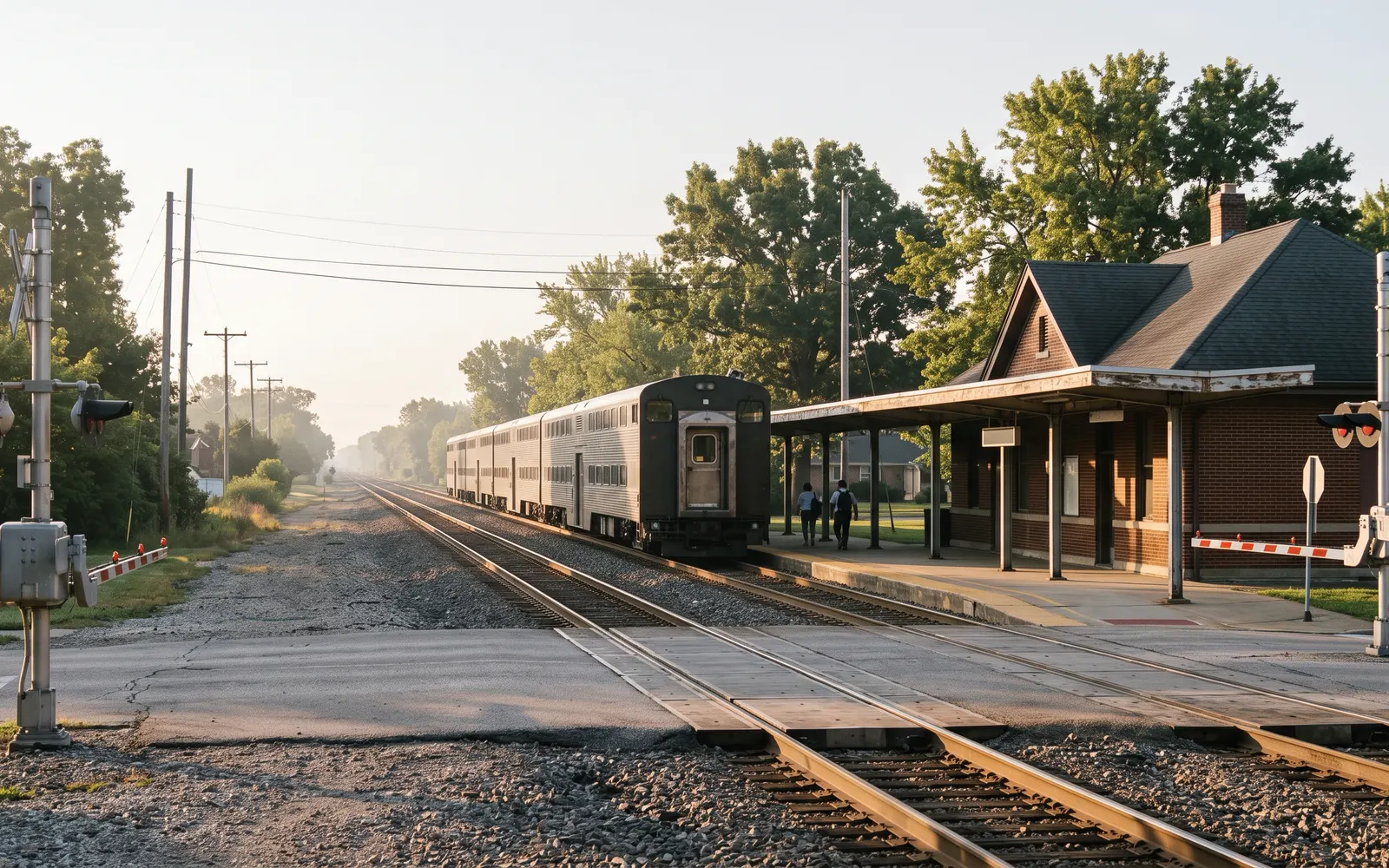
Niles has no Metra station of its own. Wikipedia notes that, unlike Park Ridge, Skokie and Glenview, the village never had a commuter rail stop. Commuters drive or ride a bus to a station in a neighboring town, and which one depends on which side of Niles you live on.
On the east and north side, the closest option is Metra's Milwaukee District North line. The Morton Grove station at 8501 Lehigh Ave. is 14.6 miles from Chicago Union Station, in fare zone 2. According to Metra's schedule data for the week of September 28, 2026, 27 weekday trains stop there in each direction, which is every train on the line. Most inbound trains take 37 minutes to Union Station; seven faster trips take 29 or 30. There are nine inbound departures before 8:30 a.m.: 5:45, 6:14, 6:36, 6:54, 7:10, 7:24, 7:44, 7:57 and 8:09. Saturdays have 10 trains each way and Sundays nine. One stop north, the Golf station at 1 Overlook Dr. in the Village of Golf has 20 inbound and 21 outbound weekday trains, with a 41-minute ride to Union Station.
On the south and west side, the Union Pacific Northwest line is closer. The Edison Park station, in Chicago at 6730 N. Olmstead Ave., has 25 weekday trains each way this fall, and the ride to Ogilvie takes 29 to 32 minutes. Park Ridge's Uptown station has the same 25 trains with a 32- to 35-minute ride. The trade-off between the lines is the downtown end: Union Station for the Milwaukee District North, Ogilvie for the UP-NW.
Most people in Niles drive to work. The 2020-2024 ACS shows 70.8% of Niles workers driving alone, 10.6% carpooling, 10.6% working from home and 4.6% on public transit, most of that by bus and only 0.8% by commuter rail. CMAP puts the average commute at 28.3 minutes, a little under the Cook County figure of 31.5.
The Niles Free Bus and the Pace Pulse Lines
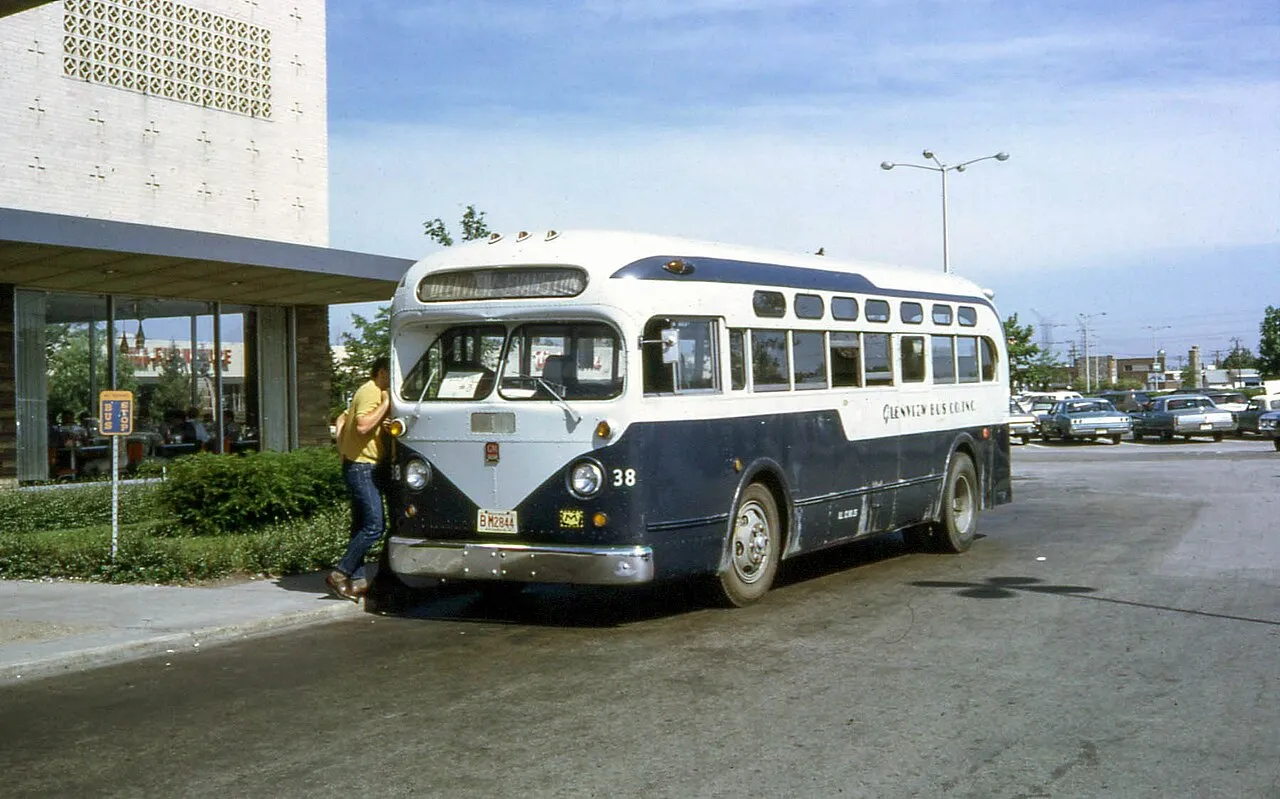
What Niles lacks in trains it makes up for in buses. The best known is the Niles Free Bus, a village service that charges riders nothing. It runs continually from 9:30 a.m. to 4:40 p.m., Monday through Sunday, on three routes: 410 (East Niles Local), 411 (West Niles Local) and 412 (the Niles Shopper's Special). The routes stop at Golf Mill, Village Crossing, the library, the civic center, Dempster Plaza, Oak Mill Plaza, Golf Glen, Four Flaggs and other shopping centers, and the village says the buses come within a short distance of every residence. All three routes meet at Golf Mill for transfers. The buses skip nine holidays a year, including Memorial Day, Independence Day, Labor Day, Thanksgiving and Christmas.
The service has had a rough year and a comeback. On September 14, 2025, the village suspended routes 410, 411 and 412 after a contract dispute with Pace over insurance. It resumed service on April 1, 2026 with a new agreement and smaller 14-passenger buses in place of the old large blue ones, run by six full-time and 15 part-time drivers. The village traces the service back to 1972, when the park district ran two school buses to local parks; the village took it over in 1973 and partnered with Pace in 1984.
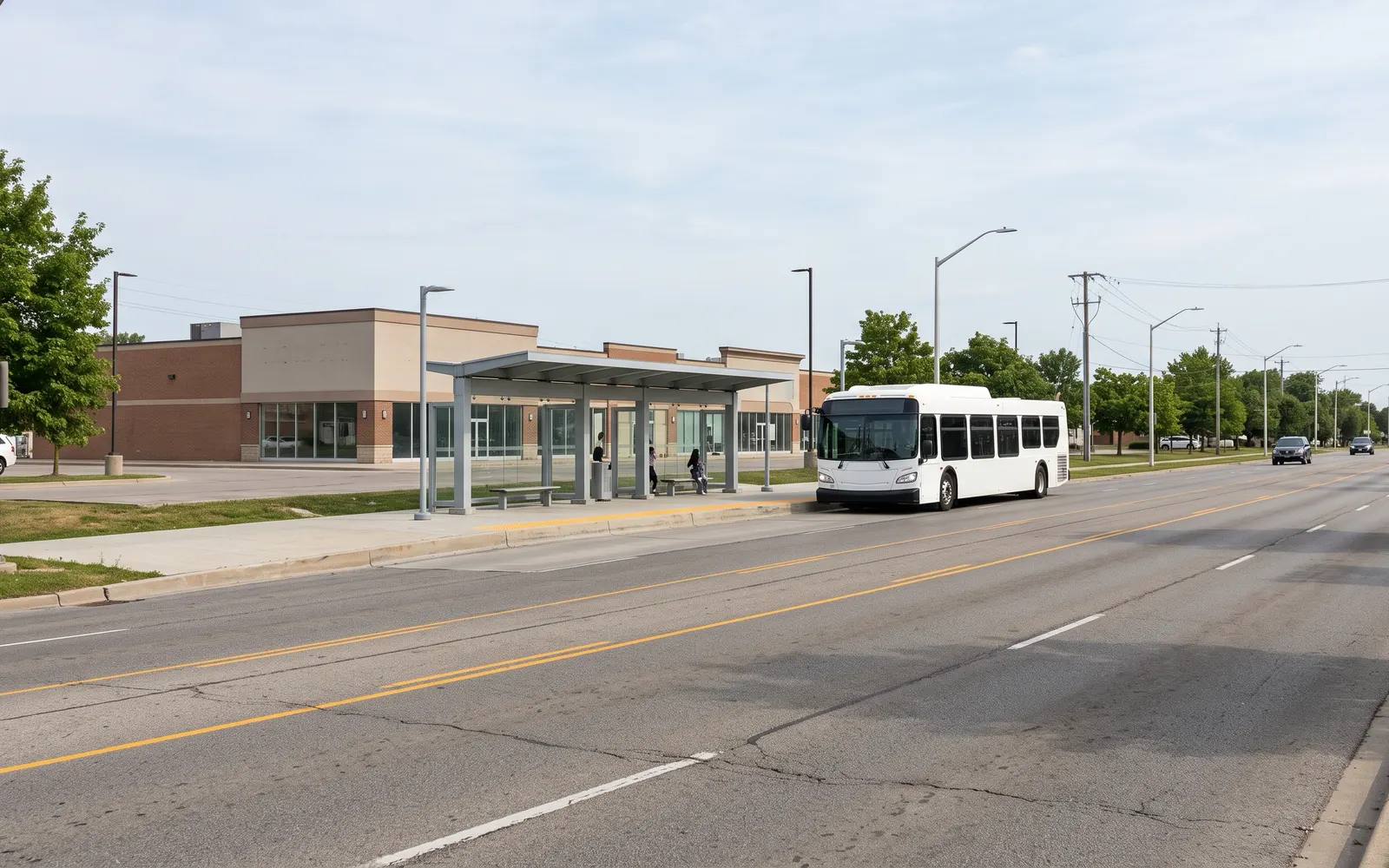
Pace runs the regional routes. The village's suspension notice lists Pace routes 208, 225, 241, 250, 270, 272 and 423 running through Niles, plus the Pulse Dempster Line and the Pulse Milwaukee Line. Pulse is Pace's faster, limited-stop service. The Pulse Milwaukee Line, which started August 11, 2019, runs 7.6 miles along Milwaukee Avenue between Golf Mill and the Jefferson Park Transit Center in Chicago, with raised boarding platforms, heated shelters and real-time arrival signs. Jefferson Park is also a CTA Blue Line station, which makes that bus the village's most direct transit link to the Loop and O'Hare. Walk Score counts about 13 bus lines in Niles.
If you plan to live without a car, or with one car for two drivers, I'd look first at blocks within a short walk of Milwaukee Avenue or Dempster Street, where the Pulse stops are.
Driving from Niles: Three Interstates and O'Hare
Niles is a driving town, and it sits in a good spot for it. The village's hazard mitigation annex describes Niles as located between three major highways: Interstate 90, Interstate 94 and Interstate 294. The Tri-State (I-294) runs north-south to the west, the Edens (I-94) to the east, and the Kennedy (I-90) to the south toward O'Hare and downtown.
Inside the village, Milwaukee Avenue is the road everything connects to. Golf Road, Dempster Street, Oakton Street, Howard Street and Touhy Avenue carry east-west traffic, and Harlem Avenue, Greenwood Avenue, Waukegan Road and Caldwell Avenue carry most of the north-south traffic. Milwaukee is also the road that backs up. When the village approved the White Eagle redevelopment in September 2025, Journal & Topics reported that neighbors' main concern was making a left turn onto Milwaukee at rush hour, and that any new signal on it needs state approval because it is a state route. If you are choosing between two houses, drive both routes at 5 p.m. before you decide.
O'Hare is to the west, and aircraft noise is a question some buyers ask. Niles is a member of the O'Hare Noise Compatibility Commission, which counts 43 communities and 18 school districts and has worked on aircraft noise since 1996, and the village's designee chairs the commission. Niles is farther from the runways than Park Ridge or Des Plaines, but flight paths vary by week and by runway. If noise matters to you, visit the house on a weekday evening and a weekend morning, and look it up on the Chicago Department of Aviation's sound insulation page, which links its flight tracker.
Is Niles Walkable?
More than most of its neighbors. Walk Score rates Niles 65 for walking, which it calls somewhat walkable, and says some errands can be done on foot. Redfin shows a Transit Score of 42 and a Bike Score of 55. Walk Score publishes no named neighborhoods for Niles, only the 60714 ZIP code, which also scores 65.
The score comes from how much commercial land the village has. CMAP's land use inventory for 2023 shows 14.4% of the village's 3,742.7 acres in commercial use and 11.1% industrial, against 30.2% single-family residential and 7.5% open space. For comparison, Park Ridge's commercial share is 3.6%. In practice, most blocks are a short drive or bus ride from a shopping center, a Jewel or Milwaukee Avenue.
The catch is what the walk looks like. Much of the retail is set back behind parking lots on wide, busy roads, so a short distance on the map can still be an unpleasant walk across Milwaukee, Golf or Touhy. The residential side streets are quiet and have sidewalks. The North Branch Trail on the east side is the best place in Niles to walk or ride for its own sake, and it is covered in the forest preserve section.
Golf Mill, Milwaukee Avenue and Everyday Errands in Niles
Shopping is what Niles is known for, and the numbers are unusual. CMAP's snapshot, using Illinois Department of Revenue data, shows $2.16 billion in retail sales in the village in 2025, or $71,782 per resident. The Cook County figure is $23,200. About $1.42 billion of that was general merchandise. In plain terms, people from a wide area shop in Niles, and the sales tax they pay is a big part of how the village keeps its own property tax levy low.
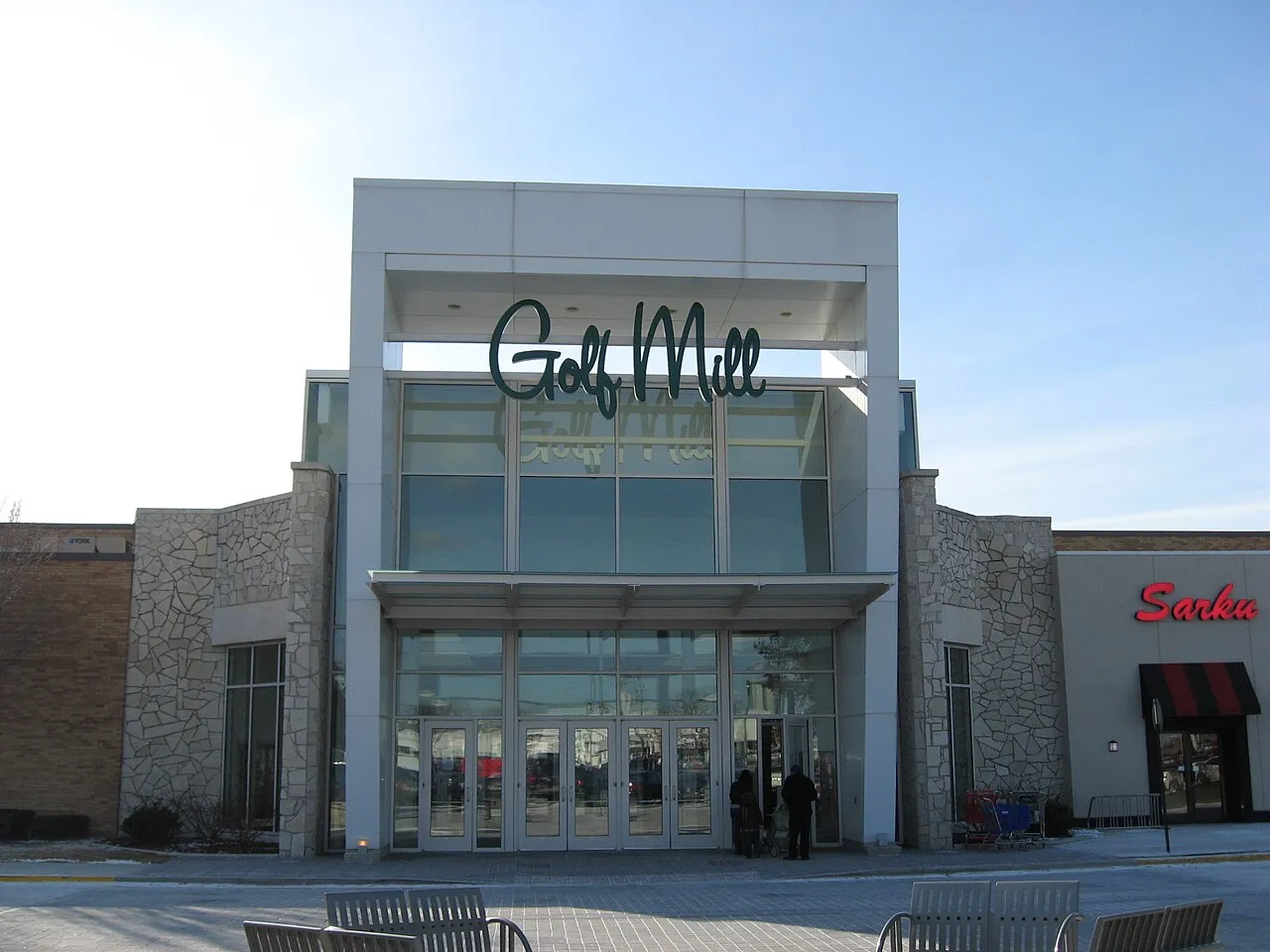
The anchor is Golf Mill Shopping Center at Golf Road, Milwaukee Avenue and Greenwood Avenue. Wikipedia describes it as about 1.1 million square feet with a Target, a JCPenney, a Ross Dress for Less, an AMC theater, a Gordon Food Service store and an LA Fitness, plus a nine-story office tower. It opened as an open-air mall in 1960 with a working waterwheel and was later enclosed. Sears closed there in 2018 and Kohl's in 2020, and Journal & Topics reported closed stores lining parts of the interior in early 2026. The plan to rebuild it is in the development section.
The rest of the retail runs along the main roads. The free bus route list doubles as a map of the village's shopping centers: Village Crossing, Dempster Plaza, Oak Mill Plaza, Golf Glen, Four Flaggs and the Milwaukee-Golf Shopping Center, on top of Golf Mill. Milwaukee Avenue and Touhy Avenue fill in the rest.
For groceries, Jewel-Osco lists three stores with Niles addresses: 5667 W. Touhy Ave. (Touhy and Central), 7900 N. Milwaukee Ave. (Milwaukee and Oakton) and 8730 W. Dempster St. (Dempster and Greenwood), each open 6 a.m. to midnight. The Golf Mill Target and Gordon Food Service add two more options at the mall. Beyond that, the grocery you use depends on which side of Niles you live on, and it is worth mapping before you buy.
Where Niles Eats
Niles has more places to eat than its size suggests. Walk Score counts about 205 restaurants, bars and coffee shops in the village, and says the typical resident can walk to about two of them in five minutes. Park Ridge, with more people, has about 132. The same retail pull that fills the shopping centers fills the restaurants.
Most of them sit on Milwaukee Avenue, Golf Road, Dempster Street, Oakton Street and Touhy Avenue, in strip centers and standalone buildings. The village's development page shows the mix is still changing: a drive-through coffee shop under construction at 8510 W. Golf Rd., a restaurant opened in late 2025 in a former restaurant space at 7621 N. Milwaukee Ave., and a 6,000-square-foot restaurant space with a public plaza planned as part of the White Eagle project.
I don't try to rank restaurants here, because the list turns over. The advice I give buyers is to eat near each house you are serious about. It is the fastest way to learn which part of Niles you'd actually use day to day. A house a block off Milwaukee gets you dinner on foot. A house on a quiet interior street gets you a short drive.
Niles Parks: Ice, a Water Park and a Historic Golf Course
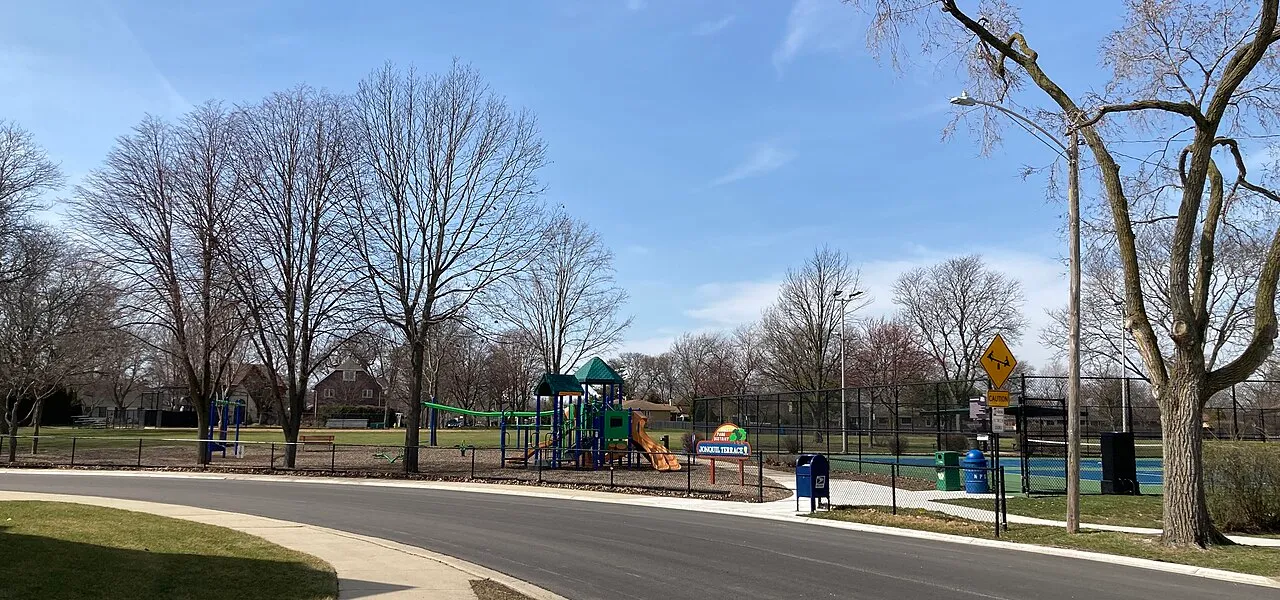
The Niles Park District is a separate government from the village, with its own elected board and its own line on the tax bill, and it covers nearly all of Niles. Voters created it on November 9, 1954. It maintains 18 parks on more than 95 acres, with ball diamonds, tennis and pickleball courts, soccer fields and two butterfly gardens, and it runs an ice rink, an outdoor pool, a leisure center with a health club and gym, two preschool centers and an indoor soccer field.
The facilities are the draw. IceLand, the district's rink, has both indoor and outdoor ice, learn-to-skate classes, hockey leagues and public skating, per the district. The Oasis Waterpark and Fun Center is the outdoor pool. Pioneer Park has 18-hole mini golf at $8 a round and automated batting cages at 15 balls for $1. The LoVerde Sports & Rec Center at 7847 Caldwell Ave. has a 66-by-32-yard indoor soccer field and basketball courts, and Grennan Heights at 8255 Oketo Ave. has an indoor court, tennis courts and two baseball fields. The district's offices are at the Howard Leisure Center, 6676 W. Howard St.
The most storied park is the golf course. Tam O'Shanter, now the district's Tam Golf, hosted the All American Open from 1941 to 1957 and the World Championship of Golf from 1946 to 1957, and Wikipedia says a 1953 broadcast from the course was the first live televised golf in America. It hosted the Western Open in 1964 and 1965. A developer bought it and cut it to nine holes in 1971, and the park district reopened it in 1973. The North Branch of the Chicago River runs through it. Tam Tennis is next door.
Park district fees favor residents. At Tam Tennis, the guest fee for a court is $10 for residents and $13 for non-residents.
The North Branch Trail and Niles' Forest Preserves
The east side of Niles runs along one of the best trail systems in the northern suburbs. The Forest Preserves of Cook County's North Branch Trail System follows about 20 miles of the North Branch of the Chicago River from Chicago to the Chicago Botanic Garden in Glencoe, with paved and unpaved trails totaling an estimated 36.7 miles. It is open sunrise to sunset year-round for walking, biking, on-leash dogs, cross-country skiing and horseback riding.
Bunker Hill is the Niles access point. The preserve sits on Caldwell Avenue south of Touhy Avenue, with plenty of parking, indoor bathrooms and picnic areas. The Forest Preserves recommend an eight-mile out-and-back from Bunker Hill north through Miami Woods (on Caldwell north of Oakton Street) to Linne Woods (on Dempster Street east of Lehigh Avenue), both in Morton Grove, and describe all three as thriving after decades of habitat restoration, with Bunker Hill and Miami Woods called out as good birding sites. From Bunker Hill it is about 15 miles to the Botanic Garden on the paved trail.
For a buyer on the east side, that means a woodland trail at the end of the street, which is rare this close to Chicago. It also means living near a river, which is part of the flood section below. The village's hazard plan notes that the forest preserves in and around Niles raise its exposure to wildfire smoke; that is a minor point, but it is on the record.

The Leaning Tower of Niles and Other Landmarks
Every guide to Niles has to start with the tower, so here are the facts. According to Wikipedia, the Leaning Tower of Niles is a half-size replica of the Leaning Tower of Pisa at 6300 W. Touhy Ave. It was designed by architect Albert L. Farr and completed in 1934 for industrialist Robert Ilg, as part of a recreation park for employees of his Ilg Hot Air Electric Ventilating Company. The tower was a disguise: it hid the water tank and pumps for the park's pools and lake. The Leaning Tower YMCA was built on part of the park in 1960.
The village owns it now. In November 2015 the village board approved buying the tower from the YMCA for $10 and a $550,000 contract to repair it, and voters backed the spending in a non-binding referendum in March 2016. The tower was listed on the National Register of Historic Places in 2020. The plaza around it has four fountains and a 30-foot pool, and the village has held summer concerts there since the 1990s. Niles and Pisa have been sister cities since 1991. For America's 250th anniversary, the village lit the tower in red, white and blue through July 2026.
For a night out, Golf Mill has an AMC theater, and the rest of the evening is dinner on Milwaukee Avenue. For bigger shows, Rosemont's entertainment district and downtown Chicago are a drive or a Pulse-and-Blue-Line ride away.
The Niles-Maine District Library
The Niles-Maine District Library is at 6960 W. Oakton St., in the middle of the village and on the free bus routes. It is open 9 a.m. to 8:30 p.m. Monday through Thursday, 9 a.m. to 7 p.m. Friday, 9 a.m. to 5 p.m. Saturday and noon to 5 p.m. Sunday. Its calendar this week alone runs from a cooking program to a morning story time, which is typical of what it offers.
It is a library district, which means it has its own board and its own line on the property tax bill, separate from the village. For a buyer working from home, it is also the quietest desk in town, and both the 410 and 411 free bus routes stop there.
For local history, the village's calendar carries a Historical Society events category, and the society is the place to start if you are researching an older house or want archival photos of Milwaukee Avenue before the postwar boom.
Utilities and Village Services in Niles
Niles drinks Lake Michigan water. CMAP's snapshot, using state water-withdrawal data, lists Lake Michigan as the village's only source and shows total withdrawals falling from 4.58 million gallons a day in 2008 to 3.17 in 2018, a 30.8% drop. The village held a public meeting on September 3, 2026 on its lead service line replacement program, per its calendar; if you are buying an older house, ask whether its service line has been checked.
Trash is contracted by the village. Groot Recycling & Waste Services handles garbage and recycling under a 2022-2032 contract that covers single-family homes and buildings up to four units. Pickup is weekly, on Thursday or Friday depending on the zone, and Groot bills residents directly. Through April 30, 2027, the rate is $19.99 a month for a single-family home and $22.25 for a two-flat or three-flat, and condo buildings pay $8.17 per unit a month for refuse plus $2.96 for recycling. Yard waste and brush pickup runs April to November. ComEd delivers electricity and Nicor Gas provides natural gas.
Two practical notes for sellers. The village will not sell the transfer stamp until the final water bill is paid and the property search is clear, so call the finance department the 10 days ahead that the village asks for. And if your house got a backflow valve or overhead sewer through the village's flood program, keep the paperwork; buyers here ask for it.
The Niles Yearly Calendar
The village's biggest day is the Fourth of July. The 2026 parade stepped off at 8:45 a.m. on Saturday, July 4, from Notre Dame College Prep, ran along Ozark Avenue, Main Street, Harlem Avenue and Monroe Street, and ended at Grennan Heights Park, where the park district hosted a post-parade celebration from 10 a.m. to 2 p.m. The streets on the route close from 6 a.m. to about noon, which is worth knowing if you are buying on one of them.
Summer fills in around it. This year the village ran its America 250 program: a military vehicle night at the Monday Night Car Show at Golf Mill on August 3, and a Founders Day celebration at Golf Mill Park on August 29 with a concert and fireworks. The village's free Concerts in the Park series played Oak Park, at Ottawa Avenue and Lee Street, into early September, per the village calendar. The park district adds its own summer concerts and movies and the Harvest Hustle 5K in the fall.
If you are touring houses on a summer evening, check the village calendar first. A car show at Golf Mill or a concert in the park tells you more about how the village works than a listing will.
What's Being Built in Niles
The biggest project in Niles is the one that hasn't started. On June 25, 2024, village trustees approved a $443 million redevelopment agreement with Florida-based Sterling Organization to turn Golf Mill into the Golf Mill Town Center, Journal & Topics reported on July 27, 2026. The village's plan page describes a multi-phase mix of new retail and restaurants, public gathering spaces, a pedestrian promenade, a water feature with a new mill and about 300 apartments. Under the agreement, the village can issue up to $96 million in tax increment financing loans, to be repaid by Sterling and released only after approved work is complete.
The deal has slipped. Per the same July 2026 report, the two-year milestone passed in June 2026 with no demolition or construction, although the mayor had originally expected demolition by September 2025. In May 2025 Sterling hired JLL to market the property to investors or buyers. The village said it was not considering termination at that time but would act if the developer stopped making meaningful progress. As of the latest reports I could open, the mall was still operating and the redevelopment had not begun.
Other projects are moving. In September 2025 the village board approved the White Eagle redevelopment at 6767-6839 N. Milwaukee Ave.: 354 units in four apartment buildings of four to six stories and 24 townhouses, plus a 6,000-square-foot restaurant and a 17,000-square-foot green space, per the village. Journal & Topics reported a 24- to 30-month construction timeline, and the village expects construction to begin in 2026. Linx Global has started a three-story, 110,370-square-foot headquarters and manufacturing building at 7230 N. Caldwell Ave. The Grand Stone, a five-story, 48-unit building at 9201 N. Milwaukee Ave., is complete, and a Discount Tire store is proposed at 5970 W. Touhy Ave.
For buyers, the practical effect is that new housing in Niles is coming as apartments and townhouses on redeveloped commercial land, not new subdivisions. If you are buying near Golf Mill or the White Eagle site, the traffic and the view will change over the next few years, and that is worth pricing in.
I don't label any town or neighborhood as safe or unsafe.
Flood Risk in Niles: Basements, the River and What the Village Has Done
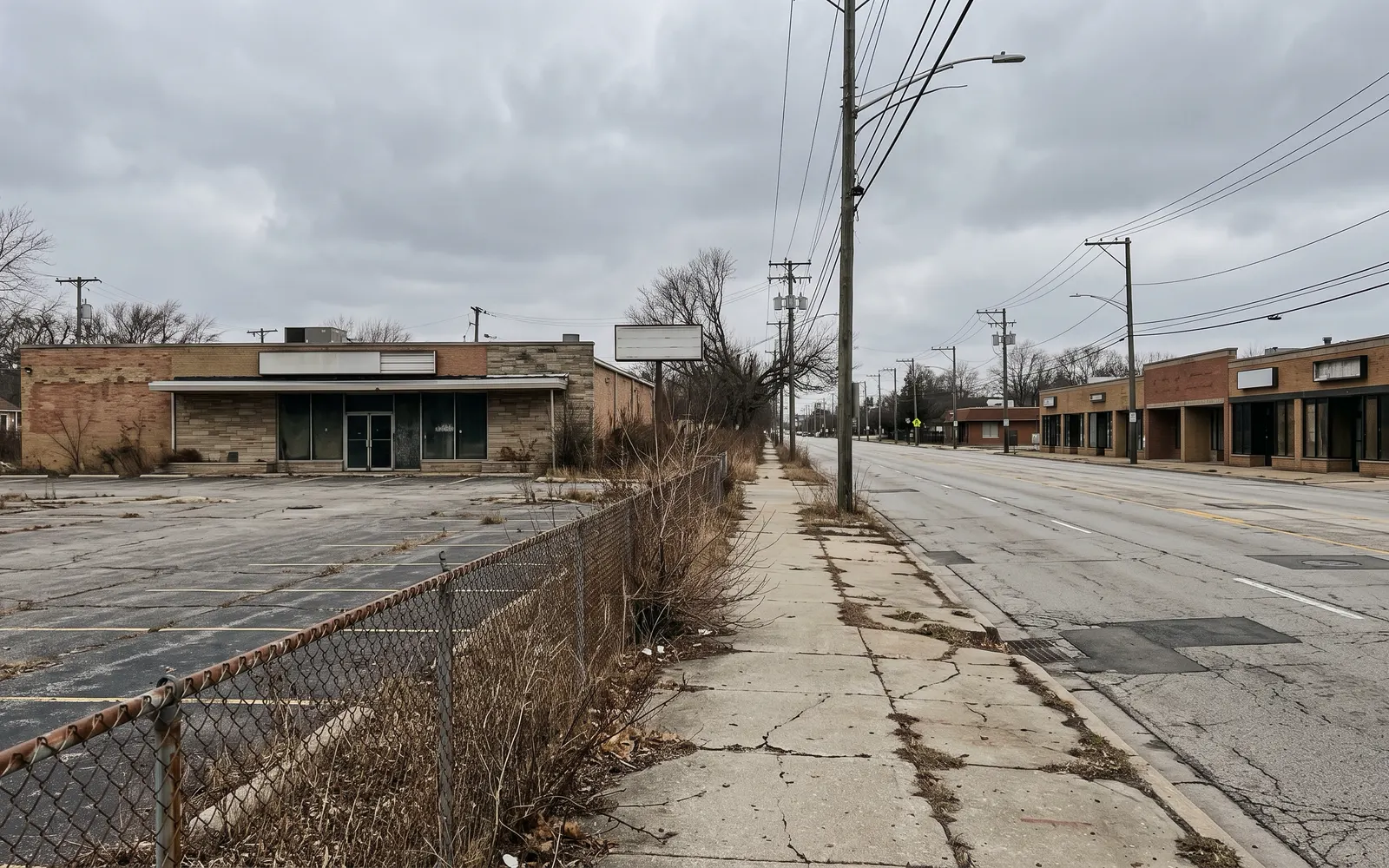
Flooding is a real issue in parts of Niles, and it is mostly a basement issue. Redfin, using First Street's model, rates the village's overall flood risk as minor but says 6% of properties are at risk of severe flooding over the next 30 years. That is lower than Park Ridge's 9% on the same measure, and still enough to check every house.
The history is in the village's own plan. Its annex to the 2024 Cook County hazard mitigation plan says a July 23, 2011 storm flooded more than 240 homes in Niles, with 5 to 6 feet of water in some basements. It records six inches of water at Ballard and Greenwood Roads in a September 2006 storm, and 2.80 inches of rain in a May 2011 storm that flooded a golf course on Howard and a school on Greenwood. It counts 16 FEMA-identified repetitive-loss properties, 12 of them single-family, and two severe repetitive-loss properties.
The plan is specific about where. It lists urban flooding in Dutchman's Point, Jonquil Terrace, Grennan Heights, Evergreen Estates, Oakton Manor, Ransom Ridge, Chesterfield Gardens, Oak Park, Washington Park, Ballard Terrace, Courtland Park and Golden Forties, and river flooding at River Gardens. It names the causes plainly: Niles is flat and low-lying, the North Branch of the Chicago River and the Des Plaines River rise with upstream rain, and the storm sewers have undersized pipes for the flow, built in the 1950s with little room for detention.
The village has spent real money on it. Per the same plan, its flood control assistance program, started in 2014, has provided $1.7 million to help 482 property owners install sewer backflow protection. The village has built new storm sewers and two retention basins, is planning a third, and has finished a larger Howard Street sewer outfall and a Golf Mill Park stormwater project. Those steps moved Niles from class 6 to class 5 in FEMA's Community Rating System, which the plan says saves residents 20% to 25% on flood insurance premiums.
Four checks before you write an offer. Look the address up on the FEMA flood map; the countywide map in effect dates from August 19, 2008, per the same plan. Ask the seller whether the basement has ever taken water and whether the house got a backflow valve through the village program. Have a sewer camera inspection done on the line to the street. And check the sump pump, its backup and the grading. If you are buying your first home here, these questions matter as much as the kitchen does.
Frequently Asked Questions
What county and township is Niles, IL in?+
Cook County. Census Bureau estimates for 2025 put the village's 30,443 residents in two townships: about 20,940 in Maine Township and 9,510 in Niles Township. Both were reassessed by the Cook County Assessor in 2025.
How much does a house cost in Niles, IL?+
Redfin reported a median sale price of $424,719 for the three months ending August 2026, up 13.6% from a year earlier. Zillow's home value index was $421,137 for August 2026. Detached houses and condos trade as separate markets.
What are property taxes in Niles, IL?+
Ownwell (April 2026) puts the median effective rate at 2.23% with a median bill of $6,651. At the $424,719 summer median, that rate works out to about $9,470 a year. Commercial and industrial property carry about 47% of the village's assessed value, which helps hold the rate down.
What school district is Niles, IL in?+
Several. Most addresses are in East Maine District 63, Park Ridge-Niles District 64 or Niles District 71 for K-8, with Golf District 67 and Fairview District 72 covering smaller areas. High school is Maine Township District 207 (Maine East or Maine South) or Niles Township District 219 (Niles North or Niles West), roughly split at Harlem Avenue. Confirm each address with the district.
Does Niles have a Metra station?+
No. The closest stations are just outside the village: Morton Grove on the Milwaukee District North line (27 weekday trains each way, 29 to 37 minutes to Union Station) and Edison Park on the Union Pacific Northwest line (25 each way, 29 to 32 minutes to Ogilvie).
Is the Niles Free Bus still running?+
Yes. The village suspended it in September 2025 during a contract dispute with Pace and resumed it on April 1, 2026 with smaller 14-passenger buses. Routes 410, 411 and 412 run daily from 9:30 a.m. to 4:40 p.m. at no charge to riders.
What is happening with Golf Mill Shopping Center?+
The village approved a $443 million plan with Sterling Organization in June 2024 to rebuild it as the Golf Mill Town Center, with about 300 apartments. As of a July 2026 report, the two-year milestone had passed without demolition or construction, and Sterling had hired JLL to market the property to investors.
Does Niles, IL flood?+
Some parts do. First Street's model (via Redfin) puts 6% of properties at severe 30-year flood risk, and the village's hazard plan cites more than 240 flooded homes in a July 2011 storm. The village has helped 482 properties install sewer backflow protection since 2014. Ask about backflow protection and scope the sewer line.
Who pays the Niles transfer tax?+
The buyer. The village charges $3 per $1,000 of the sale price, about $1,275 on a $425,000 home, and rebates 67% to Niles residents who sell and buy again in the village within 12 months. The seller must request a final water reading and property search 10 days before closing.
Eshu Chikoti has extensive access to off-market listings throughout Niles and the rest of Cook County — homes that never make it to the public listing sites. That matters right now: in a seller's market like this one, well-priced homes routinely go under contract within days, and buyers relying only on public listings are competing for whatever is left over. Working with someone plugged into off-market inventory means seeing homes before the crowd does.
Eshu Chikoti · 847-691-4282 ·
Get new Niles listings by email
When a home comes on the market in Niles, I'll email it to you.
Just your email. Unsubscribe any time by replying.
Thinking About Niles?
Whether you're buying, selling, or just curious what's on the market, I can walk you through Niles street by street.