Lombard, IL
Lombard, IL is the Lilac Village, a DuPage County suburb of about 43,600 people on the Union Pacific West Metra line, with a historic downtown, Yorktown Center on its south side and some of the most attainable prices close to the Loop in DuPage.
Living in Lombard, IL means a 38-minute express train to Ogilvie, a Zillow home value index near $388,000 in August 2026, and property tax around 2.4% of value. The trade-offs are a car-dependent layout outside downtown and two K-8 districts that split the village by street. Here is how it breaks down.
Written by Eshu Chikoti · 847-691-4282 ·
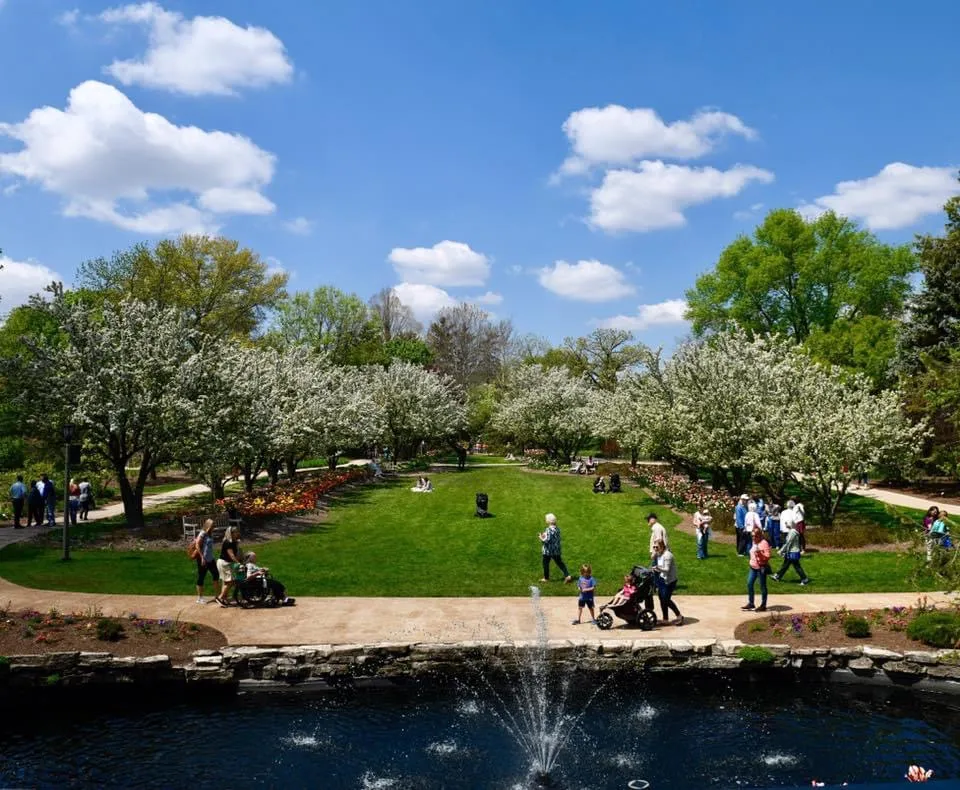
How Lombard, IL Got Here: A Short History
Before it was Lombard, this stretch of prairie was Babcock's Grove, named for the Babcock brothers who settled along the DuPage River. In 1837 Sheldon and Harriet Peck came from Onondaga, New York, and farmed 80 acres here. Peck was also a traveling portrait painter, and their house served as the area's first school. According to the village history summarized on Wikipedia, the Peck home was later documented as a stop on the Underground Railroad and was added to the National Park Service's Network to Freedom in 2011. The Lombard Historical Society has restored it.
The railroad is what made the town. The Galena and Chicago Union line reached here in 1848, and commercial buildings went up around the depot. In 1868 the settlement was platted and renamed for Josiah Lewis Lombard, a Chicago banker and real estate developer, and the village incorporated in 1869. The tracks that run through downtown today are the same corridor, now Metra's Union Pacific West line.
The lilacs came a year later. According to the Lombard Park District's history of Lilacia Park, Colonel William Plum, a Civil War telegrapher turned lawyer, and his wife Helen bought land at the corner of Park and Maple after moving west in 1869. On a trip to Europe they bought two lilacs from the Lemoine nursery in Nancy, France, and the collection grew from there. Helen died in 1924. When the Colonel died on April 28, 1927, his will left the grounds to the people of Lombard as a public park and his house as a free library in her memory. Voters accepted the terms that September, and the Lombard Park District was formed to run it. The landscape architect Jens Jensen designed the park, and the village has held a lilac festival every May since 1930.
Two old rail lines left something behind too. The Chicago Aurora and Elgin interurban and the Chicago Great Western railway both crossed Lombard, and both rights-of-way are now trails: the Illinois Prairie Path and the Great Western Trail.
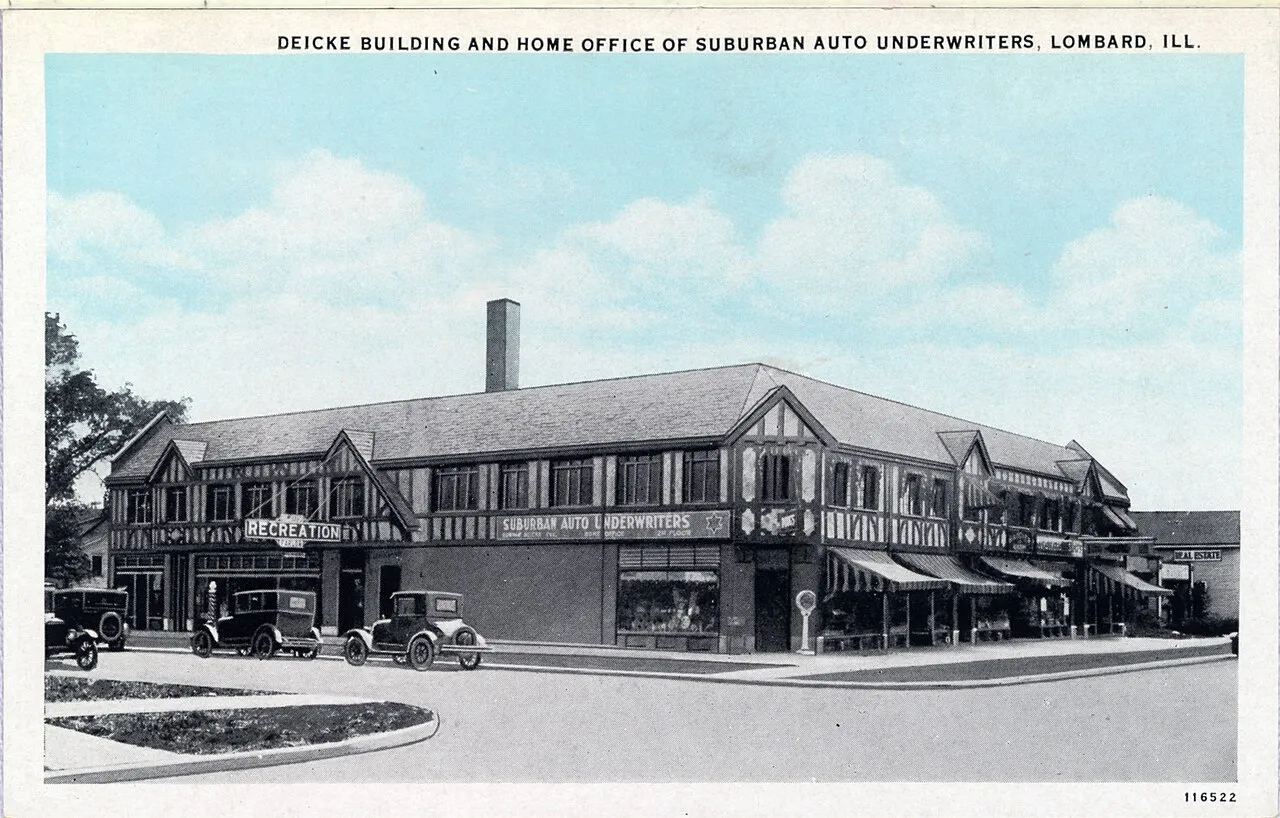
Lombard at a Glance
Lombard sits in east-central DuPage County, about 20 miles west of the Loop, and covers roughly 10 square miles. The whole village is in DuPage County, so there is no second county assessor to worry about, but it spreads across four townships: York, Bloomingdale, Milton and Addison. Neighbors are Glen Ellyn to the west, Villa Park to the east, Glendale Heights and Addison to the north, and Oak Brook, Oakbrook Terrace and Downers Grove to the south.
The 2020-2024 Census ACS puts the population at 43,619 in 18,467 housing units, with 70.8% of occupied homes owner-occupied. That is a lower owner share than many DuPage towns, and the reason is the housing mix. Detached single-family houses are 54.6% of all units, and 21.0% are in buildings with 50 or more apartments, most of them along Butterfield Road, Highland Avenue and the Yorktown corridor.
The layout is easy to learn. Main Street runs north to south through the middle of the village, and St. Charles Road runs east to west beside the Metra tracks. They meet downtown, next to Lilacia Park. Roosevelt Road (Route 38) cuts across the south half, North Avenue (Route 64) marks the north edge, and Butterfield Road (Route 56) runs along the south side past Yorktown Center. When locals say "north of the tracks" or "south of Roosevelt," they are describing two different housing markets.
The 38-minute express to Ogilvie is faster than Wheaton or Naperville, and Zillow's August 2026 value of about $388,000 sits well below either.
The tax rate is above the DuPage median.
Lombard Neighborhoods, Pocket by Pocket
Lombard has no official neighborhoods, and most listings just say "Lombard." In practice the village splits three ways. The core around downtown and the tracks is the oldest housing. The band between the tracks and Roosevelt Road is mostly the postwar build-out. And the south side, from Roosevelt to Butterfield, is where you find the newer subdivisions, the townhomes and the apartment and condo buildings around Yorktown.
The Census build-year data shows how much of the village went up in one burst. Of Lombard's 18,467 housing units, 3,203 were built in the 1950s, 3,428 in the 1960s and 3,292 in the 1970s, according to the 2020-2024 ACS. That is 53.7% of everything standing today in three decades. Only 1,580 units date from before 1940, and about 1,500 have been built since 2010.
Below are the pockets you will hear named. Boundaries are informal and agents draw them slightly differently, so treat them as a starting point. I haven't closed a sale inside Lombard yet, so I won't pretend to a street-by-street price history here. What I do on every Lombard search is the same three checks: which K-8 district the address falls in, how far it is to the station, and how close it sits to the creeks and the low ground that drains toward them. If you want those three answered for a specific house, that is a conversation I am happy to have here.
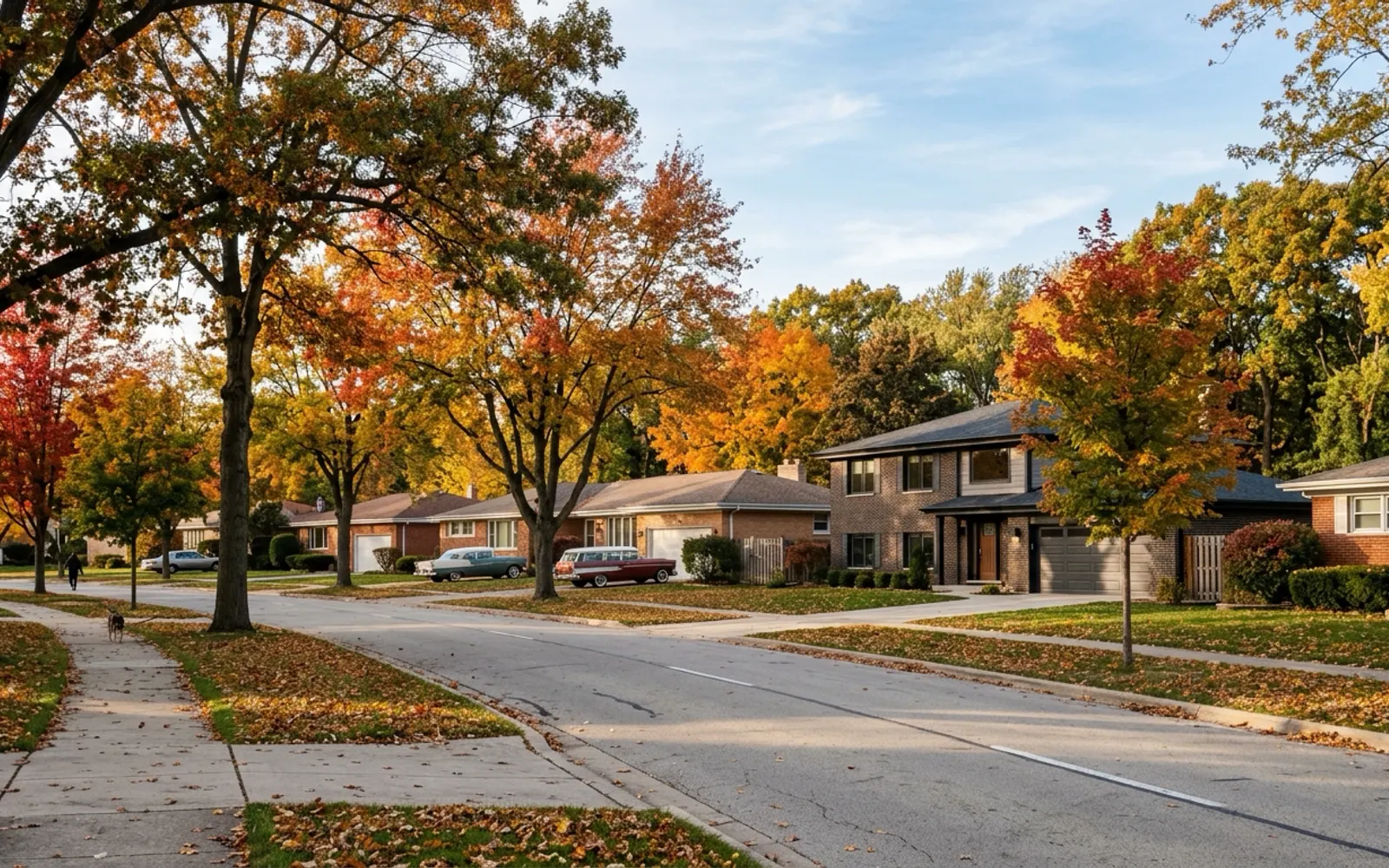
Downtown and the Lilacia Park area. The blocks around Main Street, St. Charles Road and Park Avenue. The oldest housing in the village, including bungalows, American foursquares and early Cape Cods on smaller lots, and the only pocket where walking to the train is the norm.
North Lombard. North of the tracks up toward North Avenue. A mix of prewar houses near downtown and 1950s ranches and Cape Cods farther out, on mostly gridded streets.
Central Lombard. Between the tracks and Roosevelt Road. The heart of the postwar build-out, with brick ranches, split-levels and raised ranches. This is where much of the village's entry-level single-family housing sits.
Westmore and the east side. Along Westmore-Meyers Road toward Villa Park. Postwar single-family streets; parts of this side fall in DuPage School District 45 rather than District 44, so check the address.
South Lombard. Roosevelt Road to Butterfield Road. A collection of subdivisions from the 1960s and 1970s onward, with split-levels, colonials and brick ranches, plus Four Seasons Park at Finley Road and 16th Street.
The Yorktown corridor. Around Yorktown Center, Highland Avenue and Butterfield Road. Condo buildings, townhomes and large rental communities, including the newest construction in the village.
What Lombard Homes Look Like, by Era
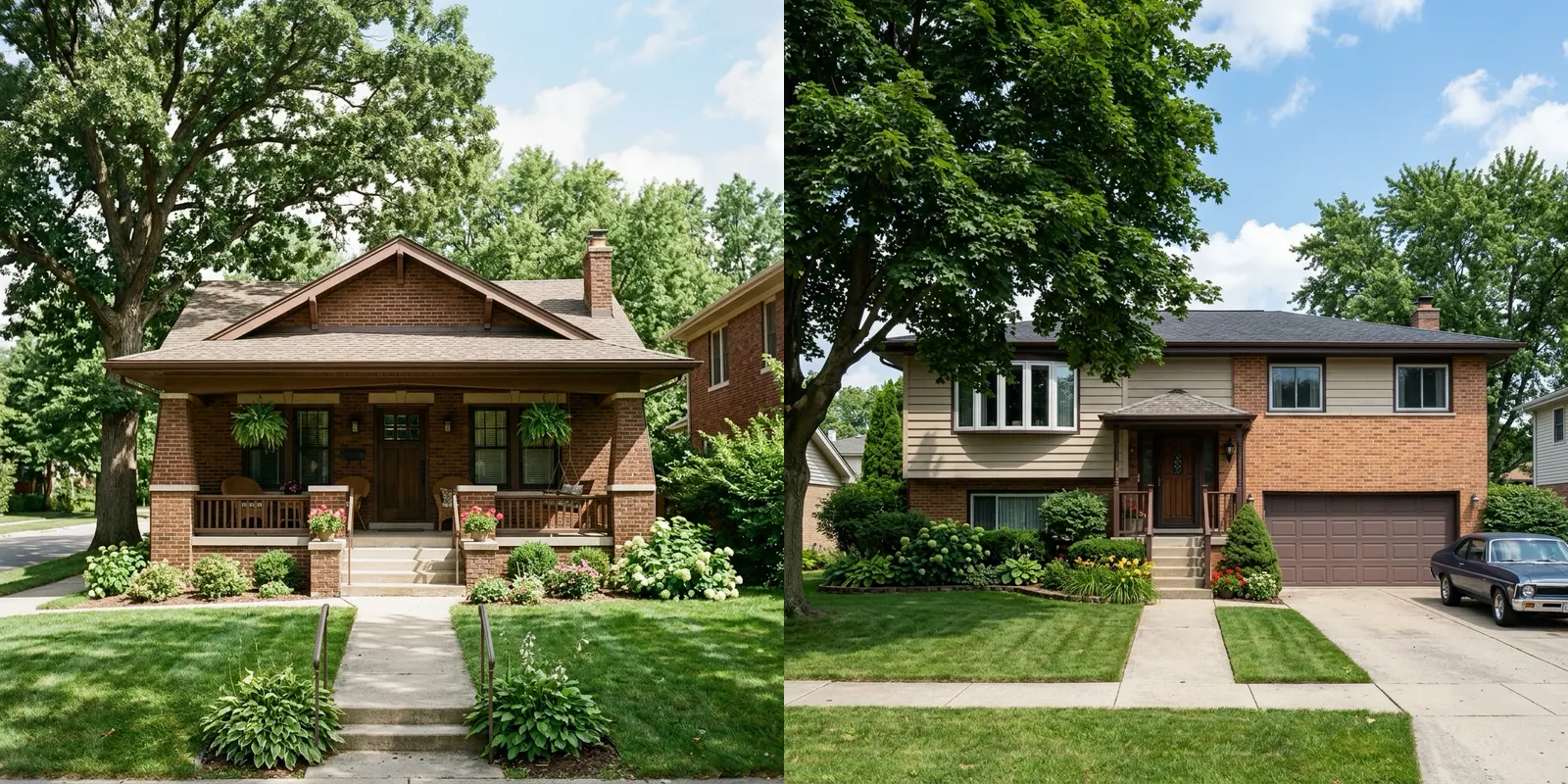
The oldest Lombard homes are near downtown and Lilacia Park: bungalows, foursquares, farmhouses and early Cape Cods, many on lots narrower than anything built after the war. They have the character people drive in to see during lilac season, and they have the maintenance that comes with a century-old house.
Most of Lombard is the postwar layer. The 1950s brought small brick ranches and Cape Cods, usually three bedrooms and one or one and a half baths on a slab or crawl space. The 1960s and 1970s added split-levels, raised ranches and larger two-story colonials, especially south of Roosevelt Road. These are the homes that make up most of the single-family sales in any given month, and they are why Lombard is one of the more attainable places to buy a detached house this close to the city in DuPage.
The third layer is multifamily. According to the ACS, 3,874 units sit in buildings with 50 or more units and another 1,248 in buildings with 20 to 49. Around Yorktown that means condo towers from the 1970s and 1980s, townhome communities, and newer rental buildings. The census puts the median value of owner-occupied homes at $335,700 and the median gross rent at $1,948.
New single-family construction is rare because the village is built out. What you see instead is infill: an older ranch torn down and replaced, or a second story added. On an older Lombard house, the things I tell buyers to budget for are the same every time: an original electrical panel, cast iron or galvanized drain lines, a sewer line that should be scoped before closing, and a basement or crawl space that has taken on water at least once. None of that should kill a deal. All of it belongs in the price. My home inspection checklist walks through what to look for.
The Lombard Housing Market in 2026
Lombard values are still rising, just more slowly than they did in 2024 and early 2025. Zillow's home value index for Lombard was $388,194 in August 2026, up 5.0% from $369,614 a year earlier and up about 11% from $350,168 in August 2024. The index was $384,282 in February 2026, so most of this year's gain came over the winter and the curve has flattened since spring.
Keep in mind what that number is. Zillow's index is an estimate of the typical home's value across all homes in the village, condos included, whether or not they sold. Because about a fifth of Lombard's housing is in large condo and apartment buildings, the index sits below what a typical detached house sells for. A three-bedroom ranch and a one-bedroom condo near Yorktown are two different markets that happen to share a zip code, 60148.
What that means in practice: a well-priced single-family house in a good pocket still moves fast in Lombard, because it is one of the cheaper ways to get a DuPage address with a Metra station. Condos are more price sensitive, and the association's finances matter as much as the unit. Before you buy one, read the budget, the reserve study and the last two years of board minutes.
For a sense of what you can carry at today's rates before you start touring, my how much house can you afford guide walks through the math, and first-time buyers should look at the Illinois first-time buyer programs before picking a loan.
Lombard Property Taxes and the Real Cost of Owning
Property tax is the line that surprises most buyers coming from outside Illinois. Ownwell's Lombard data, updated April 13, 2026, puts the median effective rate at 2.36% and the median annual bill at $6,748. That rate is above the DuPage County median of 2.16%, though the county's median bill ($7,578) is higher because homes elsewhere in DuPage cost more. Within 60148, Ownwell shows bills running from $2,886 at the 10th percentile to $8,272 at the 75th.
Here is a worked example. At 2.36%, a house bought at Zillow's August 2026 value of $388,194 would carry about $9,160 a year in tax once reassessed, roughly $763 a month on top of the mortgage. The seller's current bill is often lower because the assessment trails the market, and it usually catches up after a sale. The expectation I most often have to reset is a buyer budgeting off last year's bill.
Lombard spans four townships and two K-8 school districts, and each combination of township, school district, park district and library district is its own tax code with its own rate. Two houses at the same price on either side of the District 44 and District 45 line can carry different bills. Look up the parcel on the DuPage County treasurer's site and budget off the rate for that code.
This is general information, not tax advice. Your actual bill depends on your parcel, your exemptions and the township assessor. If you already own and think your assessment is high, the appeal goes to your township assessor first and then the DuPage County Board of Review.
Lombard Schools: District 44, District 45 and Glenbard East
Most of Lombard is served by Lombard School District 44 for kindergarten through eighth grade. The district office is at 150 W. Madison Street, and it runs the John Schroder Early Childhood Center, six elementary schools (Butterfield, Hammerschmidt, Madison, Manor Hill, Park View and Pleasant Lane) and Glenn Westlake Middle School. Parts of the east side are in DuPage School District 45, which is based in Villa Park.
High school for most of the village is Glenbard East, part of Glenbard Township High School District 87, which Lombard shares with Glen Ellyn (that is where the name "Glenbard" comes from). Glenbard East opened in 1959 at 1014 S. Main Street and had 2,264 students in 2023-24, according to federal NCES data. Private options in the village include Montini Catholic High School.
The detail that trips people up is assignment. A Lombard mailing address does not tell you the school. The line between District 44 and District 45 runs through the east side, and a few addresses at the village edges are assigned to neighboring districts' schools. Check the exact address with the district before you write an offer, not after, and ask me for the boundary if you want it done for a specific house. District ratings and test scores change every year, so I'd rather point you to the Illinois Report Card for current numbers than quote a stale one here.
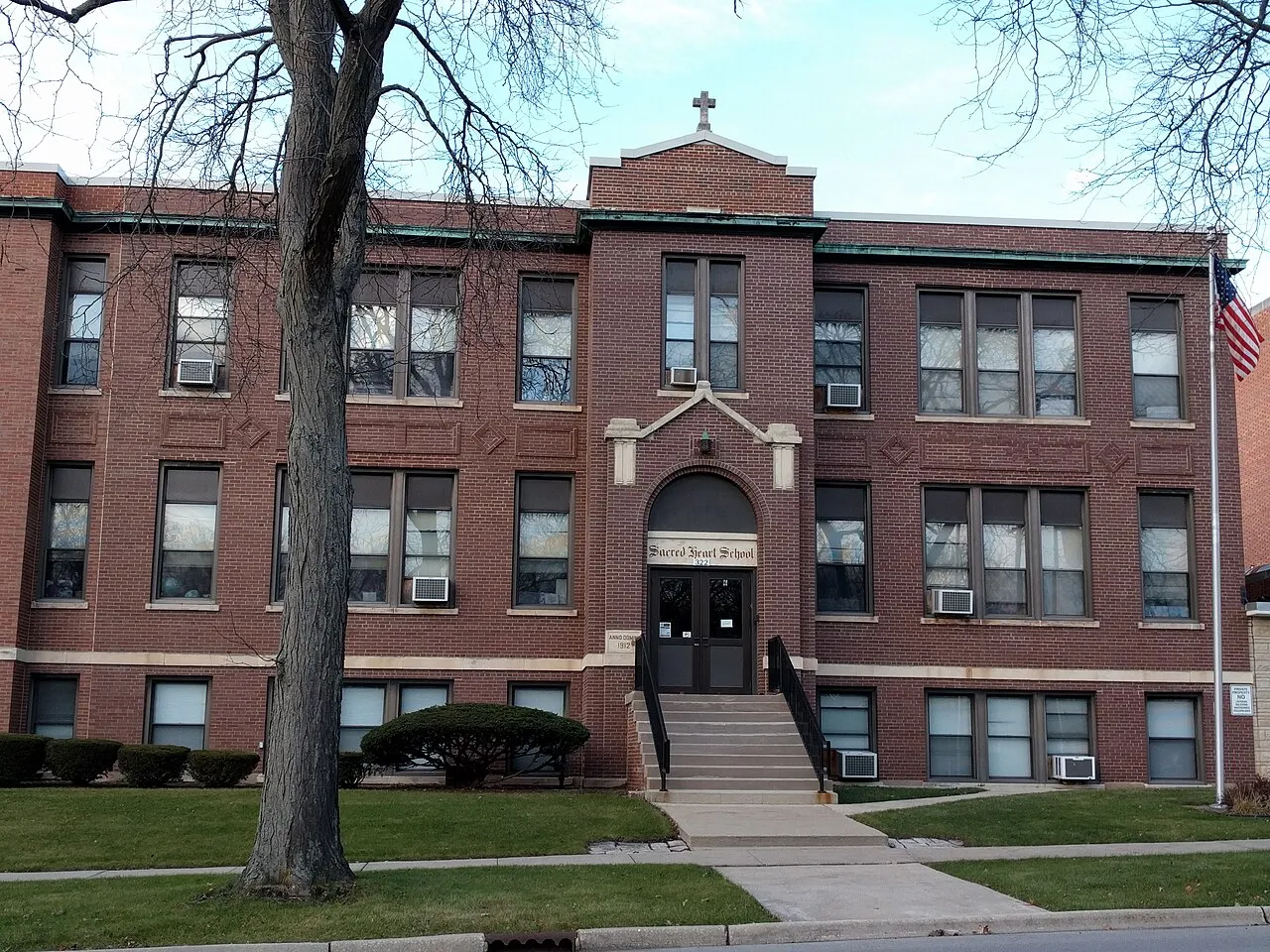
Butterfield Elementary. District 44.
Hammerschmidt Elementary. District 44.
Madison Elementary. District 44.
Manor Hill Elementary. District 44.
Park View Elementary. District 44.
Pleasant Lane Elementary. District 44.
Glenn Westlake Middle School. District 44.
John Schroder Early Childhood Center. District 44.
Glenbard East High School. 1014 S. Main St. District 87.
Commuting from Lombard: Metra to Chicago
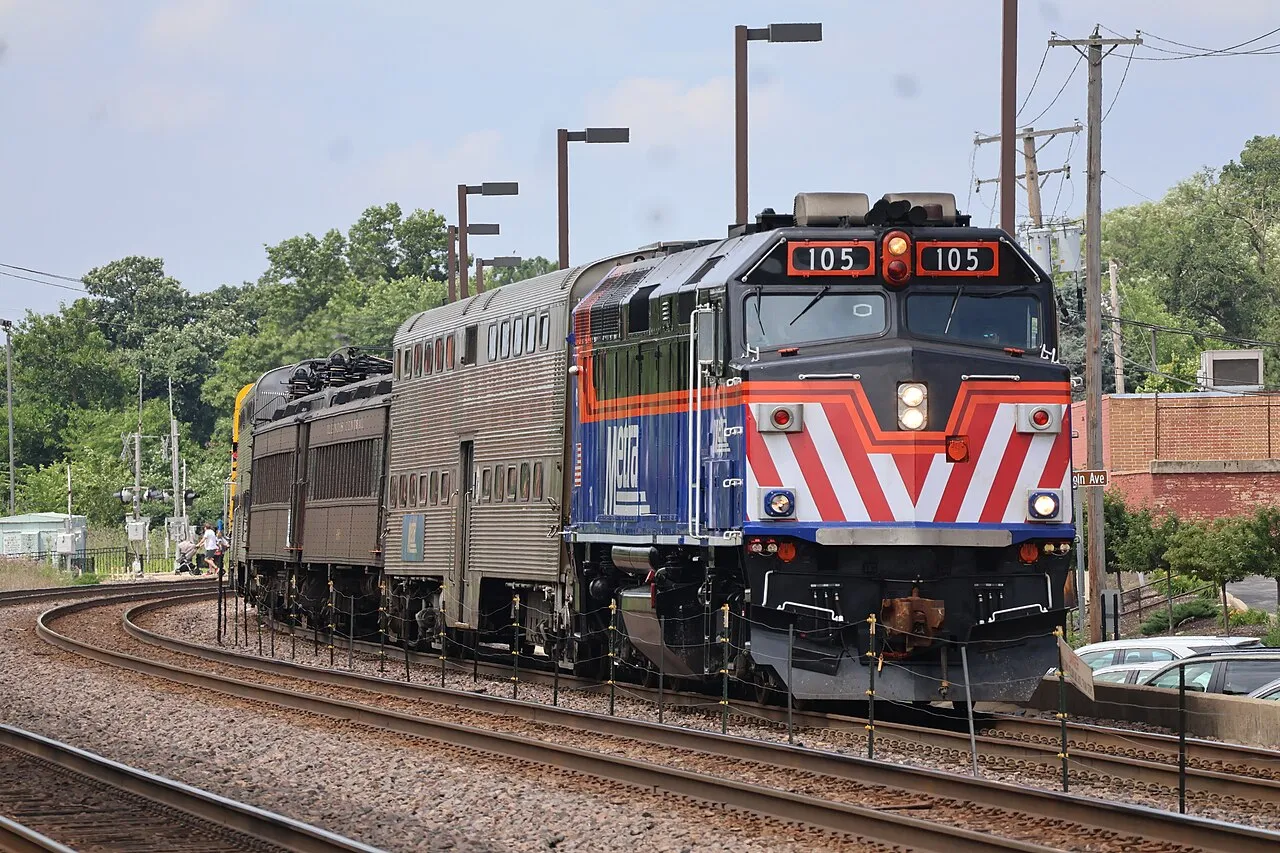
The Lombard station sits downtown on Metra's Union Pacific West line, a one-seat ride to Ogilvie Transportation Center in the West Loop. According to Metra's current UP-W schedule, for fall 2026 there are 27 inbound and 27 outbound trains on weekdays, 10 each way on Saturdays and 9 each way on Sundays.
The ride time depends on the train. The morning expresses skip the inner stops and reach Ogilvie in 38 minutes: the 5:54, 6:24, 6:54, 7:34, 8:04 and 8:34 a.m. departures all make it in 38. The locals take 49 minutes, and they run every half hour to hour through the rush and hourly the rest of the day. For a DuPage station, 38 minutes to the Loop is about as good as it gets, and it's one of the main reasons buyers pick Lombard over towns farther west on the same line.
If walking to the station matters, it narrows your search to the blocks around downtown. For everyone else, the question is parking. Check the village's commuter permit rules before you assume you can drive and park daily. Pace buses cover the rest of the village; routes 313, 322, 715, 722 and 834 serve Yorktown Center, which works as a small bus hub.
Driving from Lombard: Highways and Airports
Lombard is well placed for driving. I-355, the Veterans Memorial Tollway, runs along the west side of the village with interchanges at Roosevelt Road, Butterfield Road and North Avenue. I-88 is just to the south, and the Tri-State (I-294) and the Eisenhower (I-290) are a short drive east. Roosevelt, North Avenue, St. Charles Road and Butterfield all run east toward the city, which gives you options when one of the tollways backs up.
O'Hare is roughly 15 miles northeast and Midway about 20 miles east, both reachable in 30 to 40 minutes outside rush hour. For reverse commuters, the I-88 office corridor in Oak Brook, Downers Grove and Lisle is close, and so is the Elk Grove Village and Itasca industrial area to the north.
Road work in 2026 is local rather than regional. The village's construction page lists North Grace Street resurfacing from St. Charles Road to Route 64, the annual asphalt, concrete and crack-sealing programs, sewer lining, and new striping and signs on the Yorktown ring road.
Is Lombard Walkable?
In parts. Walk Score rates Lombard 45 for walking, 22 for transit and 51 for biking. That puts it in the car-dependent band, a little better than many DuPage suburbs because the village grew up around a train station on a street grid.
The walkable part is small. The blocks around downtown, Lilacia Park, the library and the Metra station are where you can do daily errands on foot. The postwar neighborhoods have sidewalks and short blocks but few stores within walking distance, and the south side around Roosevelt and Butterfield is built for cars.
For recreation it's a different story. The Illinois Prairie Path and the Great Western Trail both cross Lombard on old railroad beds, and the Prairie Path connects west through Glen Ellyn and Wheaton and east toward the city. A long bike ride with almost no traffic is easy from most of the village.
Yorktown Center and Shopping in Lombard
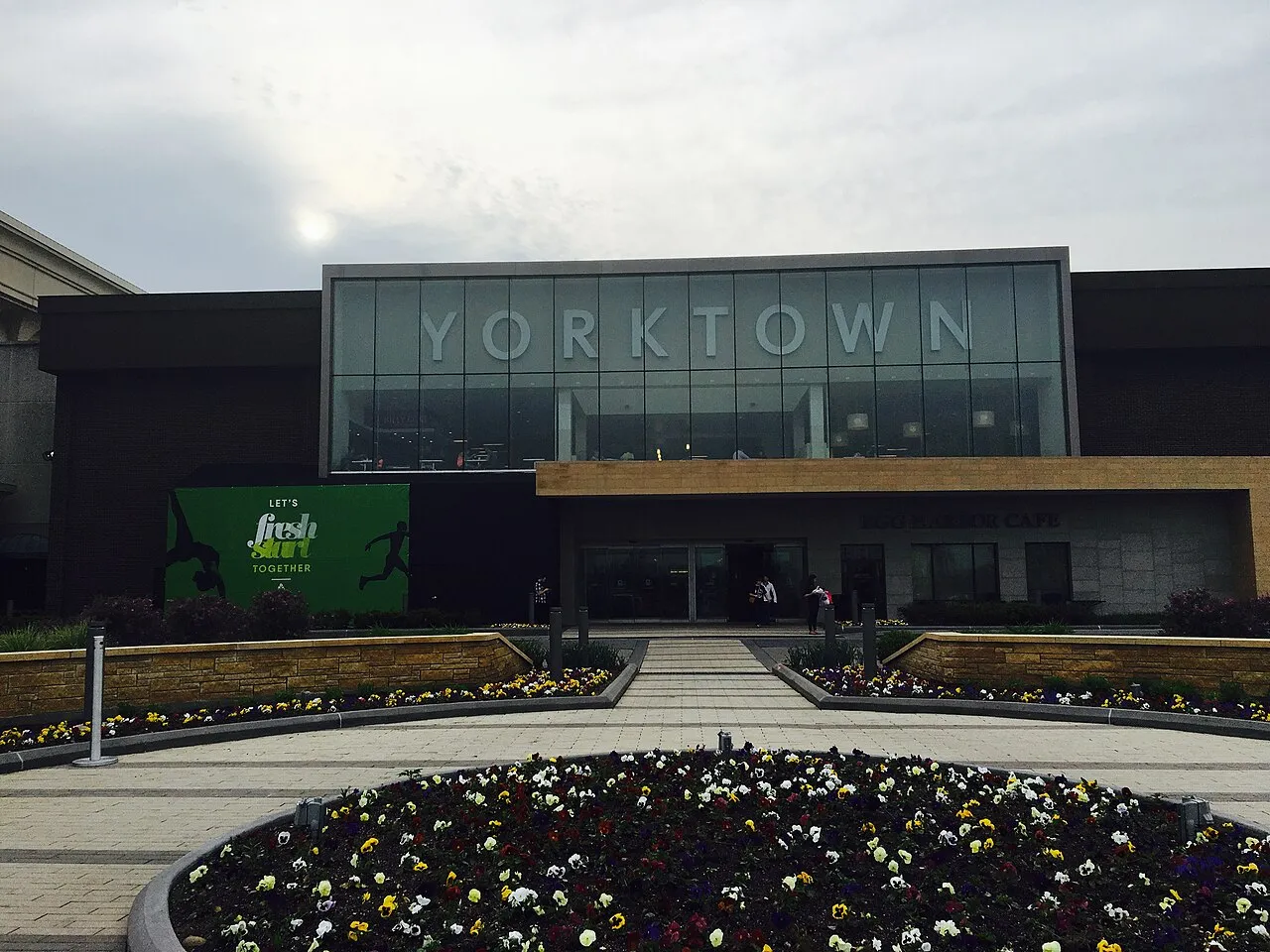
Yorktown Center is Lombard's big retail draw. It opened on October 10, 1968, designed by Victor Gruen's firm, and according to its history it was then the second-largest enclosed mall east of the Mississippi. Today Von Maur and JCPenney anchor it, with an 18-screen dine-in AMC on the grounds, the Shops on Butterfield with HomeGoods and Marshalls, and restaurants along Highland Avenue and Butterfield Road.
The mall is in the middle of a long redevelopment. In June 2026, Yorktown Center opened The Square, an outdoor gathering space with a new center entrance that marks the end of Phase 1. It sits next to Yorktown Reserve, the apartment community built on the former Carson's anchor site. The Square is meant to host markets, live music and seasonal events year-round.
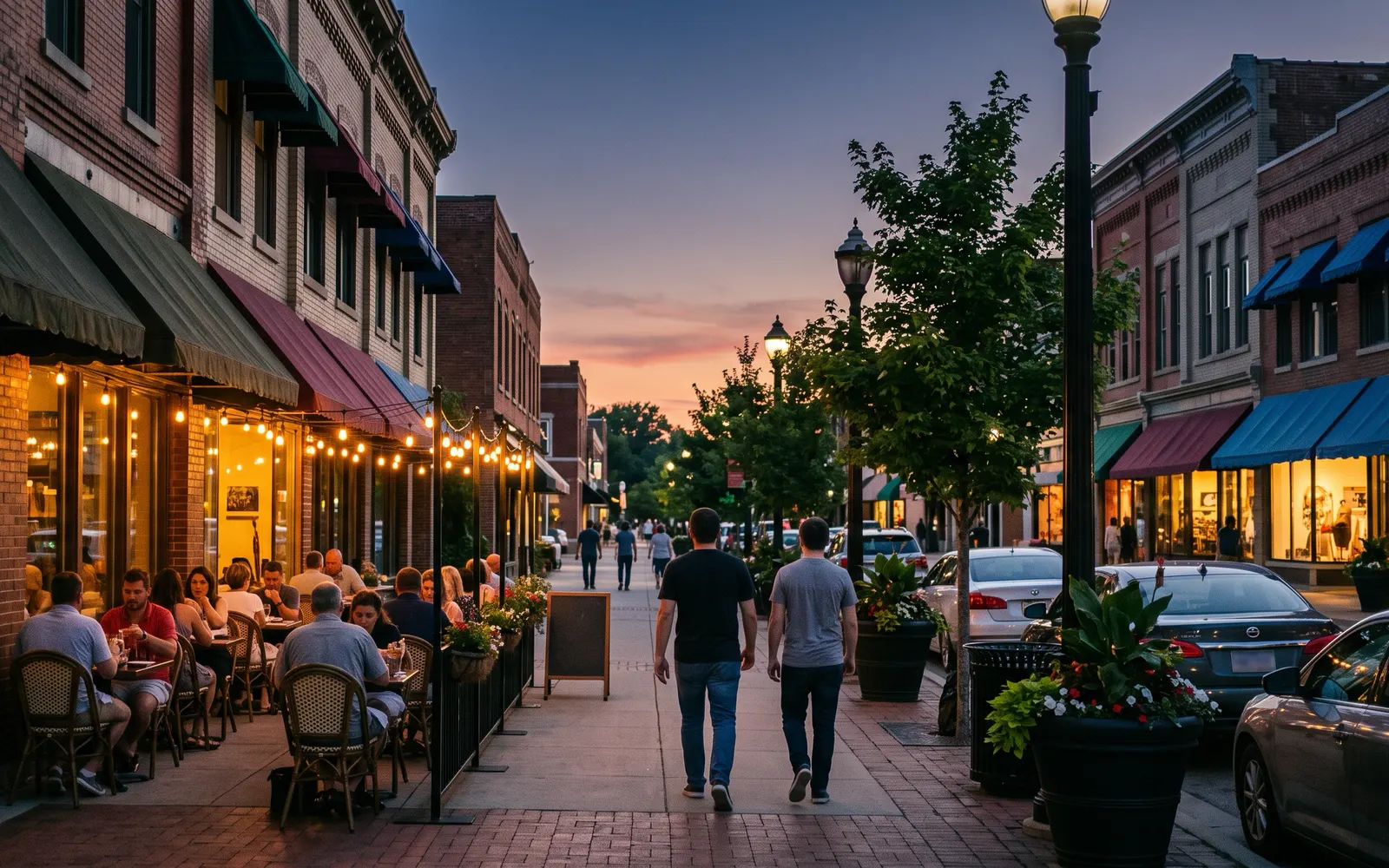
Downtown Lombard is the other shopping district: smaller, older and local, with shops and restaurants along St. Charles Road and Main Street near the station. Oakbrook Center is about ten minutes southeast for a larger luxury mall.
Groceries and Everyday Errands in Lombard
Groceries are easy in Lombard because Roosevelt Road and the Yorktown area are dense with stores. Jewel-Osco, Mariano's, Aldi, Trader Joe's and Target all have locations in or at the edge of the village, and the big-box stores around Yorktown and along Roosevelt handle the household runs. Pharmacies, banks and dry cleaners cluster on Roosevelt, Main Street and St. Charles Road, so most weekly errands are a five- to ten-minute drive from any Lombard address.
In season, the Village of Lombard's calendar lists a weekly farmers market, with Tuesday dates running through the end of September in 2026.
Where Lombard Eats
Lombard's restaurant scene splits the same way its shopping does. Around Yorktown and along Butterfield Road and Highland Avenue you get the chains and the bigger sit-down places, including Dave & Buster's, Ancho & Agave and the rooftop at Empire Burger + Brew, all named in the mall's 2026 announcement. Downtown along St. Charles Road and Main Street is where the independent spots, bars and coffee shops are, close enough to the station to walk after an evening train.
Roosevelt Road fills in the rest with a long run of casual restaurants and takeout. The practical upshot: you won't drive far for dinner from anywhere in Lombard, but if a walkable restaurant block matters to you, only the downtown pocket delivers it.
Lilacia Park and Recreation in Lombard
Lilacia Park is the one everyone knows. It's at 150 S. Park Avenue, open year-round from dawn to dusk with no admission fee, and it holds the lilac collection that began with the Plums' two bushes from France, plus spring tulip beds. Jens Jensen's design still shapes the paths and the open lawns.
The Lombard Park District runs the rest of the system: neighborhood parks and playgrounds across the village, the Paradise Bay Water Park, the Lombard Golf Course, the Sunset Knoll Recreation Center at 820 S. Finley Road, the Madison Meadow Athletic Center, Four Seasons Park at Finley Road and 16th Street, and a dog park on Spring Avenue. Prairie Place Park opened more recently under an agreement between the village and the park district.
Beyond the park district, the Prairie Path and the Great Western Trail give you long, flat trail miles, and the DuPage County forest preserves and the Morton Arboretum in neighboring Lisle are a short drive away.

The Helen Plum Library in Lombard
The Helen Plum Memorial Library is the one Colonel Plum's will created in his wife's memory, and it has just moved. According to the park district's Lilac Time update, the library has relocated to 411 S. Main Street. Its old site at the corner of Maple Street and Park Avenue is now open green space, and the park district plans to fold that land into Lilacia Park.
For buyers, that shift matters in a small way. The library's new Main Street location is still close to downtown, so the walkable core keeps its library, and the park at its center is getting bigger rather than smaller.
Utilities in Lombard
The Village of Lombard provides water and sewer. Like most of DuPage County, Lombard buys Lake Michigan water through the DuPage Water Commission rather than pumping from local wells, which is worth knowing if you're comparing it with towns farther west. ComEd delivers electricity and Nicor Gas provides natural gas. Residential refuse, recycling and yard waste are handled through the village's contract; the details are on the village website under "Refuse, Recycling & Yard Waste."
On an older house, the utility question I care about most is the sewer lateral, the private line from the house to the village main. It belongs to the owner, it is often original on a 1950s house, and tree roots find it. A camera scope costs a few hundred dollars and is worth it on almost every pre-1980 Lombard home.
Hospitals Near Lombard
Lombard doesn't have its own hospital, but several are close. Elmhurst Hospital (Endeavor Health) is a short drive east, Advocate Good Samaritan Hospital in Downers Grove is just south, and Northwestern Medicine Central DuPage Hospital in Winfield is to the west. For specialty care, the major systems all have outpatient offices along Roosevelt Road, Butterfield Road and the I-88 corridor.
Entertainment In and Around Lombard
Most of Lombard's evening entertainment is at Yorktown: the 18-screen dine-in AMC, Dave & Buster's, Lucky Strike, and the new programming at The Square. Drury Lane Theatre in neighboring Oakbrook Terrace runs professional musicals year-round, and the Morton Arboretum in Lisle has seasonal events, including its winter light show.
Lombard also has a small cultural claim of its own. Big Idea, the studio behind VeggieTales, was based in Lombard, at one point in a Yorktown storefront, before it moved to Tennessee in 2004. The downtown DuPage Theater it once planned to rebuild was donated to the village.
And because Lombard sits on the UP-W line, a night in the city is a 38- to 49-minute train ride rather than a drive and a parking garage.
Lilac Time and Lombard's Yearly Traditions
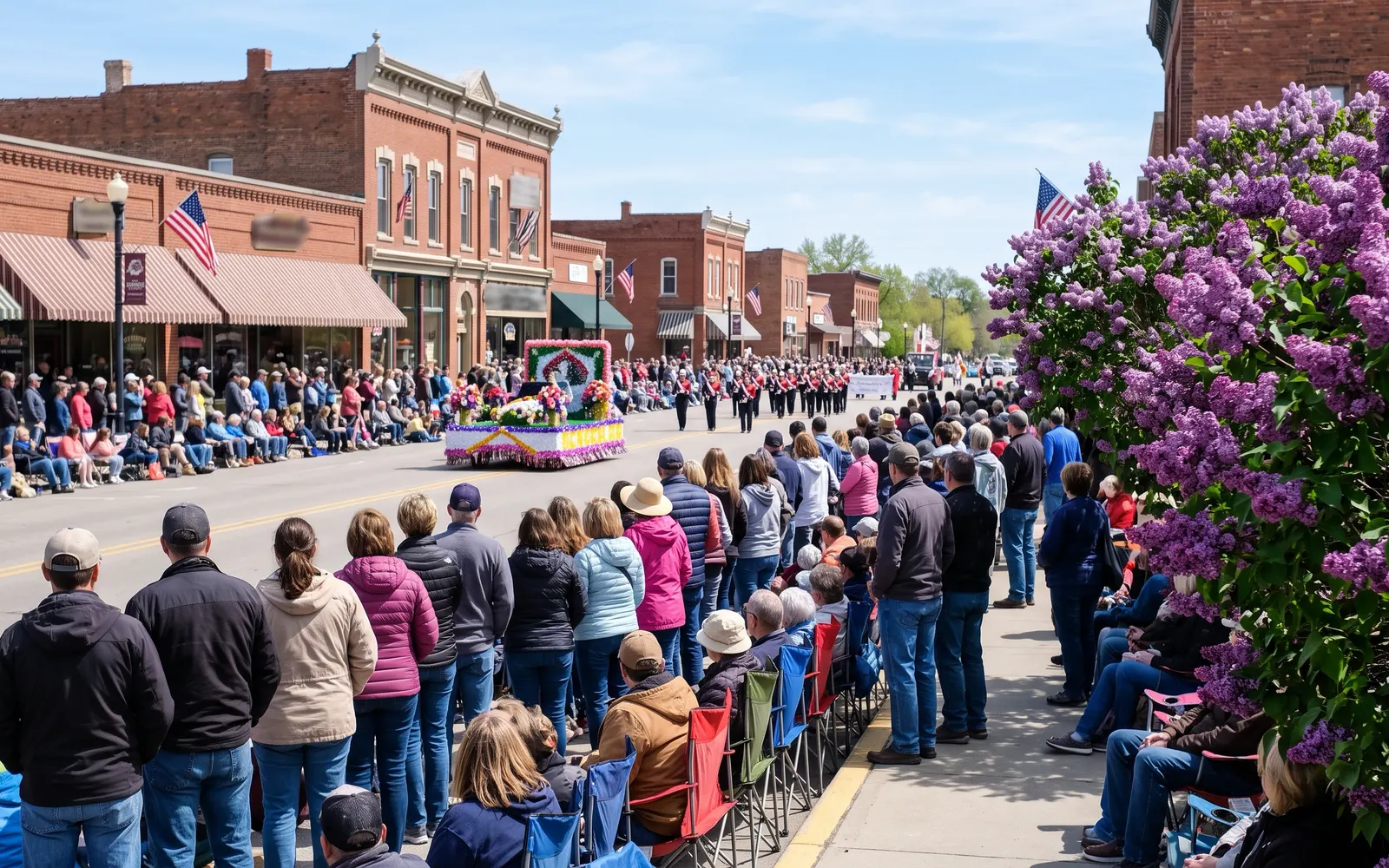
The big event is Lilac Time, which the village has celebrated every May since 1930. It runs for about two and a half weeks in late April and May while the lilacs bloom, with tours of Lilacia Park, a country store, a plant sale, concerts and a Lilac Queen and court, and it ends with the Lilac Parade through downtown. In 2026 the park district's plant sale ran May 7 and 8, and a "Bloom-o-Meter" on the Lilac Time site tracked the bloom.
The rest of the year has a steady rhythm: the Tuesday farmers market into September, summer programs from the park district, events at The Square at Yorktown, and a holiday lights display in Lilacia Park in winter. The village's calendar in fall 2026 also lists a fire department open house on October 7 and a community shred event on September 26.
If you are touring houses in May, go to Lilacia Park on a weekday evening. It tells you more about the village than any listing will.
What's Being Built in Lombard
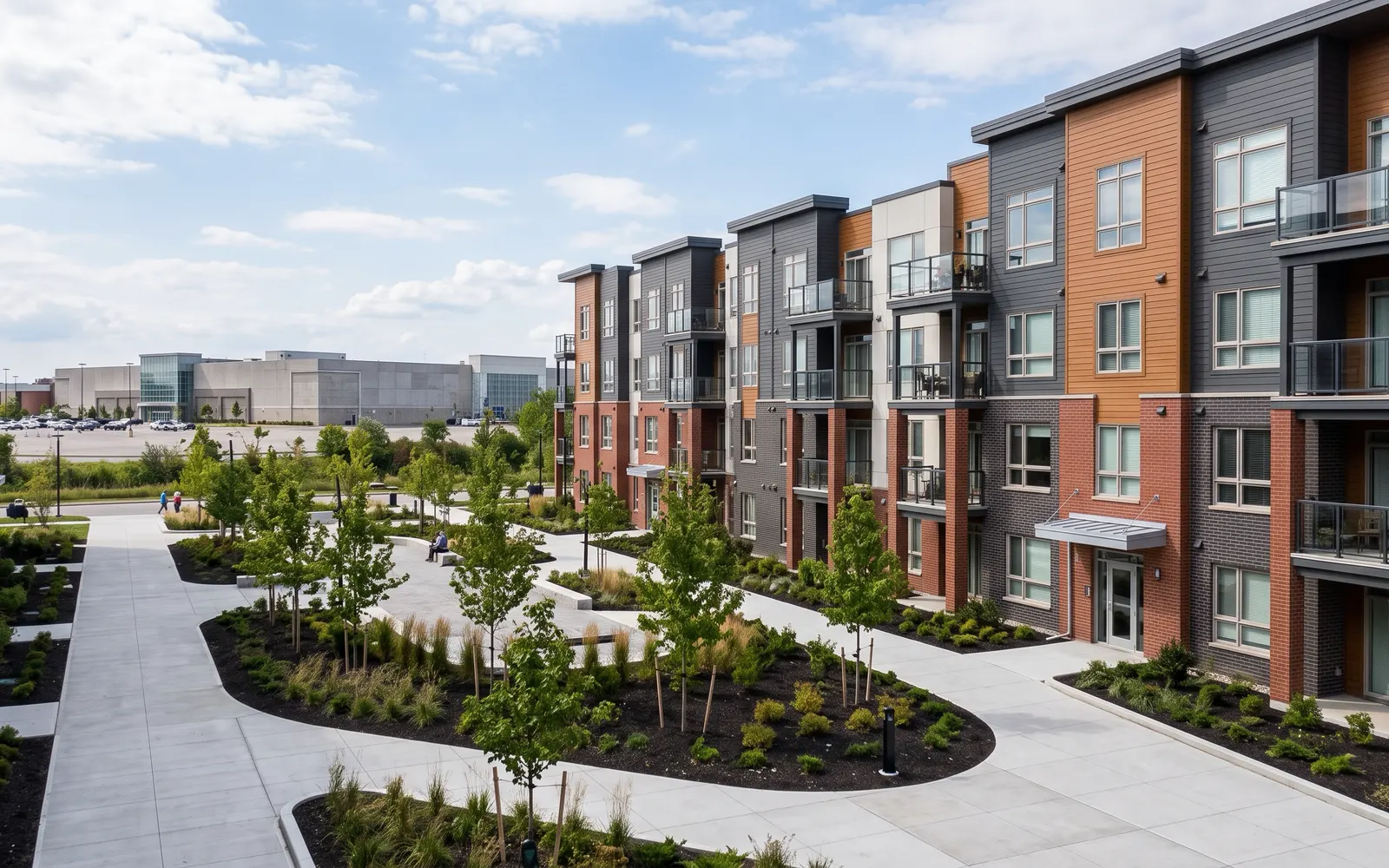
Almost all of Lombard's new construction is happening around Yorktown Center, where the mall is turning its parking fields and dead anchor space into housing. According to the Yorktown Center history, the Elan and Overture apartment buildings opened on the north side of the mall grounds in 2019. The village approved D.R. Horton's Summit at Yorktown, 90 townhomes on part of the vacant Shops at Yorktown strip, in 2022.
The biggest piece is the former Carson's store. Pacific Retail Capital Partners announced in 2022 that it would redevelop the 12-acre site into apartments, retail and outdoor space. Demolition finished by 2025, and in June 2026 the mall opened The Square and the adjacent Yorktown Reserve apartments as the completion of Phase 1. More phases are planned, and I haven't seen an approved plan for the next one yet.
Away from Yorktown the changes are smaller: the Helen Plum Library's move to 411 S. Main Street and the expansion of Lilacia Park onto its old site, plus the village's 2026 program of street resurfacing, sewer lining and the Lombard Meadows Phase V utility work. For buyers, the Yorktown projects mean more rental and townhome choices on the south side and more foot traffic around the mall. For sellers of older condos nearby, they mean a little more competition from new units.
I don't label any town or neighborhood as safe or unsafe.
Flood and Stormwater Risk in Lombard
Flooding in Lombard is a house-by-house question, not a village-wide one. The village is flat, it sits in the headwaters of the East Branch of the DuPage River and Salt Creek watersheds, and a lot of it was built in the 1950s and 1960s, before modern detention rules. That combination is why the village keeps spending on sewer lining, sewer televising and neighborhood utility projects like the Lombard Meadows work on its 2026 construction list.
Three checks before you write an offer. Look the address up on the FEMA flood map, because a mapped flood zone can mean required flood insurance on a mortgage. Ask the seller directly about water in the basement or crawl space and about sewer backups, and read the Illinois disclosure form carefully. And look for the fixes: a sump pump with a battery backup, an overhead sewer or backflow valve, and downspouts that drain away from the house. In my experience with postwar DuPage homes, the question that matters is not whether water ever came in. It is what the owner did about it.
Frequently Asked Questions
How much does a house cost in Lombard, IL?+
Zillow's home value index for Lombard was $388,194 in August 2026, up 5.0% from a year earlier. That index includes condos, so detached single-family homes typically sell above it and condos below it.
What are property taxes in Lombard, IL?+
The median effective rate is about 2.36%, with a median bill of $6,748 (Ownwell, April 2026). Rates vary by tax code across four townships and two K-8 districts, and a home's bill usually rises after a sale once it is reassessed.
What school district is Lombard, IL in?+
Most of Lombard is in Lombard School District 44 for kindergarten through eighth grade, with parts of the east side in DuPage School District 45. High school is mostly Glenbard East in Glenbard Township High School District 87. Confirm each address with the district.
How long is the commute from Lombard to downtown Chicago?+
On Metra's Union Pacific West line, morning express trains reach Ogilvie Transportation Center in 38 minutes and local trains in 49. There are 27 weekday trains in each direction on the fall 2026 schedule.
Is Lombard walkable?+
Only downtown. Lombard's Walk Score is 45, with a Transit Score of 22 and a Bike Score of 51. The blocks near the station and Lilacia Park are walkable; most of the village is car-dependent.
What neighborhoods are in Lombard, IL?+
Locals usually describe the downtown and Lilacia Park area, North Lombard, central Lombard between the tracks and Roosevelt Road, the Westmore area on the east side, South Lombard between Roosevelt and Butterfield, and the Yorktown corridor.
What is being built at Yorktown Center?+
Phase 1 of the mall's redevelopment finished in June 2026 with The Square, an outdoor plaza and new entrance, and the Yorktown Reserve apartments on the former Carson's site. D.R. Horton's 90-townhome Summit at Yorktown and the Elan and Overture apartments are also on the mall grounds.
When is Lilac Time in Lombard?+
Lilac Time runs for about two and a half weeks in late April and May, while the lilacs bloom in Lilacia Park, and ends with the Lilac Parade. The village has celebrated it every year since 1930.
Eshu Chikoti has extensive access to off-market listings throughout Lombard and the rest of DuPage County — homes that never make it to the public listing sites. That matters right now: in a seller's market like this one, well-priced homes routinely go under contract within days, and buyers relying only on public listings are competing for whatever is left over. Working with someone plugged into off-market inventory means seeing homes before the crowd does.
Eshu Chikoti · 847-691-4282 ·
Get new Lombard listings by email
When a home comes on the market in Lombard, I'll email it to you.
Just your email. Unsubscribe any time by replying.
Thinking About Lombard?
Whether you're buying, selling, or just curious what's on the market, I can walk you through Lombard street by street.