Lincolnwood, IL
Lincolnwood, IL is a 2.69-square-mile Cook County village of about 13,000 people between Chicago and Skokie, with one K-8 school campus, the Edens Expressway at Touhy Avenue and a summer 2026 median sale price near $590,000.
Living in Lincolnwood, IL means a median sale price near $590,000 this summer, one K-8 district on a single campus, Niles West for high school and property tax near 2.46% of value. There is no Metra station in the village, and the old mall site is being torn down and rebuilt. Here it is, pocket by pocket.
Written by Eshu Chikoti · 847-691-4282 ·
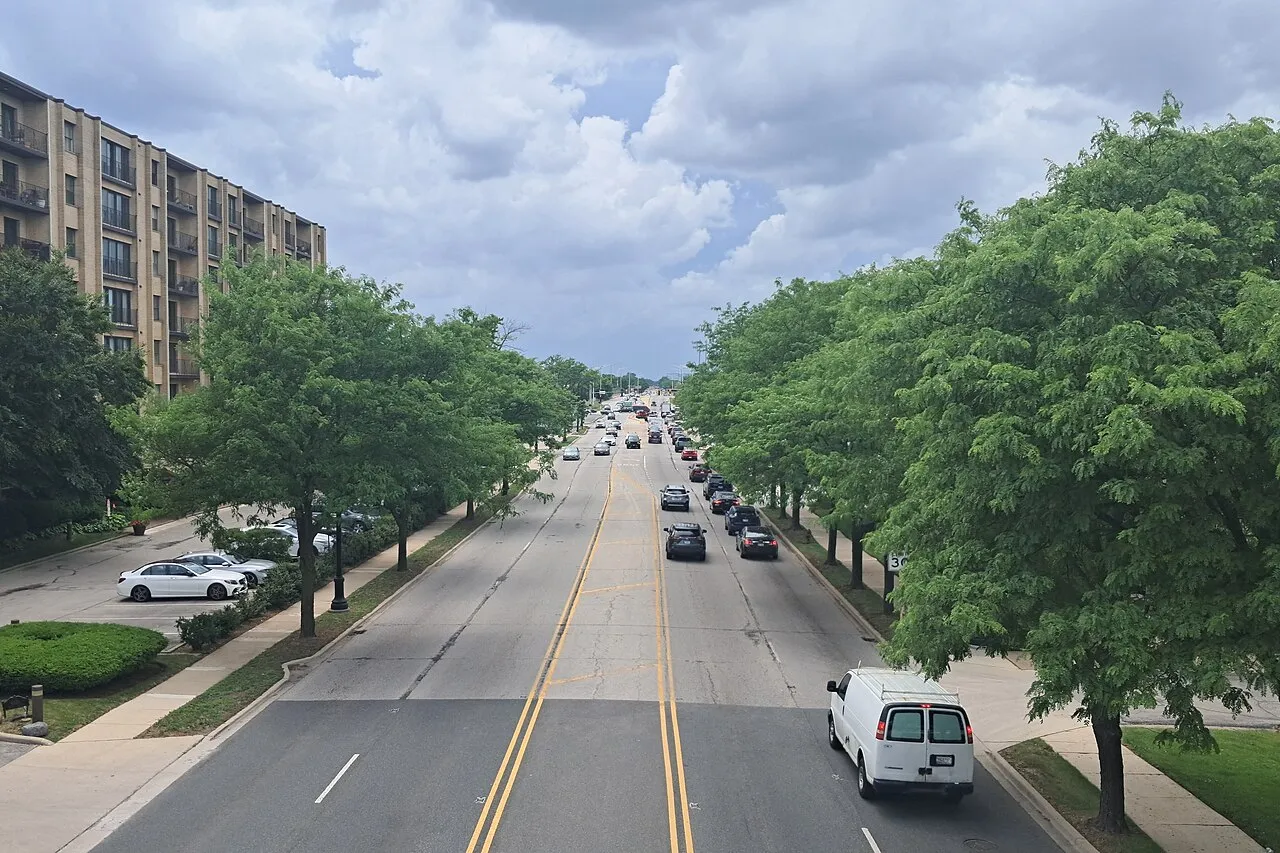
How Lincolnwood, IL Got Here: From Tessville to the Edens
Lincolnwood started out under another name. According to the village's own history, Johann Tess, for whom the village was first named, arrived in 1856. The first business, the Halfway House Saloon, opened in 1873. Two pieces of infrastructure turned the farmland into a town: a Chicago & North Western station in nearby Skokie in 1891, and the North Shore Channel, finished in 1909, which made the easily flooded prairie usable.
The reason for incorporating was liquor. Only an organized municipality could grant liquor licenses, so in 1911, 359 residents incorporated and named the village Tessville. The village says Tessville became known for speakeasies and gambling during Prohibition. That changed with the 1931 election of Henry A. Proesel, who served as mayor for 46 years, until 1977, per Wikipedia. The village's annex to the 2024 Cook County hazard mitigation plan says Proesel used federal Public Works Administration funds to hire the village's unemployed to plant 10,000 elm trees along its streets, and that the village passed a 1934 liquor law limiting the number of licenses. In 1936 he renamed the village Lincolnwood.
The growth came after World War II. The village credits the 1951 opening of the Edens Expressway with the biggest change in its history. The census counted 752 people in 1940, 3,072 in 1950, 11,744 in 1960 and 12,929 in 1970, per Wikipedia. That twenty-year jump is why most of Lincolnwood's houses date from the 1950s, as the homes section shows. Light industry kept the tax base broad; the village names Bell & Howell as the best-known example, and the Lincolnwood Town Center mall later went up on the company's former headquarters site. The 2020 census counted 13,463 residents.
Two later landmarks are worth knowing because they come up in every conversation about the village today. The Purple Hotel opened at 4500 W. Touhy Ave. in 1962 as the Hyatt House, closed in 2007 and was demolished in 2013; its site is now District 1860. The Lincolnwood Town Center opened in March 1990 and closed in July 2026. Both stories are in the development section below.
Lincolnwood at a Glance
Lincolnwood covers 2.69 square miles, all land, per Wikipedia. The village's hazard plan annex puts it 14 miles north of the Loop. Chicago wraps around it on the south and east, with the Sauganash, North Park, West Ridge and Edgebrook neighborhoods on the other side of the line. Skokie is to the north and northwest. The North Shore Channel runs along the east edge.
The government picture is simple. Lincolnwood is a home-rule village with a mayor, six trustees elected at large and a full-time village manager, per the village profile. The Census Bureau's Vintage 2025 estimates put the village at 13,039 people in 2025, all of them in Cook County's Niles Township. That matters for taxes, because the whole village is reassessed on one schedule.
The housing is mostly owned. The 2020-2024 Census ACS counts 4,955 housing units, with 83.8% of occupied homes owned and 16.2% rented.
Lincolnwood is also a bigger job center than its size suggests. CMAP's June 2026 community snapshot counts 12,095 private-sector jobs in the village in 2025, up 2,462 (25.6%) from 2015, or 2.62 jobs per household against 1.07 for Cook County. Health care is the largest employer sector, at 29.9% of jobs located in the village in 2023, followed by retail at 13.8%.
At a $590,000 summer median, it costs about the same as Park Ridge and well less than Glenview or Wilmette.
There is no Metra station in the village, and Edgebrook's weekday service is 20 inbound trains. About 17% of properties carry a severe 30-year flood risk in First Street's model, and most of the village is on a combined sewer. The effective tax rate near 2.46% on a $590,000 house is about $14,500 a year once the assessor catches up. And the north end is a construction zone for the next few years while the mall site and District 1860 fill in.
Lincolnwood Neighborhoods, Pocket by Pocket
Lincolnwood is small enough that every address is within a few minutes of the center. It has no official neighborhoods, and the subdivision names that appear on listings are older plat names more than places people talk about. Several brokerage sites, for example, list homes in a "Lincolnwood Towers" subdivision. In practice, buyers describe a house by the street it is near: Touhy, Pratt, Devon, Lincoln, Crawford, Cicero or McCormick.
The simplest way to split the village is by those roads. Touhy Avenue carries the north end, with the Edens exit, District 1860 and the former mall. Devon Avenue is the southern edge along Chicago. Lincoln Avenue runs diagonally through the middle past Village Hall and Proesel Park. McCormick Boulevard and the North Shore Channel close off the east side. Each band has its own traffic, its own park and its own distance to the school campus.
Below are the pockets I use when I talk buyers through the village. The boundaries are my working description built from those landmarks, not official lines, so treat them as a starting point. If you want to know which park, bus line and flood-control project a specific address falls near, that is a conversation I am happy to have here.
The expectation I most often have to reset with buyers in Lincolnwood is that a small village means small differences between blocks. It doesn't. A 1950s ranch near Proesel Park, a rebuilt two-story on the west side and a condo on West Touhy trade in three separate markets, and a house a block from Touhy lives differently from one a block from the channel. I look at the block before I look at the kitchen.
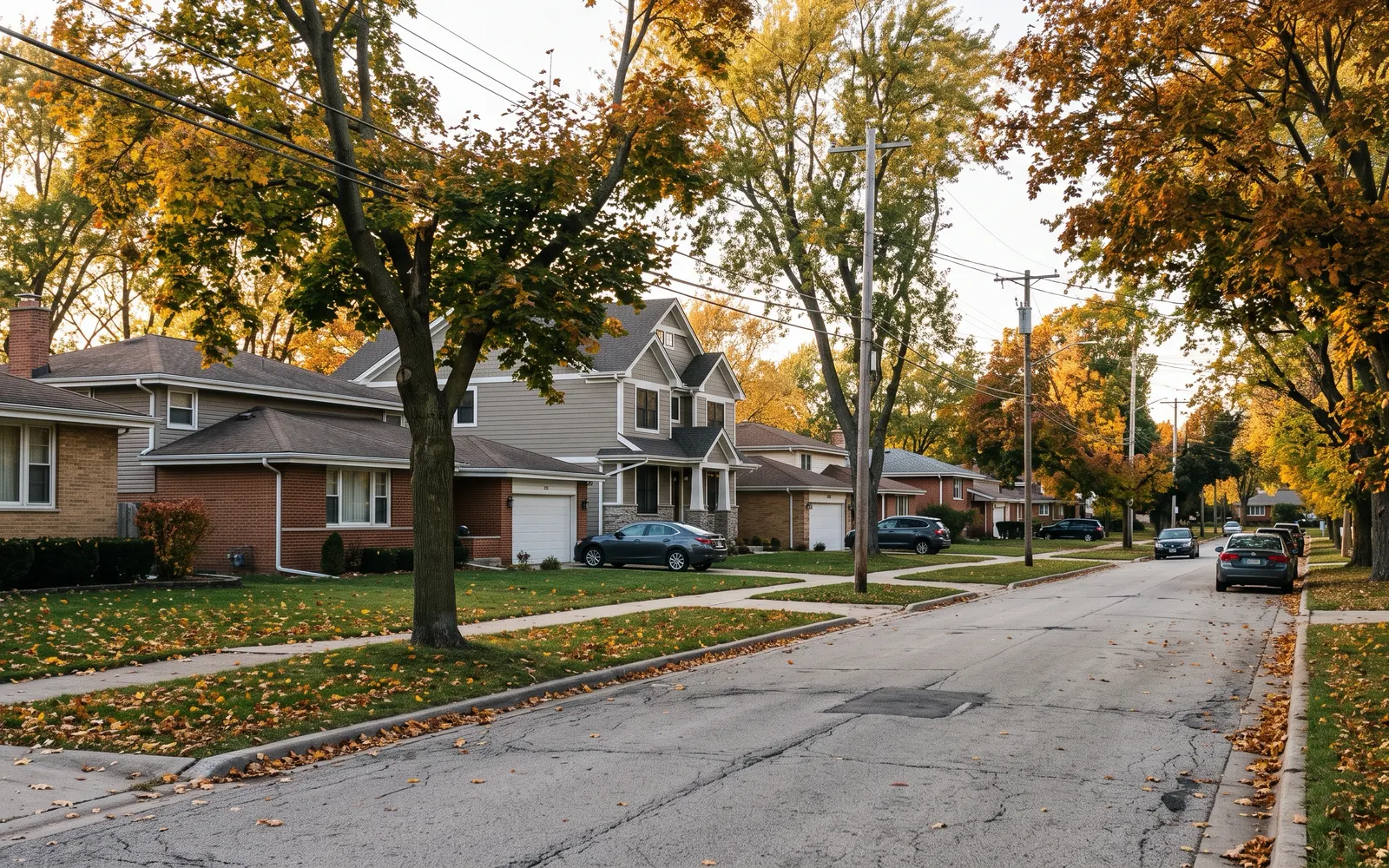
Village center: Lincoln, Pratt and Proesel Park. The blocks around Village Hall (6900 N. Lincoln Ave.), Proesel Park (7030 N. Lincoln Ave.), the community center (4170 W. Morse Ave.) and the Lincolnwood Public Library (4000 W. Pratt Ave.). The District 74 schools are close by: Todd Hall at 3925 W. Lunt Ave., Rutledge Hall at 6850 N. East Prairie Rd. and Lincoln Hall at 6855 N. Crawford Ave., per the district. This is where most daily errands in the village happen on foot.
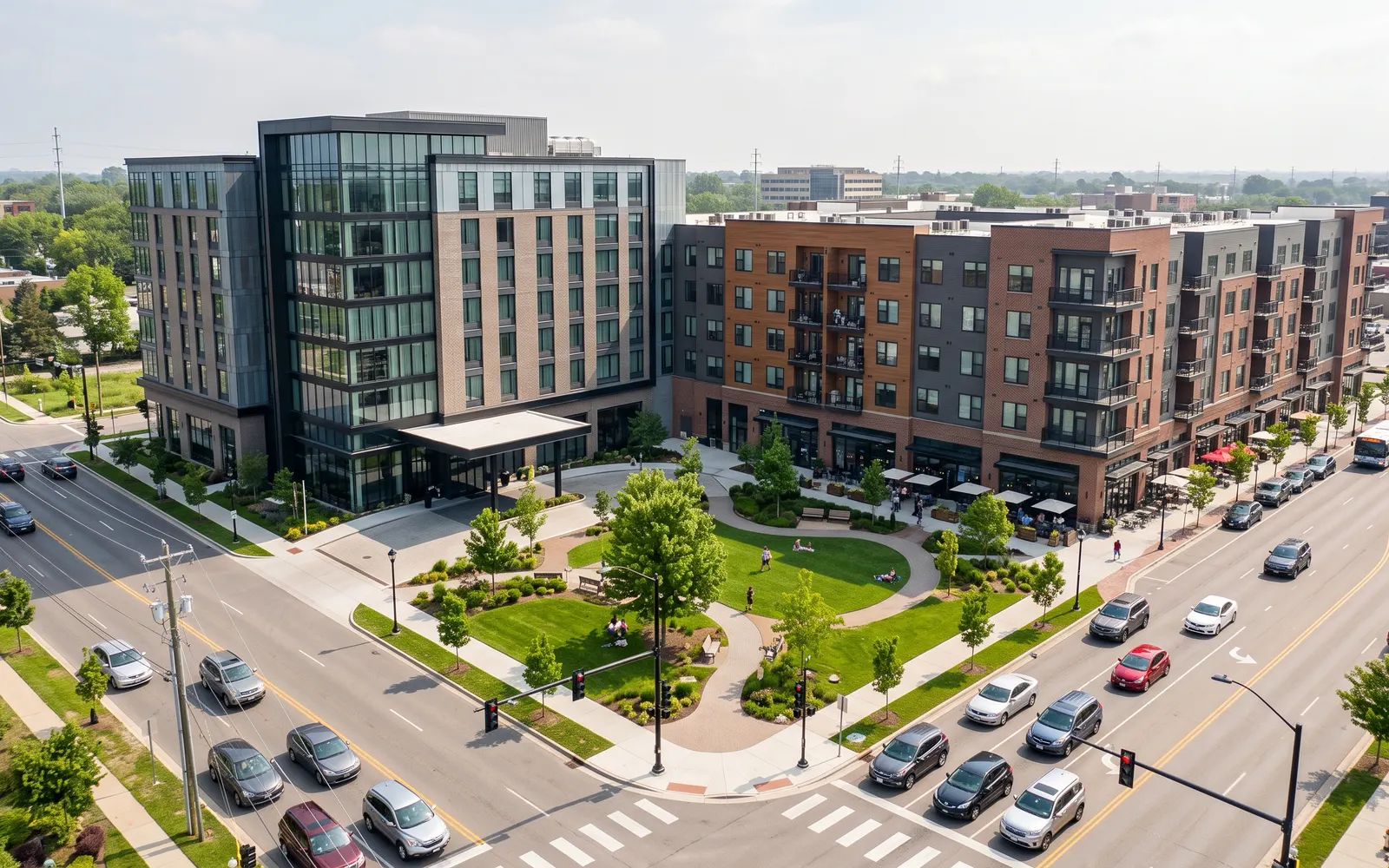
North end: the Touhy corridor. The blocks near Touhy Avenue, from the Edens exit on the west past District 1860 at Touhy and Lincoln to the former Town Center site at Touhy and McCormick. Most of the village's condominium buildings are on West Touhy, and O'Brien, Kenneth and Kildare parks serve the houses north of Pratt. It has the most traffic and the most change coming.
West side toward Cicero and the Edens. The blocks between Crawford Avenue and Cicero Avenue, with M. Lester Flowers Park (4520 W. Pratt Ave.) and Rossi Park (7025 Keystone Ave.). The new Pratt Avenue bike lanes run from Cicero to McCormick through here. This side is closest to the Edens and to the Edgebrook Metra station.
South end along Devon. The blocks north of Devon Avenue, which is also the Chicago line, with Central Park (6451 Central Park Ave.), G.G. Rowell Park (6555 Albion Ave.), Goebelt Park (6621 Kilbourn Ave.) and Drake Park (6750 Drake Ave.). Devon itself is getting a rebuilt streetscape this year, covered in the development section. Chicago's Sauganash and North Park neighborhoods are across the street.
East side by McCormick and the channel. The blocks near Centennial Park and its mile-long trail along the North Shore Channel, plus Columbia Park (3745 Columbia Ave.) and Springfield Park (3901 Arthur Ave.). The village's northeast corner has a separate storm sewer and a light-industrial district, and the southeast homes got relief from the North Shore Outfall Sewer in 2020.
What Lincolnwood Homes Look Like, by Type and Era
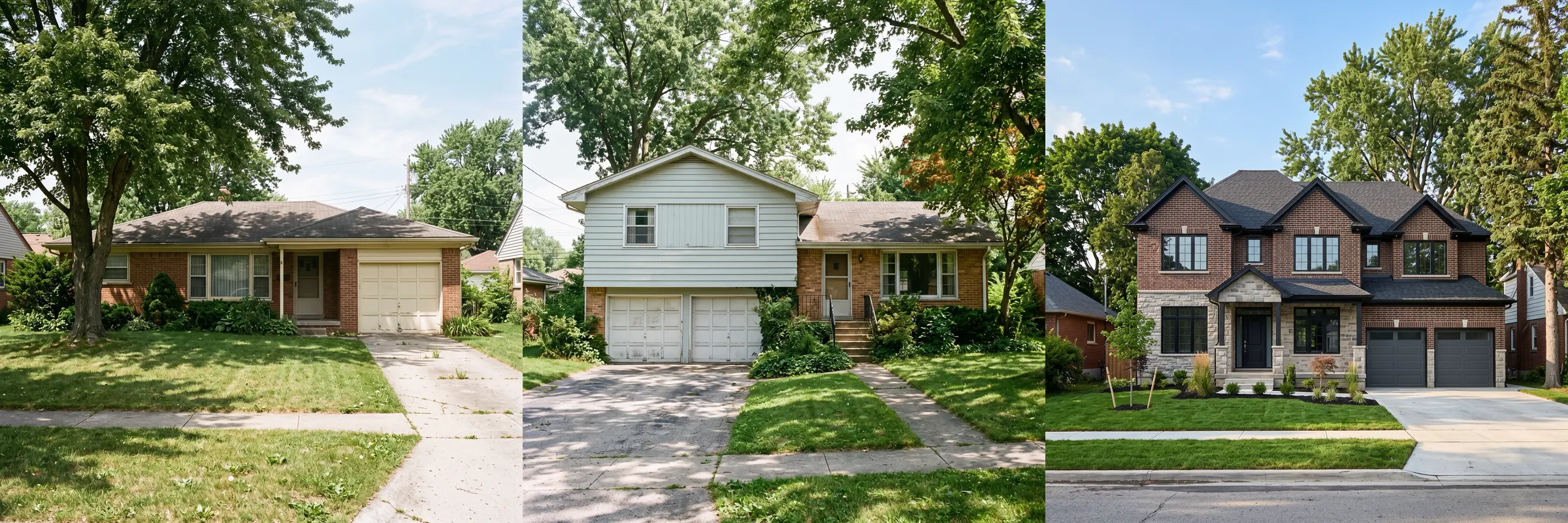
Lincolnwood is a detached-house village with a band of condo buildings. The 2020-2024 Census ACS counts 3,642 detached single-family homes, 73.5% of all units. Townhomes and other attached houses add 3.0%, and two- to four-unit buildings add 3.8%. The surprise is at the other end: 968 homes, or 19.5%, are in buildings of 50 or more units. Almost nothing sits in between. In practice those are the high-rise condominium buildings, and Redfin's recent sales list showed two of them on West Touhy Avenue closing in September 2026.
The era is the 1950s, more than in almost any suburb I work in. The same survey puts the median year built at 1958, and 39.7% of homes were built in the 1950s alone. Adding the 1940s and 1960s, 62.1% date from 1940 to 1969. Only 6.2% were built before 1940. Newer construction comes in two waves: 8.6% from the 1990s and 9.3% from the 2010s. With so little vacant land, much of that is a new house on an old lot.
The bedroom mix follows the product. About 44.4% of homes have three bedrooms, 24.7% have four and 10.2% have five or more. Two-bedroom homes, mostly condos, are 13.7%. The ACS puts the median value of owner-occupied homes at $496,400. It puts the median gross rent at $3,501, high for the area, on a small base of 747 occupied rental units, so a handful of rentals can move that figure.
For a buyer that means three different purchases under one village name. There is the original house: a 1950s brick ranch, raised ranch or split-level, often on a standard lot with a basement. There is the rebuilt or heavily expanded house from the last 30 years, which can be two or three times the size of its neighbors. And there is the condo on Touhy. They trade at very different prices per square foot, and I price them off different comparable sales.
The original houses carry their own inspection list. Most of Lincolnwood is on a combined sewer, as the flood section explains, so a sewer camera inspection on the line to the street is money well spent. Check for an overhead sewer or backflow valve, the age of the sump pump and the grading. The village also runs a lead service line program for older water lines, which is worth asking about on a 1950s house. None of those should kill a deal. All of them belong in the price. My home inspection checklist covers what to ask for.
The Lincolnwood Housing Market in 2026
Lincolnwood's summer was steady more than hot. In the three months ending August 2026, Redfin reported a median sale price of $589,610, up 5.6% from a year earlier. The median home sold in 55 days, down from 62 a year before, at 97.9% of list price, 2.1 points lower than last year. Only 21.2% sold above asking, down 26.8 points, and 18.0% of listings took a price cut, up 6.5 points. Redfin gives the village a Compete Score of 58 out of 100, which it calls somewhat competitive, and says homes get about four offers on average.
This is a small market, so read every number with that in mind. Redfin counted 34 sales in August 2026, up from 25 a year earlier. A handful of large or small sales can move the median by tens of thousands of dollars. Redfin's own figures show it: the median price per square foot was $190, down 23.4%, while the median price rose. That combination usually means the mix of homes that sold changed, with more large houses in the sample, rather than values falling by a quarter. For detached houses alone, Redfin's median was $634,628, down 0.45% from a year earlier.
Zillow's home value index tells a steadier story. It put the typical Lincolnwood home at $578,801 in August 2026, up 8.1% from August 2025 and 13.3% from August 2024. Redfin's median is the middle of whatever sold this summer. Zillow's index estimates every home in the village, including the condos. The two land within about $11,000 of each other this year, and both show prices rising.
For context against the neighbors, Zillow's August 2026 index put Niles at $421,137, Skokie at $433,130, Morton Grove at $454,351, Evanston at $493,385, Park Ridge at $597,562, Glenview at $697,923 and Wilmette at $1,014,121. Lincolnwood sits just below Park Ridge and well above Skokie, Niles and Morton Grove. In practice, the right house still sells well here, but far fewer listings went over asking this summer than last. If you are working out a budget at these prices, my guide to how much house you can afford is a good place to start.
Lincolnwood Property Taxes: Niles Township and the Three-Year Cycle
Property tax is the line that moves the monthly payment most in Lincolnwood. Ownwell's Cook County data for Lincolnwood, updated April 13, 2026, puts the median effective rate at 2.46% and the median annual bill at $9,274. The Cook County median on the same page is 2.14%. For the 60712 ZIP code, Ownwell puts the 25th-percentile bill at $6,132, the 75th at $11,774 and the 90th at $15,959.
Cook reassesses one-third of the county each year, so each area is revalued every three years. All of Lincolnwood is in Niles Township, which the assessor's reassessment schedule lists in the north suburbs group reassessed in 2025. The assessor's Niles Township release, dated November 2, 2025, reported a 2024 median single-family sale in the township of $432,000 against the assessor's median estimate of $389,000, and said the 2025 values affect second-installment bills issued in 2026. At the 2022 reassessment, the township's 2021 median single-family sale was $385,000 against an estimate of $360,000. On the three-year cycle, the next reassessment of Niles Township works out to 2028. Between reassessments, a house's assessed value usually stays put even when the market moves.
One structural point helps homeowners here more than in most nearby towns. CMAP's snapshot, using state data, shows $555 million of the village's $824 million equalized assessed value in 2024 was residential, about 67%. Commercial property added $200 million and industrial $69 million. The same snapshot counts $676 million in retail sales in 2025, or $51,587 per resident, more than twice Cook County's $23,200. Per the village's tax page, property tax is 22% of the village government's own revenue. Keep in mind the village is only one line on the bill; schools, the county and other districts make up the rest.
The bills come in two pieces. For tax year 2025, the first installment was due April 1, 2026, and the second is due October 1, 2026, per the Cook County Treasurer. Those second-installment bills were mailed September 1, about two months late because of the county's tax system overhaul, according to Cook County. If you close this fall, ask your attorney how the proration handles that bill.
Here is what the rate looks like on a real purchase. At this summer's $589,610 median, 2.46% works out to about $14,500 a year, or about $1,210 a month. Many current bills are lower because assessments trail the market, and the mistake I see most is buyers budgeting off the seller's bill. The Cook County homeowner exemption takes $10,000 off the equalized assessed value of an owner-occupied home and renews automatically once it is on the property, but a new owner has to apply for it.
Sellers do not pay a village transfer tax. The ATG summary of the village ordinance, last updated in 2011, lists the rate as "None" and requires a certificate of payment ($20) showing that the final water bill and anything else owed to the village is paid. The village's current certificate of payment application asks sellers to give five business days' notice before closing for the final meter reading, does not take personal checks, and exempts condominium units. The Illinois Department of Revenue lists the county transfer tax at 25 cents per $500, or about $295 at the summer median. My Illinois closing costs guide covers the rest. This is general information, not tax advice. Your bill depends on your parcel, your exemptions and the assessor.
Lincolnwood Schools: District 74 and Niles Township District 219
Lincolnwood has its own elementary district, and it is unusual. Lincolnwood School District 74 describes itself as a one-campus district serving about 1,250 students from pre-kindergarten through eighth grade in three schools. The buildings are close together near the center of the village, so every student in the district attends the same set of schools in order.
The three schools, per the district's school list, split by grade. Todd Hall (3925 W. Lunt Ave.) covers pre-K through second grade. Rutledge Hall (6850 N. East Prairie Rd.) covers third through fifth. Lincoln Hall (6855 N. Crawford Ave.) is the middle school for sixth through eighth. The district's pre-K program takes three- and four-year-olds in morning or afternoon sessions, with annual tuition of $3,200 for residents and $3,500 for non-residents, per its pre-K page.
High school is Niles Township High School District 219. The district says it serves Skokie, Lincolnwood, Morton Grove and Niles, with about 4,600 students. Per Wikipedia, Lincolnwood's high school students attend Niles West, at 5701 Oakton St. in Skokie, which opened in 1958 and had 2,615 students in 2023-24. Lincoln Hall is one of Niles West's feeder schools.
The edges take checking. The village sits against Skokie, which has its own elementary districts, and Chicago. Assignment is by street address, so check every address with the district before you write an offer, and ask me for the boundary if you want it done for a specific house. I don't rank schools on this page. The Illinois Report Card has each school's own data.
The community college is Oakton College. Lincolnwood is in the Oakton district, per Wikipedia, and the village keeps a page on it.
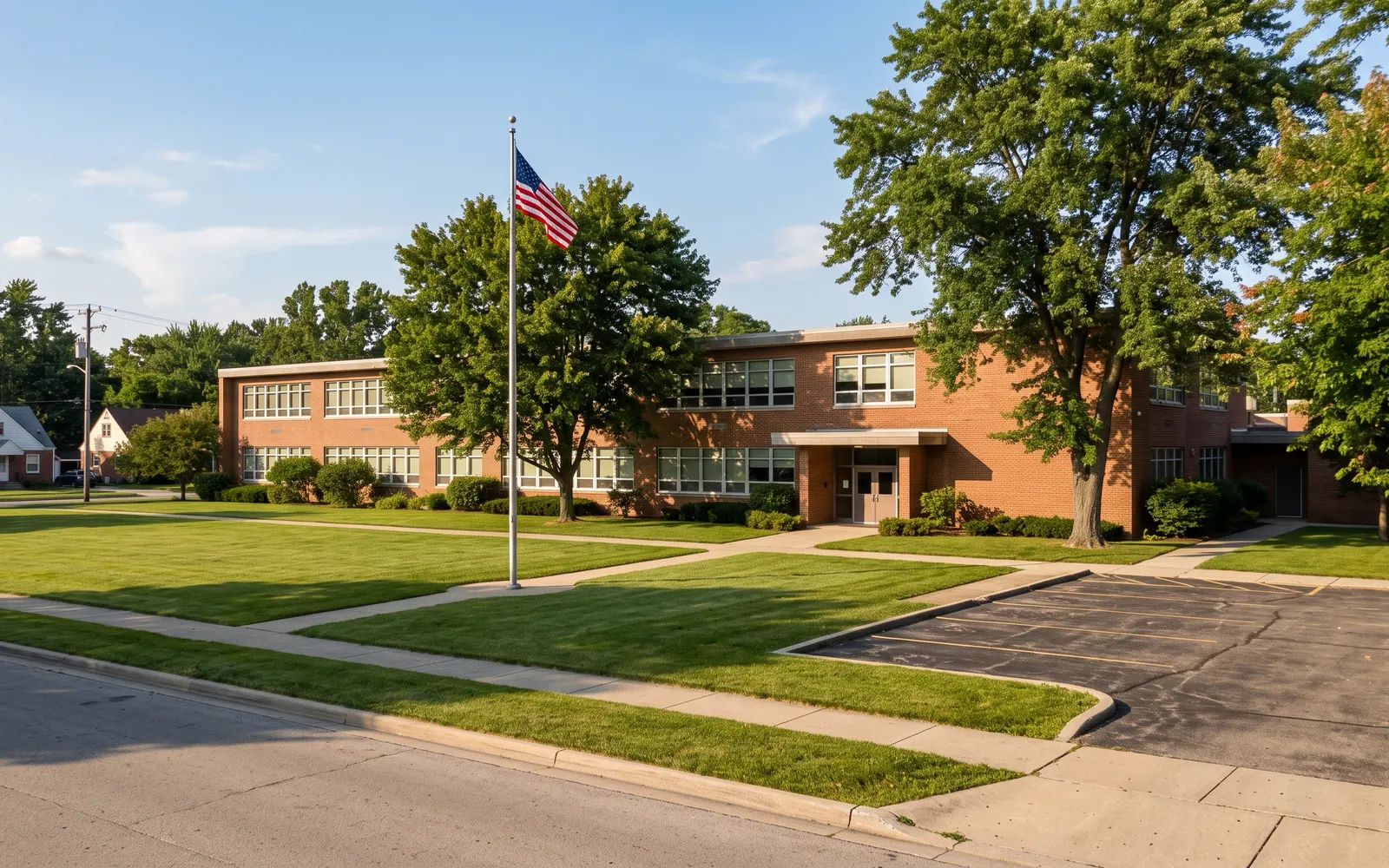
Todd Hall (Pre-K to 2). 3925 W. Lunt Ave., home of the district's pre-K program.
Rutledge Hall (3 to 5). 6850 N. East Prairie Rd.
Lincoln Hall (6 to 8). 6855 N. Crawford Ave., the district's middle school and a Niles West feeder.
Niles West High School (9 to 12). 5701 Oakton St., Skokie, in Niles Township High School District 219.
College. Oakton College's district includes Lincolnwood.
Commuting from Lincolnwood: Edgebrook Metra, Pace and CTA
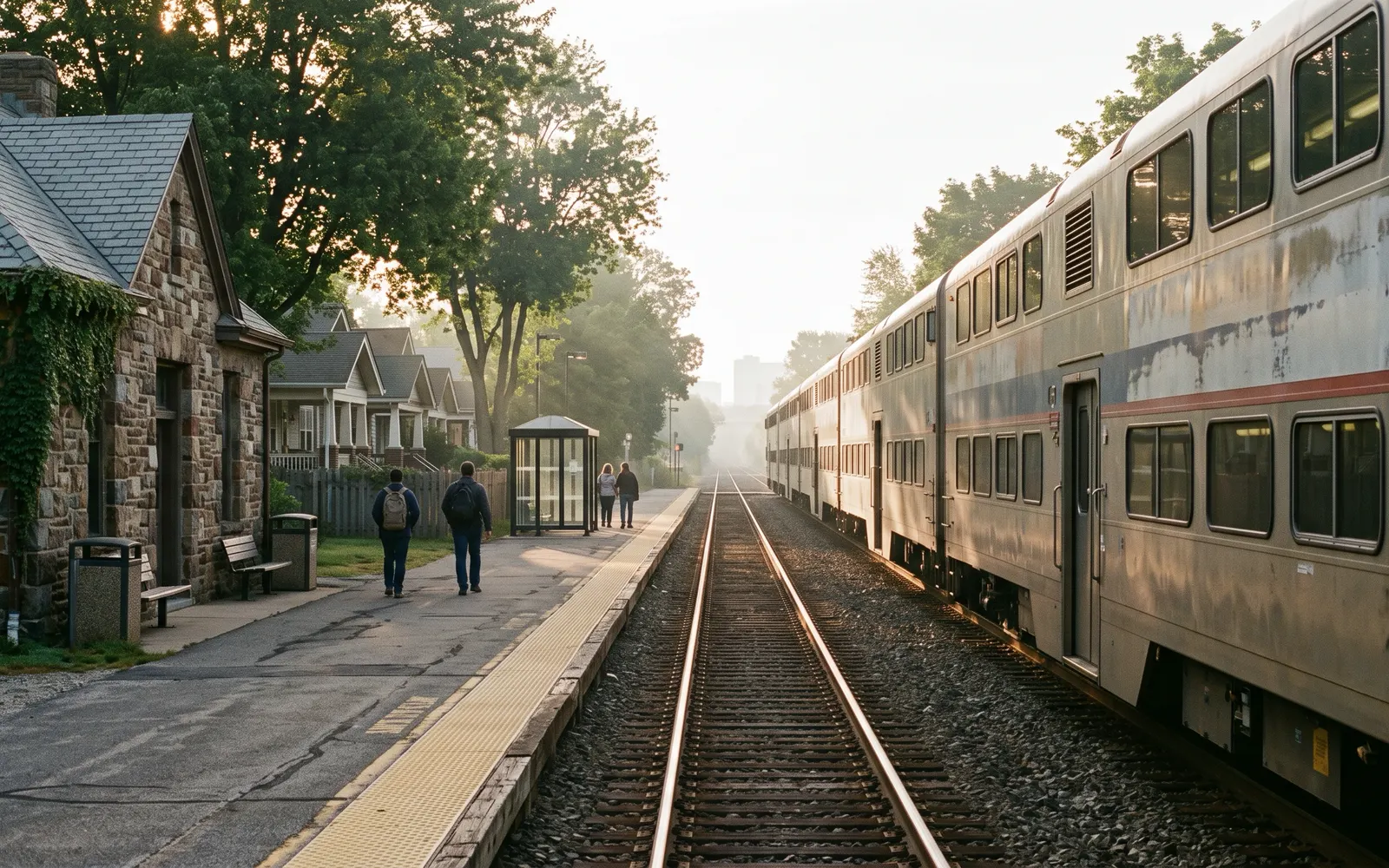
Lincolnwood has no train station of its own. The closest Metra stop, according to the village's transit page, is the Edgebrook station on the Milwaukee District North line, near Central and Devon avenues just over the line in Chicago. From the west side of the village it is a short drive or bike ride. From the east side it is farther, and the CTA and bus options below may work better.
According to Metra's schedule data for the week of September 28, 2026, 20 weekday trains leave Edgebrook for Chicago Union Station and 21 come back. Every inbound train takes 32 minutes, and the return trip takes 30. There are four inbound departures before 8:30 a.m.: 5:50, 6:41, 7:15 and 8:02. Midday, trains leave at 56 minutes past each hour, so a missed train costs an hour. Seven of the line's 27 weekday inbound trips pass Edgebrook without stopping. Saturdays have 10 trains each way and Sundays have 9. The same weekday pattern carries into the schedule that starts October 26.
Buses fill in the rest. The village is served by two Pace routes: Route 210 on Lincoln Avenue, which runs weekdays between Glenview and Lincolnwood, and Route 290 on Touhy Avenue, which runs daily between the Howard Street CTA station on the Red, Purple and Yellow lines and the Cumberland Blue Line station. The village's transit page also points east-side residents to CTA service at Devon and Kedzie. CTA Routes 82 and 96 have served the Town Center site; during demolition, per the village, Route 82 ends in front of Kohl's and Route 96 no longer enters the site.
Most people drive. The 2020-2024 ACS shows 59.3% of Lincolnwood workers driving alone, 10.7% carpooling, 24.8% working from home and 4.1% on public transit, including 2.5% by commuter rail. CMAP puts the average commute at 28.5 minutes, shorter than Cook County's 31.5. It also shows that 45.3% of employed residents work in Chicago.
Driving from Lincolnwood: the Edens, Touhy and Lincoln Avenue
The Edens Expressway is the reason Lincolnwood grew, and it is still the fastest way out. Wikipedia's I-94 exit list places exit 39, Touhy Avenue, on the line between Skokie and Lincolnwood, signed as 39A west and 39B east. The village's hazard plan annex describes the village as divided or surrounded by seven major streets and the Edens.
For local trips, Touhy Avenue, Pratt Avenue and Devon Avenue carry east-west traffic. Lincoln Avenue runs diagonally through the middle of the village. Cicero Avenue, Crawford Avenue and McCormick Boulevard carry north-south traffic. Touhy is the busy one: it has the Edens exit, District 1860 and the former mall on it, and it is the stretch I would drive at rush hour before choosing a house near it.
Two road projects are changing how the village drives this year. Devon Avenue is getting a rebuilt streetscape on the Lincolnwood side, with work that began in March 2026, per the village's project page, and drivers should expect lane shifts while it runs. Pratt Avenue now has painted bike lanes from Cicero to McCormick, finished this year, per the village, and cars may not drive, park or idle in them.
Is Lincolnwood Walkable?
Parts of it are. Walk Score's page for the 60712 ZIP code rates Lincolnwood 66 for walking, which it calls somewhat walkable, and 46 for biking. Walk Score's city page counts about 70 restaurants, bars and coffee shops in the village, but says the average resident can walk to only about one of them in five minutes.
The village's land use explains that. CMAP's 2023 land use inventory shows 37.2% of the village's 1,723 acres in single-family homes and 10.3% in commercial use, a higher commercial share than most suburbs. Another 14.3% is open space, and 27.9% is transportation and other uses, which in a village this size means a lot of road. Shops and restaurants are concentrated on Touhy, Lincoln and Devon, and the residential blocks between them are quiet streets with sidewalks.
Walking and biking are getting better. The Pratt Avenue bike lanes were paid for mostly with a $2,903,000 federal award. A pedestrian and bike bridge over the North Shore Channel at Pratt, which received $3 million in state construction funding in May 2025, would close what the village calls a 4-mile gap between the Howard Street and Lawrence Avenue crossings. The trails section covers the paths themselves.
If walking matters to you, the pocket matters more than the village. A house near Lincoln and Pratt can walk to the library, the park, the schools and Village Hall. A house near the Edens or deep in the southwest corner is a drive from most of it.
Shopping in Lincolnwood After the Mall
For its size, Lincolnwood is a big shopping town, and the numbers say so. CMAP's snapshot, using Illinois Department of Revenue data, shows $676 million in retail sales in the village in 2025, or $51,587 per resident, against $23,200 for Cook County. General merchandise alone was $620 million of that. Retail is the second-largest employer sector in the village.
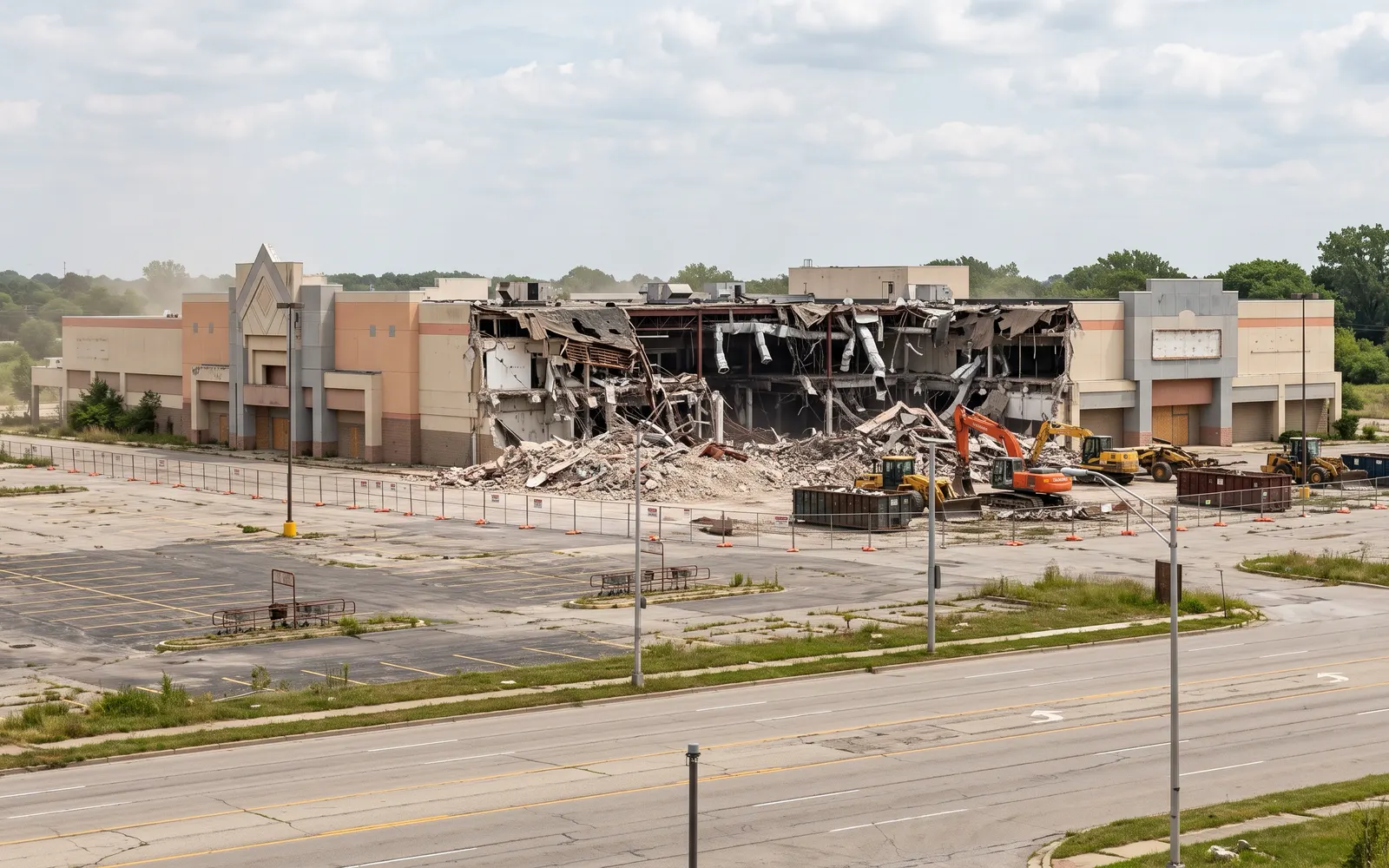
The biggest single change is the mall. The village's Town Center page says the Lincolnwood Town Center was more than 50% vacant by January 2026 and closed to the public after July 23, 2026, except for Kohl's, which has not announced a final date. It was sold in December 2025 to a group affiliated with Prairie Ridge Development and Xroads Real Estate Advisors. Demolition started June 25 with the former furniture store on the southeast corner. Nadig Newspapers reported on August 2, 2026, that a third of the building was gone and the main section along Touhy was next.
Neighborhood retail sits along Lincoln Avenue, Devon Avenue and Touhy Avenue, per Wikipedia, and at District 1860 at Touhy and Lincoln, where the village lists a LensCrafters and a nail salon among the tenants. For bigger trips, Wikipedia names Westfield Old Orchard, Golf Mill and Village Crossing, all a short drive away. Nadig notes that a Walmart Supercenter sits across Touhy in Skokie.
Groceries are the gap to plan around. The grocery building at District 1860 is finished, but the village says Amazon announced in January 2026 that its planned Amazon Fresh there will not open, and the village is looking for a new tenant. Until one signs, most grocery runs go to stores on the major roads in and around the village, and which one you use depends on which side of Lincolnwood you live on. That is worth mapping before you buy.
Where Lincolnwood Eats
Most of Lincolnwood's restaurants are on its main roads. Walk Score counts about 70 restaurants, bars and coffee shops in the village. The newest cluster is at District 1860, where the village's TIF page lists three restaurants open: Fat Rosie's, Mia Francesca and FatPour. The rest are spread along Touhy, Lincoln, Devon and Cicero.
There is one piece of trivia every local knows. Per Wikipedia, citing a 2004 Chicago Tribune story, a scene from *Ocean's Twelve* was filmed at L. Woods on Lincoln Avenue, and the room was renamed for the movie.
Eating out costs a little more here. The village's tax page says Lincolnwood adds a 2% tax on prepared food and beverages, for a total of 12% on those purchases, up from 1% before June 1, 2021.
I don't try to rank restaurants here, because the list turns over. The advice I give buyers is to eat near each house you are serious about. It is the fastest way to learn which part of Lincolnwood you'd actually use day to day. A house near Touhy and Lincoln gets you a walkable dinner at District 1860. A house near Devon gets you a short walk or drive into Chicago's restaurants across the street.
Proesel Park and Lincolnwood's 13 Parks
Lincolnwood's parks are run by the village itself, through its Parks and Recreation Department at the community center, 4170 W. Morse Ave. Per the village's parks list, there are 13 parks, and Wikipedia puts their total at 34 acres, with nine tennis courts and 11 ball diamonds. Most are small neighborhood parks with a playground and a half basketball court, which means most blocks are a short walk from one.
Henry A. Proesel Park, at 7030 N. Lincoln Ave., is the big one. It has the aquatic center, ball diamonds, a soccer field, outdoor fitness equipment, two basketball courts, a playground, picnic areas, three lighted tennis courts, an inline rink, an outdoor ice rink and volleyball courts. Parking is along Kostner and Morse avenues. Dogs are not allowed in the park, though leashed dogs can be walked on the sidewalk around it.
The south end of Proesel is closed for a rebuild from March through mid-November 2026, per the village's construction page. The state OSLAD grant-funded project adds a universally accessible playground, rebuilt tennis and sand volleyball courts, two pickleball courts, a renovated inline court, better basketball courts and new paths. By August, the playground, surfacing, volleyball sand, paths and court surfaces were in, with tennis and pickleball next.
The aquatic center at Proesel charged $10 a day for residents and $20 for non-residents this season, per its page. Non-residents may buy a day pass only with a resident or pass holder, and this year's non-resident season passes sold out. The village has also posted a recreation center and aquatic center feasibility study page, which is worth watching.
Tennis runs through the village too. The Lincolnwood Tennis Club costs $60 a season (May 1 to October 31) and lets members book courts at Proesel, Flowers and Central parks four days ahead, and anyone can rent a permanent weekly court time for $15 an hour.
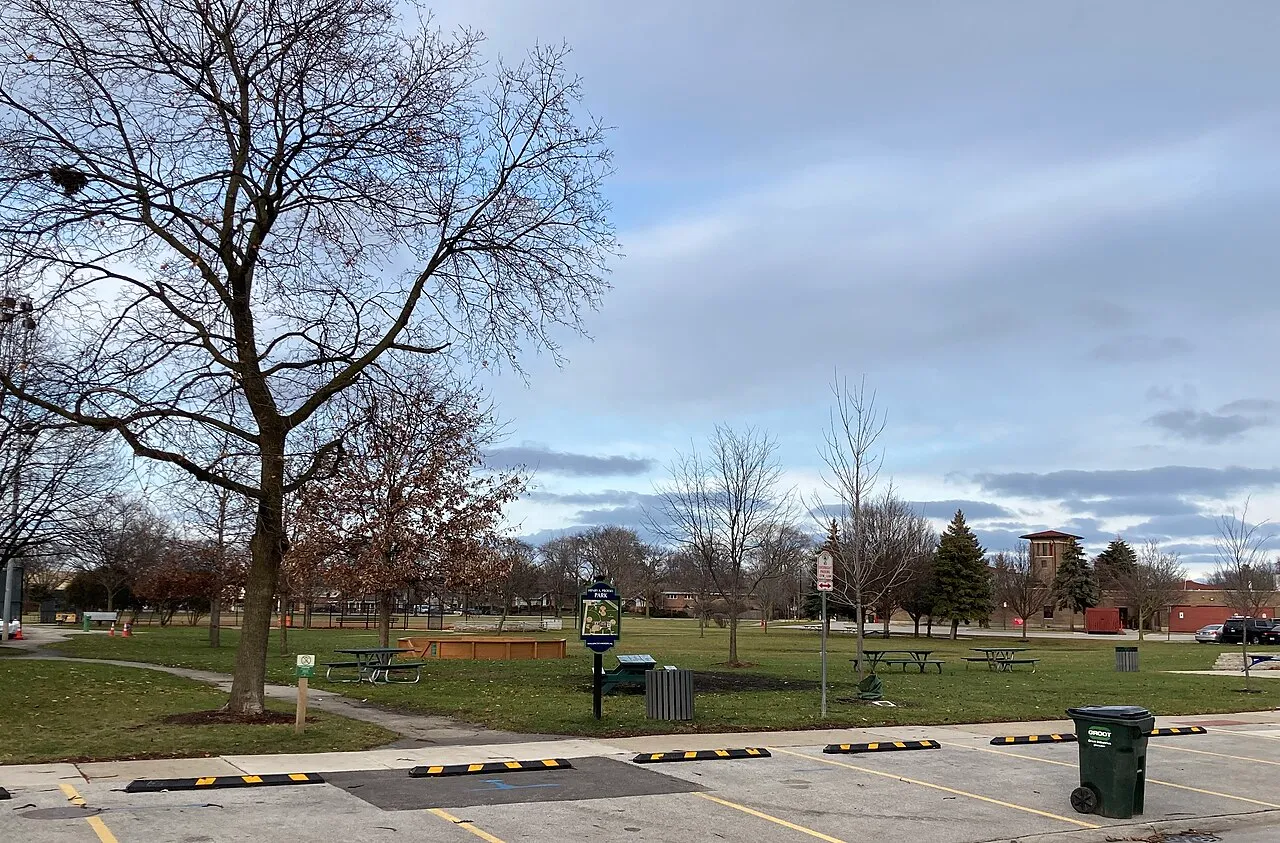
Henry A. Proesel Park. 7030 N. Lincoln Ave. Aquatic center, diamonds, soccer, tennis, ice rink, inline rink, volleyball.
Centennial Park. 6801 McCormick Blvd. A mile-long trail along the North Shore Channel with 18 sculptures, an amphitheater, a fishing platform and a nine-hole disc golf course.
Central Park and M. Lester Flowers Park. 6451 Central Park Ave. and 4520 W. Pratt Ave. Each has a playground, a half court and two tennis courts.
Springfield Park. 3901 Arthur Ave. Playground, half court and a skate spot.
Neighborhood parks. Goebelt (6621 Kilbourn Ave.), O'Brien (7260 East Prairie Rd.), Columbia (3745 Columbia Ave.), Drake (6750 Drake Ave.), G.G. Rowell (6555 Albion Ave.), Kenneth (7255 Kenneth Ave.), Kildare (7245 Kildare Ave.) and Rossi (7025 Keystone Ave.), each with a playground and a half court.
Lincolnwood Trails: the North Shore Channel and the Valley Line
For a small village, Lincolnwood has an unusually good trail network. The village's paths page lists three of its own: the Centennial Park Trail, the Union Pacific Path and the Valley Line Trail. Leashed dogs are welcome on all three.
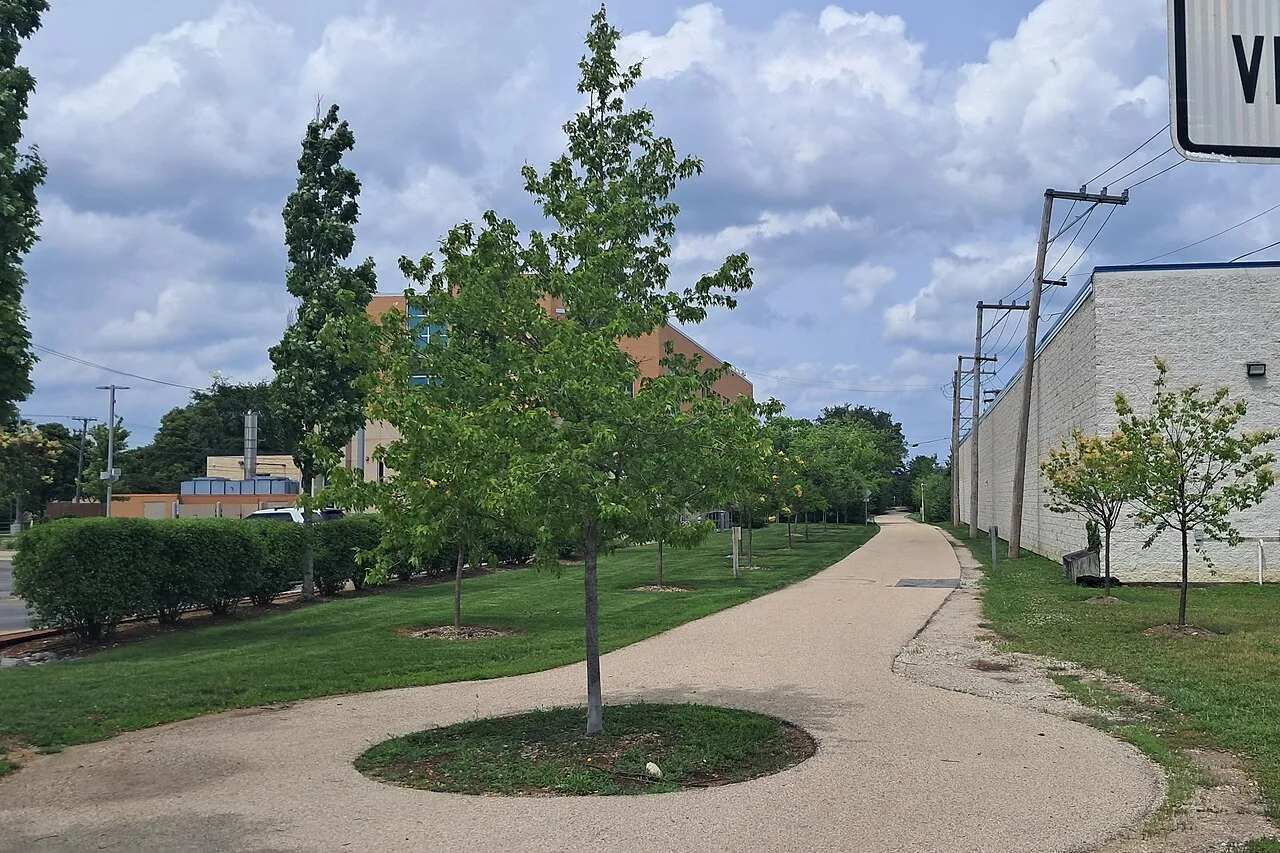
The Centennial Park Trail runs about a mile along the North Shore Channel, from Touhy and McCormick south to Devon. It is part of the longer North Shore Channel Trail, which the village describes as 6.5 miles from Ronan Park near Lawrence Avenue north through Lincolnwood and Skokie to the Ladd Arboretum in Evanston. North of Touhy, Skokie's North Shore Channel Park picks up the path. The channel itself is a 7.7-mile canal built from 1907 to 1910, per Wikipedia.
On the west side, the Valley Line Trail and the Union Pacific Path run through the village and connect to the regional network. The village publishes a regional bike path map showing the connections to the North Shore Channel Trail, the Sauganash Trail Park, the Skokie Valley Trail and the Union Pacific Bicycle Path. Put together with the new Pratt Avenue bike lanes, that gives a cyclist an east-west route across the village and north-south routes on both sides.
The village runs an Adopt-a-Path program, where local groups take a section of trail and clean it four times a year for two years. For a buyer, the practical point is simpler: a house near either trail gets you miles of off-street walking and biking out the back door.
The Lincolnwood Public Library
The Lincolnwood Public Library is at 4000 W. Pratt Ave., at Pratt and Lincoln, in the center of the village. Per Wikipedia, it was established in 1978, with Madeline Grant, who later became the village's first woman mayor, as the driving force and first library board president.
Two things set it apart from a standard suburban library. It runs a Library of Things, where residents can check out items such as bike repair kits, photography equipment and games. And it keeps a Historical Collection covering the village from the Tessville years forward, which is the first place to look if you want the history of a specific block or building.
For a buyer, the library's location is part of the point. It sits a short walk from Village Hall, Proesel Park and the school campus, which makes the village center the most walkable part of Lincolnwood. If you work from home, it is also the quietest desk in the village.
Utilities and Village Services in Lincolnwood
Lincolnwood buys its water from the City of Evanston, per the village's water bill page, and delivers it through its own system. Rates changed this year. After a rate study adopted November 18, 2025, the village moved residential customers to bi-monthly billing with three charges: a $10 monthly water system fee, $10.84 per 1,000 gallons for water and $1.18 per 1,000 gallons for sewer. The consultant projected the change would add about $6 a month for low-use households and about $9 for average use. The study found a funding gap for water and sewer repairs and lead service line replacement after a seven-year rate freeze, so expect further adjustments.
Trash goes to Groot. Per the village's refuse page, Groot picks up garbage and recycling every Monday, with one bulk item a week allowed at the curb and yard waste every Monday from March 16 through the last Monday in November. Carts can't go out before 7 p.m. the night before and must be back by 8 a.m. the day after. The village is a member of the Solid Waste Agency of Northern Cook County, and as of 2026 Public Works takes household batteries for recycling.
The village also runs several homeowner rebate programs, listed on its rebate page: a sewer line repair rebate, a private drainage rebate for work like French drains and sump pumps, a flood-control rebate for overhead sewers and backwater valves, and a lead service line replacement program. Village fire protection is provided by contract with Paramedic Services of Illinois, per the village profile. The village sets electric and natural gas utility taxes at 5%, per its tax page.
One practical note for sellers: order the final water reading early. The village wants five business days' notice before closing, and the transfer can't close without the certificate of payment.
Lincolnwood's Yearly Calendar
Lincolnwood's calendar runs on one big summer festival and a steady set of park events. Lincolnwood Fest ran Thursday, July 23 through Sunday, July 26, 2026, in Proesel Park, with carnival rides, live bands every night, a beer and wine garden and a chamber of commerce business expo. The village says it draws about 40,000 guests from Lincolnwood, Chicago and the surrounding suburbs. Admission is free. The car show took 2026 off because of the Proesel construction and is set to return in 2027.
The fall schedule on the village's special events page includes a Trunk-or-Treat in the aquatic center parking lot on Sunday, October 25, and the Lincolnwood Lights at the Village Hall promenade on Thursday, December 3. Oaktoberfest, held the last Sunday in October in Proesel Park, gives away free oak saplings, first come, first served. The summer concert series and movies in the park fill in from June to September.
The signature fall event is the 50th annual Turkey Trot on Sunday, November 22, 2026: a chip-timed, USATF-certified 5K and 10K plus a 5K fitness walk, starting at 8:45 a.m. near Proesel Park. Registration was $42 through October 2.
If you are touring houses on a July weekend, stop by the fest. It tells you more about how the village center works than a listing will.
What's Being Built in Lincolnwood
More is changing in Lincolnwood right now than at any time since the mall opened, and most of it is on Touhy Avenue.
The largest site is the former Lincolnwood Town Center. On April 21, 2026, the Village Board approved a pre-development agreement with the new owner. Its conceptual plan calls for a large retail store of about 150,000 to 175,000 square feet, an auto dealership and more commercial and retail space. Nadig Newspapers quoted the agreement describing the store as a large-format retailer selling "a broad assortment of merchandise at discounted prices" on about 20 to 25 acres of the 31-acre site, with the dealership on 5 to 6 acres. The store's name has not been announced. The village stresses that the agreement does not commit it to approving the project or any incentives, and any plan still needs public hearings. Demolition is running in three phases, with Kohl's last. As of the latest reports I could open, the store and the timeline were not set.
The second site is District 1860, on the northwest corner of Touhy and Lincoln where the Purple Hotel stood. The village says Building A, with 299 apartments over ground-floor commercial space, got its certificate of occupancy in 2023. The Real Deal reported in January 2024 that Tucker Development's project covers 8.5 acres, and that rents then ran from $1,600 for studios to nearly $4,000 for three-bedroom units. A dual-branded Marriott hotel with more than 150 rooms, a Residence Inn and a SpringHill Suites, was scheduled by the village to open in the first half of 2026. The grocery building is complete but empty after Amazon canceled its Fresh store. The village created the North Lincoln TIF district in 2019 to support the project, per its TIF page.
Devon Avenue is the third. The village's Devon Avenue project, started in March 2026, rebuilds the Lincolnwood side with new pavement, curbs, sidewalks, lighting, parkways and water main, backed by $2,749,500 in federal Surface Transportation Program funds. It grew out of a 2013 Urban Land Institute study of the six blocks from Lincoln Avenue to McCormick, and the area sits in the Devon/Lincoln TIF district created in 2014.
Smaller items are worth knowing about if you are buying nearby. The Pratt Avenue pedestrian bridge over the North Shore Channel has $3 million in state construction funding and held an open house in December 2025. And the village's pending zoning page lists a September 16, 2026 hearing on a request to expand the gas station at 6401 N. Cicero Ave. onto the office lot next door at 4760 W. Devon Ave.
For buyers, the practical effect is that the north end of the village will look different in three years. If you are buying near Touhy, factor in construction traffic now and a busier corridor later.
I don't label any town or neighborhood as safe or unsafe.
Flood Risk in Lincolnwood: Basements, Sewers and What the Village Has Built
Flooding in Lincolnwood is mostly a rain and sewer issue. Redfin, using First Street's model, rates the village's overall flood risk as minor but says 17% of properties are at risk of severe flooding over the next 30 years. That is a high share for the north suburbs.
The village's own annex to the 2024 Cook County hazard mitigation plan explains why. It says the community floods from rainfall rather than from a river or the lake. The only FEMA 100-year floodplain is along the North Shore Channel, but several neighborhoods have had localized flooding in heavy rain because the sewers can't move the volume of water. It lists two FEMA-identified repetitive-loss properties and a September 2008 storm that dropped 7.85 inches of rain. The countywide FEMA flood map in effect dates from August 19, 2008.
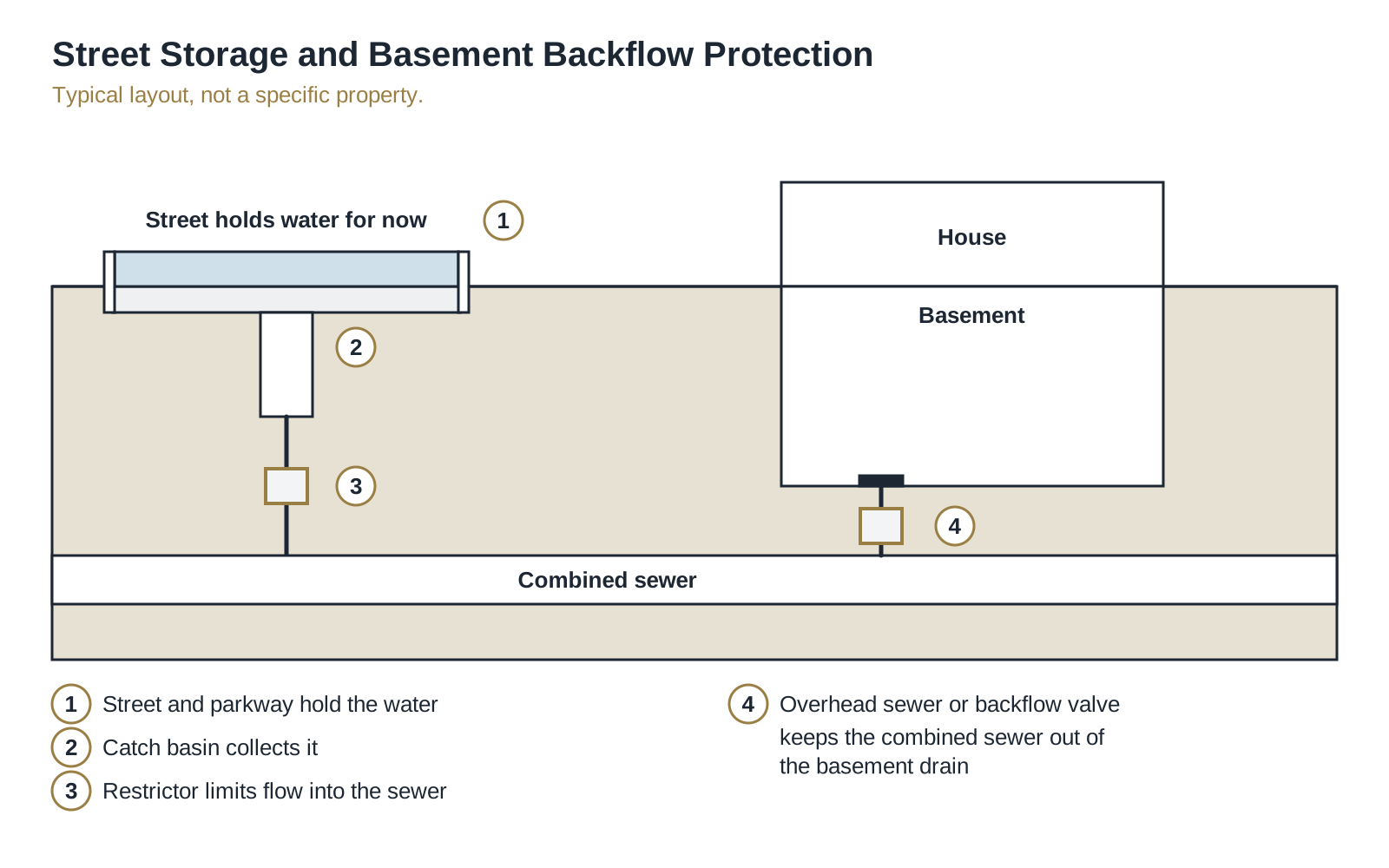
The sewer system is the key detail. Per the village's sewer page, most of Lincolnwood is on a combined sewer, where storm water and sewage share the same pipes, with two overflow structures on the North Shore Channel. Only the northeast corner has a separate storm sewer. In a combined system, a big rain can push water back up into basement drains.
The village has spent years on it. Its stormwater program dates to 2007, with a goal of protecting basements from backups in storms up to a 10-year level. A street storage program, built in three phases starting in 2016, holds water in the streets and parkways and meters it into the sewers, and is designed to clear the streets within two hours of a 10-year storm. The North Shore Outfall Sewer, a 42- to 60-inch storm sewer from Drake Avenue to the channel, was finished in 2020 and gave relief to homes in the southeast part of the village. The village has hired Engineering Resource Associates to update its model, and says newer rainfall data has reduced the level of protection the current system provides for a 10-year storm, so more projects are likely.
Homeowners can get help too. The village's flood-control rebate covers overhead sewer conversions and backwater valves at 50% of the project cost, up to $5,000.
Four checks before you write an offer. Look the address up on the FEMA flood map. Ask the seller directly whether the basement has ever taken water and whether the house has an overhead sewer or backflow valve. Have a sewer camera inspection done on the line to the street. And check the sump pump, its backup and the grading. If you are buying your first home here, these questions matter as much as the kitchen does.
Frequently Asked Questions
What county and township is Lincolnwood, IL in?+
Cook County, and all of it is in Niles Township, per Census Bureau estimates for 2025, which put the village at 13,039 people. The Cook County Assessor reassessed Niles Township in 2025, so the next reassessment on the three-year cycle falls in 2028.
How much does a house cost in Lincolnwood, IL?+
Redfin reported a median sale price of $589,610 for the three months ending August 2026, up 5.6% from a year earlier; detached houses alone had a median of $634,628. Zillow's home value index was $578,801 for August 2026. Only 34 homes sold in August, so the numbers move with the mix.
What are property taxes in Lincolnwood, IL?+
Ownwell (April 2026) puts the median effective rate at 2.46% with a median bill of $9,274. At the $589,610 summer median, that rate works out to about $14,500 a year. There is no village transfer tax, but sellers need a certificate of payment after a final water reading.
What school district is Lincolnwood, IL in?+
Lincolnwood School District 74 for pre-K through eighth grade, on one campus: Todd Hall (Pre-K to 2), Rutledge Hall (3 to 5) and Lincoln Hall (6 to 8). High school is Niles West in Skokie, part of Niles Township High School District 219. Confirm each address with the district.
Does Lincolnwood have a Metra station?+
No. The closest is Edgebrook on the Milwaukee District North line, just over the Chicago line near Central and Devon. In fall 2026 it has 20 weekday trains to Union Station, each 32 minutes. Pace 210 (Lincoln Avenue) and Pace 290 (Touhy Avenue) serve the village by bus.
What is happening to the Lincolnwood Town Center?+
It closed to the public after July 23, 2026, except for Kohl's, and is being demolished in phases. An April 2026 pre-development agreement sketches a large discount retail store of about 150,000 to 175,000 square feet, an auto dealership and more commercial space. No store has been named, and any plan still needs public hearings.
Does Lincolnwood, IL flood?+
Some parts do, mostly from heavy rain overwhelming the sewers. First Street's model (via Redfin) puts 17% of properties at severe 30-year flood risk, and most of the village is on a combined sewer. The village has built street storage and the North Shore Outfall Sewer and offers a 50% rebate, up to $5,000, for overhead sewers and backwater valves.
Is Lincolnwood walkable?+
The village center is. Walk Score rates the 60712 ZIP 66 (somewhat walkable) with a Bike Score of 46. The North Shore Channel Trail, the Valley Line Trail and new Pratt Avenue bike lanes make it one of the better small suburbs for biking.
What is District 1860 in Lincolnwood?+
The mixed-use development at Touhy and Lincoln on the former Purple Hotel site. It has 299 apartments, restaurants including Fat Rosie's, Mia Francesca and FatPour, and a Marriott hotel the village scheduled to open in 2026. Its grocery building is empty after Amazon canceled its planned Fresh store.
Eshu Chikoti has extensive access to off-market listings throughout Lincolnwood and the rest of Cook County — homes that never make it to the public listing sites. That matters right now: in a seller's market like this one, well-priced homes routinely go under contract within days, and buyers relying only on public listings are competing for whatever is left over. Working with someone plugged into off-market inventory means seeing homes before the crowd does.
Eshu Chikoti · 847-691-4282 ·
Get new Lincolnwood listings by email
When a home comes on the market in Lincolnwood, I'll email it to you.
Just your email. Unsubscribe any time by replying.
Thinking About Lincolnwood?
Whether you're buying, selling, or just curious what's on the market, I can walk you through Lincolnwood street by street.