Homewood, IL
Homewood, IL is a 5.26-square-mile Cook County village about 22 miles south of the Loop, with a walkable downtown built around a Metra and Amtrak station and a summer 2026 median sale price near $242,000.
Living in Homewood, IL means a median sale price of about $242,000 this summer, a 39- to 48-minute Metra Electric ride to Millennium Station at rush hour, and property tax near 3.51% of value. Most homes date from the 1950s through the 1970s. The village spans four townships. Here it is, pocket by pocket.
Written by Eshu Chikoti · 847-691-4282 ·
How Homewood, IL Got Here: A Short History
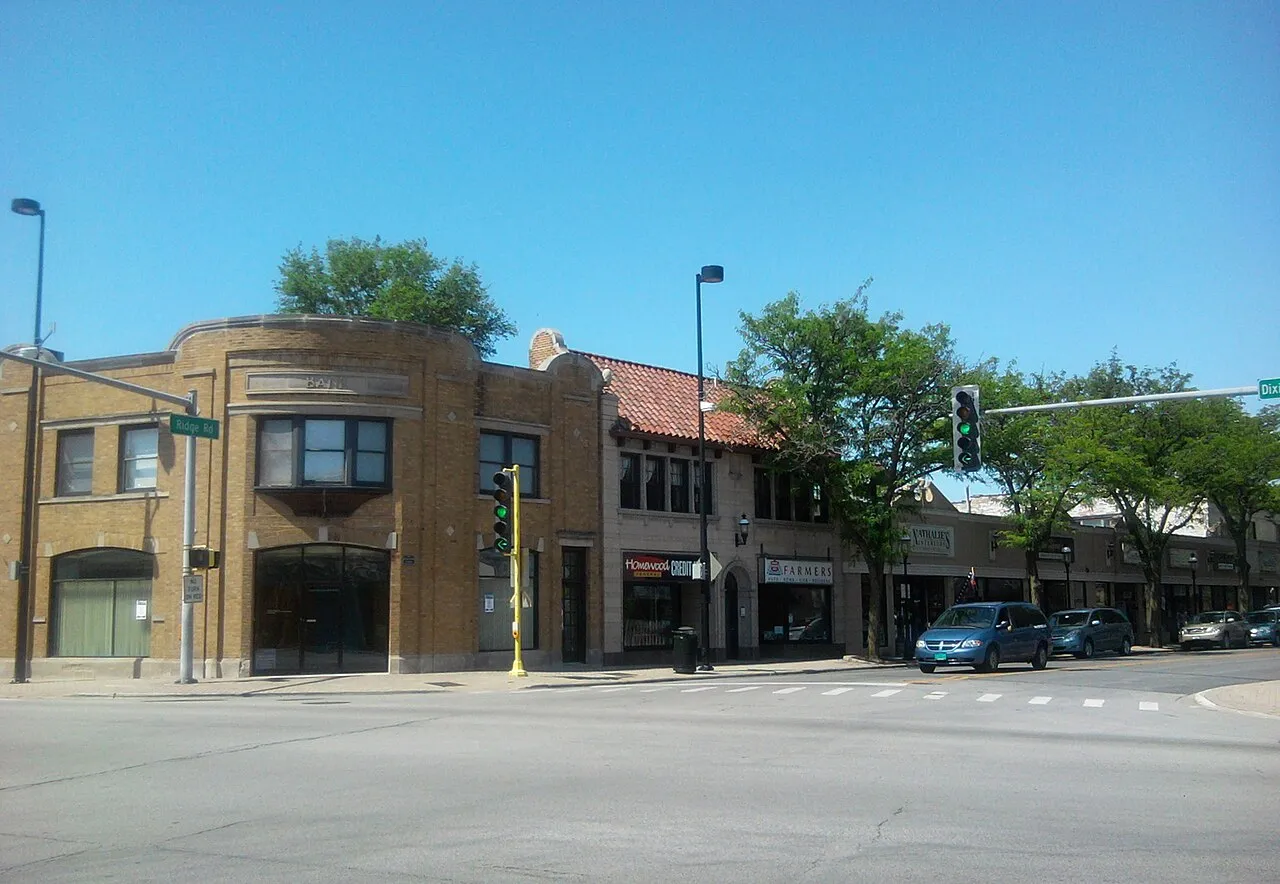
Homewood started on a trail and grew on a railroad. The village's history page, which draws on the Homewood Historical Society, says the first settlers arrived in the 1830s along the Vincennes Trail, the old route between Vincennes, Indiana, and the mouth of the Chicago River. One branch of it ran north through what is now Homewood along the line of today's Dixie Highway.
In 1853 James Hart platted a town called Hartford, which is the downtown you walk today. The Illinois Central laid track through it the same year and named the stop Thornton Station, after the older village of Thornton to the east. A flour mill opened here in 1856, and farmers from the surrounding prairie brought their grain to it. The Post Office recognized the new name, Homewood, in 1869, and the village incorporated in 1893.
The railroad shaped the village again after 1900. The village says that early in the 1900s as many as 10 trains a day ran from Chicago to bring golfers to the country clubs in and near town, and some of those golfers built summer houses west of the tracks next to Ravisloe Country Club. That is why the oldest houses in Homewood cluster on the west side near the club.
Growth came in two waves. The 1920s brought paved streets, water mains and sewers, then the Depression slowed everything. The village had about 3,000 people by 1940. After World War II the subdivisions came fast, and by 1970 the population was near 18,000. Most of the houses you will tour in Homewood were built in that postwar run, which is the single most useful thing to know before you start looking.
Homewood at a Glance
Homewood covers 5.26 square miles, 5.22 of it land, and sits about 22 miles due south of the Loop, per Wikipedia's village article. Its neighbors are Hazel Crest to the west, East Hazel Crest to the north, Glenwood and Thornton to the east, and Chicago Heights and Flossmoor to the south. The village sits on the old Calumet Shoreline, and the sand ridge that Ridge Road follows is the edge of an ancient lake.
The Census Bureau's Vintage 2025 estimates put Homewood at 18,773 people as of July 1, 2025, all in Cook County. The detail that matters for buyers is that those residents live in four different townships: 8,451 in Bloom, 5,771 in Thornton, 2,502 in Rich and 2,049 in Bremen. Township decides your assessment calendar and part of your tax rate, so two houses a few blocks apart can sit on different Cook County schedules. I cover that in the tax section below.
The 2020-2024 Census ACS counts 7,468 housing units, and 81.7% of occupied homes are owner-occupied. About 79% of all units are single-family detached houses. The rest is a mix of condo and apartment buildings, most of them near downtown and along the main roads.
Homewood also has an unusual employer base for a village this size. Wikipedia lists the U.S. headquarters of Canadian National Railway, with a large freight yard and shops, along with Carl Buddig & Company offices and Homewood Disposal. The CN tracks are part of daily life here: they carry freight through the middle of town, and the at-grade crossings are something to notice when you tour.
Fewer than 500 of Homewood's homes were built after 1990. The 3.51% median effective rate is well above the county's 2.14%, and the 2026 reassessment will reach bills issued in 2027. Trash service is something you contract for yourself. And the downtown redevelopment and viaduct work mean construction near the station for a while.
Homewood Neighborhoods, Pocket by Pocket
Homewood has no official neighborhoods, and locals describe houses by landmarks: west of the tracks or east, north of 183rd or south, near Izaak Walton or near the Halsted stores. Those references line up with real differences in age, lot size and school assignment, so they are worth learning.
The rail line is the first split. The oldest housing and the country club sit west of the tracks and downtown. East of the tracks, toward Halsted Street, the blocks fill in with the 1950s and 1960s ranches, split-levels and raised ranches that make up most of the village. The Census ACS shows why: 32.4% of Homewood's housing units were built in the 1950s, 21.6% in the 1960s and 20.4% in the 1970s. Only 11.3% predate 1940.
The second split is 183rd Street and Western Avenue. The west and south edges of the village are where the school districts change, and in the far southwest corner some addresses feed Flossmoor schools instead of Homewood's. I cover that below, and it is the reason I check every address before a buyer falls for a house.
Below are the pockets you will see referenced in listings and in conversation. Redfin names a few of them, such as Downtown Homewood and Homewood Terrace South, and the rest are the landmark descriptions locals use. Boundaries are informal, so treat these as a starting point. If you want to know which pocket a specific address sits in, which township it is taxed in and what nearby homes sold for, that is a conversation I am happy to have here.
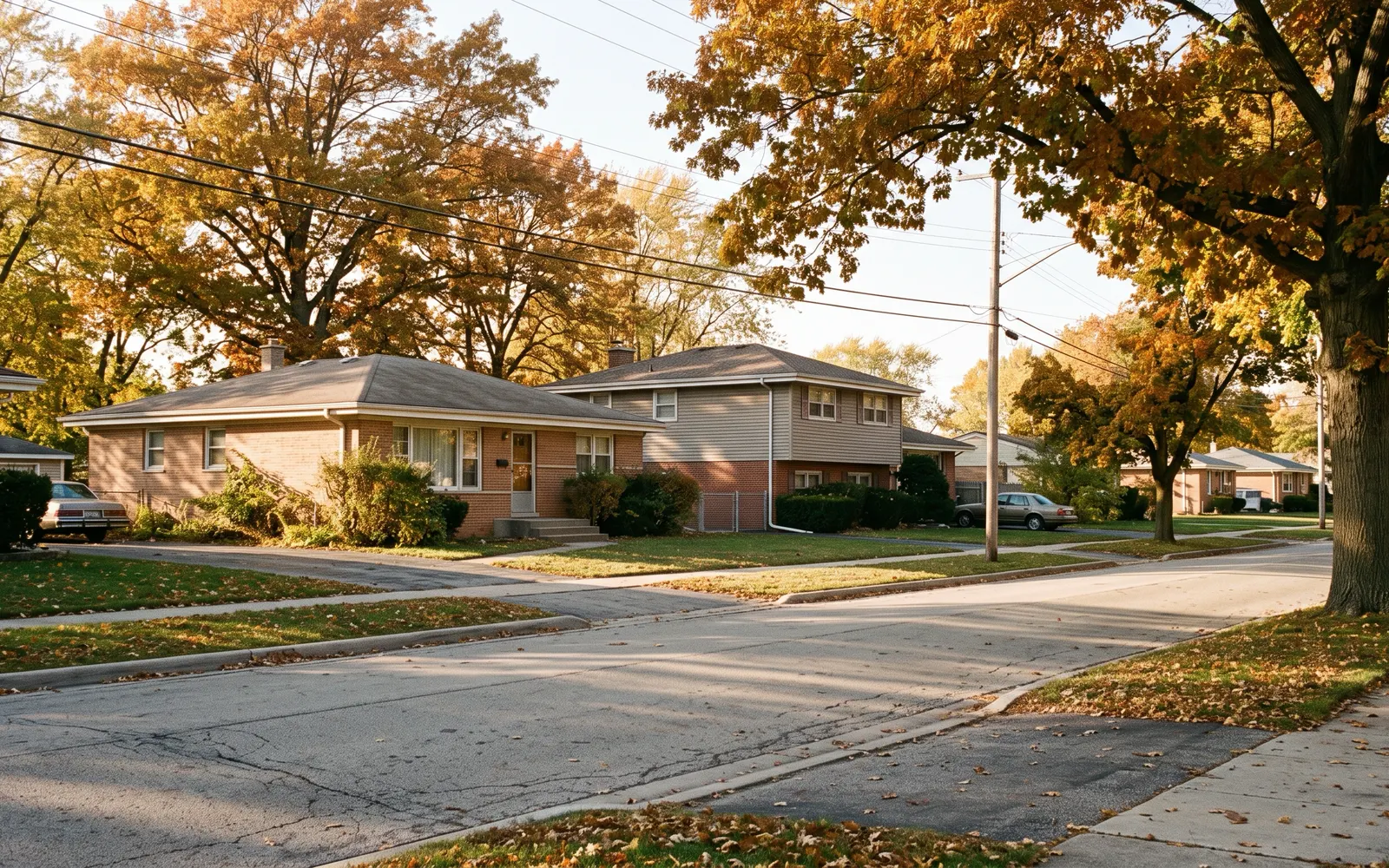
Downtown Homewood. The blocks around Martin Avenue, Ridge Road, Harwood Avenue and Dixie Highway next to the station. Condos, apartments, older houses and the only truly walkable part of the village. Redfin tracks it as its own neighborhood.
West of the tracks near Ravisloe. The pocket where the village says golfers built summer houses in the early 1900s. Expect the oldest houses in Homewood, larger lots and more variety in style than anywhere else in town.
The Ridge Road corridor. Ridge Road follows the old lake shoreline east from downtown toward Lions Club Park and the Izaak Walton Preserve. Mostly postwar single-family houses on established streets.
The Izaak Walton area. The streets near the 193-acre preserve on the east side. Postwar houses with a large open space and trail system close by.
The Halsted side. East Homewood near the Halsted Street shopping corridor. Mostly 1950s and 1960s ranches and split-levels, with the biggest stores in the village a short drive away.
The 183rd Street corridor and the southwest edge. The Westgate and Kedzie Gateway shopping areas sit along 183rd, and the blocks west of Western Avenue and south of 183rd are where some addresses fall into Flossmoor School District 161. Check the school on every house here.
Homewood Terrace South. A subdivision name Redfin uses in its Homewood listings. Ask for the build year and school assignment on each house.
What Homewood Homes Look Like, by Era
Homewood is a postwar village with an older core. Of the 7,468 housing units in the 2020-2024 ACS, 2,418 were built in the 1950s, 1,613 in the 1960s and 1,521 in the 1970s. That is nearly three out of four homes from those three decades. Another 843 predate 1940 and 284 date from the 1940s. Construction since 1980 is thin, with 323 units from the 1980s and fewer than 500 in total since 1990.
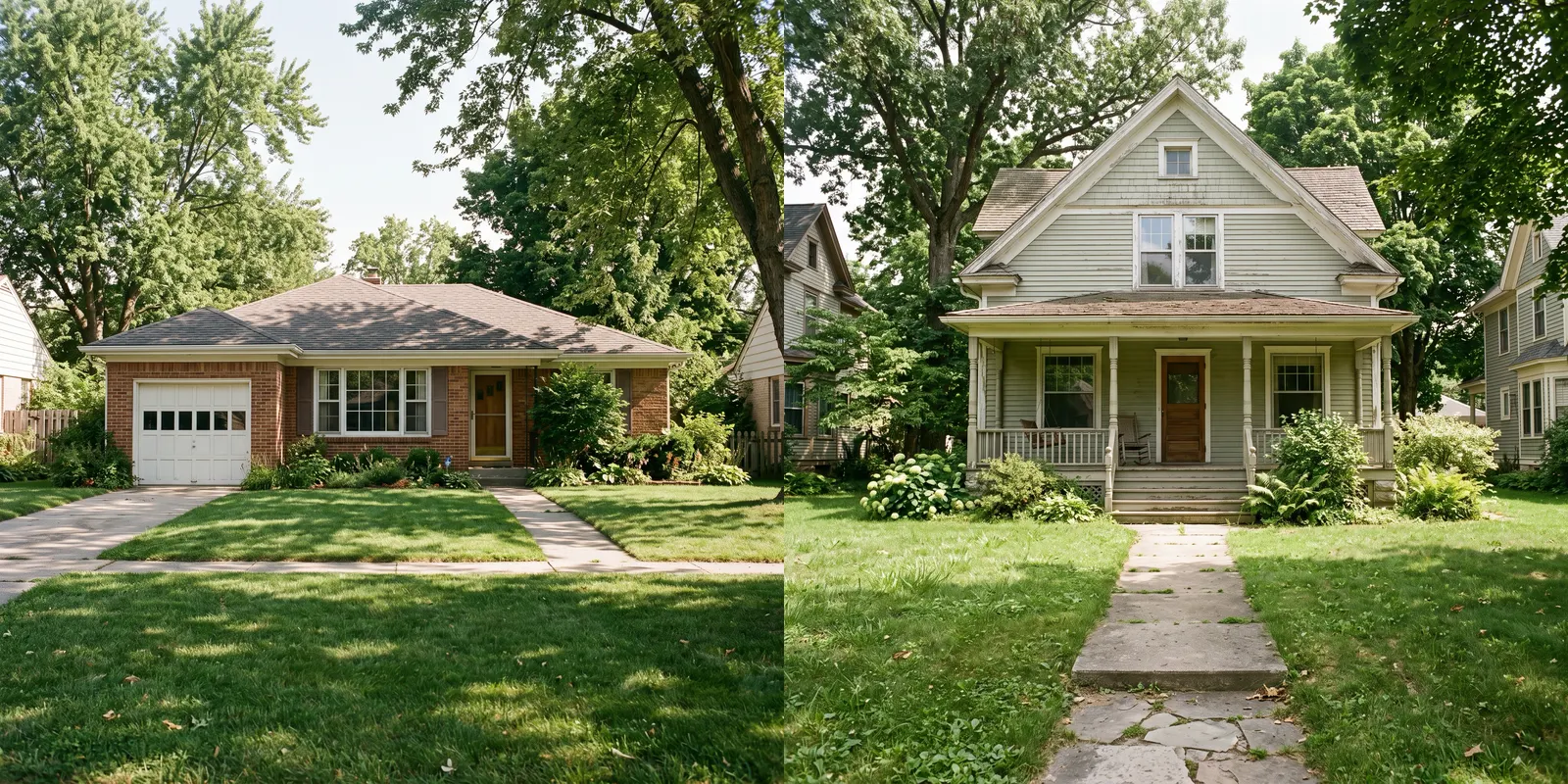
In practice that means a lot of brick ranches, split-levels and raised ranches, usually three bedrooms, often with one or two rounds of updates. The older houses west of the tracks and near downtown run to Tudors, colonials and bungalows on bigger, deeper lots. Detached houses make up 5,916 of the units. The rest are small multifamily buildings and larger condo and apartment buildings, with 245 units in buildings of 50 or more.
The ACS puts the median value of an owner-occupied home at $221,100 and the median gross rent at $1,333. Rentals are 1,293 of 7,082 occupied homes, about 18%.
The expectation I most often have to reset on a 1950s Homewood house is what "updated" means. A new kitchen and fresh paint can sit on top of an original electrical panel, cast iron or clay sewer lines, and a basement or crawl space that has seen water. None of those should kill a deal. All of them belong in the price, and a sewer scope costs a small fraction of what a failed line costs. My home inspection checklist covers what to ask for.
The Homewood Housing Market in 2026
Homewood is a balanced market this year. In the three months ending August 2026, Redfin reported a median sale price of $241,840, down 6.6% from the same period a year earlier. Homes sold in about 56 days, the same as last year, and Redfin counted 89 homes sold in August against 92 a year before.
The competition numbers are moderate. The average sale came in at 99.2% of list price, down 0.57 points. Redfin gives Homewood a Compete Score of 55 out of 100, which it calls somewhat competitive, and says the average home sells for about 1% below list and goes pending in about 61 days, while hot homes sell for about 1% above list and go pending in about 36 days.
Here is the part that confuses people. Redfin's median fell 6.6%, but its median price per square foot rose 2.0% to $151. Zillow's home value index put the typical Homewood home at $253,699 in August 2026, up 5.6% from $240,205 in August 2025. Both can be right. Redfin's median is the middle of whatever happened to sell this summer, and if more of those sales were condos or smaller houses, the median drops even when values do not. Zillow estimates every home in the village. The rising price per square foot tells me values held and this summer's mix of sales tilted smaller.
For context, Zillow's August 2026 index put Hazel Crest at $187,433, Country Club Hills at $217,181, Glenwood at $222,050, Matteson at $275,871, Tinley Park at $337,869, Flossmoor at $343,485 and Olympia Fields at $348,213. Homewood sits in the middle of the south suburbs on price, below Flossmoor next door. If you are also looking at Country Club Hills or Matteson, my guides cover how each one compares. For budgeting, see my guide to how much house you can afford.
What this means in practice: a well-priced Homewood house in good condition still draws offers, and Redfin says homes receive 3 offers on average. A house priced off last year's peak comps sits. I would rather list at the right number on day one than chase the market down over two months.
Homewood Property Taxes: Four Townships and the 2026 Reassessment
Property tax is the line that surprises most Homewood buyers. Ownwell's Cook County data for Homewood, last updated April 13, 2026, puts the median effective rate at 3.51% and the median annual bill at $6,896. The Cook County median effective rate on the same page is 2.14%. Ownwell's range for ZIP 60430 runs from 2.46% at the 10th percentile to 4.28% at the 90th, which shows how much the bill moves from one parcel to the next.
The reason is the township and school district mix. Homewood's residents sit in Bloom, Thornton, Rich and Bremen townships, per the Census figures above, and each combination of township, elementary district, high school district, park district and library is its own tax code with its own rate. Two houses at the same price on either side of a township line can carry different bills.
2026 is a reassessment year for all four. Cook County revalues one-third of the county each year, and the Assessor's calendar says "In 2026, the south and west suburbs of Cook County will undergo reassessment." Timing differs by township. The Assessor's Bremen Township release says Bremen notices were mailed August 12, 2026, with appeals due September 24, 2026, and that "property values certified in 2026 will affect second-installment tax bills issued in 2027." It put the 2025 median single-family sale in Bremen at $264,000 against the Assessor's median estimate of $239,000. As of September 28, 2026, the calendar listed Bloom, Thornton and Rich with no notice dates yet, so those notices had not gone out. The south suburbs were last reassessed in 2023. By my arithmetic on the three-year cycle, the next reassessment after this one would be 2029.
The bills you pay now still carry the 2023 values. For tax year 2025, the first installment was due April 1, 2026, and the second is due October 1, 2026, per the Cook County Treasurer. Cook County said those second-installment bills were mailed September 1, about two months late because of the county's tax system overhaul. If you close this fall, ask your attorney how the proration handles that bill.
Here is what the rate looks like on a real purchase. At this summer's $241,840 median, 3.51% works out to about $8,489 a year, or about $707 a month. The seller's current bill can be lower, because it reflects the 2023 assessment and the seller's exemptions. Budget off the purchase price. The Cook County homeowner exemption takes $10,000 off the equalized assessed value of an owner-occupied home; the savings equal that $10,000 times your local tax rate.
On transfer taxes, the ATG ordinance summary for Homewood lists no village transfer tax and a final water reading as the special requirement, but that entry was last updated in 2011, so confirm it with the village or your attorney. The county charges 25 cents per $500 of value, per the Illinois Department of Revenue. My Illinois closing costs guide covers the rest. This is general information, not tax advice. Your bill depends on your parcel, your exemptions and the assessor.
Homewood Schools: District 153, H-F and the Edges
Most of Homewood is in Homewood School District 153 for kindergarten through eighth grade. The district's website lists three schools, and Wikipedia explains how they fit together: students attend Willow School for kindergarten through second grade, Winston Churchill School for third through fifth, and James Hart School for sixth through eighth. Every D153 student moves through the same three buildings, which is simpler than districts with several neighborhood schools.
There is one important exception. Wikipedia notes that some addresses west of Western Avenue and south of 183rd Street are in Flossmoor School District 161 instead. On the southwest side of town, check the district before you look at anything else.
For high school, most of Homewood feeds Homewood-Flossmoor High School, which is its own district, District 233. Because Homewood crosses four townships, a few addresses near the edges can fall into neighboring high school districts, so confirm the high school too.
I don't rank schools on this page. The Illinois Report Card has each school's own data, and D153 posts a district boundaries map on its site. Assignment depends on the address, so check every house with the district before you make an offer.
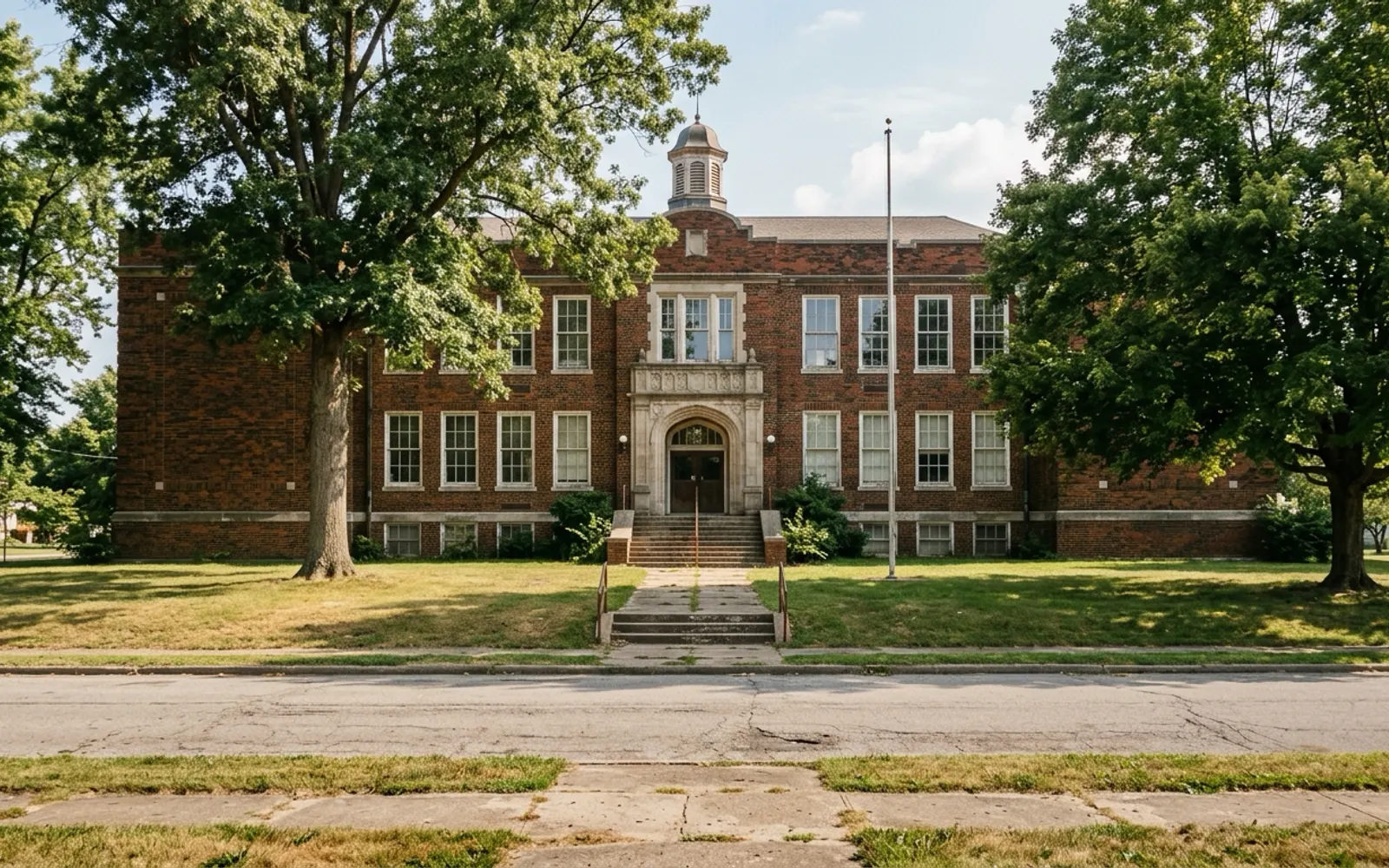
Willow School. District 153, grades K-2.
Winston Churchill School. District 153, grades 3-5.
James Hart School. District 153, grades 6-8.
Homewood-Flossmoor High School. District 233, serving most of Homewood and Flossmoor.
Flossmoor School District 161. Serves some Homewood addresses west of Western Avenue and south of 183rd Street, per Wikipedia.
Commuting from Homewood: Metra Electric and Amtrak
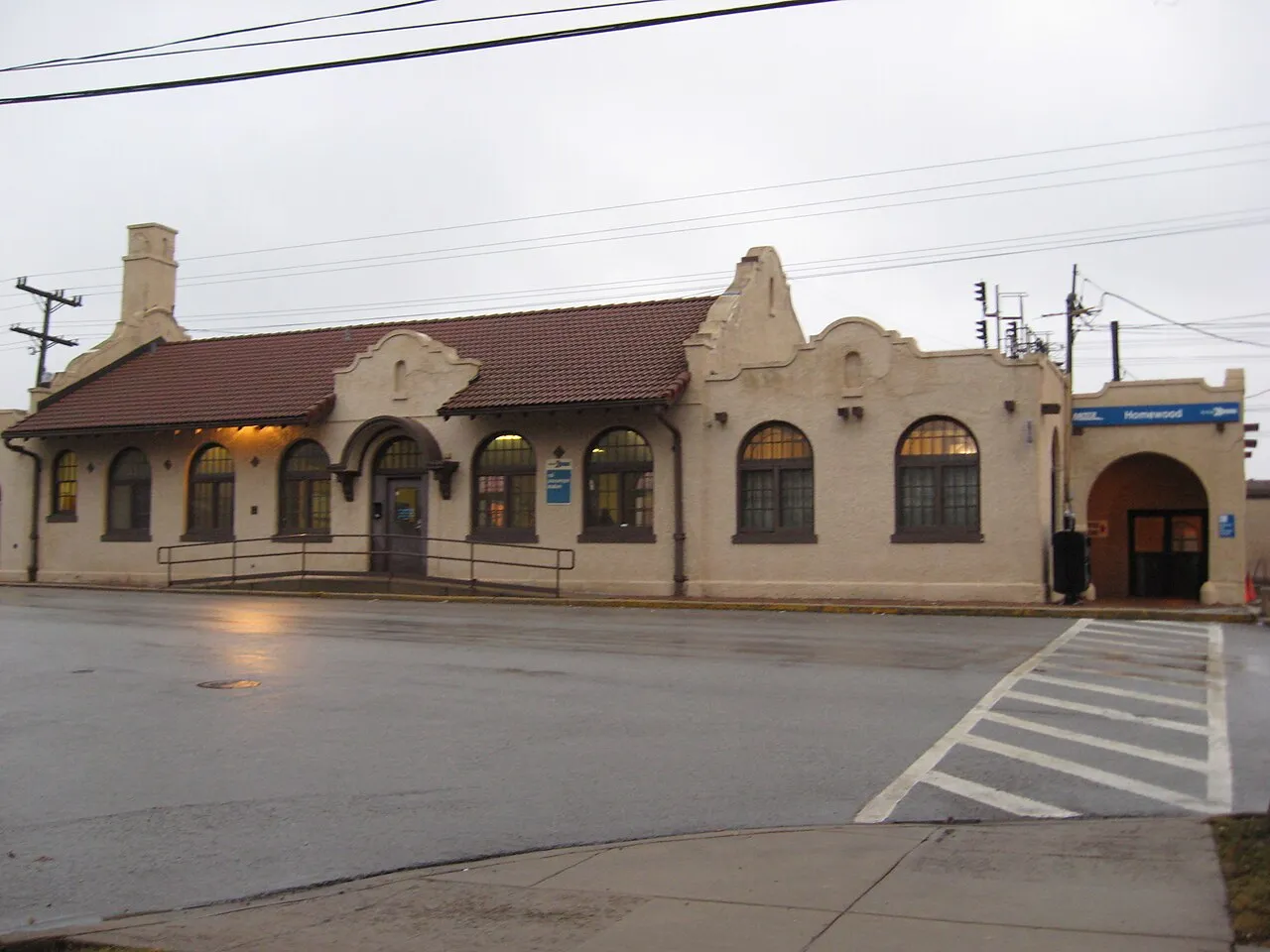
Homewood's station at 18015 Park Avenue is the reason many buyers look here. It sits on the Metra Electric line, 23.5 miles from Millennium Station, per Wikipedia's station article, and it was renovated in the early 2020s to bring the platforms and paths up to accessibility standards.
According to Metra's fall 2026 schedule data, 31 weekday trains leave Homewood for Chicago and 30 come back. The fastest rush-hour trains reach Millennium Station in 39 or 40 minutes: the 6:34, 6:54, 7:14 and 7:29 a.m. departures. Most other morning trains take 46 to 48 minutes, and the slowest off-peak trips run about an hour. On Saturdays there are 21 trains each way and on Sundays 12, at 50 to 55 minutes. Homewood has more weekday trains than any Metra Electric stop south of it on the main line.
The same station is also an Amtrak stop, which almost no suburb can say. Wikipedia lists three services: the City of New Orleans, which heads south in the evening and north in the morning, and the Saluki and Illini, which run between Chicago and Carbondale. Amtrak's station page notes the depot building dates to 1923 and posted an elevator outage beginning September 2, 2026.
Commuter parking is managed by the village, and Pace buses connect Homewood to the rest of the Southland. If walking to the train matters to you, the blocks within a few minutes of Park Avenue and Harwood Avenue are a small slice of the village, and those houses tend to go first.
Driving from Homewood: Highways and the Viaduct Closure
Homewood sits just south of the I-80 and I-294 stretch along the south suburbs, and the village's retail page places the Halsted Street shopping corridor immediately south of it. That puts Indiana, the Tri-State and I-57 all within a short drive. Dixie Highway, Halsted Street, Kedzie Avenue, 175th Street and 183rd Street carry most local traffic.
One project to know about this fall: the Dixie Highway viaduct. The village's project page said on September 9, 2026, that IDOT would restart the work, with the viaduct fully closed for at least 90 days beginning September 22 and construction continuing into early 2027. The project adds drainage under the viaduct to address long-running flooding, along with new pavement and new traffic patterns from Spruce Road to Park Avenue. The village posted detours: southbound traffic uses 175th Street, Governors Highway and 183rd Street, and northbound traffic uses Ridge Road, Ashland Avenue, 175th Street, Halsted Street and 171st Street.
If you are touring houses north of downtown this fall, add a few minutes and follow the posted detour. Once the work is done, the drainage fix should help one of the spots in town that floods most often in heavy rain.
Is Homewood Walkable?
Village-wide, mostly not. Walk Score rates Homewood 43 for walking, which it calls car-dependent, with a Transit Score of 33 and a Bike Score of 40. That is typical for a postwar suburb where most houses sit on quiet residential streets away from the stores.
The exception is downtown. The village describes it as pedestrian, bike and transit friendly, within steps of the station, with restaurants, shops and Martin Avenue Square. The blocks around it are the one part of Homewood where you can walk to the train, dinner and the Saturday market.
For recreation, the Izaak Walton Preserve has about 4 miles of gravel paths, per Wikipedia, and the village has a marked bike route system. Most errands outside downtown still take a car.
Downtown Homewood and the Shopping Districts
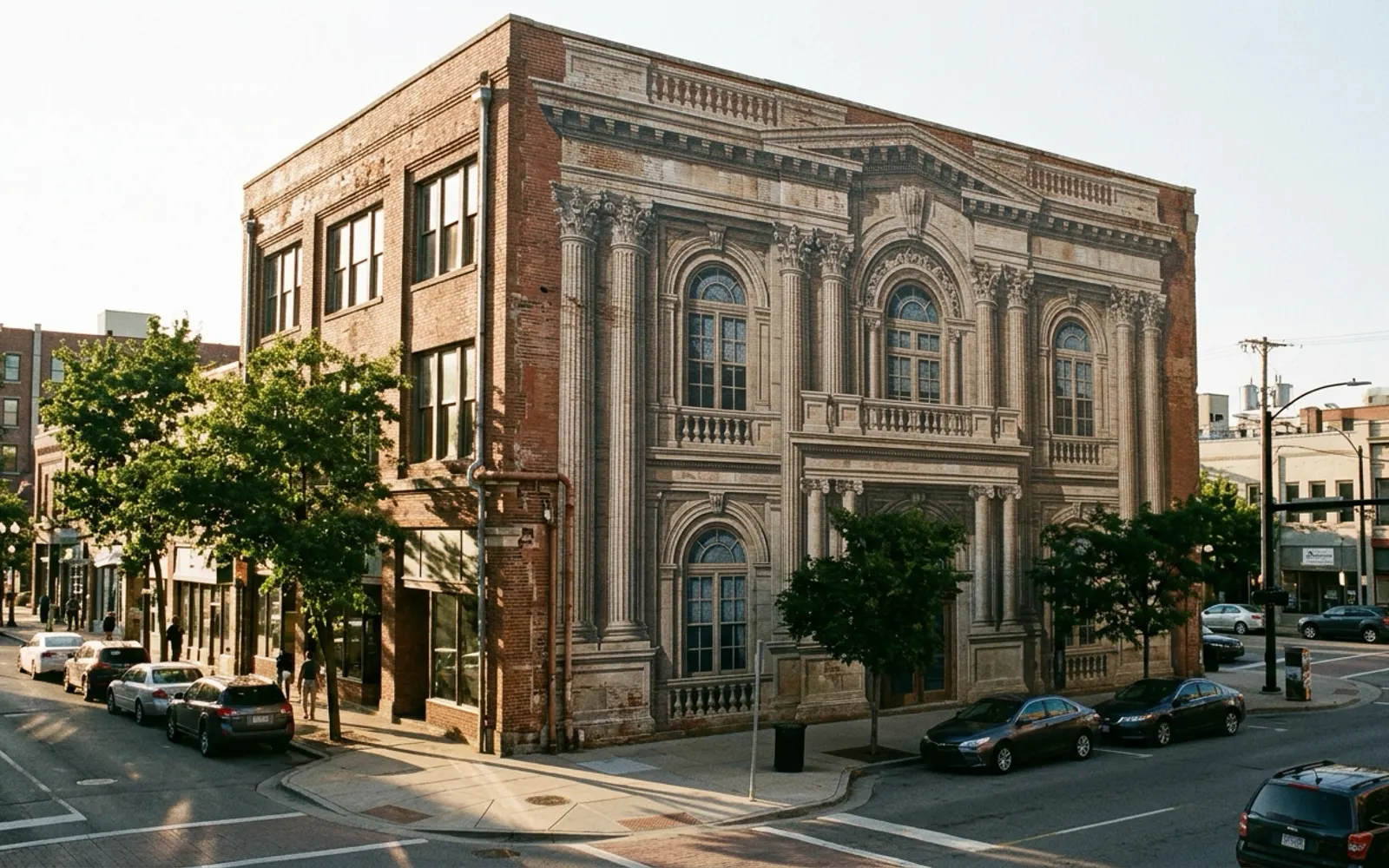
Homewood has more retail than its size suggests, spread across several districts the village lists. Downtown is the one with character: independent shops such as The Villager Gift Shop, Zone Comics & Games, GoodSpeed Cycles and Gaia's Market & Refillery, a boutique hotel, and the Homewood Science Center. The village also says Homewood has the world's largest collection of Richard Haas trompe-l'oeil murals, painted on buildings around downtown.
For bigger errands, the Halsted Street Retail Corridor south of I-80/I-294 has Target, Home Depot, Menards, Kohl's, Best Buy and a long list of national chains. Smaller centers fill in the rest: Southgate on Dixie Highway from 186th Place south, Cherry Creek on Governors Highway south of 183rd with Walgreens and Ace Hardware, Westgate on 183rd west of Park Avenue, and Kedzie Gateway on 183rd near Kedzie.
Most of the village is within a few minutes of one of those districts.
Groceries and Everyday Errands in Homewood
Groceries are easy to keep local. The village's business district page lists Jewel-Osco in the Kedzie Gateway area on 183rd Street and Walt's Food Center in the Westgate area on 183rd west of Park Avenue. Downtown, Gaia's Market & Refillery covers refill and pantry items, and Target on Halsted Street covers the big weekly run.
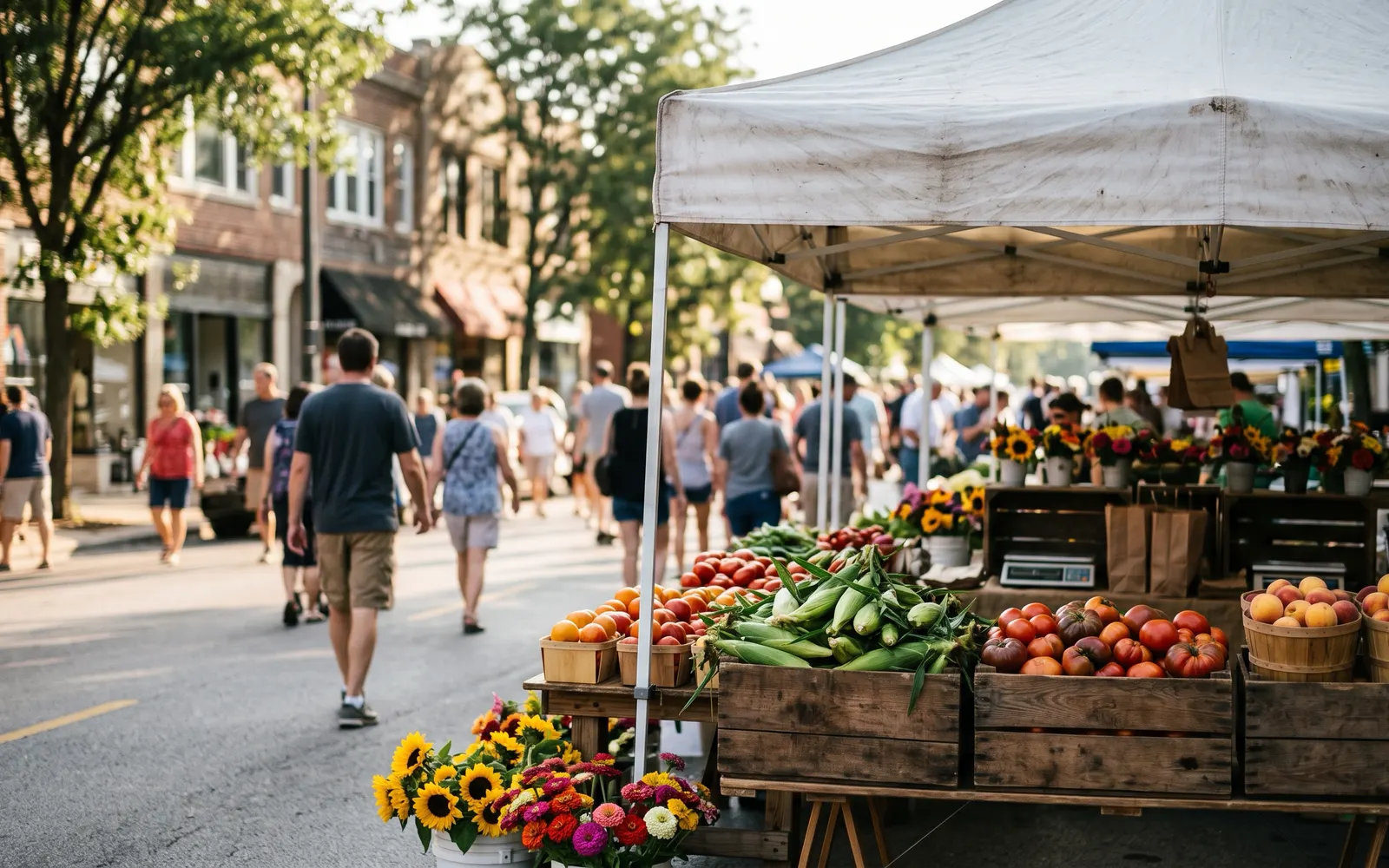
In season, the Homewood Farmers Market runs Saturdays from May 30 to October 10, 2026, 8 a.m. to 1 p.m., in Martin Square between Ridge Road and Chestnut Road. The village says it has run for more than 40 years, holds indoor markets the rest of the year, and was voted the second-best farmers market in Illinois in 2025.
Where Homewood Eats
Downtown is where Homewood eats out. The village lists Stoney Point Grill, Aurelio's Pizza, 69 Prime Steakhouse, Twisted Q BBQ, Lassen's Tap, Copper Still Martini Bar, 5th Quarter Press Room & Eatery and Homewood Brewing Company among its downtown businesses, all within a few blocks of the station. La Banque Hotel sits in the same stretch. Maple Tree Inn is in the Southgate area on Dixie Highway.
The village also runs a restaurant promotion it calls Restaurant Madness, and Fall Fest on Martin Avenue features food from local restaurants. The best advice I give buyers is to eat downtown on a Friday night and walk Martin Avenue on a Saturday morning. You learn more about the village that way than from any listing.
Parks, Golf and Recreation in Homewood
Homewood shares a park district with Flossmoor. The Homewood-Flossmoor Park District's profile says it owns 27 park sites and controls more than 365 acres, serves about 30,000 residents, and was formed in January 1969 by merging two park districts. Its facilities include Coyote Run Golf Course, the H-F Ice Arena, the H-F Racquet & Fitness Club, Lions Club Pool, the Irwin Community Center, the clubhouse at Dolphin Lake and the Irons Oaks Environmental Learning Center.
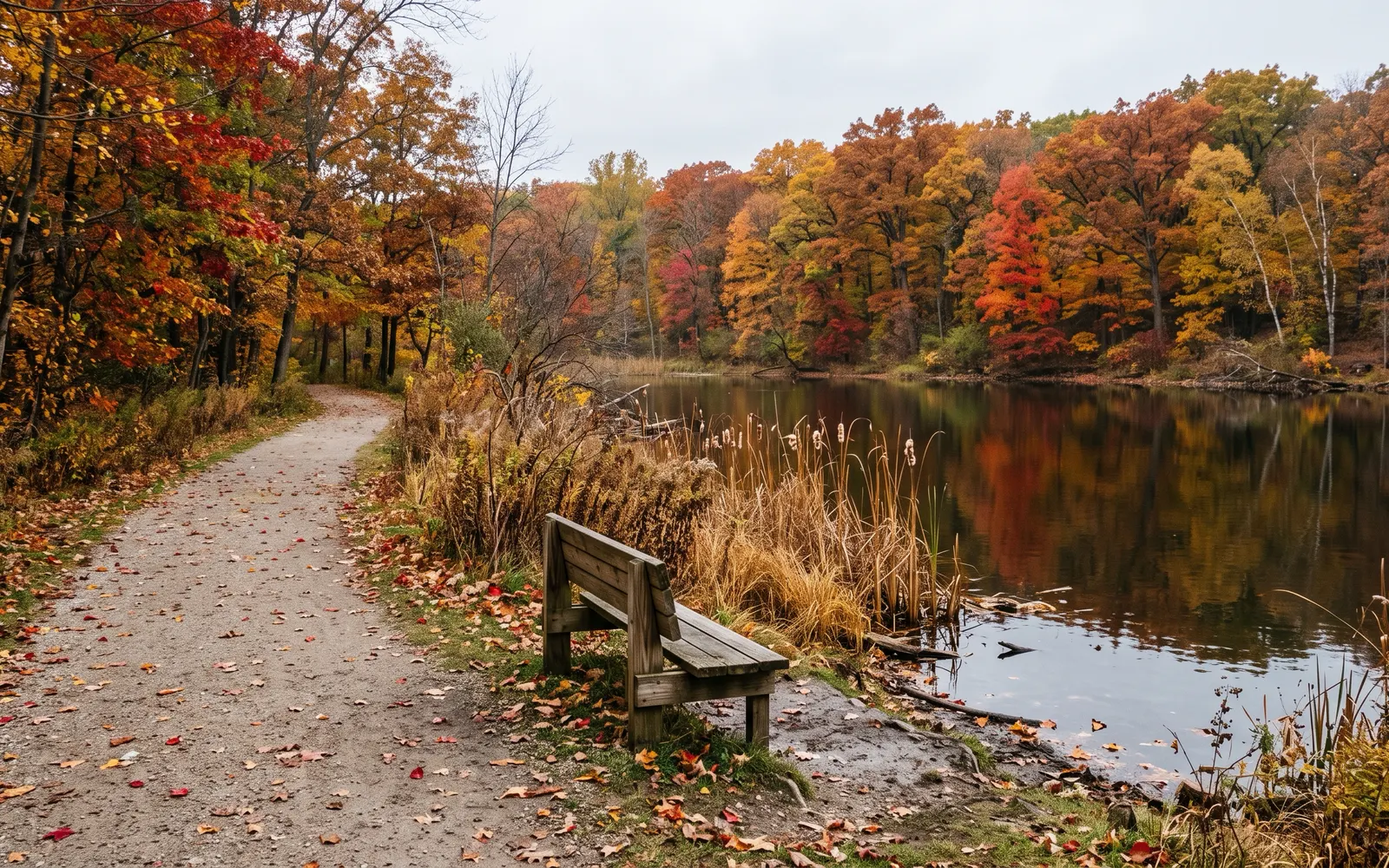
The largest open space is the Izaak Walton Preserve on the east side. Wikipedia describes it as 193 acres of woodland, lakes and prairie with about 4 miles of gravel walking paths, and it is where the Fourth of July parade ends. The village itself holds an ArbNet Level 1 arboretum accreditation and is a Tree City USA with the program's Growth Award, per its parks and nature page.
For golf, Coyote Run is the public course, and Ravisloe Country Club on the west side is part of the village's history.
The Homewood Public Library
The Homewood Public Library is at 17917 Dixie Highway, a short walk from downtown. It is open Monday through Thursday from 9 a.m. to 9 p.m., Friday and Saturday from 9 a.m. to 5 p.m., and Sunday from 1 to 5 p.m. Beyond books, it runs a makerspace called the Makery, a Library of Things, a seed library, tech classes and home delivery. It also co-sponsors the village's community shred day.
Utilities and Trash in Homewood
The village's new resident page covers the basics. Homewood residents get Lake Michigan water from the village and are billed monthly; new owners apply for water service at Village Hall, 2020 Chestnut Road. ComEd provides electricity and Nicor Gas provides natural gas.
Trash is different from most suburbs. The village does not provide garbage service. Three licensed companies do (Homewood Disposal Services, Waste Management and Republic Services), and each household sets up service directly with one of them. Garbage and yard waste go out weekly and recycling every two weeks, and yard waste uses stickers sold at local stores. Build that into your move-in list, because nobody sets it up for you.
The village is also running a lead service line replacement program, and the ATG ordinance summary lists a final water reading as a requirement at sale. If you are buying an older house, ask whether the service line has been checked.
Hospitals Near Homewood
Two full-service hospitals with emergency departments are close by, per the federal CMS hospital data updated July 22, 2026. Franciscan Health Olympia Fields, listed as Franciscan Health Olympia & Chicago Heights, is at 20201 S. Crawford Avenue in Olympia Fields, south of the village. UChicago Medicine Ingalls Memorial, listed as Ingalls Memorial Hospital, is at 1 Ingalls Drive in Harvey, to the north. For specialty care, the University of Chicago Medical Center is reachable by Metra Electric.
Art, Science and Nights Out in Homewood
Homewood's culture is concentrated downtown. The Homewood Science Center runs hands-on exhibits and programs, and the village says it draws visitors from across the region and from Chicago. The Richard Haas murals turn a walk down Martin Avenue into a public art tour. The Homewood Historical Society at 2035 W. 183rd Street keeps the village's archive.
The village says it holds more than 60 outdoor events a year downtown, many of them in Martin Avenue Square. Summer brings block parties and live music, and the village's events page lists a Haunted Homewood house decorating contest each fall. When you want the city, the Metra Electric puts Millennium Park and the Loop about 40 to 50 minutes away.
Homewood's Yearly Traditions
Homewood keeps a full calendar, and the village's events page lists the 2026 dates. The Art & Garden Street Fair filled Martin Avenue between Ridge Road and Hickory Road on June 5 and 6 with nearly 80 artisan and food vendors. The Fourth of July parade steps off at 10 a.m. from St. John Neumann Church at 17951 Dixie Highway, runs south on Dixie and east on Ridge Road, and ends at the Izaak Walton Preserve with games and food.
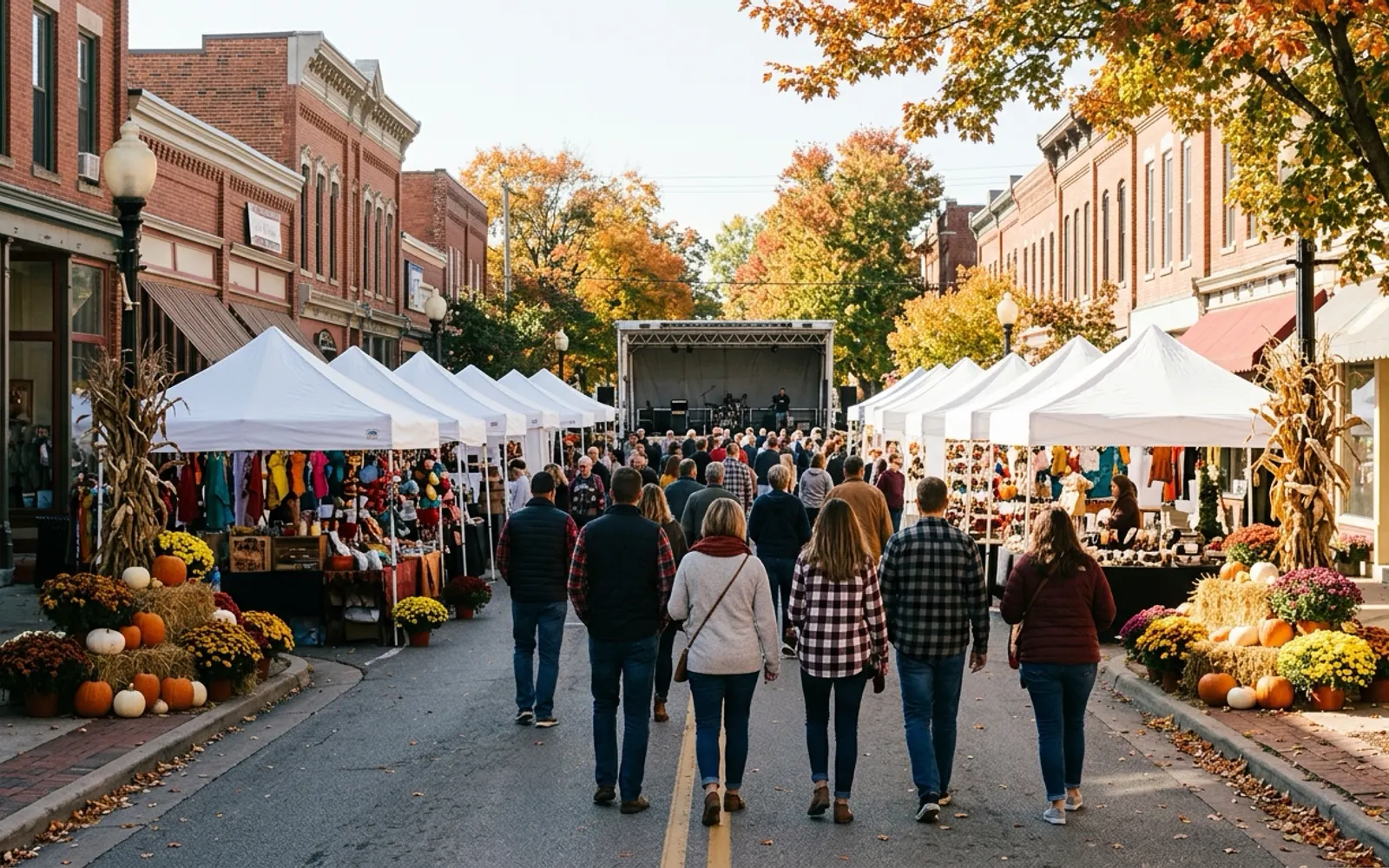
Late summer brings National Night Out at Village Hall, held August 4 in 2026, and a back-to-school party with District 153 on August 29. Fall Fest is Saturday, October 10, 2026, from noon to 9 p.m. on Martin Avenue from Hickory Road to Ridge Road, with live music, craft vendors, a pumpkin patch and a chili cook-off. The Haunted Homewood decorating contest takes entries from September 14 to October 19, with judging on October 26. Spring starts with the H-F Cleanup Day, held April 4 in 2026 with Flossmoor and the park district.
If you are touring in June or October, plan a stop at the street fair or Fall Fest. It is the fastest way to see how downtown works.
What's Being Built in Homewood
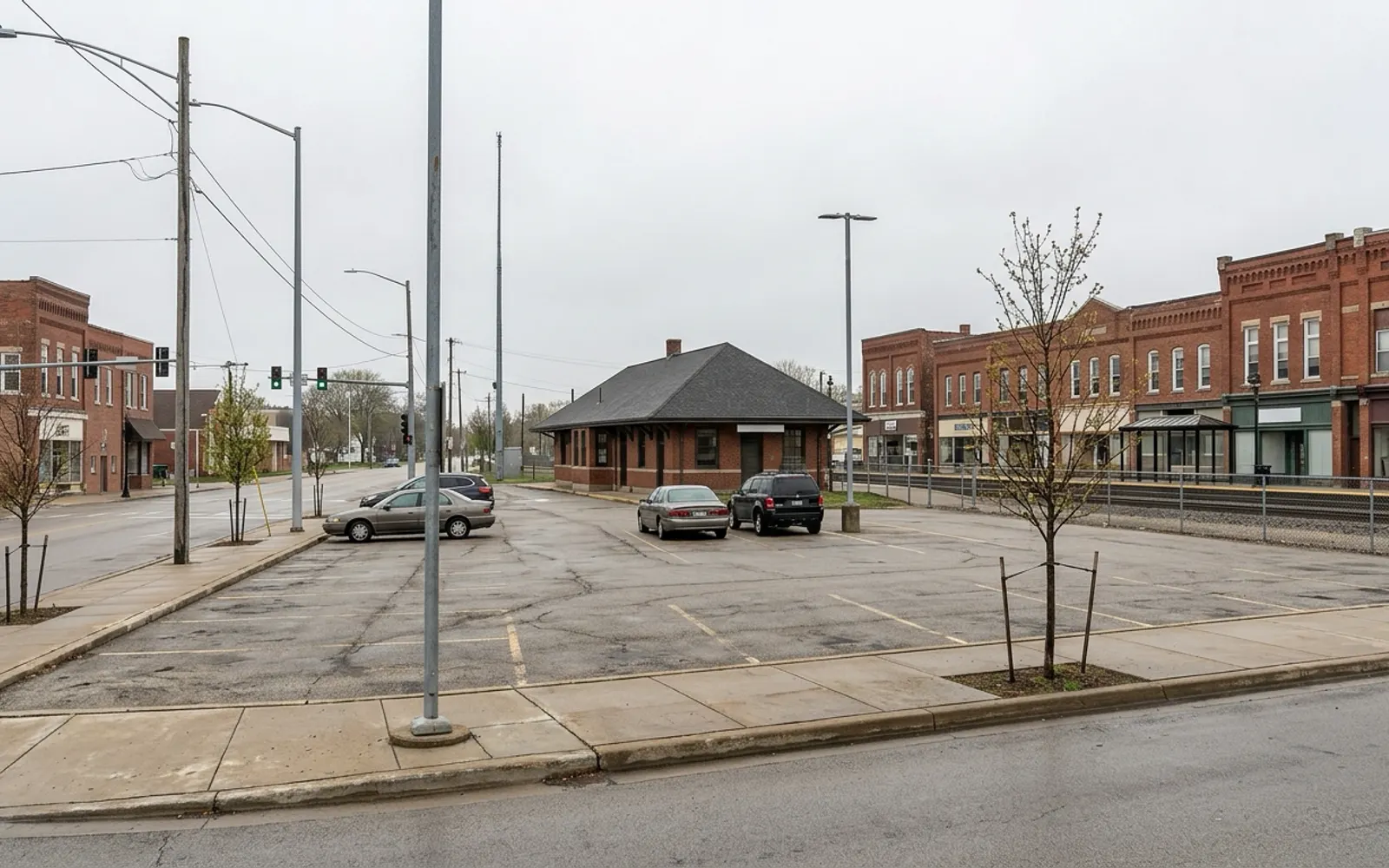
The biggest change coming to Homewood is downtown. The HF Chronicle reported that at the March 10, 2026, board meeting, trustees voted to pursue a deal with Holladay Properties to redevelop two sites: the village hall parking lot at 2024 Chestnut Road and the Matrix Building at 2066 Ridge Road. The village received six proposals and narrowed them to three before the vote, and residents had raised concerns about parking, green space and affordability along the way.
The plan kept moving through the summer. On June 27, 2026, the HF Chronicle reported on a presentation to the Planning and Zoning Commission, with 1.2 parking spaces per unit, a public garden that doubles as stormwater detention, and a plaza. The village has also proposed a Harwood transit-oriented development TIF district covering the village hall lot and the Harwood commuter lot, per its TIF page. I have not seen a final approval or a groundbreaking date, so treat the timeline as open.
Smaller projects are adding apartments near downtown too. In February 2025 the board approved a special use permit to convert the former Spornette International building at 18240 Harwood Avenue into 15 apartments, the HF Chronicle reported.
Two other things changed the village this year. The Dixie Highway viaduct project covered above is under way, and storms hit the area on July 27 and August 11, 2026. The village's recovery page describes the August storm as an EF-1 tornado, lists SBA disaster loans for July 27 storm damage in Cook County with property applications due October 19, 2026, and says the village waived fence and roof permit fees through September 30 for owners doing their own repairs. For buyers, that means asking about storm repairs, permits and insurance claims on any house you like this fall.
I don't label any town or neighborhood as safe or unsafe.
Flood and Basement Water Risk in Homewood
Homewood's flood risk is modest overall and specific to certain spots. Redfin, using First Street's model, rates Homewood's flood risk as minor and says 6% of properties are at risk of severe flooding over the next 30 years.
The village itself names one of the problem areas. Its viaduct project page says the Dixie Highway work adds drainage under the viaduct "to address longstanding flooding issues." The village also has a Stormwater Resources Committee, and 2026's storms brought flooded basements and fallen trees to parts of the south suburbs.
Three checks before you write an offer. Look the address up on the FEMA flood map. Ask the seller directly whether the basement or crawl space has ever taken water and what was done about it. And have the inspector look at the sump pump, any overhead sewer or backflow valve, the grading and the sewer line to the street, ideally with a camera.
Frequently Asked Questions
Is Homewood, IL in Cook County?+
Yes. Census Bureau estimates for July 1, 2025, put all 18,773 residents in Cook County, split across Bloom, Thornton, Rich and Bremen townships. The township affects your assessment timing and tax rate.
How much does a house cost in Homewood, IL?+
Redfin reported a median sale price of $241,840 for the three months ending August 2026, down 6.6% from a year earlier, while price per square foot rose 2.0% to $151. Zillow's home value index was $253,699 for August 2026, up 5.6%.
What are property taxes in Homewood, IL?+
Ownwell (April 2026) puts the median effective rate at 3.51% with a median bill of $6,896, against 2.14% for Cook County. All four of Homewood's townships are reassessed in 2026, and the Assessor says those values affect second-installment bills issued in 2027.
What school district is Homewood, IL in?+
Most of Homewood is in District 153 (Willow, Winston Churchill and James Hart) and Homewood-Flossmoor High School District 233. Some addresses west of Western Avenue and south of 183rd Street are in Flossmoor District 161, so confirm each address.
How long is the train from Homewood to Chicago?+
On the Metra Electric line, the fastest rush-hour trains reach Millennium Station in 39 to 40 minutes and most others in 46 to 48, with 31 inbound weekday trains in fall 2026. Amtrak also stops at the Homewood station.
Is Homewood walkable?+
Not village-wide. Walk Score rates Homewood 43 (car-dependent), but downtown next to the station is walkable to shops, restaurants and the train.
What neighborhoods are in Homewood, IL?+
Homewood has no official neighborhoods. Common references include Downtown Homewood, the area west of the tracks near Ravisloe Country Club, the Ridge Road corridor, the Izaak Walton area, the Halsted side and the 183rd Street corridor.
Who picks up trash in Homewood, IL?+
The village does not. Residents contract directly with one of three licensed haulers: Homewood Disposal Services, Waste Management or Republic Services.
What is being built in downtown Homewood?+
In March 2026 the village board chose Holladay Properties to redevelop the village hall parking lot at 2024 Chestnut Road and the Matrix Building at 2066 Ridge Road. A final approval and groundbreaking date had not been announced as of September 2026.
Eshu Chikoti has extensive access to off-market listings throughout Homewood and the rest of Cook County — homes that never make it to the public listing sites. That matters right now: in a seller's market like this one, well-priced homes routinely go under contract within days, and buyers relying only on public listings are competing for whatever is left over. Working with someone plugged into off-market inventory means seeing homes before the crowd does.
Eshu Chikoti · 847-691-4282 ·
Get new Homewood listings by email
When a home comes on the market in Homewood, I'll email it to you.
Just your email. Unsubscribe any time by replying.
Thinking About Homewood?
Whether you're buying, selling, or just curious what's on the market, I can walk you through Homewood street by street.