Glen Ellyn, IL
Glen Ellyn, IL is a DuPage County village of about 28,400 people built around a Metra stop, a historic downtown and Lake Ellyn, with two school districts and a 40-minute express train to the Loop.
Living in Glen Ellyn, IL means an express train to Ogilvie in 37 to 42 minutes, a walkable historic downtown, and a median sale price of about $582,000 this summer. The trade-offs are property tax near 2.35% of value and a split between two school districts. Here is how it breaks down, pocket by pocket.
Written by Eshu Chikoti · 847-691-4282 ·
How Glen Ellyn, IL Got Here: A Short History
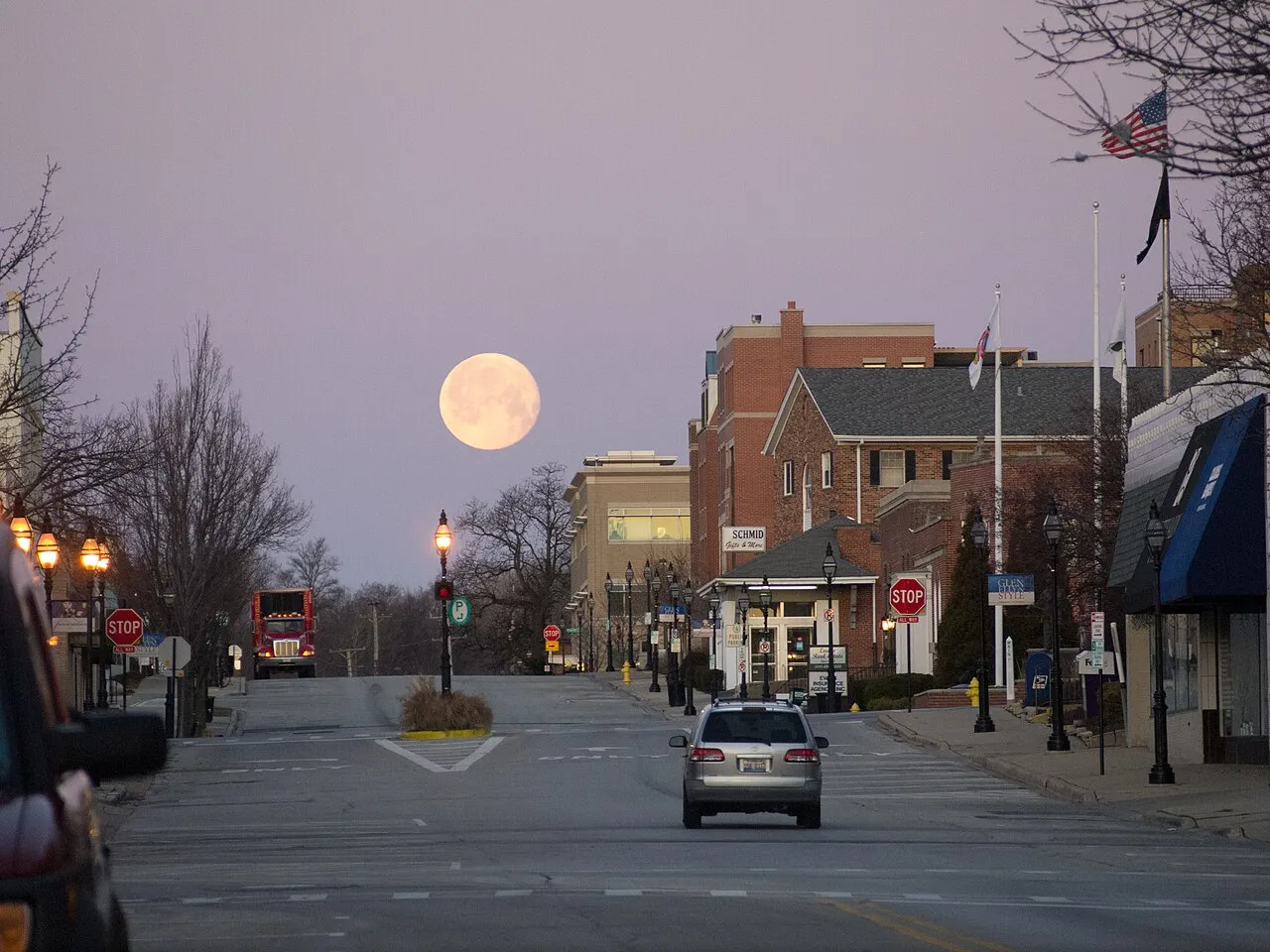
Glen Ellyn went through more names than almost any town in DuPage County. It started with an 1833 land claim by Morgan and Ralph Babcock, two brothers from New York, near today's St. Charles Road and the East Branch of the DuPage River. The settlement was called Babcock's Grove. A few years later a five-way crossroads up the trail became Fish's Corners, then Stacy's Corners after Moses Stacy, who built an inn there in 1846.
That inn, Stacy's Tavern, still stands at Geneva Road and Main Street. It was a halfway stop for stagecoaches between Chicago and the Fox River Valley. The village bought it in 1968 and opened it as a museum in 1976, and the Glen Ellyn Historical Society runs it today. It was added to the National Register of Historic Places in 1974.
The railroad moved the center of town. The Galena and Chicago Union line was finished through the area in 1849, about a mile south of the corners, and at first trains did not stop. A landowner named Lewey Newton offered land and a depot if they would, and the town grew around Newton's Station instead. It was called DuPage Center, Danby and Prospect Park along the way. According to the village history on Wikipedia, the name Glen Ellyn was in use by 1889, taken from the Welsh spelling of village president Thomas Hill's wife Ellen.
Hill and businessman Philo Stacy had a dam built that year to create Lake Glen Ellyn, today's Lake Ellyn. Mineral springs were found in 1890, the village marketed itself as a health resort, and it incorporated on May 10, 1892. The big Lake Glen Ellyn Hotel opened the same year and burned after a lightning strike 14 years later. Much of the business district also burned in 1892, which is why so much of downtown dates to the 1890s through the 1920s.
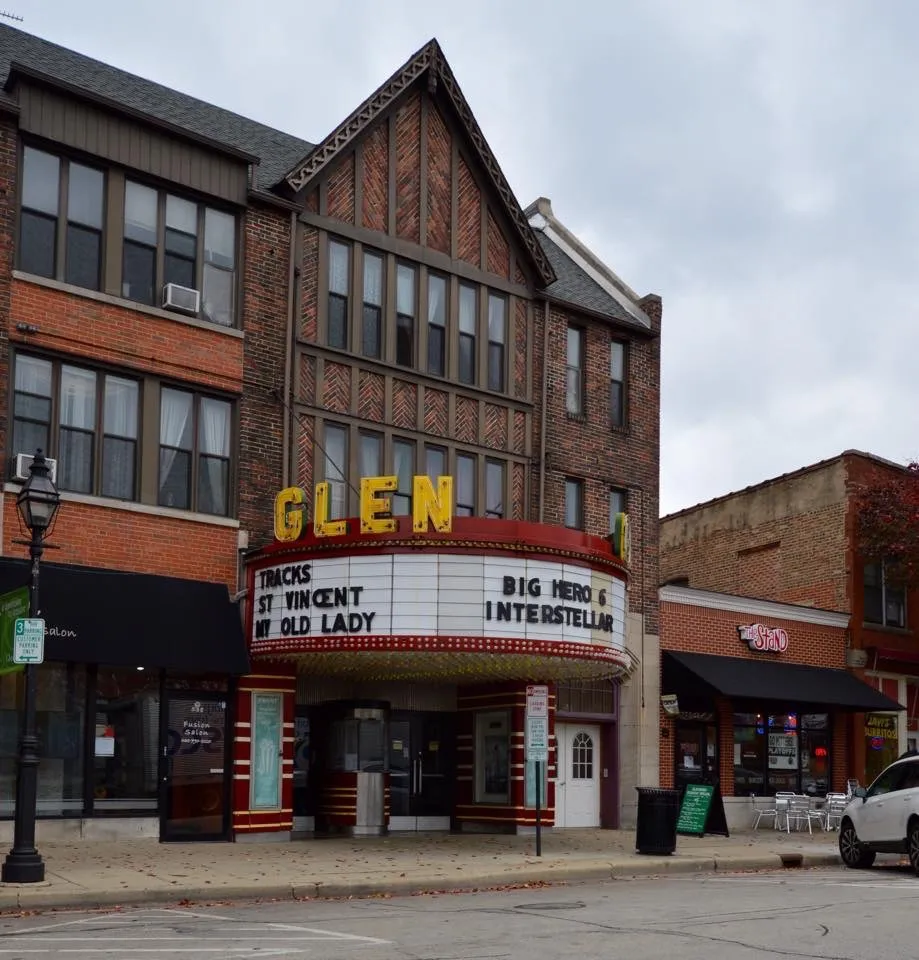
That downtown is now protected. The Glen Ellyn Downtown North Historic District was listed on the National Register on September 18, 2013. It covers 34 buildings on Main Street between Crescent Boulevard and Pennsylvania Avenue, 28 of them contributing, including the Tudor Revival Glen Theatre from 1926. A separate Downtown South district covers the other side of the tracks. For a buyer, it explains why the downtown looks the way it does and why exterior changes there go through extra review.
Glen Ellyn at a Glance
Glen Ellyn covers about seven square miles in the middle of DuPage County, roughly 24 miles due west of the Loop. The whole village is in DuPage County, mostly in Milton Township. It borders Wheaton on the west, Lombard on the east, Glendale Heights and Carol Stream to the north, and reaches south toward Butterfield Road, with Lisle and the Morton Arboretum just beyond.
The 2020-2024 Census ACS puts the population at 28,390, and 78.3% of occupied homes are owner-occupied. About 62.9% of housing units are detached single-family homes, 7.7% are townhomes, and 16.4% are in buildings with 20 or more units. That last number is higher than most people expect, and it is why Glen Ellyn has a real condo market along Roosevelt Road and near downtown.
The one thing I check on every address here is whether it is actually inside the village. Glen Ellyn is ringed by unincorporated DuPage County pockets, and many of them use a Glen Ellyn mailing address. You can often spot them by their grid-style addresses, with numbers like 2S or 23W at the front. Those parcels skip some village services and the village levy, can have different zoning, and sometimes still run on a well or septic system. It all changes the numbers, so know it before you write an offer.
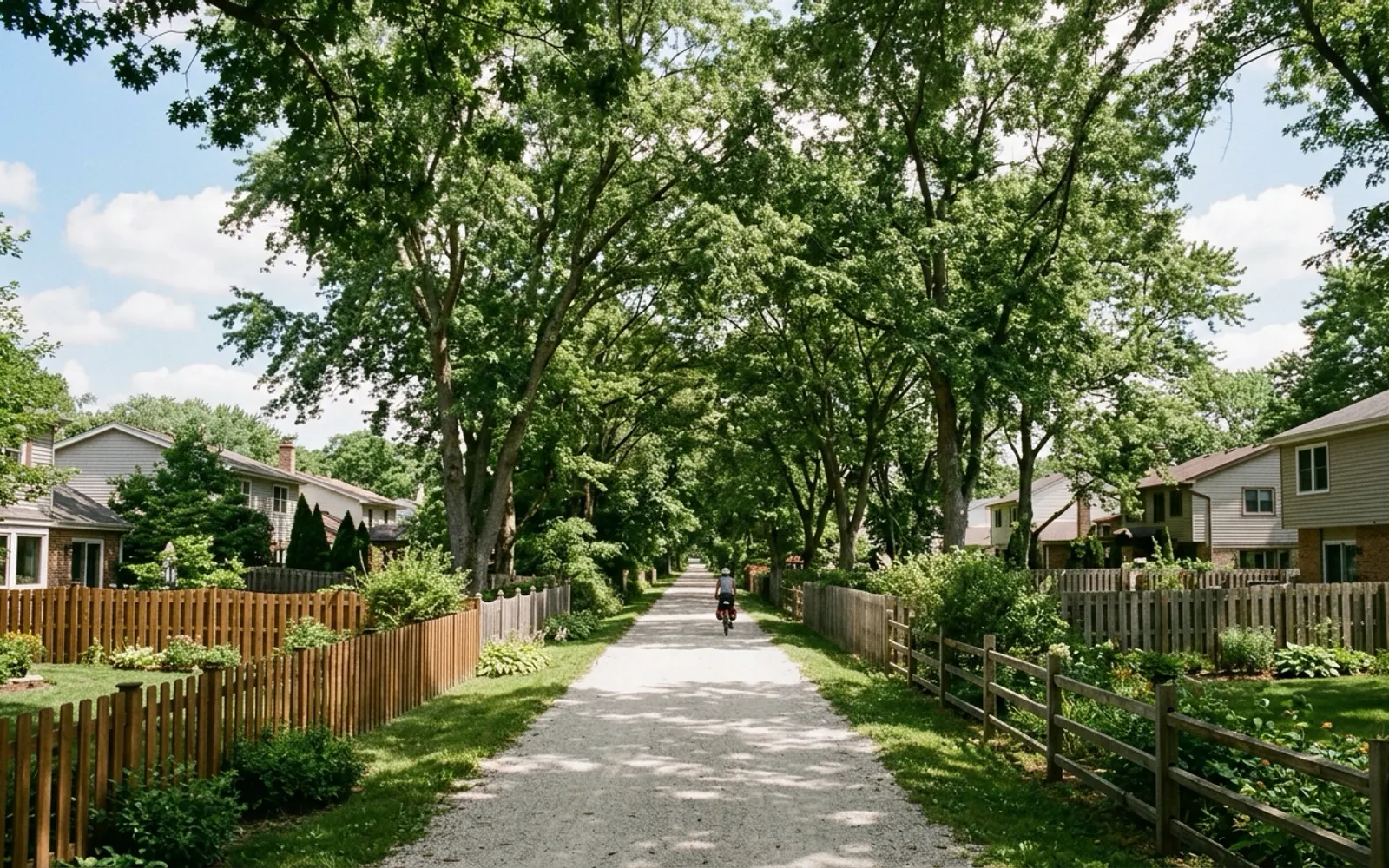
The layout is easy to learn. The Union Pacific West Metra line and the Illinois Prairie Path both run east to west through the middle of town. Main Street runs north to south and crosses the tracks downtown. Roosevelt Road (Route 38) is the commercial strip on the south side, and Geneva Road and St. Charles Road cross the north side. Locals describe most houses by which side of the tracks they are on and how far they are from Main Street.
Glen Ellyn Neighborhoods, Pocket by Pocket
Glen Ellyn has no official neighborhoods, but it splits cleanly in two for schools. North of roughly Hill Avenue and the Roosevelt corridor, most of the village is in Glen Ellyn School District 41, which feeds Glenbard West High School. Much of the south side is in Community Consolidated School District 89, which feeds Glenbard South. The line is irregular, so treat that as a rule of thumb and check the address.
The second split is distance to downtown. Walk Score rates the village 50 overall, but individual addresses run from 90 at the Civic Center on Duane Street and 92 at the station on Crescent Boulevard down to 24 at the College of DuPage campus. That spread is the difference between walking to the train and driving to it. In my experience it changes daily life more than buyers expect.
Below are the pockets you will see named in listings. Boundaries are informal and agents draw them differently, so use them as a starting point. If you want to know which pocket a specific address falls in, which schools it feeds and what that pocket has sold for lately, that is a conversation I am happy to have here.
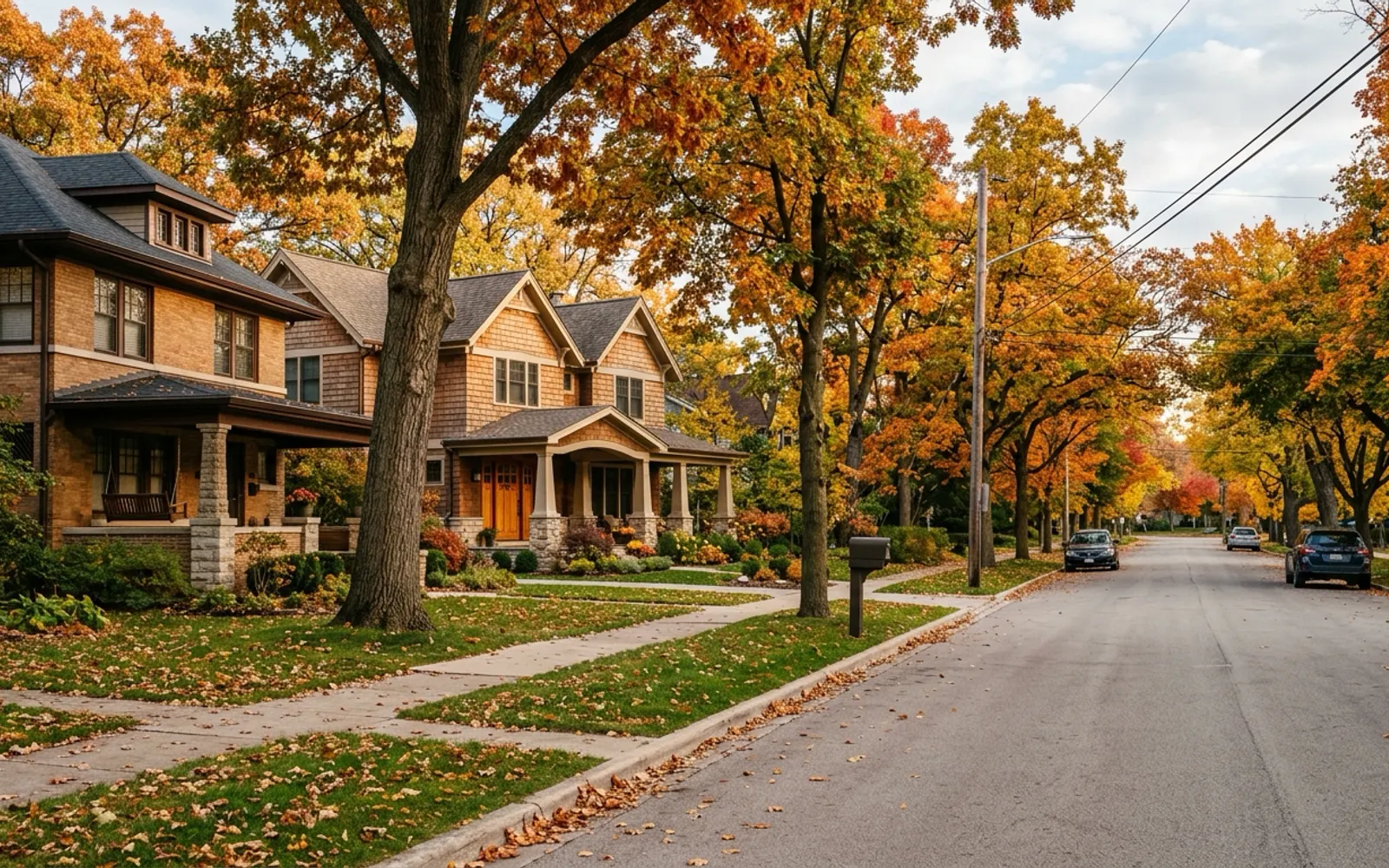
Downtown and the historic core. The blocks on both sides of the tracks around Main Street, Crescent Boulevard and Duane Street. Older homes on narrower lots, 1920s bungalows and foursquares, plus condos close to the station. Walk Scores here run from the high 80s into the 90s.
Lake Ellyn. North and east of downtown around the lake and Glenbard West. Some of the village's oldest and largest houses, many from the early 1900s. A Lenox Road address by the lake scores 72 on Walk Score.
Stacy's Corners and Northside. Around Geneva Road and North Main Street, near the original crossroads and Stacy's Tavern. A mix of early homes and mid-century houses. Churchill Elementary sits on Geneva Road.
Northeast. Toward Lombard between St. Charles Road and the tracks. Mostly single-family streets with a range of eras.
Oak Hill. A north-side pocket agents list among the larger single-family areas. Ask for the build year and the school assignment on each house.
Arboretum Estates and Butterfield West. South toward Butterfield Road and the Morton Arboretum. Newer subdivisions on bigger, more regular lots, generally in District 89. Car-dependent.
Glen Ellyn Manor and Woodglen/Baker Hill. South-side subdivisions you will see named on listings. Several streets sit near unincorporated land, so confirm village limits.
The College of DuPage area. West side near Lambert Road and Fawell Boulevard. More rentals and condos than the rest of the village, and a Walk Score around 24 at the campus.
The Roosevelt Road corridor. Condo buildings and townhomes along and just off Roosevelt, including the newer Harding Glen townhomes near Route 53. Close to groceries and I-355.
What Glen Ellyn Homes Look Like, by Era
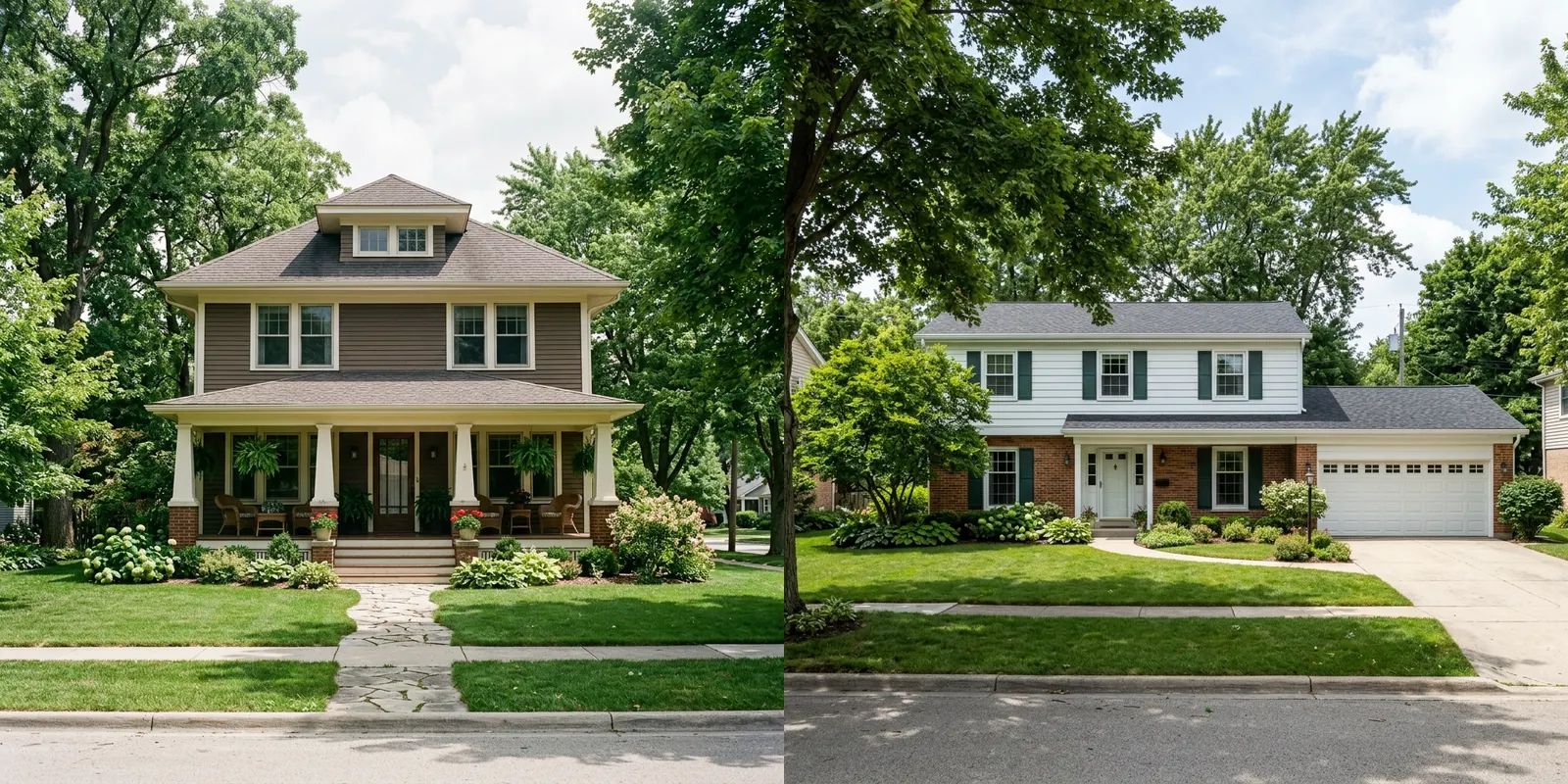
Glen Ellyn has more old houses than most of DuPage County, and that is the first thing to understand before you tour. The Census ACS puts the median year built at 1971, but that median hides two very different villages. North of the tracks and around Lake Ellyn you find Victorians, foursquares, Tudors and bungalows from the 1890s through the 1920s, often on deep, narrow lots. South of Roosevelt Road and toward Butterfield, most of the housing is 1960s through 1990s subdivisions with ranches, split-levels and two-story colonials on wider lots.
Then there is new construction. Across the older north side, dated houses on good lots are being replaced with larger custom homes, and a $450,000 original bungalow can sit next to a $1.2 million new build. That is an opportunity and a risk. The older house benefits from the new one next door. It also means the land is often worth more than the house, and an inspector will find things a 1915 house was never built to handle.
The ACS puts the median home value at $544,000 and the median rent at $1,433. The rent figure is low because it includes older apartments and the rental stock near the College of DuPage. Condos are a real part of this market. About one unit in six is in a building of 20 or more units, mostly along Roosevelt Road and near downtown, and they are the most common way into Glen Ellyn under $300,000.
I have walked buyers through enough pre-war houses to know the usual surprises: original knob-and-tube wiring hiding behind updated outlets, galvanized or clay sewer lines, old plaster, and basements that have taken water at least once. None of those should kill a deal. All of them belong in the price. If you are weighing an older house, my home inspection checklist is a good place to start, and a sewer scope is money well spent on anything built before 1960.
The Glen Ellyn Housing Market in 2026
Glen Ellyn homes sell at or above asking more often than not. In the three months ending August 2026, Redfin reported a median sale price of $581,615 on 105 sales. The median home took 43 days to sell, at 102.5% of list price, and 49.1% of homes sold over asking. Redfin gives Glen Ellyn a Compete Score of 77 out of 100, which it calls very competitive, and says homes get five offers on average.
Here is the part that confuses people. Redfin shows that median down 6.9% from a year earlier. Zillow's home value index for August 2026 is $578,698, up 6.5% from $543,475 in August 2025. Both can be right. Redfin's median is the middle of whatever happened to sell in a three-month window. Zillow's index estimates the value of all homes, sold or not. The tell is price per square foot: Redfin has it at $302, up 8.2%. When the median falls while the price per square foot rises, smaller homes and condos made up more of what sold. My read is that values rose and the mix shifted.
What that means in practice: a well-priced house in a good pocket still draws multiple offers. An overpriced one sits, and 14.1% of homes had a price cut this summer, up 2.8 points from last year. Glen Ellyn rewards getting the price right in the first week.
Village-wide numbers only go so far here. The gap between a Roosevelt Road condo and a Lake Ellyn house is more than a million dollars, so the median tells you about the town and very little about a specific address. If you are deciding whether to buy now or wait, my take on whether 2026 is a good time to buy walks through the rate and price math.
Glen Ellyn Property Taxes and the Real Cost of Owning
Property tax is the number that moves the monthly payment most in Glen Ellyn, and it never shows up in the list price. Ownwell's data, last updated April 13, 2026, puts the median effective rate at 2.35% and the median annual bill at $9,631. That is above the DuPage County median of 2.16%. Bills in the 60137 ZIP code run from $3,246 at the 10th percentile to $20,590 at the 90th.
Here is what that looks like on a real purchase. At 2.35%, a house bought at this summer's $581,615 median would eventually carry about $13,700 a year in tax, roughly $1,140 a month on top of the mortgage. The current bill on the same house may be lower because assessments trail the market. DuPage reassesses, and a sale gives the township assessor a fresh number to work from. The expectation I most often have to reset is buyers who budget off the seller's current bill.
Every combination of township, school district, park district, library and village is its own tax code with its own rate. In Glen Ellyn the biggest swing is the elementary district (41 or 89) and whether the parcel is inside the village or in an unincorporated pocket. Two houses a mile apart can carry different bills at the same price, so look the parcel up on the DuPage County records before you write an offer. My affordability guide shows how to fold the tax into a real budget, and my Illinois closing costs guide covers the tax prorations at closing.
This is general information, not tax advice. Your actual bill depends on your parcel, your exemptions and the assessor.
Glen Ellyn Schools: Districts 41, 89 and Glenbard
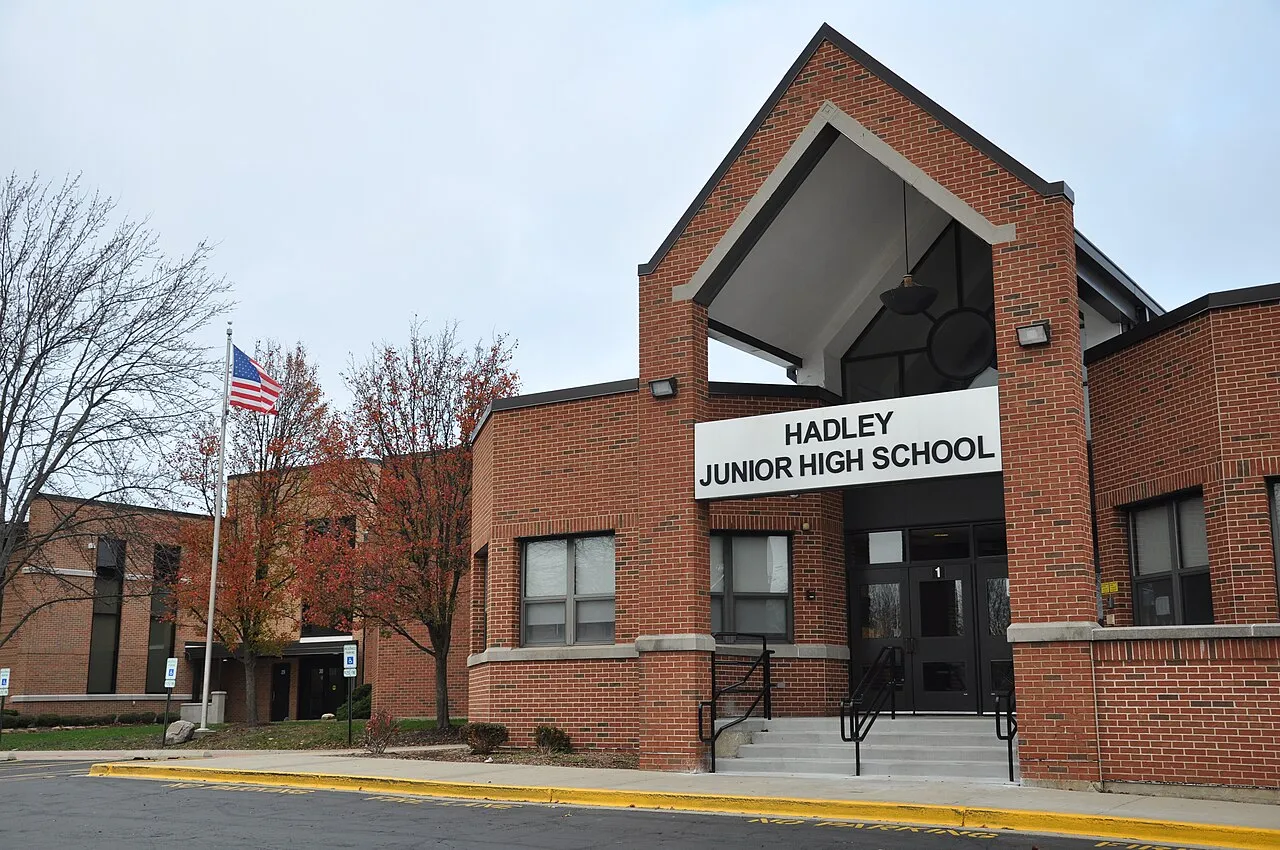
The village has two separate elementary systems. Glen Ellyn School District 41 serves about 3,500 students from preschool through eighth grade. It runs four elementary schools (Abraham Lincoln, Ben Franklin, Churchill and Forest Glen), a Kindergarten Center, a preschool, a dual-language program and Hadley Junior High, which feeds Glenbard West High School.
Community Consolidated School District 89 covers much of the south side along with sections of Lombard and Wheaton. It runs Arbor View, Park View and Westfield elementary schools in Glen Ellyn, Briar Glen Elementary in Wheaton, and Glen Crest Middle School, and its students go on to Glenbard South High School.
Both high schools belong to Glenbard Township High School District 87, which also runs Glenbard East in Lombard and Glenbard North in Carol Stream. Glenbard West, at 670 Crescent Boulevard, opened in 1923 in a castle-style building on the hill above Lake Ellyn and had about 2,313 students in 2023-24, according to its Wikipedia entry.
The detail that trips people up is assignment. Which elementary, middle and high school a house feeds depends on the street, the District 41 and 89 line is irregular, and a few addresses at the edges of the village fall in other districts entirely. Don't assume from the town name. Check the address with the district directly before you write an offer, and ask me for the boundary if you want it done for a specific house.
Abraham Lincoln Elementary. 380 Greenfield Ave. District 41.
Ben Franklin Elementary. 350 Bryant Ave. District 41.
Churchill Elementary. 240 Geneva Rd. District 41.
Forest Glen Elementary. 561 Elm St. District 41.
Hadley Junior High. 240 Hawthorne Blvd. District 41, feeds Glenbard West.
Arbor View, Park View and Westfield Elementary. District 89 schools in Glen Ellyn.
Glen Crest Middle School. District 89, feeds Glenbard South.
Glenbard West High School. 670 Crescent Blvd. District 87.
Glenbard South High School. District 87.
Commuting from Glen Ellyn: Metra to Chicago
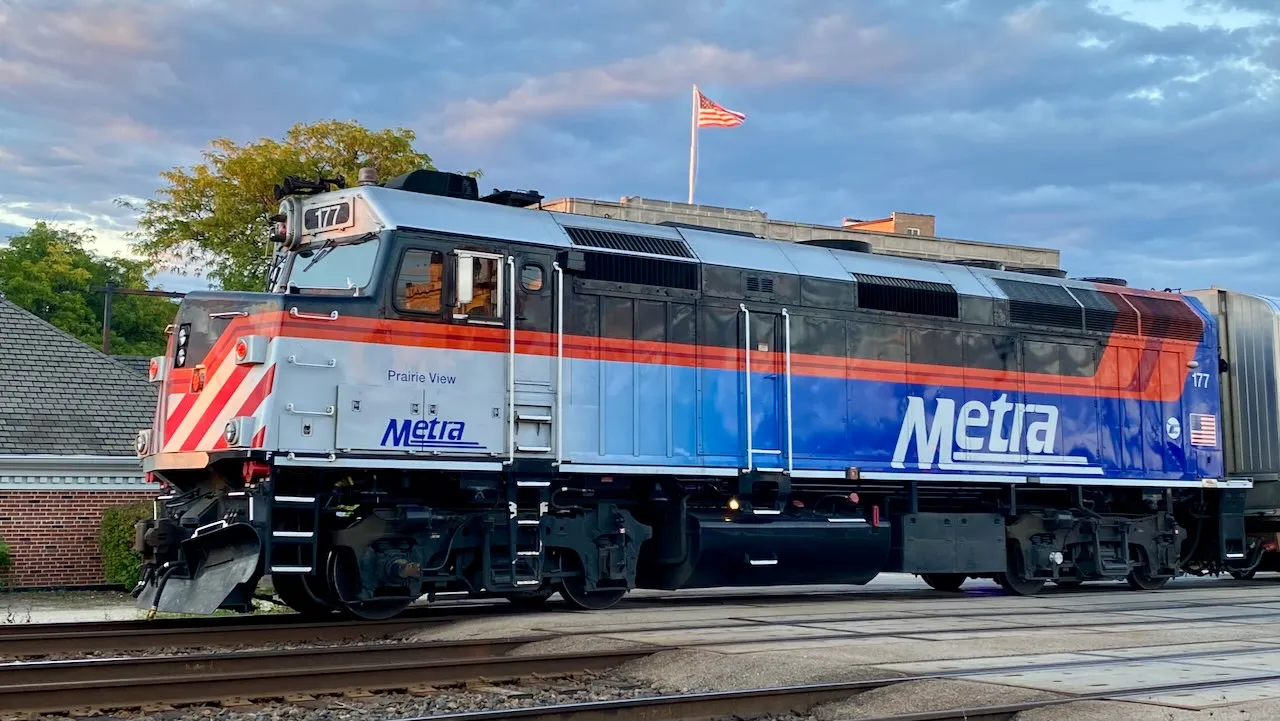
The Glen Ellyn Metra station at 551 Crescent Boulevard is on the Union Pacific West line, 22.4 miles from Ogilvie Transportation Center. According to Metra's current UP-W schedule, generated September 21, 2026, 29 trains stop here in each direction on weekdays, 10 each way on Saturdays and 9 each way on Sundays.
The travel time depends on the train. The fastest morning express, the 7:23 a.m., reaches Ogilvie in 37 minutes. Most rush-hour expresses take 42 minutes, and local and midday trains take about 53. Morning trains leave roughly every 10 to 30 minutes from 4:50 to 9:00 a.m., then hourly or so through the day. If you are choosing between two houses and one is a five-minute walk from the station, that difference compounds every day you commute.
College Avenue station in Wheaton, on the same line, sits just west of the village and is an option for west-side addresses. Pace routes 301, 714 and 715 run along Roosevelt Road for the south side.
Driving from Glen Ellyn: Highways and O'Hare
I-355 runs just east of the village, and Roosevelt Road gives the south side a direct on-ramp. I-88 is a short drive south past Butterfield Road, which puts Naperville, Oak Brook and the East-West Tollway corridor within easy reach. North Avenue (Route 64) and the Great Western Trail sit near the northern edge.
O'Hare is roughly 20 miles away by road, usually 30 to 40 minutes via I-355 and I-290 outside rush hour. Midway is a longer run down I-55. For drives into the city, the Eisenhower (I-290) is the direct route, and it is the reason most Glen Ellyn commuters take the train.
Is Glen Ellyn Walkable?
Downtown is, and it is one of the better walking downtowns in the western suburbs. Walk Score rates the whole village 50, which it calls somewhat walkable, with a Transit Score of 25 and a Bike Score of 51. The village-wide number is an average of two different places.
Near the center the scores are high. The Civic Center at 535 Duane Street scores 90, the library at 400 Duane Street 89, North Main Street near downtown 88, the station 92, and Glenbard West 84. Forest Glen Elementary on Elm Street scores 68 and Lincoln Elementary 51. Farther out the scores drop fast: Churchill Elementary on Geneva Road scores 32 and the College of DuPage campus 24. If walking to the train, the library and dinner matters to you, it narrows your search to the blocks within about half a mile of Main Street and the tracks, and those houses tend to go first.
For recreation, the Illinois Prairie Path runs through the middle of town on the old Chicago Aurora and Elgin railroad right-of-way. It is 61 miles in total, and Glen Ellyn sits a short ride east of the Wheaton hub where its branches split toward Elgin and Aurora. The Great Western Trail passes the north edge of the village.
Downtown Glen Ellyn and Shopping
Downtown Glen Ellyn is the center of town: independent shops, restaurants and services along Main Street, Crescent Boulevard and Pennsylvania Avenue, in buildings that mostly date from the 1890s to the 1920s. The Glen Theatre from 1926 anchors the north side of Main Street. The village has rebuilt the downtown streets in three phases so far, and that work won a 2025 engineering excellence award from the American Council of Engineering Companies of Illinois, per the village's train station project page.
Roosevelt Road handles the bigger errands, with grocery stores, pharmacies and chain retail along the south side of the village. For a full mall, Oakbrook Center and Yorktown Center in Lombard are each a short drive east, and Danada Square and the Town Square Wheaton center are a few minutes west.
Groceries and Everyday Errands in Glen Ellyn
Most grocery runs happen on Roosevelt Road. Jewel-Osco is at 599 E. Roosevelt Road, open 6 a.m. to midnight with a pharmacy, and Trader Joe's is at 680 Roosevelt Road. More stores sit a few minutes away in Wheaton and Lombard. Banks, dry cleaners and pharmacies cluster downtown and along Roosevelt, so most weekly errands are a five-minute drive, or a walk if you live near Main Street.
Where Glen Ellyn Eats
Downtown is where Glen Ellyn eats out. Main Street, Crescent Boulevard and the blocks south of the tracks hold most of the village's independent restaurants, coffee shops and bars within a few minutes' walk of the station, which makes a train-then-dinner evening easy. Roosevelt Road has the chains and quick-service spots. The restaurant mix turns over, so I'd rather walk it with you than print a list that ages badly.
One annual food event is worth planning around: the Taste of Glen Ellyn, which the park district lists among the village's signature events. Check the park district calendar for this year's dates.
Lake Ellyn, Parks and Recreation in Glen Ellyn
The Glen Ellyn Park District dates to November 3, 1919. It runs 30 parks, Sunset Pool (its outdoor aquatic facility), four recreation buildings including the Ackerman Sports & Fitness Center, and two lakes, and offers more than 700 programs a year across three seasons, per the village's Wikipedia entry.
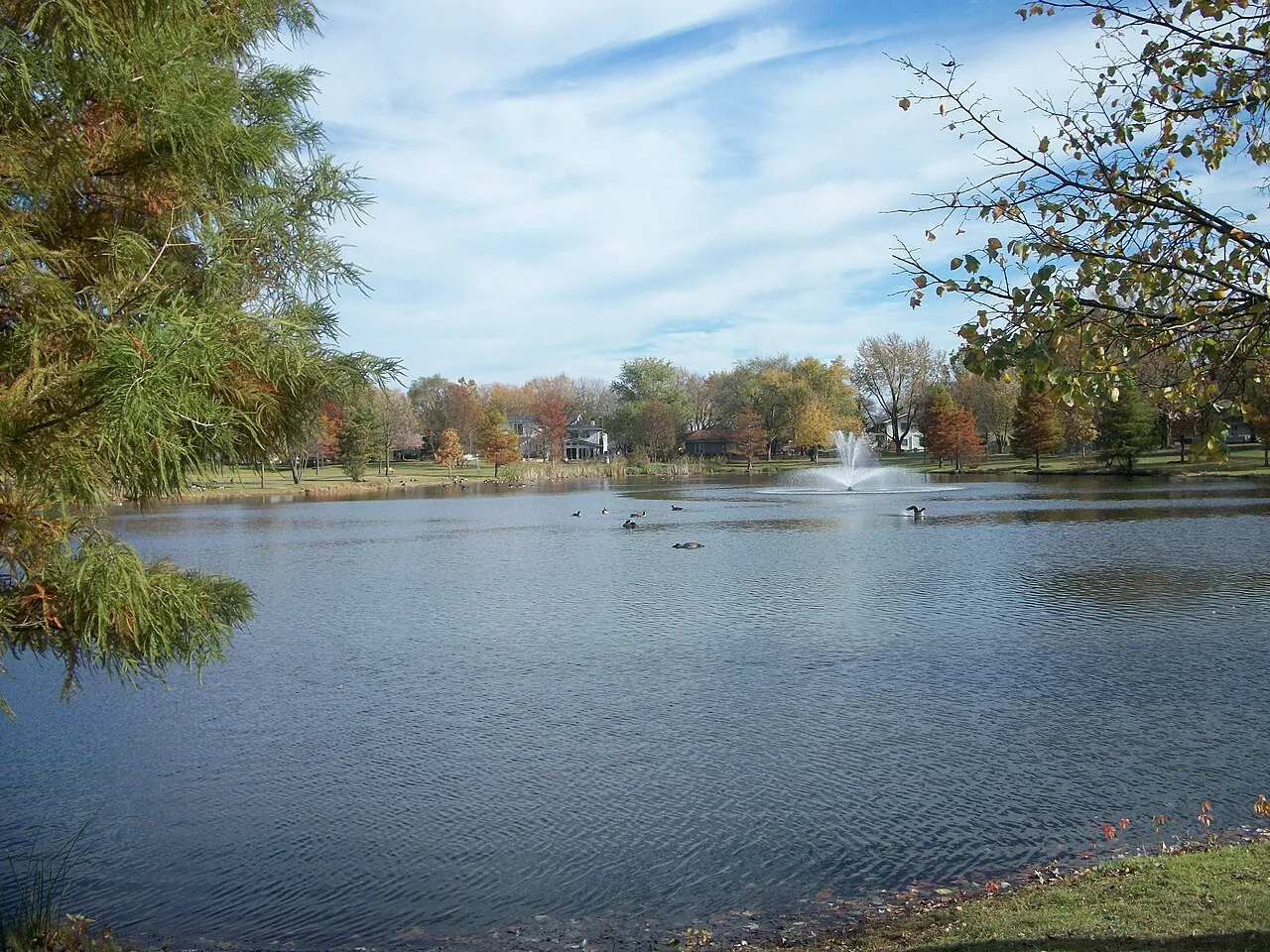
Lake Ellyn is the one everyone knows. The lake dates to the 1889 dam, sits below Glenbard West, and has a boathouse and a walking loop, and it is a short walk from downtown. It is the view that ends up on most Glen Ellyn postcards and most Glen Ellyn listing photos when the house is close enough.
For bigger open space, the Morton Arboretum is just south in Lisle: 1,700 acres with 16 miles of hiking trails and nine miles of roads for driving and biking. The DuPage County forest preserves ring the area, and the Prairie Path and Great Western Trail connect to them.
The Glen Ellyn Public Library
The Glen Ellyn Public Library at 400 Duane Street sits a few blocks from the station, with a Walk Score of 89, so it doubles as a downtown destination. Its Tudor-influenced building by Cordogan Clark & Associates set the design cue for newer village projects, including the Taft & Exmoor apartments on the south side. Programs for every age fill up, so register early.
Utilities in Glen Ellyn
Inside the village, Glen Ellyn provides water and sewer service and bills for it. ComEd delivers electricity and Nicor Gas provides natural gas. The village is currently asking every owner to report the material of their water service pipe to meet the EPA's lead service line rules, which matters for older north-side houses, so ask the seller whether it has been reported and what it is made of.
Unincorporated addresses with a Glen Ellyn mailing address can be different. Some are on private wells or septic systems, and some get water from a private utility or a neighboring town. Confirm the water, sewer and trash setup on any address outside village limits before you make an offer, and budget for a well and septic inspection if it has either.
Hospitals Near Glen Ellyn
The closest full-service hospital is Northwestern Medicine Central DuPage Hospital in Winfield, a few minutes west through Wheaton. It has 390 beds, a Level III neonatal intensive care unit and a comprehensive stroke center, and U.S. News ranked it 7th in Illinois as of 2025. Endeavor Health Elmhurst Hospital and Edward Hospital in Naperville are within a short drive for other care.
College of DuPage and the Arts in Glen Ellyn
The main campus of the College of DuPage is in Glen Ellyn, off Lambert Road and Fawell Boulevard. The college opened in 1967, bought the Glen Ellyn site in 1968 and serves more than 20,000 students across its campuses. For residents, the draw is the McAninch Arts Center, opened in 1986, which hosts concerts, theater and touring shows through the year.
Downtown, the 1926 Glen Theatre is the historic movie house on Main Street. And the Morton Arboretum's seasonal events, a few minutes south, fill a lot of fall and winter weekends.
Glen Ellyn's Fourth of July and Yearly Traditions
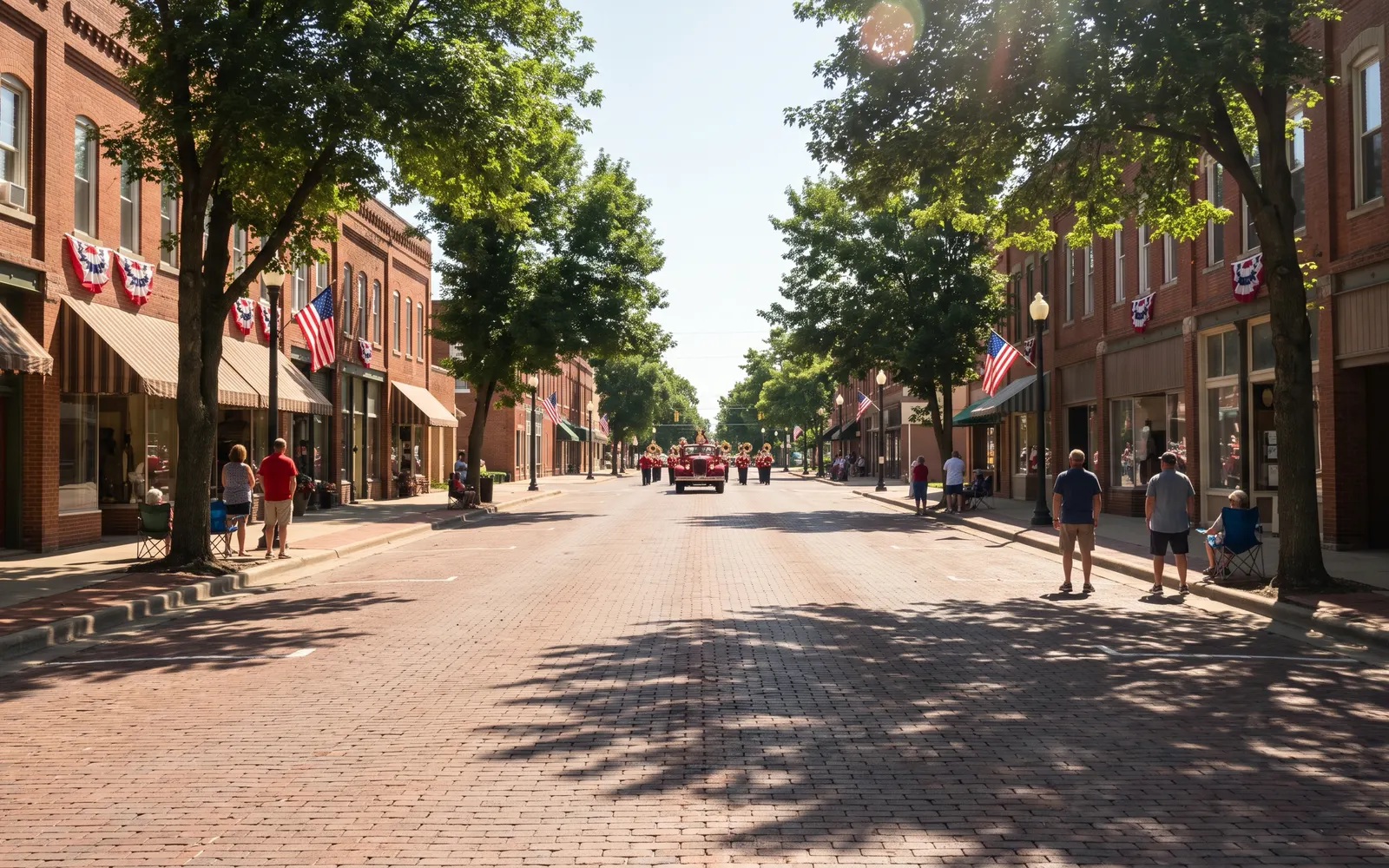
The two big ones are the Fourth of July parade and fireworks and the Taste of Glen Ellyn, both listed as the park district's signature annual events. The parade runs through downtown, and the fireworks draw a crowd from across the neighboring towns.
The rest of the year has its own rhythm: downtown sidewalk sales and seasonal events, concerts and shows at the College of DuPage, and holiday lights on Main Street. Dates change each year, so check the village and park district calendars. If you are touring houses in early July, come for the parade. It tells you more about the town than any listing will.
What's Being Built in Glen Ellyn
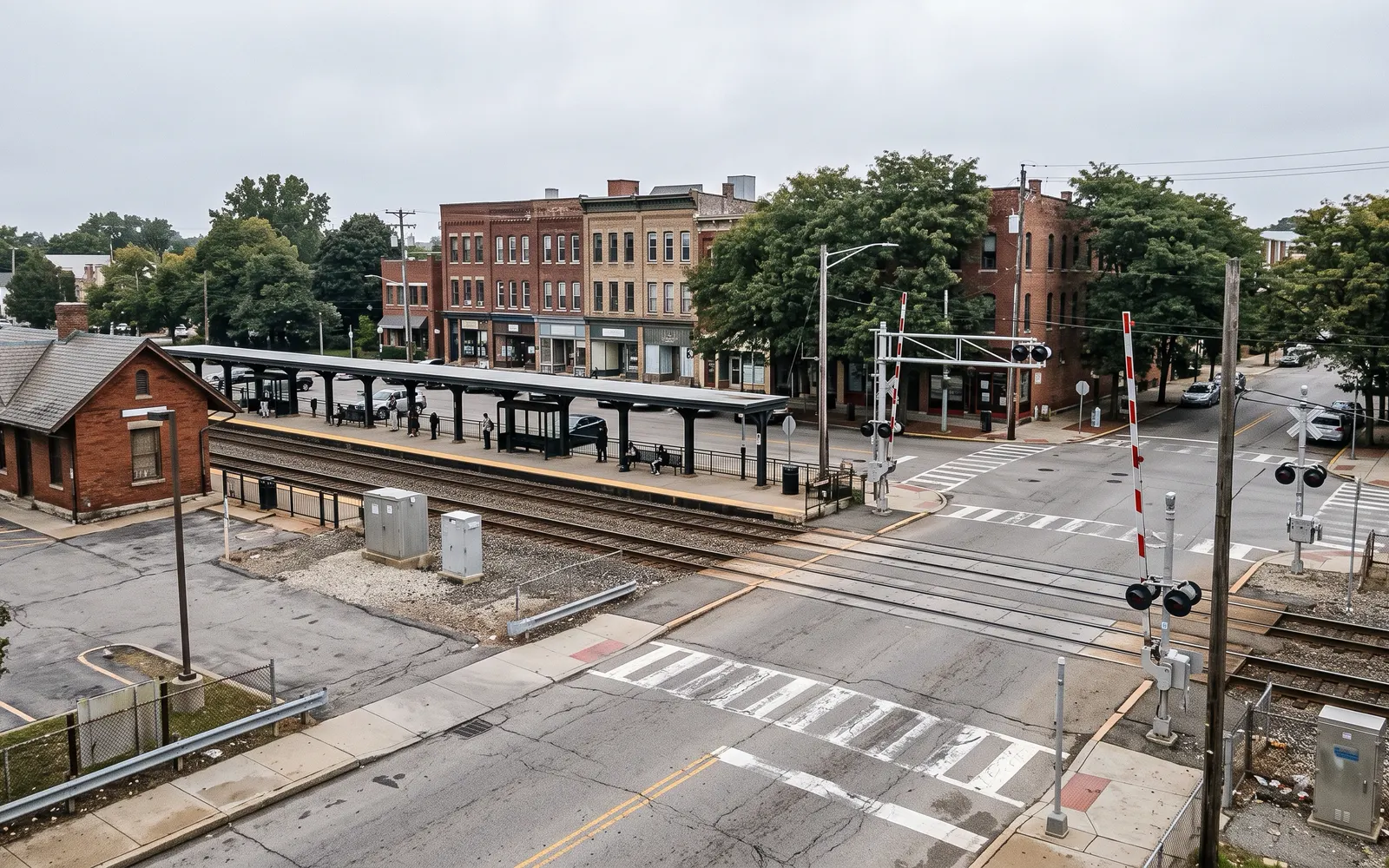
The biggest project is downtown, and most online guides have the timing wrong. The village plans to replace the Metra station, build an ADA-accessible pedestrian underpass beneath the tracks, and finish the last phase of streetscape work on Crescent Boulevard and Forest Avenue. According to the village's project page, IDOT approved Phase I engineering on March 23, 2026, and Phase II design is 95% complete. The total estimate is $54.5 million, with $26.8 million in grants secured so far. Bidding could come by summer 2027, with construction starting in fall 2027 at the earliest. Older pages still say 2026.
For buyers near downtown, that means two construction seasons of detours and parking changes starting as soon as late 2027, followed by an easier walk between the north and south sides of downtown. The houses and condos closest to the station are the ones most affected both ways.
On the south side, Full Circle Communities is building Taft & Exmoor, a 42-unit affordable apartment building at 640 Taft Avenue near Roosevelt Road, on a former hotel site the village bought in 2022. The village board approved it on February 24, 2025. The plan is 11 studios, 17 one-bedrooms and 14 two-bedrooms, with at least 55% of units set aside as supportive housing for people with disabilities, per Full Circle.
Two more things to know. Rite-Way Custom Homes' Harding Glen adds 23 townhomes of about 3,200 to 3,300 square feet near Roosevelt Road and Route 53, the rare new-construction option in the village. And the village board has hired a consultant for the first full rewrite of Glen Ellyn's zoning code since 1989. That rewrite could change what can be built on a lot, so if you are buying to tear down or add on, follow it.
I don't label any town or neighborhood as safe or unsafe.
Flood Risk in Glen Ellyn
Flooding isn't a village-wide problem in Glen Ellyn, but it is a house-by-house one. Redfin, using First Street's model, rates Glen Ellyn's overall flood risk as minor, with 293 properties, about 7% of the total, at risk of severe flooding over the next 30 years. The low ground along the East Branch of the DuPage River on the east side and the areas around the village's creeks and ponds are where to look harder.
Two checks before you write an offer. Look the address up on the FEMA flood map, because a mapped flood zone can mean required flood insurance on a mortgage. And ask the seller directly about water in the basement. With pre-war Glen Ellyn houses, the answer is often "once," and the follow-up question about what they did about it is the one that matters.
Frequently Asked Questions
How much does a house cost in Glen Ellyn, IL?+
Redfin reported a median sale price of $581,615 for the three months ending August 2026, and Zillow's home value index was $578,698 for August 2026. Prices range from condos under $300,000 on Roosevelt Road to new construction above $1 million on the north side.
What are property taxes in Glen Ellyn, IL?+
The median effective rate is about 2.35%, with a median bill of $9,631 (Ownwell, April 2026). Rates vary by school district and by whether the parcel is inside the village, and a home's bill usually rises after a sale once it is reassessed.
What school district is Glen Ellyn, IL in?+
Most of the north side is Glen Ellyn School District 41, which feeds Glenbard West High School. Much of the south side is Community Consolidated School District 89, which feeds Glenbard South. Both high schools are in Glenbard Township High School District 87. Assignment depends on the street, so confirm each address with the district.
How long is the commute from Glen Ellyn to downtown Chicago?+
On Metra's Union Pacific West line, the fastest express reaches Ogilvie in 37 minutes, most expresses in 42 and local trains in about 53. There are 29 weekday trains in each direction.
Is Glen Ellyn walkable?+
Downtown is. The village-wide Walk Score is 50, but addresses near the station and Main Street score 84 to 92, while the College of DuPage area scores 24.
What neighborhoods are in Glen Ellyn, IL?+
Commonly named pockets include Downtown, Lake Ellyn, Stacy's Corners, Northside, Northeast, Oak Hill, Arboretum Estates, Butterfield West, Glen Ellyn Manor and Woodglen/Baker Hill. Locals usually describe them by their side of the tracks and their school district.
When will the new Glen Ellyn Metra station be built?+
IDOT approved Phase I engineering on March 23, 2026. The village expects bidding by summer 2027 and construction to start in fall 2027 at the earliest, running about two construction seasons. The project includes a new station and a pedestrian underpass.
Is a Glen Ellyn address always inside the village?+
No. Unincorporated DuPage County pockets use Glen Ellyn mailing addresses, often in a grid format like 2S or 23W. Those parcels can have different zoning, utilities, services and tax bills, so confirm village limits before you make an offer.
Eshu Chikoti has extensive access to off-market listings throughout Glen Ellyn and the rest of DuPage County — homes that never make it to the public listing sites. That matters right now: in a seller's market like this one, well-priced homes routinely go under contract within days, and buyers relying only on public listings are competing for whatever is left over. Working with someone plugged into off-market inventory means seeing homes before the crowd does.
Eshu Chikoti · 847-691-4282 ·
Get new Glen Ellyn listings by email
When a home comes on the market in Glen Ellyn, I'll email it to you.
Just your email. Unsubscribe any time by replying.
Thinking About Glen Ellyn?
Whether you're buying, selling, or just curious what's on the market, I can walk you through Glen Ellyn street by street.