Franklin Park, IL
Franklin Park, IL is a 4.8-square-mile Cook County village in Leyden Township next to O'Hare, with three Metra stations on two lines, a large industrial and rail base, mostly postwar single-family homes and a summer 2026 median sale price near $362,000.
Living in Franklin Park, IL means a median sale price near $362,000 this summer, three Metra stations with 28- to 42-minute rides to Union Station, and property tax near 2.67% of value. Three in four homes are detached houses built from 1940 to 1969, and O'Hare is next door. Here it is, pocket by pocket.
Written by Eshu Chikoti · 847-691-4282 ·
How Franklin Park, IL Got Here: Railroads, a Land Broker and a Postwar Boom
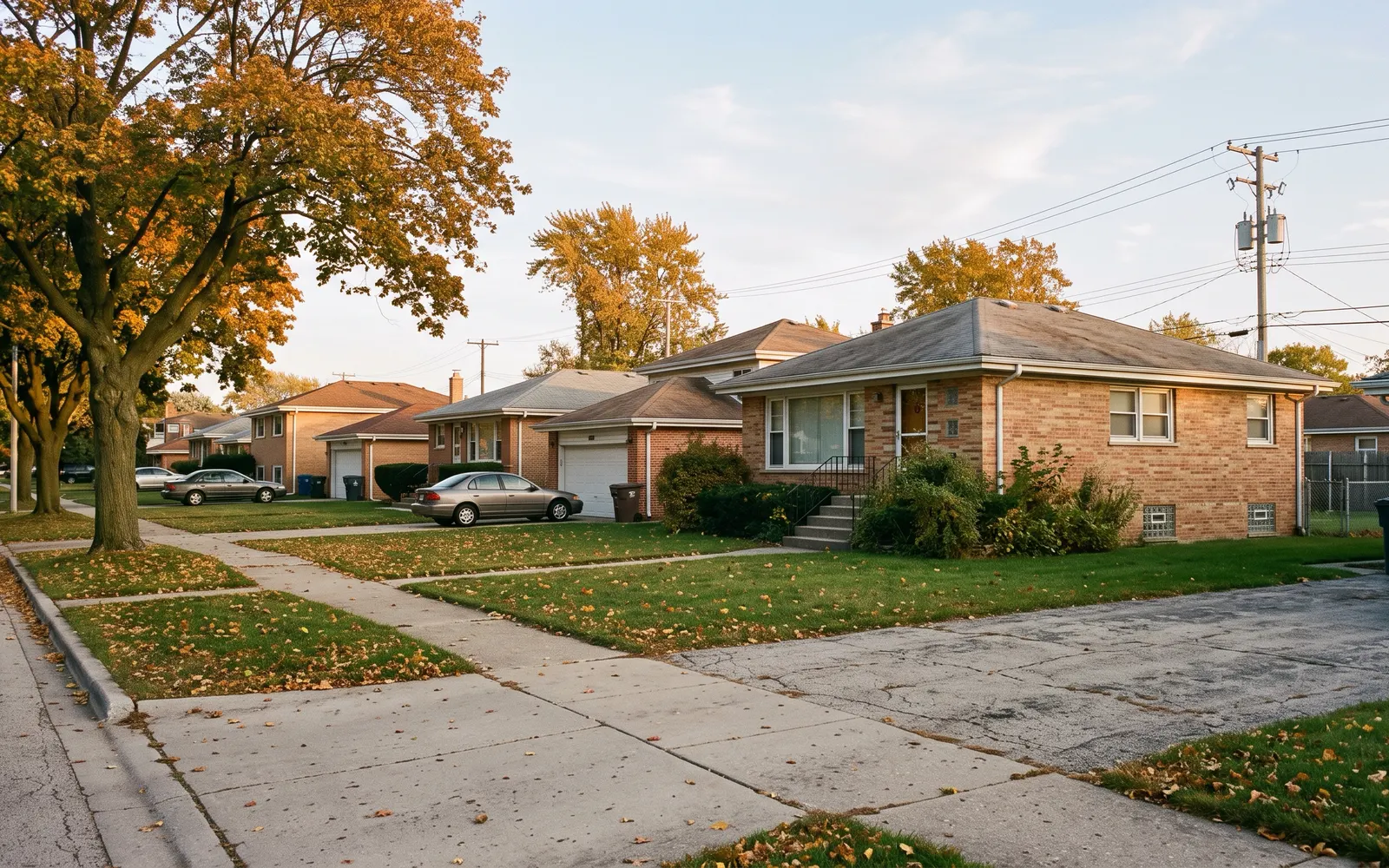
Franklin Park was farmland first and a railroad town second. Wikipedia says the area was settled in the 1840s and named for Lesser Franklin, a real estate broker who bought acres of farm fields, and that the village incorporated in 1892. The village's history page shows the Franklin Park Hotel he built in the 1890s at Rose Street and Minneapolis Street, and notes that Franklin Avenue and Edgington Street were the first paved streets.
Two villages grew into one. The Mannheim station on the Milwaukee Road opened in 1873 as a milk stop for the village of Mannheim, per Wikipedia's Mannheim station article), and Wikipedia's Mannheim School District 83 article says Mannheim was annexed into Franklin Park in the 1890s. The name survives in the school district, the station and Mannheim Road.
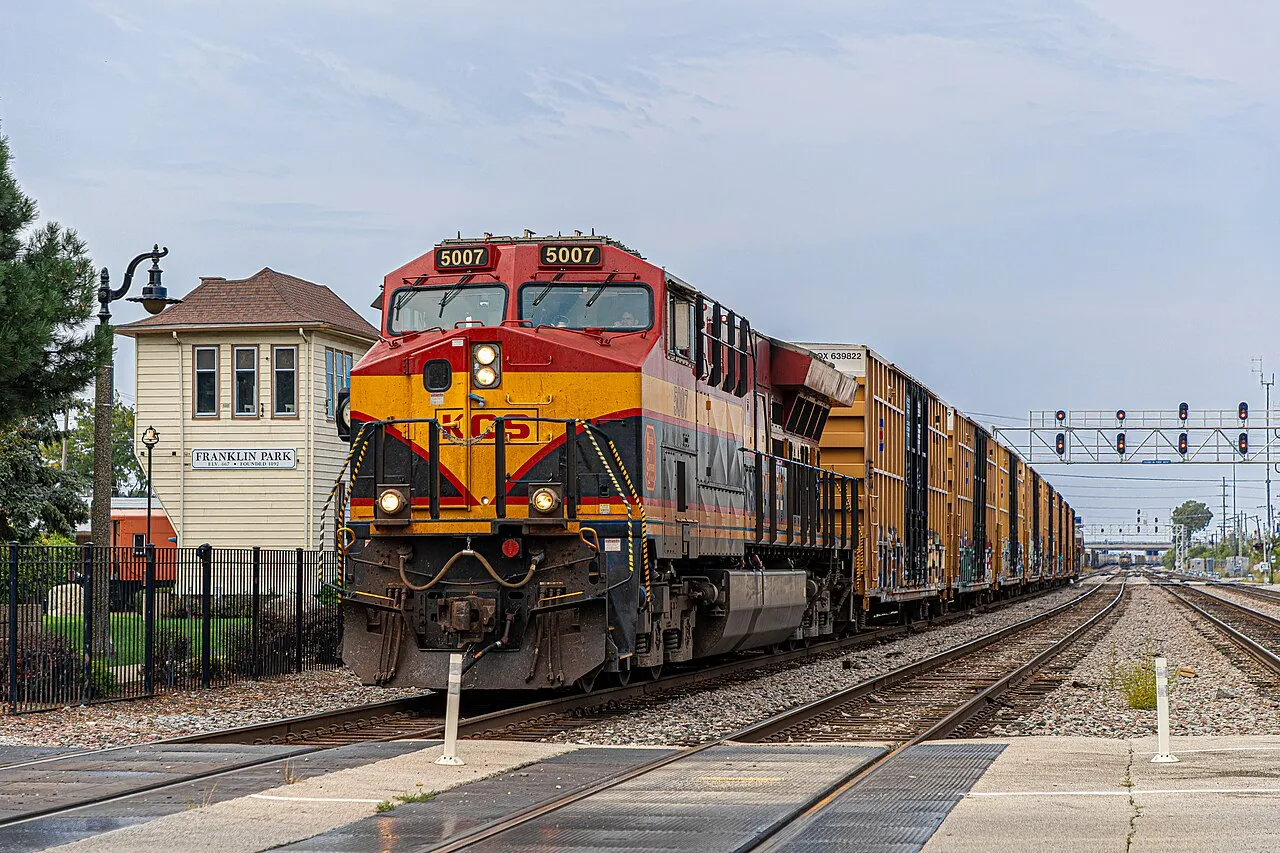
Rail defined the place. The Franklin Park station article says the B-12 interlocking tower for the Milwaukee Road, built in the 1890s, still stands one block west of the station in a small park with a preserved caboose. The Indiana Harbor Belt Railroad's northern terminus is in Franklin Park, and Canadian Pacific Kansas City's Bensenville Yard sits partly in the village, per Wikipedia.
The houses came later, and fast. Wikipedia's census table shows 3,007 residents in 1940, 8,899 in 1950 and 18,322 in 1960, which is why most of the village's homes date from that one postwar run. Industry grew with it: Sloan Valve Company, maker of the flushometer, is headquartered here, per Wikipedia. The Franklin Park Public Library was founded in 1899 by the Franklin Park Woman's Club.
Franklin Park at a Glance
Franklin Park covers 4.777 square miles, all land, per Wikipedia using the 2025 Census gazetteer. It sits south of O'Hare International Airport, between Schiller Park and River Grove to the east, Northlake and Melrose Park to the south and Bensenville to the west. Wikipedia notes that planes can be seen taking off and landing over the village.
The county and township question has one answer. The Census Bureau's Vintage 2025 estimates put all 18,045 Franklin Park residents in Cook County and in Leyden Township as of July 1, 2025. So every address inside the village has one assessment calendar.
Most homes here are owned. The 2020-2024 Census ACS counts 6,201 housing units, with 75.1% of occupied homes owned and 24.9% rented. CMAP's June 2026 community snapshot puts the Cook County owner share at 57.7%, so Franklin Park is well above it.
Franklin Park is an industrial town with homes attached. CMAP counts 16,589 private-sector jobs in 2025, or 2.76 per household, against 1.07 for Cook County. Of 3,057 acres in 2023, industrial land took 35.3% and single-family homes 20.9%. The village's economic development page says commercial and industrial property accounts for 50% of its land use, and its community page counts more than 900 businesses. Of $1.15 billion in equalized assessed value in 2024, industrial property was $694 million, about 60% by my arithmetic, and residential about 29%.
At a Redfin Compete Score of 79, it is a market where a clean house sells fast.
Only 1.5% of homes date from 2010 or later. Planes, freight trains and the I-490 work are part of daily life, and the O'Hare noise contour is worth checking for any address. Every sale needs a pre-sale inspection to current codes before a sign goes up, and most of the village has combined sewers.
Franklin Park Neighborhoods, Pocket by Pocket
Franklin Park has no official neighborhood map. The most useful dividing line is Grand Avenue. The Park District of Franklin Park says it serves the roughly 15,307 residents who live north of Grand Avenue, and the Veterans Park District lists Franklin Park among the communities it serves, with a pool in the village. So which side of Grand a house is on decides which park district you pay into and use.
The other lines are rail lines. The Milwaukee District West tracks and the freight yards run east and west through the village, and the North Central Service crosses near Belmont Avenue. The residential blocks sit between them in a grid of mostly postwar houses, with industrial areas toward the west near Bensenville Yard and I-294 and toward O'Hare.
Two details trip people up. First, not every Franklin Park address is inside the village. The ATG summary of the village transfer rules notes that some properties with Franklin Park addresses are in unincorporated areas of Leyden Township. Second, not every house in the village gets village water. The village's pre-sale inspection page asks for a final water payout receipt "if Leyden or River Grove water," which tells you some blocks are served by those systems.
The boundaries below come from village and park district sources where I have them. The ones marked single-source should be checked against the MLS before anyone relies on them, and if you want a specific address placed on this map, that is a conversation I am happy to have here.
Downtown and the Franklin Park station. The area around the Metra station at 3148 Rose Street, where the village's history places the old Franklin Park Hotel at Rose and Minneapolis Streets and the first paved streets on Franklin Avenue and Edgington Street. Village commuter lots here double as public parking.
North of Grand Avenue. The Park District of Franklin Park's service area, about 15,307 residents, with the Pool on Pacific at 9715 Pacific Avenue and the park district's ice arena. Most of the village's detached houses are on this side, per my reading of the park district count against the village total; check the MLS.
South of Grand Avenue. The blocks served by the Veterans Park District, which lists Gouin Pool in Franklin Park among its recently renovated facilities. Exact park district edges are single-source; check before you rely on them.
Mannheim (west side). The old village of Mannheim, around the Mannheim Metra stop at Front Street and Lincoln Street, next to Bensenville Yard and I-294.
Belmont Avenue station area (north side). The North Central Service stop at 9280 Belmont Avenue, opened January 30, 2006, per Wikipedia. The village police station is nearby at 9451 Belmont Avenue.
Robinson Road subdivision (east side). Named on the village's construction projects page, which reports new water mains and lead service line replacements finished, with paving to follow and a new green space at River Road and Robinson Road. Boundaries are single-source.
River Road and the forest preserves (east edge). The village says residents have access to more than 10 square miles of Cook County forest preserves, which line the Des Plaines River on the east side.
What Franklin Park Homes Look Like, by Type and Era
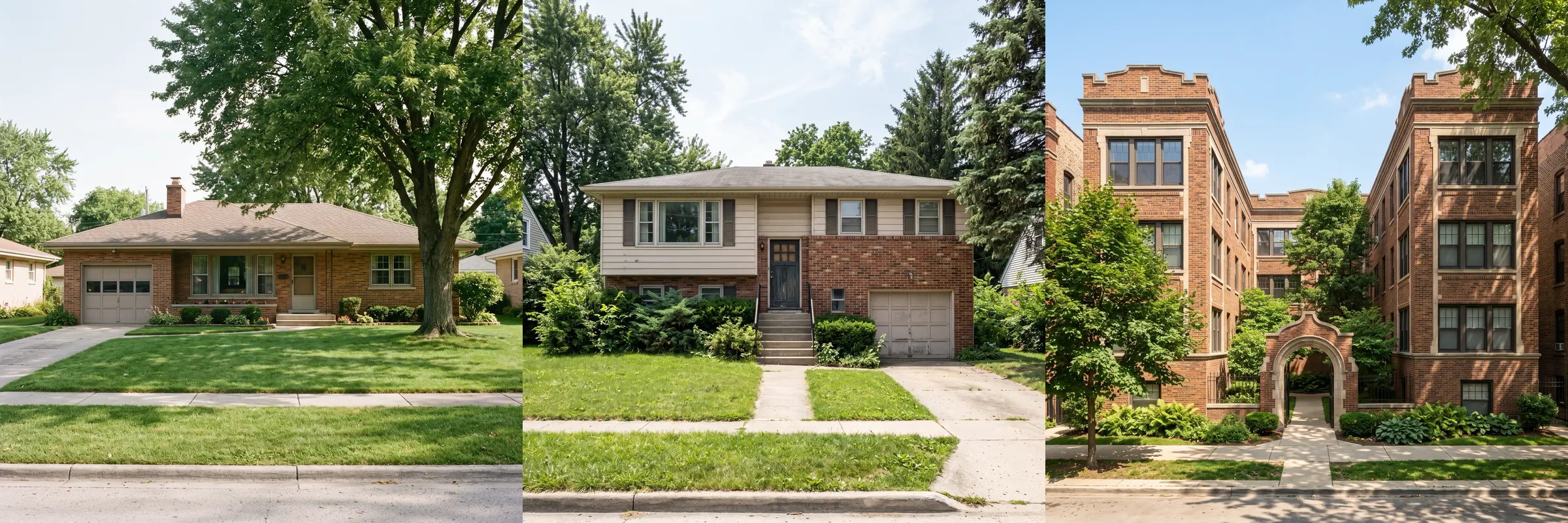
Franklin Park is a postwar village. CMAP's snapshot, built on the 2020-2024 ACS, puts the median year built at 1957, against 1961 for Cook County. Of 6,201 units, 74.7% were built from 1940 to 1969, more than double the county's 33.3%. Only 8.3% predate 1940 and only 1.5% date from 2010 or later.
It is mostly houses. Detached single-family homes are 4,570 units, or 73.7%, against 39.6% for Cook County. Two-flats are rare at 2.0%, and three- and four-unit buildings are 4.5%. Buildings of five or more units add 17.6% by my arithmetic on CMAP's rows, mostly small apartment buildings. Townhomes are about 1%.
The bedroom mix fits the era. CMAP counts 46.2% of units with three bedrooms, 25.7% with two and 13.7% with zero or one. Four bedrooms is 10.2% and five or more 4.1%. That is the brick ranch, the raised ranch and the Cape Cod on a standard city-size lot. The Census ACS puts the median home value at $287,000 and median gross rent at $1,109 for 2020-2024.
Postwar houses have their own inspection list. Expect original electrical panels, galvanized or older plumbing, basements that were finished decades ago and sewer lines of the same age. The village's water service page posts a lead service line inventory and a 2026 replacement plan, so ask what line serves the house. And because the village requires sales to bring buildings up to current code, covered in the next section but one, the inspection matters to sellers as much as buyers. My home inspection checklist covers what to ask for.
The Franklin Park Housing Market in 2026
Franklin Park is one of the faster markets in the near west suburbs. In the three months ending August 2026, Redfin reported a median sale price of $361,761, up 4.7% from a year earlier. Homes sold in about 39 days, down from 49, and Redfin counts 40 homes sold in August, up from 38.
The competition numbers are the part buyers feel. Homes sold for 101.3% of list price, up 0.5 points from a year earlier. Redfin gives Franklin Park a Compete Score of 79 out of 100, which it calls very competitive. Its summary is that the average home sells for about 2% above list and goes pending in about 42 days, and hot homes sell for about 4% above list and go pending in about 29 days. The median price per square foot was $287, up 14.8%.
Zillow's home value index agrees on the direction and comes in lower on the level. It put the typical Franklin Park home at $325,395 in August 2026, up 6.9% from $304,327 in August 2025 and 9.3% from $297,770 in August 2024. The gap is normal. Zillow estimates every home in the village, and Redfin's median is the middle of whatever sold this summer.
For context, Zillow's August 2026 index put Northlake at $312,086, Schiller Park at $316,417, Melrose Park at $323,884, River Grove at $324,957, Bensenville at $352,088, Des Plaines at $358,473, Elmwood Park at $359,481 and Norridge at $422,384. Franklin Park sits in the middle of that group. If you are working out a budget, my guide to how much house you can afford walks through the numbers.
What the numbers tell me is that well-kept houses here sell over asking, and the ones that sit are usually the ones that need code work before closing. Price the repair list into the offer, because in Franklin Park the village's pre-sale inspection puts that list in front of you.
Franklin Park Property Taxes: Leyden Township and the 2025 Reassessment
Ownwell's Cook County data for Franklin Park, last updated April 13, 2026, puts the median effective tax rate at 2.67% and the median annual bill at $5,956, on a median assessed market value of $230,000. That is above the Illinois median of 2.33% on the same page. Franklin Park has one ZIP code, 60131.
Franklin Park is on the north suburban reassessment cycle. Cook County reassesses one-third of the county each year. The Assessor's July 2025 Leyden Township release says Leyden was reassessed in 2025, lists Franklin Park among its municipalities, and says "property values certified in 2025 will affect second installment tax bills issued in 2026." It put the 2024 median single-family sale in the township at $334,000 against the Assessor's median estimate of $301,000. By my arithmetic on the three-year cycle, the next Leyden reassessment would be 2028.
You can still appeal this year. The Assessor's 2026 calendar lists Leyden under the north suburbs, which are not being reassessed in 2026, but it shows Leyden open for appeals until October 14, 2026. If your notice value looks high against recent sales of houses like yours, that window is open now.
The bills due now carry the 2025 values. For tax year 2025, the first installment was due April 1, 2026, and the second is due October 1, 2026, per the Cook County Treasurer. Cook County said those second-installment bills were expected to be mailed September 1, about two months late because of its tax system overhaul. That second installment is the first bill to show Leyden's 2025 reassessment, so a seller's older bill may understate what you will pay. If you close this fall, ask your attorney how the proration handles it.
Here is what the rate looks like on a real purchase. At this summer's $361,761 median, 2.67% works out to about $9,659 a year, or about $805 a month. Budget off the purchase price. The Cook County homeowner exemption takes $10,000 off the equalized assessed value of an owner-occupied home; the savings equal that $10,000 times your local tax rate.
Franklin Park charges a flat transfer stamp, not a percentage. The village's inspection and transfer stamp fee schedule lists an $80 stamp for a single dwelling and a $100 inspection fee, rising with the number of units. The county adds 25 cents per $500 of value, per the Illinois Department of Revenue, or about $181 at the median. My Illinois closing costs guide covers the rest. This is general information, not tax advice. Your bill depends on your parcel, your exemptions and the Assessor.
Selling in Franklin Park: The Pre-Sale Inspection Comes First
In Franklin Park the village inspection starts before the listing does. The village's pre-sale inspection page says residential, commercial, industrial and vacant properties must apply for a pre-sale inspection at the time of listing, and it puts one rule in capital letters: no "For Sale" signs are allowed before the pre-sale inspection application is complete.
The pre-sale inspection application explains the standard. Before a sale, buildings must be brought up to current building and electrical codes, and the application cites the 2021 International Building Code and the 2020 National Electrical Code. Any electrical work needs a licensed and bonded electrical contractor to pull the permit. The village says inspections are completed within 15 days, and the owner is notified in writing of compliance or violations.
Violations do not have to stop a sale. The village says the buyer can sign a legal, notarized affidavit taking responsibility for the violations, and the buyer will typically get 30 days after closing to correct them. That is useful for a buyer who wants a house with work to do, as long as the repair cost is priced into the offer.
The paperwork runs on a three-day clock. The original plat of survey, no older than six months, and the original deed must reach the Building Department at least three days before closing, along with the buyer's New Owner form and any repair affidavit. Final water readings need five days' notice. The stamp is issued once the final water bill and the transfer stamp fee are paid. If the house gets Leyden Township or River Grove water, bring the final paid receipt from that system.
Franklin Park Schools: Districts 84, 83 and 81, and Leyden High School
Elementary school in Franklin Park depends on the street. The village's schools page links three elementary districts: Franklin Park School District 84, Mannheim School District 83 and Schiller Park School District 81.
Franklin Park School District 84 is the village's own. Per Wikipedia and the district's website, it runs North Elementary, Passow Elementary and Pietrini Elementary, Hester Junior High and the East Early Childhood Center. Mannheim School District 83, headquartered in Franklin Park, serves parts of Franklin Park, Melrose Park and Northlake, per Wikipedia. The District 83 website lists Roy, Scott and Westdale schools, and Wikipedia and the village add Mannheim Middle School and Enger School, an alternative school for students with disabilities. Schiller Park District 81 includes a portion of Franklin Park, per Wikipedia.
High school is simpler. The whole village is in Leyden High School District 212, which runs East Leyden High School at 3400 Rose Street in Franklin Park and West Leyden High School in Northlake. Wikipedia notes that the first Leyden high school opened in 1913 in the building that is now Hester Junior High. Which Leyden campus a house feeds is an address question, so confirm it with the district before you make an offer.
I don't rank schools on this page. The Illinois Report Card has each school's own data. Triton College in River Grove is the community college for the area, per the village.
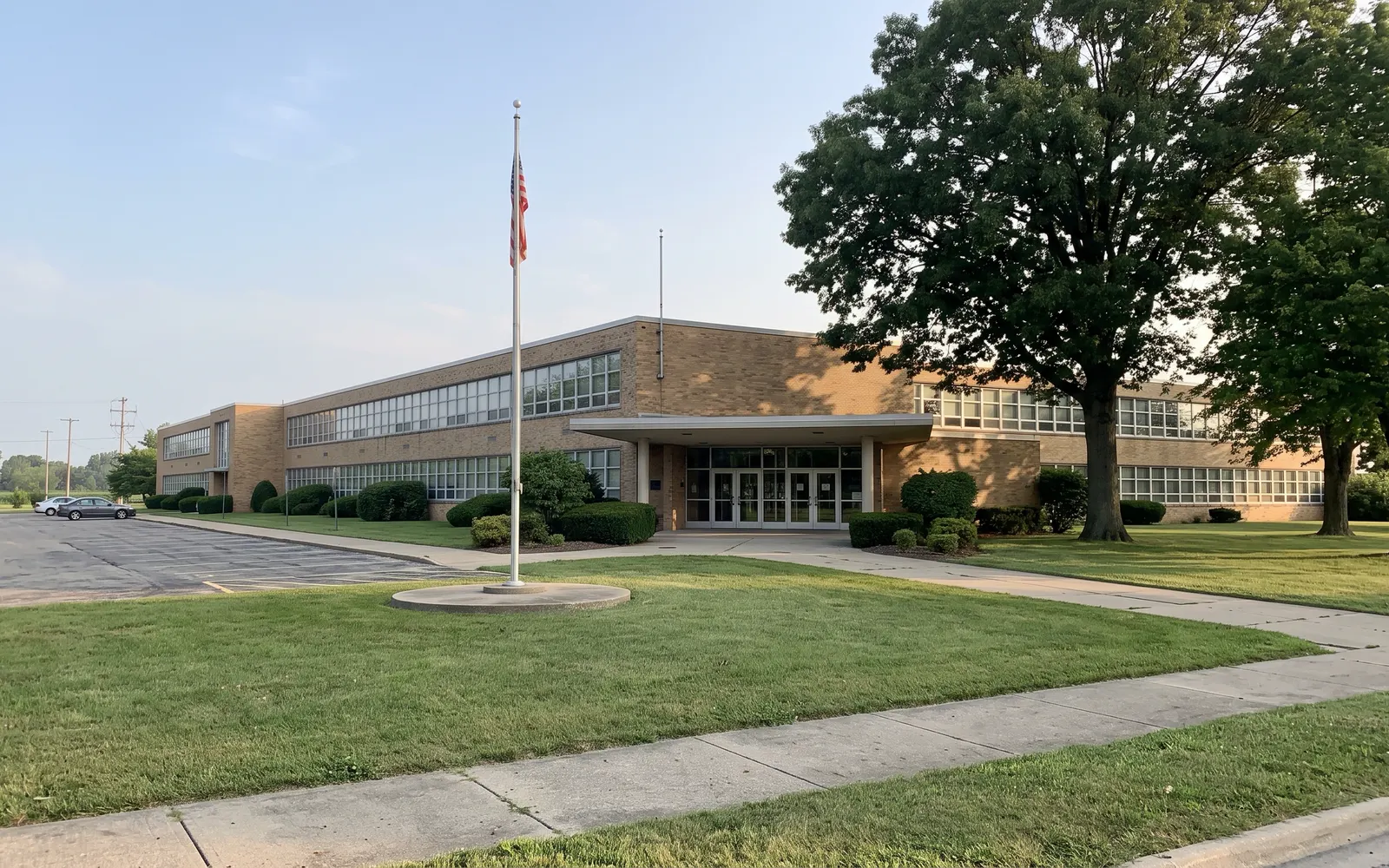
Franklin Park District 84. North Elementary, Passow Elementary, Pietrini Elementary, Hester Junior High and the East Early Childhood Center.
Mannheim District 83. Roy, Scott and Westdale schools, Mannheim Middle School and Enger School.
Schiller Park District 81. Serves a portion of Franklin Park; its schools include Washington and Kennedy elementary schools and Lincoln Middle School, per the district's website.
Leyden District 212. East Leyden High School in Franklin Park and West Leyden High School in Northlake.
Commuting from Franklin Park: Three Metra Stations on Two Lines
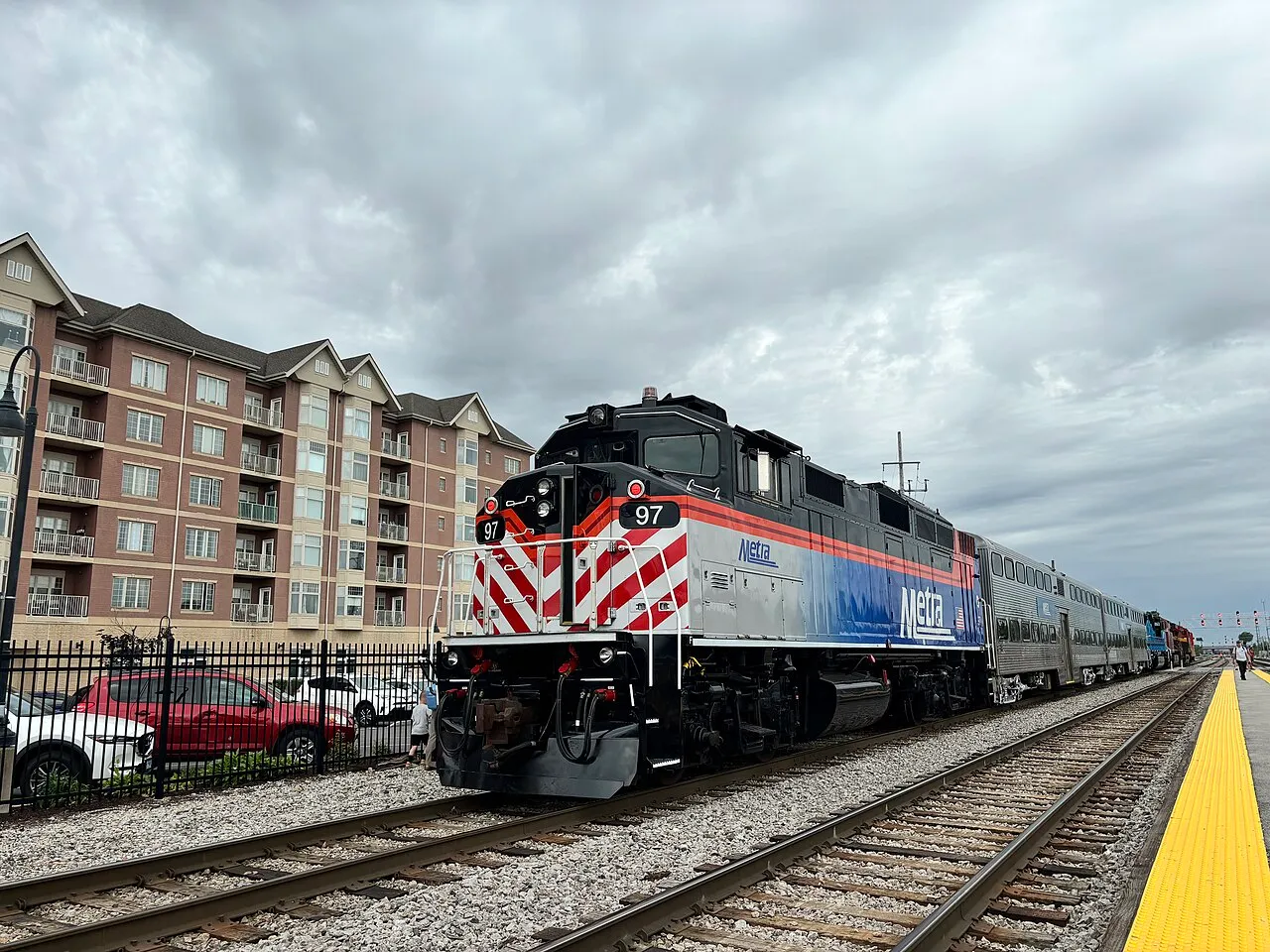
Franklin Park has more commuter rail than most towns its size: three Metra stations, all in fare zone 2, and all running to Chicago Union Station. The counts below are from Metra's schedule data for the week of September 28, 2026.
The Franklin Park station on the Milwaukee District West line is the main one. It sits at 3148 Rose Street, per Wikipedia. On weekdays, 23 trains leave it for Union Station and 25 come back. Inbound trips take 28 to 42 minutes, and the most common time is 35 minutes. Morning trains leave at 4:59, 5:34, 6:34, 6:42, 7:15, 7:42, 7:46, 8:15 and 9:10 a.m.; the fastest morning runs are the 6:34 at 29 minutes and the 7:42 at 28. Saturdays have 12 trains each way and Sundays 9.
Mannheim, the second MD-W stop, is at Front Street and Lincoln Street next to the Tri-State Tollway. It is a weekday rush-hour flag stop: the data shows 8 inbound and 4 outbound weekday trains and no weekend service, with inbound trips of 31 to 44 minutes. Wikipedia) calls it the only station on the line that is not ADA-accessible.
The Belmont Avenue station on the North Central Service, at 9280 Belmont Avenue, has 6 inbound and 6 outbound weekday trains, 30 to 32 minutes to Union Station, and no weekend service. The village's mass transit page says its commuter lots at the downtown and Belmont Avenue stations cost $1.50 a day from 5 to 11 a.m., are free after 11 a.m. and on weekends, and offer a $30 monthly permit.
Buses fill in. The same page lists Pace routes 303, 319, 330 and 332 and the Leyden Township Dial-a-Ride program. Even so, most people drive: CMAP's snapshot has 75.1% of workers driving alone and 1.6% riding transit, with an average commute of 28.9 minutes.
Driving from Franklin Park: I-294, the New I-490 and O'Hare
Franklin Park's highway is the Tri-State Tollway, I-294, which runs along the west side next to the Mannheim station, per Wikipedia. Grand Avenue, Belmont Avenue and Franklin Avenue carry traffic east and west, and Mannheim Road and River Road run north and south. O'Hare is directly north.
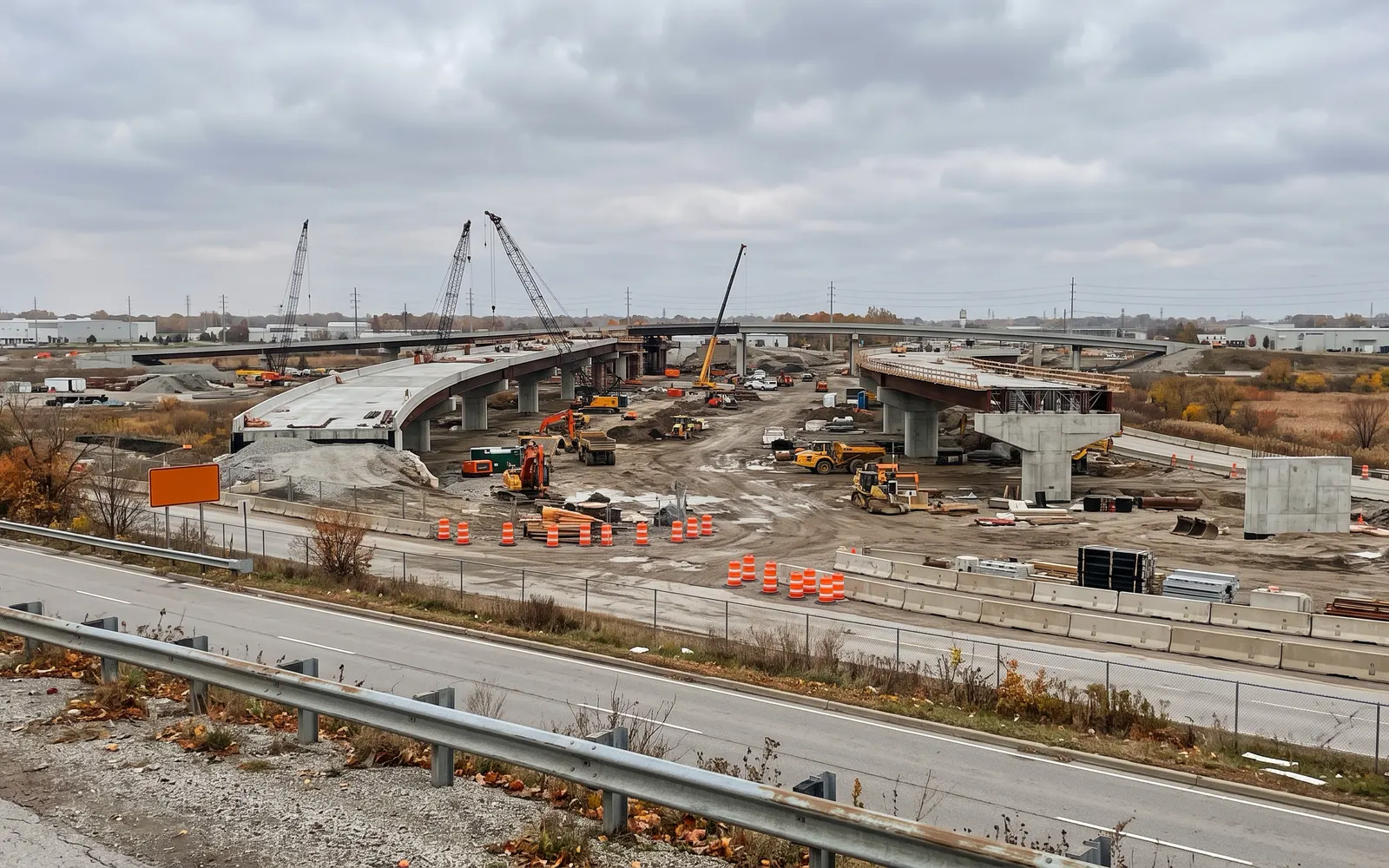
The big change is the I-490 Tollway. The Illinois Tollway's project page says it is building a full-access interchange connecting Franklin Avenue to the new I-490 and to I-294, with direct access for Bensenville and Franklin Park. In 2026 the work includes I-490 roadway and ramps to I-294, a reconfigured Acorn Lane and Cook County's reconstruction of Franklin Avenue and Green Street. Its September 2, 2026 update says all traffic is shifted to the westbound side of Franklin Avenue and Green Street between York Road and Runge Street, one lane each way, through the end of the year. Acorn Lane now ends in a cul-de-sac, with a new connection to Addison Avenue.
Freight trains are the local hazard. The village's FAQ says federal rules now allow some trains to run up to two miles long, and it asks residents to report stopped trains blocking crossings. If you have a school or work run, drive it at rush hour and see which crossings you depend on.
Aircraft noise is the other thing to check. The O'Hare Noise Compatibility Commission says homes inside the O'Hare Modernization Program's 65 DNL noise contour can qualify for sound insulation, and it points owners to the Chicago Department of Aviation's property locator to check an address. I'd look up any Franklin Park house there before making an offer, and visit it during a busy departure period.
Is Franklin Park Walkable?
Partly. Walk Score gives Franklin Park an average of 64, which it calls somewhat walkable, and says some errands can be done on foot. Redfin's Franklin Park page shows the same 64 with a Transit Score of 33 and a Bike Score of 47.
Walk Score counts about 77 restaurants, bars and coffee shops in the village, with the average resident able to walk to about two of them in five minutes. It counts about 4 bus lines and 2 rail lines.
The walkable part is downtown around the Franklin Park station and along Grand Avenue, where a house can be a few minutes from the train, the library and a grocery store. Blocks near the industrial areas and the freight yards need a car for most errands. I check this for every address, because it changes daily life more than the village average does.
Shopping, Groceries and Dining in Franklin Park
Franklin Park shops local and drives for big boxes. CMAP's snapshot, using Illinois Department of Revenue data, counts about $443 million in retail sales in 2025, or $24,363 per resident, close to Cook County's $23,200.
For groceries, Jewel-Osco's store locator lists a Franklin Park store at 10203 W. Grand Avenue, at Grand and Mannheim, open 6 a.m. to midnight. The larger North Avenue stores in neighboring Melrose Park, including Costco, Target and another Jewel, are a short drive south.
Grand Avenue and Franklin Avenue are the main local business streets, with the downtown station in between. The village publishes a 2026 Franklin Park Restaurant Guide and a map of restaurants, and Walk Score counts about 77 restaurants, bars and coffee shops. I don't try to list every restaurant, because the list changes every year. The best advice I give buyers is to eat near each house you are serious about.
Parks, Pools and the Ice Arena in Franklin Park
Franklin Park has two park districts, split roughly by Grand Avenue. The Park District of Franklin Park serves about 15,307 residents north of Grand Avenue, offers more than 250 programs a year and runs 17 parks totaling 24.56 acres. Its four facilities are a year-round indoor ice arena with a full sheet of ice, the Centre at North Park banquet hall and sports arena, a community center and the Pool on Pacific. The Veterans Park District serves Franklin Park as well and lists recent renovations at Gouin Pool in the village.
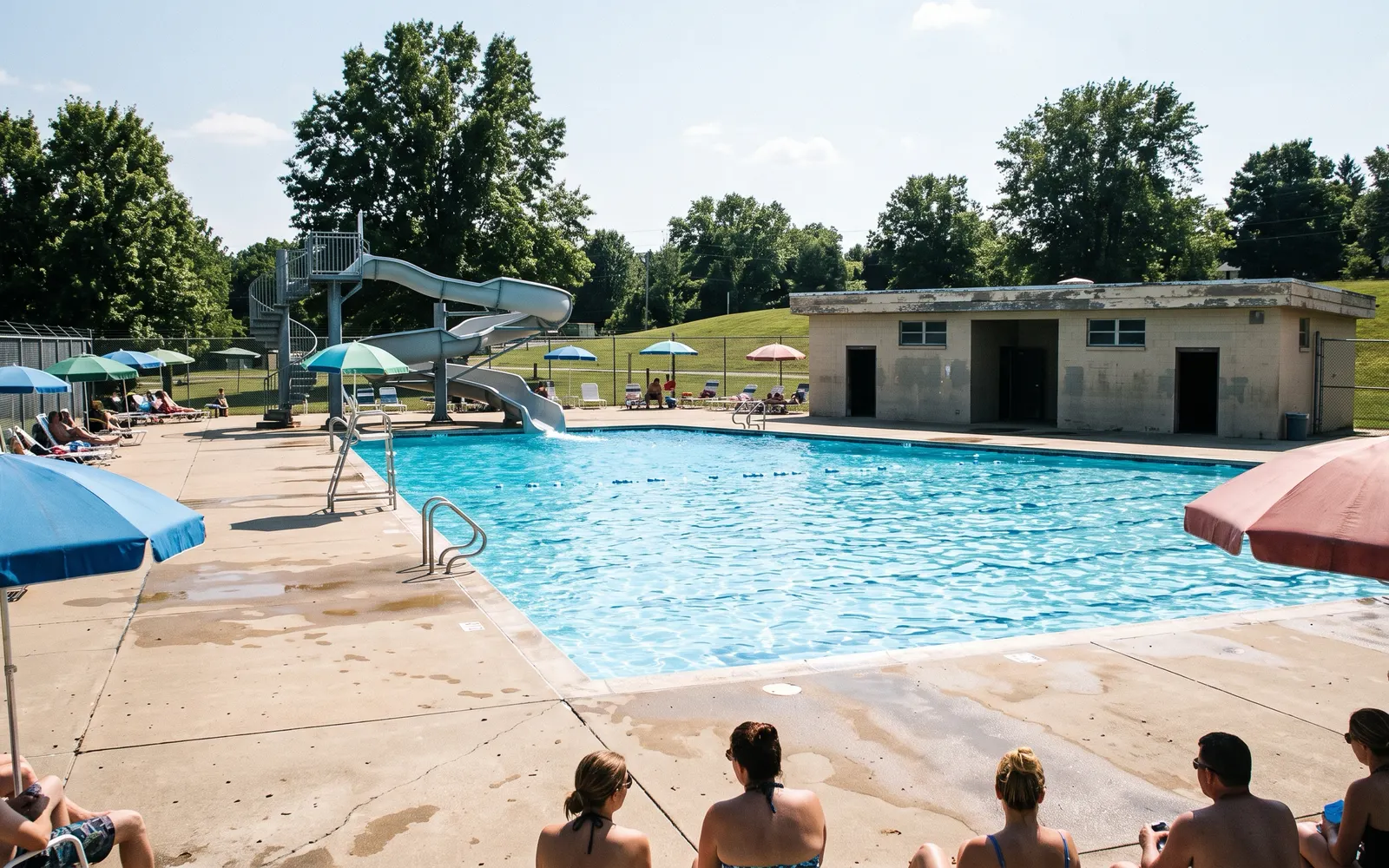
The pool has real details worth knowing. The Pool on Pacific at 9715 Pacific Avenue has two water slides, a drop slide, a zero-depth area, a diving board and a sun deck. Its 2026 regular season ran May 23 to August 8, with weekends through September 7. Daily admission is $9 for residents and $12 for non-residents, and a regular season pass is $57 for residents. Residents must show proof of residency each year, and a recent closing statement counts.
The village adds its own count. Its community page lists 19 public parks, 2 outdoor pools, an ice arena and access to more than 10 square miles of Cook County forest preserves. CMAP counts 51.7 acres of open space inside the village, or 1.7% of its land, in 2023, so the forest preserves along the east side do most of the heavy lifting for trails and green space.
The Franklin Park Public Library
The Franklin Park Public Library is an independent library district at 10311 Grand Avenue. It was founded in 1899 by the Franklin Park Woman's Club and moved several times before settling into its current 25,000-square-foot building in 1984.
The library says its collection has more than 111,000 volumes, including a world languages collection, and it lends STEAM kits, early literacy kits, Roku devices and Wi-Fi hotspots. It is a member of the SWAN network, which links it with many other suburban libraries. Its site lists hours of 9 a.m. to 9 p.m. Monday through Wednesday and 9 a.m. to 7 p.m. Thursday and Friday.
It is also the keeper of the village's past. The library holds back issues of the Franklin Park Herald-Journal on microfilm to the first issue in 1946, and the village's history page credits the library's historical photograph collection. Because it is a separate library district, it levies its own line on your tax bill.
Utilities and Village Services in Franklin Park
The village bills water, sewer and garbage together. Its finance department page says bills go out monthly, water is metered and read by radio transmitters, new residents should open water, sewer and refuse accounts right away, and a seller must satisfy the final water, sewer and refuse bill to sell. Some blocks are on Leyden Township or River Grove water instead, per the pre-sale page.
Garbage goes through Republic Services. The village's refuse and recycling page says homeowners in single-family and two-family homes pay $27.80 a month since October 1, 2024, for unlimited garbage and recycling pickup on Mondays and yard waste on Tuesdays, and that qualified residents 65 and older get free collection. The village also runs a free electronics recycling drop-off at 9364 Franklin Avenue, weekdays 7:30 a.m. to 3 p.m.
Two rules new owners often miss. The village's FAQ says lawn sprinkling on village water is not allowed from 12:01 to 6 p.m. between May 15 and September 15. And the water service page posts the village's lead service line inventory and 2026 replacement plan.
Hospitals Near Franklin Park
Franklin Park has no hospital of its own. The nearest is Loyola Medicine's Gottlieb Memorial Hospital at 701 W. North Avenue in Melrose Park, and Loyola University Medical Center is in Maywood, per Wikipedia.
For residents who don't drive, the village's mass transit page says the Leyden Township Dial-a-Ride program, weekdays 8 a.m. to 5 p.m., can take residents anywhere in Leyden Township and is useful for appointments at Gottlieb, Hines, Loyola and other area hospitals. One caution: the same page still lists Westlake, which closed in 2019 according to the Illinois Health Facilities and Services Review Board's project record.
Fall Fest, the Train Station and Franklin Park's Yearly Calendar
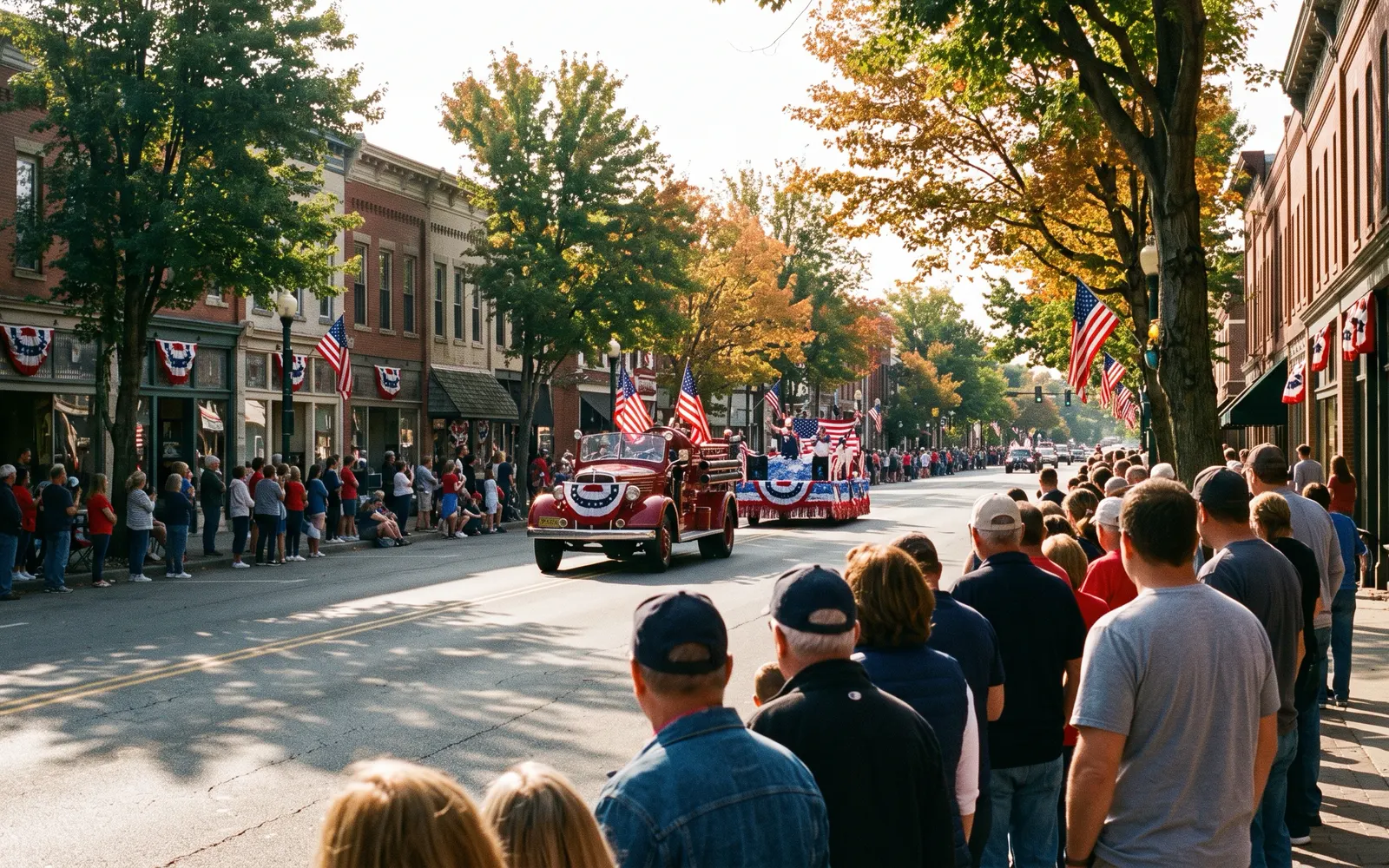
The fall calendar belongs to the park district. Its special events page lists the 48th Annual Eddie Biondo Fall Fest Parade on Sunday, October 4, 2026, at Scott Street and Grand Avenue, followed by a trick-or-treat event in the park and a holiday ornament night at the Franklin Park train station. The village's FAQ sets trick-or-treating on October 31 from 3 to 7 p.m.
The train station is the other gathering place. Wikipedia's Franklin Park station article says the annual Railroad Daze festival, a celebration of the railroad's role in the village's history, is held at the station, and the village's event page now calls it Franklin Park Fest.
The library runs a steady calendar of its own programs too. If you are touring houses on a parade or festival weekend, go. It tells you more about a block than a listing will.
What's Changing in Franklin Park: I-490, Water Mains and Industrial Incentives
The largest project is the tollway. The I-490 and Franklin Avenue interchange work described above runs through 2026, with the Tollway's September 2, 2026 update keeping Franklin Avenue and Green Street at one lane each way through the end of the year. A July 20, 2026 Tollway release posted by the village closed Runge Street at Franklin Avenue for reconstruction with a detour via Wolf Road and Addison Avenue.
The village is replacing old pipes block by block. Its construction projects page reports that new water mains and lead service line replacements are finished in the Robinson Road subdivision, with paving to follow and a new green space at River Road and Robinson Road. On Washington Street between King Avenue and Belmont Avenue, new water and sewer mains are in, with rain gardens and trees on the east side and resurfacing scheduled for spring 2026. The page also links the county's Franklin Park Climate Resiliency Plan.
On the business side, the village's economic development page says the state certified the Franklin Park Enterprise Zone for 15 years starting January 1, 2016, with a sales tax exemption on building materials, and that the Economic Development Commission reviews Cook County Class 6b industrial tax incentives. For a homeowner, the point is that the village is working to keep industry, which pays most of the local property tax base.
I don't label any town or neighborhood as safe or unsafe.
Flood and Basement Water Risk in Franklin Park
Franklin Park's flood risk is lower than some neighbors', but basements are still the question. Redfin, using First Street's model, rates the village's flood risk as minor and says 17% of properties are at risk of severe flooding over the next 30 years.
Sewers are the main issue. The village's sewer system page says the majority of the village is in a combined sewer area, where sanitary sewage and storm water share the same pipes on the way to the MWRD plant. Its cost share page explains why that matters: many older homes have gravity sewers that can back up when the combined main is overloaded in heavy storms.
The village helps pay to fix it. It reimburses residents up to 50% of the cost of two kinds of work: converting a house to an overhead sewer, and rear yard drainage fixes for standing water. The application must be approved by the Engineering Department and a building permit pulled before the work is done. The village also offers a free drainage review for any home with structural flooding, basement seepage or standing water, and its floodplain page will issue a written flood zone determination for a property.
Three checks before you write an offer. Ask the village for the flood zone letter and look up the FEMA map. Ask the seller directly whether the basement has ever taken water and whether the house has an overhead sewer. And have the inspector look at the sump pump, any backflow valve, the grading and the sewer line to the street, ideally with a camera.
Frequently Asked Questions
Is Franklin Park, IL in Cook County?+
Yes. Census Bureau estimates for July 1, 2025, put all 18,045 village residents in Cook County and in Leyden Township, so every address inside the village has one Cook County assessment calendar.
How much does a house cost in Franklin Park, IL?+
Redfin reported a median sale price of $361,761 for the three months ending August 2026, up 4.7% from a year earlier, with homes selling at 101.3% of list. Zillow's home value index was $325,395 for August 2026, up 6.9%.
What are property taxes in Franklin Park, IL?+
Ownwell (April 2026) puts the median effective rate at 2.67% with a median bill of $5,956. Leyden Township was reassessed in 2025, those values reach the second-installment bills mailed in 2026, and appeals are open until October 14, 2026.
Do you need an inspection to sell a house in Franklin Park?+
Yes. The village requires a pre-sale inspection application at listing, before any For Sale sign goes up, and buildings must meet current codes. A buyer can sign a notarized affidavit to take on violations and typically gets 30 days after closing to fix them.
What school districts serve Franklin Park, IL?+
Elementary students attend Franklin Park District 84, Mannheim District 83 or Schiller Park District 81 depending on the street. The whole village is in Leyden High School District 212, with East Leyden High School on Rose Street. Confirm each address with the district.
How long is the train from Franklin Park to Chicago?+
From the Franklin Park station on Metra's MD-W line, inbound weekday trains take 28 to 42 minutes to Union Station, most often 35, with 23 inbound weekday trains in fall 2026. Mannheim and Belmont Avenue are weekday-only stops.
Is Franklin Park walkable?+
Somewhat. Walk Score rates it 64, with a Transit Score of 33 and a Bike Score of 47 on Redfin. Downtown near the Metra station and Grand Avenue are the most walkable areas.
Is Franklin Park near O'Hare?+
Yes. The village sits just south of O'Hare, and planes can be seen over it. The O'Hare Noise Compatibility Commission points homeowners to the Chicago Department of Aviation's property locator to check whether an address is in the sound insulation contour.
What neighborhoods are in Franklin Park, IL?+
Franklin Park has no official neighborhoods. Useful areas are downtown around the Franklin Park station, north and south of Grand Avenue, the old Mannheim area on the west side, the Belmont Avenue station area and the Robinson Road subdivision near River Road.
Eshu Chikoti has extensive access to off-market listings throughout Franklin Park and the rest of Cook County — homes that never make it to the public listing sites. That matters right now: in a seller's market like this one, well-priced homes routinely go under contract within days, and buyers relying only on public listings are competing for whatever is left over. Working with someone plugged into off-market inventory means seeing homes before the crowd does.
Eshu Chikoti · 847-691-4282 ·
Get new Franklin Park listings by email
When a home comes on the market in Franklin Park, I'll email it to you.
Just your email. Unsubscribe any time by replying.
Thinking About Franklin Park?
Whether you're buying, selling, or just curious what's on the market, I can walk you through Franklin Park street by street.