Elmwood Park, IL
Elmwood Park, IL is a 1.91-square-mile Cook County village on Chicago's northwest edge, with a Metra station 10.2 miles from Union Station, a civic center built around a traffic circle on Conti Parkway, and a summer 2026 median sale price near $415,000.
Living in Elmwood Park, IL means a median sale price of about $415,000 this summer, a 27- to 35-minute Metra ride to Union Station, and property tax near 2.69% of value. Sellers need a village inspection before a sign goes up, and about a third of properties carry flood risk. Here it is, block by block.
Written by Eshu Chikoti · 847-691-4282 ·
How Elmwood Park, IL Got Here: A Picnic Grove and a Train Stop
Elmwood Park took its name from a train stop. According to the village's Wikipedia entry, people from the city used to ride the Milwaukee Road west at the turn of the last century to picnic in a grove of old elm trees near today's Harlem Avenue and Irving Park Road. A new cemetery took the name Elmwood, and the nearest stop to the cemetery and the grove came to be called Elmwood Park. When the village incorporated, its founders named it after the stop.
Before that, the land had other names. The village's annex to the 2024 Cook County hazard mitigation plan says this southeast corner of Leyden Township was called Ellsworth, and then Orson, in the 1800s, and was farmed. It says several brooks crossed the land and flooded each spring into a series of four "lakes," a detail worth keeping in mind when you read the flood section below. Around 1870, railroad rights led to the first real town around Grand and Harlem.
Elmwood Park incorporated as a village in early April 1914. Wikipedia, citing a 1916 Chicago Daily News almanac, says the reason was to avoid being annexed by Chicago. A group of landowners in the northeast corner voted to join the city in 1915, which is why the village map has a bite taken out of that corner instead of a clean rectangle.
Most of the housing came in two waves. The hazard plan names the Westwood subdivision, bought and developed in 1926, as part of a real estate boom, and says another burst of building followed World War II. The census numbers show it: 1,380 residents in 1920, 11,270 in 1930, 18,801 in 1950 and a peak of 26,160 in 1970, per Wikipedia. The 2020 census counted 24,521.
The railroad shaped the town in a second way. The Elmwood Park station opened in 1916, two years after incorporation, per Wikipedia's station entry, and Grand Avenue grew up beside the tracks as the village's main street. More than a century later, the long, angled crossing where Grand meets the railroad is the village's biggest infrastructure project, as the development section explains. For a buyer, the history shows up in the housing: most homes date from the 1920s boom and the postwar decades, as the homes section shows.
Elmwood Park at a Glance
Elmwood Park is small and tightly built. The 2020 census gazetteer puts it at 1.91 square miles, all land. The village's hazard plan annex says it is bordered by the City of Chicago on the north and east, River Forest on the south and River Grove on the west, about 9 miles northwest of downtown and 6 miles southeast of O'Hare. Harlem Avenue, the eastern border with Chicago, and North Avenue, the southern border with River Forest, are the two edges most buyers know.
The whole village is in Cook County and in one township. The Census Bureau's Vintage 2025 population estimates put Elmwood Park at 23,675 people in 2025, all of them in Leyden Township, down from a 2020 base of 24,521. One township means one reassessment calendar for every house in the village, which keeps the tax conversation simpler than it is in towns that straddle two or three.
The housing is a mix of owned and rented. The 2020-2024 Census ACS counts 9,882 housing units, with 65.2% of occupied homes owned and 34.8% rented. The housing stock goes with that mix: two-flats, small apartment buildings and condos make up almost half the units, as the homes section explains.
Elmwood Park is a place people live, not a place people commute into. CMAP's June 2026 community snapshot counts 2,311 private-sector jobs in the village in 2025, down 147 (6.0%) from 2015, or 0.25 jobs per household against 1.07 for Cook County. The same report shows 35.4% of employed residents working in Chicago.
At a $415,000 summer median, it costs less than Norridge, Oak Park or River Forest, and it comes with its own pre-K-12 school district.
About 32% of properties carry a severe 30-year flood risk in First Street's model, and the village's own plan documents repeated street and basement flooding. The effective tax rate near 2.69% is above the county median, which on a $415,000 house is about $11,160 a year once the assessor catches up. The median home was built in 1955, the village inspects before you can list, and the Grand Avenue crossing will be a traffic and construction story for years.
Zillow's August 2026 index puts the typical Elmwood Park home at $359,481, against $324,957 in River Grove next door, $391,634 in Harwood Heights, $422,384 in Norridge and $486,880 in Oak Park.
Elmwood Park Neighborhoods, Block by Block
Elmwood Park has no official neighborhoods, and at under two square miles it doesn't need many. Most streets are on a grid of numbered avenues running north and south, from the low 70s near Harlem to the 80s near the western edge, crossed by Belmont, Diversey, Fullerton, Armitage, Grand and North. Locals describe a house by the nearest landmark: by the Circle, north of the tracks, in Westwood, off North Avenue.
The most useful line in town is the railroad. The Metra Milwaukee District tracks cut diagonally across the village, and the school district uses them as its elementary boundary. According to District 401's enrollment page, students in kindergarten through fifth grade who live north of the tracks attend John Mills Elementary, and those south of the tracks attend Elmwood Elementary. The district's transportation page adds that middle school bus service goes to students who live north of the tracks. So the tracks decide your elementary school, your middle school bus and how you cross town at rush hour.
Below are the pockets I use when I talk buyers through the village. The boundaries are my own working description built from sourced landmarks, not official lines, so treat them as a starting point. If you want to know which school, which flood-history block and which Metra walk a specific address has, that is a conversation I am happy to have here.
The expectation I most often have to reset with buyers in Elmwood Park is that a lower price means a simpler purchase. It doesn't. A two-flat, a 1920s brick bungalow and a 1950s ranch can all sit on the same block, and each comes with a different inspection list, a different insurance question and a different village inspection before closing. I look at the building type and the block's water history before I look at the kitchen.
When I narrow a search here, I use three questions in order. Which side of the tracks, since that sets the elementary school and how often you cross Grand. How close to a corridor, since that sets how walkable daily life is and how much traffic passes the house. And what the block's flood history looks like, since the village's own plan names specific streets that have flooded. Two houses at the same price can answer those three questions very differently.
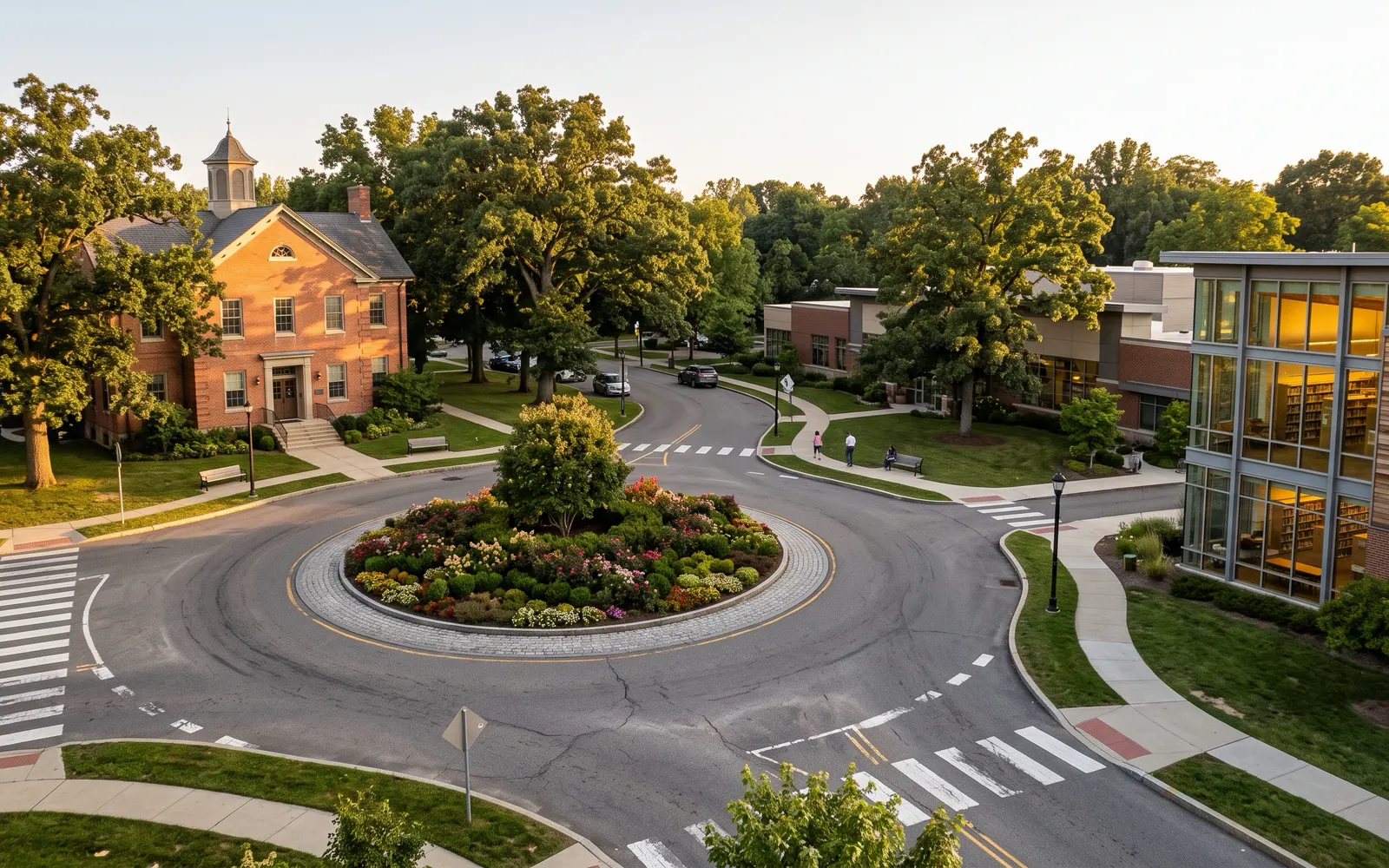
The Circle and Conti Parkway. The civic center of the village, around the roundabout on Conti Parkway near the Metra station. Village Hall is at 11 Conti Parkway, the public library at 1 Conti Parkway, and the Community and Recreation Center at 4 Conti Parkway. Condo buildings sit on the Circle itself, and the station on Grand Avenue is a short walk. This is the most walkable part of town.
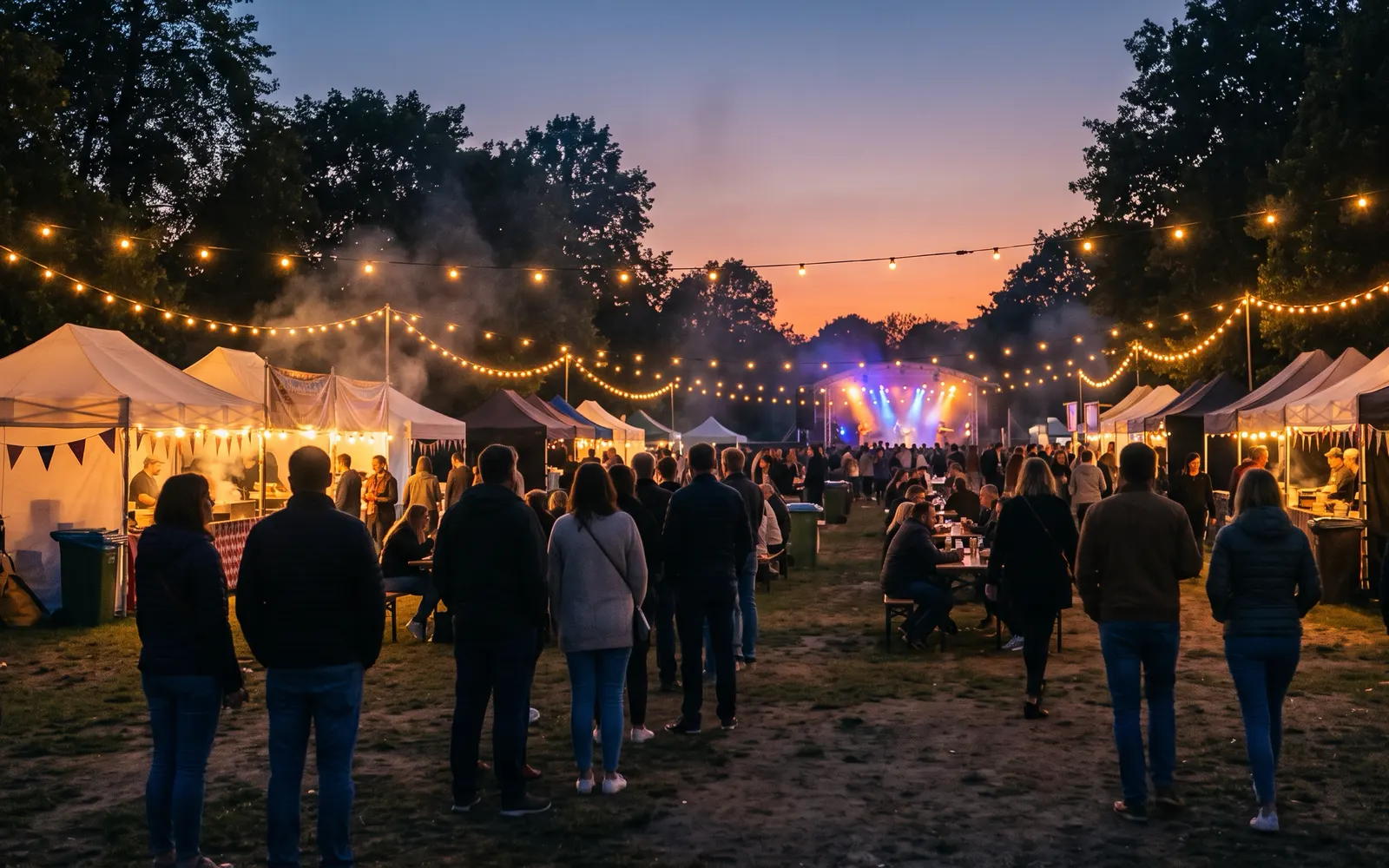
North of the tracks. The part of the village between the railroad and Belmont Avenue, fed by John Mills Elementary (2824 N. 76th Ave.) and home to Elmwood Park High School at 8201 W. Fullerton Ave. and Central Park at 75th Avenue and Fullerton, where the village holds the Taste. Mostly detached houses and two-flats on the numbered avenues.
Westwood. The northwest area whose curving drives (Westwood Drive, Elmgrove Drive, Sunset Drive, Cressett Drive) show up on the District 401 bus routes. The hazard plan annex dates the Westwood subdivision to 1926. It is the most suburban-looking part of the village, with the high school and the Belmont retail strip close by.
South of the tracks. The blocks between the railroad and North Avenue, fed by Elmwood Elementary (2319 N. 76th Ave.) and close to Elm Middle School (7607 W. Cortland St.) and Centennial Park at 7600 W. Armitage Ave. Older brick bungalows and two-flats are common here, and North Avenue's shops and Pace buses are a few blocks away.
The Harlem Avenue edge. The eastern blocks along Harlem, which is the city line. Chicago's Montclare neighborhood and its Metra stop are a few blocks east, and CTA Route 90 runs up and down Harlem. The village has a TIF district and a business district along Harlem north of Grand, per the March 2026 board minutes.
The western edge toward Thatcher. The blocks closest to River Grove and the Des Plaines River. The village's hazard plan says low land and roadways along Thatcher Avenue are prone to river and creek flooding when the Des Plaines runs high, and it names 80th Avenue among the streets where cars stalled in the July 2011 storm. Check flood history carefully out here.
Along Grand Avenue. The blocks on either side of Grand, the diagonal street beside the railroad, from Harlem west past the station. This is where most of the older storefronts, the Grand Corridor TIF districts and the planned underpass are, so houses here trade convenience to the train and shops against traffic, freight noise and years of road work ahead.
What Elmwood Park Homes Look Like, by Type and Era
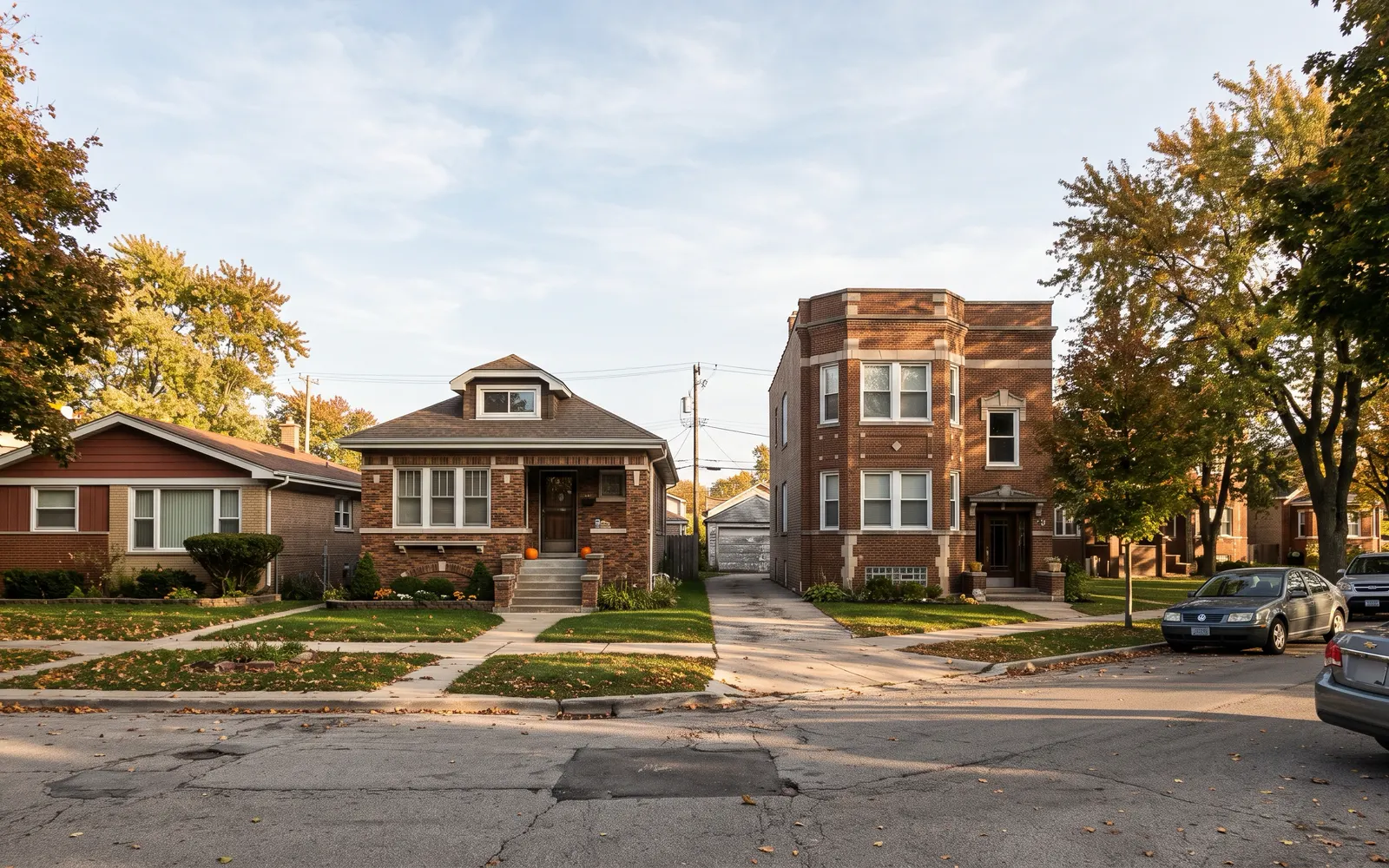
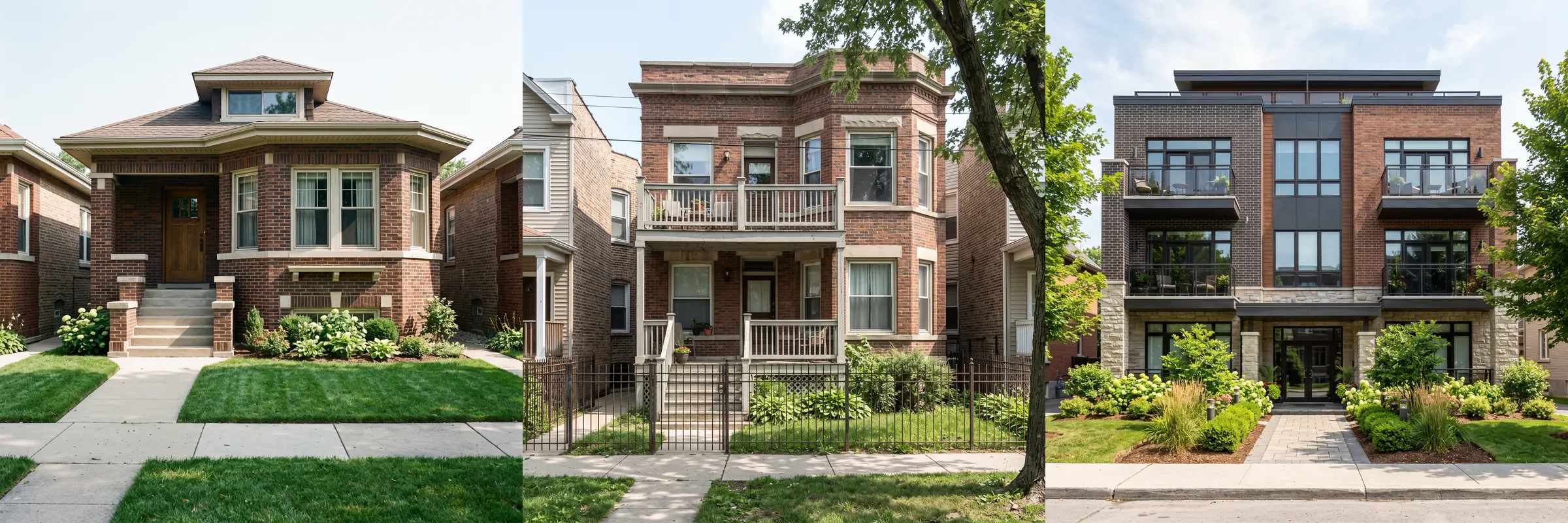
Elmwood Park is not a detached-house town the way most of the northwest suburbs are. The 2020-2024 Census ACS counts 5,068 detached single-family homes, 51.3% of all units. Buildings with two units add 6.7% and buildings with three or four units add 11.7%, so about one home in five is in a two-flat, three-flat or four-flat. Buildings with five or more units, mostly condo and apartment buildings, make up 28.3%. Attached townhomes are rare at 1.9%.
The era is older than most suburbs. The same survey puts the median year built at 1955. About 28.6% of homes were built before 1940, and 48.3% between 1940 and 1969, with the 1950s alone at 20.7%. Only 5.3% date from 2000 to 2019. In a village with almost no vacant land, what does get built is mostly infill.
The bedroom mix follows the buildings. About 35.7% of homes have three bedrooms and 15.1% have four, while 30.6% have two and 15.3% have one or none. The ACS puts the median value of owner-occupied homes at $339,300 and the median gross rent at $1,334.
For a buyer that adds up to four different purchases under one village name. There is the brick bungalow or Cape Cod from the 1920s through the 1950s, often with a finished basement. There is the postwar ranch or raised ranch, more common toward the north and west. There is the two-flat or small multi-unit building, which you can buy as a home with rental income or as an investment. And there is the condo, many of them in buildings near the Circle and along the main roads. They trade at very different prices per square foot, and I price each one off its own kind of sale.
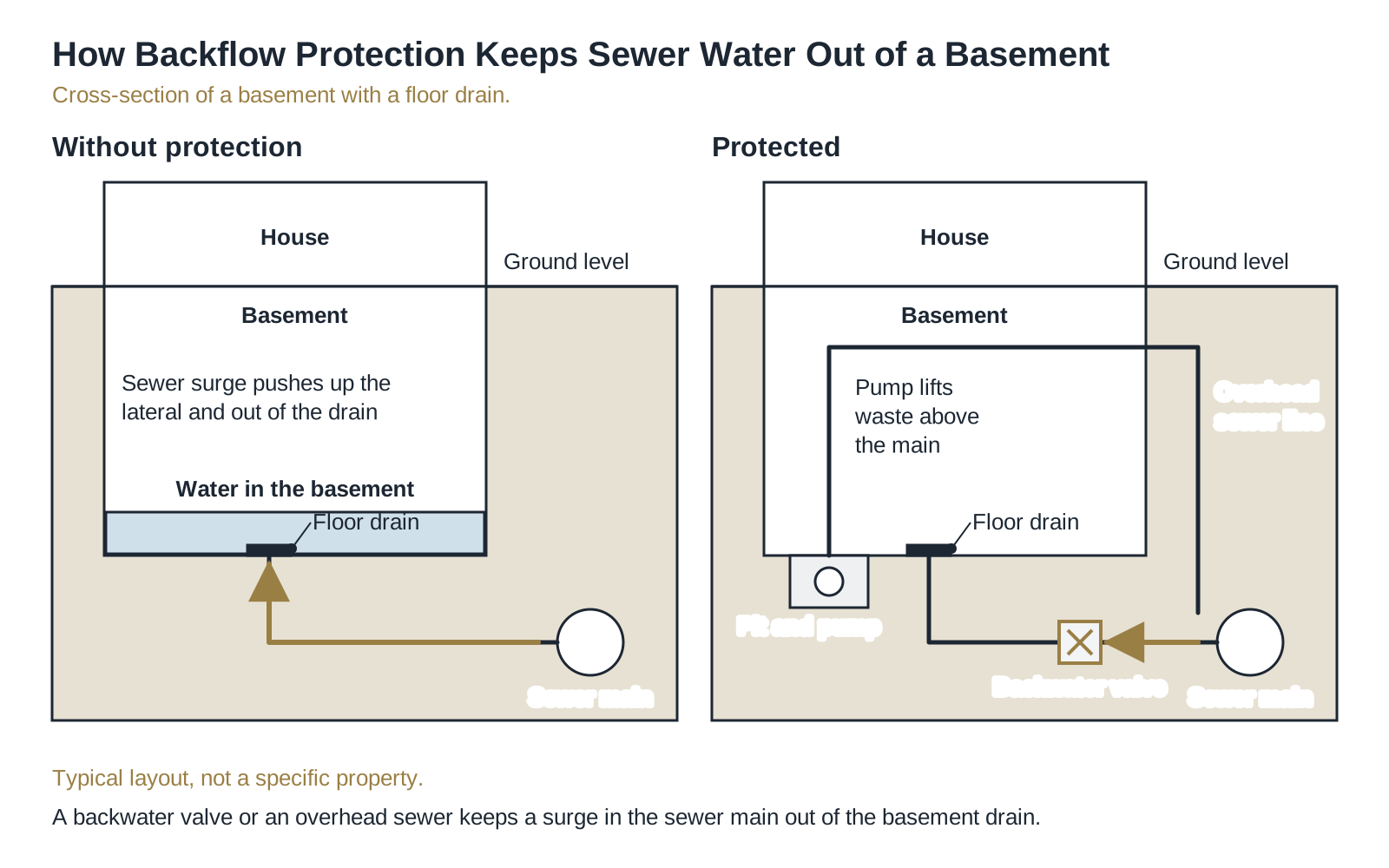
The older buildings carry their own inspection list. Many have original sewer lines running to the street or alley, and with the flood history covered below, a sewer camera inspection is money well spent. Check for an overhead sewer or backflow valve, the age of the sump pump, and signs of past water in the basement. On two-flats, ask for the separate utility meters, the leases and the rent history. The village also has its own inspection before any sale closes, which the next section on selling explains. My home inspection checklist covers what to ask your own inspector for.
Two-flats deserve their own word here. About one home in five is in a building of two to four units, per the ACS numbers above. Buying one to live in and rent out the other unit can make the payment work at a price that would not buy a detached house here. It also makes you a landlord, with leases, repairs and the village's rules for rental property to learn. I run the numbers on a two-flat with the actual rents and the actual tax bill, never the listing's projected ones, and I tell buyers to budget for a vacancy month each year.
The Elmwood Park Housing Market in 2026
Elmwood Park prices rose hard this summer. In the three months ending August 2026, Redfin reported a median sale price of $414,726, up 12.1% from a year earlier. The median home sold in 51 days, seven days faster than last year, at 100.2% of its list price, and 48.0% of homes sold above asking. Redfin counted 73 homes sold in August, down from 91 a year before.
The rest of Redfin's numbers point to a market that is competitive for the right house and patient with the rest. Price per square foot was $249, up 14.5%. About 23.3% of listings took a price cut, up 4.2 points from last year. Redfin gives Elmwood Park a Compete Score of 59 out of 100, which it calls somewhat competitive, and says homes get about five offers on average.
Zillow's home value index moved more slowly. It put the typical Elmwood Park home at $359,481 in August 2026, up 6.0% from August 2025, 7.6% from August 2024 and 14.3% from August 2023. The gap between the two sources is mostly about mix. Redfin's median is the middle of whatever sold this summer, and a summer with fewer sales can tilt toward single-family houses. Zillow's index estimates every home in the village, including the condos and two-flats. Both agree on direction.
What that means on a real offer: with nearly half of this summer's sales closing above list and about five offers on the average home, a buyer who wants a well-kept brick house in Elmwood Park should expect competition and come in with financing and inspection timelines already decided. A buyer willing to take on a house that needs work, or one that has sat for a month, has more room to negotiate, since close to a quarter of listings took a price cut. Sellers should notice the other side of that number: close to a quarter of listings had to cut their price.
For context against the neighbors, Zillow's August 2026 index put River Grove at $324,957, Franklin Park at $325,395, Melrose Park at $323,884, Harwood Heights at $391,634, Norridge at $422,384, Oak Park at $486,880 and River Forest at $738,290. Elmwood Park sits in the middle of that group: above the towns to its west, below Norridge and Oak Park, and far below River Forest across North Avenue. If you are working out a budget at these prices, my guide to how much house you can afford is a good place to start.
Elmwood Park Property Taxes: Leyden Township and Cook's Three-Year Cycle
Property tax is the line that changes the monthly payment most in Elmwood Park. Ownwell's Cook County data for Elmwood Park, updated April 13, 2026, puts the median effective rate at 2.69% and the median annual bill at $7,458. The Cook County median on the same page is 2.14%, and the Illinois median is 2.33%. A lower home price does not mean a lower rate here; the rate is higher than in Park Ridge or the county as a whole.
Cook reassesses one-third of the county each year, so each area is revalued every three years. All of Elmwood Park is in Leyden Township, and the Cook County Assessor's Leyden release says initial 2025 values were released July 22, 2025. The north suburbs were last reassessed in 2022, so by my count the next one falls in 2028. The same release reported a 2024 median single-family sale in the township of $334,000 against the assessor's median estimate of $301,000, and said the 2025 values affect second-installment bills issued in 2026. Between reassessments, a house's assessed value usually stays put even when the market moves.
Owners can appeal. The same release set the Leyden appeal deadline for the 2025 reassessment at September 2, 2025, and the assessor posts neighborhood valuation reports so owners can compare their value to recent sales. If you buy here, check your assessment when the next notice comes. A house that sold for well above its assessed value will likely be revalued in 2028, and a house the assessor overvalued is worth appealing.
One structural point matters here. CMAP's snapshot, using state data, shows $573 million of the village's $638 million equalized assessed value in 2024 was residential, about 90%. Commercial property was $63 million and industrial about $2 million. In plain terms, homeowners and small landlords carry most of the local levy.
The bills come in two pieces. For tax year 2025, the first installment was due April 1, 2026, and the second is due October 1, 2026, per the Cook County Treasurer. Those second-installment bills were mailed September 1, about two months late because of the county's tax system overhaul, according to Cook County. If you close this fall, ask your attorney how the proration handles that bill.
Here is what the rate looks like on a real purchase. At this summer's $414,726 median, 2.69% works out to about $11,160 a year, or $930 a month, by my math. Many current bills are lower because assessments trail the market, and the mistake I see most is buyers budgeting off the seller's bill. The Cook County homeowner exemption takes $10,000 off the equalized assessed value of an owner-occupied home, and new owners have to apply for it. If you buy a two-flat and live in one unit, ask your attorney how the exemption applies to your building. This is general information, not tax advice. Your bill depends on your parcel, your exemptions and the assessor.
Selling in Elmwood Park: Two Village Inspections and the Transfer Stamp
Elmwood Park has a rule that surprises sellers who have sold elsewhere: the village inspects your house before you can put up a sign. According to the village's real estate transfer stamp requirements, a seller or agent first files a Notification of Sale with the Code Administration Department and schedules a listing inspection. The sheet says it plainly: For Sale signs cannot be posted and open houses cannot be held until that listing inspection has been done.
Repairs come next. Any code items the inspector finds at the listing inspection are noted, then checked again at a final transfer stamp inspection before closing. The same sheet says smoke alarms and carbon monoxide detectors must be in place before any transfer stamp is released, with no exceptions, including foreclosures and short sales. The ATG summary of the village ordinance, last updated March 4, 2025, confirms that a pre-transfer inspection is required, with no fee and two inspections. The village's building department page says pre-sale inspections are scheduled through that office.
Then the stamp. The village transfer tax is $5.00 per $1,000 of the purchase price, per the transfer sheet, with no personal checks accepted. ATG lists the seller as the party liable, says the amount rounds to the nearest $1,000 with a $35 minimum, and says final water and sewer bills and other village debts must be paid, with the water bill paid the day before or the day of closing. On this summer's $414,726 median, that works out to about $2,075 in village stamps by my math. The Illinois Department of Revenue lists the county transfer tax at 25 cents per $500, or about $207 on the same sale.
My advice to sellers is to call for the listing inspection before you pick a list date. It is free, and it tells you what the village will want fixed while you still have time to fix it or price it in. Buyers should ask for the inspection result early, since it shows what the seller has agreed to repair. My Illinois closing costs guide covers the rest of what changes hands at closing.
Build the inspections into your timeline. The village's building department page says most permits are issued within a week but some take one to three weeks, that inspections need two working days of lead time, and that no permit is released until the homeowner's water bill is current. If the listing inspection turns up work that needs a permit, such as electrical or plumbing repairs, that lead time can push back your list date or your closing. Starting early costs nothing.
Elmwood Park Schools: Community Unit School District 401
Elmwood Park runs its own unified school district, from pre-kindergarten through high school. According to District 401's basic information page, four schools make up Elmwood Park Community Unit School District 401, governed by a seven-member elected board. The most recent Illinois Report Card listed total enrollment at 2,880 students: 690 at John Mills (PK-5), 579 at Elmwood Elementary (K-5), 613 at Elm Middle School (6-8) and 998 at Elmwood Park High School, including a post-12 transition program.
The same page says District 401 has 215 full-time teachers, a pupil-teacher ratio of 19 to 1, and that 63% of teachers hold a master's degree or higher. The 2026-27 school year started on August 19, 2026, per the August 2026 village newsletter, and the district requires every student to enroll each year through its online system.
Which elementary school you get depends on the railroad. The district's enrollment page says K-5 students who live north of the tracks attend John Mills, as do all pre-K students, and K-5 students who live south of the tracks attend Elmwood Elementary. Every student in grades 6 to 8 attends Elm, and every student in grades 9 to 12 attends Elmwood Park High School. The same page says District 401 serves only residents of Elmwood Park and that every student must prove residency to enroll.
Busing is limited because the village is small. The transportation page says Elm provides bus service for students who live north of the tracks, and the high school provides it for students living 1.5 miles or more from the building. If you are comparing two houses and a bus matters to you, ask me to check both against those rules.
I don't rank schools on this page. The Illinois Report Card has each school's own data. Confirm any address with the district before you write an offer. I found no source placing any Elmwood Park address in a different district, but district lines in this corner of Cook County follow old boundaries, and River Grove next door is split between two elementary districts. For community college, the district's bus page lists Triton routes, and Triton College in River Grove is the nearest campus.
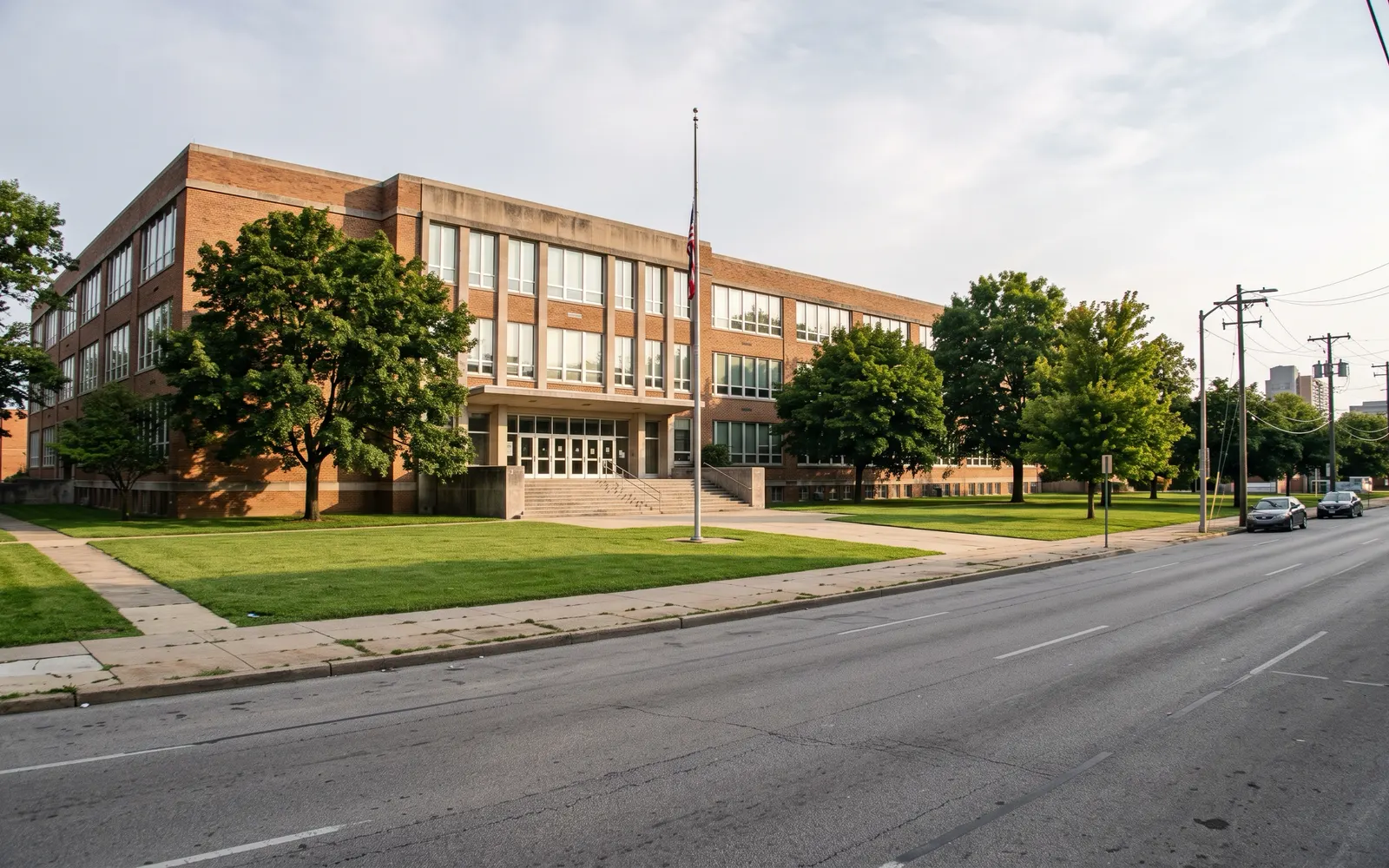
John Mills Elementary School (PK-5). 2824 N. 76th Ave. Serves K-5 north of the railroad and all district pre-K students; 690 students in the latest count.
Elmwood Elementary School (K-5). 2319 N. 76th Ave. Serves K-5 south of the railroad; 579 students.
Elm Middle School (6-8). 7607 W. Cortland St. All district students in grades 6 to 8; 613 students.
Elmwood Park High School (9-12). 8201 W. Fullerton Ave., which is also the district office address. 998 students including the transition program.
Commuting from Elmwood Park: Metra, CTA and Pace
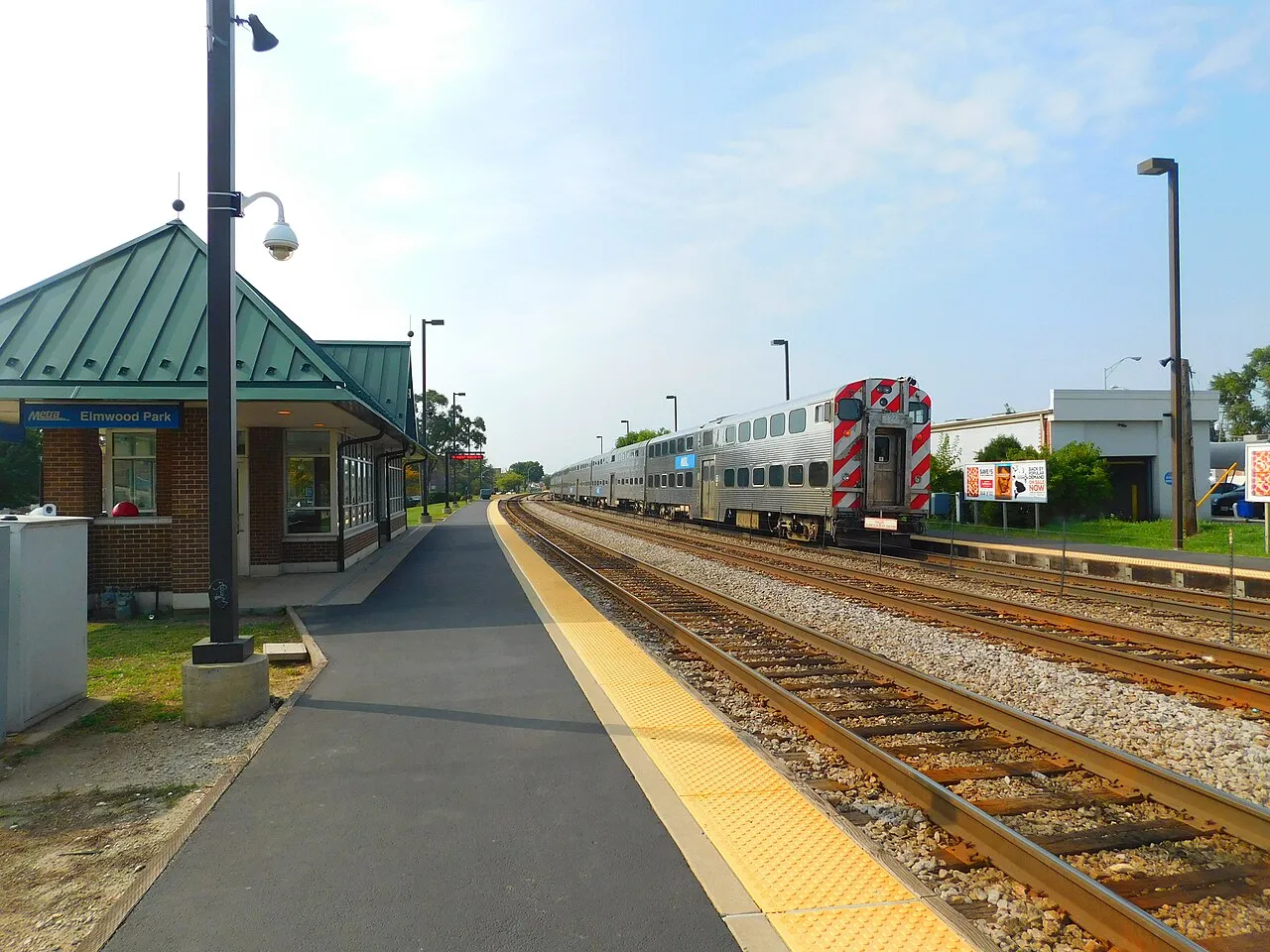
Elmwood Park has one Metra station, on the Milwaukee District West line to Chicago Union Station. Per Wikipedia's station entry, it sits at 7600 W. Grand Ave., 10.2 miles from Union Station, in Metra's fare zone 2. It opened in 1916, was rebuilt in 1956 and 2001, and has three tracks with two side platforms, parking and a kiss-and-ride drop-off on Grand Avenue.
According to Metra's schedule data for the week of September 28, 2026, 20 weekday trains leave Elmwood Park for Union Station and 21 come back. The ride takes 27 to 35 minutes inbound, with a median of about 29.5. There are six inbound departures before 8:30 a.m.: 5:04, 5:41, 6:49, 7:22, 7:53 and 8:22. Midday, trains leave at 16 minutes past each hour, so a missed train costs an hour, and the last inbound train of the evening leaves at 10:16 p.m. Six of the line's 26 weekday inbound trips pass through without stopping.
Coming home, weekday trains leave Union Station at 5:40, 6:21, 6:55 and 7:30 a.m., then hourly at half past, with extra rush-hour trains at 4:08, 4:35, 5:17, 5:45 and 6:40 p.m. The fastest ride to Elmwood Park is 21 minutes, and the slowest is 28. The last train home leaves Union Station at 11:10 p.m. On weekends, Saturday has 12 inbound trains, three of which run only on Saturdays, and Sunday has 9, each about 28 minutes. That makes a Saturday game or dinner downtown easy by train, and a Sunday trip workable if you check the schedule both ways first. Chicago's Mont Clare station, one stop east just across Harlem Avenue, has the same 20 weekday inbound trains at 25 to 33 minutes, which some east-side buyers use instead.
Buses fill in the gaps. Pace Route 319 runs on Grand Avenue on weekdays and Saturdays and serves the Elmwood Park station. Pace Route 318 runs daily on North Avenue to the CTA Blue Line at Forest Park, the CTA Green Line at Harlem and Metra's Oak Park station. Pace Route 307 runs on Harlem Avenue south through Oak Park and lists Elmwood Park's Metra station among its stops. On the Chicago side of Harlem, CTA Route 90 runs between the Green Line at Harlem/Lake and the Blue Line at Harlem/Higgins, which is the easiest transit link to O'Hare. Walk Score gives the village a Transit Score of 51.
For O'Hare, the choice is between driving about 6 miles and taking transit. The transit route is a CTA Route 90 bus up Harlem to the Blue Line at Harlem/Higgins, then the Blue Line to the airport. For the Loop, Metra is the fastest option by a wide margin, and the Blue Line is the backup when a Metra train doesn't fit your schedule, especially late at night after the last train home.
Most people still drive. The 2020-2024 ACS shows 70.8% of Elmwood Park workers driving alone, 7.0% carpooling, 13.7% working from home and 5.0% on public transit, including 2.9% by bus. CMAP puts the average commute at 32.2 minutes.
Driving from Elmwood Park: Harlem, Grand and the Expressways
Elmwood Park has no expressway inside its limits, but it sits between three. The village's hazard plan annex describes it as centered between I-90 to the northeast, I-294 to the west and I-290 to the south. The Kennedy (I-90) is the usual way downtown by car, the Eisenhower (I-290) serves the west side and the western suburbs, and the Tri-State (I-294) is the north-south tollway. O'Hare is about 6 miles to the northwest.
The main roads are state routes. The village's public works page notes that Belmont, Grand, Harlem and North avenues are Illinois Department of Transportation streets, which is why the state plows them. Harlem is the north-south spine along the city line, Grand runs diagonally across the village beside the railroad, and North Avenue carries heavy east-west traffic along the southern edge. Thatcher Avenue on the west side is the route along the Des Plaines River and the forest preserves.
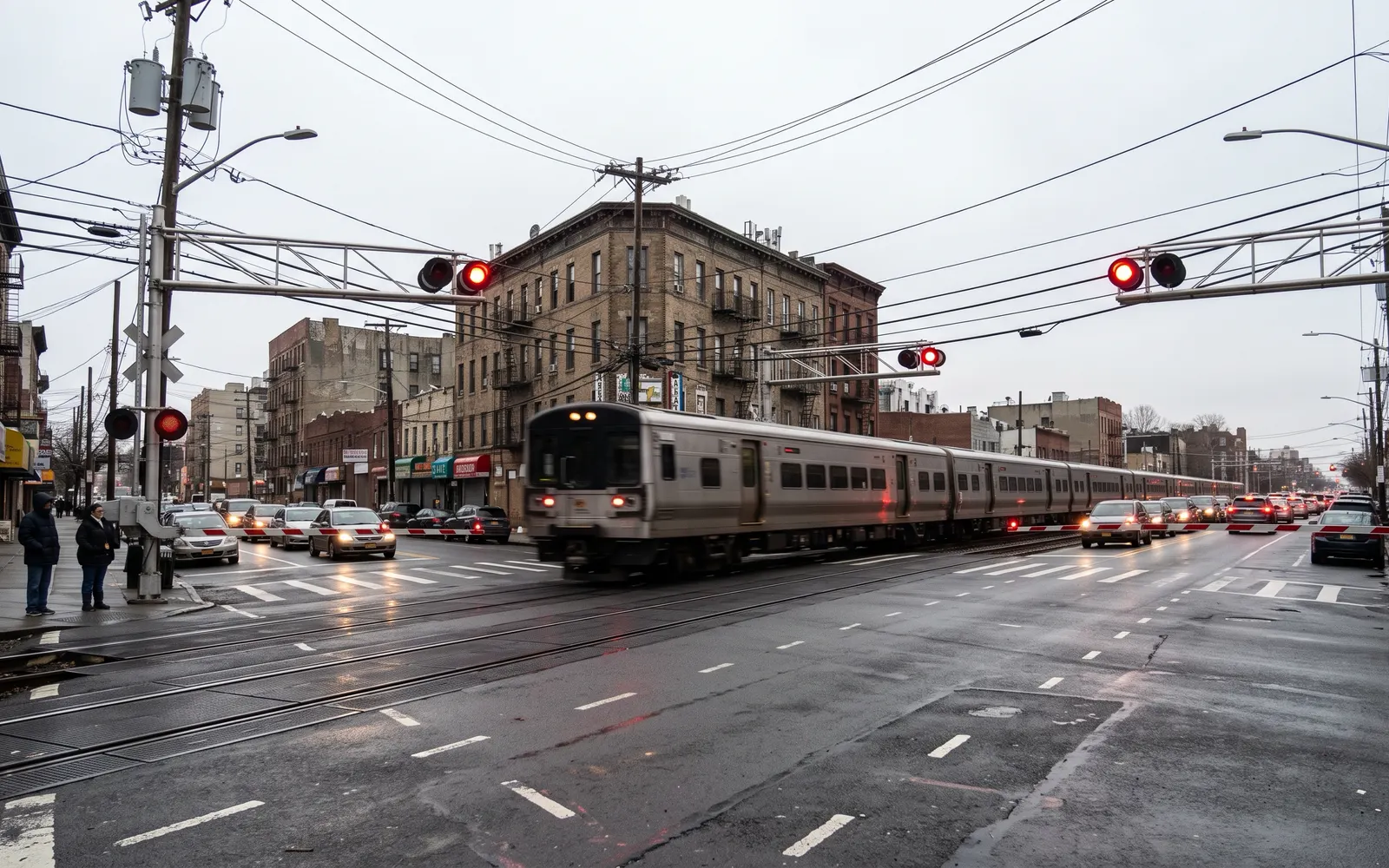
The one crossing everyone talks about is Grand Avenue at the railroad. Per Wikipedia, it is the longest grade crossing in the Chicago area, 366 feet long and meeting Grand at a 10-degree angle, used by Metra and freight trains. On November 23, 2005, a train struck six cars stuck in traffic on the crossing; several people were hurt and nobody was killed. Trains have been slowed to 30 miles per hour there since. When a freight train is on that crossing, traffic across the middle of town waits, so if you commute by car, drive your route at rush hour before you buy. The development section covers the plan to put Grand Avenue under the tracks.
Airport traffic is part of the picture too. Elmwood Park and School District 401 are both members of the O'Hare Noise Compatibility Commission, the body of 43 communities and 18 school districts that has worked on aircraft noise since 1996. How much you hear depends on the block and the runway rotation, so listen for yourself at a showing.
Is Elmwood Park Walkable?
More than most suburbs. Walk Score rates Elmwood Park 69 for walking, which it calls somewhat walkable, 51 for transit and 55 for biking. That walk score is well above what I usually see in the northwest suburbs, and it comes from density: the Census counted about 12,850 people per square mile in 2020, per Wikipedia, and the village's streets run on a tight grid with sidewalks and alleys.
The land use numbers explain the rest. CMAP's 2023 land use inventory covers 1,221 acres: 45.9% single-family residential, 9.6% multi-family, 3.2% commercial and 7.8% open space, with 30.6% in streets, rail and other transportation uses. The shops are concentrated on a few corridors (Grand, Harlem, North and Belmont) rather than scattered, so how walkable your life is depends on how close you are to one of them.
Walk Score's own detail makes the same point: it counts about 76 restaurants, bars and coffee shops in the village, but says a resident can walk to an average of two of them in five minutes. A house a block off Grand or near the Circle gets you coffee, the library and the train on foot. A house deep in the middle of a residential block gets you a pleasant walk and a short drive. The village has also been widening sidewalks; its North Avenue project, covered in the development section, moves sidewalks from four feet to five.
The Circle: Elmwood Park's Civic Center on Conti Parkway
Most suburbs have a village hall. Elmwood Park has a whole civic campus around a roundabout. The Circle on Conti Parkway holds Village Hall at 11 Conti Parkway, the public library at 1 Conti Parkway, the Parks and Recreation office at 2 Conti Parkway and the Community and Recreation Center at 4 Conti Parkway, with the Metra station a short walk away on Grand. One of the fire department's two stations is at 7 Conti Parkway, per the village's new residents page.
The Circle as it stands today dates to the 1970s. The library's history page says a new library became part of the development of the Circle, along with the Civic Center, and opened at 4 Conti Parkway in October 1975. The library moved to its current building on the outside of the Circle in 2002, and the old building became an early childhood center. According to the village's recreation center page, the school district later gave that building back to the village, and it reopened as the Community and Recreation Center in January 2021, with a fitness center added in October 2021.
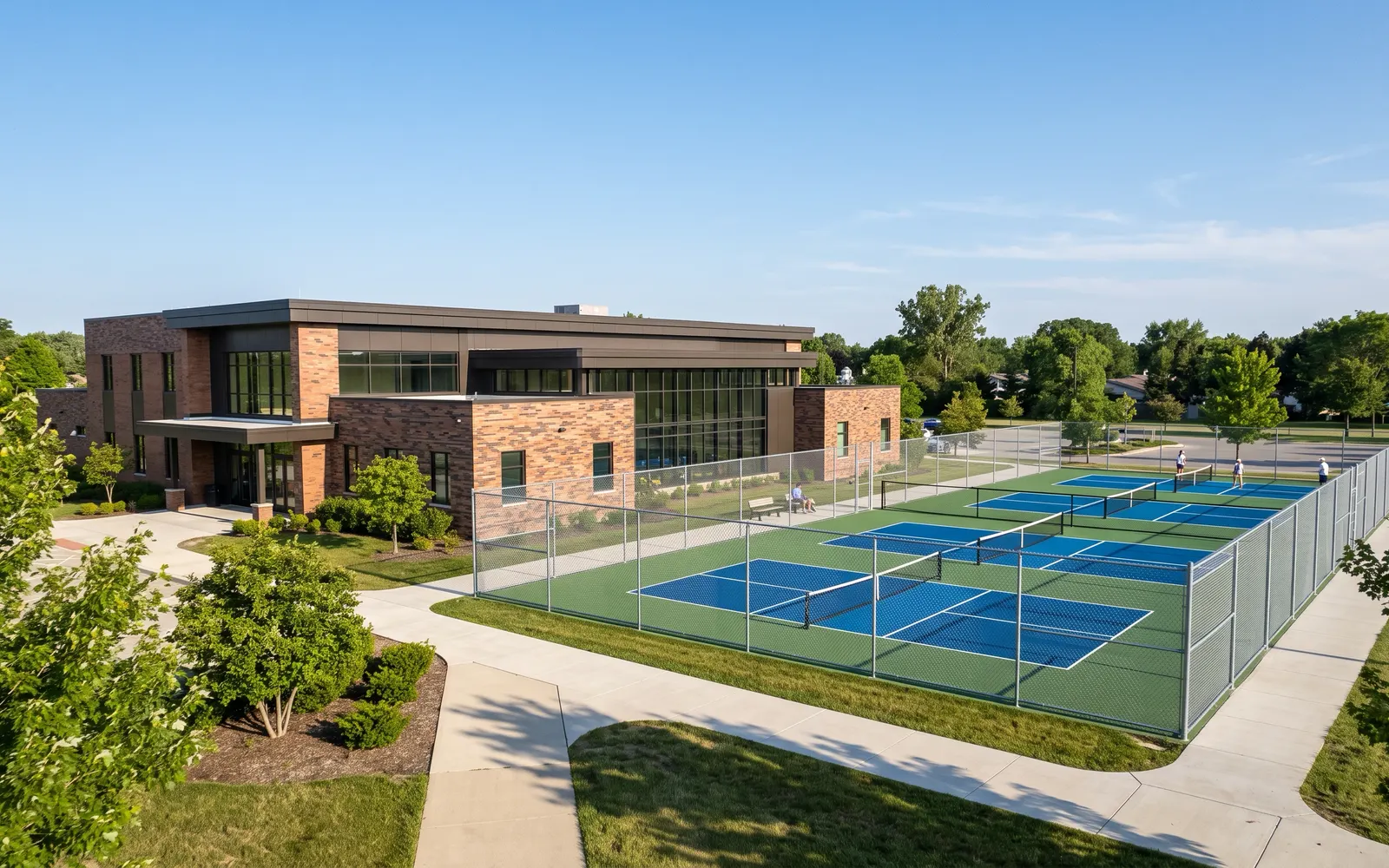
The Circle is also where the village gathers. The August 2026 village newsletter lists summer concerts in the Circle and the annual D.A.R.E. car show in the Village Circle at 76th Avenue and Conti Parkway, and it announced four new pickleball courts on Conti Parkway, with free loaner paddles at the recreation center next door.
The recreation center is also the village's rental hall. Per its facility page, residents can rent the bocce courts with the party room for $100 an hour, or the full building for $200 an hour, with higher rates for non-residents. The indoor courts were built in winter 2021 after the building came back to the village, and leagues play there through the week.
For a buyer, the Circle is the closest thing Elmwood Park has to a downtown. Condos around it put the train, the library, the fitness center and village services within a few minutes on foot.
Grand, Harlem, North and Belmont: Shopping in Elmwood Park
Elmwood Park is not a big shopping town, and the tax data says so. CMAP's snapshot, using Illinois Department of Revenue figures, shows $274.9 million in retail sales in the village in 2025, or $11,519 per resident, about half the Cook County figure of $23,200.
What Elmwood Park has is local retail on four corridors, and the village has organized its economic development around them. The village's March 2026 board minutes list tax increment financing funds for the Grand Corridor (two of them), North and Harlem, Harlem Avenue North and Belmont Avenue, plus business district funds for North and Harlem, Harlem Avenue North and Grand Avenue. The same minutes record the village's planning commission approving a storefront facade grant for a bakery on Belmont Avenue, the kind of small reinvestment these funds pay for.
For a buyer, the TIF map matters in a practical way. Money raised in a TIF district goes back into that district, which is why the corridors get streetscape work, facade grants and redevelopment help. If you are buying near Grand, Harlem, North or Belmont, expect more change around you over the next decade than in the middle of a residential block.
Each corridor has its own feel. Grand Avenue runs past the station and the Circle and carries most of the older storefronts. Harlem Avenue is shared with Chicago across the street. North Avenue, shared with River Forest, is the one getting a full streetscape rebuild. Belmont, on the north edge, has a strip of shops close to the Westwood blocks.
For groceries, which store you use depends on which corner of the village you live in, and several of the nearest supermarkets are just over the line in Chicago or the neighboring suburbs. That is worth mapping before you buy, the same way you'd map the walk to the train.
Where Elmwood Park Eats
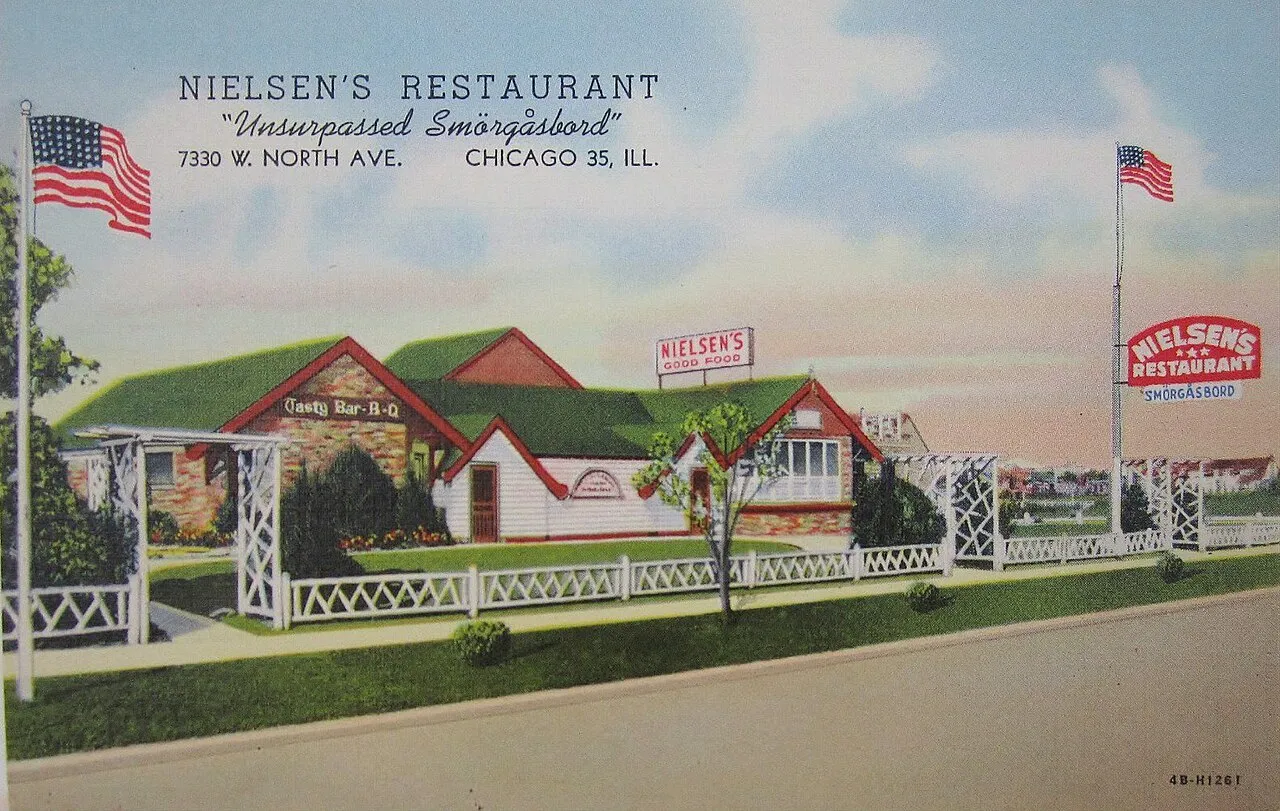
Restaurants are a big part of Elmwood Park's identity, and the village says so itself. Its Taste of Elmwood Park page calls the festival the village's premier event for more than 40 years and says the village has a long-standing reputation for outstanding restaurants. Walk Score counts about 76 restaurants, bars and coffee shops inside the village's 1.91 square miles.
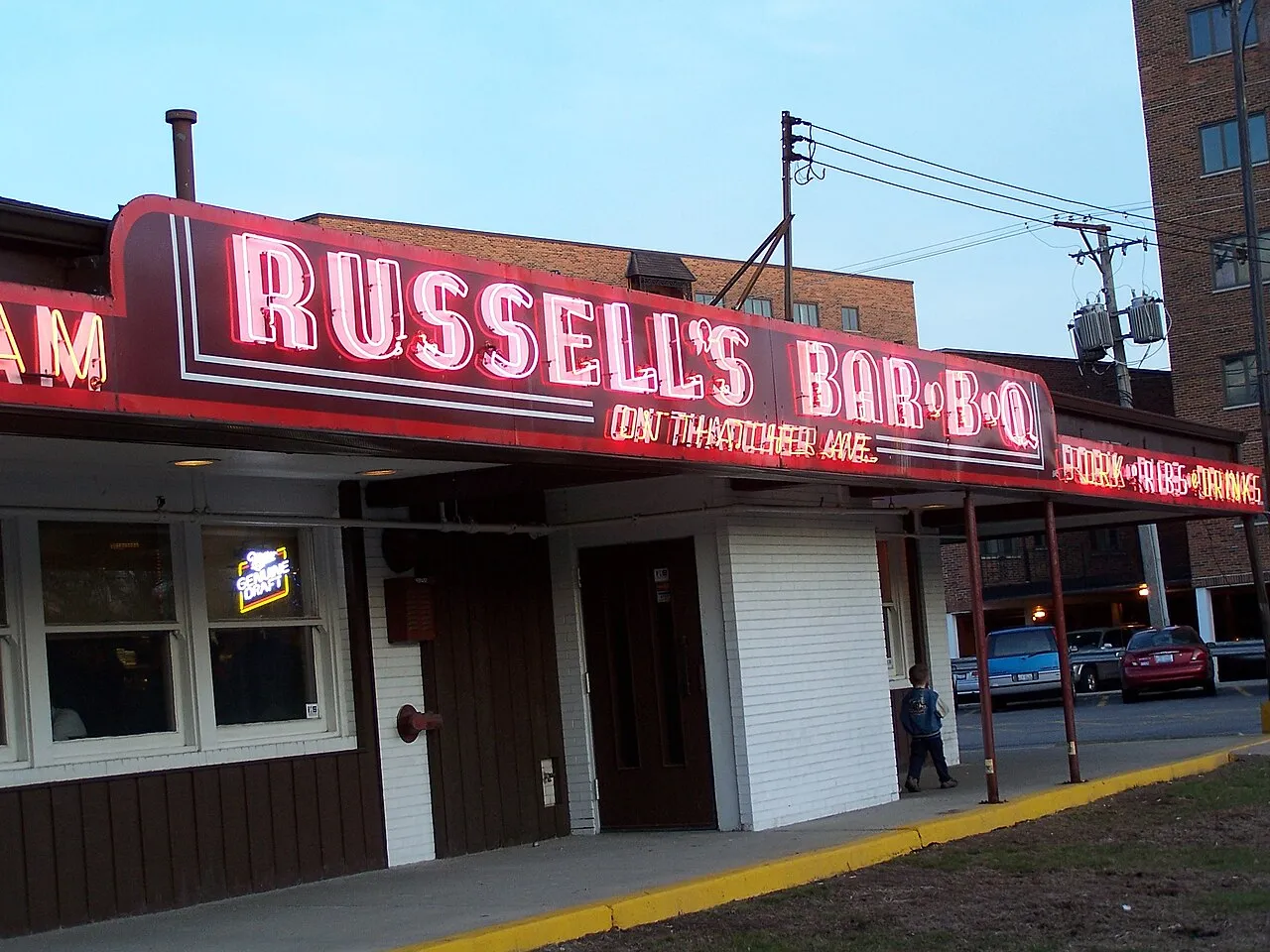
A few are well known on their own. Wikipedia, citing a 2015 food history of Chicago, says Russell's Barbecue in Elmwood Park is the oldest continuously operating barbecue restaurant in the Chicago area. Beyond that, I don't try to rank restaurants here, because the list turns over. Most of them sit on the same corridors as the shops: Grand Avenue, Harlem, North Avenue and Belmont.
The village promotes them twice a year. Its board minutes of February 2, 2026 record Restaurant Week running February 6 to 15, 2026. And each August the Taste brings local restaurants to Central Park, covered in the events section.
The advice I give buyers is to eat near each house you are serious about. A house a block off Grand or Harlem puts a dozen places within walking distance. A house in the middle of Westwood puts them a short drive away. It is the fastest way to learn which part of Elmwood Park you'd actually use day to day.
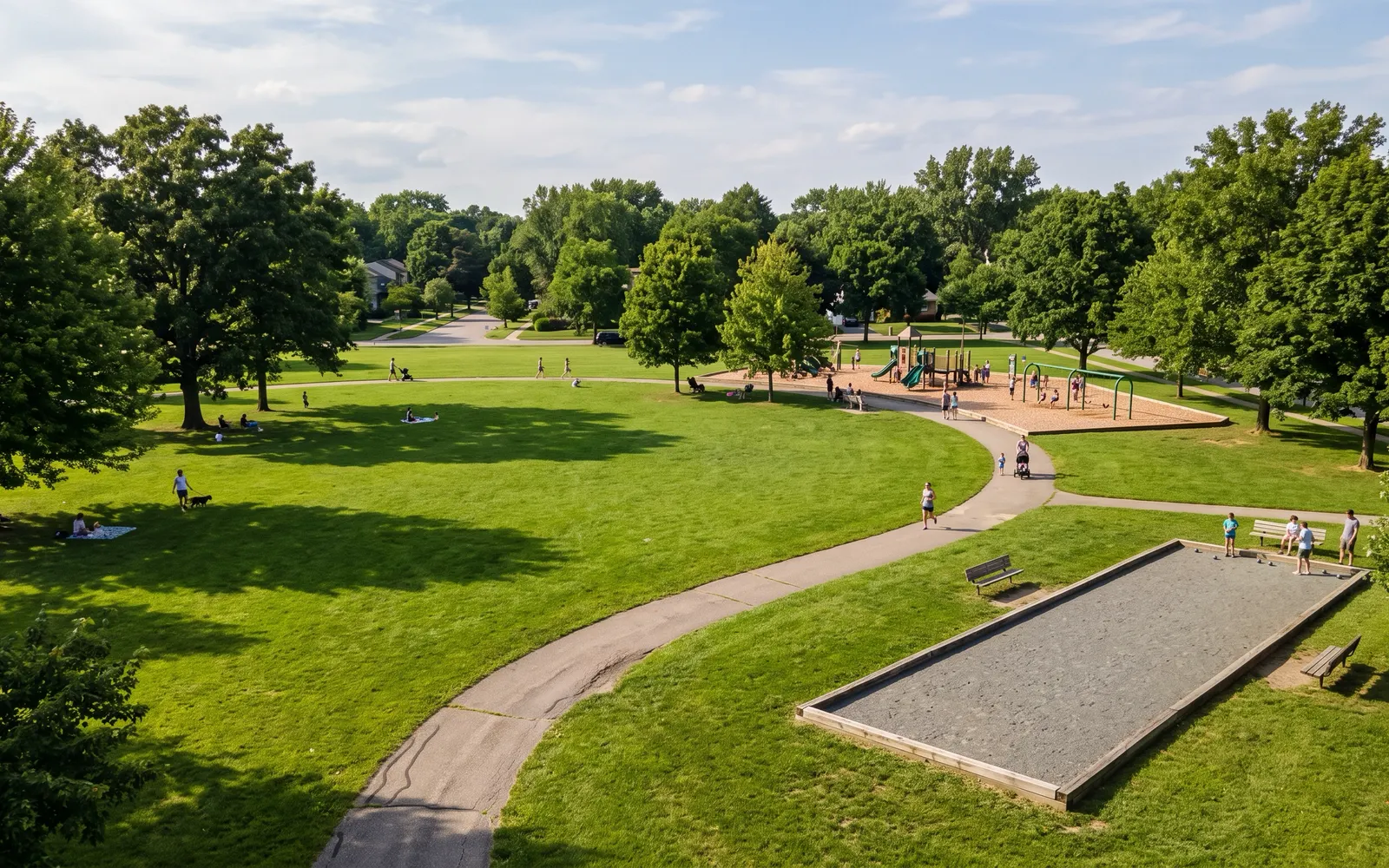
Parks, the Pool and Bocce in Elmwood Park
Elmwood Park's parks are run by the village itself. The village's Parks and Recreation page describes a Recreation Department based at 2 Conti Parkway, with the Community and Recreation Center next door at 4 Conti Parkway. In a village this dense, the parks are small and busy, and the recreation center does a lot of the work a big park would do elsewhere.
The two main parks are Central Park and Centennial Park. Central Park, at 75th Avenue and Fullerton, hosts the Taste of Elmwood Park every August, per the village's Taste page. Centennial Park is at 7600 W. Armitage Ave., per the August 2026 newsletter. The village also operates an outdoor aquatic center; the newsletter lists daily summer hours through Labor Day, lap swim, and evening aqua fitness classes at $40 a session.
The Community and Recreation Center is open 8 a.m. to 10 p.m. on weekdays, 9 a.m. to 8 p.m. Saturday and 10 a.m. to 5 p.m. Sunday. It has four indoor bocce courts, three indoor golf simulators, a fitness center and a party room. A resident fitness membership is $10 a month or $120 a year, against $15 and $180 for non-residents. Bocce is a real league sport here: the center's own history says 64 teams were playing at the Armitage courts and 40 at the Circle by summer 2021. The four new pickleball courts on Conti Parkway opened in 2026.
The village's Youth Commission also runs community bike rides on the fourth Wednesday of each month through October, starting from the Parks and Recreation building or Centennial Park, per the August 2026 newsletter. The recreation center rents its bocce courts and party room by the hour, with lower rates for residents.
For bigger open space, the Cook County forest preserves along the Des Plaines River are just past the village's western edge. The Metropolitan Water Reclamation District also sells rain barrels to residents through the village's program for $21.50, which ties into the flood section below.
The Elmwood Park Public Library
The Elmwood Park Public Library sits at 1 Conti Parkway on the outside of the Circle. According to its history page, it has served the village since 1936. Its third home, a storefront opened in 1939 at 7705 Westwood Drive, lasted 36 years. It moved into a 14,700-square-foot building in the Circle in October 1975 and into its current building in 2002.
Hours changed this year. The library's hours page lists 9 a.m. to 8 p.m. Monday through Thursday, 9 a.m. to 6 p.m. Friday, 9 a.m. to 5 p.m. Saturday and 1 to 5 p.m. Sunday, with Sundays closed from Memorial Day through Labor Day. Its FAQ on the change says the earlier weeknight closings took effect June 1, 2026, after four months of counts showed only 2.6% of patron activity fell in the 8 to 9 p.m. hour.
Beyond books, the library runs a gaming lounge, a Local History Room, exam proctoring and a Chromebook checkout program, per its site. For a buyer working from home, it is also the quietest desk near the Circle, a short walk from the train.
Utilities, Parking Rules and Village Services in Elmwood Park
Elmwood Park drinks Lake Michigan water. CMAP's snapshot lists Lake Michigan as the village's water source, with withdrawals of about 2.04 million gallons a day in 2018. The village is replacing lead service lines: its lead page asks owners to fill out a service line survey, and a staff memo in the February 2, 2026 board packet says the board would consider borrowing $4 million from the state's Public Water Supply Loan Program to fund phase 2 of that work. If you buy an older house, ask what the service line is made of.
Trash is a village contract. Since May 1, 2024, Flood Brothers Disposal has handled garbage, recycling and yard waste for single-family homes and buildings of five or fewer units, with pickup Tuesday through Friday. The page lists monthly garbage fees from $21 for a single-family home to $36 for a two-flat and $50 for a three-flat. Yard waste runs April 15 to November 30, and the public works department runs a leaf pickup for five to six weeks from late October to early December, plus a 50/50 sidewalk replacement program.
Parking rules are stricter than in most suburbs, and buyers should know them before they fall for a house without a garage. According to the village's new residents page, every car registered to an Elmwood Park address needs a village vehicle sticker. Trucks, trailers, campers, boats and commercial vans cannot park on village streets. Parking in alleys is not allowed except for immediate deliveries, and a car left unmoved for seven days can be towed. When 2 inches or more of snow falls, parking alternates by odd and even addresses on odd and even dates between 8 a.m. and 5 p.m., with a $50 ticket and a tow for violations.
Emergency services are the village's own. The new residents page describes a full-time fire department with two stations, at 7 Conti Parkway and 7420 W. Fullerton Ave., and the village has its own police department. Village Hall takes questions weekdays and Saturday mornings.
Alleys are the other practical detail. Most Elmwood Park garages face an alley, and the condition of the alley behind a house matters for drainage and for your car. The village's alley improvement program lets neighbors petition to have an alley rebuilt in concrete, or with permeable pavers as a green alley, with new storm sewers and garage aprons. The village pays for the engineering and splits the construction cost 50/50 with the owners on the alley, who pay their half through a special service area on their tax bills. If the house you are buying backs onto a newly paved alley, ask whether a special service area charge comes with it.
For sellers, one more reminder from ATG's summary of the village ordinance: the final water bill has to be paid the day before or the day of closing, or the stamp does not get released.
Elmwood Park's Yearly Calendar
The Taste is the big one. The village's Taste page lists the 2026 festival at Central Park, 75th Avenue and Fullerton, from Thursday, August 6 through Sunday, August 9, with no entry fee. Food vendors take cash only, and drinks are bought with tickets. The August 2026 newsletter lists four days of live bands, a bocce tournament, fitness and yoga sessions in the park, and rides and games.
Summer fills in around it. The village holds a Fourth of July parade and fireworks; the 2026 edition marked the country's 250th anniversary. Concerts run in the Circle through the summer, and the D.A.R.E. car show and concert took over the Village Circle on August 21 this year, with proceeds going to the police department's D.A.R.E. program. Movies in the Park and the February Restaurant Week round out the village's own special events list.
This fall's calendar, from the same newsletter: a community bike ride with the village Youth Commission on October 21 at 6 p.m. from the Parks and Recreation building at 2 Conti Parkway; a Relay for Life event at the Elmwood Park High School stadium on October 9 at 6 p.m.; and a mobile Secretary of State event for driver's licenses and plate stickers on October 30 at 2 Conti Parkway, by appointment. Garage sales are allowed only on approved weekends, which in 2026 were in August and September.
If you are touring houses in August, go to the Taste. It tells you more about how Elmwood Park works than a listing will.
What's Being Built in Elmwood Park: The Grand Avenue Underpass and North Avenue
The biggest project in Elmwood Park is a road going under a railroad. After the 2005 crash at the Grand Avenue crossing, the National Transportation Safety Board recommended separating the road from the tracks, per Wikipedia, but the cost was judged too high at the time. Planning restarted in March 2020 as the Grand Gateway project. The Illinois Commerce Commission granted the village $24 million in April 2021 and another $3.1 million that December, and the project received $13 million in federal funding in February 2025.
The village's March 10, 2026 update puts the estimated cost at $135 million. It says the village has a letter from the Illinois Department of Transportation promising $40 million in state funding to match a federal grant it is still seeking, that phase I (preliminary engineering and environmental study) was expected to finish this summer, that phase II (contract preparation and land acquisition) is funded, and that phase III, construction, is only partly funded. The village president described the project as close to fully funded. No construction start date has been announced in anything I could find. For buyers near Grand Avenue, that means years of planning before any digging, then a construction period that will affect traffic around the station.
If you are looking at a house within a block or two of the crossing, ask what the project could mean for that address. The village's update says phase II includes land acquisition, and an underpass typically needs room for ramps and retaining walls. I have not seen a published property list, so I would not assume any house is affected, but I would ask the village before I bought right on Grand near the tracks.
The second project is on North Avenue. According to the village's project page, Elmwood Park and River Forest are jointly planning a streetscape rebuild of North Avenue: sidewalks widened from four feet to five, eight new accessible crosswalks, new street and pedestrian lighting to replace fixtures 35 to 50 years old, planters and trees, curb bump-outs, Pace bus stop pads and drainage improvements. The villages held a public meeting on May 13, 2026, and took comments through June 10, 2026. I could not find a construction date.
Everything else is infill. The village's hazard plan annex describes expected development as moderate, mostly infill, with a focus on attracting retail to the corridors, and notes that in 2018 the village approved two residential developments and a plan to redevelop the old Sears Automotive site on Harlem Avenue. The TIF and business district funds on Grand, Harlem, North and Belmont are the tools for that work. Large new subdivisions are not coming to a 1.91-square-mile village with 0.4% of its land vacant.
I don't label any town or neighborhood as safe or unsafe.
Flood Risk in Elmwood Park: What the Numbers and the History Say
Flooding is the biggest physical risk in Elmwood Park, and the numbers are high. Redfin, using First Street's model, rates the village's flood risk as moderate and counts 1,530 properties, 32% of the total, likely to be severely affected by flooding over the next 30 years. That share is far above anything I see in the northwest suburbs; in Park Ridge, for comparison, the same model puts it at 9%.
The village's own history backs it up. Its annex to the 2024 Cook County hazard mitigation plan says that in the July 2011 storm, rain fell at 2 to 4 inches an hour, several feet of water covered Oak Leaf Avenue with cars stranded, and about eight cars stalled along 80th Avenue. It says heavy storms have flooded streets at 73rd Avenue and Bloomingdale, and that low land along Thatcher Avenue floods when the Des Plaines River runs high. It counts 15 FEMA-identified repetitive-loss properties (13 single-family and 2 two- to four-family) plus one severe repetitive-loss property, and lists overland flooding damage claims after storms in 2007, 2008 and 2011. The planning team rated the village's flood vulnerability as increased.
The same annex lists federal disaster declarations for floods in 1972, 1973, 1986, 1987, 1993, 2013 and November 2023, alongside several for severe storms. Those declarations cover Cook County, not only Elmwood Park, but the list shows how often the region's big rains come back. In practical terms, flood insurance is worth pricing here even when a lender does not require it, and ask your insurance agent whether basement damage from a sewer backup needs its own rider.
The village has done real work on it. The same annex lists as completed a flood mitigation project to reduce sewer backups, financial help for residents in flood-prone areas to retrofit homes with approved flood control systems, and the purchase of the property at the southwest corner of 73rd Avenue and Bloomingdale, which it calls the one property hit hardest by heavy rain. The village's alley program adds storm sewers when alleys are repaved, split 50/50 with residents through a special service area, and the MWRD rain barrel program is promoted to reduce basement backups.
Four checks before you write an offer. Look the address up on the FEMA flood map; the countywide map in effect dates from August 19, 2008, per the same annex, and a mapped flood zone can mean required flood insurance. Ask the seller directly whether the basement has ever taken water, and whether the house has an overhead sewer, a backflow valve or a village-assisted flood control system. Have the sewer line scoped to the street or alley. And check the sump pump, its backup and the grading. If you are buying your first home here, these questions matter as much as the kitchen does.
Frequently Asked Questions
What county and township is Elmwood Park, IL in?+
Cook County and Leyden Township. Census Bureau estimates put all 23,675 Elmwood Park residents in Leyden Township in 2025. Leyden was reassessed by the Cook County Assessor in 2025, and by my count the next reassessment falls in 2028.
How much does a house cost in Elmwood Park, IL?+
Redfin reported a median sale price of $414,726 for the three months ending August 2026, up 12.1% from a year earlier. Zillow's home value index was $359,481 for August 2026. Bungalows, ranches, two-flats and condos trade as separate markets.
What are property taxes in Elmwood Park, IL?+
Ownwell (April 2026) puts the median effective rate at 2.69% with a median bill of $7,458. At the $414,726 summer median, that rate works out to about $11,160 a year. Cook County reassesses every three years, and Leyden Township was revalued in 2025.
Does Elmwood Park require an inspection before selling a home?+
Yes. The village requires a listing inspection before For Sale signs go up or open houses are held, and a final inspection before it releases the transfer stamp. Smoke and carbon monoxide detectors are required. The village transfer tax is $5 per $1,000 of the sale price.
What school district is Elmwood Park, IL in?+
Elmwood Park Community Unit School District 401, which runs four schools from pre-K through 12th grade. K-5 students north of the railroad attend John Mills and those south of it attend Elmwood Elementary; all students attend Elm Middle School and Elmwood Park High School. Confirm each address with the district.
Does Elmwood Park have a Metra station?+
Yes. The Elmwood Park station at 7600 W. Grand Ave. is on the Milwaukee District West line, 10.2 miles from Union Station. In fall 2026 it has 20 weekday trains inbound and 21 outbound, and the ride takes 27 to 35 minutes.
Does Elmwood Park, IL flood?+
Some parts do. First Street's model (via Redfin) counts 1,530 properties, 32%, at severe 30-year flood risk. The village's 2024 hazard plan describes street flooding in the July 2011 storm, flooding along Thatcher Avenue when the Des Plaines runs high and 15 repetitive-loss properties. Ask about backflow protection and scope the sewer line.
Is Elmwood Park walkable?+
More than most suburbs. Walk Score rates it 69 (somewhat walkable), with a Transit Score of 51 and Bike Score of 55. The blocks near the Circle and the Grand, Harlem, North and Belmont corridors are the most walkable.
What is the Grand Avenue underpass in Elmwood Park?+
It is a planned project to put Grand Avenue under the railroad at the station, where the Chicago area's longest grade crossing was the site of a 2005 train crash. The village estimates the cost at $135 million; as of March 2026, engineering and land phases were funded and construction was partly funded.
Eshu Chikoti has extensive access to off-market listings throughout Elmwood Park and the rest of Cook County — homes that never make it to the public listing sites. That matters right now: in a seller's market like this one, well-priced homes routinely go under contract within days, and buyers relying only on public listings are competing for whatever is left over. Working with someone plugged into off-market inventory means seeing homes before the crowd does.
Eshu Chikoti · 847-691-4282 ·
Get new Elmwood Park listings by email
When a home comes on the market in Elmwood Park, I'll email it to you.
Just your email. Unsubscribe any time by replying.
Thinking About Elmwood Park?
Whether you're buying, selling, or just curious what's on the market, I can walk you through Elmwood Park street by street.