Chicago Heights, IL
Chicago Heights, IL is a 10.4-square-mile Cook County city where the Lincoln Highway meets the Dixie Highway, with a summer 2026 median sale price near $200,000, five Pace bus routes, no Metra station of its own and Metra Electric stops about 3 miles away.
Living in Chicago Heights, IL means a median sale price near $200,000 this summer, mostly 1940s to 1960s houses, and a property tax rate near 3.88% of value. There is no Metra station in town. Pace buses and Metra Electric stops about 3 miles west fill the gap. Here it is, pocket by pocket.
Written by Eshu Chikoti · 847-691-4282 ·
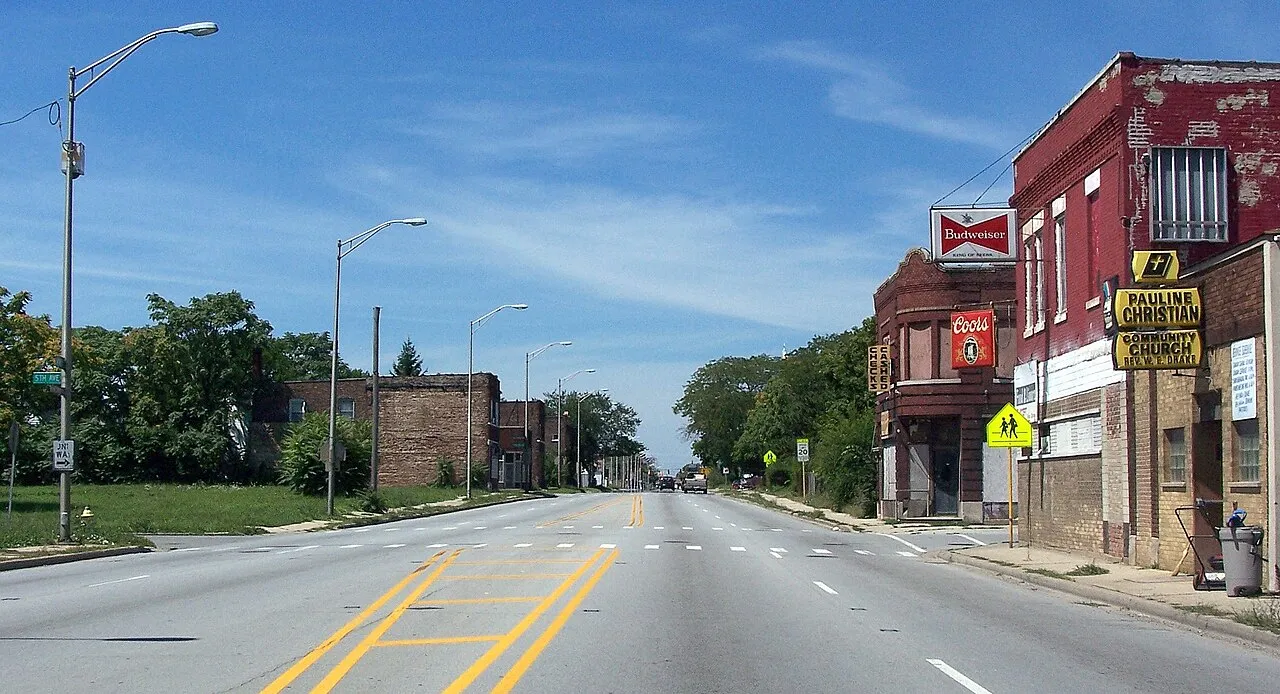
How Chicago Heights, IL Got Here: Thorn Grove to the Crossroads of the Nation
Chicago Heights started as a cabin on a ridge. According to Wikipedia's history of the city, Absalom Wells built a cabin above Thorn Creek in 1833, the first recorded settlement in the area. By the 1840s a small rural settlement called Thorn Grove had formed there. The ridge is real: the city sits on the high ground of the Tinley Moraine, with the older Valparaiso Moraine just to the south, at an elevation of about 653 feet.
The town you see today was planned as a factory town. In the early 1890s a group of Chicago developers led by Charles Wacker formed the Chicago Heights Land Association to build an outer-ring industrial suburb. The city's own history page says they recruited heavy industry such as Inland Steel and built the Hotel Victoria, designed by Louis Sullivan. Wikipedia adds the Owens-Illinois Glass Company and the Ludowici roofing tile company to the list. Chicago Heights incorporated as a village in 1892 and as a city in 1900, per the same Wikipedia article. The city counted 19,653 people by 1920.
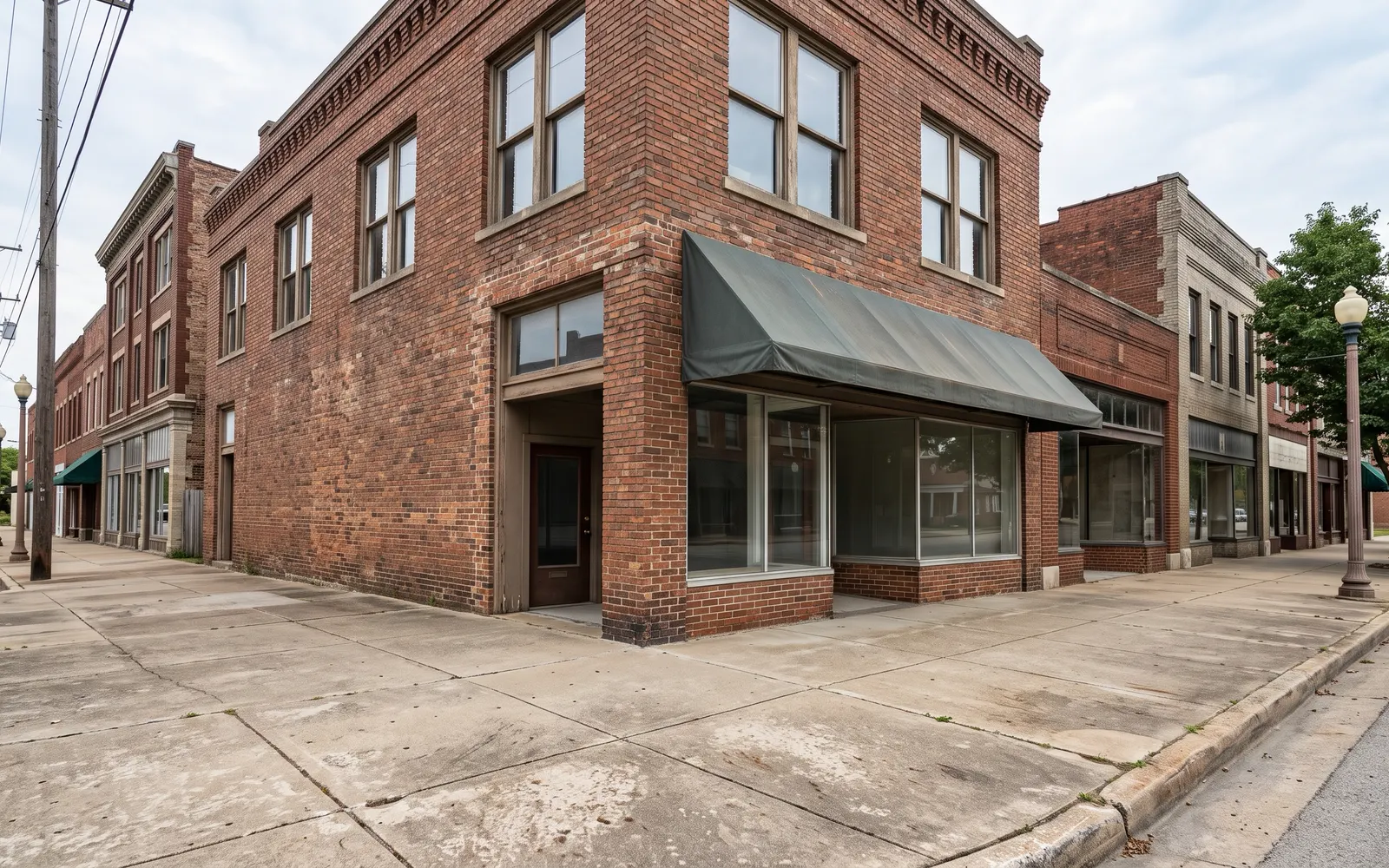
The nickname came from two roads. In 1916, city leaders persuaded the Lincoln Highway Association to route the country's first transcontinental highway through town, which is why the city calls itself "the Crossroads of the Nation." The Lincoln Highway, now US 30, runs east and west along 14th Street. Chicago Road is also the Dixie Highway, now Illinois Route 1, per Wikipedia's Lincoln Highway route history, which describes the corner as the major intersection of Carl Fisher's two big auto trails. Downtown became the shopping, banking and entertainment center for towns within about 15 miles, the city says.
The middle of the 20th century was about factories. The city's history page says plants ran around the clock in the 1940s making steel, chemicals and war materials, and that the years after World War II brought new housing to the north and west and, in the mid-1950s, a Ford stamping plant that employed thousands. Ford still runs a stamping plant on Lincoln Highway that ships body panels to its Chicago Assembly plant about 15 miles north, per Wikipedia. Wikipedia also notes that heavy manufacturing scaled down or left the region in the 1970s. That timeline shows up in the houses: most of the city's homes were built between 1940 and 1969, as the market section below shows.
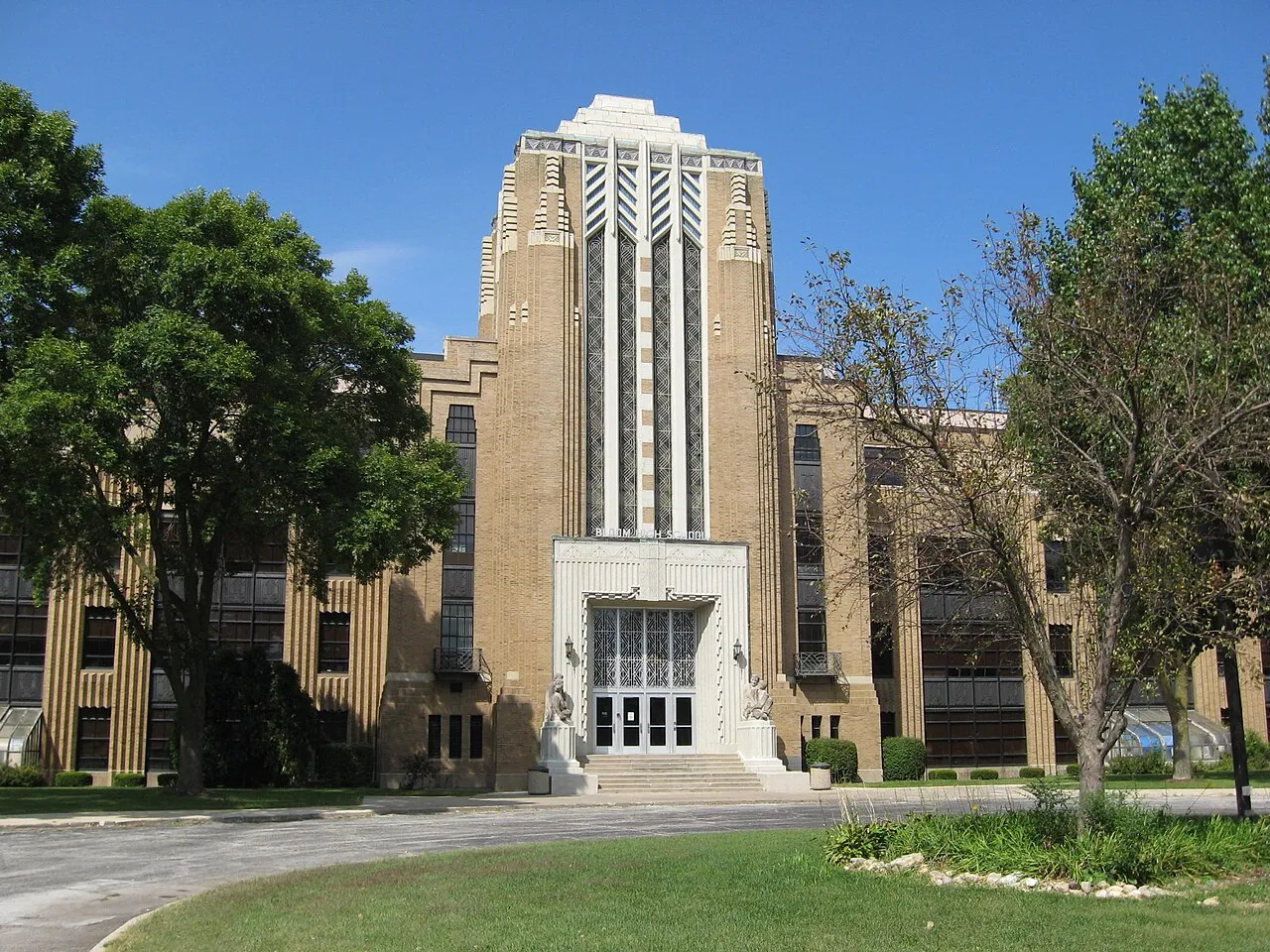
Two civic buildings from that era are still landmarks. Bloom High School, founded in 1900, moved into its current Art Deco building during the Great Depression. Wikipedia says it was added to the National Register of Historic Places on June 3, 1982, and holds frescoes painted by Edgar Britton in 1935. The public library opened in a room of city hall in 1902, moved into a Carnegie building on Halsted Street in 1903, and moved again to its current building at 15th Street and Chicago Road on August 5, 1972.
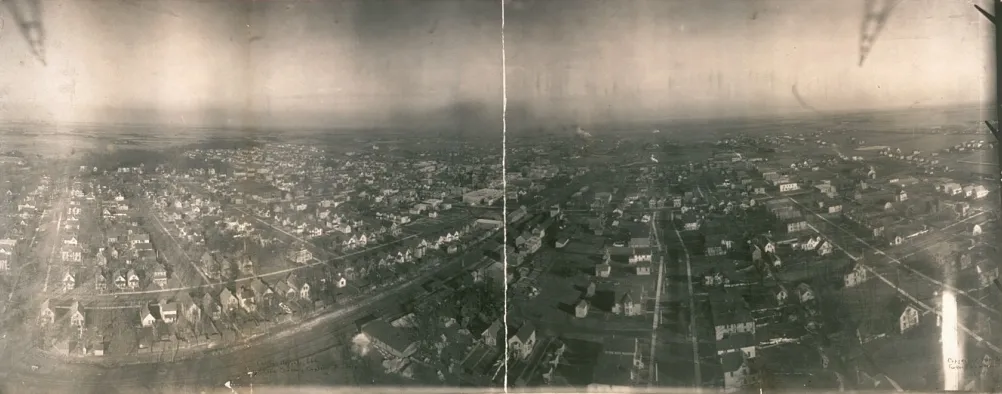
Chicago Heights at a Glance
Chicago Heights covers 10.38 square miles, almost all of it land, about 30 miles south of the Chicago Loop, per Wikipedia, which cites the Census Bureau's 2025 gazetteer. The neighbors are Homewood and Glenwood to the north, Flossmoor and Olympia Fields to the northwest, Park Forest to the southwest, South Chicago Heights to the south, Sauk Village to the southeast and Ford Heights to the east. The two ZIP codes are 60411 and 60412.
The county question has one answer. The Census Bureau's Vintage 2025 estimates put all 26,508 Chicago Heights residents in Cook County as of July 1, 2025, and all of them in Bloom Township. The township is bigger than the city: the same file counts 83,631 people in Bloom Township, which also takes in neighbors such as Steger, South Chicago Heights, Glenwood and Sauk Village. For a buyer, that means every Chicago Heights address shares one Cook County assessment calendar. The 2020 census counted 27,480 people in the city.
Chicago Heights is a city, not a village, with a mayor and seven council members listed on Wikipedia and a city hall at 1601 Chicago Road. The city publishes a ward map, and the police department is at 1601 S. Halsted Street.
It is mostly owned homes. The 2020-2024 Census ACS counts 10,613 housing units, with 63.4% of occupied homes owned and 36.6% rented. The same survey puts the median owner-estimated home value at $161,000 and the median gross rent at $1,038 a month.
Industry still takes a large share of the land. CMAP's June 2026 community snapshot splits the city's 6,589.4 acres in 2023 into 20.2% single-family homes, 18.9% industrial, 26.6% transportation and other, 7.7% institutional, 7.2% open space, 4.1% commercial and 2.5% multifamily. It also counts 611.5 acres, 9.3% of the city, as vacant land. In Illinois Department of Revenue figures for 2024, residential property made up $232.0 million of the city's $420.2 million in equalized assessed value, with commercial at $92.9 million and industrial at $86.5 million.
There is no Metra station, and the nearest Metra Electric stops are 3 to 4 miles west. The 3.88% median effective tax rate is well above the county's 2.14%, and Bloom Township's 2026 reassessment was still ahead as of late September. Only 8.3% of homes date from 1990 or later. School districts change inside the city, so a house has to be checked, not assumed. And sellers pay a $4 per $1,000 city transfer tax after a for-sale inspection.
Chicago Heights Neighborhoods, Pocket by Pocket
Chicago Heights has no official neighborhood map, but it does have names people use. The oldest are directional. The city's own fire department names its stations for them: Station 2 (East Side), Station 3 (North End), Station 4 (West Side) and Station 5 (The Hill). The city's history page names the East Side and the Hill as the neighborhoods that grew up next to the factories. Newer subdivisions to the north and west carry their own names, and listing sites add more.
The easiest way to read the city is from the Crossroads outward. Downtown sits around Chicago Road and the Lincoln Highway, with city hall, the library and the park district's recreation center within a few blocks. The older, smaller lots and the two-flats are closest to downtown and to the rail lines and plants on the east side. The post-war subdivisions spread north and west toward Flossmoor, Olympia Fields and Park Forest, and that is where most of the 1950s and 1960s ranches and split-levels are. The west and southwest edges run into Thorn Creek and the forest preserve.
The expectation I most often have to reset with buyers in Chicago Heights is that one ZIP code means one school district. It doesn't. A house in Serena Hills can sit in Flossmoor's elementary district while a house a mile away is in District 170, and the high school can differ too. I check the district on every address before an offer goes in.
Below are the names you will see. The ones marked single-source I found only on Redfin and Walk Score's list of Redfin neighborhoods, so treat them as listing shorthand, not boundaries, and check them against the MLS subdivision field. If you want a specific address placed on this map, that is a conversation I am happy to have here.
Downtown and the Crossroads. The blocks around Chicago Road and the Lincoln Highway, with city hall at 1601 Chicago Road, the library at 25 W. 15th Street and the park district's recreation center at 1400 Chicago Road. The former St. James Hospital sat at the southeast corner of US 1 and US 30 until it was demolished in 2019, per the HF Chronicle.
East Side. East of downtown toward the rail lines and industrial land, named by the city for its Station 2 and in its history as one of the first neighborhoods built next to the plants.
The Hill (Hungry Hill). The city's Station 5 is named "The Hill," and its history page names the Hill as one of the original neighborhoods. Redfin and Walk Score list it as Hungry Hill (single-source for the longer name and boundary).
North End. Named by the city for fire Station 3, its headquarters station. Redfin lists North End as a neighborhood (single-source boundary).
West Side. Named by the city for fire Station 4. This is where more of the post-war housing is.
Serena Hills. A subdivision in the northwest part of the city. Flossmoor School District 161 runs Serena Hills Elementary, and Wikipedia says that part of the city is in District 161. Redfin's September 2026 sales list shows homes on Serena Drive. Boundary single-source (Walk Score).
Olympia Terrace and Olympia Woods. Redfin and Walk Score list both as Chicago Heights neighborhoods (single-source). Check the exact municipality and school district on each listing; the names borrow from Olympia Fields next door.
Beacon Hill. Wikipedia places part of Park Forest-Chicago Heights School District 163 in the Beacon Hill neighborhood. Walk Score also lists it (single-source boundary).
Other listing names (single-source). Redfin's and Walk Score's lists also include Country Club, Indian Hill, Edgewood Park, Euclid Historic District, Graymoor, Homewood Terrace South, Longwood Farms, North Woods Park, Prairie View, Roosevelt, Tuscany Reserve and Wysteria Estates. I could not confirm boundaries for any of them from a city or county source.
What Chicago Heights Homes Look Like, by Type and Era
Chicago Heights is a single-family town. In the 2020-2024 ACS figures CMAP publishes, 69.3% of the city's homes are detached single-family houses, against 39.6% for Cook County. Another 2.8% are attached single-family homes such as townhouses. Two-flats are the next biggest group at 11.1%. Buildings with 3 or 4 units add 5.5%, buildings of 5 to 19 units add 5.0%, and buildings of 20 or more units make up 6.0%, against 20.1% countywide.
The houses are mostly mid-sized. 54.3% have three bedrooms, against 31.1% in Cook County, and 20.1% have two. Four-bedroom homes are 11.8% and five or more are 2.6%. Studios and one-bedrooms are only 11.1%, about half the county share. The median home has 5.7 rooms, a little more than the county's 5.1.
The age profile is the part buyers notice. CMAP counts 57.7% of the homes as built from 1940 to 1969, compared with 33.3% for the county, and the median year built is 1959. Another 15.9% are from before 1940, mostly near downtown and the older neighborhoods. 18.1% date from 1970 to 1989. Only 4.0% were built from 1990 to 2009 and 4.3% from 2010 or later.
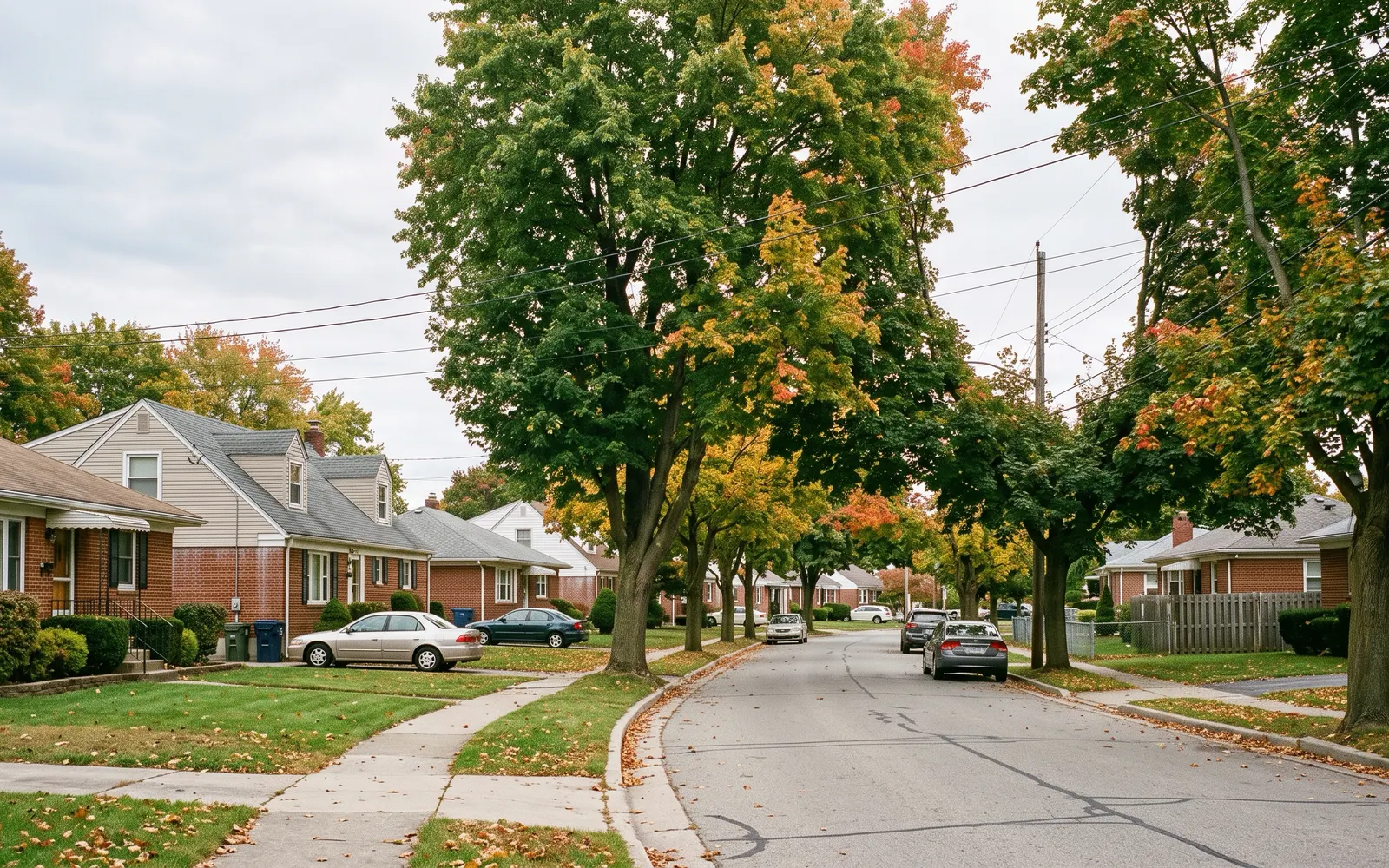
In practice that means brick and frame ranches, Cape Cods, raised ranches and split-levels on the post-war blocks, and older two-story houses and two-flats near downtown and on the east side. A recent Redfin sales list shows the range: a 1,042-square-foot, three-bedroom house on Serena Drive sold for $216,000 in September 2026, and a 1,490-square-foot, four-bedroom house on Travers Avenue sold for $210,000 the same month.
A house built around 1959 is now more than 65 years old, and the inspection should treat it that way. The things I would put on any Chicago Heights inspection list are the roof age, the furnace and water heater, the electrical panel, the sewer line to the street, grading and sump pumps, and lead paint on anything built before 1978. The city is also replacing lead water service lines in 2026, covered in the utilities section. A good inspector will add to that list for the specific house.
The Chicago Heights Housing Market in 2026
Chicago Heights is a flat, slower market this year. In the three months ending August 2026, Redfin reported a median sale price of $199,868, down 0.066% from a year earlier, which is flat. Homes sold in about 70 days, up from 63. Redfin counts 65 homes sold in August, up from 64 a year before.
The competition numbers show a market that gives buyers some room. Homes sold for 96.9% of list price on average, down 0.28 points from a year before. Redfin gives Chicago Heights a Compete Score of 51 out of 100, which it calls somewhat competitive. Its summary is that the average home sells for about 2% below list and goes pending in around 69 days, while hot homes sell for about 2% above list and go pending in around 37 days. Redfin's median price per square foot rose 21.5% to $158 while the median price stayed flat, which tells me this summer's sales tilted toward smaller houses, not that the typical house lost value.
Zillow's home value index agrees on the direction. It put the typical Chicago Heights home at $177,907 in August 2026, up 2.5% from $173,631 in August 2025 and 1.1% from $176,038 in August 2024. The two numbers measure different things. Zillow estimates every home in the city, including the two-flats and the smallest houses. Redfin's median is the middle of whatever sold this summer.
For context, Zillow's August 2026 index put Ford Heights at $104,724, Park Forest at $161,174, Sauk Village at $165,829, South Chicago Heights at $168,339, Steger at $177,254, Glenwood at $222,050, Richton Park at $229,978, Homewood at $253,699, Flossmoor at $343,485 and Olympia Fields at $348,213. Chicago Heights prices sit next to Steger and South Chicago Heights, and a long way below the two towns with Metra stations to its northwest. My guides to Richton Park and Homewood cover what the extra money buys there. If you are working out a budget, my Illinois closing costs guide covers the cash you need beyond the down payment.
The pattern I see in the data is a wide spread inside one median. Redfin's September 2026 sales list for the city runs from $79,500 for a four-bedroom house that sold 24% under its list price to $260,000 for a three-bedroom on Normal Avenue. Condition drives most of that spread, and it is why I look at the specific house long before I look at the city-wide number.
Chicago Heights Property Taxes: Bloom Township's 2026 Reassessment and the Transfer Tax
Property tax is the line that surprises buyers here. Ownwell's Cook County data for Chicago Heights, updated April 13, 2026, puts the median effective rate at 3.88% and the median annual bill at $4,333. The Cook County median effective rate on the same page is 2.14%, and the Illinois median is 2.33%. In ZIP code 60411, Ownwell lists bills from $1,354 at the 10th percentile to $7,338 at the 90th.
The rate is high relative to prices because several bodies levy on the same parcel. Depending on the street, a bill can carry the city, one of three elementary districts, a high school district, the park district, the library, Prairie State College's district and Bloom Township, with county-level bodies on top. The city publishes its budgets, audits and TIF district reports if you want to see the city's own share. The bill on the house you are looking at is the only number that counts, and it can differ block to block because of the school district split.
2026 is a reassessment year for Bloom Township, and it has not started yet. Cook County revalues one-third of the county each year, and the Assessor's calendar says the south and west suburbs are being reassessed in 2026. As of September 28, 2026, the Bloom row on that calendar showed no reassessment notice date and no appeal deadline yet, which means notices had not been mailed. The township was last reassessed in 2023: the Assessor's 2023 Bloom Township release came out July 5, 2023, with appeals open until July 26, 2023. That release put the 2022 median single-family sale in the township at $178,000 against the Assessor's median estimate of $146,000. For Oak Park Township, reassessed earlier this year, the Assessor said that values certified in 2026 "will affect second installment tax bills issued in 2027." By my own arithmetic on the three-year cycle, Bloom's next reassessment after this one would be 2029.
The bills you pay now still carry the 2023 values. For tax year 2025, the first installment was due April 1, 2026, and the second is due October 1, 2026, per the Cook County Treasurer. Cook County said on August 18, 2026, that those second-installment bills would be mailed September 1, about two months late because of its tax system overhaul. If you close this fall, ask your attorney how the proration handles that bill. If a Bloom Township notice arrives while you are under contract, ask for a copy.
Here is what the rate looks like on a real purchase. At this summer's $199,868 median, 3.88% works out to about $7,755 a year, or about $646 a month. The seller's current bill can be lower, because it still reflects the 2023 assessment and the seller's exemptions. Budget off the purchase price. The Cook County homeowner exemption takes $10,000 off the equalized assessed value of an owner-occupied home; the savings equal that $10,000 times your local tax rate.
Chicago Heights also has a city transfer tax, and it comes with inspections. The city's transfer stamp page, revised February 27, 2026, says the seller pays $4.00 per $1,000 of sale price. Before the tax is paid, the seller has to call Building Code Enforcement for a for-sale inspection and clear any unpaid building violations or liens, get a final water meter reading and pay the final water bill, and clear any other unpaid fees with the City Clerk. Payment is at the City Clerk's office, with no credit cards or personal checks. The ATG ordinance summary, last updated March 4, 2025, lists the same rate and a $50 pre-transfer inspection fee, and the city's exemptions page lists a $100 processing fee for most exempt transfers. On a $200,000 sale the city tax is $800 from the seller. The county adds 25 cents per $500 of value, per the Illinois Department of Revenue, or about $100 at the median. This is general information, not tax advice. Your bill depends on your parcel, your exemptions and the assessor.
Chicago Heights Schools: Four Elementary Districts and Bloom Township 206
School assignment in Chicago Heights depends on the street more than in most towns. Most of the city is in Chicago Heights School District 170 for pre-kindergarten through eighth grade, but Wikipedia says parts of the city are in Flossmoor School District 161 and parts are in Park Forest-Chicago Heights School District 163. For high school, most of the city is in Bloom Township High School District 206, with exceptions noted below. Check every address with the district before you make an offer.
District 170 says it serves more than 3,000 students from pre-kindergarten through eighth grade. Its website lists nine elementary schools, Garfield, Grant, Greenbriar, Jefferson, Kennedy, Lincoln-Gavin, Roosevelt, Washington-McKinley and Wilson, and one middle school, Chicago Heights Middle School. The district's administration center is at 30 W. 16th Street.
Flossmoor School District 161 has its district office at 41 E. Elmwood Drive in Chicago Heights. Its schools are Flossmoor Hills, Heather Hill, Serena Hills and Western Avenue elementary schools and Parker Junior High. Serena Hills Elementary serves the Serena Hills part of Chicago Heights, per Wikipedia. District 163 lists an enrollment of 1,531 in six schools: 21st Century, Blackhawk and Mohawk primary centers, the Algonquin Pre-Kindergarten Center, the Barack Obama School of Leadership and STEM, and the Michelle Obama School of Technology and the Arts.
High school is where the split matters most. Bloom Township High School District 206 runs Bloom High School, Bloom Trail High School and Bloom Township Elevate Academy, with its district office at 100 W. 10th Street. Bloom High School is at 101 W. 10th Street in Chicago Heights, and Wikipedia says students who finish District 170 attend Bloom. Bloom Trail is in Steger and, per Wikipedia, serves only a small part of Chicago Heights; the two schools have shared one athletic program since 1995. Wikipedia also says students from the District 163 part of the city attend Rich Township High School District 227, and that some students who finish District 161's Parker Junior High go on to Homewood-Flossmoor High School while the rest attend Bloom. Those are exactly the cases to confirm by address.
Two more schools are in the city. Marian Catholic High School is a private Catholic high school, and St. Agnes School is a private Catholic elementary school, per Wikipedia. Prairie State College, the community college for District 515, has a 137-acre campus at Halsted Street and Vollmer Road.
I don't rank schools on this page. The Illinois Report Card has each school's own data. What I will say is that in Chicago Heights, two houses on the same side of town can be in different districts, so the school check comes before the showing, not after.
District 170 elementary schools. Garfield, Grant, Greenbriar, Jefferson, Kennedy, Lincoln-Gavin, Roosevelt, Washington-McKinley and Wilson, per the district's website.
District 170 middle school. Chicago Heights Middle School, grades 6 to 8.
District 161 (part of the city). Serena Hills Elementary, then Parker Junior High; the district office is at 41 E. Elmwood Drive in Chicago Heights.
District 163 (part of the city). Six schools across Park Forest and Chicago Heights, per the district; Wikipedia says students there go on to Rich Township High School District 227.
Bloom Township High School District 206. Bloom High School at 101 W. 10th Street, Bloom Trail High School in Steger and Bloom Township Elevate Academy.
Private schools and college. Marian Catholic High School and St. Agnes School, per Wikipedia, and Prairie State College at Halsted Street and Vollmer Road.
Commuting from Chicago Heights: Pace Buses and the Nearest Metra Electric Stations
Chicago Heights has no Metra station. Metra's own schedule data for the week of September 28, 2026 lists no stop in the city. The closest trains are on the Metra Electric line to the west. Measured in a straight line from the city's center coordinate on Wikipedia to the station coordinates in Metra's data, Olympia Fields is about 3.0 miles away, Flossmoor about 3.2, 211th St. about 3.3, Matteson about 3.6 and Homewood about 4.0. That is my own arithmetic; the drive is longer than the straight line.
Here is what those stations offer this fall, from Metra's schedule data for Tuesday, September 29, 2026. Olympia Fields has 27 weekday trains to Millennium Station downtown, the first at 4:26 a.m. The fastest morning trips, leaving at 6:28, 6:48, 7:08 and 7:23 a.m., take 45 or 46 minutes, and the full range across the day is 45 to 69 minutes. From 211th St. the same four morning trains take 48 or 49 minutes. Homewood has more service, 31 weekday trains inbound, and its 6:34, 6:54, 7:14 and 7:29 a.m. departures reach Millennium Station in 39 or 40 minutes. On Saturdays each of those stations has 21 trains each way, and on Sundays 12, at 50 to 62 minutes depending on the station. Parking rules differ at each station, so check with the host village before you count on a spot.
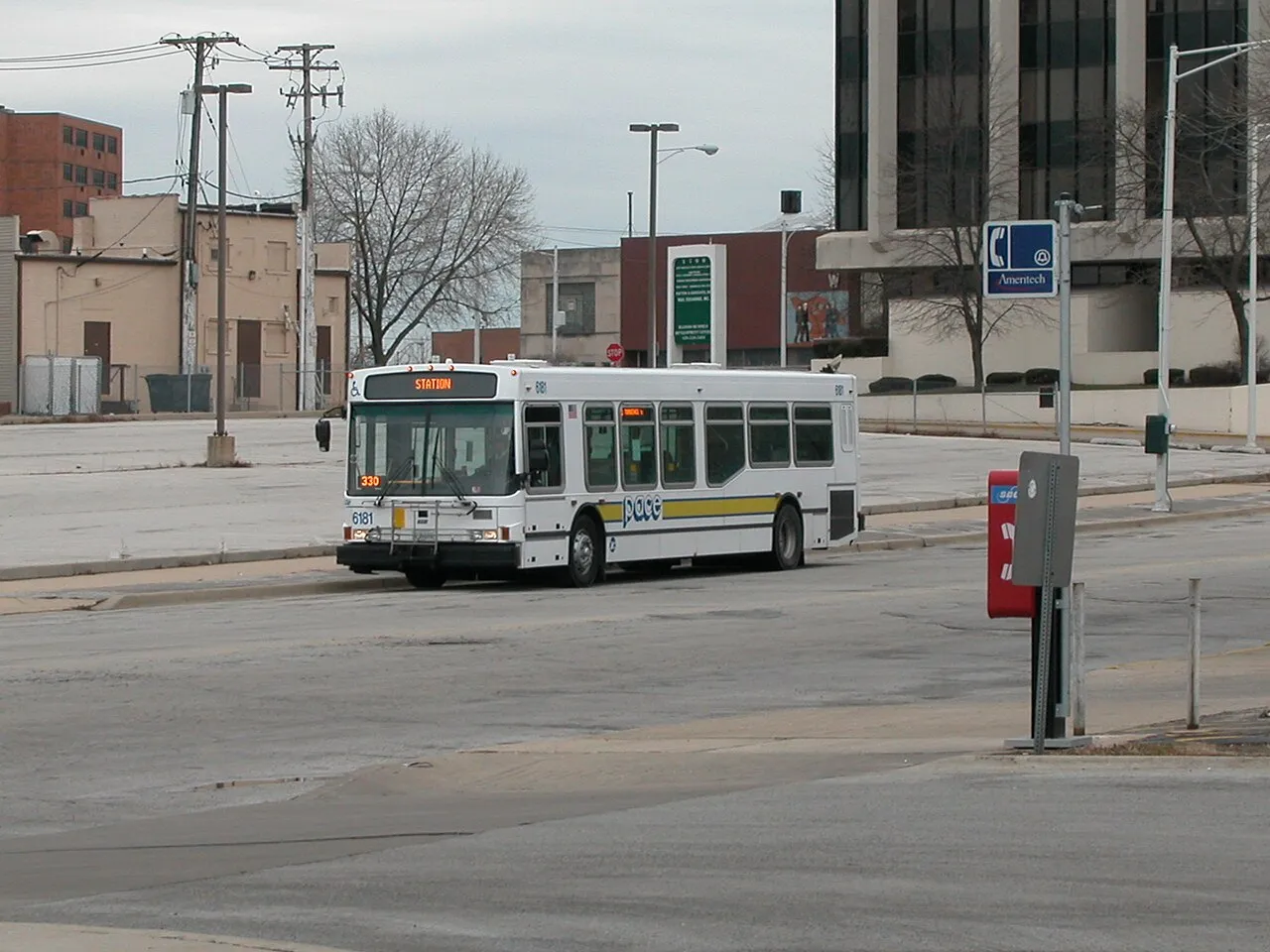
Inside the city, the bus is the transit. The city lists five Pace routes, and most of them meet at the Pace Chicago Heights Terminal:
**Pace 352 Halsted** runs daily, 24 hours, between the terminal, the Pace Harvey Transportation Center and the CTA Red Line's 95th/Dan Ryan station, per Pace. That is the one-seat bus ride to the L. Pace posted Halsted Street detours in Chicago Heights for routes 352 and 890 on August 31 and September 21, 2026. **Pace 357 Lincoln Highway** runs daily between Ford Heights and Matteson with timed connections at the terminal, per Pace. **Pace 358 Torrence** runs weekdays and Saturdays between the terminal and the South Shore Line station in Hegewisch, per Pace. **Pace 366** runs daily between the terminal and downtown Park Forest, per Pace, which lists a regular fare of $2.00 with Ventra or $2.25 in cash. **Pace 890** is a weekday limited-stop route from the terminal and the Homewood Park-n-Ride to the UPS Hodgkins facility, per Pace.
The numbers say most people here drive. In the 2020-2024 ACS figures in CMAP's snapshot, 72.5% of workers drove alone and 11.3% carpooled, against 54.8% and 7.7% for Cook County. 4.7% took transit, 6.7% worked from home and the mean commute was 30.1 minutes.
A Metra line through the city has been proposed for more than 20 years. Per Wikipedia's SouthEast Service article, Metra's proposed SouthEast Service would run from LaSalle Street Station to Balmoral Park south of Crete, with a Chicago Heights station near downtown on the list. An Illinois law signed March 8, 2011, created a Southeast Commuter Rail Transit District that includes Chicago Heights. Wikipedia, citing a September 2022 Daily Southtown report, says Metra put the project on hold in 2022 because more study of its operating cost was needed. I found no newer Metra announcement, and the line does not appear in Metra's fall 2026 schedules, so I would not price a house on it.
Driving from Chicago Heights: Lincoln Highway, Dixie Highway and the Expressways
The two old auto trails are still the main roads. The Lincoln Highway, US 30, crosses the city east to west along 14th Street and runs west through Matteson, where it has an interchange with I-57, per Wikipedia's US 30 article. Chicago Road, the Dixie Highway and Illinois Route 1, runs north toward Homewood and south toward Steger and Crete. Halsted Street is the other long north-south road, and Western Avenue and Vollmer Road fill in the west side.
The expressways sit around the edges. To the east, Illinois Route 394, the Calumet Expressway, runs north to an interchange with I-80, I-94 and I-294 in South Holland, per Wikipedia. To the west, I-57 has interchanges at Lincoln Highway and at Sauk Trail. Which one you use depends on which side of the city you live on and where you are going.
The mean commute for Chicago Heights workers is 30.1 minutes, per CMAP's 2020-2024 figures, a little shorter than the county's 31.5. That average hides a lot of local driving: the city's own plants, distribution buildings and Prairie State College are all inside the limits. CMAP counts 8,751 private-sector jobs in the city in 2025, about 0.95 per household, against 1.07 for Cook County.
Road work is part of 2026. The city's construction updates page lists Halsted Street bridge repairs, a 14th Place and Aberdeen Street roadway project, a Parkside-Union area roadway project, Grant Avenue flood mitigation and Union Pacific railroad crossing closures at 16th and State Streets for 2026. Check the list before you judge a commute from a single test drive.
Is Chicago Heights Walkable?
Parts of it are. Walk Score rates Chicago Heights 51 overall, somewhat walkable, meaning some errands can be done on foot. Its Transit Score is 31 and its Bike Score is 52, which Walk Score calls bikeable. Redfin's housing market page shows the same three scores.
The average hides a big range. Downtown around Chicago Road and the Lincoln Highway has city hall, the library, the recreation center, shops and bus connections within a few blocks. The post-war subdivisions on the north and west sides were built around the car, and most errands there mean a drive. Walk Score counts about 77 restaurants, bars and coffee shops in the city, and says the average resident can walk to 0.7 of them in five minutes.
For recreation, the walking is better than the score suggests. The Thorn Creek Trail System runs through Sauk Trail Woods on the city's southwest edge, covered in the parks section, and the city's outdoor activities page points residents to the Forest Preserves of Cook County.
Shopping and Groceries in Chicago Heights
Chicago Heights still works as a shopping town for the area around it. The Illinois Department of Revenue figures in CMAP's snapshot put the city's total retail sales at $348.8 million in 2025, $282.2 million of it general merchandise. That works out to $13,045 per resident, against $23,200 for Cook County as a whole.
Most of the shopping is along the main roads rather than in one mall. Lincoln Highway, Dixie Highway and Halsted Street carry the chains and the auto-oriented stores, and downtown has the older storefront blocks. The nearest full-service supermarket I could confirm on a store's own site is the Jewel-Osco at 3220 Chicago Road, at Chicago Road and Sauk Trail just across the line in South Chicago Heights, open 6 a.m. to midnight.
For bigger shopping trips, Pace's 358 Torrence route runs past River Oaks and the Landings shopping centers on its way to Hegewisch, per Pace. Most people drive.
The best advice I give buyers here is to drive to the grocery store and the pharmacy from the house before making an offer. In a city this spread out, that five- or ten-minute difference shows up every week.
Parks, Golf and Forest Preserves in Chicago Heights
The Chicago Heights Park District says it runs 22 parks and 2 baseball fields. Its main building is the recreation center at 1400 Chicago Road, which also holds the administration office. The fitness center membership includes the weight and cardio rooms, a swimming pool, locker rooms with saunas and basketball courts, and the district's swim lessons are run with CELTS Swim School, per its aquatics page.
The district has put money into its parks lately. Its news page says new play equipment was unveiled at 15 parks on March 15, 2025, that it won a $600,000 state OSLAD grant for the city's first splash pad at Commissioners Park, and that the recreation center is being renovated in phases with new ceilings, flooring, lighting and signage. The splash pad was open for the 2026 season.
Golf is a bigger part of the park district here than in most towns. It runs two courses, West at 1112 Scott Avenue and East at 315 Glenwood Road, both opening April 6 this year. Its 2026 rates are $22 to walk on weekdays and $28 on weekends, with carts at $28 and $32. The city's water department notes that its main pumping station on Lowe Avenue is surrounded by the park district golf course.
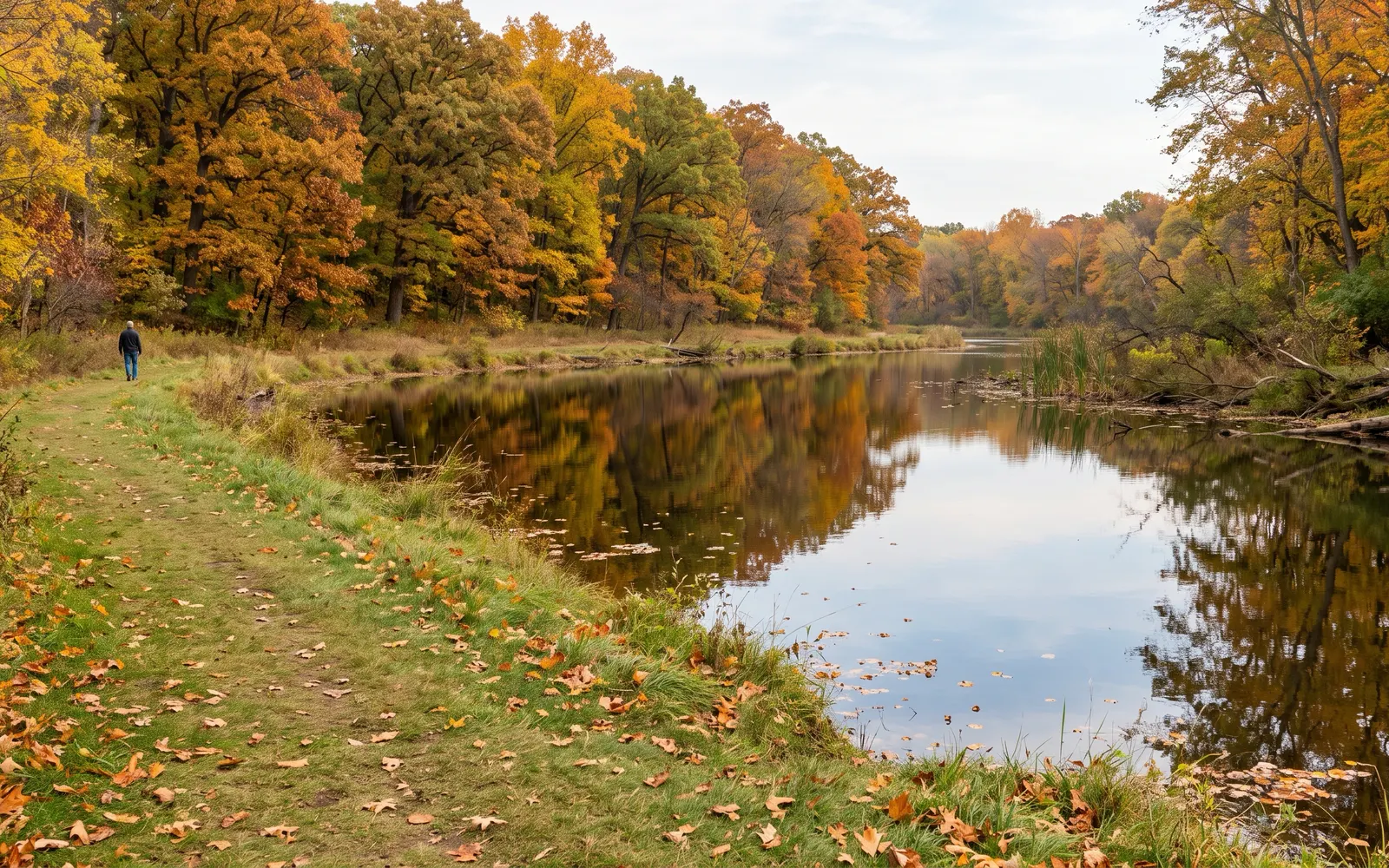
The biggest green space is on the southwest edge. Sauk Trail Woods, part of the Forest Preserves of Cook County, sits in Park Forest and Chicago Heights along Thorn Creek, with paved bike trails, dirt paths, ravines and picnic areas on the Valparaiso Moraine. It is part of the Thorn Creek Trail System. Inside it, Sauk Lake is an enlarged part of Thorn Creek held back by a dam on the south side of 26th Street, and it is stocked with bass, bluegill, crappie and catfish, per Wikipedia. Thorn Creek itself is a 20.8-mile tributary of the Little Calumet River that starts on the Valparaiso Moraine, per Wikipedia.
The Chicago Heights Public Library
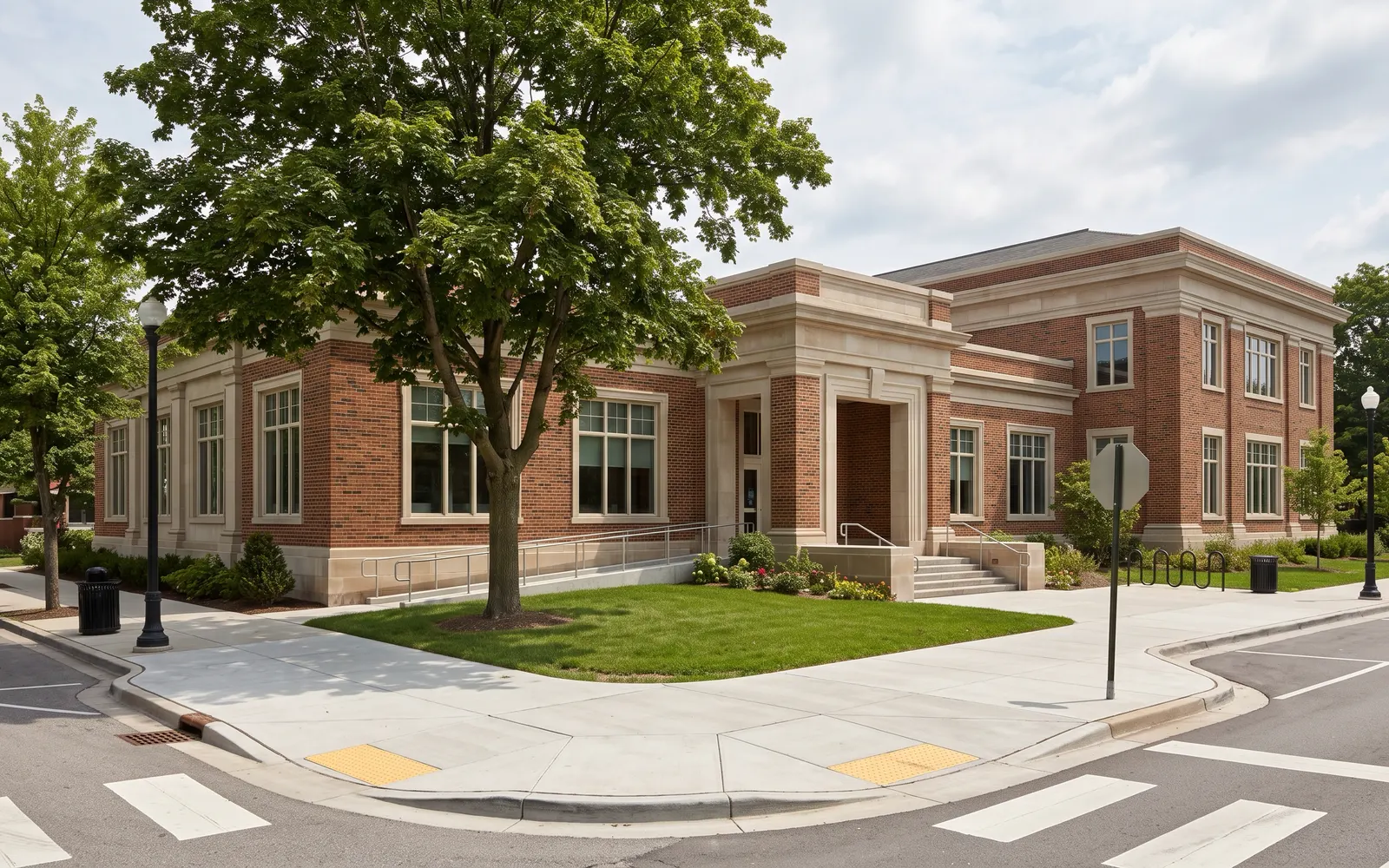
The Chicago Heights Public Library is at 25 W. 15th Street, a block off Chicago Road downtown. Its posted hours are noon to 7 p.m. on Mondays, 10 a.m. to 5 p.m. Tuesday through Friday and 10 a.m. to 2 p.m. on Saturdays, closed Sundays.
A card gets you more than books. The library lists the Museum Adventure Pass program, the Libby app for digital books, SWAN library services and access to Illinois Philharmonic Orchestra offerings.
The building has its own history. Per Wikipedia, residents petitioned for a free public library in May 1901, the library opened in a room of the new city building on February 20, 1902, and Andrew Carnegie paid $15,000 toward a building on Halsted Street that opened on September 11, 1903, with 1,643 volumes. The current building at 15th Street and Chicago Road opened on August 5, 1972. The city's Historic Preservation Committee meets there at 6 p.m. on the second Tuesday of each month, per the city.
Utilities and City Services in Chicago Heights
Chicago Heights drinks Lake Michigan water, bought from Hammond, Indiana. The city's water department page says the water is treated in Hammond, enters the city's lake line at 172nd Street and State Line Road, is boosted at a station in Lansing, and reaches two distribution stations in the city: the Lowe Avenue Pumping Station and a station at 14th and State Streets with a one-million-gallon elevated tank. The city also supplies water to Ford Heights and South Chicago Heights.
Water bills come from the city. Per its billing page, bills are due within 15 days, with a 10% penalty after the due date. A final meter reading is required when a property sells or a tenant changes, it must be scheduled at least two days before closing, and the city will not issue transfer stamps until the final bill is paid. Personal checks are not accepted for it.
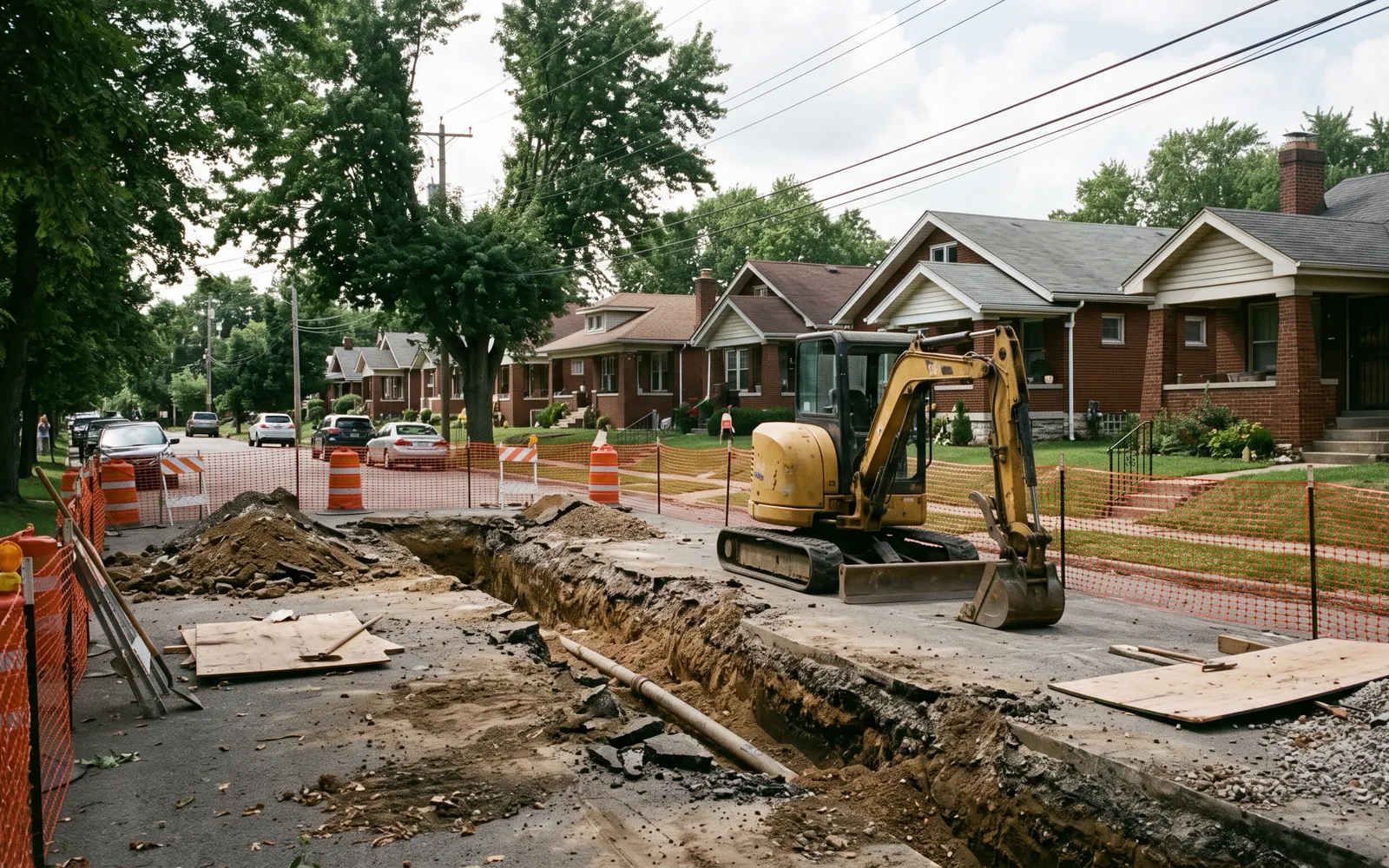
The city is replacing lead service lines. Its 2026 project notice says it will replace about 170 lead service lines at an estimated cost of $2,249,307, paid for with Illinois EPA revolving fund loans and federal money, at no cost to participating property owners. On an older house, ask the seller whether the line has been replaced, and look up the address on the city's service line inventory.
Garbage pickup is by Republic Services under the city's contract, starting at 7 a.m. on the weekly route, per the city's guidelines. One bulk item is allowed per garbage day, yard waste goes in biodegradable bags or a yard waste tote, and televisions, construction debris, tires and computer equipment are not picked up. The city posts the 2026 Republic Services calendar. Electricity is ComEd, which the city's resident resources pages reference.
Hospitals Near Chicago Heights
Chicago Heights no longer has a hospital inside the city. St. James Hospital served the city from about 1911 until its closure in 2018, and its buildings at the southeast corner of US 1 and US 30 were demolished in 2019, per the HF Chronicle, which said the hospital was folded into Franciscan Health's operation in Olympia Fields.
That Olympia Fields hospital changed owners this year. The HF Chronicle reported that the state's Health Facilities and Services Review Board voted unanimously on April 14, 2026, to approve Prime Healthcare's purchase. Prime Healthcare said the acquisition closed May 11, 2026. It now operates as Olympia Fields Hospital at 20201 S. Crawford Avenue in Olympia Fields, with around-the-clock emergency care, and names Chicago Heights among the communities it serves.
For a buyer, the practical question is the drive to the nearest emergency room from the specific house, which I would map before an offer if it matters to you.
Art, Theater and Landmarks in Chicago Heights
Two long-running arts groups are based in the city. Union Street Gallery at 1527 Otto Boulevard was founded in 1995 and moved into its current three-story landmark building in 2006. It holds 15 artist studios and two floors of gallery space and draws around 3,000 visitors a year, the gallery says. Its 2026 member showcase runs through October 3, and its annual Rose Benefit is on October 3, 2026.
The Drama Group at 330 W. 202nd Street says it has staged shows in the south suburbs since 1931. Its 96th season opens October 9, 2026, and it runs staged readings and summer youth programs alongside the main season.
The landmarks are mostly buildings you can see from the street. Bloom High School's 1930s Art Deco building is on the National Register, and the Lincoln and Dixie Highway corner downtown is the "Crossroads of the Nation." The city has a Historic Preservation Committee that oversees its landmark ordinance.
Prairie State College's campus includes a conference center and the Christopher Art Gallery, per Wikipedia. And the two park district golf courses host evening events: Night Golf this year started at 7 p.m. at $35 a golfer.
Chicago Heights Events and the Yearly Calendar
Much of the yearly calendar in Chicago Heights comes from the park district. In 2026 it posted Steppin' Under the Stars, a summer kickoff dance, on May 28, a Father's Day celebration in June, Night Golf in August and a Turkey Shoot Scramble golf event announced in September. Its co-ed summer soccer league and CELTS swim lessons run on their own schedules.
The arts groups fill the fall. Union Street Gallery's 2026 showcase reception was September 26, and the show and the Rose Benefit close out on October 3, 2026. The Drama Group's season opens October 9, 2026.
The city posts its own notices, resident meetings and ward meetings on its community events page and calendar. A Patch guide published June 24, 2026, listed Fourth of July fireworks in nearby towns such as Matteson and South Holland rather than in the city itself, so check the city's page each summer.
What's Changing in Chicago Heights: Water Lines, Roads, Parks and the Hospital
The biggest 2026 projects in Chicago Heights are under the street. The city's lead service line project is replacing about 170 lead service lines this year for an estimated $2,249,307. The city's 2026 roadway list includes Halsted Street bridge repairs, the 14th Place and Aberdeen Street roadway project, the Parkside-Union area roadway project, Grant Avenue flood mitigation and Union Pacific crossing closures at 16th and State Streets, including one dated November 12, 2026.
The park district is spending on its own buildings. Its recreation center at 1400 Chicago Road is being renovated in phases, it added new play equipment at 15 parks in March 2025, and it built its first splash pad at Commissioners Park with a $600,000 OSLAD grant, per the district's news page. A 2024 park district master plan is posted on its site.
Health care nearby changed hands. Olympia Fields Hospital, the former Franciscan Health Olympia Fields, is now run by Prime Healthcare after a deal that closed May 11, 2026, per Prime.
The long-range plan is on paper. The city's comprehensive plan page says the plan guides development through 2030, with recommendations for commercial sites and for roads, rail connections and utilities in the industrial areas. CMAP's figures show why industry is the focus: industrial land is 18.9% of the city, and industrial property was $86.5 million of the city's 2024 equalized assessed value. CMAP also counts 8,751 private-sector jobs in the city in 2025, 24.6% fewer than in 2015.
On transit, nothing new is scheduled. The proposed Metra SouthEast Service, which would put a station near downtown, was put on hold in 2022, per Wikipedia. I will update this section if Metra or the city announces anything new.
I don't label any town or neighborhood as safe or unsafe.
Flood and Basement Water Risk in Chicago Heights
Chicago Heights sits on high ground, but Thorn Creek runs through its southwest side and basement water is a real question. Redfin, using First Street's model, rates the city's flood risk as minor and says 10% of properties are at risk of severe flooding over the next 30 years.
The city treats flooding as a long-running problem. Its 50-50 overhead sewer rebate program says flooding has occurred in the city "for many years," which led to a flood plain plan adopted in November 2004. Owners of an owner-occupied single-family house can get a 50% rebate, up to $3,000, for projects such as overhead sewers, drain tile and regrading, with pre-approval, two estimates and a final inspection. Grant Avenue flood mitigation is on the city's 2026 project list.
Three checks before you write an offer. Look the address up on the FEMA flood map. Ask the seller directly whether the basement has ever taken water; the Illinois disclosure form asks, but a direct question gets a better answer. And have the inspector look at the sump pump, any overhead sewer or backflow valve, the grading and the sewer line to the street, ideally with a camera.
Frequently Asked Questions
Is Chicago Heights, IL in Cook County?+
Yes. Census Bureau estimates for July 1, 2025, put all 26,508 city residents in Cook County and in Bloom Township, so every Chicago Heights home is on the same Cook County assessment calendar.
How much does a house cost in Chicago Heights, IL?+
Redfin reported a median sale price of $199,868 for the three months ending August 2026, flat from a year earlier, with homes selling at 96.9% of list in about 70 days. Zillow's home value index was $177,907 for August 2026, up 2.5%.
What are property taxes in Chicago Heights, IL?+
Ownwell (April 2026) puts the median effective rate at 3.88% with a median bill of $4,333, against 2.14% for Cook County. Bloom Township is being reassessed in 2026, and its notices had not been mailed as of September 28, 2026.
Does Chicago Heights have a real estate transfer tax?+
Yes. The seller pays $4.00 per $1,000 of sale price, per the city. Before stamps are issued, the seller needs a for-sale inspection from Code Enforcement, a paid final water bill and no other unpaid city fees. The Cook County transfer tax of 25 cents per $500 also applies.
What school district is Chicago Heights, IL in?+
Most of the city is in Chicago Heights School District 170 and Bloom Township High School District 206. Parts are in Flossmoor School District 161 and Park Forest-Chicago Heights School District 163, which can mean a different high school. Confirm each address with the district.
Does Chicago Heights have a Metra station?+
No. The nearest Metra Electric stations are Olympia Fields, Flossmoor, 211th St. and Homewood, about 3 to 4 miles west. Olympia Fields has 27 weekday trains to Millennium Station in fall 2026, 45 minutes at the fastest. The proposed SouthEast Service through the city was put on hold in 2022.
What buses serve Chicago Heights?+
The city lists five Pace routes: 352 Halsted (24 hours, to the CTA Red Line at 95th), 357 Lincoln Highway, 358 Torrence to Hegewisch, 366 to Park Forest and 890 to UPS Hodgkins. Most meet at the Pace Chicago Heights Terminal.
Is Chicago Heights walkable?+
Partly. Walk Score rates Chicago Heights 51 (somewhat walkable), with a Transit Score of 31 and a Bike Score of 52. Downtown is walkable; most of the post-war subdivisions are not.
What neighborhoods are in Chicago Heights, IL?+
Chicago Heights has no official neighborhoods. The city's fire stations name the East Side, the North End, the West Side and the Hill, and common subdivision and listing names include Serena Hills, Olympia Terrace, Beacon Hill, Hungry Hill, Country Club and Indian Hill.
Eshu Chikoti has extensive access to off-market listings throughout Chicago Heights and the rest of Cook County — homes that never make it to the public listing sites. That matters right now: in a seller's market like this one, well-priced homes routinely go under contract within days, and buyers relying only on public listings are competing for whatever is left over. Working with someone plugged into off-market inventory means seeing homes before the crowd does.
Eshu Chikoti · 847-691-4282 ·
Get new Chicago Heights listings by email
When a home comes on the market in Chicago Heights, I'll email it to you.
Just your email. Unsubscribe any time by replying.
Thinking About Chicago Heights?
Whether you're buying, selling, or just curious what's on the market, I can walk you through Chicago Heights street by street.