Living in Highland Park, IL: A Buyer's Guide to the Numbers Behind the North Shore
Quick answer: living in Highland Park costs a lot. The median home sold for about $763,000 as of mid-2026, down 12.4% year over year. Three Metra stations and Ravinia are what the premium buys. Property taxes are what catch people off guard.
It's a city of roughly 30,000 people on Lake Michigan, 25 miles north of downtown Chicago. Here's the odd part of the market. The median fell 12.4% while the price per square foot rose. Both numbers are true. The gap between them is the first thing I want a buyer here to understand.
If you want the reference version of the town (the history, every neighborhood, the architecture, the shopping, the full Ravinia calendar) my Highland Park town guide is the page built for that. This one is narrower.
What the Highland Park numbers actually say

Start with the headline, then distrust it a little. Redfin's Highland Park data puts the median sale price around $763,000 as of mid-2026, down 12.4% from a year earlier. Homes take roughly 42 days to sell and draw about two offers each. Stop there and you'd call this a cooling market. But the same data shows price per square foot up about 5.7% year over year, to around $315. That's close to the opposite story.
Both are true, and the reason matters before you write an offer. Highland Park is a thin, top-heavy market. A handful of lakefront estate sales in one quarter and almost none the next can swing the median by six figures. No individual house changed value. That's why the median bounces around here while the per-square-foot figure grinds steadily upward, and per square foot is the cleaner read on what a given home is worth. When an agent quotes you one median and calls it the market, they're usually quoting noise. Ask what your price band and your neighborhood did over the last twelve months instead.
What living in Highland Park buys you
Highland Park sits on Lake Michigan in the string of lakefront suburbs called the North Shore. The commute is a big part of the practical draw. The Metra Union Pacific North line runs from the Highland Park, Braeside, and seasonal Ravinia Park stations into Ogilvie Transportation Center in a little under an hour. U.S. Census figures show a mean commute near 27 minutes.
The amenity that genuinely sets Highland Park apart is Ravinia Festival. It has been the Chicago Symphony Orchestra's summer home since 1936, and it runs more than 100 concerts a season inside your own borders. For a suburb, that's a remarkable thing to have. It's part of why people pay to live here rather than one town over. Go to a concert before you buy, not after.
Younger students attend North Shore School District 112 from PreK through 8th grade. Most of the town then moves into Township High School District 113 and Highland Park High School.
Attendance boundaries don't always follow city lines, so confirm the one for a specific address before you write the offer. The district-by-district school detail on my Highland Park guide has the enrollment counts if you want the reference version.
Districts are funded by property taxes. That brings me to the number that does the most damage to a buyer's budget and almost never appears in the listing photos.
Property taxes in Highland Park: the line item nobody puts in the listing
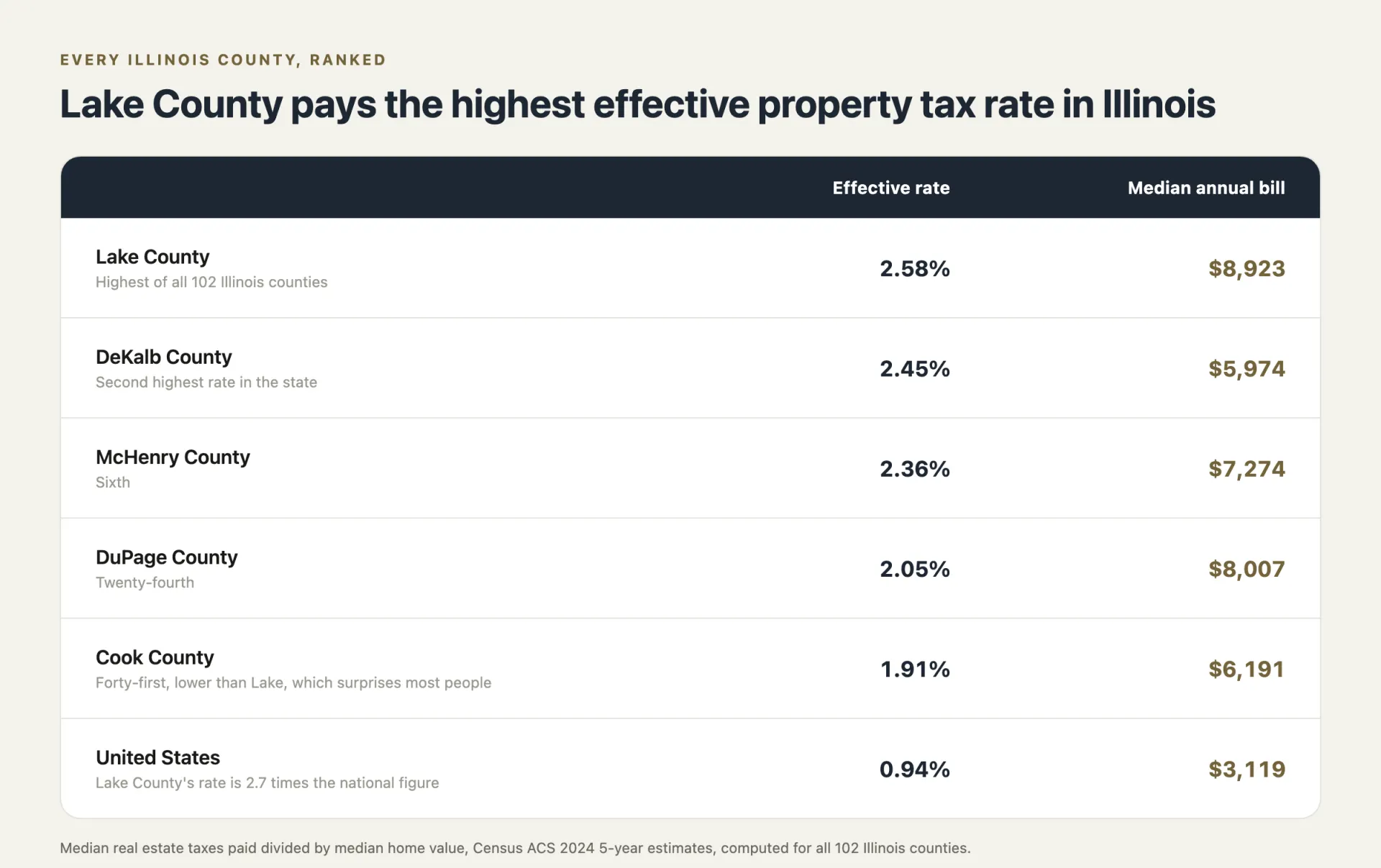
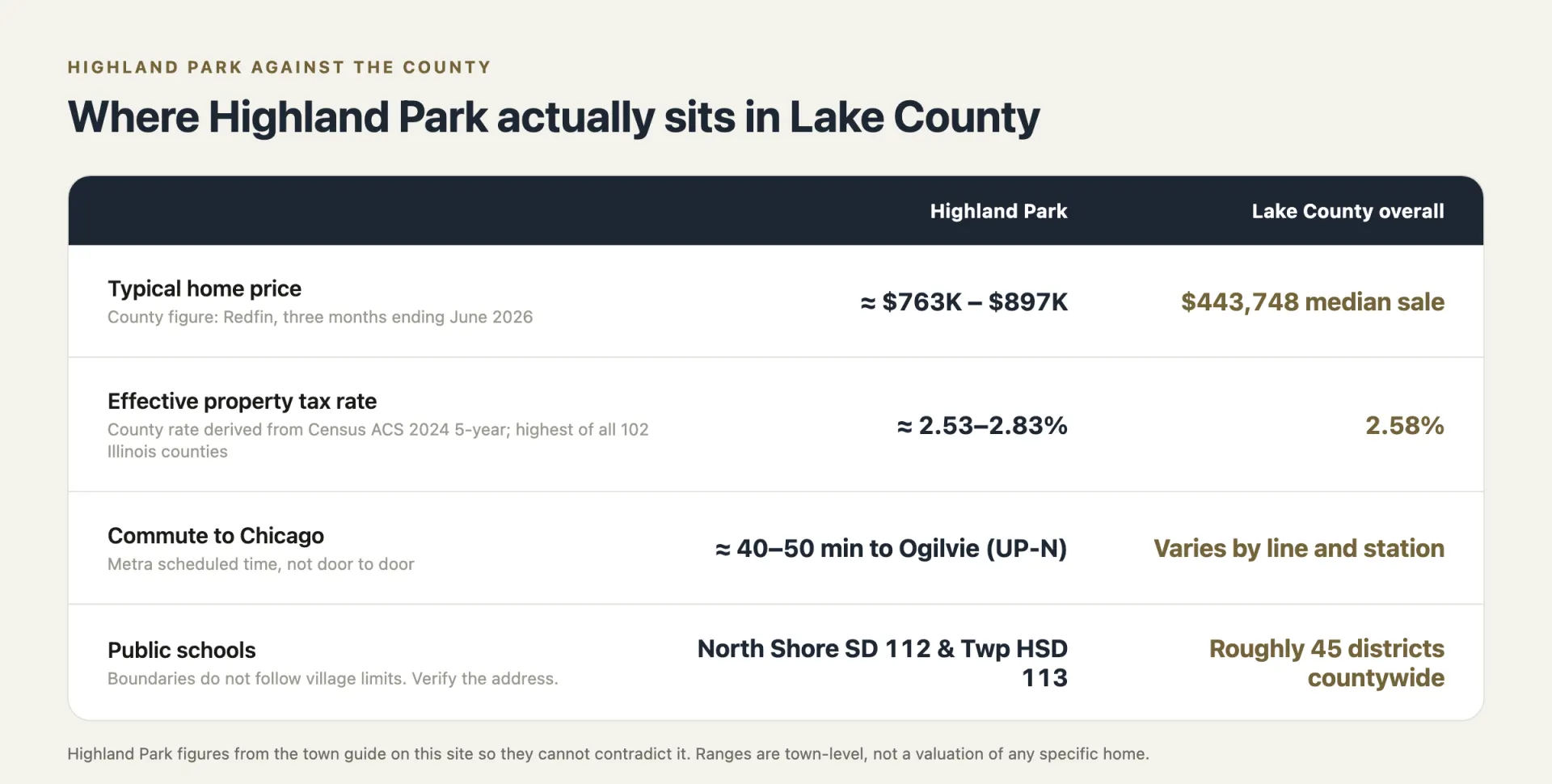
Property taxes are the quiet carrying cost that turns an affordable-looking mortgage into an uncomfortable one. Highland Park's effective rate runs roughly 2.53% to 2.83% depending on the source. The median annual bill lands somewhere in the $14,000 to $18,000 range. At this price point that's routinely more than a buyer's homeowners insurance and mortgage insurance combined, and it never goes away. Before you fall for a house, pull its actual tax bill rather than the listing's rounded estimate, and fold it into your monthly math.
Two things help. The tax and cost-of-living breakdown on my Highland Park guide has the rate ranges, the bill estimates, and how the town's cost of living compares, so you can price the premium before you tour. And if the number on a specific house looks high, sometimes it genuinely is. Assessments lag the market, and a meaningful share of homes end up over-assessed. That's fixable. I walk through exactly how in my Lake County property tax appeal guide.
In Highland Park the mortgage is the number buyers stress about, and the tax bill is the number that actually decides whether they can stay. Run both before you fall in love with the lake view.
Where the value sits in Highland Park
Highland Park is not one market. At the top end are the lakefront and bluff-top properties that grab the attention and drive those swinging medians. Downtown and near-downtown add condos and townhomes. There's the Ravinia neighborhood, the walkable pocket around the festival grounds, with its own small commercial strip and its own Metra stop. Confirm the district for a specific address with the district office, and read each district's profile on the Illinois Report Card at illinoisreportcard.com.
That's my read on where the value sits, not a survey of the city. Every neighborhood laid out on my Highland Park guide is the reference version, Fort Sheridan and the architecture in each pocket included. If you're weighing Highland Park against its neighbors, read my guide to Lake Forest too. Confirm the district for a specific address with the district office, and read each district's profile on the Illinois Report Card at illinoisreportcard.com. They differ a lot on lot size, architecture, and how each market is moving right now.
What the Highland Park Numbers Actually Say
Highland Park ran a $885,914 median sale price in the three months to August 2026, up 8.7%, with a median effective tax rate of 2.53% and a median bill of $14,191. Rates vary across Moraine and West Deerfield townships, so the township on the parcel matters more than the city average.
The structural advantage here is commuting. Four Metra stations, all on the Union Pacific North line: Braeside, Ravinia Park, Ravinia and Highland Park. The express reaches Ogilvie in 46 minutes. That is the shortest reliable journey in the mapped set.
Worth knowing before you shortlist: Ravinia Park station operates on concert days only, so a listing that advertises walking distance to a station is not always advertising a station you can use on a Tuesday in February. Walk the actual route at the actual time.
If you're serious, do one thing before you tour. Work out what you can carry comfortably with Lake County taxes folded in. I lay that out in how much house you can actually afford in 2026. Then, if you want the twelve-month numbers for your specific price band and neighborhood in Highland Park rather than a townwide median, that's a conversation I'm happy to have.
Frequently Asked Questions
Four, in roughly the order they bite. Cost of living runs about 33% above the U.S. average, driven mostly by housing. Property taxes are heavy: an effective rate around 2.53% to 2.83%, and a median annual bill in the $14,000 to $18,000 range. Walkability drops off fast outside downtown, so most of the city is genuinely car-dependent even though the core isn't. And a lot of the housing stock is old, which means real capital spending on roofs, systems, and windows. Add teardown-rebuild pressure on the smaller lots near downtown, which can change the street you thought you bought on.
This is general information for buyers, not financial or investment advice. Home prices, tax rates, and market conditions change; verify current figures and any property's actual tax bill for yourself before making decisions.
Get new Lake County listings by email
I'll send you new Lake County homes as they come on the market. Just your email, no account needed.
Just your email. Unsubscribe any time by replying.
I'm Eshu Chikoti, a Lake County, IL agent. If you want the numbers in this article run for your specific home or purchase, let's talk it through — no pressure, no obligation.
Get in touch →