Sugar Grove, IL
Sugar Grove, IL is a Kane County village of about 9,200 people at the I-88 and Route 47 interchange, a place of 2000s subdivisions, a small original Main Street and farmland on three sides that is starting to fill in.
Living in Sugar Grove, IL means a village where six in ten homes were built in 2000 or later, a typical home value near $460,000 this August, and property tax around 2.7% of value. Most of the village feeds Kaneland CUSD 302. The trade-off is that the nearest Metra station is in Aurora. Here is how it breaks down.
Written by Eshu Chikoti · 847-691-4282 ·
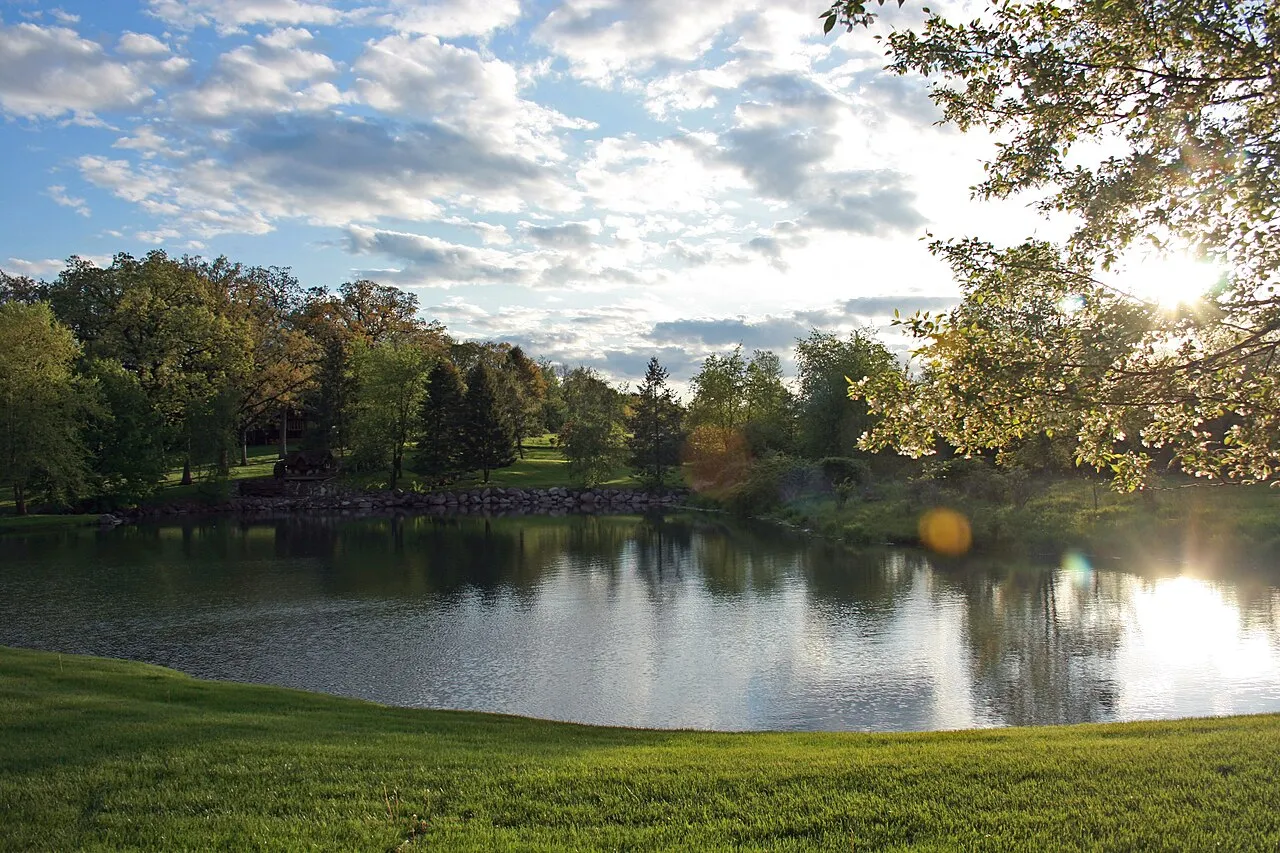
How Sugar Grove, IL Got Here: A Short History
Sugar Grove started as farm country, and for most of its history that is all it was. Sugar Grove Township was established on November 6, 1849, one of the 16 townships that make up Kane County. The name is usually traced to the groves of sugar maple that early settlers found along the creeks, and the township's two old cemeteries, Jericho and Sugar Grove, are still there.
The railroad came through early and stayed. The BNSF main line from Chicago to Seattle runs through the village, but trains do not stop here. That single fact explains a lot about how Sugar Grove grew. It was never a commuter-rail town the way Aurora, Naperville or Elburn were. It stayed a small crossroads settlement until well after the Second World War.
The village itself is young. Sugar Grove incorporated in 1957 and adopted its first comprehensive land use plan on January 12, 1981. The real change came around the turn of the century. Subdivisions spread across former farm fields east and south of the old village center, and the Census ACS shows that 47% of all homes in Sugar Grove today were built between 2000 and 2009 alone. Some of those subdivisions stalled when the housing market crashed in 2008 and took more than a decade to finish.
The chapter happening now is the biggest since then. In 2024 the village approved The Grove, a 760-acre mixed-use development at the I-88 and Route 47 interchange, over heavy public opposition. That project, and the politics around it, is covered in detail further down, because it is the single biggest thing that will change Sugar Grove over the next decade.
Sugar Grove at a Glance
Sugar Grove sits in southern Kane County on the western edge of the Chicago area, about 46 miles from downtown Chicago. Aurora is directly east, Big Rock is west, and Yorkville is to the south in Kendall County. The village covers roughly 10.5 square miles, but a lot of that area is still fields, preserves and the Aurora Municipal Airport, so the built-up part feels smaller than the number suggests.
The whole village is in Kane County. The county line to the south matters mostly for context: when you cross into Kendall County you are in a different assessor's system, a different tax calendar and, around Yorkville, a different school district. If a listing says "Sugar Grove" but the parcel is south of the village, confirm the county before you run any numbers.
The 2020-2024 Census ACS puts the population at 9,240 in 3,558 homes. Of occupied homes, 93% are owner-occupied, which is high even for the outer suburbs. About 70% of homes are single-family detached and about 26% are single-family attached, mostly townhomes and duplexes. There are very few apartments.
The layout is easy to learn. Illinois Route 47, called Sugar Grove Parkway through town, runs north to south. U.S. 30 and Illinois 56 cut across diagonally. Galena Boulevard comes in from Aurora on the east. I-88 runs along the north side, with a full interchange at Route 47. The old village center sits along Main Street, just west of Route 47, with the village hall, police station and library a short distance away on Municipal Drive.
Values have climbed steadily, and the village sits near Batavia and Elburn on price without those towns' older housing stock.
The Grove, the business park and the data center question will change the northern part of the village, and property tax near 2.7% of value is a real monthly cost. Confirm the district for a specific address with the district office, and read each district's profile on the Illinois Report Card at illinoisreportcard.com.
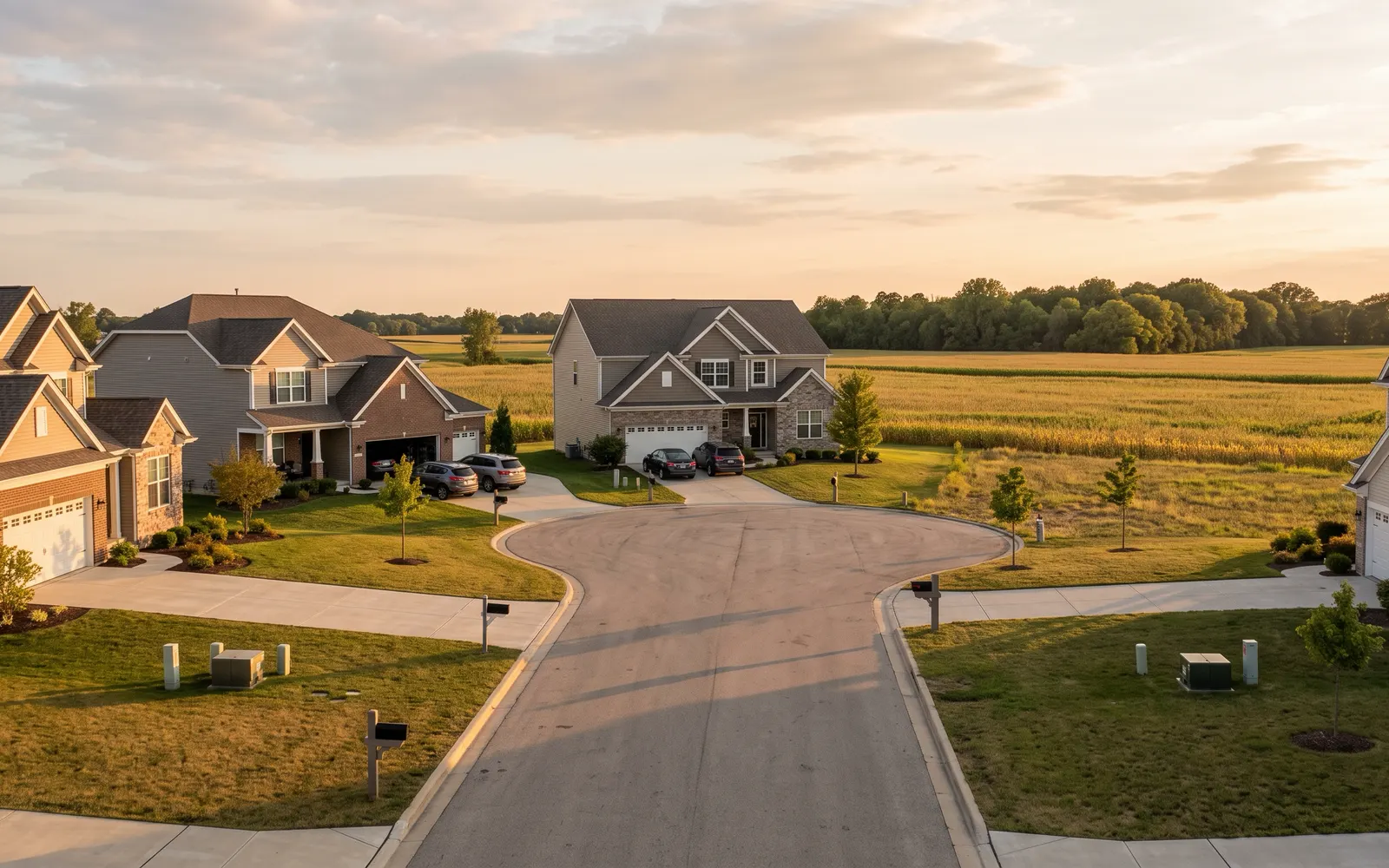
Sugar Grove Neighborhoods, Subdivision by Subdivision
Sugar Grove is a village of named subdivisions. Almost every listing will carry one, and the name tells you more than the street address about when the house was built, what the lots look like and whether there is anything extra on the tax bill.
That last point is specific to Sugar Grove and most buyers never hear about it. The village keeps a list of special service areas and special assessments tied to individual subdivisions. Most are dormant, which means they are on the books as a backstop in case a homeowners association stops maintaining common areas, and they show on the tax bill at $0. A few are active. The village lists the Prairie Glen residential SSA and the Sugar Grove Center SSA as levied since 2016, and Mallard Point and Rolling Oaks carry a special assessment set by the 16th Judicial Circuit court in 2012. Before you write an offer, pull the current tax bill and read every line. An active SSA is a real monthly cost even if it is small.
The second thing to know is age. Nearly half the housing went up in one decade, so many subdivisions here are hitting the 20 to 25 year mark at the same time. Roofs, furnaces, water heaters and decks from the early 2000s are coming due together. I ask for the age of each of those systems on every Sugar Grove showing, because two houses that look identical from the street can be $30,000 apart once you account for what has already been replaced.
Below are the subdivision names you will see on listings, drawn from the village's own records and Walk Score's neighborhood list. Boundaries are informal. If you want to know which subdivision a specific address is in, what fees apply to it and what nearby homes are doing, that is a conversation I am happy to have here.
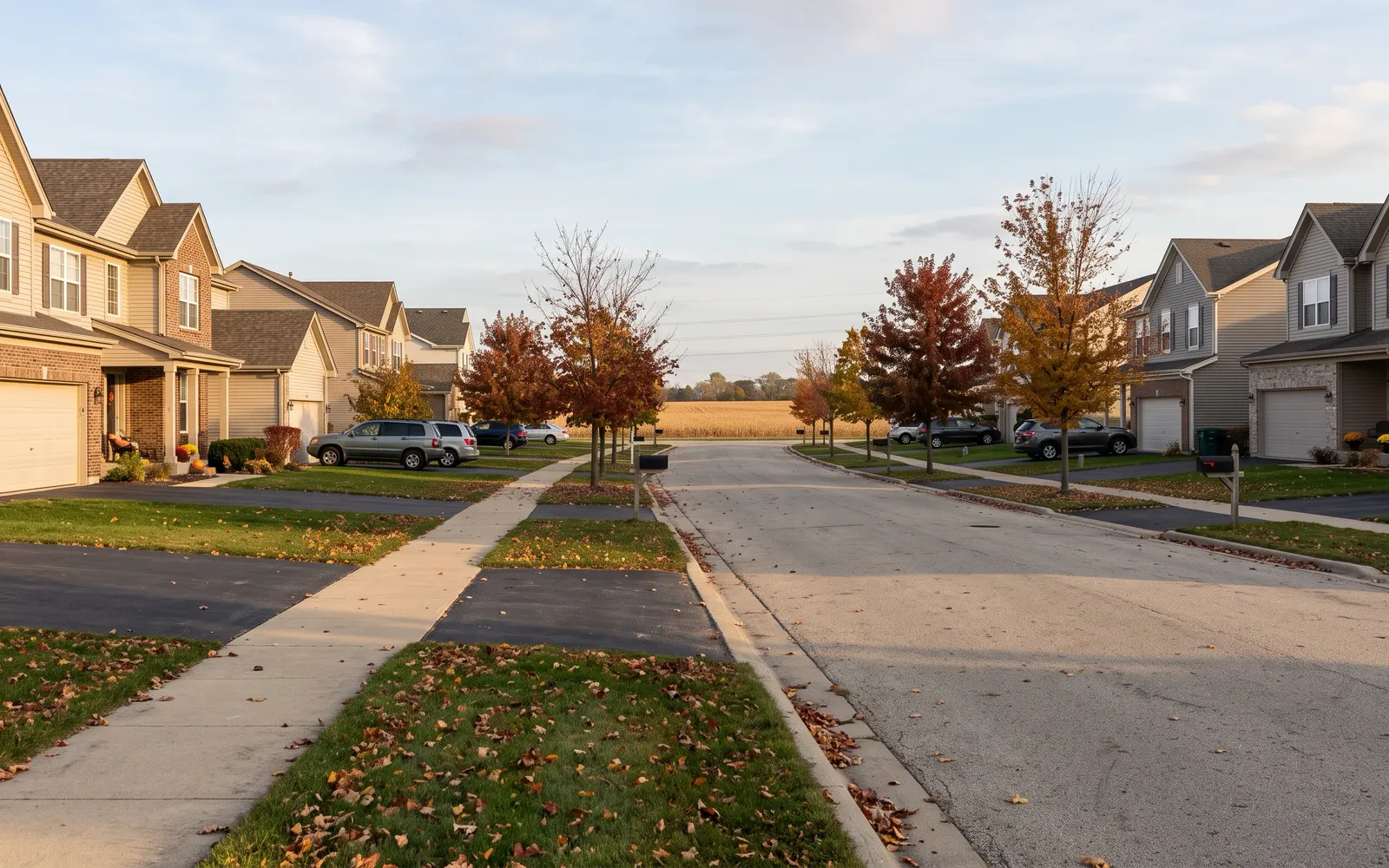
Old village and Main Street. The blocks around Main Street and Volunteer Park, where most of the village's pre-1980 houses are. The ACS counts only about 370 homes built before 1980 in the whole village, so this is a small pocket with the most variety in lot size and style.
Rolling Oaks and Mallard Point. Home to Mallard Park and Rolling Oaks Park on Mallard Lane. Check the tax bill for the 2012 court-set special assessment the village lists for these areas.
Windsor Pointe and Windsor West. Windsor Pointe Park on Exeter Lane anchors the area. Lennar's new Brighton Ridge subdivision will connect to Windsor Pointe by way of Hampton Road.
Hannaford. Listed by the village with its own dormant SSA. Ask for the build year and HOA details on each listing.
Bliss Woods and Lakes of Bliss Woods. Named for the forest preserve nearby. Walk Score also lists a Bliss Woods Club area. Dormant SSA on the village list.
Walnut Woods and Black Walnut. Walnut Woods park on Norris Road and Black Walnut Park, with its nature conservancy area, serve these streets.
Settlers Ridge. A subdivision that sat unfinished for years after the 2008 crash. In October 2024 the village approved an amendment to start a new area of about 95 homes.
Prairie Glen. Its residential SSA has been levied since 2016, so budget for it.
Waterford Place, Meadow Ridge Villas, The Landings, Wiedners Legacy and College Corners.** Smaller subdivisions on the village's SSA list. Meadow Ridge Villas is one of the attached-home options. - **Blackberry Countryside, Hazelwood and St. Louis Terrace. Names Walk Score uses for parts of the Sugar Grove area. Some of these homes sit outside village limits, so confirm the jurisdiction.
Prestbury. Not part of the village at all. It is an unincorporated census-designated place of 0.66 square miles and 741 homes (2020 Census) inside Sugar Grove Township, with county and township services instead of village ones.
The Grove and Brighton Ridge. The new-construction areas. See the development section below.
What Sugar Grove Homes Look Like, by Era
The numbers tell the story. According to the 2020-2024 Census ACS, the median year built for homes in Sugar Grove is 2002. About 60% of all homes were built in 2000 or later, another 19% in the 1990s, and only about 10% before 1980. That is one of the youngest housing stocks you will find anywhere in Kane County.
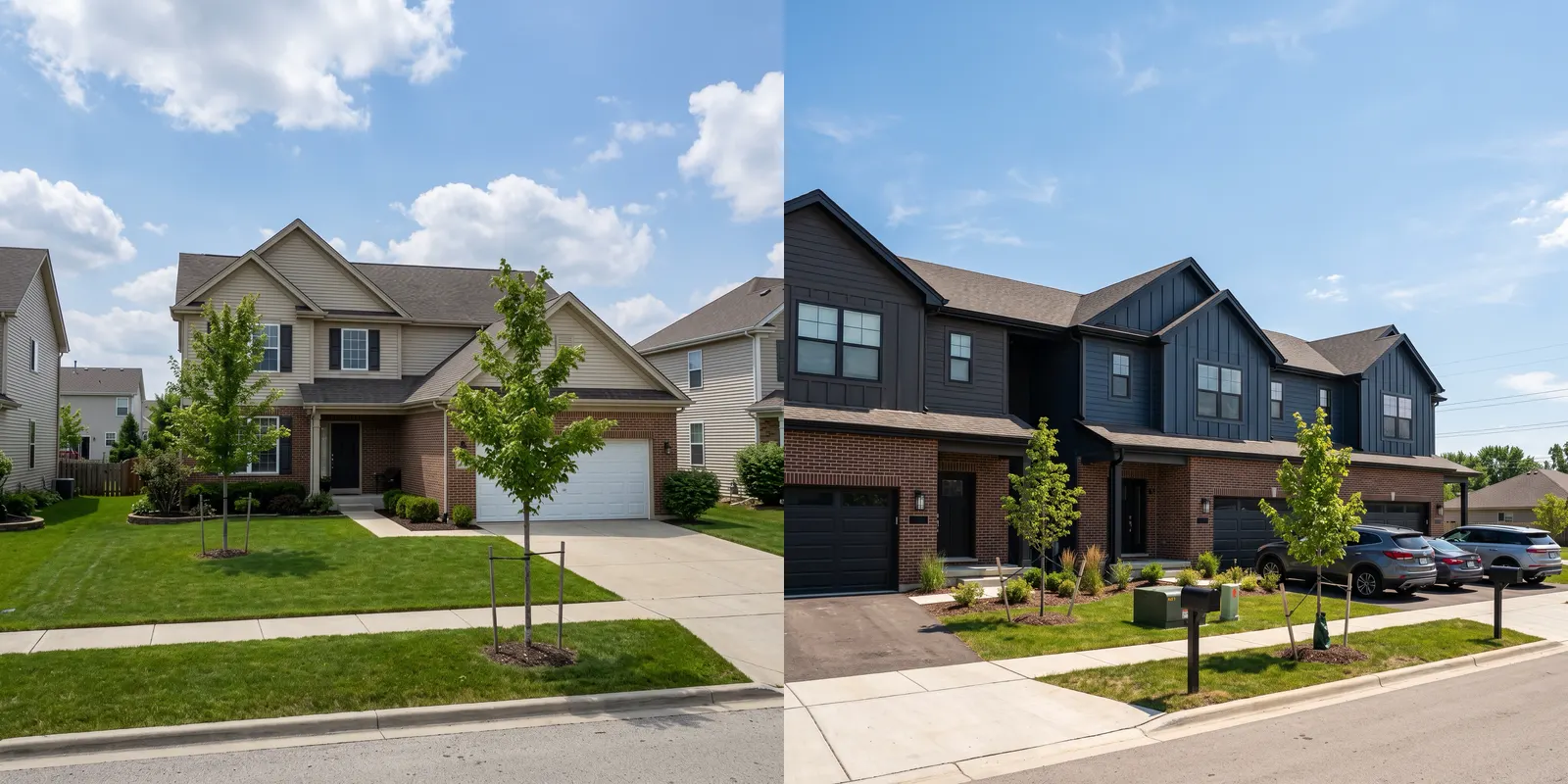
In practice, that means three kinds of houses. First, the 1990s and 2000s production homes that make up most of the village: two-story colonials and ranches on standard suburban lots, usually with attached two- or three-car garages, full or partial basements and open floor plans. Second, the attached homes, which the ACS counts at about 939 units, or 26% of the housing. These are townhomes, duplexes and villas, and they are the main lower-priced way into the village. Third, a small number of older houses in the original village and on the rural edges, including some on larger lots.
Then there is what is coming. Lennar's Brighton Ridge plan includes 174 single-family lots and 148 townhomes, and the first phase of The Grove calls for 214 single-family homes on 60- and 70-foot lots. Settlers Ridge has another area of about 95 homes approved. For the next several years, new construction will compete directly with 20-year-old resales, and buyers will be comparing a builder's warranty against a lower price and a mature yard.
The Census puts the median value of owner-occupied homes at $401,900, compared with $327,000 for Kane County as a whole. Median gross rent is $1,543, but with only about 237 renter-occupied homes in the survey, treat that figure as a rough guide.
What I tell buyers looking at 2000s houses here: the house is not old, but its parts are. Ask for receipts on the roof, the furnace and air conditioner, and the water heater, and look hard at the basement and sump pump. My home inspection checklist covers what to watch for.
The Sugar Grove Housing Market in 2026
Sugar Grove values have kept climbing. Zillow's home value index for Sugar Grove was $460,176 in August 2026, up 4.2% from $441,597 a year earlier and up about 10.5% from $416,496 in August 2024. That index is an estimate of the typical home's value across the whole village, whether it sold or not, so it moves more smoothly than a monthly sale-price median would.
For context, the same Zillow index for August 2026 has Batavia at $469,730, Elburn at $465,648, Big Rock at $423,389, North Aurora at $406,864 and Aurora at $324,261. Sugar Grove sits near the top of that group, level with Elburn and just under Batavia. Kendall County neighbors to the south come in lower, with Yorkville at $409,337 and Oswego at $422,743.
A village this size has only a handful of sales in any given month, which makes monthly medians jumpy. One month of mostly townhomes can make prices look like they fell, and one month of larger homes can make them look like they jumped. I would rather give you the index and explain the mix than quote a number that swings 15% on five sales. Redfin and Zillow's live market pages blocked automated access when I checked, so I have not quoted a current days-on-market or sale-to-list figure here.
What I can say from how the market works in villages like this: attached homes and well-kept 2000s single-family houses at the middle of the price range draw the most buyers, and new construction nearby sets a ceiling on what an older resale can ask. If you are selling, price against the builder down the road, not just against your neighbor. If you are buying, the new-construction comparison is your leverage.
Sugar Grove Property Taxes and the Real Cost of Owning
Property tax is the cost that surprises people who move here from outside Illinois. Ownwell's data, updated April 2026, puts Sugar Grove's median effective rate at 2.74% and the median annual bill at $8,717. Kane County's median effective rate is 2.49% and the Illinois median is 2.33%, so Sugar Grove runs above both.
Here is what that looks like on a purchase. At 2.74%, a house at Zillow's August 2026 typical value of $460,176 would eventually carry about $12,600 a year in tax, roughly $1,050 a month on top of the mortgage. The median bill Ownwell reports is lower because it reflects current assessments, which trail the market. Once a house sells, the township assessor usually catches up. The expectation I most often have to reset is a buyer budgeting off the seller's current bill.
Where the money goes explains why the rate is what it is. The village's most recent posted tax rate distribution is for an older tax year, but the shape has not changed much: Kaneland School District 302 took 69.6% of the total, the Sugar Grove Fire District 7.1%, the village 5.6%, Waubonsee Community College 4.9%, and the county, library, park district, forest preserve and township the rest. Two-thirds or more of your bill is the school district.
A few Sugar Grove specifics. Kane County assesses homes at one-third of market value, and the Sugar Grove Township assessor sets the first number on your bill. Parts of the village and township fall in West Aurora School District 129 instead of Kaneland, and some addresses belong to both the Sugar Grove Park District and the Fox Valley Park District, according to the village's new resident page. Each combination is a different tax code with a different rate. Add any active SSA from the subdivision section, and two houses a mile apart can carry noticeably different bills at the same price.
The Grove adds one more wrinkle. The village created a tax increment financing district for that land in 2024, which means new taxes generated there go into a fund for project costs for years rather than straight to the school district and other bodies. It does not raise your bill directly, but it is why the project has been fought over so hard.
If you already own and think your assessment is too high, start with the township assessor, then the Kane County Board of Review during its annual filing window. This is general information, not tax advice. Your actual bill depends on your parcel, your exemptions and the assessor.
Sugar Grove Schools: Kaneland CUSD 302 and West Aurora 129
Most of Sugar Grove is in Kaneland Community Unit School District 302, a unit district that runs kindergarten through 12th grade across a large stretch of western Kane County. The part that surprises people is geography: Kaneland's middle school is in Sugar Grove, but its high school is about 12 miles north in Maple Park, and its elementary schools are spread across Sugar Grove, Elburn and Montgomery. A Sugar Grove address does not mean a Sugar Grove school at every level.
The Kaneland schools you will hear about most on a Sugar Grove listing are Kaneland John Shields Elementary on Main Street, which serves students from Sugar Grove, Aurora and Elburn; Kaneland McDole Elementary in Montgomery, which serves students from Montgomery, Sugar Grove and Aurora; Kaneland Harter Middle School on Esker Drive in Sugar Grove, where all of the district's sixth through eighth graders come together; and Kaneland High School in Maple Park. The district also runs Kaneland Blackberry Creek Elementary and Kaneland John Stewart Elementary. Kaneland's recent referendum is paying for a field house at the high school, new playgrounds and new transportation and maintenance buildings, and the village approved the new bus facility next to Harter in May 2026.
Some addresses on the east side of the village and township are in West Aurora School District 129 instead, which runs its own elementary and middle schools and West Aurora High School. The line does not follow the village limit, so two subdivisions next to each other can feed different districts.
Confirm the assignment for the exact address with the district before you write an offer. I can pull the boundary for a specific house if you want it done.
Sugar Grove is also home to the main campus of Waubonsee Community College, a 243-acre campus on Route 47 on the north side of the village. The college was founded in 1966 and also runs campuses in Aurora and Plano.
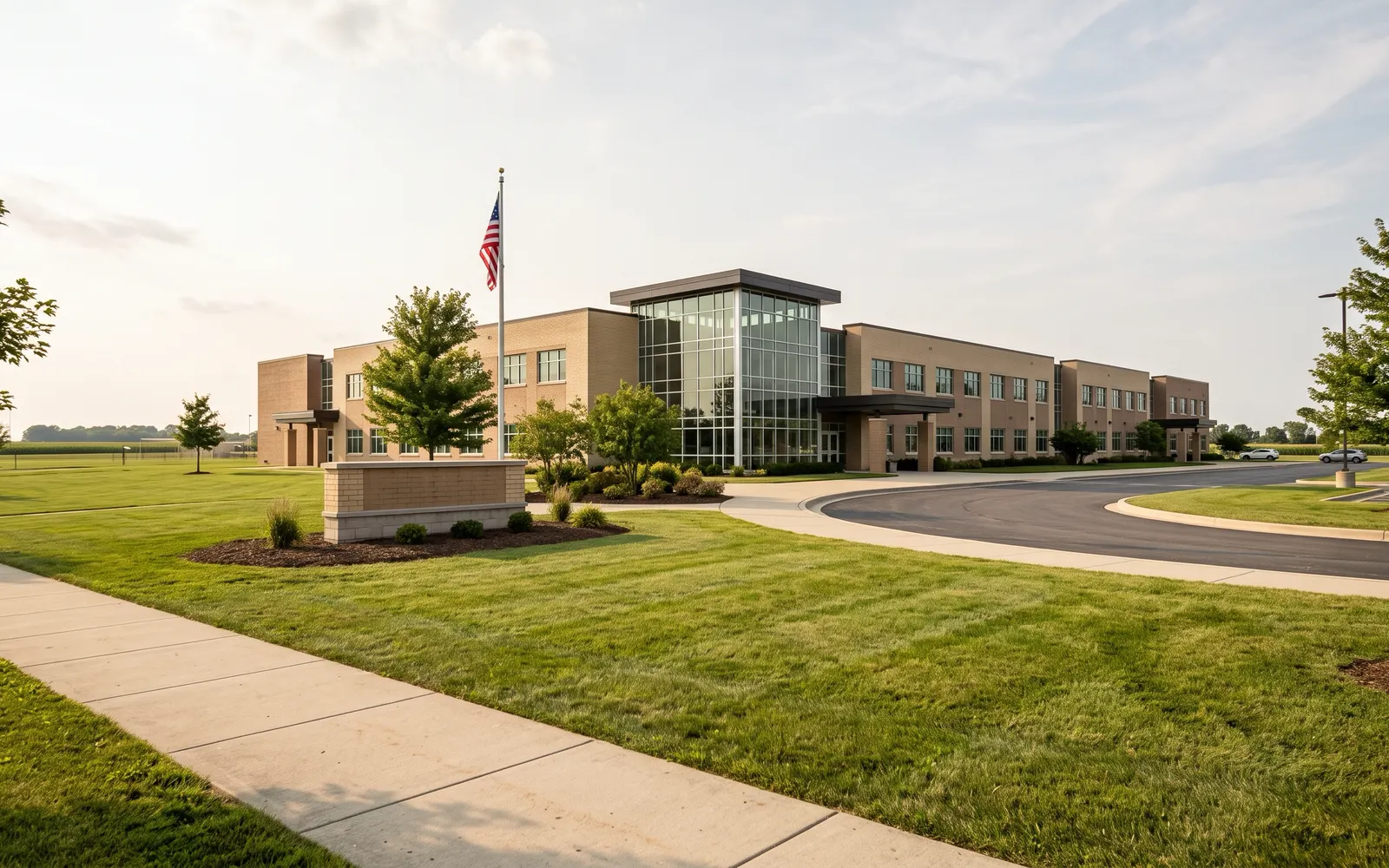
Kaneland John Shields Elementary. 85 S. Main St., Sugar Grove. Early childhood through grade 5, Kaneland 302.
Kaneland McDole Elementary. 2901 Foxmoor Dr., Montgomery. Grades K–5, Kaneland 302.
Kaneland Harter Middle School. 1601 Esker Dr., Sugar Grove. Grades 6–8, Kaneland 302.
Kaneland High School. 47W326 Keslinger Rd., Maple Park. Grades 9–12, Kaneland 302.
West Aurora School District 129. Serves some east-side addresses, with West Aurora High School.
Waubonsee Community College. Main campus on Route 47 in Sugar Grove.
Commuting from Sugar Grove: Metra from Aurora or Elburn
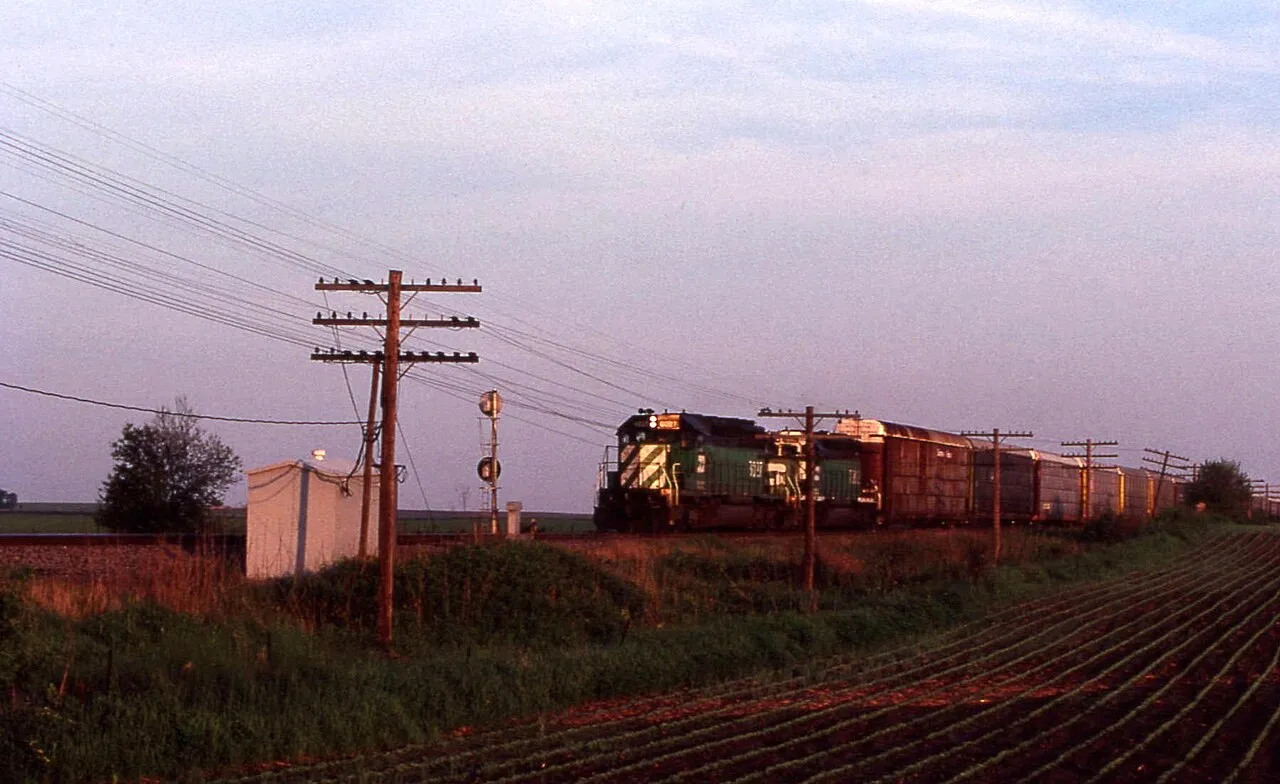
Sugar Grove has no Metra station. The BNSF tracks run right through the village, but the nearest stop on that line is Aurora, the end of the line, to the east. Most Sugar Grove train commuters drive there. The other choice is Elburn, the end of the Union Pacific West line, to the north.
The BNSF from Aurora is the faster and more frequent option. According to Metra's published schedule data for the week of September 21, 2026, 32 weekday trains run from Aurora to Chicago Union Station, with 35 coming back. The fastest express reaches Union Station in 54 minutes, and most rush-hour trains take 58. A few stop at every station and take up to 83. On weekends, 20 trains a day run toward Chicago.
The UP-W from Elburn is slower and less frequent: 23 weekday trains to Ogilvie Transportation Center in the same schedule data, taking 72 to 88 minutes, with 9 or 10 on weekend days. It makes sense for someone on the north side of the village heading to the West Loop, or for anyone who would rather avoid the drive into Aurora.
Add the drive to the station and parking, and a door-to-desk commute from Sugar Grove to the Loop is realistically 75 to 90 minutes each way. The Census ACS shows what that means in practice: the mean travel time to work for Sugar Grove residents is 29.2 minutes, and about 27% worked from home in the 2020-2024 survey. Most people who live here work in the western suburbs, not downtown.
Driving from Sugar Grove: I-88, Route 47 and the Airport
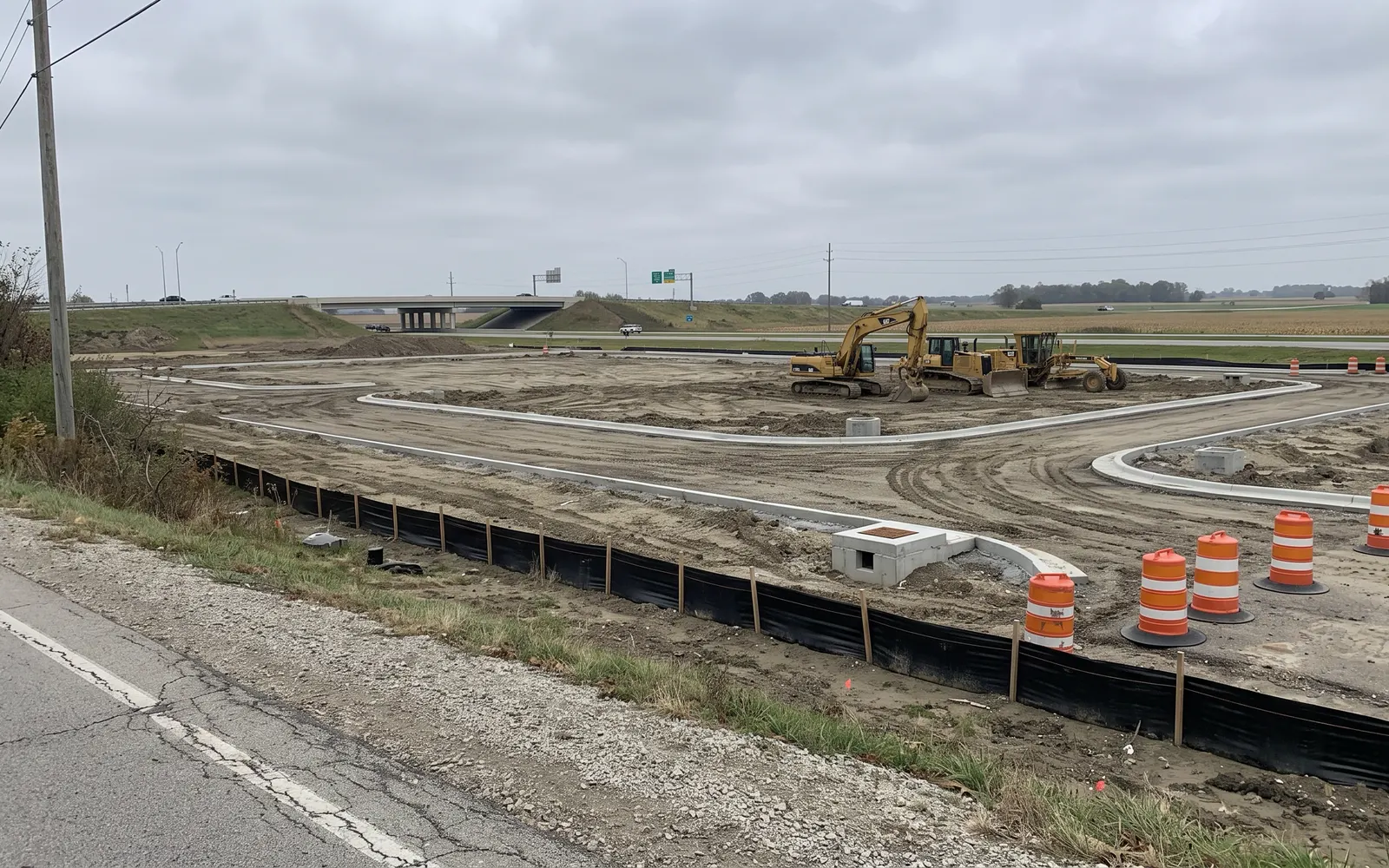
For most people here the car is the commute, and Sugar Grove's road access has improved a lot. The Route 47 interchange with I-88 on the north side of the village was completed as a full interchange in 2019. Before that, drivers could not get on I-88 eastbound at Route 47, so the change cut real time off trips toward Naperville, Oak Brook and the Tri-State. I-88 is a tollway, so budget for tolls if you drive it daily.
Route 47 is the spine of the village and the main road south to Yorkville and north to Elburn and I-90. U.S. 30 heads west to Big Rock and Hinckley and east toward Aurora. Galena Boulevard is the direct run into downtown Aurora. O'Hare is roughly an hour away outside rush hour, and Midway is a similar drive.
Two 2026 road projects are worth knowing. The Illinois Department of Transportation has been repairing the bridge that carries U.S. 30 and IL-56 over Route 47, with lane closures and a full northbound Route 47 closure on September 3, 2026, and completion expected in September. The village also awarded the contract to rebuild the Route 47 and Park Avenue intersection, a crossing residents have called dangerous for years. A raised median will stop traffic on Park Avenue from crossing Route 47, and all Park Avenue traffic will have to turn right. If your route uses Park Avenue today, plan on a different one.
The Aurora Municipal Airport) is actually in Sugar Grove. It is owned by the City of Aurora, covers 1,100 acres, has three runways up to 6,501 feet and serves general aviation and business jets as a reliever for O'Hare and Midway. It does not have airline service. If you are looking at a house near it, drive by at a busy time and look up the flight paths before you decide how much the noise matters to you.
Is Sugar Grove Walkable?
Not really, and nobody who lives here expects it to be. Walk Score does not publish a village-wide score for Sugar Grove, but it notes about 12 restaurants, bars and coffee shops in the village and says the average resident can walk to none of them in five minutes. The address at the police station on Municipal Drive, in the middle of the village, scores 30 for walking and 50 for biking, which Walk Score calls car-dependent and bikeable.
Biking and walking for fun is a different story. Most subdivisions have sidewalks, several of the park district's parks are connected by paved paths, and the forest preserves at the edges of the village add trail miles.
Shopping in Sugar Grove
Everyday shopping clusters at Sugar Grove Center, near Route 47 and Galena Boulevard. The village's development page says new lease spaces next to the Jewel-Osco there added a Subway and a Cold Stone Creamery earlier this year, with a Cilantro restaurant finishing construction and three spaces still open. A stand-alone Starbucks at 421 N. Sugar Grove Parkway and a Jiffy Lube in Sugar Grove Center were approved in 2024, and a True Vet veterinary clinic was approved for Sugar Grove Parkway in 2025.
For anything bigger, you drive east. Aurora's Randall Road and Orchard Road corridors have the big-box stores, and Chicago Premium Outlets is on the far side of Aurora off I-88. Geneva's Randall Road and downtown Geneva and Batavia are about 20 minutes north. The Grove's plans include a town center with retail and dining, so this is the part of Sugar Grove life most likely to change over the next several years.
Groceries and Everyday Errands in Sugar Grove
The Jewel-Osco in Sugar Grove Center is the village's full grocery store, and it handles most weekly shopping. For more choice, Aurora's west side and the Randall Road corridor are a short drive east and have every major chain. In summer, farm stands on the roads around the village sell sweet corn and produce, and the Corn Boil in July is built around exactly that.
Most other errands, like banking, the pharmacy and quick food, cluster along Route 47 and Galena Boulevard. For anything specialized, plan on Aurora or Geneva.
Where Sugar Grove Eats
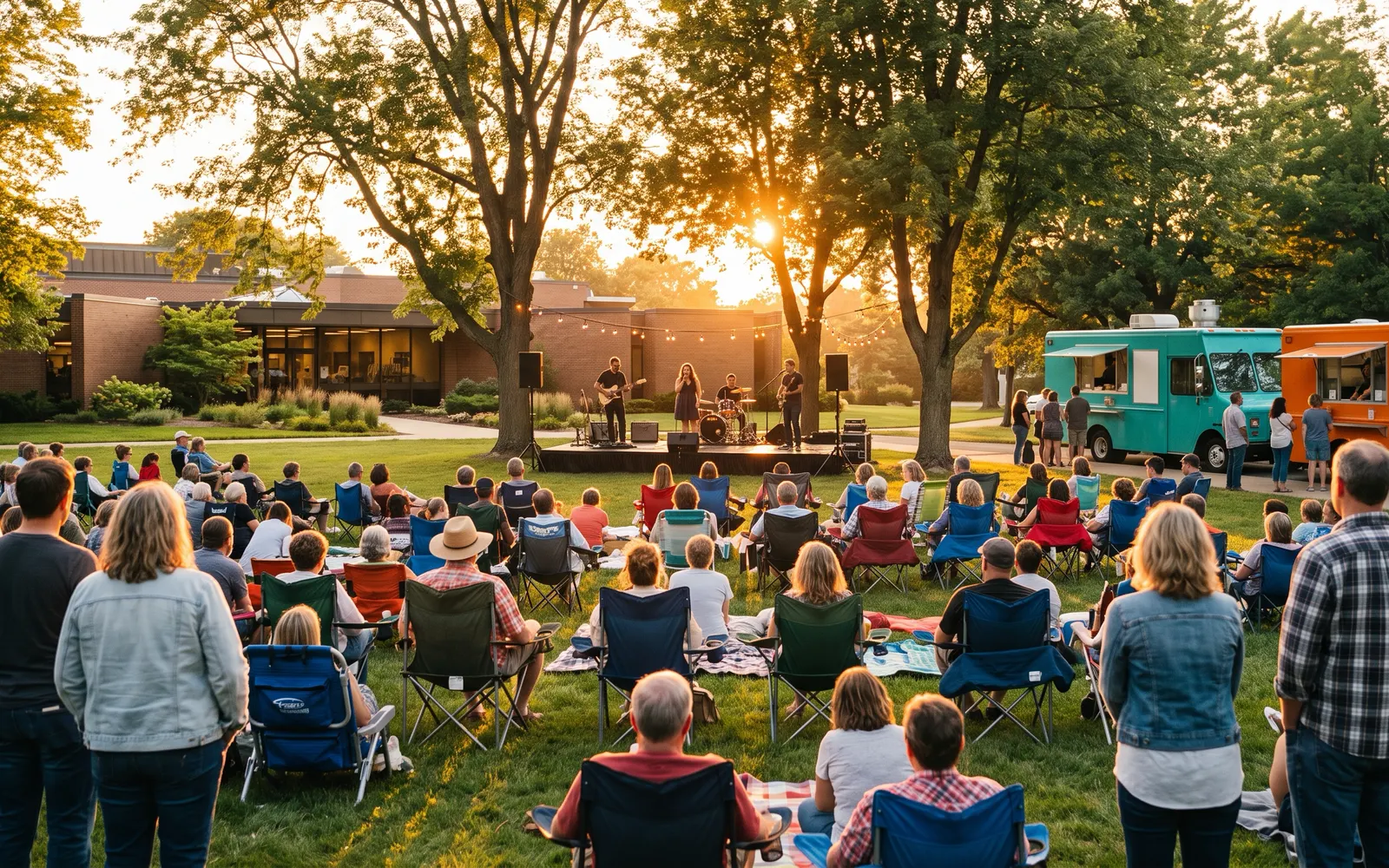
Sugar Grove's dining scene is small and local. Walk Score counts about 12 restaurants, bars and coffee shops in the village, mostly along Route 47 and in Sugar Grove Center, and the newest additions there are the Subway, the Cold Stone Creamery and the Cilantro restaurant the village lists as finishing construction. The park district and the library add Food Truck Fridays and the Groovin' in the Grove summer concert series on the library grounds, which is where a lot of the village ends up on a warm Friday night.
For a bigger night out, downtown Aurora, downtown Geneva and downtown Naperville are each a 20 to 30 minute drive. I would rather tell you that plainly than pretend Sugar Grove has a restaurant row. It does not yet, and The Grove's town center is the first real plan for one.
Parks, Preserves and Golf in Sugar Grove
The Sugar Grove Park District maintains 115 acres in 20 parks. It began in 1947 as the Big Rock–Sugar Grove Townships Pleasure Driveway and Park District and was reorganized under its current name in 2003. The district says it has one of the lowest tax rates of any full-service park district in Kane County, and it runs a budget of about $1.2 million.
The parks are small and spread through the subdivisions, which is exactly what you want in a village like this. The district's list includes Harter Community Park next to the middle school, with three ball fields, a multi-use court and a walking path; the Pritchard Sports Complex on Wheeler Road, with four ball fields, concessions, a wetland and the Woof Run dog park; Volunteer Park on Main Street; Walnut Woods, with basketball and sand volleyball; and neighborhood parks like Mallard, Windsor Pointe, Black Walnut and Carson Slough, which has restored prairie and a paved path.
At the edges of the village, the Forest Preserve District of Kane County runs Bliss Woods Forest Preserve along Blackberry Creek, and the Virgil L. Gilman Trail runs east from there toward Aurora and Montgomery on an old rail corridor. For golf, Rich Harvest Farms near Sugar Grove is a private club on 1,800 acres that hosted the 2009 Solheim Cup and the 2017 NCAA Division I championships and is the home course for Northern Illinois University's golf teams. It is not open to the public, but it is a big part of how people outside the area know the name Sugar Grove.

The Sugar Grove Public Library
The Sugar Grove Public Library District is at 125 S. Municipal Drive, next to the village offices. It is open seven days a week, until 8 p.m. Monday through Thursday, and it is one of the more useful buildings in the village. Beyond books, it has a makerspace, podcast studios, an art gallery, a seed and plant library, museum passes, notary service and license plate renewal help. It is part of the SWAN library system, so a Sugar Grove card reaches a large shared catalog. The village board also holds its meetings there, which tells you how central the building is.
Utilities in Sugar Grove: Water, Sewer and Trash
Inside the village, water comes from the Village of Sugar Grove, and it is groundwater. According to the 2025 water quality report, seven wells supply about 1 million gallons a day to 4,397 service connections, drawing from a shallow sand and gravel aquifer and the deeper Ironton-Galesville aquifer, with ion exchange treatment on the deep wells. This year the village's water took second place in North America at the American Water Works Association's national taste test, after winning the Illinois title in April 2026.
Two things to know. The village enforces a summer watering schedule: even-numbered addresses on even dates and odd on odd, 6 to 9 a.m. and 6 to 9 p.m., and no watering to establish new sod or seed from July 1 to August 31. That matters if you are buying new construction with a fresh lawn. And sewer is split: the village maintains the lines, but the Fox Metro Water Reclamation District treats the wastewater and bills you separately. New owners are often surprised by the second bill.
Trash, recycling and yard waste are handled through the village's contracted hauler. ComEd delivers electricity and Nicor Gas provides natural gas. Outside village limits, including parts of the township and Prestbury, water and sewer can be different, and some rural properties use private wells and septic systems. Confirm the utilities on every listing outside the village.
Hospitals Near Sugar Grove
Sugar Grove has no hospital of its own. The closest full-service hospitals are in Aurora: Rush Copley Medical Center on the east side and Ascension Mercy Medical Center on the west side, the closer of the two for most of the village. Northwestern Medicine Delnor Hospital in Geneva is a longer drive north. Local emergency response comes from the Sugar Grove Fire Protection District, which is building a new training site on Denny Road with a future fire station planned there.
Culture and Nights Out Near Sugar Grove
For culture, Sugar Grove borrows from Aurora. The Paramount Theatre and the riverfront in downtown Aurora are about 20 minutes away, with Broadway-style shows, concerts and the RiverEdge Park summer season. Waubonsee Community College's Sugar Grove campus also hosts performances and events. In summer, the library's Groovin' in the Grove concerts and the park district's Food Truck Fridays are the local version of a night out. If you are also looking east, my Aurora guide covers the city next door.
The Sugar Grove Corn Boil and Other Traditions
The Sugar Grove Corn Boil is the event of the year. It has run for more than five decades, and in 2026 it ran from July 23 to 26 at 61 S. Main St., with a theme celebrating America's 250th anniversary. The four days bring sweet corn, a parade, fireworks, carnival rides, live music, a car show and bingo, and it is run largely by volunteers. Many of the attractions and the music are free.
The rest of the year has a quieter rhythm: Food Truck Fridays and Groovin' in the Grove in summer, park district leagues and programs, and events at Waubonsee. If you are touring houses in late July, go to the Corn Boil. It tells you more about the village than any listing will.

What's Being Built in Sugar Grove: The Grove and More
The Grove is the project that will define Sugar Grove for the next decade, so here is what it is and where it stands. Crown Community Development's plan covers 760 acres at the I-88 and Route 47 interchange, with about 1,400 new homes across single-family houses, townhomes, duplexes and multifamily buildings, a town center with a village green, retail and dining, more than 200 acres of open space, and Grove Park, a 323-acre business park that includes a data center already under contract. The first phase, Area 1, calls for 214 single-family homes on 60- and 70-foot lots, and construction began in 2025.
The politics matter as much as the plan. The village board approved the annexation, zoning and a TIF district in September 2024 over strong opposition. In 2025, voters passed a non-binding referendum asking the village to reverse that decision, and the village president and a trustee who had voted for it lost their seats, according to the Chicago Tribune. Kaneland School District 302 sued over the TIF, and a Kane County judge dismissed that suit in November 2025. A second suit was filed by a resident. In early 2026 easement corrections were tabled over a dispute about mapping errors, and in late August 2026 the village's longtime engineering firm resigned amid renewed questions about whether the land qualifies for TIF funding. The current village president has said the village cannot block the project, but it is watching the TIF reimbursements closely.
Data centers are part of the same story. In April 2026 the village board discussed tightening its data center rules after Aurora adopted strict new ones. A moratorium did not get enough support, but the board agreed to look at zoning changes. The data center under contract at The Grove could be built within three to four years, and a data center campus of roughly 1,000 acres has been annexed into Yorkville just south of Sugar Grove. If you are looking at a house near either site, ask about the plans.
Other projects are smaller. According to the village's development page, Lennar's Brighton Ridge at Galena Boulevard and Route 56 has final approval for 332 homes, 174 single-family lots and 148 townhomes. Settlers Ridge has an amendment for about 95 more homes. Kaneland got approval for a new school bus facility off Esker Drive in May 2026, the fire district is building a training site on Denny Road with a future station, and the board reviewed a self-storage concept on Division Drive in July 2026. A proposed Maple Grove subdivision at Denny and Bliss Roads was withdrawn in January 2025.
What that means for you: more new-construction choice, more traffic on Route 47 and around the interchange, and more retail over time. For owners of 2000s resales, it means competing with builders for the same buyers for several years.
I don't label any town or neighborhood as safe or unsafe.
Flood Risk in Sugar Grove
Flooding in Sugar Grove is a creek-by-creek question. The village's floodplain brochure names three sources: Blackberry Creek in the Blackberry Creek watershed, the Welch Creek, Duffin Drain and Aurora Airport Drain system in the Big Rock Creek watershed, and Rob Roy Creek, which is not a mapped floodplain. It lists storms in July 1983, July 1996 and February 1997 as causing damage across the Blackberry Creek watershed. The village's comprehensive plan reserves land along the creeks for open space, which is why many subdivision edges back onto preserved green space rather than houses.
Flooding is also part of The Grove fight. That land qualified for a TIF partly on the argument that runoff from it contributes to flooding in the Blackberry Creek watershed, and whether the project actually reduces that flooding is one of the open questions in 2026.
Two checks on any house. Look up the address on the FEMA flood map, because a mapped flood zone can mean required flood insurance on a mortgage. The village's Community Development Department also keeps flood maps and elevation certificates. And ask the seller about water in the basement and how old the sump pump is. In a village of 2000s basements, that question matters more than the kitchen.
Frequently Asked Questions
How much does a house cost in Sugar Grove, IL?+
Zillow's home value index for Sugar Grove was $460,176 in August 2026, up 4.2% from a year earlier. The Census ACS 2020-2024 median value of owner-occupied homes was $401,900. Townhomes and villas cost less; newer and larger single-family homes cost more.
What are property taxes in Sugar Grove, IL?+
Ownwell (April 2026) puts the median effective rate at 2.74% with a median bill of $8,717. Rates vary by school district, park district and any active special service area, and a bill usually rises after a sale once the home is reassessed.
What school district is Sugar Grove, IL in?+
Most of the village is in Kaneland CUSD 302, with Kaneland High School in Maple Park and Harter Middle School in Sugar Grove. Some east-side addresses are in West Aurora School District 129. Confirm each address with the district.
Does Sugar Grove have a Metra station?+
No. The closest stations are Aurora on the BNSF line, with 32 weekday trains to Union Station taking 54 to 58 minutes on most rush-hour trips, and Elburn on the UP-W line, with 23 weekday trains to Ogilvie taking 72 to 88 minutes (Metra, September 2026).
What is The Grove in Sugar Grove?+
A 760-acre Crown Community Development project at I-88 and Route 47 with about 1,400 homes, a town center, more than 200 acres of open space and a 323-acre business park that includes a planned data center. It was approved in 2024 with a TIF district and construction began in 2025, but the TIF is still disputed in 2026.
What neighborhoods are in Sugar Grove, IL?+
Common subdivision names include Rolling Oaks, Mallard Point, Windsor Pointe, Windsor West, Hannaford, Bliss Woods, Walnut Woods, Settlers Ridge, Prairie Glen, Waterford Place and Meadow Ridge Villas, plus the unincorporated Prestbury area and new construction at Brighton Ridge and The Grove.
Is the Aurora airport in Sugar Grove?+
Yes. Aurora Municipal Airport sits inside Sugar Grove. It is owned by the City of Aurora, covers 1,100 acres and serves general aviation and business jets, with no airline service.
When is the Sugar Grove Corn Boil?+
The Corn Boil runs each July at 61 S. Main St. In 2026 it ran July 23 to 26 with sweet corn, a parade, fireworks, a carnival and live music.
Eshu Chikoti has extensive access to off-market listings throughout Sugar Grove and the rest of Kane County — homes that never make it to the public listing sites. That matters right now: in a seller's market like this one, well-priced homes routinely go under contract within days, and buyers relying only on public listings are competing for whatever is left over. Working with someone plugged into off-market inventory means seeing homes before the crowd does.
Eshu Chikoti · 847-691-4282 ·
Get new Sugar Grove listings by email
When a home comes on the market in Sugar Grove, I'll email it to you.
Just your email. Unsubscribe any time by replying.
Thinking About Sugar Grove?
Whether you're buying, selling, or just curious what's on the market, I can walk you through Sugar Grove street by street.