Sleepy Hollow, IL
Sleepy Hollow, IL is a two-square-mile Kane County village of about 3,200 people, laid out in the 1950s around curving roads, spring-fed lakes and wooded lots, with its own police department and almost no commercial land.
Living in Sleepy Hollow, IL means wooded lots on curb-free roads, a median sale price near $525,000 this summer, and a village police force of its own. The trade-offs are septic systems on most lots, strict rules on fences and sheds, and property tax near 2.5% of value. Here is how it breaks down.
Written by Eshu Chikoti · 847-691-4282 ·
How Sleepy Hollow, IL Got Here: A Short History
Sleepy Hollow started as one man's farm and one man's plan. According to the village's own history, which is excerpted from the Dundee Township Historical Society's 1985 book, Floyd T. Falese bought Sleepy Hollow Farm west of West Dundee in 1953, when he was 34. The farm had once belonged to J. H. McNabb, the board chairman of Bell and Howell. Falese farmed it briefly, bought neighboring land, and then began selling lots in a development he marketed as Sleepy Hollow Manor.
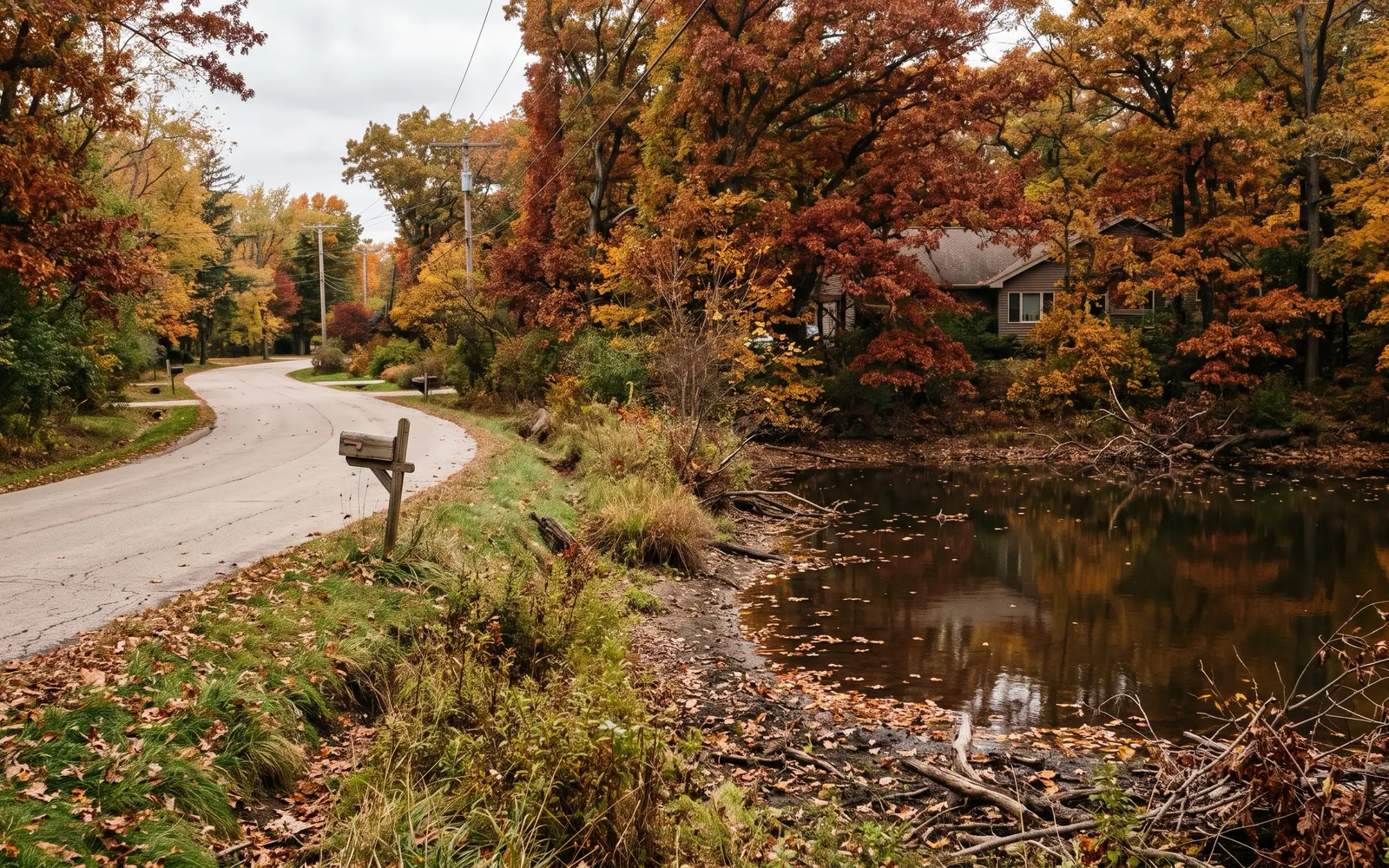
The plan is the reason the village looks the way it does. Falese rejected a gridded tract layout and hired the planner and landscape architect Raymond W. Hazekamp, who laid out meandering roads with no curbs or sidewalks that wound into curving cul-de-sacs, avoiding the destruction of a single tree. The village history says spring-fed lakes were dredged and stocked with fish, and homes were built on lots of at least half an acre. Wikipedia dates Lake Paula and Lake Sharon as the first, Lake Ichabod to 1962, and Lake Legend and Lake Jacqueline to 1967. The Washington Irving theme runs through the street names too; the village history notes that Beau Brummel Drive is a play on Brom Bones, the rival of Ichabod Crane in the story.
Early lots were cheap by any standard. One of the first buyers told the historical society that his lot of about two-thirds of an acre cost $1,500 in 1955 and was bare farmland at the time. Thirty years later, he said, it looked like a forest. That is the Sleepy Hollow most buyers are shopping for today: trees that were planted or kept seventy years ago, now fully grown over the roads.
The village exists because of a vote. Some early owners wanted to annex to West Dundee. On March 12, 1958, according to the village history, the residents voted 40 to 6 to incorporate instead, and a court order made it official on April 29, 1958. Falese was the first village president and held the post until he died in 1970. The population was 311 in the 1960 census and 1,729 by 1970, and it grew through the 1980s and 1990s as the Saddle Club Estates, Surrey Ridge and The Bluffs subdivisions were added, according to Wikipedia. It has hovered around 3,200 to 3,500 since.
Sleepy Hollow at a Glance
Sleepy Hollow is small. Wikipedia, using the Census gazetteer, puts it at 2.04 square miles in northeastern Kane County, in Dundee Township. West Dundee borders it on the north and east and Elgin on the south and west. Randall Road runs along the west side, Route 72 along the north, Route 31 runs east of the village, and I-90 passes to the south.
The 2020-2024 Census ACS puts the population at 3,161 in 1,214 housing units. Of those homes, 1,132 are owner-occupied, about 93%, and 82 are rented. Detached single-family houses make up 1,130 units, the same 93%. That is by design: the village history says plainly that there is no business or industry in Sleepy Hollow and that it is strictly residential.
The mailing address trips people up. Sleepy Hollow shares ZIP code 60118 with West Dundee and East Dundee, and the village's resident page says mail comes through the Dundee post office while the address stays "Sleepy Hollow, IL 60118." Listings and map apps sometimes label a Sleepy Hollow house as West Dundee or Elgin, and a few addresses just outside the line really are in those towns. Check the municipality on the tax bill before you compare anything, because the village, the water and sewer setup and the police department all change at the boundary.
Village Hall is at 1 Thorobred Lane, at Sleepy Hollow Road, and is open weekdays from 8 a.m. to 3:30 p.m. The village board meets on the first and third Mondays at 7:30 p.m., with public comment around 8:30. In a village this size the board really does decide things about your street, and the development section below shows how much a few hundred signatures can matter.
And it costs more than its neighbors: Zillow's August 2026 index puts it about $58,000 above West Dundee and nearly $190,000 above Carpentersville, with the same District 300 schools and a similar tax rate.
Sleepy Hollow Neighborhoods, Subdivision by Subdivision
Sleepy Hollow has five subdivisions you will see named on listings, and they were built decades apart. The original Sleepy Hollow Manor is the 1950s and 1960s core, built in numbered units. The village history says the first homes went up in "the flats," east of Sleepy Hollow Road and south of Route 72, and that the hilly ground west of Sleepy Hollow Road opened around 1961. Early owners, it says, identified themselves by the unit they lived in, and you may still hear older listings described that way.
The other four came later: Surrey Ridge and Saddle Club Estates in the 1980s, then Deer Creek and The Bluffs in the 1990s and 2000s. The Census ACS shows the result in the year-built counts: 406 units from the 1950s and 1960s, 523 from the 1970s and 1980s, and 262 from the 1990s and 2000s. Only 10 units have been built since 2010, because the village has almost no land left.
The build dates, sizes and average tax figures below come from the Homes by Marco subdivision directory, read in September 2026. It is an agent directory drawn from listing data, so treat the numbers as ranges, not rules, and confirm any specific house.
In my experience the question buyers ask first here is not about the kitchen. It is whether the house is on septic or sewer, and how old the system is. In Sleepy Hollow that answer matters more than which subdivision you are in. If you want to know which pocket a specific address falls in and what nearby homes have actually sold for, that is a conversation I am happy to have here.
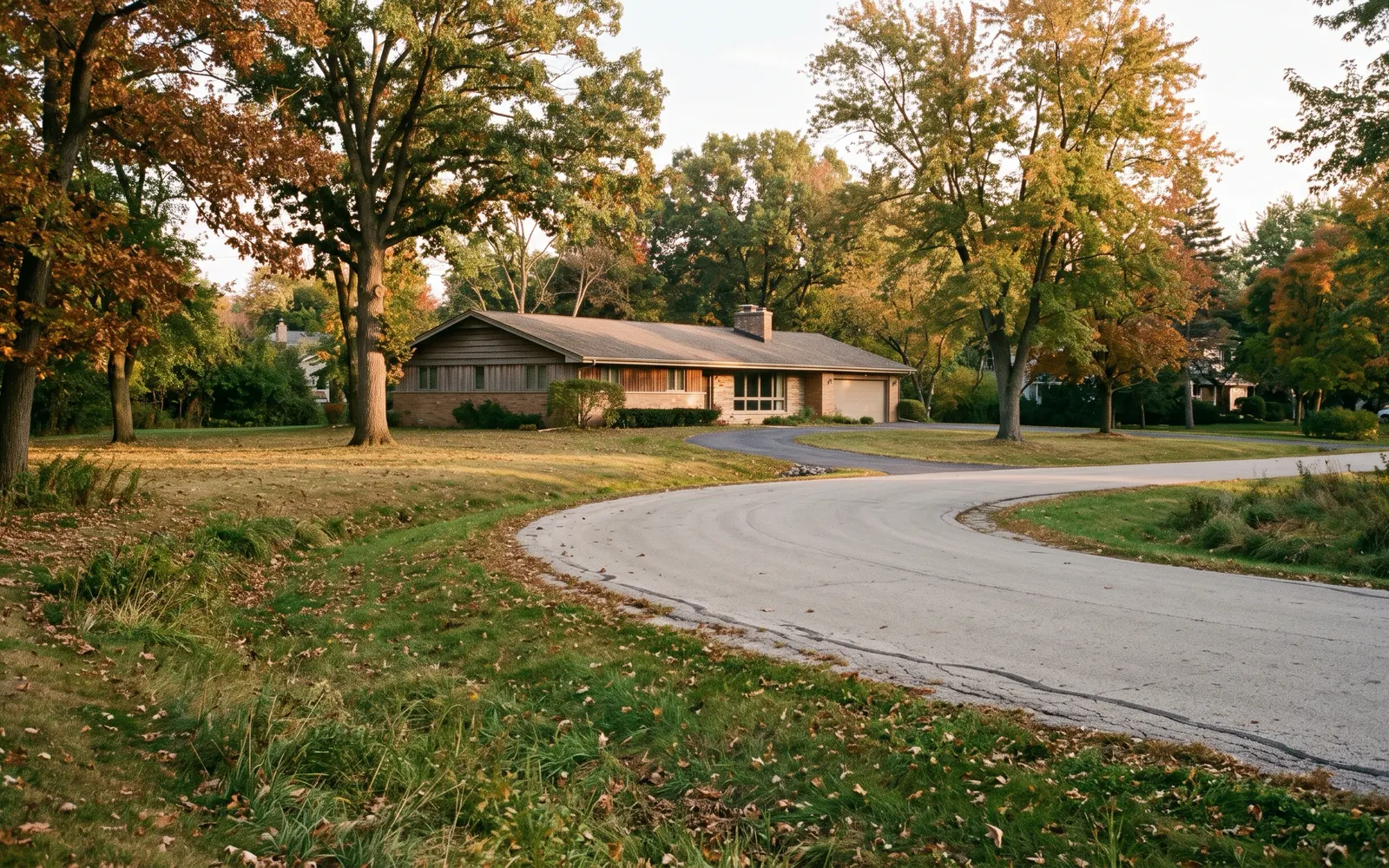
Sleepy Hollow Manor. The original Falese development and the largest part of the village, on both sides of Sleepy Hollow Road around the lakes. Homes by Marco lists build years from 1955 to 2023 and sizes from 1,808 to 7,700 square feet, with an average annual tax bill of about $8,096. Expect curb-free roads, wooded lots of half an acre or more, and a mix of 1950s ranches, 1960s split-levels and later custom homes.
Surrey Ridge. Built by Windsor from 1979 to 1990, west of 8th Street and south of Route 72, and the subdivision with townhomes and condos alongside single-family houses. Homes range from 1,136 to 4,500 square feet, with an average tax bill of about $7,699. Ask for the association budget and fees.
Saddle Club Estates. A Pulte subdivision built from 1986 to 1991 near Randall Road and Saddle Club. Homes range from 1,860 to 4,256 square feet, average tax about $9,889. Wikipedia notes a park, green space, wooded lots and some English and walkout basements.
Deer Creek. Custom single-family homes from the mid-1990s off Joy, east of Randall Road. Sizes from 2,061 to 6,594 square feet, average tax about $10,565. The village has published a separate stormwater drainage analysis for Deer Creek, so read it before buying here.
The Bluffs. The newest subdivision, with semi-custom and custom homes built from 1996 to 2003, west of 8th Street and north of Boncosky Road. Homes range from 3,095 to 4,538 square feet, with the highest average tax bill in the village at about $15,027.
What Sleepy Hollow Homes Look Like, by Era
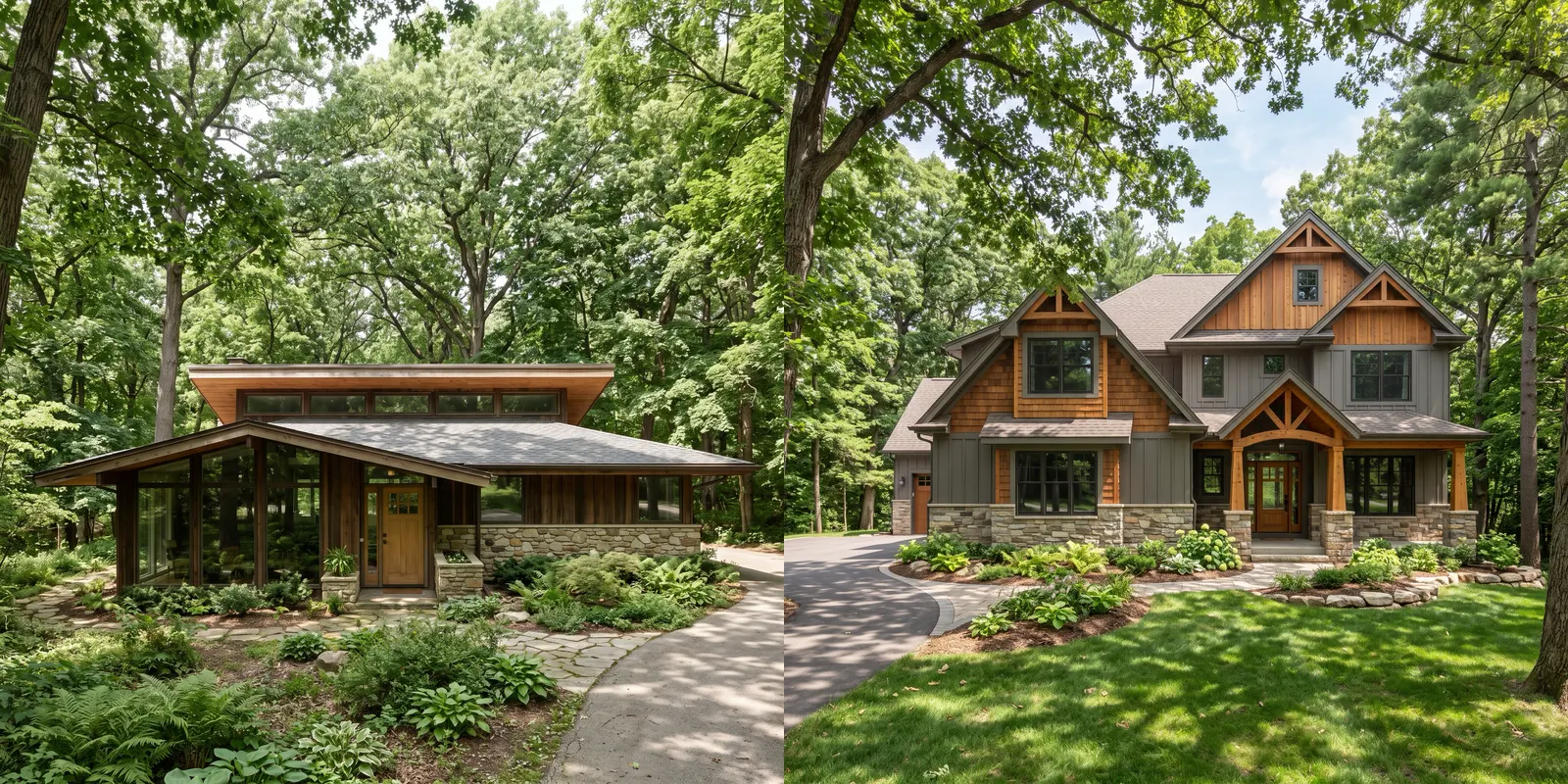
The core of Sleepy Hollow is mid-century. The Census ACS counts 139 units built in the 1950s and 267 in the 1960s, and only 13 before 1950. According to Wikipedia, many of the 1960s homes were prefabricated Scholz Design Homes built by the Mark 60 Corporation, and the village history says Falese hand-picked designs and encouraged multiple builders and custom homes. The result is a village of low, wide ranches, split-levels and contemporary houses set back on large lots, many with walls of glass facing the trees.
That architecture now has a following. In 2026 the Sleepy Hollow Service Club and the Dundee Township Historical Society ran a Midcentury Modern Home Tour of Sleepy Hollow houses on August 8. If you like mid-century design, this is one of the few places in the northwest suburbs where whole streets of it survive on wooded lots.
The next waves look different. The 1970s added 201 units and the 1980s 322, the busiest decade in the village's history and the years Saddle Club Estates and much of Surrey Ridge, including its townhomes, were built. The 1990s added 199 units and the 2000s 63, mostly the custom and semi-custom houses in Deer Creek and The Bluffs. By structure type, the ACS counts 1,130 detached houses, 21 attached single-family homes and 63 units in small and mid-size multi-unit buildings.
With the older homes, the surprises I expect are the ones that come with age: original electrical service, older plumbing, flat or low-slope roofs on some mid-century designs, and windows that were state of the art in 1962. Here there are two more: the septic system and the drainage swale out front, both covered below. None of those should kill a deal. All of them belong in the price. My home inspection checklist covers what to ask for, and in Sleepy Hollow I would add a septic inspection to every offer on a house that has one.
Fences, Sheds and Swales: Sleepy Hollow's Rules for Owners
Sleepy Hollow's zoning is stricter than its neighbors', and it is the one thing I would want every buyer to read before making an offer. The village's resident code summary says its purpose is to maintain the attractive character of the village and to enhance property values, and it spells out the rules most likely to surprise someone coming from a typical subdivision.
Perimeter fences are not permitted. Pool, patio, deck and dog-run fences are allowed with limits and a building permit, and fences built before January 16, 1978 are grandfathered but may not be replaced. Storage sheds, outbuildings and detached structures of any kind are not permitted either, with the same 1978 grandfather rule, though wooden playhouses are allowed with a permit and size limits. Brick, stone or concrete pillars and mailboxes are prohibited. Grass on developed lots has to stay under eight inches.
Vehicles have rules too. Parking and storage are allowed only on paved driveways. You can keep one recreational vehicle, one boat or up to four snowmobiles outside, with limits; RVs and boats longer than 24 feet cannot be stored at a house, and trailers other than boat and snowmobile trailers cannot be stored outside at all. Street parking is allowed only on a handful of listed street segments, from sunrise to sunset. Garage sales are limited to four days a year. The village also requires every vehicle, cat and dog to be registered within 30 days, and that applies to new owners from the day they move in.
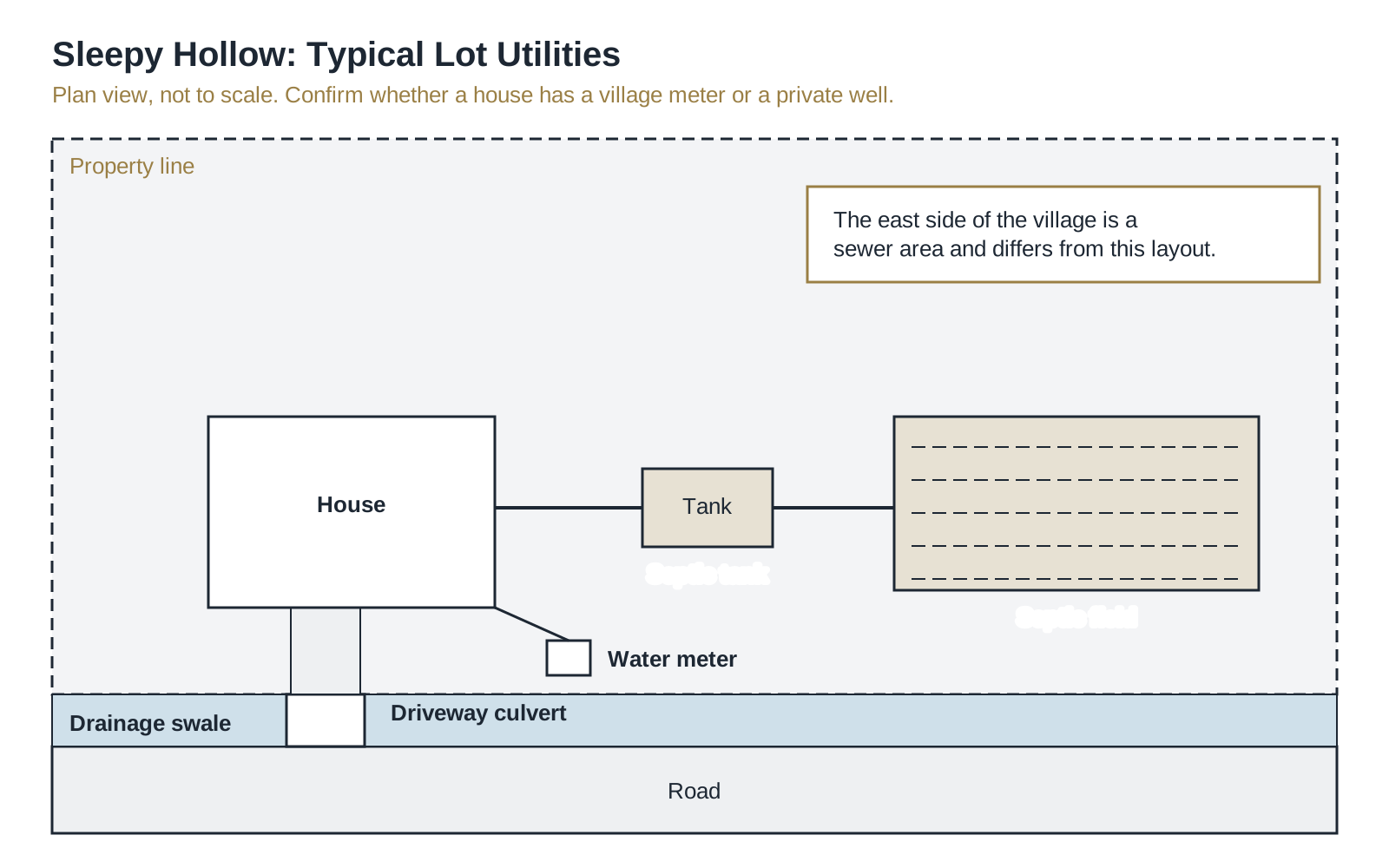
The swale is the rule that matters most for the house itself. Because the roads have no curbs, rainwater runs into grass ditches along each lot and through culverts under the driveways. The village requires owners to keep their swales at the height and grade it sets and to keep the culverts clear. Its building page lists unpermitted filling of low spots and unpermitted changes to stormwater drainage among the most common code violations, and it requires a permit for driveways, fences, patios, generators, solar panels and any change in grade involving 10 or more cubic yards of fill. The village has no full-time building department; it contracts plan review and inspections to the engineering firm Hampton, Lenzini and Renwick.
I bring this up early with every buyer who loves the trees, because the same rules that keep the village looking the way it does are the ones that stop you from fencing in the yard. Ask the seller whether any fence, shed or pillar on the property predates 1978 or has a permit, and ask to see it in writing.
The Sleepy Hollow Housing Market in 2026
Sleepy Hollow is the most expensive village in its corner of Kane County, and it held its prices this year. In the three months ending August 2026, Redfin reported a median sale price of $524,653, up 1.2% from a year earlier. The median home sold in 51 days, against 50 a year earlier, at 101.3% of list price, and 53.0% of homes sold above asking. Redfin counted 17 homes sold in August 2026, up from 10 in August 2025, and rates the village 66 out of 100 on its Compete Score, which it calls somewhat competitive.
Zillow's home value index agrees on direction this time. Its August 2026 value for Sleepy Hollow is $484,409, up 4.2% from $465,004 a year earlier and up 8.2% over two years. The two numbers measure different things. Redfin's median is the middle of whatever happened to sell in a three-month window, and with 17 sales in a month, a few large custom homes can move it. Zillow's index estimates the value of every home, sold or not. When both rise, as they did this summer, I read it as a steady market rather than a hot one.
For context, Zillow's August 2026 index puts West Dundee at $426,737, Gilberts at $420,158, Algonquin at $418,992, Elgin at $339,753, East Dundee at $324,607 and Carpentersville at $295,982. Sleepy Hollow sits about $58,000 above West Dundee and well above every village across the river. The Census ACS median value of owner-occupied homes, $382,800 for 2020-2024, trails both because it is an owner-reported survey averaged over five years.
What that means in practice: a well-priced house sells close to or a little over list, but this is a small market. With roughly a dozen or two sales a month, one unusual sale changes the median, and the price spread between a 1,800-square-foot ranch in the Manor and a 4,500-square-foot home in The Bluffs is wide. Condition matters more than usual too, because a failing septic system or a wet crawl space shows up in the inspection and then in the price. For what the payment looks like at these prices, my guide to how much house you can afford in 2026 walks through the math.
Sleepy Hollow Property Taxes and the Real Cost of Owning
Property tax is the number that changes the monthly payment most in Sleepy Hollow, and it never shows up in the list price. Ownwell's data, last updated April 13, 2026, puts the median effective rate at 2.47% and the median annual bill at $8,588. Ownwell lists the Kane County median rate at 2.49% and the Illinois median at 2.33%, so Sleepy Hollow runs right at the county level. Inside ZIP code 60118, Ownwell's rates run from 2.25% at the 10th percentile to 2.53% at the 90th.
Here is what the rate means on a real purchase. At 2.47%, a house bought at this summer's $524,653 median would eventually carry about $12,960 a year in tax, roughly $1,080 a month on top of the mortgage. Current bills on the same house are often lower because assessments trail the market, but the assessor catches up, usually in the year after a sale. The expectation I most often have to reset is buyers who budget off the seller's current bill.
Where the money goes is worth knowing. The Kane County Clerk's 2024 district rate listing, for taxes payable in 2025, lists Community Unit School District 300 at 4.692833 per $100 of assessed value and the Village of Sleepy Hollow at 0.662277. Adding the other bodies that appear to cover the village (Kane County, the forest preserve, Elgin Community College, the Rutland Dundee Fire District, the Fox River Valley library, the Dundee Township Park District, the township and its road district) gives a combined rate of about 7.50, and roughly 62 cents of each dollar goes to District 300. That is my reading of the county listing, not an official tax code, so check the exact taxing bodies on the bill for any parcel you are considering.
The village's own share has a history. With no businesses to tax, the village leans on homeowners. In 2016, according to the Daily Herald, voters approved a 33% increase in the village's property tax levy by 610 votes to 588, after rejecting an 82% increase the year before and a similar request in November 2014. Officials said at the time that the increase would add about $180,000 a year for roads and the capital fund. In 2025 at least one trustee told the Daily Herald she would rather see development, like retail, that helps the village's revenues, which is part of why proposals for the commercial land on Route 72 keep coming back.
In Kane County, assessment notices typically arrive by the middle of May, according to Ownwell, and that notice starts the window to appeal, so watch for it. This is general information, not tax advice. Your actual bill depends on your parcel, your exemptions and the assessor.
Water, Septic and Sewer in Sleepy Hollow
This is the section that makes Sleepy Hollow different from nearly every other village on Randall Road. According to the village's water and sewer page, sewage disposal for most homes in the village is by septic system, and the owner is responsible for it. There is one area on the east side of the village that is connected to sewers, because the water table there is very high and can no longer accept septic systems. On sewer, connecting a sump pump to the sewer line is illegal and carries a fine of up to $750.
Water is different. The village runs its own water department, which serves most homes, and it purchases both water and sewer service from surrounding communities, so its rates move when theirs do. Wikipedia, citing the village's older comprehensive plan, says an agreement with Elgin supplies the water and also limits how far Sleepy Hollow can annex to the west and south. The village page does not say that every home is on village water, so confirm on any listing whether the house has a village meter or a private well.
The current rate sheet on the village page lists a $30 operating charge each for water and sewer, a water infrastructure charge of $50 that took effect May 1, 2026, usage at $10 per 1,000 gallons for water and $11 per 1,000 gallons for sewer, a meter charge that starts at $3.45 for a three-quarter-inch meter, and a $150 flat-rate sewer charge. Late payments carry a 10% penalty. When a house sells, the seller has to arrange a final meter reading with the village before closing, and the village posts its annual drinking water quality reports on the same page.
If the house is on septic, the county is the other half of the picture. The Kane County Health Department permits septic installations and repairs, recommends pumping tanks at least every three years, and requires aerobic treatment units to be serviced every six months under a service contract. Owners can request the septic plan for their parcel, but the department's records only go back to the 1990s and the county building department's to the early 1960s, so a 1958 system may have no plan on file at all. The village's building permit also asks for the septic plan on any exterior project where a system is on the property, because you cannot build over the field.
My advice on every septic house: make the offer contingent on a septic inspection by a licensed contractor, ask the seller for pumping records, and find out where the field is before you plan an addition, a pool or a patio. A replacement system is one of the few repairs in a house that can run into five figures, and in Sleepy Hollow it is the repair buyers most often don't budget for.
Sleepy Hollow Schools: District 300 and Dundee-Crown
Sleepy Hollow is in Community Unit School District 300, which runs kindergarten through 12th grade. The village's resident page says students attending public school generally go to Sleepy Hollow Elementary School, Dundee Middle School and Dundee-Crown High School.
Sleepy Hollow Elementary is inside the village, at 898 Glen Oak Drive. According to the National Center for Education Statistics, it serves kindergarten through fifth grade and had 424 students in the 2024-25 school year. Dundee Middle School is in West Dundee, and Dundee-Crown High School is in Carpentersville.
Confirm the district for a specific address with the district office, and read each district's profile on the Illinois Report Card at illinoisreportcard.com.
The word "generally" in the village's wording matters. District 300 draws attendance lines by street and can change them, and the neighboring West Dundee subdivisions are split between Dundee-Crown and Jacobs High School in Algonquin. Check the specific address with District 300 before you write an offer. I am happy to pull the boundary for a specific house.
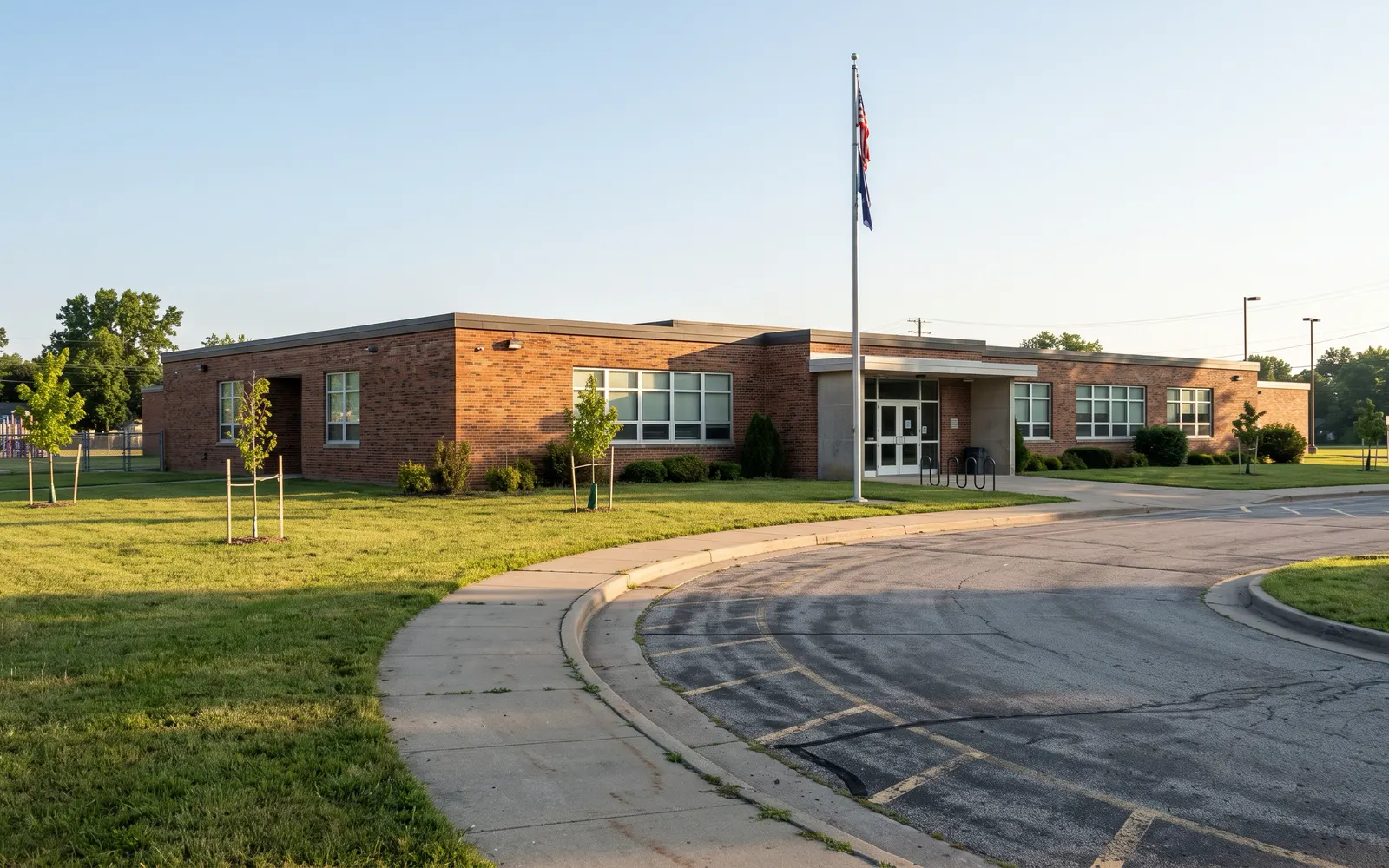
Sleepy Hollow Elementary School. 898 Glen Oak Drive, Sleepy Hollow. Grades K-5, District 300.
Dundee Middle School. West Dundee. Grades 6-8, District 300.
Dundee-Crown High School. Carpentersville. Grades 9-12, District 300.
Commuting from Sleepy Hollow: Metra from Elgin
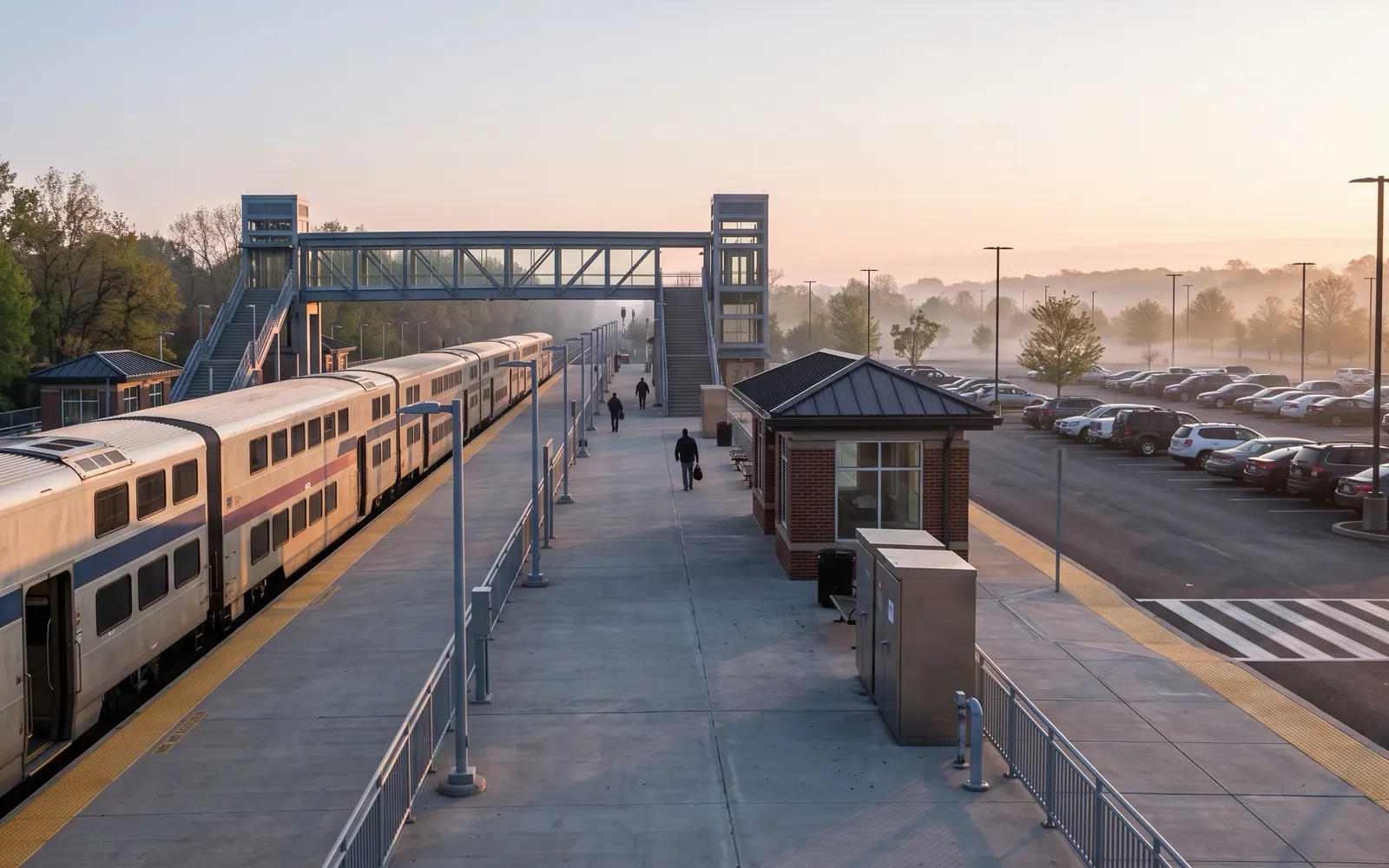
Sleepy Hollow has no train station. Rail commuters drive south into Elgin, the end of Metra's Milwaukee District West line to Union Station. I counted trains in Metra's published schedule data for weekday service the week of September 28, 2026, and measured straight-line distances from the village's center coordinates.
The closest stop is Big Timber, about 2.4 miles away as the crow flies on Elgin's north side. It has 19 inbound and 22 outbound weekday trains, and its fastest inbound trains, at 6:20 and 7:20 a.m., reach Union Station in 67 minutes. Most midday trains take 83 minutes. Big Timber has no weekend service in that schedule.
The downtown Elgin station, about 4.1 miles away, has 22 trains each way on weekdays. Its fastest runs, at 6:26 and 7:26 a.m., take 61 minutes, and it has weekend service: I counted 24 train stops there on Saturday, October 3, and 18 on Sunday, October 4, across both directions. National Street, one stop further in, has the same 59-minute express runs a few minutes later. If you commute downtown every day, the six minutes you save at Elgin on the express is worth the extra drive only if the express fits your schedule.
Driving from Sleepy Hollow: Randall Road, Route 72 and I-90
Most driving commutes from Sleepy Hollow start on Randall Road, which runs along the west edge of the village. According to Wikipedia's Randall Road article, it has a full interchange with I-90, the Jane Addams Tollway, in Elgin, which is the way east toward Schaumburg, O'Hare and the Kennedy. Randall also runs north through Carpentersville and Algonquin toward Crystal Lake and south through Elgin toward St. Charles and Geneva.
Route 72, Higgins Road, runs along the north edge of the village. Heading east it passes through West Dundee and East Dundee, and heading west it goes out past Gilberts. Route 31 runs north and south east of the village along the Fox River, into downtown West Dundee and down into Elgin. Sleepy Hollow Road cuts through the middle of the village between Route 72 and the south side, and most internal trips use it.
Inside the village the roads are narrow, curving and built without curbs, and street parking is limited by ordinance to a few listed stretches. That keeps through traffic low. It also means snowplows push snow into the end of your driveway, which is common enough that the village answers it in its own FAQs. If you are comparing a house near Randall Road with one deep inside the Manor, drive both to the tollway at rush hour before you decide; the difference is usually small, but the Randall Road signals are where the time goes.
Is Sleepy Hollow Walkable?
For errands, no. Walk Score gives Village Hall at 1 Thorobred Lane a walk score of 13 and a bike score of 28, and it gives Sleepy Hollow Elementary a 14. Walk Score's village page counts about 28 restaurants, bars and coffee shops in the area but says the average resident can walk to none of them within five minutes. That is the direct result of a village with no commercial district.
For walking for its own sake, it is a different story. The roads have no sidewalks, but they are quiet, shaded and curving, and a loop around the lakes makes an easy walk. Sabatino Park and the Sleepy Hollow Center are inside the village, and Jelke Creek Bird Sanctuary on Boncosky Road has gravel trails shared by walkers, cyclists and riders. For a paved trail, the Fox River Trail runs through downtown West Dundee a short drive east; my West Dundee guide covers that riverfront.
If walking to dinner or a train matters to you, Sleepy Hollow is the wrong village, and I would rather tell you that before you fall for a house.
Shopping, Groceries and Dining Near Sleepy Hollow
Everything you buy, you buy outside the village. The village history says the only commercial businesses in the early years were a motel and a small grocery, and today there is no business district at all. Randall Road, along the west edge, is where daily errands happen. According to Wikipedia, the road is lined with retailers for nearly its whole length, with the biggest clusters in South Elgin and Elgin to the south and in Algonquin, Lake in the Hills and Carpentersville to the north, including Algonquin Commons and the Algonquin Galleria.
That is changing slightly at the edges. In September 2026 the Daily Herald reported that Rosati's Pizza plans a new location in Sleepy Hollow among 11 openings over 90 days. The address was not given; the village's small commercial frontage is along Route 72.
For restaurants, the two Dundee downtowns on the Fox River are the closest places to eat out, a short drive east, and Randall Road has the chains. My guides to West Dundee and East Dundee cover those downtowns in detail. Trash is simple: according to the village's resident page, Groot collects trash and recycling from every single-family home on Thursdays, with unlimited yard waste from April 1 through November 30 and one bulk item a week.
Lakes, Parks and Trails in Sleepy Hollow
The lakes are the village's signature. Lake Paula, Lake Sharon, Lake Ichabod, Lake Legend and Lake Jacqueline were all dug from existing springs in the Falese years, and Wikipedia says the village now owns and maintains several of them. Lake Sharon hosted the 2026 Fourth of July fishing derby. If you are looking at a house on or near a lake, ask who owns the shoreline and the water on that parcel before you assume access.
Larry Sabatino Memorial Park, at 145 Thorobred Lane in the center of the village, is maintained by the village with volunteers and the Service Club, according to the village's parks page. The village funded a new playground there in 2023, and it is the site of nearly every village event. The Dundee Township Park District runs the Sleepy Hollow Center at 875 Winmoor Drive, with basketball, tennis and sand volleyball courts, a playground and a preschool.
One change the older guides miss: the pool is gone. The Dundee Township Park District board voted on October 18, 2023 to permanently close Sleepy Hollow Pool after more than 60 years, citing a crumbling shell that lost 3.8 million gallons of water in 2023. The district has since studied new aquatic facilities at two sites, the Randall Oaks Recreation Center campus and Sleepy Hollow Park, and its aquatics study page says the board is still evaluating next steps.
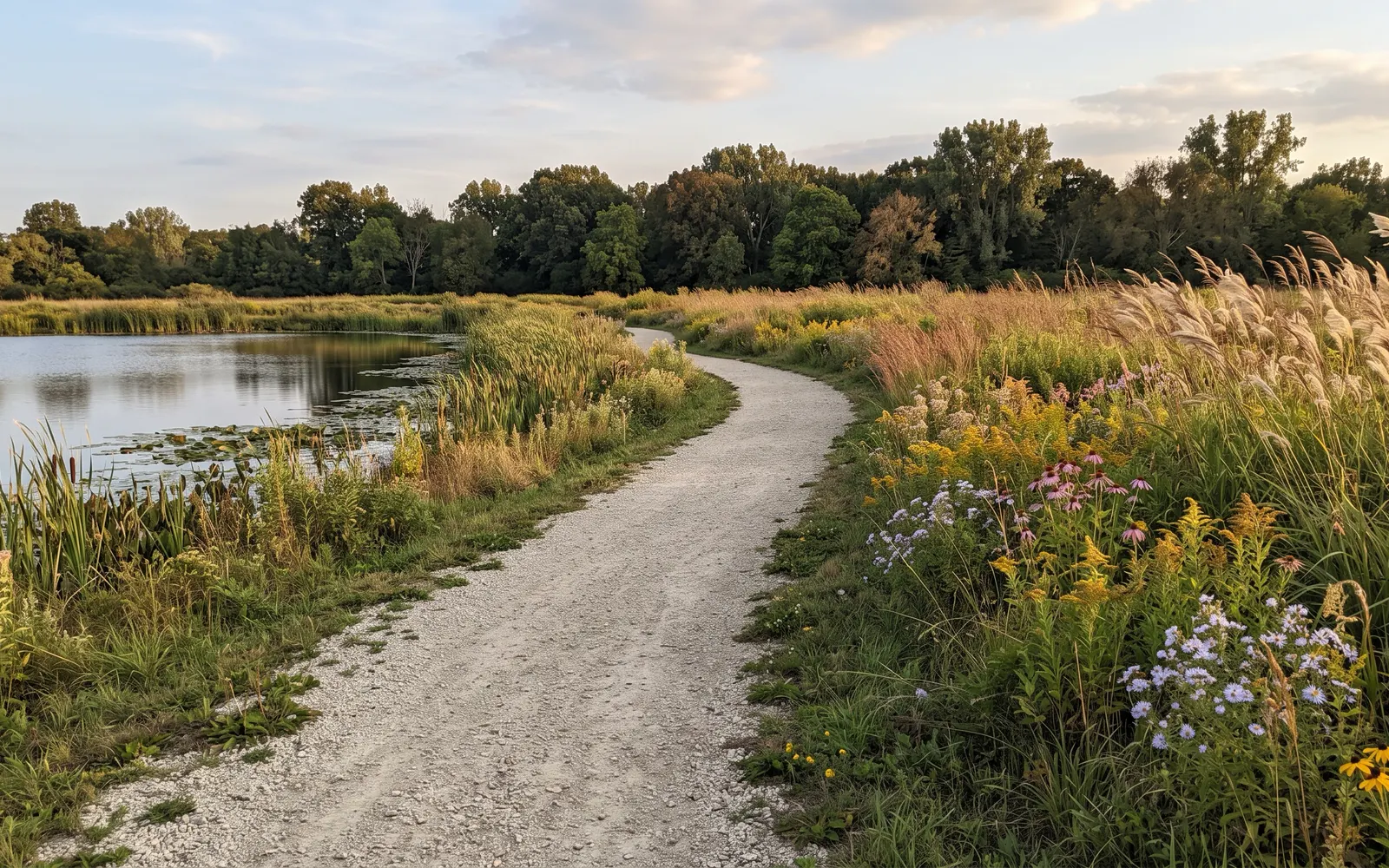
Just outside the village line, Jelke Creek Bird Sanctuary is 244 acres of former quarry land that Dundee Township bought in 2000 and 2001 for $4,128,709 with state Open Lands Trust grants. The parking lot is off Boncosky Road in Sleepy Hollow. Its gravel trails are shared by walkers, cyclists and horseback riders, more than 100 acres have been seeded with native plants, and fishing is allowed in the two deepest ponds. A few minutes away on Randall Road, the park district also runs Randall Oaks Zoo at 1180 N. Randall Road, Randall Oaks Golf Club at 4101 Binnie Road and the Randall Oaks Recreation Center at 500 N. Randall Road, according to its facility page.
Libraries Near Sleepy Hollow
Sleepy Hollow has no library building of its own. The Fox River Valley Public Library District appears on the county's 2024 rate listing, and the village's resident page points to its two branches: the Randall Oaks branch at 500 N. Randall Road in West Dundee, a short drive north, and the Dundee Library in East Dundee. Library districts do not always follow village lines, so check the library district on the tax bill for the house you are buying; that tells you which card you get.
Hospitals and Fire Service Near Sleepy Hollow
The closest full-service hospital is Advocate Sherman Hospital at 1425 N. Randall Road in Elgin, a short drive south down Randall. According to Wikipedia, the Randall Road campus opened on December 15, 2009, and it is a Level II trauma center.
Fire and ambulance service come from the Rutland Dundee Fire District. According to the village's resident page, the district has two stations, one inside the village limits and the other in Gilberts, about two miles west. Ask your insurance agent how the address is rated for fire protection before you bind a policy.
Fireworks, the Headless Horseman and Sleepy Hollow's Yearly Traditions
The Sleepy Hollow Service Club runs the village's calendar, and it leans into the name. According to the Service Club's event page, the club works with the village but does not receive village funding for its events, which run on donations, raffles and concessions.
The biggest weekend is the Fourth of July. In 2026 the fireworks were on July 2 at Sabatino Park, starting around 9:30 p.m., with a $20 donation asked to offset the cost. The July 4 schedule started with a one-mile fun run at 8 a.m. from Sleepy Hollow Elementary, then the Bob Zdenek Memorial Fishing Derby at Lake Sharon, a car show from 10 a.m. to 2 p.m. benefiting Special Olympics Illinois, the Bill Ritchie Memorial Parade around Sabatino Park at 11:30 a.m., live music, a pie-eating contest and a raffle.
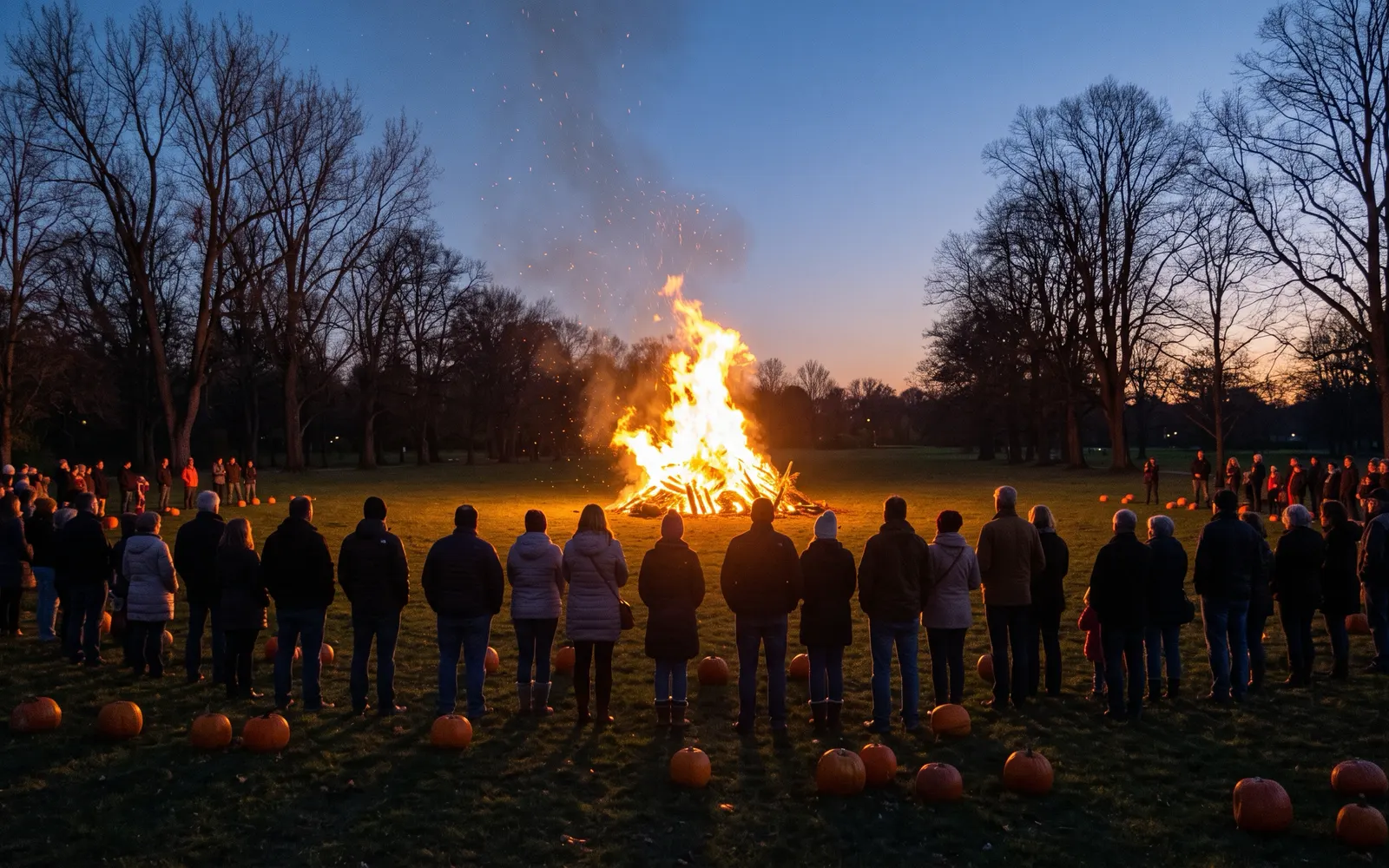
Fall is the other big one. Halloween in the Hollow is set for October 24, 2026 at Sabatino Park, with a chili contest at 3 p.m., a costume parade, pumpkin decorating, hayrides and, at twilight, a bonfire followed by the ride of the Headless Horseman. It is also the rain date for the July fireworks. The calendar closes with Holiday in the Hollow on December 5, 2026, when the flagpole and trees at the park are lit, and opens each spring with an egg hunt at Sabatino Park, held April 4 in 2026.
If you are touring houses in October, go to Halloween in the Hollow. It tells you more about the village than any listing will.
What's Being Built In and Around Sleepy Hollow
Inside Sleepy Hollow, very little gets built, and what does get proposed draws a crowd. The best example is a 4.5-acre parcel at the southeast corner of Route 72 and Tartans Glen Drive. According to the Daily Herald on April 18, 2025, an earlier three-building self-storage plan there won village approval, but that developer let the approval lapse. Then StoreMore 365 proposed eight buildings on the same site. Residents collected more than 400 signatures against it, arguing it did not fit a village where sheds are not allowed and that it came too close to homes. After the Planning and Zoning Commission voted no, the developer withdrew the application before the board vote.
It has come back. In a June 27, 2026 letter to residents, Village President Courtney Boe wrote that the applicants for 1601 West Main Street would ask at a July 13, 2026 public hearing for a text amendment adding self-service storage as a special use in the village, and would bring a specific site plan to a later hearing only if that passed. The letter says a Carpentersville staff report reviewing the proposal recommended denial. I have not seen a final decision posted, so ask the village for the current status if you are looking at a house near Route 72.
The bigger changes are next door in West Dundee, and they touch Sleepy Hollow's edges. According to West Dundee's residential development page, Pulte's Tartans Creek will put 84 single-family homes on about 34 acres at the northeast corner of Route 72 and Sleepy Hollow Road, with site work started in July 2026, and Lennar's Fox Haven will put 89 single-family homes and 94 duplex ranches on about 72 acres near the southeast corner of Randall Road and Route 72, where a formal groundbreaking happened in July 2026. My West Dundee guide covers both, and the former Spring Hill Mall site a little further north.
For buyers, that means more traffic on Route 72 and Randall Road over the next few years and more new houses competing with resales nearby. For Sleepy Hollow itself, it means the village stays what it is: a place where the new-construction choice is a teardown or one of the few remaining lots, and where the fight is usually over what goes on the commercial edge.
I don't label any town or neighborhood as safe or unsafe.
Flood Risk and Drainage in Sleepy Hollow
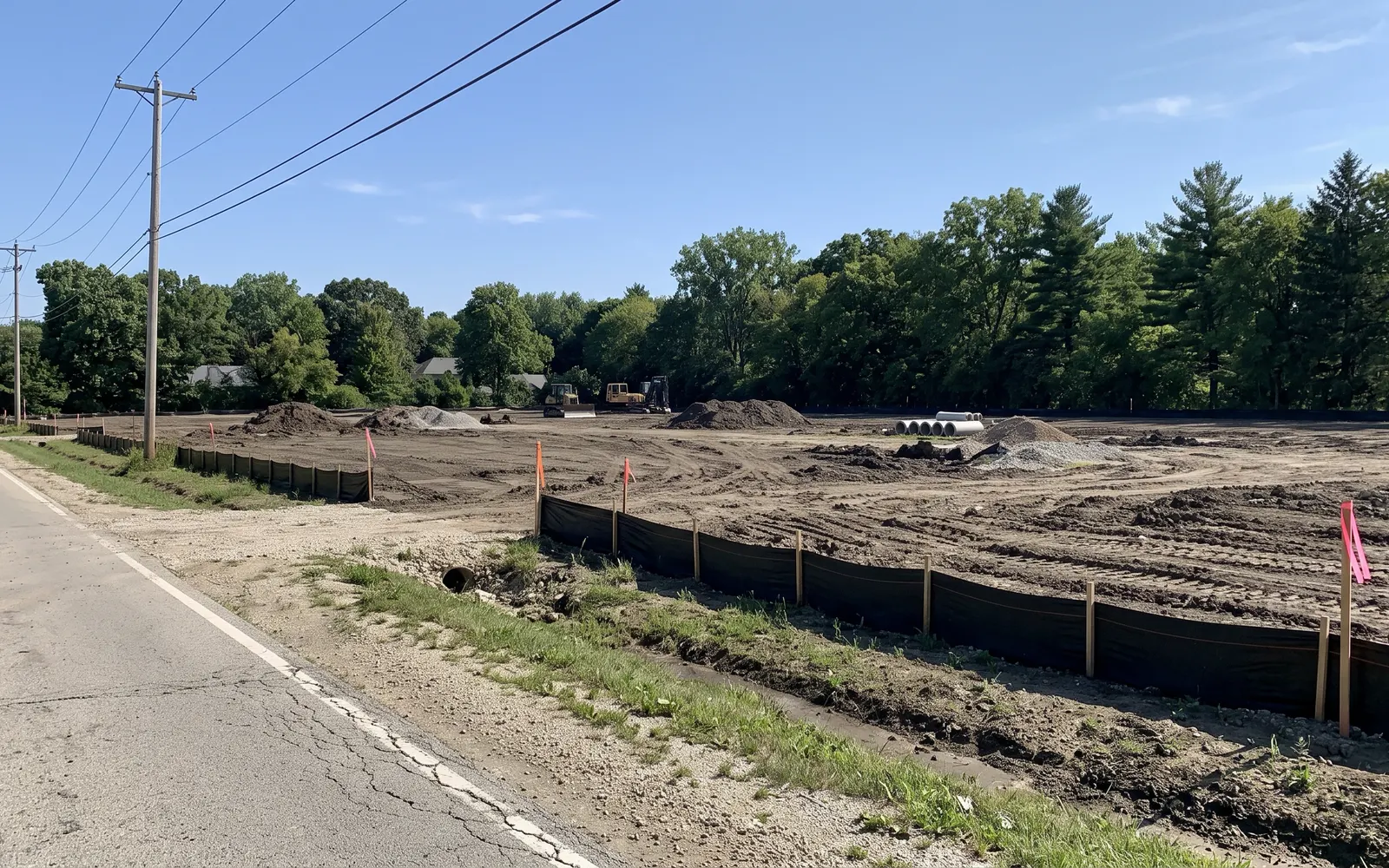
Flooding in Sleepy Hollow is a house-by-house question, and it is mostly about groundwater and drainage rather than the river. Redfin's climate data, which uses First Street's model, rates the village's overall flood risk as minor, with about 5% of properties at risk of severe flooding over the next 30 years.
Three local details are worth knowing. The village says the east side is on sewer precisely because its water table is too high for septic, so ask about basement or crawl space water on any house there. The curb-free roads depend on every owner's swale and culvert working, and the village treats unpermitted regrading as one of its most common violations. And the village's Planning and Zoning page posts a stormwater drainage analysis for the Deer Creek subdivision; if you are buying there, read it.
Two checks before you write an offer. Look the address up on the FEMA flood map, because a mapped flood zone can mean required flood insurance on a mortgage. And ask the seller directly about water in the basement and standing water in the yard after heavy rain. In my experience the answer is often "once," and the follow-up question about what they did about it is the one that matters.
Frequently Asked Questions
How much does a house cost in Sleepy Hollow, IL?+
Redfin reported a median sale price of $524,653 for the three months ending August 2026, up 1.2%, and Zillow's home value index was $484,409 for August 2026, up 4.2% from a year earlier. Prices range widely, from 1950s ranches to custom homes in The Bluffs.
What are property taxes in Sleepy Hollow, IL?+
The median effective rate is about 2.47%, with a median bill of $8,588 (Ownwell, April 2026). District 300 takes roughly 62% of the bill. A home's bill usually rises after a sale once it is reassessed, so budget off the rate rather than the seller's current bill.
Are homes in Sleepy Hollow, IL on septic or sewer?+
Most are on septic, according to the village, and the owner maintains the system. An area on the east side with a high water table is connected to sewers. The village sells water to most homes and buys it from neighboring communities. Get a septic inspection on any house with a system.
Can you put up a fence or shed in Sleepy Hollow, IL?+
Not a perimeter fence or a shed. Village code bans perimeter fences and detached outbuildings, except those built before January 16, 1978, which are grandfathered but cannot be replaced. Pool, patio, deck and dog-run fences are allowed with a permit.
What school district is Sleepy Hollow, IL in?+
Community Unit School District 300. Students generally attend Sleepy Hollow Elementary, Dundee Middle School and Dundee-Crown High School, but assignment is by address, so confirm each house with the district.
Does Sleepy Hollow, IL have a Metra station?+
No. The closest stations are Big Timber in Elgin, about 2.4 miles away, where the fastest weekday trains reach Union Station in 67 minutes, and downtown Elgin, about 4.1 miles away, where the fastest take 61 minutes.
What neighborhoods are in Sleepy Hollow, IL?+
The five named subdivisions are Sleepy Hollow Manor, the original 1950s-60s development, plus Surrey Ridge, Saddle Club Estates, Deer Creek and The Bluffs.
What county is Sleepy Hollow, IL in?+
Kane County, in Dundee Township. It shares the 60118 ZIP code with West Dundee and East Dundee, and it is not related to Sleepy Hollow, New York.
Eshu Chikoti has extensive access to off-market listings throughout Sleepy Hollow and the rest of Kane County — homes that never make it to the public listing sites. That matters right now: in a seller's market like this one, well-priced homes routinely go under contract within days, and buyers relying only on public listings are competing for whatever is left over. Working with someone plugged into off-market inventory means seeing homes before the crowd does.
Eshu Chikoti · 847-691-4282 ·
Get new Sleepy Hollow listings by email
When a home comes on the market in Sleepy Hollow, I'll email it to you.
Just your email. Unsubscribe any time by replying.
Thinking About Sleepy Hollow?
Whether you're buying, selling, or just curious what's on the market, I can walk you through Sleepy Hollow street by street.