Lake in the Hills, IL
Lake in the Hills, IL is a McHenry County village of about 28,800 people built around Woods Creek Lake and a 1990s building boom west of Randall Road, with resident-only beaches and prices below the inner suburbs.
Living in Lake in the Hills, IL means a median sale price near $370,000 this summer, property tax around 2.4% of value, resident-only beaches on Woods Creek Lake, and four school districts that split the village street by street. The trade-off is a car-dependent layout and a Metra station in the next town. Here is how it breaks down.
Written by Eshu Chikoti · 847-691-4282 ·
How Lake in the Hills, IL Got Here: A Short History
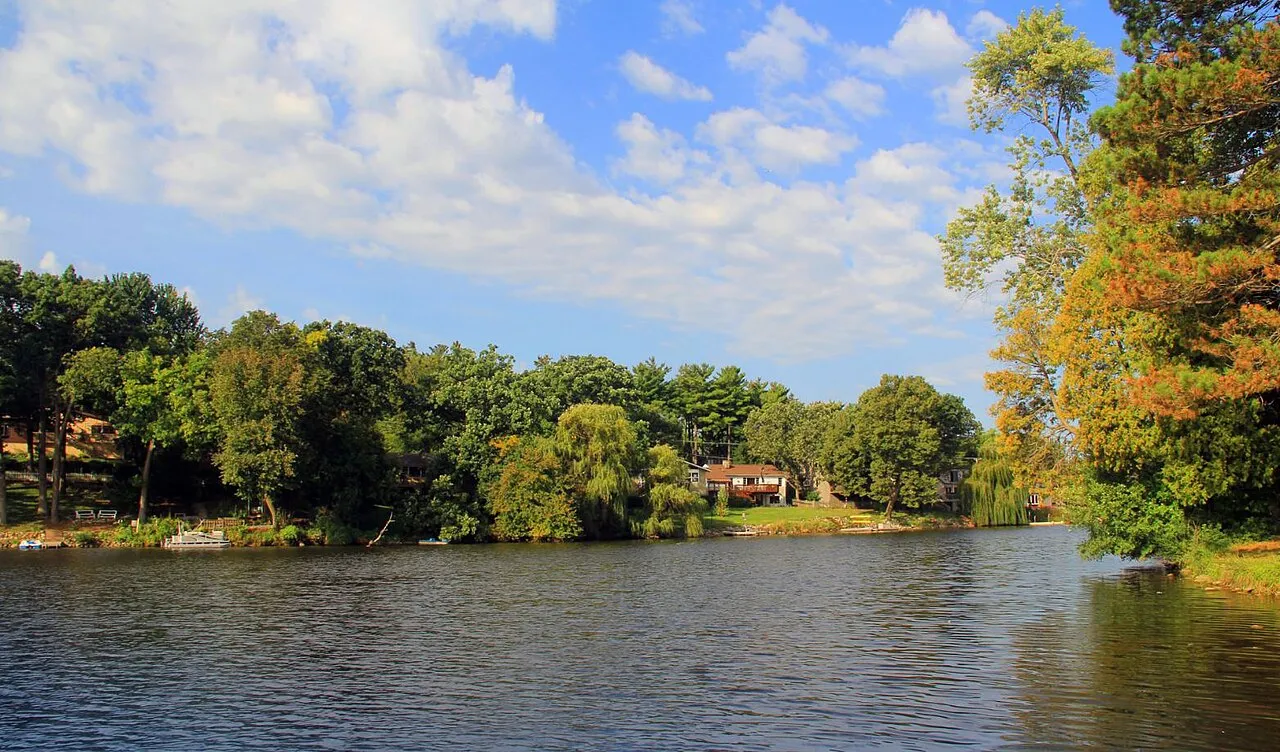
Lake in the Hills started as one man's estate. According to the village's history page, Federal Judge Walter J. La Buy began buying land around what is now Woods Creek Lake in 1923. By 1926 he owned 472 acres. He had the lake dammed and dug out, partly with mules, and built five stucco houses for his children along the south side of the lake on Indian Trail. One of them still stands in its original form. The other four are still there too, altered and enlarged over the decades.
The houses were summer homes, and so was most of early Lake in the Hills. In the 1940s Raymond Platt, who was connected to Dearborn Builders of Chicago, bought land from La Buy, moved here permanently by 1947 and formed the Lake in the Hills Development Corporation. The summer cottages slowly turned into year-round houses. In September 1950 owners formed a property owners association to handle snow removal and road maintenance, and that group became the village government when Lake in the Hills incorporated on November 29, 1952. Platt donated his sales office at 55 Hilltop to serve as the first village hall.
For the next few decades the village stayed small and leaned on Algonquin and Crystal Lake for shopping and services. Wikipedia's village history puts the first shopping center at Algonquin Road and Oakleaf Road in 1987. Then the village annexed large tracts west of Randall Road, all the way to Illinois Route 47, in the late 1980s and early 1990s. In 1995 alone it issued more than 1,000 residential building permits. The village's own count is that the population grew from just under 6,000 in 1990 to about 29,000 today.
That history is still the best way to read a Lake in the Hills listing. A house east of Randall Road near the lake is usually older, on a lot shaped by the hills, and different from its neighbors. A house west of Randall is usually from the 1990s or 2000s and looks a lot like the houses around it. Both are Lake in the Hills, and they are two different markets.
Lake in the Hills at a Glance
Lake in the Hills sits in the southeast corner of McHenry County, about 45 miles northwest of the Loop. It borders Crystal Lake and Lakewood to the north, Cary to the east, Algonquin to the south and southeast, and Huntley to the west. The whole village is in McHenry County. Algonquin and Huntley next door both cross into Kane County, which is why buyers sometimes assume Lake in the Hills does too. It does not, so there is one county assessor and one county treasurer to deal with.
The village covers about 10.2 square miles of land, split between Algonquin Township and Grafton Township. The 2020-2024 Census ACS counts 28,800 residents and 9,952 housing units. Of the occupied homes, 84.4% are owner-occupied. About 72% of all housing units are single-family detached houses and about 19% are attached homes, mostly townhomes, with very little apartment housing. The median home was built in 1995.
The layout is simple once you know two roads. Randall Road runs north to south through the middle of the village and divides the old section from the new. Algonquin Road (Route 62) is the main east-west road across the south side. Miller Road is the other east-west road that matters, because it runs past the Fen, Boulder Ridge and the Randall Road construction zone. Almost every neighborhood description you will hear uses "east of Randall" or "west of Randall" as its first sentence.
One more thing that surprises people: Lake in the Hills is served by an unusual number of separate districts. Four school districts, three fire protection districts, three library districts, two townships and a sanitary district all overlap inside the village. That patchwork affects your tax bill, your schools and even which library card you get, so it comes up again in almost every section below.
Prices sit well below the inner suburbs, and the tax rate is a little under the McHenry County median.
There is no Metra station in the village, the best train is about an hour from Pingree Road, and the Walk Score is 20. The Randall Road construction will also be part of daily life through 2027.
Lake in the Hills Neighborhoods, Pocket by Pocket
Lake in the Hills has no official neighborhoods, but it splits cleanly in two. East of Randall Road is what locals call the Old Section: the lake, the hills, and the streets that grew out of the summer colony. West of Randall is the growth of the last 35 years, subdivision after subdivision out to Route 47. Inside each half, the named subdivisions are what you will see on listings.
Walkability varies more than you would expect for a town this car-oriented. Walk Score rates the village 20 overall, but its neighborhood scores run from 59 in Wood Creek Village, next to the Randall Road shopping, down to 6 in Spring Lake Farms. That spread mostly tells you how close a street is to Randall Road retail.
Below are the pockets you will see named. Boundaries are informal and some of the names come from a single source, so treat them as a starting point. If you want to know which pocket a specific address falls in, which school district it feeds and what nearby houses have sold for lately, that is a conversation I am happy to have here.
The first question I get from buyers comparing two Lake in the Hills houses is almost never about the kitchen. It is about schools, because two houses a mile apart can feed different districts. Location inside the village moves the answer more than finishes do.
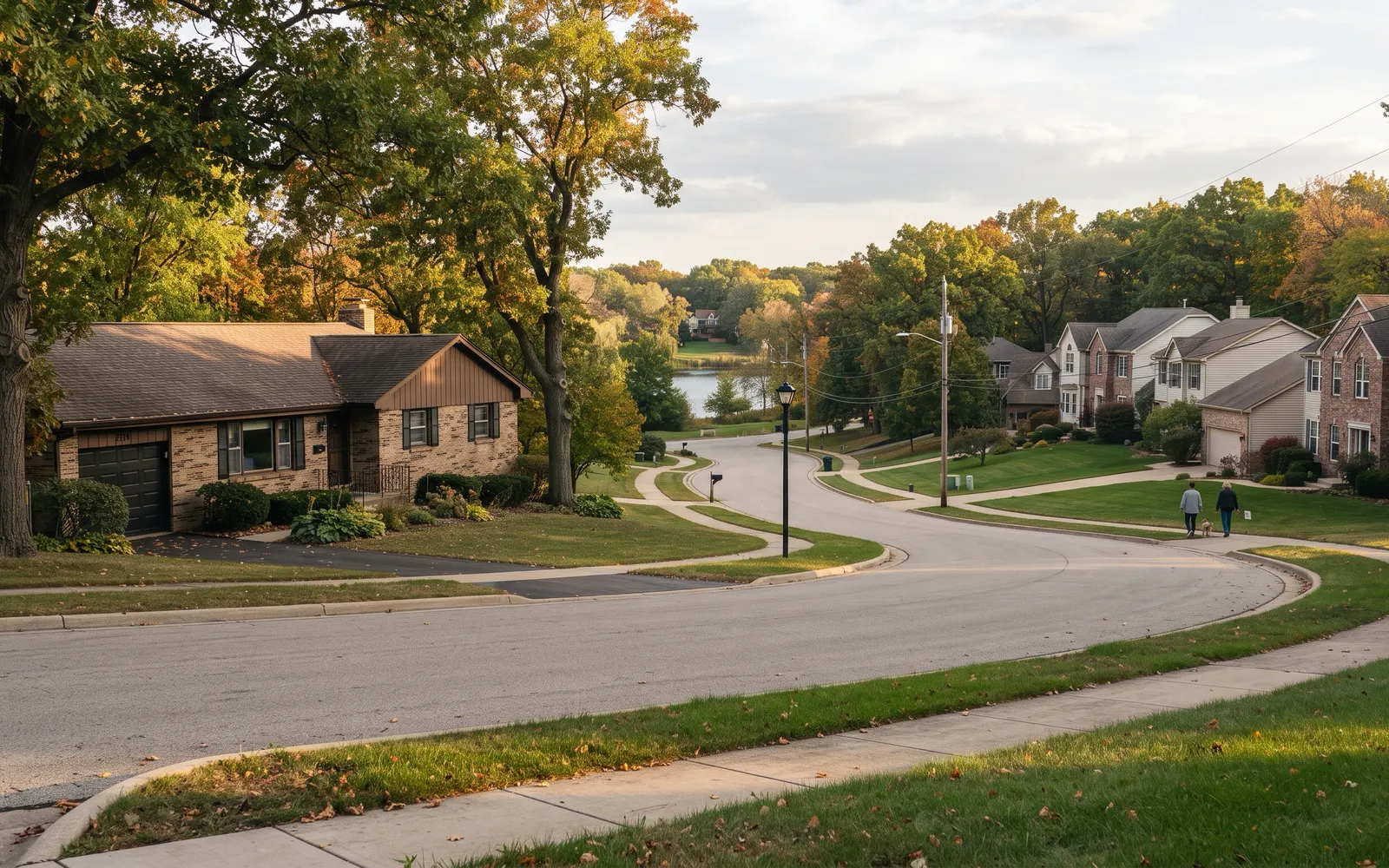
The Old Section. East of Randall Road around Woods Creek Lake. The original summer-colony streets, often described as four smaller areas (the Original, Indian, Tree and Presidents sections, named for their street names). Older, varied houses on hilly, irregular lots, closest to the two resident beaches.
Lake in the Hills Estates. A large area Walk Score maps in the older part of the village, with a Walk Score of 35. Expect a wide range of ages and styles; ask for the build year on every house.
Boulder Ridge. A gated community north of Algonquin Road, south of Miller Road and east of Frank Road, built around the village's only 18-hole course at Boulder Ridge Country Club. Walk Score 11. The Lakes of Boulder Ridge, on the west side of Frank Road, adds duplex homes and a 9-hole course.
Big Sky and Harvest Gate. Just west of Randall Road and south of Miller Road, divided by Woods Creek. Among the first subdivisions of the growth era, built by Town and Country Homes. Village Hall and Lincoln Prairie Elementary are here. Walk Score 25 for Big Sky.
Spring Lake Farms. South of Miller Road and west of Frank Road, built around the early 1990s by Sundance Homes and Americana Homes, with single-family and attached homes. Walk Score 6.
Meadowbrook. The largest pocket Walk Score maps, with a score of 10. Mostly single-family subdivisions from the growth era.
Wood Creek Village and Northstar. The most walkable pockets, with Walk Scores of 59 and 40, closest to the Randall Road stores and restaurants.
Bellchase. The southwest corner of the village, served by District 158's Square Barn Road campus schools in Algonquin.
Prairie Point. On the east side along Cunat Court, west of Pyott Road, with three-story condominium buildings and a neighborhood recreation center and pool.
Other names on listings. Greenshire, Woodland Hills, Heron Bay, Hunters West, Southwind, Provence, Crystal Creek and Cedar Ridge. Ask for the build year, the HOA and the school assignment on each; they vary.
What Lake in the Hills Homes Look Like, by Era
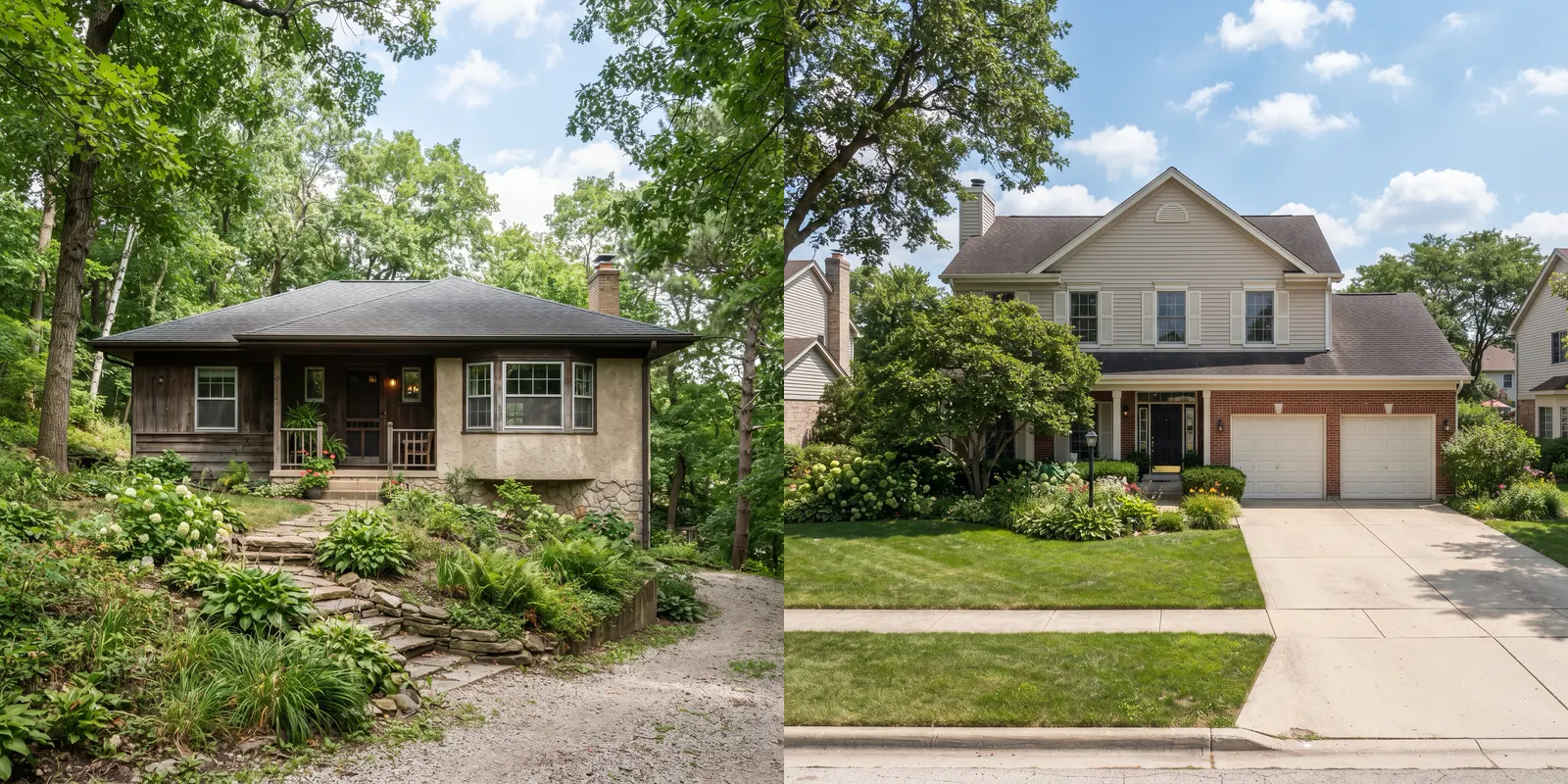
Lake in the Hills has two housing stories, and they rarely overlap on the same street. The Old Section east of Randall grew from summer cottages. The oldest houses are the 1920s European cottage style stucco homes La Buy built on Indian Trail, and around them are decades of cottages that became year-round houses, mid-century ranches, raised ranches, and newer houses built where an older one came down. Lots follow the hills and the lake, so they come in odd shapes and grades. No two blocks look quite alike.
West of Randall is where most of the village's houses are. The Census ACS puts the median year built at 1995, which matches the building boom the village describes. These subdivisions are two-story colonials, split-levels and ranches with attached garages, built in phases by production builders, plus townhome and duplex communities. Inside a subdivision the floor plans repeat, which makes comparing prices easier than in the Old Section.
The ACS median home value is $321,900 and the median gross rent is $1,689. Rentals are a small part of the market. Most of what rents here is a townhome or a single-family house rather than an apartment.
Age brings its own inspection list. In a 1990s house, the things I expect to talk about are the original roof, the original furnace and water heater if they were never replaced, windows that are due, and the sump pump. In an Old Section house, add older electrical, additions built over the years with or without permits, and grading on a hilly lot. None of those should kill a deal. All of them belong in the price. My home inspection checklist is a good place to start.
HOAs are the other variable. Many of the growth-era subdivisions have an association, and townhome communities always do. Boulder Ridge is gated. The Old Section mostly has no HOA at all. Ask for the dues, what they cover and the rules on fences, sheds and rentals before you fall for a house.
The Lake in the Hills Housing Market in 2026
Lake in the Hills homes sell at or above asking more often than not. In the three months ending August 2026, Redfin reported a median sale price of $369,705, up 4.9% from a year earlier. Homes sold in a median of 41 days, four days faster than last year, at 101.0% of list price, and 52.8% sold over asking. Redfin counted 115 sales, up from 92 a year earlier. It gives Lake in the Hills a Compete Score of 76 out of 100, which it calls very competitive, with an average of five offers.
This time the two big data sources agree. Zillow's home value index for August 2026 is $380,630, up 4.0% from $366,160 in August 2025 and from $349,347 two years ago. Redfin's price per square foot, $201, was up 10.1%. When the median sale, the value index and the price per square foot all move the same way, that is a real price increase and not a change in what happened to sell.
What that means in practice: a well-priced house still draws multiple offers here, and 16.7% of listings took a price cut this summer, down from a year earlier. Sellers who price right on day one tend to do best. Buyers should expect to compete for the most common product, a clean 1990s three- or four-bedroom west of Randall.
The village median also hides a wide spread. A townhome off Randall Road, a Spring Lake Farms single-family and a Boulder Ridge house sit in very different price bands. The median tells you about the town and very little about a specific house. If you are still working out the monthly number, my guide to how much house you can afford in 2026 walks through it.
Lake in the Hills Property Taxes and the Real Cost of Owning
Property tax is the number that changes the monthly payment most in Lake in the Hills, and it never shows up in the list price. Ownwell's data, updated April 2026, puts the median effective rate at 2.36% and the median annual bill at $7,399. The McHenry County median rate is 2.42% on the same page, so the village sits slightly below the county rate. The bill is higher than the county median because home values here are higher.
Here is what that looks like on a real purchase. At 2.36%, a house bought at this summer's $369,705 median would eventually carry about $8,700 a year in tax, roughly $725 a month on top of the mortgage. Current bills on the same house may be lower because assessments trail the market, but they catch up. The expectation I most often have to reset is buyers who budget off the seller's current bill.
The rate itself is not one number. Lake in the Hills spans two townships (Algonquin and Grafton), four school districts, three fire protection districts and three library districts, according to the village's taxing districts page. Each combination is its own tax code with its own rate. Two houses at the same price on opposite sides of Randall Road can carry noticeably different bills. Before you write an offer, pull the actual tax bill for the parcel from the McHenry County Treasurer and ask me to compare it with a house in the other district.
If you already own here and think your assessment is high, appeals in McHenry County start with your township assessor and the county Board of Review, and the filing window opens after the township's assessments are published each year. This is general information, not tax advice. Your actual bill depends on your parcel, your exemptions and the assessor.
Lake in the Hills Schools: Four Districts, Street by Street
This is the section to read twice. Lake in the Hills is served by four school districts, and which one a house belongs to depends on where it sits, not on the village name. The village's own school district page tells residents to call the district office to confirm which school a child would attend.
Roughly, Wikipedia's village profile describes it this way. Huntley Community School District 158 covers most of the western half, the densest part of the village. Community Unit School District 300 covers the older eastern sections and the middle near Randall Road. Crystal Lake's elementary District 47 and high school District 155 cover a smaller central strip along Miller Road. Treat that as orientation only and confirm the address with the district.
The three high schools that result are all outside the village.
Before you write an offer, check the address with the district office, and ask me for the boundary map if you want it done for a specific house.
District 300 elementary and middle. Lake in the Hills Elementary and Lincoln Prairie Elementary, then Westfield Community School in Algonquin.
District 158 elementary and middle. Chesak and Martin Elementary on the Reed Road campus, Conley and Mackeben Elementary on the Square Barn Road campus in Algonquin, then Marlowe Middle School or Heineman Middle School.
District 47 elementary and middle. Glacier Ridge, Indian Prairie, Woods Creek and Canterbury Elementary, then Bernotas or Lundahl Middle School in Crystal Lake.
Huntley High School. District 158, in Huntley.
Harry D. Jacobs High School. District 300, in Algonquin.
Crystal Lake South High School. District 155, in Crystal Lake.
Commuting from Lake in the Hills: Metra from Pingree Road
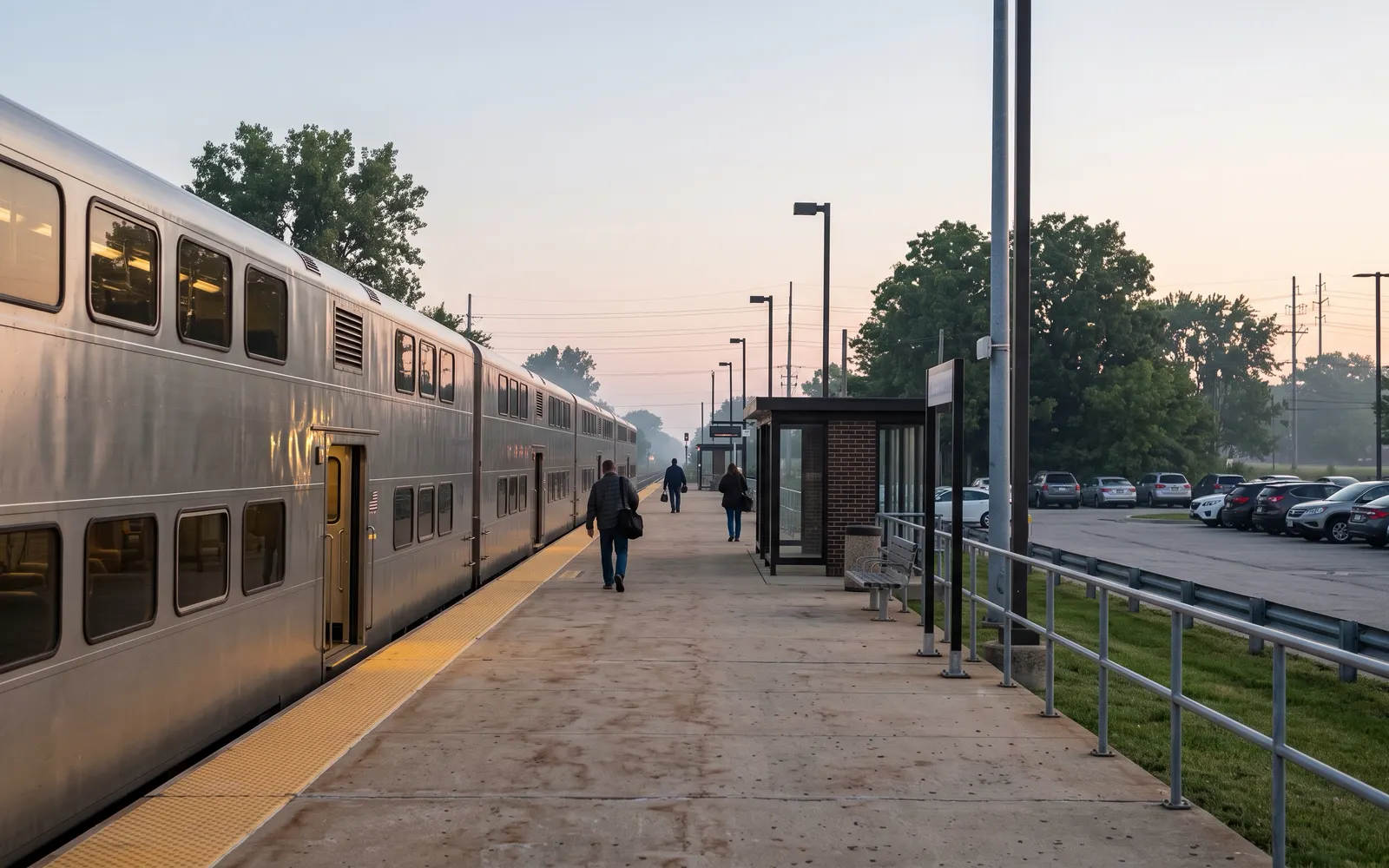
Lake in the Hills has no Metra station of its own. Most train commuters drive north to Pingree Road in Crystal Lake, the closer of two stations on the Union Pacific Northwest line, or to the downtown Crystal Lake station a few minutes further. Both are a one-seat ride to Ogilvie Transportation Center in the Loop.
Based on Metra's published schedule data for the weekday timetable effective September 28, 2026, 30 inbound and 28 outbound weekday trains stop at Pingree Road. On Saturdays there are 15 each way. On Sundays there are 9 inbound and 11 outbound.
Train choice matters a lot at this distance. The fastest morning expresses make the run from Pingree Road in about 64 minutes. The 5:58, 6:28, 6:58 and 7:28 a.m. trains all do it in 64. Local and midday trains take about 82 to 85 minutes. An hour each way is a real commute. The buyers I see happiest with it either work a hybrid schedule or treat the train as work time. If you will be in the Loop five days a week, ride it once at your actual hours before you buy.
For local trips, Pace Route 550 runs along Randall Road and links the village with Crystal Lake and Elgin, and both townships run on-demand rides for residents who qualify. Neither replaces a car for daily life here.
Driving from Lake in the Hills: Randall Road and I-90
Most people in Lake in the Hills drive to work, and Randall Road is how they do it. Randall runs south to I-90, the Jane Addams Tollway, and Route 47 on the west edge of the village leads to the I-90 interchange in Huntley. From there it is east toward O'Hare and Schaumburg or west toward Rockford. Algonquin Road carries most east-west traffic toward Barrington and the Route 14 corridor.
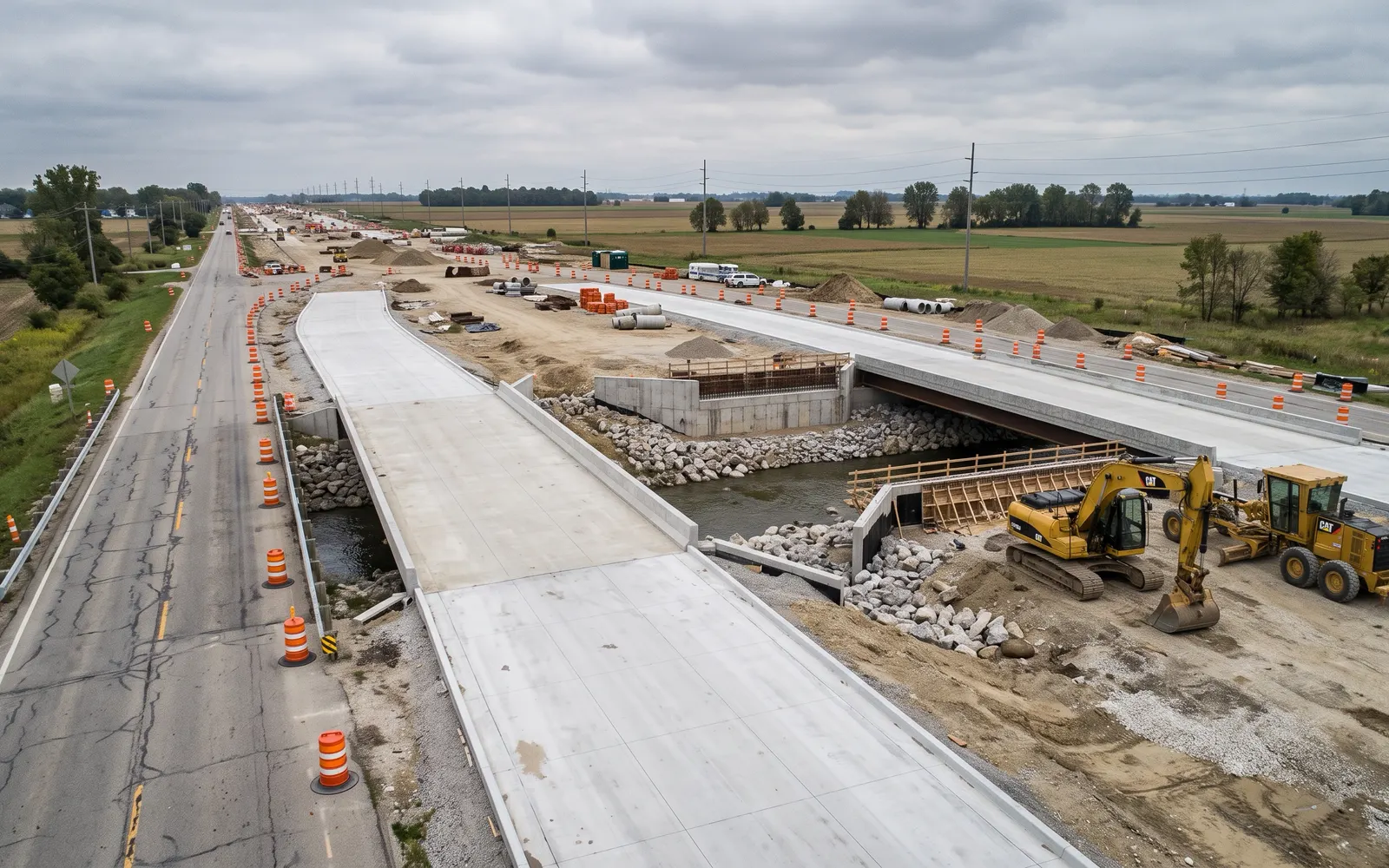
Randall Road itself is being rebuilt through the middle of the village. The McHenry County Division of Transportation's Randall Road project site describes Stage 2 as widening Randall to three lanes each way from Polaris Drive and Acorn Lane north toward Rakow Road in Crystal Lake, with a new signal at Alexandra Boulevard, a replaced bridge over Woods Creek, a new bridge on Miller Road, a multi-use path on the east side, a sidewalk on the west side and a noise wall on the east side between Woods Creek, Miller Road and Roosevelt Street. Construction began in March 2025 and runs through 2027. The low bid was about $63.4 million, funded 80% federal and 20% state motor fuel tax money, and the county says it will not raise property taxes.
As of September 17, 2026, the county puts the project at about 41% complete. The west leg of Miller Road at Randall closed on August 3, 2026 for about ten weeks, per the village's notice, with Algonquin and Ackman roads as the detours. If you are looking at a house near Randall and Miller, drive it at rush hour now and picture the finished road, which will be wider and busier but less jammed.
Is Lake in the Hills Walkable?
Mostly not. Walk Score rates the village 20 for walking, which it calls car-dependent, and notes that almost all errands require a car. The Bike Score is better at 48, because the village has more than five miles of off-street bike paths through its parks.
The exceptions are the pockets closest to the Randall Road stores. Wood Creek Village scores 59 and Northstar 40, compared with 10 in Meadowbrook and 6 in Spring Lake Farms. If being able to walk to coffee or dinner matters to you, it narrows your search to a handful of streets near Randall.
The Randall Road rebuild will add a multi-use path along the east side and a sidewalk along the west side of Randall, which should make those pockets a little more walkable once it is done in 2027.
Woods Creek Lake, the Beaches and Boat Permits
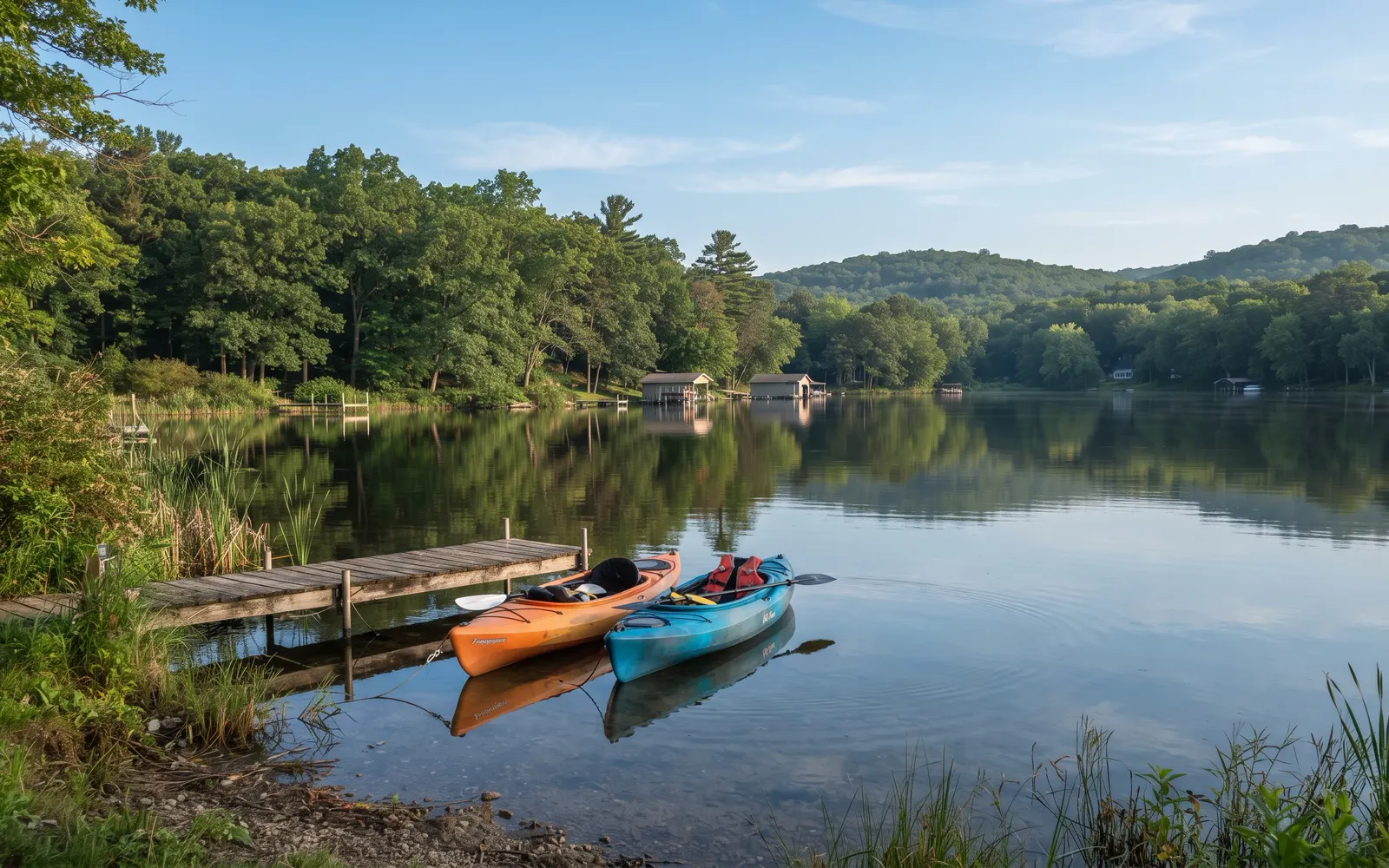
The lake is what gives the village its name, and access to it works differently than most buyers expect. Woods Creek Lake has two sand beaches, Butch Hagele Beach at 71 Hilltop Drive and Indian Trail Beach at 228 Indian Trail. According to the village's beach page, they are open from Memorial Day to Labor Day, and access is limited to Lake in the Hills residents and their guests. They are not lifeguarded. Village staff are on site from 11 a.m. to 7:30 p.m. in season, and the beaches close when it is under 70 degrees or when water testing flags bacteria.
Boating is quiet by design. The village's lake use and boat permit page bans non-electric motors, so it is kayaks, canoes, sailboats and electric trolling motors only. A resident annual boat permit is $10 per boat. Residents can rent one of 14 boat storage slips at Nockels Park or 67 at Turtle Island for $20 a season. Fishing needs a village permit too, $40 a year per resident household.
For a buyer, this means you do not need a lakefront house to use the lake. Every resident gets the beaches and the permits. Lakefront and lake-view houses in the Old Section still carry a premium for the view and the walk to the water, and I tell buyers to judge that premium against how often they will really be on the lake.
Shopping, Groceries and Dining in Lake in the Hills
Almost all of the village's shopping is on Randall Road and Algonquin Road. That is where the grocery stores, big-box stores, pharmacies, banks and most of the chain restaurants are, and it is why the pockets near Randall score so much better on Walk Score. The first shopping center in the village opened at Algonquin Road and Oakleaf Road in 1987, and retail followed the houses west along Randall through the 1990s and 2000s.
The Old Section has very little commercial space by design. It is a residential area around the lake, and a quick errand from there usually means a drive to Randall or into Crystal Lake or Algonquin.
For more, the Randall Road corridor continues south into Algonquin, with Algonquin Commons and a long run of stores and restaurants a few minutes from the village line. Downtown Crystal Lake, about ten minutes north, has the nearest traditional downtown with independent restaurants and the Raue Center for live shows. Woodfield Mall in Schaumburg is the usual trip for a full mall.
Zoning keeps commercial projects in check. In February 2026 the village's Planning and Zoning Commission voted 0 to 6 against recommending a gas station and retail building at Lakewood Road and Miller Road, as reported in the village's news post. Under Illinois law, that means the village board would need four of its six trustees to approve it. It is a good example of how much weight residents' input carries on commercial sites near homes here.
Parks, the Fen and Recreation in Lake in the Hills
Parks are run by the village itself rather than a separate park district. The village's parks page lists 34 parks, from Kennedy Triangle at 0.13 of an acre to the 125-acre Sunset Park Sports Complex, plus more than five miles of off-street bike paths. The parks department turned 30 in 2026, and the park system has grown from 26 parks in 1996 to 34 today.
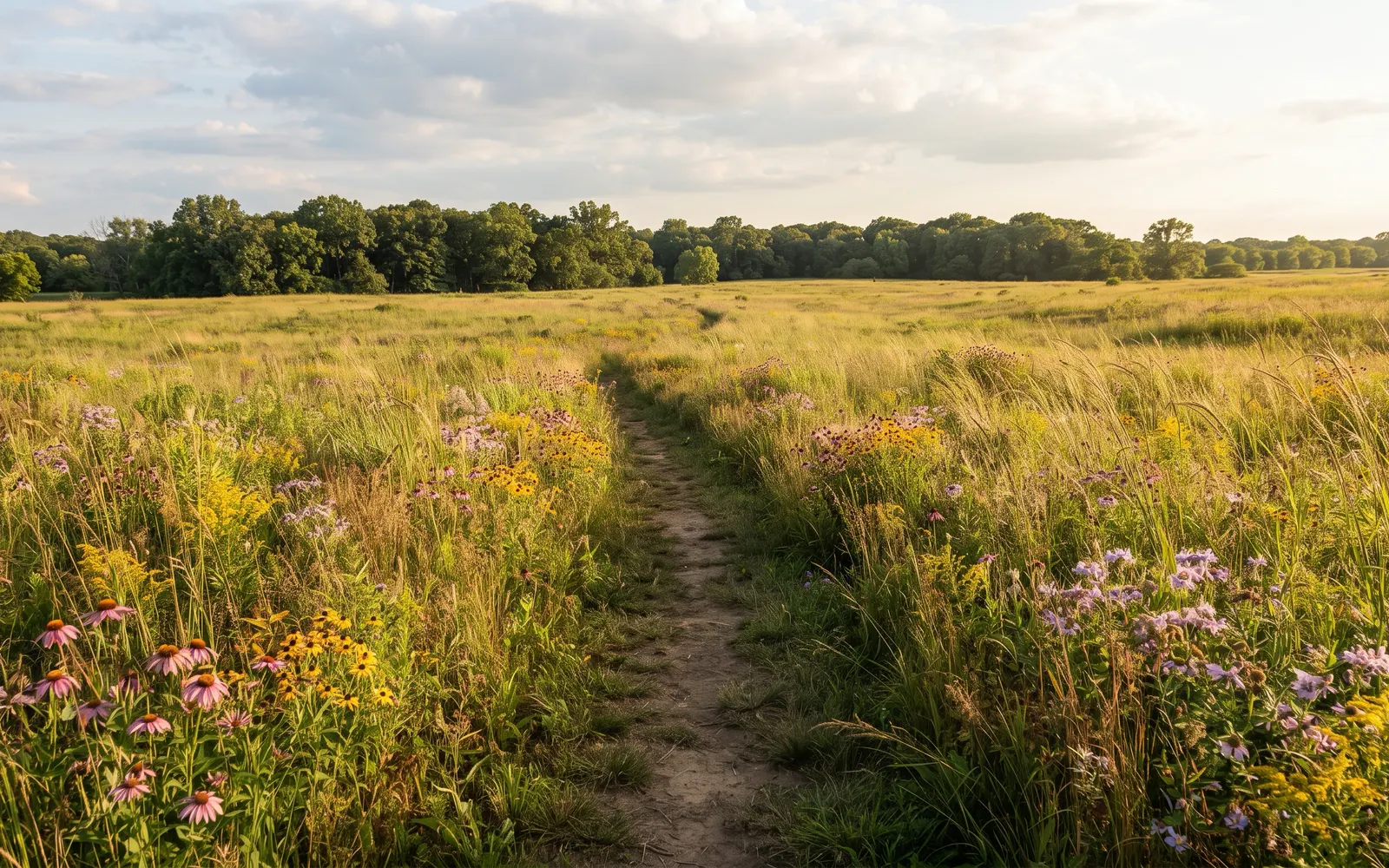
The standout is the Fen Nature Preserve at Barbara Key Park on Pyott Road. The village describes it as more than 400 species of native plants and wildflowers, over 40 of them uncommon, rare or endangered, and more than 60 species of birds, with geological features left from the Ice Age. The village gives its size as 240 acres on one page and 260 on another. Either way it is one of the largest natural areas inside any village in the county, and a real reason to look at the east side.
Sunset Park is the other anchor, with ball fields, the splash pad added in 2009 and the grounds for the village's summer festival. The 10-acre Bark Park opened in 2005 and a disc golf course was dedicated in 2012. In 2026 the village rebuilt the Rolling Hills Park playground and gathered input on a first-phase concept plan for Larsen Park. The larger county preserves and the Fox River are a short drive away through the McHenry County Conservation District.
The Lake in the Hills Airport and What It Means Nearby
Lake in the Hills owns its own airport, which is rare for a village this size. According to the village's airport page, the Lake in the Hills 3CK Airport at 8397 Pyott Road is an FAA-designated reliever airport for O'Hare, with one 3,801-foot paved runway, 110 based aircraft and about 34,000 takeoffs and landings a year. It employs 46 full-time and 36 part-time workers and generates more than $17 million a year in economic impact.
It is a small general aviation field, so you will see single-engine planes and small jets, not airliners. For most of the village it is a non-issue. For houses on the north and east sides under the approach to the runway, it is worth a visit on a clear summer weekend, when small-plane traffic is busiest. Some buyers do not notice it at all. Others do, and it is better to find out before you close than after.
For pilots, the airport rents hangars and tiedowns, which makes Lake in the Hills one of the few suburbs where you can live a few minutes from your plane.
Libraries Serving Lake in the Hills
Lake in the Hills has no library of its own. Instead, three library districts split the village, according to the village's taxing districts page: the Algonquin Area Public Library, the Crystal Lake Public Library and the Huntley Area Public Library. Which one you belong to depends on your address, the same way the school districts do, and your property tax pays that district.
In practice, all three run full youth and adult programming, and all three are a short drive. When you close on a house, ask which library district it is in so you get the right card.
Utilities, Water and Sewer in Lake in the Hills
Inside the village, the village's utilities page lays it out. The village provides water through its Public Works Water Division. Sewer is a separate government, the Lake in the Hills Sanitary District, which you set up an account with directly. The homeowner owns the sewer line from the house to the main, so a sewer scope on an older house is money well spent.
ComEd delivers electricity and Nicor Gas provides natural gas. The village contracts with Flood Brothers Disposal for trash, recycling and yard waste. For internet, the village lists Comcast village-wide, with AT&T and e-Vergent in parts of town. Check the specific address before you assume fiber.
Well and septic are not normal inside the village, but they do exist on nearby unincorporated land. If a listing says Lake in the Hills and the parcel turns out to be outside the village limits, confirm how the house gets its water and where its waste goes, and budget for a well test and a septic inspection.
Hospitals Near Lake in the Hills
Lake in the Hills has clinics and immediate care along Randall Road, but no hospital inside the village. The closest full-service hospital for most addresses is Northwestern Medicine Huntley Hospital to the west. Advocate Sherman Hospital in Elgin and Northwestern Medicine McHenry Hospital are also within reach, and Advocate Good Shepherd Hospital in Barrington is an option from the east side.
Fire and ambulance service also depends on the address. The village is covered by three fire protection districts: Algonquin-Lake in the Hills, Crystal Lake Fire Rescue and Huntley. They are separate taxing bodies, not village departments.
Summer Sunset Fest and Lake in the Hills Traditions
The big one is Summer Sunset Fest, the village's signature event, which debuted in 2000 and runs over Labor Day weekend at Sunset Park. In 2026 it ran September 4 to 6 with carnival rides, live music, a car show, a Saturday community picnic, a craft market, a parade and fireworks on Sunday night. It is organized by a volunteer committee with the village.
The rest of the year has a steady rhythm. In 2026 the calendar included a Beach Bash at Indian Trail Beach in June, the annual fishing tournament on Woods Creek Lake in August, a National Night Out cookout, and a Memorial Day rededication of the rebuilt Veterans Memorial at Village Hall. If you are touring houses on Labor Day weekend, stop by Sunset Park. It tells you more about the village than any listing will.

What's Being Built in Lake in the Hills
Lake in the Hills is close to built out. The growth that took the village from under 6,000 people to about 29,000 happened mostly between 1990 and the mid-2000s. Since then, surrounded by Crystal Lake, Cary, Algonquin and Huntley, the village has been filling in its remaining parcels one at a time. For buyers, that means new construction is rare and most choices are resales.
The biggest change underway is public, not private. The Randall Road rebuild covered in the driving section runs through 2027 and will reshape the corridor through the middle of the village, with six lanes, a new Woods Creek bridge, a path and a noise wall along the east side. In February 2026 the police department moved into a new headquarters at 2600 Village Hall Drive, next to Village Hall, and the Veterans Memorial was rebuilt beside it with a walking path connecting the two.
On the private side, the most visible 2026 proposal was the gas station and retail plan at Lakewood Road and Miller Road, which the Planning and Zoning Commission voted against recommending in February. I did not find a large new residential subdivision in the village's 2026 news or project notices. If you hear about one, send it to me and I will check what has actually been filed.
I don't label any town or neighborhood as safe or unsafe.
Flood Risk in Lake in the Hills
Flooding is not a village-wide problem in Lake in the Hills, but it is a house-by-house one. Redfin, using First Street's model, rates the village's overall flood risk as minor, with 291 properties, about 3%, likely to be severely affected over the next 30 years. Woods Creek, the lake, the Fen and the low ground around them are where that risk concentrates.
Two checks before you write an offer. Look the address up on the FEMA flood map, because a mapped flood zone can mean required flood insurance on a mortgage. And ask the seller directly about water in the basement or crawl space. On a hilly Old Section lot, also look at which way the yard drains. The follow-up question about what the seller did about any water is the one that matters.
Frequently Asked Questions
How much does a house cost in Lake in the Hills, IL?+
Redfin reported a median sale price of $369,705 for the three months ending August 2026, up 4.9%, and Zillow's home value index was $380,630 for August 2026, up 4.0%. Prices vary widely between townhomes, 1990s subdivisions and Boulder Ridge.
What are property taxes in Lake in the Hills, IL?+
The median effective rate is about 2.36%, with a median bill of about $7,399 (Ownwell, April 2026). Rates vary by tax code because the village spans two townships and four school districts, so check the parcel's own bill.
What school district is Lake in the Hills, IL in?+
Four districts serve the village: Huntley District 158, District 300, and Crystal Lake's District 47 and District 155. The high schools are Huntley, Jacobs in Algonquin and Crystal Lake South. Assignment depends on the street, so confirm each address with the district.
How long is the commute from Lake in the Hills to downtown Chicago?+
There is no station in the village. From the Pingree Road station in Crystal Lake, express Metra trains reach Ogilvie in about 64 minutes and locals in about 82, with 30 inbound weekday trains on the timetable effective September 28, 2026.
Can non-residents use the beaches in Lake in the Hills?+
Only as a resident's guest. The two sand beaches on Woods Creek Lake, Butch Hagele and Indian Trail, are limited to residents and their guests, open Memorial Day to Labor Day, and not lifeguarded.
What neighborhoods are in Lake in the Hills, IL?+
Commonly named areas include the Old Section around Woods Creek Lake, Lake in the Hills Estates, Boulder Ridge, Big Sky, Harvest Gate, Spring Lake Farms, Meadowbrook, Wood Creek Village, Northstar, Bellchase and Prairie Point. Locals usually describe them by their side of Randall Road.
What is happening with Randall Road in Lake in the Hills?+
McHenry County is widening Randall Road to six lanes from Polaris Drive toward Rakow Road, with a new Woods Creek bridge, a Miller Road bridge, a path and a noise wall. Construction started in March 2025, runs through 2027 and was about 41% complete in September 2026.
Is Lake in the Hills in Kane County?+
No. The whole village is in McHenry County, in Algonquin and Grafton townships. Neighboring Algonquin and Huntley cross into Kane County, which is where the confusion comes from.
Eshu Chikoti has extensive access to off-market listings throughout Lake in the Hills and the rest of McHenry County — homes that never make it to the public listing sites. That matters right now: in a seller's market like this one, well-priced homes routinely go under contract within days, and buyers relying only on public listings are competing for whatever is left over. Working with someone plugged into off-market inventory means seeing homes before the crowd does.
Eshu Chikoti · 847-691-4282 ·
Get new Lake in the Hills listings by email
When a home comes on the market in Lake in the Hills, I'll email it to you.
Just your email. Unsubscribe any time by replying.
Thinking About Lake in the Hills?
Whether you're buying, selling, or just curious what's on the market, I can walk you through Lake in the Hills street by street.