Harvard, IL
Harvard, IL is a city of about 9,600 people in northwest McHenry County at the far end of Metra's Union Pacific Northwest line, with some of the lowest home prices in the Chicago suburbs and a huge rural area of farms and acreage around it.
Living in Harvard, IL means a median sale price near $289,000, a one-seat Metra ride to downtown Chicago that takes about 92 minutes on the fastest trains, and room to buy real acreage. The trade-offs are distance and property tax near 2.4% of value.
Written by Eshu Chikoti · 847-691-4282 ·
How Harvard, IL Got Here: A Short History
Harvard is a railroad town, and it has been from the first day. In 1856 the Chicago and North Western built a station here, and that same year Amos Page, Otis Eastman and Elbridge Gerry Ayer laid out the town next to it. According to the city's history as summarized on Wikipedia, the plat was signed on November 25, 1856, and the founders named it after Harvard, Massachusetts. Ayer's name is still on the main street downtown.
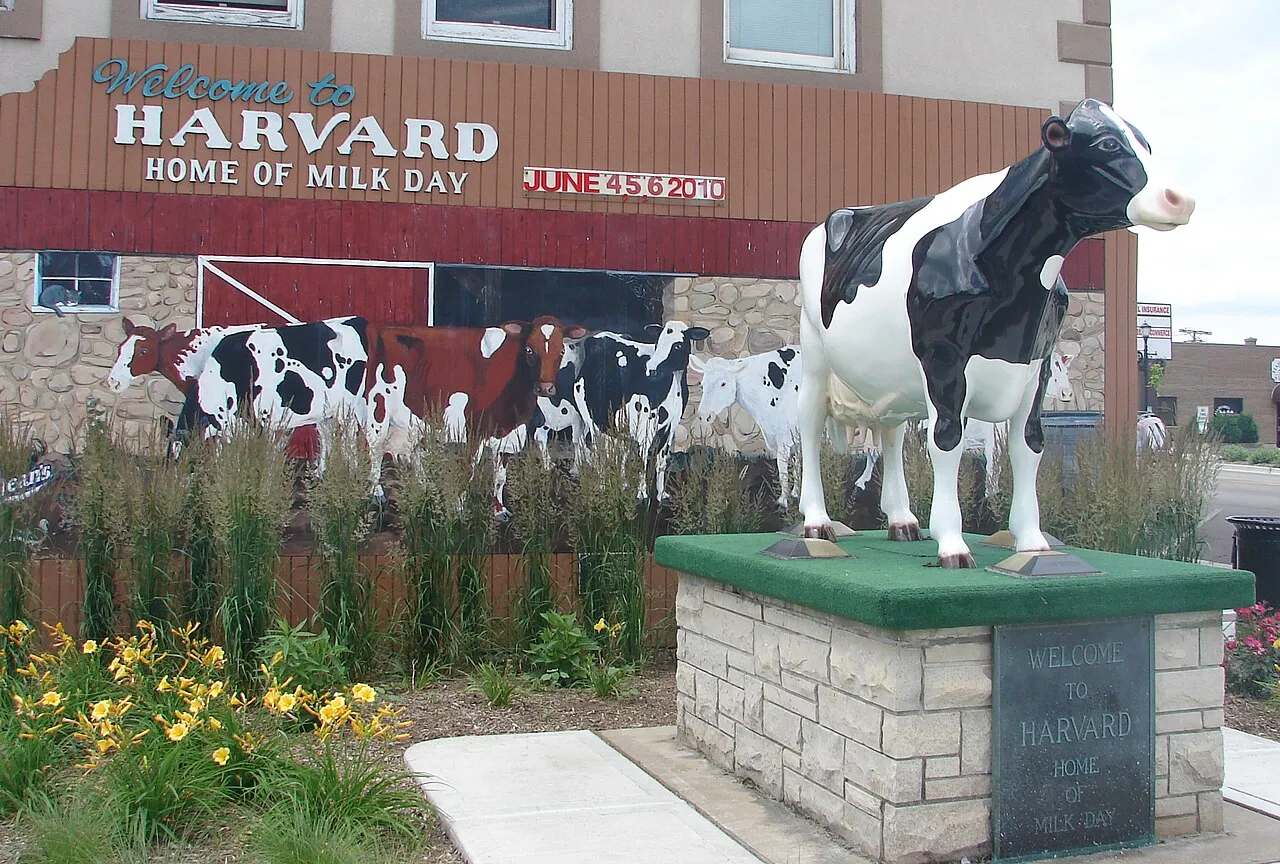
Harvard incorporated as a village in 1869 with Ayer as its first president, and it became a city in 1891 after a vote of 550 to 5. For most of the next century it was a farm and rail center. The land around it is some of the best dairy ground in northern Illinois, and the town took the title "Milk Capital of the World" during World War II, when local farms were shipping milk for the war effort. The Milk Days festival that grew out of that era is still the biggest weekend of the year, and a cow statue named Harmilda stands as the festival's symbol.
The chapter most people outside McHenry County remember is Motorola. In 1997 the company opened a 1.5 million square foot plant on the south side of town that employed more than 5,000 people at its peak. It closed in 2003. The building has changed hands several times since, and its current troubles are covered in the development section below. I mention it here because it shaped the town. A lot of the subdivisions built around 2000 went up on the expectation that the plant would keep growing, and the housing stock still reflects that.
Harvard at a Glance
Harvard sits in the northwest corner of McHenry County, a few miles south of the Wisconsin line and about 63 miles from the Loop by rail. The city itself covers roughly 8.4 square miles and spans parts of Chemung, Dunham and Alden townships. It is entirely inside McHenry County. The part that confuses buyers is the mailing address. The 60033 ZIP code reaches far beyond the city limits into farmland, horse properties and scattered subdivisions, so a listing that says "Harvard" may be a city lot on a sidewalk or a 40-acre parcel on a gravel road.
The 2020-2024 Census ACS puts the city's population at 9,598, up slightly from 9,469 in the 2020 census. It counts 3,285 housing units. About 60% of occupied homes are owner-occupied (1,865 of 3,125), which tells you Harvard has a real rental market, mostly in two-flats, small apartment buildings and older houses near downtown.
The layout is easy to learn. US Route 14 runs north and south through town as Division Street. Illinois Route 173 runs east and west across the north side, and Illinois Route 23 heads south toward Marengo. Downtown and the Metra station sit just east of Division Street along Ayer Street. Almost every direction a local gives you starts from one of those roads.
Harvard is closer to Rockford, Janesville and Lake Geneva than it is to Chicago, and that shapes daily life more than the Metra map suggests. Woodstock, Crystal Lake, Belvidere and southern Wisconsin are all realistic daily drives for work, and the train is one option among several.
A median sale price near $289,000 buys a lot more house here than it does anywhere on the Metra system east of Crystal Lake.
The property tax rate is also higher than the low prices suggest.
Harvard Neighborhoods, Pocket by Pocket
Harvard does not have official neighborhoods, but the market splits into four very different kinds of property, and the first question I ask any buyer looking here is which one they mean.
The first is the old town: the grid of streets around downtown and the station, with houses from the late 1800s through the 1950s. The Census ACS counts 593 homes in the city built in 1939 or earlier, about 18% of the total, and most of them are here. This is where you find the lowest prices, the most two-flats, and the only part of Harvard where walking to the train is realistic.
The second is the ring of subdivisions built from the 1990s through the late 2000s, mostly on the west and south sides along Route 14 and Route 173. The ACS counts 546 homes built in the 1990s and 627 built from 2000 to 2009, together more than a third of the city's housing. These are the vinyl-sided two-stories, ranches and townhomes most buyers picture when they search Harvard, and they are the core of the resale market.
The third is new construction. After a long pause following the 2008 crash, builders came back to a few of those subdivisions and are filling in lots that were platted years ago. The fourth is everything outside city limits with a Harvard address: farms, horse properties, wooded acreage and a handful of country subdivisions on wells and septic systems. That rural market gets its own section below because the rules are completely different.
When I talk to buyers about Harvard, the pattern I see is that the price tag gets them in the car and the drive decides it. Someone coming from Lake or Cook County sees a newer three-bedroom for under $350,000 and wants to move fast. My advice is to drive the commute you would actually make, at the hour you would make it, before you write an offer. If you want to know which pocket a specific address falls in and what similar homes nearby have sold for, that is a conversation I am happy to have here.
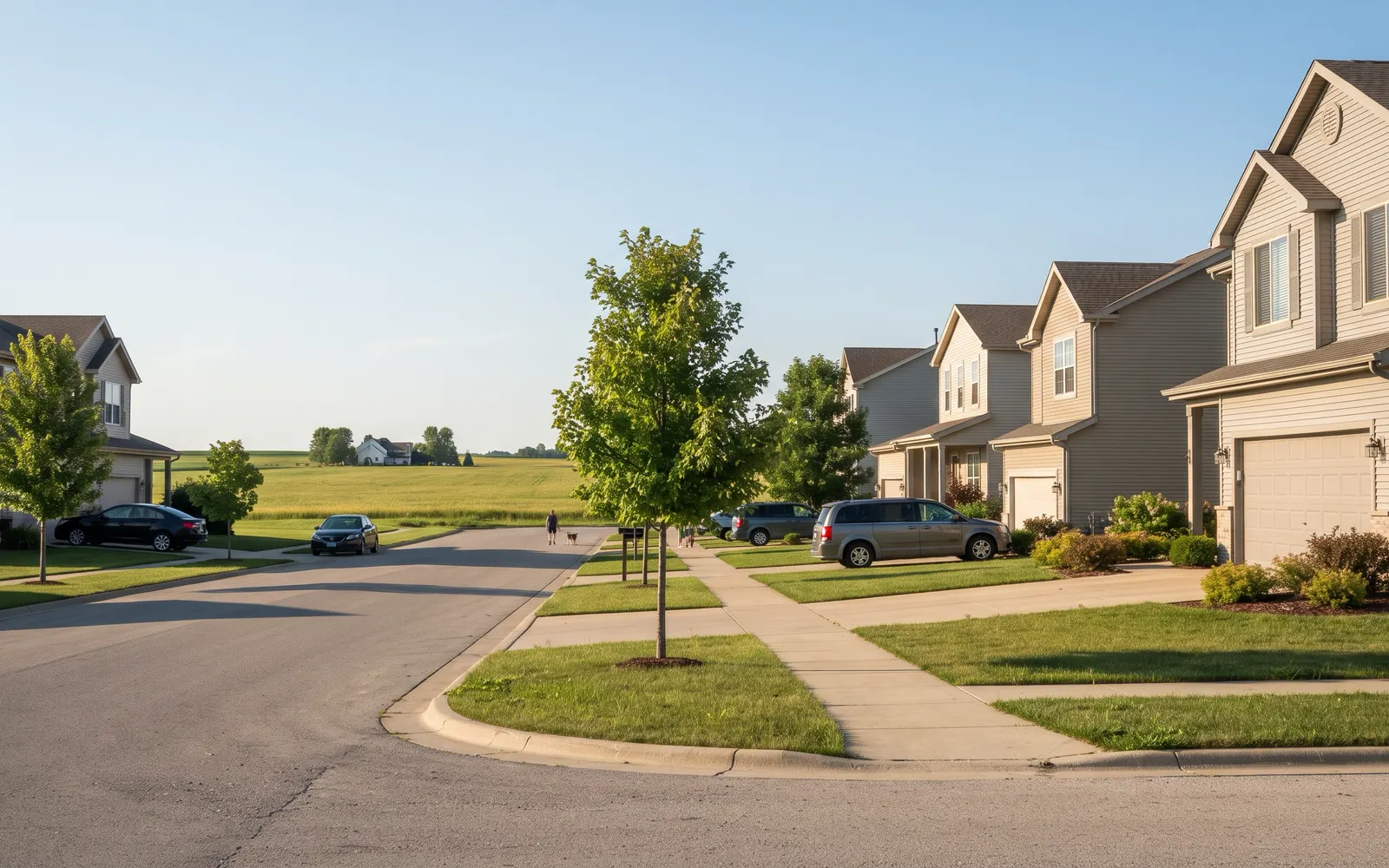
Downtown and the old town. The grid of streets around Ayer Street and the Metra station. Mostly homes from the late 1800s to the 1950s, plus two-flats and small apartment buildings. The lowest price points in Harvard and the only area where walking to the train works.
Shadow Creek. A single-family and condo subdivision built mostly between 2000 and 2007, according to a local agent's subdivision page, with homes of roughly 1,065 to 2,852 square feet.
Turtle Crossing. West of Route 14 and north of Northfield Avenue. Building began around 2008 and lots are still being built on in 2026, per the same source, with homes of roughly 1,400 to 2,300 square feet.
Oak Grove Crossing. West of Division Street (Route 14) and south of Oak Grove Road. Earlier phases date to the late 1990s and a newer phase is being built in 2025 and 2026 by Tracy Group.
Ridge Lane and South Park. Two pockets Walk Score names inside the city. Ask for the build year and the school assignment on anything you see listed there.
Rural Harvard (60033 outside city limits). Farms, horse properties, wooded acreage and country subdivisions in Chemung, Dunham, Alden and neighboring townships, on private wells and septic. Covered in detail in the acreage section.
What Harvard Homes Look Like, by Era
Harvard's housing falls into three clear eras, and each one comes with its own inspection list. The Census ACS shows the split: about 18% of the city's homes were built before 1940, about 44% between 1940 and 1989, and about 36% in the 1990s and 2000s. Only 88 homes, under 3%, were built from 2010 to 2019.
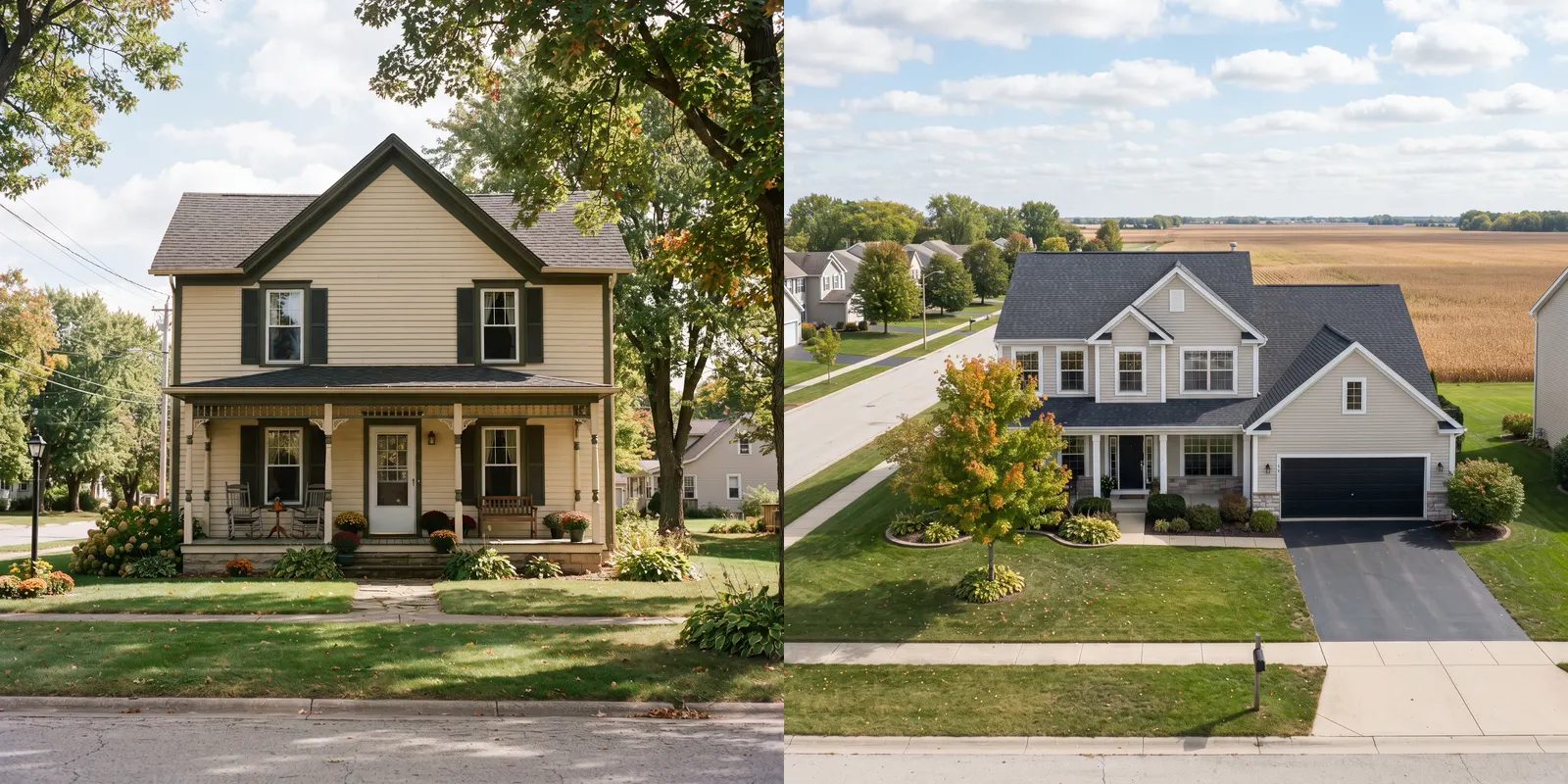
The old-town houses are mostly frame farmhouses, foursquares, bungalows and Victorian-era homes on narrow city lots, many of them converted to two or three units over the years. They have character and the lowest prices in town. They also have the problems a century-old house brings: stone or block foundations, knob-and-tube wiring hiding in walls, old galvanized plumbing and basements that take on water in a wet spring. None of that is a reason to walk away. All of it belongs in the price.
The postwar ranches and split-levels fill the middle of town. The 1990s and 2000s subdivisions are two-story colonials, ranches and townhomes on standard suburban lots, usually with attached garages and full basements. These are the easiest houses to finance and insure, and they make up most of what sells in any given month.
About 66% of the city's homes are single-family detached, and another 7% are attached single-family. The rest are two-flats, three- and four-unit buildings (482 units) and small apartment buildings. The ACS puts the median value of an owner-occupied home at $175,400 and the median gross rent at $1,183. Both numbers trail the market because they are five-year survey averages; the current sale prices are in the next section.
If you are buying one of the older houses, spend the money on a thorough inspection and a sewer scope. My home inspection checklist covers what to ask for.
Buying Acreage Around Harvard: Zoning, Wells and Septic
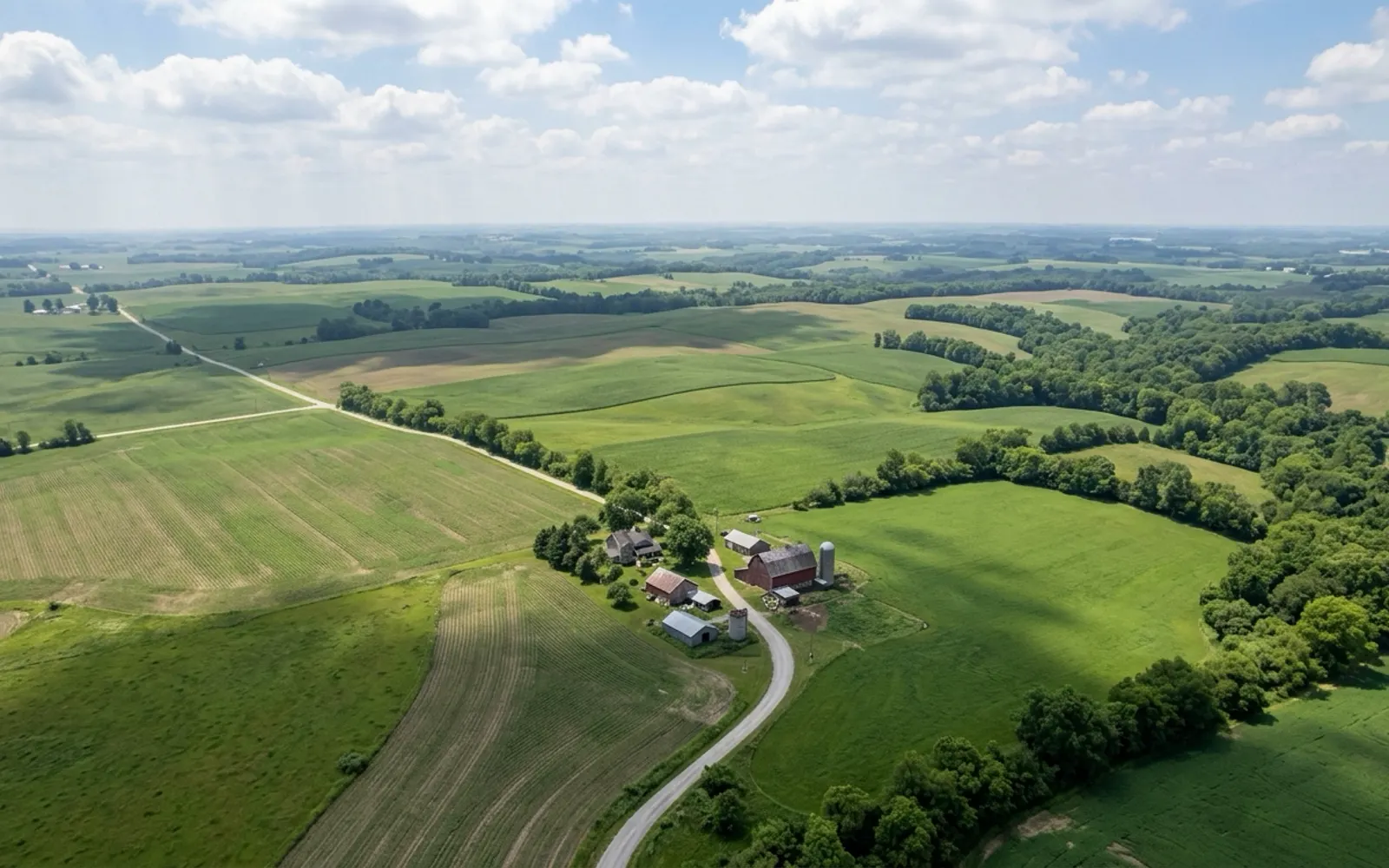
The land around Harvard is the reason many of my buyers look here at all. Within a short drive of downtown you can find hobby farms, horse properties, wooded parcels and true working farmland at prices that would be impossible closer to Chicago. It is also the part of the market where buyers make the most expensive mistakes, because unincorporated McHenry County land follows county rules, not city rules.
Start with zoning. Under Table 16.36-1 of the McHenry County Unified Development Ordinance, a house in the A-1 Agriculture district needs a minimum of 40 acres. The A-2 district allows a single-family home on 1 acre. The estate districts step down from E-5 (5 acres) through E-3, E-2 and E-1 (1 acre), and R-1 allows half-acre lots. So a 10-acre parcel zoned A-1 may not be buildable for a house without a rezoning, and rezoning to A-2 has its own standards. Before you fall in love with a piece of vacant land, check its zoning on the county map and ask the county planning department what it would take to put a house on it.
The same ordinance puts buyers on notice that agricultural districts come with the normal noise, dust, odors and machinery of farming, and that the Illinois Right to Farm law may bar nuisance claims against a normal farm operation. If you buy a house next to a working dairy or grain operation, that is part of the deal.
Almost every rural Harvard property runs on a private well and a septic system, and many heat with propane instead of natural gas. I always recommend a well water test (bacteria and nitrates at a minimum) and a septic inspection that includes pumping and a look at the field, plus a check of the propane tank's ownership and lease terms. None of those are expensive compared to replacing a failed septic field.
Rural parcels around Harvard raise questions most suburban buyers never think about: private wells, septic systems, propane tanks, upkeep on ponds and water features, and how much of the land is farmable. If you are weighing a rural parcel, those are the questions I will help you ask before you are under contract.
The Harvard Housing Market in 2026
Harvard is one of the most affordable places to buy in the Chicago suburbs, and prices have been rising fast from a low base. In the three months ending August 2026, Redfin reported a median sale price of $288,809, up 14.4% from the same period a year earlier. The median price per square foot was $158, up 11.7%. Homes took about 50 days to sell, compared with 48 a year earlier, and sold at 99.9% of list price. Redfin counted 34 homes sold in August, up from 26 the August before, and gives Harvard a Compete Score of 67 out of 100, which it calls somewhat competitive.
Zillow's home value index tells a calmer version of the same story: $278,494 for August 2026, up 3.4% from a year earlier and up from $259,131 in August 2024. The two numbers do not conflict. Redfin's median is the middle of whatever happened to sell in a three-month window, and in a market this small a few more newer or larger homes in the mix can move it a lot. Zillow's index estimates the value of every home, sold or not. My read is that values are rising at a steady single-digit pace and this summer's sales tilted toward the newer subdivisions.
What that means in practice: this is not a market where every house gets five offers. Well-priced homes in good condition sell close to asking within a couple of months. Homes that need work, or that are priced off a comparison to towns further east, sit. The expectation I most often have to reset is sellers who look at a Crystal Lake or Woodstock sale and assume Harvard is only a little behind. It is further behind than that, and pricing it right on day one matters.
The village-level numbers also blur two markets together. A downtown two-flat and a 2000s four-bedroom are both "Harvard," and a rural acreage property is priced on land, outbuildings and water, not on the city median at all.
Harvard Property Taxes and the Real Cost of Owning
Harvard's home prices are low, but its property tax rate is not. Ownwell's data, last updated April 2026, puts the median effective rate in Harvard at 2.38% and the median annual bill at $4,868. McHenry County as a whole runs at about 2.42%. Inside the 60033 ZIP code, Ownwell shows effective rates from about 1.81% at the 10th percentile to 2.99% at the 90th.
Here is what that looks like on a real purchase. At 2.38%, a home bought at this summer's $288,809 median would eventually carry about $6,870 a year in property tax, roughly $573 a month on top of the mortgage. That is a meaningful share of the payment on a house at this price. The current bill on the same house may be lower because assessments trail the market, but they catch up, and the reassessment after a sale is often when a new owner sees the jump. Budget off the rate, not the seller's last bill.
Rates vary because every combination of township, school district, fire district, library and park taxing bodies forms its own tax code. A city lot in Chemung Township and a farm in Alden Township can carry different rates at the same value. Farmland that qualifies for the agricultural assessment is taxed very differently from the homesite on the same parcel, which is one more reason rural listings need a close look at the actual tax bill and how the land is classified.
If you already own in Harvard and think your assessment is high, the appeal process runs through the township assessor and the McHenry County Board of Review. My Lake County property tax appeal guide walks through the logic of an appeal; the deadlines and forms in McHenry County are different, so check with the county before you file. This is general information, not tax advice. Your actual bill depends on your parcel, your exemptions and the assessor.
Harvard Schools: Community Unit School District 50
The city of Harvard is served by Harvard Community Unit School District 50, a single district that runs from preschool through high school. It operates five schools: Washington Elementary for preschool, Richard D. Crosby Elementary for kindergarten through third grade, Jefferson Elementary for fourth and fifth, Harvard Junior High for sixth through eighth, and Harvard High School.
Confirm the district for a specific address with the district office, and read each district's profile on the Illinois Report Card at illinoisreportcard.com.
The district has career and technical programs. Visit, talk to the schools, and read the Illinois Report Card for the most recent state data on each building.
The detail that trips people up is the rural area. Much of the 60033 ZIP code outside the city is in District 50, but not all of it. Parts of the countryside around Harvard fall into neighboring districts such as Alden-Hebron, Marengo or Woodstock. Never assume from the mailing address. Check each specific property with the district directly before you write an offer, and ask me to pull the boundary if you want it done for a house you are considering.
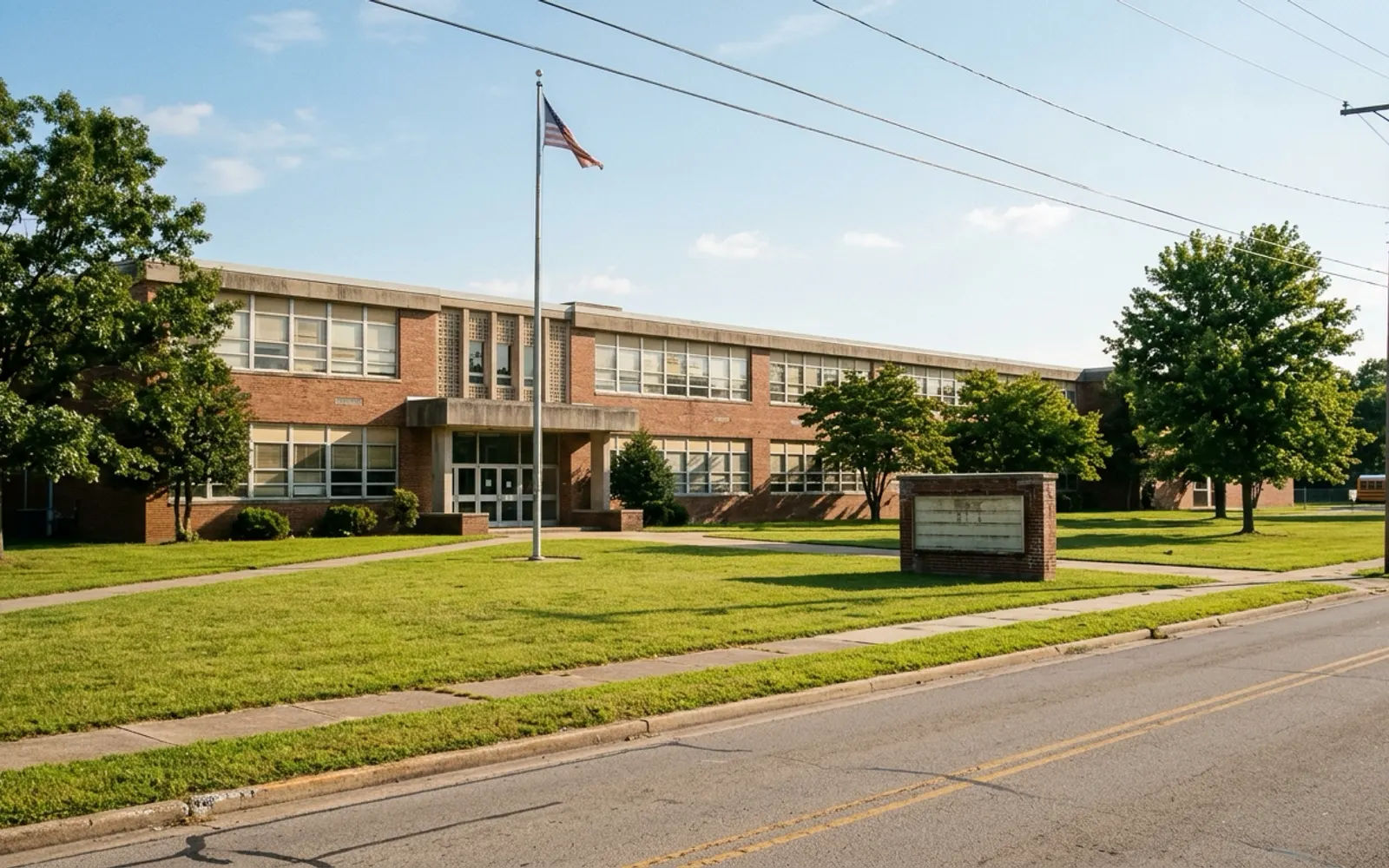
Washington Elementary School. Preschool, District 50.
Richard D. Crosby Elementary School. Grades K-3, District 50.
Jefferson Elementary School. Grades 4-5, District 50.
Harvard Junior High School. Grades 6-8, District 50.
Harvard High School. 1103 N. Jefferson St. Grades 9-12, District 50.
Commuting from Harvard: The End of the Metra Line
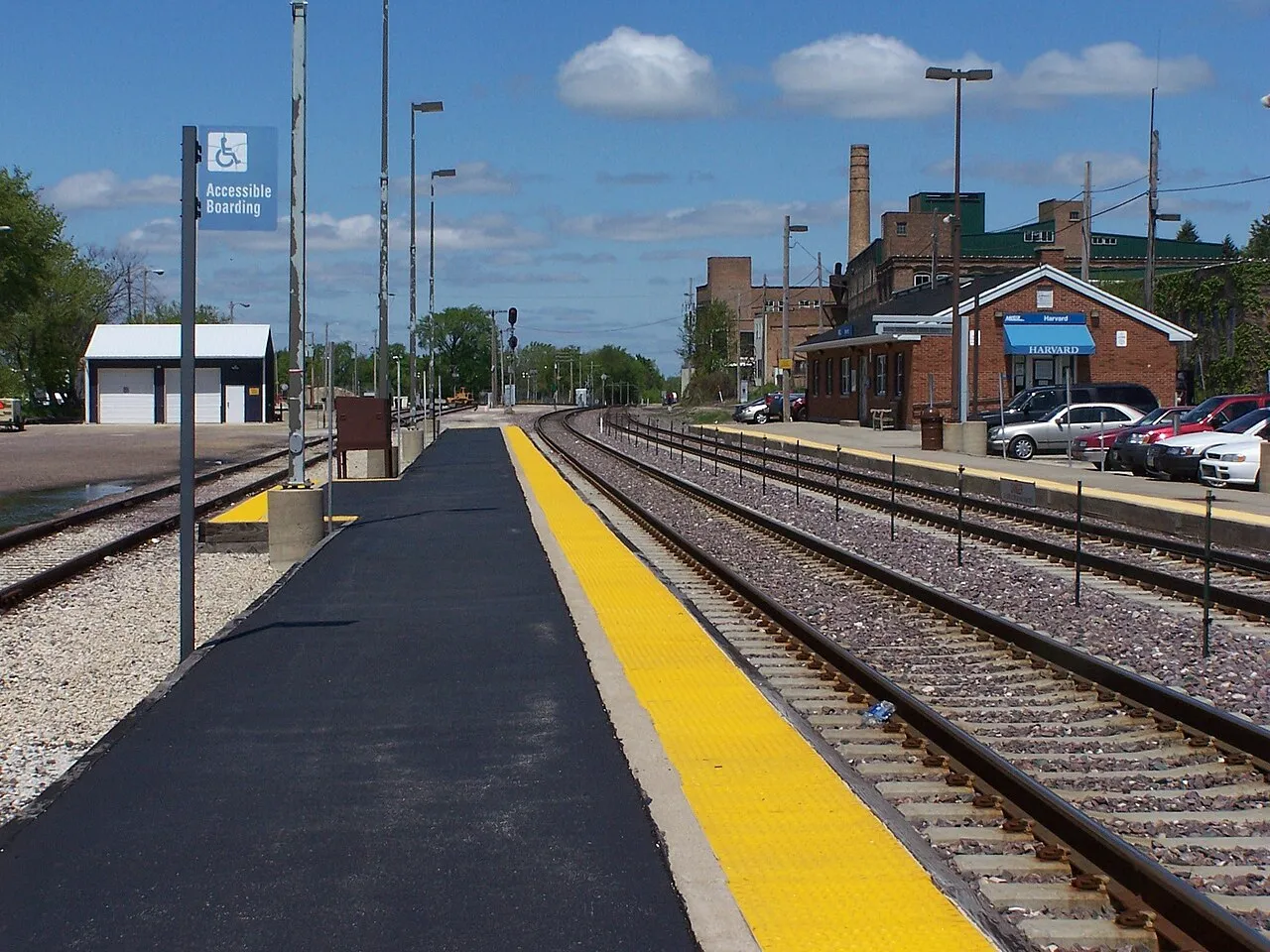
Harvard is the last stop on Metra's Union Pacific Northwest line, and that is a bigger advantage than it sounds. Every inbound train starts here, so you always get a seat, and the ride is one seat all the way to Ogilvie Transportation Center in the West Loop. The station is downtown, a short walk from Ayer Street.
According to Metra's current UP-NW schedule data for the weeks of September 21 through October 25, 2026, 14 weekday trains leave Harvard for Chicago and 13 come back. The four early rush-hour trains, leaving at 5:30, 6:00, 6:30 and 7:00 a.m., reach Ogilvie in 92 minutes. The 7:50 a.m. takes 99 minutes, and midday trains take about 110. The fastest evening trains back leave Ogilvie at 4:15, 4:45 and 5:15 p.m. and take 92 to 98 minutes. On Saturdays there are six trains inbound and five outbound, and on Sundays three each way, at about 108 to 110 minutes.
Put plainly: from Harvard, downtown Chicago is a three-hour round trip on the best trains. Plenty of people do it, especially those who go into the office two or three days a week and use the time to work. For a five-day commute, be honest with yourself about that number. It is the main reason Harvard costs what it does.
For the ride itself, the rolling countryside between Harvard and Crystal Lake is one of the nicer stretches on the Metra system, and the city's strategic plan lists a sidewalk connection from Ayer Street toward Marengo Road among its 2026 projects, which should help people walking to the station from the south side.
Driving from Harvard: Highways and Airports
Harvard has no interstate of its own. US Route 14 runs southeast through Woodstock and Crystal Lake toward the inner suburbs and northwest to Wisconsin. Illinois Route 23 runs south to Marengo and the Jane Addams Tollway (I-90), which is the fastest road to Rockford to the west or Elgin and O'Hare to the east. Illinois Route 173 runs east across the county toward Richmond and Antioch.
For most drivers, Route 23 to I-90 is the way to O'Hare, and the airport is well over an hour away in normal traffic. Rockford's airport is closer. Milwaukee's airport is also a realistic option for some trips, which surprises buyers coming from the east side of the metro.
Road work to know about: the city has a five-year road improvement plan that begins in spring 2026, funded in part by a sales tax increase voters approved in April 2023 and a planned $4 million bond, according to the city's 2024-2026 strategic plan update. The same document lists Phase I engineering for Route 14 in 2025 and 2026 and Phase II engineering for Route 173 in 2026, so expect planning work, not construction, on those two roads in the near term.
Is Harvard Walkable?
Only downtown. Walk Score does not publish a single city-wide score for Harvard, but its own summary says the city has about 34 restaurants, bars and coffee shops and that the average resident can walk to 0.1 of them in five minutes. Outside the old town you will drive for groceries, school and almost everything else.
The old town is the exception. The streets around Ayer Street put the train, the post office, a handful of restaurants and bars, and the library within a reasonable walk for many homes. If walking to the station matters to you, it narrows your search to that small grid, and those houses are also the oldest in town, so weigh the inspection list against the convenience.
For recreation, Milky Way Park's walking path and the city's other parks are the main places to walk, and the country roads around town are popular for cycling, though they have no shoulders in many places.
Downtown Harvard and Shopping
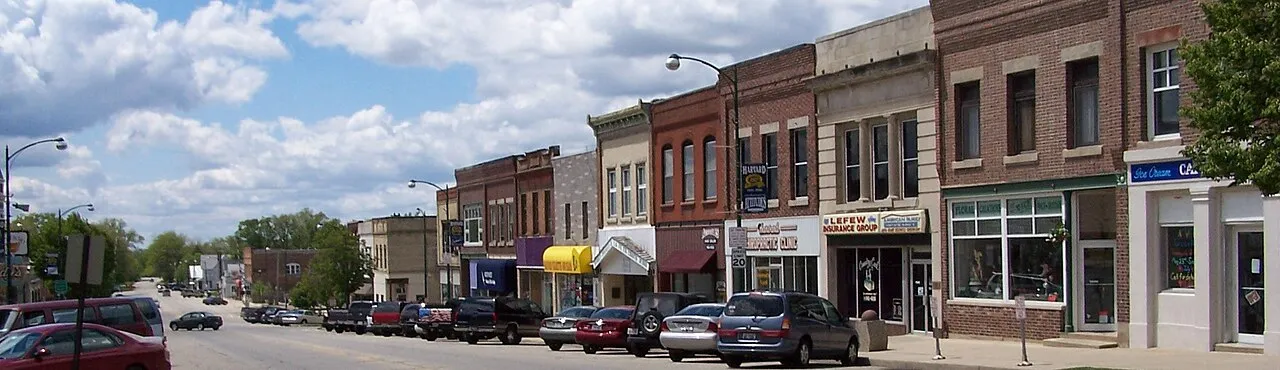
Downtown Harvard is a real small-town main street: two- and three-story brick buildings along Ayer Street with local shops, bars, restaurants and services on the ground floor and apartments above. It is not a shopping destination the way Woodstock Square is, and some storefronts are empty. The city is working on that. Its strategic plan update describes an expanded revolving loan program for downtown building improvements, a downtown master plan that follows a grant-funded transit-oriented development study, fiber service already installed downtown, and a downtown that sits inside the McHenry County Enterprise Zone for tax incentives.
For bigger errands, the commercial strip along Route 14 on the south side of town has the chain stores. For a full mall or a Target, most people drive to Crystal Lake, or to the Janesville and Rockford areas. Lake Geneva's downtown shops are a short drive north across the state line.
Groceries and Everyday Errands in Harvard
The main grocery run in town is the Walmart Supercenter at 21101 McGuire Road, near South Division Street and Airport Road on the south side. Smaller independent grocers and butcher shops around town fill in fresh meat, produce and baked goods. For a wider selection, buyers drive to the grocery stores in Woodstock and Crystal Lake, or north to Lake Geneva. Pharmacies, banks, auto parts and hardware are along Route 14, so most weekly errands stay inside a 10-minute radius.
Where Harvard Eats
Harvard's restaurants are casual and mostly local. Downtown, Bopp's Bar and Grill sits at the corner of North Ayer and East Front streets in a historic building, and Town & Country Restaurant on North Ayer serves breakfast, lunch and dinner. The town also has a run of locally owned restaurants and taquerias, several open for years, plus the usual pizza places and supper-club style spots in the countryside around town. For a big night out, Lake Geneva's restaurants are a short drive north.
Parks, Golf and Recreation in Harvard
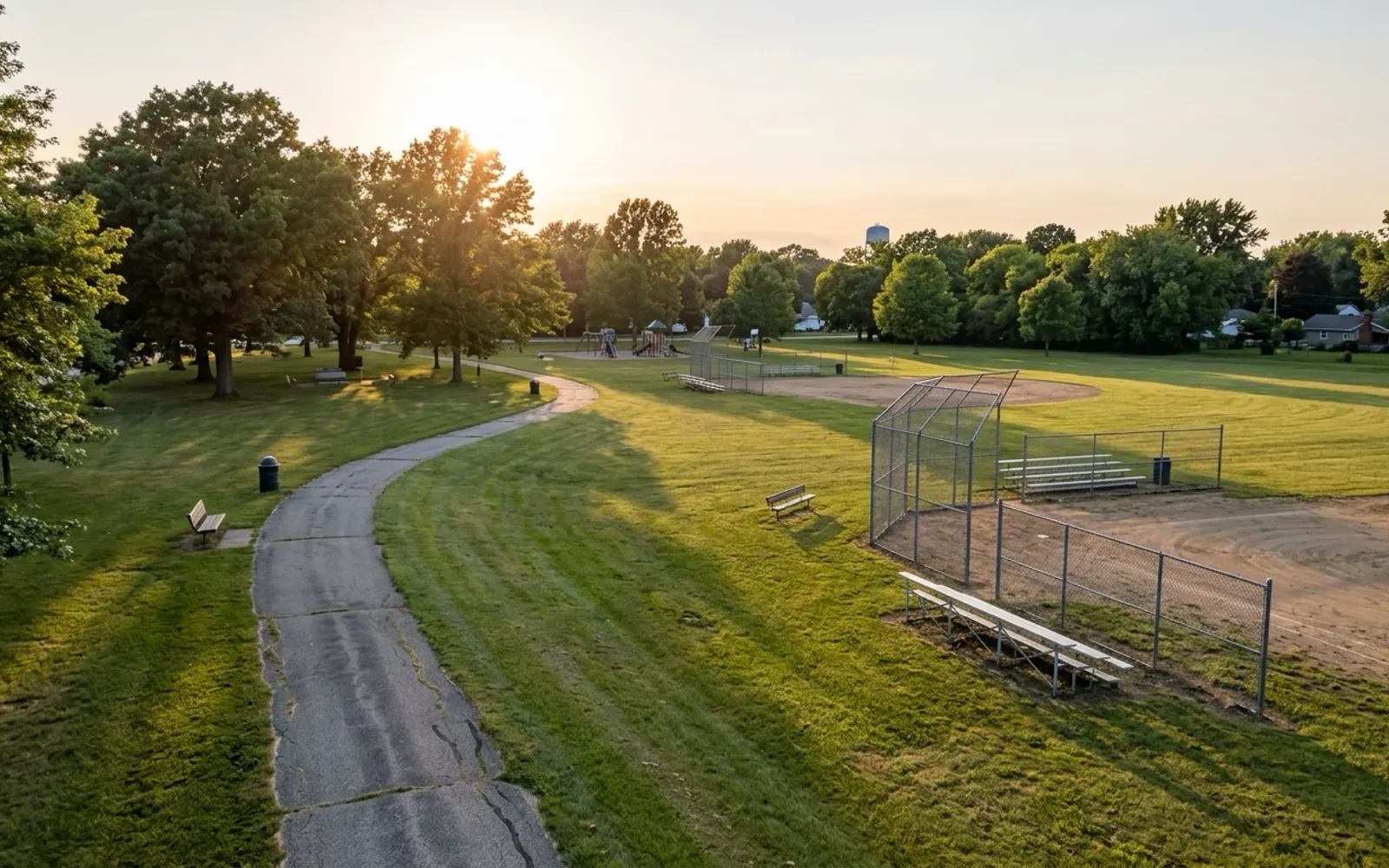
Harvard's parks are run by the city rather than a separate park district. The centerpiece is Milky Way Park at 300 Lawrence Road, about 55 acres with soccer, baseball, softball and football fields, an outdoor fitness area, a walking path, picnic shelters, a playground and the one-acre Milky Way Dog Park. It is also the permanent home of Milk Days. Northfield Park and several smaller neighborhood parks fill in around town, and the city runs an aquatic center.
The city's strategic plan update lists recent and planned park work, including the dog park pavilion, playground replacement, accessible swings at Northfield Park, a planned basketball court and an extended walking path, with aquatic center improvements under study for fiscal year 2026-27.
For golf, Oak Grove Golf Course on Oak Grove Road is on the edge of town, and there are more public courses toward Woodstock, Marengo and Lake Geneva. The open country around Harvard is the real recreation asset: county conservation areas, fishing, and quiet roads for cycling, with Lake Geneva's lake and trails half an hour or less away.
The Harvard Diggins Library
The Harvard Diggins Library at 900 East McKinley Street dates to 1909, when a bequest from Delos F. Diggins funded it, and it moved into a new building of about 19,000 square feet in 2001. It is open Monday through Thursday until 8 p.m. and Friday and Saturday until 5 p.m. The city has started partnering with the library on programming, and it is one of the best places in town to find local history, including the Milk Days archives.
Utilities in Harvard: City Services Versus Well and Septic
Inside city limits, the City of Harvard provides water and sewer, and its wastewater treatment plant has been under construction as a city capital project. ComEd delivers electricity and Nicor Gas provides natural gas to most of town. The city's plan also lists downtown fiber and a push for downtown wireless access.
Outside city limits, assume nothing. Most rural homes have a private well, a septic system and propane heat, and internet options range from fiber on some roads to fixed wireless or satellite on others. Before you buy a rural property, ask the seller for recent utility bills, the well and septic records, and the propane supplier and tank ownership, and check internet service at the exact address. On a large property, electricity can be a surprisingly big line item, especially with outbuildings, pumps or water features.
Hospitals Near Harvard
Harvard has its own hospital: Mercyhealth Hospital and Medical Center–Harvard at 901 Grant Street, a small critical access hospital with a 24-hour emergency department, outpatient surgery and clinics. For larger hospitals and specialty care, Northwestern Medicine has hospitals in Woodstock and McHenry, Mercyhealth has a hospital in Crystal Lake, and Rockford's medical centers are within reach to the west.
Harvard Milk Days and the Town Calendar
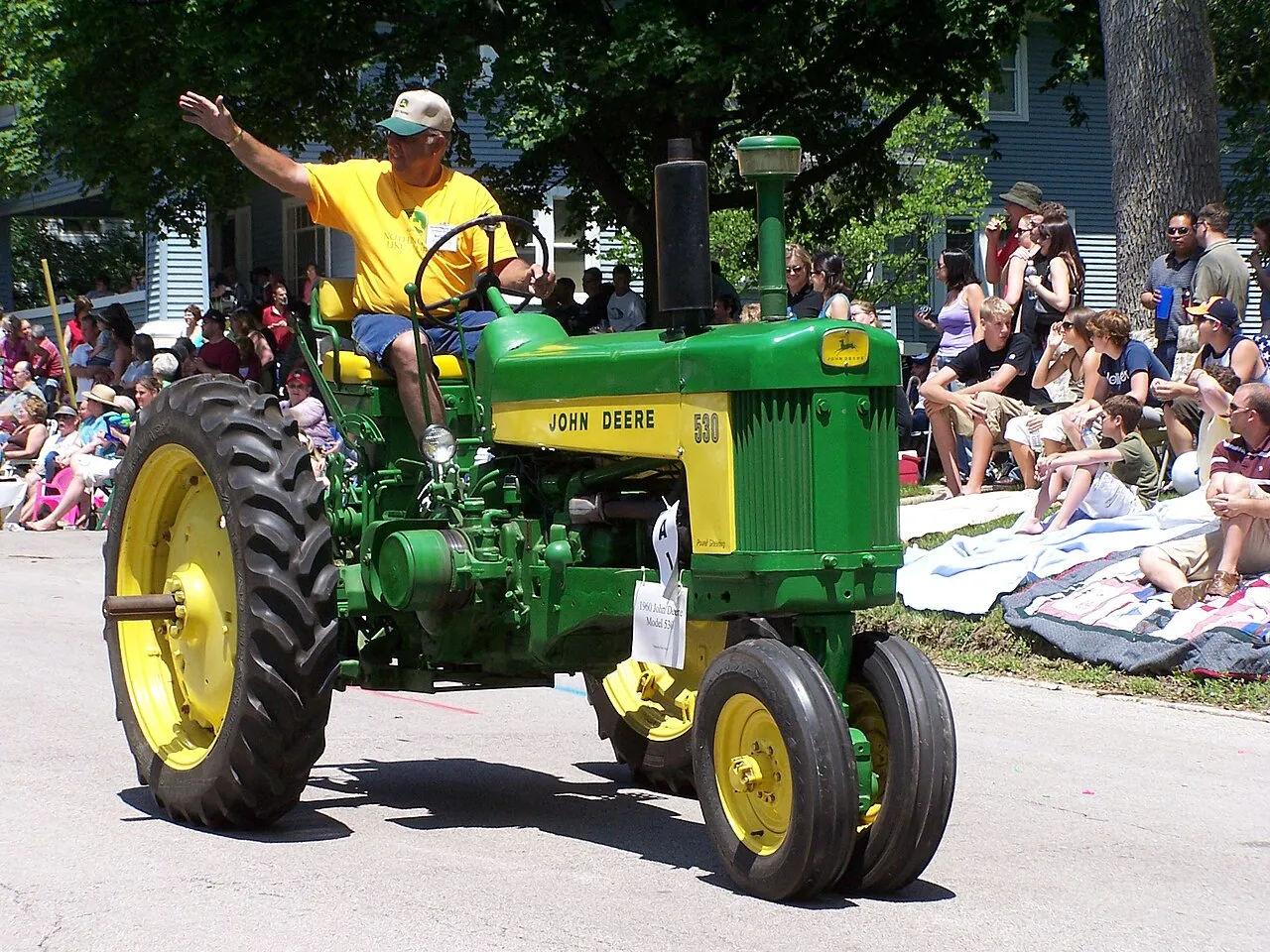
Harvard Milk Days bills itself as the longest ongoing hometown festival in Illinois, and it is the weekend the whole town plans around. In 2026 it ran June 5 through 7 at Milky Way Park, with carnival rides, a junior cattle show, an antique tractor show, food vendors, races, live music and fireworks. The parade stepped off at 1 p.m. on Saturday, June 6, and it lasts more than two hours.
The rest of the year is quieter: summer events downtown, school sports, and county fairs and festivals within a short drive in Woodstock and across the Wisconsin line. If you are touring houses in early June, stay for the parade. It tells you more about Harvard than any listing will.
What's Being Built in Harvard, and What Isn't
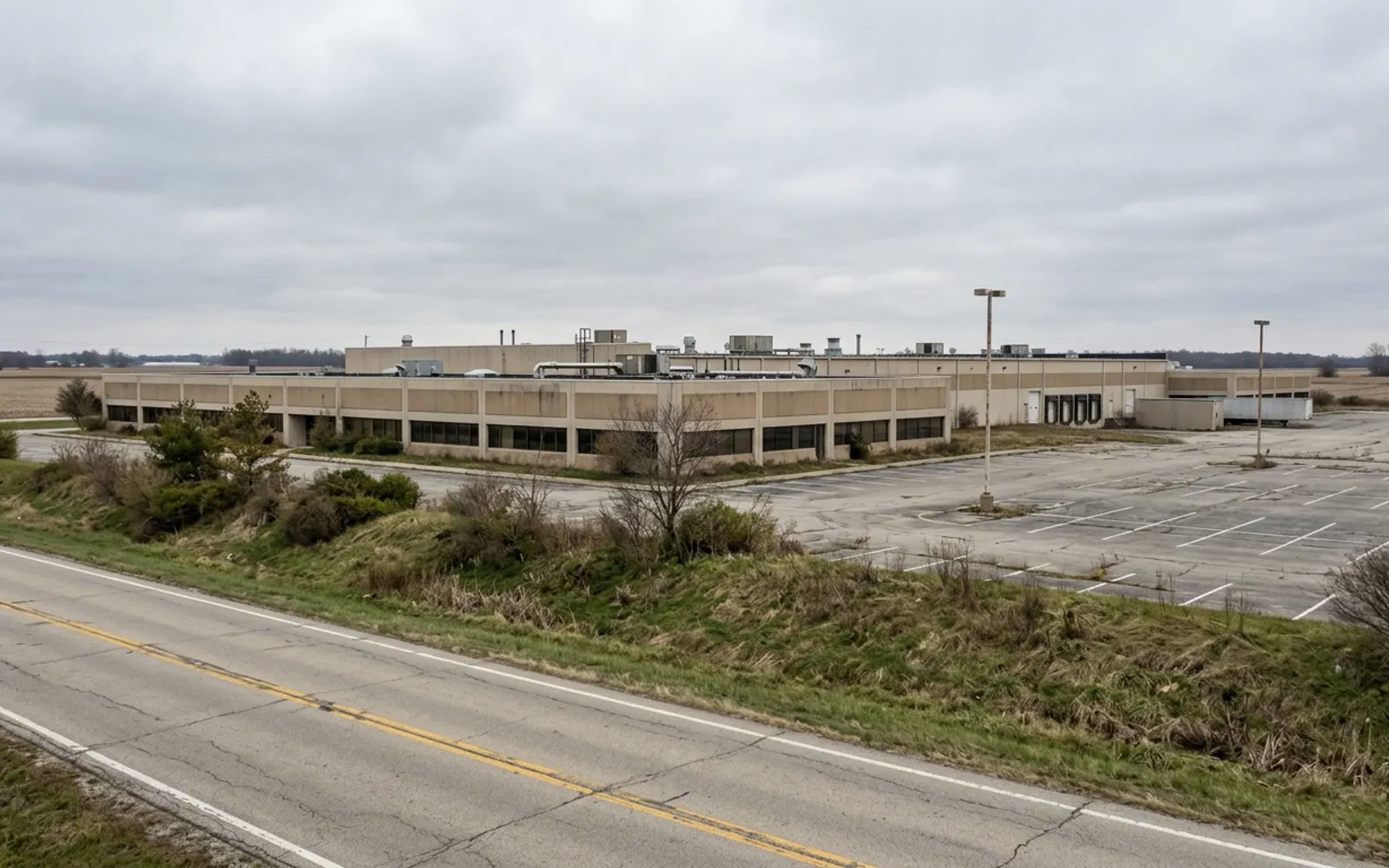
The biggest property in Harvard is also its biggest problem. The former Motorola campus, a 1.5 million square foot building on the south side, sat mostly empty for two decades before a medical glove maker moved in with great fanfare in 2023. According to Shaw Local's September 11, 2026 report, the city declared the building unfit for occupancy in April 2026 after its fire suppression systems failed inspection, a lender filed a $126.7 million foreclosure action on August 20, 2026, and ComEd won a $2.4 million judgment for unpaid electric bills. The mayor has said the city wants the building put to productive use by someone willing to invest in it. For homeowners, the practical point is that Harvard's largest potential employer and taxpayer is in limbo, and any news about a buyer will matter.
On the residential side, growth is steady and small. Builders are filling in long-platted lots in subdivisions such as Turtle Crossing and Oak Grove Crossing on the west side, at prices that start in the low $300,000s on the listings I have seen this year. The city's 2024-2026 strategic plan update says staff took part in regional "missing middle" housing planning in 2026 and wants to encourage building in existing subdivisions, but a formal residential development plan has not been completed.
The city also lists a planned $4 million street bond and a five-year road plan starting in spring 2026, a sidewalk connection from Ayer Street to Marengo Road slated for 2026 construction, a transit-oriented downtown plan, and work to bring an infant formula manufacturer, Harvard Nutrition, to the Arrowhead industrial park. Treat those as plans until you see them built.
I don't label any town or neighborhood as safe or unsafe.
Flood Risk in Harvard
Flooding is not a town-wide issue in Harvard. Redfin, using First Street's model, rates the city's flood risk as minor, with about 2% of properties at risk of severe flooding over the next 30 years. The same model rates wildfire risk as moderate, with about 9% of properties at some risk, mostly a reflection of the open grassland and farm fields around town.
Two checks still belong on every house. Look up the address on the FEMA flood map, because a mapped flood zone can mean required flood insurance on a mortgage. And ask about water in the basement, especially in the older homes downtown and on rural properties near creeks and wetlands. In my experience the follow-up question, what they did about it, matters more than the first answer.
Frequently Asked Questions
How much does a house cost in Harvard, IL?+
Redfin reported a median sale price of $288,809 for the three months ending August 2026, up 14.4% from a year earlier, and Zillow's home value index was $278,494 for August 2026. Older homes near downtown sell for less, and rural acreage is priced on the land.
What are property taxes in Harvard, IL?+
The median effective rate is about 2.38%, with a median bill of about $4,868 (Ownwell, April 2026). Rates vary by township and tax code, and a home's bill usually rises after a sale once it is reassessed.
What school district is Harvard, IL in?+
Harvard Community Unit School District 50 serves the city from preschool through Harvard High School. Some rural addresses with a Harvard mailing address fall in neighboring districts, so confirm each property with the district.
How long is the commute from Harvard to downtown Chicago?+
Harvard is the last stop on Metra's Union Pacific Northwest line. The fastest weekday trains reach Ogilvie Transportation Center in 92 minutes and midday trains take about 110. There are 14 weekday trains to Chicago.
Can I build a house on farmland near Harvard?+
It depends on the zoning. Under McHenry County's development ordinance, a house in the A-1 Agriculture district needs at least 40 acres, while A-2 allows a home on 1 acre and the estate districts range from 1 to 5 acres. Check the parcel's zoning with the county before you buy.
Do homes in Harvard have city water or wells?+
Homes inside city limits are on city water and sewer. Most rural properties with a Harvard address use a private well, a septic system and often propane, so budget for well and septic inspections.
What neighborhoods are in Harvard, IL?+
Buyers usually think in terms of the old town around downtown and the Metra station, the 1990s and 2000s subdivisions such as Shadow Creek, Turtle Crossing and Oak Grove Crossing, and the rural 60033 area outside city limits.
What is happening with the old Motorola plant in Harvard?+
As of September 2026, the city had declared the building unfit for occupancy after failed fire inspections in April, and a $126.7 million foreclosure action had been filed against the owners in August, according to Shaw Local. No new user had been announced.
Eshu Chikoti has extensive access to off-market listings throughout Harvard and the rest of McHenry County — homes that never make it to the public listing sites. That matters right now: in a seller's market like this one, well-priced homes routinely go under contract within days, and buyers relying only on public listings are competing for whatever is left over. Working with someone plugged into off-market inventory means seeing homes before the crowd does.
Eshu Chikoti · 847-691-4282 ·
Get new Harvard listings by email
When a home comes on the market in Harvard, I'll email it to you.
Just your email. Unsubscribe any time by replying.
Thinking About Harvard?
Whether you're buying, selling, or just curious what's on the market, I can walk you through Harvard street by street.