Glendale Heights, IL
Glendale Heights, IL is a 1959 DuPage County village of about 32,800 people, built mostly in the 1960s through the 1980s, with no Metra station of its own and one of the lowest typical home values in the county.
Living in Glendale Heights, IL means a median sale price near $315,000 in Redfin's August 2026 report for ZIP 60139, property tax around 2.84% of value, and a short drive to the Glen Ellyn Metra station for a 37-minute express to Ogilvie. The trade-offs are a car-dependent layout and a village inspection before every sale.
Written by Eshu Chikoti · 847-691-4282 ·
How Glendale Heights, IL Got Here: A Short History
Until 1958 the land that is now Glendale Heights was mostly farms, with a few small subdivisions around the edges. According to the Village of Glendale Heights history page, Glen Ellyn Countryside, on the east side of Bloomingdale Road north of North Avenue, had been subdivided in 1951. The area was served by the Glen Ellyn post office, and there was no village.
That changed in 1958, when Midland Enterprises, run by brothers Charles and Harold Reskin, bought two farms on Glen Ellyn Road north of North Avenue. The first houses went up that year on Glen Ellyn Road and Larry Lane near Fullerton Avenue. By early summer of 1959 the area had 104 residents, and a petition to incorporate was filed on June 16. A court declared the village organized on July 13, 1959, the first election was held on August 2, and the first village board met on September 1 in the home of the new village president, Anthony Larry.
The name took two tries. The village incorporated as Glendale, a blend of its neighbors Glen Ellyn to the south and Bloomingdale to the north. A conflict with another Glendale in southern Illinois forced a change, and in March 1960 it became Glendale Heights. The village says "Heights" describes the land itself: the village sits on two distinct elevations with about a 100-foot difference, which Wikipedia attributes to the village straddling the Valparaiso Moraine.
Growth after that was fast. Wikipedia's census table shows 173 residents in 1960, 11,406 in 1970, 23,251 in 1980, 27,973 in 1990 and 31,765 in 2000. That curve is the single most useful fact for a buyer, because it tells you when the houses were built. Most of Glendale Heights went up in roughly two decades, by a small number of builders, and it shows in the street layouts and the floor plans.
One piece of the old farm landscape survives. The village's Historic House was built in 1888 on Bloomingdale Road and was a farmhouse for 75 years. Harold Reskin later used it for Midland Enterprises' offices, and after he died in 1996 his wife Merle donated it to the village. It was moved to 311 Windy Point Drive in 2000, restored, and reopened in 2009 for the village's 50th anniversary.
Glendale Heights at a Glance
Glendale Heights sits in north-central DuPage County, about 25 miles west of the Loop. Wikipedia's summary puts the village at 5.53 square miles, 5.39 of them land, and lists its neighbors as Roselle, Medinah, Itasca, Carol Stream, Addison, Wheaton, Glen Ellyn and Lombard, with Bloomingdale directly north. The whole village is in DuPage County. It straddles two townships, Bloomingdale to the north and Milton to the south, and North Avenue is roughly the line between them.
The 2020-2024 Census ACS puts the population at 32,808 in 11,571 housing units. 64.4% of occupied homes are owner-occupied, lower than many DuPage suburbs because Glendale Heights has a large stock of apartment complexes and condominium buildings alongside its single-family streets. The ACS median value of an owner-occupied home is $261,700 and the median gross rent is $1,590.
The village describes itself as almost entirely residential, but it has a real employment base. Wikipedia's employer list names Spraying Systems Co. (about 1,000 employees), Cornelius, Inc. (500) and Kronos Food (400) as the largest private employers, followed by the Super Target and the Jewel-Osco. The village's Public Works department says it serves eight industrial parks. UChicago Medicine AdventHealth GlenOaks, a full hospital, is inside the village as well.
The layout is easy to learn. North Avenue (Route 64) crosses the village east to west and carries most of the retail. Army Trail Road is the other east-west road, across the north side. Bloomingdale Road and Glen Ellyn Road run north to south, and Fullerton Avenue connects Camera Park, the library and Glenside Middle School in the middle of town. Most people describe where they live by which side of North Avenue and which side of Bloomingdale Road they are on.
One check before you fall for a house: a "Glendale Heights" mailing address does not always mean the village. ZIP 60139 includes unincorporated DuPage County pockets, and you can often spot them by grid-style numbers like 2N256 or 1N649. Those parcels can have different zoning, services, inspection rules and tax bills. I confirm village limits on every address before I run numbers.
At a Zillow index of $326,702 in August 2026, it costs less to get in here than in Carol Stream, Lombard, Bloomingdale or Glen Ellyn, and a hospital, a golf course, a pool and a large central park are all inside the village.
Sellers should expect the village's point-of-sale inspection, so plan for it rather than being surprised by it.
Glendale Heights Neighborhoods, Pocket by Pocket
Glendale Heights has no official neighborhoods, but listings name subdivisions constantly, and because the village was built in a short burst by a handful of developers, the subdivision name tells you a lot. It usually tells you the decade, whether the home is detached, attached or a condo, and roughly which school district it feeds.
The simplest split is North Avenue. North of it you are in Bloomingdale Township, closer to Army Trail Road, the Elgin-O'Hare corridor and the Medinah and Roselle Metra stations. South of it you are in Milton Township, closer to Glen Ellyn, the Glen Ellyn Metra station and I-88. The second split is Bloomingdale Road. The east side of the village is mostly Marquardt District 15 territory and the west side is mostly Queen Bee District 16, which I cover in the schools section. Neither side is better. They trade school district, commute direction and housing type against each other.
Walk Score does not break Glendale Heights into neighborhood scores; it rates the village 38 for walking and lists the whole 60139 ZIP at the same number. In practice the streets around Camera Park, the library and the Civic Center, and the blocks within a few minutes of the North Avenue shopping, are the only places where walking to anything is realistic.
I have not closed a sale inside Glendale Heights yet, so I won't pretend to a local's feel for every cul-de-sac. What I do on every Glendale Heights address is the same four checks: village limits, school district, township and tax code, and whether the house is ready for the village's point-of-sale inspection. In this village those four vary more from street to street than the houses do. If you want that done for a specific listing, that is a conversation I am happy to have here.
Below are the subdivision names you will see most often. Build eras come from a single public subdivision directory and are approximate, and several of the paired names are how one data publisher groups the village, so treat them as a starting point and confirm on the listing.
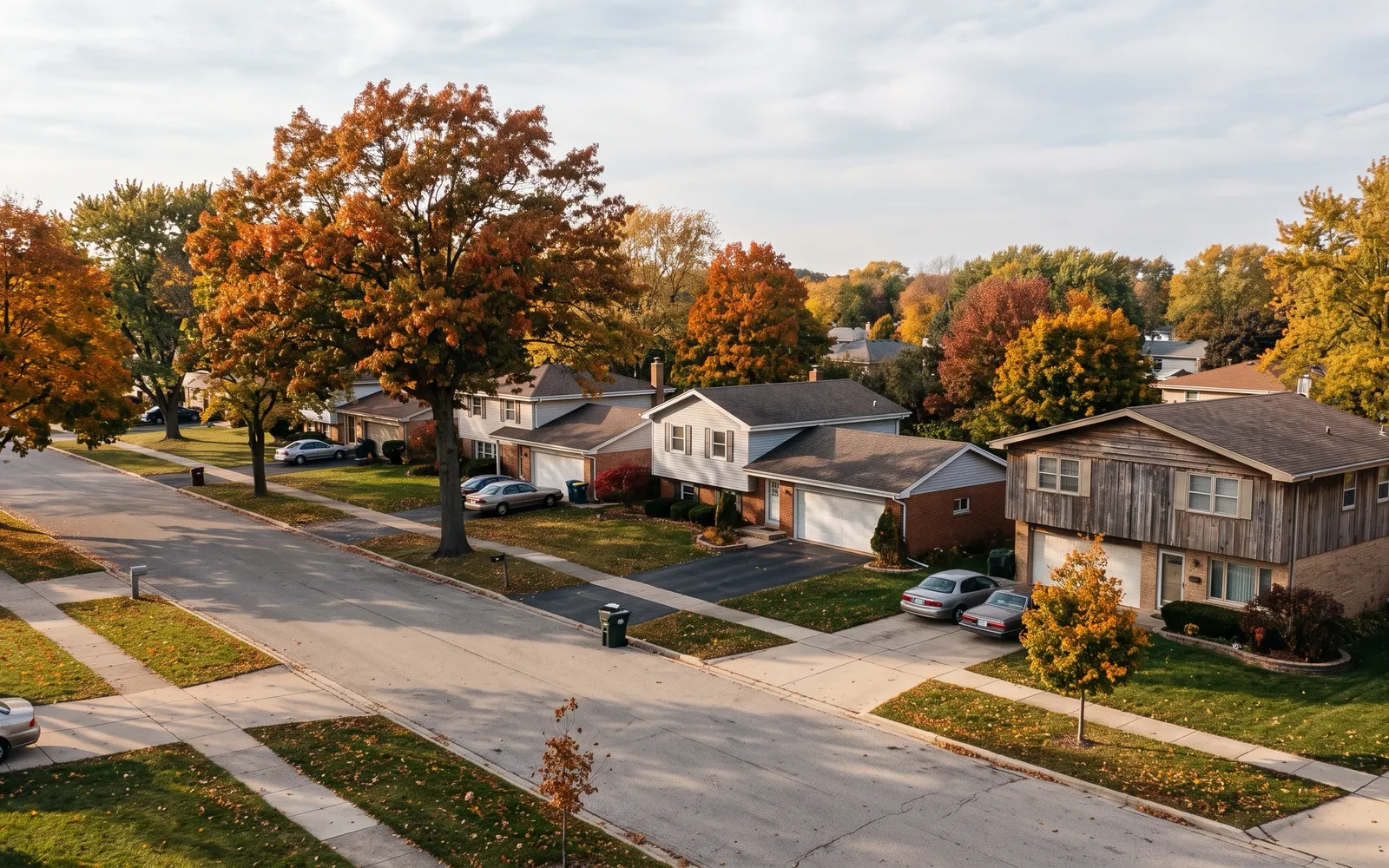
Glendale Terrace. One of the original areas of the village, with homes from the late 1940s through the 1970s. Expect ranches, split-levels and older lots near the Glen Ellyn Road and Fullerton Avenue core where the Reskins started building.
Westlake. Single-family homes and townhomes built roughly 1972 to 1985 south of Army Trail Road.
Glendale Lakes. Townhomes and single-family homes built roughly 1975 to 1990, around the village-owned Glendale Lakes Golf Club on President Street.
Shorewood. A condominium community built about 1978 to 1980 off Bloomingdale Road, in the Milton Township corner of the village. One directory notes heat, gas and water are included in the monthly assessment; confirm on the association documents.
Cambria. Single-story quad-style condominiums and early townhomes off North Avenue. Among the lowest price points in the village.
Glen Hill and Pheasant Ridge. Named for the Queen Bee District 16 schools and streets on the west side of the village.
Polo Club, Reskin, Pheasant Trails, Morningstar, Emerald Hills and Asbury Square. Smaller subdivision names you will see on listings. Ask for the build year and the school assignment on each one; they vary.
Glen Ellyn Countryside. The 1951 subdivision east of Bloomingdale Road and north of North Avenue that predates the village. Parts of the area around it are unincorporated, so check whether a listing is inside the village.
What Glendale Heights Homes Look Like, by Era
Glendale Heights was built fast, and the Census numbers show it. According to the 2020-2024 ACS, 32.9% of the village's housing units were built in the 1970s, 22.4% in the 1980s and 19.2% in the 1960s. Another 11.6% date to the 1990s. Only about 9% are from 2000 or later, and fewer than 5% predate 1960. Three out of four homes here are between about 35 and 65 years old.
The mix of housing types is broader than in most DuPage villages. The ACS counts 45.6% of units as detached single-family homes and 19.2% as attached single-family, which is townhomes and quad-style units. About 30.7% are in buildings of five or more units, the apartment complexes and condominium buildings that line parts of North Avenue, Army Trail Road and Bloomingdale Road. That variety is why the village has entry points well under the median, and it is also why you have to compare like with like when you read price statistics.
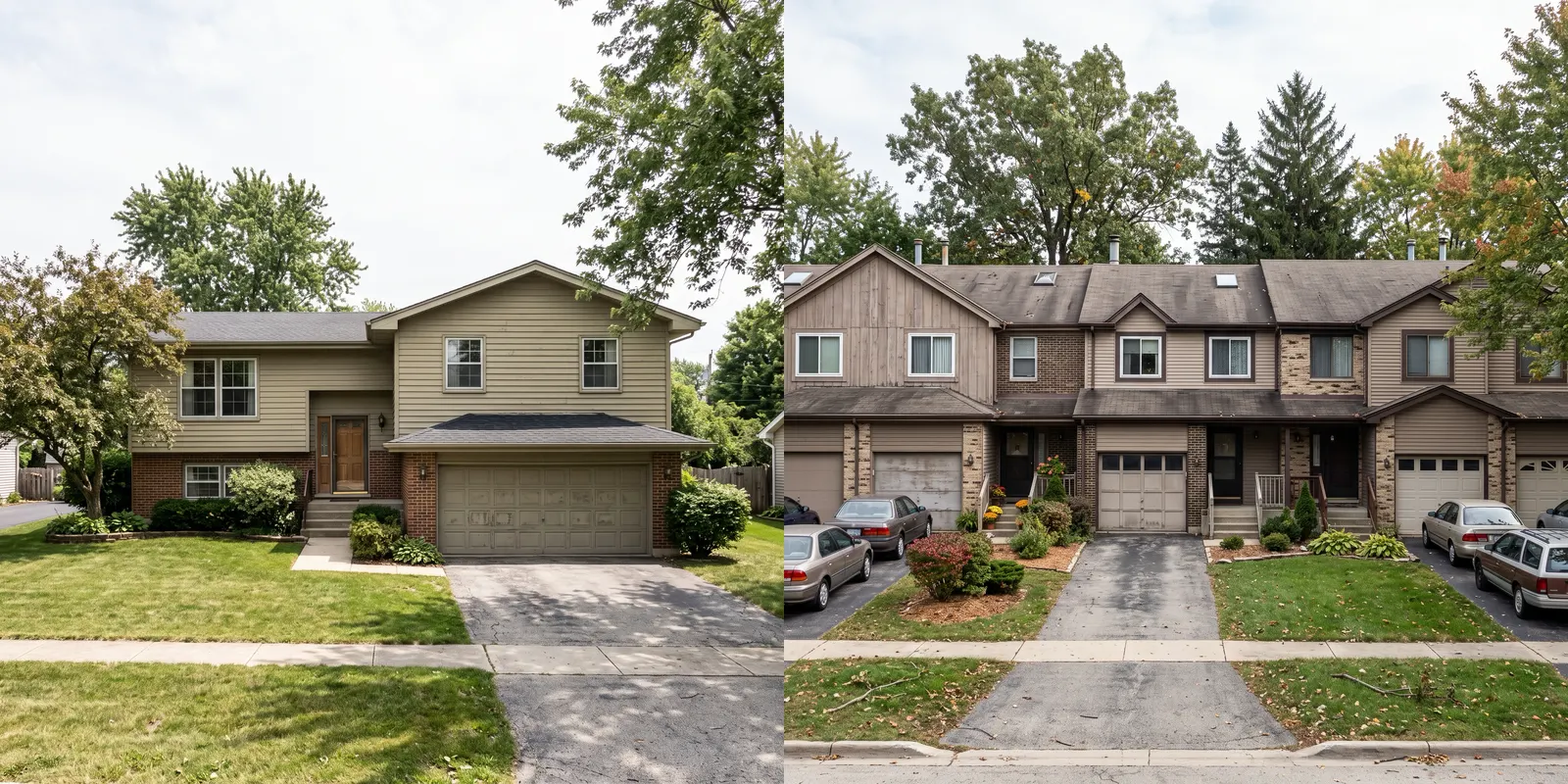
The village's own history page describes the landscape as ranch homes, split-levels, apartments and condominiums, and that matches what I see on listings. The 1960s streets are ranches and some Cape Cods. The 1970s brought raised ranches, split-levels and two-story colonials, plus the first big townhome and condo communities. The 1980s filled in the remaining farmland with more townhomes, condos and later two-stories. There is very little new construction because there is very little land left.
What that means at inspection is predictable. A 1970s house in Glendale Heights often has original windows, an aging furnace and water heater, older aluminum or early copper wiring questions depending on the year, and a roof or two layered over the decades. Condos and townhomes shift some of that onto the association, so read the budget and the reserve study, not just the monthly assessment. None of this should kill a deal. All of it belongs in the price. My home inspection checklist is a good place to start.
The Glendale Heights Housing Market in 2026
Glendale Heights is one of the more affordable places to buy in DuPage County, and homes here still move. Redfin's ZIP 60139 market page reported a median sale price of $314,864 for August 2026, up 4.1% from a year earlier. Homes sold in a median of 47 days, one day slower than last year, at 100.4% of list price. 42.9% sold above list, and 18.4% of listings took a price drop. Redfin gives the ZIP a Compete Score of 75 out of 100, which it calls very competitive, and says homes get about four offers on average.
A note on geography. Redfin's page is for ZIP 60139, which is almost all of Glendale Heights plus a few unincorporated pockets that share the ZIP. Zillow's home value index is for the village itself. For August 2026 it puts the typical Glendale Heights home at $326,702, up 4.5% from $312,782 a year earlier and up about 10% from $295,773 in August 2024. The two sources agree on direction this year, which does not always happen.
Where they diverge is price per square foot. Redfin's median is $226 per square foot, down 3.0% from last year, while the sale price itself rose. That usually means the mix of what sold shifted toward smaller homes. Redfin also counts 72 sales in August, down 32.7% from 107 a year earlier. Fewer sales, a higher median and more price cuts is a market that is still competitive for well-priced homes and less forgiving of overpriced ones.
For context, Zillow's August 2026 index puts the typical home in neighboring Carol Stream at $385,105, Lombard at $388,194, Bloomingdale at $437,885 and Glen Ellyn at $578,698. Glendale Heights at $326,702 is the lowest of that group. The trade-off for the lower price is the tax rate, which I cover next, and the fact that a large share of the stock is attached or condo.
A village median only goes so far here. The spread between a Cambria quad-condo and a two-story in Glendale Lakes is well over $200,000, so the median describes the village and says little about a specific house. If you are weighing whether now is the moment, my take on whether it is a good time to buy in 2026 walks through the rate and inventory picture.
Glendale Heights Property Taxes, Transfer Stamps and the Real Cost of Owning
Property tax is the number that changes the monthly payment most in Glendale Heights, and it never shows up in the list price. Ownwell's data, updated April 13, 2026, puts the median effective rate at 2.84%, against a median home value of $249,450 in its records, and the median annual bill at $6,869. The 25th percentile bill is $5,287 and the 75th percentile is $7,893. The DuPage County median bill, for comparison, is $7,578.
Here is what that looks like on a real purchase. At 2.84%, a house bought at Redfin's August 2026 median of $314,864 would eventually carry about $8,940 a year in tax, roughly $745 a month on top of the mortgage. Current bills on the same house may be lower because assessments trail the market, but the township assessor catches up. The expectation I most often have to reset is buyers who budget off the seller's current bill, especially where the seller has a senior exemption that goes away at closing.
Two townships assess the village. North of North Avenue is Bloomingdale Township and south of it is Milton Township. Each combination of township, school district, park and library district is its own tax code with its own rate, so two houses of the same price can carry different bills. In Glendale Heights the school district line is the biggest driver, because District 15, District 16 and District 41 each levy separately. If you think a current assessment is too high, Ownwell notes the appeal window closes in early summer; check the DuPage County Board of Review calendar for the exact date in your year. This is general information, not tax advice. Your actual bill depends on your parcel, your exemptions and the assessor.
The village adds one cost and one process that sellers need to plan for. According to the village's transfer stamp page, the transfer tax is $3 for every $1,000 of value or fraction thereof, about $945 on a $315,000 sale. Before the stamp can be issued, the seller has to apply for a point-of-sale inspection at least 21 days before closing ($100 for a single-family home), schedule the inspection, submit a plat of survey less than a year old, pay the final water bill and clear any amounts owed to the village. If the inspection finds items to correct, the seller can fix them and get a re-inspection, or the buyer can sign a Guarantee of Compliance for authorized items with escrow posted. I start that application the week a contract is signed. The full picture of who pays what at closing is in my Illinois closing costs guide.
Glendale Heights Schools: Districts 15, 16 and 41 and the Glenbard High Schools
Schools in Glendale Heights take more checking than the town name suggests, because three separate K-8 districts split the village and all three feed Glenbard Township High School District 87. According to Wikipedia's summary of the village, Marquardt School District 15 serves the east side, Queen Bee School District 16 serves much of the west side, and Glen Ellyn School District 41 serves a smaller southern slice.
Marquardt District 15 says it serves about 2,550 students from the eastern portion of Glendale Heights, parts of Addison, the southern section of Bloomingdale, unincorporated Lombard and the northern part of Glen Ellyn Countryside. It runs four K-5 schools, G. Stanley Hall (built 1961), Charles G. Reskin (1964), Winnebago (1973) and Black Hawk (1976), and Marquardt Middle School (1974) for grades 6 through 8. Winnebago has a Bloomingdale address but sits close to the village line. Wikipedia says District 15 feeds primarily into Glenbard East High School in Lombard.
Queen Bee District 16 lists Glen Hill Elementary, Americana Elementary, Glenside Middle School and the Queen Bee Early Childhood Center. Wikipedia says District 16 students are split between Glenbard North in Carol Stream and Glenbard West in Glen Ellyn for high school. Glendale Heights addresses inside Glen Ellyn District 41 attend Abraham Lincoln Elementary and Hadley Junior High and feed Glenbard West.
I don't rank schools on this page, and I'd be careful with anyone who does it by town name here, since one village feeds three different high schools.
The detail that trips people up is assignment. Which elementary, middle and high school a house feeds depends on the street, and the answer can change from one side of Bloomingdale Road to the other. A listing's school fields are not proof. Check the address with the elementary district and with District 87's boundary lookup before you write an offer, and ask me for the boundary if you want it done for a specific house.
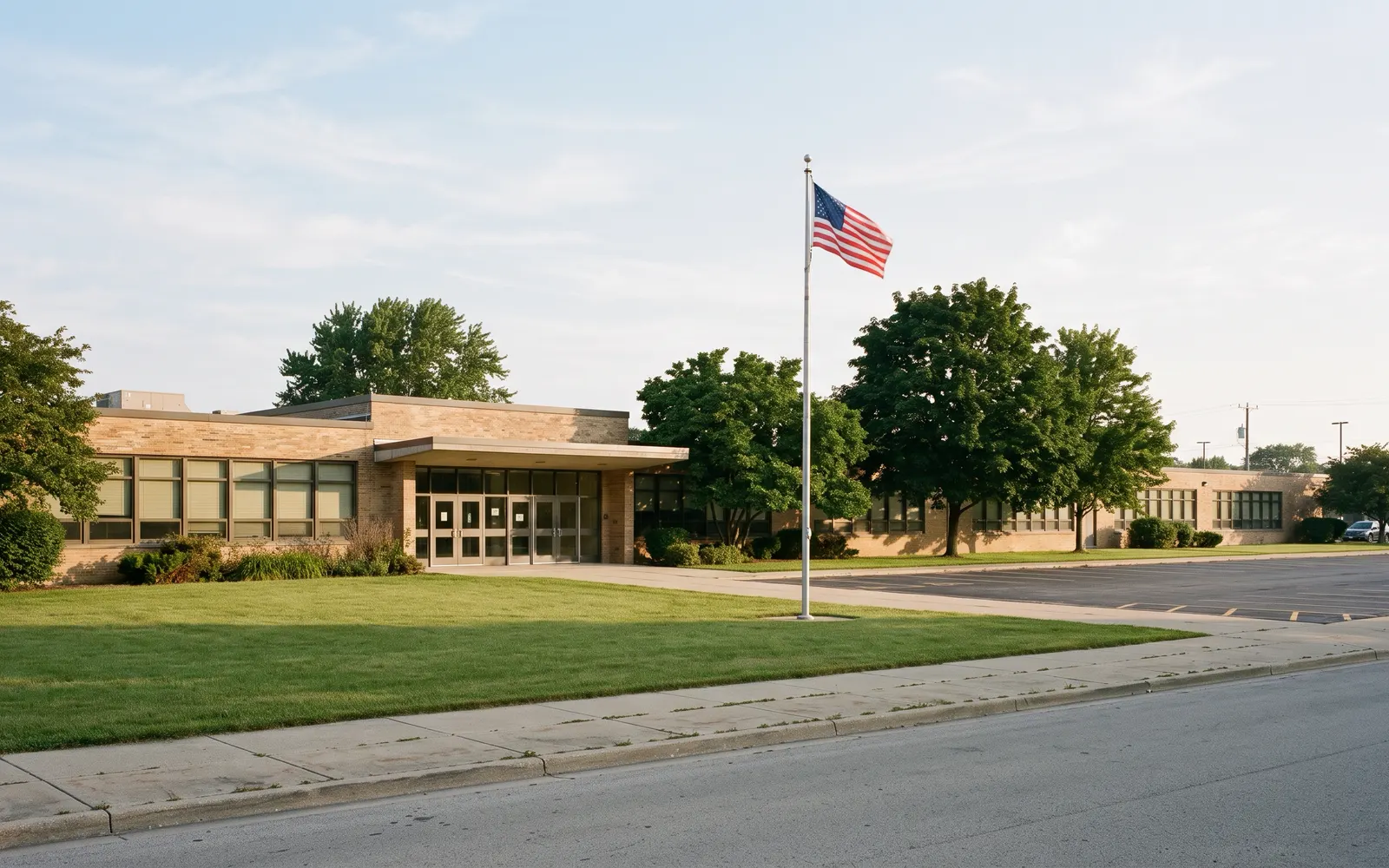
G. Stanley Hall Elementary. 1447 Wayne Avenue. District 15, opened 1961.
Charles G. Reskin Elementary. 1555 Ardmore Avenue. District 15, opened 1964.
Black Hawk Elementary. 2101 Gladstone Drive. District 15, opened 1976.
Winnebago Elementary. 195 Greenway Drive, Bloomingdale. District 15, opened 1973.
Marquardt Middle School. 1912 Glen Ellyn Road. District 15, grades 6-8.
Glen Hill Elementary and Americana Elementary. District 16.
Glenside Middle School. On Fullerton Avenue by Camera Park. District 16.
Abraham Lincoln Elementary and Hadley Junior High. District 41, for the Glendale Heights addresses inside its boundary.
Glenbard East, Glenbard North and Glenbard West High Schools. District 87, at 1014 S. Main Street in Lombard, 990 Kuhn Road in Carol Stream and 670 Crescent Boulevard in Glen Ellyn.
Commuting from Glendale Heights: Which Metra Station to Use
Glendale Heights has no Metra station of its own. Four stations are a short drive away on two different lines, and which one you use depends on which end of the village you live in. It is worth deciding before you buy, because the lines end at different downtown terminals.
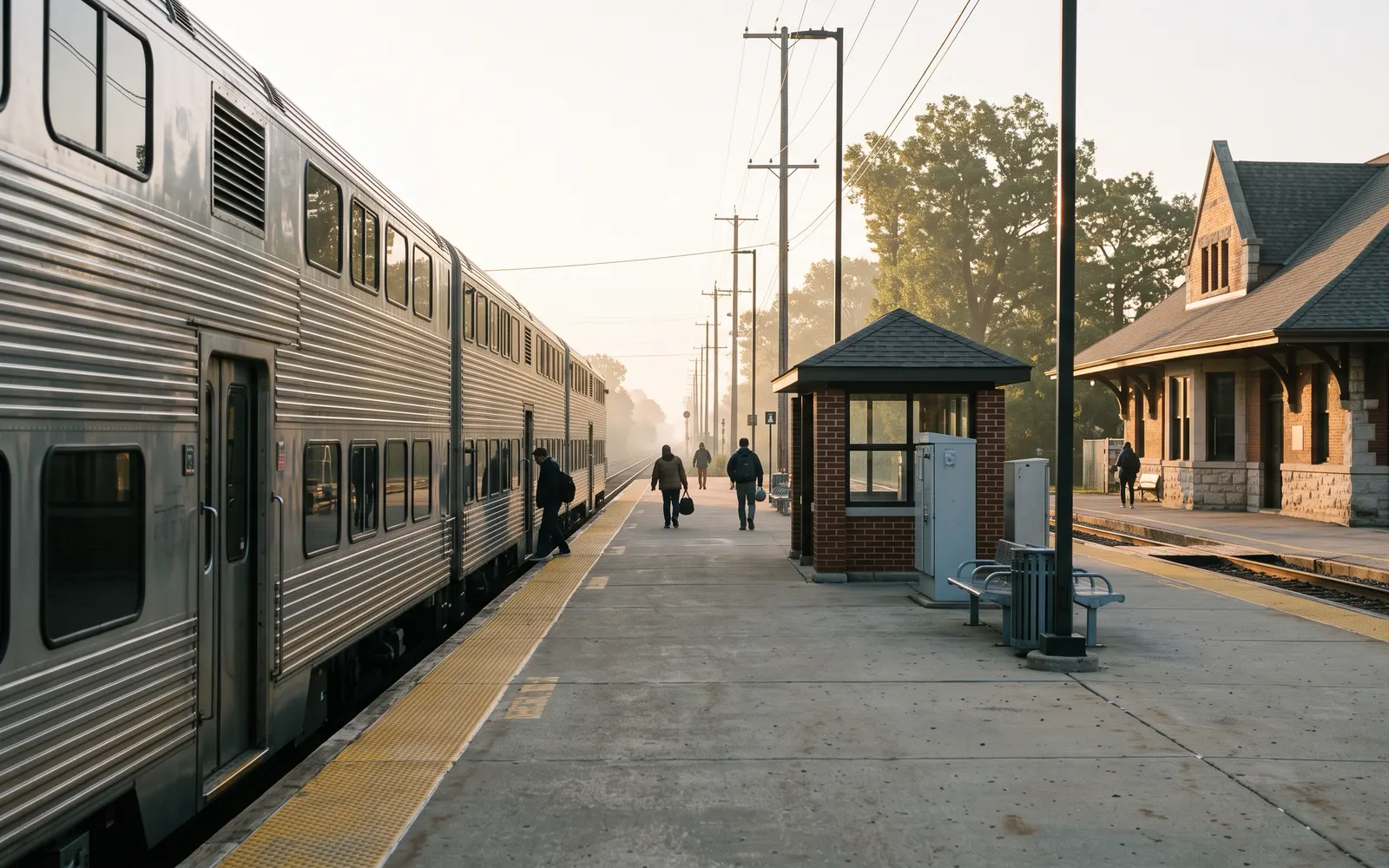
South of North Avenue, most commuters use Glen Ellyn on the Union Pacific West line, which runs to Ogilvie Transportation Center. Metra's published schedule data for the fall 2026 schedule (September 28 to October 25) shows 29 inbound weekday trains from Glen Ellyn. The fastest morning express leaves at 7:23 a.m. and arrives at 8:00, 37 minutes. Other rush-hour expresses take about 42 minutes, and local trains take about 53. On weekends Glen Ellyn has 10 trains each way on Saturdays and 9 on Sundays.
North of North Avenue, the Milwaukee District West line is often closer. It runs to Union Station, which suits a job in the West Loop. Roselle has 23 inbound weekday trains, with the fastest express at 39 minutes (6:48 and 7:48 a.m. departures) and a typical run of about 55. Medinah has 21, with the fastest at 44 minutes and a typical run of about 53. Itasca has 20, with the fastest at 40 minutes and a typical run of about 49. Roselle runs 12 trains each way on Saturdays and 9 on Sundays.
Pace fills some gaps. Wikipedia lists Routes 711 and 715 connecting Glendale Heights to Wheaton and other destinations. Most commuters I talk to still drive to the station, so ask about parking permits at whichever station you plan to use; they are run by each host village and some have waitlists.
Driving from Glendale Heights: Highways and O'Hare
Driving is the main way people get around Glendale Heights, and the village is better placed for it than its lack of a train station suggests. I-355, the Veterans Memorial Tollway, runs just east of the village, so the ramps at Army Trail Road and North Avenue put I-290, I-88 and I-55 within easy reach. North Avenue (Route 64) runs east toward Chicago, and Army Trail Road is the other main east-west route. Bloomingdale Road and Glen Ellyn Road carry traffic north and south.
For O'Hare, the usual route is east on Army Trail Road or I-355 north to the Elgin-O'Hare (Route 390) or I-290. By my estimate from the map, that is roughly 15 miles, usually 20 to 30 minutes outside rush hour.
Two local notes. North Avenue carries heavy weekday traffic, including trucks serving the industrial parks, so drive a listing's route to it at 7:30 a.m. before you commit. And the village posts weekly construction updates on its construction and projects page. In September 2026 that meant the Mill Pond Drive resurfacing project, the 2026 MFT street program and a CDBG-funded water main replacement.
Is Glendale Heights Walkable?
Mostly not. Walk Score rates Glendale Heights 38 for walking, which it calls car-dependent, and says most errands require a car. It counts about 87 restaurants, bars and coffee shops in the village, and says a resident can walk to an average of one of them in five minutes. It calls the village somewhat bikeable, with minimal bike infrastructure.
The subdivisions were designed around cars, with curving streets and cul-de-sacs, and most errands take a short drive to North Avenue or Army Trail Road. The closest thing to a walkable core is the Fullerton Avenue and Civic Center area, where Camera Park, the Glenside Public Library, Glenside Middle School, the GH2O Aquatic Center and Village Hall sit within a few minutes of each other. If walking to the park, the pool and the library matters to you, it narrows your search to the streets around that campus.
For recreation, the village's parks have walking paths, and regional trails and forest preserves are a short drive away, including the Great Western Trail to the northwest and Mallard Lake and East Branch forest preserves nearby.
Shopping in Glendale Heights: North Avenue and Army Trail Road
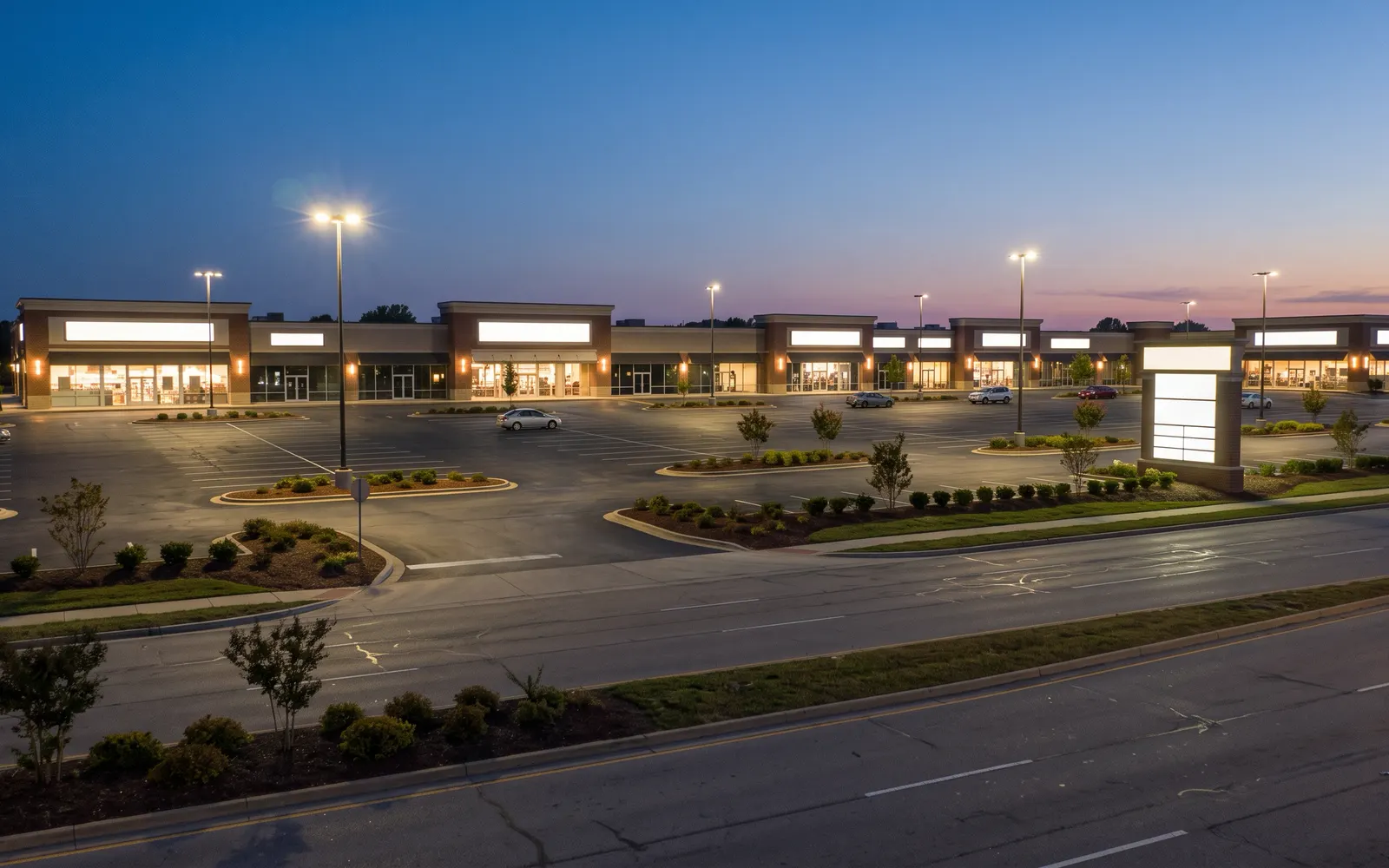
Glendale Heights has no traditional downtown, and it never did; the village grew as subdivisions and shopping centers rather than around a main street. North Avenue is the retail spine, with strip centers concentrated around the Bloomingdale Road and Glen Ellyn Road intersections, and Army Trail Road carries the second cluster on the north side. The village history page names Menards, Valli Produce and the revitalized Concord Green Shopping Center among the additions it is proudest of.
The big-box errands are covered inside the village. Wikipedia's employer list includes the Super Target and the Jewel-Osco, and Menards handles home improvement, which matters in a village where most houses are 40 to 60 years old. For a full mall, Oakbrook Center and Woodfield in Schaumburg are each about a 20- to 25-minute drive, and Yorktown Center in Lombard is closer.
Groceries and Everyday Errands in Glendale Heights
Groceries are easy to keep local. Jewel-Osco and the Super Target are both in the village and both on Wikipedia's list of the village's largest employers. Valli Produce, a produce-focused grocery that the village's history page names as one of its notable openings, is another option, and there are several independent grocers along North Avenue. Pharmacies, banks and dry cleaners cluster in the same shopping centers, so most weekly errands are a five-minute drive from anywhere in the village.
Where Glendale Heights Eats
Most of the village's restaurants are in the North Avenue and Army Trail Road shopping centers, and they are mostly independent, counter-service and owner-operated places rather than chains. Walk Score counts about 87 restaurants, bars and coffee shops in the village. For a sit-down dinner, many residents drive to downtown Glen Ellyn or downtown Wheaton, each about ten to fifteen minutes south. In summer, the food booths at Glendale Heights Fest in Camera Park are the village's biggest dining event of the year.
Parks, Golf and Recreation in Glendale Heights
Glendale Heights runs its own parks and recreation department rather than a separate park district, which is unusual in DuPage County. The village board renamed it from Leisure Services to Parks and Recreation in April 2026. The village maintains about 13,000 park and parkway trees, according to its parks and facilities page, and a facility directory that includes Camera Park at 101 E. Fullerton Avenue, Americana Park at 1615 Van Meter Street, Circle Park at 1435 Circle Drive and College Park at 2170 College Drive, where the village rents community garden plots, including ADA-accessible raised beds.
Camera Park is the center of it. It has ball fields including an artificial turf field, paths and a playground, sits next to the library and Glenside Middle School, and hosts Glendale Heights Fest each July. The GH2O Aquatic Center at 240 Civic Center Plaza is the village's outdoor pool, and the Sports Hub is the village-owned indoor facility for leagues, pickleball and open gym.
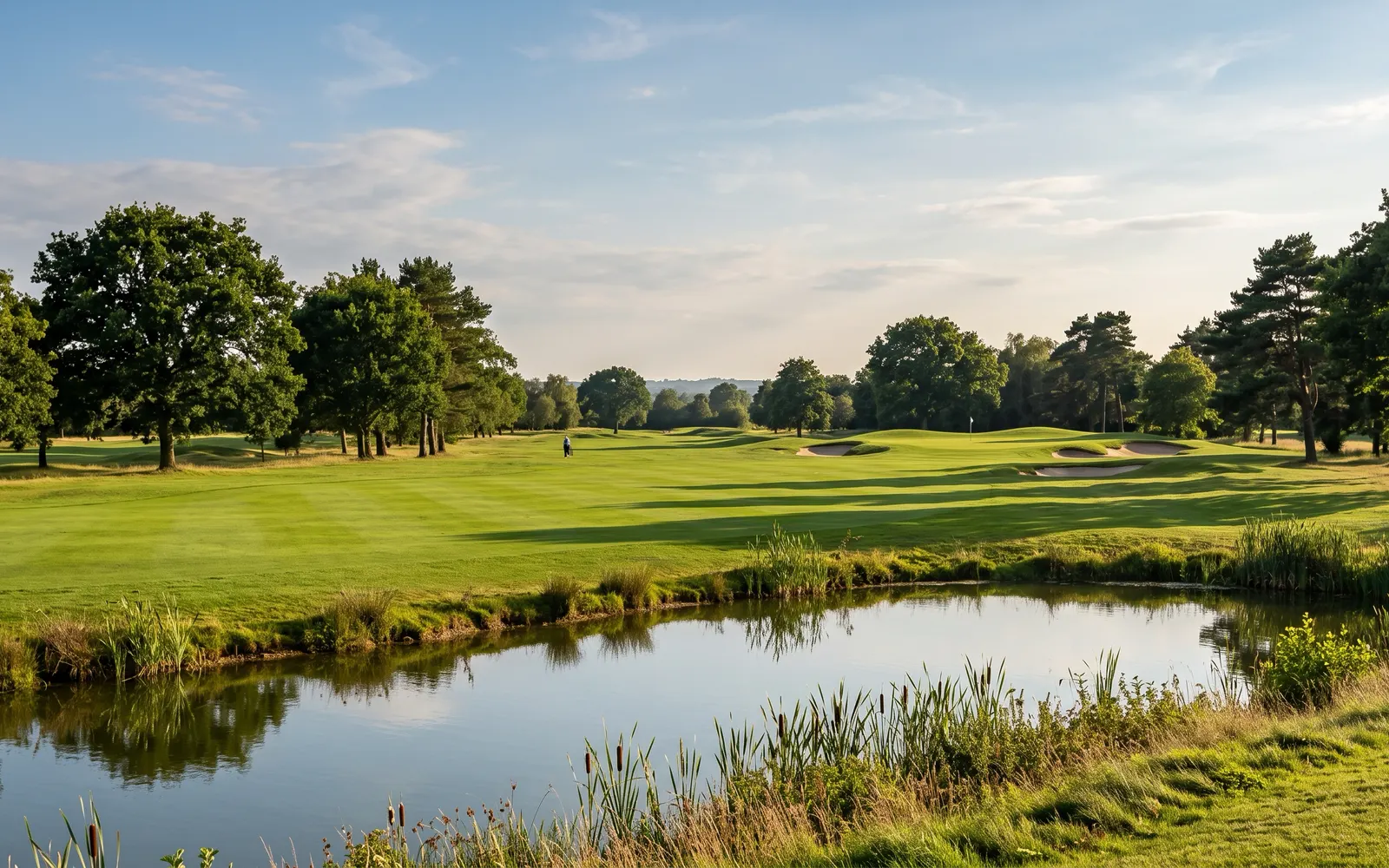
For golf, the village owns and operates Glendale Lakes Golf Club at 1550 President Street, an 18-hole public course. It hosts the Charity Golf Classic every August, which the village says has raised more than $560,000 for local charities. The Linda Jackson Center for Senior Citizens, open five days a week, runs programming for older adults. Beyond the village, Mallard Lake and East Branch forest preserves, Kline Creek Farm and Cantigny Park in Wheaton are all a short drive.
The Glenside Public Library District
Although three school districts serve the village, there is one library district. The Glenside Public Library District is at 25 E. Fullerton Avenue, across from Americana Elementary and sharing Camera Park with Glenside Middle School. The area has had a library since 1967, the Fullerton building became its home in 1982, and an expansion in the early 2000s added a separate youth area and more meeting rooms. Check the library's own site for current hours and programs, and confirm that a specific address is inside the library district, since some edge parcels are not.
Utilities in Glendale Heights
The village provides water and sewer. It buys Lake Michigan water from the DuPage Water Commission, which the village's own newsletters cite when explaining rate changes, and it runs its own wastewater treatment plant through Public Works. In September 2026 the village moved water billing to a new online portal, so new owners should set up an account there. The final water reading and bill are also part of the transfer stamp process when you sell.
ComEd delivers electricity and Nicor Gas provides natural gas. Residential garbage and recycling are handled by Republic Services under a village service agreement, according to the village's garbage and recycling page. The village also partners with Service Line Warranties of America for optional water and sewer line coverage, which is worth reading about on a house with original lines.
Hospitals In and Near Glendale Heights
Glendale Heights has a hospital inside the village, which few towns its size can say. UChicago Medicine AdventHealth GlenOaks is at 701 Winthrop Avenue, open around the clock with an emergency department, according to UChicago Medicine's location page. For specialty care, Northwestern Medicine Central DuPage Hospital in Winfield and Elmhurst Hospital are each about a 15- to 20-minute drive.
Summer Nights and Things to Do Near Glendale Heights
The village's own summer centers on Camera Park and the GH2O pool, but some of DuPage County's best-known outings are close. Cantigny Park in Wheaton, with its gardens, golf and the First Division Museum, is about fifteen minutes west. Kline Creek Farm in West Chicago is a working 1890s living-history farm run by the forest preserve district. Downtown Glen Ellyn and downtown Wheaton, each a short drive south, have the restaurants, theaters and Metra-side main streets that Glendale Heights itself does not.
Glendale Heights Fest and the Village's Yearly Traditions
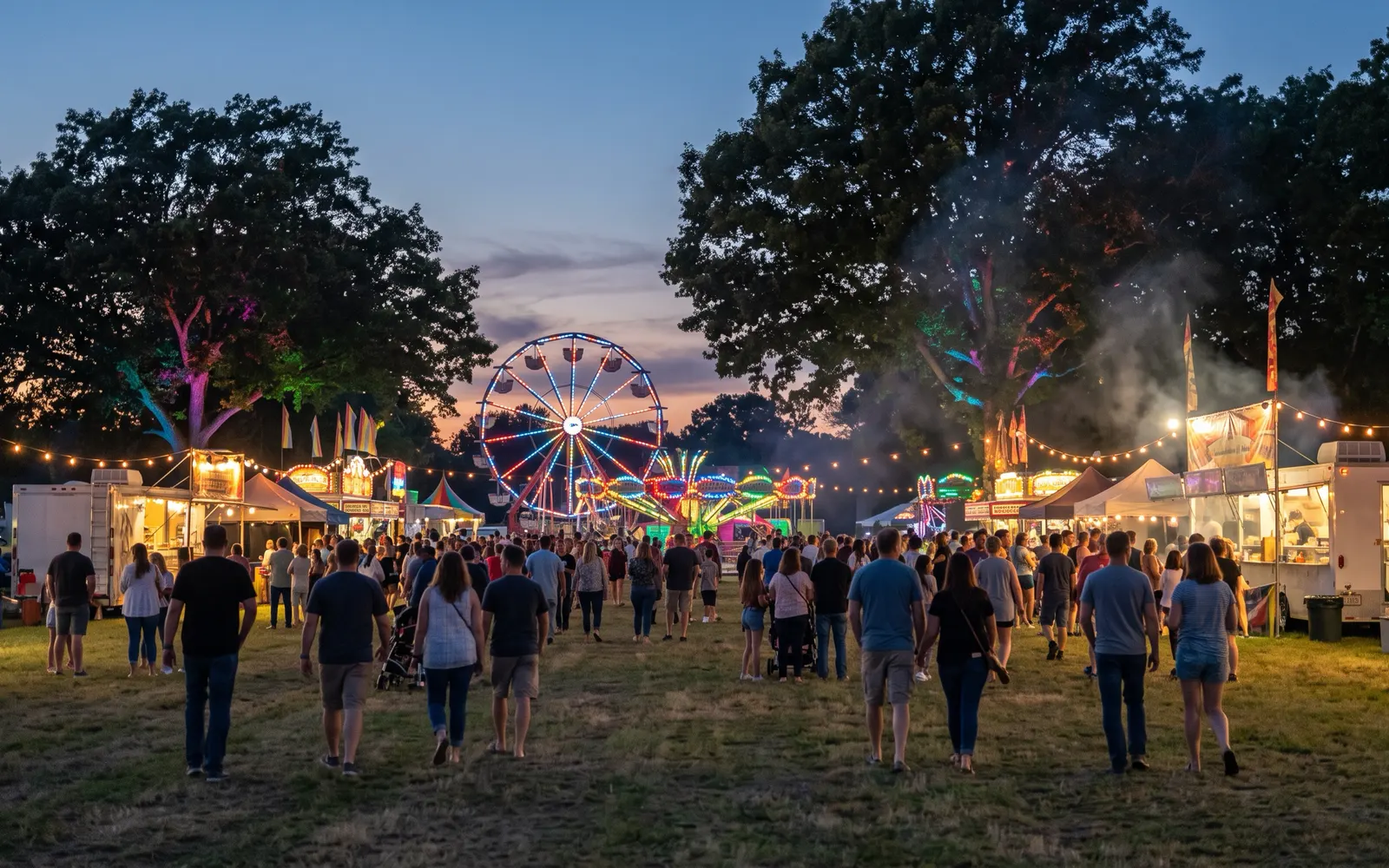
The big one is Glendale Heights Fest, held every July at Camera Park with a carnival midway, live music, food booths and a fireworks show at dusk on the closing night. The village bills it as one of the western suburbs' premier events, and in April 2026 the village board approved the producer agreement for this year's festival.
The rest of the year has a steady rhythm, according to the village events page. The Cops and Bobbers fishing derby runs in June. National Night Out is the first Tuesday in August. The Charity Golf Classic was August 26, 2026, at Glendale Lakes. The Show and Shine Car Show and the community garage sale come in late summer at Camera Park. The Family Health and Safety Fair at the Sports Hub is Wednesday, October 7, 2026, from 5 to 7 p.m. The Veterans Day ceremony is November 11 at 11 a.m. at Veterans Memorial Park, and the tree lighting at the Civic Center is at 6 p.m. on the Monday after Thanksgiving, which falls on November 30 this year. In December the Historic House hosts a free Victorian Christmas open house.
What's Being Built and Planned in Glendale Heights
Glendale Heights is nearly built out, so change here comes as redevelopment, road work and financing tools rather than new subdivisions. The biggest item in 2026 is a new tax increment financing district for the Army Trail Road and Bloomingdale Road corridor. The village board passed a resolution of intent in April, a joint review board met on July 14, and a public hearing on the redevelopment plan and the district's designation was held August 20, 2026. At the September 3 Committee of the Whole, according to Citizen Portal's meeting summary, trustees forwarded the three ordinances that create it to the full board. No specific projects or developer agreements were discussed at that meeting. The village already has an older Army Trail TIF on its books.
For a buyer, a TIF district matters in two ways. It signals that the village intends to redevelop older commercial property along that corridor over the next two decades, which can mean new retail or housing near you. And it changes how property tax growth in the district is allocated, though not the rate you pay. If you are buying near Army Trail and Bloomingdale roads, it is worth reading the redevelopment plan once it is final.
The village also adopted a 2026 to 2029 strategic plan in May, prepared with Northern Illinois University's Center for Governmental Studies, and amended its comprehensive plan's future land use map in April. On the rental side, the 168-unit Flats at Gladstone apartment community sold for $24 million, about $143,000 per unit, in March 2026, according to Hoodline. And DuPage County is putting $240,000 of a $5.8 million federal grant into storm sewer upgrades for the Nelsons Highview area near Newton Avenue and Second Street, where the Daily Herald reported that flooding has damaged homes and closed roads.
I don't label any town or neighborhood as safe or unsafe.
Flood Risk in Glendale Heights
Flooding isn't a village-wide problem in Glendale Heights, but it is a house-by-house one. Redfin's ZIP 60139 page, using First Street's model, rates the ZIP's flood risk as minor, with 87 properties, about 2% of the total, at risk of severe flooding over the next 30 years. The same page rates heat risk as moderate for 89% of properties and wildfire risk under 1%.
The village sits on a moraine with about 100 feet of elevation change, and the low spots near its retention ponds, the golf course lakes and the creek corridors are where water collects. The Nelsons Highview storm sewer project in the development section is a reminder that some streets in the area have flooded badly enough to close roads. Two checks before you write an offer. Look the address up on the FEMA flood map, because a mapped flood zone can mean required flood insurance on a mortgage. And ask the seller directly about water in the basement or crawl space. In my experience with houses from the 1960s and 1970s, the answer is often "once," and the follow-up question about what they did about it is the one that matters.
Frequently Asked Questions
How much does a house cost in Glendale Heights, IL?+
Redfin reported a median sale price of $314,864 for ZIP 60139 in August 2026, up 4.1% from a year earlier, and Zillow's home value index for the village was $326,702. Prices range widely by type, from condos and quad-style units to two-story homes.
What are property taxes in Glendale Heights, IL?+
The median effective rate is about 2.84%, with a median bill of about $6,869 (Ownwell, April 2026). Rates vary by township and school district, and a home's bill usually rises after a sale once it is reassessed.
Does Glendale Heights require an inspection before a home sale?+
Yes. The village requires a point-of-sale inspection application at least 21 days before closing ($100 for a single-family home), a plat of survey less than a year old and a paid final water bill before it issues the transfer stamp. The transfer tax is $3 per $1,000 of value.
What school district is Glendale Heights, IL in?+
Three K-8 districts split the village: Marquardt District 15 on the east side, Queen Bee District 16 on the west and Glen Ellyn District 41 in a southern slice. All feed Glenbard Township High School District 87, at Glenbard East, North or West depending on the address.
Does Glendale Heights have a Metra station?+
No. Most commuters use Glen Ellyn on the UP-W line, where the fastest weekday express reaches Ogilvie in 37 minutes, or Roselle, Medinah or Itasca on the MD-W line to Union Station.
Is Glendale Heights walkable?+
Not village-wide. The Walk Score is 38. The area around Camera Park, the library, the pool and Village Hall on Fullerton Avenue is the most walkable part of town.
What neighborhoods are in Glendale Heights, IL?+
Commonly named subdivisions include Glendale Terrace, Westlake, Glendale Lakes, Shorewood, Cambria, Glen Hill and Glen Ellyn Countryside. Locals usually describe them by their side of North Avenue and Bloomingdale Road.
What is the Army Trail/Bloomingdale Corridor TIF?+
It is a new tax increment financing district the village is creating along Army Trail Road and Bloomingdale Road to fund redevelopment of the corridor. The public hearing was August 20, 2026, and the ordinances went to the village board in September. No specific projects had been announced.
Eshu Chikoti has extensive access to off-market listings throughout Glendale Heights and the rest of DuPage County — homes that never make it to the public listing sites. That matters right now: in a seller's market like this one, well-priced homes routinely go under contract within days, and buyers relying only on public listings are competing for whatever is left over. Working with someone plugged into off-market inventory means seeing homes before the crowd does.
Eshu Chikoti · 847-691-4282 ·
Get new Glendale Heights listings by email
When a home comes on the market in Glendale Heights, I'll email it to you.
Just your email. Unsubscribe any time by replying.
Thinking About Glendale Heights?
Whether you're buying, selling, or just curious what's on the market, I can walk you through Glendale Heights street by street.