Elmhurst, IL
Elmhurst, IL is a DuPage County city of about 45,700 people built around a busy Metra station and a walkable downtown, with a large 1950s housing stock that is steadily being rebuilt.
Living in Elmhurst, IL means an express train to Ogilvie in under 30 minutes, District 205 schools and a median sale price of about $697,000 this summer. The trade-offs are a teardown market that keeps pushing prices up and flood risk that varies block by block. Here is how it breaks down, pocket by pocket.
Written by Eshu Chikoti · 847-691-4282 ·
How Elmhurst, IL Got Here: A Short History
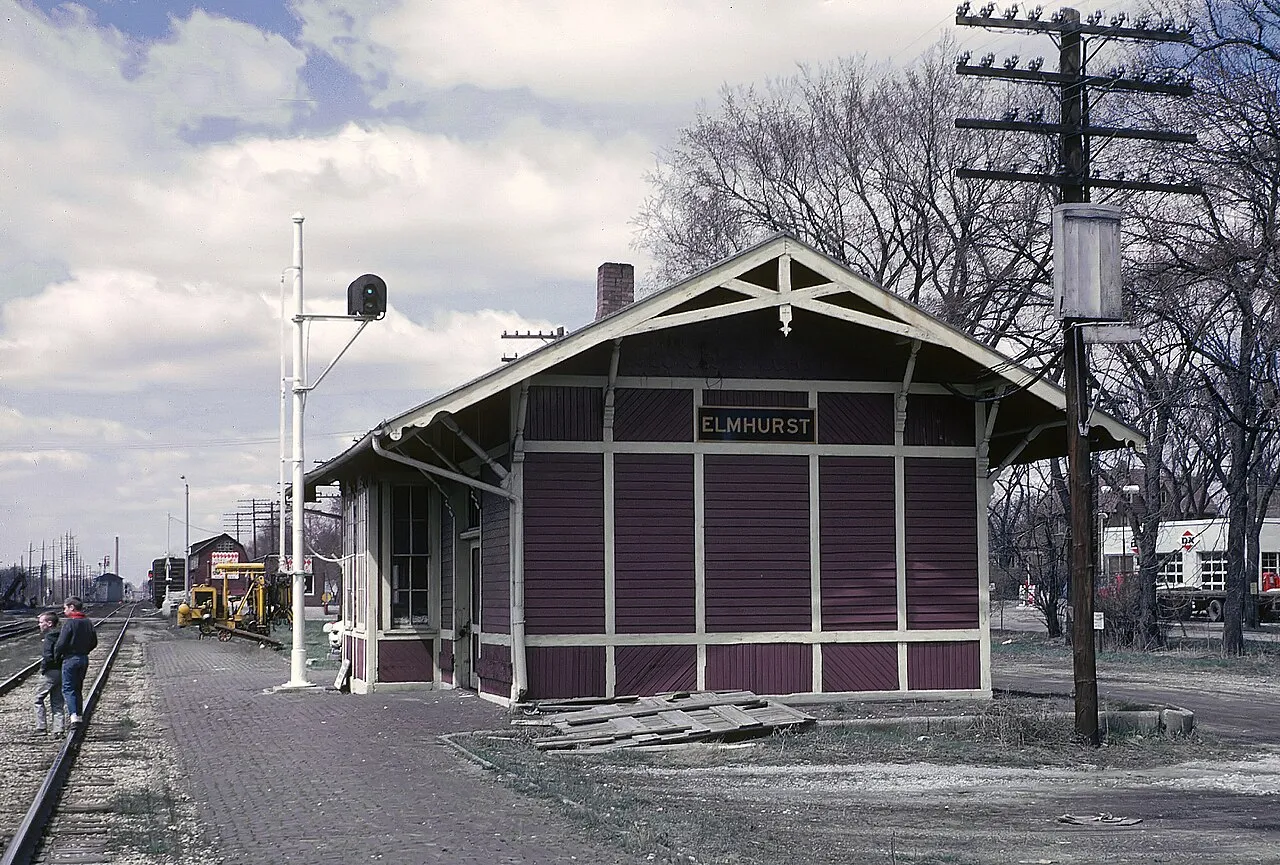
According to the city's Wikipedia history, Gerry Bates of Ohio settled here in 1842. When the post office opened in 1845, the settlement was called Cottage Hill. The Galena and Chicago Union Railroad came through in 1849 and it is the same corridor Metra's Union Pacific West line uses today.
The name Elmhurst dates to 1869. Thomas Barbour Bryan, a Chicago lawyer who is still called the "Father of Elmhurst," pushed for the change. Bryan also gave the land that became Elmhurst College in 1871, now Elmhurst University, which is why a four-year campus sits a few blocks from downtown. The village incorporated on June 5, 1882, with roughly a thousand residents, and later became a city.
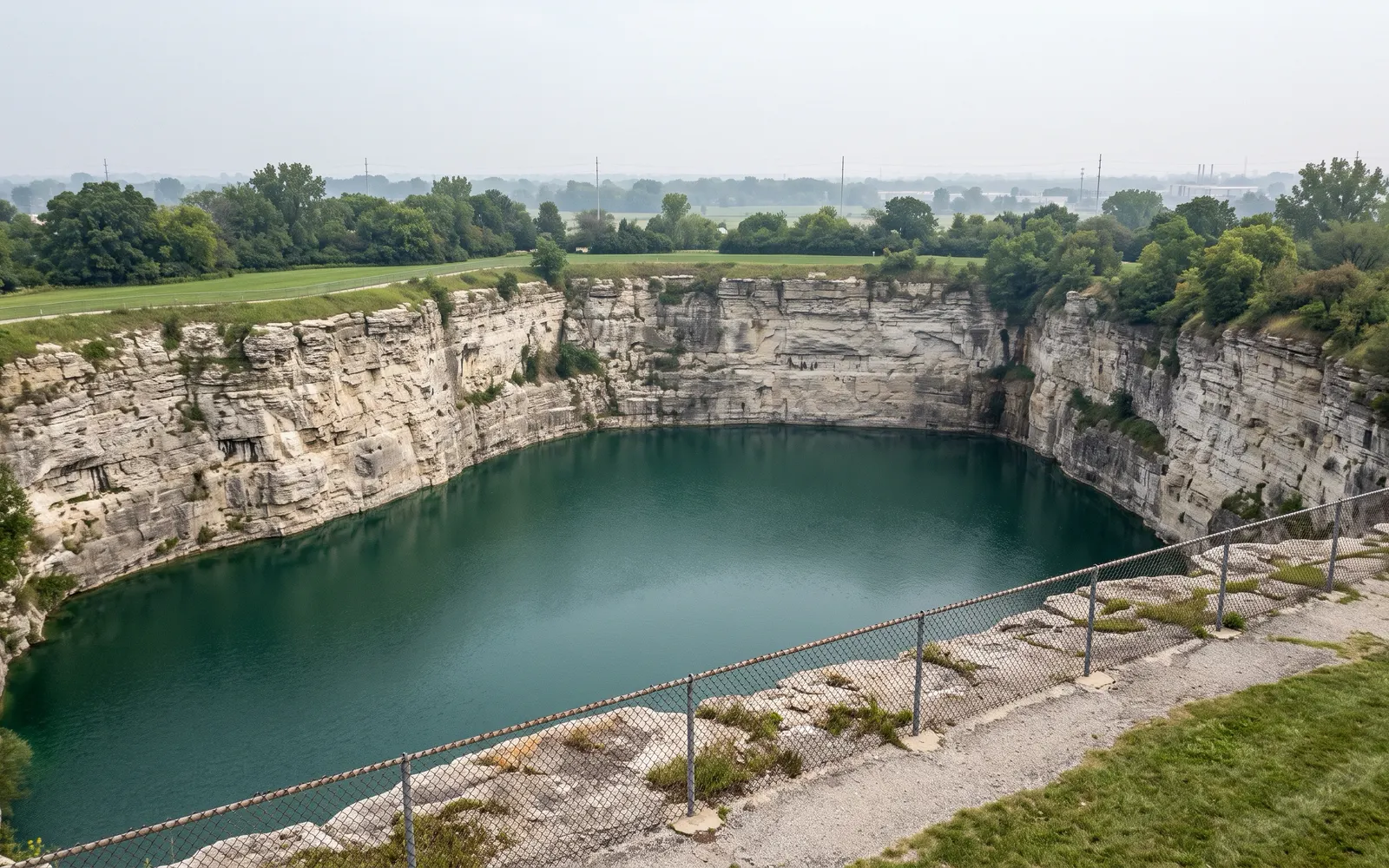
Two other pieces of history still shape how the town works. The first is stone. Elmhurst's limestone quarries supplied building material for the region for decades. One of them, 150 feet deep and 59 acres, is now a county flood control reservoir that holds Salt Creek's overflow. I cover that in the flood section, because it matters to buyers more than any other historical fact on this page.
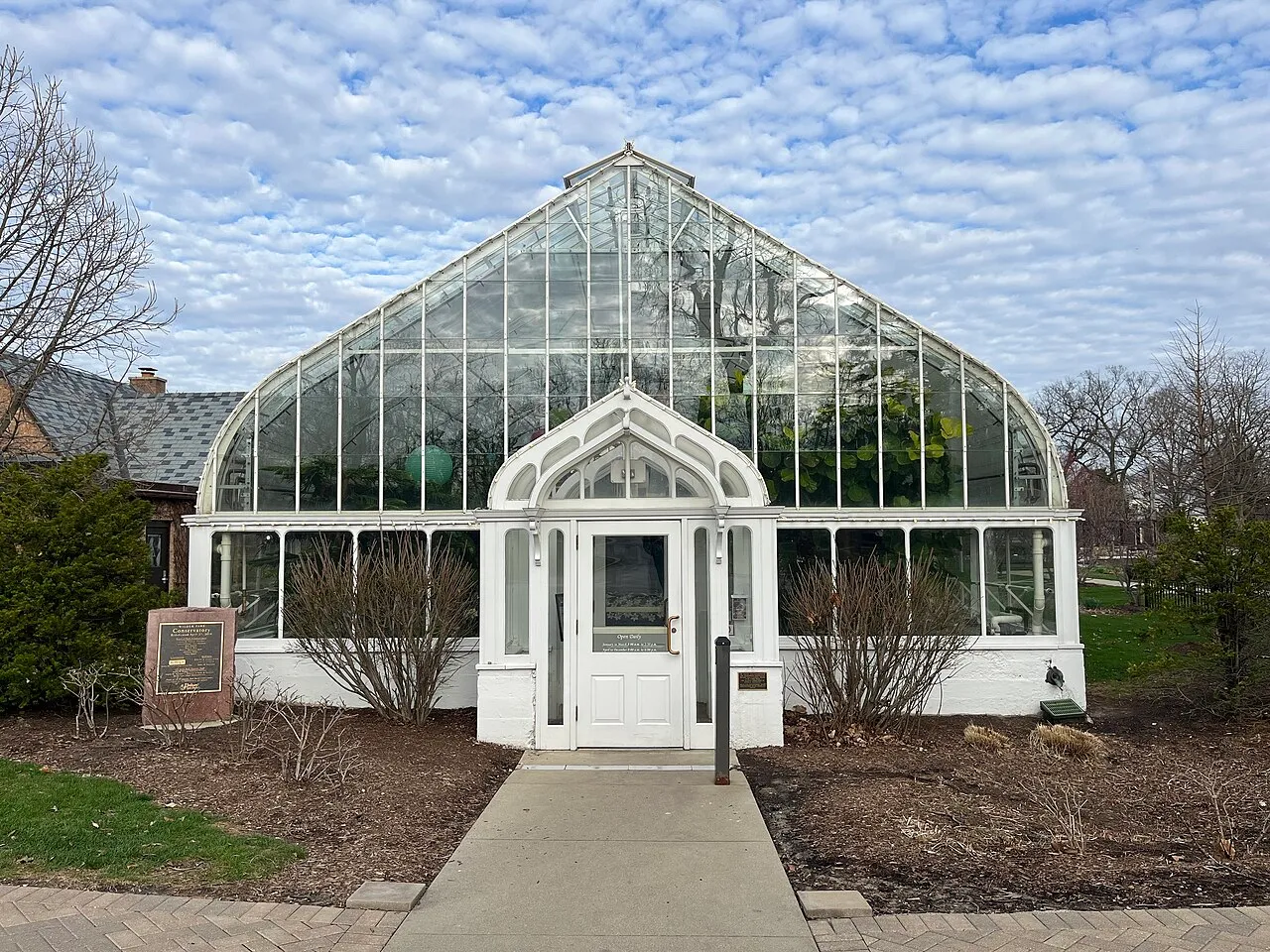
The second is parks. The Elmhurst Park District was founded in 1920 by buying the Wilder estate on the edge of downtown. That estate is still Wilder Park, with the mansion, the conservatory and the Elmhurst Art Museum next door. When people describe the center of town, they usually mean the stretch from the train station down York Street to Wilder Park.
Elmhurst at a Glance
Elmhurst sits on the east edge of DuPage County, about 16 miles west of the Loop, and covers about 10.3 square miles. Most of the city is in York and Addison townships in DuPage. A small piece crosses into Cook County, in Proviso Township. That piece is easy to miss and it matters: Cook County runs its own assessor, a different assessment level and a different tax calendar. If a listing sits on the east edge of town, check which county the parcel is in before you run numbers.
The 2020-2024 Census ACS puts the population at 45,671, with 79.9% of occupied homes owner-occupied. About 72% of the city's 17,753 housing units are detached single-family homes, and another 12.7% are in buildings of 50 units or more, mostly the condo and apartment buildings near downtown and along the main roads.
Elmhurst is a city, not a village, and that shows up in how it is run. It has aldermen by ward, its own water and sewer utility, and a planning department that is in the middle of rewriting the downtown plan. The city also commissioned a housing study that the City Council received on February 17, 2026, and I lean on that report heavily below because it has numbers nobody else publishes.
The layout is a grid with a few anchor roads. York Street (York Road south of downtown) runs north to south through the middle and is the main street. St. Charles Road and North Avenue run east to west across the north half, and Butterfield Road and I-290 frame the south end. Salt Creek runs along the west side. Most locals describe a house as north or south of the tracks, and east or west of York.
It has a property tax rate below many comparable suburbs.
The teardown market is the thing to understand before you start.
Elmhurst Neighborhoods, Pocket by Pocket
Elmhurst has no official neighborhoods, but it does have a long list of recorded subdivisions. The city's subdivision map names 32 of them, from Country Club Highlands and Elmhurst Gardens to Tuxedo Park, Butterfield Highlands and Yorkfield. You will see those names in listings. Most buyers don't shop by subdivision, though. They shop by distance to the train and downtown, and by which side of town they are on.
The quickest way to see the spread is Walk Score by address. Walk Score rates the city 48 overall. City Hall at 209 N. York Street scores 94. York High School on St. Charles Road scores 64. Out by Churchville Middle School on Victory Parkway the score is 41, and near Sandburg Middle School on East St. Charles Road it is 31. That is the difference between walking to dinner and driving to it, and in my experience buyers underestimate how much it changes daily life.
The city's own housing report gives the other useful map: where the teardowns are. It found that demolitions and new builds were most common near the Prairie Path and the City Centre, and also happened north of North Avenue and near Butterfield Road. If you are shopping for an original 1950s house, those are the areas where it competes most directly with builders.
Below are the pockets you will hear named. Boundaries are informal and agents draw them slightly differently, so treat them as a starting point. If you want to know which pocket a specific address actually falls in, and how it compares to the rest of town, that is a conversation I am happy to have here.
City Centre and downtown. The blocks around the Metra station and York Street. Condos, townhomes and newer apartment buildings, plus older single-family streets at the edges. The highest Walk Scores in town.
Crescent Park. South of St. Charles Road and east of York Street. Single-family homes with build dates from the 1920s to recent new construction, walkable to downtown.
Cherry Farm. East of York Road and south of St. Charles Road. One of the higher-priced pockets, with a lot of rebuilt and larger homes.
College View. South of Alexander Boulevard and east of West Avenue, near York High School. Single-family homes; the open space by the school doubles as flood storage.
Brynhaven. North of St. Charles Road and east of Poplar Avenue. Mostly 1950s single-family homes, with newer houses mixed in.
Emery Manor. South of Armitage Avenue and east of West Avenue, on the north side. 1950s single-family homes.
Elm Estates. West of York Road and north of Butterfield Road, on the south side. Built mostly in the 1960s.
Yorkfield. On the south side near the Harrison Street detention basin the city expanded. Single-family homes, many mid-century.
North Elmhurst. The area north of North Avenue. More ranches and smaller lots, and one of the areas the housing report flagged for teardowns.
Pick Subdivision, Tuxedo Park and Stratford Hills. Other names you will see on listings. Ask for the build year and the school assignment on each one; they vary.
What Elmhurst Homes Look Like, and Why So Many Are New
Elmhurst was mostly built after World War II, and the numbers show it. The Census ACS puts the median year built at 1966. About 22% of all housing units were built in the 1950s, the single biggest decade. Another 14.7% are older than 1940, mostly the foursquares, bungalows and Tudors close to downtown and in pockets like Crescent Park. And almost a quarter, 24.8%, were built in 2000 or later. That last number is the teardown market at work.
The city's 2026 housing report put hard numbers on it. From 2020 through 2024, Elmhurst averaged 78 residential demolitions a year, 389 in total, which is about 3.1% of the city's roughly 12,639 single-family homes replaced in five years. The report also found that more than 90% of homes built before 1960 were single-family homes or townhomes, and that about 30% of what was built in the 1960s and 1970s was multifamily. Those 1960s and 1970s condo and apartment buildings are still where most of the lower price points in town are.
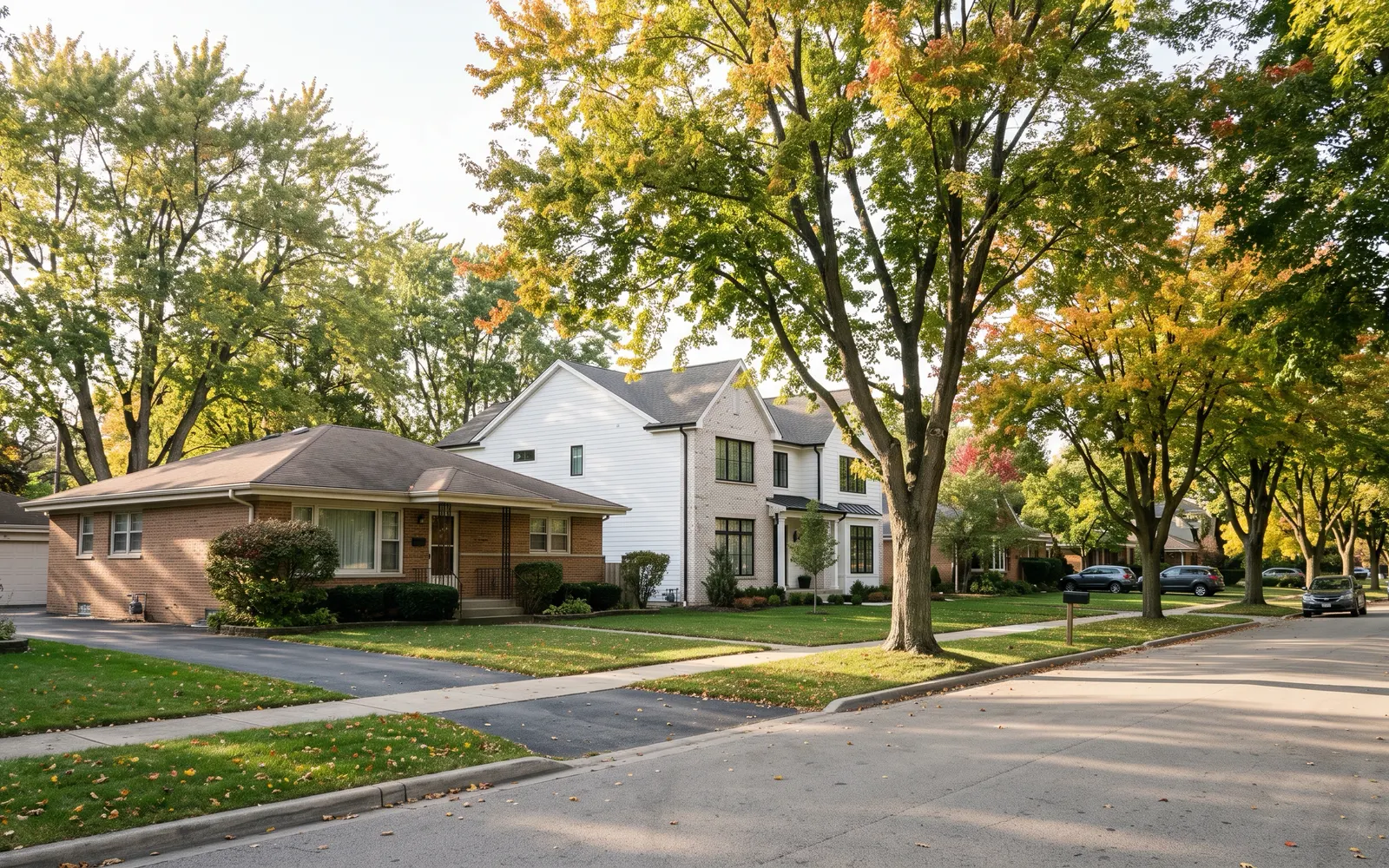
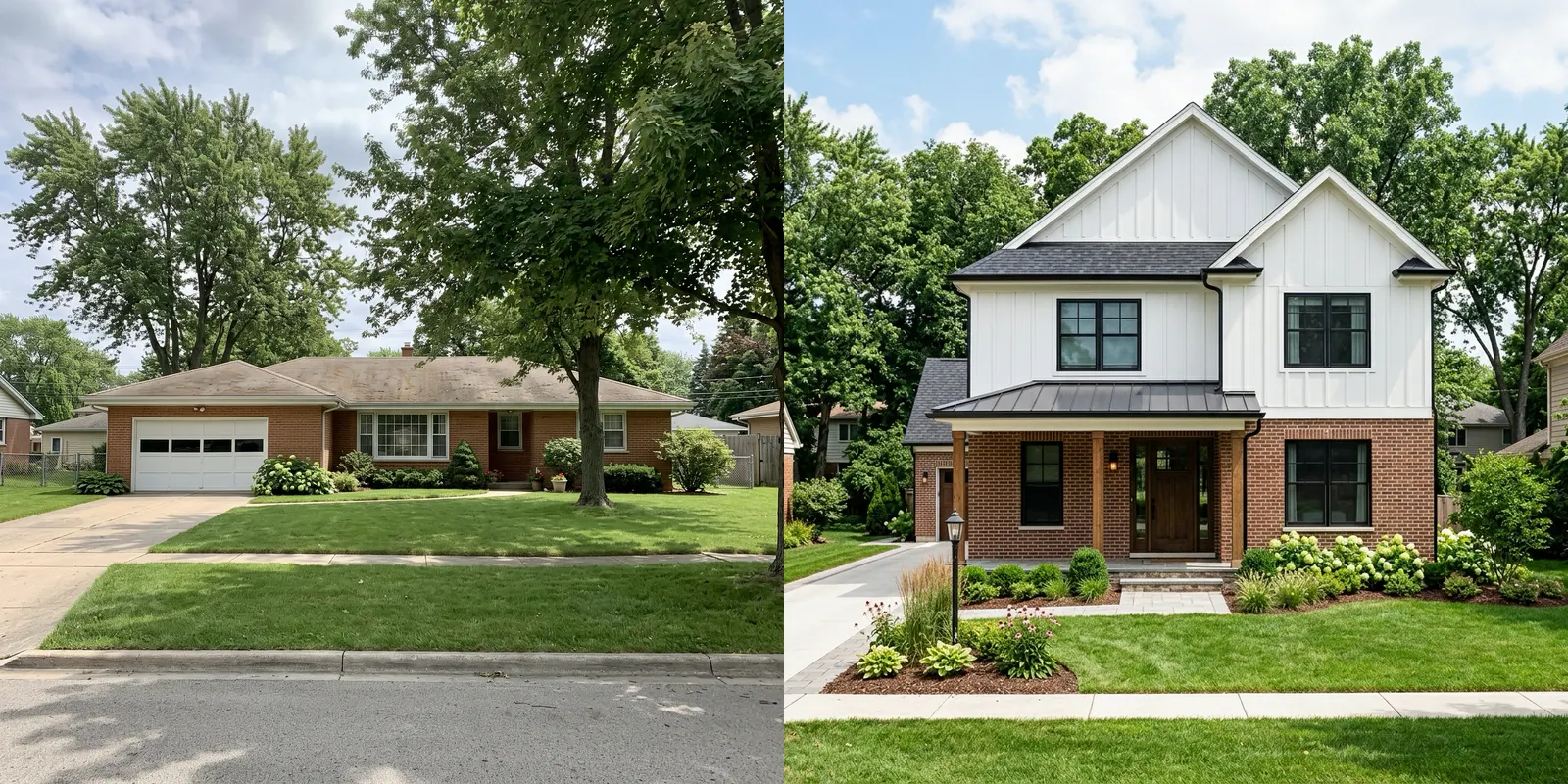
For a buyer, that creates streets where an original ranch and a new build worth two or three times as much sit side by side. The ranch benefits from the new house next door. It also means the lot is often worth more than the house, and a builder may be bidding against you. I have seen buyers lose a modest house to a cash offer from a builder more than once. If you are shopping at the lower end, move fast and keep inspection contingencies realistic.
The Census ACS puts the median home value at $545,400 and median gross rent at $1,975. Both trail the market, because the survey covers five years and asks owners to estimate value.
If you are weighing an older house, expect the usual 1950s list: original electrical panels, galvanized supply lines, and basements that have seen water at least once. None of those should kill a deal. All of them belong in the price. My home inspection checklist is a good place to start.
The Elmhurst Housing Market in 2026
Elmhurst prices kept climbing this year. In the three months ending August 2026, Redfin reported a median sale price of $697,039, up 7.5% from a year earlier. Redfin counted 186 sales, up from 162. The median home sold in 49 days, the same as last year, at 100.1% of list price, and 38.7% sold over asking. Median price per square foot was $370, up 10.1%. Redfin gives Elmhurst a Compete Score of 64 out of 100, which it calls somewhat competitive, with about three offers on the average home.
This time the two big data sources agree. Zillow's home value index for Elmhurst was $642,280 in August 2026, up 8.4% from August 2025 and up about 13.8% over two years. Redfin's number is the middle of what actually sold in a three-month window, and Zillow's tracks the estimated value of every home, so Redfin runs higher when a lot of new construction closes. The direction is the same either way.
The longer view comes from the city's 2026 housing report, using Redfin data: the median sale price rose from $300,000 in 2012 to $604,000 in 2025, about 7.8% a year. The same report found the vacancy rate in the ownership market has been below 0.5% since 2021. There simply are not many houses available at any given time.
What that means in practice: a well-priced house still draws more than one offer, but not every house does. 18.8% of listings took a price cut this summer, up 4.7 points from a year ago. That is the sign of a market where buyers still pay up for the right house and walk away from the wrong price. Elmhurst rewards getting the list price right on day one.
Numbers at the city level only go so far. The gap between a north-side ranch and a new build in Cherry Farm is enormous, so the median tells you about the town and very little about a specific house. If you are wondering whether to jump in now, my take on whether 2026 is a good time to buy covers the timing question, and how much house you can afford in 2026 covers the budget.
Elmhurst Property Taxes and the Real Cost of Owning
Property tax is the number that changes the monthly payment most, and it never shows up in the list price. Ownwell's current data puts Elmhurst's median effective rate at 1.92% and the median annual bill at $9,081. That rate is lower than many Lake County and Cook County suburbs, which is one reason Elmhurst gets cross-shopped with towns that cost less on paper. Ownwell's range for the 60126 ZIP runs from about $6,770 a year at the 25th percentile to about $20,375 at the 90th.
Here is what that looks like on a real purchase. At 1.92%, a house bought at this summer's $697,039 median would eventually carry about $13,400 a year in tax, roughly $1,115 a month on top of the mortgage. The current bill on the same house may be lower, because assessments trail the market. The assessor catches up. The expectation I most often have to reset is buyers who budget off the seller's current bill, especially on a house that was just rebuilt, where the old bill reflects the old house.
Most of Elmhurst is in York Township, with the north end in Addison Township and the small Cook County piece in Proviso Township. Each combination of township, school district and park district is its own tax code with its own rate, so two houses a mile apart can carry different bills at the same price. The edges of town served by a different school district are the most common example.
This is general information, not tax advice. Your actual bill depends on your parcel, your exemptions and the assessor.
Elmhurst Schools: District 205 and York High School
Most of Elmhurst is served by Elmhurst Community Unit School District 205, a single kindergarten-through-12th-grade district. According to the district's Wikipedia entry, it enrolls about 8,240 students across eight elementary schools, three middle schools, one high school and the Madison Early Childhood Center. It also takes in small parts of Addison, Oak Brook and Bensenville.
York Community High School, at 355 W. St. Charles Road, is the one public high school. The school opened in 1918, and the current building, about 600,000 square feet with a fieldhouse and pool, opened in 2002 after a rebuild voters approved in 2000.
The district also finished a large building program recently. Voters approved a $168.5 million facilities referendum in November 2018 that paid for rebuilding Lincoln and Field elementary schools, space for all-day kindergarten and safety upgrades across the district. Patch reported cost overruns along the way; the district's estimate reached $192.3 million.
The detail that trips people up is assignment. Per Explore Elmhurst, District 205 serves most of the city except the area west of Salt Creek and an area south of Butterfield Road and west of Euclid. Those addresses are served by other districts, including Salt Creek School District 48 and DuPage High School District 88. Within District 205, the elementary and middle school depend on the street. Don't assume from the city name. Check the address with the district directly before you write an offer, and ask me for the boundary if you want it done for a specific house.
Private options in town include Immaculate Conception (grade school and high school), Immanuel Lutheran, Visitation School and Timothy Christian (K-12).
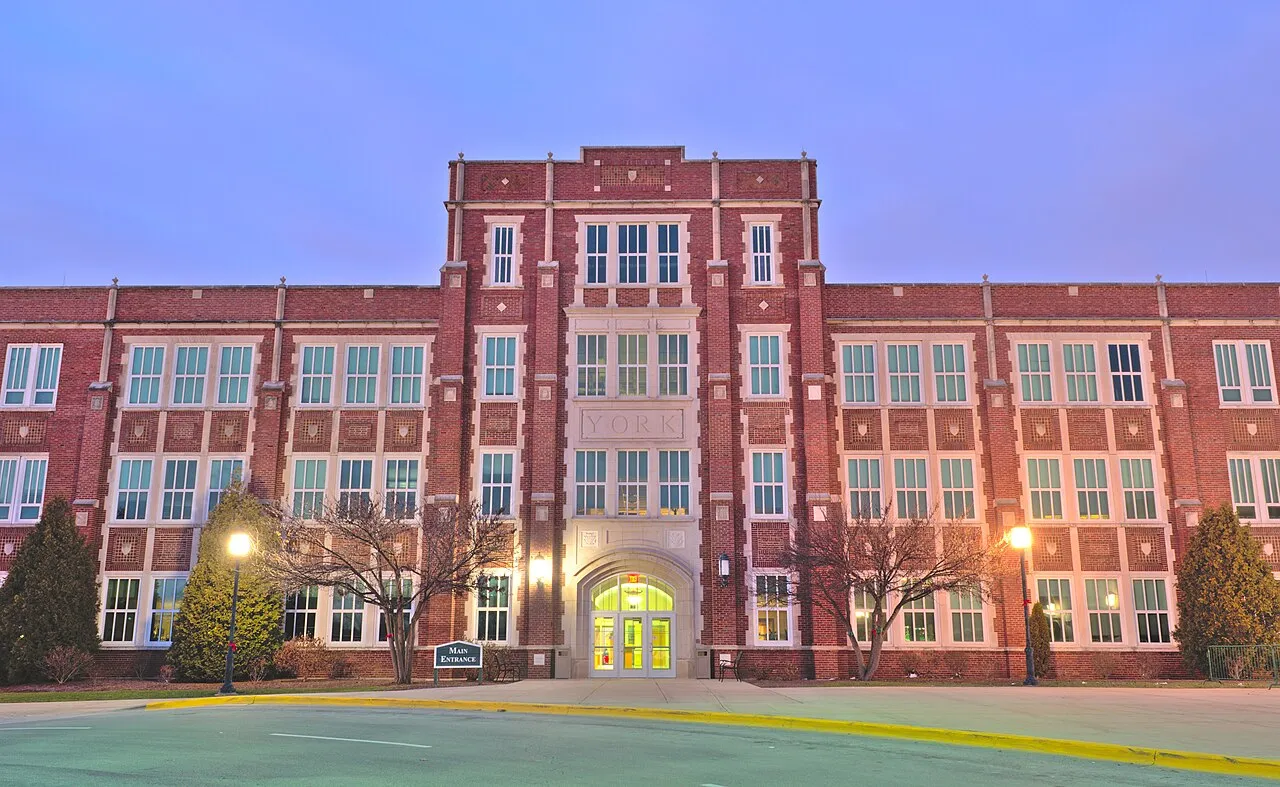
York Community High School. 355 W. St. Charles Rd. Grades 9–12, District 205.
Bryan Middle School. 111 Butterfield Rd. Grades 6–8, District 205.
Churchville Middle School. 155 Victory Pkwy. Grades 6–8, District 205.
Sandburg Middle School. 345 E. St. Charles Rd. Grades 6–8, District 205.
Elementary schools. Edison, Emerson, Field, Fischer, Hawthorne, Jackson, Jefferson and Lincoln. Grades K–5, District 205.
Madison Early Childhood Center. 130 W. Madison St. Pre-K, District 205.
Commuting from Elmhurst: Metra to Ogilvie
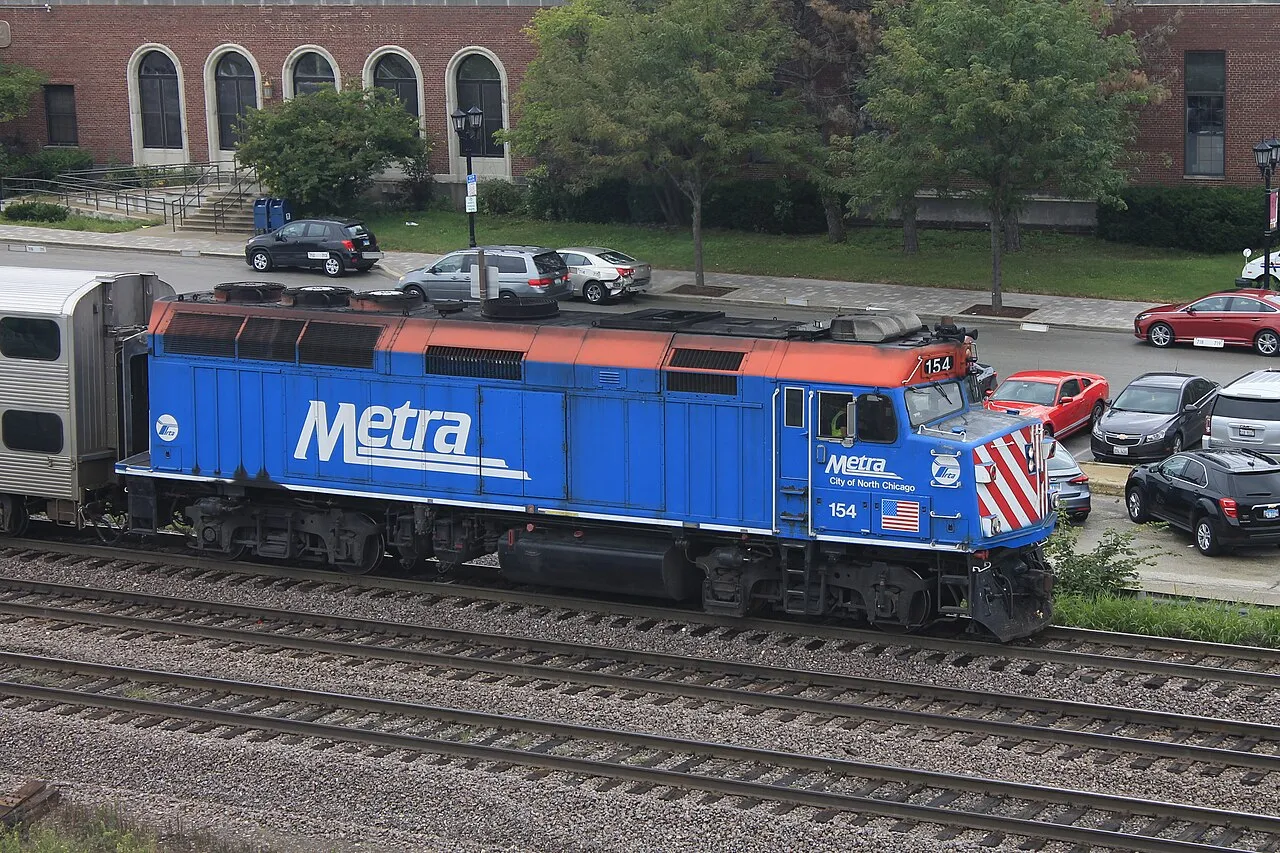
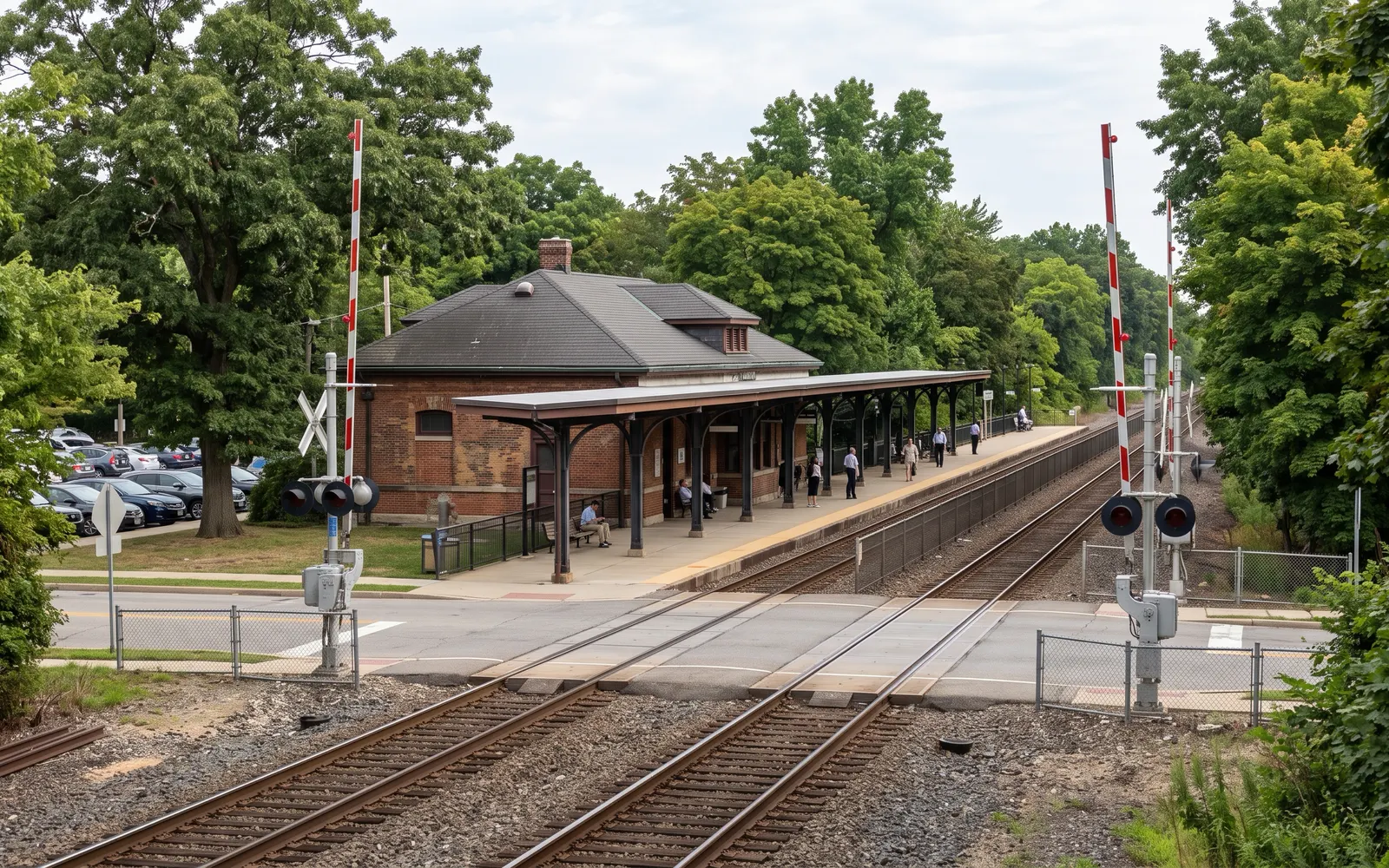
The Elmhurst Metra station sits downtown, just west of York Street, on the Union Pacific West line, a one-seat ride to Ogilvie Transportation Center in the Loop. According to Metra's current UP-W schedule, 29 trains stop here in each direction on weekdays, 10 each way on Saturdays and 9 each way on Sundays.
The travel time depends on which train you catch, and the gap is big. The morning expresses reach Ogilvie in 27 to 29 minutes. The 7:33 a.m. arrives at 8:00. Local and midday trains take about 40 minutes. In the morning rush, trains leave Elmhurst every 10 to 20 minutes between about 6:00 and 8:45, so most commuters never check a schedule. Evening trains home run 24 to 34 minutes.
That express service is the single biggest reason Elmhurst prices sit where they do. Patch reported in August 2026 that Elmhurst is the fourth busiest station in the Metra system, in a building from the 1960s that was last updated in the 1980s. A new station is planned; I cover the schedule in the development section.
If you are choosing between two houses and one is a ten-minute walk from the station, that difference compounds every day you commute. Houses within walking distance of the train are the ones I see go first.
Driving from Elmhurst: Highways and O'Hare
Elmhurst is boxed in by highways, which is good for driving and a consideration for noise. I-290 (the Eisenhower) runs along the south end with an interchange at York Road. The Tri-State Tollway (I-294) runs along the east side. Route 83 runs along the west side, and North Avenue, St. Charles Road and Lake Street (US-20) cross the north half. I-88 toward Naperville and Aurora is a few minutes south by way of I-290 or Route 83.
O'Hare is the real advantage. Wikipedia puts it about 18 minutes away and Midway about 33, and those numbers are realistic outside rush hour.
When you tour a house, note how close it is to I-290, I-294 or the rail line. Some buyers want to be a minute from the on-ramp; others want to never hear it. Both are fair, and the price usually reflects it.
Is Elmhurst Walkable?
Downtown is, most of the rest of town is not. Walk Score rates Elmhurst 48 for walking, which it calls car-dependent, 25 for transit and 52 for biking.
The citywide number hides a wide spread. City Hall on North York Street scores 94, which Walk Score calls a walker's paradise. York High School on St. Charles Road scores 64. Near Churchville Middle School on Victory Parkway the score drops to 41, and near Sandburg Middle School on East St. Charles Road it is 31. If walking to the train, the library and dinner matters to you, it narrows your search to the blocks around the City Centre, and those houses carry a premium.
For recreation, the Illinois Prairie Path runs east to west through town, and the park district maintains its own trails. A long bike ride is easy from anywhere in Elmhurst, even the car-dependent parts.
Downtown Elmhurst and Shopping
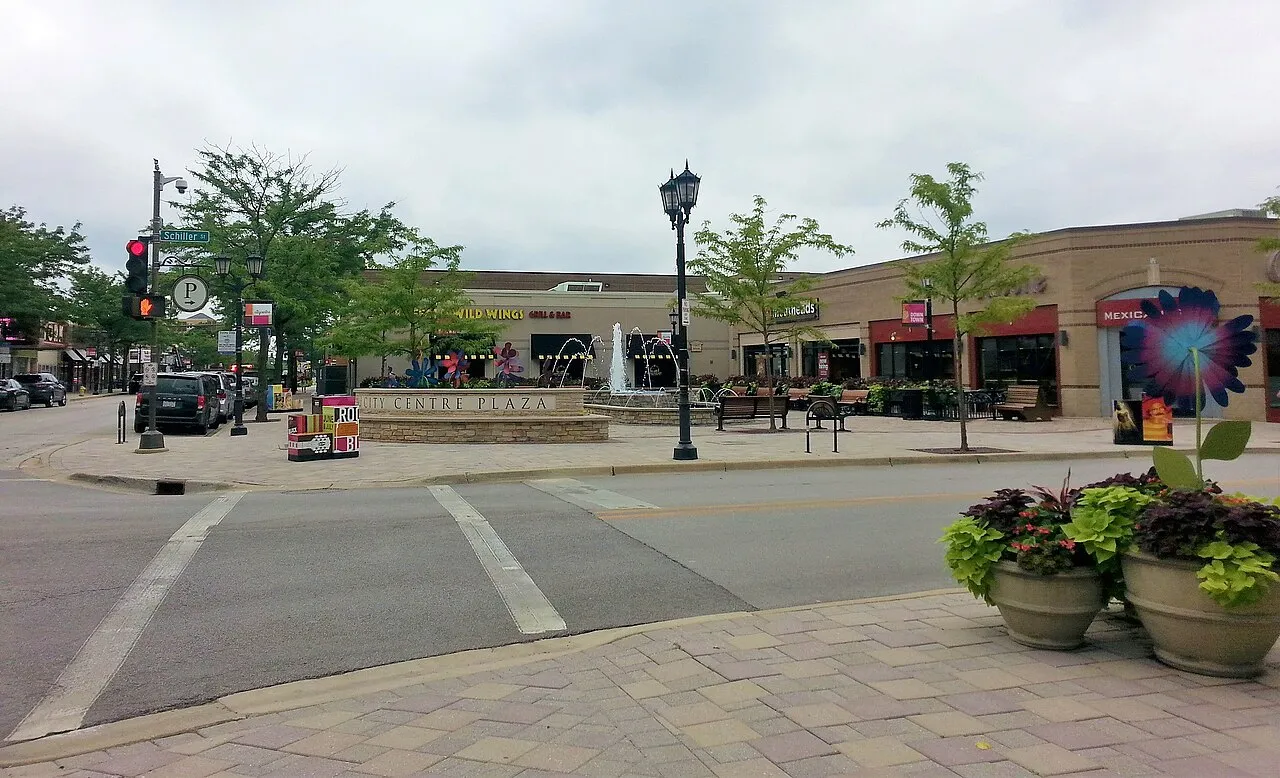
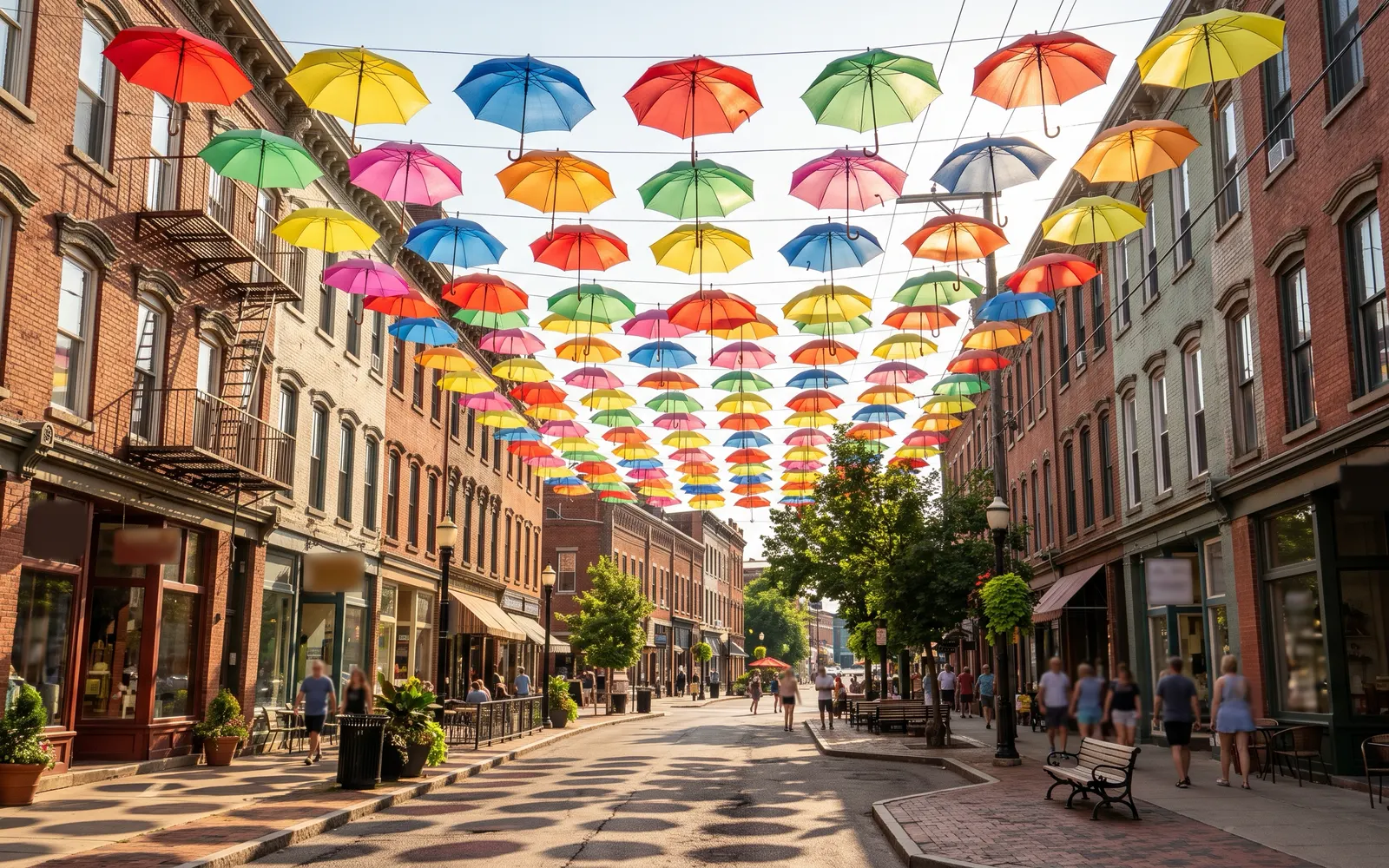
The City Centre is the downtown district around York Street, Addison Avenue and the Metra station. It has independent shops, restaurants, the York Theatre and a steady calendar of events. In summer, Elmhurst City Centre hangs its Umbrella Sky installation over the streets, runs weekly live music at North York Plaza and holds a Restaurant Week. It is the busiest part of town on a warm evening.
For bigger shopping, Oakbrook Center is a short drive south on Route 83, and Yorktown Center in Lombard is a bit farther. The big-box errands are along North Avenue and Route 83 at the edges of town.
Groceries and Everyday Errands in Elmhurst
Groceries are easy to keep local. Jewel-Osco has two stores in town: one at 153 Schiller Street near the City Centre and one at 944 S. York Road near Butterfield Road. Pharmacies, dry cleaners and banks cluster along York and North Avenue.
From June through October the Elmhurst Farmers Market runs Wednesdays from 7 a.m. to 1 p.m. in the parking lot of Elmhurst Christian Reformed Church at 149 W. Brush Hill Road. The last market of the season doubles as a fall festival.
Where Elmhurst Eats
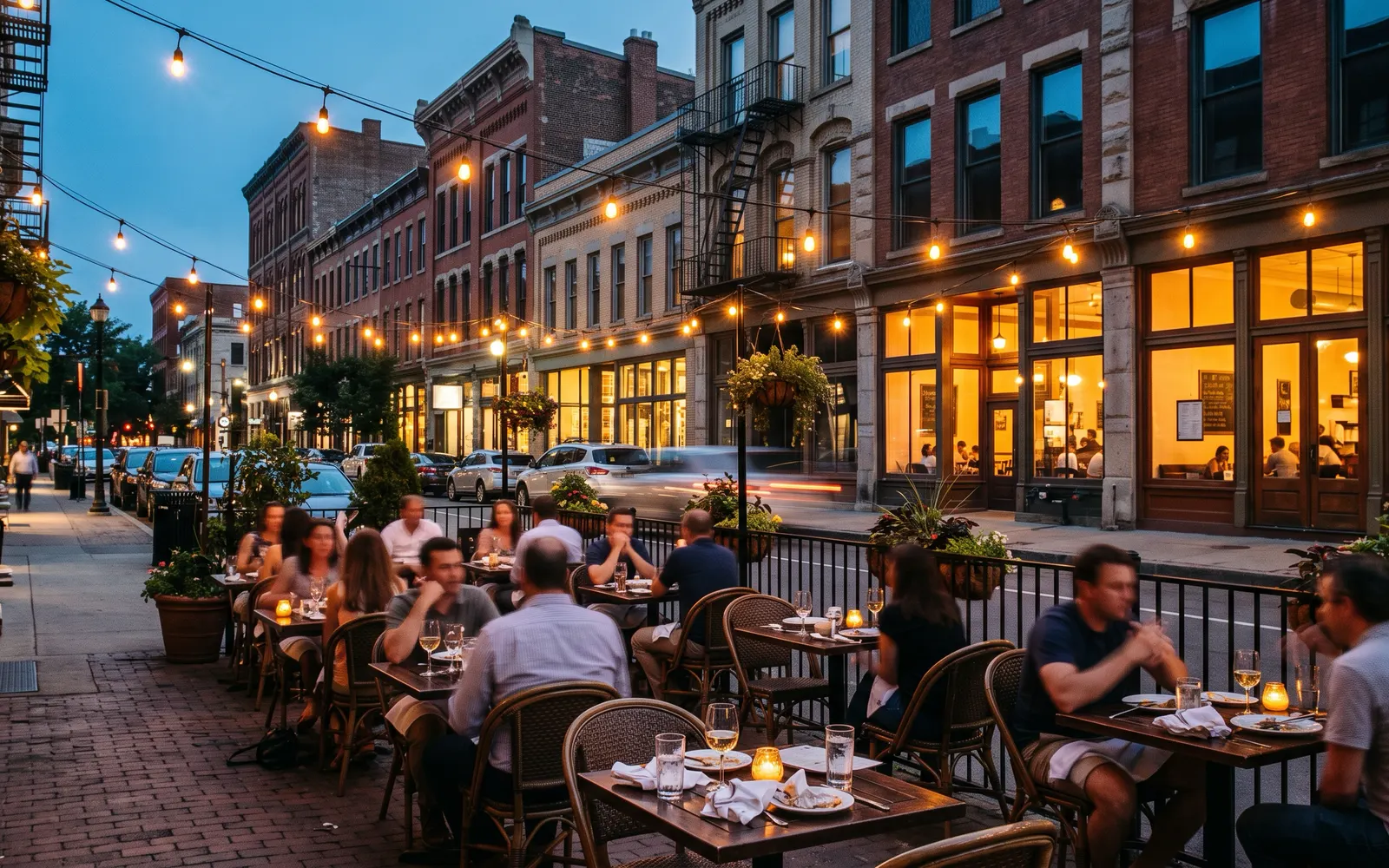
Most of the dining is downtown, which is part of why the City Centre stays busy at night. Guides like Homes.com name 151 Kitchen and Francesca's Amici as local favorites, and there is a long list of bars, coffee shops and casual places within a few blocks of the station. Spring Road, on the south side near Oak Brook, has its own smaller strip of restaurants and pubs.
The city's Restaurant Week is the easiest way to try a lot of places quickly. Check the City Centre calendar for this year's dates.
Parks, Pools and Recreation in Elmhurst
The Elmhurst Park District is one of the town's real strengths. According to its 2026 profile, it runs 30 parks on 458 acres, two outdoor pools, the Wilder Park Conservatory and Mansion, Courts Plus Fitness Center with an indoor pool, the Wagner Community Center, Kies Recreation Center, a skate park, a dog park, The Hub at Berens Park and The Depot with Safety Town, and offers more than 3,800 programs and events a year.
Wilder Park is the one everybody knows: the conservatory, the formal gardens and the mansion, right next to the Elmhurst Art Museum and the library. The two outdoor pools are Norman P. Smalley Pool on South York Street and East End Pool on Schiller Street. For golf, the district runs Sugar Creek Golf Course in Villa Park, a nine-hole course, in partnership with the Village of Villa Park.
Some parks do double duty. Several of the city's stormwater projects, at Golden Meadows Park and York Commons among others, store floodwater in park open space during heavy rain. I explain why that matters in the flood section.
The Elmhurst Public Library
The Elmhurst Public Library sits at the edge of Wilder Park, a short walk from downtown. It runs a full calendar of youth and adult programs and is one of the busiest public buildings in town. The popular programs fill up, so register early. Being on the park means a library trip, the conservatory and the art museum fit into one walk.
Utilities in Elmhurst
The City of Elmhurst provides water and sewer and bills for both. ComEd delivers electricity and Nicor Gas provides natural gas. The city contracts for residential trash and recycling. If you are buying at the edge of town, confirm the address is inside city limits and on city water and sewer; the ZIP code alone won't tell you.
Elmhurst Hospital and Healthcare
Elmhurst has its own full-service hospital. Endeavor Health Elmhurst Hospital is at 155 E. Brush Hill Road on the south side of town, with 258 licensed beds and an emergency department. Its predecessor, Elmhurst Memorial Hospital, was founded in 1926 as the first hospital in DuPage County. For most of the city it is a five- to ten-minute drive.
Museums, Movies and Nights Out in Elmhurst
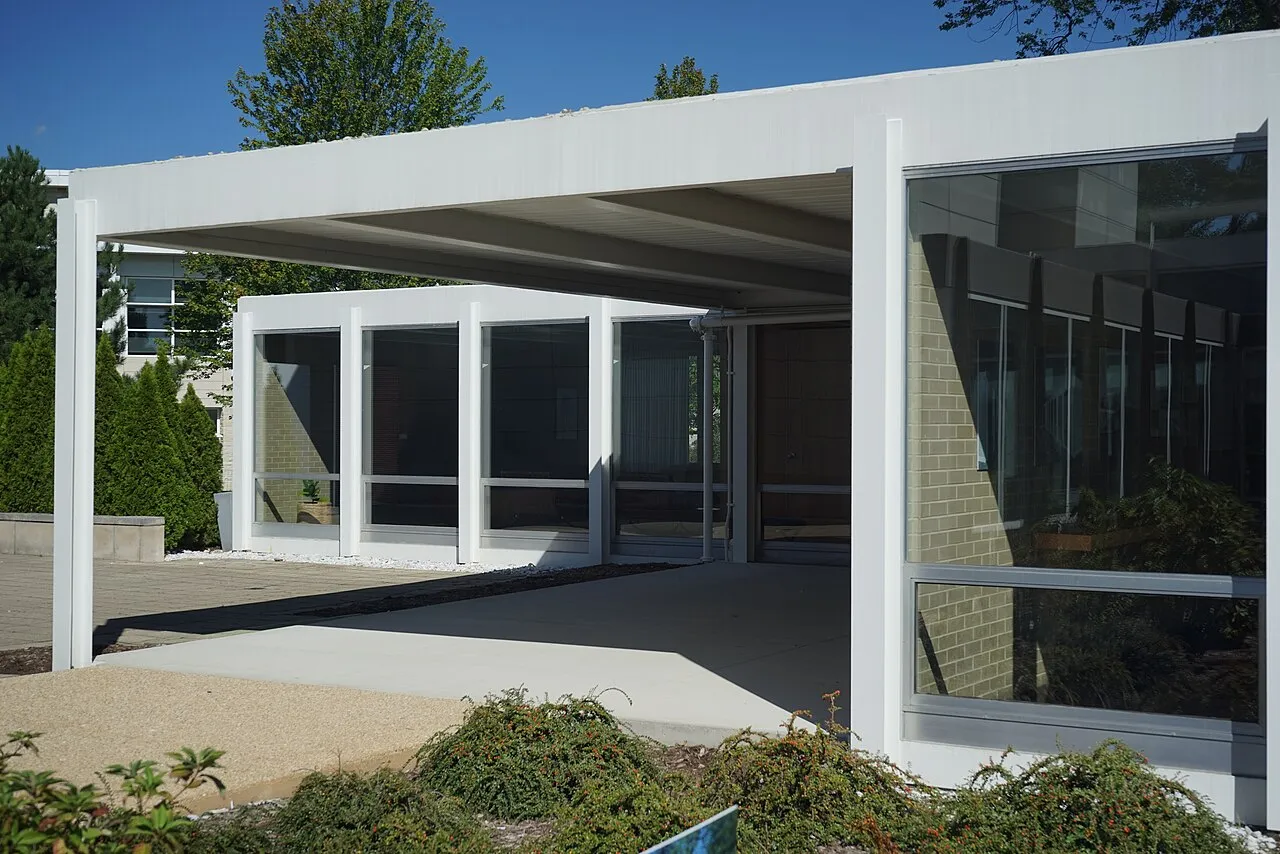
For a town this size, Elmhurst has an unusual amount of culture within walking distance of the train. The Elmhurst Art Museum in Wilder Park includes the McCormick House, a home designed by Ludwig Mies van der Rohe, and the city also has a Frank Lloyd Wright house, the F.B. Henderson House. The Elmhurst History Museum covers the Cottage Hill era through today. Elmhurst University adds concerts, lectures and games on campus a few blocks from York Street.
For movies, the York Theatre on North York Street is the downtown anchor. And the Loop is under half an hour away on an express train, which makes a night downtown easy.
Elmhurst's Yearly Traditions
Elmhurst's calendar runs through its parades and the City Centre. The Memorial Day Parade is the big civic event. The Spring Road St. Patrick's Day Parade on the south side is the one people who grew up here talk about. Around the Fourth of July there is a 4-mile race in the morning; Elmhurst doesn't put on its own fireworks show, so most people head to a neighboring town's.
Summer belongs to the City Centre: Umbrella Sky, the summer kickoff street party, live music at North York Plaza and window-hunt events that change with the season. The farmers market runs Wednesdays through October, and the park district fills in the rest with more than 3,800 programs and events a year. If you are touring houses on a summer weekend, walk York Street after dinner. It tells you more about the town than any listing will.
What's Being Built in Elmhurst
Four things will change parts of Elmhurst over the next few years.
The first is the train station. The city plans a new Metra station with warming shelters, a pedestrian tunnel, a rebuilt platform and better surface parking. According to Patch's August 18, 2026 report, the project has been delayed again: second-phase engineering is due by December 2026, with final engineering and construction in 2027 and 2028. The cost estimate is now about $47.4 million, nearly double the 2020 figure, with grants expected to cover about three-quarters and the rest paid through the downtown tax increment financing district.
The second is the downtown plan. The city released a draft Downtown Elmhurst Plan covering land use, redevelopment, mobility, streetscape and built form. It went to a public hearing before the Zoning and Planning Commission on June 23, continued on July 21, and still needs City Council approval. It will guide what gets built around the station for the next decade.
The third is housing policy. The city's 2026 housing report found that 72% of survey respondents want more options for first-time buyers, and that fewer teardowns was the second most requested change. It recommends, among other things, a housing trust fund and a higher demolition fee; Elmhurst currently charges $2,416 per teardown, against $10,000 in Northbrook and $15,000 in Highland Park. None of that is adopted yet, but if the fee goes up, the math on tearing down a house changes. Anyone buying to build should watch it.
The fourth is new housing near downtown. Vyne on Haven, Ryan Companies' 200-unit building at Haven Road and First Street, opened in 2024. The report counts 768 market-rate apartments and 86 rental townhomes built from 2013 to 2025. Smaller infill keeps coming: in January 2026, Patch reported on a 13-townhome proposal at West Avenue and Third Street that asked to reduce setbacks from 20 feet to 12 feet. I haven't confirmed the final vote.
On the civic side, the council approved the exterior design for a new police station on the current First Street site in May 2026, estimated at about $48 million, and the park district is rebuilding the Wagner Community Center.
I don't label any town or neighborhood as safe or unsafe.
Flood Risk in Elmhurst
This is the section I'd read twice. Elmhurst is flat, Salt Creek runs along its west side, and the 2008, 2013 and 2015 storms flooded homes across the region, Elmhurst included. Redfin, using First Street's model, rates Elmhurst's overall flood risk as minor, with 434 properties, about 7% of the city, likely to be severely affected over the next 30 years. Almost all of the risk sits in specific low spots, not town-wide.
A lot has been done about it. The old limestone quarry on the west side is now DuPage County's Elmhurst Quarry Flood Control Facility, which diverts Salt Creek floodwater through a tunnel under Route 83 and stores up to 8,300 acre-feet, about 2.7 billion gallons, then pumps it back once the creek drops. The city has also finished more than a dozen neighborhood stormwater projects: underground detention for 94 flood-prone homes on Saylor, Swain and Vallette ($4.73 million), detention basins in southwest Elmhurst, flood storage at York High School, Golden Meadows Park and York Commons, and a larger basin in Yorkfield.
Two checks before you write an offer. Look the address up on the FEMA flood map, because a mapped flood zone can mean required flood insurance on a mortgage. And ask the seller directly about water in the basement, and whether the house has overhead sewers or a backflow valve. In my experience with older houses in flat suburbs like this one, the answer on basement water is often "once," and what they did about it is the question that matters.
Frequently Asked Questions
How much does a house cost in Elmhurst, IL?+
Redfin reported a median sale price of $697,039 for the three months ending August 2026, up 7.5%, and Zillow's home value index was $642,280 for August 2026. Prices range widely, from 1960s and 1970s condos to new construction well over $1 million.
What are property taxes in Elmhurst, IL?+
The median effective rate is about 1.92%, with a median bill of about $9,081 (Ownwell). Rates vary by tax code, and a home's bill usually rises after a sale once it is reassessed.
What school district is Elmhurst, IL in?+
Most of Elmhurst is in Elmhurst Community Unit School District 205, which runs York Community High School. The area west of Salt Creek and a pocket south of Butterfield Road and west of Euclid are served by other districts, so confirm each address.
How long is the commute from Elmhurst to downtown Chicago?+
On Metra's Union Pacific West line, express trains reach Ogilvie in 27 to 29 minutes and local trains in about 40. There are 29 weekday trains in each direction.
Is Elmhurst walkable?+
Downtown, yes. City Hall on York Street has a Walk Score of 94, but the citywide score is 48 and some outer areas score in the 30s.
Is Elmhurst in Cook County or DuPage County?+
Almost all of Elmhurst is in DuPage County. A small piece on the east side is in Cook County's Proviso Township, which has a different assessor and tax calendar.
What neighborhoods are in Elmhurst, IL?+
Commonly named pockets include the City Centre, Crescent Park, Cherry Farm, College View, Brynhaven, Emery Manor, Elm Estates, Yorkfield and North Elmhurst. The city's subdivision map lists 32 recorded subdivisions.
Does Elmhurst flood?+
Some parts can. Redfin/First Street rates overall risk as minor, with about 7% of properties at severe 30-year risk. The Elmhurst Quarry reservoir and more than a dozen city detention projects reduce it, but check the FEMA map and ask about basement water on every house.
Eshu Chikoti has extensive access to off-market listings throughout Elmhurst and the rest of DuPage County — homes that never make it to the public listing sites. That matters right now: in a seller's market like this one, well-priced homes routinely go under contract within days, and buyers relying only on public listings are competing for whatever is left over. Working with someone plugged into off-market inventory means seeing homes before the crowd does.
Eshu Chikoti · 847-691-4282 ·
Get new Elmhurst listings by email
When a home comes on the market in Elmhurst, I'll email it to you.
Just your email. Unsubscribe any time by replying.
Thinking About Elmhurst?
Whether you're buying, selling, or just curious what's on the market, I can walk you through Elmhurst street by street.