Clarendon Hills, IL
Clarendon Hills, IL is a 1.8-square-mile DuPage County village of about 8,700 people with winding streets, a BNSF Metra stop downtown, District 181 schools and Hinsdale Central, priced a step below its neighbor Hinsdale.
Living in Clarendon Hills, IL means a 39-minute rush-hour express to Union Station, schools that feed Hinsdale Central, and a median sale price near $800,000 this summer. The trade-offs are property tax near 2% of value, a teardown market, and streets that flooded in August 2026. Here is how it breaks down.
Written by Eshu Chikoti · 847-691-4282 ·
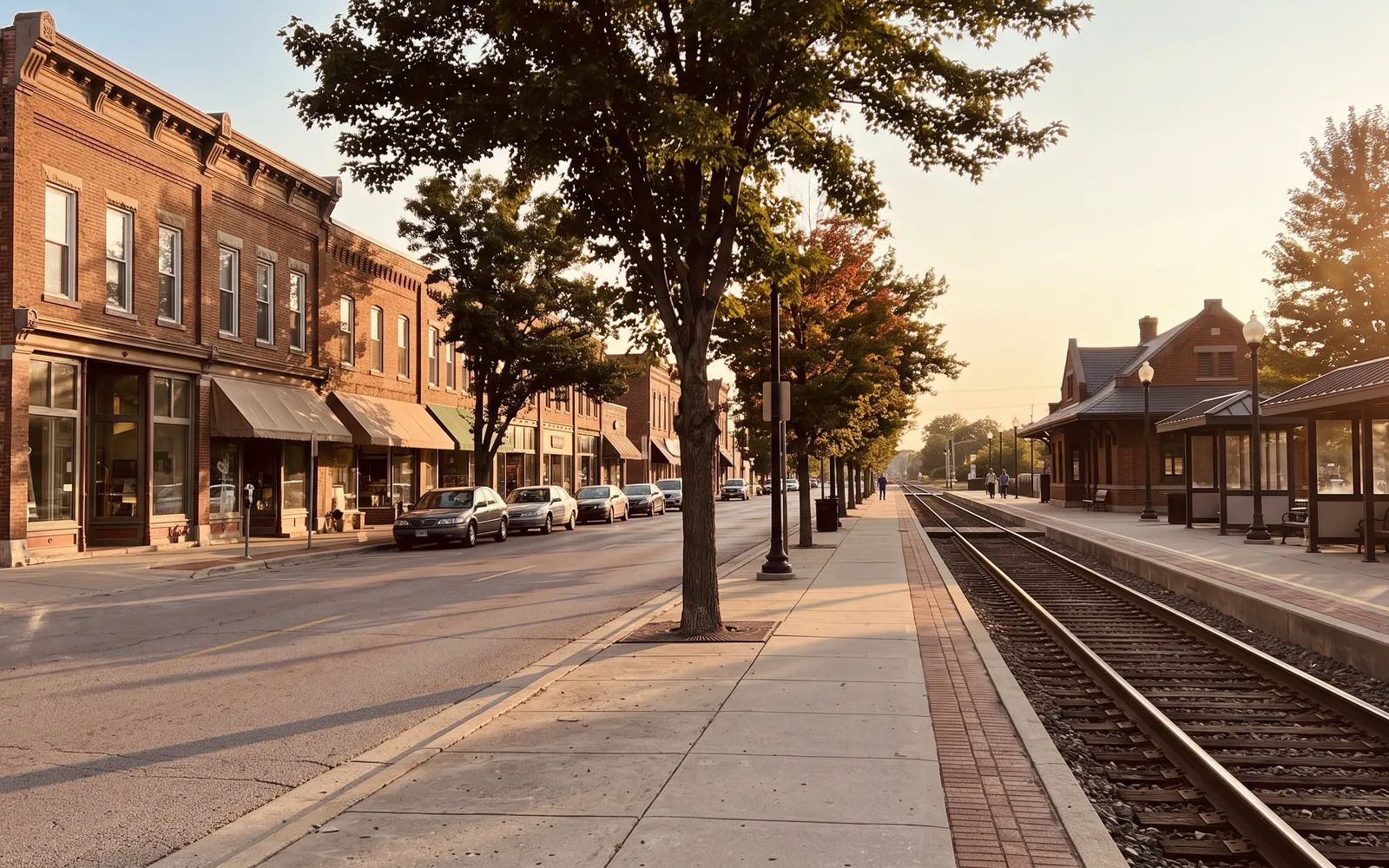
How Clarendon Hills, IL Got Here: A Short History
Clarendon Hills started the way most towns on this line did, with the railroad. According to the Clarendon Hills Historical Society, the Burlington line was built through in 1864, and the 1880 census counted 66 residents in the settlement. Before it had its own name, the area was known as West Hinsdale.
The man most often called its founder is Henry C. Middaugh, a Chicago banker. According to the history of his house, he bought 270 acres just north of the Chicago, Burlington and Quincy tracks in 1869, and when Clarendon Hills was platted in 1873 he was counted among its first residents. The name came from a suburb of Boston. Middaugh farmed his land for years rather than carving it up, which is part of why the village filled in slowly.
What makes the plat unusual is its shape. Instead of copying the straight grid of Downers Grove or Hinsdale, the village's streets were laid out to follow the ground, an approach modeled on Riverside, the Frederick Law Olmsted suburb. That is why so many Clarendon Hills streets curve and dead-end instead of running straight through from the towns next door.
The village incorporated on January 22, 1924 with fewer than 900 people, in part to avoid being annexed by Hinsdale. It celebrated its centennial in 2024 with a documentary and five self-guided tours of buildings that date to the town's early years.
One piece of history is also a real estate lesson. Middaugh's Queen Anne house at 66 Norfolk Avenue, with its three-story tower and third-floor ballroom, was on the National Register of Historic Places from 1978. It was demolished in 2002 for a church expansion and removed from the Register in 2004. In Clarendon Hills, as in Hinsdale, an old house on a good lot is never guaranteed to stay.
Clarendon Hills at a Glance
Clarendon Hills is small. It covers about 1.8 square miles in eastern DuPage County, roughly 18 miles west of the Loop, entirely inside Downers Grove Township. Unlike Hinsdale next door, no part of the village crosses into Cook County, so there is one assessor and one tax calendar to learn. Hinsdale sits to the east, Westmont to the west, Oak Brook to the north and unincorporated DuPage and Willowbrook to the south.
The 2020-2024 Census ACS puts the population at 8,659 across 3,342 housing units. Of the 3,180 occupied homes, 2,676 are owner-occupied, which works out to 84.2%. About 70% of all units are detached single-family houses, about 5% are townhomes, and about 21% are in buildings of five or more units, most of them near downtown and along 55th Street.
The anchors are easy to learn. The BNSF tracks run east to west through the middle of the village, with downtown on Prospect Avenue right at the station. 55th Street runs along the south, Route 83 is just to the east and Ogden Avenue is just to the north. Most descriptions of a house here start with which side of the tracks it is on and how far it is from Prospect Avenue.
One thing to know on day one: a Clarendon Hills mailing address does not prove a house is inside the village. The 60514 ZIP code reaches into unincorporated DuPage County, especially south of 55th Street, and those houses can have a different tax bill, different services and a different school district. A street address in the county's grid format, with a number like "16W" in front, is usually a sign the house is unincorporated. I check the municipality on the tax record for every listing before I talk price.
This summer's Redfin median of about $799,000 is roughly half of Hinsdale's, the effective tax rate is below the DuPage median, and the downtown station puts a 39-minute express within walking distance of a real part of the village.
At 1.8 square miles the village rarely has many houses for sale at once. It asks the same homework as Hinsdale: which district, which zoning, whether the house is inside the village, and whether the lot is worth more than the house.
Clarendon Hills Neighborhoods, Pocket by Pocket
Clarendon Hills has no official neighborhoods, and at 1.8 square miles you can drive the whole village in ten minutes. It still is not one market. The first split is the railroad. The second is distance to Prospect Avenue and the station. The third, which matters more here than in most towns, is whether the house is inside the village at all.
Walkability shows how much location inside the village changes daily life. Walk Score does not publish a single village-wide number for Clarendon Hills, so I pulled it by address. Village Hall on Prospect Avenue scores 77, which Walk Score calls very walkable. Walker School scores 74. Out on 55th Street the score drops to 60, and it keeps falling on the curving interior streets farther from either corridor.
Lot size is the third lever. The village's zoning sets a 9,000-square-foot minimum for single-family lots, but plenty of older lots are smaller or larger than that, and the curving plat leaves irregular shapes, pie lots and deep lots that do not exist on a grid. Two houses of the same size on the same street can sell for very different money because of the dirt under them.
Below are the pockets you will hear named. Boundaries are informal, and a few of these are subdivision names that show up on listings more than in conversation, so treat them as a starting point. If you want to know which pocket a specific address falls in, and what it has sold for lately, that is a conversation I am happy to have here.
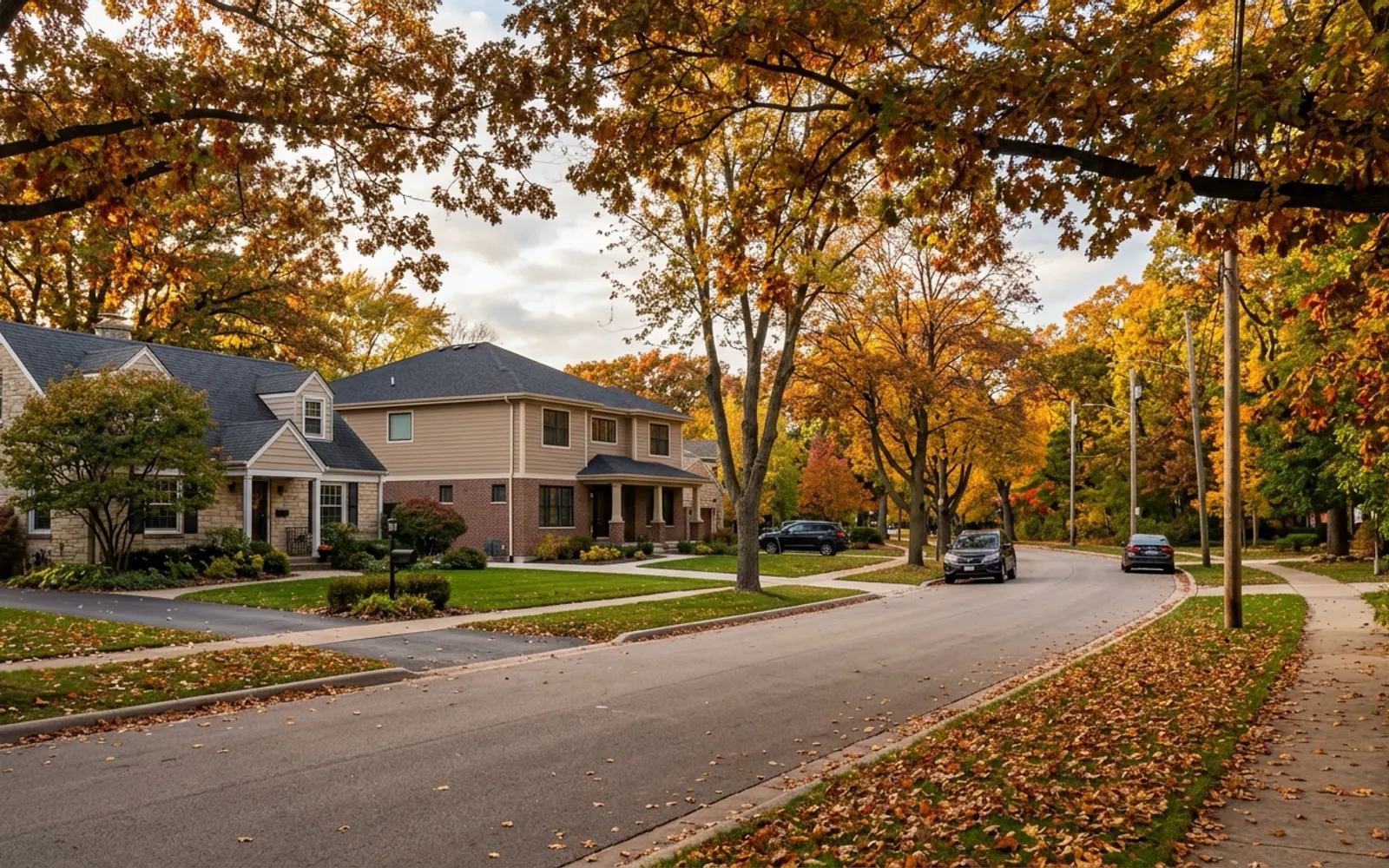
Downtown and the Prospect Avenue blocks. The streets within a few minutes of the station and Village Hall. This is where most of the village's condos and small multi-unit buildings sit, along with older single-family houses a short walk from the train.
The Middaugh Road area. North of Chicago Avenue around Middaugh Road and Walnut Street, next to the private Hinsdale Golf Club. This is part of Henry Middaugh's original land. It is also where the worst August 2026 flooding was reported, covered in the flood section below.
Around Prospect Park and the middle school. The blocks near Prospect Park, the park district community center and Clarendon Hills Middle School on Chicago Avenue. Close to downtown without being on top of it.
The Walker School area. The west side around Walker Avenue and Walker School, with some of the most walkable residential blocks in the village.
Blackhawk Heights. A subdivision name Redfin tracks on the village's south side, around Mohawk Drive. You will see it on listings; confirm the exact boundary on each address.
The 55th Street corridor. The business strip along 55th Street and the condo and townhome buildings near it. The most likely place to find a lower price inside the village.
Unincorporated 60514. Houses with a Clarendon Hills mailing address outside the village limits, mostly south of 55th Street. Different taxes, services and often schools, so read the section on schools and utilities before you fall for one.
What Clarendon Hills Homes Look Like, and What Zoning Allows
Clarendon Hills is not an old-house town the way Hinsdale is. The Census ACS counts only 84 homes built before 1940, about 2.5% of the total. The big waves came after the war: 618 homes from the 1950s (18.5%), 406 from the 1960s and 654 from the 1980s (19.6%), the last of which includes much of the condo and townhome stock. Then comes the rebuilding. The ACS counts 800 homes built in 2000 or later, about 24% of everything in the village.
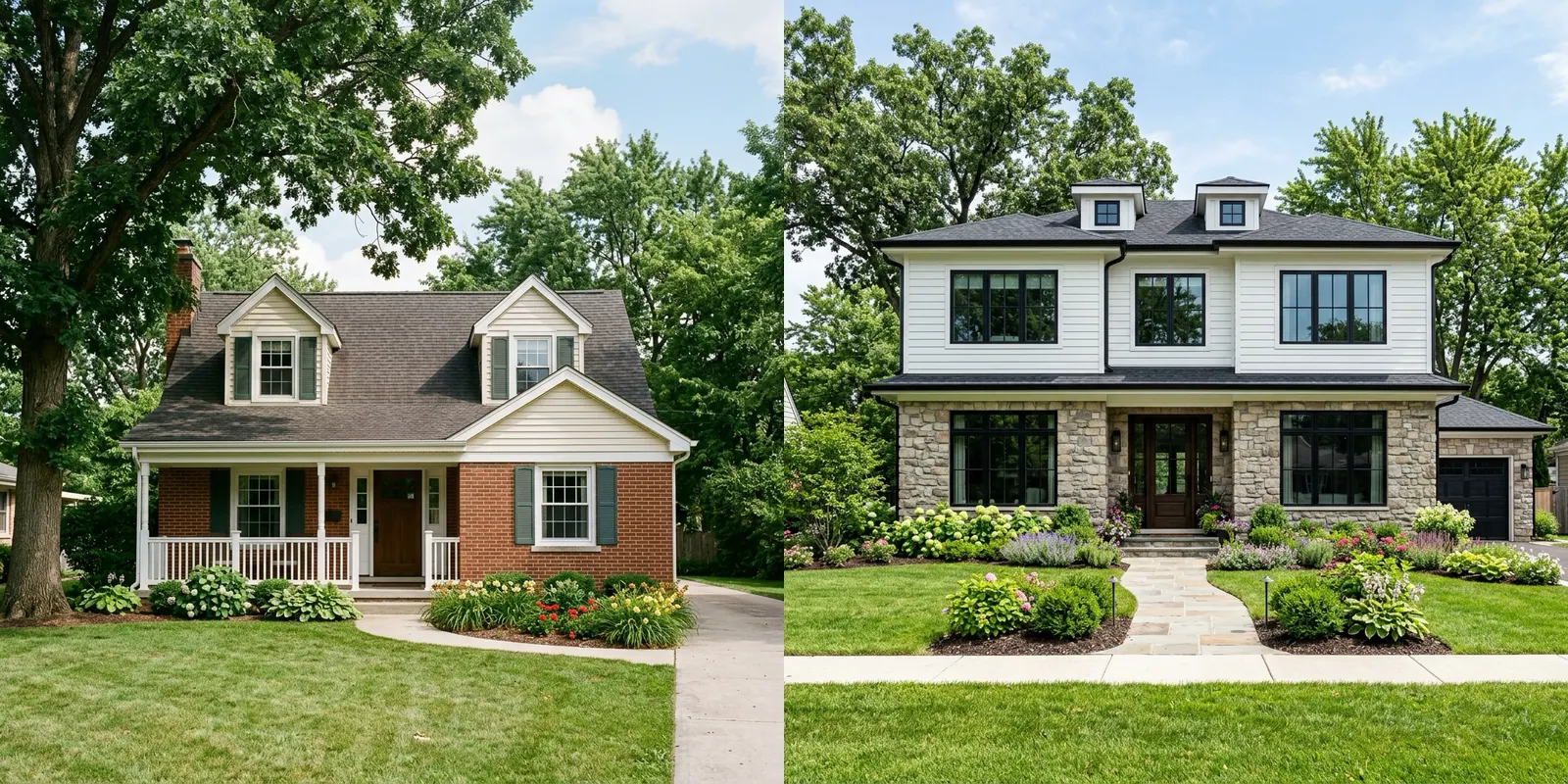
That last number is the teardown market at work. On many streets, a 1950s ranch or Cape Cod on a full lot is worth more to a builder than to someone who would live in it as is, and the replacement is a two-story house two or three times the size. For a buyer, the result is a street where a modest original house sits next to a new build, and the price of the older one is set partly by what a builder would pay for the land.
Zoning is what sets the size of that new house, and it is more restrictive than many buyers assume. Under the village's zoning ordinance, adopted in 2019, the R-1 single-family district calls for lots of at least 9,000 square feet and 60 feet wide, with a 37.5-foot height limit and 30% maximum building coverage. The floor area ratio is 0.40 on the first 9,000 square feet of lot and 0.20 on anything beyond that. On a standard 9,000-square-foot lot, that caps the house at about 3,600 square feet of floor area, with up to 484 square feet of garage not counted. Front yards have to match the average setback of the block, so a new house cannot jump forward of its neighbors. On any house priced as land, I pull the zoning district and the lot dimensions first.
The ACS puts the median home value at $605,800 and median gross rent at $1,142. The rent figure is low because it averages every rental in the village, including older apartment buildings, so do not expect to rent a house here at that number. Older houses come with the usual list: original electrical, older plumbing and basements that have seen water. None of those should end a deal. All of them belong in the price, and my home inspection checklist is a good place to start.
The Clarendon Hills Housing Market in 2026
Clarendon Hills prices held flat this summer while homes sold faster. In the three months ending August 2026, Redfin reported a median sale price of $799,471, down 0.066% from the same period a year earlier, which is flat for any practical purpose. Homes sold after 34 days on market on average, down from 54 a year earlier, and Redfin counted 45 sales in August against 32 the year before.
The two big data sources disagree on direction, and the reason matters. Zillow's home value index for Clarendon Hills was $695,190 in August 2026, up 8.4% from $641,577 a year earlier and up 15.3% from August 2024. Redfin's median is the middle of whatever happened to sell in a three-month window, and in a village this small a handful of new builds or condos in the mix moves it a lot. Redfin's own price per square foot, $354, was up 32.6% from a year earlier, which tells you this summer's sales skewed toward smaller, more expensive-per-foot houses. Zillow's index estimates every home in the village, sold or not. My read is that values rose and the mix of what sold shifted.
Clarendon Hills sits in the middle on competition. Redfin gives it a Compete Score of 63 out of 100, which it calls somewhat competitive. The sale-to-list ratio was 101.2% in August, down 1.3 points from a year earlier. Redfin's summary is that a typical home sells for about 1% above list and goes pending in around 35 days, while the most sought-after homes go about 4% over list in around 25 days.
What that means in practice: the range inside this village is wide. The last eight sales Redfin showed in mid-September ran from $485,000 to $1,825,000. The median tells you about the town and very little about a specific house, and the right list price depends on the pocket, the lot and whether the buyer pool is people who will live in the house or builders who will replace it. For sellers, day-one pricing and presentation decide which of those buyers shows up; my staging tips before listing cover the presentation side.
Clarendon Hills Property Taxes and the Real Cost of Owning
Property tax is the number that changes the monthly payment most, and it never shows up in the list price. Ownwell's April 2026 data puts the median effective rate in Clarendon Hills at 1.96% and the median annual bill at $10,244. That rate is below the DuPage County median of 2.16% and the Illinois median of 2.33%. Across the 60514 ZIP code, bills run from about $3,836 at the 10th percentile to $26,040 at the 90th, which shows how much the house and the parcel matter.
Here is what that looks like on a real purchase. At 1.96%, a house bought at this summer's $799,471 median would eventually carry about $15,670 a year in tax, roughly $1,306 a month on top of the mortgage. Ownwell's median bill is lower because its median home value, $530,070, reflects the whole housing stock, condos included, and because assessments trail sale prices. The expectation I most often have to reset is buyers who budget off the seller's current bill. On a new build or a heavily renovated house, the bill can jump once the new value is assessed.
The whole village sits in Downers Grove Township, and the Downers Grove Township assessor handles the assessments. DuPage reassesses on a four-year general cycle, with adjustments in between. Your bill is also shaped by which school, park and sanitary districts the parcel falls in, so an unincorporated 60514 house and a village house at the same price can carry different bills.
The tax bill is part of what you can afford, not an afterthought; my guide to how much house you can afford in 2026 builds it into the math. This is general information, not tax advice. Your actual bill depends on your parcel, your exemptions and the assessor.
Clarendon Hills Schools: District 181 and Hinsdale Central
Most of the village is in Community Consolidated School District 181, which also serves Hinsdale and parts of Burr Ridge. Three of its schools are in Clarendon Hills: Prospect Elementary at 100 N. Prospect Ave., Walker Elementary at 120 Walker Ave. and Clarendon Hills Middle School at 301 Chicago Ave.
High school for most of the village is Hinsdale Township High School District 86, which runs Hinsdale Central and Hinsdale South. Notre Dame School, a Catholic school for preschool through eighth grade, is also in the village.
The detail that trips people up is assignment. District 86 describes its boundary as covering most of Clarendon Hills, not all of it, and the village's own new resident page lists Maercker School District 60 alongside District 181 as serving the area. In practice that means some Clarendon Hills addresses, especially in the unincorporated areas to the south, feed different elementary and high schools than the house a few blocks away. Do not assume from the mailing address. Confirm the address with the districts before you write an offer, and ask me for the boundary if you want it checked for a specific house.
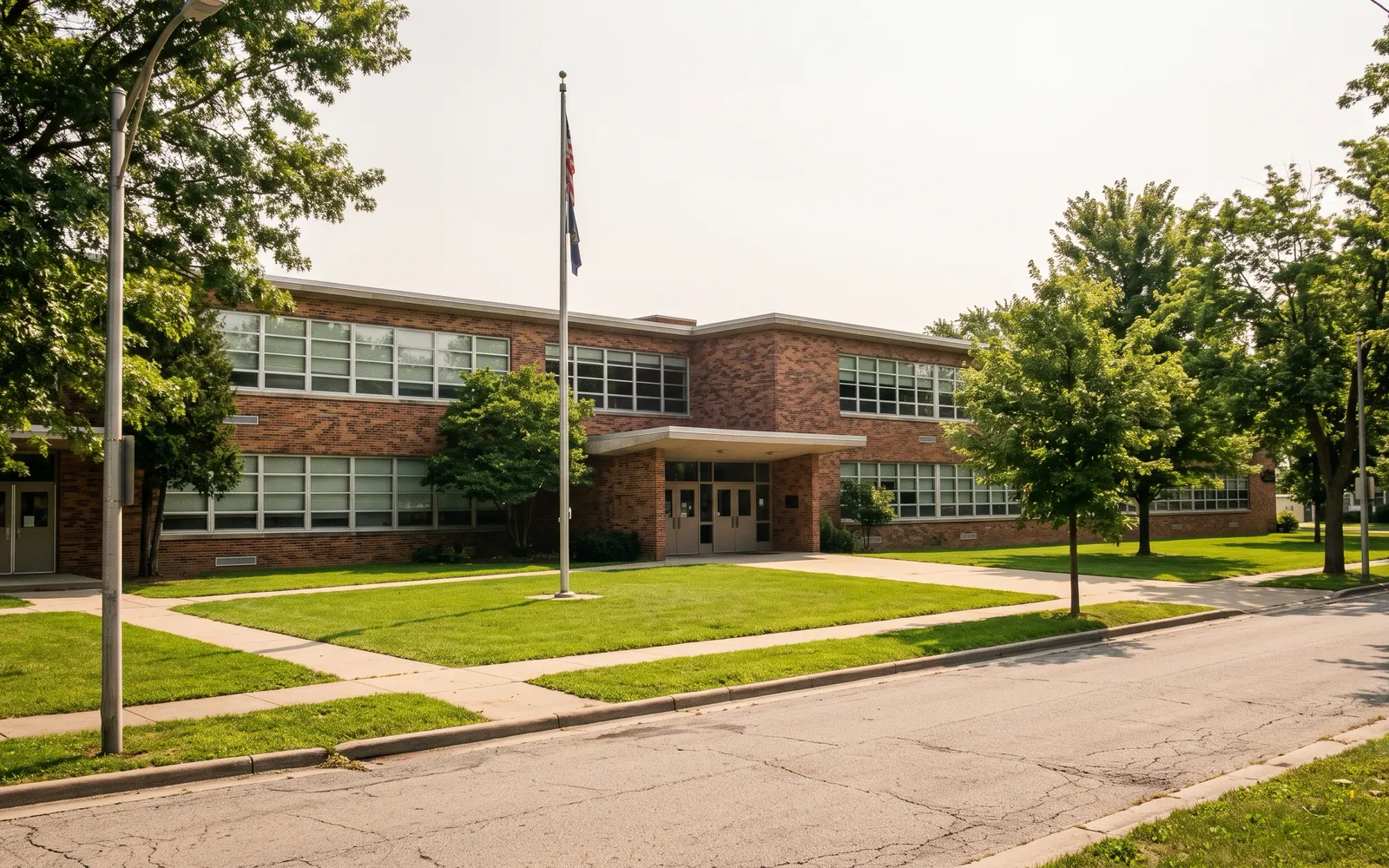
Prospect Elementary. 100 N. Prospect Ave. District 181.
Walker Elementary. 120 Walker Ave. District 181.
Clarendon Hills Middle School. 301 Chicago Ave. District 181.
Hinsdale Central High School. In neighboring Hinsdale. District 86.
Notre Dame School. Private Catholic school, preschool through eighth grade, in the village.
Commuting from Clarendon Hills: The BNSF to Union Station
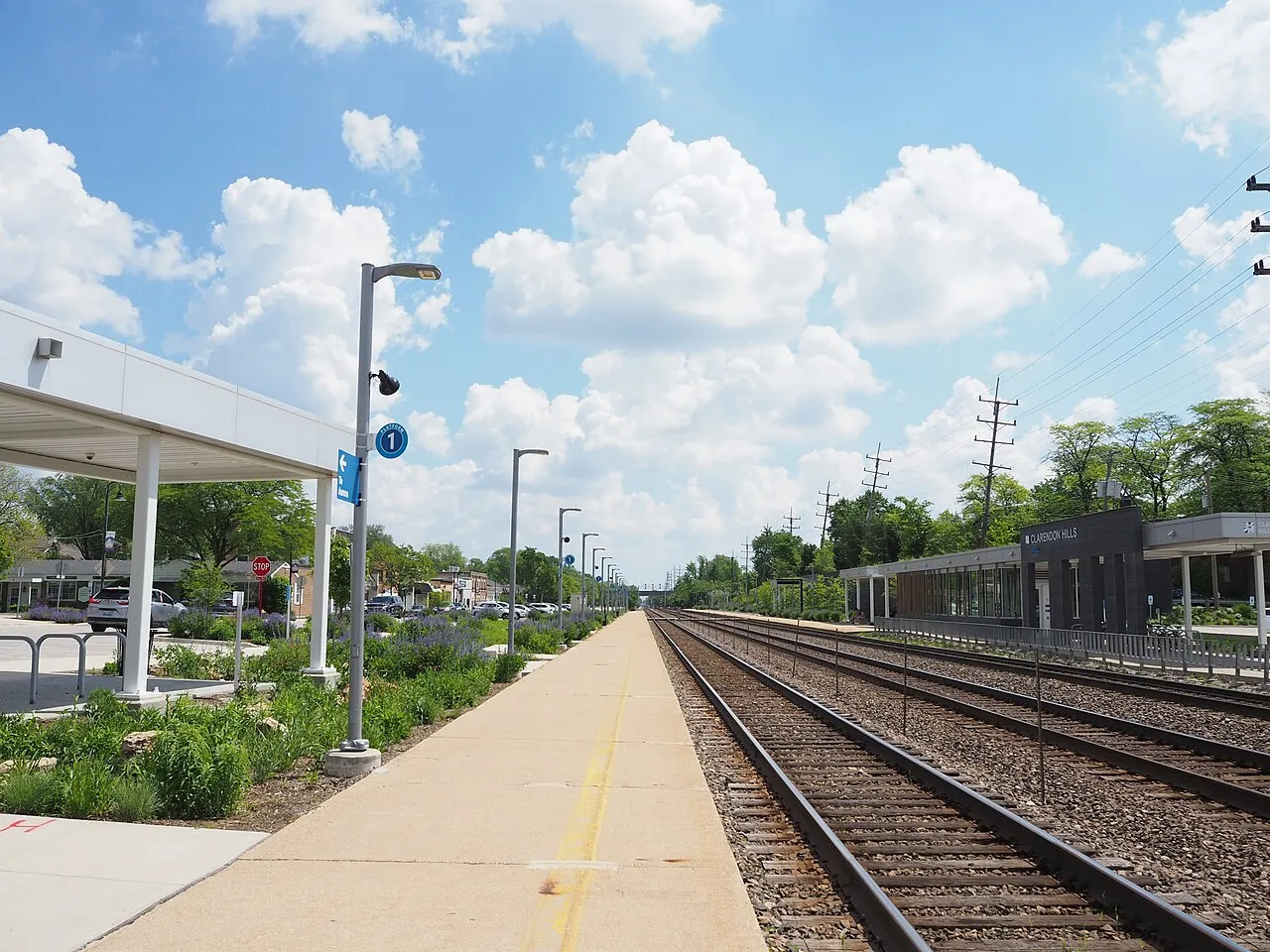
The Clarendon Hills Metra station sits at 1 S. Prospect Ave., right downtown, on the BNSF line. It is 18.3 rail miles from Union Station and in fare zone 3. According to Metra's schedule data for fall 2026, the station has 30 inbound and 29 outbound trains on weekdays and 18 in each direction on Saturdays and on Sundays, which is full service rather than the rush-hour-only schedule some small stations get.
Travel time depends on the train. The fastest weekday trip is the 4:34 a.m., which reaches Union Station in 38 minutes. In the heart of the morning, the express trains take 39 minutes; the 7:17 a.m. arrives at 7:56. The trains that make more stops take about 52 minutes, and midday trains about 44. Coming home, the fastest afternoon trains make it from Union Station in 35 minutes. If you are weighing two houses and one is a short walk from Prospect Avenue, that difference repeats every day you commute.
The station building itself is new. According to Wikipedia's station history, construction started in January 2020 and the ribbon was cut on November 7, 2022. Commuter parking is sold by permit through the village's police department, and daily parking is limited, so if you plan to drive to the train, ask about the permit wait before you buy. Pace buses 663 and 664 also serve the village.
Driving from Clarendon Hills: Highways and Airports
For a small village, Clarendon Hills is well placed for driving. According to the village's community profile, it sits just west of I-294 and Route 83 and just south of I-88 and Ogden Avenue, between O'Hare and Midway, with I-55 and I-355 also close. Route 83 is the quick north-south run, and 55th Street is the main east-west road on the south side.
The big road project nearby has been the Tri-State. The Illinois Tollway's $4 billion Central Tri-State project rebuilds and widens I-294 from Balmoral Avenue to 95th Street, with completion estimated for 2026, and the rebuild of the I-290/I-88 interchange is scheduled to run through 2027. If your commute goes north to O'Hare or east on I-88, those are the stretches to watch.
For houses near Route 83 or 55th Street, check traffic noise in person. Visit at rush hour with the windows open before you decide.
Is Clarendon Hills Walkable?
Near downtown, yes. Walk Score does not post a single village-wide score for Clarendon Hills, so I checked it by address in September 2026. Village Hall at 1 N. Prospect Ave. scores 77 for walking and 46 for biking, which Walk Score calls very walkable. Walker School scores 74. On the south side, 241 55th St. scores 60, somewhat walkable.
Walk Score counts about 29 restaurants, bars and coffee shops in the village. The blocks within a few minutes of Prospect Avenue can walk to the train, the library, the post office, restaurants and the summer concerts. The curving interior streets and the unincorporated edges are a different story, and most errands there need a car.
The village is small enough that almost everything is a short bike ride, and in 2025 the Village Board passed an ordinance on e-bikes. If walking to the train and downtown is one of your priorities, it narrows the search to a small part of an already small town, and those houses are priced accordingly.
Downtown Clarendon Hills and Shopping
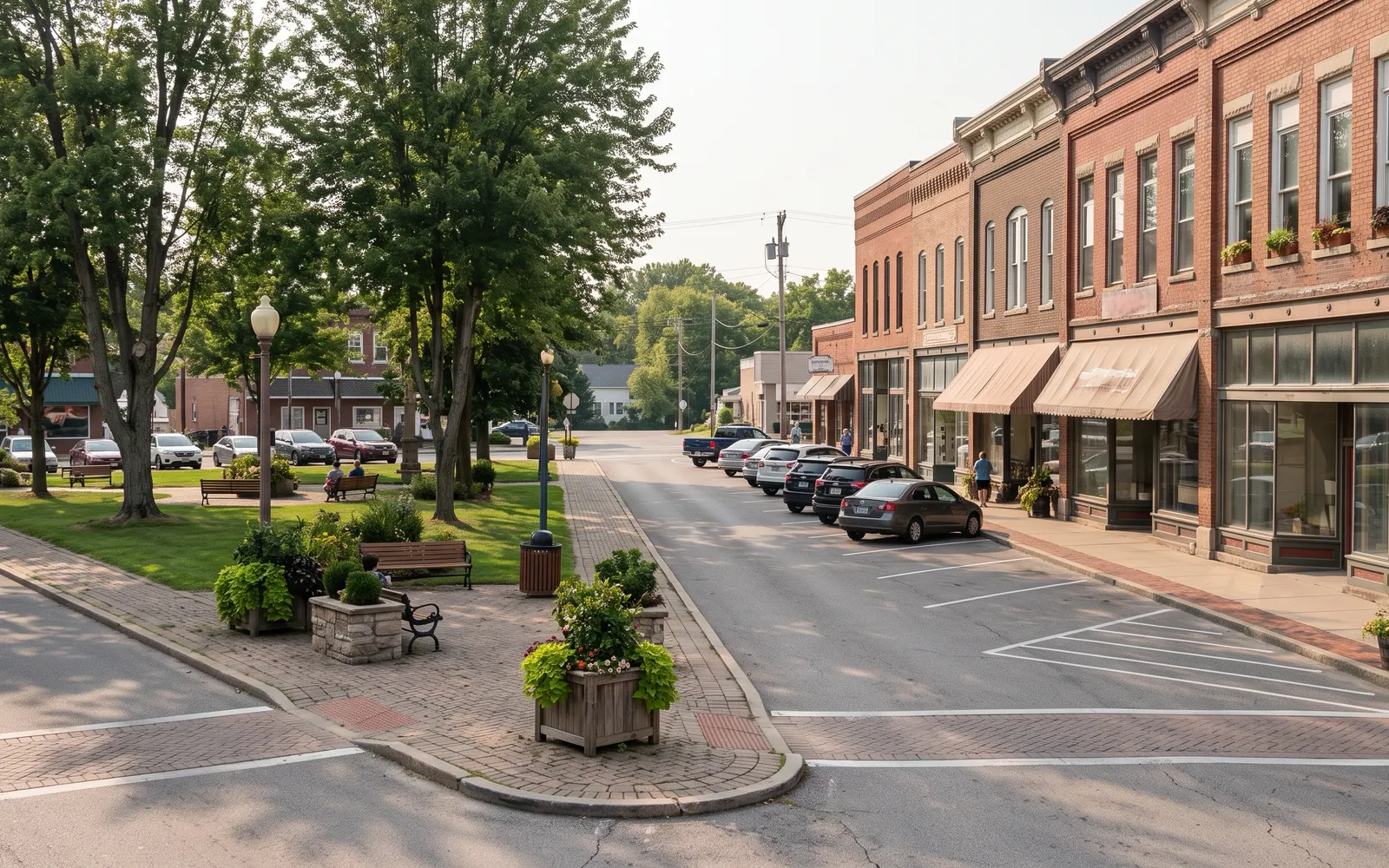
Downtown Clarendon Hills is a few blocks of Prospect Avenue on both sides of the tracks. It is a small-town downtown in the literal sense: independent shops, a handful of restaurants, a distillery, Village Hall, the library and the station, with the Sloan Triangle at Prospect and Park avenues and Burlington Plaza on the north side as the two public gathering spots. According to the village's community profile, the village has more than 100 businesses.
Downtown is also in the middle of a planning fight, covered in the development section below. The short version is that the village has spent 2026 deciding how much to spend on sidewalks, plazas and the Sloan Triangle, and residents have pushed back hard on closing a right-turn lane near the tracks.
For bigger shopping, Oak Brook Center is a short drive north, and Ogden Avenue and Route 83 handle the everyday big-box errands. Most Clarendon Hills addresses are within about ten minutes of both.
Groceries and Everyday Errands in Clarendon Hills
Clarendon Hills does not have a full-size supermarket inside the village, so groceries mean a short drive. Whole Foods Market is at 500 E. Ogden Ave. in Hinsdale, a few minutes north, and larger supermarkets sit along Ogden Avenue and Route 83 in the neighboring towns. In the village itself, the Chamber's farmers market runs Thursday mornings starting at 7 a.m. in season; the village listed a market date of September 24 this year. Banks, pharmacies and dry cleaners are split between Prospect Avenue and 55th Street.
Where Clarendon Hills Eats
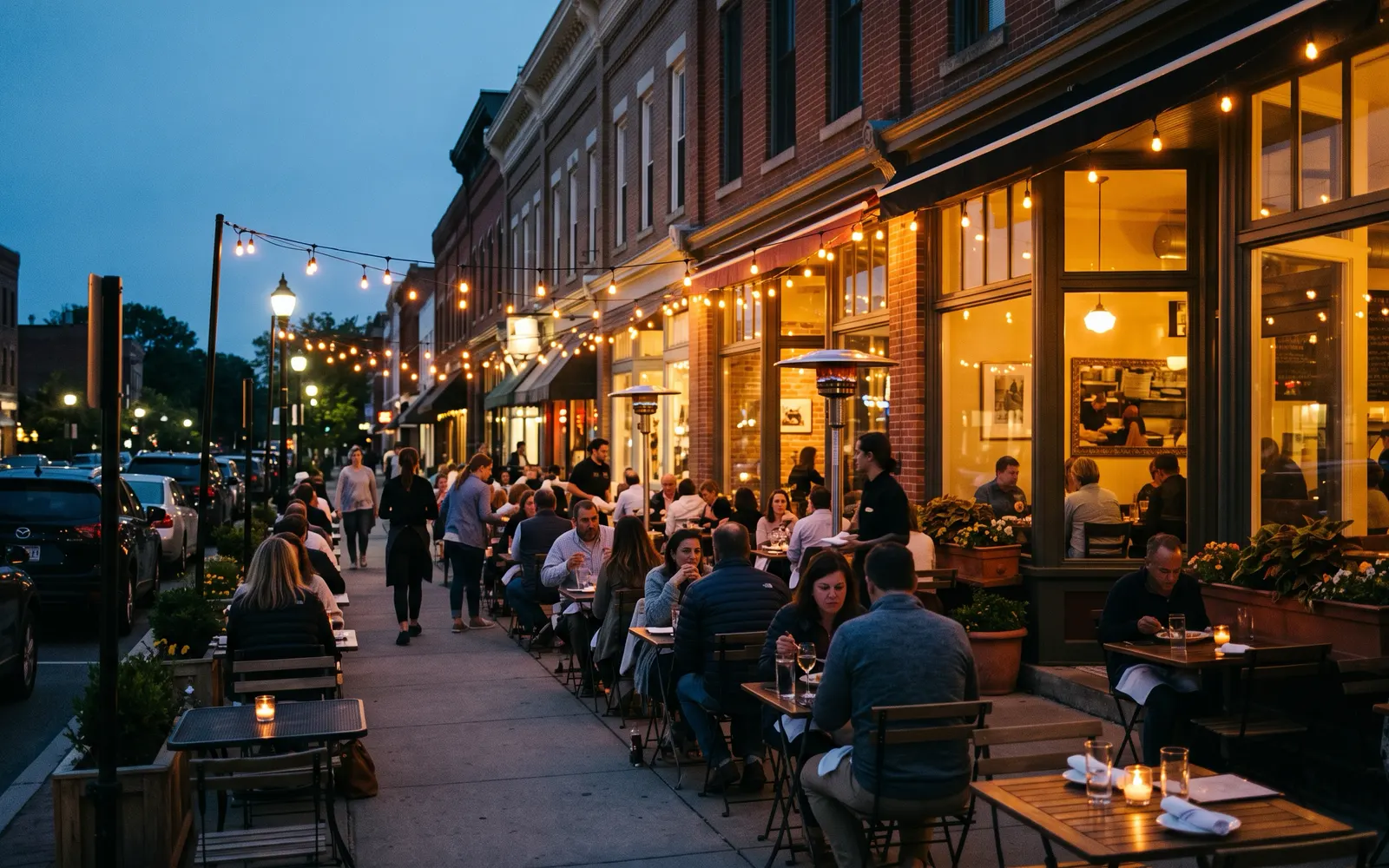
The restaurants are split between downtown and 55th Street. The one people who grew up nearby name first is Country House at 241 55th St., a burger-and-bar spot known for the peanut shells on the floor. Downtown, Prospect Avenue has Village Gourmet, a café and caterer at 23 S. Prospect; Ginger Wasabi, a sushi restaurant at 31 S. Prospect; The Open Door Taproom and Bottleshop at 20 S. Prospect; Il Mio, an Italian restaurant; and Tierra Distilling. A Rita's Italian Ice was announced for 22 S. Prospect Ave. with a September 2026 opening, filling a vacant storefront.
For more choice, downtown Hinsdale is a five-minute drive east and Oak Brook a few minutes north, and between the three the dinner options are broad.
Parks, the Pool and Recreation in Clarendon Hills
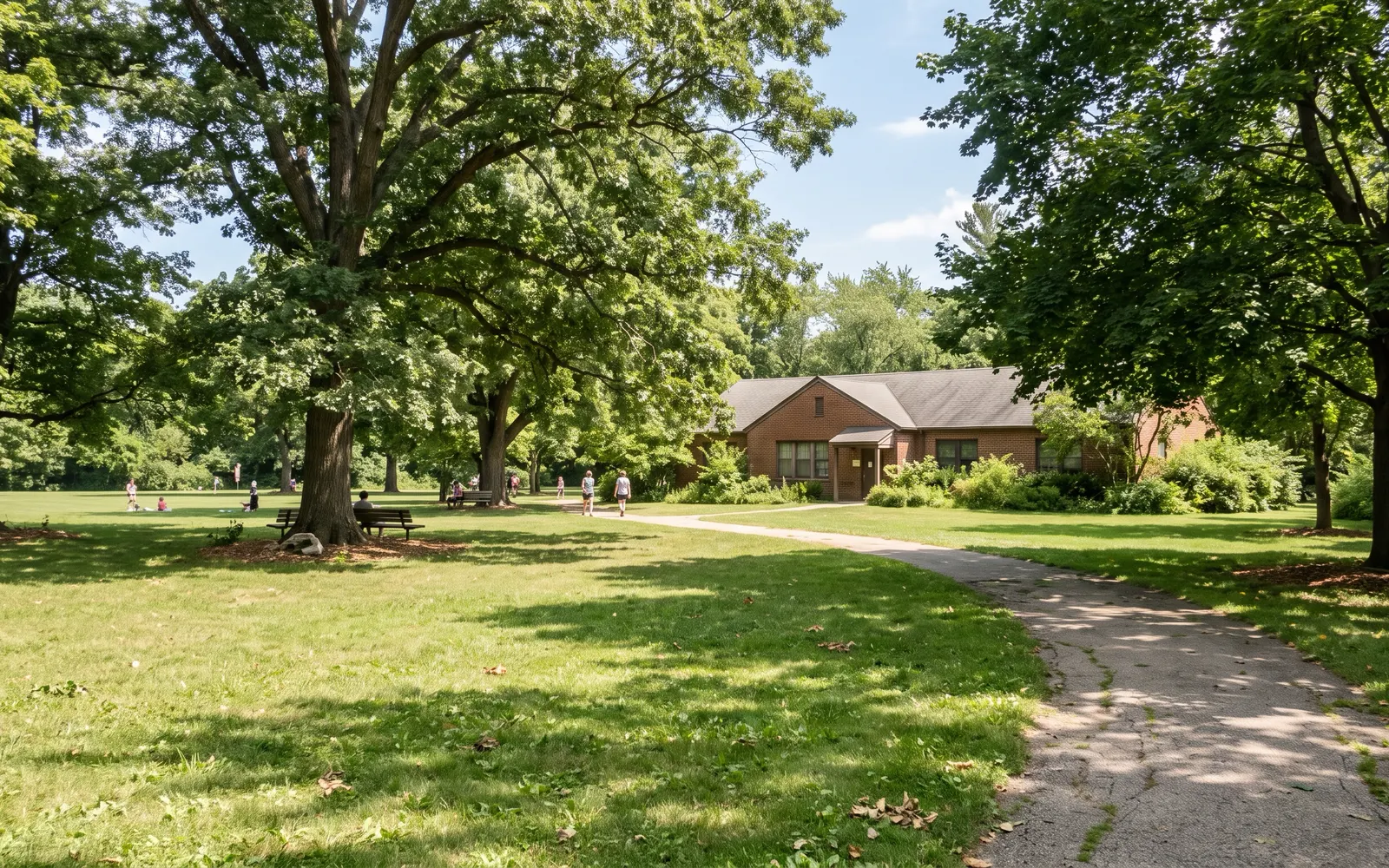
The Clarendon Hills Park District runs seven parks: Prospect Park, Hosek Park, Kruml Park, Walker Park, Park Avenue Park, Steeves Park and Blackhawk Park. Prospect Park is the center of it, with the community center and district office at 315 Chicago Ave. and a council ring that can be rented for gatherings.
The summer anchor is Lions Park Pool at 100 Byrd Ct., which the district says has recently finished renovations. Year-round, the district runs dance, cooking, athletics, aquatics and camp programs, plus seasonal events like its fall basketball leagues and Halloween house-decorating contest.
Golf in town means the Hinsdale Golf Club, a private club on 133 acres next to the Middaugh Road area. For public trails, Fullersburg Woods and the Graue Mill along Salt Creek are a short drive north in Oak Brook, and the Forest Preserve District of DuPage County has more preserves within 15 minutes.
The Clarendon Hills Public Library
The Clarendon Hills Public Library is at 7 N. Prospect Ave., downtown next to Village Hall. Beyond books, it runs a "Library of Things" for borrowing equipment, museum passes, study and meeting rooms, 3D printing and notary service. The library is surveying residents about the future of its building, so a renovation or expansion conversation may be coming; I have not seen a plan or a price yet.
Utilities in Clarendon Hills
Inside the village, the Village of Clarendon Hills bills for water. Sanitary sewer is handled by the Flagg Creek Water Reclamation District rather than the village. ComEd delivers electricity, and the village offers an electric aggregation program for a lower supply rate. Nicor provides natural gas, and Lakeshore Recycling Systems collects trash, recycling and yard waste under the village's contract. All of that is listed on the village's new resident page, along with the police, fire and public works contacts.
The ZIP code caveat applies here too. Some 60514 addresses outside the village limits are served differently, and in parts of unincorporated DuPage a house can be on a private well or septic system. If the tax record does not say Village of Clarendon Hills, ask the seller for the water and sewer providers and the last few bills before you write an offer. Well and septic inspections are separate from a standard home inspection and worth ordering.
Hospitals Near Clarendon Hills
The closest hospital is next door. UChicago Medicine AdventHealth Hinsdale, a Level II trauma center founded in 1904, is a few minutes east in Hinsdale. Other hospitals in the western suburbs and the city's academic medical centers are within reach by car or train for specialty care. Clarendon Hills has its own fire department, which handles emergency response in the village.
Summer Nights and Nights Out Near Clarendon Hills
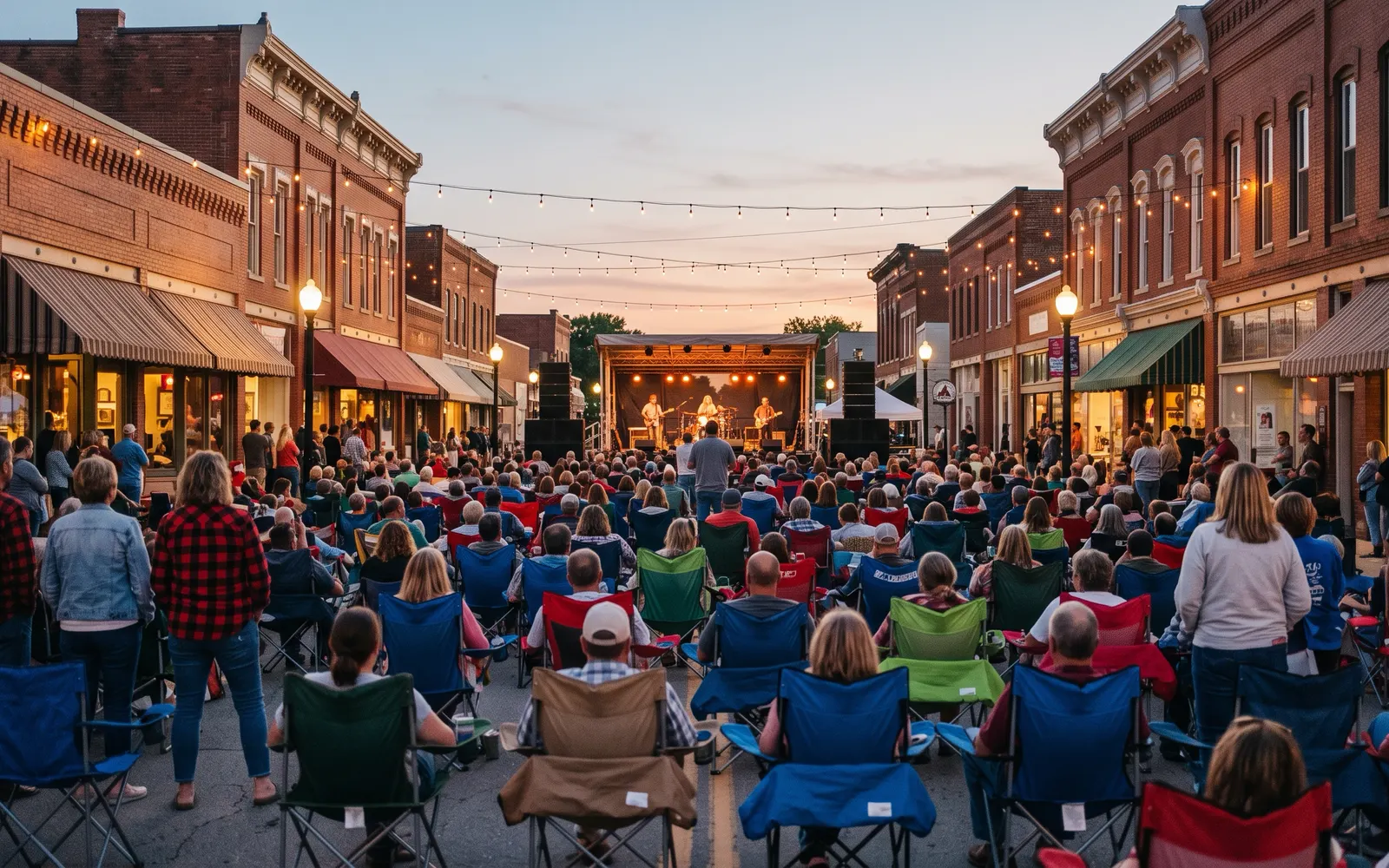
The village's own entertainment is outdoors and seasonal. The Summer Concert Series closes Prospect Avenue between Park Avenue and Burlington Avenue on Wednesday evenings, and in 2026 it ran from 7 to 9 p.m., July 8 through August 12. Bring a lawn chair and park at the commuter lot near Prospect and Ann Street.
For a night out beyond that, downtown Hinsdale is five minutes east, Oak Brook's restaurants and Drury Lane theater in Oakbrook Terrace are a short drive north, and the Graue Mill museum on Salt Creek is a good weekend stop. For anything bigger, the BNSF puts Union Station about 39 minutes away on an express, with evening trains back out.
Oktoberfest and Clarendon Hills' Yearly Traditions
Most of the calendar is run by the Clarendon Hills Chamber of Commerce, and most of it happens on Prospect Avenue. The fall highlight is Oktoberfest, which in 2026 spreads across two downtown spots, Burlington Plaza on North Prospect and the Sloan Triangle on South Prospect, and includes a bags tournament hosted by the Clarendon Hills Firefighters Association.
The rest of the year has a steady rhythm. The village's community profile lists the Chamber's farmers market, Dancin' in the Street, Daisy Days, Oktoberfest and the Holiday Walk as the regular events, and the Wednesday summer concerts fill July and August. The park district adds seasonal events like Boo on the Block in October.
If you are touring houses in summer, come downtown on a Wednesday concert night. It tells you more about how the village center works than any listing will.
What's Being Built in Clarendon Hills
Clarendon Hills has almost no vacant land, so most change happens one lot at a time. The steady force is residential rebuilding: older houses replaced with larger new ones within the zoning caps described above. Expect construction fencing on some block you look at, in almost any pocket.
The public project everyone is talking about is downtown. In 2025 and 2026 the village worked with the planning firm Houseal Lavigne on a Downtown Improvement Plan covering Prospect Avenue between Railroad Avenue and Park Avenue. The biggest fight was over the Sloan Triangle at Prospect and Park. According to the Chicago Tribune in April 2026, the board agreed to keep the right-turn slip lane but add pavers and removable bollards so it can close for events. The same report laid out a four-year plan: about $1.6 million in year one, $400,000 for Burlington Plaza and the Village Hall plaza and $390,000 for the Walker Avenue alley in year two, $250,000 for two Prospect intersections in year three and about $1.5 million for a downtown refresh in year four.
It has not gone smoothly. On July 20, 2026 the board voted down the contract for the flexible gathering space, a proposal Patch reported at nearly $3.3 million. A scaled-back $1.9 million no-bid version with Christopher Burke Engineering, without the street pavers and new light poles, was set for a board vote on September 21, 2026, with residents still raising traffic concerns about closing a lane so close to the tracks. I had not seen the result when I wrote this.
For a buyer, the takeaway is that supply stays tight and downtown is likely to change around the edges rather than transform. There is no large subdivision coming, so new inventory mostly means rebuilt houses at the top of the market. If you are buying within a block or two of Prospect Avenue, it is worth reading the current plan before you buy.
I don't label any town or neighborhood as safe or unsafe.
Flood Risk in Clarendon Hills
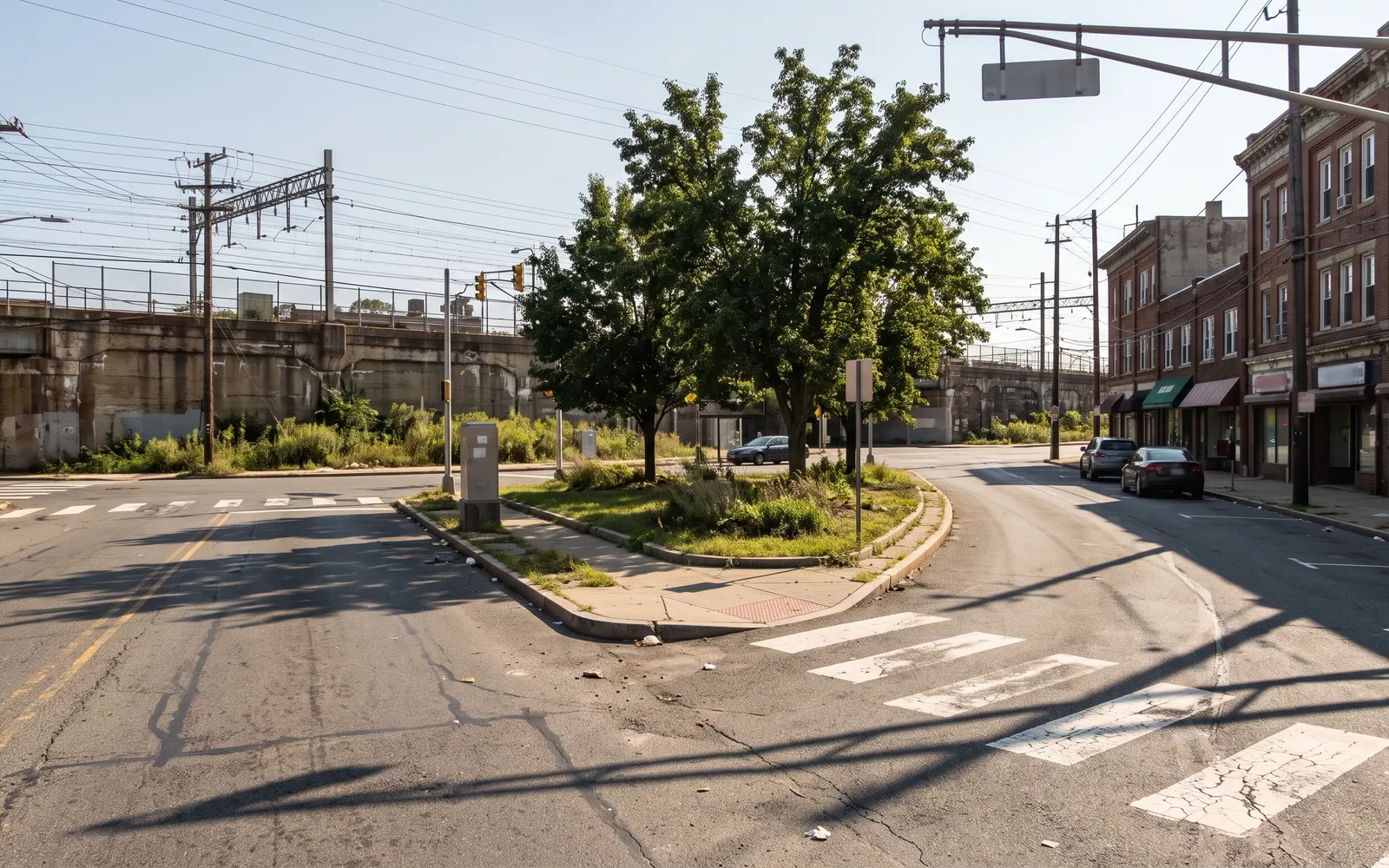
Flooding is the issue I would put at the top of the list in Clarendon Hills right now. Redfin, using First Street's model, rates the village's overall flood risk as minor, with about 9% of properties at risk of severe flooding over the next 30 years. That average hides a specific problem area.
On August 1, 2026, downpours overwhelmed the village's storm pipes and overland flood routes. According to Patch, the hardest-hit spot was Middaugh Road and Walnut Street, where streets became impassable and water blocked entry to some homes. The public works director described the water as regional: it comes off the rail line, moves through Prospect Park, crosses the Hinsdale Golf Club and heads east toward Route 83 and Hinsdale. Residents blamed changes at the golf club for making it worse. The village hired Christopher Burke Engineering for a $25,000 study of the area north of Chicago Avenue, including a review of whether recommendations from its 2013 and 2018 studies were ever followed.
The village also runs a stormwater cost-share program for drainage fixes that help more than one property. It pays 50% of labor and materials, up to $2,000 per property and $10,000 per project, with applications due March 31 each year and a $10,000 annual budget. That is useful for a shared backyard swale. It will not fix a regional problem.
Three checks on every house. Look the address up on the FEMA flood map, because a mapped flood zone can mean required flood insurance on a mortgage. Ask the seller directly about water in the basement and what they did about it. And for anything in the Middaugh Road area or along the drainage path described above, ask specifically how the house did on August 1, 2026.
Frequently Asked Questions
How much does a house cost in Clarendon Hills, IL?+
Redfin reported a median sale price of $799,471 for the three months ending August 2026, flat from a year earlier, and Zillow's home value index was $695,190 for August 2026, up 8.4%. Recent sales ranged from condos under $500,000 to new construction near $1.8 million.
What are property taxes in Clarendon Hills, IL?+
The median effective rate is about 1.96%, with a median bill of $10,244 (Ownwell, April 2026), below the DuPage County median of 2.16%. A home's bill usually rises after a sale or a rebuild once it is reassessed.
What county is Clarendon Hills, IL in?+
DuPage County, entirely within Downers Grove Township. Unlike neighboring Hinsdale, no part of the village is in Cook County. Some 60514 addresses outside the village are unincorporated DuPage.
What school district is Clarendon Hills, IL in?+
Most of the village is in Community Consolidated School District 181 (Prospect and Walker elementary and Clarendon Hills Middle School) and Hinsdale Township High School District 86, which feeds Hinsdale Central. Some addresses, especially unincorporated ones to the south, fall in Maercker District 60, so confirm each address with the districts.
How long is the commute from Clarendon Hills to downtown Chicago?+
On Metra's BNSF line, rush-hour express trains reach Union Station in about 39 minutes, trains with more stops in about 52 and midday trains in about 44. The station has 30 inbound weekday trains and 18 each way on weekends.
Is Clarendon Hills walkable?+
Near downtown, yes. Walk Score rates Village Hall on Prospect Avenue 77 and Walker School 74, while a 55th Street address scores 60. Interior streets and unincorporated edges mostly need a car.
Does Clarendon Hills flood?+
Parts of it do. Redfin/First Street rates about 9% of properties at severe 30-year flood risk, and storms on August 1, 2026 flooded the Middaugh Road and Walnut Street area. The village hired Christopher Burke Engineering for a $25,000 study, so ask about basement water on every house.
How big a house can you build in Clarendon Hills?+
In the R-1 single-family district, floor area is capped at 0.40 of the first 9,000 square feet of lot and 0.20 of the rest, so a standard 9,000-square-foot lot allows about 3,600 square feet, with up to 484 square feet of garage exempt. Height is capped at 37.5 feet.
Eshu Chikoti has extensive access to off-market listings throughout Clarendon Hills and the rest of DuPage County — homes that never make it to the public listing sites. That matters right now: in a seller's market like this one, well-priced homes routinely go under contract within days, and buyers relying only on public listings are competing for whatever is left over. Working with someone plugged into off-market inventory means seeing homes before the crowd does.
Eshu Chikoti · 847-691-4282 ·
Get new Clarendon Hills listings by email
When a home comes on the market in Clarendon Hills, I'll email it to you.
Just your email. Unsubscribe any time by replying.
Thinking About Clarendon Hills?
Whether you're buying, selling, or just curious what's on the market, I can walk you through Clarendon Hills street by street.