Bloomingdale, IL
Bloomingdale, IL is a DuPage County village of about 22,500 people, built mostly from the 1970s through the 1990s, where the site of the former Stratford Square Mall is being rebuilt as an open-air district called The Grove.
Living in Bloomingdale, IL means a median sale price near $415,000 this summer, property tax around 2.35% of value, and a short drive to the Roselle Metra station for a 39-minute express to Union Station. The trade-offs are a car-dependent layout, five elementary districts to sort out by address, and a former mall site still under construction.
Written by Eshu Chikoti · 847-691-4282 ·
How Bloomingdale, IL Got Here: A Short History
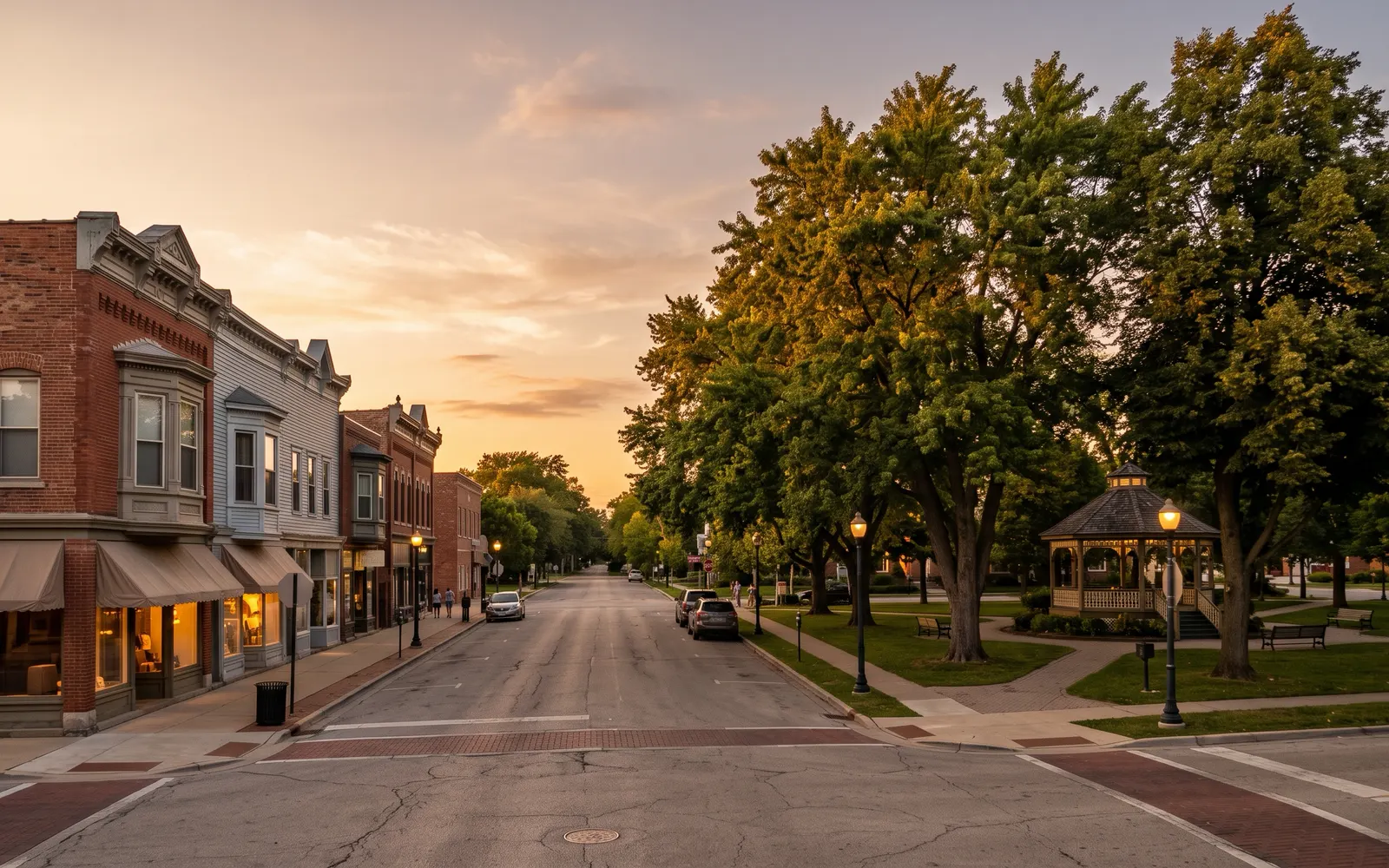
Bloomingdale is one of the oldest settlements in DuPage County. According to the Village of Bloomingdale's history page, brothers Lyman, Silas and Harvey Meacham started farming about 1,200 acres in 1833 in what is now Medinah. The whole area, today's Bloomingdale, Roselle and east Medinah, was known as Meacham's Grove. The Bloomingdale Public Library's history page says the name came from the Bloomingdale family, who settled in a grove just east of Meacham's Grove that became known as Bloomingdale Grove.
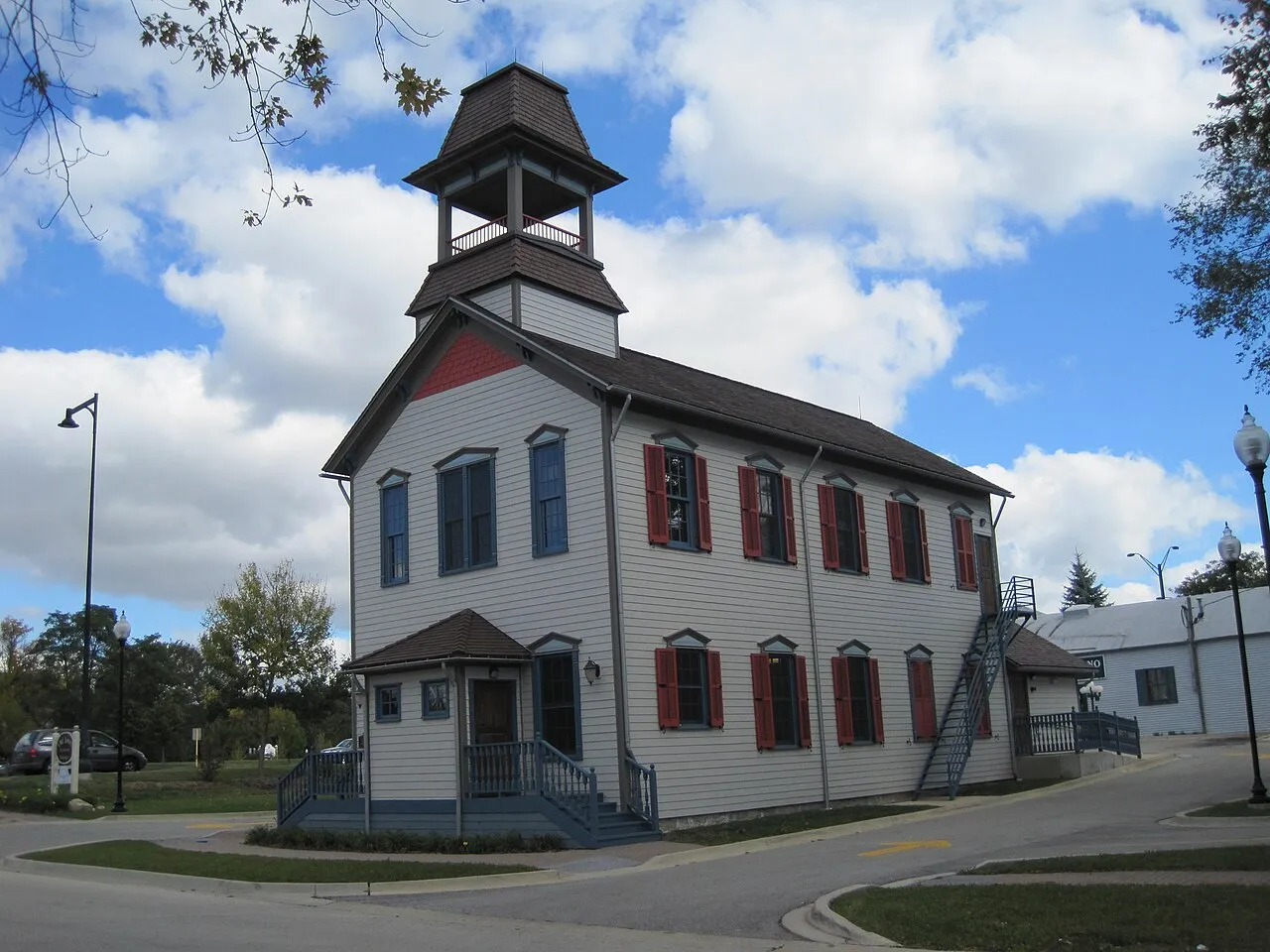
A post office opened in 1837. In 1845 the area became the third town platted in the new county, and in 1849 a Baptist church went up as its first permanent building. That church still stands in Old Town and today houses the Bloomingdale Park District Museum. Around 1873 the Chicago and Pacific Railroad came through the northern part of the town, and that is the part that grew commercially.
The railroad is also why Bloomingdale and Roselle are two villages today. Wikipedia says Bloomingdale first incorporated in 1889. The northern section, along the tracks, wanted to develop commercially and the southern section wanted to stay farmland. The library's history page says Roselle disannexed in 1922, and Bloomingdale reincorporated on its own in 1923. The practical result for a buyer is that the Metra line ended up in Roselle, and Bloomingdale has no station of its own.
For most of the next century Bloomingdale stayed small. The village's history page counts 338 residents in 1950 and 1,262 in 1960. Then the subdivisions arrived. The village says it had about 10,000 people by 1976, and Wikipedia's census table shows 12,656 in 1980, 21,675 in 2000 and 22,382 in 2020. That curve tells you when the houses were built, and it is the most useful single fact in this guide.
Two big buildings shaped the modern village. Stratford Square Mall opened on March 9, 1981, with about 1.3 million square feet and four department store anchors, according to Wikipedia's Stratford Square article. It closed on April 21, 2024, and was demolished between October 2024 and June 2025. The Indian Lakes Resort on Schick Road opened in 1980 in a building designed by Don Erickson, an apprentice of Frank Lloyd Wright. Both are being reinvented now, and I cover where each one stands in the development section.
Bloomingdale at a Glance
Bloomingdale sits in the northern part of DuPage County, about 25 miles northwest of the Loop. Wikipedia puts the village at 7.03 square miles, 6.76 of them land, which makes it a little larger than most people guess. Roselle is directly north, Medinah and Itasca are to the northeast, Glendale Heights is to the south and Carol Stream is to the southwest. The whole village is in DuPage County, and most of it is in Bloomingdale Township.
The 2020-2024 Census ACS puts the population at 22,457 in 9,423 housing units. 74.6% of occupied homes are owner-occupied. The ACS median value of an owner-occupied home is $376,500, and the median gross rent is $1,603. Those are survey figures from a five-year window, so they trail today's market, but they are a useful baseline.
Bloomingdale has a larger commercial base than its size suggests. For four decades Stratford Square Mall was the anchor of the whole northwest DuPage retail belt, and the shopping centers around it on Gary Avenue, Army Trail Road and Schick Road are still there. The mall site itself is now in the middle of a rebuild. That matters to a buyer in two ways: it is where much of the village's future retail and new housing will come from, and it is the part of town where the most change will happen over the next five years.
The layout is easy to learn. Lake Street (US-20) runs diagonally across the north side past Old Town. Army Trail Road and Schick Road are the main east-west roads through the middle and south. Gary Avenue and Bloomingdale Road run north to south, and Glen Ellyn Road runs along the east side toward I-355. Most people describe where they live by which of those roads they are closest to.
One check before you fall in love with a house: a Bloomingdale mailing address does not always mean the village. ZIP 60108 includes unincorporated DuPage County parcels, and parts of neighboring villages use Bloomingdale addresses too. Those parcels can have different services, zoning and tax bills. I confirm village limits on every address before I run numbers.
At an effective rate near 2.35%, the tax bill on a given price is lower here than in Glendale Heights next door, and the village adds no transfer tax at closing.
Bloomingdale Neighborhoods, Pocket by Pocket
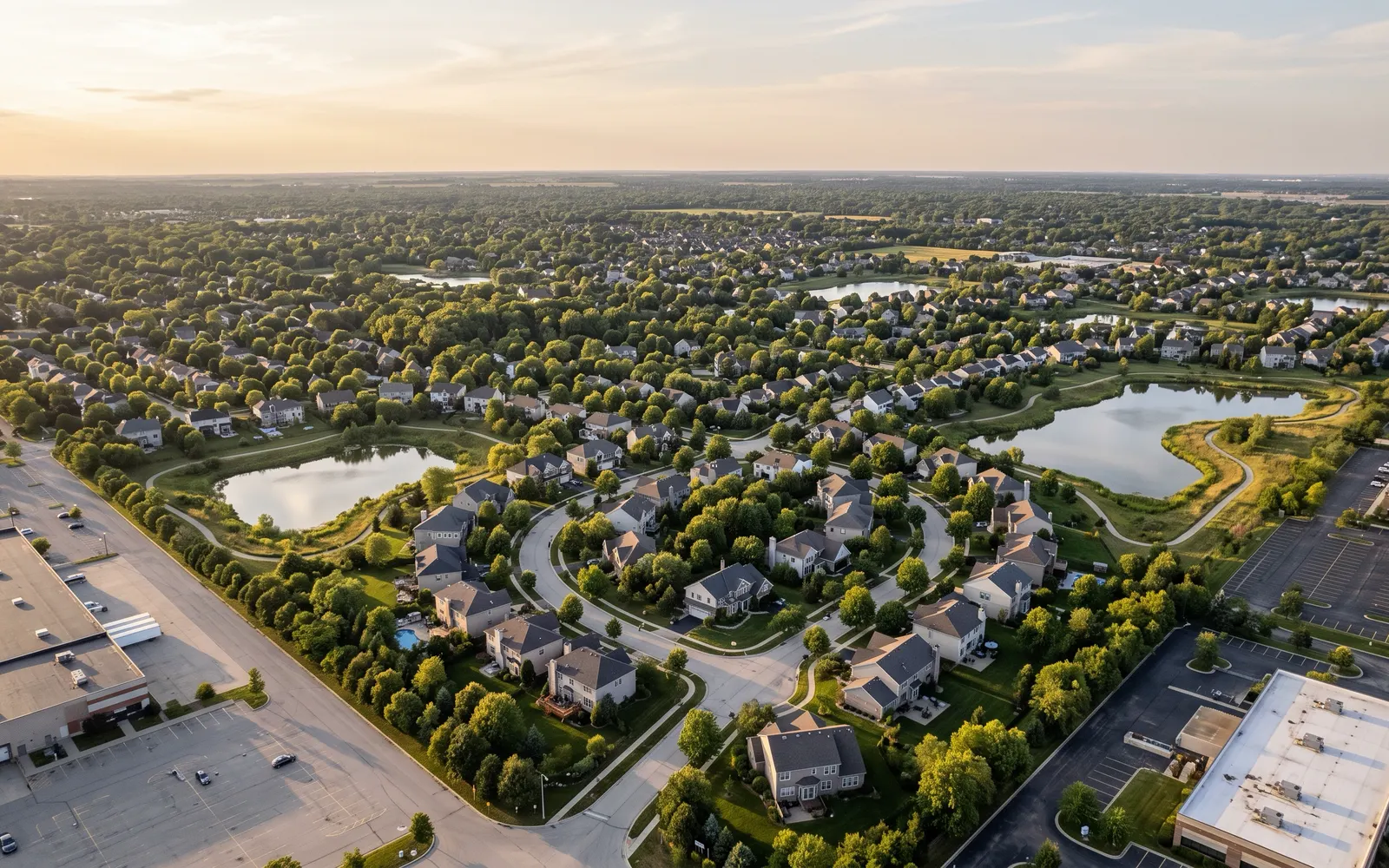
Bloomingdale has no official neighborhoods, but listings name subdivisions constantly, and because most of the village went up in about 25 years, the subdivision name tells you a lot. It usually tells you the decade, whether the home is detached, a townhome or a condo, and which of the five elementary districts it probably feeds.
The simplest split is Army Trail Road. North of it you are closer to Old Town, Lake Street and the Roselle and Medinah Metra stations, and more of the older streets and early-1970s subdivisions are up there. South of it you are closer to the former mall site, Schick Road, the Indian Lakes area and the Glendale Heights and Carol Stream line. The second split is east and west. The east side, toward Glen Ellyn Road, is closer to I-355. The west side, toward Gary Avenue and beyond, is where more of the late-1980s and 1990s subdivisions are.
Walk Score does not break Bloomingdale into neighborhood scores. It rates the village and the whole 60108 ZIP at 43. In practice the streets around Old Town and the blocks closest to the shopping centers on Gary Avenue and Army Trail Road are the only places where walking to anything is realistic, and The Grove may add a third walkable pocket once it opens.
I have not closed a sale inside Bloomingdale yet, so I won't pretend to know every cul-de-sac. What I do on every Bloomingdale address is the same four checks: village limits, which elementary and high school district the parcel feeds, the tax code, and the association documents if there is one. In this village those four vary more from street to street than the houses do. If you want that done for a specific listing, that is a conversation I am happy to have here.
Below are the subdivision names you will see most often. Build eras come from public agent subdivision directories and are approximate, so treat them as a starting point and confirm on the listing.
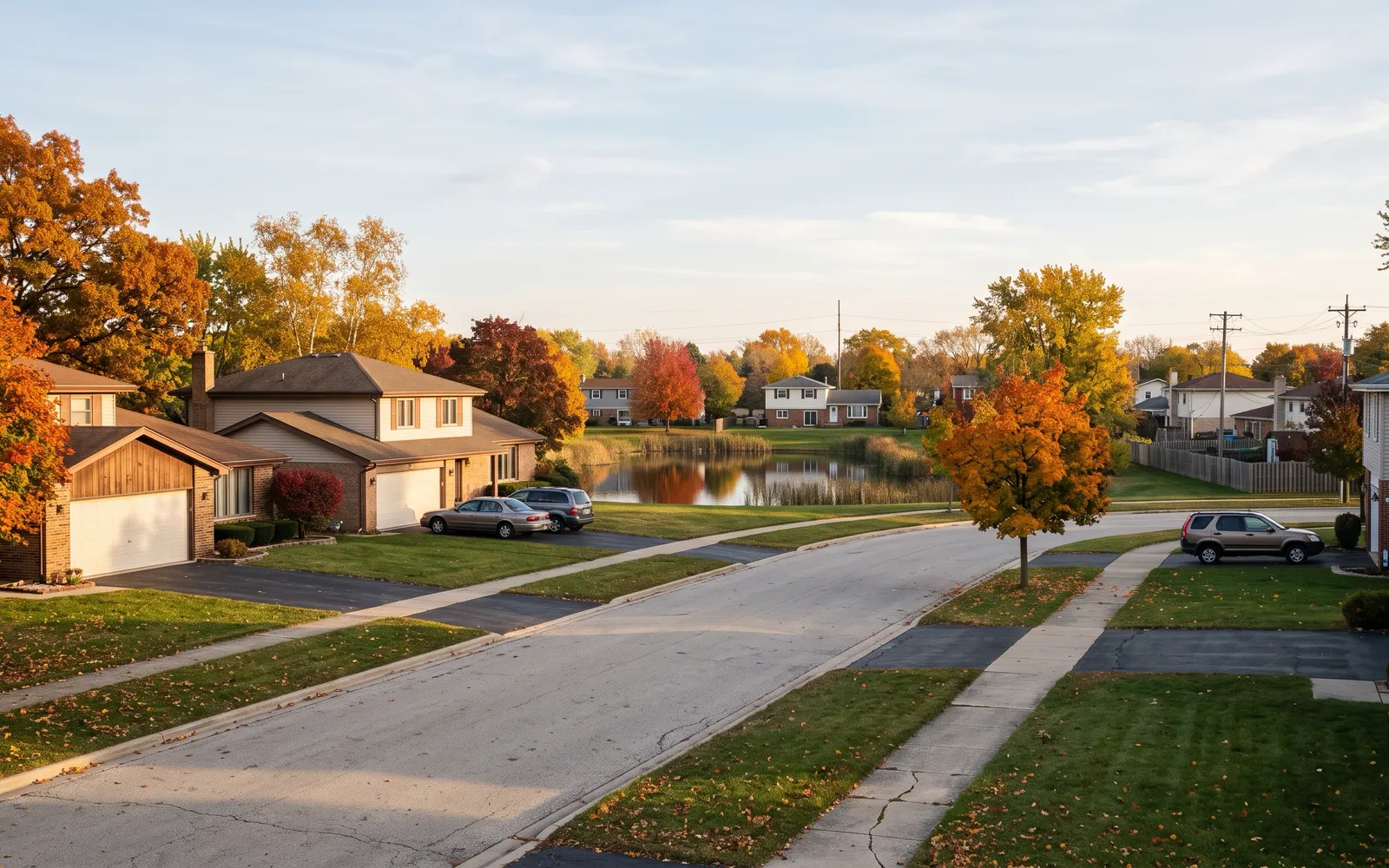
Westlake. Single-family homes and townhomes built roughly 1970 to 1975 around man-made lakes, north of Army Trail Road and west of Glen Ellyn Road. Westfield Middle School takes part of its name from this subdivision.
Fairfield. On the east side of the village, with detached homes, townhomes and condominiums. The Bloomingdale Public Library's address is on Fairfield Way.
Old Town and Old Towne Estates. The original village around Lake Street and Third Street, with the oldest housing in Bloomingdale mixed with later infill. Walking distance to Old Town Park, the museum and the summer concerts.
Bloomfield Club. Townhomes and single-family homes built in the late 1980s and early 1990s by Hoffman Homes, on the west side. One directory notes a shared clubhouse with pools and tennis courts; confirm what the association covers.
Bloomfield Hills. Single-family homes built roughly 1987 to 1991 by Hoffman Homes, north of Schick Road and east of Gary Avenue.
Stratford Lakes and Stratford Place Estates. Single-family subdivisions; Stratford Lakes was built roughly 1990 to 1994. If a listing is close to the former mall site, ask how the construction schedule for The Grove affects the street.
Country Club Estates. Townhomes and condos built in the 1980s off Schick Road, with exteriors maintained by the association.
Medinah on the Lake. A condominium community on Lakeview Drive with buildings dating from 1974 onward. Among the lower price points in the village.
Indian Lakes, Mallard Lake Estates, Founders Pointe, Villa Veneto, Suncrest Highlands and Conestoga Estates. Smaller subdivision names you will see on listings. Ask for the build year and the school assignment on each one; they vary.
What Bloomingdale Homes Look Like, by Era
Bloomingdale was built in two waves, and the Census numbers show both. According to the 2020-2024 ACS, 38.4% of the village's housing units were built in the 1970s and 24.2% in the 1990s. Another 17.1% date to the 1980s. Only about 10% predate 1970, and about 10% were built in 2000 or later. Roughly four out of five homes here are between about 25 and 55 years old.
The mix of housing types is broad. The ACS counts 44.5% of units as detached single-family homes and 23.0% as attached single-family, which is mostly townhomes. About 25.6% are in buildings of five or more units, the condominium and apartment communities along Schick Road, Lakeview Drive and the roads around the former mall. The remaining 6.9% are two- to four-unit buildings. That spread is why Bloomingdale has entry points well below its median and also why you have to compare like with like when you read a price statistic.
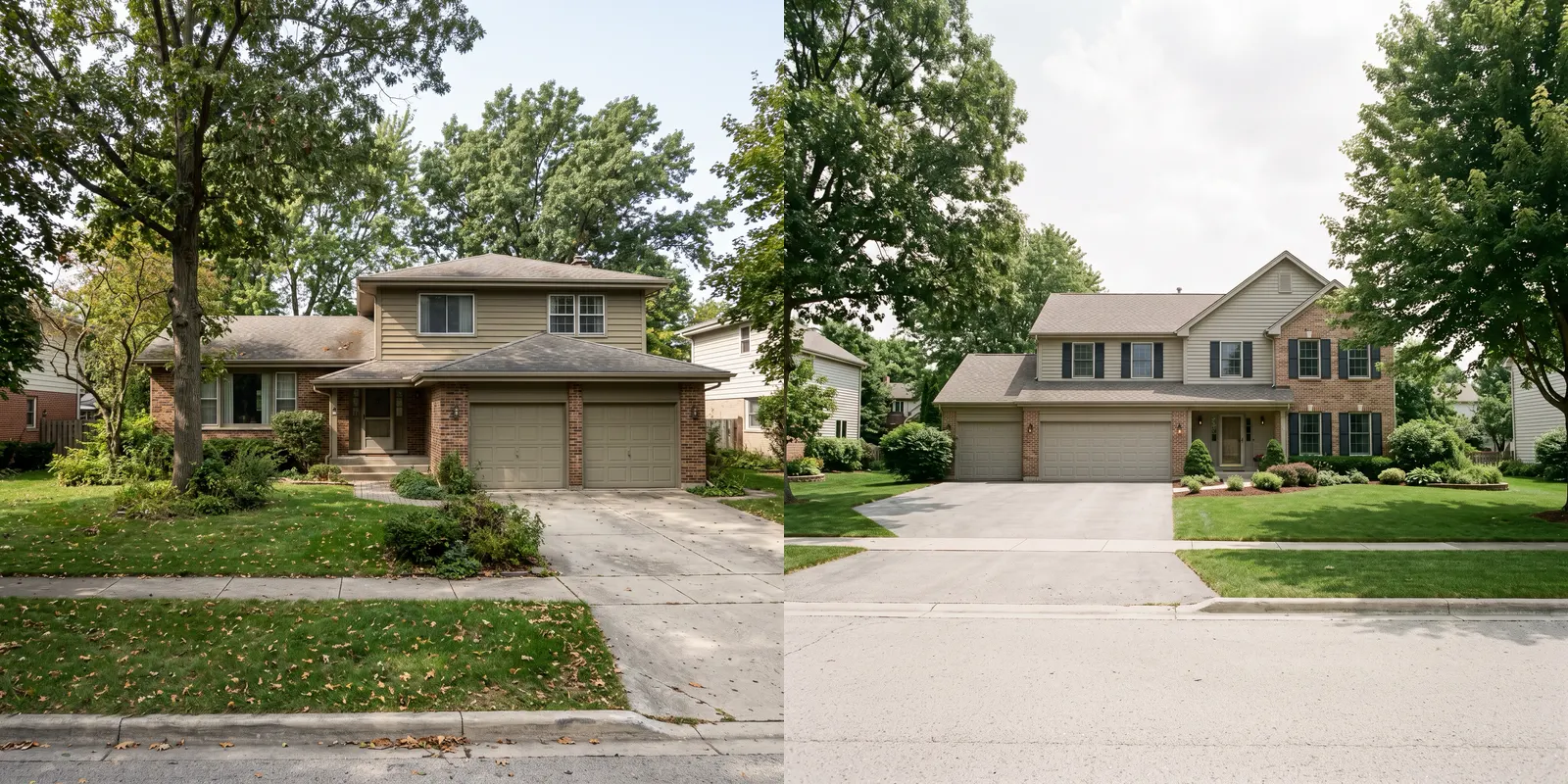
What the eras look like on the ground is predictable. The early-1970s subdivisions like Westlake are raised ranches, split-levels and two-story colonials, often on streets that curve around a retention pond. The 1980s brought more townhome and condo communities. The late-1980s and 1990s subdivisions, like Bloomfield Hills and Stratford Lakes, are larger two-stories with two- and three-car garages, bigger kitchens and more bathrooms. There is very little new construction because there is very little land left, which is why the 11-home Lake Street plan in the development section is news here.
What that means at inspection is also predictable. A 1970s Bloomingdale house often has original windows, an aging furnace and water heater, and a roof or two layered over the decades. A 1990s two-story is newer, but at 30-plus years it is reaching its first round of big-ticket replacements: roof, HVAC, water heater and sometimes the sump pump. Townhomes and condos shift some of that onto the association, so read the budget and the reserve study, not just the monthly assessment. None of this should kill a deal. All of it belongs in the price. My home inspection checklist is a good place to start.
The Bloomingdale Housing Market in 2026
Bloomingdale homes still sell at or above asking, but more slowly than a year ago. In the three months ending August 2026, Redfin reported a median sale price of $414,726, up 1.8% from the same period last year. The median home sold in 47 days, five days slower than last year, at 100.8% of list price. 49.5% of homes sold above list, down 7.5 points, and 20.8% of listings took a price drop, up 8.4 points. Redfin counts 85 homes sold in August, against 86 a year earlier, and gives Bloomingdale a Compete Score of 75 out of 100, which it calls very competitive.
Here is the part that looks contradictory. Redfin's median sale price rose 1.8%, but its median price per square foot fell 7.6%, to $231. Both can be true. When the middle price goes up while the price per foot goes down, it usually means larger homes made up more of what sold this summer. In a village where a 1970s condo and a 1990s four-bedroom share a ZIP, the mix of what happens to close in a three-month window moves the median as much as values do.
Zillow's home value index is steadier because it estimates the value of all homes, sold or not. For August 2026 it puts the typical Bloomingdale home at $437,885, up 4.4% from $419,405 a year earlier and up about 10.4% from $396,546 in August 2024. My read is that values are still rising at a normal pace and the market is less frantic than it was in 2024 and 2025, with more price cuts on homes that start too high.
For context, Zillow's August 2026 index puts the typical home in Glendale Heights at $326,702, Roselle at $383,521, Carol Stream at $385,105, Itasca at $450,595 and Medinah at $537,419. Bloomingdale sits in the upper middle of its neighbors, above the villages to the south and below Medinah and Glen Ellyn.
A village median only goes so far here. The spread between a condo on Lakeview Drive and a 1990s two-story in Stratford Lakes is several hundred thousand dollars, so the median describes the village and says little about a specific house. If you are weighing whether now is the moment, my take on whether it is a good time to buy in 2026 walks through the rate and inventory picture.
Bloomingdale Property Taxes and the Real Cost of Owning
Property tax is the number that changes the monthly payment most in Bloomingdale, and it never shows up in the list price. Ownwell's data, updated April 13, 2026, puts the median effective rate at 2.35%, against a median home value of $338,775 in its records, and the median annual bill at $7,801. The 25th percentile bill in ZIP 60108 is $5,808 and the 75th percentile is $9,942. The DuPage County median bill, for comparison, is $7,578. Ownwell's ZIP breakdown shows effective rates running from 2.07% at the 10th percentile to 2.77% at the 90th, which is a wide range for one ZIP.
Here is what that looks like on a real purchase. At 2.35%, a house bought at Redfin's summer median of $414,726 would eventually carry about $9,750 a year in tax, roughly $810 a month on top of the mortgage. Current bills on the same house may be lower because assessments trail the market, but the township assessor catches up. The expectation I most often have to reset is buyers who budget off the seller's current bill, especially where the seller has a senior or long-held homestead exemption that goes away at closing.
That spread between 2.07% and 2.77% has a simple cause. Bloomingdale is served by five elementary districts and two high school districts, and each combination of school district, park district, library district and fire district is its own tax code with its own rate. Two houses at the same price on either side of a district line can carry noticeably different bills. The school district line is usually the biggest driver, so I check the tax code on every address before I estimate a payment.
One thing Bloomingdale does not add is a village transfer tax. According to the Attorneys' Title Guaranty Fund's transfer ordinance listing, the village charges no municipal transfer tax and requires no pre-sale inspection. The seller does need a final water meter reading and a paid final water bill before closing. That listing was last updated in 2011, so I confirm it with the village before each closing, but it is a real difference from Glendale Heights next door, which charges a transfer tax and requires a point-of-sale inspection. State and county transfer taxes still apply. The full picture of who pays what at closing is in my Illinois closing costs guide.
This is general information, not tax advice. Your actual bill depends on your parcel, your exemptions and the assessor.
Bloomingdale Schools: Five Elementary Districts and Two High School Districts
Schools in Bloomingdale take more checking than almost anywhere else in DuPage County. The village's schools page lists five public elementary districts that serve parts of the village, Bloomingdale District 13, Community Consolidated District 93, Keeneyville District 20, Marquardt District 15 and Medinah District 11, and two high school districts, Lake Park District 108 and Glenbard Township District 87.
Bloomingdale School District 13 is the village's own district. It runs three schools: DuJardin Elementary (opened 1964), Erickson Elementary (opened 1993) and Westfield Middle School (opened 1975), according to Wikipedia, and the district says it serves about 1,400 students. District 13 is headquartered at 164 Euclid Avenue.
Community Consolidated School District 93 is headquartered in Bloomingdale and serves portions of Bloomingdale, Carol Stream and Hanover Park across nine schools, including Cloverdale Elementary and Stratford Middle School in Bloomingdale. Keeneyville District 20 serves the unincorporated Keeneyville area and sections of Hanover Park, Bloomingdale and Roselle, with Greenbrook and Waterbury elementary schools and Spring Wood Middle School. Marquardt District 15, based in Glendale Heights, serves a piece of the south side, including Winnebago Elementary on Greenway Drive. Medinah District 11 serves a small eastern slice.
For high school, the village's page lists Lake Park High School District 108 in Roselle, with an East Campus on Medinah Road for grades 9 and 10 and a West Campus on Bryn Mawr for grades 11 and 12, and Glenbard District 87, with Glenbard North in Carol Stream and Glenbard East in Lombard. Wikipedia's Lake Park article lists part of Bloomingdale in its attendance area and calls Keeneyville District 20 its largest feeder.
I don't rank schools on this page, and I'd be careful with anyone who does it by town name here, since one village feeds two different high school districts. For test data, ratings and enrollment, check each school directly on the Illinois Report Card and look at the specific schools a house feeds.
The detail that trips people up is assignment. Which elementary, middle and high school a house feeds depends on the street, and it can change within a single subdivision. A listing's school fields are not proof. Check the address with the elementary district and with the high school district's boundary lookup before you write an offer, and ask me for the boundary if you want it done for a specific house.
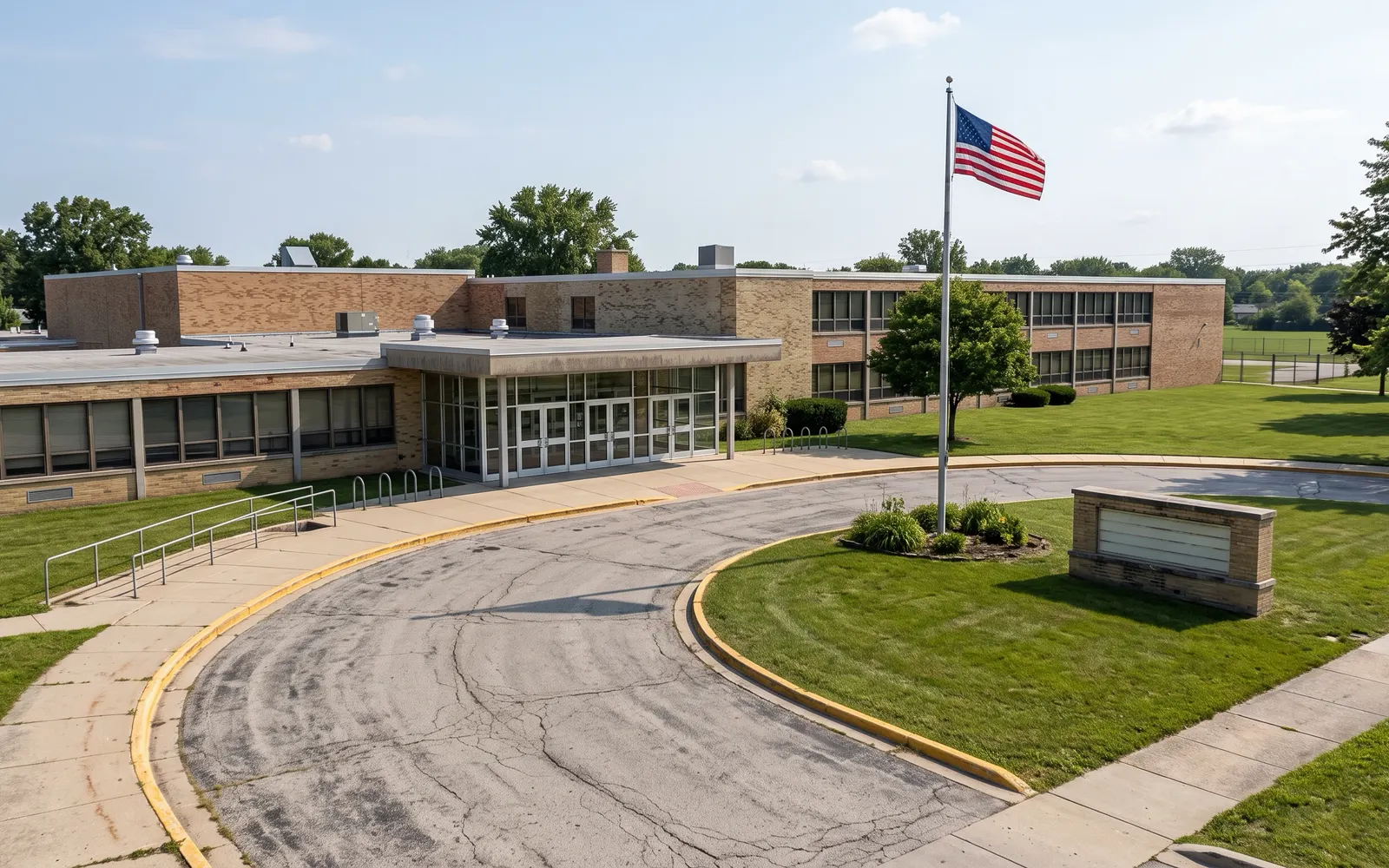
DuJardin Elementary. District 13, opened 1964, grades K-5.
Erickson Elementary. District 13, opened 1993, grades PreK-5.
Westfield Middle School. District 13, opened 1975, grades 6-8. Its name combines the Westlake and Fairfield subdivisions.
Cloverdale Elementary and Stratford Middle School. District 93, in Bloomingdale.
Greenbrook Elementary, Waterbury Elementary and Spring Wood Middle School. Keeneyville District 20, in Hanover Park and Roselle, for the Bloomingdale addresses inside its boundary.
Winnebago Elementary. Marquardt District 15, 195 Greenway Drive, Bloomingdale.
Lake Park High School. District 108, East Campus (grades 9-10) on Medinah Road and West Campus (grades 11-12) on Bryn Mawr Avenue, both in Roselle.
Glenbard North and Glenbard East High Schools. District 87, in Carol Stream and Lombard.
St. Isidore School. A private elementary school in Bloomingdale, listed on the village's schools page.
Commuting from Bloomingdale: Which Metra Station to Use
Bloomingdale has no Metra station of its own. The tracks went through the part of the old town that became Roselle, so the nearest stations are a short drive north. Which one you use depends on where in the village you live and where downtown you work.
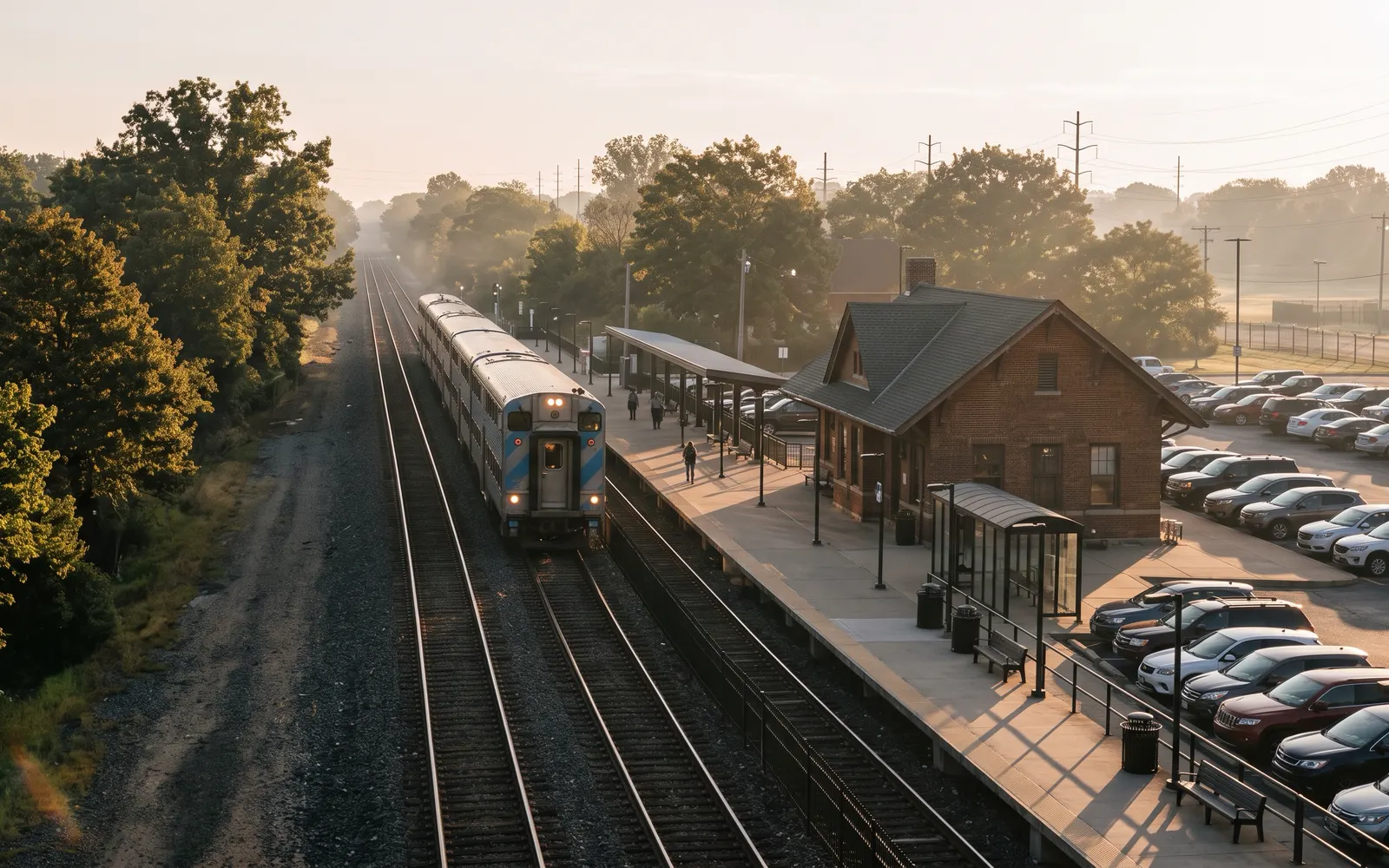
For most of Bloomingdale, the closest option is Roselle on the Milwaukee District West line, which runs to Union Station. Metra's published schedule data for the fall 2026 schedule, which starts September 28 and runs through October 25, shows 23 inbound weekday trains from Roselle. The fastest morning expresses leave at 6:48 and 7:48 a.m. and reach Union Station in 39 minutes. A typical run is about 55 minutes. On weekends Roselle has 12 trains each way on Saturdays and 9 on Sundays.
Medinah, a few minutes east on the same line, has 21 inbound weekday trains, the fastest at 44 minutes (the 5:58 a.m.) and a typical run of about 53. Its schedule is close to Roselle's, so the choice usually comes down to parking and which station is closer to your street. Schaumburg, one stop west of Roselle, has 20 inbound weekday trains with a fastest run of 44 minutes.
South-side residents sometimes drive to Glen Ellyn instead, on the Union Pacific West line to Ogilvie Transportation Center. It has 29 inbound weekday trains, with the fastest express (7:23 a.m.) arriving in 37 minutes and local trains taking about 53. It is a longer drive from Bloomingdale, but it suits a job near Ogilvie or someone who wants more train choices.
Pace fills some gaps. Wikipedia lists Pace Routes 711 and 715 serving the village. Most commuters I talk to still drive to the station, so ask about parking permits at whichever station you plan to use. They are run by each host village and some have waitlists.
Driving from Bloomingdale: Highways and O'Hare
Driving is how most people get around Bloomingdale, and the village is well placed for it. I-355, the Veterans Memorial Tollway, runs just east of the village, so Army Trail Road and Lake Street put I-290, I-88 and I-55 within easy reach. Lake Street (US-20) runs northwest toward Elgin and southeast toward Addison and Elmhurst. Army Trail Road and Schick Road are the main east-west routes through the village, and Gary Avenue, Bloomingdale Road and Glen Ellyn Road carry traffic north and south.
For O'Hare, the usual route is Lake Street or Army Trail Road east to I-355, then north to the Elgin-O'Hare Expressway (Route 390) or I-290. By my estimate from the map, that is roughly 15 to 17 miles, usually 25 to 35 minutes outside rush hour.
Two local notes. Lake Street and Army Trail Road carry heavy weekday traffic, and the shopping centers on Gary Avenue and Army Trail Road add to it on weekends, so drive a listing's route to the tollway at 7:30 a.m. before you commit. And construction on The Grove will bring trucks and lane closures around the former mall site for several years, which matters most if you are buying in Stratford Lakes or along Schick Road and Gary Avenue.
Is Bloomingdale Walkable?
Mostly not. Walk Score rates Bloomingdale 43 for walking, which it calls car-dependent, and says most errands require a car. It gives the village a Bike Score of 58, somewhat bikeable, with some bike infrastructure. It counts about 126 restaurants, bars and coffee shops in the village, but most of them are in shopping centers along the main roads rather than on a walkable street.
The subdivisions were designed around cars, with curving streets, cul-de-sacs and ponds, and most errands take a short drive to Gary Avenue, Army Trail Road or Lake Street. The closest thing to a walkable core is Old Town, around Lake Street, Bloomingdale Road and Third Street, where Old Town Park, the museum and a handful of shops and restaurants sit within a few minutes of each other. The Johnston Recreation Center, the Oasis Water Park and the Westfield walking track form a second cluster near Circle Avenue.
The Grove is designed to change this for its part of town. The plans describe a pedestrian-oriented district with a lake, an event lawn and street-level parking. If walking to dinner matters to you, it is worth watching which streets end up within a few minutes of it once it opens.
Shopping in Bloomingdale After Stratford Square
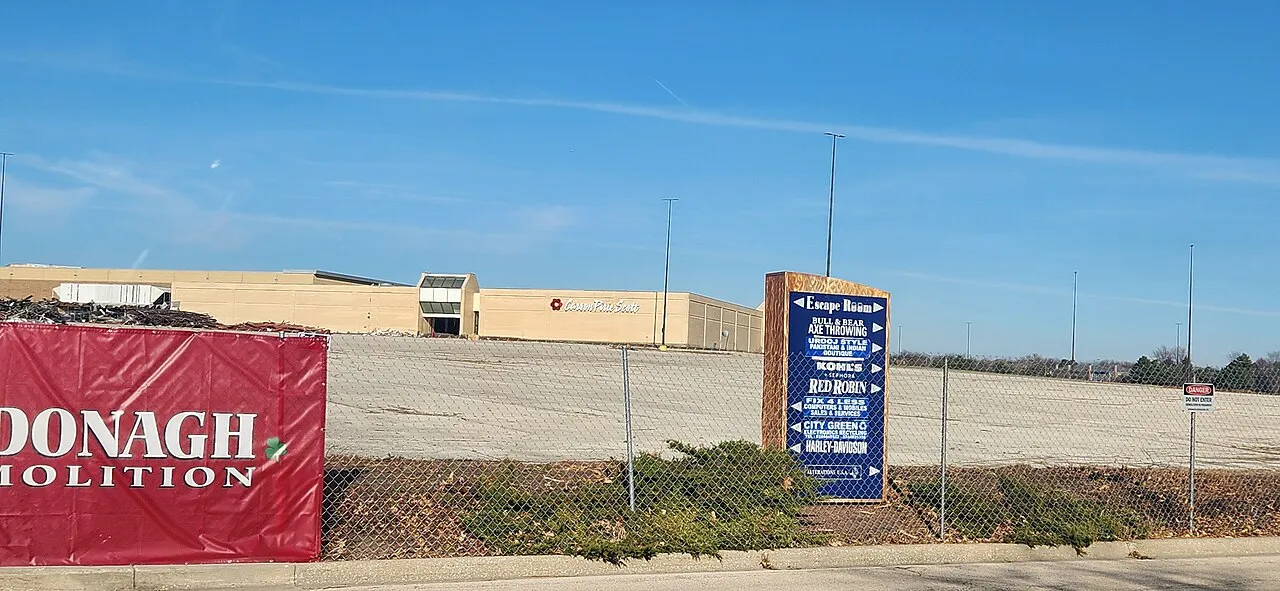
For 43 years Stratford Square Mall was Bloomingdale's shopping center, and a lot of online guides still describe it that way. It is gone. The mall closed on April 21, 2024, and demolition finished in June 2025, according to Wikipedia. What remains around it is a ring of strip centers and freestanding stores on Gary Avenue, Army Trail Road and Schick Road, and that is where most of the village's everyday retail is today.
Old Town, at Lake Street and Bloomingdale Road, is the other retail area: a small collection of shops, restaurants and offices in and around restored and period-style buildings near Old Town Park. It is the part of the village that hosts the summer concerts and the holiday market, and it has more character than square footage.
For a full mall, Woodfield in Schaumburg is about a 15-minute drive north, and Oakbrook Center and Yorktown Center in Lombard are each about 20 to 25 minutes south and east. Once The Grove opens, the village expects a new cluster of restaurants, entertainment and retail on the old mall site, which I cover in the development section.
Groceries and Everyday Errands in Bloomingdale
Grocery shopping in Bloomingdale changed in 2025. The Mariano's at 244 S. Gary Avenue closed on August 15, 2025, NBC Chicago reported, as part of a company-wide round of closures. That left the village without the full-size supermarket many residents had used for years. The nearest Jewel-Osco is at 2164 Bloomingdale Road, just over the line in Glendale Heights, and there are more full-size grocers a short drive away in Roselle, Carol Stream and Schaumburg.
Pharmacies, banks, dry cleaners and quick-service restaurants cluster in the Gary Avenue and Army Trail Road shopping centers, so most weekly errands are a five-minute drive from anywhere in the village. If a specific store matters to your routine, drive the route from the house you are considering before you write an offer; in a village this spread out, it is the difference between a three-minute errand and a fifteen-minute one.
Where Bloomingdale Eats
Most of Bloomingdale's restaurants are in the shopping centers on Gary Avenue, Army Trail Road and Lake Street, plus a handful in Old Town. Walk Score counts about 126 restaurants, bars and coffee shops in the village, mostly independent and chain spots you drive to. New places are still arriving. Village staff told the Planning and Zoning Commission in February 2026 that the first 7 Brew coffee stand was about to open, with a second location in for permits on Lake Street.
The bigger change is coming at The Grove. The project's own site lists five announced dining tenants: Game On!, GIA MIA, Hacienda Real, a restaurant concept from Forte Hospitality Group and Loretta's Last Call. None of them is open yet; the site says openings begin in 2027. For a sit-down dinner today, many residents drive to downtown Roselle, Glen Ellyn or Wheaton. In September, the food vendors and the Lions Club beer tent at Septemberfest are the village's biggest dining event of the year.
Parks, Golf and Recreation in Bloomingdale
The Bloomingdale Park District runs the village's parks and recreation. Its website lists 13 parks, among them Circle, Erie, Indian Lakes, Lakeview, Leslie, Old Town, Seasons Four, Springfield, Stratford, Sunnyside, Tompkins, Tuttle and Westlake parks. The district's main building is the Johnston Recreation Center at 172 S. Circle Avenue. Next to it are the Oasis Water Park, the district's outdoor pool, and the Westfield walking track. The district also runs the Westfield Gym and the museum in Old Town, and in 2026 it has a playground project underway at Lakeview Park.
Springfield Park is the district's main ball field complex, and it was renovated in 2018. One subdivision directory describes a 25-acre village park with a fishing lake in Westlake, and several of the 1970s and 1980s subdivisions have retention ponds with walking paths that residents use as informal parks.
For golf, Bloomingdale Golf Club at 181 Glen Ellyn Road is an 18-hole, par-71 course that dates to 1924. The former Indian Lakes golf course, closed since 2016, is part of the Prairie Lakes Resort plan covered in the development section, and Medinah Country Club is a short drive east. For open space beyond the village, the DuPage County forest preserves, including Mallard Lake to the west, are within a few minutes.
The Bloomingdale Public Library
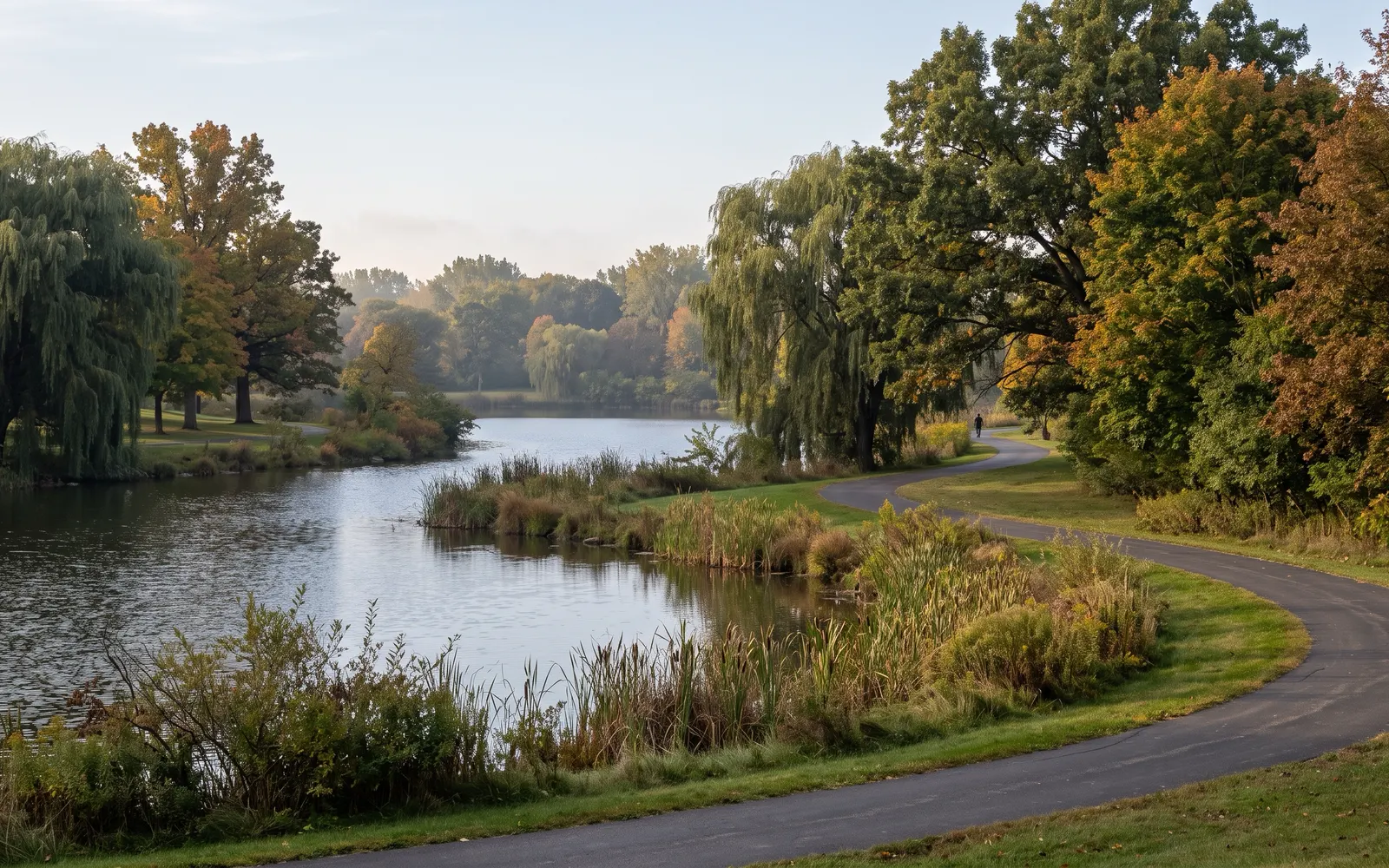
The Bloomingdale Public Library is at 101 Fairfield Way, near Westfield Middle School and the Fairfield subdivision. It has been in operation since 1975 and works out of a 35,000-square-foot building that is open 68 hours a week. Recent additions include the Dominic Froio Memorial Garden, opened in 2021, and a makerspace. The library also keeps a local history page, which is one of the better short histories of the village. Check the library's own site for current hours and programs, and confirm that a specific address is inside the library district, since some edge parcels are served by a neighboring library.
Utilities in Bloomingdale
The village provides water and sewer. According to the village's water production page, Bloomingdale buys Lake Michigan water through the DuPage Water Commission. The water is treated by the City of Chicago at the Jardine plant next to Navy Pier and delivered to the village at two metered points, the Gary Avenue and Winston Lane pumping stations. You pay your water bill to the village, not the commission, and when you sell, the final water reading and bill are part of closing.
ComEd delivers electricity and Nicor Gas provides natural gas. The village contracts residential garbage and recycling service, so new owners are billed through the village rather than choosing a hauler. Check the village's current hauler and rates when you move in.
Hospitals Near Bloomingdale
The closest full-service hospital is UChicago Medicine AdventHealth GlenOaks at 701 Winthrop Avenue in Glendale Heights, just south of the village, with a 24-hour emergency department. For specialty care, Northwestern Medicine Central DuPage Hospital in Winfield and the hospitals around Schaumburg and Hoffman Estates are each about a 15- to 20-minute drive.
Summer Nights and Things to Do Near Bloomingdale
Bloomingdale's own summer centers on Old Town Park, where the park district and the village run a free concert series on Tuesday evenings starting in June. The park district adds smaller events through the fall, like its Concerts by the Campfire series and the Howl-O-Ween Pooch Parade on October 3, 2026. Once The Grove opens, the plans call for a central lawn for concerts and festivals that converts to an ice rink in winter, and a 100,000-square-foot indoor sports and recreation venue called Bloomingdale Yard.
Some of the western suburbs' best-known outings are close. Woodfield and the Schaumburg entertainment district are about 15 minutes north. Cantigny Park in Wheaton, with its gardens and the First Division Museum, is about 20 minutes south. Medinah Country Club, a major-championship golf venue, is just east of the village.
Septemberfest and Bloomingdale's Yearly Traditions
The big one is Septemberfest, the village's end-of-summer festival at Old Town Park, 111 Third Street. In 2026 it was Saturday, September 12, starting at 11 a.m. with a parade into the park, followed by live music, carnival rides and games, food and craft vendors and the Lions Club beer tent. It is run by a village commission of residents, and it is the one day of the year when it seems the whole village is in Old Town at once.
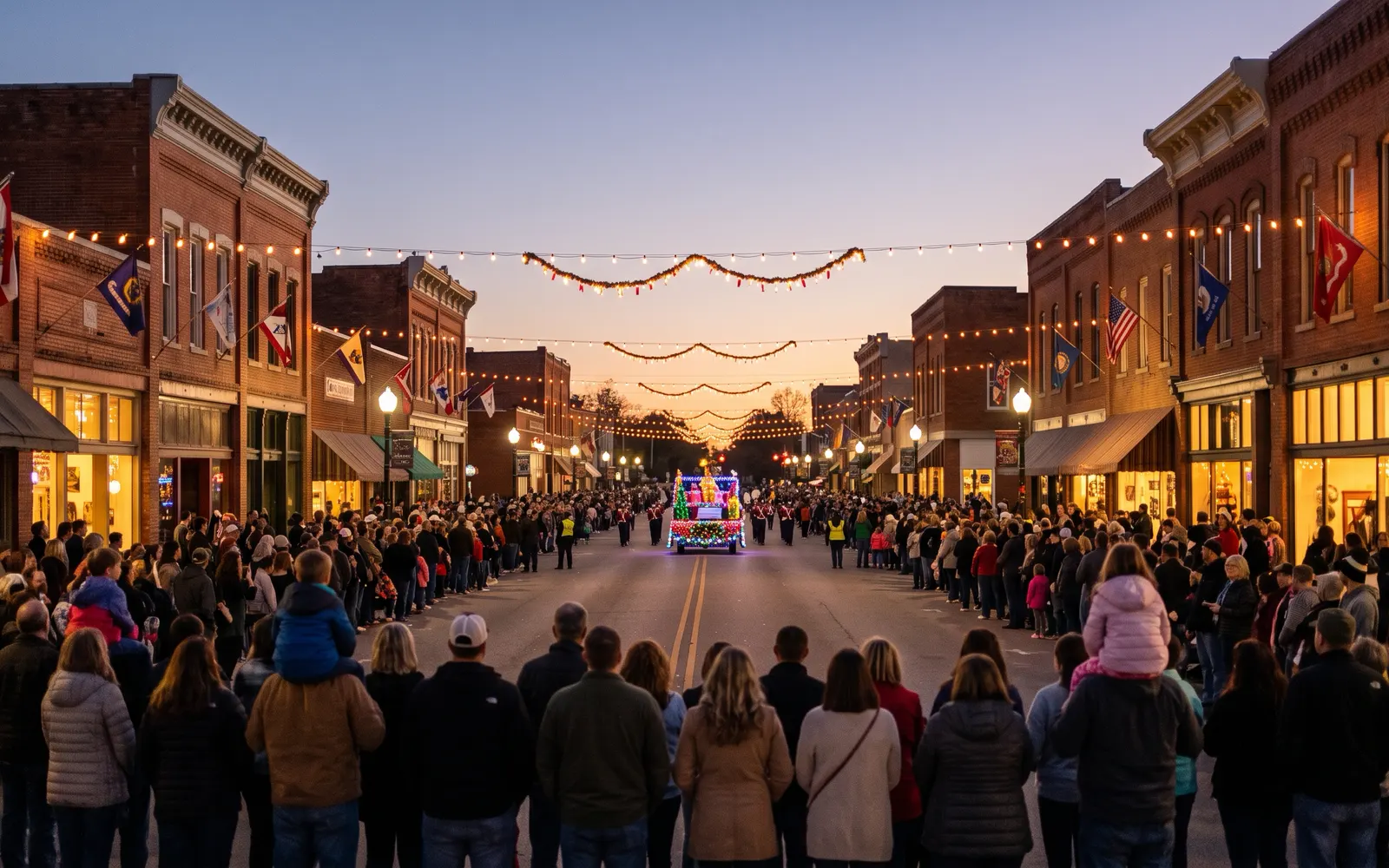
The rest of the calendar has a steady rhythm. The summer concert series runs Tuesdays at 7 p.m. at Old Town Park, starting in June. The Tree Lighting and Kris Kringle Market is Saturday, November 28, 2026, in Old Town, with the market open from 3 to 7 p.m., the tree lighting at about 6 p.m. and a drone light show, plus carolers, train rides and food vendors. If you are touring houses in September or late November, stop by. It tells you more about the village than any listing will.
What's Being Built in Bloomingdale: The Grove and More
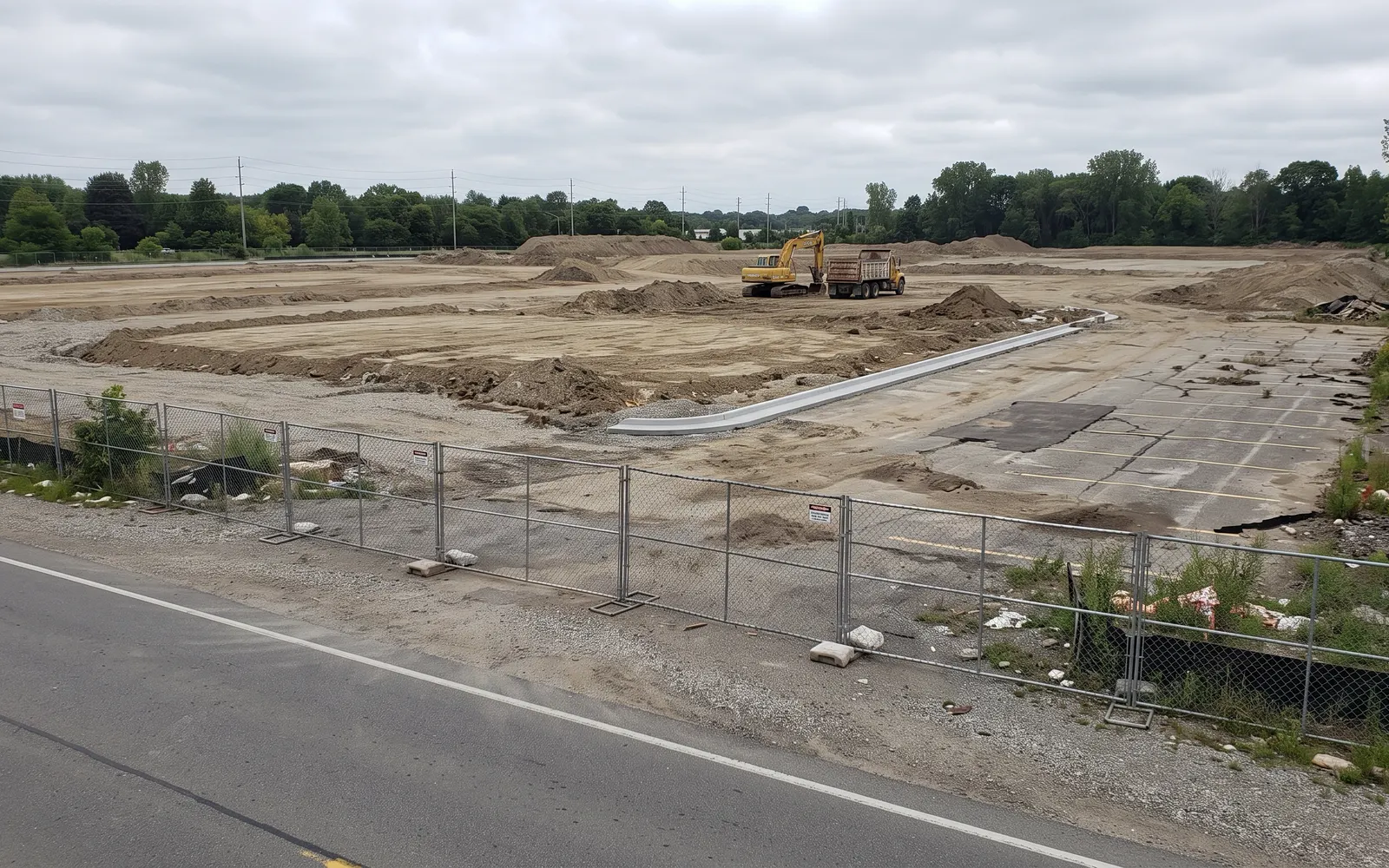
The biggest change in Bloomingdale in decades is happening on the old mall site. The village took control of Stratford Square in 2024, closed it and demolished it by June 2025. The Chicago Sun-Times reported in January 2026 that the village had spent $17.1 million to acquire and close the mall, that utility work had started that month, and that the new district, called The Grove at Bloomingdale, covers more than 60 acres. The Sun-Times put the project at $78 million. The Grove's own site now describes a $375 million development with more than 400,000 square feet of retail, restaurant, entertainment and residential space, 280 luxury apartments, a man-made lake, a central lawn that becomes a winter ice rink and a dog park. The two dollar figures likely measure different things, and neither source breaks them down.
The first tenant is Bloomingdale Yard, a 100,000-square-foot indoor sports and recreation venue. The village board approved the land sale for it on February 23, 2026, according to Citizen Portal's summary of the meeting. The Grove's site says openings start in 2027 and continue in phases through 2030, and Wikipedia cites a full build-out of five to eight years. For a buyer near the site, that means years of construction and, at the end, 280 new rental units and a new entertainment district within walking distance of some of the early-1990s subdivisions.
On the residential side, the village board rezoned 166 and 178 W. Lake Street on March 23, 2026, for a planned development by Polaris Homes, according to Citizen Portal. The village's February 2026 Planning and Zoning minutes describe 11 one-story single-family homes on a 4.33-acre parcel that had earlier been approved for an assisted living building, with two models of about 2,859 and 3,469 square feet, a new public road and a fourth signalized leg at Lake Street and Rosedale. The developer told the commission it expects prices from $900,000 to $1.2 million. New single-family construction is rare enough in Bloomingdale that this will be a useful price marker for the village.
The third project is the former Indian Lakes Resort on Schick Road. The village bought it for more than $8 million in 2020 to head off a larger redevelopment, and in September 2023 Maverick Hotels and Restaurants took it over with a plan to spend $30 million reopening it as Prairie Lakes Resort, with 241 rooms, 60 suites and the old 27-hole course reworked into an 18-hole course and a nine-hole par-3, according to Club + Resort Business. The original target was early 2024. I could not confirm that it has reopened as of September 2026, so check its status before you rely on it.
I don't label any town or neighborhood as safe or unsafe.
Flood Risk in Bloomingdale
Flooding isn't a village-wide problem in Bloomingdale, but it is a house-by-house one, and it deserves more attention here than in many DuPage villages. Redfin, using First Street's model, rates Bloomingdale's flood risk as moderate, with 111 properties, about 4% of the total, at risk of severe flooding over the next 30 years. The same page rates heat risk as moderate for 87% of properties and wildfire risk as moderate for 5%.
The reason is the landscape the subdivisions were built on. Westlake, Stratford Lakes, Indian Lakes and several other pockets are built around man-made lakes and retention ponds, and the homes on the low side of those ponds are where water goes in a heavy storm. The Grove's plans include permeable pavers and on-site stormwater management, which should help around the mall site. Two checks before you write an offer. Look the address up on the FEMA flood map, because a mapped flood zone can mean required flood insurance on a mortgage. And ask the seller directly about water in the basement. In my experience with houses from the 1970s and 1980s, the answer is often "once," and the follow-up question about what they did about it is the one that matters.
Frequently Asked Questions
How much does a house cost in Bloomingdale, IL?+
Redfin reported a median sale price of $414,726 for the three months ending August 2026, up 1.8% from a year earlier, and Zillow's home value index for the village was $437,885 in August 2026. Prices range widely by type, from condos to 1990s two-story homes.
What are property taxes in Bloomingdale, IL?+
The median effective rate is about 2.35%, with a median bill of about $7,801 (Ownwell, April 2026). Rates in ZIP 60108 run from about 2.07% to 2.77% depending on the tax code, and a home's bill usually rises after a sale once it is reassessed.
What school district is Bloomingdale, IL in?+
Five elementary districts serve parts of the village: Bloomingdale District 13, District 93, Keeneyville District 20, Marquardt District 15 and Medinah District 11. High school is Lake Park District 108 in Roselle or Glenbard North or East in District 87, depending on the address. Confirm each address with the districts.
Does Bloomingdale have a Metra station?+
No. Most commuters use Roselle on the Milwaukee District West line, where the fastest weekday express reaches Union Station in 39 minutes, or Medinah on the same line. Glen Ellyn on the Union Pacific West line is another option for the south side.
What happened to Stratford Square Mall?+
It closed on April 21, 2024, and was demolished by June 2025. The site is being rebuilt as The Grove at Bloomingdale, a 60-plus-acre district with restaurants, 280 apartments, a lake and the Bloomingdale Yard sports venue, opening in phases from 2027 to 2030.
Is Bloomingdale walkable?+
Not village-wide. The Walk Score is 43. Old Town, around Lake Street and Third Street, is the most walkable part of the village today.
What neighborhoods are in Bloomingdale, IL?+
Commonly named subdivisions include Westlake, Fairfield, Old Town, Bloomfield Club, Bloomfield Hills, Stratford Lakes, Country Club Estates, Medinah on the Lake and Indian Lakes. Locals usually describe them by their side of Army Trail Road.
Does Bloomingdale charge a transfer tax?+
According to the Attorneys' Title Guaranty Fund's listing, the village charges no municipal transfer tax and requires no pre-sale inspection, but the seller needs a final water reading and a paid final water bill. State and county transfer taxes still apply. Confirm current rules with the village before closing.
Eshu Chikoti has extensive access to off-market listings throughout Bloomingdale and the rest of DuPage County — homes that never make it to the public listing sites. That matters right now: in a seller's market like this one, well-priced homes routinely go under contract within days, and buyers relying only on public listings are competing for whatever is left over. Working with someone plugged into off-market inventory means seeing homes before the crowd does.
Eshu Chikoti · 847-691-4282 ·
Get new Bloomingdale listings by email
When a home comes on the market in Bloomingdale, I'll email it to you.
Just your email. Unsubscribe any time by replying.
Thinking About Bloomingdale?
Whether you're buying, selling, or just curious what's on the market, I can walk you through Bloomingdale street by street.